SB 59: Fairview Developmental Center.
- Session Year: 2017-2018
- House: Senate
- Latest Version Date: 2017-05-10
Existing law vests in the State Department of Developmental Services jurisdiction over state hospitals, referred to as developmental centers, for the provision of residential care to individuals with developmental disabilities, including the Fairview Developmental Center. Existing law requires the department, on or before October 1, 2015, to submit to the Legislature a plan or plans to close one or more developmental centers. Existing law authorizes the Director of General Services, with the consent of the State Department of Developmental Services, to lease up to 20 acres of property located within the grounds of the Fairview Developmental Center to a nonprofit corporation, as specified.
This bill would require the contract for any sale or lease of the land known as the Fairview Developmental Center to include a provision requiring the use of that land to conform to the City of Costa Mesa Planning, Zoning and Development Code, as specified. The bill would provide the City of Costa Mesa the right of first refusal on the purchase of the property, as specified. The bill would also require the use of that land to conform to the City of Costa Mesa Planning, Zoning and Development Code, as specified. The bill would additionally prohibit the development within the Fairview Developmental Center known as Shannons Mountain, along with other uses, from being more than 25% of the Fairview Developmental Center. Director of General Services, before offering the land associated with the Fairview Developmental Center for sale or lease, to complete an assessment of the site and facilities on the land to document the propertys current condition and identify potential issues and limitations at the site. The bill would also require the Department of General Services and the State Department of Developmental Services to meet and confer with the City of Costa Mesa and the County of Orange throughout the transition process for any future use of the property.
Existing law vests in the State Department of Developmental Services jurisdiction over state hospitals, referred to as developmental centers, for the provision of residential care to individuals with developmental disabilities, including the Fairview Developmental Center. Existing law requires the department, on or before October 1, 2015, to submit to the Legislature a plan or plans to close one or more developmental centers. Existing law authorizes the Director of General Services, with the consent of the State Department of Developmental Services, to lease up to 20 acres of property located within the grounds of the Fairview Developmental Center to a nonprofit corporation, as specified.
This bill would require the contract for any sale or lease of the land known as the Fairview Developmental Center to include a provision requiring the use of that land to comply with the zoning ordinance in effect on January 1, 2018. conform to the City of Costa Mesa Planning, Zoning and Development Code, as specified. The bill would provide the City of Costa Mesa and the County of Orange the right of first refusal on the purchase of the property, as specified. The bill would also require the use of that land to conform to any zoning ordinance applicable to the land on January 1, 2018, if the property is repurposed. The bill would additionally require, if the land is sold or repurposed, at least 25% of the land to be dedicated to homeless or mental health services. the City of Costa Mesa Planning, Zoning and Development Code, as specified. The bill would additionally exempt the prohibit the development within the Fairview Developmental Center known as Shannons Mountain from a specified local zoning ordinance. Mountain, along with other uses, from being more than 25% of the Fairview Developmental Center.
Existing law vests in the State Department of Developmental Services jurisdiction over state hospitals, referred to as developmental centers, for the provision of residential care to individuals with developmental disabilities, including the Fairview Developmental Center. Existing law requires the department, on or before October 1, 2015, to submit to the Legislature a plan or plans to close one or more developmental centers. Existing law authorizes the Director of General Services, with the consent of the State Department of Developmental Services, to lease up to 20 acres of property located within the grounds of the Fairview Developmental Center to a nonprofit corporation, as specified.
This bill would state the intent of the Legislature to enact legislation focusing on the disposition of the state-owned property at require the contract for any sale of the land known as the Fairview Developmental Center. Center to include a provision requiring the use of that land to comply with the zoning ordinance in effect on January 1, 2018. The bill would provide the City of Costa Mesa and the County of Orange the right of first refusal on the purchase of the property, as specified. The bill would also require the use of that land to conform to any zoning ordinance applicable to the land on January 1, 2018, if the property is repurposed. The bill would additionally require, if the land is sold or repurposed, at least 25% of the land to be dedicated to homeless or mental health services. The bill would additionally exempt the development within the Fairview Developmental Center known as Shannons Mountain from a specified local zoning ordinance.
Existing law vests in the State Department of Developmental Services jurisdiction over state hospitals, referred to as developmental centers, for the provision of residential care to individuals with developmental disabilities, including the Fairview Developmental Center. Existing law requires the department, on or before October 1, 2015, to submit to the Legislature a plan or plans to close one or more developmental centers.
This bill would state the intent of the Legislature to enact legislation focusing on the disposition of the state-owned property at the Fairview Developmental Center.
(a)Before offering the land associated with the Fairview Developmental Center for lease or sale, the Director of General Services shall complete an assessment of the site and facilities on the land to document the propertys current condition and identify potential issues and limitations at the site.
(b)The Department of General Services and the State Department of Developmental Services shall meet and confer with the City of Costa Mesa and the County of Orange throughout the transition process for any future use of the property.
SECTION 1.Section 14670.37 is added to the Government Code, to read:14670.37.(a)(1)Notwithstanding any other law, if the Director of General Services sells or leases the land known as the Fairview Developmental Center or any portion thereof, the contract for the sale or lease shall require the use to conform to the City of Costa Mesa Planning, Zoning and Development Code and shall require a master plan pursuant to Section 13-56 of that code. The City of Costa Mesa shall have the right of first refusal before any sale may be made to another party. The city may exercise the right of first refusal for a purchase or lease in partnership with the County of Orange or any other private entity.(2)Notwithstanding any other law, if the Director of General Services or the Director of Developmental Services repurposes the land known as the Fairview Developmental Center or any portion thereof, the use of that land shall be subject to the City of Costa Mesa Planning, Zoning and Development Code and shall require a master plan pursuant to Section 13-56 of that code.(b)The development within the Fairview Developmental Center known as Shannons Mountain, and any other use excluding single-family residential or park space, shall be no more than 25 percent of the Fairview Developmental Center.(a)(1)Notwithstanding any other law, if the Director of General Services sells or leases the land known as the Fairview Developmental Center, Center or any portion thereof, the contract for the sale or lease shall require the use to conform to the zoning ordinance applicable to that land on January 1, 2018. City of Costa Mesa Planning, Zoning and Development Code and shall require a master plan pursuant to Section 13-56 of that code. The City of Costa Mesa shall have the right of first refusal before any sale may be made to another party. If the city refuses to purchase, the County of Orange shall have the right of first refusal before any sale may be made to another party. The city may exercise the right of first refusal for a purchase or lease in partnership with the County of Orange or any other private entity.
(2)Notwithstanding any other law, if the Director of General Services, Services or the Director of Developmental Services repurposes the land known as the Fairview Developmental Center, Center or any portion thereof, the use of that land shall conform to the zoning ordinance applicable to that land on January 1, 2018. be subject to the City of Costa Mesa Planning, Zoning and Development Code and shall require a master plan pursuant to Section 13-56 of that code.
(3)For any use after a sale or repurpose of the land pursuant to paragraph (1) or (2), at least 25 percent of the use shall be dedicated to homeless or mental health services.(b)The development within the Fairview Developmental Center known as Shannons Mountain shall be exempt from the provisions of the Ordinance to give the people of Costa Mesa control of their future otherwise known as Measure Y which was adopted by the voters of the City of Costa Mesa at the statewide general election held on November 8, 2016. Mountain, and any other use excluding single-family residential or park space, shall be no more than 25 percent of the Fairview Developmental Center.
(a)(1)Notwithstanding any other law, if the Director of General Services sells the land known as the Fairview Developmental Center, the contract for the sale shall require the use to conform to the zoning ordinance applicable to that land on January 1, 2018. The City of Costa Mesa shall have the right of first refusal before any sale may be made to another party. If the city refuses to purchase, the County of Orange shall have the right of first refusal before any sale may be made to another party.
(2)Notwithstanding any other law, if the Director of General Services, or the Director of Developmental Services repurposes the land known as the Fairview Developmental Center, the use of that land shall conform to the zoning ordinance applicable to that land on January 1, 2018.
(3)For any use after a sale or repurpose of the land pursuant to paragraph (1) or (2), at least 25 percent of the use shall be dedicated to homeless or mental health services.
(b)The development within the Fairview Developmental Center known as Shannons Mountain shall be exempt from the provisions of the Ordinance to give the people of Costa Mesa control of their future otherwise known as Measure Y which was adopted by the voters of the City of Costa Mesa at the statewide general election held on November 8, 2016.
SECTION 1.It is the intent of the Legislature to enact legislation focusing on the disposition of the state-owned property at the Fairview Developmental Center, located at 2501 Harbor Boulevard, in Costa Mesa, Orange County.It is the intent of the Legislature to enact legislation focusing on the disposition of the state-owned property at the Fairview Developmental Center, located at 2501 Harbor Boulevard, in Costa Mesa, Orange County.
|
Date
|
Status
|
|---|---|
| Feb 1, 2018 | Returned to Secretary of Senate pursuant to Joint Rule 56. |
| May 18, 2017 | May 22 set for first hearing canceled at the request of author. |
| May 16, 2017 | Set for hearing May 22. |
| May 10, 2017 | Read second time and amended. Re-referred to Com. on APPR. |
| May 9, 2017 | From committee: Do pass as amended and re-refer to Com. on APPR. (Ayes 10. Noes 0. Page 1006.) (May 9). |
| May 4, 2017 | Set for hearing May 9. |
| May 3, 2017 | From committee: Do pass and re-refer to Com. on G.O. (Ayes 5. Noes 0. Page 944.) (May 3). Re-referred to Com. on G.O. |
| Apr 27, 2017 | From committee with author's amendments. Read second time and amended. Re-referred to Com. on GOV. & F. |
| Apr 19, 2017 | Set for hearing May 3. |
| Apr 18, 2017 | May 9 hearing postponed by committee. |
| Apr 13, 2017 | April 19 hearing postponed by committee. |
| Apr 5, 2017 | Set for hearing April 19. |
| Mar 29, 2017 | Re-referred to Coms. on GOV. & F., G.O., and APPR. |
| Mar 22, 2017 | From committee with author's amendments. Read second time and amended. Re-referred to Com. on RLS. |
| Jan 12, 2017 | Referred to Com. on RLS. |
| Jan 4, 2017 | Read first time. |
| Dec 14, 2016 | From printer. May be acted upon on or after January 13. |
| Dec 13, 2016 | Introduced. To Com. on RLS. for assignment. To print. |
|
Date
|
Description
|
Location
|
Votes
|
|
|---|---|---|---|---|
| May 9, 2017 | Do pass as amended, but first amend, and re-refer to the Committee on [Appropriations] | Senate Standing Committee on Governmental Organization |
Passed |
|
| May 3, 2017 | Do pass, but first be re-referred to the Committee on [Governmental Organization] | Senate Standing Committee on Governance and Finance |
Passed |
This list shows positions taken on this bill by organizations on the date displayed, which is linked to the original source.
Positions by individuals are not included.
|
Organization
|
Position
|
Date
|
|---|---|---|
| Unknown. | ** Against | Apr 28, 2017 |
| Unknown. | ** Support | Apr 28, 2017 |
SENATE COMMITTEE ON GOVERNMENTAL ORGANIZATION
Senator Steven Glazer
Chair
2017 - 2018 Regular
Bill No: SB Hearing Date: 5/9/17
Author: | Moorlach | ||
Version: | Amended | ||
Urgency: | Fiscal: | ||
Consultant: | |||
SUBJECT:
DIGEST: This bill requires the contract for any sale or lease of the land known as the Fairview Developmental Center (DC) to include a provision requiring the use of that land to conform to the City of Costa Mesa Planning, Zoning and Development Code, as specified.
ANALYSIS:
Existing law:
- Gives the State Department of Developmental Services (DDS) jurisdiction over state hospitals, referred to as developmental centers, for the provision of residential care to individuals with developmental disabilities, including the Fairview DC.
- Requires the DDS, on or before October 15, 2015, to submit to the Legislature a plan or plans to close one or more developmental centers.
- Authorizes the Department of General Services (DGS), with the consent of DDS, to lease up to 20 acres of property located within the grounds of the Fairview DC to a nonprofit corporation, as specified.
- Authorizes DGS, subject to legislative approval, to sell, lease, exchange, or transfer various specified properties for current market value, or upon any terms and conditions that DGS determines are in the best interest of the state.
- Establishes criteria for state agencies to use in determining and reporting excess lands. A state agency must report land as surplus that is:
- Not currently utilized, or is underutilized, for any existing or ongoing programs;
- Land for which the agency cannot identify any specific utilization relative to future needs; and,
- Land not identified by the state agency within its master plan for facility development.
- Requires DGS to dispose of surplus state real property in a specified manner, and prescribes the priority of disposition of the property before DGS may offer it for sale to private entities or individuals. The right of first refusal is given to local agencies who have the opportunity to acquire the property for open space, public parks, development of local government-owned facilities, or affordable housing. If there is no local agency interest, then affordable housing developers can acquire the property. If property is not acquired by a local agency or affordable housing sponsor the property is then offered for sale, at fair market value.
- Exempts the sale of surplus property sold “as is” from designated provisions of the California Environmental Quality Act (CEQA). However, the buyer or transferee of a parcel is subject to CEQA, as well as any local governmental entitlement or land use approval requirements.
- Requires, unless otherwise specified by law, that the proceeds from the sale of surplus state property be used to pay the principal and interest on the Economic Recovery Bond Act of 2004.
This bill:
- Requires the contract for the sale or lease of the land known as the Fairview DC, or any portion thereof, to conform to the City of Costa Mesa Planning Zoning and Development Code and must have a master plan for development as required by that code.
- Specifies that the City of Costa Mesa shall have the right of first refusal before any sale may be made to another party, as specified.
- Requires the use of that land to conform to the City of Costa Mesa Planning, Zoning, and Development Code, as specified.
- Prohibits the development within the Fairview DC known as Shannon’s Mountain and any other use excluding single-family residential or park space from exceeding 25 percent of the Fairview DC.
Background
Purpose of the bill. According to the author, “developmental centers are operated by DDS and provide 24-hour habitation and treatment services for residents with developmental disabilities. In the 2015 May Revision to the Governor’s Budget, the closing of the three remaining developmental centers, including Fairview DC in Costa Mesa, was proposed. DDS submitted the plan for Fairview DC to the Legislature on April, 2016 with the stated goal of closing the facility by 2021. Once the Fairview DC is fully closed, the state will have to determine how to dispose of the property.”
The author states that, “SB 59 would ensure that the City of Costa Mesa, the County of Orange, and other interested stakeholders have a voice in the disposition of the Fairview DC property, instead of leaving it wholly up to the state.
Fairview Developmental Center. The Fairview DC was opened in 1959 and is located on 114 acres of state-owned land in Orange County. The facility serves people with developmental and intellectual disabilities. The Fairview DC is one of three remaining state-operated facilities within DDS and is a multi-disciplinary, service-oriented residential facility licensed by the California Department of Public Health.
Fairview DC is slated for closure in 2021 and housed 248 individuals at the time the closure plan was developed. Once DDS no longer has a use for the property, DGS will take the lead in determining the future use of the property and arrange for its sale, transfer, or disposition through the state surplus property process.
In 2015, budget trailer bill (SB 82, Committee on Budget and Fiscal Review, 2015) authorized the development of 20 acres of mixed-income housing units, known as Shannon's Mountain, as a part of the closure plan. SB 82 allows DGS to lease the land, but ownership remains with DDS. A minimum of 20 percent of the housing units must be available and affordable to persons with developmental disabilities served by a regional center. SB 82 also requires DDS, or its designee, to provide management oversight and administration over the housing for persons with developmental disabilities.
The state has pursued development of nearby sites in the past. Specifically, Harbor Village is a residential development on state land adjacent to the Fairview DC that houses about 265 individuals with developmental disabilities. They are supported through a variety of services including rental subsidies and other services provided by the Regional Center of Orange County. However, other units on the development are market rate. Shannon’s Mountain is intended to be modeled after this development.
Author’s amendments. The author agreed to take the following amendments in this committee during the bill’s previous hearing in Senate Governance and Finance Committee.
The amendments would delete the current language in the bill and instead require the Director of DGS, prior to offering the land associated with the Fairview DC for lease or sale, to complete an assessment of the site and facilities on the land to document the property’s current condition and identify potential issues and limitations at the site.
In addition, the amendments would require DGS and DDS to meet and confer with the City of Costa Mesa and the County of Orange throughout the transition process.
Finally, the author will also be adding Senators Beall, Gaines, and McGuire as coauthors.
Prior/Related Legislation
SB 814 (Committee on Governmental Organization, 2017) would authorize DGS to dispose of a specified parcel of state property, consisting of approximately 65 acres, known as a portion of the Department of Correction and Rehabilitation’s Preston Youth Correctional Facility in Amador County. (Pending in Senate Appropriations Committee)
AB 1405 (Grove, 2015) would have required DDS to close the Fairview DC and the Sonoma DC and require 50% of the proceeds from the lease of the properties to be redirected to regional center services in the community. (Never heard in Assembly Accountability and Administrative Review Committee)
SB 273 (Hueso, Chapter 233, Statutes of 2015) authorized DGS to dispose of two surplus state properties, a Department of Conservation field office in Fresno County and a Department of Forestry conservation camp in Shasta County.
SB 536 (Roth, Chapter 355, Statutes of 2015) authorized DGS, with the approval of the Adjutant General, to sell seven specified state armory properties that are no longer considered needed by the California Military Department.
AB 2174 (Committee on Accountability and Administrative Review, Chapter 337, Statutes of 2014) authorized DGS to dispose of certain state surplus property, subject to specified conditions.
AB 826 (Jones-Sawyer, Chapter 505, Statutes of 2013) authorized DGS to dispose of eight specified parcels of state property, as specified.
SB 1580 (Committee on Governmental Organization, Chapter 798, Statutes of 2012) authorized DGS, with the approval of the Adjutant General, to sell four specified armories. The bill also required the proceeds from the sale of the armories to be deposited in the Armory Fund. Additionally, the bill required that DGS be reimbursed for any reasonable costs or expenses incurred in conducting a transaction involving those armories. Furthermore, the bill authorized DGS to sell 3 additional parcels of state property, as specified.
AB 1272 (Butler, Chapter 178, Statutes of 2011) authorized DGS to dispose of certain state office buildings located in Hollywood, Los Angeles, and Oroville. Other properties included the Hidden Lakes Estates Parcel near Millerton Lake Recreation Area, the Digger Butte Lookout near Red Bluff, and the Campbellville Lookout, located near Chico.
SB 1167 (Cogdill, Chapter 327, Statutes of 2010) authorized DGS to dispose of all or any portion of two parcels of real property – the Veterinary Laboratory for the Department of Food and Agriculture located in Fresno and the Department of Motor Vehicles field office located in Roseville, Placer County.
AB 2279 (Evans, Chapter 595, Statutes of 2010) authorized DGS to sell or exchange, at fair market value based upon an appraisal approved by DGS, all or part of a specified parcel of state property only to the County of Napa upon terms, conditions, reservations, and exceptions that DGS determines are in the best interest of the state, by January 1, 2015.
SCA 18 (Johnson, Chapter 103, Statutes of 2004) required, among other things, that the proceeds from the sale of surplus state real property be used to pay the principal and interest on the Economic Recovery Bond Act of 2004. The provisions relating to state property were adopted by the electorate in Proposition 60A of 2004.
FISCAL EFFECT: Appropriation: No Fiscal Com.: No Local: No
SUPPORT:
None received
OPPOSITION:
None received
DUAL REFERRAL: Senate Governance and Finance Committee 5-0.
SENATE COMMITTEE ON GOVERNANCE AND FINANCE
Senator Mike McGuire, Chair
2017 - 2018 Regular
Bill No: | SB 59 | Hearing Date: | 5/3/17 |
Author: | Moorlach | Tax Levy: | No |
Version: | 4/27/17 | Fiscal: | No |
Consultant: | Favorini-Csorba | ||
Fairview Developmental Center
Requires the use of Fairview Developmental Center land to be consistent with local zoning regulations.
Background
Developmental Centers. Under the Lanterman Developmental Disabilities Services Act of 1969 (known as the Lanterman Act), the state provides individuals who have developmental disabilities with services and supports to meet their needs, preferences, and goals in the least restrictive environment possible. These services and supports are overseen by the Department of Developmental Services (DDS), which served an estimated 847 consumers in the 2016‑17 fiscal year at three state‑run 24‑hour institutions known as developmental centers (DCs)—Fairview DC in Orange County, Porterville DC in Tulare County (which includes both secured and non-secured areas), and Sonoma DC in Sonoma County—as well as one community facility, Canyon Springs in Riverside County, which serves up to 63 people at any time. In 2015, the administration announced its intentions to close the three remaining DCs—Sonoma DC by the end of 2018 and Fairview DC and the non-secured area of the Porterville DC by the end of 2021. Canyon Springs Community Facility and the secured area of Porterville will remain open indefinitely.
Closure Process. At their peak in the late 1960s, the state operated seven DCs that housed over 13,000 individuals with developmental disabilities. However, beginning in the early 1970s, with the enactment of the Lanterman Act and establishment of not-for-profit regional centers (RCs), the population of the DCs began to decline as community services and supports for individuals with developmental disabilities began to proliferate. Since then, the state has closed four DCs: Stockton, Camarillo, Lanterman, and Agnews.
To close a DC, DDS must develop a detailed closure plan that must be approved by the Legislature. State law requires DDS to submit the closure plan to the Legislature not later than April 1, immediately prior to the fiscal year in which the plan is to begin implementation, and as a part of the Governor’s proposed budget. Prior to the submission of a DC closure plan to the Legislature, the department must complete the following:
- Solicit input from various parties including the State Council on Developmental Disabilities, the Association of Regional Center Agencies, DC residents and their parents and guardians, DC employees and employee organizations, the affected city and county governments, business and civic organizations, and other specified entities.
- Confer with the county in which the DC is located, the RCs served by the DC, and other state departments using similar occupational classifications to develop a program for the placement of staff of the DC planned for closure in jobs in state departments, local government, or RC programs.
- Consider recommendations for the use of the developmental center property from the county.
- Hold at least one public hearing in the community in which the DC is located, with public comment from that hearing being summarized in the closure plan.
The plan submitted to the Legislature must include 15 specific elements, such as a description of the impact on residents and their families, the fiscal impact of the closure, and a timeline for the closure. A DC closure plan submitted to the Legislature may be modified during the legislative review process.
Surplus Property Disposal Process. The closure plans do not fully characterize the future use of land on which the closed developmental centers are located. Instead, this land typically follows the process used to determine how to dispose of state land that is no longer needed for its original purpose. Once a department no longer needs a piece of property, the Department of General Services (DGS) takes the following steps:
- DGS must first determine if there is another state use for the property. If so, DGS may transfer the property to the other department.
- If there is no state use for the property, the property is listed as “surplus” and is included in an annual omnibus surplus bill, which allows DGS to dispose of the property by sale, lease, exchange, or other manners authorized be the Legislature.
- Once listed as surplus, local agencies and affordable housing developers have 90 days to notify DGS of their interest in the property. Local agencies are given the first opportunity to acquire the property for open space, public parks, development of local government-owned facilities, or affordable housing. If there is no local agency interest, then affordable housing developers can acquire the property.
- Property not acquired by a local agency or affordable housing sponsor is then offered for sale on the open market pursuant to a public bidding process designed to obtain the highest and most certain return which is deemed to be the fair market value.
As part of the closure process for the Sonoma DC, which is further along than the closures of Fairview DC and Porterville DC, the 2016-17 Budget included $2.2 million for DGS to perform a site assessment of the Sonoma DC land, including a master plan for the site, architectural, civil engineering, historical, and environmental studies, and other analyses.
Fairview Developmental Center and Shannon’s Mountain. Fairview DC is located on 114 acres of state-owned land in the City of Costa Mesa in Orange County. According to the closure plan for the center, Fairview DC originally occupied 752 acres, but most of it was transferred to the City of Costa Mesa in 1979. Fairview DC is slated for closure in 2021 and housed 248 individuals at the time the closure plan was developed. Once DDS no longer has a use for the property, DGS will take the lead in determining the future use of the property and arranging for its sale, transfer or disposition through the state surplus property process.
A 2015 budget trailer bill (SB 82, Committee on Budget and Fiscal Review, 2015) authorized the development of 20 acres of mixed-income development, known as Shannon's Mountain, as a part of the closure plan. SB 82 allows DGS to lease the land, but ownership remains with DDS. A minimum of 20 percent of the housing units must be available and affordable to persons with developmental disabilities served by a regional center, and lease revenues or other proceeds under the lease must be used by DDS to support individuals with developmental disabilities, including subsidizing their rent. SB 82 also requires DDS, or its designee, to provide management oversight and administration over the housing for persons with developmental disabilities.
The state has pursued development of nearby sites in the past. Specifically, Harbor Village is a residential development on state land adjacent to the Fairview DC that houses about 265 individuals with developmental disabilities. They are supported through a variety of services including rental subsidies and other services provided by the RC of Orange County. However, other units on the development are market rate. Shannon’s Mountain is intended to be modeled after this development.
Land Use Planning. The California Constitution allows a city to "make and enforce within its limits, all local, police, sanitary and other ordinances and regulations not in conflict with general laws." It is from this fundamental power (commonly called the police power) that local governments derive their authority to regulate behavior to preserve the health, safety, and welfare of the public—including land use authority.
Local governments use their police power to enact zoning ordinances that shape development, including setting maximum densities for housing units, minimum numbers of required parking spaces, and setbacks to preserve privacy. These ordinances can also include conditions on development to address aesthetics, community impacts, or other particular site-specific considerations.
The Planning and Zoning Law requires every county and city to adopt a general plan that sets out planned uses for all of the area covered by the plan. A general plan must include seven mandatory elements, including a land use element that establishes the locations and intensities of various uses, such as residential, commercial, and industrial uses. Cities’ and counties’ major land use decisions—including most zoning ordinances and other aspects of development permitting—must be consistent with their general plans. In this way, the general plan is a blueprint for future development.
Local agencies may adopt specific plans that provide for the systematic implementation of a general plan in a particular area. Specific plans are an optional way to provide for the implementation of the general plan for all or a portion of a community. Specific plans detail permitted land uses and densities, the proposed distribution of infrastructure, standards, and a program of implementation and mitigation measures. As opposed to zoning ordinances which establish uniform standards for zones throughout a community, plans generally provide customized standards for a particular site or neighborhood.
Local agencies also sometimes adopt “master plans,” which can be similar to specific plans in that they lay out development within a specific area and describe the character of a community. Unlike a specific plan, however, a master plan does not itself typically have regulatory authority—instead it is a policy document that provides guidance to authorities and land users to help accomplish the vision for that community. Developments envisioned in the master plan must still demonstrate compliance with the general plan, any applicable specific plan, and the zoning ordinances for that area.
The City of Costa Mesa Planning, Zoning, and Development Code requires a master plan for any development in certain zoning districts, including: planned development, town center, shopping center, mixed-use overlay, and all types of institutional and zoning districts. The author wants to require the state’s plans for the land occupied by Fairview DC to be consistent with this requirement and other land use regulations.
Proposed Law
Senate Bill 59 provides, notwithstanding any other law, that a contract for the sale or lease of any portion of the Fairview DC must require the use to conform to the City of Costa Mesa Planning, Zoning, and Development Code and a master plan for development as required by that code. SB 59 grants the City of Costa Mesa the right of first refusal before any sale may be made to another party and allows the city to exercise the right of first refusal for a purchase or lease in partnership with the County of Orange or any other private entity.
Notwithstanding any other law, if the Director of DGS or the Director of DDS repurposes any part of Fairview Developmental Center, SB 59 requires the use of that land to be subject to the City of Costa Mesa Planning, Zoning, and Development Code and must have a master plan for development as required by that code.
SB 59 also prohibits Shannon’s Mountain and any other use excluding single-family residential or park space from exceeding 25 percent of the Fairview DC.
State Revenue Impact
No estimate.
Comments
1. Purpose of the bill. California is in the process of closing its remaining three DCs. The closure of Fairview DC is unique because of its location in the heart of a heavily urbanized area, surrounded by the City of Costa Mesa. While the closure process does include an opportunity for the county to provide input, Costa Mesa is not afforded the same privilege, even though it would be most directly impacted. Moreover, DDS does not necessarily have to make changes in response to the suggestions made by the county. SB 59 would ensure that Costa Mesa has a voice in the disposition of the Fairview DC property, instead of leaving it wholly up to the state. It allows the City the right of first refusal and ensures that the eventual use of that property—whether state-owned, locally-owned, or privately owned—is consistent with Costa Mesa’s vision for the future. Furthermore, the site could provide local governments with the opportunity to address critical community needs, such as to provide needed mental health services. The use of this property will have an important effect on how Costa Mesa develops; the City should have a say.
2. Precedent. Courts have consistently found that state agencies—and contractors and other entities performing work on behalf of the state—are not subject to local land use regulation. Municipal governments are created by the state, and therefore those governments cannot have any authority over the state without the state providing specific authorization. However, the state may subject itself to local regulation if it so chooses, and SB 59 would do exactly that by requiring any repurposing of Fairview DC to have a master plan and comply with other local zoning requirements. But doing so in this case sets a precedent for other state property that could harm the state's ability to carry out its goals. For example, a local government might resist efforts to locate office space for state agencies in downtown areas because the local government would rather reserve that space for more lucrative commercial development. Does subjecting the state to local regulation for this developmental center set the state on a path to allow less well-intentioned local intervention in the future?
3. Too soon? While the Legislature has approved the closure plan for Fairview, the process is just beginning. Given that closure for the Fairview DC is not scheduled to occur until 2021, any decision on how to dispose of unneeded land is years away. SB 59 prejudges the results of the state’s surplus property disposal process by assuming that the results will be inconsistent with local zoning, when a number of important factors about the ultimate use of the land are still unknown, including: (1) whether the state will continue to use the land for any departmental purposes, (2) whether the state will ultimately retain ownership of the land or sell it, or (3) whether a local agency such as the City of Costa Mesa will purchase the land. These factors will all influence any conflict between local zoning and the plans for the site. Should the Legislature wait to see how the surplus property process progresses to determine whether state intervention is necessary?
4. One direction. The Legislature has codified the process for developing closure plans for developmental centers, which incorporates a public process to solicit comments from a wide variety of stakeholders, including local governments and the public. DDS is also specifically required to consider the recommendations of the county regarding the use of the land that may become available as a result of the closure. The Legislature also has final say over these plans and adopted the plan for Fairview DC, including specific limitations on Shannon’s Mountain. In addition, the Fairview DC land will follow the same statutory process as all other land no longer needed by a department. This process has worked for other developmental centers that have closed or are closing, as well as other state property generally. SB 59 provides direction for the use and disposal of the Fairview DC property that contravenes all of these processes. The Committee may wish to consider amending SB 59 to instead require a similar site assessment, including development of a master plan for the site.
5. Double referral. The Senate Rules Committee has ordered a double referral of SB 59: first to the Senate Governance and Finance Committee to hear issues related to local authority, and then to the Senate Governmental Organization Committee, which has jurisdiction over state agencies.
Support and Opposition
(4/28/17)
Support: Unknown.
Opposition: Unknown.
-- END --
Discussed in Hearing
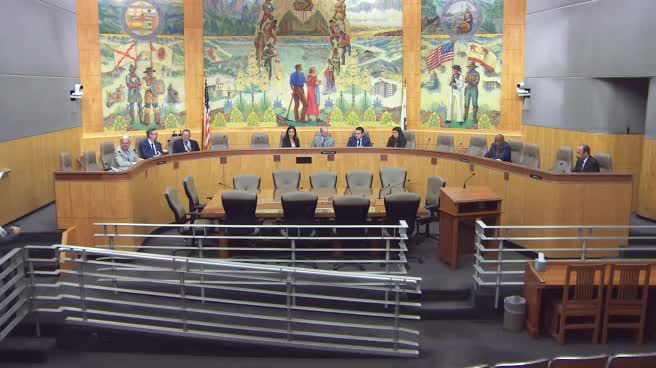 21MIN
Senate Standing Committee on Governmental Organization
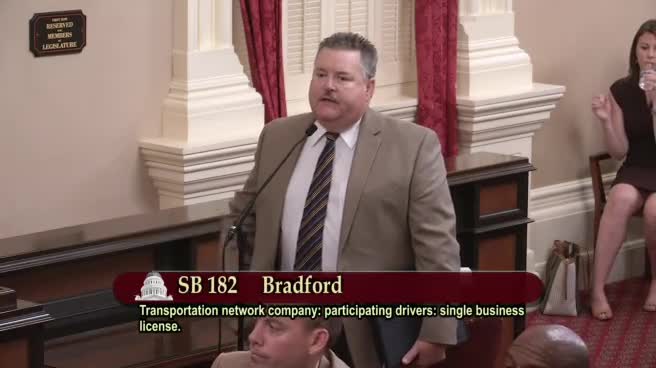 11MIN
Senate Standing Committee on Governance and Finance
Bill Author