SB 601: Public employee retirement systems: asset valuation: reporting.
- Session Year: 2017-2018
- House: Senate
- Latest Version Date: 2017-02-17
Existing law requires the Board of Administration of the Public Employees Retirement System and the Teachers Retirement Board to provide annual reports to the Legislature and the Governor with regard to investment returns on assets of the Public Employees Retirement System and the State Teachers Retirement System, respectively. As part of these reports, the boards are required to calculate and report on the rate of return on investments based on different assumptions.
This bill would require the Board of Administration of the Public Employees Retirement System to report a calculation of liabilities based on a discount rate equal to the yield on a 10-year United States Treasury note in the year prior to the report. The bill would require the Teachers Retirement Board to provide a description of the discount rate the board uses for reporting liabilities calculations, a calculation of liabilities based on a discount rate that is 2% below the long-term rate of return assumed by the board, and a calculation of liabilities based on a discount rate equal to the yield on a 10-year United States Treasury note in the year prior to the report.
Existing law states the intent of the Legislature that the Regents of the University of California provide written notice to the Legislature of any proposed changes to retirement plan benefits, employer or employee contribution rates, or actuarial assumptions affecting the University of California Retirement System, as specified.
This bill would state the intent of the Legislature that the Regents of the University of California provide an annual written report to the Legislature regarding annual return on investments for the University of California Retirement System for the past 20 years and certain information regarding the rate of return of the system by asset type, as specified.
The board shall file an annual report with the Governor and the Legislature by March 1 of each year on all phases of its work that could affect the need for public contributions for costs of administration of the system, including the subjects of benefits, programs, practices, procedures, comments on trends and developments in the field of retirement, and the following information on the assets of the plan:
(a)A copy of the annual audit performed pursuant to Section 22217.
(b)A certification letter from the systems consulting actuary concerning the findings of the most recent actuarial valuation, accompanied by analysis of funding progress and summaries of the actuarial cost method, assumptions, and demographic data, including actual payroll subject to the system.
(c)A review of the systems asset mix strategy, a market review or the economic and financial environment in which investments were made, and a summary of the systems general investment strategy.
(d)A description of the investments of the system at cost and market value, and a summary of major changes that occurred since the previous year.
(e)The annual return on investments and the following information regarding the rate of return of the system by asset type:
(1)Time-weighted market value rate of return on a five-year, three-year, and one-year basis.
(2)Time-weighted book value rate of return on a five-year, three-year, and one-year basis.
(3)Portfolio return comparisons that compare investment returns with universes and indexes.
(f)A description of the discount rate utilized by the board for reporting liabilities.
(1)A calculation of those liabilities based upon a discount rate that is 2 percent below the long-term rate of return actually assumed by the board.
(2)A calculation of those liabilities that is based upon a discount rate that is equal to the yield on a 10-year United States Treasury note in the year prior to the report.
(f)(g)A report on the use of outside investment advisers and managers.
(g)(h)A report on the nature and cost of investment contract services used, including either the start date of an existing contract or, if there are multiple existing contracts with the same contractor or vendor, the earliest start date.
(h)(i)A report on shareholder voting.
(i)(j)A report for the prior fiscal year on the following information:
(1)The percentage of purchasing power protection and any changes adopted by the board.
(2)The extent to which inflation has eroded the purchasing power of benefits provided under the Defined Benefit Program.
(3)The amount of supplementary increases in retirement allowances required to preserve the purchasing power of benefits provided by the Defined Benefit Program.
SEC. 2.Section 7507.5 of the Government Code is amended to read:7507.5.(a)It is the intent of the Legislature that the Regents of the University of California provide written notice to the Legislature of any proposed changes to retirement plan benefits, employer or employee contribution rates, or actuarial assumptions affecting the University of California Retirement System, at least 60 days prior to the effective date thereof. The written notice shall be provided to the Joint Legislative Budget Committee and the fiscal subcommittees and shall consist of:
(a)(1)A description and explanation of each specific proposed change to the benefit structure, contribution rates, or actuarial assumptions.
(b)(2)The actuarial impact upon future annual costs of each proposed change.
(b)(1)It is the intent of the Legislature that the Regents of the University of California provide an annual written report to the Legislature regarding annual return on investments for the University of California Retirement System for the past 20 years and the following information regarding the rate of return of the system by asset type:
(A)Time-weighted market value rate of return on a five-year, three-year, and one-year basis.
(B)Time-weighted book value rate of return on a five-year, three-year, and one-year basis.
(C)Portfolio return comparisons that compare investment returns with universes and indexes.
(D)A description of the discount rate utilized by the system for reporting liabilities.
(i)A calculation of those liabilities based upon a discount rate that is 2 percent below the long-term rate of return actually assumed by the system.
(ii)A calculation of those liabilities that is based upon a discount rate that is equal to the yield on a 10-year United States Treasury note in the year previous to the report.
(2)It is the intent of the Legislature that the report described in paragraph (1) be submitted in compliance with Section 9795.
SEC. 3.Section 20229 of the Government Code is amended to read:20229.(a)The board, notwithstanding Section 10231.5, shall provide the Legislature, the Governor, and the Chair of the California Actuarial Advisory Panel, established pursuant to Section 7507.2, with an annual report that includes all of the following, as these items apply to state employee retirement plans:
(1)(A)A description of the investment return assumption utilized by the board when determining the contribution rates.
(B)A calculation of the contribution rates utilizing an investment return assumption 2 percentage points above and 2 percentage points below the investment return assumption utilized by the board.
(2)(A)A description of the amortization period for any unfunded liabilities utilized by the board when determining the contribution rates.
(B)A calculation of the contribution rates based on an amortization period equal to the estimated average remaining service periods of employees covered by the contributions.
(3)(A)A description of the discount rate utilized by the board for reporting liabilities.
(B)A calculation of those liabilities based upon a discount rate that is 2 percent below the long-term rate of return actually assumed by the board.
(C)A calculation of those liabilities that is based upon a discount rate that is equal to the yield on a 10-year United States Treasury note in the year prior to the report.
(4)The market value of the assets controlled by the board and an explanation of how the actuarial value assigned to those assets differs from the market value of those assets.
(b)Each legislative session, the Chair of the California Actuarial Advisory Panel, or his or her designee, shall, during a publicly noticed joint hearing of the Senate Committee on Public Employment and Retirement and the Assembly Committee on Public Employees, Retirement and Social Security, do all of the following based on information received in the report required by subdivision (a):
(1)Explain the role played by the investment return assumption and amortization period in the calculation of the contribution rates.
(2)Describe the consequences for future state budgets should the investment return assumption not be realized.
(3)Report whether the boards amortization period exceeds the estimated average remaining service periods of employees covered by the contributions.
(c)The report required by subdivision (a) shall be submitted in compliance with Section 9795.
|
Date
|
Status
|
|---|---|
| Feb 1, 2018 | Returned to Secretary of Senate pursuant to Joint Rule 62(a). |
| Mar 27, 2017 | March 27 set for first hearing. Failed passage in committee. (Ayes 2. Noes 3.) |
| Mar 17, 2017 | Set for hearing March 27. |
| Mar 2, 2017 | Referred to Com. on P.E. & R. |
| Feb 21, 2017 | From printer. May be acted upon on or after March 23. |
| Feb 17, 2017 | Introduced. Read first time. To Com. on RLS. for assignment. To print. |
|
Date
|
Description
|
Location
|
Votes
|
|
|---|---|---|---|---|
| Mar 27, 2017 | Do pass, but first be re-referred to the Committee on [Appropriations] | Senate Standing Committee on Public Employment and Retirement |
Failed |
This list shows positions taken on this bill by organizations on the date displayed, which is linked to the original source.
Positions by individuals are not included.
|
Organization
|
Position
|
Date
|
|---|---|---|
| Association Of California State Supervisors | * Against | Mar 27, 2017 |
| California Professional Firefighters | * Against | Mar 27, 2017 |
| California School Employees Association | * Against | Mar 27, 2017 |
| Los Angeles County Professional Peace Officers Association | ** Against | Mar 23, 2017 |
| Organization Of Smud Employees | ** Against | Mar 23, 2017 |
| San Diego County Court Employees Association | ** Against | Mar 23, 2017 |
| San Luis Obispo County Employees Association | ** Against | Mar 23, 2017 |
| United Public Employees | ** Against | Mar 23, 2017 |
SENATE COMMITTEE ON
PUBLIC EMPLOYMENT AND RETIREMENT
Dr. Richard Pan, Chair
2017 - 2018 Regular
Bill No: SB 601 Hearing Date: 3/27/17
Author: | Morrell | ||
Version: | 2/17/17 As introduced | ||
Urgency: | No | Fiscal: | Yes |
Consultant: | Glenn Miles | ||
Subject: Public employee retirement systems: asset valuation: reporting
SOURCE: Author
DIGEST: This bill requires the California Public Employees’ Retirement System (CalPERS) and the California State Teachers’ Retirement System (CalSTRS) to include a calculation of the systems’ respective liabilities based upon a lower discount rate than currently reported in their respective annual reports to the Legislature. The bill also expresses the Legislature’s intent that the Regents of the University of California provide a similar report.
ANALYSIS:
Existing law:
- Requires CalSTRS to file an annual report with the Governor and the Legislature by March 1 of each year on all phases of its work that could affect the need for public contributions for costs of administration of the system, including the subjects of benefits, programs, practices, procedures, comments on trends and developments in the field of retirement, and the following information on the assets of the plan:
a) A copy of the annual audit performed by a Certified Public Accountant or Public Account.
b) A certification letter from the system’s consulting actuary concerning the findings of the most recent actuarial valuation, accompanied by analysis of funding progress and summaries of the actuarial cost method, assumptions, and demographic data, including actual payroll subject to the system.
c) A review of the system’s asset mix strategy, a market review or the economic and financial environment in which investments were made, and a summary of the system’s general investment strategy.
d) A description of the investments of the system at cost and market value, and a summary of major changes that occurred since the previous year.
e) The annual return on investments and the following information regarding the rate of return of the system by asset type:
- Time-weighted market value rate of return on a five-year, three-year, and one-year basis.
- Time-weighted book value rate of return on a five-year, three-year, and one-year basis.
- Portfolio return comparisons that compare investment returns with universes and indexes.
f) A report on the use of outside investment advisers and managers.
g) A report on the nature and cost of investment contract services used, including either the start date of an existing contract or, if there are multiple existing contracts with the same contractor or vendor, the earliest start date.
- A report on shareholder voting.
- A report for the prior fiscal year on the following information:
- The percentage of purchasing power protection and any changes adopted by the board.
- The extent to which inflation has eroded the purchasing power of benefits provided under the Defined Benefit Program.
- The amount of supplementary increases in retirement allowances required to preserve the purchasing power of benefits provided by the Defined Benefit Program.
- Declares the intent of the Legislature that the Regents of the University of California provide written notice to the Legislature of any proposed changes to retirement plan benefits, employer or employee contribution rates, or actuarial assumptions affecting the University of California Retirement System, at least 60 days prior to the effective date thereof. The written notice shall be provided to the Joint Legislative Budget Committee and the fiscal subcommittees and shall consist of:
a) A description and explanation of each specific proposed change to the benefit structure, contribution rates, or actuarial assumptions.
b) The actuarial impact upon future annual costs of each proposed change.
- Requires CalPERS to provide an annual report that includes all of the following:
a) A description of the investment return assumption utilized by the board when determining the contribution rates.
b) A calculation of the contribution rates utilizing an investment return assumption 2 percentage points above and 2 percentage points below the investment return assumption utilized by the board.
c) A description of the amortization period for any unfunded liabilities utilized by the board when determining the contribution rates.
d) A calculation of the contribution rates based on an amortization period equal to the estimated average remaining service periods of employees covered by the contributions.
e) A description of the discount rate utilized by the board for reporting liabilities.
- A calculation of those liabilities based upon a discount rate that is 2 percent below the long-term rate of return actually assumed by the board.
- The market value of the assets controlled by the board and an explanation of how the actuarial value assigned to those assets differs from the market value of those assets.
This bill:
- Requires the CalSTRS board to provide:
- A description of the discount rate utilized by the board for reporting liabilities.
- A calculation of CalSTRS’ liabilities based upon a discount rate that is 2 percent below the long-term rate of return actually assumed by the board.
- A calculation of those liabilities that is based upon a discount rate that is equal to the yield on a 10-year United States Treasury note in the year prior to the report.
- Declares the Legislature’s intent that the Regents of the University of California provide an annual written report to the Legislature regarding annual return on investments for the University of California Retirement System for the past 20 years and the following information regarding the rate of return of the system by asset type:
- Time-weighted market value rate of return on a five-year, three-year, and one-year basis.
- Time-weighted book value rate of return on a five-year, three-year, and one-year basis.
- Portfolio return comparisons that compare investment returns with universes and indexes.
- A description of the discount rate utilized by the system for reporting liabilities.
- A calculation of those liabilities based upon a discount rate that is 2 percent below the long-term rate of return actually assumed by the system.
ii) A calculation of those liabilities that is based upon a discount rate that is equal to the yield on a 10-year United States Treasury note in the year previous to the report.
- Requires the CalPERS Board to include in its annual asset and liability report to the Legislature a calculation of liabilities that is based upon a discount rate that is equal to the yield on a 10-year United States Treasury note in the year prior to the report.
Background
The discount rate is the long-term interest rate used to determine contributions necessary to fund future pension benefits and is also known as the assumed rate of return because it's the return a pension fund expects its investments to earn during the fiscal year. Whenever the discount rate is reduced, it decreases the funded status because the fund is anticipating less investment return to offset the fund’s expected liabilities.
Calculating public pension fund liabilities based upon a discount rate that is equal to the yield on a 10-year United States Treasury note in the year previous to the report would cause the fund’s unfunded liabilities to appear to be greater than currently reported since 10-year Treasuries have been at record low interest rates since the 2008 financial crisis and the Federal Reserves unprecedented efforts to support the economy with accommodative monetary policy.
Public pension funds typically base their investment return assumption on a thorough market analysis applied to the specific characteristics of a broadly diversified investment portfolio. Liabilities are already reported based on a range of rates.
In contrast, SB 601 also stipulates that liabilities be calculated assuming a discount rate equal to the yield on a 10-year United States Treasury note in the year prior to the report. This calculation artificially inflates plan liabilities by discounting them at the “risk free” rate of return, rather than the return expected to be earned from the diversified investment portfolio utilized by CalSTRS.
CalSTRS currently provides the unfunded liability and contribution rates necessary to address it using a range of alternative discount rates as required under governmental accounting standards (see page 55 of the CalSTRS CAFR). Valuing liabilities using the yield on a 10-year United States Treasury note will yield starkly different results without any added value, particularly when applied to a portfolio the size of CalSTRS. Significant ongoing communication would be required for members, other CalSTRS stakeholders and the general public to contextualize increasingly complex financial reporting.
Related/Prior Legislation
SB 820 (Walters, 2011), which died in Senate Public Employment and Retirement Committee, would have required the CalPERS board to include in the annual asset and liability report to the Legislature a calculation of liabilities based upon a discount rate equal to the average rate of investment return since the establishment of the fund, as well as a calculation of those liabilities based on a discount rate equal to an average rate of investment return since January 1, 1984.
FISCAL EFFECT: Appropriation: No Fiscal Com.: Yes Local: No
SUPPORT:
None received
OPPOSITION:
Los Angeles County Professional Peace Officers Association
Organization of SMUD Employees
San Diego County Court Employees Association
San Luis Obispo County Employees Association
United Public Employees
ARGUMENTS IN SUPPORT: According to the author, “SB 601 will simply give the legislature and the public a more complete picture of the state’s unfunded public pension liabilities” by requiring that “CalPERS, CalSTRS, and the UC Retirement Plan include in their annual financial reports an analysis of their expected assets and liabilities utilizing a risk-free discount rate tied to the 10-year Treasury note.”
ARGUMENTS IN OPPOSITION: According to the Los Angeles County Professional Peace Officers Association, the discount rate is a critical component of financial planning which CalPERS will be reducing in stages from 7.5 to 7 by 2019. “CalPERS recently started a comprehensive review of assets and liabilities…(and is) currently working to provide the public agencies and school districts with the clear financial roadmap needed to properly plan their budgets over several years.” “SB 601 is unnecessary.”
Discussed in Hearing
 17MIN
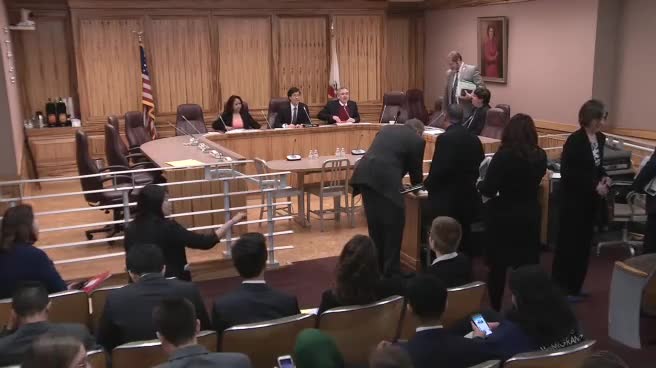
Senate Standing Committee on Public Employment and Retirement
Bill Author
Bill Co-Author(s):