SB 786: Alcoholism or drug abuse recovery or treatment facilities: overconcentration.
- Session Year: 2017-2018
- House: Senate
- Latest Version Date: 2018-01-03
(1)Existing law provides for the licensure and regulation of alcoholism or drug abuse recovery or treatment facilities serving adults by the State Department of Health Care Services, as prescribed. Existing law makes a violation of these provisions punishable by a civil penalty of not less than $25 or more than $50 per day for each violation, with additional penalties for repeat violations, as specified.
This bill would require, for any licensing application submitted on or after January 1, 2018, 2019, the department to deny an application for a new facility license, if the proposed location is in proximity to an existing facility in an area zoned residential that would result in overconcentration, as defined. The bill would prohibit the expansion or intensification of legal nonconforming facilities, as defined. The bill would require the department or a county licensing agency, at least 45 days prior to approving any application for any new facility, to notify in writing the planning agency of the city, if the facility is to be located in the city, or the planning agency of the county, if the facility is to be located in an unincorporated area, of the proposed location of the facility. post on its Internet Web site the address of the proposed new facility, as specified, and would require the license applicant to notify in writing the city or unincorporated areas planning department in the jurisdiction where the proposed facility would be located of the license application and provide the applicable planning department a copy of the license application. By requiring a county licencing agency to notify post in this manner, this bill would impose a state-mandated local program. The bill would authorize a city or county to request denial of the license applied for on the basis of an overconcentration of facilities.
This bill would additionally make initial licenses to providers provisional, and revokable for good cause, as defined. The bill would require all programs and medical services offered or provided by a licensed alcoholism or drug abuse recovery or treatment facility to be specified in the license application and provided exclusively within the licensed facility on the licensed property and for the benefit of the residential patients or program participants. The bill would increase the penalties for a violation of the licensing and regulatory provisions to not less than $1,000 or more than $15,000 per day for each violation, and increase the additional penalties for repeat violations, as specified.
(2)The California Constitution requires the state to reimburse local agencies and school districts for certain costs mandated by the state. Statutory provisions establish procedures for making that reimbursement.
This bill would provide that, if the Commission on State Mandates determines that the bill contains costs mandated by the state, reimbursement for those costs shall be made pursuant to the statutory provisions noted above.
(1)Existing law provides for the licensure and regulation of alcoholism or drug abuse recovery or treatment facilities serving adults by the State Department of Health Care Services, as prescribed.
This bill would require, for any licensing application submitted on or after January 1, 2018, the department to deny an application for a new facility license, if the proposed location is in proximity to an existing facility in an area zoned residential that would result in overconcentration, as defined. The bill would require the department or a county licensing agency, at least 45 days prior to approving any application for any new facility, to notify in writing the planning agency of the city, if the facility is to be located in the city, or the planning agency of the county, if the facility is to be located in an unincorporated area, of the proposed location of the facility. By requiring a county licencing agency to notify in this manner, this bill would impose a state-mandated local program. The bill would authorize a city or county to request denial of the license applied for on the basis of an overconcentration of facilities.
(2)The California Constitution requires the state to reimburse local agencies and school districts for certain costs mandated by the state. Statutory provisions establish procedures for making that reimbursement.
This bill would provide that, if the Commission on State Mandates determines that the bill contains costs mandated by the state, reimbursement for those costs shall be made pursuant to the statutory provisions noted above.
(a) Upon receipt of a completed written application, fire clearance, and licensing fee from the prospective licensee, and subject to the departments review and determination that the prospective licensee can comply with this chapter and regulations adopted pursuant to this chapter, the department may issue a single license to the following types of alcoholism or drug abuse recovery or treatment facilities:
(1) A residential facility.
(2) A facility wherein separate buildings or portions of a residential facility are integral components of a single alcoholism or drug abuse recovery or treatment facility and all of the components of the facility are managed by the same licensee.
(b) Failure to submit a completed written application, fire clearance, and payment of the required licensing fee in a timely manner shall result in termination of the departments licensure review and shall require submission of a new application by the prospective licensee.
(c) Failure of the prospective licensee to demonstrate the ability to comply with this chapter or the regulations adopted pursuant to this chapter shall result in departmental denial of the prospective licensees application for licensure.
(d)Initial licenses to providers at new facilities or new providers at existing facilities shall be provisional for one year. During the term of a provisional license, the department may revoke the license for good cause. For the purposes of this section, good cause includes failure to operate in compliance with this chapter or the regulations adopted pursuant to this chapter or comply with the conditions of a license or otherwise fail to provide an acceptable standard of care to residential patients or program participants. Licensees whose provisional licenses are revoked may not reapply for a new provisional license for six months following revocation.
SEC. 2.Section 11834.10 of the Health and Safety Code is amended to read:11834.10.A licensee shall not operate an alcoholism or drug abuse recovery or treatment facility beyond the conditions and limitations specified on the license. All programs and services offered or provided by a licensed alcoholism or drug abuse recovery or treatment facility, including, but not limited to, incidental medical services pursuant to Section 11834.025, must be specified in the license application and provided exclusively within the licensed facility on the licensed property and for the benefit of the residential patients or program participants.
SECTION 1.SEC. 3.Section 11834.11 is added to the Health and Safety Code, to read:11834.11.(a)For any licensing application submitted on or after January 1, 2018, 2019, the department shall deny an application for a new facility license, if the proposed location is in proximity to an existing facility that would result in overconcentration in an area zoned for residential that would result in overconcentration. use.
(b)As used in this section, overconcentration means that if a new license is issued, two or more alcoholism or drug abuse recovery or treatment facilities will be separated by a distance of 300 feet or less, as measured from the nearest property line on which an existing facility is located to the nearest property line of the proposed facility in an area zoned residential.
(c)(1)Legal nonconforming facilities may continue to operate subject to the terms and conditions of their existing licenses. No expansion or intensification of legal nonconforming facilities shall be allowed unless the facility conforms with the requirements of this section.
(2)For the purposes of this section, a legal nonconforming facility is a licensed facility that is operating in compliance with all local, state, and federal laws on December 1, 2018, but that is located within 300 feet or less of another licensed facility operating in compliance with local, state, and federal laws on December 1, 2018, as measured from the nearest property lines on which the existing facilities are located, as long as they are in continuous operation.
(c)(d)At least 45 days prior to approving any application for a new facility, the department or county licensing agency shall notify in writing the planning agency of the city, if the facility is to be located in the city, or the planning agency of the county, if the facility is to be located in an unincorporated area, of the proposed location of the facility. post on its Internet Web site the address of the proposed new facility in a list organized by city or unincorporated county area in which permit applications are made. Within five days of submitting its application, a license applicant shall notify in writing the city or unincorporated areas planning department in the jurisdiction where the proposed facility would be located of the license application and provide the applicable planning department a copy of the license application.
(d)(e)Any city or county may request denial of the license applied for on the basis of an overconcentration of facilities.
SEC. 4.Section 11834.31 of the Health and Safety Code is amended to read:11834.31.If a facility is alleged to be in violation of Section 11834.30, the department shall conduct a site visit to investigate the allegation. If the departments employee or agent finds evidence that the facility is providing alcoholism or drug abuse recovery, treatment, or detoxification services without a license, the employee or agent shall take the following actions:
(a) Submit the findings of the investigation to the department.
(b) Upon departmental authorization, issue a written notice to the facility stating that the facility is operating in violation of Section 11834.30. The notice shall include all of the following:
(1) The date by which the facility shall cease providing services.
(2) Notice that the department will assess against the facility a civil penalty of two hundred dollars ($200) thousand dollars ($2,000) per day for every day the facility continues to provide services beyond the date specified in the notice.
(3) Notice that the case will be referred for civil proceedings pursuant to Section 11834.32 in the event the facility continues to provide services beyond the date specified in the notice.
(c) Inform the facility of the licensing requirements of this chapter.
SEC. 5.Section 11834.34 of the Health and Safety Code is amended to read:11834.34.(a) In addition to the penalties of suspension or revocation of a license issued under this chapter, the department may also levy a civil penalty for violation of this chapter or the regulations adopted pursuant to this chapter.
(1) The amount of the civil penalty shall not be less than twenty-five dollars ($25) one thousand dollars ($1,000) or more than fifty dollars ($50) fifteen thousand dollars ($15,000) per day for each violation, except where the nature or seriousness of the violation or the frequency of the violation warrants a higher penalty or an immediate civil penalty assessment, or both, as determined by the department. Except for penalties assessed pursuant to Section 11834.31, in In no event shall a civil penalty assessment exceed one hundred fifty dollars ($150) fifteen thousand dollars ($15,000) per day.
(2) Any licensee that is cited for repeating the same violation within 24 months of the first violation is subject to an immediate civil penalty of one hundred fifty dollars ($150) and fifty dollars ($50) thousand five hundred dollars ($1,500) and one thousand dollars ($1,000) for each day the violation continues until the deficiency is corrected.
(3) Any licensee that has been assessed a civil penalty pursuant to paragraph (2) that repeats the same violation within 24 months of the violation subject to paragraph (2) is subject to an immediate civil penalty of one hundred fifty dollars ($150) two thousand dollars ($2,000) for each day the violation continues until the deficiency is corrected.
(b) Prior to the assessment of any civil penalty, the department shall provide the licensee with notice requiring the licensee to correct the deficiency within the period of time specified in the notice.
SEC. 2.SEC. 6.If the Commission on State Mandates determines that this act contains costs mandated by the state, reimbursement to local agencies and school districts for those costs shall be made pursuant to Part 7 (commencing with Section 17500) of Division 4 of Title 2 of the Government Code.
(a)For any licensing application submitted on or after January 1, 2018, the department shall deny an application for a new facility license, if the proposed location is in proximity to an existing facility in an area zoned residential that would result in overconcentration.
(b)As used in this section, overconcentration means that if a new license is issued, two or more alcoholism or drug abuse recovery or treatment facilities will be separated by a distance of 300 feet or less, as measured from the nearest property line on which an existing facility is located to the nearest property line of the proposed facility in an area zoned residential.
(c)At least 45 days prior to approving any application for a new facility, the department or county licensing agency shall notify in writing the planning agency of the city, if the facility is to be located in the city, or the planning agency of the county, if the facility is to be located in an unincorporated area, of the proposed location of the facility.
(d)Any city or county may request denial of the license applied for on the basis of an overconcentration of facilities.
SEC. 2.If the Commission on State Mandates determines that this act contains costs mandated by the state, reimbursement to local agencies and school districts for those costs shall be made pursuant to Part 7 (commencing with Section 17500) of Division 4 of Title 2 of the Government Code.
|
Date
|
Status
|
|---|---|
| Feb 1, 2018 | Returned to Secretary of Senate pursuant to Joint Rule 56. |
| Jan 8, 2018 | January 10 set for second hearing canceled at the request of author. |
| Jan 3, 2018 | From committee with author's amendments. Read second time and amended. Re-referred to Com. on HEALTH. |
| Dec 21, 2017 | Set for hearing January 10. |
| Apr 18, 2017 | April 19 set for first hearing canceled at the request of author. |
| Apr 5, 2017 | Set for hearing April 19. |
| Mar 9, 2017 | Referred to Com. on HEALTH. |
| Feb 21, 2017 | From printer. May be acted upon on or after March 23. |
| Feb 17, 2017 | Introduced. Read first time. To Com. on RLS. for assignment. To print. |
This list shows positions taken on this bill by organizations on the date displayed, which is linked to the original source.
Positions by individuals are not included.
|
Organization
|
Position
|
Date
|
|---|---|---|
| California Access Coalition | ** Against | Apr 17, 2017 |
| California Consortium of Addiction Programs and Professionals | ** Against | Apr 17, 2017 |
| California Contract Cities Association | ** Support | Apr 17, 2017 |
| California Society Of Addiction Medicine | ** Against | Apr 17, 2017 |
| City of Agoura Hills | ** Support | Apr 17, 2017 |
| City of Glendora | ** Support | Apr 17, 2017 |
| City of Lakewood | ** Support | Apr 17, 2017 |
| City of San Marcos | ** Support | Apr 17, 2017 |
| City of Whittier | ** Support | Apr 17, 2017 |
| Cliffside Malibu | ** Against | Apr 17, 2017 |
| County Behavioral Health Directors Association of California | ** Against | Apr 17, 2017 |
| Disability Rights California | ** Against | Apr 17, 2017 |
| League Of California Cities | ** Support | Apr 17, 2017 |
| Two individuals | ** Support | Apr 17, 2017 |
| western center on law and poverty | ** Against | Apr 17, 2017 |
SENATE COMMITTEE ON HEALTH
Senator Ed Hernandez, O.D., Chair
BILL NO: SB 786
AUTHOR: | Mendoza | ||
VERSION: | February 17, 2017 | ||
HEARING DATE: | April 19, 2017 | ||
CONSULTANT: | Reyes Diaz | ||
SUBJECT: Alcoholism or drug abuse recovery or treatment facilities: overconcentration
SUMMARY:
Requires the Department of Health Care Services (DHCS) to deny an application for new residential alcoholism or drug abuse recovery or treatment facilities if the proposed location is in proximity to an existing facility, as specified, and would result in “overconcentration,” as defined. Requires DHCS to notify specified entities of the proposed location of a new facility.
Existing federal law: Renders unlawful, under the Fair Housing and Amendments Act (FHAA), to discriminate in the sale or rental, or to otherwise make unavailable or deny, a dwelling to any buyer or renter because of a “handicap,” as defined, of that buyer or renter; a person residing in or intending to reside in that dwelling after it is so sold, rented, or made available; or any person associated with that buyer or renter. Defines “handicap” as a physical or mental impairment which substantially limits one or more of a person's major life activities, including those recovering from a substance use disorder (SUD).
Existing state law:
- Requires DHCS to license alcoholism or drug abuse recovery or treatment facilities (RTFs) that provide 24-hour residential, non-medical services to adults who are recovering from problems related to alcohol, drug, or alcohol and drug misuse or abuse, and who need alcohol, drug, or alcohol and drug recovery, treatment, or detoxification services.
- Requires RTF licensees to provide at least one of the following: recovery, treatment, or detoxification services. Requires DHCS to adopt regulations requiring records and procedures appropriate for the type of service provided. Provides that the records and procedures can include all of the following: admission criteria; intake process; assessments; recovery, treatment, or detoxification planning; referral; documentation of provision of recovery, treatment, or detoxification services; discharge and continuing care planning; or indicators of recovery, treatment, or detoxification outcomes.
- Prohibits a person, firm, partnership, association, corporation, or local governmental entity from operating, establishing, managing, conducting, or maintaining an RTF to provide recovery, treatment, or detoxification services within this state without first obtaining a current valid license from DHCS. Requires DHCS to conduct a site visit to investigate allegations against an entity that is providing services without a license. Permits DHCS’s director to bring an action to enjoin the violation in the superior court in and for the county in which the violation occurred.
- Requires an RTF that serves six or fewer persons, whether or not unrelated persons are living together, to be considered a residential use of property. Requires the residents and operators of the RTF to be considered a family for the purposes of any law or zoning ordinance that relates to the residential use of property.
- Prohibits an RTF that serves six or fewer persons from being included within the definition of a boarding house, rooming house, institution or home for the care of minors, the aged, or persons with mental health disorders, foster care home, guest home, rest home, community residence, or other similar term that implies that the RTF is a business run for profit or differs in any other way from a single-family residence.
- Requires, pursuant to the Community Care Facilities Act (CCFA), the Department of Social Services (DSS) to deny an application for a new residential care facility license if the director determines that the location is in proximity to an existing residential care facility that would result in “overconcentration,” as defined. Defines “overconcentration” to mean that if a new license is issued, there will be residential care facilities that are separated by a distance of 300 feet or less.
- Prohibits DSS from considering in determining overconcentration or denying an application upon the basis of overconcentration for foster family homes, residential facilities for the elderly, transitional shelter care facilities, and temporary shelter care facilities.
- Requires CCFA facilities licensed by DSS that serve six or fewer persons to be considered a residential use of property [identical to 4) above]. Prohibits these same facilities from being included within the definition of a term that implies the facility differs in any way from a single-family residence [identical to 5) above].
- Prohibits, under the Fair Employment and Housing Act (FEHA), discrimination against any person in any housing accommodation on the basis of race, color, religion, sex, marital status, national origin, ancestry, familial status, or disability. Specifies that discriminatory land use regulations, zoning laws, and restrictive covenants are unlawful acts.
This bill:
- Requires DHCS to deny an application for a new RTF submitted on or after January 1, 2018, if the proposed location of the RTF is in proximity to an existing facility in an area zoned residential that would result in “overconcentration,” as defined. Defines “overconcentration” as, if a new RTF license is issued, two or more RTFs being separated by a distance of 300 feet or less, as specified.
- Requires DHCS or a county licensing agency to notify in writing, at least 45 days prior to approving any application for a new RTF, the planning agency of the city or of the county, as specified, of the proposed location of the facility.
- Permits any city or county to request denial of a RTF license applied for on the basis of an overconcentration of facilities.
FISCAL EFFECT:
This bill has not been analyzed by a fiscal committee.
COMMENTS:
- Author’s statement. According to the author, state-licensed RTFs with capacities of six or fewer persons are important treatment models that are integrated into communities throughout the state, including low-density areas zoned solely for single-family residential homes. State-licensed facilities that appropriately house six or fewer persons serve an important need that benefits patients and communities. However, due to the high profit margins from economies of scale, six-bed facilities often expand into adjacent neighboring residences, which create multi-structure, campus-style facilities that detract from the benefits to the patients of being integrated into a low-density neighborhood. There is a need for enabling legislative authority to help maintain real residential neighborhoods that are central to the social model programs that benefit disabled persons, including recovering alcoholics and addicts. SB 786 would enable the future distribution of legally licensed RTFs to provide valuable rehabilitation and support services in a therapeutic residential neighborhood environment to maintain the purpose and integrity of neighborhood care programs, which benefits the individual patients, as well as the greater community. This bill will provide consistency with most other state-licensed group homes to benefit all categories of protected individuals recovering in state-licensed group homes.
- RTFs. RTFs licensed by DHCS, based on what is commonly referred to as the social model, are currently allowed to provide recovery, treatment, and detoxification services. (The Department of Public Health licenses medical model RTFs known as chemical dependency recovery hospitals.) The services provided by these RTFs include group and individual counseling, educational sessions, and alcoholism or drug abuse recovery and treatment planning. Social model RTFs are allowed to provide clients first aid and emergency care, and since the passage of AB 848 (Stone, Chapter 744, Statutes of 2015), RTFs can apply to DHCS for an additional license to provide incidental medical services by a licensed physician and surgeon or other health care practitioner, as specified. As part of their licensing function, DHCS conducts reviews of RTF operations every two years, or as necessary. DHCS’s SUD Compliance Division checks for compliance with statute and regulations to ensure the health and safety of RTF residents and investigates all complaints related to RTFs, including deaths, complaints against staff, and allegations of operating without a license. DHCS has the authority to suspend or revoke a license for conduct in the operation of an RTF that is inimical to the health, morals, welfare, or safety of either an individual in, or receiving services from, the facility or to the people of the State of California.
According to DHCS, as of March 9, 2017, DHCS licenses 526 RTFs that serve six or fewer residents. (This is an increase from the 298 RTFs serving six or fewer in 2015, which according to DHCS is due to new government and private health insurance funding sources for SUD treatment, which has resulted in the need for expansion to establish additional treatment access.) The largest capacity RTF licensed by DHCS has 265 beds. The total number of DHCS-licensed RTFs in the state is 970.
- DSS-licensed facilities. The author states that the provisions in this bill would provide consistency with most other state-licensed group homes. Pursuant to current law, DSS-licensed facilities under the CCFA include the same provisions as RTF licensing law that prohibit facilities that serve six or fewer residents from being included within the definition of any term that implies that the facility is a business run for profit or differs in any other way from a single-family residence. According to DSS, the overconcentration rule in current law is not applied to facilities that serve six or fewer persons, as they are considered to be like any other single-family dwelling, and state law prohibits any restrictions from being applied to them if the same restrictions are not applied to other single-family residences in the same area.
- Sober living homes (SLHs). A 2010 report on the National Institutes of Health (NIH) Web site, Sober Living Houses for Alcohol and Drug Dependence: 18-month Outcomes, states that SLHs are not formal treatment programs and are not obligated to comply with state or local regulations applicable to treatment. However, NIH does not provide a formal definition of an SLH. While SLHs do not provide formal treatment, they can serve as part of the continuum of treatment, providing a drug-free and alcohol-free environment for individuals recently discharged from an RTF who often do not have a home or who are not ready to return to the environment they were in before they entered treatment.The report also mentions that it is difficult to determine how many SLHs there are in California because they are outside of the purview of state licensing authorities (so no one is tracking SLHs). The NIH report cites the protection that the FHAA affords SLHs to be located in residentially zoned areas, personal privacy under the Fourth Amendment, and the right of people with disabilities to live together for a shared purpose, such as mutually assisted recovery and maintenance of an abstinent lifestyle. According to DHCS’s Web site, facilities that do not provide alcohol and other drug services and do not require licensure by DHCS include cooperative living arrangements with a commitment or requirement to be free from alcohol and other drugs, sometimes referred to as SLHs, transitional housing, or alcohol- and drug-free housing. If a SLH is providing even one licensable service to adults, then it must obtain a valid RTF license from DHCS.
- Fair housing and equal protection. FEHA makes it illegal to engage in various discriminatory practices relating to the sale and rental of housing based on race, color, religion, sex, marital status, national origin, ancestry, familial status, or disability. The definition of a disability includes individuals recovering from SUDs. FEHA also prohibits land use regulations, zoning ordinances, and restrictive covenants from discriminating in housing on the basis of the aforementioned categories. Additionally, the Americans with Disabilities Act (ADA) gives civil rights protection to individuals with disabilities, similar to the protection provided to individuals on the basis of race, sex, national origin, and religion. Under these federal laws, an individual with a “disability” is someone who has a current physical or mental impairment that substantially limits one or more of that person’s major life activities (such as caring for one’s self or working), has a record of such a substantially limiting impairment, or is regarded as having such an impairment. The ADA applies to those who have successfully completed a drug rehabilitation program, or who are currently enrolled in such programs. A document published by the federal Substance Abuse and Mental Health Services Administration entitled "Know your Rights" explains the federal laws that prohibit discrimination against individuals with disabilities and how they protect people receiving addiction detoxification or maintenance treatment. The document discusses discrimination as treating someone less favorably than someone else because he or she has a disability, once had a disability, or is regarded as having a disability, and states that because addiction is a chronic disease, employers, landlords, government agencies, and health care and treatment providers must comply with anti-discrimination laws that protect people with disabilities when working with individuals recovering from addiction.
- Report about addiction treatment. An article published in Mother Jones in the May/June 2015 issue, “The Rehab Racket: The Way We Treat Addiction is a Costly, Dangerous Mess,” notes that the vast majority of people in need of treatment do not receive anything that approximates evidence-based care. The article notes that while 18.7 million Americans needed alcohol treatment in 2010 only 1.7 million (or 8.8%) received it in specialized facilities. Issues that compound the problem include: a) out of 14,148 addiction treatment facilities in the U.S., only 26% are RTFs; b) only 15% of costs of addiction treatment are covered by private insurance (treatment can range from $1,800 a month at a government-subsidized RTF to $60,000 a month at an RTF that treats celebrities and other high-profile clients); and c) for every federal and state government dollar spent, 95.6 cents went to pay for consequences of substance abuse while only 1.9 cents were spent on any type of prevention or treatment.
- Difficulty siting RTFs. A document published by the U.S. Department of Health and Human Services (DHHS), “Siting Drug and Alcohol Treatment Programs: Legal Challenges to the NIMBY Syndrome,” states that community opposition, “not in my backyard” (NIMBY), prevents or delays the siting of treatment programs, even when an already existing program tries to relocate. NIMBY is often targeted toward other types of health and social service facilities, like shelters for the homeless, group homes for the mentally ill, halfway houses for ex-offenders, SLHs, and other health-related facilities. According to DHHS, many discriminatory zoning ordinances and practices may be unlawful under the Fair Housing Act, the Rehabilitation Act, and the Americans with Disabilities Act. It is also noted that communities often fear the decline of property values and increased crime because of RTFs in the neighborhood. However, the DHHS document states that in almost every instance a community’s fears are unfounded, as RTFs pose no danger to the health and welfare of neighbors, nor draw substance abusers or pushers to the area.
- Newport Beach ordinance. According to the Web site for the City of Newport Beach, in 2008 the Newport Beach City Council adopted an ordinance that changed how the city regulates group residential uses, defined as a “non-traditional single housekeeping unit,” including a boarding house, dorm, reunion rental, state-licensed recovery home, SLHs, and elder care homes. The ordinance required many home operators at the time to obtain a use permit to stay in place. The ordinance requires city approval for new unlicensed homes for recovering addicts in certain neighborhoods. A September 20, 2013, Los Angeles Times article, “Appeals court backs sober-living homes in suit against Newport Beach,” states that the U.S. 9th Circuit Court of Appeals unanimously ruled that the Newport Beach ordinance may have illegally discriminated against those with a disability. The article states the ordinance forced many group homes to close and prevented new ones from opening. A March 26, 2014, article in the Orange County Register, “Newport Beach takes sober home law to Supreme Court,” reported that the Newport Beach City Council petitioned the U.S. Supreme Court about the ruling by the 9th Circuit Court of Appeals, and that the city would know by the end of September 2014 if the court would review the case. The U.S. Supreme Court ultimately declined to review it.
- Discriminating against the disabled? Some alcohol and drug treatment and recovery experts argue most RTFs and SLHs would rather give in to discrimination and shutter their doors than spend years battling it out in courts, which can be very costly. A July 15, 2015, article in the Orange County Register, “Newport Beach settles legal battle over sober-living homes,” states that Newport Beach ended its seven-year battle over SLHs by reaching an agreement with three entities that operate SLHs. The article quotes the attorney representing the SLHs as saying that because a trial could have taken several years his clients were more interested in ending the proceedings rather than battling in court. Also noted in the article is the fact that in 2007, before Newport Beach implemented its ordinance, there were an estimated 86 facilities (both RTFs and SLHs) in the city. As of February 2016, that number was down to 25: 15 RTFs licensed by DHCS and 10 SLHs. The article further notes that the 9th Circuit Court of Appeals sided with the SLHs because there was enough evidence to argue discrimination. In another case, Horizon House Developmental Services, Inc. v. Township of Upper Southampton, township officials first enacted and then revised an ordinance governing group homes for the disabled four times, starting the distance requirement at 3,000 feet between group homes and then revising it to 2,500 feet, and then 1,000 feet, to address what the township thought was clustering of facilities. Horizon House complied with the ordinance but then later sued based on discrimination against the disabled. The court ruled in favor of Horizon House because the ordinance discriminated against the disabled and restricted their housing choices and capped the number of people who could live in the township based on disability. The court also found that the opposition to clustering was based largely on the community’s fears of disabled individuals living in its neighborhoods. In Potomac Group Home Corp. v. Montgomery County, Md., a licensing regulation required a provider of a group home for the disabled to notify neighbors and civic organizations of the types of disabilities of those who intended to live in the home. The requirement was only imposed on group homes for the disabled. A court found that the notification requirement, similar to the one contained in this bill, was void because it applied only to disabled individuals and was not supported by a legitimate governmental interest. The court found that the notification requirement was further evidence of the county’s efforts to treat the disabled differently than those without disabilities and that rather than promote integration the notification requirement galvanized opposition.
- CDI investigation. On November 10, 2016, CDI issued a press release about an investigation that resulted in the arrest of the operators of a Southern California SLH, Community Recovery of Los Angeles (CRLA). The operators were arrested on several felony counts of grand theft and identity theft for allegedly conspiring to defraud clients and insurers out of more than $176 million. Affected insurers include Anthem Blue Cross, Blue Shield, Cigna, Health Net, and Humana, which paid nearly $44 million before discovering the suspected fraud and stopping payments to CRLA. CRLA is accused of luring people with treatment marketing schemes and stealing patient identities to buy health insurance policies for people without their knowledge, as well as committing such acts as submitting claims for services not provided, falsely representing CRLA as a RTF while not being licensed as such, and filing fraudulent health insurance policy applications. CDI Commissioner Dave Jones stated that this case was the first wave of indictments and charges in an ongoing investigation into one of the largest health insurance fraud cases in the state. CDI was assisted in the investigation by various local agencies, and DHCS accompanied detectives to ensure that patients in CRLA facilities were transferred to licensed treatment facilities.
- Legislative counsel letters. While the state’s Legislative Counsel Bureau (LCB) has not issued a formal opinion on the provisions contained in this bill, the author of this bill, and authors of other bills that have been substantially similar to the this one, have received cover letters from LCB stating that the FHAA generally prohibits housing discrimination on the basis of various characteristics, including handicap or familial status, and that recovering alcoholics and drug addicts fall within the scope of the FHAA. The letters further state that provisions in the bills may violate the FHAA if they are enacted with discriminatory intent and do not benefit the protected class or respond to legitimate safety concerns raised by the individuals affected.
- Related legislation. SB 34 (Bates) contains, among other provisions, similar requirements placed on DHCS that are contained in this bill related to overconcentration and notification to local agencies about the proposed RTF location. SB 34 is set for hearing in the Senate Health Committee on April 19, 2017.
AB 1095 (Harper) defines integral RTFs for purposes of licensure by DHCS as any combination of two or more facilities located on the same or different parcels that collectively serve seven or more persons, as specified, including the provision of housing in one facility and recovery programming or related services at another facility or facilities. Excludes integral facilities from being considered a residential use of property, and therefore permits them to be subject to conditional use permits and zoning clearances, or prohibitions by local governments. AB 1095 failed passage in the Assembly Health Committee on March 28, 2017, and was granted reconsideration.
AB 751 (Brough) among other things, would expand the list of non-medical services provided by DHCS-licensed RTFs to include medication services, counseling and therapy services, meals services, scheduling and appointments services, and planning and tracking services. AB 751 is set for hearing in the Assembly Health Committee on April 25, 2017.
- Prior legislation. AB 2403 (Bloom of 2016) contained similar provision as this bill and also would have established a definition for integral facilities and permitted integral facilities to be subject to local regulations and ordinances, as specified. AB 2403 was held under submission in the Assembly Appropriations Committee.
SB 268 (Harman of 2009) would have required applicants seeking a RTF license from the Department of Alcohol and Drug Programs (ADP) to certify that the RTF is consistent with local zoning ordinances and would have required ADP to verify the certification. SB 268 failed passage in the Assembly Health Committee and was subsequently amended to a different topic.
AB 1284 (Huffman of 2009) was substantially similar to AB 2403. AB 1284 was held under submission in the Assembly Appropriations Committee.
AB 2903 (Huffman of 2008) would have authorized ADP to require any person or entity applying for licensure for an RTF to provide specified information to ADP before a license is issued. AB 2903 was held in the Senate Health Committee without being heard.
SB 1000 (Harman of 2008) was substantially similar to SB 268. SB 1000 failed passage in the Senate Health Committee.
SB 530 (Dutton of 2007) was substantially similar to this bill. SB 530 was held in the Senate Health Committee without being heard.
AB 3007 (Emmerson of 2006) was substantially similar to this bill. AB 3007 was held under submission in the Assembly Appropriations Committee.
AB 1225 (Strickland of 2006) would have required the owner of a licensed RTF that serves more than six people to notify the local law enforcement agency of its existence, and would have prohibited an RTF from existing in a location with more than five facilities within a square mile, with more than one facility located on a single city block, or within 1,000 feet of another facility. AB 1225 was referred to but never scheduled to be heard in the Assembly Health Committee.
- Support. Supporters, largely individual cities, argue that this bill aims to address the problem of overconcentration of RTFs in residential neighborhoods and would strike a balance between giving cities greater control and maintaining residential neighborhoods as a therapeutic environment for the social integration of recovering alcoholics and addicts. The Cities of Agoura Hills, Glendora, and Whittier state that while they wholeheartedly support RTFs with six or fewer residents in neighborhoods, profit-driven companies have exploited current law by creating campus-style facilities in single-family neighborhoods, which is detrimental to recovering patients seeking to better integrate into the surrounding community. These cities, the City of Lakewood, and the League of California Cities, state that the provisions in this bill are required of other types of licensed group homes in the state, so this bill would provide some much-needed consistency in California law. The City of Lakewood and the League of California Cities further argue that this bill is consistent with the FHAA, as the intent of this bill is to promote the interest of the protected class (recovering patient) by preserving the integrity of the therapeutic environment of a residential neighborhood.
- Opposition. Opponents, including advocates for those with SUDs and treatment providers, argue that this bill would have the effect of reducing access to treatment for residents, would further stigmatize SUD treatment programs that are community-based, and is not in the interest of the state to allow local governments to erect barriers to housing for those with disabilities. Cliffside Malibu argues that since 1984 the state has regulated RTFs and protected them from interference by local governments because, although virtually all communities recognize the need for such facilities, many would prefer that they be located elsewhere. Cliffside further argues that many affluent communities claim that RTFs result in increased crime and general nuisance, yet proponents of this bill have never been able to show that RTFs in neighborhoods results in criminal activity. Cliffside states that on the contrary a Johns Hopkins study from 2016 found that liquor stores pose a greater risk than RTFs. The California Behavioral Health Directors Association of California cites an Attorney General opinion from 2007 related to RTFs in which the Attorney General concluded that the Legislature’s reference to “local need” in RTF licensing statute in approving RTF licenses did not establish a basis to limit their numbers in any neighborhood on the premise of overconcentration. The Western Center on Law and Poverty (WCLP) argues that any local regulation affecting single-family homes must affect all like homes and may not establish special rules for certain homes. WCLP argues that the state has a serious shortage of specialized housing that serves those with disabilities. California Access Coalition argues that this bill creates new barriers and restrictions for RTFs and will significantly exacerbate the shortage of RTFs, resulting in people winding up in emergency rooms, jails, or homeless. The California Chapter of the American College of Emergency Physicians (California ACEP) states that when patients are facing a substance abuse crisis they go to the emergency room (ER), and while their conditions can be stabilized there, patients often face lengthy delays and obstacles to accessing SUD treatment after an ER discharge. California ACEP argues that the focus should be on encouraging individuals to seek treatment rather than restricting new treatment facilities from being built. Disability Rights California states that this bill narrows the opportunities for persons with disabilities to live in community settings, and that fair housing laws prohibit spacing and location restrictions on housing for the disabled. The California Society of Addiction Medicine argues that if this bill were to become law, NIMBY jurisdictions would declare facility overconcentration and drive all treatment to less politically connected and poorer communities.
- Policy comments.
- Courts have found that policies similar to those proposed under this bill have been predicated on neighbors’ fears of having the disabled in their communities and have not been supported by a legitimate governmental interest. The Committee may wish to consider whether enacting the policies proposed in this bill, without clear data that shows distance requirements aid in the recovery process of RTF residents, is consistent with ensuring adequate access and community-based treatment options for those with SUDs.
- Proponents of this bill argue that licensed RTFs serving six or fewer persons have proliferated in residential neighborhoods. Information from DHCS to Committee staff indicates that 526 of such RTFs are currently licensed throughout the state. The Committee may wish to consider whether this number constitutes overconcentration.
SUPPORT AND OPPOSITION:
Support: California Contract Cities Association (sponsor)
City of Agoura Hills
City of Glendora
City of Lakewood
City of San Marcos
City of Whittier
League of California Cities
Two Individuals
Oppose: California Access Coalition
California Chapter of the American College of Emergency Physicians
California Consortium of Addiction Programs and Professionals
California Society of Addiction Medicine
Cliffside Malibu
County Behavioral Health Directors Association of California
Disability Rights California
Western Center on Law and Poverty
-- END --
Bill Author
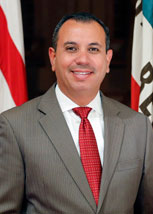
Bill Co-Author(s):
