SB 996: Corporation taxes: tax rates.
- Session Year: 2017-2018
- House: Senate
- Latest Version Date: 2018-04-05
The Corporation Tax Law imposes taxes measured by income at a rate of 8.84%, as specified. The Corporation Tax Law imposes a minimum franchise tax of $800, except as provided, on every corporation incorporated in this state, qualified to transact intrastate business in this state, or doing business in this state.
This bill, for taxable years beginning on or after January 1, 2018, would reduce the corporate tax rate to 6.84%.
This bill would take effect immediately as a tax levy.
The Corporation Tax Law imposes taxes measured by income at a rate of 8.84%, as specified. The Corporation Tax Law imposes a minimum franchise tax of $800, except as provided, on every corporation incorporated in this state, qualified to transact intrastate business in this state, or doing business in this state.
This bill, for taxable years beginning on or after January 1, 2018, would reduce the corporate tax rate to 6.84%.
This bill would take effect immediately as a tax levy.
Existing law requires each person owning taxable personal property, other than specified manufactured home, having an aggregate cost of $100,000 or more for any assessment year to file a signed property statement with the assessor. This bill would make a nonsubstantive change to that provision.Existing law requires each person owning taxable personal property, other than specified manufactured home, having an aggregate cost of $100,000 or more for any assessment year to file a signed property statement with the assessor.
This bill would make a nonsubstantive change to that provision.
(a)With the exception of banks and financial corporations, every each corporation doing business within the limits of this state and not expressly exempted from taxation by the provisions of the Constitution of this state or by this part, shall annually pay to the state, for the privilege of exercising its corporate franchises within this state, a tax according to or measured by its net income, to be computed at the rate of 7.6 percent upon the basis of its net income for the next preceding income year, or if greater, the minimum tax specified in Section 23153.
(b)For calendar or fiscal years ending after June 30, 1973, the rate of tax shall be 9 percent instead of 7.6 percent as provided by subdivision (a).
(c)For calendar or fiscal years ending in 1980 to 1986, inclusive, the rate of tax shall be 9.6 percent.
(d)For calendar or fiscal years ending in 1987 to 1996, inclusive, and for any income year beginning before January 1, 1997, the tax rate shall be 9.3 percent.
(e)For any income year beginning on or after January 1, 1997, and before the income year identified in subparagraph (A) of paragraph (1) of subdivision (f), the tax rate shall be 8.84 percent. The change in rate provided in this subdivision shall be made without proration otherwise required by Section 24251.
(f)(1)For the first taxable year beginning on or after January 1, 2000, the tax imposed under this section shall be the sum of both of the following:
(A)A tax according to or measured by net income, to be computed at the rate of 8.84 percent upon the basis of the net income for the next preceding income year, but not less than the minimum tax specified in Section 23153.
(B)A tax according to or measured by net income, to be computed at the rate of 8.84 percent upon the basis of the net income for the first taxable year beginning on or after January 1, 2000, but not less than the minimum tax specified in Section 23153.
(2)Except as provided in paragraph (1), for taxable years beginning on or after January 1, 2000, and before January 1, 2018, the tax imposed under this section shall be a tax according to or measured by net income, to be computed at the rate of 8.84 percent upon the basis of the net income for that taxable year, but not less than the minimum tax specified in Section 23153.
(g)For taxable years beginning on or after January 1, 2018, the tax imposed under this section shall be a tax according to or measured by net income, to be computed at the rate of 6.84 percent upon the basis of the net income for that taxable year, but not less than the minimum tax specified in Section 23153.
SEC. 2.This act provides for a tax levy within the meaning of Article IV of the California Constitution and shall go into immediate effect.
(a)With the exception of banks and financial corporations, every corporation doing business within the limits of this state and not expressly exempted from taxation by the provisions of the Constitution of this state or by this part, shall annually pay to the state, for the privilege of exercising its corporate franchises within this state, a tax according to or measured by its net income, to be computed at the rate of 7.6 percent upon the basis of its net income for the next preceding income year, or if greater, the minimum tax specified in Section 23153.
(b)For calendar or fiscal years ending after June 30, 1973, the rate of tax shall be 9 percent instead of 7.6 percent as provided by subdivision (a).
(c)For calendar or fiscal years ending in 1980 to 1986, inclusive, the rate of tax shall be 9.6 percent.
(d)For calendar or fiscal years ending in 1987 to 1996, inclusive, and for any income year beginning before January 1, 1997, the tax rate shall be 9.3 percent.
(e)For any income year beginning on or after January 1, 1997, and before the income year identified in subparagraph (A) of paragraph (1) of subdivision (f), the tax rate shall be 8.84 percent. The change in rate provided in this subdivision shall be made without proration otherwise required by Section 24251.
(f)(1)For the first taxable year beginning on or after January 1, 2000, the tax imposed under this section shall be the sum of both of the following:
(A)A tax according to or measured by net income, to be computed at the rate of 8.84 percent upon the basis of the net income for the next preceding income year, but not less than the minimum tax specified in Section 23153.
(B)A tax according to or measured by net income, to be computed at the rate of 8.84 percent upon the basis of the net income for the first taxable year beginning on or after January 1, 2000, but not less than the minimum tax specified in Section 23153.
(2)Except as provided in paragraph (1), for taxable years beginning on or after January 1, 2000, and before January 1, 2018, the tax imposed under this section shall be a tax according to or measured by net income, to be computed at the rate of 8.84 percent upon the basis of the net income for that taxable year, but not less than the minimum tax specified in Section 23153.
(g)For taxable years beginning on or after January 1, 2018, the tax imposed under this section shall be a tax according to or measured by net income, to be computed at the rate of 6.84 percent upon the basis of the net income for that taxable year, but not less than the minimum tax specified in Section 23153.
SEC. 2.This act provides for a tax levy within the meaning of Article IV of the California Constitution and shall go into immediate effect.
SECTION 1.Section 441 of the Revenue and Taxation Code is amended to read:441.(a)Each person owning taxable personal property, other than a manufactured home subject to Part 13 (commencing with Section 5800), having an aggregate cost of one hundred thousand dollars ($100,000) or more for any assessment year shall file a signed property statement with the assessor. Every person owning personal property that does not require the filing of a property statement or real property shall, upon request of the assessor, file a signed property statement. Failure of the assessor to request or secure the property statement does not render an assessment invalid.(b)The property statement shall be declared to be true under the penalty of perjury and filed annually with the assessor between the lien date and 5 p.m. on April 1. The penalty provided by Section 463 applies for property statements not filed by May 7. If May 7 falls on a Saturday, Sunday, or legal holiday, a property statement that is mailed and postmarked on the next business day shall be deemed to have been filed between the lien date and 5 p.m. on May 7. If, on the dates specified in this subdivision, the countys offices are closed for the entire day, that day is considered a legal holiday for purposes of this section.(c)The property statement may be filed with the assessor through the United States mail, properly addressed with postage prepaid. For purposes of determining the date upon which the property statement is deemed filed with the assessor, the date of postmark as affixed by the United States Postal Service, or the date certified by a bona fide private courier service on the envelope containing the application, shall control. This subdivision shall be applicable to every taxing agency, including, but not limited to, a chartered city and county, or chartered city.(d)(1)At any time, as required by the assessor for assessment purposes, every person shall make available for examination information or records regarding his or her property or any other personal property located on premises he or she owns or controls. In this connection details of property acquisition transactions, construction and development costs, rental income, and other data relevant to the determination of an estimate of value are to be considered as information essential to the proper discharge of the assessors duties.(2)(A)This subdivision shall also apply to an owner-builder or an owner-developer of new construction that is sold to a third party, is constructed on behalf of a third party, or is constructed for the purpose of selling that property to a third party.(B)The owner-builder or owner-developer of new construction described in subparagraph (A), shall, within 45 days of receipt of a written request by the assessor for information or records, provide the assessor with all information and records regarding that property. The information and records provided to the assessor shall include the total consideration provided either by the purchaser or on behalf of the purchaser that was paid or provided either, as part of or outside of the purchase agreement, including, but not limited to, consideration paid or provided for the purchase or acquisition of upgrades, additions, or for any other additional or supplemental work performed or arranged for by the owner-builder or owner-developer on behalf of the purchaser.(e)In the case of a corporate owner of property, the property statement shall be signed either by an officer of the corporation or an employee or agent who has been designated in writing by the board of directors to sign the statements on behalf of the corporation.(f)In the case of property owned by a bank or other financial institution and leased to an entity other than a bank or other financial institution, the property statement shall be submitted by the owner bank or other financial institution.(g) The assessor may refuse to accept any property statement he or she determines to be in error.(h)If a taxpayer fails to provide information to the assessor pursuant to subdivision (d) and introduces any requested materials or information at any assessment appeals board hearing, the assessor may request and shall be granted a continuance for a reasonable period of time. The continuance shall extend the two-year period specified in subdivision (c) of Section 1604 for a period of time equal to the period of the continuance.(i)Notwithstanding any other provision of law, every person required to file a property statement pursuant to this section shall be permitted to amend that property statement until May 31 of the year in which the property statement is due, for errors and omissions not the result of willful intent to erroneously report. The penalty authorized by Section 463 does not apply to an amended statement received prior to May 31, provided the original statement is not subject to penalty pursuant to subdivision (b). The amended property statement shall otherwise conform to the requirements of a property statement as provided in this article.(j)This subdivision shall apply to the oil, gas, and mineral extraction industry only. Any information that is necessary to file a true, correct, and complete statement shall be made available by the assessor, upon request, to the taxpayer by mail or at the office of the assessor by February 28. For each business day beyond February 28 that the information is unavailable, the filing deadline in subdivision (b) shall be extended in that county by one business day, for those statements affected by the delay. In no case shall the filing deadline be extended beyond June 1 or the first business day thereafter.(k)The assessor may accept the filing of a property statement by the use of electronic media. In lieu of the signature required by subdivision (a) and the declaration under penalty of perjury required by subdivision (b), property statements filed using electronic media shall be authenticated pursuant to methods specified by the assessor and approved by the board. Electronic media includes, but is not limited to, computer modem, magnetic media, optical disk, and facsimile machine.(l)(1)After receiving the notice required by Section 1162, the manager in control of a fleet of fractionally owned aircraft shall file with the lead county assessors office one signed property statement for all of its aircraft that have acquired situs in the state, as described in Section 1161.(2)Flight data required to compute fractionally owned aircraft allocation under Section 1161 shall be segregated by airport.(m)(1)After receiving the notice required by paragraph (5) of subdivision (b) of Section 1153.5, a commercial air carrier whose certificated aircraft is subject to Article 6 (commencing with Section 1150) of Chapter 5 shall file with the lead county assessors office designated under Section 1153.5 one signed property statement for its personal property at all airport locations and fixtures at all airport locations.(2)Each commercial air carrier may file one schedule for all of its certificated aircraft that have acquired situs in this state under Section 1151.(3)Flight data required to compute certificated aircraft allocation under Section 1152 and subdivision (g) of Section 202 of Title 18 of the California Code of Regulations shall be segregated by airport location.(4)Beginning with the 2006 assessment year, a commercial air carrier may file a statement described in this subdivision electronically by means of the California Assessors Standard Data Record (SDR) network. If the SDR is not equipped to accept electronic filings for the 2006 assessment year, an air carrier may file a printed version of its property statement for that year with its lead county assessors office.(5)This subdivision shall remain operative only until December 31, 2016.(a)Each person owning taxable personal property, other than a manufactured home subject to Part 13 (commencing with Section 5800), having an aggregate cost of one hundred thousand dollars ($100,000) or more for any assessment year shall file a signed property statement with the assessor. Every person owning personal property that does not require the filing of a property statement or real property shall, upon request of the assessor, file a signed property statement. Failure of the assessor to request or secure the property statement does not render any an assessment invalid.
(b)The property statement shall be declared to be true under the penalty of perjury and filed annually with the assessor between the lien date and 5 p.m. on April 1. The penalty provided by Section 463 applies for property statements not filed by May 7. If May 7 falls on a Saturday, Sunday, or legal holiday, a property statement that is mailed and postmarked on the next business day shall be deemed to have been filed between the lien date and 5 p.m. on May 7. If, on the dates specified in this subdivision, the countys offices are closed for the entire day, that day is considered a legal holiday for purposes of this section.
(c)The property statement may be filed with the assessor through the United States mail, properly addressed with postage prepaid. For purposes of determining the date upon which the property statement is deemed filed with the assessor, the date of postmark as affixed by the United States Postal Service, or the date certified by a bona fide private courier service on the envelope containing the application, shall control. This subdivision shall be applicable to every taxing agency, including, but not limited to, a chartered city and county, or chartered city.
(d)(1)At any time, as required by the assessor for assessment purposes, every person shall make available for examination information or records regarding his or her property or any other personal property located on premises he or she owns or controls. In this connection details of property acquisition transactions, construction and development costs, rental income, and other data relevant to the determination of an estimate of value are to be considered as information essential to the proper discharge of the assessors duties.
(2)(A)This subdivision shall also apply to an owner-builder or an owner-developer of new construction that is sold to a third party, is constructed on behalf of a third party, or is constructed for the purpose of selling that property to a third party.
(B)The owner-builder or owner-developer of new construction described in subparagraph (A), shall, within 45 days of receipt of a written request by the assessor for information or records, provide the assessor with all information and records regarding that property. The information and records provided to the assessor shall include the total consideration provided either by the purchaser or on behalf of the purchaser that was paid or provided either, as part of or outside of the purchase agreement, including, but not limited to, consideration paid or provided for the purchase or acquisition of upgrades, additions, or for any other additional or supplemental work performed or arranged for by the owner-builder or owner-developer on behalf of the purchaser.
(e)In the case of a corporate owner of property, the property statement shall be signed either by an officer of the corporation or an employee or agent who has been designated in writing by the board of directors to sign the statements on behalf of the corporation.
(f)In the case of property owned by a bank or other financial institution and leased to an entity other than a bank or other financial institution, the property statement shall be submitted by the owner bank or other financial institution.
(g) The assessor may refuse to accept any property statement he or she determines to be in error.
(h)If a taxpayer fails to provide information to the assessor pursuant to subdivision (d) and introduces any requested materials or information at any assessment appeals board hearing, the assessor may request and shall be granted a continuance for a reasonable period of time. The continuance shall extend the two-year period specified in subdivision (c) of Section 1604 for a period of time equal to the period of the continuance.
(i)Notwithstanding any other provision of law, every person required to file a property statement pursuant to this section shall be permitted to amend that property statement until May 31 of the year in which the property statement is due, for errors and omissions not the result of willful intent to erroneously report. The penalty authorized by Section 463 does not apply to an amended statement received prior to May 31, provided the original statement is not subject to penalty pursuant to subdivision (b). The amended property statement shall otherwise conform to the requirements of a property statement as provided in this article.
(j)This subdivision shall apply to the oil, gas, and mineral extraction industry only. Any information that is necessary to file a true, correct, and complete statement shall be made available by the assessor, upon request, to the taxpayer by mail or at the office of the assessor by February 28. For each business day beyond February 28 that the information is unavailable, the filing deadline in subdivision (b) shall be extended in that county by one business day, for those statements affected by the delay. In no case shall the filing deadline be extended beyond June 1 or the first business day thereafter.
(k)The assessor may accept the filing of a property statement by the use of electronic media. In lieu of the signature required by subdivision (a) and the declaration under penalty of perjury required by subdivision (b), property statements filed using electronic media shall be authenticated pursuant to methods specified by the assessor and approved by the board. Electronic media includes, but is not limited to, computer modem, magnetic media, optical disk, and facsimile machine.
(l)(1)After receiving the notice required by Section 1162, the manager in control of a fleet of fractionally owned aircraft shall file with the lead county assessors office one signed property statement for all of its aircraft that have acquired situs in the state, as described in Section 1161.
(2)Flight data required to compute fractionally owned aircraft allocation under Section 1161 shall be segregated by airport.
(m)(1)After receiving the notice required by paragraph (5) of subdivision (b) of Section 1153.5, a commercial air carrier whose certificated aircraft is subject to Article 6 (commencing with Section 1150) of Chapter 5 shall file with the lead county assessors office designated under Section 1153.5 one signed property statement for its personal property at all airport locations and fixtures at all airport locations.
(2)Each commercial air carrier may file one schedule for all of its certificated aircraft that have acquired situs in this state under Section 1151.
(3)Flight data required to compute certificated aircraft allocation under Section 1152 and subdivision (g) of Section 202 of Title 18 of the California Code of Regulations shall be segregated by airport location.
(4)Beginning with the 2006 assessment year, a commercial air carrier may file a statement described in this subdivision electronically by means of the California Assessors Standard Data Record (SDR) network. If the SDR is not equipped to accept electronic filings for the 2006 assessment year, an air carrier may file a printed version of its property statement for that year with its lead county assessors office.
(5)This subdivision shall remain operative only until December 31, 2016.
|
Date
|
Status
|
|---|---|
| May 16, 2018 | May 16 hearing: Heard for testimony only. |
| May 8, 2018 | Set for hearing May 16. |
| May 3, 2018 | May 9 hearing postponed by committee. |
| May 2, 2018 | Set for hearing May 9. |
| Apr 5, 2018 | From committee with author's amendments. Read second time and amended. Re-referred to Com. on GOV. & F. |
| Apr 4, 2018 | Re-referred to Com. on GOV. & F. |
| Mar 21, 2018 | From committee with author's amendments. Read second time and amended. Re-referred to Com. on RLS. |
| Feb 14, 2018 | Referred to Com. on RLS. |
| Feb 6, 2018 | From printer. May be acted upon on or after March 8. |
| Feb 5, 2018 | Introduced. Read first time. To Com. on RLS. for assignment. To print. |
This list shows positions taken on this bill by organizations on the date displayed, which is linked to the original source.
Positions by individuals are not included.
|
Organization
|
Position
|
Date
|
|---|---|---|
| California Business Properties Association | * Support | May 16, 2018 |
| California Manufacturers And Technology Association | * Support | May 16, 2018 |
| California Tax Reform Association | * Against | May 16, 2018 |
| National Federation Of Independent Business | * Support | May 16, 2018 |
| Unknown. | ** Against | May 14, 2018 |
SENATE COMMITTEE ON GOVERNANCE AND FINANCE
Senator Mike McGuire, Chair
2017 - 2018 Regular
Bill No: | SB 996 | Hearing Date: | 5/16/18 |
Author: | Gaines | Tax Levy: | Yes |
Version: | 4/5/18 | Fiscal: | Yes |
Consultant: | Grinnell | ||
Corporation taxes: tax rates
Reduces the corporation tax rate from 8.84% to 6.84%, effective in the 2018 taxable year.
Background
Corporations must register with the California Secretary of State before conducting business operations and must also file appropriate documents, such as creating bylaws that provide direction regarding stockholder meetings, director meetings, number of officers, and their responsibilities.
A corporation’s owners are not liable for the losses of the businesses, and creditors may only look to the corporation and the business assets for payment. Ownership changes through the sale or issuance of stock.
In California, all corporations doing business in California, or organized in California, or registered with the California Secretary of State, must file a tax return, and pay either the minimum franchise tax of $800 or the measured franchise tax of 8.84% of apportioned net income if the tax exceeds $800. Newly formed or qualified corporations filing an initial return in their first taxable year are subject to the 8.84% tax rate, but not the minimum tax.
The Department of Finance estimates that the Corporation Tax estimates $10.1 billion in Corporation Tax revenue in 2016-17, $10.7 billion in 2017-18, and $11.2 billion in 2018-19. Earlier this month, the Legislative Analyst’s Office (LAO) stated that Corporation Tax revenue generally has been running above the administration’s projections during the current fiscal year, and they expect this trend to continue due to the strength of corporation profits. Revenues are running about $1 billion above projections.
However, Corporation Tax revenue has declined as a percentage of General Fund revenues over the last six decades, while the amount of corporate profits has expanded significantly. As corporate receipts less deductions from the Internal Revenue Service’s statistics of income grew 125 percent from 1988 to 1999, the Corporation Tax as a share of General Fund revenues declined from 16% in the 1950s and 60s to an estimated 9% this decade. LAO and the Franchise Tax Board (FTB) attribute this decline to several policies enacted by the Legislature, including:
- The water’s edge election, which allows corporations to elect to exclude the income and expenses of its foreign subsidiaries from the combined report (SB 85, Alquist, 1985);
- More generous net operating loss treatment, such as enhanced carry forward provisions, and carry backs (SB 858, Committee on Budget and Fiscal Review);
- Recognition of S-Corporations, and increased usage of tax credits;
- Two rate reductions: first, from 9.6% to 9.3% (SB 562, Garemendi, 1987), and then from 9.3% to the current 8.84% (AB 1040, Committee on Revenue and Taxation, 1997);
- Changing to sales-factor only apportionment, initially on an optional basis (ABx3 15, Krekorian, and SBx3 15, Calderon, 2009) before voters made sales-factor only apportionment mandatory (Proposition 39, 2012), and
- Allowing corporations to share tax credits within the unitary group (AB 1452, Committee on Budget, 2008).
Seeking additional corporation tax reductions, the author wants to reduce the corporation tax rate to 6.84%.
Proposed Law
Senate Bill 996 reduces the corporation tax rate from 8.84% to 6.84%, effective in the 2018 taxable year.
State Revenue Impact
According to FTB, SB 996 results in revenue losses of $2.5 billion in 2018-19, $2.3 billion in 2019-20, and $2.2 billion in 2020-21.
Comments
1. Purpose of the bill. According to the author, “SB 996 is a simple measure that attempts to aid Californians seeking work, by providing businesses a small reason to stay in our state. Between 2007 and 2015, approximately 9,000 companies left California, and once they moved their typical savings ran between 20 and 35 percent per year in operating costs. Specifically, the bill would decrease the income tax that employers would have to pay from 8.84% to 6.84% -- this would bring the California in line with the State of New York. Currently, California has the 8th highest tax in the country, combined with regulations that are more complex than other states, this makes it difficult to keep businesses here and employing Californians who desperately want to work. This reduction would only drop California to the 25th highest income tax rate in the nation. This bill does not impact the state’s minimum tax, the franchise tax, or the alternative minimum tax. Only traditional corporations and LLCs electing to be treated as corporations are currently subject to a state income tax of 8.84% of net income derived from business transacted in California. At a time when businesses are facing growing cost factors in their budgets from office and manufacturing space, to growing costs to ensure compliance with regulatory oversight, as well as healthcare and newer technologies - businesses need to utilize some revenue to invest in their employees and have the flexibility to grow. California once a Golden State for innovation in job growth, education, and infrastructure needs to shake off the reputation it has gained in recent years as the Worst State for Business. The goal would be that with more businesses in the state, and more people working, our state would grow the revenues necessary to fund our infrastructure, and have fewer people becoming dependent upon state assistance.”
2. Revenue loss. SB 996 reduces corporation tax rates, resulting in revenue losses. As a result, the state will have to reduce spending or increase taxes to match the foregone revenue. The Committee may wish to consider whether the bill is worth the tradeoff of spending cuts or raising taxes, or both.
3. Volatility. California’s tax structure is quite volatile. Changes in revenues usually over or understate changes in the economy, mostly due to the state’s volatile revenue structure that rises and falls according to the fortunes of the Californians with the highest incomes. The recession in the early 2000s led to over $80 billion in revenue losses, and LAO states that a moderate recession could lead to a $40 billion budget problem, and a mild one with a $20 billion one. While the state has enacted and funded the rainy day fund Proposition 2 reserve, even a moderate recession would quickly exhaust the Governor’s proposed reserve, and would compel roughly $25 billion in actions to address a budget problem, including spending cuts, revenue increases, and cost shifts. Reducing corporate taxes would leave significantly fewer resources available to address a budget problem should an overdue recession occur, or if Congress were to significantly cut federal assistance programs such as Medi-Cal to balance its own growing budget debt and deficit. The Committee may wish to consider whether California is sufficiently fiscally healthy to significantly cut corporation taxes.
4. Effectiveness. States that reduce the corporation tax rate can expect less revenue; however, they should not expect employment growth to result. In “To Cut or Not to Cut? On the Impact of Corporate Taxes on Employment and Income” (NBER Working Paper 20753, December, 2014) Alexander Ljungqvist and Michael Smolyansky compared contiguous counties straddling state borders over the period 1970 to 2010. While they found that increases in corporate tax rates lead to significant reductions in employment and income, they found little evidence that corporate tax cuts boost economic activity, unless implemented during recessions when they can lead to significant increases in employment and income. The Economic Policy Institute (EPI) found that state corporate tax rate reductions are the least effective form of fiscal support for employment generation. EPI states that corporate tax cuts primarily benefit rich households, who are less likely to increase their consumption than low- or middle-income households when they receive tax cuts. The Committee may wish to consider whether general tax reductions are merited, and if so, a better option would be to reduce the state sales and use tax rate, which would directly benefit lower-income taxpayers.
Support and Opposition
(5/14/18)
Support: Acclamation Insurance Management Services, Allied Managed Care, California Chapter of the American Fence Association; California Fence Contractors Association; Flasher Barricade Association, California Manufacturers and Technology Association, National Federation of Independent Business California; Valley Industry and Commerce Association.
Opposition: Unknown.
-- END --
Discussed in Hearing
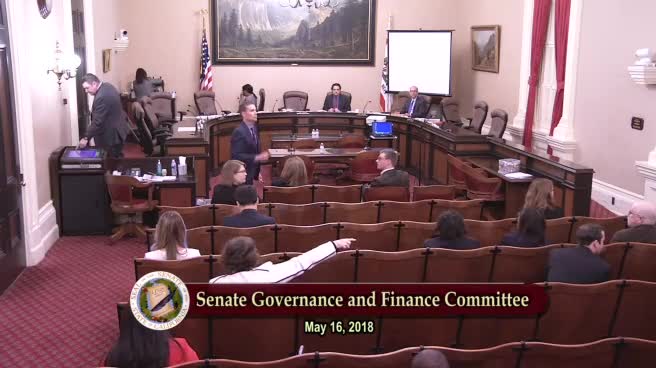 9MIN
Senate Standing Committee on Governance and Finance
Bill Author