SCA 1: Retirement savings plans: funding prohibition: General Fund.
- Session Year: 2017-2018
- House: Senate
- Latest Version Date: 2016-12-05
Existing law establishes the California Secure Choice Retirement Savings Program and requires the California Secure Choice Retirement Savings Investment Board to design and implement the program according to specified parameters and requirements, including, among others, that the program include one or more payroll deduction IRA arrangements. If certain prerequisites are met and the program is opened for enrollment, existing law eventually requires all eligible employers, as defined, that do not offer employer-sponsored retirement plans or automatic enrollment payroll deduction IRAs to have payroll deposit retirement savings arrangements so that eligible employees may participate in the program. Existing law specifies that funding for startup and first-year administrative costs for the program may be appropriated in the annual Budget Act from the General Fund and requires the board to repay the amount appropriated, plus interest, as specified.
This measure would prohibit the state from incurring any liability for payment of the retirement savings benefit earned by program participants in the California Secure Choice Retirement Savings Program. The measure would also prohibit the appropriation, transfer, or encumbrance of moneys in the General Fund for the purposes of the program, including any unfunded liability that the program may incur, unless the appropriation, transfer, or encumbrance is for funding the startup and first-year administrative costs for the program.
Resolved by the Senate, the Assembly concurring, That the Legislature of the State of California at its 201718 Regular Session commencing on the fifth day of December 2016, two-thirds of the membership of each house concurring, hereby proposes to the people of the State of California, that the Constitution of the State be amended as follows:
(a)The State shall not have any liability for the retirement savings benefit earned by program participants pursuant to the California Secure Choice Retirement Program. The State, and any of the funds of the State, shall have no obligation for payment of the benefits arising from the California Secure Choice Retirement Program.
(b)Except as otherwise provided in subdivision (c), moneys in the General Fund shall not be appropriated, transferred, or encumbered for the purposes of the California Secure Choice Retirement Savings Program, including any unfunded liability that the program may incur.
(c)Subdivision (b) shall not apply to funding for startup and first-year administrative costs for the California Secure Choice Retirement Savings Program.
|
Date
|
Status
|
|---|---|
| Jun 27, 2017 | June 26 set for first hearing. Failed passage in committee. (Ayes 2. Noes 3.) |
| Jun 2, 2017 | Set for hearing June 26. |
| Jan 12, 2017 | Referred to Coms. on P.E. & R. and E. & C.A. |
| Dec 6, 2016 | From printer. May be acted upon on or after January 5. |
| Dec 5, 2016 | Introduced. Read first time. To Com. on RLS. for assignment. To print. |
|
Date
|
Description
|
Location
|
Votes
|
|
|---|---|---|---|---|
| Jun 26, 2017 | Be adopted, but first be re-referred to the Committee on [Elections and Constitutional Amendments] | Senate Standing Committee on Public Employment and Retirement |
Failed |
This list shows positions taken on this bill by organizations on the date displayed, which is linked to the original source.
Positions by individuals are not included.
|
Organization
|
Position
|
Date
|
|---|---|---|
| California Association Of Nonprofits | ** Against | Jun 21, 2017 |
| California Professional Firefighters | ** Against | Jun 21, 2017 |
| California School Employees Association, AFL-CIO | ** Against | Jun 21, 2017 |
| City of Costa Mesa | ** Support | Jun 21, 2017 |
| City Of Huntington Beach | ** Support | Jun 21, 2017 |
| Orange County Employees Association | ** Against | Jun 21, 2017 |
| Peace Officers Research Association Of California | ** Against | Jun 21, 2017 |
| Service Employees International Union, Local 1000 | ** Against | Jun 21, 2017 |
SENATE COMMITTEE ON
PUBLIC EMPLOYMENT AND RETIREMENT
Dr. Richard Pan, Chair
2017 - 2018 Regular
Bill No: SCA 1 Hearing Date: 6/26/17
Author: | Moorlach | ||
Version: | 12/5/16 As introduced | ||
Urgency: | No | Fiscal: | Yes |
Consultant: | Korinne Sugasawara | ||
Subject: Retirement savings plans: funding prohibition: General Fund
SOURCE: Author
DIGEST: This constitutional amendment would prohibit the state from having any liability for the retirement savings benefit earned by program participants pursuant to the California Secure Choice Retirement Savings Program and would prohibit the use of General Fund moneys for purposes of the program except for startup and first-year administrative costs.
ANALYSIS:
Existing law:
- Establishes the California Secure Choice Retirement Savings Program (SCRSP) and requires the Secure Choice Retirement Savings Program Investment Board (Board), subject to its fiduciary responsibility, to design and implement the SCRSP while utilizing and considering the following parameters:
- The Board, if legally permissible under federal and state laws and subject to approval by the directors of the state departments of Social Services and Finance, shall include in-home supportive services providers in SCRSP, as specified.
- The Board shall structure SCRSP so as to ensure that the state is free from all liability for the program.
- The Board shall determine all necessary costs related to SCRSP, as specified.
- The Board shall consult with employer representatives to create an administrative structure that addresses employer needs, as specified.
- The Board shall include comprehensive worker education and outreach and may collaborate with public and nonprofit agencies and organizations and other entities to develop education and outreach, as specified.
- Requires, for up to three years following initial implementation of the SCRSP, that the Board establish managed accounts invested in US treasuries, myRAs, or similar investments; requires that myRA contributions and returns be administered in accordance with federal requirements.
- Requires the Board, during the three year period following implementation, to develop and implement an investment policy and establish policies and procedures designed to meet investment objectives in a prudent manner, minimize participant fees and maximize returns, as specified; allows the Board to include a range of risk and return opportunities; allows the Board to develop investment options that address risk-sharing and smoothing of market losses and gains and include the creation of a reserve fund, pursuant to legislative approval; and requires the Board, after the initial three year period, to annually prepare and adopt a written statement of investment policy, as specified.
- Requires that contract administrators and consultants discharge their duties as fiduciaries with respect to the program.
- Requires the Board to collaborate with and evaluate the role of insurance and financial advisors in assisting and providing guidance for eligible employers and employees.
- Specifies that the state and any funds of the state shall not have any liability for the payment of the retirement savings benefit earned by program participants.
- Specifies the Board’s duties to provide information and appropriate forms to employers and employees and clarifies that the program is not sponsored by the employer and that the employer is not responsible or liable for the plan.
- Establishes the following timeframes for employer implementation requirements and allows the Board to extend the timelines if it deems necessary:
- Beginning 12 months after opening of enrollment, employers of 100 or more employees must have an arrangement to allow employees to participate in the SCRSP.
- Beginning 24 months after opening of enrollment, employers of 50 or more employees must have an arrangement to allow employees to participate in the SCRSP.
- Beginning 36 months after opening of enrollment, employers of five or more employees must have an arrangement to allow employees to participate in SCRSP.
- Allows the Board, unless otherwise specified by the employee, to set the initial employee contribution into the SCRSP at 3 percent and states that employers always retain the right to provide their own employer-sponsored retirement plans in lieu of SCRSP.
- Allows the board to adjust the employee contribution amount to no less than 2 percent and no more than 5 percent and may vary the range within the amount for participating employees according to the length of time the employee has contributed to the program.
- Allows the Board to implement annual automatic escalation of employee contributions subject to the following limitations:
- Contributions subject to automatic escalation cannot exceed 8 percent.
- Automatic escalation cannot amount to more than 1 percent annually.
- An employee may opt out of automatic escalation and set his or her contribution rate at a level determined by the employee.
- Allows the Board to adopt emergency regulations for the purposes of designing and implementing SCRSP for up to 180 days, after which, the regulations would be subject to the standard rule making process.
- Specifies that a payroll IRA arrangement offered by the SCRSP shall have the same status and be treated consistently with any other IRA qualified under the United State Code for the purpose of determining eligibility or benefit level for a program that uses a means test.
- States that start-up costs for the SCRSP may be appropriated from the General Fund as a loan that shall be repaid by the SCRSP with interest calculated at the rate of the Pooled Money Investment Account and specifies that administrative costs shall be paid in future from the administrative fund.
This bill:
- Prohibits the state, and any state funds, from incurring any liability for the payment of benefits arising from the SCRSP.
- Prohibits the transfer, appropriation, or encumbrance of moneys in the General Fund for purposes of the SCRSP, including any unfunded liability that the program may incur.
- Provides that General Fund moneys may be used for startup and first-year administrative costs for the SCRSP.
Background
Retirement in California
According to the National Institute on Retirement Security, only two out of five California workers participate in a retirement plan at work, with an average defined contribution account balance of $23,381. However retiree expenses in California are high: the average out-of-pocket Medicare costs around $1,890 per beneficiary, only three states have higher housing costs, and the state’s marginal tax rate of 6 percent on pension income is among the highest in the nation. One in five California seniors lives in poverty, according to the Census Bureau’s Supplemental Poverty Measure. And according to a policy brief from the UCLA Center for Health Policy Research, more than 772,000 older Californians are among the “hidden poor” – older adults with incomes above the federal poverty line, but below a minimal standard of living as determined by the Elder Economic Security Standard Index, which is calculated at the county rather than federal level.
The Secure Choice Retirement Savings Program
In 2012, SB 1234 (De León, Chapter 734, Statutes of 2012) created the SCRSP and empowered its Board to perform a feasibility study to determine whether the legal and practical conditions for the implementation of SCRSP could be met. The Board approved an approach to the study analysis that included four distinct focus areas: program design, market analysis, financial feasibility, and legal feasibility.
The key findings of the report follow:
- About 6.8 million workers are potentially eligible for the SCRSP.
- Likely participation rates (70-90 percent) are sufficiently high to enable the SCRSP to achieve broad coverage well above the minimum threshold for financial sustainability.
- Eligible participants in California are equally comfortable with a 3 percent or 5 percent contribution rate. The vast majority of likely participants are also comfortable with auto-escalation in 1 percent increments up to 10 percent.
- Given its inherent portability, the SCRSP should have a lower incidence of rollovers and cash-outs than employer-sponsored 401(k) plans, which often force workers with low balances to close their accounts. At the same time, pre-retirement withdrawals are likely to be higher for the Program given eligible workers’ income profile.
In 2016, Governor Jerry Brown signed Senate Bill 1234 (De León, Chapter 804), approving the development of the SCRSP. Once fully operational, employers with five or more employees that do not already provide a retirement plan will be required to either begin offering a retirement plan or provide their employees access to the SCRSP.
Current law states that the state shall bear no liability for the payment of the retirement savings benefit earned by participants. Only start-up costs for the SCRSP may be appropriated from the General Fund as a loan, which must then be repaid with interest. This constitutional amendment would duplicate current statute into the state constitution to prohibit state funds from being used for any unfunded liabilities the SCRSP may incur.
Related/Prior Legislation
SB 1234 (De León, Chapter 804, Statutes of 2016), provided legislative approval for the SCRSP and sets forth recommendations and requirements for the design and implementation of that program.
SB 1234 (De León, Chapter 734, Statutes of 2012), created the initial statutory framework for SCRSP and required the Board to perform a market analysis and feasibility study to determine if SCRSP could be implemented and to publish its findings and bring a recommendation to the Legislature for approval.
FISCAL EFFECT: Appropriation: No Fiscal Com.: Yes Local: No
SUPPORT:
City of Costa Mesa
City of Huntington Beach
OPPOSITION:
American Federation of State, County and Municipal Employees, AFL-CIO
California Association of Nonprofits
California Professional Firefighters
California School Employees Association, AFL-CIO
Orange County Employees Association
Peace Officers Research Association of California
Service Employees International Union, Local 1000
ARGUMENTS IN SUPPORT:
According to the author’s office, “Proponents of this program claimed that no state money would be used to fund Secure Choice. Because statute can be changed with a simple piece of legislation, this measure has been introduced as a constitutional amendment to ensure that promise is kept and no extra financial burden is passed along to California taxpayers.”
ARGUMENTS IN OPPOSITION:
SEIU writes, “Secure Choice was created with ample taxpayer protections that explicitly prohibit the state from incurring any liability for the payment of the retirement savings benefit provided by the program, and required the Secure Choice Board the structure the program in a way to ensure the state is protected from any future liabilities. This is current law.”
The California School Employees Association adds, “SCA 1 is unnecessary and would question the integrity and promise of Senate President Kevin de León to make the Secure Choice program a self-funded program that would not affect the state’s General Fund.”
The California Professional Firefighters writes, “The enabling legislation requires the program’s funding mechanism to protect, indemnify and hold the state harmless, at all times, against any and all liabilities associated with funding participant retirement benefits. As such, SCA 1 is both duplicative and unnecessary. After years of hard work, all California workers deserve and should be entitled to dignity in retirement. SCA 1 takes aim at this premise by targeting a program designed to provide supplemental retirement income to those who have not traditionally received it.”
California Association of Nonprofits opines that, “SCA 1 is not necessary to protect taxpayers nor does [it] help advance the goal of California’s Secure Choice Retirement Program to fill the retirement gap so that elderly Californians can live with dignity.”
Discussed in Hearing
 10MIN
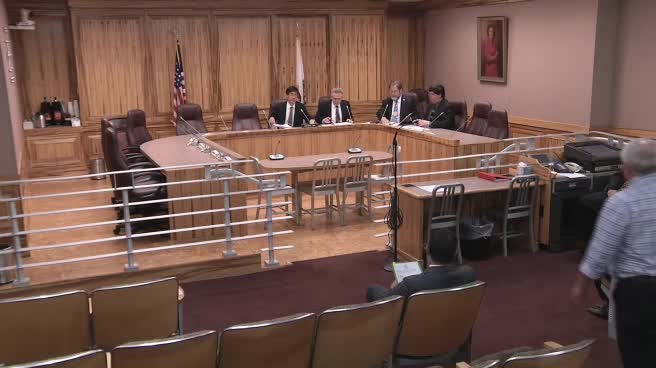
Senate Standing Committee on Public Employment and Retirement
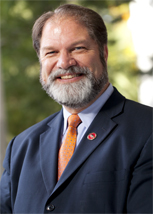
Bill Author
Bill Co-Author(s):