AB 1864: Financial institutions: regulation: Department of Financial Protection and Innovation.
- Session Year: 2019-2020
- House: Assembly
- Latest Version Date: 2020-09-25
|
Date
|
Status
|
|---|---|
| Sep 25, 2020 | Chaptered by Secretary of State - Chapter 157, Statutes of 2020. |
| Sep 25, 2020 | Approved by the Governor. |
| Sep 15, 2020 | Enrolled and presented to the Governor at 3 p.m. |
| Aug 31, 2020 | In Assembly. Concurrence in Senate amendments pending. |
| Aug 31, 2020 | Read third time. Passed. Ordered to the Assembly. (Ayes 28. Noes 10.). |
| Aug 30, 2020 | Read second time. Ordered to third reading. |
| Aug 29, 2020 | From committee: Do pass. (Ayes 13. Noes 5.) (August 29). |
| Aug 27, 2020 | In committee: Hearing postponed by committee. |
| Aug 25, 2020 | From committee chair, with author's amendments: Amend, and re-refer to committee. Read second time, amended, and re-referred to Com. on B. & F.R. |
| Aug 24, 2020 | Joint Rules 61 and 62(a) suspended. (Ayes 29. Noes 10. Page 4299.) |
| Jul 1, 2020 | Referred to Com. on B. & F.R. |
| Jun 16, 2020 | In Senate. Read first time. To Com. on RLS. for assignment. |
| Jun 15, 2020 | Read third time. Passed. Ordered to the Senate. (Ayes 60. Noes 14. Page 4862.) |
| Mar 10, 2020 | Read second time. Ordered to third reading. |
| Mar 9, 2020 | Assembly Rule 96 suspended. (Ayes 57. Noes 15. Page 4273.) |
| Feb 26, 2020 | Re-referred to Com. on BUDGET. |
| Feb 25, 2020 | From committee chair, with author's amendments: Amend, and re-refer to Com. on BUDGET. Read second time and amended. |
| Jan 17, 2020 | Referred to Com. on BUDGET. |
| Jan 8, 2020 | From printer. May be heard in committee February 7. |
| Jan 7, 2020 | Read first time. To print. |
|
Date
|
Description
|
Location
|
Votes
|
|
|---|---|---|---|---|
| Aug 31, 2020 | AB 1864 Limón Concurrence in Senate Amendments | Assembly Floor |
Passed |
|
| Aug 31, 2020 | Assembly 3rd Reading AB1864 Limón By Mitchell | Senate Floor |
Passed |
|
| Aug 29, 2020 | Do pass | Senate Standing Committee on Budget and Fiscal Review |
Passed |
|
| Jun 15, 2020 | AB 1864 BUDGET Assembly Third Reading By TING | Assembly Floor |
Passed |
This list shows positions taken on this bill by organizations on the date displayed, which is linked to the original source.
Positions by individuals are not included.
SENATE RULES COMMITTEE Office of Senate Floor Analyses (916) 651-1520 Fax: (916) 327-4478 | AB 1864 |
THIRD READING
Bill No: AB 1864
Author: Limón (D)
Amended: 8/25/20 in Senate
Vote: 21
SENATE BUDGET & FISCAL REVIEW COMMITTEE: 13-5, 8/29/20
AYES: Mitchell, Beall, Caballero, Durazo, Hertzberg, Hurtado, Leyva, McGuire, Monning, Pan, Roth, Skinner, Wieckowski
NOES: Nielsen, Dahle, Melendez, Moorlach, Morrell
ASSEMBLY FLOOR: Not relevant
SUBJECT: Financial institutions: regulation: Department of Financial Protection and Innovation
SOURCE: Author
DIGEST:
This bill seeks to reorganize and rename the Department of Business Oversight (DBO), to clarify DBO’s authority to enforce provisions of the federal Dodd-Frank Wall Street Consumer Financial Protection Act of 2010 over existing licensees, to protect consumers from unlawful, unfair, deceptive, or abusive acts or practices, and to expand DBO’s jurisdiction to cover currently unlicensed persons that offer or provide consumer financial products and services in California.
ANALYSIS: This bill contains the necessary changes to enact the California Consumer Financial Protection Law (CCFPL) and add Division 24 to the Financial Code with a purpose to promote consumer welfare, fair competition and wealth creation in the state. More specifically, this bill:
Reorganization and New Activities
- Retains all the powers, duties, responsibilities and functions of the DBO and renames it the Department of Financial Protection and Innovation (DFPI).
- Merges the Division of Corporations and the Division of Financial Institutions under the Division of Corporations and Financial Institutions, overseen by a Senior Deputy Commissioner appointed by the Governor and subject to Senate confirmation.
- Establishes and requires all moneys collected under the CCFPL to be deposited into the Financial Protection Fund.
- Establishes the Financial Technology Office under DFPI to promote innovation and consumer access within financial technology services sector.
- Establishes a new Division of Consumer Financial Protection with a Senior Deputy Commissioner appointed by the Governor and subject to Senate confirmation.
- Authorizes the DFPI to perform new activities like consumer financial product market research and targeted consumer outreach and education programs.
Clarifying Statutes and Provisions
- Clarifies that DFPI, as a state financial market regulator, has the authority to bring a civil action or other appropriate proceedings against an entity licensed, registered or subject to oversight by the DFPI to enforce the provisions of the Consumer Financial Protection Act of 2010 (12 U.S.C. Sec. 5481 et seq.) or regulations issued by the federal Consumer Financial Protection Bureau.
- Clarifies that in the instance that a provision in this division is preempted by federal law, the provision shall not apply and shall not be enforced to the extent of that it is preempted.
- Makes clear that enforcement authority provided by this bill is applicable only to acts and practices engaged in on or after the operative date of this act.
Notable Definitions
- Defines a covered person as any person that engages in the offering or providing of a consumer financial product or service to a California resident.
- Defines a service provider, with some exceptions, as any person providing a material service to a covered person in connection with the offering or provision by that covered person of a consumer financial product or service.
- Provides that the CCFPL also makes other necessary definitions.
Exemptions
- Exempts the following from CCFPL:
- A licensee or employee of a licensee of another state agency to the extent that licensee or employee is operating under the authority that state agency’s license.
- A bank, bank holding company, trust company, savings and loan association, savings and loan holding company, credit union or an organization subject to oversight of the Farm Credit Administration when acting under the authority of federal law or the law of another state.
- A person or employee of that person to the extent that they are currently licensed under the authority of one of the specified divisions of the Financial Code and the Corporations Code. Exempted employees and licensees include: check sellers, bill payers, and proraters (Division 3 of the Financial Code); escrow agents (Division 6 of the Financial Code); finance lenders, finance brokers, program administrators, and mortgage loan originators (Division 9 of the Financial Code); residential mortgage lenders, mortgage servicers, and mortgage loan originators (Division 20 of the Financial Code); broker-dealers and investment advisors (Division 1 of Title 4 of the Corporations Code); capital access company licensees (Division 3 of Title 4 of the Corporations Code), and any person doing business under a license, charter, or certificate issued under the Financial Institutions Law (Divisions 1, 1.1, 1.2, 1.6, 5, 7, and 15 of the Financial Code).
Prohibited Acts
The CCFPL:
- Prohibits covered persons or service providers from:
- Engaging in unlawful, unfair, deceptive, or abusive acts or practices with respect to consumer financial products or services.
- Offering or providing a consumer a financial product or service that is not in conformity with any consumer financial law.
- Failing or refusing to maintain and make accessible records required by a consumer financial law or any rule or order issued by the DFPI.
- Holds any person who knowingly or recklessly provides substantial assistance to a covered person or service provider who violates the prohibited acts above liable to the same extent as the person who violates those acts.
Unlawful, Unfair and Deceptive or Abusive Acts or Practices
- Defines “unfair” and “deceptive” acts and practices consistent with the California’s Business and Professions Code (Section 17200) and related case law.
- Defines “abusive” acts and practices as acts and practices that materially interfere with the ability of a consumer to understand terms or conditions of a financial product or service and/or that take unreasonable advantage of the lack of understanding of the consumer and/or the inability of the consumer to protect their interests in selecting or using a consumer financial product or service. This definition is consistent with provisions of the federal Consumer Financial Protection Act of 2010.
- Allows the department to prescribe rules and regulations applicable to any covered person or service provider identifying unlawful, unfair, deceptive or abusive acts or practices in connection with the offering of:
- A consumer financial product or service. In promulgating these rules, the department is required to consider the relative harm to consumer, the frequency of the act or practice, and whether the act is unintentional or stems from a technical, clerical, or nonmaterial error.
- Commercial financing or other offering or provision of financial products and services to small business recipients, nonprofits and family farms. This rulemaking may include data collection and reporting.
Registration Requirement and Oversight Activities
- Allows the DFPI to promulgate rules and regulations regarding registration requirements applicable to covered persons engaged in the business of offering or providing consumer financial products or services.
- Allows the DFPI to set and collect an annual registration fee for each entity required to register. The required registration fee must be limited to the reasonable regulatory costs and take into account the size and market participation of the entity.
- Allows the DFPI to prescribe regulations required to facilitate oversight of covered persons. Rules may require covered persons to generate, provide, or retain records for oversight purposes.
- Allows the DFPI to prescribe rules to ensure that the features of any consumer financial product or service are accurate and disclosed to consumers in a manner that permits consumers to understand the risks, costs and benefits of the financial service or product.
- Allows the DFPI to establish, by rule, reasonable procedures for covered persons and service providers to provide a timely response to consumers and the department concerning consumer inquiries or complaints.
- Provides that the rules described above (19-23) must be promulgated prior to any related enforcement action by the DFPI against covered persons or service providers for a violation.
Enforcement
- Authorizes the DFPI to bring an enforcement action against any covered person or service provider who engages in unlawful, unfair, deceptive or abusive practices with respect to consumer financial products and services.
- Provides DFPI authority to seek relief including rescission or reformation of contracts, refunds, restitution, disgorgements, payment of damages, public notification regarding violations, set limits on the activities of the person cited, and impose the monetary penalties described immediately below.
- Authorizes penalty amounts that range from $5,000 for each day the violation or failure to pay continues or $2,500 for each act or omission in violation to $1,000,000 for each day the violation or failure to pay continues or $25,000 for each act or omission in violation. These penalties are consistent with those provided in the federal Consumer Financial Protection Act of 2010.
- Requires, in determining the size of the penalty, DFPI to take into account mitigating factors such as the gravity of the violation, the financial resources of the person charged, that person’s history of violations, the severity of risks or losses to the consumer, and other related matters.
- Authorizes the use funds obtained through enforcement of any of the laws administered by the DFPI, with some exceptions, to be used to administer the CCFPL.
- Authorizes the department to enter into an agreement with the Attorney General with respect to civil actions. Ensures that nothing in the provisions provided limits the authority of the Attorney General to prosecute violations of civil or criminal laws.
- Clarifies that nothing in the bill limits the authority of any district attorney or city attorney lawfully permitted to bring actions to enforce California’s Unfair Competition Act.
Legislative Oversight of DFPI
- Requires that the DFPI promulgate rules for registration of a covered person or service provider within three years after the second action to enforce a violation of the CCFPL against covered persons providing the same or substantially similar financial product or service.
- Sunsets each registration requirement four years after the initial year of required registration of that category of covered persons. At the end of the sunset, requires the Legislature to conduct public hearings regarding the desirability or feasibility of extending, revising, or terminating the registration. Provides that the Legislature can:
- Take action to extend the registration or
- Incorporate the activity in which the covered person is authorized to engage into a new or existing licensing law.
- Ensures that failure of the Legislature to do any of the above will not impact the DFPI’s enforcement authority.
- Requires the DFPI to submit a report of its activities related to the covered person required to be registered to the appropriate committees in the Legislature on or before December 1 before the year the registration regulation is scheduled to become inoperative.
- Requires the Commissioner of the DFPI to appear before the appropriate committees of the Legislature annually and present a report reviewing all activities conducted to implement CCFPL during the prior year and all of the activities planned to implement the CCFPL during the upcoming year.
- Requires the DFPI to prepare and publish on the department’s website actions taken during the prior year including rulemaking, enforcement, activities of the financial technology innovation office, consumer complaints and resolutions, education, outreach, research and recommendations for improved oversight, transparency and availability of financial products and services.
FISCAL EFFECT: Appropriation: No Fiscal Com.: Yes Local: Yes
According to the Senate Budget and Fiscal Review Committee, this bill contains no fiscal appropriations. However, the Administration estimates a cost of $10.2 million and 44 positions in 2020-21, an additional $4.6 million and 28 positions in 2021- 22, and an additional $4.5 million and 18 staff positions in 2022-23 and ongoing funding. This is an overall increase of $19.3 million and 90 positions by the end of 2022-23 upon full implementation of DFPI.
SUPPORT: (Verified 8/29/20)
None received
OPPOSITION: (Verified 8/29/20)
None received
Prepared by: Meron Tesfaye / B. & F.R. / 916-651-4103
8/31/20 0:32:05
**** END ****
CONCURRENCE IN SENATE AMENDMENTS
CSA1 Bill Id:AB 1864
Author:(Limón)
As Amended Ver:August 25, 2020
Majority vote
SUMMARY:
Enacts the California Consumer Financial Protection Law (CCFPL), which provides the renamed Department of Financial Protection and Innovation (formerly, Department of Business Oversight) with oversight and enforcement authority related to providers of consumer financial products and services that are not currently under the department's authority. Prohibits unlawful, unfair, deceptive, and abusive act or practices by persons subject to the CCFPL.
The Senate Amendments:
Delete the Assembly version of the bill and provide the following:
- Renames the Department of Business Oversight (DBO) as the Department of Financial Protection and Innovation (DFPI) and maintains the department's existing authorities and duties.
- Authorizes DFPI to bring enforcement actions permitted by 12 United States Code (U.S.C.) 5552 (which include judicial, administrative, or regulatory proceedings brought by a state regulator), to enforce specified provisions of federal law related to consumer financial protection and regulations issued by the Consumer Financial Protection Bureau (CFPB), with respect to an entity that is licensed, registered, or subject to oversight by DFPI. Authorizes DFPI to secure remedies provided by the Consumer Financial Protection Act of 2010.
- Enacts the California Consumer Protection Law (CCFPL), which provides the following:
- Exemptions for the following:
- Licensees of state agencies other than DFPI to the extent that such entities are acting under the authority of the other state agency's license.
- Specified list of existing licensees of the DFPI, including, but not limited to, banks, credit unions, residential mortgage lenders, finance lenders, and money transmitters. Does not exempt two classes of existing DFPI licensees: deferred deposit originators (payday lenders) and student loan servicers.
- Banks, credit unions, and other financial institutions acting under the authority of a license, certificate, or charter under federal law or the laws of another state.
- Prohibits a person from engaging in any unlawful, unfair, deceptive, or abusive act or practice with respect to consumer financial products or services.
- Authorizes DFPI to administer the CCFPL, including the responsibility to regulate the offering and provision of consumer financial products and services under applicable state and federal laws, to bring administrative and civil actions to enforce violations of those laws, and to publish research and reports.
- Authorizes DFPI to prescribe rules related to the following:
- Registration of covered persons and requirements for payment of registration fees, unless the covered person is a licensee of DFPI or another state agency and is acting under the authority of that license. Authorizes DFPI to prescribe rules for registered covered persons to facilitate oversight by DFPI, including records retention policies, background checks for key officers, and bonding or other appropriate financial requirements.
- Unlawful, unfair, deceptive, and abusive acts or practices. Requires that such rules consider the relative harm to the consumer, the frequency of the act or practice, and whether such act or practice is unintentional or stems from a technical, clerical, or nonmaterial error. Requires that DFPI interpret "unfair" and "deceptive" consistent with existing state law in Business and Professions Code 17200 and the case law thereunder.
- Ensuring that accurate and effective disclosures are provided to consumers.
- Unfair, deceptive, and abusive acts or practices in connection with the offering or provision of commercial financing, as specified, to small business recipients, nonprofits, or family farms.
- Establishes legislative oversight of DFPI's activities pursuant to the CCFPL through the following:
- Sunsets regulations related to registration programs within four years unless the Legislature takes action to extend the registration or to incorporate the scope of the activity into a new or existing licensing law. Requires the Legislature to conduct public hearings to obtain input on the desirability of extending, revising, or terminating the regulation.
- Requires DFPI to submit to the Legislature, prior to the year the regulation related to registration is scheduled to sunset, a report with information about the department's activities related to the registration program since its enactment.
- Requires the commissioner of DFPI to appear before the appropriate committees of the Legislature at least once annually and report on the department's activities over the past year and a description of the department's intended activities in the coming year.
- Authorizes DFPI to bring a civil or administrative action, as specified, against a covered person or service provider who engages, has engaged, or proposes to engage in unfair, deceptive, or abusive practices with respect to consumer financial products or services. Provides specified relief that may be sought on behalf of consumers harmed by the acts or practices and provides specified penalties that may be ordered by DFPI after accounting for mitigating factors and the appropriateness of the penalty with respect to specified considerations.
- Authorizes DFPI to issue an order directing a person to desist and refrain from engaging in an activity, act, practice, or course of business that is unlawful, unfair, deceptive, or abusive, as specified.
- Exemptions for the following:
COMMENTS:
The proposed California Consumer Financial Protection Law (CCFPL) would provide DFPI with the tools and authority to enforce existing state and federal laws with which financial services companies must already comply. This bill does not amend existing state consumer finance laws, thus preserving the consumer protections and enforcement authority provided by existing laws. Further, the proposal does not amend current DBO authorities related to the implementation of licensing laws under the department's jurisdiction.
This bill provides clear authority for DFPI to regulate the broad market of consumer financial products and services provided to California consumers. By borrowing the definitions and structure from Dodd-Frank, this bill leverages the value of an existing regulatory framework to which industry participants are already subject. Companies that provide consumer financial products and services, regardless of whether they are required to be licensed under existing state law, should already have programs in place to comply with Dodd-Frank and CFPB regulations, and those companies will be able to use their existing policies and procedures to ensure compliance with this law. The regulatory framework inspired by Dodd-Frank provides DFPI with the appropriate tools to regulate market activities based on the functional characteristics of products and services that are offered and provided to Californian consumers.
In addition to building on existing statutory authority, this bill builds on existing DBO expertise. DBO is primarily comprised of staff who are engaged daily in activities envisioned by this bill: examinations, enforcement actions, and consumer outreach. The department has relevant management experience and established policies and procedures that provide a strong foundation for implementing the additional duties required by the bill.
The CCFPL builds on DBO functions by:
- Consolidating oversight authority over consumer financial products and services, while preserving enforcement authority provided to the Attorney General.
- Empowering DFPI to address a broader set of consumer complaints.
- Ensuring that DFPI can hold any financial service providers accountable for treating a California consumer unfairly, deceptively, or abusively.
- Filling the gaps between statutory definitions that are often outdated and fail to cover new business models and practices.
- Establishing a requirement that, after an appropriate rulemaking, financial services companies register with DFPI to ensure that such companies are legitimate and able to perform their obligations to consumers.
DBO is currently charged with regulating a substantial portion of the financial services industry in California, including banks and credit unions (except for institutions with a national charter or licensed by another state), money transmitters, nondepository lenders, payday lenders, residential mortgage lenders, student loan servicers, and escrow agents. This bill provides DFPI with an expanded scope of oversight authority over business activity that is not currently regulated by DBO. Examples of newly covered products or business activity include, but are not limited to, debt collection, debt settlement, credit repair, check cashing, rent-to-own contracts, retail sales financing, consumer credit reporting, and lead generation.
According to the Author:
Last year, I introduced AB 1048 to start the important conversation of strengthening our consumer financial protection capabilities at the state level. In March 2019, the Assembly Banking Committee held an informational hearing to examine gaps in our existing regulatory approach. Subsequent to that hearing, I worked with a coalition of former CFPB officials and consumer law experts to shape a vague concept into a specific proposal for the Legislature to consider. The Governor's inclusion of the proposal in his January budget provided a pathway for our state regulator to receive the necessary resources and authority to carry out a renewed vision of putting consumers first. AB 1864 will provide the renamed Department of Financial Protection and Innovation with the appropriate authority to oversee unregulated areas of the financial marketplace, creating a best-in-class state regulatory agency that will protect California consumers from unfair, deceptive, and abusive practices by financial services companies.
Arguments in Support:
A coalition of consumer protection groups and legal aid organizations writes:
SB 819 would rename DBO the Department of Financial Protection and Innovation (DFPI) and establish the DFPI as a regulator with comprehensive oversight of the financial industry. It would ensure that the agency has the necessary tools to monitor everyone from debt collectors to fintech companies offering consumers quick cash. It would offer security and relief to the tens of millions of Californians who now find ourselves too close to the financial edge. And it would establish California as a national leader in protecting consumers, small businesses, and communities struggling to recover financially from the pandemic…
An overhaul of DBO into a new mission-driven, consumer-focused agency is urgently needed this year so the agency will be in place during the worst of the coming downturn – when the desperation of low-income Californians will be at its height, and the swindlers who prey upon them most ruthless.
Arguments in Opposition:
The California New Care Dealers Association argues that new car dealers should be exempted from the bill, but their letter does not acknowledge the existing exemption in the bill related to licensees of other state departments or describe how that exemption is insufficient for car dealers.
A coalition of payday lenders and other high-cost lenders argues that all existing licensees of DBO should be exempt from the proposed California Consumer Financial Protection Law. The coalition also raises concerns around definitions and terms that it argues do not provide sufficient clarity
FISCAL COMMENTS:
Unknown.
VOTES:
ASSEMBLY FLOOR: 60-14-5
YES: Aguiar-Curry, Arambula, Bauer-Kahan, Berman, Bloom, Boerner Horvath, Bonta, Burke, Calderon, Carrillo, Cervantes, Chau, Chiu, Chu, Cooley, Cooper, Daly, Eggman, Frazier, Friedman, Gabriel, Cristina Garcia, Eduardo Garcia, Gipson, Gloria, Gonzalez, Gray, Grayson, Holden, Irwin, Jones-Sawyer, Kalra, Kamlager, Levine, Limón, Low, Maienschein, McCarty, Medina, Mullin, Muratsuchi, Nazarian, O'Donnell, Petrie-Norris, Quirk, Quirk-Silva, Ramos, Reyes, Luz Rivas, Robert Rivas, Rodriguez, Blanca Rubio, Salas, Santiago, Mark Stone, Ting, Weber, Wicks, Wood, Rendon
NO: Bigelow, Brough, Cunningham, Megan Dahle, Flora, Fong, Gallagher, Kiley, Lackey, Mayes, Obernolte, Patterson, Voepel, Waldron
ABS, ABST OR NV: Chen, Choi, Diep, Mathis, Smith
UPDATED:
VERSION: August 25, 2020
CONSULTANT: Michael Burdick / B. & F. / (916) 319-3081 FN: 0003678
SENATE COMMITTEE ON BUDGET AND FISCAL REVIEW
Senator Holly Mitchell, Chair
2019 - 2020 Regular
Bill No: AB 1864 Hearing Date: August 27, 2020
Author: | |||
Version: | August 25, 2020 As amended | ||
Urgency: | No | Fiscal: | Yes |
Consultant: | Meron Tesfaye and Joe Stephenshaw | ||
Subject: Financial institutions: regulation: Department of Financial Protection and Innovation
Summary:
This bill seeks to reorganize and rename the Department of Business Oversight (DBO), to clarify DBO’s authority to enforce provisions of the federal Dodd-Frank Wall Street Consumer Financial Protection Act of 2010 over existing licensees, to protect consumers from unlawful, unfair, deceptive, or abusive acts or practices, and to expand DBO’s jurisdiction to cover currently unlicensed persons that offer or provide consumer financial products and services in California.
Proposed Law:
- Contains the necessary changes to enact the California Consumer Financial Protection Law (CCFPL) and add Division 24 to the Financial Code with a purpose to promote consumer welfare, fair competition and wealth creation in the state. More specifically, this bill:
Reorganization and New Activities
- Retains all the powers, duties, responsibilities and functions of the DBO and renames it the Department of Financial Protection and Innovation (DFPI).
- Merges the Division of Corporations and the Division of Financial Institutions under the Division of Corporations and Financial Institutions, overseen by a Senior Deputy Commissioner appointed by the Governor and subject to Senate confirmation.
- Establishes and requires all moneys collected under the CCFPL to be deposited into the Financial Protection Fund.
- Establishes the Financial Technology Office under DFPI to promote innovation and consumer access within financial technology services sector.
- Establishes a new Division of Consumer Financial Protection with a Senior Deputy Commissioner appointed by the Governor and subject to Senate confirmation.
- Authorizes the DFPI to perform new activities like consumer financial product market research and targeted consumer outreach and education programs.
Clarifying Statutes and Provisions
- Clarifies that DFPI, as a state financial market regulator, has the authority to bring a civil action or other appropriate proceedings against an entity licensed, registered or subject to oversight by the DFPI to enforce the provisions of the Consumer Financial Protection Act of 2010 (12 U.S.C. Sec. 5481 et seq.) or regulations issued by the federal Consumer Financial Protection Bureau.
- Clarifies that in the instance that a provision in this division is preempted by federal law, the provision shall not apply and shall not be enforced to the extent of that it is preempted.
- Makes clear that enforcement authority provided by this bill is applicable only to acts and practices engaged in on or after the operative date of this act.
Notable Definitions
- Defines a covered person as any person that engages in the offering or providing of a consumer financial product or service to a California resident.
- Defines a service provider, with some exceptions, as any person providing a material service to a covered person in connection with the offering or provision by that covered person of a consumer financial product or service.
- The CCFPL also makes other necessary definitions.
Exemptions
- The bill exempts the following from CCFPL:
- A licensee or employee of a licensee of another state agency to the extent that licensee or employee is operating under the authority that state agency’s license.
- A bank, bank holding company, trust company, savings and loan association, savings and loan holding company, credit union or an organization subject to oversight of the Farm Credit Administration when acting under the authority of federal law or the law of another state.
- A person or employee of that person to the extent that they are currently licensed under the authority of one of the specified divisions of the Financial Code and the Corporations Code. Exempted employees and licensees include: check sellers, bill payers, and proraters (Division 3 of the Financial Code); escrow agents (Division 6 of the Financial Code); finance lenders, finance brokers, program administrators, and mortgage loan originators (Division 9 of the Financial Code); residential mortgage lenders, mortgage servicers, and mortgage loan originators (Division 20 of the Financial Code); broker-dealers and investment advisors (Division 1 of Title 4 of the Corporations Code); capital access company licensees (Division 3 of Title 4 of the Corporations Code), and any person doing business under a license, charter, or certificate issued under the Financial Institutions Law (Divisions 1, 1.1, 1.2, 1.6, 5, 7, and 15 of the Financial Code).
Prohibited Acts
The CCFPL:
- Prohibits covered persons or service providers from:
- Engaging in unlawful, unfair, deceptive, or abusive acts or practices with respect to consumer financial products or services.
- Offering or providing a consumer a financial product or service that is not in conformity with any consumer financial law.
- Failing or refusing to maintain and make accessible records required by a consumer financial law or any rule or order issued by the DFPI.
- Holds any person who knowingly or recklessly provides substantial assistance to a covered person or service provider who violates the prohibited acts above liable to the same extent as the person who violates those acts.
Unlawful, Unfair and Deceptive or Abusive Acts or Practices
- Defines “unfair” and “deceptive” acts and practices consistent with the California’s Business and Professions Code (Section 17200) and related case law.
- Defines “abusive” acts and practices as acts and practices that materially interfere with the ability of a consumer to understand terms or conditions of a financial product or service and/or that take unreasonable advantage of the lack of understanding of the consumer and/or the inability of the consumer to protect their interests in selecting or using a consumer financial product or service. This definition is consistent with provisions of the federal Consumer Financial Protection Act of 2010.
- Allows the department to prescribe rules and regulations applicable to any covered person or service provider identifying unlawful, unfair, deceptive or abusive acts or practices in connection with the offering of:
- A consumer financial product or service. In promulgating these rules, the department is required to consider the relative harm to consumer, the frequency of the act or practice, and whether the act is unintentional or stems from a technical, clerical, or nonmaterial error.
- Commercial financing or other offering or provision of financial products and services to small business recipients, nonprofits and family farms. This rulemaking may include data collection and reporting.
Registration Requirement and Oversight Activities
- Allows the DFPI to promulgate rules and regulations regarding registration requirements applicable to covered persons engaged in the business of offering or providing consumer financial products or services.
- Allows the DFPI to set and collect an annual registration fee for each entity required to register. The required registration fee must be limited to the reasonable regulatory costs and take into account the size and market participation of the entity.
- Allows the DFPI to prescribe regulations required to facilitate oversight of covered persons. Rules may require covered persons to generate, provide, or retain records for oversight purposes.
- Allows the DFPI to prescribe rules to ensure that the features of any consumer financial product or service are accurate and disclosed to consumers in a manner that permits consumers to understand the risks, costs and benefits of the financial service or product.
- Allows the DFPI to establish, by rule, reasonable procedures for covered persons and service providers to provide a timely response to consumers and the department concerning consumer inquiries or complaints.
- The rules described above (19-23) must be promulgated prior to any related enforcement action by the DFPI against covered persons or service providers for a violation.
Enforcement
- Authorizes the DFPI to bring an enforcement action against any covered person or service provider who engages in unlawful, unfair, deceptive or abusive practices with respect to consumer financial products and services.
- Provides DFPI authority to seek relief including rescission or reformation of contracts, refunds, restitution, disgorgements, payment of damages, public notification regarding violations, set limits on the activities of the person cited, and impose the monetary penalties described immediately below.
- Authorizes penalty amounts that range from $5,000 for each day the violation or failure to pay continues or $2,500 for each act or omission in violation to $1,000,000 for each day the violation or failure to pay continues or $25,000 for each act or omission in violation. These penalties are consistent with those provided in the federal Consumer Financial Protection Act of 2010.
- In determining the size of the penalty, requires DFPI to take into account mitigating factors such as the gravity of the violation, the financial resources of the person charged, that person’s history of violations, the severity of risks or losses to the consumer, and other related matters.
- Authorizes the use funds obtained through enforcement of any of the laws administered by the DFPI, with some exceptions, to be used to administer the CCFPL.
- Authorizes the department to enter into an agreement with the Attorney General with respect to civil actions. Ensures that nothing in the provisions provided limits the authority of the Attorney General to prosecute violations of civil or criminal laws.
- Clarifies that nothing in the bill limits the authority of any district attorney or city attorney lawfully permitted to bring actions to enforce California’s Unfair Competition Act.
Legislative Oversight of DFPI
- Requires that the DFPI promulgate rules for registration of a covered person or service provider within three years after the second action to enforce a violation of the CCFPL against covered persons providing the same or substantially similar financial product or service.
- Sunsets each registration requirement four years after the initial year of required registration of that category of covered persons. At the end of the sunset, requires the Legislature to conduct public hearings regarding the desirability or feasibility of extending, revising, or terminating the registration. Provides that the Legislature can:
- Take action to extend the registration or
- Incorporate the activity in which the covered person is authorized to engage into a new or existing licensing law.
Ensures that failure of the Legislature to do any of the above will not impact the DFPI’s enforcement authority.
- Requires the DFPI to submit a report of its activities related to the covered person required to be registered to the appropriate committees in the Legislature on or before December 1 before the year the registration regulation is scheduled to become inoperative.
- Requires the Commissioner of the DFPI to appear before the appropriate committees of the Legislature annually and present a report reviewing all activities conducted to implement CCFPL during the prior year and all of the activities planned to implement the CCFPL during the upcoming year.
- Requires the DFPI to prepare and publish on the department’s website actions taken during the prior year including rulemaking, enforcement, activities of the financial technology innovation office, consumer complaints and resolutions, education, outreach, research and recommendations for improved oversight, transparency and availability of financial products and services.
Fiscal Effect:
- This bill contains no fiscal appropriations. However, the Administration estimates a cost of $10.2 million and 44 positions in 2020-21, an additional $4.6 million and 28 positions in 2021- 22, and an additional $4.5 million and 18 staff positions in 2022-23 and ongoing funding. This is an overall increase of $19.3 million and 90 positions by the end of 2022-23 upon full implementation of DFPI.
Support: None on file.
Opposed: None on file.
-- END --
ASSEMBLY THIRD READING
ATR Bill Id:AB 1864
Author:(Committee on Budget)
As Amended Ver:February 25, 2020
Majority vote. Budget Bill Appropriation Takes Effect Immediately
SUMMARY:
This bill expresses the intent of the Legislature to enact statutory changes relating to the Budget Act of 2020.
Major Provisions
COMMENTS:
According to the Author:
Arguments in Support:
Arguments in Opposition:
FISCAL COMMENTS:
VOTES:
UPDATED:
VERSION: February 25, 2020
CONSULTANT: Christian Griffith / BUDGET / (916) 319-2099 FN: 0002695

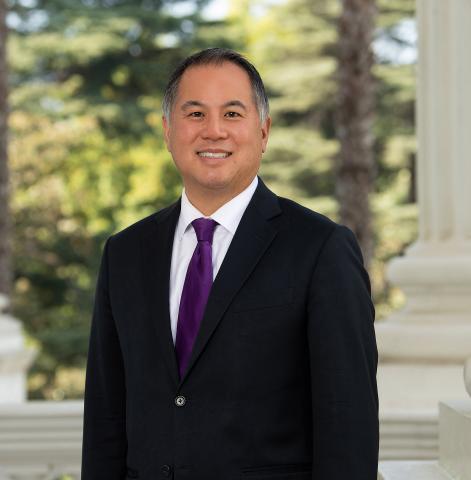
Bill Co-Author(s):