AB 1962: Sales and use taxes: exemption: senior housing.
- Session Year: 2019-2020
- House: Assembly
- Latest Version Date: 2020-01-21
|
Date
|
Status
|
|---|---|
| Mar 9, 2020 | In committee: Hearing for testimony only. |
| Jan 30, 2020 | Referred to Com. on REV. & TAX. |
| Jan 22, 2020 | From printer. May be heard in committee February 21. |
| Jan 21, 2020 | Read first time. To print. |
This list shows positions taken on this bill by organizations on the date displayed, which is linked to the original source.
Positions by individuals are not included.
Date of Hearing: March 9, 2020
ASSEMBLY COMMITTEE ON REVENUE AND TAXATION
Autumn R. Burke, Chairwoman
ABPCA Bill Id:AB 1962 (
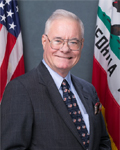
Author:Voepel) – As Introduced Ver:January 21, 2020
FOR TESTIMONY ONLY
Majority vote. Tax levy. Fiscal committee.
SUBJECT: Sales and use taxes: exemption: senior housing
SUMMARY: Provides a complete sales and use tax (SUT) exemption for "building materials and supplies" purchased by a "qualified person" for use by that "qualified person" in the construction of a "qualified building". Specifically, this bill:
- Provides the SUT exemption on and after January 1, 2021, and before January 1, 2026.
- Defines "building materials and supplies" to include any machinery, equipment, materials, accessories, appliances, contrivances, furniture, fixtures, and all technical equipment or other tangible personal property (TPP) of any other nature or description that meets both of the following conditions:
- Are necessary to construct and equip a "qualified building"; and,
- Become part of the completed "qualified building".
- Provides that "building materials and supplies" shall not include any tools or construction equipment other than those specified above that the "qualified person" uses in construction activities, specifically including construction of a "qualified building".
- Defines a "qualified person" as either or both of the following:
- An organization that is exempt from taxation under Internal Revenue Code Section 501(c)(3) that constructs a "qualified building"; or,
- A contractor, subcontractor, or builder working under contract with an organization described above to construct a qualified facility [sic].
- Defines a "qualified building" as "affordable housing" that is restricted to "qualified low-income seniors".
- Defines "affordable housing" as a multifamily residential structure available at an affordable housing cost or affordable rent, as defined in Health and Safety Code (H&SC) Sections 50052.5 and 50053, respectively, to "lower income households".
- Defines a "qualified low-income senior" as a person who is 65 or older whose income does not exceed the limits established for "lower income households" described in H&SC Section 50079.5.
- Defines "lower income households" by reference to H&SC Section 50079.5.
- Provides that an exemption shall not be allowed unless the purchaser furnishes the retailer with an exemption certificate completed in accordance with any instructions or regulations as the California Department of Tax and Fee Administration (CDTFA) may prescribe and the retailer retains a copy and furnishes it to CDTFA upon request.
- Includes a standard recapture provision if materials purchased with an exemption certificate are subsequently used in a manner not entitled to the exemption.
- Contains the following findings and declarations:
- The specific goals, purposes, and objectives of the exemption shall be promoting the development of housing available to low-income seniors by providing a tax exemption for the purchase of building materials and supplies used to construct that housing;
- Detailed performance indicators for the Legislature to use in determining whether the exemption meets those goals, purposes, and objectives shall be the number of qualified persons receiving the exemption;
- The Legislative Analyst shall, on an annual basis beginning January 1, 2022, and until January 1, 2026, collaborate with the CDTFA to review the effectiveness of the exemption. This review shall include, but not be limited to, an analysis of the demand for the exemption and the economic impact of the exemption;
- The data collection requirements for determining whether the exemption is meeting, failing to meet, or exceeding those specific goals, purposes, and objectives, are as follows:
- To assist the Legislature in determining whether the exemption meets the goals specified, and in carrying out their duties, the Legislative Analyst may request information from the CDTFA; and,
- The CDTFA shall provide any data requested by the Legislative Analyst under this bill.
- Provides that, notwithstanding Revenue and Taxation Code (R&TC) Section 2230, the state shall not reimburse any local agency for SUT revenues lost as a result of this exemption.
- Takes immediate effect as a tax levy, but only becomes operative on the first day of the first calendar quarter commencing more than 90 days after the bill's effective date.
EXISTING LAW:
- Imposes a sales tax on retailers for the privilege of selling TPP, absent a specific exemption. The tax is based upon the retailer's gross receipts from TPP sales in this state.
- Imposes a complimentary use tax on the storage, use, or other consumption of TPP generally purchased out-of-state and brought into California. The use tax is imposed on the purchaser; and unless the purchaser pays the use tax to an entity registered to collect California's use tax, the purchaser remains liable for the tax. The use tax is set at the same rate as the state's sales tax and must generally be remitted to the CDTFA.
- Provides no general SUT exemption merely because the retailer or purchaser is engaged in charitable activities, is a nonprofit organization, or enjoys certain privileges under applicable property or income tax laws.
- Requires retailers generally to file returns and remit taxes due on a quarterly basis.
- Requires any bill introduced on or after January 1, 2020, that authorizes a SUT exemption, to contain all of the following:
- Specific goals, purposes, and objectives that the tax expenditure will achieve;
- Detailed performance indicators for the Legislature to use when measuring whether the tax expenditure meets the goals, purposes, and objectives stated in the bill; and,
- Specified data collection requirements to enable the Legislature to determine whether the tax expenditure is meeting, failing to meet, or exceeding those specific goals, purposes, and objectives.
- Specific goals, purposes, and objectives that the tax expenditure will achieve;
FISCAL EFFECT: This exemption would result in estimated SUT losses of $8.15 million in fiscal year (FY) 2020-21, and $16.52 million in FY 2021-22.
COMMENTS:
- The author has provided the following statement in support of this bill:
AB 1962 is meant to give a tax exemption to builders of senior housing. As California's homeless situation continues to increase, so does the homelessness for seniors. These people are on a fixed income, and don't have the energy or ability to just return to the work force. With lots of seniors moving back in with family or moving away from California AB 1962 will [incentivize] builders to build more in California. Seniors have spent their life working and this is the time for them to relax and enjoy the rest of their life, and not worry about making housing payments. An AARP scorecard ranked California 19th in the country for Affordability and Access. Clearly something has to be done . . . in order to help our seniors find better and [financially] stable options.
- This bill is supported by the Associated Builders and Contractors of Northern California, which notes the following:
The Associated Builders and Contractors of Northern California write in support of Assembly Bill 1962, a bill that will encourage the development of low-income housing for seniors by exempting building materials the builders must purchase from California sales tax. We support policies to encourage building of affordable housing, including this bill.
- This bill is opposed by the California Tax Reform Association, which notes the following:
As debates over tax reform in California have stalled, Legislators have increasingly turned to tax credits and exemptions to advance policy interests without fully understanding or debating the impact of those tax credits on the state's General Fund obligations or our system of school finance, Proposition 98. Every dollar of a tax credit to the General Fund that does not generate its cost in new revenue reduces revenue necessary to provide critical state services and also takes approximately 40 cents directly out of California's classrooms, representing the share of revenues that would have gone to Proposition 98 from the General Fund.
- Committee Staff Comments:
- What is a "tax expenditure"? Existing law provides various credits, deductions, exclusions, and exemptions for particular taxpayer groups. In the late 1960s, U.S. Treasury officials began arguing that these features of the tax law should be referred to as "expenditures" since they are generally enacted to accomplish some governmental purpose and there is a determinable cost associated with each (in the form of foregone revenues).
- What is a "tax expenditure"? Existing law provides various credits, deductions, exclusions, and exemptions for particular taxpayer groups. In the late 1960s, U.S. Treasury officials began arguing that these features of the tax law should be referred to as "expenditures" since they are generally enacted to accomplish some governmental purpose and there is a determinable cost associated with each (in the form of foregone revenues).
As the Department of Finance notes in its annual Tax Expenditure Report, there are several key differences between tax expenditures and direct expenditures. First, tax expenditures are reviewed less frequently than direct expenditures. Second, there is generally no control over the amount of revenue losses associated with any given tax expenditure. Finally, it should also be noted that, once enacted, it takes a two-thirds vote to rescind an existing tax expenditure absent a sunset date. This effectively results in a "one-way ratchet" whereby tax expenditures can be conferred by majority vote, but cannot be rescinded, irrespective of their efficacy or cost, without a supermajority vote.
- An overview of the SUT Law: The SUT represents the state's second largest source of General Fund (GF) revenues. Nevertheless, the past 70 years have seen a dramatic reduction in the state's reliance on the SUT and a corresponding increase in its reliance on personal income tax revenues. In FY 2020-21, SUT revenues are estimated to comprise only 18.4% of the state's GF revenues, down from nearly 60% in FY 1950-51.
- What accounts for the state's reduced reliance on SUT revenues? The SUT Law was enacted in a very different era. In the 1930s, California's economy was largely dominated by manufacturing, and residents mostly bought and sold tangible goods. Thus, in establishing the base for a new consumption tax, it made sense to impose the tax on sales of TPP, defined as personal property that may be "seen, weighed, measured, felt, or touched." Over the past 80 years, however, California's economy has seen dramatic growth in the service and information sectors, resulting in a significant erosion of the SUT base. For example, the Commission on the 21st Century Economy noted that spending on taxable goods represented 34.6% of personal income in 2008, down from 55.4% in 1980. As a result, tax experts and economists from across the political spectrum argue that California should expand its SUT base.
It could be argued that, while well-intentioned, additional SUT exemptions further erode an already shrinking SUT base. This, in turn, increases fiscal pressures to maintain or even increase California's relatively high SUT rate. High rates arguably promote non-compliance and encourage out-of-state purchases, placing California retailers at a competitive disadvantage. High rates also risk impacting consumer decision-making, which runs counter to widely accepted principles of sound tax policy.
- What would this bill do? This bill, on and after January 1, 2021, and before January 1, 2026, would exempt from SUT building materials and supplies purchased by a qualified person for use in the construction of specified senior housing developments.
- Applying the SUT Law to construction contracts: Under Regulation 1521, "Construction Contractors," specific rules govern the furnishing and installing of TPP under a construction contract. As a general matter, a contractor making improvements to real property is considered the consumer of materials like electrical wiring and concrete furnished and installed as part of a construction contract. As such, SUT generally applies to the contractor's purchases of such building materials. In the case of fixtures, however, a different rule applies. Specifically, a contractor is generally regarded as the retailer of fixtures, which are items of TPP that do not lose their identity when installed (e.g., lighting fixtures, air conditioning units, etc.). Thus, tax generally applies to the contractor's fixture sales.
- Scope of the exemption: In one sense, the proposed exemption would only apply in a rather narrow set of circumstances. Specifically, the building materials and supplies would have to be purchased by or for a qualified nonprofit organization for use in a qualified building. This bill defines a "qualified building", in turn, as affordable housing that is restricted to qualified low-income seniors. In another sense, however, the scope of materials potentially covered by the exemption is extremely broad. Specifically, this bill defines "building materials and supplies" to include almost any item of TPP that is both necessary to construct and equip a "qualified building" and that "become[s] part of" the completed building. Obviously, this definition would encompass both construction materials (e.g., lumber) and fixtures (e.g., air conditioning units). It is less clear to Committee staff, however, whether the definition would encompass other items of TPP. For example, computers could be considered necessary to equip a qualified building, but would they also be considered to "become part of" the building and, thus, qualify for the exemption? Would furniture qualify given that it is explicitly included in this bill's itemization of potentially covered materials and supplies? Would items used on an ongoing basis after the building's construction qualify? Arguably, light bulbs, cleaning supplies, and paper are all "required" to equip any qualified building, but would they also "become part of" the qualified building and thus, satisfy the second prong of the exemption test? The author may wish to take amendments to clarify his intent along these lines.
- Substantial tax incentives already in place: Existing law already confers significant tax breaks designed to encourage the construction of housing for low-income seniors. For example, R&TC Section 214(f) confers a property tax exemption for specified property used exclusively for housing and related facilities for elderly or handicapped families. Existing law also establishes a low-income housing tax credit program under which the California Tax Credit Allocation Committee provides for the allocation, in modified conformity with federal law, of state insurance, personal income, and corporation tax credit amounts to qualified low-income housing projects. Given these generous incentives, is there adequate justification for another tax expenditure program designed to accomplish the same ends? Is there evidence to suggest that a SUT exemption would meaningfully increase the supply of low-income senior housing beyond what is already being produced? Are there inadequacies in the existing programs that should be addressed first before establishing a new expenditure program? Finally, what guarantees are in place to ensure that contractors building such projects would pass most or all of their exemption savings on to project owners, instead of taking these amounts as profit?
- Policy on tax expenditures: Both R&TC Section 41 and Committee policy require any tax expenditure bill to outline specific goals, purposes, and objectives that the tax expenditure will achieve, along with detailed performance indicators for the Legislature to use when measuring whether the tax expenditure meets those stated goals, purposes, and objectives. A tax expenditure bill will not be eligible for a Committee vote unless it has complied with these requirements. This bill, in turn, clearly articulates a goal – namely, the construction of housing available to low-income seniors. This bill, however, calls for the success of this exemption to be gauged in the future by the number of qualified persons receiving the exemption. The Committee may wish to consider whether exemption utilization, in and of itself, is a sufficient metric by which to assess any tax expenditure's success.
In addition to the R&TC Section 41 requirements, this Committee's policy also requires that all tax expenditure proposals contain an appropriate sunset provision to be eligible for a vote. According to the new policy, an "appropriate sunset provision" shall mean five years, except in the case of a tax expenditure measure providing relief to California veterans, in which case "appropriate sunset provision" shall mean ten years. This bill fully complies with this Committee's policy on sunsets. - Suggested technical amendments: For internal consistency, Committee staff suggests the following technical amendments to this bill:
- On page 3, in line 13, strike "facility" and insert "building";
- On page 3, in lines 32-33, strike "materials or fixtures" and insert "building materials and supplies";
- On page 3, in line 36, strike "materials or fixtures" and insert "building materials and supplies"; and,
- On page 3, in lines 37-38, strike "materials or fixtures" and insert "building materials and supplies".
- Prior legislation:
- SB 197 (Bates), of the 2017-18 Legislative Session, would have established a SUT exemption for building materials and supplies purchased by a qualified person for use in the construction of specified military and veteran medical facilities. SB 197 was held on the Assembly Committee on Appropriation's Suspense File.
- SB 1007 (Hertzberg), Chapter 785, Statutes of 2018, provides a temporary SUT exemption for building materials and supplies purchased by a qualified person for use by that qualified person in the construction of specified military and veteran medical facilities.
- AB 2518 (Gomez), of the 2015-16 Legislative Session, would have established a partial SUT exemption for building and construction supplies purchased for use by specified nonprofit corporations to build low-income housing. AB 2518 was held on the Assembly Committee on Appropriation's Suspense File.
REGISTERED SUPPORT / OPPOSITION:
Support
Associated Builders and Contractors of Northern California
Opposition
California Tax Reform Association
Analysis Prepared by: M. David Ruff / REV. & TAX. / (916) 319-2098
Bill Author
Bill Co-Author(s):