AB 2063: Property taxation: welfare exemption: low-income housing.
- Session Year: 2019-2020
- House: Assembly
- Latest Version Date: 2020-02-04
|
Date
|
Status
|
|---|---|
| Mar 9, 2020 | In committee: Hearing for testimony only. |
| Feb 14, 2020 | Referred to Com. on REV. & TAX. |
| Feb 5, 2020 | From printer. May be heard in committee March 6. |
| Feb 4, 2020 | Read first time. To print. |
This list shows positions taken on this bill by organizations on the date displayed, which is linked to the original source.
Positions by individuals are not included.
Date of Hearing: March 9, 2020
ASSEMBLY COMMITTEE ON REVENUE AND TAXATION
Autumn R. Burke, Chairwoman
ABPCA Bill Id:AB 2063 (
Author:Mullin) – As Introduced Ver:February 4, 2020
FOR TESTIMONY ONLY
2/3 Vote. Urgency. Fiscal committee.
SUBJECT: Property taxation: welfare exemption: low-income housing
SUMMARY: Increases the welfare exemption cap from $20 million to $100 million in assessed value and decreases the minimum occupancy threshold from 90% to 50% that applies to certain low-income rental housing owned and operated by a non-profit organization that does not receive government financing or tax credits. Specifically, this bill:
- Increases from $20 million to $100 million the welfare exemption cap that limits the total assessed value exemption amount allowed to non-publicly financed rental housing owned and operated by a non-profit organization for low-income households whose rent does not exceed specified amounts.
- Decreases, for exemption claims filed from the 2020-21 through the 2030-31 fiscal year, inclusive, the minimum occupancy threshold requirement in those properties subject to the welfare exemption cap from 90% to 50%.
- Requires any outstanding qualified ad valorem tax in excess of the "total exemption amount limitation" ($20 million in assessed value), and related interest or penalties, which were levied or imposed on and after January 1, 2019, and before January 1, 2020, to be canceled if a "qualified taxpayer" files a "qualified claim" on "qualified property".
- Prohibits, on and after January 1, 2020, an escape assessment from being levied on "qualified property" if that amount would be subject to cancellation.
- Defines a "qualified taxpayer" as a taxpayer subject to the "total exemption amount limitation".
- Defines "total exemption amount limitation" as the exemption amount limitation with respect to a single property or multiple properties that is specified in Revenue and Taxation Code (R&TC) Section 214(g)(1)(C) as it read before January 1, 2020. This amount is $20 million in assessed value.
- Defines a "qualified claim" as a claim for exemption that was filed for a "qualified property" with the assessor on or after January 1, 2019, and before January 1, 2020, for which the assessor either (i) granted a partial exemption or (ii) denied the exemption because the minimum 90% occupancy threshold requirement was not met.
- Defines a "qualified property" as property used exclusively for rental housing and related facilities where 50% or more of the occupants of the property are lower-income households whose rent does not exceed the rent prescribed by Health and Safety Code (H&SC) Section 50053, and that qualifies for exemption under R&TC Section 214(g)(1)(C)(i)(I).
- Excludes from a "qualified property" property owned by a limited partnership in which the managing general partner is an eligible nonprofit organization.
- Makes findings and declarations that the cancellation of qualified outstanding ad valorem tax fulfills a statewide purpose because it addresses California's serious shortage of affordable housing by providing necessary tax relief for certain tax-exempt organizations so that these organizations can provide affordable housing for persons and families of low income.
- Provides that if the Commission on State Mandates determines that this bill contains costs mandated by the state, reimbursement for those costs will be made as required by statute.
- Provides that no appropriation is made by this bill and that no reimbursement is required of any local agency for any property tax revenues lost.
- Takes immediate effect as an urgency measure necessary for the immediate preservation of the public peace, health, or safety within the meaning of Article IV of the California Constitution.
- Specifies that the facts constituting the necessity are: To increase access to affordable housing during the current statewide housing crisis that affects the health and safety of Californians, especially those in low-income communities, and to ensure that nonprofits providing this housing are able to increase the volume of housing available as soon as possible.
EXISTING LAW:
- Authorizes the Legislature to exempt from taxation, in whole or in part, property used exclusively for religious, hospital, or charitable purposes, as specified. (California Constitution Article XIII, Section 4(b).) The Legislature has implemented this "welfare exemption" in R&TC Section 214.
- Exempts low-income rental housing owned and operated by nonprofit organizations, including limited partnerships in which the managing general partner is an eligible nonprofit corporation, as specified. (R&TC Section 214(g).)
- Defines "low-income" as households at 80% of area median income (AMI) adjusted for family size. (R&TC Section 214(g)(2)(C)(i).)
- Grants a partial welfare exemption, equal to the percentage of units serving lower-income households as defined in H&SC Section 50053, to property used exclusively for rental housing and operated by nonprofit organizations, as specified, under either of the following conditions:
- The project is publicly financed with tax-exempt mortgage revenue bonds, general obligation bonds, grants, or low-income housing tax credits (LIHTCs); or,
- In the case of non-publicly financed affordable rental housing, 90% of units are affordable for lower-income households with the nonprofit organization limited to an exemption of $20 million in assessed value on a statewide basis.
- Requires organizations seeking the welfare exemption to do the following:
- File an enforceable and verifiable agreement with a public agency or other restriction, as specified, that provides that the units designated for use by lower-income households are continuously available to or occupied by lower-income households; and,
- Certify that the funds that would have been used to pay property taxes are used to maintain the affordability of, or reduce rents otherwise necessary for, the units occupied by lower-income households.
- Requires, in the case of non-publicly financed low-income rental housing, a claim for the welfare exemption to be accompanied by a confidential affidavit, not subject to public disclosure, including a list of units occupied by lower-income households for which the exemption is claimed, and the following non-personally identifiable information about the occupants (R&TC Section 259.14):
- The actual household income of the occupant;
- The maximum rent that may be charged to the occupant; and,
- The actual rent charged to the occupant.
FISCAL EFFECT: The State Board of Equalization (BOE) estimates that the revenue loss per new qualifying property related to reducing the occupancy threshold is $16,000 in tax per newly qualified property. The BOE's revenue estimate related to increasing the exemption cap is pending.
COMMENTS:
- The author has provided the following statement in support of this bill:
AB 2063 is an Urgency Measure to help address our critical affordable housing crisis. There is a charity in my district that uses solely private donations to fundraise to purchase small apartment buildings to use them entirely for low and very low income housing. By not accepting government loans or tax credits her charity – the Saint Francis Center is subject to a property tax exemption cap. She has surpassed the existing $20 million dollar cap.
Additionally, AB 2063 will allow for charities that use this specific welfare provision to not have to immediately displace occupants when they take possession of an existing property with tenants. Currently if 90% of your tenants aren't low income when you take possession you do not receive any property tax exemption. This measure just provides that as long as you have 50% or more of your tenants are low income - you can receive an exemption on a pro-rata basis.
- The Saint Francis Center's Executive Director Sister Christina Heltsley, O.P., which is the nonprofit organization impacted by this measure, states:
The Saint Francis Center has served an extremely underserviced community in San Mateo County since 1986. Additionally, the St Francis center owns and operates 135 extremely and very-low income housing units. One recent building purchase was over $22 million and garnered 48 units for low-income families, but this building alone takes us out of tax exemption availability. Consequently, our tax bills are more than the meager rents that are generated.
- San Mateo County Supervisor Warren Slocum, in support of this bill, states the following:
The greatest challenge for housing development generally is not in the market or near-market sector, but rather the extremely low income and very low-income levels. Despite the recent flurry of activity as the Legislature and the Governor have sought to address our critical housing shortage, there has not been enough headway in our intractable housing crisis for persons with extremely and very low incomes.
The St Francis Center is truly making a difference in our community and this bill would make it possible for them to continue their benevolent mission. They are tirelessly identifying, acquiring and repurposing existing properties into decent, sustainable, affordable housing in a community that desperately needs it.
- The Santa Clara County Assessor in opposition to this bill states:
As Assessor, I am concerned that approval of this bill would be an invitation for fraud and abuse. [U]nder AB 2063, properties that qualified for the exemption would have no deed restrictions, regulatory agreements, or public financing. Therefore, monitoring compliance rests entirely with the Assessor. The current structure was developed by the state legislature in the late 1990's in direct response to a scandal in Los Angeles County concerning the same type of affordable housing. Under AB 2063, the opportunity for abuse will increase substantially creating a "catch me if you can" environment.
I clearly acknowledge that the entity currently seeking this exemption, the St Francis Center in Redwood City, is an exceptional operator. My concern is for other entities that would be encouraged to take advantage of this loophole and assessors inability to adequately investigate "sham operations" seeking exemptions.
- Committee Staff Comments:
- The low-income rental housing property tax exemption: To qualify for the welfare exemption, the rental property must be financed with tax-exempt mortgage revenue bonds or general obligation bonds; local, state, or federal loans or grants; or LIHTCs. Rental properties without government financing may also qualify for the exemption, but under more restrictive conditions. The rental property must be solely owned by a nonprofit organization (limited partnerships with a nonprofit organization serving as the managing general partner are ineligible) and lower income households must comprise 90% or more of the occupants before it can be eligible. Additionally, there is a statewide cap on the total amount of exempt property from which a nonprofit organization may benefit, limited to $20 million of assessed value with respect to a single property or multiple properties for any fiscal year. Counties annually provide information to the BOE to track this limitation statewide. The current cap impacts two organizations.
- Background: Prior to 2000, nonprofit organizations that owned rental housing could generally claim the welfare exemption merely on an "occupancy test" basis, which required that 20% of the property's occupants were low income. After the Los Angeles Housing Project investigated some of the city's worst housing projects, they discovered abuse of the welfare exemption that enabled owners of substandard housing properties to benefit from this property tax exemption. Allegations were made that substandard housing owners were partnering with nonprofit organizations in a limited partnership as a ruse to obtain the welfare exemption or were creating their own nonprofit organizations for the sole purpose of holding their properties. In response, AB 1559 (Wiggins), Chapter 927, Statutes of 1999, repealed the occupancy test and instead required owners to receive government financing or income tax credits to qualify for the welfare exemption as such properties would at least be subject to some level of government oversight, presumably resulting in less fraud and higher quality housing for tenants. AB 1559 also imposed more stringent documentation standards to substantiate that the rental housing is dedicated to low-income housing.
- Why was the exemption cap created? The reforms set forth by AB 1559 inadvertently resulted in revocation of the welfare exemption from otherwise deserving nonprofit organizations that had been providing affordable rental housing without government support. In response, AB 659 (Wiggins), Chapter 601, Statutes of 2000, reinstated the welfare exemption for non-publicly financed rental housing with the restrictions provided for in existing law today. First, limited partnerships were banned. Second, the lower income occupancy test basis was restored, but increased from a 20% to 90% threshold. Third, the exemption cap was created. The intent of the cap was to limit the tax benefit bestowed on "bad actors" who might still qualify for the welfare exemption by creating shell nonprofit organizations.
- The Saint Francis Center and the exemption cap: The Saint Francis Center has achieved its success through significant community support and has been lauded by the County of San Mateo. Clearly, the Saint Francis Center is a well-regarded, bona fide nonprofit organization that cannot be categorized as a private landlord manipulating the tax codes. In this case, the exemption cap could be viewed as counterproductive to the Legislature's efforts to support affordable housing production.
- What does this bill do? This bill has three parts:
- Exemption cap: First, this bill increases the exemption cap from $20 million to $100 million in assessed value.
- Occupancy threshold: Second, this bill reduces the minimum occupancy threshold from 90% to 50%. This provision would sunset after 10 years, and the threshold will return to 90%.
- Tax cancellation: Finally, this bill allows a county to cancel outstanding taxes on a rental housing property levied or imposed between January 1, 2019, and January 1, 2020, that meets these requirements. In application, this applies to San Mateo County, and to low-income housing owned by the Saint Francis Center.
- The exemption cap is unique: No other property eligible for the welfare exemption is subject to any exemption cap limiting the amount of the exemption provided. Additionally, no other property eligible for other types of exemptions (e.g., church, college, and museum) is subject to any cap. The BOE annually collects information from county assessors to track the statewide cap. Moreover, assessor-reported information indicates that only two organizations are impacted by the cap.
- Governor's veto: Last year, this Committee passed a nearly identical non-urgency measure, SB 294 (Hill). Governor Newsom vetoed SB 294, noting in part that SB 294 would allow outstanding unpaid property tax bills to be reduced or potentially forgiven on qualified properties, and that "[w]hile well intended, and specific to certain nonprofit entities that provide affordable housing, this bill makes changes to the property tax welfare exemption that could have significant long-term General Fund costs and reduced local revenue."
- Nonprofits purchasing apartments without needing government resources: In 2018, this Committee passed SB 1115 (Hill) in a form which would have eliminated the exemption cap. Subsequently, in the Assembly Appropriations Committee, SB 1115 was amended to instead increase the cap from $10 million to $20 million in assessed value. This amount was sufficient to cover the Saint Francis Center's $9.5 million purchase of a 25-unit apartment building (which gave rise to SB 1115). However, at that time, the Legislature was unaware that the Saint Francis Center was in escrow for a $22 million purchase of a 48-unit apartment. Previously, this information had not been pertinent given that SB 1115 initially eliminated the assessed value cap altogether.
- The minimum occupancy threshold reduction: This bill reduces the low-income household occupancy threshold in the case of a multi-family property from 90% to 50%. This reduction is intended to address the otherwise displacement of pre-existing tenants of the 48-unit apartment in the case of the Saint Francis Center's most recent acquisition. A few of the tenants living at the complex did not qualify as low-income households. While the low-income housing exemption is a pro-rata exemption based on the number of units occupied by eligible households, the minimum occupancy threshold is high at 90%. The Saint Francis Center did not want to displace those tenants from their homes. This bill reduces the minimum threshold from 90% to 50% so that nonprofit organizations subject to the exemption cap need not evict tenants to qualify for the exemption. Instead, the nonprofit organization could opt to pay property taxes on those units. This bill sunsets the threshold reduction after 10 years and the threshold will return to 90%.
- Has the exemption cap been effective? Since its creation, few organizations have exceeded the cap. Most affordable housing projects receive government financing or tax credits. Those nonprofit organizations that have been impacted, or potentially impacted, have sought legislative intervention to increase the cap or to exclude the specific property from the cap. Committee staff notes that it appears the other safeguards instituted, such as prohibiting limited partnerships and requiring more stringent documentation (i.e., requiring an enforceable and verifiable agreement with a public agency, a recorded deed restriction, or other legal document restricting the property's use to low-income housing with rent restrictions) have proven effective. The exemption cap, however, has financially harmed those few nonprofits able to privately raise funds to provide housing and earn the support of their local community.
- Increasing the cap to $100 million: As property values continue to increase, more organizations may become impacted by the cap. Increasing the cap allows nonprofit organizations able to privately raise funds to acquire and operate more affordable housing units without fear of breaching the cap. This amount is sufficient to address all organizations currently impacted by the cap.
- Committee's tax expenditure policy: This Committee has recently adopted a new policy that tax expenditures, which include the expansion of an exemption such as the one this bill proposes, outline specific goals, purposes, and objectives that the tax expenditure seeks to achieve and data collection for evaluation purposes. Additionally, the policy requires an appropriate sunset date. This bill includes findings and declarations stating that it addresses California's serious shortage of affordable, decent, safe, and sanitary housing for low-income persons and families by providing necessary property tax relief for certain tax-exempt organizations so that these organizations can provide affordable housing for low-income persons and families.
Additionally, this bill includes provisions to sunset the occupancy threshold changes and the exemption cap provision originally proposed in SB 294 at $250 million was reduced to $100 million to allow the Legislature to review the exemption on a periodic basis as needed. Data collection procedures currently exist through the BOE's statewide monitoring of the exemption cap. The author's office is working with Committee Staff to develop amendments to comply with this Committee's policy on a five-year sunset for the exemption increase coupled with a provision to maintain the increased exemption level for the Saint Francis Center. - Related legislation: SB 294 (Hill) was similar to this bill and was vetoed.
- Prior legislation:
- SB 1115 (Hill), Chapter 694, Statutes of 2018, increased the exemption cap from $10 million to $20 million.
- SB 996 (Hill), Chapter 836, Statutes of 2016, effectively increased the cap from $2 million in assessed value ($20,000 in tax) to $10 million in assessed value ($100,000 in tax) and transitioned the measure of the cap from tax dollars to assessed value for administrative ease.
- SB 1284 (Lowenthal), Chapter 524, Statutes of 2008, excluded from the welfare exemption cap specified affordable housing properties acquired by a non-profit organization in Long Beach, as a result of mitigation efforts from the construction of the Century Freeway (I-105) in Los Angeles County.
- AB 659 (Wiggins), Chapter 601, Statutes of 2000, reinstated welfare exemption-eligibility for non-publicly financed low-income rental housing (excluding LPs) and created the welfare exemption cap applicable to this rental housing and established the 90% occupancy threshold.
- AB 1559 (Wiggins), Chapter 927, Statutes of 1999, revoked the welfare exemption eligibility from low-income housing if it did not receive governmental financial assistance. AB 1559 also imposed higher documentation standards to substantiate that a rental property is dedicated to low-income housing.
REGISTERED SUPPORT / OPPOSITION:
Support
California Apartment Association
Saint Francis Center
San Mateo County Assessor
San Mateo County Board of Supervisors
San Mateo County Supervisor Warren Slocum
Steelbridge Insurance Services
15 Individuals
Opposition
Santa Clara County Assessor
Analysis Prepared by: Rose Marie Kinnee / REV. & TAX. / (916) 319-2098
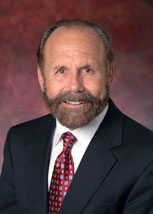
Bill Author