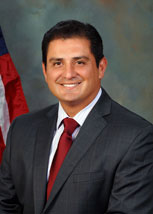
AB 2196: Pilot Program for Increased Access to Responsible Small Dollar Loans.
- Session Year: 2019-2020
- House: Assembly
- Latest Version Date: 2020-09-25
|
Date
|
Status
|
|---|---|
| Sep 25, 2020 | Chaptered by Secretary of State - Chapter 174, Statutes of 2020. |
| Sep 25, 2020 | Approved by the Governor. |
| Sep 4, 2020 | Enrolled and presented to the Governor at 2 p.m. |
| Aug 28, 2020 | In Assembly. Ordered to Engrossing and Enrolling. |
| Aug 28, 2020 | Read third time. Passed. Ordered to the Assembly. (Ayes 39. Noes 0. Page 4382.). |
| Aug 25, 2020 | Ordered to special consent calendar. |
| Aug 20, 2020 | Read second time. Ordered to third reading. |
| Aug 17, 2020 | In committee: Referred to APPR. suspense file. |
| Aug 13, 2020 | From committee: Do pass and re-refer to Com. on APPR. (Ayes 7. Noes 0.) (August 13). Re-referred to Com. on APPR. |
| Jul 30, 2020 | In committee: Hearing postponed by committee. |
| Jul 9, 2020 | In committee: Hearing postponed by committee. |
| Jun 23, 2020 | Referred to Com. on B. & F.I. |
| Jun 9, 2020 | In Senate. Read first time. To Com. on RLS. for assignment. |
| Jun 8, 2020 | Read third time. Passed. Ordered to the Senate. (Ayes 77. Noes 0. Page 4687.) |
| Jun 3, 2020 | Read second time. Ordered to third reading. |
| Jun 2, 2020 | From committee: Do pass. (Ayes 18. Noes 0.) (June 2). |
| May 22, 2020 | Re-referred to Com. on APPR. |
| May 21, 2020 | Read second time and amended. |
| May 20, 2020 | From committee: Amend, and do pass as amended and re-refer to Com. on APPR. (Ayes 12. Noes 0.) (May 19). |
| Mar 17, 2020 | Re-referred to Com. on B. & F. |
| Mar 16, 2020 | From committee chair, with author's amendments: Amend, and re-refer to Com. on B. & F. Read second time and amended. |
| Mar 12, 2020 | Referred to Com. on B. & F. |
| Feb 13, 2020 | From printer. May be heard in committee March 14. |
| Feb 12, 2020 | Read first time. To print. |
|
Date
|
Description
|
Location
|
Votes
|
|
|---|---|---|---|---|
| Aug 28, 2020 | Special Consent AB2196 | Senate Floor |
Passed |
|
| Aug 20, 2020 | Do pass | Senate Standing Committee on Appropriations |
Passed |
|
| Aug 17, 2020 | Placed on suspense file | Senate Standing Committee on Appropriations |
Passed |
|
| Aug 13, 2020 | Do pass, but first be re-referred to the Committee on [Appropriations] | Senate Standing Committee on Banking and Financial Institutions |
Passed |
|
| Jun 8, 2020 | AB 2196 Gonzalez Assembly Third Reading | Assembly Floor |
Passed |
|
| Jun 2, 2020 | Do pass. | Assembly Standing Committee on Appropriations |
Passed |
|
| May 19, 2020 | Do pass as amended and be re-referred to the Committee on [Appropriations] | Assembly Standing Committee on Banking and Finance |
Passed |
This list shows positions taken on this bill by organizations on the date displayed, which is linked to the original source.
Positions by individuals are not included.
SENATE RULES COMMITTEE Office of Senate Floor Analyses (916) 651-1520 Fax: (916) 327-4478 | AB 2196 |
THIRD READING
Bill No: AB 2196
Author: Gonzalez (D), et al.
Amended: 5/21/20 in Assembly
Vote: 21
SENATE BANKING & F.I. COMMITTEE: 7-0, 8/13/20
AYES: Bradford, Chang, Caballero, Dahle, Durazo, Hueso, Portantino
SENATE APPROPRIATIONS COMMITTEE: 7-0, 8/20/20
AYES: Portantino, Bates, Bradford, Hill, Jones, Leyva, Wieckowski
ASSEMBLY FLOOR: 77-0, 6/8/20 - See last page for vote
SUBJECT: Pilot Program for Increased Access to Responsible Small Dollar Loans
SOURCE: Author
DIGEST:
This bill extends the sunset date on California’s Pilot Program for Increased Access to Responsible Small Dollar Loans (pilot program) from January 1, 2023, to January 1, 2028.
ANALYSIS: Existing law, pursuant to the California Financing Law (CFL; Financial Code Section 22000 et seq.), establishes several different interest rate and fee structures for use by licensed lenders when making loans in principal amounts of up to $10,000. Pilot program rules summarized below apply to lenders who apply for and are accepted into the pilot program pursuant to rules specified in statute (Financial Code Section 22366). “Regular” (non-pilot) CFL rules apply to CFL lenders that do not apply to the pilot program, are not accepted to participate in the pilot program, or are accepted into the pilot program but choose not to lend under pilot program rules.
Rules Applicable to Consumer Purpose Loan Amounts Up to $2,500
Pilot Program Unsecured Loans Only (Until January 1, 2023) | Regular CFL Both Unsecured and Secured Loans | |
|---|---|---|
Interest Rates on Amounts up to $2,500 | 36% ($300 to $1,000) 32%* ($1,001 to $2,500) *An interest rate derived by taking the lesser of 35% or 28.75% plus the US prime lending rate, which is currently 3.25%. These interest rates must be reduced by a minimum of one percentage point on each subsequent loan to the same borrower, as specified, not to exceed a total interest rate reduction of four percentage points. | 30% (up to $225) 24% ($226 to $900) 18% ($901 to $1,650) 12% ($1,651 to $2,500) |
Administrative Fees | Lesser of 7% or $90 on the first loan made to a borrower by the same lender; lesser of 6% or $75 on the second and subsequent loans. No more than one administrative fee may be imposed in any four-month period. | Lesser of 5% or $50 |
Late Fees | $14 on loans at least 7 days late or $20 on loans at least 14 days late | $10 on loans at least 10 days late or $15 on loans at least 15 days late |
Minimum Loan Term | 90 days ($300 to $499) 120 days ($500 to $1,499) 180 days ($1,500 to $2,499) | No |
Maximum Loan Term | None | 24 months + 15 days (up to $499) 36 months + 15 days ($500 to $1,499) 48 months + 15 days ($1,500 to $2,500) |
Must Underwrite Based on Ability to Repay | Yes; loan may not result in the borrower exceeding a 50% debt to income ratio | No |
Must Report to Major Credit Bureau | Yes; the name of the credit bureau must be provided to the borrower | No |
Must Notify Prior to Due Date | Yes; at least two days prior to each due date | No |
Must Offer Credit Education | Yes; at no charge to the borrower | No |
Limitations on Refinancing | Yes; borrower must have repaid at least 60% of the outstanding principal and loan must be current at the time of refinancing. | No |
May Use Finders | Yes | No |
Rules Applicable to Consumer-Purpose Loan Amounts Between $2,501 and $9,999
Pilot Program Unsecured Loans Only (Until January 1, 2023) | Regular CFL Both Unsecured and Secured Loans | |
|---|---|---|
Interest Rates on Amounts Between $2,500 and $9,999 | 32%* ($2,501 to $7,499; pilot program loans may not exceed $7,499). This interest rate must be reduced by a minimum of one percentage point on each subsequent loan to the same borrower, as specified, not to exceed a total interest rate reduction of four percentage points. *An interest rate derived by taking the lesser of 35% or 28.75% plus the US prime lending rate, which is currently 3.25% | 36.25%* *An interest rate derived by adding 36% to the Federal Funds rate, which is currently 0.25% |
Administrative Fees | Lesser of 7% or $90 on the first loan made to a borrower by the same lender; lesser of 6% or $75 on the second and subsequent loans. No more than one administrative fee may be imposed in any four-month period. | $75 on loan amounts between $2,500 and $4,999; rate cap restrictions have the effect of prohibiting administrative fees on loan amounts of $5,000 and above. |
Late Fees | $14 on loans at least 7 days late or $20 on loans at least 14 days late | $10 on loans at least 10 days late or $15 on loans at least 15 days late |
Minimum Loan Term | One year | 12 months |
Maximum Loan Term | Five years | 48 months + 15 days ($2,501 to $2,999) 60 months + 15 days ($3,000 to $4,999) |
Must Underwrite Based on Ability to Repay | Yes; loan may not result in the borrower exceeding a 36% debt to income ratio | No |
Must Report to Major Credit Bureau | Yes; the name of the credit bureau must be provided to the borrower | Yes |
Must Notify Prior to Due Date | Yes; at least two days prior to each due date | No |
Must Offer Credit Education | Yes; at no charge to the borrower | Yes; at no charge to the borrower |
Limitations on Refinancing | Yes; borrower must have repaid at least 60% of the outstanding principal and loan must be current at the time of refinancing. | No |
May Use Finders | Yes | No |
This bill extends the sunset date on the pilot program to January 1, 2028.
Comments
To date, DBO has issued five reports specific to the pilot program, in June 2015, June 2017, June 2018, June 2019 (revised and reissued in December 2019), and July 2020. The most recent report can be accessed at https://dbo.ca.gov/wp-content/uploads/sites/296/2020/06/2019-RSDL-Pilot-Program-Aggregated-Report-FINAL.pdf.
The pilot program has placed close to 1.7 million rigorously-underwritten installment loans into the hands of low- and moderate-income Californians and has enabled a significant number of these loan recipients to establish or improve their credit scores. However, many have expressed concerns about the pilot program’s authorization of the use of finders.
Performance of Loans Made Using Finders Relative to Loans Made Without the Use of Finders Finders are third parties who can work on behalf of pilot program lenders to identify prospective borrowers and connect them with the lenders, helping to lower pilot program lenders’ costs of customer acquisition. Although the concept of finders was embedded in the original, 2010 pilot program legislation, no pilot program licensee had made widespread use of the finder authority granted in the 2010 legislation until 2016, because the original finder provisions were drafted in too rigid a manner to be used in a commercial context. Since enactment of SB 235 in 2015, Aura (formerly Lendify) has made extensive use of finders as it has grown its footprint in California. Through the end of 2019, Aura loans were available through 85 different finders with 723 locations in California. According to Aura, a total of 436 of those locations were active as finders during 2019.
DBO’s most recent pilot program report categorizes finders into four different categories: (1) check cashers (10 finders), (2) money transmitters (43 finders), (3) “others” – a category that includes tax preparers, insurance agents, variety stores, and other service providers (31 finders), and (4) payday lenders and/or finance lenders (one finder).
To date, three DBO reports have been issued, which allow a comparison of applicant approval rates and borrower outcomes in connection with pilot program loans made with and without the use of finders. Using information in those reports, it appears that the use of finders does not diminish the quality of underwriting or the positivity of borrower outcomes. From an underwriting perspective, both types of lenders approve less than half of their applications, which suggests rigorous review of applicants. Lenders using finders approved between 38% and 41% of all applications during the 2017 through 2019 time period, while lenders that did not use finders approved between 42% and 46% of borrower applications during the same time period.
Use of finders also appears unrelated to the use of loan funds. During the 2017 through 2019 time period, borrowers who obtained loans using finders cited “building or repairing credit” and “paying bills” as their primary reasons for borrowing. Those two reasons were the most frequently cited in 2017 and 2018 by borrowers who obtained loans without the use of finders, but were surpassed by “purchasing goods or services other than a vehicle” during 2019.
Borrowers who obtain loans using finders appear to have lower rates of short-term delinquencies than borrowers who obtain loans without the use of finders but higher rates of long-term delinquencies. Delinquencies between seven and 29 days long maxed out at 11% among borrowers who used finders to obtain their loans and at 22% among borrowers who did not use a finder to obtain their loan. Similarly, delinquencies between 30 and 59 days long maxed out at 4% among borrowers who used finders and at 10% among borrowers who did not use finders. However, long-term delinquencies were 9% among loans made using a finder versus 6% for loans made without using a finder.
Finally, credit scores among both populations (finder and no finder) have shown significant increases during the past three years. Approximately half of borrowers who obtained more than one pilot program loan using a finder saw an increase in their credit score between the first and second loan (increases ranged from 184 to 340 depending on the year), while approximately 60% of borrowers who obtained more than one pilot program loan without using a finder saw increases (ranging from 253 to 276 depending on the year).
Logic For Extending the Sunset Date Two Years Early As noted above, the pilot program is not currently scheduled to sunset until January 1, 2023. Typically, bills proposing to extend or delete sunset dates are introduced in the year prior to the sunset (2022 in this case). The author’s office provided the following response when asked why it was important to move AB 2196 during 2020: “Any delay in moving AB 2196 forward this year will create unneeded uncertainty in the program’s future. An extension of the program will send a message of confidence to lenders and the lenders’ investors that the program is not going away anytime soon.”
Related/Prior Legislation
AB 237 (Gonzalez-Fletcher, Chapter 1016, Statutes of 2018) increased the maximum size of a loan that can be made under California’s Pilot Program for Increased Access to Responsible Small Dollar Loans from $2,500 to $7,500, increased the frequency with which DBO must examine pilot program finders, and made other, related changes.
SB 984 (Hueso, Chapter 480, Statutes of 2016) extended the sunset date on the pilot program to January 1, 2023, and required DBO to issue detailed reports on the performance of pilot program annually, by July 1st of each year.
SB 235 (Block, Chapter 505, Statutes of 2015) expanded the activities in which pilot program finders could engage on behalf of pilot program lenders by authorizing finders to disburse loan proceeds to borrowers, receive loan payments from borrowers, and provide notices and disclosures to borrowers, as specified, and provided pilot program lenders with greater flexibility in the ways in which they may compensate their finders.
SB 318 (Hill, Chapter 467, Statutes of 2013) replaced the Pilot Program for Affordable, Credit-Building Opportunities with the Pilot Program for Increased Access to Responsible Small Dollar Loans. Retained several aspects of the original pilot, including the underwriting requirements, offers of free credit education, reports to at least one major credit bureau, and detailed reporting of program loan outcomes, but modified other aspects of the original pilot program. These modifications increased the maximum interest rates and fees that pilot lenders could charge, allowed pilot lenders to originate new loans and to refinance loans more frequently than under the original pilot, and eliminated several administrative and licensing rules that were serving as bureaucratic barriers to the success of the original pilot. Established a January 1, 2018 sunset date.
SB 1146 (Florez, Chapter 640, Statutes of 2010) authorized California’s original small-dollar loan pilot program, named the Pilot Program for Affordable Credit-Building Opportunities. Allowed lenders approved to participate in the pilot program to charge higher interest rates and fees on loans of up to $2,500 than those authorized under CFL. Required pilot program lenders to rigorously underwrite their loans, offer credit education at no cost to their borrowers, and report borrower payment history to at least one major credit bureau. Required detailed reporting of loan outcomes to DBO. Originally scheduled to sunset on January 1, 2015, but was replaced by the Pilot Program for Increased Access to Responsible Small Dollar Loans.
FISCAL EFFECT: Appropriation: No Fiscal Com.: Yes Local: Yes
According to the Senate Appropriations Committee, this bill will result in cost pressures to DBO for the continued administration of the pilot program through 2028. These costs may include the need for staff to review lender and finder applications, gather data on borrower activities, compile the annual report, and conduct other administration and enforcement activity. The cost to direct even partial staff time to these activities may be variable but potentially significant. The DBO reports that any new costs for the administration of the program are likely minor and absorbable. Fees and assessments from licensees may offset ongoing enforcement and administration costs.
SUPPORT: (Verified 8/20/20)
Aura
DolEx Dollar Express
Hispanic Foundation of Silicon Valley
Instituto de Avance Latino
Listo!
Los Angeles County Supervisor Mark Ridley-Thomas
New American Alliance
Pew Charitable Trusts
Silicon Valley Leadership Group
United Food and Commercial Workers Western States Council
OPPOSITION: (Verified 8/20/20)
California Financial Services Association
California Reinvestment Coalition
Center for Responsible Lending
Greenlining Institute
ARGUMENTS IN SUPPORT: Aura, which uses finders, asserts that “the finder model has contributed greatly to the Pilot Program’s success....Finders (who are regulated by the DBO) enable Pilot Program lenders to reach hundreds of underbanked communities cost effectively by leveraging technology and local relationships built within the community. This model is well established in many sectors, including, for example, retail credit card applications taken by department store employees. Pilot Program lenders underwrite and decision loans while department stores and supermarkets administer credit applications. Keeping delinquency rates remarkably low, the model addresses a shortage of non-payday loan storefronts that offer fair and credit building loans to those who need it most.”
ARGUMENTS IN OPPOSITION: The Center for Responsible Lending (CRL), California Reinvestment Coalition (CRC), and Greenlining Institute share similar concerns about the ability of pilot program lenders to use finders and question the need to extend the sunset date with 2-1/2 years still remaining before the pilot program expires. CRL and CRC are also concerned about the interest rates allowable under the pilot program. “The pilot program with APRs up to 78% places an economic burden on families. We have proposed a 15% rate cap on all small dollar loans not covered by AB 539 in order to ensure that income strapped families are not burdened with loans.”
ASSEMBLY FLOOR: 77-0, 6/8/20
AYES: Aguiar-Curry, Arambula, Bauer-Kahan, Berman, Bigelow, Bloom, Boerner Horvath, Bonta, Brough, Burke, Calderon, Carrillo, Cervantes, Chau, Chen, Chiu, Choi, Chu, Cooley, Cooper, Cunningham, Megan Dahle, Daly, Diep, Eggman, Flora, Fong, Frazier, Friedman, Gabriel, Gallagher, Cristina Garcia, Eduardo Garcia, Gipson, Gloria, Gonzalez, Gray, Grayson, Holden, Irwin, Jones-Sawyer, Kalra, Kamlager, Kiley, Lackey, Levine, Limón, Low, Maienschein, Mathis, Mayes, McCarty, Medina, Mullin, Nazarian, Obernolte, O'Donnell, Patterson, Petrie-Norris, Quirk-Silva, Ramos, Reyes, Luz Rivas, Robert Rivas, Rodriguez, Blanca Rubio, Salas, Santiago, Smith, Mark Stone, Ting, Voepel, Waldron, Weber, Wicks, Wood, Rendon
NO VOTE RECORDED: Muratsuchi, Quirk
Prepared by: Eileen Newhall / B. & F.I. /
8/21/20 17:58:47
**** END ****
SENATE COMMITTEE ON
Senator Anthony Portantino, Chair
2019 - 2020 Regular Session
AB 2196 (Gonzalez) - Pilot Program for Increased Access to Responsible Small Dollar Loans
Version: | Policy Vote: |
Urgency: | Mandate: |
Hearing Date: | Consultant: |
Bill Summary:
AB 2196 extends the sunset date on California’s Pilot Program for Increased Access to Responsible Small Dollar Loans from January 1, 2023 to January 1, 2028.
Fiscal Impact:
Cost pressures to the Department of Business Oversight (DBO) for the continued administration of the pilot program through 2028. These costs may include the need for staff to review lender and finder applications, gather data on borrower activities, compile the annual report, and conduct other administration and enforcement activity. The cost to direct even partial staff time to these activities may be variable but potentially significant. The DBO reports that any new costs for the administration of the program are likely minor and absorbable. Fees and assessments from licensees may offset ongoing enforcement and administration costs.
Background:
SB 1146 (Florez, Chapter 640, Statutes of 2010) authorized a pilot program to increase the availability of affordable, credit-building installment loans made in California in amounts below $2,500. The pilot program aimed to support Californians who lack credit scores, whose credit files are thin, or whose credit is damaged and have very few affordable, credit-building options when they need to borrow money.
SB 318 (Hill, Chapter 467, Statutes of 2013) and SB 235 (Block, Chapter 505, Statutes of 2015) modified the pilot program, with the aim of attracting more lenders to join the program and increase the availability of pilot loans across the state. The program was further extended to January 1, 2023 and authorized annual pilot program reporting by the DBO with SB 984 (Hueso, Chapter 480, Statutes of 2016). In 2018, the Legislature increased the maximum dollar amount of a pilot program loan was increased to $7,500 and enhanced oversight of finders through AB 237 (Gonzalez-Fletcher, Chapter 1016, Statutes of 2018).
Proposed Law:
This bill extends the sunset date on California’s Pilot Program for Increased Access to Responsible Small Dollar Loans to January 1, 2028.
-- END --
SENATE COMMITTEE ON
BANKING AND FINANCIAL INSTITUTIONS
Senator Steven Bradford, Chair
2019 - 2020 Regular
Bill No: AB 2196 Hearing Date: August 13, 2020
Author: | Gonzalez | ||
Version: | May 21, 2020 Amended | ||
Urgency: | No | Fiscal: | Yes |
Consultant: | Eileen Newhall | ||
Subject: Pilot Program for Increased Access to Responsible Small Dollar Loans.
SUMMARY
This bill extends the sunset date on California’s Pilot Program for Increased Access to Responsible Small Dollar Loans (pilot program) from January 1, 2023 to January 1, 2028.
EXISTING LAW
- Pursuant to the California Financing Law (CFL; Financial Code Section 22000 et seq.), establishes several different interest rate and fee structures for use by licensed lenders when making loans in principal amounts of up to $10,000. Pilot program rules summarized below apply to lenders who apply for and are accepted into the pilot program pursuant to rules specified in statute (Financial Code Section 22366). “Regular” (non-pilot) CFL rules apply to CFL lenders that do not apply to the pilot program, are not accepted to participate in the pilot program, or are accepted into the pilot program but choose not to lend under pilot program rules.
Rules Applicable to Consumer Purpose Loan Amounts Up to $2,500
Pilot Program Unsecured Loans Only (Until January 1, 2023) | Regular CFL Both Unsecured and Secured Loans | |
|---|---|---|
Interest Rates on Amounts up to $2,500 | 36% ($300 to $1,000) 32%* ($1,001 to $2,500) *An interest rate derived by taking the lesser of 35% or 28.75% plus the US prime lending rate, which is currently 3.25%. | 30% (up to $225) 18% ($901 to $1,650) 12% ($1,651 to $2,500) |
Administrative Fees | Lesser of 7% or $90 on the first loan made to a borrower by the same lender; lesser of 6% or $75 on the second and subsequent loans. No more than one administrative fee may be imposed in any four-month period. | Lesser of 5% or $50 |
Late Fees | $14 on loans at least 7 days late or $20 on loans at least 14 days late | $10 on loans at least 10 days late or $15 on loans at least 15 days late |
Minimum Loan Term | 90 days ($300 to $499) 120 days ($500 to $1,499) 180 days ($1,500 to $2,499) | No |
Maximum Loan Term | None | 24 months + 15 days (up to $499) 36 months + 15 days ($500 to $1,499) 48 months + 15 days ($1,500 to $2,500) |
Must Underwrite Based on Ability to Repay | Yes; loan may not result in the borrower exceeding a 50% debt to income ratio | No |
Must Report to Major Credit Bureau | Yes; the name of the credit bureau must be provided to the borrower | No |
Must Notify Prior to Due Date | Yes; at least two days prior to each due date | No |
Must Offer Credit Education | Yes; at no charge to the borrower | No |
Limitations on Refinancing | Yes; borrower must have repaid at least 60% of the outstanding principal and loan must be current at the time of refinancing. | No |
May Use Finders | Yes | No |
Rules Applicable to Consumer-Purpose Loan Amounts Between $2,501 and $9,999
Pilot Program Unsecured Loans Only (Until January 1, 2023) | Regular CFL Both Unsecured and Secured Loans | |
|---|---|---|
Interest Rates on Amounts Between $2,500 and $9,999 | 32%* ($2,501 to $7,499; pilot program loans may not exceed $7,499). This interest rate must be reduced by a minimum of one percentage point on each subsequent loan to the same borrower, as specified, not to exceed a total interest rate reduction of four percentage points. *An interest rate derived by taking the lesser of 35% or 28.75% plus the US prime lending rate, which is currently 3.25% | 36.25%* |
Administrative Fees | Lesser of 7% or $90 on the first loan made to a borrower by the same lender; lesser of 6% or $75 on the second and subsequent loans. No more than one administrative fee may be imposed in any four-month period. | $75 on loan amounts between $2,500 and $4,999; rate cap restrictions have the effect of prohibiting administrative fees on loan amounts of $5,000 and above. |
Late Fees | $14 on loans at least 7 days late or $20 on loans at least 14 days late | $10 on loans at least 10 days late or $15 on loans at least 15 days late |
Minimum Loan Term | One year | 12 months |
Maximum Loan Term | Five years | 48 months + 15 days ($2,501 to $2,999) 60 months + 15 days ($3,000 to $4,999) |
Must Underwrite Based on Ability to Repay | Yes; loan may not result in the borrower exceeding a 36% debt to income ratio | No |
Must Report to Major Credit Bureau | Yes; the name of the credit bureau must be provided to the borrower | Yes |
Must Notify Prior to Due Date | Yes; at least two days prior to each due date | No |
Must Offer Credit Education | Yes; at no charge to the borrower | Yes; at no charge to the borrower |
Limitations on Refinancing | Yes; borrower must have repaid at least 60% of the outstanding principal and loan must be current at the time of refinancing. | No |
May Use Finders | Yes | No |
THIS BILL extends the sunset date on the pilot program to January 1, 2028.
COMMENTS
- Purpose: This bill is sponsored by the author to ensure that consumers have continued access to pilot program loans beyond the current sunset date of January 1, 2023.
- Background: Californians who lack credit scores, whose credit files are thin, or whose credit is damaged currently have very few affordable, credit-building options when they need to borrow money. In an attempt to increase the availability of affordable, credit-building installment loans made in California in amounts below $2,500, the California Legislature authorized California’s first pilot program in 2010 (SB 1146, Florez, Chapter 640, Statutes of 2010). The Legislature modified the pilot program in 2013 and again in 2015, with the aim of attracting more lenders to join the pilot and increasing the availability of pilot loans across the state (SB 318, Hill, Chapter 467, Statutes of 2013 and SB 235, Block, Chapter 505, Statutes of 2015). In 2016, the Legislature extended the sunset date of the pilot program to January 1, 2023 and authorized annual pilot program reporting by DBO (SB 984, Hueso, Chapter 480, Statutes of 2016). In 2018, the Legislature increased the maximum dollar amount of a pilot program loan to $7,500 and increased oversight of finders (AB 237, Gonzalez-Fletcher, Chapter 1016, Statutes of 2018).
To date, DBO has issued five reports specific to the pilot program, in June 2015, June 2017, June 2018, June 2019 (revised and reissued in December 2019), and July 2020. The most recent report can be accessed at https://dbo.ca.gov/wp-content/uploads/sites/296/2020/06/2019-RSDL-Pilot-Program-Aggregated-Report-FINAL.pdf. - How Many Pilot Lenders Are There, and How Many Loans Are They Making? According to DBO, there were a total of 19 finance lenders approved to participate in the pilot program during 2019. However, one lender had its CFL license revoked during 2019 for failure to pay its annual assessment, reducing the number of pilot program participants to 18 by year end. That compares to 16 approved pilot program lenders as of December 31, 2018.
Only five of the 19 lenders eligible to lend under the pilot program during 2019 actually did (Oportun, Aura [formerly Lendify], Apoyo Financiero, Champion Financial Services, and BMG LoansAtWork), based on CFL annual reports. Of those five, only four (Oportun, Aura, Apoyo Financiero, and BMG LoansAtWork) lent in any sizable volume (see table below).
Oportun | Aura (Lendify) | Apoyo Financiero | CFS Investments | BMG LoansAtWork | |
|---|---|---|---|---|---|
Number of Unsecured Loans <$2,500 | 183,640 | 91,528 | 3,290 | 19 | 23 |
Dollar Volume of Unsecured Loans <$2,500 | $177,714,927 | $93,212,499 | $7,373,793 | $25,785 | $42,000 |
Number of Unsecured Loans $2,500 to $4,999[1] | 84,264 | 37,019 | 13,868 | 0 | 2,441 |
Dollar Volume of Unsecured Loans $2,500 to $4,999 | $287,092,498 | $125,132,100 | $54,754,942 | $0 | $7,323,000 |
Calendar year 2019 was not unique in terms of low numbers of lenders participating. Since the pilot program was approved during 2010, no more than five lenders have ever lent under the program in any one year.
- Pilot Program Loans Represent Less Than Half Of All Unsecured CFL Consumer Loans Under $2,500: Although the number of pilot program loans in amounts under $2,500 has increased significantly since the pilot has been in existence (from approximately 82,000 loans in 2011 to approximately 280,000 in 2019), pilot program loans have represented less than half of all unsecured loans made under the CFL in amounts under $2,500 in all but one year. To date, DBO has not published any surveys or provided the Legislature with any information regarding the reasons why more unsecured loans are made outside of the pilot than under the pilot.
2011 | 2012 | 2013 | 2014 | 2015 | 2016 | |
Unsecured Loans <$2500 | 258,080 | 264,351 | 280,614 | 345,796 | 450,224 | 501,519 |
Number of Pilot Program loans | 81,781 | 115,387 | 124,819 | 164,344 | 195,282 | 201,494 |
Pilot Program loans as a percentage of all unsecured consumer loans made under the CFL in amounts <$2,500 | 32% | 44% | 44% | 48% | 43% | 40% |
2017 | 2018 | 2019 | |
Unsecured Loans <$2500 | 493,273 | 558,062 | 752,465 |
Number of Program loans | 230,855 | 299,542 | 280,446 |
Program loans as a percentage of all unsecured consumer loans made under the CFL in amounts <$2,500 | 47% | 54% | 37% |
- Performance of Loans Made Using Finders Relative to Loans Made Without the Use of Finders: Finders are third parties who can work on behalf of pilot program lenders to identify prospective borrowers and connect them with the lenders, helping to lower pilot program lenders’ costs of customer acquisition. Although the concept of finders was embedded in the original, 2010 pilot program legislation, no pilot program licensee had made widespread use of the finder authority granted in the 2010 legislation until 2016, because the original finder provisions were drafted in too rigid a manner to be used in a commercial context. Since enactment of SB 235 in 2015, Aura (formerly Lendify) has made extensive use of finders as it has grown its footprint in California. Through the end of 2019, Aura loans were available through 85 different finders with 723 locations in California. According to Aura, a total of 436 of those locations were active as finders during 2019.
DBO’s most recent pilot program report categorizes finders into four different categories: 1) check cashers (10 finders), 2) money transmitters (43 finders), 3) “others” – a category that includes tax preparers, insurance agents, variety stores, and other service providers (31 finders), and 4) payday lenders and/or finance lenders (1 finder).
To date, three DBO reports have been issued, which allow a comparison of applicant approval rates and borrower outcomes in connection with pilot program loans made with and without the use of finders.
Using information in those reports, it appears that the use of finders does not diminish the quality of underwriting or the positivity of borrower outcomes. From an underwriting perspective, both types of lenders approve less than half of their applications, which suggests rigorous review of applicants. Lenders using finders approved between 38% and 41% of all applications during the 2017 through 2019 time period, while lenders that did not use finders approved between 42% and 46% of borrower applications during the same time period.
Use of finders also appears unrelated to the use of loan funds. During the 2017 through 2019 time period, borrowers who obtained loans using finders cited “building or repairing credit” and “paying bills” as their primary reasons for borrowing. Those two reasons were the most frequently cited in 2017 and 2018 by borrowers who obtained loans without the use of finders, but were surpassed by “purchasing goods or services other than a vehicle” during 2019.
Borrowers who obtain loans using finders appear to have lower rates of short-term delinquencies than borrowers who obtain loans without the use of finders but higher rates of long-term delinquencies. Delinquencies between 7 and 29 days long maxed out at 11% among borrowers who used finders to obtain their loans and at 22% among borrowers who did not use a finder to obtain their loan. Similarly, delinquencies between 30 and 59 days long maxed out at 4% among borrowers who used finders and at 10% among borrowers who did not use finders. However, long-term delinquencies were 9% among loans made using a finder versus 6% for loans made without using a finder.
Finally, credit scores among both populations (finder and no finder) have shown significant increases during the past three years. Approximately half of borrowers who obtained more than one pilot program loan using a finder saw an increase in their credit score between the first and second loan (increases ranged from 184 to 340 depending on the year), while approximately 60% of borrowers who obtained more than one pilot program loan without using a finder saw increases (ranging from 253 to 276 depending on the year). - Logic For Extending the Sunset Date Two Years Early: As noted above, the pilot program is not currently scheduled to sunset until January 1, 2023. Typically, bills proposing to extend or delete sunset dates are introduced in the year prior to the sunset (2022 in this case). The author’s office provided the following response when asked why it was important to move AB 2196 during 2020: “Any delay in moving AB 2196 forward this year will create unneeded uncertainty in the program’s future. An extension of the program will send a message of confidence to lenders and the lenders’ investors that the program is not going away anytime soon.”
- Input from Senate Judiciary Committee Staff: Due to the COVID-19 Pandemic and the unprecedented nature of the 2020 Legislative Session, all Senate policy committees are working under a compressed timeline. This timeline does not allow this bill to be referred to and heard by more than one committee, as a typical timeline would allow. In order to fully vet the contents of this measure for the benefit of Senators and the public, this analysis includes the following information from Senate Judiciary Committee staff: “This bill touches upon various issues within the jurisdiction of the Senate Judiciary Committee. In fact, the Committee has heard most, if not all, bills involving the Pilot Program for Increased Access to Responsible Small Dollar Loans. When reviewing such legislation, the Committee has focused on striking the right balance between ensuring access to credit for underserved and unbanked populations and protecting such consumers from predatory lending and financial ruin.
“The Legislature has long considered consumer protection to be a matter of critical importance. The Senate Judiciary Committee has sought strong oversight and reporting requirements in connection with the Pilot Program and urged that any further extensions or changes to the program be guided and informed by the quantitative data. While the Pilot Program often provides more favorable terms to lenders than other borrowing options, there are specific areas that the Senate Judiciary Committee has historically urged stronger protections. Specifically, the Committee has sought stronger regulation of “finders,” more intensive underwriting requirements, and more protective rate caps on small dollar loans provided pursuant to the program.”
- Support:
- Aura, which uses finders, asserts that “the finder model has contributed greatly to the Pilot Program’s success....Finders (who are regulated by the DBO) enable Pilot Program lenders to reach hundreds of underbanked communities cost effectively by leveraging technology and local relationships built within the community. This model is well established in many sectors, including, for example, retail credit card applications taken by department store employees. Pilot Program lenders underwrite and decision loans while department stores and supermarkets administer credit applications. Keeping delinquency rates remarkably low, the model addresses a shortage of non-payday loan storefronts that offer fair and credit building loans to those who need it most.”
- Pew Charitable Trusts “has studied payday, auto title, installment, and other forms of small-dollar credit since 2011...The most important criteria that our research has repeatedly identified for consumer success in using small loans are having enough time to repay in small installments, having each payment reduce their principal, and paying fair prices. .there is clearly much more unaffordable payday lending happening than affordable lending under the pilot program. It is unclear whether the uncertainty around the pilot’s permanence has held back companies from participating or expanding access to affordable credit.”
- Aura, which uses finders, asserts that “the finder model has contributed greatly to the Pilot Program’s success....Finders (who are regulated by the DBO) enable Pilot Program lenders to reach hundreds of underbanked communities cost effectively by leveraging technology and local relationships built within the community. This model is well established in many sectors, including, for example, retail credit card applications taken by department store employees. Pilot Program lenders underwrite and decision loans while department stores and supermarkets administer credit applications. Keeping delinquency rates remarkably low, the model addresses a shortage of non-payday loan storefronts that offer fair and credit building loans to those who need it most.”
- Opposition:
- The California Financial Services Association (CFSA) is opposed to the measure, because it believes there is sufficient time remaining before the expiration of the current sunset date in which to study the pilot program and make appropriate adjustments. “This is especially true because pursuant to your measure, AB 237, DBO was supposed to obtain and provide additional scrutiny and data related to Finder activities but that data is not yet publicly available. CFSA remains concerned about the Finder element of the Pilot program which essentially allows individuals to broker and service loans without obtaining an actual broker license to do so...Much more study and additional information is necessary to understand why there are so few Pilot lenders and the impact Finders are having on borrowers before the sunset should be eliminated or extended.”
- The Center for Responsible Lending (CRL), California Reinvestment Coalition (CRC), and Greenlining Institute share similar concerns about the ability of pilot program lenders to use finders and question the need to extend the sunset date with 2-1/2 years still remaining before the pilot program expires. CRL and CRC are also concerned about the interest rates allowable under the pilot program. “The pilot program with APRs up to 78% places an economic burden on families. We have proposed a 15% rate cap on all small dollar loans not covered by AB 539 in order to ensure that income strapped families are not burdened with loans.”
- The California Financial Services Association (CFSA) is opposed to the measure, because it believes there is sufficient time remaining before the expiration of the current sunset date in which to study the pilot program and make appropriate adjustments. “This is especially true because pursuant to your measure, AB 237, DBO was supposed to obtain and provide additional scrutiny and data related to Finder activities but that data is not yet publicly available. CFSA remains concerned about the Finder element of the Pilot program which essentially allows individuals to broker and service loans without obtaining an actual broker license to do so...Much more study and additional information is necessary to understand why there are so few Pilot lenders and the impact Finders are having on borrowers before the sunset should be eliminated or extended.”
- Prior and Related Legislation:
- AB 237 (Gonzalez-Fletcher, Chapter 1016, Statutes of 2018) increased the maximum size of a loan that can be made under California’s Pilot Program for Increased Access to Responsible Small Dollar Loans from $2,500 to $7,500, increased the frequency with which DBO must examine pilot program finders, and made other, related changes.
- SB 984 (Hueso), Chapter 480, Statutes of 2016, extended the sunset date on the pilot program to January 1, 2023 and required DBO to issue detailed reports on the performance of pilot program annually, by July 1st of each year.
- SB 235 (Block), Chapter 505, Statutes of 2015, expanded the activities in which pilot program finders could engage on behalf of pilot program lenders by authorizing finders to disburse loan proceeds to borrowers, receive loan payments from borrowers, and provide notices and disclosures to borrowers, as specified, and provided pilot program lenders with greater flexibility in the ways in which they may compensate their finders.
- SB 318 (Hill), Chapter 467, Statutes of 2013, replaced the Pilot Program for Affordable, Credit-Building Opportunities with the Pilot Program for Increased Access to Responsible Small Dollar Loans. Retained several aspects of the original pilot, including the underwriting requirements, offers of free credit education, reports to at least one major credit bureau, and detailed reporting of program loan outcomes, but modified other aspects of the original pilot program. These modifications increased the maximum interest rates and fees that pilot lenders could charge, allowed pilot lenders to originate new loans and to refinance loans more frequently than under the original pilot, and eliminated several administrative and licensing rules that were serving as bureaucratic barriers to the success of the original pilot. Established a January 1, 2018 sunset date.
- SB 1146 (Florez), Chapter 640, Statutes of 2010, authorized California’s original small-dollar loan pilot program, named the Pilot Program for Affordable Credit-Building Opportunities. Allowed lenders approved to participate in the pilot program to charge higher interest rates and fees on loans of up to $2,500 than those authorized under CFL. Required pilot program lenders to rigorously underwrite their loans, offer credit education at no cost to their borrowers, and report borrower payment history to at least one major credit bureau. Required detailed reporting of loan outcomes to DBO. Originally scheduled to sunset on January 1, 2015, but was replaced by the Pilot Program for Increased Access to Responsible Small Dollar Loans, as described immediately below.
- AB 237 (Gonzalez-Fletcher, Chapter 1016, Statutes of 2018) increased the maximum size of a loan that can be made under California’s Pilot Program for Increased Access to Responsible Small Dollar Loans from $2,500 to $7,500, increased the frequency with which DBO must examine pilot program finders, and made other, related changes.
LIST OF REGISTERED SUPPORT/OPPOSITION
Support
Aura
Los Angeles County Supervisor Mark Ridley-Thomas
DolEx Dollar Express
Hispanic Foundation of Silicon Valley
Instituto de Avance Latino
Listo!
New American Alliance
Pew Charitable Trusts
Silicon Valley Leadership Group
United Food and Commercial Workers Western States Council
Opposition
California Financial Services Association
California Reinvestment Coalition
Center for Responsible Lending
Greenlining Institute
-- END --
Loan volume above $4,999 is not shown, because CFL annual reports do not provide sufficient detail to determine loan volume between $5,000 and $7,499, which is the cap on pilot program loans. ↑
ASSEMBLY THIRD READING
ATR Bill Id:AB 2196
Author:(Gonzalez)
As Amended Ver:May 21, 2020
Majority vote
SUMMARY:
Extends the sunset date in the Pilot Program for Increased Access to Responsible Small Dollar Loans by five years to January 1, 2028.
Major Provisions
Changes the sunset date of the Pilot Program from January 1, 2023, to January 1, 2028.
COMMENTS:
The Legislature created the Pilot Program in 2010 to incentivize more lending activity for loans with principal amounts of less than $2,500. Prior to the existence of the pilot program, lenders were prohibited from offering loans with interest rates above the formula-based interest rate caps of 12-30% provided by the California Financing Law. These rate caps, when applied to relatively small loans, limited the revenue that a lender could earn on such a loan, which resulted in lenders using conservative underwriting standards that limited access to borrowers with damaged credit or limited credit history from accessing these types of loans. In order to attract more lenders to the space, the Pilot Program authorizes lenders to charge annual interest rates of up to 36%, plus an origination fee, in exchange for prescribed underwriting and credit reporting requirements.
In 2018, the Legislature passed and Governor Brown signed AB 237 (Gonzalez), Chapter 1016, Statutes of 2018. The bill increased the maximum size of pilot program loans to $7,500 and made additional changes to the program, including a requirement for a lender to conduct a background check on its finders, a requirement for DBO to examine finders for compliance with the law, and expanded reporting requirements related to finders.
The new reporting requirements became operative on January 1, 2019, meaning the first annual report based on the updated program will cover activity during calendar year 2019. Pilot program lenders are required to submit their annual report to DBO by March 15 each year, and DBO typically publishes the Pilot Program report in the summer of each year. As of May 31, 2020, the first Pilot Program report to include the additional information on finders has not been published and will likely not be published prior to this bill being voted on by the Assembly.
According to the Author:
Since the Pilot Program's inception, the program has demonstrated substantial growth and has achieved many of the goals the Legislature sought out to accomplish. However, despite demonstrated success during recent years, the Pilot Program is set to expire at the end of 2022. If the program is left to sunset, Californians will be left without access to capital that carry the same level of consumer benefits and protections offered under the Pilot Program.
Arguments in Support:
A coalition of supporters, including a prominent Pilot Program participant, writes, "the Pilot Program is set to expire at the end of 2022. If the program were to sunset, un- and under-banked Californians with no or limited credit histories would be left without access to consumer loans with strict consumer protections and the ability to build credit."
Arguments in Opposition:
The California Reinvestment Coalition and the Center for Responsible Lending state that there are two years remaining before the Pilot Program is scheduled to sunset, leaving sufficient time for additional data collection and assessment before the Legislature needs to make a decision on whether to extend the program and whether to amend any of its provisions. The organizations propose a 15% rate cap on small-dollar loans during the COVID-19 pandemic.
FISCAL COMMENTS:
According to the Assembly Appropriations Committee, this bill would generate no additional state costs. This bill does not expand or otherwise modify the Pilot Program.
VOTES:
ASM BANKING AND FINANCE: 12-0-0
YES: Limón, Chen, Bauer-Kahan, Burke, Cervantes, Choi, Fong, Gabriel, Grayson, Mark Stone, Weber, Wicks
ASM APPROPRIATIONS: 18-0-0
YES: Gonzalez, Bigelow, Bauer-Kahan, Bloom, Bonta, Calderon, Carrillo, Chau, Megan Dahle, Diep, Eggman, Fong, Gabriel, Eduardo Garcia, Petrie-Norris, McCarty, Robert Rivas, Voepel
UPDATED:
VERSION: May 21, 2020
CONSULTANT: Michael Burdick / B. & F. / (916) 319-3081 FN: 0002828
Date of Hearing: June 2, 2020
ASSEMBLY COMMITTEE ON APPROPRIATIONS
Lorena Gonzalez, Chair
ABPCA Bill Id:AB 2196
Author:(Gonzalez) – As Amended Ver:May 21, 2020
Policy Committee: | Banking and Finance | Vote: | 12 - 0 |
|
| ||
|
|
Urgency: No State Mandated Local Program: Yes Reimbursable: No
SUMMARY:
This bill extends, from January 1, 2023, to January 1, 2028, the Pilot Program for Increased Access to Responsible Small Dollar Loans (Pilot Program). This bill also aligns existing reporting requirements for the Department of Business Oversight (DBO) with this new sunset date.
FISCAL EFFECT:
No additional state costs. This bill does not expand or otherwise modify the Pilot Program.
COMMENTS:
- Background. The Legislature created the Pilot Program in 2013 to increase consumer access to small dollar loans between $300 and $2,500. The Pilot Program allows participating lenders to charge marginally higher interest rates than otherwise allowed under the California Financing Law (CFL) and to use “finders” to help identify potential borrowers.
The Legislature further expanded the Pilot Program in 2018. AB 237 (Gonzalez), Chapter 1016, Statutes of 2018, increased the maximum allowable loan to $7,500 and made a number of other changes related to the oversight of finders.
- Purpose. According to the author, this bill will extend the Pilot Program so that Californians are not “left without access to capital that carry the same level of consumer benefits and protections under the Pilot Program.” The author argues that the Pilot Program has demonstrated substantial growth and has achieved many of the goals the Legislature set out to accomplish.
- Opposition. The California Reinvestment Coalition and the Center for Responsible Lending oppose this bill. They cite a number of reasons for their opposition, including that it is currently a “mistake to divert necessary resources to extend the pilot program now.” This bill does not generate new costs for the state.
Analysis Prepared by: Luke Reidenbach / APPR. / (916) 319-2081
Date of Hearing:
ASSEMBLY COMMITTEE ON BANKING AND FINANCE
Monique Limón, Chair
ABPCA Bill Id:AB 2196 (
Author:Gonzalez) – As Amended Ver:March 16, 2020
SUBJECT: Pilot Program for Increased Access to Responsible Small Dollar Loans
SUMMARY: Removes the sunset date in the Pilot Program for Increased Access to Responsible Small Dollar Loans, making the program permanently authorized by the state.
Specifically, this bill:
- Repeals the existing sunset date of January 1, 2023, for the Pilot Program for Increased Access to Responsible Small Dollar Loans (“Pilot Program”).
- Removes the requirement for Department of Business Oversight (DBO) to provide a recommendation in the annual report to the Legislature regarding whether the Pilot Program should be extended beyond the specified sunset date.
EXISTING LAW:
- Until January 1, 2023, authorizes the Pilot Program for Increased Access to Responsible Small Dollar Loans within the California Financing Law (CFL) (Financial Code Sections 22365 et seq. All subsequent references to statute are within the Financial Code.). The following are key rules applied to consumer loans made pursuant to the Pilot:
- Permits approved licensees to make a loan with a bona fide principal amount of at least $300, but less than $7,500. Caps interest rates at approximately 36% per annum, depending on the size of the loan (Section 22370(b)).
- Provides that a licensee may charge an administrative fee in an amount not to exceed 7% of the principal amount, or $90, whichever is less, on a first loan, and 6% of the principal amount, or $75, whichever is less, on a second or subsequent loan. A licensee may not charge an underwriting fee more than once in any four-month period, and no administrative or underwriting fee may be charged in connection with a loan refinance unless at least eight months have elapsed, as specified (Section 22370(c)).
- Requires that loans under the Pilot Program must have a minimum principal amount of $300 upon origination and a term not less than: (i) 90 days for loans whose principal balance is less than $500; (ii) 120 days for loans whose principal balance is at least $500 but less than $1,500; (iii) 180 days for loans whose principal balance is at least $1,500; and (iv) one year for loans whose principal balance is more than $2,500 (Section 22370 (a)).
- Requires a licensee to underwrite each loan and states that the licensee shall not make the loan if it determines that the borrower's total monthly debt service payments exceed 50% of the borrower's gross monthly income for loans of $2,500 or less or 36% of the borrower’s gross monthly income for loans of more than $2,500, as specified (Section 22370(f)).
- Authorizes a licensee who participates in the pilot program to use the services of one or more finders, as specified, and defines a "finder" as an entity that, at the finder's physical location for business, brings a licensee and a prospective borrower together for the purpose of negotiating a loan contract (Section 22371).
- Authorizes a finder to perform one or more of the following services for a licensee at the finder's physical location for business: a) distributing written materials; b) providing written factual information about the loan; c) notifying a prospective borrower of the information needed to complete an application; d) entering information from a prospective borrower into a database; e) assembling credit applications and other materials; f) contacting the licensee to determine the status of a loan application; g) communicating a response regarding underwriting; and h) obtaining the borrower's signature on documents (Section 22372).
- Authorizes certain licensed or regulated finders to disburse loan proceeds to a borrower and receive loan payments from the borrower (Section 22372).
FISCAL EFFECT: Unknown.
COMMENTS:
- PURPOSE
According to the author:
Since the Pilot Program’s inception, the program has demonstrated substantial growth and has achieved many of the goals the Legislature sought out to accomplish. According to the 2019 DBO Annual Report of Activity under the Pilot Program, over a three-year period, more than 59 percent of borrowers who took out more than one loan received a higher credit score in the process, with an average increase of 183 points in 2018. Additionally, the annual total principal of loans made between 2016 and 2018 increased 36 percent, from $242 million to $329.8 million, indicating a growing need for the Pilot Program.
However, despite demonstrated success during recent years, the Pilot Program is set to expire at the end of 2022. If the program is left to sunset, Californians will be left without access to capital that carry the same level of consumer benefits and protections offered under the Pilot Program.
- BACKGROUND
The pilot program was created to incentivize more lending activity for loans with principal amounts of less than $2,500. Prior to the existence of the pilot program, lenders were prohibited from offering loans with interest rates above the formula-based interest rate caps of 12-30% provided by the California Financing Law. These rate caps, when applied to relatively small loans, limited the revenue that a lender could earn on such a loan, which resulted in lenders using conservative underwriting standards that limited access to borrowers with damaged credit or limited credit history from accessing these types of loans. In order to attract more lenders to the space, the Legislature created the pilot program in 2010, allowing lenders to charge annual interest rates of up to 36%, plus an origination fee, in exchange for prescribed underwriting and credit reporting requirements.
In 2018, the Legislature passed and Governor Brown signed AB 237 (Gonzalez), Chapter 1016, Statutes of 2018. The bill increased the maximum size of pilot program loans to $7,500 and made additional changes to the program, including a requirement for a lender to conduct a background check on its finders, a requirement for DBO to examine finders for compliance with the law, and expanded reporting requirements related to finders.
The new reporting requirements became operative on January 1, 2019, meaning the first annual report based on the updated program will cover activity during calendar year 2019. Pilot program lenders are required to submit their annual report to DBO by March 15 each year, and DBO typically publishes the Pilot Program report in the summer of each year. As of May 14, 2020, the first Pilot Program report to include the additional information on finders has not been published and will likely not be published prior to this bill being voted on by the Assembly.
- PILOT PROGRAM DATA
The most recent information about activity under the Pilot Program is found in the 2018 annual report, which was initially published in July 2019 and revised in December 2019.[1] As shown in the table below, the program has seen little growth in the number of participating lenders, but loan volume has grown considerably, likely tied to growth in the number of finder locations.
In general, the data do not consistently show a difference in outcomes for consumers that borrow directly from a lender compared to consumers that access the lender through a finder. For example, lenders that do not use finders reported a higher proportion of their borrowers who had an increase in their credit scores, but also a higher proportion of borrowers who experienced a delinquency or received a late fee, compared to lenders that use finders. Any individual metric that shows a difference in borrower outcomes could be due to underlying differences in the characteristics of borrowers, rather than differences in how lenders and finders behave.
In addition to differences in underlying borrower characteristics, pilot lenders who entered the market earlier may have located in more ideal geographic locations than pilot lenders who entered the market later. Based on the available data, it is difficult to conclude that one business model is better or worse for consumers than the other or that one business model is more effective in reaching consumers who have limited credit options than the other. For example, lenders that use finders reported serving a higher proportion of Spanish-speaking customers and a higher proportion of unbanked customers than lenders that do not use finders, but lenders that use finders also reported a lower proportion of lending in low- and moderate-income census tracts than lenders that do not use finders.
- RECOMMENDATIONS FROM DBO
Existing law requires DBO to include in the annual report the department’s recommendations for improving the program and recommendations for whether the program should be continued after January 1, 2023. In the most recent annual report, the DBO provides the following:
The current version of the Small Dollar Pilot Program became operational January 1, 2019. The DBO recommends policymakers give the program more time to work before making changes. Recommendations for improvements, at this time, would be premature.
The changes brought by previous Pilot Program versions doubled the number of lenders participating in the program and near [sic] than double the number of borrowers applying for loans. However, the revisions did not significantly impact the volume of lending activity. The number of Pilot Program loans made is approximately 50 percent of the applications taken. The DBO will consult with licensees, consumer advocates and policymakers to explore ways to increase participation in the Pilot Program by both lenders and borrowers.
- AMENDMENTS
Based on available data, the Pilot Program appears to provide credit access to some borrowers at more affordable rates than those borrowers would receive from other lenders and to some borrowers who would not be approved for credit by other lenders at all. Despite these apparent positive outcomes, there are two primary reasons the Legislature may want to delay a decision about making the Pilot Program permanent based on the existing design of the program.
First, the Legislature has not yet received an annual report based on the activity that occurred after the most recent changes to the program became operational on January 1, 2019. In theory, the Legislature enacted the annual reporting requirement in order to inform future decisions about whether to amend, renew, or end the program. Making the program permanent prior to analyzing relevant data would deprive the Legislature of information that could be helpful in designing improvements to the program to incentivize broader participation in the program by lenders and generate better outcomes for borrowers.
Second, the recommendations from DBO discussed in the preceding section include a commitment from the department to “consult with licensees, consumer advocates and policymakers to explore ways to increase participation in the Pilot Program by both lenders and borrowers.” The Legislature may benefit from permitting DBO more time to evaluate how recent changes to the program have affected activity. In addition to the recent changes to the program, AB 539 (Limón), Chapter 708, Statutes of 2019, went into effect on January 1, 2020. AB 539 limited interest rates on CFL loans of $2,500 to $10,000 made outside of the Pilot Program to approximately 36%. The new limitations on interest rates for these loans could have an effect on how the Legislature considers changes to the Pilot Program, though the current economic crisis due to COVID-19 will likely confound the analysis of the effects of AB 539 on the market for small-dollar loans.
Rather than make the program permanent, the Legislature may elect to extend the sunset date. An extension will send a message of confidence to lenders – both those currently approved to participate and potential applicants – and the lenders’ investors that the program is not going away. An extension will also send a message to all stakeholders that the program may continue to be refined as additional annual reports provide more information about the program and how it may be improved for borrowers and lenders.
Recommended amendments
Restore the provisions that refer to the sunset date and amend the sunset date to January 1, 2028.
- ARGUMENTS IN SUPPORT
The Pew Charitable Trusts writes in support of the bill, stating the organization’s extensive research of small-dollar credit over the past decade. Pew identifies the problematic structure of payday loans in California and touts the key benefits of the Pilot Program, including lower finance charges, longer repayment terms, and the principal reduction structure of a Pilot loan.
Aura, a relatively large Pilot lender that uses finders, and a coalition of business and community groups writes that, “the Pilot Program is set to expire at the end of 2022. If the program were to sunset, un- and under-banked Californians with no or limited credit histories would be left without access to consumer loans with strict consumer protections and the ability to build credit.”
- ARGUMENTS IN OPPOSITION
The California Reinvestment Coalition and Center for Responsible Lending write:
We oppose the extension of the pilot for the following reasons 1) We believe that the length of the program as is will allow the State to collect necessary data on how the program is working and assess if its met the intended goals of providing a non-extractive product. 2) In the time of an unprecedented public health and economic crisis caused by the COVID19 pandemic, we strongly believe it is a mistake to divert necessary resources to extend the pilot program now when there are more than two years left before the pilot expires. 3) In this time of crisis, in which more than 40% of families earning less than $40,000 a year reported a job loss, it is imperative that we shore up income supports for California families, the pilot program with APRs up to 78% places an economic burden on families. We have proposed a 15% rate cap on all small dollar loans not covered by AB 539 in order to ensure that income strapped families are not burdened with loans.
REGISTERED SUPPORT / OPPOSITION:
Support
Aura
California Cattlemen's Association
California Hispanic Chamber of Commerce
Dolex Dollar Express, INC
Farmworker Institute of Education & Leadership Development
Hispanic Foundation of Silicon Valley
Kern Schools Federal Credit Union
Listo Unlimited INC.
New America Alliance
Pew Charitable Trusts; the
The Pew Charitable Trusts
United Food and Commercial Workers, Western States Council
Oppose
California Financial Services Association
California Reinvestment Coalition
Center for Responsible Lending
The Greenlining Institute
Other
Lendmark Financial Services
Oportun
Analysis Prepared by: Michael Burdick / B. & F. / (916) 319-3081
Bill Author