SB 1053: Licensed registered nurses and licensed vocational nurses: Nurse Licensure Compact.
- Session Year: 2019-2020
- House: Senate
- Latest Version Date: 2020-05-13
|
Date
|
Status
|
|---|---|
| May 18, 2020 | May 18 set for first hearing. Failed passage in committee. (Ayes 4. Noes 5. Page 3549.) Reconsideration granted. |
| May 14, 2020 | Set for hearing May 18. |
| May 13, 2020 | From committee with author's amendments. Read second time and amended. Re-referred to Com. on B., P. & E.D. |
| May 12, 2020 | Referral to Com. on JUD. rescinded due to the shortened 2020 Legislative Calendar. |
| Apr 9, 2020 | From committee with author's amendments. Read second time and amended. Re-referred to Com. on B., P. & E.D. |
| Mar 18, 2020 | March 23 hearing postponed by committee. |
| Mar 11, 2020 | Set for hearing March 23. |
| Feb 27, 2020 | Referred to Coms. on B., P. & E.D. and JUD. |
| Feb 19, 2020 | From printer. May be acted upon on or after March 20. |
| Feb 18, 2020 | Introduced. Read first time. To Com. on RLS. for assignment. To print. |
|
Date
|
Description
|
Location
|
Votes
|
|
|---|---|---|---|---|
| May 18, 2020 | [First] hearing set for [05-18-2020]: Failed passage in Committee. Reconsideration granted | Senate Standing Committee on Business, Professions and Economic Development |
Passed |
|
| May 18, 2020 | Do pass, but first be re-referred to the Committee on [Appropriations] | Senate Standing Committee on Business, Professions and Economic Development |
Failed |
This list shows positions taken on this bill by organizations on the date displayed, which is linked to the original source.
Positions by individuals are not included.
SENATE COMMITTEE ON
BUSINESS, PROFESSIONS AND ECONOMIC DEVELOPMENT
Senator Steven Glazer, Chair
2019 - 2020 Regular
Bill No: Hearing Date: May 18, 2020
Author: | |||
Version: |
| ||
Urgency: | Fiscal: | ||
Consultant: | |||
Subject:
SUMMARY:
Enacts the Nurse Licensure Compact (NLC) which would authorize the Board of Registered Nursing (BRN) to issue a multistate license to practice as a registered nurse (RN) and the Board of Vocational Nursing and Psychiatric Technicians (BVNPT) to issue a multistate license to practice as a licensed vocational nurse (LVN), in all party states under a multistate licensure privilege and designates the BRN and the BVNPT to alternate as the administrator of the NLC for California.
NOTE: Due to the COVID-19 Pandemic and the unprecedented nature of the 2020 Legislative Session, all Senate Policy Committees are working under a compressed timeline. This timeline does not allow this bill to be referred and heard by more than one committee as a typical timeline would allow. In order to fully vet the contents of this measure for the benefit of Senators and the public, this analysis includes information from the Senate Committee on Judiciary.
Existing law:
- Establishes the BRN to license and regulate the practice of nursing under the Nursing Practice Act (Act). (Business and Professions Code (BPC § 2700 et.seq.)
- States that protection of the public is the highest priority for the BRN in exercising its licensing, regulatory, and disciplinary functions, and whenever the protection of the public is inconsistent with other interests sought to be promoted, the protection of the public is paramount. (BPC § 2708.1)
- Requires the BRN to meet at quarterly at times and places designated by resolution in both Northern and Southern California. (BPC § 2709.5)
- Requires the BRN to prosecute all persons guilty of violating the Act. (BPC § 2715)
- Authorizes a RN to dispense drugs or devices upon an order by a licensed physician and surgeon or an order by a certified nurse midwife, nurse practitioner, or physician assistant, as specified, if the RN is functioning within a licensed primary care clinic, as specified. (BPC § 2725.1)
- Includes within the scope of nursing practice all of the following:
- Direct and indirect patient care services that ensure the safety, comfort, personal hygiene, and protection of patients; and the performance of disease prevention and restorative measures;(BPC § 2725(b)(1))
- Direct and indirect patient care services, including the administration of medications and therapeutic agents, necessary to implement a treatment, disease prevention, or rehabilitative regimen ordered by and within the scope of licensure of a physician, dentist, podiatrist, or clinical psychologist; (BPC § 2725(b)(2))
- The performance of skin tests, immunization techniques, and the withdrawal of human blood from veins and arteries; and, (BPC § 2725(b)(3))
- Observation of signs and symptoms of illness, reactions to treatment, general behavior, or general physical condition, and determination of whether the signs, symptoms, reactions, behavior, or general appearance exhibit abnormal characteristics, and implementation, based on observed abnormalities, of appropriate reporting, or referral, or standardized procedures, or changes in treatment regimen in accordance with “standardized procedures,” or the initiation of emergency procedures. (BPC § 2725(b)(4))
- Requires applicants for licensure as a RN to complete general education requirements determined by the BRN; complete the courses of instruction prescribed by the BRN in a in a program in this state accredited by the board or have completed courses of instruction in a school of nursing outside of this state which, in the opinion of the board at the time the application is filed, are equivalent to the minimum requirements of the BRN for licensure established for an accredited program in this state; and, not be subject to denial related to criminal convictions, as specified.
- Requires, beginning January 1, 2023, that Continuing Education (CE) courses for RNs, include the understanding of implicit bias and the promotion of bias-reducing strategies. (BPC § 2736.5)
- Establishes the Board of Vocational Nursing and Psychiatric Technicians (BVNPT) to license and regulate LVNs and Psychiatric Technicians s. (BPC 2840 et seq.).
- States that protection of the public is the highest priority for the BVNPT in exercising its licensing, regulatory, and disciplinary functions; and whenever the protection of the public is inconsistent with other interests sought to be promoted, the protection of the public is paramount. (BPC § 2841.1)
- Authorizes the BVNPT, upon written application and receipt of the fee, to issue a license without an examination to any applicant who possesses a valid, unrevoked license as vocational or practical nurse issued by any other state or a foreign country and who, in the opinion of the BVNPT, meets all other licensing requirements. (BPC § 2871.1)
- States that any person who has served on active duty in the medical corps or any of the armed forces, in which no less than 12 months was spent in rendering bedside patient care, and who has completed a basic instruction course in nursing and served under honorable conditions must be granted a license upon proof that they have the qualifications, as specified. (BPC § 2873.5)
- Authorizes the BVNPT to suspend or revoke a license for specified conditions, including but not limited to, incompetence, a conviction of practicing medicine without a license, failure to maintain patient confidentiality. (BPC § 2878)
- Provides that an approved school is one that is approved by the BVNPT, and gives a course of instruction in vocational nursing of not less than 1,530 hours or 50 semester unites, as specified. (BPC § 2881)
- Requires each person renewing a BVNPT-license to submit proof to the BVNPT that during the preceding two years, they have received no more than 30 hours of CE, as determined by the BVNPT. (BPC § 2892.5)
This bill:
- Enacts the Nurse Licensure Compact (NLC) and enters California as a NLC party state.
- Designates the BRN and the BVNPT to alternate as the compact administrators for purposes of the NLC.
- States findings and declarations pertaining to the purpose of the NLC;
- Defines terms related to the administration of the NLC including: “home state” the party state which is the nurse’s primary state residence; “multistate license” to practice as RN or LVN issued by a home state licensing board that authorizes the licensed nurse to practice in all party states under a multistate licensure privilege”; “single-state license” a nurse license issued by a party state that authorizes practice only within the issuing state and does not include a multistate licensure privilege to practice in any other party state”; “remote state” a party state, other than the home state”; and, “state practice laws” a party state’s laws, rules and regulations that govern the practice of nursing, define the scope or nursing practice, and create the methods and grounds for imposing disciple, but no not include requirements necessary to obtain and retain a license except for qualifications ore requirements of the home state”.
- The NLC specifies that a multistate license to practice nursing as an RN or LVN issued by a home state to a resident in that state will be recognized by each party state as authoring a nurse to practice as a RN or LVN under a multistate licensure privilege in each party state.
- The NLC requires a state to implement procedures for considering the criminal history records of applicants for initial multistate licensure or licensure by endorsement/
- The NLC specifies that in order to obtain or retain a multistate licensure, each party state must require an applicant to meet the home state’s qualifications for licensure, graduate from a licensing board approved RN or LVN pre-licensure program, pass the NCLEX-RN or NCLEX PN, submit fingerprints, and pass an English proficiency examination if the individual graduated from a foreign pre-licensure program. The NLC requires an applicant to have an active unencumbered license, submit fingerprints, and have a social security number. The NLC specifies that a multistate license may only be issued by the home state in only one party state at a time.
- The NLC authorizes a licensing board to take adverse actions against a multistate license, issue cease and desist orders, complete pending investigations for a nurse who changes primary state of residence during the course of investigation, issue subpoenas; and obtain specified fingerprint information.
- The NLC requires all party states to report to the coordinated licensure information system any adverse action, significant investigative information, denials of applicants, and nurse participation in alternative programs.
- Makes California a member of the NLC the Interstate Commission of Nurse Licensure Compact Administrators (Commission). The Commission is required to file a notice of proposed rulemaking and provide an opportunity for a public hearing before it adopts a rule or amendment.
- Authorizes the BRN and the BVNPT to charge a fee for issuing a multistate license.
FISCAL EFFECT:
Unknown. This bill is keyed fiscal by Legislative Counsel.
COMMENTS:
- Purpose. The Author is the sponsor of this bill. According to the Author, “Medical care providers are constantly adapting to a rapidly change and increasingly interconnected national healthcare system. California’s current framework for nurse licensure is based on an antiquated model in which nurses go to school, become licensed, and practice nursing in the same area throughout their entire career. This model has increasingly become an impediment to delivering the highest quality of care to California patients. Joining the NLC is a 21st century solution that would provide mobility and flexibility to California nurses.”
- Background.
Registered Nurse (RN). A RN observes patients, administers medication, provides diagnostic testing, coordinates patient care and helps patients manage illness and injuries, among other things. An RN typically operates as part of a healthcare team working with physicians and other health care specialty providers and may oversee vocational nurses, nursing assistants, and other home health care aides. In order to practice nursing in California, an individual must be licensed by the BRN. There are multiple pathways to obtain an RN license in California: 1) an Associate Degree in Nursing, 2) a Bachelor of Science in Nursing (BSN); 3) an entry level master’s degree program in nursing; and, 4) the LVN career pathway (which typically is not recognized in other states). California also permits military corpsmen to take the national exam for RN licensure if they have completed RN level education and clinical experience.
For those applicants seeking a license in California, and are licensed in another state, the BRN grants licensure by endorsement. In the licensure by endorsement process, an applicant must hold a current and active RN license in another state, have completed an educational program meeting all California requirements, and have passed the National Council Licensure Examination (NCLEX-RN®). If the applicant is deficient in any of the educational components, they are required to complete an approved course prior to obtaining licensure.
In addition, the BRN issues temporary licenses. Temporary licenses are issued to applicants who pay the $100 application fee, submit to California state level fingerprints, and submit an out-of-state verification form. The BRN reports that it can take approximately 8-10 weeks to process a temporary application. In FY 2016/17, the BRN reports that over 4,000 temporary licenses were issued. The temporary licenses are good for 6 months. If CA was a member of the NLC, those individuals would be authorized to practice in CA without any notification or application to the BRN or issuance of a secondary permit or license.
All RNs are required to provide both state level and federal level criminal background checks and licensees are required per BPC § 2736.5 to complete 30 hours of CE during each two-year renewal cycle. BPC § 2811.5(c) requires the BRN to establish regulations ensuring that CE courses are either related to the scientific knowledge or technical skills required for the practice of nursing, or to direct or indirect patient care. The BRN promulgated regulations further specifying appropriate coursework, including the requirement that all content be relevant to the practice of nursing. AB 241 (Kamlager-Dove, Chapter 417, Statutes of 2019), further required that RN licensees, among other healthcare practitioners, are required complete CE on the topic of implicit bias. RNs practicing in CA through the NLC may not be required to complete CE unless it is required by their home state.
Licensed Vocational Nurse (LVNs). An LVN is an entry-level health care provider who is responsible for rendering basic nursing care. An LVN practices under the direction of a physician or RN. Similar to RNs, there are multiple pathways to become a licensed LVN in California which are specified in the Vocational Nursing Practice Act. All applicants are required to provide both state level and federal level criminal background checks. LVNs are required to complete an educational program totaling 1,530 total hours including 954 clinical hours. Many LVN programs in other states require between 300-400 clinical hours. The BVNPT also expedites licensure for military spouses and accepts military education, training or experience towards meeting licensing or credentialing requirements. For applicants who are licensed in another state as an LVN, the BVNPT utilizes the licensure by endorsement process as well.
The provisions of the NLC are applicable to both RNs and LVNs.
The National Council of State Boards of Nursing, Inc. (NCSBN) and the Interstate Commission on Nurse Licensure (Commission). According to information provided by the Commission, the NCSBN is an independent, not-for-profit organization through which nursing regulatory bodies act and counsel together on matters of common interest and concern affecting public health, safety and welfare, including the development of the nursing licensure examinations. Both the BRN and the BVNPT are members of the NCSBN and both the BRN and the BVNPT rely on the NCSBN for administration of the national RN and LVN licensing examinations which are accepted for licensure in California; the NCLEX-RN and the NCLEX-PN.
Separately, under the NCSBN, is the establishment of the governing body over the NLC, known as the Commission. The Commission is comprised of nursing board presidents of NLC member states and has the rulemaking authority related to the provisions and articles governing the NLC. Unlike California’s regulatory boards, bureaus, committees under the DCA, the Commission does not have public participants. According to the information provided by the Commission, the composition is designed to ensure uniformity of rules across member states.
The rules which are promulgated by the Commission must be directly related to the NLC statutes. NLC rules do not change a member state’s RN or LVN practice acts, but rather are related to the implementation and operations of the NLC. If an RN or LVN has a multistate license, they are required to abide by the practice acts and laws in each state in which they are practicing. It is unclear how RNs and LVNs, who practice under a multistate license are informed or educated about the various practice acts of other member states.
The current leadership of the Commission is comprised of a chair, vice chair, a treasurer, and four at-large members, all of whom are the nursing board presidents, representing the member states participating in the Commission. The Commission is required under Article VII of the NLC to meet at least once each calendar year. Additional meetings are held as specified in the Commission’s bylaws. Commission meetings happen both via teleconference and in-person. According to information provided from the Commission, meetings are open for public participation, unless the Commission meets in closed session to discuss party state compliance, personnel or personal matters, litigation, contracts, sharing privileged information, disclosure of investigatory records, and other matters exempt from federal or state statute. Commission meetings are not subject to California’s Bagley-Keene Open Meetings Act or Public Records Act.
The Commission website notes the utilization of committees which are comprised of representatives from member states. The various committees include: rules; research; elections; policy; compliance; and, training and education. The Commission is ultimately responsible for determining the language and specifications contained in the NLC and the rules and bylaws for the operation of the Commission. The Commission solicits feedback from the public during the rulemaking process.
The Nurse Licensure Compact (NLC). The NLC was originally established in 2000, and underwent a significant revision in 2017. At that time, several changes were made to the provisions of the NLC including the requirement for participants to include both federal and state level criminal background checks as part of the application process. Any state that was a member of the NLC prior to the revision in 2017, was able to transfer to the updated NLC, including those few states that did not previously require background checks. The NLC has been enacted in 34 states (two of which are in the implementation process). Under the NLC, an RN or LVN can practice in any state, under a multistate license, in-person or via telehealth, as long as that state is a member of the NLC without obtaining a separate license to practice in each state.
The language contained in the NLC is identical in every state, and each state must comply with the provisions specified in the articles of the NLC. Any changes to the NLC may only be completed by regulatory actions of the Commission. The NLC only permits one authorized representative from a member state to be on the Commission. Unlike many other states, California has two separate regulatory boards to oversee RNs and LVNs. Because the NLC only allows one administrator to be a participant on the Commission (for rule-making purposes), this bill would designate the BRN and the BVNPT to be alternate administrators.
Articles VII and VIII of the NLC specify the voting procedures for member states, rules for convening in closed session, personnel matters for NLC staff, among others, along with the rulemaking authority for the Commission. Any changes to the articles of the NLC must be done by the Commission, the California Legislature would not have authority to change any of the provisions of the articles in the NLC, only to remove the state from participating in the NLC through the legislative process.
Licensure Requirements under the NLC. An RN or LVN can practice in any state that is a member of the NLC and there is no time restrictions on how long they may practice in any state that is a member of the NLC. A multistate license is issued in the state where the RN or LVN legally resides, not in the states where they want to practice. RNs or LVNs who move to a new state are required to reapply for a new license each time they move.
Article III of the NLC specifies the requirements that an applicant must meet in order to obtain a multistate license. Applicants must at a minimum, meet the qualifications for licensure as determined by their home state (the state where they reside). After meeting the home state’s minimum requirements for licensure, the applicant must additionally meet the following:
- Graduate from a licensing board approved RN/LVN pre-licensure education program;
- Graduate from a foreign RN/LVN pre-licensure program, as specified; and if that foreign pre-licensure program was not taught in English, or if English is not that individual’s native language they must pass an “English proficiency examination” that includes the components of reading, speaking, writing and listening;
- Pass the NCLEX-RN or NCLEX-PN;
- Be eligible for or hold an active, unencumbered license;
- Submit fingerprints or other biometric data for FBI and the agency responsible for retaining that state’s criminal records;
- Not been convicted or found guilty, or has entered into an agreed disposition, of a felony offense under applicable state or federal criminal law;
Not been convicted or found guilty, or has entered into an agreed disposition, of a misdemeanor offense related to the practice of nursing as determined on a case-by-case basis;
- Not currently enrolled in an alternative program;
- Is subject to self-disclosure requirements regarding current participation in an alternative program; and,
- Has a valid United States Social Security number.
Although a variation of the above mentioned licensing requirements are likely required by many states, there may be some notable differences in education and clinical hours required. LVNs are required to meet approximately 954 hours of clinical experience to obtain a license in California, while some other states do not have the same requirement. The Committee staff is not aware of an analysis of each state board’s licensing requirements to identify where there may be differences in both education and clinical hour requirements, or enforcement and discipline practices in each state.
In California, an applicant for licensure must present a valid Social Security number or an Individual Tax Payer Identification number. In this instance, that applicant would meet California’s requirement for a license, but they would not meet the requirements for the multistate license without a valid Social Security number. This would allow some California licensees to participate in the NLC while others would not meet the requirements of the NLC.
The NLC is not applicable to advanced practice RNs such as nurse practitioners (NPs), nurse anesthetists (CNAs), nurse midwives (CNMs), or clinical nurse specialists (CNSs). Although these advanced practice nurses would be eligible to practice in California or any NLC member state, they are only permitted to practice under the scope of practice of an RN as defined in that state’s RN or LVN practice acts.
Enforcement Authority under the NLC. Under Article V of the NLC, a member state is authorized to take adverse action against a nurse practicing in that state under the NLC; however, only the home state where that nurse obtained its multistate license (where the nurse resides) would be permitted to discipline the RN’s or LVN’s multistate license. Article VI of the NLC requires all licensing boards to promptly report to the coordinated licensure information system (NURSYS) any current significant investigative action, adverse action, denials of licensure, participation in alternative programs known to the licensing board regardless of whether such participation is deemed nonpublic or confidential under state law. Further, the compact administrator of a party state is required to provide all investigative documents and information requested by another party state. While specified information about an RN or LVN must be made available to other party states through the NLC administrator, a party state licensing board may designate that certain information about an individual may not be shared with non-party states.
An RN or LVN may not be a participant in alternative program while practicing under a multistate license. Article V specifies that nothing in the NLC override’s a party state’s decision authorizing the use of an alternative program in lieu of an adverse action against the RN or LVN; but, the home state must deactivate that licensee’s multistate privilege during the duration of the RN or LVN’s participation in the alternative program. If permitted in the home state, that licensee would be able to continue to practice in the home state, but would need to reactivate that license back to a multistate license upon completion of the alternative program.
Board of Registered Nursing (BRN) and Board of Vocational Nursing and Psychiatric Technicians (BVNPT). In California, there are two separate regulatory boards with oversight of the nursing and vocational nursing practices, the BRN and the BVNPT.
The BRN regulates over 500,000 nurse-licensees in California, which is typically one of the highest population of nurses in any state. In addition to licensing RNs, the BRN issues permits for pending licensees and certificates to NPs, CNAs CNMs, and CNSs. The BRN is responsible for setting educational standards for RN, NP, and CNM programs, approving such programs, approving continuing education providers, evaluating and licensing applicants, administering discipline, managing an intervention program for licensees with substance use disorders or mental illness, and providing stakeholder information and outreach. The BRN is a special fund agency that obtains its revenues from licensing fees. The BRN is comprised of nine members, which include five RNs and four public members. BPC § 2709 requires the BRN to meet at least once every three months, at times and places it designates by resolution. Meetings are required to be held both in northern and southern California.
The BVNPT is responsible for administering the laws related to the education, practice and discipline of LVNs and Psychiatric Technicians (PTs). The BVNPT regulates over 120,000 LVNs and 11,000 PTs, typically one of the largest groups of LVNs and PTs in the nation. The BVNPT has 11 members, with a public member majority (six public members and five professional members).
Both the BRN and the BVNPT are under the regulatory umbrella of the DCA. Each board is subject to the various statutory requirements specified under California’s BPC related to board composition, protection of the public mandate, meeting location requirements, number of times to meet annually, as well as the requirements set forth in California’s Bagley-Keene Open Meetings Act (Bagley Keene). Bagley-Keene, which is set forth in Government Code §§ 11120-11132, covers all state boards and commissions and generally requires these bodies to publicly notice their meetings, prepare agendas, accept public testimony and conduct their meetings in public unless specifically authorized by the Act to meet in closed session. Most of the boards under the jurisdiction of the DCA are required to meet in multiple jurisdictions throughout California in order to help facilitate the greatest amount of public participation. In addition, meetings are webcasted when available and teleconference meeting locations are available to the public to access. According to the Commission’s Bylaws, the Commission is required to meet in-person two times a year, in a location determined by the Commission. The Commission meets in various locations across the country, however, it is unclear if it is mandated to do so. Meetings are noted as publicly available, and public notice of the meeting is required to be posted 7-days prior to a meeting. Article VIII requires the Commission to post, for at least 60 days, any proposed rule or amendment and accept public comment prior to the vote on the rule or amendment.
NURSYS System. Both the BRN and the BVNPT currently participate in the NURSYS System. The NURSYS system provides an online verification for endorsement to an RN or LVN requesting to practice in another state and for anyone who wants to verify a nurse license. Additionally, states who utilize the system will be able to obtain licensing and enforcement actions of RNs and LVNs if participating in the NLC. Currently, both the BRN and the BVNPT report enforcement actions to the NURSYS system, but the BRN does not utilize it as a method to verify licensure. Persons licensed outside of California, must apply to California though the licensure by endorsement process, which authorizes California to obtain transcripts and other licensing documentation that it requires. The NLC requires that states participate in a coordinated licensure system in order to share licensing and enforcement data.
Under Article VI all licensing boards must promptly report to NURSYS any adverse action, any current significant investigative information, application denials and reasons for denials, nurse participation in alternative programs, regardless of whether or such information is deemed nonpublic or confidential under a state law. Further, the compact administrator, under this bill, the BRN and the BVNPT, would be required furnish a uniform set of data to the NLC administrator of each party state, and include any information related to investigations as requested by another party state.
Out-of-State Licensure. The licensure by endorsement system is utilized by both the BRN and the BVNPT for processing applicants with licenses held in another state. Although the licensure by endorsement process is not difficult, there are fees associated with applying for licensure in California, and it does take time to process an endorsement application. If California were to enact the NLC, that would allow those same individuals to practice in California without having to pay an additional fee or submit an application.
Telehealth. Especially during the COVID-19 pandemic, the value of telemedicine has become more apparent and necessary. In California, the requirements for telehealth operations are specified under current statute. BPC § 2290.5 specifies that California law recognizes live video and store-and forward (capture of medical information and transfer to providers for later review). RNs are permitted in California to utilize telehealth to provide healthcare services as long as certain requirements are met including obtaining written or verbal consent from the person receiving those services. If an RN or LVN was practicing in CA under a multistate license, they would be required to follow the practice act laws of the state in which they are practicing in. By participating in the NLC, an RN may hold a multistate license and reside in another state, and provide telehealth services to patients in California. The language in the NLC does not specify how multistate license holders are educated about nurse practice acts in other states, nor how they are informed about California’s telehealth laws.
Expedited Licensure. According to the Author, this bill would benefit military spouses who could practice immediately, rather than having to wait for their application to be processed and for the individual to gain a full California nursing license.
Under California Code of Regulations (CCR) Title 16 § 1418, an applicant with relevant military education and experience who presents documentation from a BRN-approved registered pre-licensure nursing program of equivalency credit evaluation that provides evidence of meeting, in whole or in part, the minimum standards for competency set forth in § 1443.5 and minimum education requirements of licensure listed pursuant to § 1426(c)(1) to (3), utilizing challenge examination or other evaluative methods, will be considered to meet, in whole or in part, the education requirements for licensure. According to the BRN, in FY 2018/19, the BRN issued 179 military spouse endorsements, issued 241 endorsements and permitted 259 examinations.
BPC § 2873.5 establishes authority for the BVNPT to consider United States military education, training, and experience for licensing or credentialing requirements, including college credit equivalency. For consideration of military equivalency, the applicant must have served on active duty in the medical corps of any of the armed forces. For the LVN, the applicant must have no less than 12 months rendering bedside patient care. In addition, the applicant must have completed the basic course of instruction in nursing required by the applicant’s branch of the armed forces under honorable conditions.
Military applicants must submit to the BVNPT, the Record of Military Service Form, copies of military performance evaluations to verify inpatient bedside patient care, evidence of the completion of a basic course in nursing in the armed forces, documentation of an honorable discharge (DD214) and all required application forms and documents. The BVNPT reports that in FY 2018-19, it received 51 applications and approved 45.
- Impacts to BRN and BVNPT operations. The statutorily designated administrators of this NLC, as specified under the provisions of this bill, the BRN and BVNPT would be responsible for vetting both RN and LVN applicants seeking a multistate license. The BRN would continue to be the regulatory entity for RNs who do not want a multistate license, CNMs, CNAs, and NPs. For those LVNs who would like to obtain or maintain their single state (CA-only) license, they would still need to apply to the BVNPT, and the BVNPT would continue its oversight over PTs. Both boards would administer two separate licensing programs (those with a multistate and those without), currently each board has only one fund for collection of fees and expenditures for enforcement.
Recent amendments to this bill authorize the BRN and the BVNPT to charge a fee for obtaining a multistate license which can be no higher than the actual cost of providing that multistate license. It is currently unknown what the fees would be for an applicant to obtain the multistate license in California. Currently, an applicant for an RN license (CA graduate) is $300 and $350 for an out of state licensee (endorsement). That fee is in addition to the NCLEX examination fee of $200 which is charged by the examination administrator (the NSCBN). For LVNs, the initial license fee is $220, and the examination review fee is $220. The fee for applicants for endorsement is $220.
Further, per information from the Commission, state licensing boards are required to pay $6,000 annually to be a participant of the Commission. As currently drafted, this bill does not specify how that fee is paid or by which board. As the administrators, the BRN and the BVNPT would likely need to split that fee annually.
- COVID-19 Crisis and Healthcare Workforce Efforts. In response to the COVID-19 pandemic, the Governor has taken a number of actions and issued numerous executive orders in order to address the immediate crisis, including impacts on the state’s healthcare workforce stemming from the virus. On, March 4, 2020, the Governor issued a State of Emergency declaration, as defined in Government Code § 8558, which immediately authorized the Director of the Emergency Medical Services Authority (EMSA) to allow licensed healthcare professionals from outside of California to practice in California without a California license. Under BPC § 900, licensed professionals are authorized to practice in California during a state of emergency declaration as long as they are licensed and have been deployed by the Director of EMSA. According to information provided by the EMSA, under the authority granted in BPC § 900 over 1,600 RNs were granted practice authority in California since March.
On March 30, 2020, the Governor issued Executive Order N-39-20 authorizing the Director of DCA to waive licensure requirements relating to healing arts during the duration of the COVID-19 pandemic – including rules relating to examination, education, experience, and training.
- Senate Judiciary Committee issues. This bill raises various issues within the jurisdiction of the Senate Judiciary Committee, including, among others, limited liability, public access to meetings and records, delegation of legislative authority, discrimination, and privacy. The Senate Judiciary Committee has historically tended to disfavor the types of immunities and limitations on liability that exist within this bill. The Judiciary Committee has also historically disfavored legislation that provides for the sharing of personal information of Californians without adequate protections. This bill appears to require the sharing of personal information, with other states, about licensees without the licensees’ affirmative permission and even if the licensees are not planning on participating in the multistate license program. Moreover, the bill would require California to hand over information about California licensees as determined by the out-of-state Commission and turn over all investigative documents and information requested by another party state.
This bill also contains provisions that will bind California to terms that are established in the future by an out-of-state Commission on which California has very limited representation. The Commission, under this Legislation, would have the power to promulgate rules that “shall have the force and effect of law and shall be binding in all party states.” This Commission will also operate outside of California’s open meeting and open records requirements. The Committee may wish to ensure that the open meeting requirements of the Commission must be consistent with the Bagley-Keene Act and public records requirements of the Commission must be consistent with the California Public Records Act. The bill also contains provisions that would prohibit specified future legislation from taking effect until six months after legislation would otherwise be effective, effectively binding a future legislature to the decisions that are made by today’s legislature. (See County Mobilehome Positive Action Committee v. County of San Diego (1998) 62 Cal.App.4th 727, 734, "An act of one legislature is not binding upon, and does not tie the hands of future legislatures [citations omitted];" and see State Bd. of Dry Cleaners v. Thrift-D-Lux Cleaners (1953) 40 Cal.2d 436, 447 regarding the prohibition against the delegation of legislative power.)
Other provisions the Judiciary Committee would likely scrutinize are the provisions that require participants to have “a valid” United States Social Security Number and that require immigrants or children of immigrants to pass English proficiency examinations. The State of California does not require the Social Security Number of applicants for licenses provided by Boards and Bureaus within the Department of Consumer Affairs or applicants or members of the State Bar of California. Requiring an “English proficiency examination” for licensees, many of who have been engaged in the profession for years in California, is contrary to California’s values of protecting immigrants and arguably unworkable without running afoul of state and federal protections against discrimination. How will licensees for who “English is not the individual’s native language” be identified? Will they be identified through non-English sounding last names? Will licensees be asked for their country of birth, immigration status, or country of birth of their parents?
- Related Legislation This Year. SB 1054 (Moorlach) would enact the Physical Therapy Licensure Compact, under which each member state is required to grant a compact privilege, as defined, to a physical therapist holding a license in another member state if specified conditions are satisfied. (Status: This bill will also be heard by the Committee on May 18.)
AB 3016 (Megan Dahle of 2020) would require the BRN in consultation with the DCA to develop recommendations for the implementation of the Nursys online license verification system, as specified. (Status: This bill is currently pending in the Assembly Committee on Business and Professions.)
- Arguments in Support. Supporters state that joining the NLC will increase the workforce of nurses in California and expand access to care.
The California Association of Colleges of Nursing writes in support, “By increasing licensed nurses’ mobility with other compact states, we view the NLC as a viable way to address the healthcare needs in California’s rural and metropolitan communities, especially during nursing shortages or natural disasters.”
AARP writes in support, “For a number of reasons, AARP believes that states should adopt interstate licensure compacts for physicians, advance-practice registered nurses, and registered nurses to expand provider networks and reduce interstate barriers to the use of telehealth services. Joining the nurse compact agreement will increase access to quality nursing care for Californians, while ensuring safety and promoting quality nursing care for all Californians.”
The California Association for Health Services at Home writes in support, “CAHSAH has had long standing policy to advocate for any legislation that will increase the nursing pool in California. By joining the NLC, California would broaden the pool of nursing professionals eligible to work in California which would help solve the nursing shortage our state is facing and increase access to specialized nursing professionals licensed in other states. Additionally, with a current California regulatory requirement for all home health agencies to only hire an LVN or RN that has at least one year of prior professional nursing experience, many home health agencies have had even greater challenges recruiting nursing staff.”
California Communities Defense Alliance writes in support, “Currently, California overall ranks as one of the most onerously licensed state. The state is one of only six that participates in no compact or other sort of reciprocity agreements. If an individual wants to gain an occupational license in California, they must meet all of the California-specific requirements, regardless of how long they’ve been licensed to practice in another state. The problem is that many new California residents, particularly military spouses who are stationed in the state, face numerous obstacles to gaining licensure and credentialing in California, which means delays in working and making an income.”
OCHIN writes in support, “By establishing the Nurse License Compact, the pool of nursing professionals eligible to work in California would broaden and help solve the ongoing nursing shortage our state currently faces. SB 1053 would improve educational opportunities in the nursing field as virtual education and visiting instructors could be utilized as part of nursing curriculum. Furthermore, it would modernize the medical care delivery system in California by allowing for greater access to tele-health which can significantly benefit California’s underserved communities.”
The San Diego Military Advisory Council writes in support, “This Bill would ease licensing impediments for military spouses and spouses moving in to California while at the same time helping California fill the critical needs of nurses.”
The Department of Defense writes in support, “As our military members and their families move from state to state, the ability for them to quickly gain employment and progress on their chosen career paths is very important.”
Platinum Healthcare, Spectrum Medical Staffing, KPG Healthcare, First Class Nurses, Inc., Coast Medical, AMN Healthcare Staffing, Lead Healthstaff, Secure Nursing Service, Stability Healthcare, Associated Health Professionals, Inc., and Tharex Staffing Services, write in support and note” We’ve seen demand for nurses double in California over the last decade. One of the most important and immediate solutions to the supply and demand imbalance is to allow quality nurses to freely practice where they are needed the most. California’s non-participation in the eNLC makes it more difficult for nurses to help the single largest population in need of healthcare -- the people of California.”
The Case Management Society, San Francisco, San Diego and San Jose Chapters writes in support, and noted “The United States healthcare system is increasingly interconnected. Due to modern technology, patients, doctors, and nurses are able to travel and collaborate across the country. While this is a highly beneficial development and is resulting in higher quality of care, it also is at odds with the state-by-state model of inflexible licensing that is currently in force. The Nurse Licensure Compact is an innovative 21st century solution to this issue. SB 1053 would add California to the growing number of states taking this step into the future and joining the compact.”
The California Association of Nurse Practitioners writes in support, and notes “SB 1053 will allow California to help other states respond to the surge. It will further allow RNs and LVNs from other states to help Californians who need care, both in-person and via telehealth, which is being increasingly utilized in light of COVID-19.”
The California Hospital Association writes in support, “Hospitals and health systems are actively transforming their services to meet consumers’ needs, particularly for underserved and vulnerable populations. The addition of qualified, licensed out-of-state nurses through the Nursing Licensure Compact (NLC) is an opportunity to increase health care access across California, particularly where there is a maldistribution of registered nurses (RNs).”
The Secretary of the Army, writes in support and notes, ““Army spouse licensure and occupational portability is one of my highest priorities. To that end, we have been working through the Department of Defense State Liaison Office to assist states in approving several occupational licensure compacts, including the NLC. Currently, 34 states have enacted legislation to join the NLC. As our military members move from state to state, the ability of their spouses to quickly gain employment and progress along their chosen career paths is very important to their economic stability.”
- Arguments in Opposition. The California Nurses Association, writes in opposition, “CNA is opposed to the Nurse Licensure Compact for three key reasons: 1) joining the compact would severely inhibit California’s ability to protect the public from harm; 2) joining the compact would restrict opportunities for upward mobility by eliminate alternative pathways to licensure; and 3) adoption of the compact does not make nurses more mobile.”
The Legislative Committee of the Board of Registered Nursing, writes in opposition and notes, “The Board of Registered Nursing protects and advocates for the health and safety of the public by ensuring the highest quality registered nurses in the state of California. This bill would authorize a multistate license to practice as a registered nurse in all party states under multistate licensure privilege. Traditionally, each state has had differing requirements about professional development for nurses. California holds the highest standards for licensees requiring 30 continuing education units at renewal. The compact does not address a uniform policy for continuing education which means that in some states, there may be little or no professional development.”
- Policy Issues for Consideration.
BRN and the BVNPT. Unlike many other states, RNs and LVNs in California are not licensed by the same regulatory board. Nurses are regulated under the BRN, and LVNs are regulated under the BVNPT. However, California would only be authorized for one designee on the Commission. Although this bill proposes that the BRN and BVNPT would both be the state’s NLC administrators, since only one board would represent California on the Commission at a time, confusion could arise if NLC rulemaking is conducted for one profession without the input of the other licensing board.
Standards. California has established standards for the licensing and regulation of RNs and LVNs practicing in California, including school oversight, clinical training requirements, and CE subjects. Given that those are not the same for all states, which could include compact member states, a lack of parity could be created by requiring California licensees to meet standards for education and training that others would not have to meet in order to obtain a multistate license from another state. For example, there will be RNs and LVNs practicing in California who have never taken a CE course and will be authorized to practice in California, while California licensees would be required to obtain CE.
Telehealth. This bill would allow an RN to live in another state and provide telehealth services to California residents. It is unclear what, if any, information the multistate license holder would be required to disclose to a California resident who is a recipient of those services, or whether they would have to provide information that assists patients in being informed about the individual providing care through telehealth. In the event of patient harm or a situation that warrants a consumer complaint, it is unclear how a California patients would easily report their concerns about a nurse to the BRN or an LVN to the BVNPT without knowing the state where the RN or LVN is licensed, their license number, and without an easy mechanism to verify licensure status.
Prior History. While the NLC requires applicants to complete background history and submit fingerprints, which are updated in the event of an arrest or crime committed by the licensee, this requirement does not apply to those licensed prior to 2017 when the compact was updated to require background checks. RNs in California and LVNs are required to provide fingerprints and have been for a number of years. This inconsistency, and the likelihood that licensees practicing under a multistate license issued under the prior version of the NLC, may limit the ability for California boards to be made aware of issues and to take action that ensures the safety of California patients.
Are there California licensed RNs and LVNs who won’t be able to qualify for a multistate license? The requirements for an RN to obtain licensure through the NLC are specified in the compact itself and cannot be amended in California. The eleven requirements that an applicant must meet are consistent across party states yet these do not conform to or always reflect those states’ standards. The NLC specifies that in order to obtain the multistate license, an applicant must meet all of their home state’s licensure requirements, and licensure requirements specifically required by the NLC. Significantly, the NLC requires applicant to have a social security number, which directly conflicts with California law enacted in 2014 (SB 1159 Lara, Chapter 752, Statutes of 2014) that prohibited the sole use of a social security number for purposes of licensing and instead authorized applicants to provide an individual taxpayer identification number. The situation could create inconsistency as California licensees who choose to utilize a taxpayer identification number would not be eligible for a multistate license.
Sunset Review Oversight. The BRN and the BVNPT are both subject to the Legislature’s sunset review oversight process which, through public hearings and materials, allows for an evaluation of each program and a comprehensive means by which to make necessary changes to board operations and the regulation of the profession. The Commission is not subject to the same public process for rule changes that sunset review oversight provides.
Both BRN and BVNPT will be subject to sunset review oversight in the coming year. This avenue may provide a more constructive means by which to comprehensively consider the implications for NLC participation and to determine the best course ahead for multistate nursing licensure recognition. Sunset review oversight could allow the opportunity to vet the differences and similarities of various NLC party state’s requirements, as well as the reforms that should be made in this state, based on an evaluation of best practices which could potentially lead to solutions and greater ease of licensure for out-of-state providers available to provide care to California patients.
SUPPORT AND OPPOSITION:
Support:
AARP
AMN Healthcare Staffing
Associated Health Professionals, Inc.
Association of California Nurse Leaders
California Association for Health Services At Home
California Association of Colleges of Nursing
California Association of Health Facilities
California Association of Nurse Practitioners
California Defense Community Alliance
California Hospital Association
California Hospital Association
California Organization of Associate Degree Nursing – North
CMSA San Diego
CMSA San Jose
CMSA San Francisco/East Bay
Coast Medical
Express Healthcare Professionals
First Class Nurses, Inc.
Host Healthcare
KPG Healthcare
Lead Healthstaff
Mynela Staffing
Ochin, INC.
Platinum Healthcare
San Diego Military Advisory Council (SDMAC)
Secretary of the Army
Secure Nursing Service
Spectrum Medical Staffing
Stability Healthcare
Travel Nurse Across America
Trusted Health
Tharaex Staffing Services
U.S. Department of Defense
Numerous individuals
Opposition:
California Board of Registered Nursing, Legislative Committee
California Nurses Association
-- END --
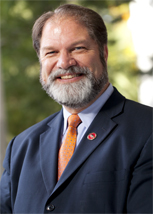
Bill Author
Bill Co-Author(s):