SB 1185: Emergency backup generators: operation during deenergization events.
- Session Year: 2019-2020
- House: Senate
- Latest Version Date: 2020-07-27
|
Date
|
Status
|
|---|---|
| Jul 27, 2020 | From committee with author's amendments. Read second time and amended. Re-referred to Com. on NAT. RES. |
| Jun 29, 2020 | Referred to Com. on NAT. RES. |
| Jun 22, 2020 | In Assembly. Read first time. Held at Desk. |
| Jun 22, 2020 | Read third time. Passed. (Ayes 33. Noes 3. Page 3795.) Ordered to the Assembly. |
| Jun 9, 2020 | Read second time. Ordered to third reading. |
| Jun 8, 2020 | From committee: Be ordered to second reading pursuant to Senate Rule 28.8. |
| Jun 3, 2020 | Set for hearing June 9. |
| May 29, 2020 | From committee: Do pass and re-refer to Com. on APPR. (Ayes 5. Noes 0. Page 3622.) (May 29). Re-referred to Com. on APPR. |
| May 26, 2020 | From committee with author's amendments. Read second time and amended. Re-referred to Com. on EQ. |
| May 22, 2020 | Set for hearing May 29. |
| May 12, 2020 | Referral to Com. on E., U. & C. rescinded due to the shortened 2020 Legislative Calendar. |
| Apr 17, 2020 | From committee with author's amendments. Read second time and amended. Re-referred to Com. on EQ. |
| Mar 18, 2020 | April 1 hearing postponed by committee. |
| Mar 10, 2020 | Set for hearing April 1. |
| Mar 5, 2020 | Referred to Coms. on EQ. and E., U. & C. |
| Feb 21, 2020 | From printer. May be acted upon on or after March 22. |
| Feb 20, 2020 | Introduced. Read first time. To Com. on RLS. for assignment. To print. |
|
Date
|
Description
|
Location
|
Votes
|
|
|---|---|---|---|---|
| Jun 22, 2020 | Senate 3rd Reading SB1185 Moorlach | Senate Floor |
Passed |
|
| May 29, 2020 | Do pass, but first be re-referred to the Committee on [Appropriations] | Senate Standing Committee on Environmental Quality |
Passed |
This list shows positions taken on this bill by organizations on the date displayed, which is linked to the original source.
Positions by individuals are not included.
SENATE RULES COMMITTEE Office of Senate Floor Analyses (916) 651-1520 Fax: (916) 327-4478 | SB 1185 |
THIRD READING
Bill No: SB 1185
Author: Moorlach (R)
Amended: 5/26/20
Vote: 21
SENATE ENVIRONMENTAL QUALITY COMMITTEE: 5-0, 5/29/20
AYES: Allen, Hertzberg, Hill, McGuire, Wieckowski
NO VOTE RECORDED: Bates, Dahle
SENATE APPROPRIATIONS COMMITTEE: Senate Rule 28.8
SUBJECT: Emergency backup generators: emergency variance: operation during deenergization events
SOURCE: Author
DIGEST:
This bill requires a facility permittee, when applying for an emergency variance from backup generator runtime rules, to demonstrate that they are using the cleanest, feasible, available backup power source, including, but not limited to, natural gas-powered generators; and requires reporting from utility providers to local and state air regulators.
ANALYSIS: Existing federal law sets, through the Federal Clean Air Act (FCAA) and its implementing regulations, National Ambient Air Quality Standards (NAAQS) for six criteria pollutants and requires states to prepare, submit, and adopt a State Implementation Plan (SIP) to limit air pollution and attain federal standards. (42 U.S.C. §7401 et seq.)
Existing state law:
- Establishes the Air Resources Board (ARB) as the air pollution control agency in California and requires ARB, among other things, to coordinate, encourage, and review the efforts of all levels of government as they affect air quality. (Health and Safety Code (HSC) §39500 et seq.)
- Creates the 35 air pollution control and air quality management districts (air districts) to be responsible for regional air quality planning, monitoring, and stationary source and facility permitting. (HSC §40000 et seq.)
- Defines “emergency use” as providing electrical power during specified events, including the loss of normal electrical power for reasons beyond the control of the operator. (Title 17 of the California Code of Regulations §93115.4)
- Allows any person to apply to an air district’s hearing board for a variance from the district’s rules, regulations, and orders (HSC §42350 et seq.), and makes specifications for the issuance of that variance, including:
- That no variance shall be granted unless it is found that compliance would otherwise result in either an arbitrary or unreasonable taking of property, or the practical closing and elimination of a lawful business.
- Requiring a hearing board to (when the petitioner is a public agency) consider whether immediate compliance would otherwise impose an unreasonable burden on an “essential public service”—specifically, a prison, detention facility, police or firefighting facility, school, health care facility, landfill gas control or processing facility, sewage treatment works, or water delivery operation, if owned and operated by a public agency.
- Requires an air district’s hearing board, except in the case of an emergency, to hold a hearing the determine under what conditions and to what extent a variance shall be granted. (HSC §42359)
- Allows for the issuance of emergency variances by the chairman or any other member of a district hearing board (without notice and hearing), provided that the emergency variance be issued for a good cause and not remain in effect for longer than 30 days. (HSC §42359.5)
This bill:
- Requires a facility permittee, when applying for an emergency variance from backup generator (BUG) runtime rules, to demonstrate that they are using the cleanest, feasible, available backup power source, including but not limited to natural gas-powered generators.
- Requires electric utilities (whether a corporation, cooperative, or publically owned entity) to report annually to affected air districts and ARB on the area and duration of any Public Safety Power Shutoff (PSPS) events they utilized.
Background
- Public safety power shutoffs. California’s wildfires have become more frequent, threatened more residents, and happened throughout more of the year in recent decades. More than 25 million acres of California wildlands are classified as under very high or extreme fire threat. Roughly a quarter of the state’s residents live in this area. Climate change has exacerbated the hot, dry conditions that support catastrophic fires, and while California attempts to mitigate its contributions to global climate change, the state is also taking immediate actions to protect its residents from wildfires.
To better protect safety and public health from uncontrolled wildfires, utility providers have adopted the use of PSPS events. Electricity transmission and distribution systems have sparked a number of wildfires, and this risk can be reduced by de-energizing the power lines during extreme weather events. During October of 2019, California utility providers conducted a dozen PSPS events. These affected millions of residents across 30 counties. While being an important public safety tool, power loss also has many negative impacts, especially to vulnerable populations (including residential customers that rely on reliable electric service to power life-saving medical devices), medical and emergency service providers (including hospitals, fire departments and police stations), and important public service providers (such as water agencies, gas stations, and grocery stores). - Backup generators. In order to mitigate the damage of power loss, many of these critical service providers may rely on BUGs to replace lost grid power. Additionally, many businesses may use BUGs to avoid catastrophic system disruptions and to minimize economic disruption that could result from prolonged power outages. However, this use of BUGs may result in air quality and public health impacts.
According to estimates from ARB, nearly 125,000 BUGs were used in California during PSPS events in October 2019. Assuming an average of 50 hours of operation each, those generators released a cumulative total of 166.4 tons of nitrogen oxides (NOx), 19.4 tons of particulate matter (PM), and 8.9 tons of diesel PM. The diesel PM release was roughly equivalent to 29,000 additional heavy-duty diesel trucks being used for the month. - Natural gas versus diesel generators. The emissions from a natural gas powered internal combustion engine do still emit some air pollutants and greenhouse gases. However, they lack the acute health impacts of diesel particular matter, which is a known carcinogen (among other negative health impacts). Neither type of generator burns purely renewable fuel. However, at this time, the upfront costs for renewable-and-storage backup power are beyond the reach of many facilities that may rely on backup power during a PSPS.
Renewable-and-storage notwithstanding, natural gas powered BUGs are preferable to diesel powered BUGs from an environmental perspective. ARB’s guidance document on PSPS back-up power includes natural gas fueled engines as technologies that would improve emissions from BUG use statewide as compared to diesel- and gasoline-powered engines. - Air district permitting rules. Each of the state’s 35 air districts adopts their own sets of regulations and rules tailored to the sources and air quality challenges of its region and are overseen by ARB. Ultimately, these actions are designed to achieve NAAQS set by the FCAA. Collectively, these strategies (i.e. emission standards, fuel regulations, emission limits, etc.) are included in the SIP. ARB is the lead agency in California for achieving the emission reductions goals and timelines described in the SIP. The 35 air districts, as well as other agencies, prepare SIP elements to be reviewed and approved by ARB before being integrated into the SIP.
With few exceptions, anyone constructing or operating a facility that emits air pollutants must obtain an appropriate permit from the local air district. Each air district establishes its own fee schedule, and may maintain different requirements. An air district uses these permits to assess the air pollution impacts of stationary sources within its jurisdiction, and it may require additional standards or control technologies be used to align permitted entities’ emissions with the SIP. - Air district rules during emergencies. Air districts provide for administrative exemption from established rules and regulations through the variance process. If a permitted facility anticipates they will need to exceed their authorized emissions due to reasons outside their control, they may submit a request for a variance to the board of the air district, who will hear and vote on the request at a public meeting. Should an interruption arise without time for the normal variance and hearing process, there is also an established emergency variance process. When an emergency variance is requested, it can be granted by the chair of the air district board (or a designee) without the board convening.
Comments
- Purpose of bill. According to the author, “In recent years, California has faced wildfires of catastrophic proportion. As a response to increased liability for wildfires and as a precautionary measure, California utility providers have begun the practice of shutting off electrical service in certain areas during peak wildfire risk times to mitigate the potential for a utility line to spark a wildfire.
“Many facilities rely on back-up generators during PSPS events to remain powered and functional. Natural gas service remains in place and functional during these events and is cleaner and more feasible than traditional diesel generation. In many cases, PSPS events have qualified as cause for an emergency variance to a back-up generator permit. However, without clear statute regarding the issuance of emergency variance permits during PSPS events, many critical facilities have expressed fear of hefty fines and compliance issues when utilizing back-up generators.
“Senate Bill 1185 clarifies existing statute to ensure that operators of back-up generators can apply for an emergency variance to their permit during a public safety power shut-off (PSPS) event while also encouraging the use of natural-gas-backup generation where applicable.
“When back-up generation occurs, it is far more favorable to utilize natural gas infrastructure, as opposed to bringing in and storing large amounts of diesel fuel—presenting a serious safety concern and elevating the risk for disaster. In addition, natural gas generation releases significantly less pollutants than diesel generation. However, natural gas generation is not always available, and as such, this bill provides flexibility for emergency variances for other sources of generation.”
FISCAL EFFECT: Appropriation: No Fiscal Com.: Yes Local: Yes
SUPPORT: (Verified 6/15/20)
California Cable & Telecommunications Association
San Diego County Water Authority
Southern California Gas Company
Utility Workers Union of America
OPPOSITION: (Verified 6/9/20)
Association of California Water Agencies
Sierra Club
ARGUMENTS IN SUPPORT: According to the San Diego County Water Authority, “Without proper regulatory, statutory, and administrative structure, the increased frequency of PSPS events could have significant impacts on critical facilities including water and wastewater treatment agencies. Some of these consequences include the inability to pump water, inadequate fire flows, sewage backups, and air conditioning shutoffs in facilities with temperature-sensitive equipment. If water agencies cannot access reliable electricity, communities could face a public health crisis if they lack safe drinking water for consumption, cooking, and sanitation.
“To mitigate these effects and ensure reliable electricity during a PSPS event or other catastrophic loss of power like a wildfire, many critical facilities, including water agencies, must depend on their onsite emergency generators. However, state and local air quality management district restrictions for some existing generators adopted prior to the widespread use of PSPS do not provide enough time for proper testing in advance of an event or enough run time during an event.”
ARGUMENTS IN OPPOSITION: According to the Association of California Water Agencies (ACWA), “Although this bill is well intended, the current version of the bill may have unintended consequences. Under existing law, any permittee can apply for an emergency variance from their local air district; under the provisions of this bill it could be interpreted that only natural gas powered generators should qualify for an emergency variance for a PSPS event. While ACWA supports the intent of the bill, the current version could be detrimental to the efforts of critical service providers to ensure continued service to the public during PSPS events.
“ACWA appreciates the author’s sincere commitment to have ongoing discussions to clarify the bill and ensure that it will help critical services providers. For these reasons, ACWA must regretfully oppose SB 1185 until it is amended.”
Prepared by: Eric Walters / E.Q. / (916) 651-4108
6/15/20 11:41:55
SENATE COMMITTEE ON ENVIRONMENTAL QUALITY
Senator Allen, Chair
2019 - 2020 Regular
Bill No: SB 1185
Author: | Moorlach | ||
Version: | 5/26/2020 | Hearing Date: | 5/29/2020 |
Urgency: | No | Fiscal: | Yes |
Consultant: | Eric Walters | ||
SUBJECT: Natural gas powered generators: operation during deenergization events
DIGEST: Requires a facility permittee, when applying for an emergency variance from backup generator runtime rules, to demonstrate that they are using the cleanest, feasible, available backup power source, including but not limited to natural gas-powered generators. Additionally requires reporting from utility providers to local and state air regulators.
Due to the COVID-19 Pandemic and the unprecedented nature of the 2020 Legislative Session, all Senate Policy Committees are working under a compressed timeline. This timeline does not allow this bill to be referred and heard by more than one committee as a typical timeline would allow.
ANALYSIS:
Existing federal law:
- Sets, through the Federal Clean Air Act (FCAA) and its implementing regulations, National Ambient Air Quality Standards (NAAQS) for six criteria pollutants and requires states to prepare, submit, and adopt a State Implementation Plan (SIP) to limit air pollution and attain federal standards. (42 U.S.C. §7401 et seq.)
Existing state law:
- Establishes the Air Resources Board (ARB) as the air pollution control agency in California and requires ARB, among other things, to coordinate, encourage, and review the efforts of all levels of government as they affect air quality. (Health and Safety Code (HSC) §39500 et seq.)
- Creates the 35 air pollution control and air quality management districts (air districts) to be responsible for regional air quality planning, monitoring, and stationary source and facility permitting. (HSC §40000 et seq.)
- Defines “emergency use” as providing electrical power during specified events, including the loss of normal electrical power for reasons beyond the control of the operator. (Title 17 of the California Code of Regulations (CCR) §93115.4)
- Requires, under SB 901 (Dodd, Chapter 626, Statutes of 2018), electric utilities to develop annual wildfire mitigation plans (WMPs) to prevent, combat, and respond to wildfires within their service territories. (Public Utilities Code (PUC) §8386)
- Allows any person to apply to an air district’s hearing board for a variance from the district’s rules, regulations, and orders (HSC §42350 et seq.), and makes specifications for the issuance of that variance, including:
- That no variance shall be granted unless it is found that compliance would otherwise result in either an arbitrary or unreasonable taking of property, or the practical closing and elimination of a lawful business.
- Requiring a hearing board to (when the petitioner is a public agency) consider whether immediate compliance would otherwise impose an unreasonable burden on an “essential public service”—specifically, a prison, detention facility, police or firefighting facility, school, health care facility, landfill gas control or processing facility, sewage treatment works, or water delivery operation, if owned and operated by a public agency.
- That no variance shall be granted unless it is found that compliance would otherwise result in either an arbitrary or unreasonable taking of property, or the practical closing and elimination of a lawful business.
- Requires, upon granting a variance, an air district to prescribe requirements other than (and not more onerous than) those imposed by statute or by any rule, regulation, or order of the district board. (HSC §42353)
- Requires an air district’s hearing board, except in the case of an emergency, to hold a hearing the determine under what conditions and to what extent a variance shall be granted. (HSC §42359)
- Allows for the issuance of emergency variances by the chairman or any other member of a district hearing board (without notice and hearing), provided that the emergency variance be issued for a good cause and not remain in effect for longer than 30 days. (HSC §42359.5)
- Allows air districts to establish a permit system, consistent with FCAA requirements, which requires any person who builds, erects, alters, replaces, operates, or uses any equipment that issues air contaminants. (HSC §42300 et seq.)
This bill:
- Requires a facility permittee, when applying for an emergency variance from BUG runtime rules, to demonstrate that they are using the cleanest, feasible, available backup power source, including but not limited to natural gas-powered generators.
- Requires electric utilities (whether a corporation, cooperative, or publically owned entity) to report annually to affected air districts and ARB on the area and duration of any PSPS events they utilized.
- Makes a finding and declaration of the need to curtail the standard public process of issuing a variance in the case of an emergency, due to the need for rapid response from the air pollution control officer.
Background
- Public safety power shutoffs. California’s wildfires have become more frequent, threatened more residents, and happened throughout more of the year in recent decades. More than 25 million acres of California wildlands are classified as under very high or extreme fire threat. Roughly a quarter of the state’s residents live in this area. Climate change has exacerbated the hot, dry conditions that support catastrophic fires, and while California attempts to mitigate its contributions to global climate change, the state is also taking immediate actions to protect its residents from wildfires.
To better protect safety and public health from uncontrolled wildfires, utility providers have adopted the use of Public Safety Power Shutoff (PSPS) events. Electricity transmission and distribution systems have sparked a number of wildfires, and this risk can be reduced by de-energizing the power lines during extreme weather events. During October of 2019, California utility providers conducted a dozen PSPS events. These affected millions of residents across 30 counties. While being an important public safety tool, power loss also has many negative impacts, especially to vulnerable populations (including residential customers that rely on reliable electric service to power life-saving medical devices), medical and emergency service providers (including hospitals, fire departments and police stations), and important public service providers (such as water agencies, gas stations and grocery stores). - Backup generators. In order to mitigate the damage of power loss, many of these critical service providers may rely on backup generators (BUGs) to replace lost grid power. Additionally, many businesses may use BUGs to avoid catastrophic system disruptions and to minimize economic disruption that could result from prolonged power outages. However, this use of BUGs may result in air quality and public health impacts.
According to estimates from ARB, nearly 125,000 BUGs were used in California during PSPS events in October 2019. Assuming an average of 50 hours of operation each, those generators released a cumulative total of 166.4 tons of nitrogen oxides (NOx), 19.4 tons of particulate matter (PM), and 8.9 tons of diesel PM. The diesel PM release was roughly equivalent to 29,000 additional heavy-duty diesel trucks being used for the month. - Natural gas versus diesel generators. This bill specifically mentions natural gas powered generators. According to an analysis by the National Renewable Energy Labs (NREL), “The differences between diesel and natural gas generators in terms of economics and reliability are relatively modest.” NREL also estimates that “the higher reliability of natural gas fuel supply compared to that of diesel fuel for long outages results in natural gas generators being more reliable than diesel generators, though these conclusions are based on estimates from small data sets and significant assumptions.”
The emissions from a natural gas powered internal combustion engine do still emit some air pollutants and GHGs. However, they lack the acute health impacts of diesel particular matter, which is a known carcinogen (among other negative health impacts). Neither type of generator burns purely renewable fuel. However, at this time, the upfront costs for renewable-and-storage backup power are beyond the reach of many facilities that may rely on backup power during a PSPS.
Renewable-and-storage notwithstanding, natural gas powered BUGs are preferable to diesel powered BUGs from an environmental perspective. ARB’s guidance document on PSPS back-up power includes natural gas fueled engines as technologies that would improve emissions from BUG use statewide as compared to diesel- and gasoline-powered engines. - Air district permitting rules. Each of the state’s 35 air districts adopts their own sets of regulations and rules tailored to the sources and air quality challenges of its region and are overseen by ARB. Ultimately, these actions are designed to achieve NAAQS set by the FCAA. Collectively, these strategies (i.e. emission standards, fuel regulations, emission limits, etc.) are included in the State Implementation Plan (SIP). ARB is the lead agency in California for achieving the emission reductions goals and timelines described in the SIP. The 35 air districts, as well as other agencies, prepare SIP elements to be reviewed and approved by ARB before being integrated into the SIP.
With few exceptions, anyone constructing or operating a facility that emits air pollutants must obtain an appropriate permit from the local air district. Each air district establishes its own fee schedule, and may maintain different requirements. An air district uses these permits to assess the air pollution impacts of stationary sources within its jurisdiction, and it may require additional standards or control technologies be used to align permitted entities’ emissions with the SIP. - Air district rules during emergencies. Air districts provide for administrative exemption from established rules and regulations through the variance process. If a permitted facility anticipates they will need to exceed their authorized emissions due to reasons outside their control, they may submit a request for a variance to the board of the air district, who will hear and vote on the request at a public meeting. Should an interruption arise without time for the normal variance and hearing process, there is also an established emergency variance process. When an emergency variance is requested, it can be granted by the chair of the air district board (or a designee) without the board convening.
Comments
- Purpose of Bill. According to the author, “In recent years, California has faced wildfires of catastrophic proportion. As a response to increased liability for wildfires and as a precautionary measure, California utility providers have begun the practice of shutting off electrical service in certain areas during peak wildfire risk times to mitigate the potential for a utility line to spark a wildfire.
“Many facilities rely on back-up generators during PSPS events to remain powered and functional. Natural gas service remains in place and functional during these events and is cleaner and more feasible than traditional diesel generation. In many cases, PSPS events have qualified as cause for an emergency variance to a back-up generator permit. However, without clear statute regarding the issuance of emergency variance permits during PSPS events, many critical facilities have expressed fear of hefty fines and compliance issues when utilizing back-up generators.
“Senate Bill 1185 clarifies existing statute to ensure that operators of back-up generators can apply for an emergency variance to their permit during a public safety power shut-off (PSPS) event while also encouraging the use of natural-gas-backup generation where applicable.
“When back-up generation occurs, it is far more favorable to utilize natural gas infrastructure, as opposed to bringing in and storing large amounts of diesel fuel—presenting a serious safety concern and elevating the risk for disaster. In addition, natural gas generation releases significantly less pollutants than diesel generation. However, natural gas generation is not always available, and as such, this bill provides flexibility for emergency variances for other sources of generation.”
- Emergency variance approach. Recent amendments made by the author change the mechanism by which SB 1185 operates. Instead of exempting certain hours from district rules and ARB regulations, the bill will simply add one condition to the emergency variance application process. This will uphold air districts’ regulatory authority, and encourage ongoing conversations at the local level about the role natural gas can play in moving away from highly polluting diesel generators.
The committee may wish to consider supporting this measure to ensure emergency variances are granted with due consideration of the technology being used for backup power.
Related/Prior Legislation:
SB 802 (Glazer, 2020) would exempt health facilities from BUG use counting towards air district emission timing rules during a PSPS. SB 802 is currently in the Senate Environmental Quality committee.
SB 1099 (Dodd, 2020) would require air districts to adopt or revise their rules to allow critical facilities to be allowed to use BUGs during PSPSs and for testing/maintenance without it counting towards permitted annual runtime goals. SB 1099 will be heard by the Senate Environmental Quality committee 5/29/2020.
AB 2182 (Rubio, 2020) would exempt any alternative power source used by any essential service provider during a PSPS from all local, regional, or state regulations. AB 2182 is currently in the Assembly Utilities and Energy committee.
SOURCE:
Author
SUPPORT:
Association of California Water Agencies (ACWA)
California Cable & Telecommunications Association
San Diego County Water Authority
Sempra Energy Utilities
Utility Workers Union of America
OPPOSITION:
Bay Area Air Quality Management District
California Air Pollution Control Officers Association
Sierra Club
South Coast Air Quality Management District
ARGUMENTS IN SUPPORT: According to the San Diego County Water Authority, “Without proper regulatory, statutory, and administrative structure, the increased frequency of PSPS events could have significant impacts on critical facilities including water and wastewater treatment agencies. Some of these consequences include the inability to pump water, inadequate fire flows, sewage backups, and air conditioning shutoffs in facilities with temperature-sensitive equipment. If water agencies cannot access reliable electricity, communities could face a public health crisis if they lack safe drinking water for consumption, cooking, and sanitation.
“To mitigate these effects and ensure reliable electricity during a PSPS event or other catastrophic loss of power like a wildfire, many critical facilities, including water agencies, must depend on their onsite emergency generators. However, state and local air quality management district restrictions for some existing generators adopted prior to the widespread use of PSPS do not provide enough time for proper testing in advance of an event or enough run time during an event.”
ARGUMENTS IN OPPOSITION: According to Sierra Club, “SB 1185 works counter to our efforts to ensure California communities are protected from the health impacts caused by air pollution. Reliance on methane gas generators will ultimately worsen California air quality, public health and quality of life. Methane gas generation produces nitrogen oxides, or NOx. Not only does NOx cause respiratory problems but it also reacts with other substances in the air to produce particulate matter and ozone which, in turn, causes an extensive list of adverse health impacts.
“…Given the impacts methane generation has on air quality and public health, California must transition away from this polluting technology. Clean technology for backup generation is available. There are better choices, and through previous legislation, the legislature has embraced and advanced new cleaner technologies.”
-- END --
Bill Author
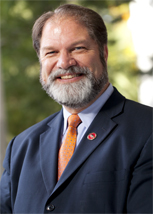
Bill Co-Author(s):