SB 241: Personal Income Tax: California Voluntary Contribution Program.
- Session Year: 2019-2020
- House: Senate
- Latest Version Date: 2019-04-29
|
Date
|
Status
|
|---|---|
| Feb 3, 2020 | Returned to Secretary of Senate pursuant to Joint Rule 56. |
| May 16, 2019 | May 16 hearing: Held in committee and under submission. |
| May 14, 2019 | Set for hearing May 16. |
| May 13, 2019 | May 13 hearing: Placed on APPR. suspense file. |
| May 3, 2019 | Set for hearing May 13. |
| Apr 29, 2019 | Read second time and amended. Re-referred to Com. on APPR. |
| Apr 25, 2019 | From committee: Do pass as amended and re-refer to Com. on APPR. (Ayes 7. Noes 0.) (April 24). |
| Apr 22, 2019 | From committee with author's amendments. Read second time and amended. Re-referred to Com. on GOV. & F. |
| Apr 18, 2019 | Set for hearing April 24. |
| Apr 8, 2019 | April 10 set for first hearing canceled at the request of author. |
| Apr 5, 2019 | Set for hearing April 10. |
| Apr 2, 2019 | From committee with author's amendments. Read second time and amended. Re-referred to Com. on GOV. & F. |
| Feb 21, 2019 | Referred to Coms. on GOV. & F. and L., P.E. & R. |
| Feb 12, 2019 | From printer. May be acted upon on or after March 14. |
| Feb 11, 2019 | Introduced. Read first time. To Com. on RLS. for assignment. To print. |
|
Date
|
Description
|
Location
|
Votes
|
|
|---|---|---|---|---|
| May 13, 2019 | Placed on suspense file | Senate Standing Committee on Appropriations |
Passed |
|
| Apr 24, 2019 | Do pass as amended, but first amend, and re-refer to the Committee on [Appropriations] | Senate Standing Committee on Governance and Finance |
Passed |
This list shows positions taken on this bill by organizations on the date displayed, which is linked to the original source.
Positions by individuals are not included.
SENATE COMMITTEE ON APPROPRIATIONS
Senator Anthony Portantino, Chair
2019 - 2020 Regular Session
SB 241 (Moorlach) - Personal Income Tax: California Voluntary Contribution Program
Version: April 29, 2019 | Policy Vote: GOV. & F. 7 - 0 |
Urgency: No | Mandate: No |
Hearing Date: May 13, 2019 | Consultant: Robert Ingenito |
Bill Summary:
SB 241 would create an administrative process for charitable organizations to receive taxpayers’ voluntary contributions on the state personal income tax return.
Fiscal Impact:
FTB indicates that this bill’s impact on General Fund revenues is unknown, and could be higher or lower than those under current law (see Staff Comments). In addition, the department would incur administrative costs to implement the bill, including IT programming printing and processing costs. FTB has yet to determine the magnitude of these costs, but expects them to be significant.
Background:
Current law allows taxpayers to contribute money to one or more of 27 voluntary contribution funds (VCF) during the process of filing their state income tax return. These contributions are made from taxpayers' own resources, not from their tax liability, as is the case with federal tax returns. Check-off amounts are deductible as charitable contributions on taxpayers' returns during the subsequent tax year.
VCFs are added to the tax return through legislation. With a few exceptions, they remain on the return until (1) they are repealed by a sunset date, or (2) they fail to generate a minimum contribution amount, generally $250,000 starting in the VCF’s second year. Three VCFs do not have a minimum contribution requirement: (1) the California Firefighters’ Memorial Foundation Fund, (2) the California Peace Officer Memorial Foundation Fund, and (3) the California Seniors Special Fund. The California Seniors Special Fund (which first appeared in 1990) also does not have a repeal date, making it the only VCF that will remain on the Personal Income Tax Return, unless the Legislature takes action to remove it through legislation.
When a taxpayer contributes to a VCF, FTB deposits the total of all contributions, less an administrative fee, into the fund created as part of its legislative authorization. For some VCFs, taxpayers’ contributions are allocated to a state agency for use in a state-administered grant program. Other VCFs’ authorizing statutes direct administrative agencies to allocate donations to a private organization, such as the American Red Cross. Still other VCFs require the State Controller’s Office (SCO) to send the funds directly to private organizations, such as the California Fire Foundation, without passing through an administrative agency. Like FTB, SCO, and administrative agencies may deduct administration fees from the amount of donations each VCF receives.
The current VCF program generally represents a small proportion of total contributions to charitable causes. FTB data indicate that in 2017, 105,504 out of 18 million taxpayers (or 0.6 percent) contributed a total of $3.7 million via tax check-offs. The tax check-off program typically collects $4 million to $6 million in annual contributions for all 27 VCFs.
Proposed Law:
This bill would create the California Voluntary Contribution Program to promote charitable giving and collect donations through the personal income tax return on behalf of qualified applicants starting January 1, 2021.
The bill would define a “qualified applicant” as a charitable organization that has (1) registered with the Attorney General’s Registry of Charitable Trusts for each of the three years prior to the date of application and has met the necessary requirements of the Registry, (2) submitted annual returns or statements with FTB for each of the three years prior to the date of application, or (3) received average annual gross receipts of $100,000, as calculated from each of the three years prior to the date of application. Qualified applicants that wish to receive voluntary contributions through the program must submit an application to FTB that contains specified information.
FTB must (1) approve all applicants that meet the application requirements, and (2) create an individual identification number for each qualified applicant. The bill directs FTB to create a searchable internet website, accessible to the public, which must include the individual identification numbers of each qualified applicant. FTB must regularly maintain the website so that taxpayers wishing to donate a portion or all of their tax refund may easily search for and locate a qualified applicant’s information. FTB must also revise the personal income tax return to create a new field that allows taxpayers to enter in one or more qualified applicant’s identification number.
A qualified applicant may stay listed on the website as long as it (1) continues to meet the established requirements listed above, and (2) submits an annual application renewal fee. If an applicant has its eligibility revoked, the applicant may reapply again in one year.
The bill would establish, within the State Treasury, the California Voluntary Contribution Fund that would receive all voluntary tax contributions made to any qualified applicant. The bill would continuously appropriate all moneys transferred to the fund as follows: (1) to FTB and the Controller for reimbursement of all administrative costs, and (2) to each qualified applicant in amounts specified by taxpayers.
If a taxpayer fails to specify the designee, then the State Treasurer shall transfer the contribution to FTB to further the purpose of the bill. If a taxpayer designates more than one fund, but the amount available for donation exceeds the total amount designated, then the State Treasurer shall transfer the contribution among the designees on a pro rata basis.
FTB must annually provide the Legislature with a report of the program that includes the goals, a baseline, metrics, and targets to track the effectiveness of efforts to encourage charitable giving. FTB may also (1) form an advisory board, (2) contract with other agencies either public or private, (3) adopt regulations, and (4) adopt policies and guidelines.
The would repeal both the California Firefighters’ Memorial Fund’s and the California Peace Officer Memorial Foundation Fund’s sunset dates, thereby making them permanent funds on the return.
Starting September 1, 2026, when all the other VCFs currently listed on the form either have expired or will be expiring within one year, FTB must estimate the top seven grossing qualified applicants for the 2026 calendar year. FTB must then list these seven applicants on the following year’s tax return, below the three permanent funds. Every subsequent September, FTB will estimate the top seven grossing applicants from the calendar year, and list those qualified applicants individually on the Personal Income Tax Return.
Staff Comments:
In order to develop a revenue estimate for the bill, both the number of funds added to the income tax return and the amount contributed by taxpayers would need to be known. Neither can be estimated with any degree of reliability. Thus, the revenue loss from the bill is unknown, and could be higher or lower than the current-law treatment of VCFs. However, FTB estimates that for every $250,000 in donations made each year there would be a revenue loss of $8,000.
-- END --
SENATE COMMITTEE ON GOVERNANCE AND FINANCE
Senator Mike McGuire, Chair
2019 - 2020 Regular
Bill No: | SB 241 | Hearing Date: | 4/24/19 |
Author: | Moorlach | Tax Levy: | No |
Version: | 4/22/19 | Fiscal: | No |
Consultant: | Brown | ||
Personal Income Tax: Voluntary contribution funds
Creates an administrative process for charitable organizations to receive taxpayers’ voluntary contributions on the state Personal Income Tax Return.
Background
Voluntary contribution funds. Existing state law allows a taxpayer to contribute money to voluntary contribution funds (VCFs), by checking a box on his or her state Personal Income Tax Return. California law requires taxpayers to contribute to VCFs from a taxpayer’s own resources. Contributions cannot come from the taxpayer’s tax liability, and taxpayers can claim the contributions as charitable deductions on his or her tax return in the subsequent year.
The Legislature adds each VCF to the return through legislation. With a few exceptions, VCFs remain on the return until they are repealed by a sunset date or they fail to generate a minimum contribution amount. In general, the minimum contribution amount is $250,000 starting in the VCF’s second year. The VCFs listed below do not have a minimum contribution requirement:
- California Firefighters’ Memorial Foundation Fund;
- California Peace Officer Memorial Foundation Fund; and
- California Seniors Special Fund.
The California Seniors Special Fund also does not have a repeal date, making it the only VCF that will remain on the Personal Income Tax Return, unless the Legislature takes action to remove it through legislation.
When a taxpayer contributes to a VCF, the Franchise Tax Board (FTB) deposits the total of all contributions, less an administrative fee, into the organization’s fund. For some VCFs, the State Controller allocates the taxpayer’s contributions directly to a private organization by an administrative agency. For example, for the Special Olympics Fund, the Department of Social Services passes the taxpayer’s contributions to Special Olympics Northern California and Special Olympics Southern California. For other VCFs, the State Controller allocates the taxpayer’s contributions directly to the private organization, without passing through an administrative agency. For example, for the California Firefighters’ Memorial Foundation Fund, the State Controller’s office passes the taxpayer’s contributions to the California Fire Foundation. FTB, the State Controller, and an administrative agency may deduct direct costs for administering the funds from each of the VCFs contributions received.
There are currently 27 VCFs listed on the tax return. VCFs receive roughly four to six million dollars each year in contributions, collectively. The following list provides information on the current VCFs.
VCF | 2018 Contributions | Purpose |
School Supplies for Homeless Children Fund | $578,582 | Provides school supplies and health-related products to homeless children. |
Alzheimer’s Disease and Related Dementia Voluntary Tax Contribution Fund | $555,382 | Provides grants to California scientists who study Alzheimer’s disease and related disorders. |
Emergency Food for Families Voluntary Tax Contribution Fund | $515,785 | Funds the purchase of food for delivery to food banks, pantries, and soup kitchens throughout California. |
State Parks Protection Fund/Parks Pass Purchase | $508,918 | Supports the protection and preservation of California’s state parks; Vehicle Day Use Annual Pass to taxpayers valid at most park units where day use fees are collected. |
CA Cancer Research Voluntary Tax Contribution Fund | $497,309 | Supports research relating to the causes, detection, and prevention of cancer; Expands community based education on cancer; Provides prevention and awareness activities for communities. |
Rare & Endangered Species Preservation Voluntary Tax Contribution Program | $481,058 | Supports the protection and conservation of California’s threatened and endangered species and the wild lands they need to survive. |
CA Breast Cancer Research Voluntary Tax Contribution Fund | $424,859 | Supports unique breast cancer research: new approaches to prevent and cure the disease other agencies might be reluctant to support. |
Protect Our Coasts and Oceans Voluntary Tax Contribution Fund | $361,793 | Supports, the protection, conservation, restoration, and enhancement of the California coast. |
Rape Kit Backlog Voluntary Tax Contribution Fund | $343,728 | Supports DNA testing in the processing of rape kits. |
CA Sea Otter Fund | $329,372 | Supports research and programs related to the near-shore ecosystem; Supports increased investigation, prevention, and enforcement action regarding sea otters in California. |
Prevention of Animal Homelessness and Cruelty Fund | $304,575 | Funds programs designed to prevent and eliminate animal homelessness and cruelty; Funds research that explores novel approaches to preventing and eliminating pet homelessness; Funds prevention, investigation, and prosecution of animal cruelty and neglect. |
Keep Arts in Schools Voluntary Tax Contribution Fund | $302,107 | Supports the Arts Council for the allocation of grants to individuals or organizations administer arts programs for children in preschool through 12th grade. |
State Children’s Trust Fund for the Prevention of Child Abuse | $257,952 | Supports child abuse prevention programs; Supports child abuse public education efforts; Supports innovative research to prevent child abuse. |
Native California Wildlife Rehabilitation Voluntary Tax Contribution Fund | $254,327 | Supports the recovery and rehabilitation of injured, sick, or orphaned native wildlife; Supports conservation education. |
CA Firefighters’ Memorial Fund | $251,116 | Used for the repair and maintenance of the California Firefighters’ Memorial on the State Capitol grounds; Supports ceremonies to honor the memory of fallen firefighters; Assists surviving loved ones. |
CA Domestic Violence Victims Fund | $233,448 | Distributes funds to active grant recipients under the Comprehensive Statewide Domestic Violence Program |
CA Peace Officer Memorial Foundation Fund | $151,856 | Used for the repair and maintenance of the California Peace Officers’ Memorial on the State Capitol grounds; Supports ceremonies to honor the memory of fallen peace officers; Assists surviving loved ones. |
Habitat for Humanity Voluntary Tax Contribution Fund | $150,730 | Supports the Habitat for Humanity California, Inc. to build affordable housing in California. |
Special Olympics Fund | $108,928 | Supports the Special Olympics Southern California and Special Olympics Northern California organizations which showcase the capabilities and achievements of individuals with intellectual disabilities. |
Type 1 Diabetes Research Fund | $105,382 | Supports the distribution of grants by the University of California for authorized diabetes research organizations. |
CA Seniors Special Fund | $101,151 | Provides advice on and sponsorship of Senior Citizens issues; Supports senior citizen service organizations throughout California that provide meals, adult day care, and transportation. |
CA Senior Citizen Advocacy Voluntary Tax Contribution Fund | $91,625 | Supports the California Senior Legislature’s ongoing activities on behalf of older persons; Supports the sessions of the California Senior Legislature |
Revive the Salton Sea Fund | $63,437 | Supports the restoration and maintenance of the Salton Sea. |
CA YMCA Youth and Government Voluntary Tax Contribution Fund | $61,514 | Supports civic education programs operated by the YMCA Youth and Government Program, the African American Leaders for Tomorrow Program, the Asian Pacific Youth Leadership Project, and the Chicano Latino Youth Leadership project. |
National Alliance on Mental Illness California Voluntary Tax Contribution Fund | New VCF created in 2018 | Provides funding to the Crisis Intervention Team Program, which trains peace officers to assist, and engage safely with persons living with mental illness. |
Organ and Tissue Donor Registry Voluntary Tax Contribution Fund | New VCF created in 2018 | Supports ongoing activities to maintain the Donate Life California Organ and Tissue Donor Registry. |
Schools Not Prisons Voluntary Tax Contribution Fund | New VCF created in 2018 | Funds academic and career readiness programs that seek to break the school to prison pipelines. |
The current VCF program generates a relatively small share of statewide contributions to charitable causes. In 2017, FTB reports 105,504 taxpayers out of 17.9 million taxpayers contributed a total of $3.7 million to VCFs, which means 0.6 percent of California taxpayers donated to a VCF in 2017.
The author would like to revise the current administrative process to allow an opportunity for all non-profits to participate in the VCF program.
Proposed Law
Senate Bill 241 creates the California Voluntary Contribution Program to promote charitable giving and collect donations through the Personal Income Tax Return on behalf of qualified applicants starting January 1, 2021.
The California Voluntary Contribution Program. The bill defines a “qualified applicant” as a charitable organization that has:
- Registered with the Attorney General’s Registry of Charitable Trusts for each of the three years prior to the date of application and has met the necessary requirements of the Registry;
- Submitted annual returns or statements with FTB for each of the three years prior to the date of application; or
- Received average annual gross receipts of $100,000, as calculated from each of the three years prior to the date of application.
Qualified applicants that wish to receive voluntary contributions through the program must submit an application to FTB that contains all of the following:
- The applicant’s bank account information;
- An application fee, established by FTB, to cover the cost of the application process; and
- Other information requested by FTB.
FTB must approve all applicants that meet the application requirements and create an individual identification number for each qualified applicant. SB 241 directs FTB to create a searchable internet website, accessible to the public, which must include the individual identification numbers of each qualified applicant. FTB must regularly maintain the website so that taxpayers wishing to donate a portion or all of their tax refund may easily search for and locate a qualified applicant’s information. FTB must also revise the Personal Income Tax Return to create a new field that allows taxpayers to enter in one or more qualified applicant’s identification number.
A qualified applicant may stay listed on the website as long as it continues to meet the established requirements listed above, and submits an annual application renewal fee. If an applicant has its eligibility revoked, the applicant may reapply again in one year.
The bill establishes, within the State Treasury, the California Voluntary Contribution Fund that would receive all voluntary tax contributions made to any qualified applicant. The bill continuously appropriates all moneys transferred to the fund as follows:
- To FTB and the Controller for reimbursement of all administrative costs.
- To each qualified applicant in amounts specified by taxpayers.
If a taxpayer fails to specify the designee, then the State Treasurer shall transfer the contribution to FTB to further the purpose of the bill. If a taxpayer designates more than one fund, but the amount available for donation exceeds the total amount designated, then the State Treasurer shall transfer the contribution among the designees on a pro rata basis.
FTB must annually provide the Legislature with a report of the program that includes the goals, a baseline, metrics, and targets to track the effectiveness of efforts to encourage charitable giving. FTB may also:
- Form an advisory board.
- Contract with other agencies either public or private.
- Adopt regulations.
- Adopt policies and guidelines.
The bill allows the California State Auditor to audit the program, and the bill includes findings and declarations.
Existing VCFs. SB 241 repeals both the California Firefighters’ Memorial Fund’s and the California Peace Officer Memorial Foundation Fund’s sunset dates, which makes the two VCFs permanent funds on the Personal Income Tax Return.
Starting September 1, 2026—when all the other VCFs currently listed on the form either have expired or will be expiring within one year—FTB must estimate the top seven grossing qualified applicants for the 2026 calendar year. FTB must then list these seven applicants on the following year’s tax return, below the three permanent funds. Every subsequent September, FTB will estimate the top seven grossing applicants from the calendar year, and list those qualified applicants individually on the Personal Income Tax Return.
State Revenue Impact
No estimate.
Comments
1. Purpose of the bill. According to the author, “SB 241 will give any charity that meets certain qualifications the ability to apply with the FTB to be eligible to receive contributions from taxpayers who are eligible for an income tax refund. The bill also makes changes to which funds will be listed on the form, and makes two current VCF permanent funds. Under this bill, current VCF will stay listed on the Form 540 until their repeal date. All VCF not listed on the income tax form will be found on a searchable, public website, created and maintained by the FTB. The public may search the website for their favorite charity, find its personal identification number, and then enter that number, with the desired contribution amount, in a newly created field. This field will be listed below the three permanent funds, and the top seven grossing funds (based on the previous year’s contributions). SB 241 defines charitable organizations, lays out the qualifications that each charity must comply with in order to be considered, and other procedural requirements. SB 241 includes a delayed implementation date of 2021.”
2. Fairness. Currently, there are 27 VCFs listed on the Personal Income Tax Return. SB 241 results in a greater pool of charities competing for taxpayers’ donations that may reduce the donation amounts existing VCFs currently receive. For some of these VCFs, the current program is the organization’s only source of funding. However, SB 241 would not limit the ability of these VCFs to participate in the new program, but rather treat the current VCFs like every other charitable organization in the state. The Committee may wish to consider whether the current VCF program is fair to all charities.
3. Who is special? SB 241 includes intent language to make three of the VCFs permanent funds: the California Firefighters’ Memorial Fund, the California Peace Officer Memorial Foundation Fund, and the California Senior Special Fund. There is currently one permanent VCF listed on the tax return—the California Senior Special Fund—which first appeared on the return in 1990. In 1993, the Legislature removed the minimum contribution requirement, making the fund permanent. It has been 16 years since the Legislature has enacted a permanent VCF. While the California Firefighters’ Memorial Fund and the California Peace Officer Memorial Foundation Fund do important work, why should these specific funds be elevated to the level of permanent? The Committee may wish to consider whether these two funds should be permanent.
4. Bills, bills, bills. Currently, the Legislature must add each VCF individually through legislation. In 2008, 11 VCFs appeared on the Personal Income Tax Return. Today, the return contains 27. With legislation introduced every year to either add new VCFs or fix current ones, there is little reason to expect this number to stop growing. Additionally, space on the already five-page tax return is limited. FTB estimates the system can handle only one or two new VCFs before FTB must add an additional page. Critics argue the current system for adding or fixing VCFs on the tax return is unstable and inefficient. Outsourcing oversight of the VCF program to FTB would be a more cost effective way to administer the program.
5. Necessary oversight. The current VCF process requires both legislative and gubernatorial approval for the charity to appear on the Personal Income Tax Return. Thus, the current process provides some vetting of charitable organizations and programs. SB 241 requires FTB to ensure that applicants are in good standing with state laws and regulations, such as having submitted state returns, and to maintain the internet website, which advertises all the qualified applicants. But SB 241 greatly expands the list of charities able to participate in the VCF program so it is possible that a questionable charity will find a way to slip through the cracks, join SB 241’s program, and collect donations through the Personal Income Tax Return.
6. Related legislation. The following bills also deal with VCFs this legislative session:
- SB 309 (Rubio) eliminates the minimum contribution amount for the California Senior Citizen Advocacy Voluntary Tax Contribution Fund. SB 309 passed out of Committee on April 3rd by a vote of 7-0. The bill is currently in the Senate Appropriations Committee.
- SB 637 (McGuire) updates the Prevention of Animal Homelessness and Cruelty Voluntary Tax Contribution Fund to allow non-profit organizations, who are under contract to provide all animal control services for a local public agency, be eligible to receive grant funding. SB 637 passed out of Committee on April 3rd by a vote of 7-0. The bill is currently in the Senate Appropriations Committee.
- AB 984 (Lackey) creates the Suicide Prevention Voluntary Tax Contribution Fund. The bill is currently in the Assembly Revenue and Taxation Committee.
- AB 296 (Cooley) creates the Climate Innovation Voluntary Tax Contribution Account. The bill is currently pending referral to the Assembly Revenue and Taxation Committee.
7. Let’s get technical. Committee staff recommend the following technical amendments:
- Amend Rev. and Tax Code Sec. 18919(c) – Currently the bill uses the term average total revenues. Committee staff recommends changing this to average gross receipts.
Support and Opposition
(4/19/19)
Support: Unknown.
Opposition: Unknown.
-- END --
Bill Author
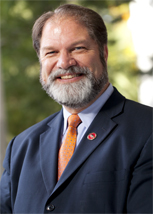
Bill Co-Author(s):