SB 525: Medi-Cal: reimbursement: blood factors.
- Session Year: 2019-2020
- House: Senate
- Latest Version Date: 2019-04-11
|
Date
|
Status
|
|---|---|
| Feb 3, 2020 | Returned to Secretary of Senate pursuant to Joint Rule 56. |
| Apr 23, 2019 | April 24 set for first hearing canceled at the request of author. |
| Apr 11, 2019 | From committee with author's amendments. Read second time and amended. Re-referred to Com. on HEALTH. |
| Apr 5, 2019 | Set for hearing April 24. |
| Apr 3, 2019 | Re-referred to Com. on HEALTH. |
| Mar 27, 2019 | From committee with author's amendments. Read second time and amended. Re-referred to Com. on RLS. |
| Mar 7, 2019 | Referred to Com. on RLS. |
| Feb 22, 2019 | From printer. May be acted upon on or after March 24. |
| Feb 21, 2019 | Introduced. Read first time. To Com. on RLS. for assignment. To print. |
This list shows positions taken on this bill by organizations on the date displayed, which is linked to the original source.
Positions by individuals are not included.
SENATE COMMITTEE ON HEALTH
Senator Dr. Richard Pan, Chair
BILL NO: SB 525
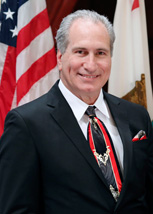
AUTHOR: | Stone | ||
VERSION: | April 11, 2019 | ||
HEARING DATE: | April 24, 2019 | ||
CONSULTANT: | Kimberly Chen | ||
SUBJECT: Medi-Cal: reimbursement: blood factors
SUMMARY:
Requires the Medi-Cal pharmacy service reimbursement for blood factor to be the lower of the three methodologies, as described.
Existing state law:
- Establishes the Medi-Cal program, administered by the Department of Health Care Services (DHCS), under which low-income individuals are eligible for medical coverage. [WIC §14000, et seq.]
- Establishes a schedule of benefits covered by the Medi-Cal program, including the purchase of drugs. Requires the prescribed drugs, subject to the Medi-Cal list of contract drugs and utilization controls, be a covered Medi-Cal benefit. Authorizes DHCS to contract with manufacturers of drugs and maintain a list of contract drugs, including blood factors. [WIC §14132]
- Requires the reimbursement for blood factors, by national drug code number, not to exceed 120% of the average sale price (ASP) of the drug of the last quarter reported. Requires the ASP to be reported quarterly to DHCS at the national drug code level. Requires the ASP for blood factors for which manufacturers do not report the ASP to be the average manufacturer price (AMP). Requires a blood factor product to no longer be a covered benefit if the manufacturer does not meet the requirements of reporting price, pursuant to existing law. [WIC §14105.86]
- Defines “ASP” to mean the price reported to the federal Centers for Medicare and Medicaid Services (CMS), pursuant to existing federal law. [WIC §14105.86]
- Defines “blood factor” to means plasma protein therapies and their recombinant analogs. Blood factors include, but are not limited to, all of the following:
- Coagulation factors, including:
- Factor VIII, nonrecombinant;
- Factor VIII, porcine;
- Factor VIII, recombinant;
- Factor IX, nonrecombinant;
- Factor IX, complex;
- Factor IX, recombinant;
- Antithrombin III;
- Anti-inhibitor factor;
- Von Willebrand factor; and,
- Factor VIIa, recombinant;
- Immune Globulin Intravenous; and,
- Alpha-1 Proteinase Inhibitor. [WIC §14105.86]
- Coagulation factors, including:
- Exempts changes made to the list of covered blood factors from the requirements of the Administrative Procedure Act in existing law. [WIC §14105.86]
- Defines “wholesale acquisition cost” (WAC) to mean the price for a drug product listed as the WAC in DHCS’ primary price reference source. [WIC §14105.45]
- Defines “actual acquisition cost” (AAC) to mean the same as AAC defined under federal regulations. Prohibits AAC from being considered confidential and requires it subject to disclosure through the California Public Records Act, in existing law. [WIC §14105.45]
- Defines “professional dispensing fee” to mean the same as professional dispensing fee defined under federal regulations. [WIC §14105.45]
This bill: Requires reimbursement for blood factor under the Medi-Cal program to be the lower of the following three:
- WAC;
- 120% of ASP; or,
- AAC plus a professional dispensing fee of $0.14 per unit of blood factor.
FISCAL EFFECT:
This bill has not been analyzed by a fiscal committee.
COMMENTS:
- Author’s statement. According to the author, in January 2019, DHCS released a proposal to change the reimbursement to Medi-Cal pharmacy providers of blood factors. The proposal seeks to change the current reimbursement to reimburse pharmacy providers of blood factors the provider’s AAC for the drug equal to invoice price minus any discounts, rebates, or chargebacks, plus a professional dispensing fee of $0.04 per unit. The proposal created a separate payment structure for hemophilia treatment centers (HTC), which would reimburse the HTC’s actual acquisition cost for the drug, plus a professional dispensing fee of $0.14 per unit. On March 19, 2019, DHCS released for public comment Proposed State Plan Amendment (SPA) 19-0015, to seek federal approval of their proposed reimbursement change to pharmacy providers of blood clotting factors. There is are concern in the pharmacy provider community that the Proposed SPA 19-0015 would result in fewer pharmacies willing to serve the Medi-Cal bleeding disorder community, because the low professional dispensing fee of $0.04 per unit is not sufficient to cover the costs. This bill seeks to address this issue, by granting DHCS flexibility in setting the reimbursement rate for blood factors, while still defining the reimbursement for blood factors in statute, to prevent losing pharmacy providers in the Medi-Cal program and to protect patient access to their current pharmacy provider.
- Medi-Cal pharmacy services. Pharmacy services are a covered benefit in Medi-Cal. DHCS pays for pharmacy services through two systems: fee-for-service (FFS) and managed care. In FFS, DHCS directly reimburses pharmacies for prescription drugs dispensed to Medi-Cal enrollees. In managed care, the Medi-Cal managed care plan arranges and pays for the benefit, along with all other covered benefits. Pharmacy services are generally a managed care benefit, except for certain prescription drugs. Blood-clotting factors for treating hemophilia is a “carved out” benefit, which DHCS pays for through FFS.
- Hemophilia. According the Centers for Disease Control and Prevention (CDC), hemophilia is usually an inherited bleeding disorder in which the blood does not clot properly. This can lead to spontaneous bleeding as well as bleeding following injuries or surgery. Blood contains many proteins called clotting factors that can help to stop bleeding. People with hemophilia have low levels of either factor VIII or factor IX. The severity of hemophilia that a person has is determined by the amount of factor in the blood. The lower the amount of the factor, the more likely it is that bleeding will occur which can lead to serious health problems. Hemophilia can result in bleeding within joints that can lead to chronic joint disease and pain; bleeding in the head and sometimes in the brain which can cause long term problems, such as seizures and paralysis; and death, if the bleeding cannot be stopped or if it occurs in a vital organ such as the brain.
- Treating Hemophilia. Hemophilia is treated by replacing the missing blood-clotting factor so that the blood can clot properly. This is done by infusing (administering through a vein) commercially prepared factor concentrates. People with hemophilia can learn how to perform these infusions themselves so that they can stop bleeding episodes and, by performing the infusions on a regular basis (called prophylaxis), can even prevent most bleeding episodes.
Patients with hemophilia often seek treatment at a HTC. Each HTC provides access to multidisciplinary health care professionals, including:
- Lab medical technologists and pathologists;
- Hematologists;
- Orthopedists;
- Physical therapists;
- Nurses;
- Social workers and other mental health professionals; and,
- Other specialists available by referral, (e.g., dentist, nutritionist, genetic counselor).
Patients with hemophilia may also seek care through their own physicians, fill blood-clotting factor prescriptions through specialty pharmacies, and may even receive their blood-clotting factor prescription through the mail. Specialty pharmacies may be independently owned or may be part a national retail pharmacy chain. Certain, but not all, specialty pharmacies may offer ancillary services, similar to the services offered at an HTC, such as nurses on staff to work with patients to manage their condition.
According to DHCS, there are 1,600 Medi-Cal patients with hemophilia. Across the state, there are 60 providers for blood factor. Of those, 11 are HTC and 49 are non-HTC specialty pharmacies. Moreover, one third of all providers are responsible for filling the vast majority of blood factor prescriptions: 82% of all blood factor prescriptions are filled by 20 providers, 60% by 10 providers, and 45% by five providers.
- Price benchmarks. Knowing how much a drug costs is difficult; there are many different prices for each drug and different ways of expressing those prices. In the US, the two most common ways of stating drug prices are the WAC and average wholesale price (AWP). Neither one, though, is the actual price paid by a payer, nor are they what their names imply. Rather, they're standardized ways of expressing a price, thus allowing comparisons to be made from one drug to another. The WAC price of a drug on the market, as originally announced by the company is also rarely the price paid by a payer. The actual price paid by any one payer is proprietary information, complicating discussions of value and cost to consumers. Drug companies negotiate with payers – Medicare, Medicaid, insurers, and pharmacy benefit managers – to set an initial gross sales price. Drug manufacturers pay rebates back to government entities, creating a difference between gross sales for a drug and net sales. The rebates are not publicly available, and vary highly among payers and for different drugs.
- Changes to blood factor reimbursement methodology. On February 1, 2016, CMS published its Final Rule for Covered Outpatient Drugs. Under the Final Rule, each state Medicaid agency was required to adopt a drug ingredient based methodology, AAC. To satisfy this requirement, California, along with many other state Medicaid agencies, adopted CMS’s National Average Drug Acquisition Cost (NADAC) as the basis for AAC for drug ingredient reimbursement. In December 2016, CMS further notified DHCS that the existing reimbursement for blood-clotting factor (120% of ASP) would not be acceptable. Moreover, CMS noted that the methodology for blood-clotting factor should include three parts: a) AAC ingredient reimbursement, b) Per unit professional dispensing fee, and, c) reimbursement for associated services. In August 2017, DHCS received approval for a SPA for Medi-Cal’s covered outpatient drugs and acknowledged it did not include blood-clotting factors methodology in the SPA but that it would do so.
According to DHCS, it conducted a stakeholder event in October 2017 to present its first blood-clotting factor reimbursement proposal. The October 2017 proposal was as follows:
- Blood-clotting factor ingredient cost: AAC, not to exceed 120% ASP, pursuant to existing law.
- Professional Dispensing Fee: $10.05 or $13.20, depending on provider type, pursuant to standards developed by the National Council for Prescription Drug Programs.
- Associated Services: $474.69 per day for services rendered. Services included home infusion therapy, antihemophilic agent infusion therapy, administrative services, professional pharmacy services, care coordination, and all necessary supplies and equipment.
This methodology would have applied to all providers of blood-clotting factor, both HTCs and non-HTC specialty pharmacies. Stakeholders, including providers, hemophilia patients, and patient advocates objected to this methodology, arguing the new methodology amounted to a massive rate cut and would lead to a significant number of providers declining to offer blood-clotting factor for Medi-Cal patients. At the direction of the Legislature, DHCS returned to stakeholders to receive feedback and develop a new methodology.
According to DHCS, stakeholders were asked to provide comment on the October 2017 proposal. DHCS shared that it requested stakeholder to provide as much detail as possible and, to the extent possible, provide financial and billing data so that DHCS could appropriately determine the actual cost of ancillary services, profit margins, and actual cost to acquire blood-clotting factor ingredients. According to DHCS, HTC providers shared a significant amount of information and were forthcoming with their actual costs; and, non-HTC providers shared a number of comment letters but did not provide specific details of their actual costs.
- Second proposal on blood-clotting factor reimbursement. In January 2019, DHCS presented its new blood-clotting factor reimbursement methodology, which as a total still may not exceed 120% ASP pursuant to existing law. The methodology is as follows:
- Blood-clotting factor ingredient cost: AAC; and,
- Professional dispensing fee:
- $0.04 per unit for non-HTC providers; or,
- $0.14 per unit for HTC providers.
The second proposal does not meet the three-part rule, but CMS has indicated that this may be acceptable and, according to DHCS, has accepted similar proposals from other states. The professional dispensing fee is intended to be inclusive of all other invoices beside the AAC and to consider overheard for ancillary services. This proposal is now included in proposed SPA 19-0015, released for public comment on March 15, 2019.
According to DHCS, WAC was considered as a potential benchmark for determining the second proposal. However, given its internal analysis of WAC across product types, DHCS concluded using WAC as a benchmark would not meet CMS’s directive to develop a methodology that was below 120% ASP. DHCS reasoned that WAC was too variable and had higher likelihood to be manipulated in a way that would result in the state’s blood factor methodology failing CMS’s requirements.
- Prior legislation. SB 97 (Committee on Budget and Fiscal Review, Chapter 52, Statutes of 2017) codifies the drug ingredient reimbursement methodology and dispensing fee based on a study of pharmacy provider costs in the Medi-Cal program, pursuant to changes in federal regulations imposing new requirements on Medicaid programs for reimbursement of covered outpatient drugs, including a transition to an acquisition cost-based reimbursement methodology.
SB 833 (Committee on Budget and Fiscal Review, Chapter 30, Statutes of 2016) authorizes DHCS to comply with the federal Final Rule related to reimbursements for covered outpatient drugs, requiring states to align pharmacy reimbursements with actual acquisition costs of drugs, and to pay an appropriate professional dispensing fee, beginning April 1, 2017.
- Support. This bill is supported by a number of individuals and an independently-owned non-HTC blood-clotting factor provider. Nufactor, a specialty infusion company, supports this bill and writes that DHCS’s current reimbursement methodology in the SPA would result in many pharmacy providers being unable to continue to accept Medi-Cal patients. A number of individuals writing in support state that specialty pharmacies are key drivers in ensuring quality and cost-effective care through pharmacy management. They object to the drastic cuts being made and support this bill as a way to ensure all Medi-Cal patients have access to their specialty pharmacists.
- Clarifying amendment. DHCS’s proposal to modify the reimbursement methodology for blood factor applies only to blood-clotting factor. This bill applies to all blood factors, including those that are not blood-clotting factor. The author may wish the amend the bill to apply only to coagulation blood factors and their recombinant analogs, as defined in existing law, on page 2, line24 to page 3, line 1 of the bill.
- Setting the appropriate blood-clotting factor methodology. This bill intends to require the reimbursement for blood-clotting factor to be lower of three methodologies. Given DHCS’s conclusion that WAC is the introduced price rarely actually paid by the payer, this benchmark is likely inappropriate and unable to meet CMS’s directive. CMS has already indicated that the existing methodology, 120% ASP, is not acceptable. Therefore, this bill essentially is setting AAC plus $0.14 per unit of blood factor (DHCS’s HTC reimbursement rate) as the rate for all providers. According to DHCS, the difference between the HTC and non-HTC rate was the result of the information provided in response to the October 2017 proposal. DHCS believes information received by non-HTCs was not sufficient to justify a higher reimbursement rate for non-HTCs. There is not enough information, at this time, to determine whether the $0.14 per unit of blood-clotting factor professional dispensing fee, or another rate, is appropriate for all providers. The committee may wish to consider whether to mandate all blood-clotting factor providers receive the HTC reimbursement rate, regardless of provider type.
SUPPORT AND OPPOSITION:
Support: Nu Factor, Inc.
Thirteen Individuals
Oppose: None received
-- END --
Bill Author
Bill Co-Author(s):