AB 1483: Firearms: purchases.
- Session Year: 2023-2024
- House: Assembly
- Latest Version Date: 2023-09-26
Current Status:
Passed
(2023-09-26: Chaptered by Secretary of State - Chapter 246, Statutes of 2023.)
Introduced
In Committee
First Chamber
In Committee
Second Chamber
Enacted
Existing law, subject to exceptions, prohibits a person from making more than one application to purchase a handgun within any 30-day period. Under existing law, a violation of this prohibition is a crime. Existing law exempts from that prohibition a firearms transaction where neither of the parties is a firearms dealer if the transaction is completed through a dealer. Commencing on January 1, 2024, existing law will also apply this limitation to completed frames or receivers and firearm precursor parts.
This bill would delete the private party transaction exemption to the 30-day prohibition. The bill would add an exemption for any private party transaction where the seller is, at the time of the transaction, required under state law or by court order to relinquish all firearms, and for any private party transaction where the seller is transferring the firearms as a result of the death of the owner of the firearms, as specified. The bill would make these changes take effect on January 1, 2025. By expanding the scope of a crime, the bill would impose a state-mandated local program.
The California Constitution requires the state to reimburse local agencies and school districts for certain costs mandated by the state. Statutory provisions establish procedures for making that reimbursement.
This bill would provide that no reimbursement is required by this act for a specified reason.
Existing law, subject to exceptions, prohibits a person from making more than one application to purchase a handgun within any 30-day period. Under existing law, a violation of this prohibition is a crime. Existing law exempts from that prohibition a firearms transaction where neither of the parties is a firearms dealer if the transaction is completed through a dealer. Commencing on January 1, 2024, existing law will also apply this limitation to completed frames or receivers and firearm precursor parts.
This bill would delete the private party transaction exemption to the 30-day prohibition. The bill would add an exemption for any private party transaction where the seller is, at the time of the transaction, required under state law or by court order to relinquish all firearms, and for any private party transaction where the seller is transferring the firearms as part of an estate settlement or bequeathment in a will. as a result of the death of the owner of the firearms, as specified. The bill would make these changes take effect on January 1, 2025. By expanding the scope of a crime, the bill would impose a state-mandated local program.
The California Constitution requires the state to reimburse local agencies and school districts for certain costs mandated by the state. Statutory provisions establish procedures for making that reimbursement.
This bill would provide that no reimbursement is required by this act for a specified reason.
Existing law, subject to exceptions, prohibits a person from making more than one application to purchase a handgun within any 30-day period. Under existing law, a violation of this prohibition is a crime. Existing law exempts from that prohibition a firearms transaction where neither of the parties is a firearms dealer if the transaction is completed through a dealer. Commencing on January 1, 2024, existing law will also apply this limitation to completed frames or receivers and firearm precursor parts.
This bill would delete the private party transaction exemption to the 30-day prohibition. The bill would add an exemption for any private party transaction where the seller is, at the time of the transaction, required under state law or by court order to relinquish all firearms. firearms, and for any private party transaction where the seller is transferring the firearms as part of an estate settlement or bequeathment in a will. By expanding the scope of a crime, the bill would impose a state-mandated local program.
The California Constitution requires the state to reimburse local agencies and school districts for certain costs mandated by the state. Statutory provisions establish procedures for making that reimbursement.
This bill would provide that no reimbursement is required by this act for a specified reason.
Existing law, subject to exceptions, prohibits a person from making more than one application to purchase a handgun within any 30-day period. Under existing law, a violation of this prohibition is a crime. Existing law exempts from that prohibition a firearms transaction where neither of the parties is a firearms dealer if the transaction is completed through a dealer. Commencing on January 1, 2024, existing law will also apply this limitation to completed frames or receivers and firearm precursor parts.
This bill would delete the private party transaction exemption to the 30-day prohibition. The bill would add an exemption for any private party transaction where the seller is, at the time of the transaction, required under state law or by court order to relinquish all firearms. By expanding the scope of a crime, the bill would impose a state-mandated local program.
The California Constitution requires the state to reimburse local agencies and school districts for certain costs mandated by the state. Statutory provisions establish procedures for making that reimbursement.
This bill would provide that no reimbursement is required by this act for a specified reason.
Existing law, subject to exceptions, prohibits a person from making more than one application to purchase a handgun within any 30-day period. Under existing law, a violation of this prohibition is a crime. Existing law exempts from that prohibition a firearms transaction where neither of the parties is a firearms dealer if the transaction is completed through a dealer. Commencing on January 1, 2024, existing law will also apply this limitation to completed frames or receivers and firearm precursor parts.
This bill would make a technical, nonsubstantive change to this provision.This bill would delete the private party transaction exemption to the 30-day prohibition. By expanding the scope of a crime, the bill would impose a state-mandated local program.
The California Constitution requires the state to reimburse local agencies and school districts for certain costs mandated by the state. Statutory provisions establish procedures for making that reimbursement.
This bill would provide that no reimbursement is required by this act for a specified reason.
Existing law, subject to exceptions, prohibits a person from making more than one application to purchase a handgun within any 30-day period. Commencing on January 1, 2024, existing law will also apply this limitation to completed frames or receivers and firearm precursor parts.
This bill would make a technical, nonsubstantive change to this provision.
(a)A person shall not make an application to purchase more than one firearm within any 30-day period. This subdivision does not authorize a person to make an application to purchase a combination of firearms, completed frames or receivers, or firearm precursor parts within the same 30-day period.
(b)Subdivision (a) does not apply to any of the following:
(1)Any law enforcement agency.
(2)Any agency duly authorized to perform law enforcement duties.
(3)Any state or local correctional facility.
(4)Any private security company licensed to do business in California.
(5)Any person who is properly identified as a full-time paid peace officer, as defined in Chapter 4.5 (commencing with Section 830) of Title 3 of Part 2, and who is authorized to, and does carry a firearm during the course and scope of employment as a peace officer.
(6)Any motion picture, television, or video production company or entertainment or theatrical company whose production by its nature involves the use of a firearm.
(7)Any person who may, pursuant to Article 2 (commencing with Section 27600), Article 3 (commencing with Section 27650), or Article 4 (commencing with Section 27700), claim an exemption from the waiting period set forth in Section 27540.
(8)Any transaction conducted through a licensed firearms dealer pursuant to Chapter 5 (commencing with Section 28050).
(9)Any person who is licensed as a collector pursuant to Chapter 44 (commencing with Section 921) of Title 18 of the United States Code and the regulations issued pursuant thereto, and has a current certificate of eligibility issued by the Department of Justice pursuant to Article 1 (commencing with Section 26700) of Chapter 2.
(10)The exchange of a firearm where the dealer purchased that firearm from the person seeking the exchange within the 30-day period immediately preceding the date of exchange or replacement.
(11)The replacement of a firearm when the persons firearm was lost or stolen, and the person reported that firearm lost or stolen pursuant to Section 25250 prior to the completion of the application to purchase the replacement.
(12)The return of any firearm to its owner.
(13)A community college that is certified by the Commission on Peace Officer Standards and Training to present the law enforcement academy basic course or other commission-certified law enforcement training.
(c)This section shall remain in effect until January 1, 2025, and as of that date is repealed.
SEC. 2.Section 27535 is added to the Penal Code, to read:27535.(a)A person shall not make an application to purchase more than one firearm within any 30-day period. This subdivision does not authorize a person to make an application to purchase a combination of firearms, completed frames or receivers, or firearm precursor parts within the same 30-day period.
(b)Subdivision (a) does not apply to any of the following:
(1)Any law enforcement agency.
(2)Any agency duly authorized to perform law enforcement duties.
(3)Any state or local correctional facility.
(4)Any private security company licensed to do business in California.
(5)Any person who is properly identified as a full-time paid peace officer, as defined in Chapter 4.5 (commencing with Section 830) of Title 3 of Part 2, and who is authorized to, and does carry a firearm during the course and scope of employment as a peace officer.
(6)Any motion picture, television, or video production company or entertainment or theatrical company whose production by its nature involves the use of a firearm.
(7)Any person who may, pursuant to Article 2 (commencing with Section 27600), Article 3 (commencing with Section 27650), or Article 4 (commencing with Section 27700), claim an exemption from the waiting period set forth in Section 27540.
(8)Any private party transaction where the seller is, at the time of the transaction, required under state law or by court order to relinquish all firearms.
(9)Any private party transaction where the seller is any of the following:
(A)The personal representative of a decedents estate who is transferring the firearms to one or more heirs or beneficiaries of the decedents estate pursuant to the decedents will or the laws of intestate succession.
(B)The holder of the decedents property who is transferring the firearms pursuant to Section 13101 of the Probate Code to the successor of the decedent, as defined in Section 13006 of the Probate Code, or to the surviving spouse of the decedent pursuant to Section 13500 of the Probate Code.
(C)The trustee of a trust who is transferring the firearms to one or more trust beneficiaries upon the death of a settlor of the trust.
(10)Any person who is licensed as a collector pursuant to Chapter 44 (commencing with Section 921) of Title 18 of the United States Code and the regulations issued pursuant thereto, and has a current certificate of eligibility issued by the Department of Justice pursuant to Article 1 (commencing with Section 26700) of Chapter 2.
(11)The exchange of a firearm where the dealer purchased that firearm from the person seeking the exchange within the 30-day period immediately preceding the date of exchange or replacement.
(12)The replacement of a firearm if the persons firearm was lost or stolen, and the person reported that firearm lost or stolen pursuant to Section 25250 prior to the completion of the application to purchase the replacement.
(13)The return of any firearm to its owner.
(14)A community college that is certified by the Commission on Peace Officer Standards and Training to present the law enforcement academy basic course or other commission-certified law enforcement training.
(c)This section shall become operative on January 1, 2025.
SEC. 3.No reimbursement is required by this act pursuant to Section 6 of Article XIIIB of the California Constitution because the only costs that may be incurred by a local agency or school district will be incurred because this act creates a new crime or infraction, eliminates a crime or infraction, or changes the penalty for a crime or infraction, within the meaning of Section 17556 of the Government Code, or changes the definition of a crime within the meaning of Section 6 of Article XIIIB of the California Constitution.
(a)A person shall not make an application to purchase more than one firearm within any 30-day period. This subdivision does not authorize a person to make an application to purchase a combination of firearms, completed frames or receivers, or firearm precursor parts within the same 30-day period.
(b)Subdivision (a) does not apply to any of the following:
(1)Any law enforcement agency.
(2)Any agency duly authorized to perform law enforcement duties.
(3)Any state or local correctional facility.
(4)Any private security company licensed to do business in California.
(5)Any person who is properly identified as a full-time paid peace officer, as defined in Chapter 4.5 (commencing with Section 830) of Title 3 of Part 2, and who is authorized to, and does carry a firearm during the course and scope of employment as a peace officer.
(6)Any motion picture, television, or video production company or entertainment or theatrical company whose production by its nature involves the use of a firearm.
(7)Any person who may, pursuant to Article 2 (commencing with Section 27600), Article 3 (commencing with Section 27650), or Article 4 (commencing with Section 27700), claim an exemption from the waiting period set forth in Section 27540.
(8)Any transaction conducted through a licensed firearms dealer pursuant to Chapter 5 (commencing with Section 28050).
(9)Any person who is licensed as a collector pursuant to Chapter 44 (commencing with Section 921) of Title 18 of the United States Code and the regulations issued pursuant thereto, and has a current certificate of eligibility issued by the Department of Justice pursuant to Article 1 (commencing with Section 26700) of Chapter 2.
(10)The exchange of a firearm where the dealer purchased that firearm from the person seeking the exchange within the 30-day period immediately preceding the date of exchange or replacement.
(11)The replacement of a firearm when the persons firearm was lost or stolen, and the person reported that firearm lost or stolen pursuant to Section 25250 prior to the completion of the application to purchase the replacement.
(12)The return of any firearm to its owner.
(13)A community college that is certified by the Commission on Peace Officer Standards and Training to present the law enforcement academy basic course or other commission-certified law enforcement training.
(c)This section shall become operative on January 1, 2024.(c)This section shall remain in effect until January 1, 2025, and as of that date is repealed.
SEC. 2.Section 27535 is added to the Penal Code, to read:27535.(a)A person shall not make an application to purchase more than one firearm within any 30-day period. This subdivision does not authorize a person to make an application to purchase a combination of firearms, completed frames or receivers, or firearm precursor parts within the same 30-day period.
(b)Subdivision (a) does not apply to any of the following:
(1)Any law enforcement agency.
(2)Any agency duly authorized to perform law enforcement duties.
(3)Any state or local correctional facility.
(4)Any private security company licensed to do business in California.
(5)Any person who is properly identified as a full-time paid peace officer, as defined in Chapter 4.5 (commencing with Section 830) of Title 3 of Part 2, and who is authorized to, and does carry a firearm during the course and scope of employment as a peace officer.
(6)Any motion picture, television, or video production company or entertainment or theatrical company whose production by its nature involves the use of a firearm.
(7)Any person who may, pursuant to Article 2 (commencing with Section 27600), Article 3 (commencing with Section 27650), or Article 4 (commencing with Section 27700), claim an exemption from the waiting period set forth in Section 27540.
(8)Any private party transaction where the seller is, at the time of the transaction, required under state law or by court order to relinquish all firearms.
(9)Any private party transaction where the seller is any of the following:
(A)The personal representative of a decedents estate who is transferring the firearms to one or more heirs or beneficiaries of the decedents estate pursuant to the decedents will or the laws of intestate succession.
(B)The holder of the decedents property who is transferring the firearms pursuant to Section 13101 of the Probate Code to the successor of the decedent, as defined in Section 13006 of the Probate Code, or to the surviving spouse of the decedent pursuant to Section 13500 of the Probate Code.
(C)The trustee of a trust who is transferring the firearms to one or more trust beneficiaries upon the death of a settlor of the trust.
(10)Any person who is licensed as a collector pursuant to Chapter 44 (commencing with Section 921) of Title 18 of the United States Code and the regulations issued pursuant thereto, and has a current certificate of eligibility issued by the Department of Justice pursuant to Article 1 (commencing with Section 26700) of Chapter 2.
(11)The exchange of a firearm where the dealer purchased that firearm from the person seeking the exchange within the 30-day period immediately preceding the date of exchange or replacement.
(12)The replacement of a firearm if the persons firearm was lost or stolen, and the person reported that firearm lost or stolen pursuant to Section 25250 prior to the completion of the application to purchase the replacement.
(13)The return of any firearm to its owner.
(14)A community college that is certified by the Commission on Peace Officer Standards and Training to present the law enforcement academy basic course or other commission-certified law enforcement training.
(c)This section shall become operative on January 1, 2025.
SEC. 3.No reimbursement is required by this act pursuant to Section 6 of Article XIIIB of the California Constitution because the only costs that may be incurred by a local agency or school district will be incurred because this act creates a new crime or infraction, eliminates a crime or infraction, or changes the penalty for a crime or infraction, within the meaning of Section 17556 of the Government Code, or changes the definition of a crime within the meaning of Section 6 of Article XIIIB of the California Constitution.
SECTION 1.Section 27535 of the Penal Code, as added by Section 19 of Chapter 76 of the Statutes of 2022, is amended to read:27535.(a)A person shall not make an application to purchase more than one firearm within any 30-day period. This subdivision does not authorize a person to make an application to purchase a combination of firearms, completed frames or receivers, or firearm precursor parts within the same 30-day period.(b)Subdivision (a) does not apply to any of the following:(1)Any law enforcement agency.(2)Any agency duly authorized to perform law enforcement duties.(3)Any state or local correctional facility.(4)Any private security company licensed to do business in California.(5)Any person who is properly identified as a full-time paid peace officer, as defined in Chapter 4.5 (commencing with Section 830) of Title 3 of Part 2, and who is authorized to, and does carry a firearm during the course and scope of employment as a peace officer.(6)Any motion picture, television, or video production company or entertainment or theatrical company whose production by its nature involves the use of a firearm.(7)Any person who may, pursuant to Article 2 (commencing with Section 27600), Article 3 (commencing with Section 27650), or Article 4 (commencing with Section 27700), claim an exemption from the waiting period set forth in Section 27540.(8)Any private party transaction where the seller is, at the time of the transaction, required under state law or by court order to relinquish all firearms.(9)Any private party transaction where the seller is transferring the firearms as part of an estate settlement or bequeathment in a will.(10)Any person who is licensed as a collector pursuant to Chapter 44 (commencing with Section 921) of Title 18 of the United States Code and the regulations issued pursuant thereto, and has a current certificate of eligibility issued by the Department of Justice pursuant to Article 1 (commencing with Section 26700) of Chapter 2.(11)The exchange of a firearm where the dealer purchased that firearm from the person seeking the exchange within the 30-day period immediately preceding the date of exchange or replacement.(12)The replacement of a firearm if the persons firearm was lost or stolen, and the person reported that firearm lost or stolen pursuant to Section 25250 prior to the completion of the application to purchase the replacement.(13)The return of any firearm to its owner.(14)A community college that is certified by the Commission on Peace Officer Standards and Training to present the law enforcement academy basic course or other commission-certified law enforcement training.(c)This section shall become operative on January 1, 2024.SEC. 2.No reimbursement is required by this act pursuant to Section 6 of Article XIIIB of the California Constitution because the only costs that may be incurred by a local agency or school district will be incurred because this act creates a new crime or infraction, eliminates a crime or infraction, or changes the penalty for a crime or infraction, within the meaning of Section 17556 of the Government Code, or changes the definition of a crime within the meaning of Section 6 of Article XIIIB of the California Constitution.(a)A person shall not make an application to purchase more than one firearm within any 30-day period. This subdivision does not authorize a person to make an application to purchase a combination of firearms, completed frames or receivers, or firearm precursor parts within the same 30-day period.
(b)Subdivision (a) does not apply to any of the following:
(1)Any law enforcement agency.
(2)Any agency duly authorized to perform law enforcement duties.
(3)Any state or local correctional facility.
(4)Any private security company licensed to do business in California.
(5)Any person who is properly identified as a full-time paid peace officer, as defined in Chapter 4.5 (commencing with Section 830) of Title 3 of Part 2, and who is authorized to, and does carry a firearm during the course and scope of employment as a peace officer.
(6)Any motion picture, television, or video production company or entertainment or theatrical company whose production by its nature involves the use of a firearm.
(7)Any person who may, pursuant to Article 2 (commencing with Section 27600), Article 3 (commencing with Section 27650), or Article 4 (commencing with Section 27700), claim an exemption from the waiting period set forth in Section 27540.
(8)Any private party transaction where the seller is, at the time of the transaction, required under state law or by court order to relinquish all firearms.
(9)Any private party transaction where the seller is transferring the firearms as part of an estate settlement or bequeathment in a will.
(9)(10)Any person who is licensed as a collector pursuant to Chapter 44 (commencing with Section 921) of Title 18 of the United States Code and the regulations issued pursuant thereto, and has a current certificate of eligibility issued by the Department of Justice pursuant to Article 1 (commencing with Section 26700) of Chapter 2.
(10)(11)The exchange of a firearm where the dealer purchased that firearm from the person seeking the exchange within the 30-day period immediately preceding the date of exchange or replacement.
(11)(12)The replacement of a firearm if the persons firearm was lost or stolen, and the person reported that firearm lost or stolen pursuant to Section 25250 prior to the completion of the application to purchase the replacement.
(12)(13)The return of any firearm to its owner.
(13)(14)A community college that is certified by the Commission on Peace Officer Standards and Training to present the law enforcement academy basic course or other commission-certified law enforcement training.
(c)This section shall become operative on January 1, 2024.
SEC. 2.No reimbursement is required by this act pursuant to Section 6 of Article XIIIB of the California Constitution because the only costs that may be incurred by a local agency or school district will be incurred because this act creates a new crime or infraction, eliminates a crime or infraction, or changes the penalty for a crime or infraction, within the meaning of Section 17556 of the Government Code, or changes the definition of a crime within the meaning of Section 6 of Article XIIIB of the California Constitution.
(a)A person shall not make an application to purchase more than one firearm within any 30-day period. This subdivision does not authorize a person to make an application to purchase a combination of firearms, completed frames or receivers, or firearm precursor parts within the same 30-day period.
(b)Subdivision (a) does not apply to any of the following:
(1)Any law enforcement agency.
(2)Any agency duly authorized to perform law enforcement duties.
(3)Any state or local correctional facility.
(4)Any private security company licensed to do business in California.
(5)Any person who is properly identified as a full-time paid peace officer, as defined in Chapter 4.5 (commencing with Section 830) of Title 3 of Part 2, and who is authorized to, and does carry a firearm during the course and scope of employment as a peace officer.
(6)Any motion picture, television, or video production company or entertainment or theatrical company whose production by its nature involves the use of a firearm.
(7)Any person who may, pursuant to Article 2 (commencing with Section 27600), Article 3 (commencing with Section 27650), or Article 4 (commencing with Section 27700), claim an exemption from the waiting period set forth in Section 27540.
(8)Any private party transaction where the seller is, at the time of the transaction, required under state law or by court order to relinquish all firearms.
(8)(9)Any person who is licensed as a collector pursuant to Chapter 44 (commencing with Section 921) of Title 18 of the United States Code and the regulations issued pursuant thereto, and has a current certificate of eligibility issued by the Department of Justice pursuant to Article 1 (commencing with Section 26700) of Chapter 2.
(9)(10)The exchange of a firearm where the dealer purchased that firearm from the person seeking the exchange within the 30-day period immediately preceding the date of exchange or replacement.
(10)(11)The replacement of a firearm if the persons firearm was lost or stolen, and the person reported that firearm lost or stolen pursuant to Section 25250 prior to the completion of the application to purchase the replacement.
(11)(12)The return of any firearm to its owner.
(12)(13)A community college that is certified by the Commission on Peace Officer Standards and Training to present the law enforcement academy basic course or other commission-certified law enforcement training.
(c)This section shall become operative on January 1, 2024.
SEC. 2.No reimbursement is required by this act pursuant to Section 6 of Article XIIIB of the California Constitution because the only costs that may be incurred by a local agency or school district will be incurred because this act creates a new crime or infraction, eliminates a crime or infraction, or changes the penalty for a crime or infraction, within the meaning of Section 17556 of the Government Code, or changes the definition of a crime within the meaning of Section 6 of Article XIIIB of the California Constitution.
(a)A person shall not make an application to purchase more than one firearm within any 30-day period. This subdivision does not authorize a person to make an application to purchase a combination of firearms, completed frames or receivers, or firearm precursor parts within the same 30-day period.
(b)Subdivision (a) does not apply to any of the following:
(1)Any law enforcement agency.
(2)Any agency duly authorized to perform law enforcement duties.
(3)Any state or local correctional facility.
(4)Any private security company licensed to do business in California.
(5)Any person who is properly identified as a full-time paid peace officer, as defined in Chapter 4.5 (commencing with Section 830) of Title 3 of Part 2, and who is authorized to, and does carry a firearm during the course and scope of employment as a peace officer.
(6)Any motion picture, television, or video production company or entertainment or theatrical company whose production by its nature involves the use of a firearm.
(7)Any person who may, pursuant to Article 2 (commencing with Section 27600), Article 3 (commencing with Section 27650), or Article 4 (commencing with Section 27700), claim an exemption from the waiting period set forth in Section 27540.
(8)Any transaction conducted through a licensed firearms dealer pursuant to Chapter 5 (commencing with Section 28050).(9)(8)Any person who is licensed as a collector pursuant to Chapter 44 (commencing with Section 921) of Title 18 of the United States Code and the regulations issued pursuant thereto, and has a current certificate of eligibility issued by the Department of Justice pursuant to Article 1 (commencing with Section 26700) of Chapter 2.
(10)(9)The exchange of a firearm where the dealer purchased that firearm from the person seeking the exchange within the 30-day period immediately preceding the date of exchange or replacement.
(11)(10)The replacement of a firearm if the persons firearm was lost or stolen, and the person reported that firearm lost or stolen pursuant to Section 25250 prior to the completion of the application to purchase the replacement.
(12)(11)The return of any firearm to its owner.
(13)(12)A community college that is certified by the Commission on Peace Officer Standards and Training to present the law enforcement academy basic course or other commission-certified law enforcement training.
(c)This section shall become operative on January 1, 2024.
SEC. 2.No reimbursement is required by this act pursuant to Section 6 of Article XIIIB of the California Constitution because the only costs that may be incurred by a local agency or school district will be incurred because this act creates a new crime or infraction, eliminates a crime or infraction, or changes the penalty for a crime or infraction, within the meaning of Section 17556 of the Government Code, or changes the definition of a crime within the meaning of Section 6 of Article XIIIB of the California Constitution.
(a)A person shall not make an application to purchase more than one firearm within any 30-day period. This subdivision does not authorize a person to make an application to purchase a combination of firearms, completed frames or receivers, or firearm precursor parts within the same 30-day period.
(b)Subdivision (a) does not apply to any of the following:
(1)Any law enforcement agency.
(2)Any agency duly authorized to perform law enforcement duties.
(3)Any state or local correctional facility.
(4)Any private security company licensed to do business in California.
(5)Any person who is properly identified as a full-time paid peace officer, as defined in Chapter 4.5 (commencing with Section 830) of Title 3 of Part 2, and who is authorized to, and does carry a firearm during the course and scope of employment as a peace officer.
(6)Any motion picture, television, or video production company or entertainment or theatrical company whose production by its nature involves the use of a firearm.
(7)Any person who may, pursuant to Article 2 (commencing with Section 27600), Article 3 (commencing with Section 27650), or Article 4 (commencing with Section 27700), claim an exemption from the waiting period set forth in Section 27540.
(8)Any transaction conducted through a licensed firearms dealer pursuant to Chapter 5 (commencing with Section 28050).
(9)Any person who is licensed as a collector pursuant to Chapter 44 (commencing with Section 921) of Title 18 of the United States Code and the regulations issued pursuant thereto, and has a current certificate of eligibility issued by the Department of Justice pursuant to Article 1 (commencing with Section 26700) of Chapter 2.
(10)The exchange of a firearm where the dealer purchased that firearm from the person seeking the exchange within the 30-day period immediately preceding the date of exchange or replacement.
(11)The replacement of a firearm when if the persons firearm was lost or stolen, and the person reported that firearm lost or stolen pursuant to Section 25250 prior to the completion of the application to purchase the replacement.
(12)The return of any firearm to its owner.
(13)A community college that is certified by the Commission on Peace Officer Standards and Training to present the law enforcement academy basic course or other commission-certified law enforcement training.
(c)This section shall become operative on January 1, 2024.
|
Date
|
Status
|
|---|---|
| Sep 26, 2023 | Chaptered by Secretary of State - Chapter 246, Statutes of 2023. |
| Sep 26, 2023 | Approved by the Governor. |
| Sep 15, 2023 | Enrolled and presented to the Governor at 4 p.m. |
| Sep 11, 2023 | Senate amendments concurred in. To Engrossing and Enrolling. (Ayes 62. Noes 16. Page 3195.). |
| Sep 7, 2023 | In Assembly. Concurrence in Senate amendments pending. May be considered on or after September 9 pursuant to Assembly Rule 77. |
| Sep 7, 2023 | Read third time. Passed. Ordered to the Assembly. (Ayes 29. Noes 9. Page 2461.). |
| Sep 5, 2023 | Read second time. Ordered to third reading. |
| Sep 1, 2023 | Read second time and amended. Ordered returned to second reading. |
| Sep 1, 2023 | From committee: Amend, and do pass as amended. (Ayes 5. Noes 2.) (September 1). |
| Jun 26, 2023 | In committee: Referred to APPR. suspense file. |
| Jun 13, 2023 | From committee: Do pass and re-refer to Com. on APPR. (Ayes 4. Noes 0.) (June 13). Re-referred to Com. on APPR. |
| May 31, 2023 | Referred to Com. on PUB S. |
| May 23, 2023 | In Senate. Read first time. To Com. on RLS. for assignment. |
| May 22, 2023 | Read third time. Passed. Ordered to the Senate. (Ayes 62. Noes 14. Page 1697.) |
| May 15, 2023 | Read third time and amended. Ordered to third reading. (Page 1557.) |
| May 11, 2023 | Read second time. Ordered to third reading. |
| May 10, 2023 | From committee: Do pass. (Ayes 12. Noes 3.) (May 10). |
| Apr 24, 2023 | Re-referred to Com. on APPR. |
| Apr 20, 2023 | Read second time and amended. |
| Apr 19, 2023 | From committee: Amend, and do pass as amended and re-refer to Com. on APPR. (Ayes 5. Noes 1.) (April 18). |
| Mar 20, 2023 | Re-referred to Com. on PUB. S. |
| Mar 16, 2023 | Referred to Com. on PUB. S. |
| Mar 16, 2023 | From committee chair, with author's amendments: Amend, and re-refer to Com. on PUB. S. Read second time and amended. |
| Feb 18, 2023 | From printer. May be heard in committee March 20. |
| Feb 17, 2023 | Read first time. To print. |
|
Date
|
Description
|
Location
|
Votes
|
|
|---|---|---|---|---|
| Sep 11, 2023 | AB 1483 Valencia Concurrence in Senate Amendments | Assembly Floor |
Passed |
|
| Sep 7, 2023 | Assembly 3rd Reading AB1483 Valencia et al. By Bradford | Senate Floor |
Passed |
|
| Sep 1, 2023 | Do pass as amended | Senate Standing Committee on Appropriations |
Passed |
|
| Jun 26, 2023 | Placed on suspense file | Senate Standing Committee on Appropriations |
Passed |
|
| Jun 13, 2023 | Do pass, but first be re-referred to the Committee on [Appropriations] | Senate Standing Committee on Public Safety |
Passed |
|
| May 22, 2023 | AB 1483 Valencia Assembly Third Reading | Assembly Floor |
Passed |
|
| May 10, 2023 | Do pass. | Assembly Standing Committee on Appropriations |
Passed |
|
| Apr 18, 2023 | Do pass as amended and be re-referred to the Committee on [Appropriations] | Assembly Standing Committee on Public Safety |
Passed |
This list shows positions taken on this bill by organizations on the date displayed, which is linked to the original source.
Positions by individuals are not included.
|
Organization
|
Position
|
Date
|
|---|---|---|
| Armed Women of America | * Against | Jun 13, 2023 |
| Brady Campaign | ** Support | |
| Brady Campaign California | ** Support | |
| California Rifle and Pistol Association | ** Against | |
| California School Employees Association | ** Support | |
| Defendingconstitutionalrights.com | ** Against | |
| Every Town for Gun Safety | * Support | Jun 13, 2023 |
| Firearms Policy Coalition | * Against | Jun 13, 2023 |
| Friends Committee of Legislation of California | * Support | Jun 13, 2023 |
| Giffords | ** Support | |
| Gun Owners Of California Inc | ** Against | |
| Los Angeles County District AttorneyS Office | ** Support | |
| Los Angeles Unified School District | ** Support | |
| Moms Demand Action | * Support | Apr 18, 2023 |
| National Rifle Association | * Against | Apr 18, 2023 |
| National Shooting Sports Foundation, Inc. | * Against | Apr 18, 2023 |
| Prosecutors Alliance California | ** Support | |
| Sanchez County | * Against | Jun 13, 2023 |
| Ventura county Gun Owners | * Against | Jun 13, 2023 |
| Women for American Values and Ethics Action Fund | ** Support |
CONCURRENCE IN SENATE AMENDMENTS
CSA1 Bill Id:AB 1483
Author:(Valencia)
As Amended Ver:September 1, 2023
Majority vote
SUMMARY
Eliminates the exemption that allows private persons to purchase more than one firearm a month if it is a private party transaction except in specified circumstances.
Senate Amendments
- Exempt a private party transaction wherein the seller is any of the following:
- A personal representative of a decedent's estate who is transferring the firearms to the beneficiaries of the decedent's estate pursuant to a will or intestate succession;
- A holder of the decedent's property who is transferring the firearms to the successor or survivor of the decedent;
- The trustee of a trust transferring the firearms to one or more of the settlor's beneficiaries.
- Delay implementation until January 1, 2025.
COMMENTS
According to the Author
"Too many Californians suffer from the harms of gun violence. AB 1483 is a sensible, gun violence prevention bill that has the potential to save lives. A current exemption in law allows individuals to bypass the 30-day waiting period for firearm acquisitions, if the firearm is acquired from a private party transfer. AB 1483 will close that gap and will instead require all individuals, regardless of how they are acquiring firearms, to adhere to the 30-day waiting period."
Arguments in Support
According to Giffords, "Bulk firearm purchases can often be a significant warning sign that a buyer is a straw purchaser engaged in gun trafficking and/or acquiring weapons for organized criminal groups. Studies have found, for instance, that handguns sold in 'multiple sales' (the sale or two or more firearms to the same purchaser within the same 5-business day period) were up to 64% more likely to be used in crime than handguns purchased individually, and that 20-25% of all handguns recovered at crime scenes were purchased as part of a multiple sale. Since bulk purchases of semiautomatic rifles are such a significant warning sign of gun trafficking to organized criminal groups and cartels, ATF has, since 2011, required gun dealers in California and other border states to report multiple sales of certain semiautomatic rifles: dealers in California have been required to notify federal authorities when they sell or transfer two or more such weapons to the same person within a 5-day period.
"Laws limiting multiple sales can help to reduce gun trafficking. After Virginia introduced its limited one-handgun-per-month law, there was a significant reduction in the number of crime guns recovered outside the state and traced back to Virginia dealers. Laws limiting bulk firearm sales may also help prevent people planning to perpetrate a mass shooting attack from being able to immediately acquire an arsenal of weapons for their attack.
"California has been one of four states (along with Maryland, New Jersey, and Virginia) to place some express limitations on buyers' ability to acquire bulk quantities of firearms. California originally applied this "one gun per month" limitation to bulk handgun purchases. In 2019, California SB 61 expanded this law to cover bulk purchases of certain semiautomatic rifles obtained in any 30-day period too, and in 2022, AB 1621 expanded this law to also cover bulk purchases of core ghost gun components, including completed and unfinished firearm frames or receivers (also known as "firearm precursor parts.")
"These limitations are subject to multiple exemptions. One especially large and, in our view, problematic exception is that California's bulk firearm purchase limitations exempt any firearms purchased from unlicensed "private party" sellers (as opposed to licensed retail gun dealers).
"This functionally enables gun traffickers to acquire dozens of firearms in bulk in a single transaction as long as those firearms are sold on the secondary market and not sold directly out of a licensed gun dealer's inventory. (California law generally does not require sellers to obtain a gun dealer license unless they sell, lease, or transfer more than 50 firearms per year in the state or conduct six or more firearm transactions per year, meaning that unlicensed parties can currently sell or transfer up to 50 firearms in a single transaction, despite California's bulk firearm purchase limitations).
"To be clear, these secondary market sales must still generally be conducted by licensed gun dealers in California. But unless the firearm is sold from the dealer's own inventory, California's existing one-gun-per-month law generally does not apply.
"Two other states have already done what AB 1483 proposes. New Jersey places analogous limitations on acquiring more than one handgun per 30-day period but, unlike California, does not exempt bulk firearm purchases from unlicensed sellers. Like New Jersey, Maryland places analogous limitations on acquiring more than one handgun or regulated long gun per 30-day period but, unlike California, does not exempt bulk firearm purchases from unlicensed sellers.
"We believe that closing this gap in California will help further deter and prevent gun trafficking conduct and help prevent mass shooters from immediately acquiring an arsenal of weapons through bulk purchases.
"California law already provides a number of important exemptions to its background check laws to authorize unlicensed individuals to acquire or transfer firearms without applying to CalDOJ or involving a licensed gun dealer; in these circumstances, the one-gun-per-month limitation would not apply. These include cases where firearms are transferred to a lawful recipient for suicide prevention purposes or for temporary safekeeping to remove firearms from crisis situations, or where, for instance, a gun owner may be absent from their residence for an extended period of time. We would welcome the bill making it even more explicit for that bulk firearm purchase limitations would not apply in circumstances where, under existing law, private party transactions are already exempt from applying to the Department of Justice for a background check or conducting the transaction through a licensed gun dealer."
Arguments in Opposition
According to the Gun Owners of California, "Primarily, AB 1483 would present serious obstacles for the many individuals attempting to liquidate a collection of firearms, resulting from an estate settlement or bequeathment in a will. What's more, there are significant numbers of firearm collectors who should not be prohibited from selling such investments in order to raise needed capital.
"Given the Bruen decision of last summer and the subsequent successful legal challenges on laws that restrict firearm ownership, this legislation would no doubt be declared unconstitutional. Plus, it would have no bearing on the problem of firearm misuse; purchasing multiple firearms within a specified period of time is not an indicator of someone who is prone to violent behavior.
"Our organization has a 40-year history of fighting for effective crime control and opposing ineffective gun control. The safety of Californians is at the very foundation of our mission, and it has been our consistent goal to work toward common sense solutions regarding the issue of crime and firearm ownership; this can be done, however, without sacrificing our Constitutional rights and the ability of the law abiding to protect their families."
FISCAL COMMENTS
According to the Senate Appropriations Committee:
- One-time costs to the Department of Justice (DOJ), likely in the low hundreds of thousands, in 2023-24 and 2024-25, and less than $10,000 annually thereafter (Dealer Record of Sale Fund, General Fund).
- Unknown, court workload cost pressures to the extent private party transfers exceed the allowable amount and are prosecuted (Trial Court Trust Fund, General Fund).
VOTES:
ASM PUBLIC SAFETY: 5-1-2
YES: Jones-Sawyer, Bryan, Ortega, Santiago, Zbur
NO: Lackey
ABS, ABST OR NV: Alanis, Bonta
ASM APPROPRIATIONS: 12-3-1
YES: Holden, Bryan, Calderon, Wendy Carrillo, Mike Fong, Addis, Lowenthal, Papan, Pellerin, Robert Rivas, Weber, Wilson
NO: Megan Dahle, Dixon, Sanchez
ABS, ABST OR NV: Mathis
ASSEMBLY FLOOR: 62-14-4
YES: Addis, Aguiar-Curry, Alanis, Alvarez, Arambula, Bauer-Kahan, Bennett, Berman, Boerner, Bonta, Bryan, Calderon, Juan Carrillo, Wendy Carrillo, Cervantes, Connolly, Mike Fong, Friedman, Gabriel, Garcia, Gipson, Grayson, Haney, Hart, Holden, Irwin, Jackson, Jones-Sawyer, Kalra, Lee, Low, Lowenthal, Maienschein, McCarty, McKinnor, Muratsuchi, Stephanie Nguyen, Ortega, Pacheco, Papan, Pellerin, Petrie-Norris, Ramos, Reyes, Luz Rivas, Robert Rivas, Rodriguez, Blanca Rubio, Santiago, Schiavo, Soria, Ting, Valencia, Villapudua, Wallis, Ward, Weber, Wicks, Wilson, Wood, Zbur, Rendon
NO: Megan Dahle, Davies, Dixon, Essayli, Flora, Vince Fong, Gallagher, Hoover, Mathis, Jim Patterson, Joe Patterson, Sanchez, Ta, Waldron
ABS, ABST OR NV: Bains, Chen, Lackey, Quirk-Silva
SENATE FLOOR: 29-9-2
YES: Allen, Archuleta, Ashby, Atkins, Becker, Blakespear, Bradford, Caballero, Cortese, Dodd, Durazo, Eggman, Glazer, Gonzalez, Laird, Limón, McGuire, Menjivar, Min, Newman, Padilla, Portantino, Rubio, Skinner, Smallwood-Cuevas, Stern, Umberg, Wahab, Wiener
NO: Alvarado-Gil, Dahle, Grove, Jones, Nguyen, Niello, Ochoa Bogh, Seyarto, Wilk
ABS, ABST OR NV: Hurtado, Roth
UPDATED
VERSION: September 1, 2023
CONSULTANT: Mureed Rasool / PUB. S. / (916) 319-3744 FN: 0001811
SENATE RULES COMMITTEE Office of Senate Floor Analyses (916) 651-1520 Fax: (916) 327-4478 | AB 1483 |
THIRD READING
Bill No: AB 1483
Author: Valencia (D), et al.
Amended: 9/1/23 in Senate
Vote: 21
SENATE PUBLIC SAFETY COMMITTEE: 4-0, 6/13/23
AYES: Wahab, Bradford, Skinner, Wiener
NO VOTE RECORDED: Ochoa Bogh
SENATE APPROPRIATIONS COMMITTEE: 5-2, 9/1/23
AYES: Portantino, Ashby, Bradford, Wahab, Wiener
NOES: Jones, Seyarto
ASSEMBLY FLOOR: 62-14, 5/22/23 - See last page for vote
SUBJECT: Firearms: purchases
SOURCE: Author
DIGEST:
This bill, commencing January 1, 2025, eliminates the private party transaction exemption to the prohibition on the purchase of more than one handgun or semiautomatic centerfire rifle within thirty days, unless the seller is required under state law or by court order to relinquish their firearms or where the seller is transferring the firearms as part of an estate settlement or bequeathment in a will, as specified.
ANALYSIS:
Existing law:
- Prohibits, generally, the sale, lease or transfer of firearms unless the person has been issued a license by the California Department of Justice, and establishes various exceptions to this prohibition. (Penal Code §§26500 – 26625)
- Requires a private person wishing to sell or transfer a firearm to another private person (“private party transaction”) to do so through a state-licensed firearms dealer. (Pen. Code, §§27545, 28050, subd. (a).)
- Requires the seller or transferor to deliver the firearm to the dealer and requires the dealer to retain possession of that firearm. (Pen. Code, § 28050, subd. (b).)
- Provides that the dealer shall then deliver the firearm to the purchaser or transferee in accordance with existing law, as long as that person is not prohibited from receiving it. (Pen. Code, § 28050, subd. (c).)
- Sets forth several requirements related to the delivery of a firearm. (Pen. Code, § 27540.)
- Sets forth several exemptions to the private party transaction requirement, which include, but are not limited to, a loan to a specified family member, a transfer for safekeeping to prevent use in a suicide, or a delivery to law enforcement under specified circumstances. (Pen. Code, §§ 27850 et seq.)
- Provides that a person is prohibited from purchasing more than one handgun or semiautomatic centerfire rifle within any 30-day period unless a specified exception applies, including private party transactions. (Pen. Code, § 27535.)
This bill:
- Eliminates the private party exemption to the one-gun-a-month statute except in instances where the seller is, at the time of the transaction, required under state law or by court order to relinquish all firearms.
- Eliminates the private party exemption for any private party transaction where the seller is any of the following:
- The personal representative of a decedent’s estate who is transferring the firearms to one or more heirs or beneficiaries of the decedent’s estate pursuant to the decedent’s will or the laws of intestate succession.
- The holder of the decedent’s property who is transferring the firearms, as specified, to the successor of the decedent, as defined, or to the surviving spouse of the decedent pursuant to existing law.
- The trustee of a trust who is transferring the firearms to one or more trust beneficiaries upon the death of a settlor of the trust.
- Provides that the above provisions become operative January 1, 2025.
Comments
According to the author, “Too many Californians suffer from the harms of gun violence. AB 1483 is a sensible, gun violence prevention bill that has the potential to save lives. A current exemption in law allows individuals to bypass the 30-day waiting period for firearm acquisitions, if the firearm is acquired from a private party transfer. AB 1483 will close that gap and will instead require all individuals, regardless of how they are acquiring firearms, to adhere to the 30-day waiting period.”
California started restricting multiple firearm sales in 1999 with the passage of AB 202 (Knox, Chapter 128, Statutes of 1999) which prohibited an individual from purchasing more than one concealable firearm within a 30-day window. In recent years, former Governor Jerry Brown vetoed several measures that sought to expand the state’s multiple sales restriction to all firearms, including AB 1674 (Santiago, 2016), which would have also deleted the private party transaction exemption) and SB 1177 (Portantino, 2018). In his AB 1674 veto message, Governor Brown wrote:
This bill generally prohibits the purchase of more than one firearm within any 30-day period. It should be noted that California already bans the purchase of more than one handgun per month.
While well-intentioned, I believe this bill would have the effect of burdening lawful citizens who wish to sell certain firearms that they no longer need.
Given California's stringent laws restricting gun ownership, I do not believe this additional restriction is needed.
However, in 2019, with a new Governor in the state house, the Legislature passed SB 61 (Portantino, Chapter 737, Statutes of 2019), which expanded the 30-day restriction to semiautomatic centerfire rifles, and AB 1621 (Gipson, Chapter 76, Statutes of 2022), which, among other major provisions, expanded the 30-day restriction to all firearms and firearm precursor parts.
Despite California’s expansion of the 30-day purchase restriction, an exemption remains for firearm transactions between two private individuals (i.e., a private party transaction), which must be conducted through a licensed dealer. Giffords, writing in support of the bill, succinctly summarizes how this exception may exacerbate illegal firearm trafficking:
This [exemption] functionally enables gun traffickers to acquire dozens of firearms in bulk in a single transaction as long as those firearms are sold on the secondary market and not sold directly out of a licensed dealer’s inventory. (California law generally does not require sellers to obtain a dealer license unless they sell, lease, or transfer more than 50 firearms per year in the state or conduct six or more firearm transactions per year, meaning that unlicensed parties can currently sell or transfer up to 50 firearms in a single transaction, despite California’s bulk firearm purchase limitations.) […] These secondary market sales must still generally be conducted by licensed gun dealers in California. But unless the firearm is sold from the dealer’s own inventory, California’s existing one-gun-per-month law generally does not apply.
The author seeks to address this supposed loophole and curb future firearm trafficking it may engender by altogether eliminating the private party transaction exemption to the 30-day rule, except in very limited circumstances. These circumstances include (1) when the private party selling the firearm is, at the time of the transaction, required under state law or court order to relinquish all firearms, and (2) any private party transaction where the seller is transferring the firearms as part of an estate settlement or bequeathment in a will.
FISCAL EFFECT: Appropriation: No Fiscal Com.: Yes Local: Yes
According to the Senate Appropriations Committee:
- One-time costs to the Department of Justice, likely in the low hundreds of thousands, in 2023-24 and 2024-25, and less than $10,000 annually thereafter (Dealer Record of Sale Fund, General Fund).
- Unknown, court workload cost pressures to the extent private party transfers exceed the allowable amount and are prosecuted (Trial Court Trust Fund, General Fund).
SUPPORT: (Verified 9/1/23)
Brady Campaign
Brady Campaign California
California School Employees Association
Giffords
Los Angeles County District Attorneys Office
Los Angeles Unified School District
Prosecutors Alliance California
Women for American Values and Ethics Action Fund
OPPOSITION: (Verified 9/1/23)
California Rifle and Pistol Association
Defendingconstitutionalrights.com
Gun Owners of California, Inc.
ASSEMBLY FLOOR: 62-14, 5/22/23
AYES: Addis, Aguiar-Curry, Alanis, Alvarez, Arambula, Bauer-Kahan, Bennett, Berman, Boerner, Bonta, Bryan, Calderon, Juan Carrillo, Wendy Carrillo, Cervantes, Connolly, Mike Fong, Friedman, Gabriel, Garcia, Gipson, Grayson, Haney, Hart, Holden, Irwin, Jackson, Jones-Sawyer, Kalra, Lee, Low, Lowenthal, Maienschein, McCarty, McKinnor, Muratsuchi, Stephanie Nguyen, Ortega, Pacheco, Papan, Pellerin, Petrie-Norris, Ramos, Reyes, Luz Rivas, Robert Rivas, Rodriguez, Blanca Rubio, Santiago, Schiavo, Soria, Ting, Valencia, Villapudua, Wallis, Ward, Weber, Wicks, Wilson, Wood, Zbur, Rendon
NOES: Megan Dahle, Davies, Dixon, Essayli, Flora, Vince Fong, Gallagher, Hoover, Mathis, Jim Patterson, Joe Patterson, Sanchez, Ta, Waldron
NO VOTE RECORDED: Bains, Chen, Lackey, Quirk-Silva
Prepared by: Alex Barnett / PUB. S. /
9/2/23 16:58:29
**** END ****
SENATE COMMITTEE ON
Senator Anthony Portantino, Chair
2023 - 2024 Regular Session
AB 1483 (Valencia) - Firearms: purchases
Version: | Policy Vote: |
Urgency: | Mandate: |
Hearing Date: | Consultant: |
Bill Summary:
AB 1483 would eliminate the private party transaction exemption to the prohibition on the purchase of more than one handgun or semiautomatic centerfire rifle within thirty days, except in specified circumstances.
*********** ANALYSIS ADDENDUM – SUSPENSE FILE ***********
The following information is revised to reflect amendments
adopted by the committee on September 1, 2023
Fiscal Impact:
- One-time costs to the Department of Justice (DOJ), likely in the low hundreds of thousands, in 2023-24 and 2024-25, and less than $10,000 annually thereafter (Dealer Record of Sale Fund, General Fund).
- Unknown, court workload cost pressures to the extent private party transfers exceed the allowable amount and are prosecuted (Trial Court Trust Fund, General Fund).
Author Amendments:
- Exempt transactions in which the seller is transferring firearms as a result of the death of the owner of the firearms, as specified.
- Delay implementation until January 1, 2025.
-- END --
SENATE COMMITTEE ON
Senator Anthony Portantino, Chair
2023 - 2024 Regular Session
AB 1483 (Valencia) - Firearms: purchases
Version: | Policy Vote: |
Urgency: | Mandate: |
Hearing Date: | Consultant: |
Bill Summary:
AB 1483 would eliminate the private party transaction exemption to the prohibition on the purchase of more than one handgun or semiautomatic centerfire rifle within thirty days, except in specified circumstances.
Fiscal Impact:
- The Department of Justice (DOJ) reports costs of $376,000 in 2023-24, $65,000 in 2024-25, and $6,000 annually thereafter (Dealer Record of Sale Fund, General Fund). See Staff Comments for additional detail.
- Unknown, court workload cost pressures to the extent private party transfers exceed the allowable amount and are prosecuted (Trial Court Trust Fund, General Fund).
Background:
The first state to enact a bulk firearm purchase restriction was the Commonwealth of Virginia, which, in 1993, authorized individuals to purchase only one handgun a month, except under very specific circumstances. Although the law was repealed in 2012 (though ultimately replaced with a more strict purchase limitation), research showed that it significantly reduced the likelihood that a gun acquired outside Virginia would be traced back to a Virginia gun dealer, and provided persuasive evidence that restricting handgun purchases to one per month is an effective means of disrupting the illegal interstate transfer of firearms.
California started restricting multiple sales in 1999 with the passage of AB 202 (Knox, Ch. 128, Stats. of 1999), which prohibited an individual from purchasing more than one concealable firearm within a 30-day window. In 2019, the Legislature passed SB 61 (Portantino, Ch. 737, Stats. of 2019), which expanded the 30-day restriction to semiautomatic centerfire rifles, and AB 1621 (Gipson, Ch. 76, Stats. of 2022), which, among other major provisions, expanded the 30-day restriction to all firearms and firearm precursor parts.
Despite California’s expansion of the 30-day purchase restriction, an exemption remains for firearm transactions between two private individuals (i.e., a private party transaction), which must be conducted through a licensed dealer.
Proposed Law:
Eliminates the private party exemption to the one-gun-a-month statute except in instances where the seller is, at the time of the transaction, required under state law or by court order to relinquish all firearms.
Related Legislation:
- AB 1621 (Gipson), Chapter 76, Statutes of 2022, among other things, will, commencing January 1, 2024, expand the rule against purchasing more than one handgun or semiautomatic rifle to all firearms.
- SB 61 (Portantino), Chapter 737, Statutes of 2019, among other things, expanded the rule against purchasing more than one handgun to include semiautomatic rifles as well.
- AB 1674 (Santiago), of the 2015-2016 Legislative Session, was similar to this bill in that it, among other things, would have deleted the private party transaction exemption from the one-handgun-purchase-a-month rule. AB 1674 was vetoed by Governor Brown on grounds aside from the private party transaction exemption.
- AB 202 (Knox), Chapter 128, Statutes of 1999, prohibited any person from applying for more than one concealable firearm within a 30-day period, and prohibits the delivery to any person who has made an application to purchase more than one concealable firearm within 30 days.
Staff Comments:
In order to implement AB 1483, DOJ would need to update several IT systems, including the Dealer Record of Sale (DROS) and the DROS Entry System (DES). Criminal Justice Information Services Division (CJIS) would require dozens of temporary IT consultation and development hours. Additionally, the Record Management Branch would require overtime from an Associate Governmental Program Analyst to update and publish the statewide master code tables, coordinate with the statewide master code table governance board and subject matter experts, coordinate with the Criminal Justice Statistics Center for National Incident-Based Reporting System (NIBRS) and Bureau of Criminal Statistics (BCS) codes, update departmental documentation and procedures, and provide outreach and coordination with criminal justice agency stakeholders.
Additionally, the Division of Law Enforcement (DLE), Bureau of Firearms (BOF) would require a limited-term analyst position to manually address workload until IT enhancement are completed. The BOF would also require approximately 200 overtime hours from various positions in order to assist CJIS with the IT system updates. Given the need for IT systems updates, a one-year delayed implementation date may be necessary.
-- END --
SENATE COMMITTEE ON PUBLIC SAFETY
Senator Aisha Wahab, Chair
2023 - 2024 Regular
Bill No: AB 1483 Hearing Date: June 13, 2023
Author: | Valencia | ||
Version: | May 15, 2023 | ||
Urgency: | No | Fiscal: | Yes |
Consultant: | AB | ||
Subject: Firearms: purchases
HISTORY
Source: Author
Prior Legislation: AB 1621 (Gipson, Ch. 76, Stats. of 2022)
SB 61 (Portantino, Ch. 737, Stats. of 2019)
AB 1674 (Santiago, 2016), vetoed by the Governor
AB 202 (Knox, Ch. 128, Stats. of 1999)
Support: Brady Campaign; Brady Campaign California; California School Employees Association; Giffords; Los Angeles Unified School District; Prosecutors Alliance California
Opposition: Gun Owners of California, Inc.
Assembly Floor Vote: 62 - 14
PURPOSE
The purpose of this bill is to eliminate the private party transaction exemption to the prohibition on the purchase of more than one handgun or semiautomatic centerfire rifle within thirty days, unless the seller is required under state law or by court order to relinquish their firearms or where the seller is transferring the firearms as part of an estate settlement or bequeathment in a will.
Existing law generally prohibits the sale, lease or transfer of firearms unless the person has been issued a license by the California Department of Justice, and establishes various exceptions to this prohibition. (Penal Code §§26500 – 26625)
Existing law requires a private person wishing to sell or transfer a firearm to another private person (“private party transaction”) to do so through a state-licensed firearms dealer. (Pen. Code, §§27545, 28050, subd. (a).)
Existing law requires the seller or transferor to deliver the firearm to the dealer and requires the dealer to retain possession of that firearm. (Pen. Code, § 28050, subd. (b).)
Existing law provides that the dealer shall then deliver the firearm to the purchaser or transferee in accordance with existing law, as long as that person is not prohibited from receiving it. (Pen. Code, § 28050, subd. (c).)
Existing law sets forth several requirements related to the delivery of a firearm. (Pen. Code, § 27540.)
Existing law sets forth several exemptions to the private party transaction requirement, which include, but are not limited to, a loan to a specified family member, a transfer for safekeeping to prevent use in a suicide, or a delivery to law enforcement under specified circumstances. (Pen. Code, §§ 27850 et seq.)
Existing law provides that a person is prohibited from purchasing more than one handgun or semiautomatic centerfire rifle within any 30-day period unless a specified exception applies, including private party transactions. (Pen. Code, § 27535.)
This bill eliminates the private party exemption to the one-gun-a-month statute except in instances where the seller is, at the time of the transaction, required under state law or by court order to relinquish all firearms.
COMMENTS
- Need for This Bill
According to the Author:
Too many Californians suffer from the harms of gun violence. AB 1483 is a sensible, gun violence prevention bill that has the potential to save lives. A current exemption in law allows individuals to bypass the 30-day waiting period for firearm acquisitions, if the firearm is acquired from a private party transfer. AB 1483 will close that gap and will instead require all individuals, regardless of how they are acquiring firearms, to adhere to the 30-day waiting period.
- Bulk Firearm Purchases and Firearm Trafficking
The Gun Control Act of 1968 requires federal firearms licensees (FFLs) to send a report to the Bureau of Alcohol, Firearms, Tobacco and Explosives (ATF) when there is a sale of multiple firearms to the same purchaser within a certain time period.[1] For handguns, licensees must report the sale of two or more handguns if they occur at the same time or within five consecutive business days of each other.[2] This circumstance is referred to as “multiple sales, “multiple purchases” or “bulk purchases” and was implemented to monitor and deter firearms trafficking. According to the ATF, the information gathered from multiple sales transactions is used to investigate possible trafficking cases: if one or more firearms recovered from a crime are part of a multiple purchase, it could be an indicator of potential firearms trafficking. Crime guns recovered shortly after a multiple sale is known as a short time-to-crime ratio.[3]
National data from the ATF indicates that approximately 9% of guns used in a crime, i.e. “crime guns,” were part of a multiple sale transaction, and that the yearly number of crime guns traced to a purchaser that were part of a multiple sale transaction increased by almost 89% from 2017 to 2021.[4] Additionally, crime guns that were part of a multiple sale had a considerably shorter median time-to-crime average than crime guns that were not part of a multiple sale. While this data is useful, it is limited by the fact that federal law contains no recordkeeping requirements for transferring a firearm between two individuals who are not FFLs.
- Background on Bulk Purchasing Restrictions
The first state to enact a bulk firearm purchase restriction was the Commonwealth of Virginia, which, in 1993, authorized individuals to purchase only one handgun a month, except under very specific circumstances. Although the law was repealed in 2012 (though ultimately replaced with a more strict purchase limitation), research showed that it significantly reduced the likelihood that a gun acquired outside Virginia would be traced back to a Virginia gun dealer, and provided persuasive evidence that restricting handgun purchases to one per month is an effective means of disrupting the illegal interstate transfer of firearms.[5]
California started restricting multiple sales in 1999 with the passage of AB 202 (Knox, Ch. 128, Stats. of 1999), which prohibited an individual from purchasing more than one concealable firearm within a 30-day window. In recent years, former Governor Jerry Brown vetoed several measures that sought to expand the state’s multiple sales restriction to all firearms, including AB 1674 (Santiago, 2016, which would have also deleted the private party transaction exemption) and Senate Bill 1177 (Portantino, 2018). In his AB 1674 veto message, Governor Brown wrote:
This bill generally prohibits the purchase of more than one firearm within any 30-day period. It should be noted that California already bans the purchase of more than one handgun per month.
While well-intentioned, I believe this bill would have the effect of burdening lawful citizens who wish to sell certain firearms that they no longer need.
Given California's stringent laws restricting gun ownership, I do not believe this additional restriction is needed.
However, in 2019, with a new Governor in the state house, the Legislature passed SB 61 (Portantino, Ch. 737, Stats. of 2019), which expanded the 30-day restriction to semiautomatic centerfire rifles, and AB 1621 (Gipson, Ch. 76, Stats. of 2022), which, among other major provisions, expanded the 30-day restriction to all firearms and firearm precursor parts.
- Effect of This Bill
Despite California’s expansion of the 30-day purchase restriction, an exemption remains for firearm transactions between two private individuals (i.e., a private party transaction), which must be conducted through a licensed dealer. Giffords, writing in support of the bill, succinctly summarizes how this exception may exacerbate illegal firearm trafficking:
This [exemption] functionally enables gun traffickers to acquire dozens of firearms in bulk in a single transaction as long as those firearms are sold on the secondary market and not sold directly out of a licensed dealer’s inventory. (California law generally does not require sellers to obtain a dealer license unless they sell, lease, or transfer more than 50 firearms per year in the state or conduct six or more firearm transactions per year, meaning that unlicensed parties can currently sell or transfer up to 50 firearms in a single transaction, despite California’s bulk firearm purchase limitations.) […] These secondary market sales must still generally be conducted by licensed gun dealers in California. But unless the firearm is sold from the dealer’s own inventory, California’s existing one-gun-per-month law generally does not apply.
The Author seeks to address this supposed loophole and curb future firearm trafficking it may engender by altogether eliminating the private party transaction exemption to the 30-day rule, except in very limited circumstances. These circumstances include 1) when the private party selling the firearm is, at the time of the transaction, required under state law or court order to relinquish all firearms, and 2) any private party transaction where the seller is transferring the firearms as part of an estate settlement or bequeathment in a will.
- Argument in Support
The Giffords Law Center to Prevent Gun Violence writes in support:
I am writing to express support for your legislation, AB 1483, to close gaps in California’s law intended to help prevent gun trafficking by limiting bulk firearm purchases. Bulk firearm purchases can often be a significant warning sign that a buyer is a straw purchaser engaged in gun trafficking and/or acquiring weapons for organized criminal groups. Studies have found, for instance, that handguns sold in “multiple sales” (the sale or two or more firearms to the same purchaser within the same 5-business day period) were up to 64% more likely to be used in crime than handguns purchased individually, and that 20-25% of all handguns recovered at crime scenes were purchased as part of a multiple sale.
Since bulk purchases of semiautomatic rifles are such a significant warning sign of gun trafficking to organized criminal groups and cartels, ATF has, since 2011, required gun dealers in California and other border states to report multiple sales of certain semiautomatic rifles: dealers in California have been required to notify federal authorities when they sell or transfer two or more such weapons to the same person within a 5-day period.
Laws limiting multiple sales can help to reduce gun trafficking. After Virginia introduced its limited one-handgun-per-month law, there was a significant reduction
in the number of crime guns recovered outside the state and traced back to Virginia dealers. Laws limiting bulk firearm sales may also help prevent people planning to perpetrate a mass shooting attack from being able to immediately acquire an arsenal of weapons for their attack. […]
Two other states have already done what AB 1483 proposes. New Jersey places analogous limitations on acquiring more than one handgun per 30-day period but, unlike California, does not exempt bulk firearm purchases from unlicensed sellers. Like New Jersey, Maryland places analogous limitations on acquiring more than one handgun or regulated long gun per 30-day period but, unlike California, does not exempt bulk firearm purchases from unlicensed sellers. We believe that closing this gap in California will help further deter and prevent gun trafficking conduct and help prevent mass shooters from immediately acquiring an arsenal of weapons through bulk purchases.
- Argument in Opposition
According to the Gun Owners of California, Inc.:
Given the decision in NYSRPA v. Bruen by the Supreme Court of the United States of last summer and the subsequent successful legal challenges on laws that restrict firearm ownership, this legislation would no doubt be declared unconstitutional. Given that there is no historical analog comparing a one-gun-per-month purchase restriction to any law at the founding, this is, by definition, unconstitutional. Plus, it would have no bearing on the problem of firearm misuse; purchasing multiple firearms within a specified period of time is not an indicator of someone who is prone to violent behavior.
-- END –
18 U.S.C. § 921 et. seq. ↑
27 CFR § 478.126a – Reporting multiple sales or other disposition of pistols and revolvers. ↑
https://www.atf.gov/firearms/reporting-multiple-firearms-sales ↑
“Crime Guns Recovered and Traced Within the United States and Its Territories.” National Firearms Commerce and Trafficking Assessment (NFCTA). ATF. 11 January 2023. https://www.atf.gov/firearms/docs/report/nfcta-volume-ii-part-iii-crime-guns-recovered-and-traced-us/download ↑
https://www.ojp.gov/ncjrs/virtual-library/abstracts/evaluating-impact-virginias-one-gun-month-law ↑
ASSEMBLY THIRD READING
ATR Bill Id:AB 1483
Author:(Valencia)
As Amended Ver:May 15, 2023
Majority vote
SUMMARY
Deletes the exemption that allows private persons to purchase more than one firearm a month if it is a private party transaction unless the seller is required under state law or by court order to relinquish their firearms, or if the seller is transferring the firearms as part of an estate settlement or bequeathment in a will.
Major Provisions
COMMENTS
Multiple Firearm Purchases and Firearm Trafficking: According to the Bureau of Alcohol, Tobacco, Firearms and Explosives (ATF), since 1975 firearms dealers have been required to report all transactions in which an unlicensed person acquired two or more handguns at one time or during any five consecutive business days. This circumstance is referred to as "multiple sales" or "multiple purchases" and was implemented to monitor and deter firearms trafficking. The ATF states that if one or more firearms recovered from a crime are part of a multiple purchase, it could be an indicator of potential firearms trafficking. (ATF. Reporting Multiple Firearms Sales. (Last reviewed Sept. 23, 2022) <https://www.atf.gov/firearms/reporting-multiple-firearms-sales> [as of Apr. 12, 2023].)
California started restricting multiple sales in 1999, it started out as a restriction for concealable firearms only, and has since evolved to include all firearms. (AB 202 (Knox), Chapter 128, Statutes of 1999; SB 61 (Portantino) Chapter 737, Statutes of 2019; AB 1621 (Gipson) Chapter 76, Statutes of 2022.) However, among the exemptions to the rule, there remained an exemption for private party transactions. (Penal Code, Section 27535, subd. (b)(8).) This meant that a person could buy one firearm within a 30-day period if they were buying it directly from a firearm dealer, but they could purchase as many firearms as they wanted within a 30-day period from a private party transaction. This bill would remove the exemption in order to curb multiple firearm sales, which, as mentioned above, are more likely to be trafficked or used to commit crimes.
However, this bill was recently amended to exempt private party transactions where a seller is, either under state law or by court order, required to relinquish their firearms. Doing so would help facilitate removal of firearms from a prohibited person as it would allow them to wholesale their firearms to one purchaser. There may be other situations that proponents of the bill mentioned that the author may also want to consider. These situations include circumstances where, under existing law, a transfer does not need to go through a firearms dealer.
According to the Author
"Too many Californians suffer from the harms of gun violence. AB 1483 is a sensible, gun violence prevention bill that has the potential to save lives. A current exemption in law allows individuals to bypass the 30-day waiting period for firearm acquisitions, if the firearm is acquired from a private party transfer. AB 1483 will close that gap and will instead require all individuals, regardless of how they are acquiring firearms, to adhere to the 30-day waiting period."
Arguments in Support
According to Giffords, "Bulk firearm purchases can often be a significant warning sign that a buyer is a straw purchaser engaged in gun trafficking and/or acquiring weapons for organized criminal groups. Studies have found, for instance, that handguns sold in 'multiple sales' (the sale or two or more firearms to the same purchaser within the same 5-business day period) were up to 64% more likely to be used in crime than handguns purchased individually, and that 20-25% of all handguns recovered at crime scenes were purchased as part of a multiple sale. Since bulk purchases of semiautomatic rifles are such a significant warning sign of gun trafficking to organized criminal groups and cartels, ATF has, since 2011, required gun dealers in California and other border states to report multiple sales of certain semiautomatic rifles: dealers in California have been required to notify federal authorities when they sell or transfer two or more such weapons to the same person within a 5-day period.
"Laws limiting multiple sales can help to reduce gun trafficking. After Virginia introduced its limited one-handgun-per-month law, there was a significant reduction in the number of crime guns recovered outside the state and traced back to Virginia dealers. Laws limiting bulk firearm sales may also help prevent people planning to perpetrate a mass shooting attack from being able to immediately acquire an arsenal of weapons for their attack.
"California has been one of four states (along with Maryland, New Jersey, and Virginia) to place some express limitations on buyers' ability to acquire bulk quantities of firearms. California originally applied this "one gun per month" limitation to bulk handgun purchases. In 2019, California SB 61 expanded this law to cover bulk purchases of certain semiautomatic rifles obtained in any 30-day period too, and in 2022, AB 1621 expanded this law to also cover bulk purchases of core ghost gun components, including completed and unfinished firearm frames or receivers (also known as "firearm precursor parts.")
"These limitations are subject to multiple exemptions. One especially large and, in our view, problematic exception is that California's bulk firearm purchase limitations exempt any firearms purchased from unlicensed "private party" sellers (as opposed to licensed retail gun dealers).
"This functionally enables gun traffickers to acquire dozens of firearms in bulk in a single transaction as long as those firearms are sold on the secondary market and not sold directly out of a licensed gun dealer's inventory. (California law generally does not require sellers to obtain a gun dealer license unless they sell, lease, or transfer more than 50 firearms per year in the state or conduct six or more firearm transactions per year, meaning that unlicensed parties can currently sell or transfer up to 50 firearms in a single transaction, despite California's bulk firearm purchase limitations).
"To be clear, these secondary market sales must still generally be conducted by licensed gun dealers in California. But unless the firearm is sold from the dealer's own inventory, California's existing one-gun-per-month law generally does not apply.
"Two other states have already done what AB 1483 proposes. New Jersey places analogous limitations on acquiring more than one handgun per 30-day period but, unlike California, does not exempt bulk firearm purchases from unlicensed sellers. Like New Jersey, Maryland places analogous limitations on acquiring more than one handgun or regulated long gun per 30-day period but, unlike California, does not exempt bulk firearm purchases from unlicensed sellers.
"We believe that closing this gap in California will help further deter and prevent gun trafficking conduct and help prevent mass shooters from immediately acquiring an arsenal of weapons through bulk purchases.
"California law already provides a number of important exemptions to its background check laws to authorize unlicensed individuals to acquire or transfer firearms without applying to CalDOJ or involving a licensed gun dealer; in these circumstances, the one-gun-per-month limitation would not apply. These include cases where firearms are transferred to a lawful recipient for suicide prevention purposes or for temporary safekeeping to remove firearms from crisis situations, or where, for instance, a gun owner may be absent from their residence for an extended period of time. We would welcome the bill making it even more explicit for that bulk firearm purchase limitations would not apply in circumstances where, under existing law, private party transactions are already exempt from applying to the Department of Justice for a background check or conducting the transaction through a licensed gun dealer."
Arguments in Opposition
According to the Gun Owners of California, "Primarily, AB 1483 would present serious obstacles for the many individuals attempting to liquidate a collection of firearms, resulting from an estate settlement or bequeathment in a will. What's more, there are significant numbers of firearm collectors who should not be prohibited from selling such investments in order to raise needed capital.
"Given the Bruen decision of last summer and the subsequent successful legal challenges on laws that restrict firearm ownership, this legislation would no doubt be declared unconstitutional. Plus, it would have no bearing on the problem of firearm misuse; purchasing multiple firearms within a specified period of time is not an indicator of someone who is prone to violent behavior.
"Our organization has a 40-year history of fighting for effective crime control and opposing ineffective gun control. The safety of Californians is at the very foundation of our mission, and it has been our consistent goal to work toward common sense solutions regarding the issue of crime and firearm ownership; this can be done, however, without sacrificing our Constitutional rights and the ability of the law abiding to protect their families."
FISCAL COMMENTS
According to the Assembly Appropriations Committee:
- Costs Dealer Record of Sale Fund (DROS Fund) to the Department of Justice (DOJ) of an unknown amount to update its firearms databases to reflect this new prohibition.
- Potential non-reimbursable costs (local funds) for enforcement and incarceration due to violations, to the extent people still attempt to complete multiple private party transactions within one month.
VOTES
ASM PUBLIC SAFETY: 5-1-2
YES: Jones-Sawyer, Bryan, Ortega, Santiago, Zbur
NO: Lackey
ABS, ABST OR NV: Alanis, Bonta
ASM APPROPRIATIONS: 12-3-1
YES: Holden, Bryan, Calderon, Wendy Carrillo, Mike Fong, Addis, Lowenthal, Papan, Pellerin, Robert Rivas, Weber, Wilson
NO: Megan Dahle, Dixon, Sanchez
ABS, ABST OR NV: Mathis
UPDATED
VERSION: May 15, 2023
CONSULTANT: Mureed Rasool / PUB. S. / (916) 319-3744 FN: 0000391
ASSEMBLY THIRD READING
ATR Bill Id:AB 1483
Author:(Valencia)
As Amended Ver:April 20, 2023
Majority vote
SUMMARY
Deletes the exemption that allows private persons to apply to purchase more than one firearm a month if it is a private party transaction unless the seller is required under state law or by court order to relinquish their firearms.
Major Provisions
COMMENTS
Multiple Firearm Purchases and Firearm Trafficking: According to the Bureau of Alcohol, Tobacco, Firearms and Explosives (ATF), since 1975 firearms dealers have been required to report all transactions in which an unlicensed person acquired two or more handguns at one time or during any five consecutive business days. This circumstance is referred to as "multiple sales" or "multiple purchases" and was implemented to monitor and deter firearms trafficking. The ATF states that if one or more firearms recovered from a crime are part of a multiple purchase, it could be an indicator of potential firearms trafficking. (ATF. Reporting Multiple Firearms Sales. (Last reviewed Sept. 23, 2022) <https://www.atf.gov/firearms/reporting-multiple-firearms-sales> [as of Apr. 12, 2023].)
California started restricting multiple sales in 1999, it started out as a restriction for concealable firearms only, and has since evolved to include all firearms. (AB 202 (Knox), Chapter 128, Statutes of 1999; SB 61 (Portantino), Chapter 737, Statutes of 2019; AB 1621 (Gipson), Chapter 76, Statutes of 2022.) However, among the exemptions to the rule, there remained an exemption for private party transactions. (Penal Code Section 27535, subd. (b)(8).) This meant that a person could buy one firearm within a 30-day period if they were buying it directly from a firearm dealer, but they could purchase as many firearms as they wanted within a 30-day period from a private party transaction. This bill would remove the exemption in order to curb multiple firearm sales, which, as mentioned above, are more likely to be trafficked or used to commit crimes.
However, this bill was recently amended to exempt private party transactions where a seller is, either under state law or by court order, required to relinquish their firearms. Doing so would help facilitate removal of firearms from a prohibited person as it would allow them to wholesale their firearms to one purchaser. There may be other situations that proponents of the bill mentioned that the author may also want to consider. These situations include circumstances where, under existing law, a transfer does not need to go through a firearms dealer.
According to the Author
"Too many Californians suffer from the harms of gun violence. AB 1483 is a sensible, gun violence prevention bill that has the potential to save lives. A current exemption in law allows individuals to bypass the 30-day waiting period for firearm acquisitions, if the firearm is acquired from a private party transfer. AB 1483 will close that gap and will instead require all individuals, regardless of how they are acquiring firearms, to adhere to the 30-day waiting period."
Arguments in Support
According to Giffords, "Bulk firearm purchases can often be a significant warning sign that a buyer is a straw purchaser engaged in gun trafficking and/or acquiring weapons for organized criminal groups. Studies have found, for instance, that handguns sold in 'multiple sales' (the sale or two or more firearms to the same purchaser within the same 5-business day period) were up to 64% more likely to be used in crime than handguns purchased individually, and that 20-25% of all handguns recovered at crime scenes were purchased as part of a multiple sale. Since bulk purchases of semiautomatic rifles are such a significant warning sign of gun trafficking to organized criminal groups and cartels, ATF has, since 2011, required gun dealers in California and other border states to report multiple sales of certain semiautomatic rifles: dealers in California have been required to notify federal authorities when they sell or transfer two or more such weapons to the same person within a 5-day period.
"Laws limiting multiple sales can help to reduce gun trafficking. After Virginia introduced its limited one-handgun-per-month law, there was a significant reduction in the number of crime guns recovered outside the state and traced back to Virginia dealers. Laws limiting bulk firearm sales may also help prevent people planning to perpetrate a mass shooting attack from being able to immediately acquire an arsenal of weapons for their attack.
"California has been one of four states (along with Maryland, New Jersey, and Virginia) to place some express limitations on buyers' ability to acquire bulk quantities of firearms. California originally applied this "one gun per month" limitation to bulk handgun purchases. In 2019, California SB 61 expanded this law to cover bulk purchases of certain semiautomatic rifles obtained in any 30-day period too, and in 2022, AB 1621 expanded this law to also cover bulk purchases of core ghost gun components, including completed and unfinished firearm frames or receivers (also known as "firearm precursor parts.")
"These limitations are subject to multiple exemptions. One especially large and, in our view, problematic exception is that California's bulk firearm purchase limitations exempt any firearms purchased from unlicensed "private party" sellers (as opposed to licensed retail gun dealers).
"This functionally enables gun traffickers to acquire dozens of firearms in bulk in a single transaction as long as those firearms are sold on the secondary market and not sold directly out of a licensed gun dealer's inventory. (California law generally does not require sellers to obtain a gun dealer license unless they sell, lease, or transfer more than 50 firearms per year in the state or conduct six or more firearm transactions per year, meaning that unlicensed parties can currently sell or transfer up to 50 firearms in a single transaction, despite California's bulk firearm purchase limitations).
"To be clear, these secondary market sales must still generally be conducted by licensed gun dealers in California. But unless the firearm is sold from the dealer's own inventory, California's existing one-gun-per-month law generally does not apply.
"Two other states have already done what AB 1483 proposes. New Jersey places analogous limitations on acquiring more than one handgun per 30-day period but, unlike California, does not exempt bulk firearm purchases from unlicensed sellers. Like New Jersey, Maryland places analogous limitations on acquiring more than one handgun or regulated long gun per 30-day period but, unlike California, does not exempt bulk firearm purchases from unlicensed sellers.
"We believe that closing this gap in California will help further deter and prevent gun trafficking conduct and help prevent mass shooters from immediately acquiring an arsenal of weapons through bulk purchases.
"California law already provides a number of important exemptions to its background check laws to authorize unlicensed individuals to acquire or transfer firearms without applying to CalDOJ or involving a licensed gun dealer; in these circumstances, the one-gun-per-month limitation would not apply. These include cases where firearms are transferred to a lawful recipient for suicide prevention purposes or for temporary safekeeping to remove firearms from crisis situations, or where, for instance, a gun owner may be absent from their residence for an extended period of time. We would welcome the bill making it even more explicit for that bulk firearm purchase limitations would not apply in circumstances where, under existing law, private party transactions are already exempt from applying to the Department of Justice for a background check or conducting the transaction through a licensed gun dealer."
Arguments in Opposition
According to the Gun Owners of California, "Primarily, AB 1483 would present serious obstacles for the many individuals attempting to liquidate a collection of firearms, resulting from an estate settlement or bequeathment in a will. What's more, there are significant numbers of firearm collectors who should not be prohibited from selling such investments in order to raise needed capital.
"Given the Bruen decision of last summer and the subsequent successful legal challenges on laws that restrict firearm ownership, this legislation would no doubt be declared unconstitutional. Plus, it would have no bearing on the problem of firearm misuse; purchasing multiple firearms within a specified period of time is not an indicator of someone who is prone to violent behavior.
"Our organization has a 40-year history of fighting for effective crime control and opposing ineffective gun control. The safety of Californians is at the very foundation of our mission, and it has been our consistent goal to work toward common sense solutions regarding the issue of crime and firearm ownership; this can be done, however, without sacrificing our Constitutional rights and the ability of the law abiding to protect their families."
FISCAL COMMENTS
According to the Assembly Appropriations Committee:
- Costs (DROS Fund) to the Department of Justice (DOJ) of an unknown amount to update its firearms databases to reflect this new prohibition.
- Potential non-reimbursable costs (local funds) for enforcement and incarceration due to violations, to the extent people still attempt to complete multiple private party transactions within one month.
VOTES
ASM PUBLIC SAFETY: 5-1-2
YES: Jones-Sawyer, Bryan, Ortega, Santiago, Zbur
NO: Lackey
ABS, ABST OR NV: Alanis, Bonta
ASM APPROPRIATIONS: 12-3-1
YES: Holden, Bryan, Calderon, Wendy Carrillo, Mike Fong, Addis, Lowenthal, Papan, Pellerin, Robert Rivas, Weber, Wilson
NO: Megan Dahle, Dixon, Sanchez
ABS, ABST OR NV: Mathis
UPDATED
VERSION: April 20, 2023
CONSULTANT: Mureed Rasool / PUB. S. / (916) 319-3744 FN: 0000356
Date of Hearing: May 10, 2023
ASSEMBLY COMMITTEE ON APPROPRIATIONS
Chris Holden, Chair
ABPCA Bill Id:AB 1483
Author:(Valencia) – As Amended Ver:April 20, 2023
Policy Committee: | Public Safety | Vote: | 5 - 1 |
|
| ||
|
|
Urgency: No State Mandated Local Program: Yes Reimbursable: No
SUMMARY:
This bill narrows an exemption that allows a private person to apply to purchase more than one firearm a month if it is a private party transaction. Under this bill, a person may apply to purchase more than one firearm per month through a private party transaction only if the seller is, at the time of the transaction, required by law to relinquish all firearms.
FISCAL EFFECT:
- Costs (DROS Fund) to the Department of Justice (DOJ) of an unknown amount to update its firearms databases to reflect this new prohibition.
- Potential non-reimbursable costs (local funds) for enforcement and incarceration due to violations, to the extent people still attempt to complete multiple private party transactions within one month.
COMMENTS:
- Background. Existing law generally prohibits a person from applying to purchase more than one firearm during a 30-day period, although there are exceptions for law enforcement agencies, other enforcement agencies, peace officers, and in other circumstances identified in statute. One current exception allows a person to apply for more than one firearm during a 30-day period if the person is obtaining the firearms through authorized private party transactions, as opposed to buying them from a commercial retailer. This bill would narrow that exception and would allow a person to apply to purchase more than one firearm during a 30-day period only if the private seller is required by a court order or state law to relinquish their firearms.
- Prior Legislation. AB 1621 (Gipson), Chapter 76, Statutes of 2022, will, commencing January 1, 2024, expand the rule against purchasing more than one handgun or semiautomatic rifle to all firearms.
SB 61 (Portantino), Chapter 737, Statutes of 2019, expanded the rule against purchasing more than one handgun to include semiautomatic rifles as well.
AB 1674 (Santiago), of the 2015-2016 Legislative Session, was similar to this bill in that it, among other things, would have deleted the private party transaction exemption from the one-handgun-purchase-a-month rule. AB 1674 was vetoed by Governor Brown on grounds aside from the private party transaction exemption.
Analysis Prepared by: Annika Carlson / APPR. / (916) 319-2081
Date of Hearing: April 18, 2023
Counsel: Mureed Rasool
ASSEMBLY COMMITTEE ON
Reginald Byron Jones-Sawyer, Sr., Chair
ABPCA Bill Id:
Author:() – As Ver:
As Proposed to be Amended in Committee
SUMMARY:
Deletes the exemption that allows private persons to apply to purchase more than one firearm a month if it is a private party transaction unless the seller is required under state law or by court order to relinquish their firearms.
EXISTING LAW:
- Requires a private person wishing to sell or transfer a firearm to another private person (“private party transaction”) to do so through a state-licensed firearms dealer. (Pen. Code, 28050, subd. (a).)
- Requires the seller or transferor to deliver the firearm to the dealer and specifies the procedure the dealer must follow after receiving the firearm. (Pen. Code, § 28050.)
- Outlines the exceptions to the statute requiring a firearms dealer to conduct a private party transaction. Exceptions include, but are not limited to, a loan to a specified family member, a transfer for safekeeping to prevent use in a suicide, or a delivery to law enforcement under specified circumstances. (Pen. Code, §§ 27850 et seq.)
- States that a person cannot purchase more than one handgun or semiautomatic centerfire rifle within any 30-day period unless a specified exception applies, including private party transactions. (Pen. Code, § 27535.)
- Provides that, commencing January 1, 2024, a person cannot purchase more than one firearm within any 30-day period unless a specified exception applies, including private party transactions. (Pen. Code, § 27535.)
- Punishes a violation of the one-firearm-a-month purchasing rule as an infraction for the first two offenses and a misdemeanor for any subsequent offense. (Pen. Code, § 27590, subd. (e)(1)-(4).)
FISCAL EFFECT:
Unknown
COMMENTS:
- Author's Statement: According to the author, “Too many Californians suffer from the harms of gun violence. AB 1483 is a sensible, gun violence prevention bill that has the potential to save lives. A current exemption in law allows individuals to bypass the 30-day waiting period for firearm acquisitions, if the firearm is acquired from a private party transfer. AB 1483 will close that gap and will instead require all individuals, regardless of how they are acquiring firearms, to adhere to the 30-day waiting period.”
- Multiple Firearm Purchases and Firearm Trafficking: According to the Bureau of Alcohol, Tobacco, Firearms and Explosives (ATF), since 1975 firearms dealers have been required to report all transactions in which an unlicensed person acquired two or more handguns at one time or during any five consecutive business days. This circumstance is referred to as “multiple sales” or “multiple purchases” and was implemented to monitor and deter firearms trafficking. The ATF states that if one or more firearms recovered from a crime are part of a multiple purchase, it could be an indicator of potential firearms trafficking. (ATF. Reporting Multiple Firearms Sales. (Last reviewed Sept. 23, 2022) <https://www.atf.gov/firearms/reporting-multiple-firearms-sales> [as of Apr. 12, 2023].)
A 2007 research report to the U.S. National Institute of Justice (NIJ) that examined firearms sales in Maryland, Baltimore, and the D.C. area over a period of five to ten years found that guns sold in multiple sales were up to 64% more likely to be used in a crime and accounted for roughly a quarter of recovered guns. (Koper et al. Crime Gun Risk Factors: Buyer, Seller, Firearm, and Transaction Characteristics Associated with Gun Trafficking and Criminal Gun Use. (2007) <https://www.ojp.gov/pdffiles1/nij/grants/221074.pdf> [as of Apr. 12, 2023].) More recent national data from the ATF indicates that approximately 9% of guns used in a crime, i.e. “crime guns,” were part of a multiple sale transaction. (ATF. Part III: Crime Guns Recovered and Traced Within the United States and Its Territories. (Jan. 11, 2023) <https://www.atf.gov/firearms/docs/report/nfcta-volume-ii-part-iii-crime-guns-recovered-and-traced-us/download> [as of Apr. 13, 2023] at p. 15.) The ATF states that the yearly number of crime guns traced to a purchaser that were part of a multiple sale transaction increased by almost 89% from 2017 to 2021. (Ibid.) Crime guns that were part of a multiple sale had a considerably shorter median time-to-crime average than crime guns that were not part of a multiple sale (time-to-crime referring to the period of time between when a firearm was purchased and when it was recovered at a crime scene). (Id. at 31.)
California started restricting multiple sales in 1999, it started out as a restriction for concealable firearms only, and has since evolved to include all firearms. (AB 202 (Knox), Chapter 128, Statutes of 1999; SB 61 (Portantino) Chapter 737, Statutes of 2019; AB 1621 (Gipson) Chapter 76, Statutes of 2022.) However, among the exemptions to the rule, there remained an exemption for private party transactions. (Pen. Code, § 27535, subd. (b)(8).) This meant that a person could buy one firearm within a 30-day period if they were buying it directly from a firearm dealer, but they could purchase as many firearms as they wanted within a 30-day period from a private party transaction. This bill would remove the exemption in order to curb multiple firearm sales, which, as mentioned above, are more likely to be trafficked or used to commit crimes.
However, this bill was recently amended to exempt private party transactions where a seller is, either under state law or by court order, required to relinquish their firearms. Doing so would help facilitate removal of firearms from a prohibited person as it would allow them to wholesale their firearms to one purchaser. There may be other situations that proponents of the bill mentioned that the author may also want to consider. These situations include circumstances where, under existing law, a transfer does not need to go through a firearms dealer. - Argument in Support: According to Giffords, “Bulk firearm purchases can often be a significant warning sign that a buyer is a straw purchaser engaged in gun trafficking and/or acquiring weapons for organized criminal groups. Studies have found, for instance, that handguns sold in ‘multiple sales’ (the sale or two or more firearms to the same purchaser within the same 5-business day period) were up to 64% more likely to be used in crime than handguns purchased individually, and that 20-25% of all handguns recovered at crime scenes were purchased as part of a multiple sale. Since bulk purchases of semiautomatic rifles are such a significant warning sign of gun trafficking to organized criminal groups and cartels, ATF has, since 2011, required gun dealers in California and other border states to report multiple sales of certain semiautomatic rifles: dealers in California have been required to notify federal authorities when they sell or transfer two or more such weapons to the same person within a 5-day period.
“Laws limiting multiple sales can help to reduce gun trafficking. After Virginia introduced its limited one-handgun-per-month law, there was a significant reduction in the number of crime guns recovered outside the state and traced back to Virginia dealers. Laws limiting bulk firearm sales may also help prevent people planning to perpetrate a mass shooting attack from being able to immediately acquire an arsenal of weapons for their attack.
“California has been one of four states (along with Maryland, New Jersey, and Virginia) to place some express limitations on buyers’ ability to acquire bulk quantities of firearms. California originally applied this “one gun per month” limitation to bulk handgun purchases. In 2019, California SB 61 expanded this law to cover bulk purchases of certain semiautomatic rifles obtained in any 30-day period too, and in 2022, AB 1621 expanded this law to also cover bulk purchases of core ghost gun components, including completed and unfinished firearm frames or receivers (also known as “firearm precursor parts.”)
“These limitations are subject to multiple exemptions. One especially large and, in our view, problematic exception is that California’s bulk firearm purchase limitations exempt any firearms purchased from unlicensed “private party” sellers (as opposed to licensed retail gun dealers).
“This functionally enables gun traffickers to acquire dozens of firearms in bulk in a single transaction as long as those firearms are sold on the secondary market and not sold directly out of a licensed gun dealer’s inventory. (California law generally does not require sellers to obtain a gun dealer license unless they sell, lease, or transfer more than 50 firearms per year in the state or conduct six or more firearm transactions per year, meaning that unlicensed parties can currently sell or transfer up to 50 firearms in a single transaction, despite California’s bulk firearm purchase limitations).
“To be clear, these secondary market sales must still generally be conducted by licensed gun dealers in California. But unless the firearm is sold from the dealer’s own inventory, California’s existing one-gun-per-month law generally does not apply.
“Two other states have already done what AB 1483 proposes. New Jersey places analogous limitations on acquiring more than one handgun per 30-day period but, unlike California, does not exempt bulk firearm purchases from unlicensed sellers. Like New Jersey, Maryland places analogous limitations on acquiring more than one handgun or regulated long gun per 30-day period but, unlike California, does not exempt bulk firearm purchases from unlicensed sellers.
“We believe that closing this gap in California will help further deter and prevent gun trafficking conduct and help prevent mass shooters from immediately acquiring an arsenal of weapons through bulk purchases.
“California law already provides a number of important exemptions to its background check laws to authorize unlicensed individuals to acquire or transfer firearms without applying to CalDOJ or involving a licensed gun dealer; in these circumstances, the one-gun-per-month limitation would not apply. These include cases where firearms are transferred to a lawful recipient for suicide prevention purposes or for temporary safekeeping to remove firearms from crisis situations, or where, for instance, a gun owner may be absent from their residence for an extended period of time. We would welcome the bill making it even more explicit for that bulk firearm purchase limitations would not apply in circumstances where, under existing law, private party transactions are already exempt from applying to the Department of Justice for a background check or conducting the transaction through a licensed gun dealer.” - Argument in Opposition: None received.
- Prior Legislation:
- AB 1621 (Gipson), Chapter 76, Statutes of 2022, among other things, will, commencing January 1, 2024, expand the rule against purchasing more than one handgun or semiautomatic rifle to all firearms.
- SB 61 (Portantino), Chapter 737, Statutes of 2019, among other things, expanded the rule against purchasing more than one handgun to include semiautomatic rifles as well.
- AB 1674 (Santiago), of the 2015-2016 Legislative Session, was similar to this bill in that it, among other things, would have deleted the private party transaction exemption from the one-handgun-purchase-a-month rule. AB 1674 was vetoed by Governor Brown on grounds aside from the private party transaction exemption.
- AB 202 (Knox), Chapter 128, Statutes of 1999, prohibited any person from applying for more than one concealable firearm within a 30-day period, and prohibits the delivery to any person who has made an application to purchase more than one concealable firearm within 30 days.
- AB 1621 (Gipson), Chapter 76, Statutes of 2022, among other things, will, commencing January 1, 2024, expand the rule against purchasing more than one handgun or semiautomatic rifle to all firearms.
REGISTERED SUPPORT / OPPOSITION:
Support
Brady Campaign
Brady Campaign California
Giffords
Los Angeles Unified School District
Opposition
None received.
Analysis Prepared by:
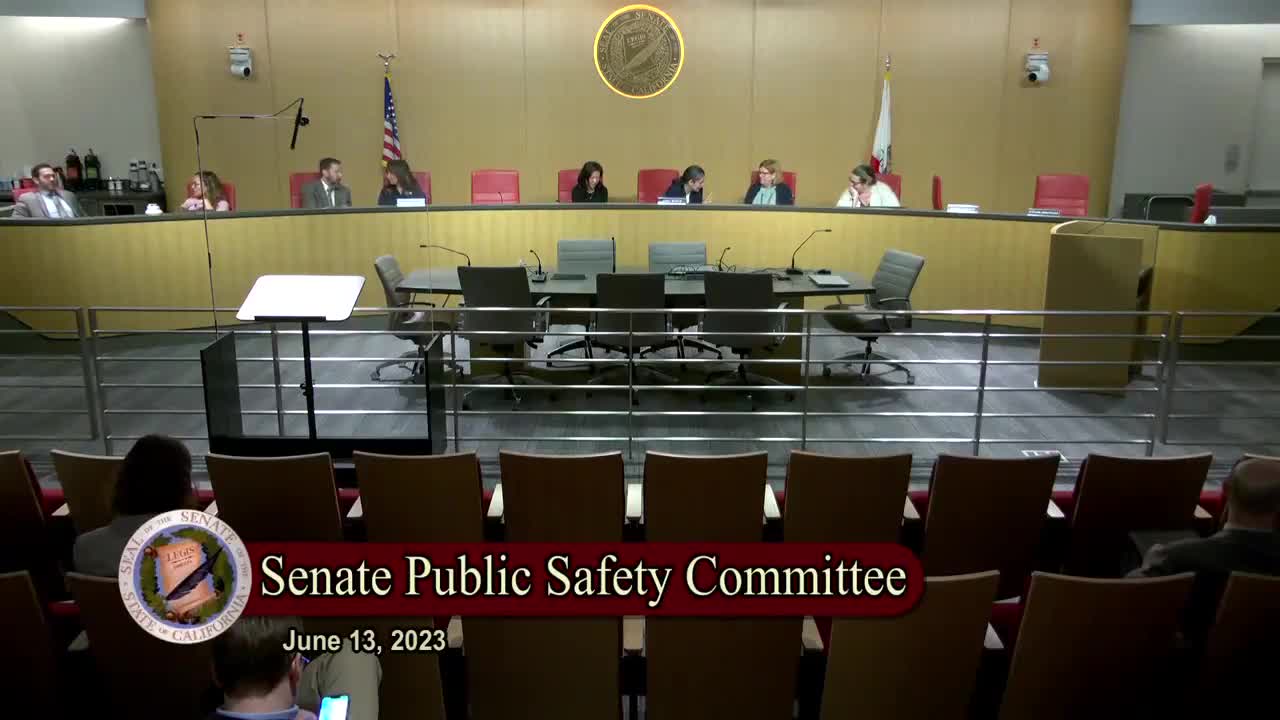

Bill Author