AB 2238: Franchise Tax Board: membership.
- Session Year: 2023-2024
- House: Assembly
- Latest Version Date: 2024-08-22
Current Status:
Failed
(2024-09-20: Vetoed by Governor.)
Introduced
In Committee
First Chamber
In Committee
Second Chamber
Enacted
Existing law establishes, in the Government Operations Agency, the Franchise Tax Board consisting of the Controller, the Director of Finance, and the Chairperson of the State Board of Equalization. Existing law prescribes various powers and duties to the Franchise Tax Board, including, among other things, the administration of state personal income taxes and corporation franchise and income taxes.
This bill, beginning July 1, 2025, would add the Lieutenant Governor and the Treasurer as members of the Franchise Tax Board. The bill would also require the Controller to serve as the chair of the board.
Existing law establishes, in the Government Operations Agency, the Franchise Tax Board consisting of the Controller, the Director of Finance, and the Chairman of the State Board of Equalization. Existing law prescribes various powers and duties to the Franchise Tax Board, including, among other things, the administration of state personal income taxes and corporation franchise and income taxes.
This bill, beginning July 1, 2025, would add the Director of the California Department of Tax and Fee Administration Lieutenant Governor and the Treasurer as members of the Franchise Tax Board. The bill would also require the Controller to serve as the chair of the board.
Existing law establishes, in the Government Operations Agency, the Franchise Tax Board consisting of the Controller, the Director of Finance, and the Chairman of the State Board of Equalization. Existing law prescribes various powers and duties to the Franchise Tax Board, including, among other things, the administration of state personal income taxes and corporation franchise and income taxes.
This bill, beginning July 1, 2025, would remove the Chairperson of the State Board of Equalization from the membership of the Franchise Tax Board, and would instead make add the Director of the California Department of Tax and Fee Administration and the Treasurer a member as members of the Franchise Tax Board.
Existing law establishes, in the Government Operations Agency, the Franchise Tax Board consisting of the Controller, the Director of Finance, and the Chairman of the State Board of Equalization. Existing law prescribes various powers and duties to the Franchise Tax Board, including, among other things, the administration of state personal income taxes and corporation franchise and income taxes.
This bill, beginning July 1, 2025, would remove the Chairperson of the State Board of Equalization from the membership of the Franchise Tax Board, and would instead make the Treasurer a member of the Franchise Tax Board.
(a)There is in the state government, in the Government Operations Agency, a Franchise Tax Board consisting of the Controller, the Director of Finance, and the Chairperson of the State Board of Equalization. The Franchise Tax Board is the successor to, and is vested with, all of the duties, powers, purposes, responsibilities, and jurisdiction of the Franchise Tax Commissioner, but the statutes and laws under which that office existed and all laws prescribing the duties, powers, purposes, responsibilities, and jurisdiction of that office, together with all lawful rules and regulations established thereunder, are expressly continued in force. Franchise Tax Commissioner when used in a statute, law, rule, or regulation now in force, or that may hereafter be enacted or adopted, means the Franchise Tax Board. An action that the Franchise Tax Commissioner is a party to shall not abate by reason hereof but shall continue in the name of the Franchise Tax Board, and the Franchise Tax Board shall be substituted for the Franchise Tax Commissioner by the court wherein the action is pending. The substitution shall not in any way affect the rights of the parties to the action.
(b)Notwithstanding any other law, a directive or regulation adopted by the Franchise Tax Board shall take precedence over a directive or regulation adopted by its executive officer.
(c)This section shall remain in effect only until July 1, 2025, and as of that date is repealed.
SEC. 2.Section 15700 is added to the Government Code, to read:15700.(a)There is in the state government, in the Government Operations Agency, a Franchise Tax Board consisting of the Controller, the Director of Finance, the Chairperson of the State Board of Equalization, the Lieutenant Governor, and the Treasurer. The Franchise Tax Board is the successor to, and is vested with, all of the duties, powers, purposes, responsibilities, and jurisdiction of the Franchise Tax Commissioner, but the statutes and laws under which that office existed and all laws prescribing the duties, powers, purposes, responsibilities, and jurisdiction of that office, together with all lawful rules and regulations established thereunder, are expressly continued in force. Franchise Tax Commissioner when used in a statute, law, rule, or regulation now in force, or that may hereafter be enacted or adopted, means the Franchise Tax Board. An action that the Franchise Tax Commissioner is a party shall not abate by reason hereof but shall continue in the name of the Franchise Tax Board, and the Franchise Tax Board shall be substituted for the Franchise Tax Commissioner by the court wherein the action is pending. The substitution shall not in any way affect the rights of the parties to the action.
(b)The Controller shall serve as the chair of the Franchise Tax Board.
(c)Notwithstanding any other law, a directive or regulation adopted by the Franchise Tax Board shall take precedence over a directive or regulation adopted by its executive officer.
(d)This section shall become operative on July 1, 2025.
(a)There is in the state government, in the Government Operations Agency, a Franchise Tax Board consisting of the Controller, the Director of Finance, and the Chairperson of the State Board of Equalization. The Franchise Tax Board is the successor to, and is vested with, all of the duties, powers, purposes, responsibilities, and jurisdiction of the Franchise Tax Commissioner, but the statutes and laws under which that office existed and all laws prescribing the duties, powers, purposes, responsibilities, and jurisdiction of that office, together with all lawful rules and regulations established thereunder, are expressly continued in force. Franchise Tax Commissioner when used in a statute, law, rule, or regulation now in force, or that may hereafter be enacted or adopted, means the Franchise Tax Board. An action that the Franchise Tax Commissioner is a party to shall not abate by reason hereof but shall continue in the name of the Franchise Tax Board, and the Franchise Tax Board shall be substituted for the Franchise Tax Commissioner by the court wherein the action is pending. The substitution shall not in any way affect the rights of the parties to the action.
(b)Notwithstanding any other law, a directive or regulation adopted by the Franchise Tax Board shall take precedence over a directive or regulation adopted by its executive officer.
(c)This section shall remain in effect only until July 1, 2025, and as of that date is repealed.
SEC. 2.Section 15700 is added to the Government Code, to read:15700.(a)There is in the state government, in the Government Operations Agency, a Franchise Tax Board consisting of the Controller, the Director of Finance, the Chairperson of the State Board of Equalization, the Director of the California Department of Tax and Fee Administration, the Lieutenant Governor, and the Treasurer. The Franchise Tax Board is the successor to, and is vested with, all of the duties, powers, purposes, responsibilities, and jurisdiction of the Franchise Tax Commissioner, but the statutes and laws under which that office existed and all laws prescribing the duties, powers, purposes, responsibilities, and jurisdiction of that office, together with all lawful rules and regulations established thereunder, are expressly continued in force. Franchise Tax Commissioner when used in a statute, law, rule, or regulation now in force, or that may hereafter be enacted or adopted, means the Franchise Tax Board. An action that the Franchise Tax Commissioner is a party shall not abate by reason hereof but shall continue in the name of the Franchise Tax Board, and the Franchise Tax Board shall be substituted for the Franchise Tax Commissioner by the court wherein the action is pending. The substitution shall not in any way affect the rights of the parties to the action.
(b)The Controller shall serve as the chair of the Franchise Tax Board.
(b)(c)Notwithstanding any other law, a directive or regulation adopted by the Franchise Tax Board shall take precedence over a directive or regulation adopted by its executive officer.
(c)(d)This section shall become operative on July 1, 2025.
(a)There is in the state government, in the Government Operations Agency, a Franchise Tax Board consisting of the Controller, the Director of Finance, and the Chairperson of the State Board of Equalization. The Franchise Tax Board is the successor to, and is vested with, all of the duties, powers, purposes, responsibilities, and jurisdiction of the Franchise Tax Commissioner, but the statutes and laws under which that office existed and all laws prescribing the duties, powers, purposes, responsibilities, and jurisdiction of that office, together with all lawful rules and regulations established thereunder, are expressly continued in force. Franchise Tax Commissioner when used in any a statute, law, rule, or regulation now in force, or that may hereafter be enacted or adopted, means the Franchise Tax Board. An action to which that the Franchise Tax Commissioner is a party to shall not abate by reason hereof but shall continue in the name of the Franchise Tax Board, and the Franchise Tax Board shall be substituted for the Franchise Tax Commissioner by the court wherein the action is pending. The substitution shall not in any way affect the rights of the parties to the action.
(b)Notwithstanding any other provision of the law to the contrary, any law, a directive or regulation adopted by the Franchise Tax Board shall take precedence over any a directive or regulation adopted by its executive officer.
(c)This section shall remain in effect only until July 1, 2025, and as of that date is repealed.
SEC. 2.Section 15700 is added to the Government Code, to read:15700.(a)There is in the state government, in the Government Operations Agency, a Franchise Tax Board consisting of the Controller, the Director of Finance, the Chairperson of the State Board of Equalization, the Director of the California Department of Tax and Fee Administration, and the Treasurer. The Franchise Tax Board is the successor to, and is vested with, all of the duties, powers, purposes, responsibilities, and jurisdiction of the Franchise Tax Commissioner, but the statutes and laws under which that office existed and all laws prescribing the duties, powers, purposes, responsibilities, and jurisdiction of that office, together with all lawful rules and regulations established thereunder, are expressly continued in force. Franchise Tax Commissioner when used in any a statute, law, rule, or regulation now in force, or that may hereafter be enacted or adopted, means the Franchise Tax Board. An action that the Franchise Tax Commissioner is a party shall not abate by reason hereof but shall continue in the name of the Franchise Tax Board, and the Franchise Tax Board shall be substituted for the Franchise Tax Commissioner by the court wherein the action is pending. The substitution shall not in any way affect the rights of the parties to the action.
(b)Notwithstanding any other provision of the law to the contrary, any law, a directive or regulation adopted by the Franchise Tax Board shall take precedence over any a directive or regulation adopted by its executive officer.
(c)This section shall become operative on July 1, 2025.
(a)There is in the state government, in the Government Operations Agency, a Franchise Tax Board consisting of the Controller, the Director of Finance, and the Chairperson of the State Board of Equalization. The Franchise Tax Board is the successor to, and is vested with, all of the duties, powers, purposes, responsibilities, and jurisdiction of the Franchise Tax Commissioner, but the statutes and laws under which that office existed and all laws prescribing the duties, powers, purposes, responsibilities, and jurisdiction of that office, together with all lawful rules and regulations established thereunder, are expressly continued in force. Franchise Tax Commissioner when used in any statute, law, rule, or regulation now in force, or that may hereafter be enacted or adopted, means the Franchise Tax Board. No An action to which the Franchise Tax Commissioner is a party shall not abate by reason hereof but shall continue in the name of the Franchise Tax Board, and the Franchise Tax Board shall be substituted for the Franchise Tax Commissioner by the court wherein the action is pending. The substitution shall not in any way affect the rights of the parties to the action.
Notwithstanding
(b)Notwithstanding any other provision of the law to the contrary, any directive or regulation adopted by the Franchise Tax Board shall take precedence over any directive or regulation adopted by its executive officer.
(c)This section shall remain in effect only until July 1, 2025, and as of that date is repealed.
SEC. 2.Section 15700 is added to the Government Code, to read:15700.(a)There is in the state government, in the Government Operations Agency, a Franchise Tax Board consisting of the Controller, the Director of Finance, and the Treasurer. The Franchise Tax Board is the successor to, and is vested with, all of the duties, powers, purposes, responsibilities, and jurisdiction of the Franchise Tax Commissioner, but the statutes and laws under which that office existed and all laws prescribing the duties, powers, purposes, responsibilities, and jurisdiction of that office, together with all lawful rules and regulations established thereunder, are expressly continued in force. Franchise Tax Commissioner when used in any statute, law, rule, or regulation now in force, or that may hereafter be enacted or adopted, means the Franchise Tax Board. An action that the Franchise Tax Commissioner is a party shall not abate by reason hereof but shall continue in the name of the Franchise Tax Board, and the Franchise Tax Board shall be substituted for the Franchise Tax Commissioner by the court wherein the action is pending. The substitution shall not in any way affect the rights of the parties to the action.
(b)Notwithstanding any other provision of the law to the contrary, any directive or regulation adopted by the Franchise Tax Board shall take precedence over any directive or regulation adopted by its executive officer.
(c)This section shall become operative on July 1, 2025.
|
Date
|
Status
|
|---|---|
| Sep 20, 2024 | Vetoed by Governor. |
| Aug 27, 2024 | Enrolled and presented to the Governor at 12 p.m. |
| Aug 20, 2024 | In Assembly. Ordered to Engrossing and Enrolling. |
| Aug 20, 2024 | Read third time. Passed. Ordered to the Assembly. (Ayes 26. Noes 10. Page 5233.). |
| Aug 6, 2024 | Read second time. Ordered to third reading. |
| Aug 5, 2024 | From committee: Be ordered to second reading pursuant to Senate Rule 28.8. |
| Jun 26, 2024 | From committee: Do pass and re-refer to Com. on APPR. (Ayes 4. Noes 0.) (June 26). Re-referred to Com. on APPR. |
| Jun 5, 2024 | Referred to Com. on REV. & TAX. |
| May 23, 2024 | In Senate. Read first time. To Com. on RLS. for assignment. |
| May 22, 2024 | Read third time. Passed. Ordered to the Senate. (Ayes 50. Noes 11. Page 5555.) |
| May 21, 2024 | Assembly Rule 69(d) suspended. (Page 5352.) |
| May 20, 2024 | Read third time and amended. Ordered to third reading. (Page 5291.) |
| May 9, 2024 | Read second time. Ordered to third reading. |
| May 8, 2024 | From committee: Do pass. (Ayes 11. Noes 4.) (May 8). |
| May 1, 2024 | In committee: Hearing postponed by committee. |
| Apr 2, 2024 | From committee: Do pass and re-refer to Com. on APPR. (Ayes 4. Noes 2.) (April 1). Re-referred to Com. on APPR. |
| Apr 1, 2024 | Re-referred to Com. on REV. & TAX. |
| Mar 21, 2024 | From committee chair, with author's amendments: Amend, and re-refer to Com. on REV. & TAX. Read second time and amended. |
| Mar 11, 2024 | In committee: Set, first hearing. Hearing canceled at the request of author. |
| Feb 26, 2024 | Referred to Com. on REV. & TAX. |
| Feb 9, 2024 | From printer. May be heard in committee March 10. |
| Feb 8, 2024 | Read first time. To print. |
|
Date
|
Description
|
Location
|
Votes
|
|
|---|---|---|---|---|
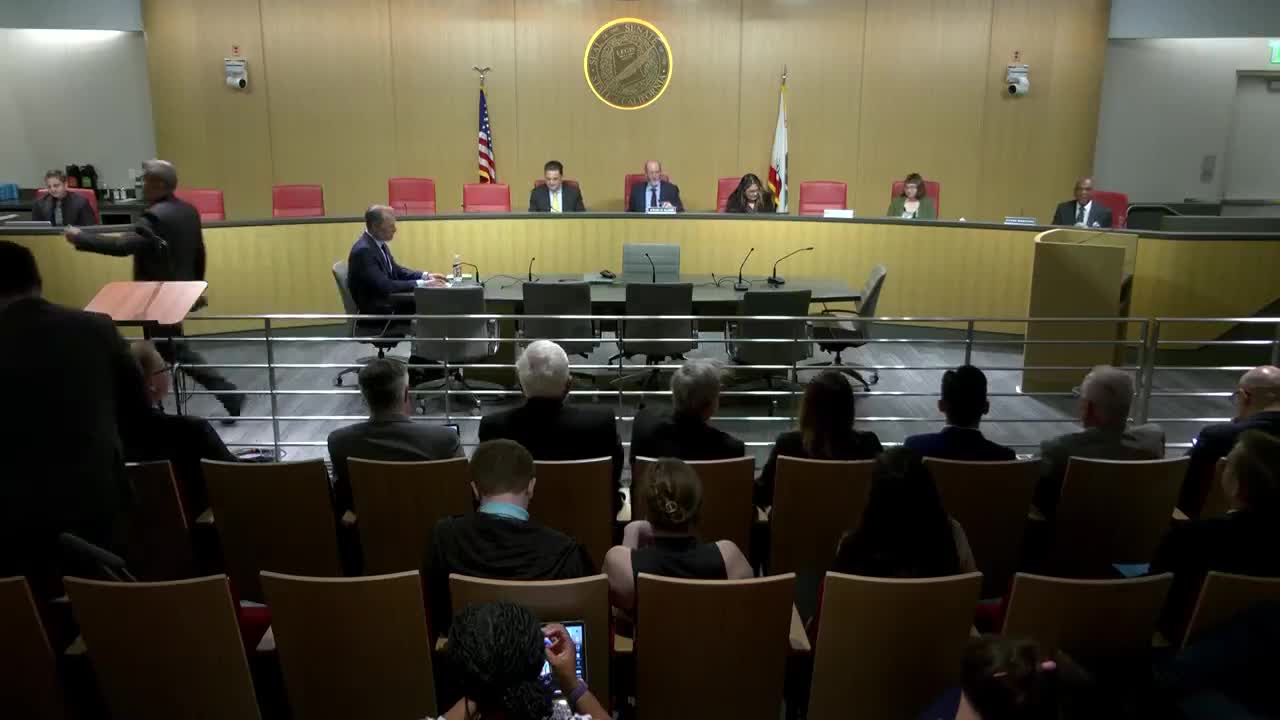
| Aug 20, 2024 | Assembly 3rd Reading AB2238 Low By Blakespear | Senate Floor |
Passed |
|
| Jun 26, 2024 | Do pass, but first be re-referred to the Committee on [Appropriations] | Senate Standing Committee on Revenue and Taxation |
Passed |
|
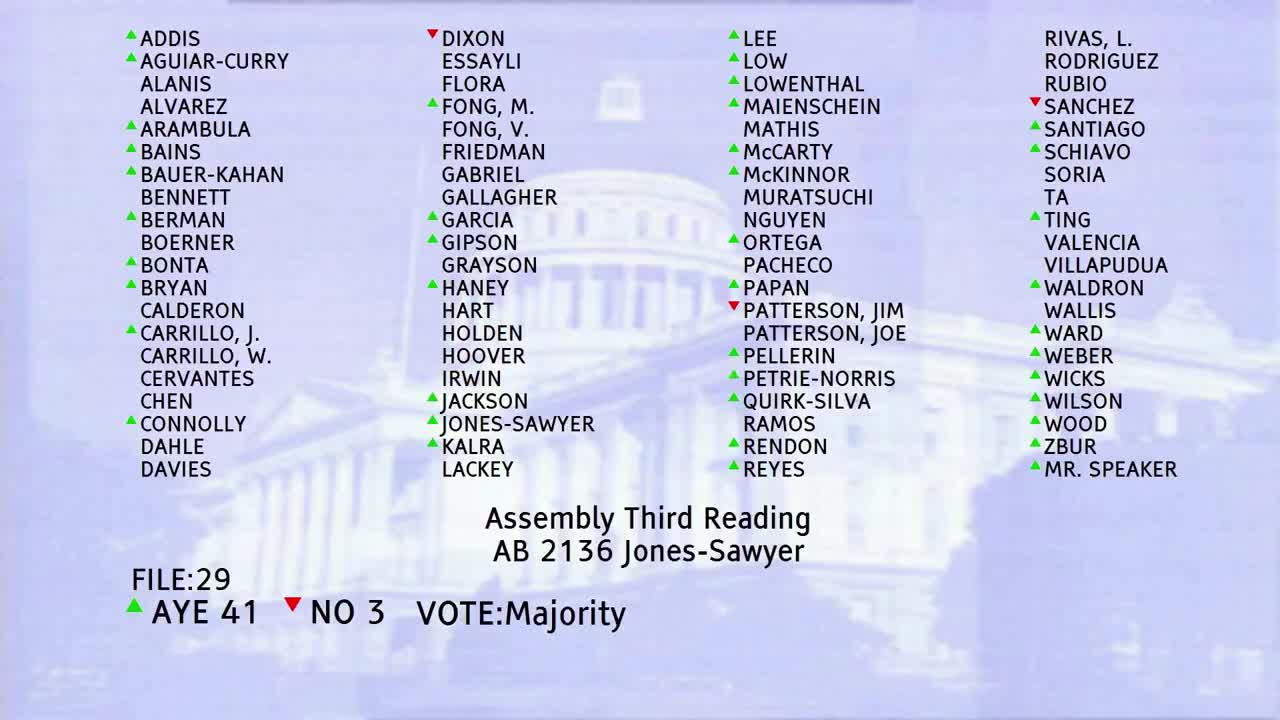
| May 22, 2024 | AB 2238 Low Assembly Third Reading | Assembly Floor |
Passed |
|
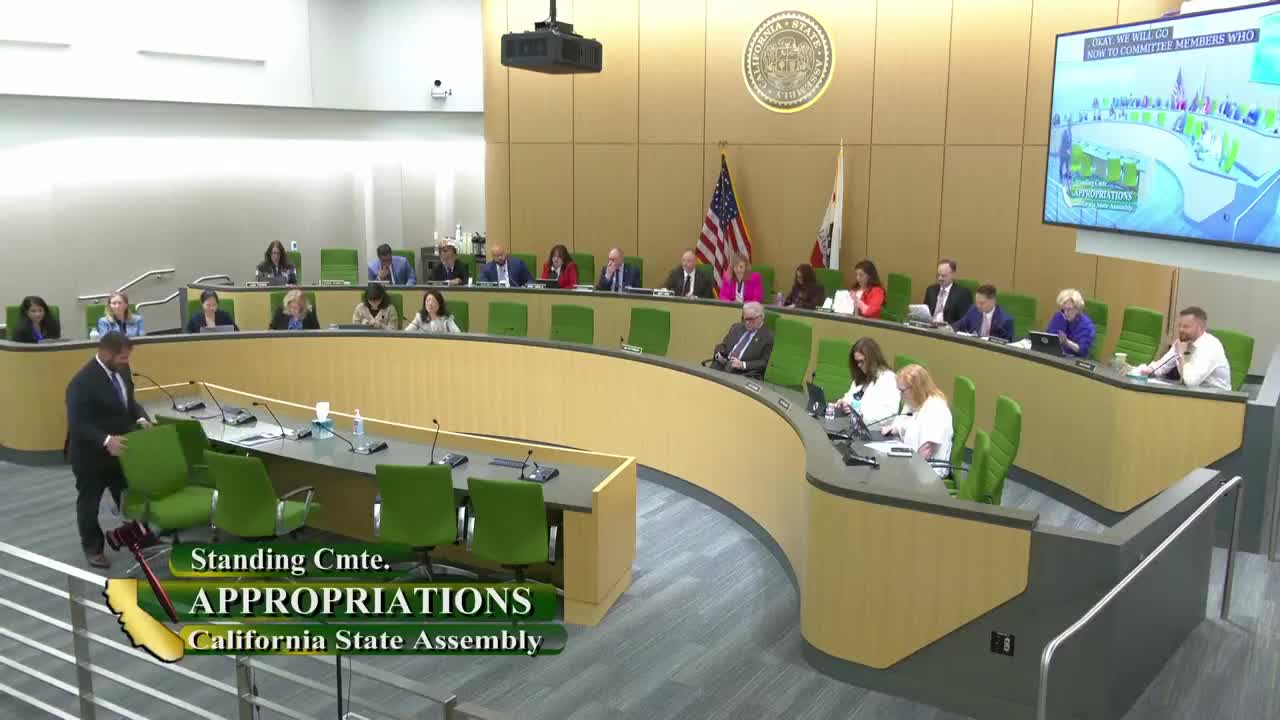
| May 8, 2024 | Do pass. | Assembly Standing Committee on Appropriations |
Passed |
|
| Apr 1, 2024 | Do pass and be re-referred to the Committee on [Appropriations] | Assembly Standing Committee on Revenue and Taxation |
Passed |
This list shows positions taken on this bill by organizations on the date displayed, which is linked to the original source.
Positions by individuals are not included.
|
Organization
|
Position
|
Date
|
|---|---|---|
| California Business Roundtable | ** Against | |
| California State Board of Equalitzation | * Against Unless Amend | Apr 1, 2024 |
| California Taxpayers Association | ** Against | |
| Lieutenant Governor Eleni Kounalakis | ** Support | |
| State Board of Equalization Member Antonio Vazquez | ** Against | |
| State Treasurer Fiona Ma | ** Support |
GOVERNOR'S VETO
GV Bill Id:AB 2238
Author:(Low)
As Enrolled Ver:August 22, 2024
2/3 vote
SUMMARY
Adds both the Treasurer and the Lieutenant Governor as members of the Franchise Tax Board (FTB) effective July 1, 2025.
- Expands the membership of the FTB by adding both the Treasurer and Lieutenant Governor.
- Specifies that the State Controller shall serve as the Chair of the FTB.
Governor's Veto Message
This bill would expand the membership of the Franchise Tax Board from three to five members by adding both the Lieutenant Governor and the State Treasurer as members, beginning July 1, 2025, and would require the State Controller to serve as Chair.
This bill is unnecessary. For decades, the Franchise Tax Board has been served by a three-member panel responsible for overseeing the collection of tax revenue. Expanding the Board membership to include two Constitutional Officers that do not perform any tax policy or tax administration duties will create inefficiencies and increase costs without any clear benefit to taxpayers.
COMMENTS
- Odd or even? In its introduced form, this bill sought to replace the chairperson of the State Board of Equalization (BOE) with the Treasurer on the FTB board. The author has since amended this bill to retain the BOE chairperson, and add both the Treasurer and the Lieutenant Governor to the board, thereby increasing total membership from three to five. This was ostensibly done to ensure an uneven number of board members in the event of a split vote.
- The benefits and drawbacks of a board: Most states centralize tax administration functions in a single Governor-appointed official. California has, for a variety of reasons, taken a different approach – first with the establishment of the BOE and later with the creation of a three-member board overseeing the FTB's income tax functions. Advocates of such an approach contend that it is useful to have elected officeholders overseeing the actions of appointed officials to ensure responsiveness to public sentiment. While this argument has some merit, it overlooks the fact that tax administrators appointed by the Governor are directly accountable to the state's highest elected officeholder. In addition, California has actually taken steps in recent years to remove tax administration from potential political influence. After a series of reports focused on the BOE's mismanagement, the Legislature acted in 2017 to transfer the vast majority of the BOE's tax administration functions to a newly created department – the California Department of Tax and Fee Administration (CDTFA). In addition, the Legislature intentionally chose not to place the CDTFA director under a board of elected officials but instead have the director report directly to the Governor. It should be noted that, since its establishment, the CDTFA has developed an exemplary record of tax administration. As such, the Legislature may wish to consider whether it continues to make sense to have the FTB's administrative functions overseen by a board at all, especially given their limited role in the agency's day-to-day operations.
According to the Author
The author has provided the following statement in support of this bill:
The Treasurer's involvement in the FTB ensures that future FTB decisions are made with a thorough understanding of their implications and impacts on the state's cash management program.
Arguments in Support
This bill is sponsored by Treasurer Fiona Ma, who notes the following:
Amending the Government Code to include the state treasurer as a member of the FTB would be a prudent move when considering the state treasurer's role in California's financial system. The involvement of the state treasurer in the FTB would provide an added layer of insight to decisions affecting state revenue, fostering an environment where tax policies align with broader fiscal objectives, and public financial expectations.
Arguments in Opposition
None on file.
FISCAL COMMENTS
This bill was referred to the Senate Floor pursuant to Senate Rule 28.8.
VOTES
ASM REVENUE AND TAXATION: 4-2-1
YES: Irwin, Bains, Grayson, Pacheco
NO: Ta, Jim Patterson
ABS, ABST OR NV: Gipson
ASM APPROPRIATIONS: 11-4-0
YES: Wicks, Arambula, Bryan, Calderon, Wendy Carrillo, Mike Fong, Friedman, Haney, Hart, Pellerin, Villapudua
NO: Sanchez, Dixon, Jim Patterson, Ta
ASSEMBLY FLOOR: 50-11-19
YES: Addis, Aguiar-Curry, Alvarez, Arambula, Bains, Bauer-Kahan, Bennett, Berman, Boerner, Bonta, Bryan, Wendy Carrillo, Connolly, Mike Fong, Gabriel, Garcia, Grayson, Haney, Hart, Irwin, Jackson, Jones-Sawyer, Kalra, Lee, Low, Lowenthal, Maienschein, McCarty, McKinnor, Muratsuchi, Stephanie Nguyen, Ortega, Pacheco, Papan, Pellerin, Petrie-Norris, Quirk-Silva, Ramos, Reyes, Rodriguez, Blanca Rubio, Santiago, Schiavo, Villapudua, Ward, Weber, Wicks, Wood, Zbur, Robert Rivas
NO: Chen, Davies, Dixon, Vince Fong, Hoover, Lackey, Jim Patterson, Sanchez, Ta, Waldron, Wallis
ABS, ABST OR NV: Alanis, Calderon, Juan Carrillo, Cervantes, Megan Dahle, Essayli, Flora, Friedman, Gallagher, Gipson, Holden, Mathis, Joe Patterson, Rendon, Luz Rivas, Soria, Ting, Valencia, Wilson
SENATE FLOOR: 26-10-4
YES: Allen, Ashby, Atkins, Blakespear, Bradford, Caballero, Cortese, Dodd, Durazo, Eggman, Gonzalez, Hurtado, Laird, Limón, McGuire, Menjivar, Min, Newman, Portantino, Rubio, Skinner, Smallwood-Cuevas, Stern, Umberg, Wahab, Wiener
NO: Alvarado-Gil, Dahle, Glazer, Grove, Jones, Nguyen, Niello, Ochoa Bogh, Seyarto, Wilk
ABS, ABST OR NV: Archuleta, Becker, Padilla, Roth
UPDATED
VERSION: August 22, 2024
CONSULTANT: M. David Ruff / REV. & TAX. / (916) 319-2098 FN: 0005199
SENATE RULES COMMITTEE Office of Senate Floor Analyses (916) 651-1520 Fax: (916) 327-4478 | AB 2238 |
THIRD READING
Bill No: AB 2238
Author: Low (D)
Amended: 5/20/24 in Assembly
Vote: 21
SENATE REVENUE AND TAXATION COMMITTEE: 4-0, 6/26/24
AYES: Ashby, Bradford, Dodd, Skinner
NO VOTE RECORDED: Glazer, Dahle, Padilla
SENATE APPROPRIATIONS COMMITTEE: Senate Rule 28.8
ASSEMBLY FLOOR: 50-11, 5/22/24 - See last page for vote
SUBJECT: Franchise Tax Board: membership
SOURCE: State Treasurer Fiona Ma
DIGEST:
This bill expands the Franchise Tax Board (FTB) from three members to five members by adding the State Treasurer and Lieutenant Governor.
ANALYSIS:
Existing law:
- Establishes the FTB as an executive branch agency housed within the Government Operations Agency, with a three-person board comprised of the State Controller, Director of the Department of Finance (DOF), and Chair of the State Board of Equalization (BOE).
- Directs the FTB to administer the Personal Income Tax and Corporation Tax Laws and collects debts on behalf of state and local agencies, among other duties.
- Provides that a directive or regulation adopted by the FTB takes precedence over a directive or regulation adopted by its executive officer.
This bill:
- Expands the FTB from three members to five members by adding the State Treasurer and Lieutenant Governor.
- Provides that the State Controller is Chair of the FTB.
- Makes conforming changes.
- Takes effect July 1, 2025.
Background
California’s tax administration is distinct in that it has more tax agencies than other states. Among these, the Franchise Tax Board (FTB) is the most significant when measured by revenue collection. In 1928, the California Tax Commission recommended taxation of banks and corporations on the basis of net income, which was implemented by a Constitutional Amendment approved by the voters later that year. The Legislature implemented the authority granted by votes to enact the Bank and Corporation Act of 1929 to be administered by a Franchise Tax Commissioner appointed by a special committee consisting of the Controller, BOE Chair, and the Director of Finance, while assigning appeals to BOE. When the Legislature enacted the Personal Income Tax Act of 1935, it again assigned administration of the tax to the Franchise Tax Commissioner, and appeals to BOE. in 1949, the Legislature abolished the position of the Franchise Tax Commissioner, and restructured the position into the FTB, which consisted of the same group of officials originally designated as the appointment authority for the Franchise Tax Commissioner. The FTB Board generally meets four times per year to approve items, such as budget change proposals, contracts over $1 million, and proposed regulations and legislative proposals.
Comments
What’s the problem? In California, taxing powers are vested with the Legislature with its enactment of laws, the Governor who is responsible for enforcing them, and with voters who can enact initiatives. The FTB itself conflicts with this structure because of how two independently elected officials – the Chair of the BOE and the State Controller – sit as members of a board that is itself a part of an executive branch agency under the authority of the Governor. The FTB Board meets about four times per year to consider various items, but its executive director manages its day-to-day operations. It is unclear how adding more elected officials who have been elected to non-tax offices will improve the performance of FTB, which is responsible for collecting $125 billion in revenue annually, representing approximately 74% of General Fund revenue. While the Treasurer is the state's lead asset manager, banker, and financier, neither they nor the Lieutenant Governor perform any tax policy or tax administration duties. The FTB board itself exists due to a nearly century-old legislative compromise, and eliminating it entirely would make the agency more like other executive branch line agencies.
FISCAL EFFECT: Appropriation: No Fiscal Com.: Yes Local: No
SUPPORT: (Verified 8/5/24)
State Treasurer Fiona Ma (source)
Lieutenant Governor Eleni Kounalakis
OPPOSITION: (Verified 8/5/24)
None received
ARGUMENTS IN SUPPORT: According to the author, “The Treasurer's involvement in the FTB ensures that future FTB decisions are made with a thorough understanding of their implications and impacts on the state's cash management program.”
ASSEMBLY FLOOR: 50-11, 5/22/24
AYES: Addis, Aguiar-Curry, Alvarez, Arambula, Bains, Bauer-Kahan, Bennett, Berman, Boerner, Bonta, Bryan, Wendy Carrillo, Connolly, Mike Fong, Gabriel, Garcia, Grayson, Haney, Hart, Irwin, Jackson, Jones-Sawyer, Kalra, Lee, Low, Lowenthal, Maienschein, McCarty, McKinnor, Muratsuchi, Stephanie Nguyen, Ortega, Pacheco, Papan, Pellerin, Petrie-Norris, Quirk-Silva, Ramos, Reyes, Rodriguez, Blanca Rubio, Santiago, Schiavo, Villapudua, Ward, Weber, Wicks, Wood, Zbur, Robert Rivas
NOES: Chen, Davies, Dixon, Vince Fong, Hoover, Lackey, Jim Patterson, Sanchez, Ta, Waldron, Wallis
NO VOTE RECORDED: Alanis, Calderon, Juan Carrillo, Cervantes, Megan Dahle, Essayli, Flora, Friedman, Gallagher, Gipson, Holden, Mathis, Joe Patterson, Rendon, Luz Rivas, Soria, Ting, Valencia, Wilson
Prepared by: Colin Grinnell / REV. & TAX. / (916) 651-4117
8/7/24 13:38:15
**** END ****
SENATE COMMITTEE ON REVENUE AND TAXATION
Senator Steven Glazer, Chair
2023 - 2024 Regular
Bill No: | AB 2238 | Hearing Date: | 6/26/24 |
Author: | Low | Tax Levy: | No |
Version: | 5/20/24 | Fiscal: | Yes |
Consultant: | Grinnell | ||
Franchise Tax Board: membership
Expands the Franchise Tax Board from three members to five members by adding the State Treasurer and Lieutenant Governor.
Background
California’s tax administration is distinct in that it has more tax agencies than other states. Among these, the Franchise Tax Board (FTB) is the most significant when measured by revenue collection. While the FTB is an executive branch agency housed within the Government Operations Agency, FTB has a three-person board comprised of the State Controller, Director of the Department of Finance (DOF), and Chair of the State Board of Equalization (BOE). FTB administers the Personal Income Tax and Corporation Tax Law and collects debts on behalf of state and local agencies. An executive officer is charged with administering the FTB's day-to-day operations, subject to supervision and direction from the board.
California's distinct tax administration structure began to evolve as the result of a study commissioned by the Legislature in 1927 to review the California revenue situation.[1] In 1928, the California Tax Commission recommended taxation of banks and corporations on the basis of net income, which was implemented by a Constitutional Amendment approved by the voters in 1928.[2] The Legislature implemented the authority granted by votes to enact the Bank and Corporation Act of 1929. During deliberations of the 1929 Act, State Controller Ray Riley proposed to assign the administration of the new bank and corporation income tax to the Controller's office, while BOE members lobbied to have it administer the tax instead.[3] Upon discovering he did not have the votes in the Legislature, Riley compromised to assign the corporate franchise tax administration to a Franchise Tax Commissioner, who was to be appointed by a special committee consisting of the Controller, the DOF, and the Chair of the BOE.[4] The Legislature then assigned tax appeals to BOE. When the Legislature enacted the Personal Income Tax Act of 1935, it again assigned administration of the tax to the Franchise Tax Commissioner, and appeals to BOE.
The transformation of the Franchise Tax Commissioner position into the FTB is “one of the unusual stories that seems to characterize California political history:”[5]
Charles L. McColgan, a former State Assembly member from San Francisco, was appointed in 1931 as the third Franchise Tax Commissioner. The 1934 constitutional amendment creating the civil service protected most State employees, with exemptions for persons appointed by the Governor and elected officials, among others. This did not include the Franchise Tax Commissioner who was appointed not by the Governor, but by the Controller, the Governor's Finance Director and the chair of the Board of Equalization. The Franchise Tax Commissioner thus became subject to civil service protection and could not be removed under the 1929 Act that created the position. The Commissioner became the only civil service employee not responsible to anyone for his conduct or professional actions. Apparently, Commissioner McColgan took full advantage of this autonomy: a 1948 legislative investigation of the San Francisco office of the Franchise Tax Commissioner “revealed a picture of gross inefficiency and maladministration” including a “widespread practice of employees . . . soliciting and performing outside employment which is incompatible with their duties as state employees.”[6]
As a result, in 1949, the Legislature abolished the position of the Franchise Tax Commissioner, and restructured the position into the FTB, which consisted of the same group of officials originally designated as the appointment authority for the Franchise Tax Commissioner. The FTB currently appoints an executive officer, subject to confirmation by two-thirds of the Senate, who is subject to removal by a two-thirds vote of FTB. The law also explicitly provides that a directive or regulation adopted by the FTB shall take precedence over a directive or regulation adopted by its executive officer. The FTB Board generally meets four times per year to approve items, such as budget change proposals, contracts over $1 million, and proposed regulations and legislative proposals.
Several studies dating back to 1929, Governor Wilson, the Legislative Analyst’s Office, the California Constitutional Revision Commission, the Governor Schwarzenegger’s California Performance Review, and legislative Constitutional Amendments have proposed consolidating tax agencies in various ways. However, the membership of the FTB has remained unchanged since the legislative compromise which created the Franchise Tax Commissioner nearly 100 years ago.
Arguing that the State Treasurer can bring broad knowledge and insight to FTB, State Treasurer Fiona Ma wants to expand the FTB to add the Treasurer and the Lieutenant Governor.
Proposed Law
Assembly Bill 2238 expands the FTB from three members to five members by adding the State Treasurer and Lieutenant Governor. The measure also enshrines the State Controller as Chair of the FTB. The bill also makes conforming changes. AB 2238 takes effect July 1, 2025.
State Revenue Impact
No estimate.
Comments
1. Purpose of the bill. According to the author, ““The Treasurer's involvement in the FTB ensures that future FTB decisions are made with a thorough understanding of their implications and impacts on the state's cash management program.”
2. What’s the problem? In California, taxing powers are vested with the Legislature with its enactment of laws, the Governor who is responsible for enforcing them, and with voters who can enact initiatives. The FTB itself conflicts with this structure because of how two independently elected officials – the Chair of the BOE and the State Controller – sit as members of a board that is itself a part of an executive branch agency under the authority of the Governor. The FTB Board meets about four times per year to consider various items, but its executive director manages its day-to-day operations. It is unclear how adding more elected officials who have been elected to non-tax offices will improve the performance of FTB, which is responsible for collecting $125 billion in revenue annually, representing approximately 74% of General Fund revenue. While the Treasurer is the state's lead asset manager, banker, and financier, neither they nor the Lieutenant Governor perform any tax policy or tax administration duties. The FTB board itself exists due to a nearly century-old legislative compromise, and eliminating it entirely would make the agency more like other executive branch line agencies.
3. Alphabet Soup. California has at least six agencies significantly involved with revenue collection or tax administration: FTB, BOE, The Office of Tax Appeals (OTA), the California Department of Tax and Fee Administration (CDTFA), the Employment Development Department that administers employee withholding and payroll taxes, and the Department of Motor Vehicles, which collects vehicle license fees, registration fees, and sales and use taxes imposed on the sale of new and used vehicles. However, the Legislature has enacted only one significant tax agency restructuring measure, the Taxpayer Transparency and Fairness Act (AB 102, Committee on Budget, 2017). The Act removed all of BOE’s non-constitutional tax administration and appeal functions and shifted them to the CDTFA, which was created by the bill. AB 102 also moved BOE’s appellate authority over all non-property tax appeals to OTA.
4. Alternative apportionment. For the most part, taxpayers disputing a tax agency assessment pay their tax due and file a claim for refund. If denied, they protest to the tax agency, but if denied again, can appeal to OTA. If OTA decides against them, taxpayers can then challenge the assessment in court. However, Revenue and Taxation Code §25137 allows taxpayers to petition the FTB for “alternative apportionment,” in cases where the amount of business income apportioned to California under current law does not fairly represent the extent of the apportionment of a taxpayer's business activity in this state. §25137 also allows FTB to require alternative apportionment under the same standard. These petitions are considered directly by FTB in a public meeting, and not by OTA as is the case other tax appeals. Last year, Daimler North America Corporation & Subsidiaries sought alternative apportionment, arguing that current law double-counts sales of vehicle leases, and asked for about 3.5% less of its income to be apportioned to California. Should AB 2238 be enacted, a larger FTB board, with diluted power for the Governor’s representative, will consider any future alternative apportionment petitions.
Assembly Actions
Assembly Revenue & Taxation Committee: 4-2
Assembly Appropriations Committee: 11-4
Assembly Floor: 50-11
Support and Opposition
(6/21/24)
Support: California State Treasurer (Sponsor)
Office of Lieutenant Governor Eleni Kounalakis
Opposition: None received.
-- END --
Simmons, Daniel, “California Tax Collection: Time for Reform” Santa Clara Law Review, 48 SANCLR 279, 2008. ↑
Ibid. ↑
Ibid. ↑
Doerr, David R. “California’s Tax Machine: A History of Taxing and Spending in the Golden State,” California Taxpayers Association, July, 2000. ↑
Simmons, Supra. ↑
Simmons, Supra. ↑
ASSEMBLY THIRD READING
ATR Bill Id:AB 2238
Author:(Low)
As Amended Ver:May 20, 2024
Majority vote
SUMMARY
Adds both the Treasurer and the Lieutenant Governor as members of the Franchise Tax Board (FTB) effective July 1, 2025.
Major Provisions
- Expands the membership of the FTB by adding both the Treasurer and Lieutenant Governor.
- Specifies that the State Controller shall serve as the Chair of the FTB.
COMMENTS
- Odd or even? In its introduced form, this bill sought to replace the chairperson of the State Board of Equalization (BOE) with the Treasurer on the FTB board. The author has since amended this bill to retain the BOE chairperson, and add both the Treasurer and the Lieutenant Governor to the board, thereby increasing total membership from three to five. This was ostensibly done to ensure an uneven number of board members in the event of a split vote.
- The benefits and drawbacks of a board: Most states centralize tax administration functions in a single Governor-appointed official. California has, for a variety of reasons, taken a different approach – first with the establishment of the BOE and later with the creation of a three-member board overseeing the FTB's income tax functions. Advocates of such an approach contend that it is useful to have elected officeholders overseeing the actions of appointed officials to ensure responsiveness to public sentiment. While this argument has some merit, it overlooks the fact that tax administrators appointed by the Governor are directly accountable to the state's highest elected officeholder. In addition, California has actually taken steps in recent years to remove tax administration from potential political influence. After a series of reports focused on the BOE's mismanagement, the Legislature acted in 2017 to transfer the vast majority of the BOE's tax administration functions to a newly created department – the California Department of Tax and Fee Administration (CDTFA). In addition, the Legislature intentionally chose not to place the CDTFA director under a board of elected officials but instead have the director report directly to the Governor. It should be noted that, since its establishment, the CDTFA has developed an exemplary record of tax administration. As such, the Legislature may wish to consider whether it continues to make sense to have the FTB's administrative functions overseen by a board at all, especially given their limited role in the agency's day-to-day operations.
According to the Author
The author has provided the following statement in support of this bill:
The Treasurer's involvement in the FTB ensures that future FTB decisions are made with a thorough understanding of their implications and impacts on the state's cash management program.
Arguments in Support
None on file.
Arguments in Opposition
None on file.
FISCAL COMMENTS
According to the Assembly Appropriations Committee:
Likely absorbable costs [. . .] to prepare for and attend FTB meetings, as well as absorbable costs to the FTB to modify meeting procedures to accommodate two additional board members.
To the extent expanding FTB membership to two additional board members impacts board priorities and results in substantive changes to board operations, such as the transfer of administrative responsibilities away from the executive officer or requests for more frequent project updates, this bill may increase FTB staff workload over time. However, the [State Controller's Office] affirms there is no intention to change the FTB's responsibilities or add workload.
VOTES
ASM REVENUE AND TAXATION: 4-2-1
YES: Irwin, Bains, Grayson, Pacheco
NO: Ta, Jim Patterson
ABS, ABST OR NV: Gipson
ASM APPROPRIATIONS: 11-4-0
YES: Wicks, Arambula, Bryan, Calderon, Wendy Carrillo, Mike Fong, Friedman, Haney, Hart, Pellerin, Villapudua
NO: Sanchez, Dixon, Jim Patterson, Ta
UPDATED
VERSION: May 20, 2024
CONSULTANT: M. David Ruff / REV. & TAX. / (916) 319-2098 FN: 0003309
ASSEMBLY THIRD READING
ATR Bill Id:AB 2238
Author:(Low)
As Amended Ver:March 21, 2024
Majority vote
SUMMARY
Adds both the Treasurer and the Director of the California Department of Tax and Fee Administration (CDTFA) as members of the Franchise Tax Board (FTB) effective July 1, 2025.
Major Provisions
See summary above.
COMMENTS
- Odd or even? In its introduced form, this bill sought to replace the chairperson of the State Board of Equalization (BOE) with the Treasurer on the FTB board. The author thereafter amended this bill to retain the BOE chairperson, and add both the Treasurer and the CDTFA director to the board, thereby increasing total membership from three to five. This was ostensibly done to ensure an uneven number of board members in the event of a split vote. The decision to add the CDTFA director, however, raises some interesting considerations. Adding the CDTFA director, who is appointed by the Governor, could be viewed as indirectly increasing the Administration's influence on the board. It would also place the CDTFA director in the position of overseeing the work of the FTB's executive officer, who has historically been viewed as a peer of the CDTFA director.
- The benefits and drawbacks of a board: Most states centralize tax administration functions in a single Governor-appointed official. California has, for a variety of reasons, taken a different approach – first with the establishment of the BOE and later with the creation of a three-member board overseeing the FTB's income tax functions. Advocates of such an approach contend that it is useful to have elected officeholders overseeing the actions of appointed officials to ensure responsiveness to public sentiment. While this argument has some merit, it overlooks the fact that tax administrators appointed by the Governor are directly accountable to the state's highest elected officeholder. In addition, California has actually taken steps in recent years to remove tax administration from potential political influence. After a series of reports focused on the BOE's mismanagement, the Legislature acted in 2017 to transfer the vast majority of the BOE's tax administration functions to a newly created department – the CDTFA. In addition, the Legislature intentionally chose not to place the CDTFA director under a board of elected officials but instead have the director report directly to the Governor. It should be noted that, since its establishment, the CDTFA has developed an exemplary record of tax administration. As such, the Legislature may wish to consider whether it continues to make sense to have the FTB's administrative functions overseen by a board at all, especially given their limited role in the agency's day-to-day operations.
According to the Author
The author has provided the following statement in support of this bill:
The Treasurer's involvement in the FTB ensures that future FTB decisions are made with a thorough understanding of their implications and impacts on the state's cash management program.
Arguments in Support
This bill is sponsored by Treasurer Fiona Ma, who notes the following:
The FTB is unique in that unlike all other financial boards, it omits the state treasurer from having oversight as at least a member. It is important to note that the personal income tax is the largest source of General Fund revenue that FTB is responsible for.
The State of California created the Franchise Tax Board in 1950 with the mission to help taxpayers file timely and accurate tax returns and pay the correct amount of state tax to fund services important to Californians.
Within my role as state treasurer, I am the state's banker, cash and asset manager, and debt issuer. Additionally, I serve as the chairperson or a member of numerous state authorities, boards, and commissions, including critical boards and commissions that deal directly with state fiscal and financial issues. The Director of Finance, the Controller, and the State Treasurer combined bring the broadest knowledge and insight to these financial boards.
Amending the Government Code to include the state treasurer as a member of the FTB would be a prudent move when considering the state treasurer's role in California's financial system. The involvement of the state treasurer in the FTB would provide an added layer of insight to decisions affecting state revenue, fostering an environment where tax policies align with broader fiscal objectives, and public financial expectations.
Arguments in Opposition
This bill is opposed by the State Board of Equalization, which notes the following:
Since the establishment of the FTB in 1950, it has always been comprised of the Chair of the BOE, the State Controller, and the Director of the Department of Finance. For almost 75 years of its existence, the FTB has successfully provided the necessary oversight for the administration and collection of the Personal Income Tax and the Corporation Tax, responsible for more than 70 percent of the state's General Fund.
Changing the membership of the FTB by adding the CDTFA Director or an appointed tax administrator is quite unprecedented. It is well known that the executives of the state's tax agencies – the CDTFA Director, the BOE Executive Director, and the FTB Executive Officer – are equal counterparts. But to have the CDTFA Director serve as a voting member of the FTB, where the FTB's Executive Officer is appointed by and answers to the FTB would be extremely unconventional. Furthermore, if the primary motivation for adding the CDTFA Director to the FTB is to enhance coordination, the executives of the state's tax agencies already partner and collaborate on a regular basis.
The foundation for FTB's structure is to have a majority membership of elected officials directly accountable to the people, ensuring the necessary oversight of the state's tax administrators. Diluting and distributing authority to unelected tax administrators would be counter to these essential and critical checks and balances. It is the reason why the Legislature first abolished the Franchise Tax Commissioner in 1949 and established the FTB in 1950.
FISCAL COMMENTS
According to the Assembly Appropriations Committee:
Likely absorbable costs to CDTFA and the State Treasurer's Office (STO) to prepare for and attend FTB meetings, as well as absorbable costs to the FTB to modify meeting procedures to accommodate two additional board members.
To the extent expanding FTB membership to two additional board members impacts board priorities and results in substantive changes to board operations, such as the transfer of administrative responsibilities away from the executive officer or requests for more frequent project updates, this bill may increase FTB staff workload over time. However, the STO affirms there is no intention to change the FTB's responsibilities or add workload.
VOTES
ASM REVENUE AND TAXATION: 4-2-1
YES: Irwin, Bains, Grayson, Pacheco
NO: Ta, Jim Patterson
ABS, ABST OR NV: Gipson
ASM APPROPRIATIONS: 11-4-0
YES: Wicks, Arambula, Bryan, Calderon, Wendy Carrillo, Mike Fong, Friedman, Haney, Hart, Pellerin, Villapudua
NO: Sanchez, Dixon, Jim Patterson, Ta
UPDATED
VERSION: March 21, 2024
CONSULTANT: M. David Ruff / REV. & TAX. / (916) 319-2098 FN: 0002908
Date of Hearing: May 8, 2024
ASSEMBLY COMMITTEE ON APPROPRIATIONS
Buffy Wicks, Chair
ABPCA Bill Id:AB 2238
Author:(Low) – As Amended Ver:March 21, 2024
Policy Committee: | Revenue and Taxation | Vote: | 4 - 2 |
|
| ||
|
|
Urgency: No State Mandated Local Program: No Reimbursable: No
SUMMARY:
This bill adds, beginning July 1, 2025, the California Department of Tax and Fee Administration (CDTFA) director and the Treasurer as members of the Franchise Tax Board (FTB).
FISCAL EFFECT:
Likely absorbable costs to CDTFA and the State Treasurer’s Office (STO) to prepare for and attend FTB meetings, as well as absorbable costs to the FTB to modify meeting procedures to accommodate two additional board members.
To the extent expanding FTB membership to two additional board members impacts board priorities and results in substantive changes to board operations, such as the transfer of administrative responsibilities away from the executive officer or requests for more frequent project updates, this bill may increase FTB staff workload over time. However, the STO affirms there is no intention to change the FTB’s responsibilities or add workload.
COMMENTS:
- Purpose. According to the author, “The Treasurer’s involvement in the FTB ensures that future FTB decisions are made with a thorough understanding of their implications and impacts on the state’s cash management program.”
- Support and Opposition. This bill is sponsored by State Treasurer Fiona Ma, who argues “The involvement of the state treasurer in the FTB would provide an added layer of insight to decisions affecting state revenue, fostering an environment where tax policies align with broader fiscal objectives, and public financial expectations.”
This bill is opposed by business organizations. The California State Board of Equalization (BOE) and BOE Member Antonio Vazquez also oppose this bill unless amended to address concerns regarding the appropriateness of adding the CDTFA director to the FTB. The BOE argues:
It is well known that the executives of the state’s tax agencies – the CDTFA Director, the BOE Executive Director, and the FTB Executive Officer – are equal counterparts. But to have the CDTFA Director serve as a voting member of the FTB, where the FTB’s Executive Officer is appointed by and answers to the FTB would be extremely unconventional.
- Background.
Role of the FTB. The FTB is comprised of the State Controller, Director of Finance, and Chair of the BOE and primarily responsible for administering the state’s Personal Income Tax Law and Corporation Tax Law. However, the vast majority of day-to-day administrative functions are delegated to an appointed executive officer, who must receive Senate confirmation. As noted in the Assembly Revenue and Taxation Committee’s analysis of this bill, although the board oversees agency operations and meets roughly four times per year, a review of recent meetings suggests the board is primarily focused on the following limited responsibilities: (a) hearing taxpayer petitions for apportionment factor adjustments; (b) approving FTB’s budget change proposals, along with contracts over $1 million, (c) approving proposed regulatory language, and (d) approving FTB’s legislative proposals. The board also receives staff updates on various topics throughout the year.
Role of the Treasurer. The Treasurer maintains a broad portfolio of responsibilities primarily focused on investment and finance, such as managing the state’s Pooled Money Investment Account, serving on the board of the Public Employees’ Retirement System, and financing a variety of public works. The Treasurer also has a role in some programs related to income tax, for example serving as a member of the California Competes Tax Credit Committee and Chair of the California Tax Credit Allocation Committee, as well as overseeing boards that manage tax-advantaged savings plans for college students and individuals with disabilities.
Elected Officials on Tax Boards. This bill adds the Treasurer and CDTFA director to the FTB. In light of the concerns raised regarding placement of the CDTFA director on the FTB, the author is exploring an alternative fifth member. As noted in the Assembly Revenue and Taxation Committee’s analysis of this bill, consideration should be given to “whether it continues to make sense to have the FTB’s administrative functions overseen by a board at all, especially given their limited role in the agency’s day-to-day operations,” explaining:
Most states centralize tax administration functions in a single Governor-appointed official. California has, for a variety of reasons, taken a different approach…Advocates of such an approach contend that it is useful to have elected officeholders overseeing the actions of appointed officials to ensure responsiveness to public sentiment. While this argument has some merit, it overlooks the fact that tax administrators appointed by the Governor are directly accountable to the state’s highest elected officeholder. In addition, California has actually taken steps in recent years to remove tax administration from potential political influence. After a series of reports focused on the BOE’s mismanagement, the Legislature acted in 2017 to transfer the vast majority of the BOE’s tax administration functions to a newly created department – the CDTFA. In addition, the Legislature intentionally elected not to place the CDTFA director under a board of elected officials but instead have that director report directly to the Governor.
Analysis Prepared by: Irene Ho / APPR. / (916) 319-2081
Date of Hearing: April 1, 2024
ASSEMBLY COMMITTEE ON REVENUE AND TAXATION
Jacqui Irwin, Chair
ABPCA Bill Id:
AB 2238 (
Author:Low) – As Amended Ver:March 21, 2024
Majority vote. Fiscal committee.
SUBJECT: Franchise Tax Board: membership
SUMMARY: Adds both the Treasurer and the Director of the California Department of Tax and Fee Administration (CDTFA) as members of the Franchise Tax Board (FTB) effective July 1, 2025.
EXISTING LAW:
- Establishes, within the Government Operations Agency (GovOps), the FTB, which is comprised of the State Controller, the Director of Finance, and the Chairperson of the State Board of Equalization (BOE). (Government Code Section 15700.)
- Vests the FTB with various powers and duties including, among other things, the administration of state personal income taxes and corporation franchise and income taxes. (Revenue and Taxation Code (R&TC) Sections 17001 et seq. and 23001 et seq.)
- Provides that the FTB is the successor to the Franchise Tax Commissioner. (Government Code Section 15700.)
- Authorizes the FTB, with the consent and approval of two-thirds of the Senate membership, to appoint an executive officer who shall perform such duties as are delegated by the FTB. (Government Code Section 15701.)
- Authorizes the FTB to remove the executive officer by a two-thirds vote. (Id.)
- Vests the Treasurer with various powers and duties connected to investment and finance. In addition to serving as the state's lead asset manager, banker, and financier, the Treasurer serves as the chairperson or a member of numerous state authorities, boards, and commissions. (Government Code Section 12302 et seq.)
- Establishes the CDTFA within GovOps. (Government Code Section 15570.)
- Vests the CDTFA with the administration of various statutorily prescribed taxes and fees that had previously been administered by the BOE. (Government Code Section 15570.22.)
- Provides that the CDTFA shall be under the control of a director appointed by the Governor and subject to confirmation by the Senate. (Government Code Section 15570.)
FISCAL EFFECT: Unknown
COMMENTS:
- The author has provided the following statement in support of this bill:
The Treasurer's involvement in the FTB ensures that future FTB decisions are made with a thorough understanding of their implications and impacts on the state's cash management program.
- This bill is sponsored by Treasurer Fiona Ma, who notes the following:
The FTB is unique in that unlike all other financial boards, it omits the state treasurer from having oversight as at least a member. It is important to note that the personal income tax is the largest source of General Fund revenue that FTB is responsible for.
The State of California created the Franchise Tax Board in 1950 with the mission to help taxpayers file timely and accurate tax returns and pay the correct amount of state tax to fund services important to Californians.
Within my role as state treasurer, I am the state's banker, cash and asset manager, and debt issuer. Additionally, I serve as the chairperson or a member of numerous state authorities, boards, and commissions, including critical boards and commissions that deal directly with state fiscal and financial issues. The Director of Finance, the Controller, and the State Treasurer combined bring the broadest knowledge and insight to these financial boards.
Amending the Government Code to include the state treasurer as a member of the FTB would be a prudent move when considering the state treasurer's role in California's financial system. The involvement of the state treasurer in the FTB would provide an added layer of insight to decisions affecting state revenue, fostering an environment where tax policies align with broader fiscal objectives, and public financial expectations.
- This bill is opposed by the State Board of Equalization, which notes the following:
Since the establishment of the FTB in 1950, it has always been comprised of the Chair of the BOE, the State Controller, and the Director of the Department of Finance. For almost 75 years of its existence, the FTB has successfully provided the necessary oversight for the administration and collection of the Personal Income Tax and the Corporation Tax, responsible for more than 70 percent of the state's General Fund.
Changing the membership of the FTB by adding the CDTFA Director or an appointed tax administrator is quite unprecedented. It is well known that the executives of the state's tax agencies – the CDTFA Director, the BOE Executive Director, and the FTB Executive Officer – are equal counterparts. But to have the CDTFA Director serve as a voting member of the FTB, where the FTB's Executive Officer is appointed by and answers to the FTB would be extremely unconventional. Furthermore, if the primary motivation for adding the CDTFA Director to the FTB is to enhance coordination, the executives of the state's tax agencies already partner and collaborate on a regular basis.
The foundation for FTB's structure is to have a majority membership of elected officials directly accountable to the people, ensuring the necessary oversight of the state's tax administrators. Diluting and distributing authority to unelected tax administrators would be counter to these essential and critical checks and balances. It is the reason why the Legislature first abolished the Franchise Tax Commissioner in 1949 and established the FTB in 1950.
- Committee Staff Comments:
- The long and circuitous history of California's tax administration system: California's tax administration regime originally developed in the mid- to late-nineteenth century to manage a revenue system almost entirely reliant upon property taxes. (Daniel L. Simmons, California Tax Collection: Time for Reform, 48 Santa Clara L. Rev. 279, 280 (2008).) During the state's first constitutional convention, delegates from Southern California worried that northern mining interests would use their political influence to shift property taxes onto other regions of the state. (Id. at 282.) Concerns about inequitable property tax burdens persisted during the first two decades of California's statehood, and eventually led to the statutory creation of a BOE. (Id. at 283.) As its name suggests, the BOE was tasked with "equalizing" property tax assessments among the various counties to fairly apportion the responsibility for funding state government. (Id.) In Houghton et al. v. Austin, 47 Cal. 646 (1874), however, the California Supreme Court held that the BOE's power to raise or lower assessments violated the California Constitution's mandate that taxes be assessed by locally elected assessors and collectors. (Id.) To address this defect, the BOE was formally enshrined in the California Constitution of 1879. (Id.)
In the years following its establishment in the California Constitution, the BOE saw an increasing number of responsibilities added to its administrative portfolio as California's tax system grew more complicated. In the early twentieth century, various motor vehicle taxes were assigned to the BOE for assessment. (Id. at 287.) The BOE gained additional responsibilities with the passage of the Bank and Corporation Act of 1929. (Id. at 288.) While the State Controller sought responsibility for administering the new bank and corporation income tax, so too did the members of the BOE. (Id.) The legislative compromise struck to address this impasse vested administrative responsibility in a Franchise Tax Commissioner appointed by a special committee comprised of the State Controller, the Director of Finance, and the Chair of the BOE. (Id. at 289.) A similar pattern unfolded with the enactment of the Personal Income Tax Act of 1935, with the Franchise Tax Commissioner assigned administrative responsibilities. (Id.)
In 1948, a legislative investigation of the Franchise Tax Commissioner's San Francisco office uncovered a picture of gross inefficiency and maladministration that included employees performing outside employment incompatible with their government duties. (Id. at 290.) As a result, the Legislature abolished the position of Franchise Tax Commissioner and restructured the position into today's FTB, consisting of the State Controller, the Director of Finance, and the Chair of the BOE – the same group of individuals originally charged with appointing the Franchise Tax Commissioner. (Id. at 291.) This structure has remained in place to this day.
- Today's FTB: Today's FTB is primarily responsible for administering the state's Personal Income Tax Law and Corporation Tax Law. In fiscal year 2024-25, the Department of Finance estimates that these two laws will generate a combined $153.2 billion, representing roughly 75.6% of the state's General Fund revenues.
As noted above, the FTB's agency operations are overseen by a three-member board that meets roughly four times a year. The vast majority of day-to-day administrative functions, however, have been delegated to an appointed executive officer, who must be confirmed by the Senate. A review of recent meeting minutes suggests that the FTB's three-member board is primarily focused on the following limited responsibilities:
- Hearing taxpayer petitions for apportionment factor adjustment under the Uniform Division of Income for Tax Purposes Act;
- Approving FTB's budget items (i.e., budget change proposals) along with contracts over $1 million;
- Approving proposed regulatory language; and,
- Approving FTB's formal legislative proposals.
The three-member board also receives staff updates on various items throughout the year. For example, at its most recent meeting on March 26, 2024, the three-member board received updates on the agency's accomplishments in 2023, the status of Phase 2 of the Enterprise Data to Revenue Project, and a report on artificial intelligence and its relationship to the agency.
- What would this bill do? This bill would add both the Treasurer and the Director of CDTFA as members of the FTB effective July 1, 2025.
- The Treasurer's current role: The Treasurer maintains a broad portfolio of responsibilities primarily focused on investment and finance. Among other things, these duties include:
- Managing the state's Pooled Money Investment Account, which invests monies on behalf of state government and local jurisdictions;
- Serving on the boards of the Public Employees' Retirement System (CalPERS) and the State Teachers' Retirement System (CalSTRS); and,
- Financing a variety of public works, including schools and higher education facilities, transportation projects, and parks.
In addition, the Treasurer's Office oversees or is otherwise involved in a limited number of programs specifically related to income taxation. Among other things, the Treasurer:
- Serves as a member of the California Competes Tax Credit Committee, which is responsible for approving negotiated agreements for tax credits and grant allocations;
- Serves as the Chair of the California Tax Credit Allocation Committee, which administers the federal and state Low-Income Housing Tax Credit Programs;
- Serves as Chair of the California ABLE Act Board, which assists Californians save for disability-related expenses by putting money in tax-advantaged investments, while protecting their eligibility for means-tested public benefits programs; and,
- Oversees the ScholarShare Investment Board, which administers the state's tax-advantaged college tuition savings plan.
- What is the policy rationale for adding the Treasurer to the FTB board? The author and sponsor argue that it makes sense to add the Treasurer to the FTB board given the Treasurer's experience in fiscal affairs for the state. Specifically, the author's office notes:
The FTB is unique. While it has oversight over the largest source of General Fund revenue, its board, unlike all other Financial Boards, omits the Treasurer. In its cash management responsibility, the State Treasurer's Office (STO) works intimately with the FTB in determining the daily revenues collected by the FTB that flow through the Treasurer's bank accounts, which feed into the Centralized Treasury System. The Treasurer also estimates short-term and long-term FTB-administered revenues to help manage the state's cash and help invest excess cash in a way that supports the state's liquidity needs and provides a sensible return.
AB 2238 adds the Treasurer as a member of the FTB given the Treasurer's role in California's financial system. The experience and perspective that the Treasurer would bring to the FTB will provide an added layer of insight to decisions affecting state revenue, fostering an environment where tax policies align with broader fiscal objectives and public financial expectations.
In highlighting the potential benefits of adding the Treasurer to the FTB board, the author's office also points to the recent FTB actions to extend filing and payment deadlines associated with tax year 2022. By way of background, the Internal Revenue Service (IRS) routinely provides relief, including postponing various tax filing and payment deadlines, for any area designated by the Federal Emergency Management Agency. As long as a taxpayer's address of record is in a disaster-area locality, individual and business taxpayers automatically receive the extra time without having to request it.
On February 24, 2023, the IRS issued a notice providing disaster-area taxpayers in most of California until October 16, 2023 to file various federal individual and business tax returns and make associated payments. Previously, the deadline had been postponed to May 15 for these areas. FTB followed the IRS in extending the state tax filing and payment deadline to October 16, 2023 for 55 California counties with a federal disaster declaration related to severe winter storms. Then, on October 16, 2023, the very day of the extended deadline, the IRS once again postponed tax deadlines for most California taxpayers to November 16, 2023. FTB again followed suit and confirmed that most Californians would have until November 16, 2023, to file and pay their 2022 taxes to avoid penalties. To this end, the author's office notes:
The alteration of the tax filing deadlines negatively impacted the state's revenue collection timeline. The delayed tax payments affected the traditional cash flow patterns into the state's Centralized Treasury System, introducing uncertainties in revenue projections and fiscal/budget planning. Consequently, the STO experienced unprecedented challenges in its cash and investment forecasting models. While related, these challenges were independent of the revenue forecasting challenges experienced by the Department of Finance in developing the budget. The Treasurer would be valuable in developing future FTB policies that include a broad set of considerations, as the Treasurer does for all the other state Financial Boards.
There can be no doubt that the IRS's decisions to repeatedly extend 2022 tax deadlines greatly frustrated the efforts of California policymakers to forecast state revenues. At the same time, however, once the federal government elects to delay filing deadlines in response to a disaster, the FTB has historically conformed. Thus, it is unclear to Committee staff how the involvement of any official on the FTB board – elected or otherwise – would impact such actions. Theoretically, the FTB board could take a formal vote to decouple from a federal filing extension. It is, however, difficult to envision such action when the IRS extends a tax deadline on the very day of the previously announced deadline. In such circumstances, the FTB board would have exceedingly little time to notice a meeting and take action.
- Odd or even? In its introduced form, this bill sought to replace the chairperson of the BOE with the Treasurer on the FTB board. The author thereafter amended this bill to retain the BOE chairperson, and add both the Treasurer and the CDTFA director to the board, thereby increasing total membership from three to five. This was ostensibly done to ensure an uneven number of board members in the event of a split vote. The decision to add the CDTFA director, however, raises some interesting considerations. Adding the CDTFA director, who is appointed by the Governor, could be viewed as indirectly increasing the Administration's influence on the board. It would also place the CDTFA director in the position of overseeing the work of the FTB's executive officer, who has historically been viewed as a peer of the CDTFA director.
- The benefits and drawbacks of a board: Most states centralize tax administration functions in a single Governor-appointed official. California has, for a variety of reasons, taken a different approach – first with the establishment of the BOE and later with the creation of a three-member board overseeing the FTB's income tax functions. Advocates of such an approach contend that it is useful to have elected officeholders overseeing the actions of appointed officials to ensure responsiveness to public sentiment. While this argument has some merit, it overlooks the fact that tax administrators appointed by the Governor are directly accountable to the state's highest elected officeholder. In addition, California has actually taken steps in recent years to remove tax administration from potential political influence. After a series of reports focused on the BOE's mismanagement, the Legislature acted in 2017 to transfer the vast majority of the BOE's tax administration functions to a newly created department – the CDTFA. In addition, the Legislature intentionally elected not to place the CDTFA director under a board of elected officials but instead have the director report directly to the Governor. It should be noted that, since its establishment, the CDTFA has developed an exemplary record of tax administration. As such, the Committee may wish to consider whether it continues to make sense to have the FTB's administrative functions overseen by a board at all, especially given their limited role in the agency's day-to-day operations.
- Current legislation:
- AB 2895 (Gipson) would establish in GovOps the California Department of Tax and Fee Board and the Office of Tax Appeals Board to control the CDTFA and the OTA, as specified. Each board, in turn, would consist of the State Controller, the Director of Finance, and the Chairperson of the BOE. AB 2895 is pending hearing by this Committee.
- ACA 11 (Ting) would abolish the BOE effective January 1, 2027. ACA 11 would additionally designate the CDTFA as the BOE's successor agency for most purposes. ACA 11 has not been heard by this Committee.
REGISTERED SUPPORT / OPPOSITION:
Support
State Treasurer Fiona Ma (Sponsor)
Opposition
California Business Roundtable
California Taxpayers Association
State Board of Equalization
State Board of Equalization Member Antonio Vazquez
Analysis Prepared by: M. David Ruff / REV. & TAX. / (916) 319-2098
Discussed in Hearing
 3MIN
Senate Floor
 5MIN
Senate Standing Committee on Revenue and Taxation
 58SEC
Assembly Floor
 1MIN
Assembly Standing Committee on Appropriations
 12MIN
Assembly Standing Committee on Revenue and Taxation
Bill Author
Bill Co-Author(s):