AB 559: Personal income tax: California Senior Citizen Advocacy Voluntary Tax Contribution Fund.
- Session Year: 2023-2024
- House: Assembly
- Latest Version Date: 2023-07-21
Current Status:
Passed
(2023-07-21: Chaptered by Secretary of State - Chapter 89, Statutes of 2023.)
Introduced
In Committee
First Chamber
In Committee
Second Chamber
Enacted
What does this bill do?
The bill extends a taxpayer option to donate extra money on their California income tax return to the California Senior Citizen Advocacy Voluntary Tax Contribution Fund through tax year 2030 and pushes the program repeal date to 2032, affecting individual taxpayers and the California Senior Legislature. Donations must be $1 or more, are made on the tax form, and are allowed as a tax deduction; funds pay for the California Senior Legislature’s sessions and activities for older people.
The summary is provided by generative AI which can make mistakes. For original language, please view the details in the table below.
Existing law authorizes an individual to contribute amounts in excess of the individuals personal income tax liability for the support of specified funds. Existing law allows a taxpayer to designate an amount in excess of personal income tax liability to be deposited into the California Senior Citizen Advocacy Voluntary Tax Contribution Fund, which is continuously appropriated to the California Senior Legislature for the purpose of funding the activities of the California Senior Legislature. Existing law requires the Franchise Tax Board to revise the return for taxable years 2017 to 2023, inclusive, to include a space for that designation, and repeals these voluntary contribution provisions on January 1, 2025.
This bill would require the Franchise Tax Board to revise the return for taxable years 2017 to 2030, inclusive, to allow a taxpayer to designate an amount in excess of personal income tax liability to be deposited into the California Senior Citizen Advocacy Voluntary Tax Contribution Fund, and would extend the repeal date for these provisions to January 1, 2032. By extending a continuously appropriated fund, the bill would make an appropriation.
Existing law authorizes an individual to contribute amounts in excess of the individuals personal income tax liability for the support of specified funds. Existing law allows a taxpayer to designate an amount in excess of personal income tax liability to be deposited into the California Senior Citizen Advocacy Voluntary Tax Contribution Fund, which is continuously appropriated to the California Senior Legislature for the purpose of funding the activities of the California Senior Legislature. Existing law requires the Franchise Tax Board to revise the return for taxable years 2017 to 2023, inclusive, to include a space for that designation, and repeals these voluntary contribution provisions on January 1, 2025.
This bill would require the Franchise Tax Board to revise the return for taxable years 2017 to 2030, inclusive, to allow a taxpayer to designate an amount in excess of personal income tax liability to be deposited into the California Senior Citizen Advocacy Voluntary Tax Contribution Fund, and would extend the repeal date for these provisions to January 1, 2032. By extending a continuously appropriated fund, the bill would make an appropriation.
Existing law authorizes an individual to contribute amounts in excess of the individuals personal income tax liability for the support of specified funds. Existing law allows a taxpayer to designate an amount in excess of personal income tax liability to be deposited into the California Senior Citizen Advocacy Voluntary Tax Contribution Fund, which is continuously appropriated to the California Senior Legislature for the purpose of funding the activities of the California Senior Legislature. Existing law requires the Franchise Tax Board to revise the return for taxable years 2017 to 2023, inclusive, to include a space for that designation, and repeals these voluntary contribution provisions on January 1, 2025.
This bill would require the Franchise Tax Board to revise the return for taxable years 2017 to 2030, inclusive, to allow a taxpayer to designate an amount in excess of personal income tax liability to be deposited into the California Senior Citizen Advocacy Voluntary Tax Contribution Fund, and would extend the repeal date for these provisions to January 1, 2032. By extending a continuously appropriated fund, the bill would make an appropriation.
(a)Any individual may designate on the tax return that a contribution in excess of the tax liability, if any, be made to the California Senior Citizen Advocacy Voluntary Tax Contribution Fund established by Section 18731 to be used to conduct the sessions of the California Senior Legislature and to support its ongoing activities on behalf of older persons.
(b)The contribution shall be in full dollar amounts and may be made individually by each signatory on the joint return.
(c)A designation under subdivision (a) shall be made for any taxable year on the original return for that taxable year, and once made shall be irrevocable. If payments and credits reported on the return, together with any other credits associated with the individuals account, do not exceed the individuals tax liability, the return shall be treated as though no designation has been made.
(d)The Franchise Tax Board shall revise the form of the return for taxable years 2017 to 2030, inclusive, to include a space labeled California Senior Citizen Advocacy Voluntary Tax Contribution Fund to allow for the designation permitted under subdivision (a). The form shall also include in the instructions information that the contribution may be in the amount of one dollar ($1) or more and that the contribution shall be used to conduct the sessions of the California Senior Legislature and to support its ongoing activities on behalf of older persons.
(e)A deduction shall be allowed under Article 6 (commencing with Section 17201) of Chapter 3 of Part 10 for any contribution made pursuant to subdivision (a).
SEC. 2.Section 18733 of the Revenue and Taxation Code is amended to read:18733.Notwithstanding subdivision (c) of Section 18873 and Section 18874, this article shall remain in effect only until January 1, 2032, and is repealed as of December 1 of that year.
(a)Any individual may designate on the tax return that a contribution in excess of the tax liability, if any, be made to the California Senior Citizen Advocacy Voluntary Tax Contribution Fund established by Section 18731 to be used to conduct the sessions of the California Senior Legislature and to support its ongoing activities on behalf of older persons.
(b)The contribution shall be in full dollar amounts and may be made individually by each signatory on the joint return.
(c)A designation under subdivision (a) shall be made for any taxable year on the original return for that taxable year, and once made shall be irrevocable. If payments and credits reported on the return, together with any other credits associated with the individuals account, do not exceed the individuals tax liability, the return shall be treated as though no designation has been made.
(d)The Franchise Tax Board shall revise the form of the return for taxable years 2017 to 2030, inclusive, to include a space labeled California Senior Citizen Advocacy Voluntary Tax Contribution Fund to allow for the designation permitted under subdivision (a). The form shall also include in the instructions information that the contribution may be in the amount of one dollar ($1) or more and that the contribution shall be used to conduct the sessions of the California Senior Legislature and to support its ongoing activities on behalf of older persons.
(e)A deduction shall be allowed under Article 6 (commencing with Section 17201) of Chapter 3 of Part 10 for any contribution made pursuant to subdivision (a).
SEC. 2.Section 18733 of the Revenue and Taxation Code is amended to read:18733.Notwithstanding subdivision (c) of Section 18873 and Section 18874, this article shall remain in effect only until January 1, 2032, and is repealed as of December 1 of that year.
(a)Any individual may designate on the tax return that a contribution in excess of the tax liability, if any, be made to the California Senior Citizen Advocacy Voluntary Tax Contribution Fund established by Section 18731 to be used to conduct the sessions of the California Senior Legislature and to support its ongoing activities on behalf of older persons.
(b)The contribution shall be in full dollar amounts and may be made individually by each signatory on the joint return.
(c)A designation under subdivision (a) shall be made for any taxable year on the original return for that taxable year, and once made shall be irrevocable. If payments and credits reported on the return, together with any other credits associated with the individuals account, do not exceed the individuals tax liability, the return shall be treated as though no designation has been made.
(d)The Franchise Tax Board shall revise the form of the return for taxable years 2017 to 2023, 2030, inclusive, to include a space labeled California Senior Citizen Advocacy Voluntary Tax Contribution Fund to allow for the designation permitted under subdivision (a). The form shall also include in the instructions information that the contribution may be in the amount of one dollar ($1) or more and that the contribution shall be used to conduct the sessions of the California Senior Legislature and to support its ongoing activities on behalf of older persons.
(e)A deduction shall be allowed under Article 6 (commencing with Section 17201) of Chapter 3 of Part 10 for any contribution made pursuant to subdivision (a).
SEC. 2.Section 18733 of the Revenue and Taxation Code is amended to read:18733.Notwithstanding subdivision (c) of Section 18873 and Section 18874, this article shall remain in effect only until January 1, 2025, 2032, and is repealed as of December 1 of that year.
REVISIONS: HeadingLine 2. CORRECTIONS: HeadingLine 1. DigestPage 1.|
Date
|
Status
|
|---|---|
| Jul 21, 2023 | Chaptered by Secretary of State - Chapter 89, Statutes of 2023. |
| Jul 21, 2023 | Approved by the Governor. |
| Jul 11, 2023 | Enrolled and presented to the Governor at 3 p.m. |
| Jun 29, 2023 | In Assembly. Ordered to Engrossing and Enrolling. |
| Jun 29, 2023 | Read third time. Passed. Ordered to the Assembly. (Ayes 39. Noes 0. Page 1827.). |
| Jun 27, 2023 | Read second time. Ordered to Consent Calendar. |
| Jun 26, 2023 | From committee: Be ordered to second reading file pursuant to Senate Rule 28.8 and ordered to Consent Calendar. |
| Jun 7, 2023 | From committee: Do pass and re-refer to Com. on APPR with recommendation: To Consent Calendar. (Ayes 8. Noes 0.) (June 7). Re-referred to Com. on APPR. |
| May 3, 2023 | Referred to Com. on GOV. & F. |
| Apr 20, 2023 | Introduced measure version corrected. |
| Apr 18, 2023 | In Senate. Read first time. To Com. on RLS. for assignment. |
| Apr 17, 2023 | Read third time. Passed. Ordered to the Senate. (Ayes 79. Noes 0. Page 1179.) |
| Mar 30, 2023 | Read second time. Ordered to Consent Calendar. |
| Mar 29, 2023 | From committee: Do pass. To Consent Calendar. (Ayes 14. Noes 0.) (March 29). |
| Mar 21, 2023 | From committee: Do pass and re-refer to Com. on APPR. (Ayes 11. Noes 0.) (March 20). Re-referred to Com. on APPR. |
| Mar 21, 2023 | Coauthors revised. |
| Feb 17, 2023 | Referred to Com. on REV. & TAX. |
| Feb 9, 2023 | From printer. May be heard in committee March 11. |
| Feb 8, 2023 | Read first time. To print. |
|
Date
|
Description
|
Location
|
Votes
|
|
|---|---|---|---|---|
| Jun 29, 2023 | Consent Calendar AB559 Boerner et al. | Senate Floor |
Passed |
|
| Jun 7, 2023 | Do pass, but first be re-referred to the Committee on [Appropriations] with the recommendation: To Consent Calendar | Senate Standing Committee on Governance and Finance |
Passed |
|
| Apr 17, 2023 | AB 559 Boerner Horvath Consent Calendar Second Day Regular Session | Assembly Floor |
Passed |
|
| Mar 29, 2023 | Do pass. To Consent Calendar. | Assembly Standing Committee on Appropriations |
Passed |
|
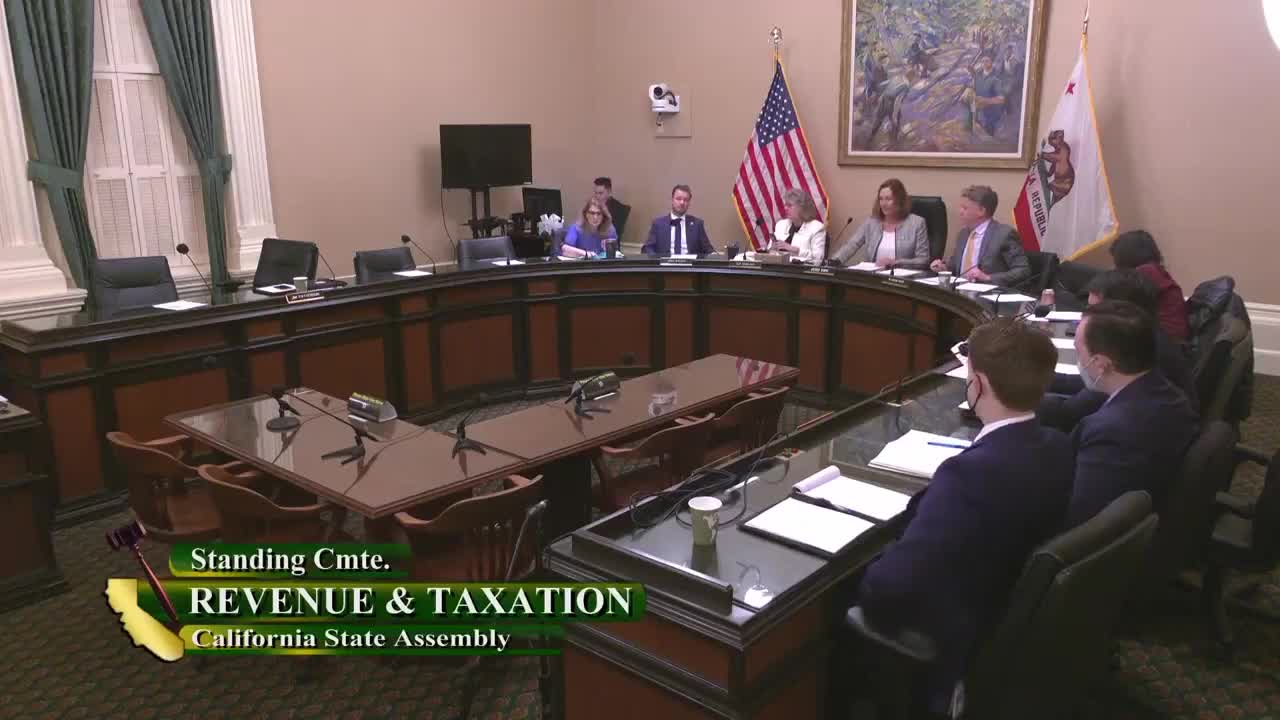
| Mar 20, 2023 | Do pass and be re-referred to the Committee on [Appropriations] | Assembly Standing Committee on Revenue and Taxation |
Passed |
This list shows positions taken on this bill by organizations on the date displayed, which is linked to the original source.
Positions by individuals are not included.
|
Organization
|
Position
|
Date
|
|---|---|---|
| agency on aging, area 4 | ** Support | |
| California Senior Legislature | ** Support | |
| California State Retirees | ** Support |
SENATE RULES COMMITTEE Office of Senate Floor Analyses (916) 651-1520 Fax: (916) 327-4478 | AB 559 |
CONSENT
Bill No: AB 559
Author: Boerner (D), et al.
Introduced: 2/8/23
Vote: 21
SENATE GOVERNANCE & FIN. COMMITTEE: 8-0, 6/7/23
AYES: Caballero, Seyarto, Blakespear, Dahle, Durazo, Glazer, Skinner, Wiener
SENATE APPROPRIATIONS COMMITTEE: Senate Rule 28.8
ASSEMBLY FLOOR: 79-0, 4/17/23 (Consent) - See last page for vote
SUBJECT: Personal income tax: California Senior Citizen Advocacy Voluntary Tax Contribution Fund
SOURCE: California Senior Legislature
DIGEST:
This bill extends the sunset date for the California Senior Citizen Advocacy Voluntary Tax Contribution Fund to 2030.
ANALYSIS:
Existing law:
- Allows taxpayers to contribute money from their own resources in excess of the amount they owe in taxes to Voluntary Contribution Funds (VCF), by checking a box on their state Personal Income Tax return.
- Establishes, individually, 20 VCFs for inclusion on the Personal Income Tax (PIT) Return.
- Establishes that when a taxpayer contributes to a VCF, the Franchise Tax Board (FTB) deposits the total of all contributions, minus its costs of administration, into a fund named for the VCF, for purposes set forth in the legislation placing the VCF on the income tax form.
- Establishes the California Senior Citizen Advocacy Voluntary Tax Contribution Fund (Fund) and authorizes an individual to designate on the tax return that a contribution in excess of the personal income tax liability, if any, be made to the fund. Establishes requirements for this process and tasks the State Controller and Franchise Tax Board with associated duties, as specified.
- Requires generally any voluntary tax contribution fund to generate at least $250,000 annually, as specified, to stay on the Personal Income Tax Return, with the exception of the following VCFs:
- California Firefighters’ Memorial Foundation Fund.
- California Peace Officer Memorial Foundation Fund.
- California Senior Citizen Advocacy Voluntary Contribution Fund.
- Provides that the California Senior Citizen Advocacy Voluntary Tax Contribution Fund and its associated provisions remain in effect until January 1, 2025.
- Appropriates, continuously, moneys from the Fund as follows:
- To the FTB and the State Controller for reimbursement of all costs incurred in managing contributions to the Fund, as specified.
- To the California Senior Legislature, for its ongoing activities on behalf of older persons. The California Senior Legislature shall use at least 10 percent of this balance for purposes of marketing and promoting the fund.
- Requires the California Senior Legislature’s Internet Web site to report the goals of the organization, the number of and summary of bills proposed by the California Senior Legislature, and all events the California Senior Citizen Advocacy Voluntary Tax Contribution Fund supports each year.
This bill extends the sunset date for the California Senior Citizen Advocacy Voluntary Tax Contribution Fund’s inclusion on the PIT from January 1, 2025, to January 1, 2030.
Background
The first iteration of a VCF supporting the California Senior Legislature was the California Fund for Senior Citizens, which appeared on the 1983 PIT return and had an annual minimum contribution requirement of $250,000 (unadjusted for inflation). The California Senior Legislature originally met the minimum contribution requirement but received declining contribution amounts from 2011 through 2014, until the California Senior Legislature became concerned it would fail to meet the minimum contribution amount for 2014. SB 997 (Morrell, Chapter 248, Statutes of 2014) temporarily exempted the VCF from the minimum contribution requirement in 2014, in exchange for indexing the Fund’s minimum contribution requirement to inflation in subsequent years. SB 997 also renamed the fund the California Senior Legislature VCF. Some believe the new name’s inclusion of the word ‘Legislature’ led to sharply declining contributions in subsequent years; the fund generated about $60,000 in 2015 and $69,000 in 2016, resulting in it becoming inoperative.
To combat this decline in contributions, AB 519 (Levine, Chapter 443, Statutes of 2018) created the California Senior Citizen Advocacy Voluntary Tax Contribution Fund (Fund) to continue to fund the California Senior Legislature under a different name until January 1, 2025. The Fund is extremely similar to past VCFs that funded the California Senior Legislature, though it differs in some details; for example, AB 519 created a new requirement that the California Senior Legislature must use at least 10% of the balance for purposes of marketing and promoting the Fund.
Despite the Legislature enacting yet another new fund with a new name, the fund received only $91,000 in 2019 and $51,000 in 2019, setting it on a course for removal from the PIT return. To keep the California Senior Citizen Advocacy Voluntary Tax Contribution Fund on the PIT form, the state enacted SB 309 (Rubio, Chapter 325, Statutes of 2019) to allow the California Senior Legislature’s VCF to remain on the PIT tax return, notwithstanding the minimum contribution amount, until January 1, 2025. From 2019 through 2021, the Fund received annual contributions of $74,468, $124,226, and $145,809, respectively.
Comments
Minimum contribution requirements ensure that only VCFs with broad public support occupy finite space on the return, and generate enough contributions to justify administrative costs. Having too many organizations on the return means that each VCF is likely to receive fewer funds. The Legislature may wish to consider maintaining VCFs without minimum contribution requirements, and whether there are any qualities separating VCFs with minimum contribution requirements from those without them.
FISCAL EFFECT: Appropriation: Yes Fiscal Com.: Yes Local: No
SUPPORT: (Verified 6/27/23)
California Senior Legislature (source)
Agency on Aging Area 4
California State Retirees
OPPOSITION: (Verified 6/27/23)
None received
ARGUMENTS IN SUPPORT: According to the author, “AB 559 would extend the sunset date from 2023 to 2030 to allow the California Senior Citizen Advocacy Voluntary Tax Contribution Fund to remain on the tax return for taxable years through 2030 providing on-going financial support to the California Senior Legislature, allowing our aging population to remain engaged and active in the legislative process.”
ASSEMBLY FLOOR: 79-0, 4/17/23
AYES: Addis, Aguiar-Curry, Alanis, Alvarez, Arambula, Bains, Bauer-Kahan, Bennett, Berman, Boerner Horvath, Bonta, Bryan, Calderon, Juan Carrillo, Wendy Carrillo, Cervantes, Chen, Connolly, Megan Dahle, Davies, Dixon, Essayli, Flora, Mike Fong, Vince Fong, Friedman, Gabriel, Gallagher, Garcia, Gipson, Grayson, Hart, Holden, Hoover, Irwin, Jackson, Jones-Sawyer, Kalra, Lackey, Lee, Low, Lowenthal, Maienschein, Mathis, McCarty, McKinnor, Muratsuchi, Stephanie Nguyen, Ortega, Pacheco, Papan, Jim Patterson, Joe Patterson, Pellerin, Petrie-Norris, Quirk-Silva, Ramos, Reyes, Luz Rivas, Robert Rivas, Rodriguez, Blanca Rubio, Sanchez, Santiago, Schiavo, Soria, Ta, Ting, Valencia, Villapudua, Waldron, Wallis, Ward, Weber, Wicks, Wilson, Wood, Zbur, Rendon
NO VOTE RECORDED: Haney
Prepared by: Kyle Krueger / GOV. & F. / (916) 651-4119
6/28/23 11:05:20
**** END ****
SENATE COMMITTEE ON GOVERNANCE AND FINANCE
Senator Anna M. Caballero, Chair
2023 - 2024 Regular
Bill No: | AB 559 | Hearing Date: | 6/7/23 |
Author: | Boerner | Tax Levy: | No |
Version: | 2/8/23 | Fiscal: | Yes |
Consultant: | Krueger | ||
Personal income tax: California Senior Citizen Advocacy Voluntary Tax Contribution Fund
Extends the sunset date for the California Senior Citizen Advocacy Voluntary Tax Contribution Fund to 2030.
Background
Voluntary Tax Contribution Funds. California allows for taxpayers to contribute money towards voluntary contribution funds (VCFs) on their personal income tax (PIT) return. Taxpayers may contribute money from their own resources in excess of the amount they owe in taxes; their contribution is only made if their payments and credits exceed the amount that they owe in taxes. Currently, taxpayers can make voluntary contributions to any number of 20 organizations directly on the income tax return. These organizations include nonprofits focused on disease, natural resource conservation, and more.
The Legislature adds each VCF individually through legislation. With a few exceptions, VCFs remain on the return until the FTB removes the VCF due to a sunset provision, or the VCF fails to meet the minimum contribution amount. In general, the minimum contribution amount is $250,000 beginning in the fund’s second year, unadjusted for inflation. However, while subject to sunset dates, the VCFs listed below do not have a minimum contribution requirement:
- California Firefighters’ Memorial Foundation Fund;
- California Peace Officer Memorial Foundation Fund; and
- California Senior Citizen Advocacy Voluntary Tax Contribution Fund.
When a taxpayer contributes to a VCF, FTB deposits the total of all contributions, minus its costs of administration, into a fund named for the VCF. Most VCF funds are administered by state agencies to fund purposes set forth in the legislation placing the VCF on the income tax form. For example, the University of California system uses taxpayer contributions from the California Breast Cancer Research VCF to fund the California Breast Cancer Program, which awards funds for breast cancer research and education. Other VCFs direct a state agency to pass through taxpayer contributions directly to a private organization. For example, the California Highway Patrol disburses proceeds from the National Alliance on Mental Illness California VCF directly to the National Alliance on Mental Illness California to fund the Crisis Intervention Team program. For other VCFs, the State Controller’s office allocates taxpayers contributions directly to the private organization, without going through an administrative agency. For example, the State Controller’s office passes the taxpayer’s contributions to the California Fire Foundation.
There are currently 20 VCFs listed on the tax return, and for the past five years they have collectively received roughly six million or more dollars each year in contributions.
Senate Bill 1476. In December 2015, the Committee held an oversight hearing on VCFs. The Committee identified best practices and reforms needed to ensure the state allocates taxpayer contributions toward charitable purposes in both a transparent and timely fashion. In 2016, the Legislature enacted SB 1476 (Committee on Governance and Finance), which used those best practices to establish general provisions for all VCFs enacted on, or extended after, January 2, 2017. Specifically, the bill:
- Lengthened the current standard sunset provision from five to seven years;
- Required the administering agency to post online the process and the administrative costs of awarding the money;
- Provided that funds shall be continuously appropriated to the administering agency; and
- Required “voluntary tax contribution” to be in the name of the fund.
California Senior Legislature. The California Senior Legislature was established in 1980 to facilitate the involvement of older adults in government and advocate for senior citizens. There are two houses of the CSL, including 40 Senior Senators and 80 Senior Assemblymembers, who serve four-year terms in all 33 Area Agencies on Aging. These members meet annually in mock legislative sessions to prioritize and sponsor legislation at the state and federal level. As of 2019, the CSL was responsible for generating over 200 legislative proposals on topics including Alzheimer’s disease and treatment, as well as long-term care.
History of the Senior Legislature VCF. The first iteration of a VCF supporting the California Senior Legislature was the California Fund for Senior Citizens, which appeared on the 1983 PIT return and had an annual minimum contribution requirement of $250,000 (unadjusted for inflation). The California Senior Legislature originally met the minimum contribution requirement but received declining contribution amounts from 2011 through 2014, until the California Senior Legislature became concerned it would fail to meet the minimum contribution amount for 2014. SB 997 (Morrell, 2014) temporarily exempted the VCF from the minimum contribution requirement in 2014, in exchange for indexing the Fund’s minimum contribution requirement to inflation in subsequent years. SB 997 also renamed the fund the California Senior Legislature VCF. Some believe the new name’s inclusion of the word ‘Legislature’ led to sharply declining contributions in subsequent years; the fund generated about $60,000 in 2015 and $69,000 in 2016, resulting in it becoming inoperative.
To combat this decline in contributions, AB 519 (Levine, 2018) created the California Senior Citizen Advocacy Voluntary Tax Contribution Fund (Fund) to continue to fund the California Senior Legislature under a different name until January 1, 2025. Under AB 519, individuals may designate on the tax return that a contribution in excess of their tax liability be made to the Fund. After a notification from the Franchise Tax Board, the Controller transfers money from the Personal Income Tax Fund to the California Senior Citizen Advocacy Voluntary Tax Fund that is not in excess of the sum of what individuals designated for payment into fund. The monies are then continuously appropriated, first to the Controller and Franchise Tax Board for reimbursement of all costs incurred in administering the fund, and then to the California Senior Legislature for ongoing activities on behalf of older persons. The Fund is extremely similar to past VCFs that funded the California Senior Legislature, though it differs in some details; for example, AB 519 created a new requirement that the California Senior Legislature must use at least 10% of the balance for purposes of marketing and promoting the Fund.
Despite the Legislature enacting yet another new fund with a new name, the fund received only $91,000 in 2019 and $51,000 in 2019, setting it on a course for removal from the PIT return. To keep the California Senior Citizen Advocacy Voluntary Tax Contribution Fund on the PIT form, the State enacted SB 309 (Rubio, 2019) to allow the California Senior Legislature’s VCF to remain on the PIT tax return, notwithstanding the minimum contribution amount, until January 1, 2025.
From 2019 through 2021, the Fund received annual contributions of $74,468, $124,226, and $145,809, respectively. The author wants to extend the current January 1, 2025, sunset date to January 1, 2030, to keep the California Senor Legislature’s VCF on the PIT return even if it fails to meet the required $250,000 contribution amount.
Proposed Law
Assembly Bill 559 extends the sunset date for the California Senior Citizen Advocacy Voluntary Tax Contribution Fund’s inclusion on the PIT from January 1, 2025 to January 1, 2030. It would continue to exempt the Fund from the minimum contribution threshold of $250,000 that applies to most VCFs.
State Revenue Impact
According to the FTB, the estimated revenue losses are minor.
Comments
1. Purpose of the bill. According to the author, “AB 559 would extend the sunset date from 2023 to 2030 to allow the California Senior Citizen Advocacy Voluntary Tax Contribution Fund to remain on the tax return for taxable years through 2030 providing on-going financial support to the California Senior Legislature, allowing our aging population to remain engaged and active in the legislative process.”
2. Tradeoffs. Minimum contribution requirements ensure that only VCFs with broad public support occupy finite space on the return, and generate enough contributions to justify administrative costs. Having too many organizations on the return means that each VCF is likely to receive fewer funds. The Committee may wish to consider maintaining VCFs without minimum contribution requirements, and whether there are any qualities separating VCFs with minimum contribution requirements from those without them.
Assembly Actions
Assembly Revenue & Taxation Committee: 11-0
Assembly Appropriations Committee: 14-0
Assembly Floor: 79-0
Support and Opposition (6/2/23)
Support:
California Senior Legislature
California State Retirees
Opposition: None submitted
-- END --
Date of Hearing: March 29, 2023
ASSEMBLY COMMITTEE ON APPROPRIATIONS
Chris Holden, Chair
ABPCA Bill Id:AB 559
Author:(Boerner Horvath) – As Introduced Ver:February 8, 2023
Policy Committee: | Revenue and Taxation | Vote: | 11 - 0 |
|
| ||
|
|
Urgency: No State Mandated Local Program: No Reimbursable: No
SUMMARY:
This bill requires, for seven more years through taxable year 2030, the Franchise Tax Board (FTB) to revise the Personal Income Tax (PIT) return form to include a space for the California Senior Citizen Advocacy Voluntary Tax Contribution Fund (Fund).
FISCAL EFFECT:
- Beginning fiscal year 2026-27, annual General Fund revenue loss of less than $5,000. FTB generally assumes $5,000 in revenue loss for every $250,000 in Fund contributions. However, over the past three years, the Fund has not reached that contribution level ($74,468 in 2019, $124,226 in 2020, and $145,809 in 2021).
- Minor and absorbable costs to FTB to continue to administer the Fund.
COMMENTS:
- Purpose. According to the author, extending the sunset date from 2023 to 2030 for the Fund to remain on the tax return will provide ongoing financial support for the California Senior Legislature (CSL) and help California’s aging population remain engaged and active in the legislative process. This bill is supported by the CSL and California State Retirees.
- CSL. Established in state statute, 40 Senior Senators and 80 Senior Assemblymembers comprise the CSL and meet annually for a four-day model legislative session at the State Capitol, where the Senior Members vote on and prioritize legislation to sponsor. The CSL has been supported through a voluntary contribution fund (VCF) on the PIT return in some fashion since 1983.
- VCFs. Existing law allows a taxpayer to donate an amount in excess of their PIT liability to one or more VCFs listed on the PIT return (22 VCFs listed on the 2022 return). The Fund supporting the CSL is one of four VCFs not required to meet an annual minimum contribution amount to remain on the next return. However, the Fund is subject to a seven year sunset date. This bill extends the Fund’s position on the PIT return from taxable year 2023 through 2030.
Analysis Prepared by: Irene Ho / APPR. / (916) 319-2081
Date of Hearing: March 20, 2023
ASSEMBLY COMMITTEE ON REVENUE AND TAXATION
Jacqui Irwin, Chair
ABPCA Bill Id:AB 559 (
Author:Boerner Horvath) – As Introduced Ver:February 8, 2023
Majority vote. Fiscal committee.
SUBJECT: Personal income tax: California Senior Citizen Advocacy Voluntary Tax Contribution Fund
SUMMARY: Extends the California Senior Citizen Advocacy Voluntary Tax Contribution Fund (Fund) through taxable year 2030. Specifically, this bill:
- Requires the Franchise Tax Board (FTB) to revise the personal income tax (PIT) return for taxable years through 2030 to include a space for the Fund to appear as a voluntary contribution fund (VCF).
- Extends, by seven years, the date on which the Fund's statutory provisions are set to become inoperative.
EXISTING LAW:
- Allows taxpayers to contribute to one or more of 20 VCFs on the 2022 PIT return.
- Provides a specific sunset date for each VCF, except for the California Seniors Special Fund and the State Parks Protection Fund.
- Requires each VCF to meet an annual minimum contribution amount to remain in effect, except for the Fund, the California Firefighters' Memorial Voluntary Tax Contribution Fund, the California Peace Officer Memorial Foundation Voluntary Tax Contribution Fund, and the California Seniors Special Fund.
FISCAL EFFECT: FTB estimates annual revenue losses of less than $5,000.
COMMENTS:
- The author has provided the following statement in support of this bill:
AB 559 would extend the sunset date from 2023 to 2030 to allow the California Senior Citizen Advocacy Voluntary Tax Contribution Fund to remain on the tax return for taxable years through 2030 providing on-going financial support to the California Senior Legislature, allowing our aging population to remain engaged and active in the legislative process.
- This bill is supported by the California Senior Legislature, which notes:
The California Senior Legislature (CSL) was founded through the efforts of former State Senator Henry J Mello, who in 1980 led a popular effort through ACR 129 calling the initial session of the "Silver-Haired Legislature", a forum used by California Seniors to develop legislative priorities to present to State Legislative Members. For 43 years, the CSL has advocated successfully for California seniors, and because of their efforts, millions of seniors are living better lives. For over four decades, the CSL has helped our State's Seniors have a stronger voice in determining their future, and the CSL has had over 200 bills impacting seniors signed into law by the Governor of California.
The CSL has relied upon the Voluntary Contribution Program as its primary source of operating revenue for the advocacy efforts of the organization. In 2018, the CSL developed a Financing Plan as requested by the Assembly Budget Subcommittee #1. The plan called for a bifurcated approach using both General and Voluntary Contribution funding. Administrative support costs (salary/benefits, office supplies/equipment and expenses) of the CSL are funded from the General Fund. The advocacy efforts (annual session and walk the halls) of the CSL are funded from the Voluntary Contribution Fund (VCF).
- Committee Staff Comments
- The California Senior Legislature: The California Senior Legislature allows seniors to take an active role in government. Members meet annually to prioritize and sponsor legislation at the state and federal level. The California Senior Legislature was established in 1980 through legislation by Senator Henry Mello. The 40 Senior Senators and 80 Senior Assemblymembers meet annually for a four-day model legislative session at the State Capitol, where proposals are voted on and prioritized.
- The California Senior Legislature's first VCF: The California Senior Legislature was originally supported by the California Fund for Senior Citizens which, the FTB notes, first appeared on the 1983 PIT return. From 2010 to 2013, the California Fund for Senior Citizens received the following contribution amounts:
- The California Senior Legislature: The California Senior Legislature allows seniors to take an active role in government. Members meet annually to prioritize and sponsor legislation at the state and federal level. The California Senior Legislature was established in 1980 through legislation by Senator Henry Mello. The 40 Senior Senators and 80 Senior Assemblymembers meet annually for a four-day model legislative session at the State Capitol, where proposals are voted on and prioritized.
2010 | 2011 | 2012 | 2013 |
$296,144 | $308,763 | $272,742 | $234,247 |
The California Fund for Senior Citizens' minimum contribution amount was set at $250,000 and, unlike most other VCF thresholds at the time, was not annually adjusted for inflation. While the California Fund for Senior Citizens received only $234,247 in valid contributions in 2013, the VCF was still placed on the 2013 PIT return because, by September 1, 2013, the FTB estimated (incorrectly, it turns out) that the California Fund for Senior Citizens would meet its minimum contribution amount for the year.
- What happened in 2014? In 2014, contributions to the California Fund for Senior Citizens lagged slightly behind contributions in the prior year. The California Senior Legislature grew concerned that the California Fund for Senior Citizens would not meet its minimum contribution amount in 2014, thereby jeopardizing the VCF's place on the 2014 PIT return.
- What happened in 2014? In 2014, contributions to the California Fund for Senior Citizens lagged slightly behind contributions in the prior year. The California Senior Legislature grew concerned that the California Fund for Senior Citizens would not meet its minimum contribution amount in 2014, thereby jeopardizing the VCF's place on the 2014 PIT return.
Thus, the California Senior Legislature advocated for the enactment of SB 997 (Morrell), Chapter 248, Statutes of 2014, which sunset the California Fund for Senior Citizens and effectively replaced it with a newly named VCF – the California Senior Legislature Fund. SB 997 was designed to serve two main purposes. First, SB 997 ensured that a VCF supporting the work of the California Senior Legislature was included on the 2014 PIT return, thus allowing the California Senior Legislature to continue its work. In exchange for this temporary reprieve from a minimum contribution requirement, the California Senior Legislature agreed to index the new California Senior Legislature Fund's minimum contribution requirement for inflation in subsequent years. Second, SB 997 included the California Senior Legislature's name in the newly enacted VCF to make promotion of the fund easier and to avoid taxpayer confusion with the California Seniors Special Fund.
- Best laid plans: The re-named California Senior Legislature Fund did not generate significant support following its creation. In 2015, the fund generated only $60,137 in valid contributions. Moreover, in 2016, the fund only generated $68,950. The California Senior Legislature speculates that this decrease in historic contribution levels was associated with the addition of the word "Legislature" in the fund's name. Thus, they advocated for a new bill, which added a third VCF to the form highlighting the California Senior Legislature's advocacy work.
Specifically, AB 519 (Levine), Chapter 443, Statutes of 2017, authorized the addition of the current Fund for taxable years 2017 to 2023. In addition, AB 519 required the Fund to meet a minimum contribution amount of $250,000. In 2018, however, the Fund received only $91,625 in valid contributions. By April 2019, the Fund had only received $51,450. Thus, without legislative intervention, the Fund was set to be eliminated from the 2019 PIT return filed in 2020 for failing to meet its minimum contribution amount.
As a result, SB 309 (Rubio), Chapter 325, Statutes of 2019, was introduced to allow the California Senior Legislature's third and current VCF to remain on the PIT return without a minimum contribution amount.
- What would this bill do? This bill would, very simply, extend the Fund's appearance on the PIT return through taxable year 2030.
REGISTERED SUPPORT / OPPOSITION:
Support
California Senior Legislature
One individual
Opposition
None on file
Analysis Prepared by: M. David Ruff / REV. & TAX. / (916) 319-2098
Discussed in Hearing
 5MIN
Assembly Standing Committee on Revenue and Taxation
Bill Author