AB 773: Elections: filings.
- Session Year: 2023-2024
- House: Assembly
- Latest Version Date: 2023-10-10
Current Status:
Passed
(2023-10-10: Chaptered by Secretary of State - Chapter 664, Statutes of 2023.)
Introduced
In Committee
First Chamber
In Committee
Second Chamber
Enacted
Existing law establishes procedures for authors to submit arguments for and against local ballot measures, and rebuttals to those arguments, in accordance with deadlines set by local elections officials. Existing law requires elections officials to select arguments from those submitted for publication in the voter information guide.
This bill would establish a lead county, as defined, for the purposes of district or school district elections when the boundaries of the district or school district encompass more than one county. The bill would require authors of arguments for or against district or school district measures, and related rebuttal arguments, to submit the arguments to the elections official of the lead county. The bill would require the elections official of the lead county to work with the other counties within the district bounds to establish deadlines for receipt of the arguments. The bill would require the elections official of the lead county to select the arguments for publication in the county voter information guide, and to transmit copies of the selected arguments to elections officials in the other counties within the district or school district, as specified. The bill would require an elections official who receives arguments selected by the lead county to include the arguments in their county voter information guide.
Existing law permits an elections official to post a form on their internet website for a candidate to use to submit the candidates statement for the voter information portion of the county voter information guide. If the elections official posts the form, existing law requires the elections official to accept that form by electronic submission if it is submitted in accordance with certain timeframes and procedures for the preparation of the voter information portion of the county voter information guide. Existing law requires a candidate running in a multicounty district to provide to each county a hardcopy of the candidate statement form from the candidates county of residence and payment of the requisite fee.
This bill would require elections officials to post and accept electronic submission of a form for candidates to submit a candidate statement for the voter information portion of the county voter information guide. The bill would authorize a candidate running in a multicounty district to submit to each county an electronic copy of the form from the candidates county of residence, and would require the candidate to transmit hardcopies of the candidate statement form, any accompanying form, and payment of the requisite fee to each county by overnight mail within 72 hours of filing the statement electronically.
By increasing the duties of local elections officials, this bill would impose a state-mandated local program.
The California Constitution requires the state to reimburse local agencies and school districts for certain costs mandated by the state. Statutory provisions establish procedures for making that reimbursement.
This bill would provide that, if the Commission on State Mandates determines that the bill contains costs mandated by the state, reimbursement for those costs shall be made pursuant to the statutory provisions noted above.
This bill would declare that it is to take effect immediately as an urgency statute.
Existing law establishes procedures for authors to submit arguments for and against local ballot measures, and rebuttals to those arguments, in accordance with deadlines set by local elections officials. Existing law requires elections officials to select arguments from those submitted for publication in the voter information guide.
This bill would establish a lead county, as defined, for the purposes of district or school district elections when the boundaries of the district or school district encompass more than one county. The bill would require authors of arguments for or against district or school district measures, and related rebuttal arguments, to submit the arguments to the elections official of the lead county. The bill would require the elections official of the lead county to work with the other counties within the district bounds to establish deadlines for receipt of the arguments. The bill would require the elections official of the lead county to select the arguments for publication in the county voter information guide, and to transmit copies of the selected arguments to elections officials in the other counties within the district or school district, as specified. The bill would require an elections official who receives arguments selected by the lead county to include the arguments in their county voter information guide.
Existing law permits an elections official to post a form on their internet website for a candidate to use to submit the candidates statement for the voter information portion of the county voter information guide. If the elections official posts the form, existing law requires the elections official to accept that form by electronic submission if it is submitted in accordance with certain timeframes and procedures for the preparation of the voter information portion of the county voter information guide. Existing law requires a candidate running in a multicounty district to provide to each county a hard copy of the candidate statement form from the candidates county of residence and payment of the requisite fee.
This bill would require elections officials to post and accept electronic submission of a form for candidates to submit a candidate statement for the voter information portion of the county voter information guide. The bill would authorize a candidate running in a multicounty district to submit to each county an electronic copy of the form from the candidates county of residence, and would require the candidate to transmit hard copies of the candidate statement form, any accompanying form, and payment of the requisite fee to each county by overnight mail within 72 hours of filing the statement electronically.
By increasing the duties of local elections officials, this bill would impose a state-mandated local program.
The California Constitution requires the state to reimburse local agencies and school districts for certain costs mandated by the state. Statutory provisions establish procedures for making that reimbursement.
This bill would provide that, if the Commission on State Mandates determines that the bill contains costs mandated by the state, reimbursement for those costs shall be made pursuant to the statutory provisions noted above.
This bill would declare that it is to take effect immediately as an urgency statute.
Existing law establishes procedures for authors to submit arguments for and against local ballot measures, and rebuttals to those arguments, in accordance with deadlines set by local elections officials. Existing law requires elections officials to select arguments from those submitted for publication in the voter information guide.
This bill would establish a lead county, as defined, for the purposes of district or school district elections when the boundaries of the district or school district encompass more than one county. The bill would require authors of arguments for or against district or school district measures, and related rebuttal arguments, to submit the arguments to the elections official of the lead county. The bill would require the elections official of the lead county to set work with the other counties within the district bounds to establish deadlines for receipt of the arguments, no later than 81 days before election day for arguments for or against and no later than 74 days before election day for rebuttal arguments. arguments. The bill would require the elections official of the lead county to select the arguments for publication in the county voter information guide, and to transmit copies of the selected arguments to elections officials in the other counties within the district or school district, as specified. The bill would require an elections official who receives arguments selected by the lead county to include the arguments in their county voter information guide.
Existing law permits an elections official to post a form on their internet website for a candidate to use to submit the candidates statement for the voter information portion of the county voter information guide. If the elections official posts the form, existing law requires the elections official to accept that form by electronic submission if it is submitted in accordance with certain timeframes and procedures for the preparation of the voter information portion of the county voter information guide. Existing law requires a candidate running in a multicounty district to provide to each county a hard copy of the candidate statement form from the candidates county of residence and payment of the requisite fee.
This bill would require elections officials to post and accept electronic submission of a form for candidates to submit a candidate statement for the voter information portion of the county voter information guide. The bill would authorize a candidate running in a multicounty district to submit to each county an electronic copy of the form from the candidates county of residence, and would require the candidate to transmit hard copies of the candidate statement form, any accompanying form, and payment of the requisite fee to each county by overnight mail within 72 hours of filing the statement electronically.
By increasing the duties of local elections officials, this bill would impose a state-mandated local program.
The California Constitution requires the state to reimburse local agencies and school districts for certain costs mandated by the state. Statutory provisions establish procedures for making that reimbursement.
This bill would provide that, if the Commission on State Mandates determines that the bill contains costs mandated by the state, reimbursement for those costs shall be made pursuant to the statutory provisions noted above.
Existing law establishes procedures for authors to submit arguments for and against local ballot measures, and rebuttals to those arguments, in accordance with deadlines set by local elections officials. Existing law requires elections officials to select arguments from those submitted for publication in the voter information guide.
This bill would establish a lead county, as defined, for the purposes of district or school district elections when the boundaries of the district or school district encompass more than one county. The bill would require authors of arguments for or against district or school district measures, and related rebuttal arguments, to submit the arguments to the elections official of the lead county. The bill would require the elections official of the lead county to set deadlines for receipt of the arguments, no later than 81 days before election day for arguments for or against and no later than 74 days before election day for rebuttal arguments. The bill would require the elections official of the lead county to select the arguments for publication in the county voter information guide, and to transmit copies of the selected arguments to elections officials in the other counties within the district or school district, as specified. The bill would require an elections official who receives arguments selected by the lead county to include the arguments in their county voter information guide.
Existing law permits an elections official to post a form on their internet website for a candidate to use to submit the candidates statement for the voter information portion of the county voter information guide. If the elections official posts the form, existing law requires the elections official to accept that form by electronic submission if it is submitted in accordance with certain timeframes and procedures for the preparation of the voter information portion of the county voter information guide. Existing law requires a candidate running in a multicounty district to provide to each county a hard copy of the candidate statement form from the candidates county of residence and payment of the requisite fee.
This bill would require elections officials to post and accept electronic submission of a form for candidates to submit a candidate statement for the voter information portion of the county voter information guide. The bill would authorize a candidate running in a multicounty district to submit to each county an electronic copy of the form from the candidates county of residence, and would require the candidate to transmit hard copies of the candidate statement form, any accompanying form, and payment of the requisite fee to each county by overnight mail within 72 hours of filing the statement electronically.
By increasing the duties of local elections officials, this bill would impose a state-mandated local program.
The California Constitution requires the state to reimburse local agencies and school districts for certain costs mandated by the state. Statutory provisions establish procedures for making that reimbursement.
This bill would provide that, if the Commission on State Mandates determines that the bill contains costs mandated by the state, reimbursement for those costs shall be made pursuant to the statutory provisions noted above.
(a)This section applies to district elections conducted in accordance with Chapter 4 (commencing with Section 9300) or school district elections conducted in accordance with Chapter 6 (commencing with Section 9500), if the boundaries of the district or school district contain more than one county. The provisions of this section prevail over any provision in those chapters to the extent they conflict.
(b)For the purposes of this section, lead county has the following meanings:
(1)For district elections, lead county means the county with the most voters within the district bounds.
(2)For school district elections, lead county means the county whose superintendent of schools covers the district.
(c)The elections official for the lead county shall work with the other counties within the district bounds to establish the deadlines for the submittal of arguments for and against a district or school district measure and rebuttal arguments.
(d)Authors shall submit arguments only to the lead county, who shall select which arguments will be printed in the voter information guide in accordance with Chapter 4 (commencing with Section 9300) or Chapter 6 (commencing with Section 9500), as applicable. The elections official for the lead county shall electronically transmit a scanned copy of the selected arguments, along with any accompanying forms, to the elections official of each other county in the district or school district. An elections official who receives arguments selected by the lead county shall include the arguments in the printed and electronic versions of their county voter information guide.
SEC. 2.Section 13307.7 of the Elections Code is amended to read:13307.7.(a)An elections official shall post the form to be used by a candidate to submit a candidate statement pursuant to Section 13307, Section 13307.5, or subdivision (c) of Section 85601 of the Government Code, on the elections officials internet website, and shall accept the electronic submission of that form if it is submitted in accordance with the times and procedures set forth in this code for the preparation of the voter information portion of the county voter information guide. If the candidate is running in a multicounty district, the elections official of each county shall accept the electronic submission of the form from the candidates county of residence; however, the candidate shall transmit a hard copy of the candidate statement form, any accompanying form, and payment of the requisite fee to each county by overnight mail within 72 hours of filing the statement electronically. The elections official shall not require the candidate to submit any additional forms as a means of correcting internet website posting errors made by the elections official.
(b)Notwithstanding subdivision (a), an elections official may require a candidate to provide additional information that the official needs to comply with state law and county voter information guide requirements.
SEC. 3.If the Commission on State Mandates determines that this act contains costs mandated by the state, reimbursement to local agencies and school districts for those costs shall be made pursuant to Part 7 (commencing with Section 17500) of Division 4 of Title 2 of the Government Code.
SEC. 4.This act is an urgency statute necessary for the immediate preservation of the public peace, health, or safety within the meaning of Article IV of the California Constitution and shall go into immediate effect. The facts constituting the necessity are:
In order for the provisions of this act to be implemented in time to apply to 2023 candidate filing deadlines, it is necessary for this act to take effect immediately.
(a)This section applies to district elections conducted in accordance with Chapter 4 (commencing with Section 9300) or school district elections conducted in accordance with Chapter 6 (commencing with Section 9500), if the boundaries of the district or school district contain more than one county. The provisions of this section prevail over any provision in those chapters to the extent they conflict.
(b)For this the purposes of this section, lead county has the following meanings:
(1)For district elections, lead county means the county with the most voters within the district bounds.
(2)For school district elections, lead county means the county whose superintendent of schools covers the district.
(c)The elections official for the lead county shall set work with the other counties within the district bounds to establish the deadlines for the submittal of arguments for and against a district or school district measure and rebuttal arguments. The deadlines shall be no later than 81 days before election day for arguments for or against and no later than 74 days before election day for rebuttal arguments.
(d)Authors shall submit arguments only to the lead county, who shall select which arguments will be printed in the voter information guide in accordance with Chapter 4 (commencing with Section 9300) or Chapter 6 (commencing with Section 9500), as applicable. The elections official for the lead county shall electronically transmit a scanned copy of the selected arguments, along with any accompanying forms, to the elections official of each other county in the district or school district. An elections official who receives arguments selected by the lead county shall include the arguments in the printed and electronic versions of their county voter information guide.
SEC. 2.Section 13307.7 of the Elections Code is amended to read:13307.7.(a)An elections official shall post the form to be used by a candidate to submit a candidate statement pursuant to Section 13307, Section 13307.5, or subdivision (c) of Section 85601 of the Government Code, on the elections officials internet website, and shall accept the electronic submission of that form if it is submitted in accordance with the times and procedures set forth in this code for the preparation of the voter information portion of the county voter information guide. If the candidate is running in a multicounty district, the elections official of each county shall accept the electronic submission of the form from the candidates county of residence; however, the candidate shall transmit a hard copy of the candidate statement form, any accompanying form, and payment of the requisite fee to each county by overnight mail within 72 hours of filing the statement electronically. The elections official shall not require the candidate to submit any additional forms as a means of correcting internet website posting errors made by the elections official.
(b)Notwithstanding subdivision (a), an elections official may require a candidate to provide additional information that the official needs to comply with state law and county voter information guide requirements.
SEC. 3.If the Commission on State Mandates determines that this act contains costs mandated by the state, reimbursement to local agencies and school districts for those costs shall be made pursuant to Part 7 (commencing with Section 17500) of Division 4 of Title 2 of the Government Code.
(a)This section applies to district elections conducted in accordance with Chapter 4 (commencing with Section 9300) or school district elections conducted in accordance with Chapter 6 (commencing with Section 9500), if the boundaries of the district or school district contain more than one county. The provisions of this section prevail over any provision in those chapters to the extent they conflict.
(b)For this purposes of this section, lead county has the following meanings:
(1)For district elections, lead county means the county with the most voters within the district bounds.
(2)For school district elections, lead county means the county whose superintendent of schools covers the district.
(c)The elections official for the lead county shall set the deadlines for the submittal of arguments for and against a district or school district measure and rebuttal arguments. The deadlines shall be no later than 81 days before election day for arguments for or against and no later than 74 days before election day for rebuttal arguments.
(d)Authors shall submit arguments only to the lead county, who shall select which arguments will be printed in the voter information guide in accordance with Chapter 4 (commencing with Section 9300) or Chapter 6 (commencing with Section 9500), as applicable. The elections official for the lead county shall electronically transmit a scanned copy of the selected arguments, along with any accompanying forms, to the elections official of each other county in the district or school district. An elections official who receives arguments selected by the lead county shall include the arguments in the printed and electronic versions of their county voter information guide.
SEC. 2.Section 13307.7 of the Elections Code is amended to read:13307.7.(a)If the An elections official posts shall post the form to be used by a candidate to submit a candidate statement pursuant to Section 13307, Section 13307.5, or subdivision (c) of Section 85601 of the Government Code, on the elections officials Internet Web site, the elections official internet website, and shall accept the electronic submission of that form if it is submitted in accordance with the times and procedures set forth in this code for the preparation of the voter information portion of the county voter information guide. If the candidate is running in a multicounty district, the elections official of each county shall accept the electronic submission of the form from the candidates county of residence; however, the candidate shall provide transmit a hard copy of the candidate statement form form, any accompanying form, and payment of the requisite fee to each county. county by overnight mail within 72 hours of filing the statement electronically. The elections official shall not require the candidate to submit any additional forms as a means of correcting Internet Web site internet website posting errors made by the elections official.
(b)Notwithstanding subdivision (a), an elections official may require a candidate to provide additional information that the official needs to comply with state law and county voter information guide requirements.
SEC. 3.If the Commission on State Mandates determines that this act contains costs mandated by the state, reimbursement to local agencies and school districts for those costs shall be made pursuant to Part 7 (commencing with Section 17500) of Division 4 of Title 2 of the Government Code.
REVISIONS: HeadingLine 2.|
Date
|
Status
|
|---|---|
| Oct 10, 2023 | Chaptered by Secretary of State - Chapter 664, Statutes of 2023. |
| Oct 10, 2023 | Approved by the Governor. |
| Sep 14, 2023 | Enrolled and presented to the Governor at 4:30 p.m. |
| Sep 7, 2023 | Urgency clause adopted. Senate amendments concurred in. To Engrossing and Enrolling. (Ayes 76. Noes 0. Page 3022.). |
| Sep 5, 2023 | In Assembly. Concurrence in Senate amendments pending. May be considered on or after September 7 pursuant to Assembly Rule 77. |
| Sep 5, 2023 | Read third time. Urgency clause adopted. Passed. Ordered to the Assembly. (Ayes 38. Noes 0. Page 2373.). |
| Aug 22, 2023 | Read second time. Ordered to third reading. |
| Aug 21, 2023 | Read third time and amended. Ordered to second reading. |
| Jun 27, 2023 | Read second time. Ordered to third reading. |
| Jun 26, 2023 | From committee: Be ordered to second reading pursuant to Senate Rule 28.8. |
| Jun 6, 2023 | From committee: Do pass and re-refer to Com. on APPR. (Ayes 7. Noes 0.) (June 6). Re-referred to Com. on APPR. |
| May 24, 2023 | From committee chair, with author's amendments: Amend, and re-refer to committee. Read second time, amended, and re-referred to Com. on E. & C.A. |
| May 17, 2023 | Referred to Com. on E. & C.A. |
| May 9, 2023 | In Senate. Read first time. To Com. on RLS. for assignment. |
| May 8, 2023 | Read third time. Passed. Ordered to the Senate. (Ayes 70. Noes 0. Page 1485.) |
| Apr 27, 2023 | Read second time. Ordered to third reading. |
| Apr 26, 2023 | From committee: Do pass. (Ayes 14. Noes 1.) (April 26). |
| Mar 29, 2023 | From committee: Do pass and re-refer to Com. on APPR. (Ayes 8. Noes 0.) (March 29). Re-referred to Com. on APPR. |
| Mar 29, 2023 | Coauthors revised. |
| Feb 23, 2023 | Referred to Com. on ELECTIONS. |
| Feb 14, 2023 | From printer. May be heard in committee March 16. |
| Feb 13, 2023 | Read first time. To print. |
|
Date
|
Description
|
Location
|
Votes
|
|
|---|---|---|---|---|
| Sep 7, 2023 | AB 773 Pellerin Concurrence - Urgency Added | Assembly Floor |
Passed |
|
| Sep 5, 2023 | Assembly 3rd Reading AB773 Pellerin et al. By Limón Urgency Clause | Senate Floor |
Passed |
|
| Jun 6, 2023 | Do pass, but first be re-referred to the Committee on [Appropriations] | Senate Standing Committee on Elections and Constitutional Amendments |
Passed |
|
| May 8, 2023 | AB 773 Pellerin Assembly Third Reading | Assembly Floor |
Passed |
|
| Apr 26, 2023 | Do pass. | Assembly Standing Committee on Appropriations |
Passed |
|
| Mar 29, 2023 | Do pass and be re-referred to the Committee on [Appropriations] | Assembly Standing Committee on Elections |
Passed |
This list shows positions taken on this bill by organizations on the date displayed, which is linked to the original source.
Positions by individuals are not included.
|
Organization
|
Position
|
Date
|
|---|---|---|
| Alameda County | * Support | Mar 29, 2023 |
| Election Integrity team of Alameda County | * Support | Mar 29, 2023 |
| San Joaquin County | * Support | Mar 29, 2023 |
| Sutter County | * Support | Mar 29, 2023 |
CONCURRENCE IN SENATE AMENDMENTS
CSA1 Bill Id:AB 773
Author:(Pellerin)
As Amended Ver:August 21, 2023
2/3 vote. Urgency.
SUMMARY
Requires all arguments and rebuttals related to a ballot measure in a district or school district that encompasses more than one county to be submitted to a "lead county," as specified. Requires a county elections official to post and accept an electronic submission of a form to be used by a candidate to submit a candidate statement for inclusion in the voter information guide. Allows a candidate running in a multicounty district to submit a hard copy of their candidate statement form by mail, instead of in person, as specified.
Senate Amendments
- Delete provisions of the bill that specify when ballot measure arguments and rebuttals are required to be submitted to the lead county, and instead require the elections official for the lead county to work with the other counties within the district to establish deadlines for receipt of arguments.
- Add an urgency clause, allowing this bill to take effect immediately upon enactment. Provide that the urgency clause is necessary in order for the provisions of this bill to be implemented in time to apply to the 2023 candidate filing deadlines.
COMMENTS
Existing law requires a local district or school district to determine a reasonable date before the election for the submission of arguments in favor of and against a local district or school district ballot measure. These filing deadlines can vary from jurisdiction to jurisdiction. For multicounty ballot measures this can cause confusion for ballot measure proponents and opponents and result in missed deadlines. According to the author, establishing a lead county will help address this concern by streamlining the election filing process and ensuring consistent filing deadlines when a district boundary encompasses more than one county. There are instances, however, where having a lead county may be administratively challenging. For example, counties may have different filing deadlines due to various factors, including translation requirements and vendor printing deadlines. In these instances having a lead county may add more complexity. Furthermore, under current law, proponents and opponents of multicounty ballot measures may submit different ballot arguments and rebuttals to different jurisdictions. This bill removes that option.
Candidates who are running in districts that include multiple counties must work individually with each county if they want their candidate statement to appear in the voter information guide in every county in the district. (A candidate in a multi-county district can choose to submit a candidate statement only in certain counties in the district.)
In an effort to provide greater ease in the candidate filing process for candidates that file in multiple counties, AB 666 (Aguiar-Curry), Chapter 160, Statutes of 2018, requires a county elections official, if they post a form on the Internet that candidates may use to submit their candidate statement, to accept that form if it is submitted in accordance with timelines and procedures in state law. Additionally, AB 666 requires an elections official to accept an electronic candidate statement form from a candidate's county of residence for candidates who are running in multicounty districts. However, under existing law a candidate is still required to provide a hard copy of the candidate statement form and pay the required fee to each county in-person.
The Senate amendments delete provisions of the bill that specify when ballot measure arguments and rebuttals are required to be submitted to the lead county, and instead require an elections official for the lead county to work with the other counties within the district to establish deadlines for receipt of arguments. Additionally, Senate amendments add an urgency clause allowing this bill to take effect immediately upon enactment. This bill, as amended in the Senate, is generally consistent with prior Assembly actions.
According to the Author
"Multicounty Senate and Assembly Districts can encompass as many as 13 counties and often cover vast expanses of geographic terrain. For individuals filing to run for state office, the current requirement for candidates to file hard copies of their candidate statement of qualification forms in each individual county can impose greater burdens than are necessary, including longer travel time and gas mileage. Additionally, under existing law, the same local measure can have different arguments for and against the measure printed in county voter guides, as well as inconsistent deadlines for filing. AB 773 establishes a series of improvements to streamline the election filing process for both candidates and local measures to be printed on ballots. Specifically, this bill allows remote, electronic filing of candidate statement of qualification forms and establishes a lead county to oversee consistency for arguments and filing deadlines for multicounty local measures."
Arguments in Support
None received.
Arguments in Opposition
None received.
FISCAL COMMENTS
According to the Senate Appropriations Committee, pursuant to Senate Rule 28.8, negligible state costs.
VOTES:
ASM ELECTIONS: 8-0-0
YES: Bryan, Lackey, Bennett, Essayli, Lee, Low, Pellerin, Blanca Rubio
ASM APPROPRIATIONS: 14-1-1
YES: Holden, Bryan, Calderon, Wendy Carrillo, Dixon, Mike Fong, Hart, Lowenthal, Papan, Pellerin, Robert Rivas, Sanchez, Weber, Wilson
NO: Mathis
ABS, ABST OR NV: Megan Dahle
ASSEMBLY FLOOR: 70-0-10
YES: Addis, Aguiar-Curry, Alanis, Alvarez, Bains, Bauer-Kahan, Bennett, Berman, Boerner, Bonta, Bryan, Calderon, Wendy Carrillo, Chen, Connolly, Megan Dahle, Davies, Dixon, Essayli, Flora, Mike Fong, Friedman, Gabriel, Gallagher, Garcia, Gipson, Grayson, Haney, Holden, Hoover, Irwin, Jackson, Jones-Sawyer, Kalra, Lackey, Low, Lowenthal, Maienschein, Mathis, McKinnor, Muratsuchi, Stephanie Nguyen, Pacheco, Papan, Jim Patterson, Joe Patterson, Pellerin, Petrie-Norris, Quirk-Silva, Ramos, Reyes, Luz Rivas, Robert Rivas, Rodriguez, Blanca Rubio, Sanchez, Santiago, Schiavo, Soria, Ta, Ting, Valencia, Villapudua, Waldron, Wallis, Wicks, Wilson, Wood, Zbur, Rendon
ABS, ABST OR NV: Arambula, Juan Carrillo, Cervantes, Vince Fong, Hart, Lee, McCarty, Ortega, Ward, Weber
SENATE FLOOR: 39-0-1
YES: Allen, Alvarado-Gil, Archuleta, Ashby, Atkins, Becker, Blakespear, Bradford, Caballero, Cortese, Dahle, Dodd, Durazo, Eggman, Glazer, Gonzalez, Grove, Hurtado, Jones, Laird, Limón, McGuire, Menjivar, Min, Newman, Nguyen, Niello, Ochoa Bogh, Portantino, Roth, Rubio, Seyarto, Skinner, Smallwood-Cuevas, Stern, Umberg, Wahab, Wiener, Wilk
ABS, ABST OR NV: Padilla
UPDATED
VERSION: August 21, 2023
CONSULTANT: Nichole Becker / ELECTIONS / (916) 319-2094 FN: 0001645
SENATE RULES COMMITTEE Office of Senate Floor Analyses (916) 651-1520 Fax: (916) 327-4478 | AB 773 |
THIRD READING
Bill No: AB 773
Author: Pellerin (D), et al.
Amended: 8/21/23 in Senate
Vote: 27 - Urgency
SENATE ELECTIONS & C.A. COMMITTEE: 7-0, 6/6/23
AYES: Glazer, Nguyen, Allen, McGuire, Menjivar, Newman, Umberg
SENATE APPROPRIATIONS COMMITTEE: Senate Rule 28.8
ASSEMBLY FLOOR: 70-0, 5/8/23 - See last page for vote
SUBJECT: Elections: filings
SOURCE: Author
DIGEST:
This bill requires all arguments and rebuttals related to a ballot measure in a district or school district that encompasses more than one county to be submitted to a "lead county," as specified. This bill also requires a county elections official to post and accept an electronic submission of a form to be used by a candidate to submit a candidate statement for inclusion in the voter information guide. Finally, this bill allows a candidate running in a multicounty district to submit a hard copy of their candidate statement form by mail, instead of in person, as specified.
Senate Floor Amendments of 8/21/23 add an urgency clause.
ANALYSIS:
Existing law:
- Authorizes a candidate for State Senate, State Assembly, or statewide elective office who accepts the voluntary expenditure limits, and a candidate for United States Representative to purchase the space to place a statement in the voter information portion of the county voter information guide, as specified.
- Requires, if an elections official posts a form on their internet website to be used by candidates to submit candidate statements, as specified, that the official accept the electronic submission of that form if it is submitted in accordance with the times and procedures set forth in the Elections Code for the preparation of the voter information guide.
- Requires the elections official of each county to accept the form from the candidate’s county of residence if the candidate seeks office in a multicounty district, provided the candidate submits a hard copy of the candidate statement form and payment of the requisite fee to each county.
- Prohibits the county elections official from requiring a candidate to submit any additional forms as a means of correcting internet website posting errors made by the elections official. Permits the elections official to require a candidate to provide additional information that the official needs to comply with state law and county voter information guide requirements.
- Requires the elections official charged with the duty of conducting an election, based on the time reasonably necessary to prepare and print the arguments and voter information guides, to fix and determine a reasonable date before the election for the submission of an argument in favor of and against a district or school district measure, and rebuttal arguments.
This bill:
- Establishes a “lead county” if the boundaries of a district or a school district contain more than one county. Defines a “lead county,” for the purposes of this bill, to mean the following:
- For district elections, the county with the most voters within the district bounds.
- For school district elections, the county whose superintendent of schools covers the district.
- Requires the elections official for the lead county to work with the other counties within the district bounds to establish the deadlines for the submittal of arguments for and against a district or school district ballot measure and for rebuttal arguments.
- Requires authors to submit arguments only to the lead county, and requires the lead county to select which arguments will be printed in the voter information guide in accordance with existing law. Requires the elections official for the lead county to electronically transmit a scanned copy of the selected arguments, along with any accompanying forms, to the elections official of each other county in the district or school district. Requires an elections official who receives arguments selected by the lead county to include the arguments in the printed and electronic versions of their county voter information guide.
- Requires an elections official to post a candidate statement form on the official’s website and to accept the electronic submission of that form by candidates who wish to have a candidate statement in the voter information guide.
- Deletes a provision of law that requires a candidate in a multicounty district to submit a hard copy of the candidate statement form and payment of any fee in person to each county, and instead requires an elections official, if a candidate is running in a multicounty district, to accept the electronic submission of the candidate statement form from the candidate’s county of residence, provided that the candidate transmits a hard copy of the candidate statement form, any accompanying form, and payment of the requisite fee to each county by overnight mail within 72 hours of filing the statement electronically.
- Contains an urgency clause so that the provisions of the bill can implemented in time to apply to 2023 candidate filing deadlines.
Background
Multicounty Local District and School District Ballot Measures. Existing law requires a local district or school district to determine a reasonable date before the election for the submission of arguments in favor of and against a local district or school district ballot measure. These filing deadlines can vary from jurisdiction to jurisdiction. For multicounty ballot measures, this can cause confusion for ballot measure proponents and opponents and result in missed deadlines.
Multicounty Candidates. The provisions of this bill apply to candidates who seek election to Senate, Assembly, or United States House of Representative seat and who are running in Multicounty Districts. A majority of Assembly districts and about a third of Senate districts include only one county, so candidates in those districts only need to submit a candidate statement to a single county elections official in order to have that statement sent to all the voters in the district. Candidates who are running in districts that include multiple counties, however, must work individually with each county if they want their candidate statement to appear in the voter information guide in every county in the district. A candidate in a multi-county district can choose to submit a candidate statement only in certain counties in the district.
In an effort to address these concerns and provide greater ease in the candidate filing process for candidates that file in multiple counties, the Legislature approved and Governor Brown signed AB 666 (Aguiar-Curry, Chapter 160, Statutes of 2018) which required a county elections official, if they post a form on the Internet that candidates may use to submit their candidate statement, to accept that form if it is submitted in accordance with timelines and procedures in state law. Additionally, AB 666 required an elections official to accept an electronic candidate statement form from a candidate's county of residence for candidates who are running in multicounty districts. However, under existing law a candidate is still required to provide a hard copy of the candidate statement form and pay the required fee to each county in-person.
By requiring, rather than permitting, an elections official to post the form to be used by a candidate to submit a candidate statement on their internet website, this bill removes a requirement for a candidate to travel in person to each county to provide a hard copy of the candidate statement form and their required payment. This bill instead requires a candidate that submits their candidate filing statement electronically to also transmit a hard copy of the candidate statement form, any accompanying form, and payment of the requisite fee to each county by overnight mail within 72 hours of filing the statement.
According to county elections officials, in practice many county elections officials already make the electronic candidate statement forms available on their website. Moreover, receiving an electronic candidate statement form allows an elections official to reduce the potential for unintentional errors when retyping the statement for inclusion in the voter information guide.
Comments
- Author’s statements. According to the author, multicounty Senate and Assembly Districts can encompass as many as 13 counties and often cover vast expanses of geographic terrain. For individuals filing to run for state office, the current requirement for candidates to file hard copies of their candidate statement of qualification forms in each individual county can impose greater burdens than are necessary, including longer travel time and gas mileage. Additionally, under existing law, the same local measure can have different arguments for and against the measure printed in county voter guides, as well as inconsistent deadlines for filing.
AB 773 establishes a series of improvements to streamline the election filing process for both candidates and local measures to be printed on ballots. Specifically, this bill allows remote, electronic filing of candidate statement of qualification forms and establishes a lead county to oversee consistency for arguments and filing deadlines for multicounty local measures.
- Potential concern. Under current law, proponents and opponents of multicounty ballot measures may submit different ballot arguments and rebuttals to different jurisdictions. This bill removes that option by having the lead county chose the arguments that would be uniform for all counties within a district.
Related/Prior Legislation
SB 632 (Caballero, 2023) allows a candidate running for elective office in a multicounty district to submit their candidate statement to the Secretary of the State (SOS) for review and approval based on the statement’s conformance with state law. If approved by the SOS, each county official would be required to accept the approved statement and would be prohibited from requiring any modification to the approved language. The candidate is required to use the same statement in each county.
AB 666 (Aguiar-Curry, Chapter 160, Statutes of 2018) required a county elections official, if they post a form on the Internet that candidates may use to submit their candidate statement, to accept that form if it is submitted in accordance with timelines and procedures in state law. AB 666 also required an elections official to accept an electronic candidate statement form from a candidate's county of residence for candidates who are running in multicounty districts.
FISCAL EFFECT: Appropriation: No Fiscal Com.: Yes Local: Yes
SUPPORT: (Verified 6/22/23)
None received
OPPOSITION: (Verified 6/22/23)
None received
ASSEMBLY FLOOR: 70-0, 5/8/23
AYES: Addis, Aguiar-Curry, Alanis, Alvarez, Bains, Bauer-Kahan, Bennett, Berman, Boerner, Bonta, Bryan, Calderon, Wendy Carrillo, Chen, Connolly, Megan Dahle, Davies, Dixon, Essayli, Flora, Mike Fong, Friedman, Gabriel, Gallagher, Garcia, Gipson, Grayson, Haney, Holden, Hoover, Irwin, Jackson, Jones-Sawyer, Kalra, Lackey, Low, Lowenthal, Maienschein, Mathis, McKinnor, Muratsuchi, Stephanie Nguyen, Pacheco, Papan, Jim Patterson, Joe Patterson, Pellerin, Petrie-Norris, Quirk-Silva, Ramos, Reyes, Luz Rivas, Robert Rivas, Rodriguez, Blanca Rubio, Sanchez, Santiago, Schiavo, Soria, Ta, Ting, Valencia, Villapudua, Waldron, Wallis, Wicks, Wilson, Wood, Zbur, Rendon
NO VOTE RECORDED: Arambula, Juan Carrillo, Cervantes, Vince Fong, Hart, Lee, McCarty, Ortega, Ward, Weber
Prepared by: Scott Matsumoto / E. & C.A. / (916) 651-4106
8/23/23 14:42:55
**** END ****
SENATE RULES COMMITTEE Office of Senate Floor Analyses (916) 651-1520 Fax: (916) 327-4478 | AB 773 |
THIRD READING
Bill No: AB 773
Author: Pellerin (D), et al.
Amended: 5/24/23 in Senate
Vote: 21
SENATE ELECTIONS & C.A. COMMITTEE: 7-0, 6/6/23
AYES: Glazer, Nguyen, Allen, McGuire, Menjivar, Newman, Umberg
SENATE APPROPRIATIONS COMMITTEE: Senate Rule 28.8
ASSEMBLY FLOOR: 70-0, 5/8/23 - See last page for vote
SUBJECT: Elections: filings
SOURCE: Author
DIGEST:
This bill requires all arguments and rebuttals related to a ballot measure in a district or school district that encompasses more than one county to be submitted to a "lead county," as specified. This bill also requires a county elections official to post and accept an electronic submission of a form to be used by a candidate to submit a candidate statement for inclusion in the voter information guide. Finally, this bill allows a candidate running in a multicounty district to submit a hard copy of their candidate statement form by mail, instead of in person, as specified.
ANALYSIS:
Existing law:
- Authorizes a candidate for State Senate, State Assembly, or statewide elective office who accepts the voluntary expenditure limits, and a candidate for United States Representative to purchase the space to place a statement in the voter information portion of the county voter information guide, as specified.
- Requires, if an elections official posts a form on their internet website to be used by candidates to submit candidate statements, as specified, that the official accept the electronic submission of that form if it is submitted in accordance with the times and procedures set forth in the Elections Code for the preparation of the voter information guide.
- Requires the elections official of each county to accept the form from the candidate’s county of residence if the candidate seeks office in a multicounty district, provided the candidate submits a hard copy of the candidate statement form and payment of the requisite fee to each county.
- Prohibits the county elections official from requiring a candidate to submit any additional forms as a means of correcting internet website posting errors made by the elections official. Permits the elections official to require a candidate to provide additional information that the official needs to comply with state law and county voter information guide requirements.
- Requires the elections official charged with the duty of conducting an election, based on the time reasonably necessary to prepare and print the arguments and voter information guides, to fix and determine a reasonable date before the election for the submission of an argument in favor of and against a district or school district measure, and rebuttal arguments.
This bill:
- Establishes a “lead county” if the boundaries of a district or a school district contain more than one county. Defines a “lead county,” for the purposes of this bill, to mean the following:
- For district elections, the county with the most voters within the district bounds.
- For school district elections, the county whose superintendent of schools covers the district.
- Requires the elections official for the lead county to work with the other counties within the district bounds to establish the deadlines for the submittal of arguments for and against a district or school district ballot measure and for rebuttal arguments.
- Requires authors to submit arguments only to the lead county, and requires the lead county to select which arguments will be printed in the voter information guide in accordance with existing law. Requires the elections official for the lead county to electronically transmit a scanned copy of the selected arguments, along with any accompanying forms, to the elections official of each other county in the district or school district. Requires an elections official who receives arguments selected by the lead county to include the arguments in the printed and electronic versions of their county voter information guide.
- Requires an elections official to post a candidate statement form on the official’s website and to accept the electronic submission of that form by candidates who wish to have a candidate statement in the voter information guide.
- Deletes a provision of law that requires a candidate in a multicounty district to submit a hard copy of the candidate statement form and payment of any fee in person to each county, and instead requires an elections official, if a candidate is running in a multicounty district, to accept the electronic submission of the candidate statement form from the candidate’s county of residence, provided that the candidate transmits a hard copy of the candidate statement form, any accompanying form, and payment of the requisite fee to each county by overnight mail within 72 hours of filing the statement electronically.
Background
Multicounty Local District and School District Ballot Measures. Existing law requires a local district or school district to determine a reasonable date before the election for the submission of arguments in favor of and against a local district or school district ballot measure. These filing deadlines can vary from jurisdiction to jurisdiction. For multicounty ballot measures, this can cause confusion for ballot measure proponents and opponents and result in missed deadlines.
Multicounty Candidates. The provisions of this bill apply to candidates who seek election to Senate, Assembly, or United States House of Representative seat and who are running in Multicounty Districts. A majority of Assembly districts and about a third of Senate districts include only one county, so candidates in those districts only need to submit a candidate statement to a single county elections official in order to have that statement sent to all the voters in the district. Candidates who are running in districts that include multiple counties, however, must work individually with each county if they want their candidate statement to appear in the voter information guide in every county in the district. A candidate in a multi-county district can choose to submit a candidate statement only in certain counties in the district.
In an effort to address these concerns and provide greater ease in the candidate filing process for candidates that file in multiple counties, the Legislature approved and Governor Brown signed AB 666 (Aguiar-Curry, Chapter 160, Statutes of 2018) which required a county elections official, if they post a form on the Internet that candidates may use to submit their candidate statement, to accept that form if it is submitted in accordance with timelines and procedures in state law. Additionally, AB 666 required an elections official to accept an electronic candidate statement form from a candidate's county of residence for candidates who are running in multicounty districts. However, under existing law a candidate is still required to provide a hard copy of the candidate statement form and pay the required fee to each county in-person.
By requiring, rather than permitting, an elections official to post the form to be used by a candidate to submit a candidate statement on their internet website, this bill removes a requirement for a candidate to travel in person to each county to provide a hard copy of the candidate statement form and their required payment. This bill instead requires a candidate that submits their candidate filing statement electronically to also transmit a hard copy of the candidate statement form, any accompanying form, and payment of the requisite fee to each county by overnight mail within 72 hours of filing the statement.
According to county elections officials, in practice many county elections officials already make the electronic candidate statement forms available on their website. Moreover, receiving an electronic candidate statement form allows an elections official to reduce the potential for unintentional errors when retyping the statement for inclusion in the voter information guide.
Comments
- Author’s statement. According to the author, multicounty Senate and Assembly Districts can encompass as many as 13 counties and often cover vast expanses of geographic terrain. For individuals filing to run for state office, the current requirement for candidates to file hard copies of their candidate statement of qualification forms in each individual county can impose greater burdens than are necessary, including longer travel time and gas mileage. Additionally, under existing law, the same local measure can have different arguments for and against the measure printed in county voter guides, as well as inconsistent deadlines for filing.
AB 773 establishes a series of improvements to streamline the election filing process for both candidates and local measures to be printed on ballots. Specifically, this bill allows remote, electronic filing of candidate statement of qualification forms and establishes a lead county to oversee consistency for arguments and filing deadlines for multicounty local measures.
- Potential concern. Under current law, proponents and opponents of multicounty ballot measures may submit different ballot arguments and rebuttals to different jurisdictions. This bill removes that option by having the lead county chose the arguments that would be uniform for all counties within a district.
Related/Prior Legislation
SB 632 (Caballero, 2023) allows a candidate running for elective office in a multicounty district to submit their candidate statement to the SOS for review and approval based on the statement’s conformance with state law. If approved by the SOS, each county official would be required to accept the approved statement and would be prohibited from requiring any modification to the approved language. The candidate is required to use the same statement in each county.
AB 666 (Aguiar-Curry, Chapter 160, Statutes of 2018) required a county elections official, if they post a form on the Internet that candidates may use to submit their candidate statement, to accept that form if it is submitted in accordance with timelines and procedures in state law. AB 666 also required an elections official to accept an electronic candidate statement form from a candidate's county of residence for candidates who are running in multicounty districts.
FISCAL EFFECT: Appropriation: No Fiscal Com.: Yes Local: Yes
SUPPORT: (Verified 6/27/23)
None received
OPPOSITION: (Verified 6/27/23)
None received
ASSEMBLY FLOOR: 70-0, 5/8/23
AYES: Addis, Aguiar-Curry, Alanis, Alvarez, Bains, Bauer-Kahan, Bennett, Berman, Boerner, Bonta, Bryan, Calderon, Wendy Carrillo, Chen, Connolly, Megan Dahle, Davies, Dixon, Essayli, Flora, Mike Fong, Friedman, Gabriel, Gallagher, Garcia, Gipson, Grayson, Haney, Holden, Hoover, Irwin, Jackson, Jones-Sawyer, Kalra, Lackey, Low, Lowenthal, Maienschein, Mathis, McKinnor, Muratsuchi, Stephanie Nguyen, Pacheco, Papan, Jim Patterson, Joe Patterson, Pellerin, Petrie-Norris, Quirk-Silva, Ramos, Reyes, Luz Rivas, Robert Rivas, Rodriguez, Blanca Rubio, Sanchez, Santiago, Schiavo, Soria, Ta, Ting, Valencia, Villapudua, Waldron, Wallis, Wicks, Wilson, Wood, Zbur, Rendon
NO VOTE RECORDED: Arambula, Juan Carrillo, Cervantes, Vince Fong, Hart, Lee, McCarty, Ortega, Ward, Weber
Prepared by: Karen French / E. & C.A. / (916) 651-4106
6/28/23 10:43:25
**** END ****
SENATE COMMITTEE ON
ELECTIONS AND CONSTITUTIONAL AMENDMENTS
Senator Steven Glazer, Chair
2023 - 2024 Regular
Bill No: 773 Hearing Date: 6/6/23
Author: | Pellerin | ||
Version: |
| ||
Urgency: | Fiscal: | ||
Consultant: | |||
Subject:
DIGEST
This bill requires all arguments and rebuttals related to a ballot measure in a district or school district that encompasses more than one county to be submitted to a "lead county," as specified. This bill also requires a county elections official to post and accept an electronic submission of a form to be used by a candidate to submit a candidate statement for inclusion in the voter information guide. Finally, this bill allows a candidate running in a multicounty district to submit a hard copy of their candidate statement form by mail, instead of in person, as specified.
ANALYSIS
Existing law:
- Authorizes a candidate for State Senate, State Assembly, or statewide elective office who accepts the voluntary expenditure limits, and a candidate for United States Representative to purchase the space to place a statement in the voter information portion of the county voter information guide, as specified.
- Requires, if an elections official posts a form on their internet website to be used by candidates to submit candidate statements, as specified, that the official accept the electronic submission of that form if it is submitted in accordance with the times and procedures set forth in the Elections Code for the preparation of the voter information guide.
- Requires the elections official of each county to accept the form from the candidate’s county of residence if the candidate seeks office in a multicounty district, provided the candidate submits a hard copy of the candidate statement form and payment of the requisite fee to each county.
- Prohibits the county elections official from requiring a candidate to submit any additional forms as a means of correcting internet website posting errors made by the elections official. Permits the elections official to require a candidate to provide additional information that the official needs to comply with state law and county voter information guide requirements.
- Requires the elections official charged with the duty of conducting an election, based on the time reasonably necessary to prepare and print the arguments and voter information guides, to fix and determine a reasonable date before the election for the submission of an argument in favor of and against a district or school district measure, and rebuttal arguments.
This bill:
- Establishes a “lead county” if the boundaries of a district or a school district contain more than one county. Defines a “lead county,” for the purposes of this bill, to mean the following:
- For district elections, the county with the most voters within the district bounds.
- For school district elections, the county whose superintendent of schools covers the district.
- For district elections, the county with the most voters within the district bounds.
- Requires the elections official for the lead county to work with the other counties within the district bounds to establish the deadlines for the submittal of arguments for and against a district or school district ballot measure and for rebuttal arguments.
- Requires authors to submit arguments only to the lead county, and requires the lead county to select which arguments will be printed in the voter information guide in accordance with existing law. Requires the elections official for the lead county to electronically transmit a scanned copy of the selected arguments, along with any accompanying forms, to the elections official of each other county in the district or school district. Requires an elections official who receives arguments selected by the lead county to include the arguments in the printed and electronic versions of their county voter information guide.
- Requires an elections official to post a candidate statement form on the official’s website and to accept the electronic submission of that form by candidates who wish to have a candidate statement in the voter information guide.
- Deletes a provision of law that requires a candidate in a multicounty district to submit a hard copy of the candidate statement form and payment of any fee in person to each county, and instead requires an elections official, if a candidate is running in a multicounty district, to accept the electronic submission of the candidate statement form from the candidate’s county of residence, provided that the candidate transmits a hard copy of the candidate statement form, any accompanying form, and payment of the requisite fee to each county by overnight mail within 72 hours of filing the statement electronically.
BACKGROUND
Multicounty Local District and School District Ballot Measures. Existing law requires a local district or school district to determine a reasonable date before the election for the submission of arguments in favor of and against a local district or school district ballot measure. These filing deadlines can vary from jurisdiction to jurisdiction. For multicounty ballot measures, this can cause confusion for ballot measure proponents and opponents and result in missed deadlines.
Multicounty Candidates. The provisions of this bill apply to candidates who seek election to Senate, Assembly, or United States House of Representative seat and who are running in Multicounty Districts. A majority of Assembly districts and about a third of Senate districts include only one county, so candidates in those districts only need to submit a candidate statement to a single county elections official in order to have that statement sent to all the voters in the district. Candidates who are running in districts that include multiple counties, however, must work individually with each county if they want their candidate statement to appear in the voter information guide in every county in the district. A candidate in a multi-county district can choose to submit a candidate statement only in certain counties in the district.
In an effort to address these concerns and provide greater ease in the candidate filing process for candidates that file in multiple counties, the Legislature approved and Governor Brown signed AB 666 (Aguiar-Curry), Chapter 160, Statutes of 2018, which required a county elections official, if they post a form on the Internet that candidates may use to submit their candidate statement, to accept that form if it is submitted in accordance with timelines and procedures in state law. Additionally, AB 666 required an elections official to accept an electronic candidate statement form from a candidate's county of residence for candidates who are running in multicounty districts. However, under existing law a candidate is still required to provide a hard copy of the candidate statement form and pay the required fee to each county in-person.
By requiring, rather than permitting, an elections official to post the form to be used by a candidate to submit a candidate statement on their internet website, this bill removes a requirement for a candidate to travel in person to each county to provide a hard copy of the candidate statement form and their required payment. This bill instead requires a candidate that submits their candidate filing statement electronically to also transmit a hard copy of the candidate statement form, any accompanying form, and payment of the requisite fee to each county by overnight mail within 72 hours of filing the statement.
According to county elections officials, in practice many county elections officials already make the electronic candidate statement forms available on their website. Moreover, receiving an electronic candidate statement form allows an elections official to reduce the potential for unintentional errors when retyping the statement for inclusion in the voter information guide.
COMMENTS
- According to the author: Multicounty Senate and Assembly Districts can encompass as many as 13 counties and often cover vast expanses of geographic terrain. For individuals filing to run for state office, the current requirement for candidates to file hard copies of their candidate statement of qualification forms in each individual county can impose greater burdens than are necessary, including longer travel time and gas mileage. Additionally, under existing law, the same local measure can have different arguments for and against the measure printed in county voter guides, as well as inconsistent deadlines for filing.
AB 773 establishes a series of improvements to streamline the election filing process for both candidates and local measures to be printed on ballots. Specifically, this bill allows remote, electronic filing of candidate statement of qualification forms and establishes a lead county to oversee consistency for arguments and filing deadlines for multicounty local measures.
2) Potential concern. Under current law, proponents and opponents of multicounty ballot measures may submit different ballot arguments and rebuttals to different jurisdictions. This bill removes that option by having the lead county chose the arguments that would be uniform for all counties within a district.
RELATED/PRIOR LEGISLATION
SB 632 (Caballero of 2023) would allow a candidate running for elective office in a multicounty district to submit their candidate statement to the SOS for review and approval based on the statement’s conformance with state law. If approved by the SOS, each county official would be required to accept the approved statement and would be prohibited from requiring any modification to the approved language. The candidate is required to use the same statement in each county.
AB 666 (Aguiar-Curry), Chapter 160, Statutes of 2018, required a county elections official, if they post a form on the Internet that candidates may use to submit their candidate statement, to accept that form if it is submitted in accordance with timelines and procedures in state law. AB 666 also required an elections official to accept an electronic candidate statement form from a candidate's county of residence for candidates who are running in multicounty districts.
PRIOR ACTION
Assembly Floor: | 70 - 0 |
Assembly Appropriations Committee: | 14 - 1 |
Assembly Committee: | 8 - 0 |
POSITIONS
Sponsor: Author
Support: None received
Oppose: None received
-- END --
ASSEMBLY THIRD READING
ATR Bill Id:AB 773
Author:(Pellerin)
As Introduced Ver:February 13, 2023
Majority vote
SUMMARY
Requires all arguments and rebuttals related to a ballot measure in a district or school district that encompasses more than one county to be submitted to a "lead county," as specified. Requires a county elections official to post and accept an electronic submission of a form to be used by a candidate to submit a candidate statement for inclusion in the voter information guide. Allows a candidate running in a multicounty district to submit a hard copy of their candidate statement form by mail, instead of in person, as specified.
Major Provisions
- Establishes a "lead county," as defined, if the boundaries of a district or a school district contain more than one county. Requires the elections official for the lead county to set the deadlines for receipt of arguments, select arguments for publication in the county voter information guide, and transmit copies of selected arguments to other county elections officials within the district for publication.
- Requires an elections official to post a candidate statement form on the official's website and to accept the electronic submission of that form by candidates who wish to have a candidate statement in the voter information guide.
- Deletes a provision of law that requires a candidate in a multicounty district to submit a hard copy of the candidate statement form and payment of any fee in person to each county, and instead requires an elections official, if a candidate is running in a multicounty district, to accept the electronic submission of the candidate statement form from the candidate's county of residence, provided that the candidate transmits a hard copy of the candidate statement form, any accompanying form, and payment of the requisite fee to each county by overnight mail within 72 hours of filing the statement electronically.
COMMENTS
Existing law requires a local district or school district to determine a reasonable date before the election for the submission of arguments in favor of and against a local district or school district ballot measure. These filing deadlines can vary from jurisdiction to jurisdiction. For multicounty ballot measures this can cause confusion for ballot measure proponents and opponents and result in missed deadlines. According to the author, establishing a lead county will help address this concern by streamlining the election filing process and ensuring consistent filing deadlines when a district boundary encompasses more than one county. There are instances, however, where having a lead county may be administratively challenging. For example, counties may have different filing deadlines due to various factors, including translation requirements and vendor printing deadlines. In these instances having a lead county may add more complexity. Furthermore, under current law, proponents and opponents of multicounty ballot measures may submit different ballot arguments and rebuttals to different jurisdictions. This bill removes that option.
A majority of Assembly Districts and about a third of Senate Districts include only one county, so candidates in those districts only need to submit a candidate statement to a single county elections official in order to have that statement sent to all the voters in the district. Candidates who are running in districts that include multiple counties, however, must work individually with each county if they want their candidate statement to appear in the voter information guide in every county in the district. (A candidate in a multi-county district can choose to submit a candidate statement only in certain counties in the district.)
In an effort to address these concerns and provide greater ease in the candidate filing process for candidates that file in multiple counties, the Legislature approved and Governor Brown signed AB 666 (Aguiar-Curry), Chapter 160, Statutes of 2018, which requires a county elections official, if they post a form on the Internet that candidates may use to submit their candidate statement, to accept that form if it is submitted in accordance with timelines and procedures in state law. Additionally, AB 666 requires an elections official to accept an electronic candidate statement form from a candidate's county of residence for candidates who are running in multicounty districts. However, under existing law a candidate is still required to provide a hard copy of the candidate statement form and pay the required fee to each county in-person.
According to the Author
"Multicounty Senate and Assembly Districts can encompass as many as 13 counties and often cover vast expanses of geographic terrain. For individuals filing to run for state office, the current requirement for candidates to file hard copies of their candidate statement of qualification forms in each individual county can impose greater burdens than are necessary, including longer travel time and gas mileage. Additionally, under existing law, the same local measure can have different arguments for and against the measure printed in county voter guides, as well as inconsistent deadlines for filing. AB 773 establishes a series of improvements to streamline the election filing process for both candidates and local measures to be printed on ballots. Specifically, this bill allows remote, electronic filing of candidate statement of qualification forms and establishes a lead county to oversee consistency for arguments and filing deadlines for multicounty local measures."
Arguments in Support
None received.
Arguments in Opposition
None received.
FISCAL COMMENTS
According to the Assembly Appropriations Committee, by requiring a county elections official to follow specified procedures when preparing the voter information guide, this bill may create a state-mandated local program. If the Commission on State Mandates determines the provisions of this bill create a new program or impose a higher level of service for which the state must reimburse local costs, a county could claim reimbursement from the state (General Fund). However, individual counties estimate one-time and per-election costs to be minor and absorbable, since this bill allows for more consolidated workload across counties. Many elections officials also already utilize electronic candidate statement forms.
VOTES
ASM ELECTIONS: 8-0-0
YES: Bryan, Lackey, Bennett, Essayli, Lee, Low, Pellerin, Blanca Rubio
ASM APPROPRIATIONS: 14-1-1
YES: Holden, Bryan, Calderon, Wendy Carrillo, Dixon, Mike Fong, Hart, Lowenthal, Papan, Pellerin, Robert Rivas, Sanchez, Weber, Wilson
NO: Mathis
ABS, ABST OR NV: Megan Dahle
UPDATED
VERSION: February 13, 2023
CONSULTANT: Nichole Becker / ELECTIONS / (916) 319-2094 FN: 0000251
Date of Hearing: April 26, 2023
ASSEMBLY COMMITTEE ON APPROPRIATIONS
Chris Holden, Chair
ABPCA Bill Id:AB 773
Author:(Pellerin) – As Introduced Ver:February 13, 2023
Policy Committee: | Elections | Vote: | 8 - 0 |
|
| ||
|
|
Urgency: No State Mandated Local Program: Yes Reimbursable: Yes
SUMMARY:
This bill modifies processes used by district ballot measures and candidates to appear in the voter information guide when the boundaries of the election span multiple counties.
Specifically, this bill:
- Establishes a lead county to receive arguments for or against a local district measure when the boundaries of the district encompass more than one county. The lead county must set deadlines for receipt of arguments, select arguments for publication in the county voter information guide, and transmit copies of selected arguments to other county elections officials within the district for publication.
- Requires an elections official to post and accept electronic transmission of the form used by a candidate to submit a candidate statement for inclusion in the county voter information guide.
- Requires, if a candidate running in a multi-county district submits the above-described form to a county electronically, the candidate to submit the hard copy of the form and filing fee to each county by overnight mail within 72 hours of the electronic filing, rather than in-person.
FISCAL EFFECT:
By requiring a county elections official to follow specified procedures when preparing the voter information guide, this bill may create a state-mandated local program. If the Commission on State Mandates determines the provisions of this bill create a new program or impose a higher level of service for which the state must reimburse local costs, a county could claim reimbursement from the state (General Fund). However, individual counties estimate one-time and per-election costs to be minor and absorbable, since this bill allows for more consolidated workload across counties. Many elections officials also already utilize electronic candidate statement forms.
COMMENTS:
- Purpose. According to the author, multi-county legislative districts and ballot measures “can encompass as many as 13 counties and often cover vast expanses of geographic terrain.” The author asserts requiring a candidate to file hard copies of candidate statement of qualification forms in each county is burdensome and, “under existing law, the same local measure can have different arguments for or against the measure printed in county voter guides, as well as inconsistent deadlines for filing.” The author intends this bill to streamline the election filing process for both candidates and local ballot measures.
- Multi-county Ballot Measures. Filing deadlines for the submission of arguments in favor of or against a local district ballot measure can vary from jurisdiction to jurisdiction, causing confusion for multi-county campaigns. This bill establishes a lead county for such ballot measures, which is the county with the most voters for a district election and the county whose superintendent of schools covers the district for a school district election, to streamline filing processes. However, as noted in the Assembly Elections Committee’s analysis of this bill, there are instances when having a lead county may be administratively challenging, such as when county deadlines vary due to translation requirements or vendor printing deadlines. The analysis also questions whether it is a prudent policy change to preclude proponents and opponents of multi-county ballot measures from submitting different ballot arguments and rebuttals to different jurisdictions.
- Multi-county Candidate Races. Candidates running in multi-county districts must work individually with each county to qualify their candidate statement for each county’s voter information guide. AB 666 (Aguiar-Curry), Chapter 160, Statutes of 2018, required an elections official, if the official posts a form online for candidates to submit their candidate statement, to accept the timely submitted form online. AB 666 also required an elections official to accept an electronic candidate statement form from a multi-county candidate’s county of residence. However, the candidate is still required to provide a hard copy of the candidate statement form and pay the required fee to each county in-person. This bill instead requires the candidate to submit the hard copy and fee by overnight mail within 72 hours of filing an electronic form. This bill also requires all elections officials to utilize online candidate statement forms.
- Related Legislation. SB 632 (Caballero) requires an elections official to accept any candidate statement from a candidate for a multi-county district, if the Secretary of State has preapproved the statement. SB 632 is pending hearing in the Senate Appropriations Committee.
Analysis Prepared by: Irene Ho / APPR. / (916) 319-2081
Date of Hearing: March 29, 2023
ASSEMBLY COMMITTEE ON ELECTIONS
Isaac G. Bryan, Chair
ABPCA Bill Id:AB 773 (
Author:Pellerin) – As Introduced Ver:February 13, 2023
SUBJECT: Elections: filings.
SUMMARY: Requires all arguments and rebuttals related to a ballot measure in a district or school district that encompasses more than one county to be submitted to a “lead county,” as specified. Requires a county elections official to post and accept an electronic submission of a form for a candidate to submit a candidate statement for inclusion in the voter information guide. Allows a candidate running in a multicounty district to submit a hard copy of their candidate statement form by mail, instead of in person, as specified. Specifically, this bill:
- Establishes a “lead county” if the boundaries of a district or a school district contain more than one county. Defines a “lead county,” for the purposes of this bill, to mean the following:
- For district elections, the county with the most voters within the district bounds.
- For school district elections, the county whose superintendent of schools covers the district.
- For district elections, the county with the most voters within the district bounds.
- Requires the elections official for the lead county to set the deadlines for the submittal of arguments for and against a district or school district ballot measure and for rebuttal arguments. Requires the deadlines to be no later than 81 days before election day for arguments for or against and no later than 74 days before election day for rebuttal arguments.
- Requires authors to submit arguments only to the lead county, and requires the lead county to select which arguments will be printed in the voter information guide in accordance with existing law. Requires the elections official for the lead county to electronically transmit a scanned copy of the selected arguments, along with any accompanying forms, to the elections official of each other county in the district or school district. Requires an elections official who receives arguments selected by the lead county to include the arguments in the printed and electronic versions of their county voter information guide.
- Requires an elections official to post a candidate statement form on the official’s website and to accept the electronic submission of that form by candidates who wish to have a candidate statement in the voter information guide.
- Deletes a provision of law that requires a candidate in a multicounty district to submit a hard copy of the candidate statement form and payment of any fee in person to each county, and instead requires an elections official, if a candidate is running in a multicounty district, to accept the electronic submission of the candidate statement form from the candidate’s county of residence, provided that the candidate transmits a hard copy of the candidate statement form, any accompanying form, and payment of the requisite fee to each county by overnight mail within 72 hours of filing the statement electronically.
EXISTING LAW:
- Establishes, pursuant to the Political Reform Act, the following voluntary expenditure limits for candidates for elective state office:
- For a candidate for Assembly, $727,000 in a primary or special election and $1,273,000 in a general or special runoff election;
- For a candidate for Senate, $1,091,000 in a primary or special election and $1,636,000 in a general or special runoff election;
- For a candidate for Board of Equalization (BOE), $1,818,000 in a primary or special election and $2,727,000 in a general or special runoff election;
- For a candidate for Lieutenant Governor, Attorney General, Insurance Commissioner, Controller, Secretary of State (SOS), Superintendent of Public Instruction, or Treasurer, $7,272,000 in a primary or special election and $10,908,000 in a general or special runoff election; and,
- For a candidate for Governor, $10,908,000 in a primary or special election and $18,181,000 in a general or special runoff election. (Government Code §85400; 2 Code of California Regulations §18545)
- Allows a candidate for elective state office who accepts voluntary expenditure limits detailed above to pay to place a candidate statement in official election materials that are sent to voters, as specified. (Government Code §85601)
- Permits each candidate for local nonpartisan elective office to submit a candidate statement to appear in the county voter information guide, subject to specified procedures and restrictions. (Elections Code §13307)
- Permits each candidate for United State (US) House of Representatives to purchase the space to have a candidate statement appear in the county voter information guide, as specified. (Elections Code §13307.5)
- Requires an elections official, if the they post a form to be used by a candidate to submit a candidate statement in accordance with existing law, on the elections official’s Internet Web site, to accept the electronic submission of that form if it is submitted in accordance with the times and procedures set forth in the Elections Code for the preparation of the voter information portion of the county voter information guide. (Elections Code §13307.7(a))
- Requires an elections official of each county, if the candidate is running in a multicounty district, to accept the candidate statement form from the candidate’s county of residence, and requires the candidate to provide a hard copy of the candidate statement form and payment of the requisite fee to each county. Provides that an elections official shall not require the candidate to submit any additional forms as a means of correcting Internet Web site posting errors made by the elections official. (Elections Code §13307.7(a))
- Allows an elections official, notwithstanding the above, to require a candidate to provide additional information that the official needs to comply with state law and county voter information guide requirements. (Elections Code §13307.7(b))
- Allows a person(s) filing a district initiative petition to file a written argument in favor of the ordinance, and permits the district board to submit an argument against the ordinance, as specified. Requires both arguments to be printed and mailed to each voter with the voter information guide for the election. (Elections Code §9315)
- Requires the elections official charged with the duty of conducting an election, based on the time reasonably necessary to prepare and print the arguments and voter information guides, to fix and determine a reasonable date before the election for the submission of an argument in favor of and against a district or school district measure, and rebuttal arguments. (Elections Code §§ 9316, 9317, 9502, 9504)
FISCAL EFFECT: Unknown. State-mandated local program; contains reimbursement direction.
COMMENTS:
- Purpose of the Bill: According to the author:
Multicounty Senate and Assembly Districts can encompass as many as 13 counties and often cover vast expanses of geographic terrain. For individuals filing to run for state office, the current requirement for candidates to file hard copies of their candidate statement of qualification forms in each individual county can impose greater burdens than are necessary, including longer travel time and gas mileage. Additionally, under existing law, the same local measure can have different arguments for and against the measure printed in county voter guides, as well as inconsistent deadlines for filing.
AB 773 establishes a series of improvements to streamline the election filing process for both candidates and local measures to be printed on ballots. Specifically, this bill allows remote, electronic filing of candidate statement of qualification forms and establishes a lead county to oversee consistency for arguments and filing deadlines for multicounty local measures.
- Multi-County Ballot Measures: As mentioned above, existing law requires a local district or school district to determine a reasonable date before the election for the submission of arguments in favor of and against a local district or school district ballot measure. These filing deadlines can vary from jurisdiction to jurisdiction. For multicounty ballot measures this can cause confusion for ballot measure proponents and opponents and result in missed deadlines. According to the author, establishing a lead county will help address this concern by streamlining the election filing process and ensuring consistent filing deadlines when a district boundary encompasses more than one county. There are instances, however, where having a lead county may be administratively challenging. For example, counties may have different filing deadlines due to various factors, including translation requirements and vendor printing deadlines. In these instances having a lead county may add more complexity.
Furthermore, under current law, proponents and opponents of multicounty ballot measures may submit different ballot arguments and rebuttals to different jurisdictions. This bill removes that option. The committee may wish to consider whether that is a prudent policy change. - Voluntary Spending Limits and Candidate Statements: As detailed above, existing law establishes voluntary spending limits for candidates for elective state office (ranging from $727,000 to $18.181 million, depending on the office and whether the election is a primary or a general election). As an incentive for candidates to accept the voluntary spending limits, candidates for state office who agree to abide by the voluntary spending limits are allowed to pay to place a candidate statement in the state or county voter information guide.
Because state law does not impose voluntary spending limits for campaigns for local office, or for US Senate or US House of Representatives, candidates for those offices generally have the option of submitting a candidate statement that will appear in the state or local voter information guide without the need to agree to abide by such limits. Candidates for US Senate and US House of Representatives must pay to have their candidate statements included in official election materials, while local jurisdictions have the discretion to decide whether or not to require candidates for local elective office to pay to have their candidate statements included in the local voter information guide.
- Candidate Statements in Multi-County Races and Previous Legislation: A majority of Assembly Districts and about a third of Senate Districts include only one county, so candidates in those districts only need to submit a candidate statement to a single county elections official in order to have that statement sent to all the voters in the district. Candidates who are running in districts that include multiple counties, however, must work individually with each county if they want their candidate statement to appear in the voter information guide in every county in the district. (A candidate in a multi-county district can choose to submit a candidate statement only in certain counties in the district.)
For instance, according to information provided by the author’s office, if a candidate in Assembly District 1 wanted to have a candidate statement that appeared in the voter information guide for all of the voters in the district, that candidate would need to submit candidate statements (and the required payment) to 11 different counties. Similarly, a candidate in Senate District 4 would need to work with 13 different county elections officials to ensure that their candidate statement was sent to all the voters in the district. Because each county may have its own candidate statement form, and because each county sets its own costs for having a candidate statement included in the voter information guide, the process for submitting a candidate statement will vary from county to county.
In an effort to address these concerns and provide greater ease in the candidate filing process for candidates that file in multiple counties, the Legislature approved and Governor Brown signed AB 666 (Aguiar-Curry), Chapter 160, Statutes of 2018, which requires a county elections official, if they post a form on the Internet that candidates may use to submit their candidate statement, to accept that form if it is submitted in accordance with timelines and procedures in state law. Additionally, AB 666 requires an elections official to accept an electronic candidate statement form from a candidate's county of residence for candidates who are running in multicounty districts. However, under existing law a candidate is still required to provide a hard copy of the candidate statement form and pay the required fee to each county in-person.
This bill requires an elections official to post the form to be used by a candidate to submit a candidate statement on their internet website, and removes a requirement for a candidate to travel in person to each county to provide a hard copy of the candidate statement form and their required payment. This bill instead requires a candidate that submits their candidate filing statement electronically to also transmit a hard copy of the candidate statement form, any accompanying form, and payment of the requisite fee to each county by overnight mail within 72 hours of filing the statement. According to county elections officials, in practice many county elections officials already make the electronic candidate statement forms available on their website. Moreover, receiving an electronic candidate statement form allows an elections official to reduce the potential for unintentional errors when retyping the statement for inclusion in the voter information guide.
- Related Legislation: SB 409 (Newman) would require a candidate who is submitting a candidate statement for inclusion in a voter information guide to physically write the statement without reference to any outside materials in a county elections office, and would require elections officials, if a candidate is running in a multicounty contest, to transmit the statement to any other county in which the candidate is running for office, as specified. SB 409 is pending in the Senate Elections & Constitutional Amendments Committee.
SB 632 (Caballero) would require a county elections official to accept any candidate statement from a candidate in a multicounty district if the statement has been preapproved by the Secretary of State without requiring any additional modification or amendment to the statement. SB 632 is pending in the Senate Rules Committee.
REGISTERED SUPPORT / OPPOSITION:
Support
None on file.
Opposition
None on file.
Analysis Prepared by: Nichole Becker / ELECTIONS / (916) 319-2094
Discussed in Hearing
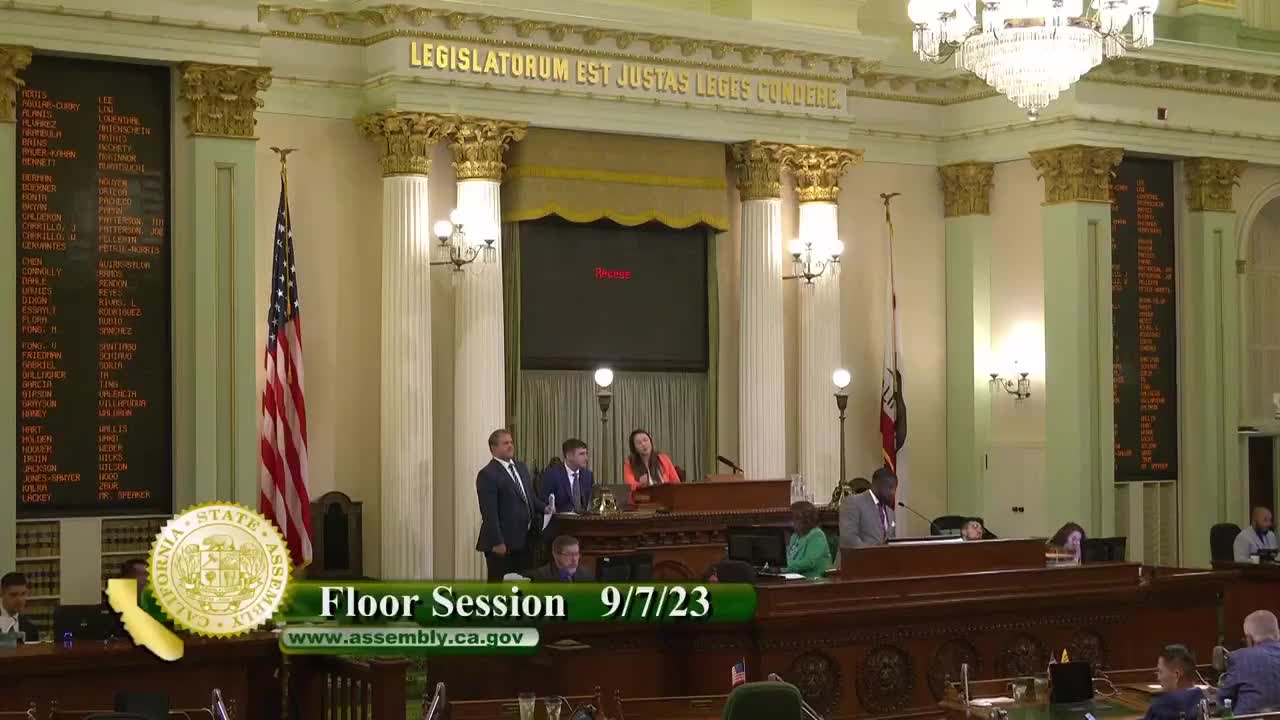 1MIN
Assembly Floor
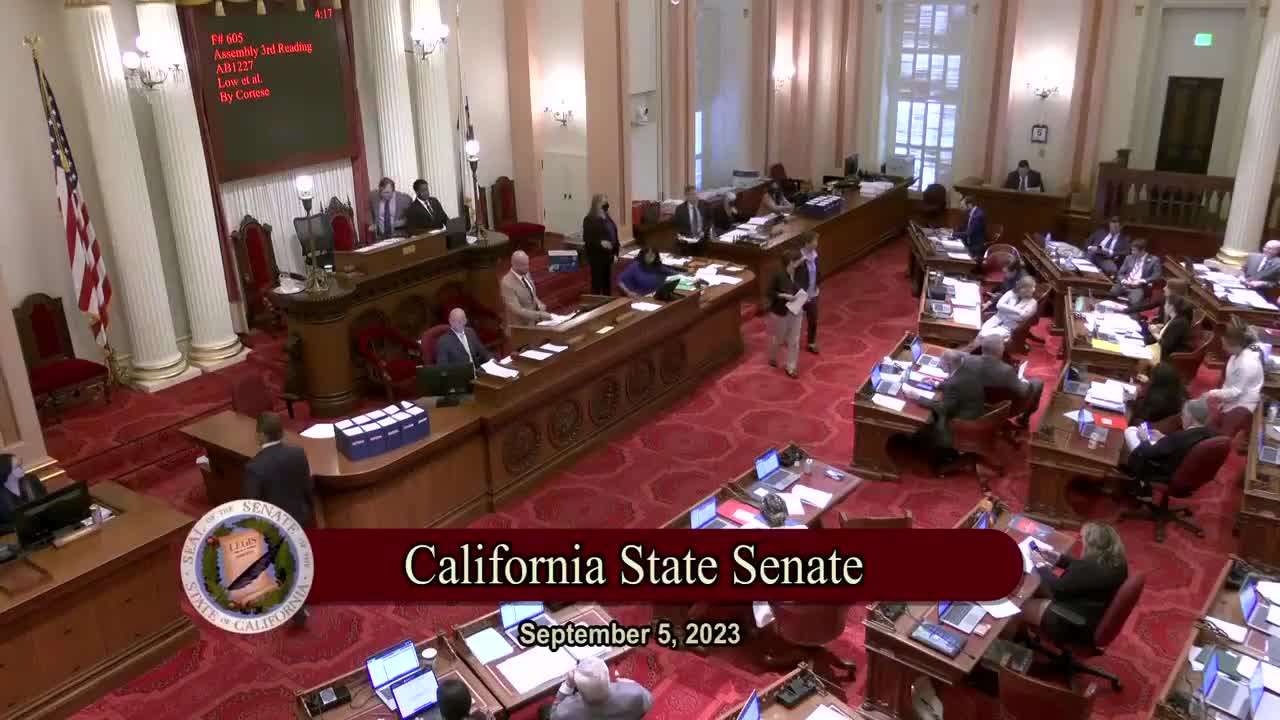 1MIN
Senate Floor
 5MIN
Senate Standing Committee on Elections and Constitutional Amendments
 2MIN
Assembly Floor
 2MIN
Assembly Standing Committee on Appropriations
 10MIN
Assembly Standing Committee on Elections
Bill Author