AB 988: Miles Hall Lifeline and Suicide Prevention Act: veteran and military data reporting.
- Session Year: 2023-2024
- House: Assembly
- Latest Version Date: 2023-10-08
Current Status:
Passed
(2023-10-08: Chaptered by Secretary of State - Chapter 460, Statutes of 2023.)
Introduced
In Committee
First Chamber
In Committee
Second Chamber
Enacted
Existing federal law, the National Suicide Hotline Designation Act of 2020, designates the 3-digit telephone number 988 as the universal number within the United States for the purpose of the national suicide prevention and mental health crisis hotline system operating through the 988 Suicide and Crisis Lifeline, maintained by the Assistant Secretary for Mental Health and Substance Use, and the Veterans Crisis Line, which is maintained by the Secretary of Veterans Affairs.
Existing law creates a separate surcharge, beginning January 1, 2023, on each access line for each month, or part thereof, for which a service user subscribes with a service supplier. Existing law sets the 988 surcharge for the 2023 and 2024 calendar years at $0.08 per access line per month and beginning January 1, 2025, at an amount based on a specified formula not to exceed $0.30 per access line per month. Existing law authorizes the 911 and 988 surcharges to be combined into a single-line item, as described. Existing law provides for specified costs to be paid by the fees prior to distribution to the Office of Emergency Services.
Existing law, the Miles Hall Lifeline and Suicide Prevention Act, creates the 988 State Suicide and Behavioral Health Crisis Services Fund and requires the fees to be deposited along with other specified moneys into the fund. Existing law provides that, upon appropriation by the Legislature, the funds be used for specified purposes and in accordance with specified priorities. Existing law requires the Office of Emergency Services to require an entity seeking moneys available through the fund to annually file an expenditure and outcomes report containing specified information, including, among other things, the number of individuals served and the outcomes for individuals served, if known.
This bill would require an entity seeking moneys from the fund to also include the number of individuals who used the service and self-identified as veterans or active military personnel in its annual expenditure and outcomes report.
Existing federal law, the National Suicide Hotline Designation Act of 2020, designates the 3-digit telephone number 988 as the universal number within the United States for the purpose of the national suicide prevention and mental health crisis hotline system operating through the 988 Suicide and Crisis Lifeline, maintained by the Assistant Secretary for Mental Health and Substance Use, and the Veterans Crisis Line, which is maintained by the Secretary of Veterans Affairs.
Existing law creates a separate surcharge, beginning January 1, 2023, on each access line for each month, or part thereof, for which a service user subscribes with a service supplier. Existing law sets the 988 surcharge for the 2023 and 2024 calendar years at $0.08 per access line per month and beginning January 1, 2025, at an amount based on a specified formula not to exceed $0.30 per access line per month. Existing law authorizes the 911 and 988 surcharges to be combined into a single-line item, as described. Existing law provides for specified costs to be paid by the fees prior to distribution to the Office of Emergency Services.
Existing law, the Miles Hall Lifeline and Suicide Prevention Act, creates the 988 State Suicide and Behavioral Health Crisis Services Fund and requires the fees to be deposited along with other specified moneys into the fund. Existing law provides that, upon appropriation by the Legislature, the funds be used for specified purposes and in accordance with specified priorities. Existing law requires the Office of Emergency Services to require an entity seeking moneys available through the fund to annually file an expenditure and outcomes report containing specified information, including, among other things, the number of individuals served and the outcomes for individuals served, if known.
This bill would require an entity seeking moneys from the fund to also include the number of individuals who used the service and identified self-identified as veterans or active military personnel in its annual expenditure and outcomes report.
Existing federal law, the National Suicide Hotline Designation Act of 2020, designates the 3-digit telephone number 988 as the universal number within the United States for the purpose of the national suicide prevention and mental health crisis hotline system operating through the 988 Suicide and Crisis Lifeline, maintained by the Assistant Secretary for Mental Health and Substance Use, and the Veterans Crisis Line, which is maintained by the Secretary of Veterans Affairs.
Existing law creates a separate surcharge, beginning January 1, 2023, on each access line for each month, or part thereof, for which a service user subscribes with a service supplier. Existing law sets the 988 surcharge for the 2023 and 2024 calendar years at $0.08 per access line per month and beginning January 1, 2025, at an amount based on a specified formula not to exceed $0.30 per access line per month. Existing law authorizes the 911 and 988 surcharges to be combined into a single-line item, as described. Existing law provides for specified costs to be paid by the fees prior to distribution to the Office of Emergency Services.
Existing law, the Miles Hall Lifeline and Suicide Prevention Act, creates the 988 State Suicide and Behavioral Health Crisis Services Fund and requires the fees to be deposited along with other specified moneys into the fund. Existing law provides that, upon appropriation by the Legislature, the funds be used for specified purposes and in accordance with specified priorities. Existing law requires the Office of Emergency Services to require an entity seeking moneys available through the fund to annually file an expenditure and outcomes report containing specified information, including, among other things, the number of individuals served and the outcomes for individuals served, if known.
This bill would require an entity seeking moneys from the fund to also include the number of individuals who used the service and identified as veterans or active military personnel in its annual expenditure and outcomes report.
(a)The 988 State Suicide and Behavioral Health Crisis Services Fund is hereby established in the State Treasury.
(b)(1)The fund shall consist of the revenue generated by the 988 surcharge assessed on users under Section 41020 of the Revenue and Taxation Code, which revenue shall be used solely for the operations of the 988 center and mobile crisis teams as defined in the American Rescue Plan Act of 2021 (Section 9813(b)(2) of Public Law 117-2). The fund shall also consist of any other appropriations made to it by the Legislature. The Legislature may consider additional uses for the revenue generated by the 988 surcharge based on recommendations made by the California Health and Human Services Agency and the advisory group pursuant to subdivision (b) of Section 53123.3.
(2)The revenue generated by the 988 surcharge shall, to the extent not prohibited by Section 251a of Title 47 of the United States Code and any applicable rules or regulations adopted by the Federal Communications Commission and in compliance with subdivision (b) of Section 41136 of the Revenue and Taxation Code, be prioritized to fund the following:
(A)First, the 988 centers, including the efficient and effective routing of telephone calls, personnel, and the provision of acute behavioral health services through telephone call, text, and chat to the 988 number.
(B)Second, the operation of mobile crisis teams accessed via telephone calls, texts, or chats made to or routed through 988 as specified under Section 4(a)(2)(B) of Public Law 116-172.
(3)Money in the fund shall not be subject to transfer to another fund or to transfer, assignment, or reassignment for another use or purpose outside of those specified in this article.
(4) 988 surcharge revenue in the fund shall be available, upon appropriation by the Legislature, for the purposes specified in this article.
(5) The revenue generated by the 988 surcharge shall be used to supplement, not supplant, federal, state, and local funding for 988 centers and behavioral health crisis services.
(6) The revenue generated by the 988 surcharge may only be used to fund service and operation expenses that are not reimbursable through Medicaid federal financial participation, Medicare, health care service plans, or disability insurers.
(c)The office, in consultation with the State Department of Health Care Services, may adopt regulations regarding how funds received shall be disseminated to support the operations of the 988 system and related behavioral health crisis services.
(d)The office shall require an entity seeking funds available through the 988 Suicide and Behavioral Health Crisis Services Fund to annually file an expenditure and outcomes report in a form and manner as determined by the office and the State Department of Health Care Services. The expenditure and outcomes report shall include, but is not limited to, the following:
(1)The total budget.
(2)Number and job classification of personnel.
(3)The number of individuals served.
(4)The outcomes for individuals served, if known.
(5)The health coverage status of individuals served, if known.
(6)Beginning July 1, 2025, to the extent feasible and consistent with paragraph (11) of subdivision (b) of Section 52123.3, measures of system performance, including capacity, wait times, and the ability to meet demand for services.
(7)Beginning January 1, 2030, to the extent feasible and consistent with paragraph (11) of subdivision (b) of Section 52123.3, the amount billed to and reimbursed by Medi-Cal or other public and private health care service plans or insurers.
(8)The number of individuals who used the service and self-identified as veterans or active military personnel, if known.
(e)The State Treasurer shall report annually to the office on fund deposits and expenditures.
(a)The 988 State Suicide and Behavioral Health Crisis Services Fund is hereby established in the State Treasury.
(b)(1)The fund shall consist of the revenue generated by the 988 surcharge assessed on users under Section 41020 of the Revenue and Taxation Code, which revenue shall be used solely for the operations of the 988 center and mobile crisis teams, teams as defined in the American Rescue Plan Act of 2021 (Section 1947(b)(2) 9813(b)(2) of Public Law 117-2). The fund shall also consist of any other appropriations made to it by the Legislature. The Legislature may consider additional uses for the revenue generated by the 988 surcharge based on recommendations made by the California Health and Human Services Agency and the advisory group pursuant to subdivision (b) of Section 53123.3.
(2)The revenue generated by the 988 surcharge shall, to the extent not prohibited by Section 251a of Title 47 of the United States Code and any applicable rules or regulations adopted by the Federal Communications Commission and in compliance with subdivision (b) of Section 41136 of the Revenue and Taxation Code, be prioritized to fund the following:
(A)First, the 988 centers, including the efficient and effective routing of telephone calls, personnel, and the provision of acute behavioral health services through telephone call, text, and chat to the 988 number.
(B)Second, the operation of mobile crisis teams accessed via telephone calls, texts, or chats made to or routed through 988, 988 as specified under Section 4(a)(2)(B) of Public Law 116-172.
(3)Money in the fund shall not be subject to transfer to any other another fund or to transfer, assignment, or reassignment for any other another use or purpose outside of those specified in this article.
(4) 988 surcharge revenue in the fund shall be available, upon appropriation by the Legislature, for the purposes specified in this article.
(5) The revenue generated by the 988 surcharge shall be used to supplement and supplement, not supplant supplant, federal, state, and local funding for 988 centers and behavioral health crisis services.
(6) The revenue generated by the 988 surcharge may only be used to fund service and operation expenses that are not reimbursable through Medicaid federal financial participation, Medicare, health care service plans, or disability insurers.
(c)The office, in consultation with the State Department of Health Care Services, may adopt regulations regarding how funds received shall be disseminated to support the operations of the 988 system and related behavioral health crisis services.
(d)The office shall require an entity seeking funds available through the 988 Suicide and Behavioral Health Crisis Services Fund to annually file an expenditure and outcomes report in a form and manner as determined by the office and the State Department of Health Care Services. The expenditure and outcomes report shall include, but is not limited to, the following:
(1)The total budget.
(2)Number and job classification of personnel.
(3)The number of individuals served.
(4)The outcomes for individuals served, if known.
(5)The health coverage status of individuals served, if known.
(6)Beginning July 1, 2025, to the extent feasible and consistent with paragraph (11) of subdivision (b) of Section 52123.3, measures of system performance, including capacity, wait times, and the ability to meet demand for services.
(7)Beginning January 1, 2030, to the extent feasible and consistent with paragraph (11) of subdivision (b) of Section 52123.3, the amount billed to and reimbursed by Medi-Cal or other public and private health care service plans or insurers.
(8)The number of individuals who used the service and self-identified as veterans or active military personnel, if known.
(e)The State Treasurer shall report annually to the office on fund deposits and expenditures.
SECTION 1.Section 53123.4 of the Government Code is amended to read:53123.4.(a)The 988 State Suicide and Behavioral Health Crisis Services Fund is hereby established in the State Treasury.(b)(1)The fund shall consist of the revenue generated by the 988 surcharge assessed on users under Section 41020 of the Revenue and Taxation Code, which revenue shall be used solely for the operations of the 988 center and mobile crisis teams as defined in the American Rescue Plan Act of 2021 (Section 9813(b)(2) of Public Law 117-2). The fund shall also consist of any other appropriations made to it by the Legislature.(2)The revenue generated by the 988 surcharge shall be prioritized to fund the following:(A)First, the 988 centers, including the efficient and effective routing of telephone calls, personnel, and the provision of acute mental health services through telephone call, text, and chat to the 988 number.(B)Second, the operation of mobile crisis teams accessed via telephone calls, texts, or chats made to or routed through 988 as specified under Section 4(a)(2)(B) of Public Law 116-172.(3)Money in the fund shall not be subject to transfer to another fund or to transfer, assignment, or reassignment for another use or purpose outside of those specified in this article.(4)988 surcharge revenue in the fund shall be available, upon appropriation by the Legislature, for the purposes specified in this article.(5)The revenue generated by the 988 surcharge shall be used to supplement, not supplant, federal, state, and local funding for 988 centers and mobile crisis services.(6)The revenue generated by the 988 surcharge may only be used to fund service and operation expenses that are not reimbursable through Medicaid federal financial participation, Medicare, health care service plans, or disability insurers.(c)The Office of Emergency Services, in consultation with the State Department of Health Care Services, may adopt regulations regarding how funds received shall be disseminated to support the operations of the 988 system and related behavioral health crisis services.(d)The office shall require an entity seeking funds available through the 988 Suicide and Behavioral Health Crisis Services Fund to annually file an expenditure and outcomes report in a form and manner as determined by the office and the State Department of Health Care Services. The expenditure and outcomes report shall include, but is not limited to, the following:(1)The total budget.(2)Number and job classification of personnel.(3)The number of individuals served.(4)The outcomes for individuals served, if known.(5)The health coverage status of individuals served, if known.(6)The amount billed to and reimbursed by Medi-Cal or other public and private health care service plans or insurers.(7)Measures of system performance, including capacity, wait time, and the ability to meet demand for services.(8)The number of individuals who used the service and self-identified as veterans or active military personnel, if known.(e)The State Treasurer shall report annually to the office on fund deposits and expenditures.(a)The 988 State Suicide and Behavioral Health Crisis Services Fund is hereby established in the State Treasury.
(b)(1)The fund shall consist of the revenue generated by the 988 surcharge assessed on users under Section 41020 of the Revenue and Taxation Code, which revenue shall be used solely for the operations of the 988 center and mobile crisis teams as defined in the American Rescue Plan Act of 2021 (Section 9813(b)(2) of Public Law 117-2). The fund shall also consist of any other appropriations made to it by the Legislature.
(2)The revenue generated by the 988 surcharge shall be prioritized to fund the following:
(A)First, the 988 centers, including the efficient and effective routing of telephone calls, personnel, and the provision of acute mental health services through telephone call, text, and chat to the 988 number.
(B)Second, the operation of mobile crisis teams accessed via telephone calls, texts, or chats made to or routed through 988 as specified under Section 4(a)(2)(B) of Public Law 116-172.
(3)Money in the fund shall not be subject to transfer to another fund or to transfer, assignment, or reassignment for another use or purpose outside of those specified in this article.
(4)988 surcharge revenue in the fund shall be available, upon appropriation by the Legislature, for the purposes specified in this article.
(5)The revenue generated by the 988 surcharge shall be used to supplement, not supplant, federal, state, and local funding for 988 centers and mobile crisis services.
(6)The revenue generated by the 988 surcharge may only be used to fund service and operation expenses that are not reimbursable through Medicaid federal financial participation, Medicare, health care service plans, or disability insurers.
(c)The Office of Emergency Services, in consultation with the State Department of Health Care Services, may adopt regulations regarding how funds received shall be disseminated to support the operations of the 988 system and related behavioral health crisis services.
(d)The office shall require an entity seeking funds available through the 988 Suicide and Behavioral Health Crisis Services Fund to annually file an expenditure and outcomes report in a form and manner as determined by the office and the State Department of Health Care Services. The expenditure and outcomes report shall include, but is not limited to, the following:
(1)The total budget.
(2)Number and job classification of personnel.
(3)The number of individuals served.
(4)The outcomes for individuals served, if known.
(5)The health coverage status of individuals served, if known.
(6)The amount billed to and reimbursed by Medi-Cal or other public and private health care service plans or insurers.
(7)Measures of system performance, including capacity, wait time, and the ability to meet demand for services.
(8)The number of individuals who used the service and self-identified as veterans or active military personnel, if known.
(e)The State Treasurer shall report annually to the office on fund deposits and expenditures.
(a)The 988 State Suicide and Behavioral Health Crisis Services Fund is hereby established in the State Treasury.
(b)(1)The fund shall consist of the revenue generated by the 988 surcharge assessed on users under Section 41020 of the Revenue and Taxation Code, which revenue shall be used solely for the operations of the 988 center and mobile crisis teams as defined in the American Rescue Plan Act of 2021 (Section 1947(b)(2) 9813(b)(2) of Public Law 117-2). The fund shall also consist of any other appropriations made to it by the Legislature.
(2)The revenue generated by the 988 surcharge shall be prioritized to fund the following:
(A)First, the 988 centers, including the efficient and effective routing of telephone calls, personnel, and the provision of acute mental health services through telephone call, text, and chat to the 988 number.
(B)Second, the operation of mobile crisis teams accessed via telephone calls, texts, or chats made to or routed through 988 as specified under Section 4(a)(2)(B) of Public Law 116-172.
(3)Money in the fund shall not be subject to transfer to another fund or to transfer, assignment, or reassignment for another use or purpose outside of those specified in this article.
(4)988 surcharge revenue in the fund shall be available, upon appropriation by the Legislature, for the purposes specified in this article.
(5)The revenue generated by the 988 surcharge shall be used to supplement, not supplant, federal, state, and local funding for 988 centers and mobile crisis services.
(6)The revenue generated by the 988 surcharge may only be used to fund service and operation expenses that are not reimbursable through Medicaid federal financial participation, Medicare, health care service plans, or disability insurers.
(c)The Office of Emergency Services, in consultation with the State Department of Health Care Services, may adopt regulations regarding how funds received shall be disseminated to support the operations of the 988 system and related behavioral health crisis services.
(d)The office shall require an entity seeking funds available through the 988 Suicide and Behavioral Health Crisis Services Fund to annually file an expenditure and outcomes report in a form and manner as determined by the office and the State Department of Health Care Services. The expenditure and outcomes report shall include, but is not limited to, the following:
(1)The total budget.
(2)Number and job classification of personnel.
(3)The number of individuals served.
(4)The outcomes for individuals served, if known.
(5)The health coverage status of individuals served, if known.
(6)The amount billed to and reimbursed by Medi-Cal or other public and private health care service plans or insurers.
(7)Measures of system performance, including capacity, wait time, and the ability to meet demand for services.
(8)The number of individuals who used the service and identified self-identified as veterans or active military personnel. personnel, if known.
(e)The State Treasurer shall report annually to the office on fund deposits and expenditures.
(a)The 988 State Suicide and Behavioral Health Crisis Services Fund is hereby established in the State Treasury.
(b)(1)The fund shall consist of the revenue generated by the 988 surcharge assessed on users under Section 41020 of the Revenue and Taxation Code, which revenue shall be used solely for the operations of the 988 center and mobile crisis teams, teams as defined in the American Rescue Plan Act of 2021 (Section 1947(b)(2) of Public Law 117-2). The fund shall also consist of any other appropriations made to it by the Legislature.
(2)The revenue generated by the 988 surcharge shall be prioritized to fund the following:
(A)First, the 988 centers, including the efficient and effective routing of telephone calls, personnel, and the provision of acute mental health services through telephone call, text, and chat to the 988 number.
(B)Second, the operation of mobile crisis teams accessed via telephone calls, texts, or chats made to or routed through 988, 988 as specified under Section 4(a)(2)(B) of Public Law 116-172.
(3)Money in the fund shall not be subject to transfer to any other another fund or to transfer, assignment, or reassignment for any other another use or purpose outside of those specified in this article.
(4)988 surcharge revenue in the fund shall be available, upon appropriation by the Legislature, for the purposes specified in this article.
(5)The revenue generated by the 988 surcharge shall be used to supplement and not supplant supplement, not supplant, federal, state, and local funding for 988 centers and mobile crisis services.
(6)The revenue generated by the 988 surcharge may only be used to fund service and operation expenses that are not reimbursable through Medicaid federal financial participation, Medicare, health care service plans, or disability insurers.
(c)The Office of Emergency Services, in consultation with the State Department of Health Care Services, may adopt regulations regarding how funds received shall be disseminated to support the operations of the 988 system and related behavioral health crisis services.
(d)The office shall require an entity seeking funds available through the 988 Suicide and Behavioral Health Crisis Services Fund to annually file an expenditure and outcomes report in a form and manner as determined by the office and the State Department of Health Care Services. The expenditure and outcomes report shall include, but is not limited to, the following:
(1)The total budget.
(2)Number and job classification of personnel.
(3)The number of individuals served.
(4)The outcomes for individuals served, if known.
(5)The health coverage status of individuals served, if known.
(6)The amount billed to and reimbursed by Medi-Cal or other public and private health care service plans or insurers.
(7)Measures of system performance, including capacity, wait time, and the ability to meet demand for services.
(8)The number of individuals who used the service and identified as veterans or active military personnel.
(e)The State Treasurer shall report annually to the office on fund deposits and expenditures.
|
Date
|
Status
|
|---|---|
| Oct 8, 2023 | Chaptered by Secretary of State - Chapter 460, Statutes of 2023. |
| Oct 8, 2023 | Approved by the Governor. |
| Sep 21, 2023 | Enrolled and presented to the Governor at 3:30 p.m. |
| Sep 14, 2023 | Senate amendments concurred in. To Engrossing and Enrolling. (Ayes 80. Noes 0. Page 3586.). |
| Sep 14, 2023 | In Assembly. Concurrence in Senate amendments pending. |
| Sep 14, 2023 | Read third time. Passed. Ordered to the Assembly. (Ayes 40. Noes 0. Page 2777.). |
| Aug 15, 2023 | Read second time. Ordered to third reading. |
| Aug 14, 2023 | Read third time and amended. Ordered to second reading. |
| Aug 14, 2023 | Ordered to third reading. |
| Aug 14, 2023 | Action rescinded whereby the bill was read third time, passed, and to Assembly. |
| Jul 3, 2023 | In Senate. Held at Desk. |
| Jun 29, 2023 | Ordered to the Senate. |
| Jun 29, 2023 | Action rescinded whereby bill was ordered to enrollment and whereby the bill was enrolled and presented to the Governor. |
| Jun 23, 2023 | Enrolled and presented to the Governor at 3 p.m. |
| Jun 19, 2023 | In Assembly. Ordered to Engrossing and Enrolling. |
| Jun 19, 2023 | Read third time. Passed. Ordered to the Assembly. (Ayes 39. Noes 0. Page 1604.). |
| Jun 14, 2023 | Read second time. Ordered to Consent Calendar. |
| Jun 13, 2023 | From committee: Do pass. To Consent Calendar. (Ayes 14. Noes 0.) (June 13). |
| May 3, 2023 | Referred to Com. on G.O. |
| Apr 18, 2023 | In Senate. Read first time. To Com. on RLS. for assignment. |
| Apr 17, 2023 | Read third time. Passed. Ordered to the Senate. (Ayes 79. Noes 0. Page 1180.) |
| Apr 10, 2023 | Read second time. Ordered to Consent Calendar. |
| Mar 30, 2023 | Read second time and amended. Ordered returned to second reading. |
| Mar 29, 2023 | From committee: Amend, and do pass as amended. To Consent Calendar. (Ayes 13. Noes 0.) (March 29). |
| Mar 2, 2023 | Referred to Com. on C. & C. |
| Feb 16, 2023 | From printer. May be heard in committee March 18. |
| Feb 15, 2023 | Read first time. To print. |
|
Date
|
Description
|
Location
|
Votes
|
|
|---|---|---|---|---|
| Sep 14, 2023 | AB 988 Mathis Concurrence in Senate Amendments | Assembly Floor |
Passed |
|
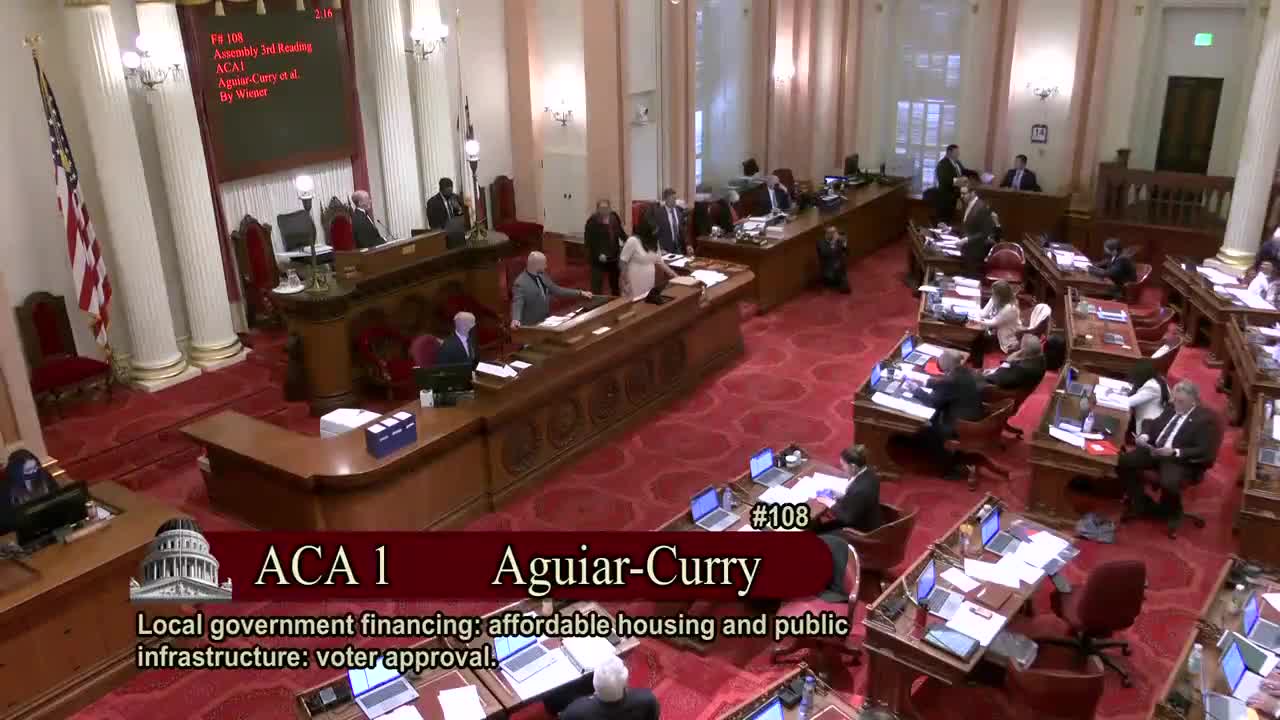
| Sep 14, 2023 | Assembly 3rd Reading AB988 Mathis et al. By Ochoa Bogh | Senate Floor |
Passed |
|
| Jun 19, 2023 | Consent Calendar AB988 Mathis et al. | Senate Floor |
Passed |
|
| Jun 13, 2023 | Do pass and be ordered to the Consent Calendar | Senate Standing Committee on Governmental Organization |
Passed |
|
| Apr 17, 2023 | AB 988 Mathis Consent Calendar Second Day Regular Session | Assembly Floor |
Passed |
|
| Mar 29, 2023 | Do pass as amended. To Consent Calendar. | Assembly Standing Committee on Communications and Conveyance |
Passed |
This list shows positions taken on this bill by organizations on the date displayed, which is linked to the original source.
Positions by individuals are not included.
|
Organization
|
Position
|
Date
|
|---|---|---|
| American Foundation for Suicide Prevention | ** Support | |
| Dbsa California | ** Support | |
| Depression And Bipolar Support Alliance | ** Support |
CONCURRENCE IN SENATE AMENDMENTS
CSA1 Bill Id:AB 988
Author:(Mathis and Wicks)
As Amended Ver:August 14, 2023
Majority vote
SUMMARY
This bill would require an entity receiving funds from the 988 State Suicide and Behavioral Health Crisis Services Fund ("988 fund") to report on the number of individuals served who identified as veterans or active military personnel.
Senate Amendments
Make minor and technical changes.
COMMENTS
- Background on 9-8-8. The National Suicide Hotline Designation Act of 2020 (NSHD) designated 9-8-8 as the new three-digit number for the national suicide prevention and mental health crisis hotline. The NSHD requires the Federal Communications Commission (FCC) to designate 9-8-8 as the universal telephone number for a national suicide prevention and mental health crisis hotline, which operates through the National Suicide Prevention Lifeline. The NSHD also authorized states to impose a fee on telephone users to fund the 9-8-8 hotlines within the states. In California, AB 988 (Bauer-Kahan), Chapter 747, Statute of 2022 implements NSHD, incompliance with the Federal Communication Commission's rules. Under that bill, Office of Emergency Services (OES) collects a surcharge for the 988 fund and the 988 hotline administered through the California Health and Human Services Agency. The work to fully implement the 9-8-8 hotline is currently ongoing, with CHHSA required to create a set of recommendations to support the five-year implementation plan for the 9-8-8 hotline by December 31, 2023.
- This bill expands existing reporting requirements. Pursuant to AB 988 (Bauer-Kahan), Chapter 747, Statute of 2022, OES is required to annually collect specified information from entities seeking funds from the 9-8-8- fund. The existing reporting requirements budgetary and patient information such as the total budget, number of personnel employed, the number of individuals served, and individual outcomes if known. This bill would expand the existing reporting requirements to explicitly include information about veterans and active military personnel served. The rationale for collecting military and veteran information is quite strong. It is well documented that veterans disproportionately experience employment challenges, substance abuse, homelessness, and mental health problems. For example, the 2021 National Veteran Suicide Prevention Annual Report found that veterans' suicide rates are 21% higher than non-veterans. The military and veteran population is exactly the population that is likely to utilize 988 services, and it would be reasonable for the state to track the number of individuals served from that population.
Nonetheless, as with any data collection about individuals, this bill raises some privacy considerations for the individuals whose data may be collected. For example, an individual utilizing the 9-8-8 might not wish for their identity or affiliations to be recorded. Additionally, in a time of crisis, the personnel staffing the hotline might not find it appropriate to ask the demographic information of the caller.
According to the Author
"This bill adds to the progress of the previous AB 988 (2022) by requiring entities receiving state 988 funding to report the number of self-reported veterans who used their services. This step will not violate anyone's privacy or access to mental health services. It will rather provide the legislature insight into how California's veterans are faring, and whether they are aware of these resources. The government can then take well-informed action to address the veteran mental health and suicide crisis. It's the least we owe them."
Arguments in Support
Supporters of this bill argue that the reporting required under AB 988 is consistent with the National Strategy for Veteran Suicide and Prevention (2018-2028), which calls for furthering surveillance and research on suicide mortality and morbidity among veterans.
Arguments in Opposition
None on file.
FISCAL COMMENTS
None. This bill has been keyed non-fiscal by the Legislative Counsel.
VOTES:
ASM COMMUNICATIONS AND CONVEYANCE: 13-0-0
YES: Boerner Horvath, Jim Patterson, Bonta, Davies, Garcia, Holden, Hoover, Low, Maienschein, Papan, Luz Rivas, Rodriguez, Weber
ASSEMBLY FLOOR: 79-0-1
YES: Addis, Aguiar-Curry, Alanis, Alvarez, Arambula, Bains, Bauer-Kahan, Bennett, Berman, Boerner Horvath, Bonta, Bryan, Calderon, Juan Carrillo, Wendy Carrillo, Cervantes, Chen, Connolly, Megan Dahle, Davies, Dixon, Essayli, Flora, Mike Fong, Vince Fong, Friedman, Gabriel, Gallagher, Garcia, Gipson, Grayson, Hart, Holden, Hoover, Irwin, Jackson, Jones- Sawyer, Kalra, Lackey, Lee, Low, Lowenthal, Maienschein, Mathis, McCarty, McKinnor, Muratsuchi, Stephanie Nguyen, Ortega, Pacheco, Papan, Jim Patterson, Joe Patterson, Pellerin, Petrie-Norris, Quirk-Silva, Ramos, Reyes, Luz Rivas, Robert Rivas, Rodriguez, Blanca Rubio, Sanchez, Santiago, Schiavo, Soria, Ta, Ting, Valencia, Villapudua, Waldron, Wallis, Ward, Weber, Wicks, Wilson, Wood, Zbur, Rendon
ABS, ABST OR NV: Haney
SENATE FLOOR: 39-0-1
YES: Allen, Alvarado-Gil, Archuleta, Ashby, Atkins, Blakespear, Bradford, Caballero, Cortese, Dahle, Dodd, Durazo, Eggman, Glazer, Gonzalez, Grove, Hurtado, Jones, Laird, Limón, McGuire, Menjivar, Min, Newman, Nguyen, Niello, Ochoa Bogh, Padilla, Portantino, Roth, Rubio, Seyarto, Skinner, Smallwood-Cuevas, Stern, Umberg, Wahab, Wiener, Wilk
ABS, ABST OR NV: Becker
UPDATED
VERSION: August 14, 2023
CONSULTANT: Emilio Perez / C. & C. / (916) 319-2637 FN: 0001845
SENATE RULES COMMITTEE Office of Senate Floor Analyses (916) 651-1520 Fax: (916) 327-4478 | AB 988 |
THIRD READING
Bill No: AB 988
Author: Mathis (R) and Wicks (D), et al.
Amended: 8/14/23 in Senate
Vote: 21
SENATE GOVERNMENTAL ORG. COMMITTEE: 14-0, 6/13/23
AYES: Dodd, Wilk, Alvarado-Gil, Archuleta, Ashby, Bradford, Glazer, Nguyen, Ochoa Bogh, Padilla, Portantino, Roth, Rubio, Seyarto
NO VOTE RECORDED: Jones
SENATE FLOOR: 39-0, 6/19/23 (Consent)
AYES: Allen, Alvarado-Gil, Archuleta, Ashby, Atkins, Blakespear, Bradford, Caballero, Cortese, Dahle, Dodd, Durazo, Eggman, Glazer, Gonzalez, Grove, Hurtado, Jones, Laird, Limón, McGuire, Menjivar, Min, Newman, Nguyen, Niello, Ochoa Bogh, Padilla, Portantino, Roth, Rubio, Seyarto, Skinner, Smallwood-Cuevas, Stern, Umberg, Wahab, Wiener, Wilk
NO VOTE RECORDED: Becker
ASSEMBLY FLOOR: 79-0, 4/17/23 (Consent) - See last page for vote
SUBJECT: Miles Hall Lifeline and Suicide Prevention Act: veteran and military data reporting
SOURCE: Author
DIGEST: This bill requires an entity receiving funds from the 988 State Suicide and Behavioral Health Crisis Services Fund (988 Fund) to report on the number of individuals served who self-identified as veterans or active military personnel, if known.
Senate Floor Amendments of 8/14/23 add coauthors.
ANALYSIS:
Existing law:
- Establishes the Office of Emergency Services (OES) and makes OES responsible for addressing natural, technological, or man-made disaster and emergencies, including responsibility for activities necessary to prevent, respond to, recover from, and mitigate the effects of emergencies and disasters to people and property.
- Designates, under the National Suicide Hotline Designation Act, the three-digit telephone number “988” as the universal number within the United States for the purpose of the national suicide prevention and mental health crisis hotline system operating through the National Suicide Prevention Lifeline (NSPL) maintained by the Assistant Secretary for Mental Health and Substance Abuse and the Veterans Crisis Line Maintained by the Secretary of Veterans Affairs.
- Creates, under the Miles Hall Lifeline and Suicide Prevention Act, the 988 Fund and requires the fees to be deposited along with other specified moneys into the fund. The 988 Fund is funded through a surcharge on telephone access lines, currently set at $0.08 through calendar year 2024 and a maximum of $0.30 per access line thereafter.
- Requires the California Health and Human Services Agency (CHHSA), by no later than December 31, 2023, to create a set of recommendations to support the five-year implementation plan for the 988 hotline.
- Authorizes OES, in consultation with the State Department of Health Care Services, to adopt regulations regarding how 988 funds received shall be disseminated to support the operations of the 988 system and related behavioral health crisis services.
- Provides that, upon appropriation by the Legislature, funds in the 988 Fund be used for specified purposes and in accordance with specified properties.
- Requires OES to require an entity seeking moneys available through the 988 Fund to annually file an expenditure and outcomes report containing specified information, including, among other things, the number of individuals served and the outcomes for individuals served, if known.
This bill requires an entity receiving funds from the 988 Fund to report on the number of individuals served who self-identified as veterans or active military personnel, if known.
Background
Author Statement. According to the author’s office, “This bill adds the progress of the previous AB 988 by requiring entities receiving state 988 funding to report the number of self-reported veterans who used their services. This step will not violate anyone’s privacy or access to mental health services. It will rather provide the legislature insight into how California’s veterans are faring, and whether they are aware of these resources. The government can then take well-informed action to address the veteran mental health and suicide crisis. It’s the least we owe them.”
National Suicide Hotline Designation Act (NSHD) of 2020. The NSHD designated 988 as the new three-digit number for the national suicide prevention and mental health crisis hotline. Specifically, the NSHD requires the Federal Communication Commission (FCC) to designate 988 as the universal telephone number for a national suicide prevention and mental health crisis hotline, which operates through the NSPL Network.
To adequately fund the 988 system, the NSHD authorizes states to impose a fee on access lines for providing 988 related services. In the California Emergency Telephone User Surcharge Act, an access line is defined as a wireline communication service (landline), a wireless communication service line (cell phones), and Voice Over Internet Protocol (VoIP). Revenue from the fees must be held in a designated account to be spent only in support of 988 services, and the FCC must submit an annual report on state administration of these fees. The fees may only be spent on (1) ensuring the efficient and effective routing of calls made to the 988 suicide prevention and mental health crisis hotline to an appropriate crisis center; (2) personnel; and, (3) the provision of acute mental health crisis outreach and stabilization by directly responding to the 988 national suicide prevention and mental health crisis hotline.
In California, AB 988 (Bauer-Kahan, Chapter 747, Statute of 2022) implemented the NSHD. Under the bill, OES collects a surcharge for the 988 Fund and the 988 hotline and the 988 hotline is administered by the (CHHSA. The bill also required CHHSA to create a set of recommendations to support the five-year implementation plan for the 988 hotline by December 31, 2023.
Current Reporting Requirements. Last year’s AB 988 required OES to require an entity seeking funds from the 988 Fund to annually file an expenditure and outcomes report. Specifically, the bill required the outcomes report to include, among other thing, the number of individuals served and the outcomes for individuals served, if known. This bill expands the existing reporting requirements to explicitly require an entity receiving funds from the 988 Fund to report the number of individuals served who self-identified as veterans or active military personnel, if known.
According to the author’s office, “[veterans] disproportionately experience employment challenges, substance abuse, homelessness, and mental health problems. Most heartbreaking of all is their suicide rate: Veterans’ suicide rates are 21% higher than non-veterans.” To highlight this problem, the author’s office points to the 2020 National Veteran Suicide Prevention Annual Report by the U.S. Department of Veterans affairs, which found that veteran suicide rates are 1.5 times higher when compared to non-Veteran adults.
Related/Prior Legislation
AB 988 (Bauer-Kahan, Chapter 747, Statutes of 2022) established the 988 Crisis Hotline Center for the purpose of connecting individuals experiencing a mental health crisis with suicide prevention and mental health services, as specified. Additionally, the bill required OES to require an entity seeking funds from the 988 Fund to annually file an expenditure and outcomes report, as specified.
FISCAL EFFECT: Appropriation: No Fiscal Com.: No Local: No
SUPPORT: (Verified 8/14/23)
American Foundation for Suicide Prevention
Depression and Bipolar Support Alliance
OPPOSITION: (Verified 8/14/23)
None received
ARGUMENTS IN SUPPORT: According to the American Foundation for Suicide Prevention, “the reporting called for in AB 988 is consistent with the National Strategy for Veteran Suicide Prevention which calls for furthering surveillance and research on suicide mortality and morbidity among veterans. We firmly believe that AB 988 has important implications for the current and future health and well-being of all Californians.”
ASSEMBLY FLOOR: 79-0, 4/17/23
AYES: Addis, Aguiar-Curry, Alanis, Alvarez, Arambula, Bains, Bauer-Kahan, Bennett, Berman, Boerner Horvath, Bonta, Bryan, Calderon, Juan Carrillo, Wendy Carrillo, Cervantes, Chen, Connolly, Megan Dahle, Davies, Dixon, Essayli, Flora, Mike Fong, Vince Fong, Friedman, Gabriel, Gallagher, Garcia, Gipson, Grayson, Hart, Holden, Hoover, Irwin, Jackson, Jones-Sawyer, Kalra, Lackey, Lee, Low, Lowenthal, Maienschein, Mathis, McCarty, McKinnor, Muratsuchi, Stephanie Nguyen, Ortega, Pacheco, Papan, Jim Patterson, Joe Patterson, Pellerin, Petrie-Norris, Quirk-Silva, Ramos, Reyes, Luz Rivas, Robert Rivas, Rodriguez, Blanca Rubio, Sanchez, Santiago, Schiavo, Soria, Ta, Ting, Valencia, Villapudua, Waldron, Wallis, Ward, Weber, Wicks, Wilson, Wood, Zbur, Rendon
NO VOTE RECORDED: Haney
Prepared by: Felipe Lopez / G.O. / (916) 651-1530
8/16/23 10:11:47
**** END ****
SENATE RULES COMMITTEE Office of Senate Floor Analyses (916) 651-1520 Fax: (916) 327-4478 | AB 988 |
CONSENT
Bill No: AB 988
Author: Mathis (R) and Wicks (D), et al.
Amended: 3/30/23 in Assembly
Vote: 21
SENATE GOVERNMENTAL ORG. COMMITTEE: 14-0, 6/13/23
AYES: Dodd, Wilk, Alvarado-Gil, Archuleta, Ashby, Bradford, Glazer, Nguyen, Ochoa Bogh, Padilla, Portantino, Roth, Rubio, Seyarto
NO VOTE RECORDED: Jones
ASSEMBLY FLOOR: 79-0, 4/17/23 (Consent) - See last page for vote
SUBJECT: Miles Hall Lifeline and Suicide Prevention Act: veteran and military data reporting
SOURCE: Author
DIGEST: This bill requires an entity receiving funds from the 988 State Suicide and Behavioral Health Crisis Services Fund (988 Fund) to report on the number of individuals served who self-identified as veterans or active military personnel, if known.
ANALYSIS:
Existing law:
- Establishes the Office of Emergency Services (OES) and makes OES responsible for addressing natural, technological, or man-made disaster and emergencies, including responsibility for activities necessary to prevent, respond to, recover from, and mitigate the effects of emergencies and disasters to people and property.
- Designates, under the National Suicide Hotline Designation Act, the three-digit telephone number “988” as the universal number within the United States for the purpose of the national suicide prevention and mental health crisis hotline system operating through the National Suicide Prevention Lifeline (NSPL) maintained by the Assistant Secretary for Mental Health and Substance Abuse and the Veterans Crisis Line Maintained by the Secretary of Veterans Affairs.
- Creates, under the Miles Hall Lifeline and Suicide Prevention Act, the 988 Fund and requires the fees to be deposited along with other specified moneys into the fund. The 988 Fund is funded through a surcharge on telephone access lines, currently set at $0.08 through calendar year 2024 and a maximum of $0.30 per access line thereafter.
- Requires the California Health and Human Services Agency (CHHSA), by no later than December 31, 2023, to create a set of recommendations to support the five-year implementation plan for the 988 hotline.
- Authorizes OES, in consultation with the State Department of Health Care Services, to adopt regulations regarding how 988 funds received shall be disseminated to support the operations of the 988 system and related behavioral health crisis services.
- Provides that, upon appropriation by the Legislature, funds in the 988 Fund be used for specified purposes and in accordance with specified properties.
- Requires OES to require an entity seeking moneys available through the 988 Fund to annually file an expenditure and outcomes report containing specified information, including, among other things, the number of individuals served and the outcomes for individuals served, if known.
This bill requires an entity receiving funds from the 988 Fund to report on the number of individuals served who self-identified as veterans or active military personnel, if known.
Background
Author Statement. According to the author’s office, “this bill adds the progress of the previous AB 988 by requiring entities receiving state 988 funding to report the number of self-reported veterans who used their services. This step will not violate anyone’s privacy or access to mental health services. It will rather provide the legislature insight into how California’s veterans are faring, and whether they are aware of these resources. The government can then take well-informed action to address the veteran mental health and suicide crisis. It’s the least we owe them.”
National Suicide Hotline Designation Act (NSHD) of 2020. The NSHD designated 988 as the new three-digit number for the national suicide prevention and mental health crisis hotline. Specifically, the NSHD requires the Federal Communication Commission (FCC) to designate 988 as the universal telephone number for a national suicide prevention and mental health crisis hotline, which operates through the NSPL Network.
To adequately fund the 988 system, the NSHD authorizes states to impose a fee on access lines for providing 988 related services. In the California Emergency Telephone User Surcharge Act, an access line is defined as a wireline communication service (landline), a wireless communication service line (cell phones), and Voice Over Internet Protocol (VoIP). Revenue from the fees must be held in a designated account to be spent only in support of 988 services, and the FCC must submit an annual report on state administration of these fees. The fees may only be spent on (1) ensuring the efficient and effective routing of calls made to the 988 suicide prevention and mental health crisis hotline to an appropriate crisis center; (2) personnel; and, (3) the provision of acute mental health crisis outreach and stabilization by directly responding to the 988 national suicide prevention and mental health crisis hotline.
In California, AB 988 (Bauer-Kahan, Chapter 747, Statute of 2022) implemented the NSHD. Under the bill, OES collects a surcharge for the 988 Fund and the 988 hotline and the 988 hotline is administered by the (CHHSA. The bill also required CHHSA to create a set of recommendations to support the five-year implementation plan for the 988 hotline by December 31, 2023.
Current Reporting Requirements. Last year’s AB 988 required OES to require an entity seeking funds from the 988 Fund to annually file an expenditure and outcomes report. Specifically, the bill required the outcomes report to include, among other thing, the number of individuals served and the outcomes for individuals served, if known. This bill expands the existing reporting requirements to explicitly require an entity receiving funds from the 988 Fund to report the number of individuals served who self-identified as veterans or active military personnel, if known.
According to the author’s office, “[veterans] disproportionately experience employment challenges, substance abuse, homelessness, and mental health problems. Most heartbreaking of all is their suicide rate: Veterans’ suicide rates are 21% higher than non-veterans.” To highlight this problem, the author’s office points to the 2020 National Veteran Suicide Prevention Annual Report by the U.S. Department of Veterans affairs, which found that veteran suicide rates are 1.5 times higher when compared to non-Veteran adults.
Related/Prior Legislation
AB 988 (Bauer-Kahan, Chapter 747, Statutes of 2022) established the 988 Crisis Hotline Center for the purpose of connecting individuals experiencing a mental health crisis with suicide prevention and mental health services, as specified. Additionally, the bill required OES to require an entity seeking funds from the 988 Fund to annually file an expenditure and outcomes report, as specified.
FISCAL EFFECT: Appropriation: No Fiscal Com.: No Local: No
SUPPORT: (Verified 6/13/23)
American Foundation for Suicide Prevention
Depression and Bipolar Support Alliance
OPPOSITION: (Verified 6/13/23)
None received
ARGUMENTS IN SUPPORT: According to the American Foundation for Suicide Prevention, “the reporting called for in AB 988 is consistent with the National Strategy for Veteran Suicide Prevention which calls for furthering surveillance and research on suicide mortality and morbidity among veterans. We firmly believe that AB 988 has important implications for the current and future health and well-being of all Californians.”
ASSEMBLY FLOOR: 79-0, 4/17/23
AYES: Addis, Aguiar-Curry, Alanis, Alvarez, Arambula, Bains, Bauer-Kahan, Bennett, Berman, Boerner Horvath, Bonta, Bryan, Calderon, Juan Carrillo, Wendy Carrillo, Cervantes, Chen, Connolly, Megan Dahle, Davies, Dixon, Essayli, Flora, Mike Fong, Vince Fong, Friedman, Gabriel, Gallagher, Garcia, Gipson, Grayson, Hart, Holden, Hoover, Irwin, Jackson, Jones-Sawyer, Kalra, Lackey, Lee, Low, Lowenthal, Maienschein, Mathis, McCarty, McKinnor, Muratsuchi, Stephanie Nguyen, Ortega, Pacheco, Papan, Jim Patterson, Joe Patterson, Pellerin, Petrie-Norris, Quirk-Silva, Ramos, Reyes, Luz Rivas, Robert Rivas, Rodriguez, Blanca Rubio, Sanchez, Santiago, Schiavo, Soria, Ta, Ting, Valencia, Villapudua, Waldron, Wallis, Ward, Weber, Wicks, Wilson, Wood, Zbur, Rendon
NO VOTE RECORDED: Haney
Prepared by: Felipe Lopez / G.O. / (916) 651-1530
6/14/23 13:17:06
**** END ****
SENATE COMMITTEE ON GOVERNMENTAL ORGANIZATION
Senator Bill Dodd
Chair
2023 - 2024 Regular
Bill No: 988 Hearing Date: 6/13/2023
Author: | , et al. | ||
Version: | 3/30/2023 Amended | ||
Urgency: | No | Fiscal: | No |
Consultant: | Felipe Lopez | ||
SUBJECT: Miles Hall Lifeline and Suicide Prevention Act: veteran and military data reporting
DIGEST: This bill requires an entity receiving funds from the 988 State Suicide and Behavioral Health Crisis Services Fund (988 Fund) to report on the number of individuals served who self-identified as veterans or active military personnel, if known.
ANALYSIS:
Existing law:
- Establishes the Office of Emergency Services (OES) and makes OES responsible for addressing natural, technological, or man-made disaster and emergencies, including responsibility for activities necessary to prevent, respond to, recover from, and mitigate the effects of emergencies and disasters to people and property.
- Designates, under the National Suicide Hotline Designation Act, the three-digit telephone number “988” as the universal number within the United States for the purpose of the national suicide prevention and mental health crisis hotline system operating through the National Suicide Prevention Lifeline (NSPL) maintained by the Assistant Secretary for Mental Health and Substance Abuse and the Veterans Crisis Line Maintained by the Secretary of Veterans Affairs.
- Creates, under the Miles Hall Lifeline and Suicide Prevention Act, the 988 Fund and requires the fees to be deposited along with other specified moneys into the fund. The 988 Fund is funded through a surcharge on telephone access lines, currently set at $0.08 through calendar year 2024 and a maximum of $0.30 per access line thereafter.
- Requires the California Health and Human Services Agency (CHHSA), by no later than December 31, 2023, to create a set of recommendations to support the five-year implementation plan for the 988 hotline.
- Authorizes OES, in consultation with the State Department of Health Care Services, to adopt regulations regarding how 988 funds received shall be disseminated to support the operations of the 988 system and related behavioral health crisis services.
- Provides that, upon appropriation by the Legislature, funds in the 988 Fund be used for specified purposes and in accordance with specified properties.
- Requires OES to require an entity seeking moneys available through the 988 Fund to annually file an expenditure and outcomes report containing specified information, including, among other things, the number of individuals served and the outcomes for individuals served, if known.
This bill requires an entity receiving funds from the 988 Fund to report on the number of individuals served who self-identified as veterans or active military personnel, if known.
Background
Author Statement. According to the author’s office, “this bill adds the progress of the previous AB 988 by requiring entities receiving state 988 funding to report the number of self-reported veterans who used their services. This step will not violate anyone’s privacy or access to mental health services. It will rather provide the legislature insight into how California’s veterans are faring, and whether they are aware of these resources. The government can then take well-informed action to address the veteran mental health and suicide crisis. It’s the least we owe them.”
National Suicide Hotline Designation Act (NSHD) of 2020. The NSHD designated 988 as the new three-digit number for the national suicide prevention and mental health crisis hotline. Specifically, the NSHD requires the Federal Communication Commission (FCC) to designate 988 as the universal telephone number for a national suicide prevention and mental health crisis hotline, which operates through the NSPL Network.
To adequately fund the 988 system, the NSHD authorizes states to impose a fee on access lines for providing 988 related services. In the California Emergency Telephone User Surcharge Act, an access line is defined as a wireline communication service (landline), a wireless communication service line (cell phones), and Voice Over Internet Protocol (VoIP). Revenue from the fees must be held in a designated account to be spent only in support of 988 services, and the FCC must submit an annual report on state administration of these fees. The fees may only be spent on (1) ensuring the efficient and effective routing of calls made to the 988 suicide prevention and mental health crisis hotline to an appropriate crisis center; (2) personnel; and, (3) the provision of acute mental health crisis outreach and stabilization by directly responding to the 988 national suicide prevention and mental health crisis hotline.
In California, AB 988 (Bauer-Kahan, Chapter 747, Statute of 2022) implemented the NSHD. Under the bill, OES collects a surcharge for the 988 Fund and the 988 hotline and the 988 hotline is administered by the (CHHSA. The bill also required CHHSA to create a set of recommendations to support the five-year implementation plan for the 988 hotline by December 31, 2023.
Current Reporting Requirements. Last year’s AB 988 requires OES to require an entity seeking funds from the 988 Fund to annually file an expenditure and outcomes report. Specifically, the bill requires the outcomes report to include, among other thing, the number of individuals served and the outcomes for individuals served, if known. This bill would expand the existing reporting requirements to explicitly require an entity receiving funds from the 988 Fund to report the number of individuals served who self-identified as veterans or active military personnel, if known.
According to the author’s office, “[veterans] disproportionately experience employment challenges, substance abuse, homelessness, and mental health problems. Most heartbreaking of all is their suicide rate: Veterans’ suicide rates are 21% higher than non-veterans.” To highlight this problem, the author’s office points to the 2020 National Veteran Suicide Prevention Annual Report by the U.S. Department of Veterans affairs, which found that veteran suicide rates are 1.5 times higher when compared to non-Veteran adults.
Prior/Related Legislation
AB 988 (Bauer-Kahan, Chapter 747, Statutes of 2022) established the 988 Crisis Hotline Center for the purpose of connecting individuals experiencing a mental health crisis with suicide prevention and mental health services, as specified. Additionally, the bill required OES to require an entity seeking funds from the 988 Fund to annually file an expenditure and outcomes report, as specified.
FISCAL EFFECT: Appropriation: Fiscal Com.: Local:
SUPPORT:
American Foundation for Suicide Prevention
Depression and Bipolar Support Alliance
OPPOSITION:
None received
ARGUMENTS IN SUPPORT: According to the American Foundation for Suicide Prevention, “the reporting called for in AB 988 is consistent with the National Strategy for Veteran Suicide Prevention which calls for furthering surveillance and research on suicide mortality and morbidity among veterans. We firmly believe that AB 988 has important implications for the current and future health and well-being of all Californians.”
Date of Hearing: March 29, 2023
ASSEMBLY COMMITTEE ON COMMUNICATIONS AND CONVEYANCE
Tasha Boerner Horvath, Chair
ABPCA Bill Id:AB 988 (
Author:Mathis) – As Introduced Ver:February 15, 2023
SUBJECT: Miles Hall Lifeline and Suicide Prevention Act: veteran and military data reporting
SUMMARY: This bill would require an entity receiving funds from the 988 State Suicide and Behavioral Health Crisis Services Fund (“988 fund”) to report on the number of individuals served who identified as veterans or active military personnel. Specifically, this bill:
EXISTING LAW:
- Existing federal law, the National Suicide Hotline Designation Act of 2020 (NSHD), designates the 3-digit telephone number “9-8-8” as the national suicide prevention and mental health crisis hotline. (Public Law No: 116-172)
- Existing state law, the Miles Hall Lifeline and Suicide Prevention Act, establishes the 988 fund.
- The 988 fund is funded through a surcharge on telephone access lines, currently set at $0.08 through calendar year 2024 and a maximum of $0.30 per access line thereafter.
- Requires the California Health and Human Services Agency (HHSA), by no later than December 21, 2023, to create a set of recommendations to support the five-year implementation plan for the 988 hotline.
- Authorizes OES, in consultation with the State Department of Health Care Services (DHCS), to adopt regulations regarding how 988 funds received shall be disseminated to support the operations of the 988 system and related behavioral health crisis services.
- Requires the Office of Emergency Services (OES) to require an entity seeking moneys available through the 988 fund to annually file an expenditure and outcomes report containing specified information, including, among other things, the number of individuals served and the outcomes for individuals served, if known.
FISCAL EFFECT: Unknown
COMMENTS:
- Author’s Statement.
“This bill adds to the progress of the previous AB 988 (2022) by requiring entities receiving state 988 funding to report the number of self-reported veterans who used their services. This step will not violate anyone’s privacy or access to mental health services. It will rather provide the legislature insight into how California’s veterans are faring, and whether they are aware of these resources. The government can then take well-informed action to address the veteran mental health and suicide crisis. It’s the least we owe them.”
- Background on 9-8-8. The National Suicide Hotline Designation Act of 2020 (NSHD) designated 9-8-8 as the new three-digit number for the national suicide prevention and mental health crisis hotline. The NSHD requires the Federal Communications Commission (FCC) to designate 9-8-8 as the universal telephone number for a national suicide prevention and mental health crisis hotline, which operates through the National Suicide Prevention Lifeline. The NSHD also authorized states to impose a fee on telephone users to fund the 9-8-8 hotlines within the states. In California, AB 988 (Bauer-Kahan. Chapter 747, Statute of 2022) implements NSHD, incompliance with the Federal Communication Commission’s rules. Under that bill, OES collects a surcharge for the 988 fund and the 988 hotline administered through the California Health and Human Services Agency. The work to fully implement the 9-8-8 hotline is currently ongoing, with CHHSA required to create a set of recommendations to support the five-year implementation plan for the 9-8-8 hotline by December 31, 2023.
- This bill expands existing reporting requirements. Pursuant to AB 988 (Bauer-Kahan. Chapter 747, Statute of 2022), OES is required to annually collect specified information from entities seeking funds from the 9-8-8- fund. The existing reporting requirements budgetary and patient information such as the total budget, number of personnel employed, the number of individuals served, and individual outcomes if known. This bill would expand the existing reporting requirements to explicitly include information about veterans and active military personnel served. The rationale for collecting military and veteran information is quite strong. It is well documented that veterans disproportionately experience employment challenges, substance abuse, homelessness, and mental health problems. For example, the 2021 National Veteran Suicide Prevention Annual Report found that veterans’ suicide rates are 21% higher than non-veterans. The military and veteran population is exactly the population that is likely to utilize 988 services, and it would be reasonable for the state to track the number of individuals served from that population.
Nonetheless, as with any data collection about individuals, this bill raises some privacy considerations for the individuals whose data may be collected. For example, an individual utilizing the 9-8-8 might not wish for their identity or affiliations to be recorded. Additionally, in a time of crisis, the personnel staffing the hotline might not find it appropriate to ask the demographic information of the caller.
- Committee amendments. Considering the privacy issues that arise with collecting military and veteran data, the author may wish to amend their bill to clarify that the information is only required to be reported if it is known. This amendment would be consistent with the other parts of the statute that require the reporting of demographic information:
“(8) The number of individuals who used the service and self-identified identified as veterans or active military personnel, if known.”
REGISTERED SUPPORT / OPPOSITION:
Support
American Foundation for Suicide Prevention
Dbsa California
Opposition
None on file
Analysis Prepared by: Emilio Perez / C. & C. / (916) 319-2637
Discussed in Hearing
View Older Hearings