SB 74: Office of Wildfire Technology Research and Development.
- Session Year: 2023-2024
- House: Senate
- Latest Version Date: 2024-06-13
Current Status:
Failed
(2024-08-15: Coauthors revised.)
Introduced
In Committee
First Chamber
In Committee
Second Chamber
Enacted
Existing law, until January 1, 2029, establishes the Office of Wildfire Technology Research and Development in state government within the Department of Forestry and Fire Protection to study, test, and advise regarding procurement of emerging technologies and tools in order to more effectively prevent and suppress wildfires within the state. For those purposes, existing law requires the office to, among other things, develop a balanced, multimodal research and development program designed to identify, research, test, and evaluate emerging technologies and tools designed to improve the states preparation for, and response to, wildfires in the state, as specified.
This bill would delete the January 1, 2029, sunset date described above.
Existing law establishes the Department of Technology (department) within the Government Operations Agency, and provides for a Director of Technology (director) to supervise the department and report directly to the Governor on issues relating to information technology. Existing law imposes various duties on the director, including advising the Governor on the strategic management and direction of the states information technology resources. Existing law requires the department to identify, assess, and prioritize high-risk, critical information technology services and systems across state government, as determined by the department, for modernization, stabilization, or remediation.Existing law requires the Office of Emergency Services to establish and lead the California Cybersecurity Integration Center (CCIC). Existing law states that the CCICs mission is to reduce the likelihood and severity of cyber incidents that could damage Californias economy, its critical infrastructure, or public and private sector computer networks in the state. Existing law requires the CCIC to serve as the central organizing hub of state governments cybersecurity activities and coordinate information sharing with specified entities, including local, state, and federal agencies.This bill would require state agencies, when implementing social media and cybersecurity policies pursuant to the Statewide Information Management Manual and authorizing any agency installation or download of an application for a particular social media platform on a state-issued or state-owned electronic device for an official state purpose, to adopt risk mitigation strategies tailored to risks posed by that social media platform, as specified. For purposes of adopting these risk mitigation strategies, the bill would specify that there is a rebuttable presumption that a state agency shall prohibit installation or download on that agencys state-issued or state-owned electronic devices of any application for a social media platform to which any of specified conditions apply, and would specify how that rebuttable presumption may be overcome by the state agency. The bill would define various terms for these purposes. The bill would declare that it is to take effect immediately as an urgency statute.Existing law establishes the Department of Technology (department) within the Government Operations Agency, and provides for a Director of Technology (director) to supervise the department and report directly to the Governor on issues relating to information technology. Existing law imposes various duties on the director, including advising the Governor on the strategic management and direction of the states information technology resources. Existing law requires the department to identify, assess, and prioritize high-risk, critical information technology services and systems across state government, as determined by the department, for modernization, stabilization, or remediation.
Existing law requires the Office of Emergency Services to establish and lead the California Cybersecurity Integration Center (CCIC). Existing law states that the CCICs mission is to reduce the likelihood and severity of cyber incidents that could damage Californias economy, its critical infrastructure, or public and private sector computer networks in the state. Existing law requires the CCIC to serve as the central organizing hub of state governments cybersecurity activities and coordinate information sharing with specified entities, including local, state, and federal agencies.
This bill, except as specified, would require state entities to prohibit applications for social media platforms from being downloaded or installed on those entities state-owned or state-issued devices if specified conditions are met, including that an entity of concern or a country of concern directly or indirectly owns, directly or indirectly controls, or holds 10% or more of the voting shares of the social media company that owns the application. bill would require state agencies, when implementing social media and cybersecurity policies pursuant to the Statewide Information Management Manual and authorizing any agency installation or download of an application for a particular social media platform on a state-issued or state-owned electronic device for an official state purpose, to adopt risk mitigation strategies tailored to risks posed by that social media platform, as specified. For purposes of adopting these risk mitigation strategies, the bill would specify that there is a rebuttable presumption that a state agency shall prohibit installation or download on that agencys state-issued or state-owned electronic devices of any application for a social media platform to which any of specified conditions apply, and would specify how that rebuttable presumption may be overcome by the state agency. The bill would define various terms for these purposes.
The bill would declare that it is to take effect immediately as an urgency statute.
Existing law establishes the Department of Technology (department) within the Government Operations Agency, and provides for a Director of Technology (director) to supervise the department and report directly to the Governor on issues relating to information technology. Existing law imposes various duties on the director, including advising the Governor on the strategic management and direction of the states information technology resources. Existing law requires the department to identify, assess, and prioritize high-risk, critical information technology services and systems across state government, as determined by the department, for modernization, stabilization, or remediation.
Existing law requires the Office of Emergency Services to establish and lead the California Cybersecurity Integration Center (CCIC). Existing law states that the CCICs mission is to reduce the likelihood and severity of cyber incidents that could damage Californias economy, its critical infrastructure, or public and private sector computer networks in the state. Existing law requires the CCIC to serve as the central organizing hub of state governments cybersecurity activities and coordinate information sharing with specified entities, including local, state, and federal agencies.
This bill, except as specified, would require state entities to prohibit applications for social media platforms from being downloaded or installed on those entities state-owned or state-issued devices if specified conditions are met, including that an entity of concern or a country of concern directly or indirectly owns, directly or indirectly controls, or holds 10% or more of the voting shares of the social media company that owns the application. The bill would define various terms for these purposes.
The bill would declare that it is to take effect immediately as an urgency statute.
Existing law establishes the Department of Technology (department) within the Government Operations Agency, and provides for a Director of Technology (director) to supervise the department and report directly to the Governor on issues relating to information technology. Existing law imposes various duties on the director, including advising the Governor on the strategic management and direction of the states information technology resources. Existing law requires the department to identify, assess, and prioritize high-risk, critical information technology services and systems across state government, as determined by the department, for modernization, stabilization, or remediation.
Existing law requires the Office of Emergency Services to establish and lead the California Cybersecurity Integration Center (CCIC). Existing law states that the CCICs mission is to reduce the likelihood and severity of cyber incidents that could damage Californias economy, its critical infrastructure, or public and private sector computer networks in the state. Existing law requires the CCIC to serve as the central organizing hub of state governments cybersecurity activities and coordinate information sharing with specified entities, including local, state, and federal agencies.
This bill bill, except as specified, would require state entities to prohibit applications for social media platforms from being downloaded or installed on those entities state-owned or state-issued devices if specified conditions are met, including that an entity of concern or a country of concern directly or indirectly owns, directly or indirectly controls, or holds 10% or more of the voting shares of the social media company that owns the application. The bill would define various terms for these purposes.
The bill would declare that it is to take effect immediately as an urgency statute.
Existing law establishes the Department of Technology (department) within the Government Operations Agency, and provides for a Director of Technology (director) to supervise the department and report directly to the Governor on issues relating to information technology. Existing law imposes various duties on the director, including advising the Governor on the strategic management and direction of the states information technology resources. Existing law requires the department to identify, assess, and prioritize high-risk, critical information technology services and systems across state government, as determined by the department, for modernization, stabilization, or remediation.
Existing law requires the Office of Emergency Services to establish and lead the California Cybersecurity Integration Center (CCIC). Existing law states that the CCICs mission is to reduce the likelihood and severity of cyber incidents that could damage Californias economy, its critical infrastructure, or public and private sector computer networks in the state. Existing law requires the CCIC to serve as the central organizing hub of state governments cybersecurity activities and coordinate information sharing with specified entities, including local, state, and federal agencies.
This bill would require state entities to prohibit applications for social media platforms from being downloaded or installed on those entities state-owned or state-issued devices if specified conditions are met, including that an entity of concern or a country of concern directly or indirectly owns, directly or indirectly controls, or holds 10% or more of the voting shares of the social media company that owns the application. The bill would define various terms for these purposes.
The bill would declare that it is to take effect immediately as an urgency statute.
Existing law establishes the Department of Technology (department) within the Government Operations Agency, and provides for a Director of Technology (director) to supervise the department and report directly to the Governor on issues relating to information technology. Existing law imposes various duties on the director, including advising the Governor on the strategic management and direction of the states information technology resources. Existing law requires the department to identify, assess, and prioritize high-risk, critical information technology services and systems across state government, as determined by the department, for modernization, stabilization, or remediation.
Existing law requires the Office of Emergency Services to establish and lead the California Cybersecurity Integration Center (CCIC). Existing law states that the CCICs mission is to reduce the likelihood and severity of cyber incidents that could damage Californias economy, its critical infrastructure, or public and private sector computer networks in the state. Existing law requires the CCIC to serve as the central organizing hub of state governments cybersecurity activities and coordinate information sharing with specified entities, including local, state, and federal agencies.
This bill would require state entities to prohibit applications for social media platforms from being downloaded or installed on those entities state-owned or state-issued devices if specified conditions are met, including that an entity of concern or a country of concern directly or indirectly owns, directly or indirectly controls, or holds 10% or more of the voting shares of the social media company that owns the application. The bill would define various terms for these purposes. The bill would require the department to prepare and maintain a list of countries of concern, to post that list on the departments internet website, and, beginning on January 1, 2024, to update that list at least once per year.
The bill would declare that it is to take effect immediately as an urgency statute.
Existing law establishes the Department of Technology (department) within the Government Operations Agency, and provides for a Director of Technology (director) to supervise the department and report directly to the Governor on issues relating to information technology. Existing law imposes various duties on the director, including advising the Governor on the strategic management and direction of the states information technology resources. Existing law requires the department to identify, assess, and prioritize high-risk, critical information technology services and systems across state government, as determined by the department, for modernization, stabilization, or remediation.
Existing law requires the Office of Emergency Services to establish and lead the California Cybersecurity Integration Center (CCIC). Existing law states that the CCICs mission is to reduce the likelihood and severity of cyber incidents that could damage Californias economy, its critical infrastructure, or public and private sector computer networks in the state. Existing law requires the CCIC to serve as the central organizing hub of state governments cybersecurity activities and coordinate information sharing with specified entities, including local, state, and federal agencies.
This bill would require state entities to prohibit applications for social media platforms from being downloaded or installed on those entities state-owned or state-issued devices if specified conditions are met, including that an entity of concern or a country of concern directly or indirectly owns, directly or indirectly controls, or holds 10 percent 10% or more of the voting shares of the social media company that owns the application. The bill would define various terms for these purposes. The bill would require the Governor department to prepare and maintain a list of countries of concern, to post that list on the Governors departments internet website, and and, beginning on January 1, 2024, to update that list at least once every 6 months. per year.
The bill would declare that it is to take effect immediately as an urgency statute.
The California Constitution establishes the State Personnel Board (board) and requires the board to, among other things, enforce the civil service statutes, prescribe probationary periods and classifications, adopt rules authorized by statute, and review disciplinary actions. The Constitution also requires the executive officer of the board to administer the civil service statutes under the rules of the board. Under existing law, the board is authorized to conduct audits and investigations of the personnel practices of the Department of Human Resources and appointing authorities to ensure compliance with civil service policies, procedures, and statutes. Existing law establishes the Department of Human Resources (department) and provides that, subject to the requirements of the California Constitution, it succeeds to and is vested with the duties, purposes, responsibilities, and jurisdiction exercised by the board as its designee with respect to the boards administrative and ministerial functions.
This bill would prohibit applications for social media platforms from being downloaded or installed on state-owned or state-issued devices if specified conditions are met, including that an entity of concern or a country of concern directly or indirectly owns, directly or indirectly controls, or holds 10 percent or more of the voting shares of the social media company that owns the application. The bill would define various terms for these purposes. The bill would require the Governor to prepare and maintain a list of countries of concern, to post that list on the Governors internet website, and to update that list at least once every 6 months.
The bill would declare that it is to take effect immediately as an urgency statute.
(a)For purposes of this section, office means the Office of Wildfire Technology Research and Development.
(b)The Office of Wildfire Technology Research and Development is hereby established in state government within the Department of Forestry and Fire Protection to study, test, and advise regarding procurement of emerging technologies and tools in order to more effectively prevent and suppress wildfires within the state. The office shall serve as the central organizing hub for the state governments identification of emerging wildfire technologies.
(c)The office shall be under the direct control of the Director of Forestry and Fire Protection.
(d)The office shall undertake, but is not limited to, the following activities:
(1)Develop a balanced, multimodal research and development program designed to identify, research, test, and evaluate emerging technologies and tools designed to improve the states preparation for, and response to, wildfires in the state, including, but not limited to, fire retardants and ground, aerial, mobile, portable, communication, predictive modeling, software, or stationary equipment used for Californias wildfire preparedness and by first responders.
(2)Consult with public, private, and nonprofit entities in identifying new technologies tools, software, and other advances in wildfire preparedness and response.
(3)Make recommendations to state and local agencies on the most effective and useful technologies and tools for procurement.
(e)The office shall be subject to review by the Wildfire Technology Research and Development Review Advisory Board, which shall serve in an advisory capacity, and shall consist of the following nine members:
(1)The Secretary of the Natural Resources Agency, or their designee.
(2)The Director of the Office of Emergency Services, or their designee.
(3)The Director of the Department of Forestry and Fire Protection, or their designee.
(4)Four members who are appointed by the Governor for a term of four years each, as follows:
(A)One representative from academia involved in the field of wildfire research and technology development.
(B)One representative from the private wildfire response science, engineering, and technology industry.
(C)One representative from local government.
(D)One member of the public employed as a first responder.
(5)One member who is appointed by the Senate for a term of four years who is involved in victim services.
(6)One member who is appointed by the Assembly for a term of four years who is involved in the protection of privacy and civil liberties.
(f)The board shall meet at least four times per year to review, analyze, and assess the activities and progress of the Office of Wildfire Technology Research and Development, and to consult with public, private, and nonprofit entities regarding their interaction and responsiveness of the office.
(1)The findings and recommendations of the board shall be compiled and delivered to the office of the Governor and the Legislature as a report no later than January 1, 2024, and annually thereafter.
(2)The report developed by the board pursuant to this section shall be submitted in compliance with Section 9795.
(g)Members of the board shall serve without compensation, but they may be reimbursed for actual expenses incurred in connection with their duties.
(h)This section shall remain in effect only until January 1, 2029, and as of that date is repealed.SECTION 1.Section 11547.6 is added to the Government Code, to read:11547.6.(a)For purposes of this section, the following definitions apply:(1)Country of concern means a country identified by the International Traffic in Arms Regulations as set forth in Section 126.1 of Part 126 of Title 22 of the Code of Federal Regulations.(2)Entity of concern means a company that is domiciled in, is headquartered in, has its principal place of business in, or is organized under the laws of, a country of concern.(3)Social media company has the same meaning as defined in Section 22675 of the Business and Professions Code.(4)Social media platform has the same meaning as defined in Section 22675 of the Business and Professions Code.(5)State agency means a state agency that is subject to the Statewide Information Management Manual.(b)When implementing social media and cybersecurity policies pursuant to the Statewide Information Management Manual and authorizing any agency installation or download of an application for a particular social media platform on a state-issued or state-owned electronic device for an official state purpose, a state agency shall adopt risk mitigation strategies tailored to risks posed by that application for a social media platform.(c)For purposes of adopting risk mitigation strategies pursuant to this section, there is a rebuttable presumption that a state agency shall prohibit installation or download on that agencys state-issued or state-owned electronic devices of any application for a social media platform to which any of the following apply:(1)An entity of concern or a country of concern directly or indirectly owns, directly or indirectly controls, or holds 10 percent or more of the voting shares of the social media company that owns the social media platform.(2)An entity of concern or a country of concern has substantial direct or indirect influence over the social media company that owns the social media platform, including, but not limited to, either of the following:(A)The entity of concern or country of concern could compel the social media company to share data on a user that is a citizen of this state with the entity of concern or the country of concern.(B)The entity of concern or country of concern has substantial influence over the content moderation practices of the social media company.(3)The social media platform uses software or an algorithm controlled by a country of concern.(d)A state agency may overcome the rebuttable presumption in subdivision (c) only if the state agency does all of the following with respect to each application for a social media platform to which the rebuttable presumption applies:(1)Implements social media and cybersecurity policies in compliance with the Statewide Information Management Manual.(2)Makes a written finding that installation or download of the application for the social media platform is necessary for an official state purpose.(3)Authorizes installation or download of the application for the social media platform only for the purpose described in paragraph (2) and for no longer than necessary to complete that purpose.(4)Prior to authorizing installation or download of the application for the social media platform, submits documentation of compliance with this section to the Department of Technology, which shall be available upon request by the Speaker of the Assembly or the President pro Tempore of the Senate. A state agency that already has installed or downloaded on that agencys state-issued or state-owned electronic devices an application for a social media platform to which the rebuttable presumption described in subdivision (c) applies on the effective date of this section shall submit the documentation of compliance to the Department of Technology within 30 calendar days of the effective date of this section.SEC. 2.This act is an urgency statute necessary for the immediate preservation of the public peace, health, or safety within the meaning of Article IV of the California Constitution and shall go into immediate effect. The facts constituting the necessity are:In order to protect against imminent threats to data security, it is necessary that this act take effect immediately. REVISIONS: HeadingLine 6.(a)For purposes of this section, the following definitions apply:
(1)Country of concern means a country identified by the International Traffic in Arms Regulations as set forth in Section 126.1 of Part 126 of Title 22 of the Code of Federal Regulations.(2)Entity of concern means a company that is domiciled in, is headquartered in, has its principal place of business in, or is organized under the laws of, a country of concern.(3)Social media company has the same meaning as defined in Section 22675 of the Business and Professions Code.(4)Social media platform has the same meaning as defined in Section 22675 of the Business and Professions Code.(5)State entity means an entity within the executive branch that is under the direct authority of the Governor, including, but not limited to, all departments, boards, bureaus, commissions, councils, and offices.(b)Except as specified in subdivision (c), a state entity shall prohibit an application for a social media platform from being installed or downloaded on that entitys state-issued or state-owned electronic device if any of the following conditions are met:(5)State agency means a state agency that is subject to the Statewide Information Management Manual.
(b)When implementing social media and cybersecurity policies pursuant to the Statewide Information Management Manual and authorizing any agency installation or download of an application for a particular social media platform on a state-issued or state-owned electronic device for an official state purpose, a state agency shall adopt risk mitigation strategies tailored to risks posed by that application for a social media platform.
(c)For purposes of adopting risk mitigation strategies pursuant to this section, there is a rebuttable presumption that a state agency shall prohibit installation or download on that agencys state-issued or state-owned electronic devices of any application for a social media platform to which any of the following apply:
(1)An entity of concern or a country of concern directly or indirectly owns, directly or indirectly controls, or holds 10 percent or more of the voting shares of the social media company that owns the application. social media platform.(2)An entity of concern or a country of concern has substantial direct or indirect influence over the social media company that owns the social media platform, including, but not limited to, either of the following:(A)The entity of concern or country of concern could compel the social media company to share data on a user that is a citizen of this state with the entity of concern or the country of concern.(B)The entity of concern or country of concern has substantial influence over the content moderation practices of the social media company.(3)The social media platform uses software or an algorithm controlled by a country of concern.(c)This section does not prohibit an application for a social media platform from being installed or downloaded on a state entitys state-issued or state-owned electronic device if the state entity uses that application for official state purposes, including, but not limited to, any of the following:(1)Official communications to the public on behalf of the state entity.(2)Cybersecurity research.(3)Law enforcement activities.(d)A state agency may overcome the rebuttable presumption in subdivision (c) only if the state agency does all of the following with respect to each application for a social media platform to which the rebuttable presumption applies:
(1)Implements social media and cybersecurity policies in compliance with the Statewide Information Management Manual.
(2)Makes a written finding that installation or download of the application for the social media platform is necessary for an official state purpose.
(3)Authorizes installation or download of the application for the social media platform only for the purpose described in paragraph (2) and for no longer than necessary to complete that purpose.
(4)Prior to authorizing installation or download of the application for the social media platform, submits documentation of compliance with this section to the Department of Technology, which shall be available upon request by the Speaker of the Assembly or the President pro Tempore of the Senate. A state agency that already has installed or downloaded on that agencys state-issued or state-owned electronic devices an application for a social media platform to which the rebuttable presumption described in subdivision (c) applies on the effective date of this section shall submit the documentation of compliance to the Department of Technology within 30 calendar days of the effective date of this section.
SEC. 2.This act is an urgency statute necessary for the immediate preservation of the public peace, health, or safety within the meaning of Article IV of the California Constitution and shall go into immediate effect. The facts constituting the necessity are:
In order to protect against imminent threats to data security, it is necessary that this act take effect immediately.
(a)For purposes of this section, the following definitions apply:
(1)Country of concern means a country identified by the International Traffic in Arms Regulations as set forth in Section 126.1 of Part 126 of Title 22 of the Code of Federal Regulations.
(2)Entity of concern means a company that is domiciled in, is headquartered in, has its principal place of business in, or is organized under the laws of, a country of concern.
(3)Social media company has the same meaning as defined in Section 22675 of the Business and Professions Code.
(4)Social media platform has the same meaning as defined in Section 22675 of the Business and Professions Code.
(5)State entity means an entity within the executive branch that is under the direct authority of the Governor, including, but not limited to, all departments, boards, bureaus, commissions, councils, and offices.
(b)Except as specified in paragraph (1) of subdivision (c), a state entity shall prohibit an application for a social media platform from being installed or downloaded on that entitys state-issued or state-owned electronic device if any of the following conditions are met:
(1)An entity of concern or a country of concern directly or indirectly owns, directly or indirectly controls, or holds 10 percent or more of the voting shares of the social media company that owns the application.
(2)An entity of concern or a country of concern has substantial direct or indirect influence over the social media company that owns the social media platform, including, but not limited to, either of the following:
(A)The entity of concern or country of concern could compel the social media company to share data on a user that is a citizen of this state with the entity of concern or the country of concern.
(B)The entity of concern or country of concern has substantial influence over the content moderation practices of the social media company.
(3)The social media platform uses software or an algorithm controlled by a country of concern.
(c)(1)This section does not prohibit an application for a social media platform from being installed or downloaded on a state entitys state-issued or state-owned electronic device if the state entity uses that application for official state purposes, including, but not limited to, any of the following:
(A)(1)Official communications to the public on behalf of the state entity.
(B)(2)Cybersecurity research.
(C)(3)Law enforcement activities.
(2)A state entity utilizing the exception provided in paragraph (1) shall report each use of that exception to the Department of Technology.SEC. 2.This act is an urgency statute necessary for the immediate preservation of the public peace, health, or safety within the meaning of Article IV of the California Constitution and shall go into immediate effect. The facts constituting the necessity are:
In order to protect against imminent threats to data security, it is necessary that this act take effect immediately.
(a)For purposes of this section, the following definitions apply:
(1)Country of concern means a country identified by the International Traffic in Arms Regulations as set forth in Section 126.1 of Part 126 of Title 22 of the Code of Federal Regulations.
(2)Entity of concern means a company that is domiciled in, is headquartered in, has its principal place of business in, or is organized under the laws of, a country of concern.
(3)Social media company has the same meaning as defined in Section 22675 of the Business and Professions Code.
(4)Social media platform has the same meaning as defined in Section 22675 of the Business and Professions Code.
(5)State entity means an entity within the executive branch that is under the direct authority of the Governor, including, but not limited to, all departments, boards, bureaus, commissions, councils, and offices.
(b)A Except as specified in paragraph (1) of subdivision (c), a state entity shall prohibit an application for a social media platform from being installed or downloaded on that entitys state-issued or state-owned electronic device if any of the following conditions are met:
(1)An entity of concern or a country of concern directly or indirectly owns, directly or indirectly controls, or holds 10 percent or more of the voting shares of the social media company that owns the application.
(2)An entity of concern or a country of concern has substantial direct or indirect influence over the social media company that owns the social media platform, including, but not limited to, either of the following:
(A)The entity of concern or country of concern could compel the social media company to share data on a user that is a citizen of this state with the entity of concern or the country of concern.
(B)The entity of concern or country of concern has substantial influence over the content moderation practices of the social media company.
(3)The social media platform uses software or an algorithm controlled by a country of concern.
(c)(1)This section does not prohibit an application for a social media platform from being installed or downloaded on a state entitys state-issued or state-owned electronic device if the state entity uses that application for official state purposes, including, but not limited to, any of the following:
(A)Official communications to the public on behalf of the state entity.
(B)Cybersecurity research.
(C)Law enforcement activities.
(2)A state entity utilizing the exception provided in paragraph (1) shall report each use of that exception to the Department of Technology.
SEC. 2.This act is an urgency statute necessary for the immediate preservation of the public peace, health, or safety within the meaning of Article IV of the California Constitution and shall go into immediate effect. The facts constituting the necessity are:
In order to protect against imminent threats to data security, it is necessary that this act take effect immediately.
(a)For purposes of this section, the following definitions apply:
(1)Country of concern means any a country identified by the International Traffic in Arms Regulations as set forth in Section 126.1 of Part 126 of Title 22 of the Code of Federal Regulations.
(2)Entity of concern means a company that is domiciled in, is headquartered in, has its principal place of business in, or is organized under the laws of, a country of concern.
(3)Social media company has the same meaning as defined in Section 22675 of the Business and Professions Code.
(4)Social media platform has the same meaning as defined in Section 22675 of the Business and Professions Code.
(5)State entity means an entity within the executive branch that is under the direct authority of the Governor, including, but not limited to, all departments, boards, bureaus, commissions, councils, and offices.
(b)A state entity shall prohibit an application for a social media platform from being installed or downloaded on that entitys state-issued or state-owned electronic device if any of the following conditions are met:
(1)An entity of concern or a country of concern directly or indirectly owns, directly or indirectly controls, or holds 10 percent or more of the voting shares of the social media company that owns the application.
(2)An entity of concern or a country of concern has substantial direct or indirect influence over the social media company that owns the social media platform, including, but not limited to, either of the following:
(A)The entity of concern or country of concern could compel the social media company to share data on a user that is a citizen of this state with the entity of concern or the country of concern.
(B)The entity of concern or country of concern has substantial influence over the content moderation practices of the social media company.
(3)The social media platform uses software or an algorithm controlled by a country of concern.
SEC. 2.This act is an urgency statute necessary for the immediate preservation of the public peace, health, or safety within the meaning of Article IV of the California Constitution and shall go into immediate effect. The facts constituting the necessity are:
In order to protect against imminent threats to data security, it is necessary that this act take effect immediately.
(a)For purposes of this section, the following definitions apply:
(1)Country of concern means means any country identified by the International Traffic in Arms Regulations as set forth in Section 126.1 of Part 126 of Title 22 of the Code of Federal Regulations.
(2)Entity of concern means a company that is domiciled in, is headquartered in, has its principal place of business in, or is organized under the laws of, a country of concern.
(3)Social media company has the same meaning as defined in Section 22675 of the Business and Professions Code.
(4)Social media platform has the same meaning as defined in Section 22675 of the Business and Professions Code.
(5)State entity means an entity within the executive branch that is under the direct authority of the Governor, including, but not limited to, all departments, boards, bureaus, commissions, councils, and offices.
(b)A state entity shall prohibit an application for a social media platform from being installed or downloaded on that entitys state-issued or state-owned electronic device if any of the following conditions are met:
(1)An entity of concern or a country of concern directly or indirectly owns, directly or indirectly controls, or holds 10 percent or more of the voting shares of the social media company that owns the application.
(2)An entity of concern or a country of concern has substantial direct or indirect influence over the social media company that owns the social media platform, including, but not limited to, either of the following:
(A)The entity of concern or country of concern could compel the social media company to share data on a user that is a citizen of this state with the entity of concern or the country of concern.
(B)The entity of concern or country of concern has substantial influence over the content moderation practices of the social media company.
(3)The social media platform uses software or an algorithm controlled by a country of concern.
(c)(1)The Department of Technology, in coordination with the California Cybersecurity Integration Center, shall prepare and maintain a list of countries of concern.(2)The Department of Technology shall post the list described in paragraph (1) on the departments internet website.(3)Beginning on January 1, 2024, the Department of Technology shall update the list described in paragraph (1) at least once per year.SEC. 2.This act is an urgency statute necessary for the immediate preservation of the public peace, health, or safety within the meaning of Article IV of the California Constitution and shall go into immediate effect. The facts constituting the necessity are:
In order to protect against imminent threats to data security, it is necessary that this act take effect immediately.
(a)For purposes of this part, section, the following definitions apply:
(1)Country of concern means
(2)Entity of concern means a company that is domiciled in, is headquartered in, has its principal place of business in, or is organized under the laws of, a country of concern.
(3)Social media company has the same meaning as defined in Section 22675 of the Business and Professions Code.
(4)Social media platform has the same meaning as defined in Section 22675 of the Business and Professions Code.
(5)State entity means an entity within the executive branch that is under the direct authority of the Governor, including, but not limited to, all departments, boards, bureaus, commissions, councils, and offices.
(b)An A state entity shall prohibit an application for a social media platform shall not be from being installed or downloaded on a that entitys state-issued or state-owned electronic device if any of the following conditions are met:
(1)An entity of concern or a country of concern directly or indirectly owns, directly or indirectly controls, or holds 10 percent or more of the voting shares of the social media company that owns the application.
(2)An entity of concern or a country of concern has substantial direct or indirect influence over the social media company that owns the social media platform, including, but not limited to, either of the following:
(A)The entity of concern or country of concern could compel the social media company to share data on a user that is a citizen of this state with the entity of concern or the country of concern.
(B)The entity of concern or country of concern has substantial influence over the content moderation practices of the social media company.
(3)The social media platform uses software or an algorithm controlled by a country of concern.
(c)(1)The Governor Department of Technology, in coordination with the California Cybersecurity Integration Center, shall prepare and maintain a list of countries of concern.
(2)The Governor Department of Technology shall post the list described in paragraph (1) on the Governors departments internet website.
(3)The Governor Beginning on January 1, 2024, the Department of Technology shall update the list described in paragraph (1) at least once every six months. per year.
SEC. 2.This act is an urgency statute necessary for the immediate preservation of the public peace, health, or safety within the meaning of Article IV of the California Constitution and shall go into immediate effect. The facts constituting the necessity are:
In order to protect against imminent threats to data security, it is necessary that this act take effect immediately.
(a)For purposes of this part, the following definitions apply:
(1)Country of concern means
(2)Entity of concern means a company that is domiciled in, is headquartered in, has its principal place of business in, or is organized under the laws of, a country of concern.
(3)Social media company has the same meaning as defined in Section 22675 of the Business and Professions Code.
(4)Social media platform has the same meaning as defined in Section 22675 of the Business and Professions Code.
(b)An application for a social media platform shall not be installed or downloaded on a state-issued or state-owned electronic device if any of the following conditions are met:
(1)An entity of concern or a country of concern directly or indirectly owns, directly or indirectly controls, or holds 10 percent or more of the voting shares of the social media company that owns the application.
(2)An entity of concern or a country of concern has substantial direct or indirect influence over the social media company that owns the social media platform, including, but not limited to, either of the following:
(A)The entity of concern or country of concern could compel the social media company to share data on a user that is a citizen of this state with the entity of concern or the country of concern.
(B)The entity of concern or country of concern has substantial influence over the content moderation practices of the social media company.
(3)The social media platform uses software or an algorithm controlled by a country of concern.
(c)(1)The Governor shall prepare and maintain a list of countries of concern.
(2)The Governor shall post the list described in paragraph (1) on the Governors internet website.
(3)The Governor shall update the list described in paragraph (1) at least once every six months.
SEC. 2.This act is an urgency statute necessary for the immediate preservation of the public peace, health, or safety within the meaning of Article IV of the California Constitution and shall go into immediate effect. The facts constituting the necessity are:
In order to protect against imminent threats to data security, it is necessary that this act take effect immediately.
|
Date
|
Status
|
|---|---|
| Aug 15, 2024 | Coauthors revised. |
| Aug 15, 2024 | August 15 hearing: Held in committee and under submission. |
| Aug 7, 2024 | August 7 set for first hearing. Placed on suspense file. |
| Jun 25, 2024 | From committee: Do pass and re-refer to Com. on APPR. with recommendation: To consent calendar. (Ayes 8. Noes 0.) (June 24). Re-referred to Com. on APPR. |
| Jun 13, 2024 | Read third time and amended. |
| Jun 13, 2024 | Re-referred to Com. on E.M. pursuant to Assembly Rule 77.2. |
| Jun 13, 2024 | Ordered to third reading. |
| Jun 6, 2024 | Ordered to third reading. |
| Jun 6, 2024 | From inactive file. |
| Jun 5, 2024 | Notice of intention to remove from inactive file given by Assembly Member Connolly. |
| Sep 6, 2023 | Ordered to inactive file on request of Assembly Member Bryan. |
| Sep 5, 2023 | Read second time. Ordered to third reading. |
| Sep 1, 2023 | From committee: Do pass. (Ayes 16. Noes 0.) (September 1). |
| Aug 23, 2023 | August 23 set for first hearing. Placed on suspense file. |
| Aug 17, 2023 | Read second time and amended. Re-referred to Com. on APPR. |
| Aug 16, 2023 | From committee: Do pass as amended and re-refer to Com. on APPR. (Ayes 6. Noes 0.) (August 16). |
| Aug 14, 2023 | Joint Rule 62(a) suspended. |
| Jul 5, 2023 | July 5 hearing postponed by committee. |
| Jun 29, 2023 | Assembly Rule 56 suspended. |
| Jun 15, 2023 | Referred to Coms. on A. & A.R. and P. & C.P. |
| May 31, 2023 | In Assembly. Read first time. Held at Desk. |
| May 30, 2023 | Read third time. Urgency clause adopted. Passed. (Ayes 40. Noes 0. Page 1363.) Ordered to the Assembly. |
| May 26, 2023 | Ordered to special consent calendar. |
| May 22, 2023 | Read second time. Ordered to third reading. |
| May 18, 2023 | Read second time and amended. Ordered to second reading. |
| May 18, 2023 | From committee: Do pass as amended. (Ayes 7. Noes 0. Page 1159.) (May 18). |
| May 12, 2023 | Set for hearing May 18. |
| May 8, 2023 | May 8 hearing: Placed on APPR suspense file. |
| May 1, 2023 | Set for hearing May 8. |
| Apr 26, 2023 | Read second time and amended. Re-referred to Com. on APPR. |
| Apr 25, 2023 | From committee: Do pass as amended and re-refer to Com. on APPR. (Ayes 15. Noes 0. Page 872.) (April 25). |
| Apr 10, 2023 | From committee with author's amendments. Read second time and amended. Re-referred to Com. on G.O. |
| Mar 28, 2023 | Set for hearing April 25. |
| Mar 22, 2023 | From committee with author's amendments. Read second time and amended. Re-referred to Com. on G.O. |
| Feb 22, 2023 | Re-referred to Com. on G.O. |
| Feb 14, 2023 | From committee with author's amendments. Read second time and amended. Re-referred to Com. on RLS. |
| Jan 18, 2023 | Referred to Com. on RLS. |
| Jan 12, 2023 | From printer. May be acted upon on or after February 11. |
| Jan 11, 2023 | Introduced. Read first time. To Com. on RLS. for assignment. To print. |
|
Date
|
Description
|
Location
|
Votes
|
|
|---|---|---|---|---|
| Jun 24, 2024 | Do pass and be re-referred to the Committee on [Appropriations] with recommendation: To Consent Calendar | Assembly Standing Committee on Emergency Management |
Passed |
|
| Sep 1, 2023 | Do pass. | Assembly Standing Committee on Appropriations |
Passed |
|
| Aug 16, 2023 | Do pass as amended and be re-referred to the Committee on [Appropriations] | Assembly Standing Committee on Accountability and Administrative Review |
Passed |
|
| May 30, 2023 | Special Consent SB74 Dodd et al. Urgency Clause | Senate Floor |
Passed |
|
| May 18, 2023 | Do pass as amended | Senate Standing Committee on Appropriations |
Passed |
|
| May 8, 2023 | Placed on suspense file | Senate Standing Committee on Appropriations |
Passed |
|
| Apr 25, 2023 | Do pass as amended, but first amend, and re-refer to the Committee on [Appropriations] | Senate Standing Committee on Governmental Organization |
Passed |
This list shows positions taken on this bill by organizations on the date displayed, which is linked to the original source.
Positions by individuals are not included.
|
Organization
|
Position
|
Date
|
|---|---|---|
| Consumer Federation Of California | ** Support |
Date of Hearing: August 7, 2024
ASSEMBLY COMMITTEE ON APPROPRIATIONS
Buffy Wicks, Chair
SBPCA Bill Id:SB 74
Author:(Dodd) – As Amended Ver:June 13, 2024
Policy Committee: | Accountability and Administrative Review | Vote: | (not relevant) |
Emergency Management | 8 - 0 | ||
|
|
Urgency: No State Mandated Local Program: No Reimbursable: No
SUMMARY:
This bill repeals the January 1, 2029, sunset date for the Office of Wildfire Technology Research and Development (Office) within the Department of Forestry and Fire Protection (CAL FIRE).
This bill also similarly extends operation of the Wildfire Technology Research and Development Review Advisory Board (Advisory Board) that reviews and advises the Office.
FISCAL EFFECT:
- Cost pressures of $1.7 million to CAL FIRE to continue the seven staff positions for the Office after January 1, 2029 (General Fund (GF)). Although the Budget Act of 2022 provided ongoing funding and positions for the Office, those GF resources could be re-appropriated to support other state priorities if the Office’s authorizing statute is repealed.
Additionally, CAL FIRE estimates needing approximately $850,000 annually, beginning January 1, 2029, for travel and external consulting costs to support the Office’s study and testing of emerging technologies and tools (GF). Of those costs, $800,000 would support external consulting and professional services to collaborate with technology companies, as CAL FIRE asserts the Office has previously been overlooked for collaboration opportunities because of this lack of funds. For example, CAL FIRE notes it is competing with the private sector for consulting contracts, as well as for aerial technologies that generally cost $300,000 to $500,000 per contract. Although CAL FIRE did not initially seek funding for the Office to enter into contracts, CAL FIRE now realizes after establishing the Office the necessity of additional funding for the industry to consider working with the Office on certain projects.
- Likely minor and absorbable costs to the Natural Resources Agency and Office of Emergency Services to continue their role on the Advisory Board.
According to the Legislative Analyst’s Office, the GF faces a structural deficit in the tens of billions of dollars over the next several fiscal years.
COMMENTS:
- Purpose. According to the author, the Office should be made permanent because:
Since its creation in 2021, [the Office] has already contributed to helping reduce the frequency and severity of catastrophic wildfires in California. For instance TIME Magazine’s ‘Best Inventions of 2023’ recently recognized Cal FIRE, working with the University of San Diego’s public safety program AlertCalifornia, for training artificial intelligence to detect smoke and other early indications of fire on a feed from a network of more than 1,000 cameras placed in forests across the state.
- The Office. SB 109 (Dodd), Chapter 239, Statutes of 2021, established the Office to serve, until January 1, 2029, as the state’s central organizing hub for identifying emerging wildfire technologies. Advanced technologies can improve state and local agencies’ detection of and response to emergencies. For example, drones can help identify fires and determine best routes for firefighters and other first responders. SB 109 also established the nine-member Advisory Board to: (a) meet at least four times per year to review, analyze, and assess the Office’s activities and progress, (b) consult with public and private entities regarding the entities’ experience with the Office, and (c) annually report findings and recommendations to the Governor and Legislature. This bill repeals the sunset date for the Office and its Advisory Board.
Analysis Prepared by: Irene Ho / APPR. / (916) 319-2081
Date of Hearing: June 24, 2024
ASSEMBLY COMMITTEE ON EMERGENCY MANAGEMENT
Freddie Rodriguez, Chair
SBPCA Bill Id:SB 74
Author:(Dodd) – As Amended Ver:June 13, 2024
SENATE VOTE: 40-0
SUBJECT: Office of Wildfire Technology Research and Development
SUMMARY: Eliminates the January 1, 2029 sunset date for the Office of Wildfire Technology Research and Development within the Department of Forestry and Fire Protection (Cal FIRE). Specifically, this bill:
- Eliminates the January 1, 2029 sunset date for the Office of Wildfire Technology Research and Development within the Department of Forestry and Fire Protection (Cal FIRE).
EXISTING LAW:
- Establishes Cal FIRE within the California Natural Resources Agency, and establishes various programs for the prevention and suppression of wildfires at Cal FIRE, as provided. (Public Resources Code 701)
- Establishes the Office of Wildfire Technology Research and Development within Cal FIRE. (Government Code Section 8586.8)
- Provides the Office of Wildfire Technology Research and Development shall serve as the central organizing hub for the state government’s identification of emerging wildfire technologies and is under the direct control of the Director of Forestry and Fire Protection. (Government Code Section 8586.8)
- Provides the Office of Wildfire Technology Researrch and Development shall undertake, but is not limited to, the following activities:
- Develop a balanced, multimodal research and development program designed to identify, research, test, and evaluate emerging technologies and tools designed to improve the state’s preparation for, and response to, wildfires in the state, including, but not limited to, fire retardants and ground, aerial, mobile, portable, communication, predictive modeling, software, or stationary equipment used for California’s wildfire preparedness and by first responders.
- Consult with public, private, and nonprofit entities in identifying new technologies tools, software, and other advances in wildfire preparedness and response.
- Make recommendations to state and local agencies on the most effective and useful technologies and tools for procurement. (Government Code Section 8586.8)
FISCAL EFFECT: Unknown. A fiscal committee has not analyzed the current version of this bill.
COMMENTS:
Purpose of the bill: According to the author, “Since its creation in 2021, Cal FIRE’s Office of Wildfire Technology Research and Development (Office) has already contributed to helping reduce the frequency and severity of catastrophic wildfires in California. For instance, TIME Magazine’s “Best Inventions of 2023” recently recognized Cal FIRE, working with the University of San Diego’s public safety program AlertCalifornia, for training artificial intelligence to detect smoke and other early indications of fire on a feed from a network of more than 1,000 cameras placed in forests across the state. This bill repeals the 2029 sunset on both the Office, and the corresponding Advisory Review Board, thereby ensuring that both state entities are made permanent while maintaining existing annual reporting requirements aligning with California’s proactive stance on disaster preparedness. This ensures continuous innovation in wildfire management, enhances safety for vulnerable communities and first responders, and supports ongoing collaboration with public, private, and nonprofit entities.”
Equity impact: By making the Office of Wildfire Technology Research and Development permanent, this bill aims to address and mitigate existing inequities in wildfire preparedness, response, and recovery. The bill seeks to ensure that vulnerable and marginalized communities have improved access to advanced wildfire technologies and resources, fostering a more equitable and resilient approach to wildfire management in California.
Background: The Office of Wildfire Technology Research and Development (OWTRD) was established within the California Department of Forestry and Fire Protection (CAL FIRE) by Senate Bill 109 (Dodd, Ch. 239, Stats. 2021) to serve as California’s central organizing hub for identifying emerging wildfire technologies. The OWTRD has developed a balanced multimodal research and development program designed to identify, research, test, and evaluate emerging technologies and tools designed to improve the State’s preparation for, and response to, wildfires within the State. Senate Bill 109 also established the Wildfire Technology Research and Development Advisory Review Board (Advisory Board). The Advisory Board is required to submit its findings annually to the Governor and Legislature beginning in January 2024 and every year thereafter until the scheduled date of repeal, January 1, 2029.
Advisory Board Members:
• Secretary of the Natural Resources Agency, or their designee.
• The Director of the Office of Emergency Services, or their designee.
• The Director of the Department of Forestry and Fire Protection, or their designee.
• One representative from academia involved in the field of wildfire research and technology development (Appointed by the Governor).
• One representative from the private wildfire response science, engineering, and technology industry (Appointed by the Governor).
• One representative from local government (Appointed by the Governor).
• One member of the public employed as a first responder (Appointed by the Governor).
• One member who is appointed by the Senate for a term of four years who is involved in victim services.
• One member who is appointed by the Assembly for a term of four years who is involved in the protection of privacy and civil liberties.
Annual Report: According to Cal FIRE, “In 2023, the Office prioritized recruitment, hiring, and training of personnel, and created a bespoke database and management system to support its work. The Office conducted internal outreach within CAL FIRE and external outreach with federal and local agencies, private vendors, academic institutions, and other relevant entities to raise awareness of its mission and identify priority areas of focus related to emerging technologies. Current focus areas include last-mile connectivity, dismounted firefighter location, enhanced situational awareness, firefighter health and safety, and data availability and integration. The Office conducted evaluations and field tests in these areas, including in Jackson Demonstration State Forest in Mendocino County, and expects to work with the Advisory Board to fine-tune these focus areas in the coming year.”
Additionally the office developed business processes for capturing, screening, and evaluating prospective emerging technologies which will inform product development and innovation by communicating the specific needs of the wildfire industry to entities developing emerging technologies.
Related/Prior legislation: SB 896 (Dodd, 2024) the Generative Artificial Intelligence Accountability Act establishes guidelines for the use of generative AI within state government operations, as specified. (Assembly Committee on Privacy)
AB 609 (Papan, 2023) would have required Cal FIRE to submit a report to the Legislature that assesses the feasibility to conduct an evaluation of innovative new aerial firefighting technologies. (That bill was held on the Senate Appropriations Committee Suspense File)
SB 109 (Dodd, Chapter 239, Statutes of 2021) established, within Cal FIRE, the Office of Wildfire Technology Research and Development and the Advisory Review Board to conduct research and testing on emerging technologies to prevent, predict, and fight wildfires.
REGISTERED SUPPORT / OPPOSITION:
Support
None on file.
Opposition
None on file.
Analysis Prepared by: Mike Dayton / E.M. / (916) 319-3802
SENATE THIRD READING
STR Bill Id:SB 74
Author:(Dodd and Jones)
As Amended Ver:August 17, 2023
2/3 vote. Urgency
SUMMARY
Establishes a rebuttable presumption that some executive branch state agencies shall prohibit use of certain social media platforms (defined to include TikTok) on state electronic devices but also allows an agency to overcome the presumption and use TikTok on state devices with a written finding that using the platform is necessary for an official state purpose and other requirements.
Major Provisions
- Requires some state agencies, when implementing existing social media and cybersecurity policies and authorizing any installation or download of an application for a particular social media platform on a state-issued or state-owned electronic device, to adopt risk mitigation strategies tailored to the risks posed by that application for a social media platform.
- For purposes of adopting risk mitigation strategies, establishes a rebuttable presumption that a state agency shall prohibit installation or download on that agency's state devices any social media platform if a "country of concern," defined to include China, owns or controls that platform, has substantial influence over its content moderation practices, or controls the platform's software or algorithm.
- Authorizes a state agency to overcome the rebuttable presumption and use the social media platform if the state agency:
- implements existing state social media and cybersecurity policies in compliance with the Statewide Information Management Manual (SIMM) administered by the California Department of Technology (CDT);
- Makes a written finding that use of the platform is necessary for an official state purpose;
- Authorizes use only for that official state purpose and for no longer than necessary to complete that purpose; and
- Prior to authorizing installation or download, submits documentation of compliance to CDT, with state agencies already using the platform required to submit documentation of compliance within 30 days of this bill taking effect.
- Includes an urgency clause stating that it is necessary for this bill to take immediate effect in order to protect against imminent threats to data security.
COMMENTS
- California's Existing Social Media Policy for State Agencies. CDT, as part of its duties to manage the state's information technology (IT) resources, maintains the SIMM, which includes standards that state agencies must use to comply with state IT policy. Section 66B of the SIMM is the "Social Media Standard," which begins by encouraging state agencies to use social media technologies to engage their customers and employees where appropriate, subject to risk mitigation requirements. Each state agency, before enabling access to a platform on a state device, is required to conduct a formal risk assessment and identify mitigation strategies for risks including "exposure or leakage of sensitive or protected information" and "malware introduction into the organization's IT environment." Agencies can allow connection to only platforms the agency approves in accordance with SIMM.
Many California state officials, the Governor, and legislators regularly use social media platforms including X (formerly Twitter), Facebook, Instagram and TikTok, among others, for reaching the public. Recent reports state that TikTok, which launched in 2017, has about 150 million users nationwide, and is one of the most downloaded social media platforms, especially among young people. A recent court filing by major nationwide news organizations and content providers describes TikTok as "a key part of the digital public square" and a "unique" and "vital" tool for newsgathering and dissemination of information about public affairs.
- Federal and State Bans on Use of TikTok. The genesis of this bill is from the same concern that led the federal government and more than 30 states to impose TikTok bans. TikTok is owned by ByteDance, a company based in China and, according to the Federal Bureau of Investigation, the Chinese Communist Party could use applications owned by ByteDance to exploit Americans' user data for espionage operations, to control their mobile device software, and to manipulate content for influence operations. State bans, by statute or executive order, mostly prohibit use of TikTok on government devices. Many also ban use of TikTok by any state contractor. Montana is the only state that prohibits any use of TikTok by anyone within the state.
Pending lawsuits claim the Montana law is unconstitutional in violation of the First Amendment right to free speech. Federal courts concluded that executive orders generally banning TikTok by former President Trump were unconstitutional. In contrast, measures like this bill that ban TikTok only on government devices are much less likely to raise First Amendment issues because of government authority to manage its employees and protect the security of government assets. However, some say any government ban on a specific mode of communication can be a slippery slope toward infringing First Amendment rights.
- Federal Ban Has Limited Exceptions. The guidelines implementing the federal TikTok ban issued in February 2023 required all federal executive branch agencies, within 30 days, to remove TikTok from federal devices and, within 90 to 120 days, to ensure that federal contractors do not use TikTok. The guidelines allow "limited exceptions" to the TikTok ban only for law enforcement activities, national security activities, and security research. Agencies' use of TikTok for these limited purposes must be "critical to their mission and alternative approaches [ ] not viable." Blanket exceptions for an entire agency are not permitted. Agency heads must grant any exception in writing with a detailed description of the exception and risk mitigation activities to prevent access to sensitive data. An exception can last only a year and then must be renewed. Agencies are required to report all exceptions granted to the Office of Management and Budget.
- This Bill Adds to SIMM Requirements. The bill builds on the existing SIMM 66B in two ways. It requires agencies to adopt risk mitigation strategies that are tailored to the specific risks of each particular social media platform. It also establishes a rebuttable presumption that an agency shall prohibit use of a social media platform owned or controlled by a "country of concern." The bill defines "country of concern" to mean countries identified by the International Traffic in Arms Regulations, a list that includes including Belarus, Burma, China, Cuba, Iran, North Korea, Syria, Venezuela, Afghanistan, Cambodia, Central African Republic, Cyprus, Democratic Republic of Congo, Ethiopia, Eritrea, Haiti, Iraq, Lebanon, Libya, Russia, Somalia, South Sudan, Sudan and Zimbabwe. The requirements that must be met for a state agency to overcome the rebuttable presumption and authorize use of TikTok are somewhat aligned with the exception provisions in the federal TikTok ban.
- This Bill Has Limited Application. This bill, an urgency measure, applies to use of social media platforms by any state agency subject to the SIMM, generally the agencies and departments that report to the Governor. This bill does not apply to any of the following:
- State agencies established by the state constitution, including Secretary of State, Controller, Treasurer, Attorney General, Insurance Commissioner, Superintendent of Public Instruction, and State Board of Equalization
- The Legislature
- The Lieutenant Governor
- The judicial branch
- The University of California and California State University systems.
This bill applies only to state-issued or state-owned devices. It does not apply to a state employee's personal device that may be used for state purposes, such as a personal device with state email. It does not apply to use of TikTok by a state contractor.
- Letter from TikTok. Although not taking a formal position on this bill, TikTok submitted a letter stating the following:
"TikTok, Inc., with U.S. headquarters based in Los Angeles, California, is an entertainment company with more than 150 million American users, including 5 million businesses, who use the service to connect with different communities of interest ranging from hiking, education, cooking, books and much more. We offer users a multitude of controls to protect their privacy and personally identifiable information. In addition, we have partnered with Oracle to store all U.S. user data on their cloud infrastructure in the U.S., and they are currently inspecting and validating our source code to ensure it is safe and secure from foreign influence.
Citing a recent incident at the Department of Finance, this bill has been characterized as ensuring the state takes all measures to secure the cybersecurity infrastructure from threats of access and breach. If this is the goal of the measure, prohibiting one type of service will not reach this goal.
We suggest amending the measure with a more comprehensive approach; specifically, amendments which would prohibit all types of entertainment and social media platforms or applications from being downloaded or installed on state-owned devices. Given the critically important information state agencies hold, we share the goal of ensuring California has secure cybersecurity infrastructure and look forward to working with you to reach that goal."
According to the Author
Social media apps are ubiquitous in our daily lives, but there is growing concern about information theft and data collection that comes with their use. Prohibiting high-risk apps on state phones and other devices is a commonsense way to prevent exposure of our sensitive material and the possible tracking or data breaches. Clearly there are bad actors out there, and we can't afford to let them in.
Arguments in Support
The Consumer Federation of California, states the following:
Social media applications are a big component of consumers lives, allowing them to network and interact with or generate content. However, many companies are able to collect and access data, often of a personal nature, as a result of a user's interaction with these apps. This data on consumers is the most valuable asset many of these companies have, and is subject to breach as well as manipulation in a situation where a government takes at least a partial ownership interest in a social media company, as is the case with the Chinese government and Bytedance, the owner of TikTok.
Arguments in Opposition
No opposition on file.
FISCAL COMMENTS
According to the Assembly Appropriations Committee:
- Costs of an unknown, but likely significant, amount across state agencies to adopt specified risk mitigation strategies, which could include IT resources to prohibit staff from accessing certain apps, and, if needed, submit documentation of compliance to CDT to overcome the rebuttable presumption to use certain apps for an official state purpose.
- Annual costs of approximately $1.5 million to CDT for five positions and a contract with a vendor specializing in mobile apps to ensure oversight of state agencies' risk mitigation strategies, including performing ongoing social media risk analysis for countries of concern and reviewing rebuttable presumption compliance documentation.
VOTES
SENATE FLOOR: 40-0-0
YES: Allen, Alvarado-Gil, Archuleta, Ashby, Atkins, Becker, Blakespear, Bradford, Caballero, Cortese, Dahle, Dodd, Durazo, Eggman, Glazer, Gonzalez, Grove, Hurtado, Jones, Laird, Limón, McGuire, Menjivar, Min, Newman, Nguyen, Niello, Ochoa Bogh, Padilla, Portantino, Roth, Rubio, Seyarto, Skinner, Smallwood-Cuevas, Stern, Umberg, Wahab, Wiener, Wilk
ASM ACCOUNTABILITY AND ADMINISTRATIVE REVIEW: 6-0-1
YES: Petrie-Norris, Dixon, Bains, Davies, Rodriguez, Wilson
ABS, ABST OR NV: Stephanie Nguyen
ASM APPROPRIATIONS: 16-0-0
YES: Holden, Megan Dahle, Bryan, Calderon, Wendy Carrillo, Dixon, Mike Fong, Hart, Lowenthal, Mathis, Papan, Pellerin, Sanchez, Soria, Weber, Wilson
UPDATED
VERSION: August 17, 2023
CONSULTANT: Jacqueline Kinney / A. & A.R. / (916) 319-3600 FN: 0001611
Date of Hearing: August 23, 2023
ASSEMBLY COMMITTEE ON APPROPRIATIONS
Chris Holden, Chair
SBPCA Bill Id:SB 74
Author:(Dodd) – As Amended Ver:August 17, 2023
Policy Committee: | Accountability and Administrative Review | Vote: | 6 - 0 |
|
| ||
|
|
Urgency: Yes State Mandated Local Program: No Reimbursable: No
SUMMARY:
This bill requires state agencies, when implementing social media and cybersecurity policies and authorizing any installation or download of an application (app) for a particular social media platform on a state-issued or state-owned electronic device, to adopt risk mitigation strategies tailored to risks posed by that app.
This bill provides, for purposes of adopting these risk mitigation strategies, a rebuttable presumption that a state agency prohibits installation or download of an app meeting specified conditions involving an “entity of concern” or a “country of concern.” A state agency can overcome the rebuttable presumption, if the state agency does all of the following:
- Implements social media and cybersecurity policies in compliance with the Statewide Information Management Manual (SIMM).
- Makes a written finding that installation or download of the app is necessary for an official state purpose.
- Authorizes installation or download of the app only for the declared official state purpose and for no longer than necessary to complete that purpose.
- Submits documentation of compliance with these requirements to the Department of Technology (CDT), prior to authorizing app installation or download.
A state agency with such an app already installed or downloaded on agency devices upon the effective date of this bill must submit the documentation of compliance within 30 calendar days.
FISCAL EFFECT:
- Costs of an unknown, but likely significant, amount across state agencies to adopt specified risk mitigation strategies, which could include information technology (IT) resources to prohibit staff from accessing certain apps, and, if needed, submit documentation of compliance to CDT to overcome the rebuttable presumption to use certain apps for an official state purpose.
- Annual costs of approximately $1.5 million to CDT for five positions and a contract with a vendor specializing in mobile apps to ensure oversight of state agencies’ risk mitigation strategies, including performing ongoing social media risk analysis for countries of concern and reviewing rebuttable presumption compliance documentation.
COMMENTS:
- Purpose. According to the author:
Prohibiting high-risk apps on state phones and other devices is a commonsense way to prevent exposure of our sensitive material and the possible tracking or data breaches. Clearly there are bad actors out there, and we can’t afford to let them in.
- Support, Opposition, and Recent Amendments. This bill is supported by the Consumer Federation of California, which argues “data breaches are a threat not only to consumers but also to state agencies…At least two dozen states have instituted some type of limitation on the use of high-risk apps on state-controlled or provided devices.”
There is no registered opposition on file to this bill. However, TikTok, Inc. requested amendments to the prior version of this bill for “a more comprehensive approach; specifically, amendments which would prohibit all types of entertainment and social media platforms or [apps] from being downloaded or installed on state-owned devices.” Amendments adopted to this bill by the Assembly Accountability and Administrative Review Committee modified the approach of this bill to provide a rebuttable presumption that certain apps are prohibited pursuant to risk mitigation strategies, rather than imposing a direct prohibition on certain apps. However, this bill still centers on apps connected to a “country of concern,” rather than all apps generally.
- Existing Social Media Policy for State Agencies. CDT oversees the SIMM, which includes standards, instructions, forms, and templates that state agencies must use to comply with state IT policy consistent with the SIMM. The SIMM’s “Social Media Standard” encourages state agencies to use social media to engage customers and employees where appropriate, subject to risk mitigation. Before authorizing and enabling internet access from a state device to any social media platform, the SIMM requires each state agency to conduct a formal risk assessment and identify mitigation strategies for risks, including potential “exposure or leakage of sensitive or protected information” and “malware introduction into the organization’s IT environment.” A state agency can allow connection to only social media platforms authorized by agency management.
This bill requires state agencies, when authorizing any installation or download of an app for a particular social media platform on a state-issued or state-owned electronic device, to adopt risk mitigation strategies tailored to risks posed by that app and provides a rebuttable presumption that a state agency’s risk mitigation strategy prohibits installation or download of an app meeting specified conditions involving an “entity of concern,” meaning a company domiciled or organized in a “country of concern.” Although many countries meet the definition of “country of concern” provided by this bill, including Cuba, Iran, and North Korea, this bill is generally understood to be a response to TikTok, owned by ByteDance, a company based in China, that the Federal Bureau of Investigation states could be used by the Chinse Communist Party to exploit Americans’ user data for espionage operations, control Americans’ mobile device software, and manipulate content for influence operations.
Analysis Prepared by: Irene Ho / APPR. / (916) 319-2081
Date of Hearing: August 16, 2023
ASSEMBLY COMMITTEE ON ACCOUNTABILITY AND ADMINISTRATIVE REVIEW
Cottie Petrie-Norris, Chair
SBPCA Bill Id:SB 74
Author:(Dodd) – As Amended Ver:May 18, 2023
SENATE VOTE: 40-0
SUBJECT: State entities: state-owned or state-issued devices: social media platforms
PROCEDURAL SUMMARY: This bill is double-referred to the Assembly Committee on Accountability and Administrative Review (AAR) and Assembly Committee on Privacy and Consumer Protection (Privacy). This bill was set for hearing in AAR Committee on July 5, 2023. After release of the AAR Committee analysis on July 3, 2023, the author decided to not have this bill heard on July 5. Subsequently, AAR and Privacy committees developed joint committee amendments, which the author has agreed to accept in AAR Committee. As a result, this bill will not be heard in Privacy Committee. The Privacy-AAR joint committee amendments are described in Comments 8, 9 and 10 below and set forth in RN 23 19579, which is posted on the AAR Committee web site.
SUMMARY: This bill requires state entities to prohibit use of a social media platform on a state-issued or state-owned electronic device if the platform is owned or controlled by a “country of concern” but also provides that a state entity is not prohibited from using such a social media platform for “official state purposes.” Specifically, this bill:
- Requires a state entity to prohibit an application for a social media platform from being installed or downloaded on that entity’s state-issued or state-owned electronic device if any of the following conditions are met:
- An “entity of concern” or a “county of concern” directly or indirectly owns, directly or indirectly controls, or holds 10 percent or more of the voting shares of the social media company that owns the platform.
- An “entity of concern” or a “country of concern” has substantial direct or indirect influence over the social media company that owns the social media platform.
- The social media platform uses software or an algorithm controlled by a “country of concern.”
- Provides that this bill does not prohibit an application for a social media platform from being installed or downloaded on a state entity’s state-issued or state-owned electronic device if the state entity uses that application for official state purposes, including, but not limited to, official communications to the public on behalf of the state entity, cybersecurity research, and law enforcement activities.
- Defines “country of concern” to mean a country identified by the International Traffic in Arms Regulations in Section 126.1 of Part 126 of Title 22 of the Code of Federal Regulations, a list that includes including Belarus, Burma, China, Cuba, Iran, North Korea, Syria, Venezuela, Afghanistan, Cambodia, Central African Republic, Cyprus, Democratic Republic of Congo, Ethiopia, Eritrea, Haiti, Iraq, Lebanon, Libya, Russia, Somalia, South Sudan, Sudan and Zimbabwe.
- Defines “entity of concern” to mean a company that is domiciled in, is headquartered in, has its principal place of business in, or is organized under the laws of, a country of concern.
- Defines “state entity” to mean an entity within the executive branch under direct authority of the Governor, including, but not limited to, all departments, boards, bureaus, commissions, councils, and offices.
- Includes an urgency clause stating that it is necessary for this bill to take immediate effect in order to protect against imminent threats to data security.
EXISTING LAW:
- Makes it unlawful for any elected state or local officer, appointee, employee, or consultant, to use or permit others to use “public resources” for a campaign activity or personal or other purposes not authorized by law, with “public resources” defined to include state telephones and computers. (Gov. Code Sec. 8314)
- Establishes the California Department of Technology (CDT) within the Government Operations Agency with duties to manage and direct the state’s IT resources and establish IT policies for state agencies, including state use of social media platforms. (Gov. Code Sec. 11545)
- Requires each state agency to have a chief information officer with duties that include ensuring the agency complies with state IT policies established by CDT and other agencies, including IT security. (Gov. Code Sec. 11546.1)
- Establishes the California Office of Emergency Services (CalOES) with duties to lead the state’s cybersecurity initiatives and response to cyber incidents that could damage the state’s infrastructure including IT and computer networks. (Gov. Code Sec. 8585)
- Defines “social media company” to mean a person or entity that owns or operates one or more social media platforms. (B&P Code Sec. 22675)
- Defines “social media platform” to mean a public or semipublic internet-based service or application that has users in California and that meets other criteria. (B&P Code Sec. 22675)
FISCAL EFFECT: The Legislative Counsel has keyed this bill as fiscal.
COMMENTS:
- Author’s Purpose: According to the author:
“Social media apps are ubiquitous in our daily lives, but there is growing concern about information theft and data collection that comes with their use. Prohibiting high-risk apps on state phones and other devices is a commonsense way to prevent exposure of our sensitive material and the possible tracking or data breaches. Clearly there are bad actors out there, and we can’t afford to let them in.”
- California’s Existing Social Media Policy for State Agencies. CDT, as part of its duties to manage the state’s IT resources, maintains the Statewide Information Management Manual (SIMM), which includes standards, instructions, forms and templates that state agencies must use to comply with state IT policy. Each individual agency is responsible for its own IT policy consistent with the SIMM. Section 66B of the SIMM is the “Social Media Standard” (SIMM 66B), which begins by encouraging state agencies to use social media technologies to engage their customers and employees where appropriate, subject to risk mitigation requirements.[1] Many California state officials, the Governor, and legislators regularly use social media platforms including Twitter, Facebook, Instagram and TikTok, among others, for reaching the public. Recent reports state that TikTok, which launched in 2017, has about 150 million users nationwide, and is one of the most downloaded social media platforms, especially among young people. A recent court filing by major nationwide news organizations and content providers describes TikTok as “a key part of the digital public square” and a “unique” and “vital” tool for newsgathering and dissemination of information about public affairs.[2]
SIMM 66B requires each state agency, before authorizing and enabling internet access from a state device to any social media platform, to conduct a formal risk assessment and identify mitigation strategies for risks including potential “exposure or leakage of sensitive or protected information” and “malware introduction into the organization’s IT environment.” Further, SIMM 66B requires each agency to allow connection to “only those Social Media web sites that have been authorized by agency management in accordance with the requirements within this and other agency and state policies.” These other policies include, for example, SIMM 5300, state agency cybersecurity requirements[3] and all cybersecurity policies of CalOES or any other state agency with cybersecurity duties.
- Federal and State Bans on Use of TikTok. Although this bill does not call out TikTok by name, its genesis is from the same concern that led the federal government and more than 30 states to impose a variety of bans on use of TikTok. This concern is that TikTok is owned by ByteDance, a company based in China and, according to the Federal Bureau of Investigation, the Chinese Communist Party could use applications owned by ByteDance to exploit Americans’ user data for espionage operations, to control their mobile device software, and to manipulate content for influence operationsState bans, by statute or executive order, mostly prohibit use of TikTok on government devices. Many also ban use of TikTok by any state contractor. Some also prohibit use of WeChat, a Chinese instant messaging application. Montana is the only state that prohibits any use of TikTok by anyone within the state.
Separate lawsuits by TikTok and TikTok users/creators claim the Montana law is unconstitutional in violation of the First Amendment right to free speech. Federal courts concluded that executive orders generally banning TikTok by former President Trump were unconstitutional. In contrast, measures like this bill that ban TikTok only on government devices are much less likely to raise First Amendment issues because of government authority to manage its employees and protect the security of government assets. However, some say any government ban on a specific mode of communication can be a slippery slope toward infringing First Amendment rights.
- Federal Ban on TikTok on Government Devices, with Limited Exceptions. The federal “No TikTok on Government Devices Act,” enacted in December 2022 as part of an omnibus appropriations bill, directs the Office of Management and Budget (OMB) to develop guidelines for agencies to remove TikTok from federal devices. An OMB memorandum issued in February 2023 required all executive branch agencies, within 30 days, to remove and disallow installation of TikTok on federal devices.[4] Within 90 to 120 days, each federal agency is required to ensure that its contracts do not involve use of TikTok by any contractor.
In addition, federal agencies are required to establish a process to adjudicate “limited exceptions” to the TikTok ban only for law enforcement activities, national security activities, and security research. Agencies’ use of TikTok for these limited purposes must be “critical to their mission and alternative approaches [ ] not viable.” Blanket exceptions for an entire agency are not permitted. Agency heads must grant any exception in writing with a detailed description of the exception and risk mitigation activities to prevent access to sensitive data. An exception can last only a year and then must be renewed. Agencies are required to report all exceptions granted to OMB.
- This Bill’s Ban Has a Broad Exception. This bill is an urgency measure, to take effect immediately, based on the stated need “to protect against imminent threats to data security.” The bill requires a state entity to prohibit installing or downloading on a state device any social media platform that the author describes as “high-risk” by virtue of it being owned or controlled by a “country of concern.” At the same time, despite this prohibition, the bill provides that it does not prohibit a state entity to install or download this same “high-risk” social media platform if the state entity uses it for “official state purposes.” This bill does not define “official state purpose.” Under current law that prohibits use of any state resources for personal use, “official state purpose” could be any use of a “high-risk” platform that is not a personal use.
- This Bill Applies to Some Executive Branch Agencies. This bill applies to use of social media platforms by any state entity within the executive branch that is under the direct authority of the Governor, including all departments, boards, bureaus, commissions, councils, and offices. Under this definition, the bill’s ban on use of “high risk” social media platforms does not apply to any of the following:
- State agencies established by the state constitution, including Secretary of State, Controller, Treasurer, Attorney General, Insurance Commissioner, Superintendent of Public Instruction, and State Board of Equalization
- The Legislature
- The Lieutenant Governor
- The judicial branch
- The University of California and California State University systems.
This bill applies only to state-issued or state-owned devices. It does not apply to a state employee’s personal device that may be used for state purposes, such as a personal device with state email. It does not apply to use of TikTok by a state contractor.
- This Bill Applies to “High Risk” Platforms. The ban in this bill applies only to a social media platform that is “high risk” under the definitions and criteria in the bill. These include if the platform is owned by a company domiciled in one of the 24 countries “of concern” or one of those countries has substantial control over the platform by being able to:
- compel the company to share American users’ data with that country
- control the platform’s content moderation practices
- control the platform’s software or algorithms
The author and TikTok have both stated that the bill covers TikTok. It is uncertain what other social media platforms may be covered.
- Amendment to Align this Bill with SIMM and Ensure Accountability. Given this bill’s very broad exception to its prohibition on agency use of TikTok, the bill effectively operates to authorize any state entity to use TikTok for any “official state purpose.” If the bill is enacted, this new statutory authorization for a state entity to use TikTok for any “official state purpose” may supersede the SIMM, which is a regulation, not a statute. Therefore, TikTok may be the only social media platform a state entity could use for any “official state purpose” without the risk analysis, risk mitigation strategies, and other requirements specified in SIMM 66B. Moreover, this bill provides no enforcement or accountability for how or when a state entity may authorize use of TikTok for an “official state purpose.” The SIMM process, on the other hand, provides accountability by requiring state agencies to document and certify its compliance with risk mitigation, cybersecurity, and other requirements. In addition, the exception in this bill is more permissive than the federal TikTok ban on government devices, which provides for only limited exceptions with significant documentation and accountability requirements.
For all of these reasons, this bill may be more likely to accomplish the author’s intent by shifting the framework from a prohibition with a big exception to instead align with SIMM 66B (and SIMM cybersecurity provisions) and require agencies to adopt appropriate risk mitigation strategies tailored to the specific risks posed by any particular social media platform. For example, if risks posed by a social media platform due to its ownership and control by a hostile or authoritarian foreign country are deemed unacceptable, the mitigation strategy could be for an agency to not authorize any use of that platform, even for an “official state purpose.” Thus, the committee may wish to consider amending this bill by striking the prohibition and exception provisions and instead state the following:
A state agency, when implementing its social media and cybersecurity policies pursuant to the Department of Technology’s State Information Management Manual, and authorizing any agency use of a particular social media platform on a state-issued or state-owned electronic device for an official state purpose, shall adopt risk mitigation strategies tailored to risks posed by that social media platform.
- Amendment to Apply this Bill to Agencies Subject to SIMM. This bill applies to any state entity that reports to the Governor. The SIMM applies to the following as specified in Government Code Section 11546.1(e):
(e) (1) For purposes of this section, “state agency” means the Transportation Agency, Department of Corrections and Rehabilitation, Department of Veterans Affairs, Business, Consumer Services, and Housing Agency, Natural Resources Agency, California Health and Human Services Agency, California Environmental Protection Agency, Labor and Workforce Development Agency, and Department of Food and Agriculture.
(2) For purposes of this section, “state entity” means an entity within the executive branch that is under the direct authority of the Governor, including, but not limited to, all departments, boards, bureaus, commissions, councils, and offices that are not defined as a “state agency” pursuant to paragraph (1).
Thus, to conform with the amendment to align with the SIMM, the committee may wish to consider amending this bill by making it apply to the same entities subject to the SIMM.
- Amendments to Establish a Rebuttable Presumption. To reflect the author’s view that certain social media platforms are “high risk,” and to reflect analysis of cybersecurity issues by the Privacy Committee discussed in Comment 11, the joint committee amendments in RN 23 19579, which the author has agreed to accept, include more detail about how a state agency should adopt risk mitigation strategies for those “high risk” platforms. These additional amendments do the following:
- Establish a rebuttable presumption that a state agency should prohibit use of “high risk” platforms.
- Authorize a state agency to overcome the rebuttable presumption if it:
- Implements social media and cybersecurity policies in compliance with the SIMM.
- Makes a written finding that use of the “high risk” platform is “necessary for an official state purpose.”
- Uses the platform only for this purpose and for no longer than necessary to complete this purpose.
- Prior to using the platform, submits documentation of compliance with this bill to CDT, with agencies already using the platform having 30 days from the effective date of this bill to comply.
This rebuttable presumption applies in addition to all of the existing SIMM requirements. The requirements that must be met for a state agency to overcome the rebuttable presumption are more aligned with the federal ban on TikTok on federal government devices, including the requirements for a federal agency to invoke an exception to this federal ban as described in Comment 4. These amendments provide more clarity on what this bill requires state agencies to do when it takes effect immediately as an urgency measure, and they require documentation to hold agencies accountable for compliance.
- Privacy Committee Analysis. This comment is from the Privacy Committee:
Despite the lack of evidence offered by U.S. officials that Chinese authorities have accessed the information of people in the United States on the app, national security experts have raised concerns that it is a real possibility. Nor has any evidence been presented that the Chinese government has ever influenced the app’s recommendation algorithm. However, technology experts say that it is theoretically possible. (Kang, et al. Lawmakers Blast TikTok’s C.E.O. for App’s Ties to China, Escalating Tensions, the New York Times, Mar 23, 2023 available at https://www.nytimes.com/2023/03/23/technology/tiktok-hearing-congress-china.html .)
The basic problem sought to be addressed by this bill lies with the People’s Republic of China (PRC) National Intelligence Law of 2017. As summarized by the U.S. Department of Homeland Security:
This law forms the baseline of the modern data collection regime, and compels all PRC firms and entities to support, assist, and cooperate with the PRC intelligence services, creating a legal obligation for those entities to turn over data collected abroad and domestically to the PRC. Article 7 of this law states “any organization or citizen shall support, assist and cooperate with the state intelligence work in accordance with the [National Intelligence] Law, and keep the secrets of the national intelligence work from becoming known to the public.” A PRC intelligence agency may request that any PRC firm or entity secretly share access to a U.S. business or individual’s data, or otherwise face penalties. In addition, the National Intelligence Law may compel PRC firms to create backdoors and other security vulnerabilities in equipment and software sold abroad so that the PRC government can easily access data not controlled by PRC firms. The law further establishes a system of incentives for compliance and penalties for non-compliance, stating that the PRC “commends and rewards individuals and organizations that have made significant contributions to national intelligence work” and that, “whoever… obstructs the state intelligence work organization and its staff from carrying out intelligence work according to law” shall be dismissed, investigated, and/or detained. (U.S. Dept. of Homeland Security, Data Security Business Advisory: Risks and Considerations for Businesses Using Data Services and Equipment from Firms Linked to the People’s Republic of China (Dec. 20, 2020), available at https://www.dhs.gov/sites/default/files/publications/20_1222_data-security-business-advisory.pdf [internal citations omitted] [emphasis added].)
In other words, the Chinese government has the legal ability to demand data from Chinese companies without any of the due process protections required under American law, and to require these companies to build in security vulnerabilities to facilitate data extraction. The concern does not lie only with TikTok. In March, CNN reported that “[o]f the top 10 most popular free apps on Apple’s US app store, four were developed with Chinese technology. Besides TikTok, there’s also shopping app Temu, fast fashion retailer Shein and video editing app CapCut, which is also owned by ByteDance.” (Yeung and Wang, TikTok is owned by a Chinese company. So why doesn’t it exist there? CNN Business (Mar. 24, 2023), available at https://www.cnn.com/2023/03/24/tech/tiktok-douyin-bytedance-china-intl-hnk/index.html.)
The Privacy-AAR joint committee amendments strike a reasonable balance between cybersecurity concerns related to TikTok and other apps developed and owned by companies based in countries of concern and the legitimate need for California state agencies to communicate with the state’s residents through social media platforms.
- Arguments in Support. The Consumer Federation of California, states the following:
“Social media applications are a big component of consumers lives, allowing them to network and interact with or generate content. However, many companies are able to collect and access data, often of a personal nature, as a result of a user's interaction with these apps. This data on consumers is the most valuable asset many of these companies have, and is subject to breach as well as manipulation in a situation where a government takes at least a partial ownership interest in a social media company, as is the case with the Chinese government and Bytedance, the owner of TikTok.
These data breaches are a threat not only to consumers but also to state agencies. In December 2022 the California Office of Emergency Services (OES) announced the state’s Cybersecurity Integration Center responded to an incident involving the California Department of Finance. At least two dozen states have instituted some type of limitation on the use of high-risk apps on state-controlled or provided devices. The Biden Administration also announced in February that it was giving federal agencies 30 days to remove specific apps from government devices.
Senate Bill 74 seeks to ensure this commitment in the state of California by requiring that state entities prohibit access to high-risk social media apps on state-owned or state issues electronic devices if specified conditions are met, including that an entity of concern or a country of concern directly or indirectly owns, controls, or holds 10% or more of the voting shares of the social media company that owns the app. Rather than naming apps, the bill sets forth criteria that would apply to all applications. SB 74 does not apply to any private phones or electronic devices of any private individual in California, or the personal mobile devices of any state employee. Furthermore, it only reinforces the prohibition of high-risk apps once a situation triggering this action has occurred.”
- Letter from TikTok. Although not taking a formal position on this bill, TikTok submitted a letter to the committee stating the following:
“TikTok, Inc., with U.S. headquarters based in Los Angeles, California, is an entertainment company with more than 150 million American users, including 5 million businesses, who use the service to connect with different communities of interest ranging from hiking, education, cooking, books and much more. We offer users a multitude of controls to protect their privacy and personally identifiable information. In addition, we have partnered with Oracle to store all U.S. user data on their cloud infrastructure in the U.S., and they are currently inspecting and validating our source code to ensure it is safe and secure from foreign influence.
Citing a recent incident at the Department of Finance, this bill has been characterized as ensuring the state takes all measures to secure the cybersecurity infrastructure from threats of access and breach. If this is the goal of the measure, prohibiting one type of service will not reach this goal.
We suggest amending the measure with a more comprehensive approach; specifically, amendments which would prohibit all types of entertainment and social media platforms or applications from being downloaded or installed on state-owned devices. Given the critically important information state agencies hold, we share the goal of ensuring California has secure cybersecurity infrastructure and look forward to working with you to reach that goal.”
- Related Legislation. AB 227 (Sanchez, 2023). This bill bans use of TikTok on state devices but was never heard in the Assembly Privacy and Consumer Protections Committee. The author joined SB 74 as a principal co-author.
REGISTERED SUPPORT / OPPOSITION:
Support
Consumer Federation of California
Opposition
None on file.
Analysis Prepared by: Jacqueline Kinney / A. & A.R. / (916) 319-3600
Date of Hearing: July 5, 2023
ASSEMBLY COMMITTEE ON ACCOUNTABILITY AND ADMINISTRATIVE REVIEW
Cottie Petrie-Norris, Chair
SBPCA Bill Id:SB 74
Author:(Dodd) – As Amended Ver:May 18, 2023
SENATE VOTE: 40-0
SUBJECT: State entities: state-owned or state-issued devices: social media platforms
SUMMARY: This bill requires state entities to prohibit use of a social media platform on a state-issued or state-owned electronic device if the platform is owned or controlled by a “country of concern” but also provides that a state entity is not prohibited from using such a social media platform for “official state purposes.” Specifically, this bill:
- Requires a state entity to prohibit an application for a social media platform from being installed or downloaded on that entity’s state-issued or state-owned electronic device if any of the following conditions are met:
- An “entity of concern” or a “county of concern” directly or indirectly owns, directly or indirectly controls, or holds 10 percent or more of the voting shares of the social media company that owns the platform.
- An “entity of concern” or a “country of concern” has substantial direct or indirect influence over the social media company that owns the social media platform.
- The social media platform uses software or an algorithm controlled by a “country of concern.”
- Provides that this bill does not prohibit an application for a social media platform from being installed or downloaded on a state entity’s state-issued or state-owned electronic device if the state entity uses that application for official state purposes, including, but not limited to, official communications to the public on behalf of the state entity, cybersecurity research, and law enforcement activities.
- Defines “country of concern” to mean a country identified by the International Traffic in Arms Regulations in Section 126.1 of Part 126 of Title 22 of the Code of Federal Regulations, a list that includes including Belarus, Burma, China, Cuba, Iran, North Korea, Syria, Venezuela, Afghanistan, Cambodia, Central African Republic, Cyprus, Democratic Republic of Congo, Ethiopia, Eritrea, Haiti, Iraq, Lebanon, Libya, Russia, Somalia, South Sudan, Sudan and Zimbabwe.
- Defines “entity of concern” to mean a company that is domiciled in, is headquartered in, has its principal place of business in, or is organized under the laws of, a country of concern.
- Defines “state entity” to mean an entity within the executive branch under direct authority of the Governor, including, but not limited to, all departments, boards, bureaus, commissions, councils, and offices.
- Includes an urgency clause stating that it is necessary for this bill to take immediate effect in order to protect against imminent threats to data security.
EXISTING LAW:
- Makes it unlawful for any elected state or local officer, appointee, employee, or consultant, to use or permit others to use “public resources” for a campaign activity or personal or other purposes not authorized by law, with “public resources” defined to include state telephones and computers. (Gov. Code Sec. 8314)
- Establishes the California Department of Technology (CDT) within the Government Operations Agency with duties to manage and direct the state’s IT resources and establish IT policies for state agencies, including state use of social media platforms. (Gov. Code Sec. 11545)
- Requires each state agency to have a chief information officer with duties that include ensuring the agency complies with state IT policies established by CDT and other agencies, including IT security. (Gov. Code Sec. 11546.1)
- Establishes the California Office of Emergency Services (CalOES) with duties to lead the state’s cybersecurity initiatives and response to cyber incidents that could damage the state’s infrastructure including IT and computer networks. (Gov. Code Sec. 8585)
- Defines “social media company” to mean a person or entity that owns or operates one or more social media platforms. (B&P Code Sec. 22675)
- Defines “social media platform” to mean a public or semipublic internet-based service or application that has users in California and that meets other criteria. (B&P Code Sec. 22675)
FISCAL EFFECT: The Legislative Counsel has keyed this bill as fiscal.
COMMENTS:
- Author’s Purpose: According to the author:
“Social media apps are ubiquitous in our daily lives, but there is growing concern about information theft and data collection that comes with their use. Prohibiting high-risk apps on state phones and other devices is a commonsense way to prevent exposure of our sensitive material and the possible tracking or data breaches. Clearly there are bad actors out there, and we can’t afford to let them in.”
- California’s Existing Social Media Policy for State Agencies. CDT, as part of its duties to manage the state’s IT resources, maintains the Statewide Information Management Manual (SIMM), which includes standards, instructions, forms and templates that state agencies must use to comply with state IT policy. Each individual agency is responsible for its own IT policy consistent with the SIMM. Section 66B of the SIMM is the “Social Media Standard” (SIMM 66B), which begins by encouraging state agencies to use social media technologies to engage their customers and employees where appropriate, subject to risk mitigation requirements.[1] Many California state officials, the Governor, and legislators regularly use social media platforms including Twitter, Facebook, Instagram and TikTok, among others, for reaching the public. Recent reports state that TikTok, which launched in 2017, has about 150 million users nationwide, and is one of the most downloaded social media platforms, especially among young people.
SIMM 66B requires each state agency, before authorizing and enabling internet access from a state device to any social media platform, to conduct a formal risk assessment and identify mitigation strategies for risks including potential “exposure or leakage of sensitive or protected information” and “malware introduction into the organization’s IT environment.” Further, SIMM 66B requires each agency to allow connection to “only those Social Media web sites that have been authorized by agency management in accordance with the requirements within this and other agency and state policies.” These other policies include, for example, SIMM 5300, state agency cybersecurity requirements[2] and all cybersecurity policies of CalOES or any other state agency with cybersecurity duties.
- Federal and State Bans on Use of TikTok. Although this bill does not call out TikTok by name, its genesis is from the same concern that led the federal government and more than 30 states to impose a variety of bans on use of TikTok. This concern is that TikTok is owned by ByteDance, a company based in China and, according to the Federal Bureau of Investigation, the Chinese Communist Party could use applications owned by ByteDance to exploit Americans’ user data for espionage operations, to control their mobile device software, and to manipulate content for influence operations. State bans, by statute or executive order, mostly prohibit use of TikTok on government devices. Many also ban use of TikTok by any state contractor. Some also prohibit use of WeChat, a Chinese instant messaging application. Montana is the only state that prohibits any use of TikTok by anyone within the state.
Separate lawsuits by TikTok and TikTok users/creators claim the Montana law is unconstitutional in violation of the First Amendment right to free speech. Federal courts concluded that executive orders generally banning TikTok by former President Trump were unconstitutional. In contrast, measures like this bill that ban TikTok only on government devices are much less likely to raise First Amendment issues because of government authority to manage its employees and protect the security of government assets. However, some say any government ban on a specific mode of communication can be a slippery slope toward infringing First Amendment rights.
- Federal Ban on TikTok on Government Devices, with Limited Exceptions. The federal “No TikTok on Government Devices Act,” enacted in December 2022 as part of an omnibus appropriations bill, directs the Office of Management and Budget (OMB) to develop guidelines for agencies to remove TikTok from federal devices. An OMB memorandum issued in February 2023 required all executive branch agencies, within 30 days, to remove and disallow installation of TikTok on federal devices.[3] Within 90 to 120 days, each federal agency is required to ensure that its contracts do not involve use of TikTok by any contractor.
In addition, federal agencies are required to establish a process to adjudicate “limited exceptions” to the TikTok ban only for law enforcement activities, national security activities, and security research. Agencies’ use of TikTok for these limited purposes must be “critical to their mission and alternative approaches [ ] not viable.” Blanket exceptions for an entire agency are not permitted. Agency heads must grant any exception in writing with a detailed description of the exception and risk mitigation activities to prevent access to sensitive data. An exception can last only a year and then must be renewed. Agencies are required to report all exceptions granted to OMB.
- This Bill’s Ban Has a Broad Exception. This bill is an urgency measure, to take effect immediately, based on the stated need “to protect against imminent threats to data security.” The bill requires a state entity to prohibit installing or downloading on a state device any social media platform that the author describes as “high-risk” by virtue of it being owned or controlled by a “country of concern.” At the same time, despite this prohibition, the bill provides that it does not prohibit a state entity to install or download this same “high-risk” social media platform if the state entity uses it for “official state purposes.” This bill does not define “official state purpose.” Under current law that prohibits use of any state resources for personal use, “official state purpose” could be any use of a “high-risk” platform that is not a personal use.
- This Bill Applies to Some Executive Branch Agencies. This bill applies to use of social media platforms by any state entity within the executive branch that is under the direct authority of the Governor, including all departments, boards, bureaus, commissions, councils, and offices. Under this definition, the bill’s ban on use of “high risk” social media platforms does not apply to any of the following:
- State agencies established by the state constitution, including Secretary of State, Controller, Treasurer, Attorney General, Insurance Commissioner, Superintendent of Public Instruction, and State Board of Equalization
- The Legislature
- The Lieutenant Governor
- The judicial branch
- The University of California and California State University systems.
This bill applies only to state-issued or state-owned devices. It does not apply to a state employee’s personal device that may be used for state purposes, such as a personal device with state email. It does not apply to use of TikTok by a state contractor.
- This Bill Applies to “High Risk” Platforms. The ban in this bill applies only to a social media platform that is “high risk” under the definitions and criteria in the bill. These include if the platform is owned by a company domiciled in one of the 24 countries “of concern” or one of those countries has substantial control over the platform by being able to:
- compel the company to share American users’ data with that country
- control the platform’s content moderation practices
- control the platform’s software or algorithms
The author and TikTok have both stated that the bill covers TikTok. It is uncertain what other social media platforms may be covered.
- Amendment to Align this Bill with SIMM and Ensure Accountability. Given this bill’s very broad exception to its prohibition on agency use of TikTok, the bill effectively operates to authorize any state entity to use TikTok for any “official state purpose.” If the bill is enacted, this new statutory authorization for a state entity to use TikTok for any “official state purpose” may supersede the SIMM, which is a regulation, not a statute. Therefore, TikTok may be the only social media platform a state entity could use for any “official state purpose” without the risk analysis, risk mitigation strategies, and other requirements specified in SIMM 66B. Moreover, this bill provides no enforcement or accountability for how or when a state entity may authorize use of TikTok for an “official state purpose.” The SIMM process, on the other hand, provides accountability by requiring state agencies to document and certify its compliance with risk mitigation, cybersecurity, and other requirements. In addition, the exception in this bill is more permissive than the federal TikTok ban on government devices, which provides for only limited exceptions with significant documentation and accountability requirements.
For all of these reasons, this bill may be more likely to accomplish the author’s intent by shifting the framework from a prohibition with a big exception to instead align with SIMM 66B and require agencies to adopt appropriate risk mitigation strategies tailored to the specific risks posed by any particular social media platform. For example, if risks posed by a social media platform due to its ownership and control by a hostile or authoritarian foreign country are deemed unacceptable, the mitigation strategy could be for an agency to not authorize any use of that platform, even for an “official state purpose.” Thus, the committee may wish to consider amending this bill by striking the prohibition and exception provisions and instead state the following:
A state agency, when implementing its social media policy pursuant to the Department of Technology’s State Information Management Manual, and authorizing any agency use of a particular social media platform on a state-issued or state-owned electronic device for an official state purpose, shall adopt risk mitigation strategies tailored to risks posed by that social media platform.
- Amendment to Apply this Bill to Agencies Subject to SIMM. This bill applies to any state entity that reports to the Governor. The SIMM applies to the following as specified in Government Code Section 11546.1(e):
(e) (1) For purposes of this section, “state agency” means the Transportation Agency, Department of Corrections and Rehabilitation, Department of Veterans Affairs, Business, Consumer Services, and Housing Agency, Natural Resources Agency, California Health and Human Services Agency, California Environmental Protection Agency, Labor and Workforce Development Agency, and Department of Food and Agriculture.
(2) For purposes of this section, “state entity” means an entity within the executive branch that is under the direct authority of the Governor, including, but not limited to, all departments, boards, bureaus, commissions, councils, and offices that are not defined as a “state agency” pursuant to paragraph (1).
Thus, to conform with the amendment to align with the SIMM, the committee may wish to consider amending this bill by making it apply to the same entities subject to the SIMM.
- Arguments in Support. The Consumer Federation of California, states the following:
“Social media applications are a big component of consumers lives, allowing them to network and interact with or generate content. However, many companies are able to collect and access data, often of a personal nature, as a result of a user's interaction with these apps. This data on consumers is the most valuable asset many of these companies have, and is subject to breach as well as manipulation in a situation where a government takes at least a partial ownership interest in a social media company, as is the case with the Chinese government and Bytedance, the owner of TikTok.
These data breaches are a threat not only to consumers but also to state agencies. In December 2022 the California Office of Emergency Services (OES) announced the state’s Cybersecurity Integration Center responded to an incident involving the California Department of Finance. At least two dozen states have instituted some type of limitation on the use of high-risk apps on state-controlled or provided devices. The Biden Administration also announced in February that it was giving federal agencies 30 days to remove specific apps from government devices.
Senate Bill 74 seeks to ensure this commitment in the state of California by requiring that state entities prohibit access to high-risk social media apps on state-owned or state issues electronic devices if specified conditions are met, including that an entity of concern or a country of concern directly or indirectly owns, controls, or holds 10% or more of the voting shares of the social media company that owns the app. Rather than naming apps, the bill sets forth criteria that would apply to all applications. SB 74 does not apply to any private phones or electronic devices of any private individual in California, or the personal mobile devices of any state employee. Furthermore, it only reinforces the prohibition of high-risk apps once a situation triggering this action has occurred.”
- Letter from TikTok. Although not taking a formal position on this bill, TikTok submitted a letter to the committee stating the following:
“TikTok, Inc., with U.S. headquarters based in Los Angeles, California, is an entertainment company with more than 150 million American users, including 5 million businesses, who use the service to connect with different communities of interest ranging from hiking, education, cooking, books and much more. We offer users a multitude of controls to protect their privacy and personally identifiable information. In addition, we have partnered with Oracle to store all U.S. user data on their cloud infrastructure in the U.S., and they are currently inspecting and validating our source code to ensure it is safe and secure from foreign influence.
Citing a recent incident at the Department of Finance, this bill has been characterized as ensuring the state takes all measures to secure the cybersecurity infrastructure from threats of access and breach. If this is the goal of the measure, prohibiting one type of service will not reach this goal.
We suggest amending the measure with a more comprehensive approach; specifically, amendments which would prohibit all types of entertainment and social media platforms or applications from being downloaded or installed on state-owned devices. Given the critically important information state agencies hold, we share the goal of ensuring California has secure cybersecurity infrastructure and look forward to working with you to reach that goal.”
- Related Legislation. AB 227 (Sanchez, 2023). This bill bans use of TikTok on state devices but was never heard in the Assembly Privacy and Consumer Protections Committee. The author joined SB 74 as a principal co-author.
REGISTERED SUPPORT / OPPOSITION:
Support
Consumer Federation of California
Opposition
None on file.
Analysis Prepared by: Jacqueline Kinney / A. & A.R. / (916) 319-3600
SENATE RULES COMMITTEE Office of Senate Floor Analyses (916) 651-1520 Fax: (916) 327-4478 | SB 74 |
THIRD READING
Bill No: SB 74
Author: Dodd (D) and Jones (R), et al.
Amended: 5/18/23
Vote: 27 - Urgency
SENATE GOVERNMENTAL ORG. COMMITTEE: 15-0, 4/25/23
AYES: Dodd, Wilk, Alvarado-Gil, Archuleta, Ashby, Bradford, Glazer, Jones, Nguyen, Ochoa Bogh, Padilla, Portantino, Roth, Rubio, Seyarto
SENATE APPROPRIATIONS COMMITTEE: 7-0, 5/18/23
AYES: Portantino, Jones, Ashby, Bradford, Seyarto, Wahab, Wiener
SUBJECT: State entities: state-owned or state-issued devices: social media platforms
SOURCE: Author
DIGEST:
This bill requires state entities to prohibit the downloading or installation of high-risk social media applications on those entities’ state-owned or state-issued devices if a country or entity of concern owns or controls the social media company, as specified.
ANALYSIS:
Existing law:
- Establishes the Department of Technology (CDT) and provides for a Director of Technology to supervise the department and report directly to the Governor on issues relating to information technology (IT).
- Requires the Office of Emergency Services (OES) to establish and lead the California Cybersecurity Integration Center (Cal-CSIC) to reduce the likelihood and severity of cyber incidents that could damage California’s economy, its critical infrastructure, or public and private sector computer networks in the state.
This bill:
- Requires state entities to prohibit an application for a social media platform from being installed or downloaded on that entity’s state-issued or state-owned electronic device if any of the following conditions are met:
- An entity of concern or a county of concern directly or indirectly owns, directly or indirectly controls, or holds 10 percent or more of the voting shares of the social media company that owns the application.
- An entity of concern or a country of concern has substantial direct or indirect influence over the social media company that owns the social media platform, as specified.
- The social media platform uses software or an algorithm controlled by a country of concern.
- Includes an exception from the above prohibition if the state entity uses that application for official state purposes, including, but not limited to, any of the following: official communications to the public on behalf of the state entity; cybersecurity research; and law enforcement activities.
- Defines “country of concern” to mean a country identified by the International Traffic in Arms Regulations as set forth in Section 126.1 of Part 126 of Title 22 of the Code of Federal Regulations.
- Defines “entity of concern” to mean a company that is domiciled in, is headquartered in, has its principal place of business in, or is organized under the laws of, a country of concern.
- Includes an urgency statute necessary for the immediate preservation of the public peace, health, or safety.
Background
Purpose of the Bill. According to the author’s office, “social media apps are ubiquitous in our daily lives, but there is growing concern about information theft and data collection that comes with their use. Prohibiting high-risk apps on state phones and other devices is a commonsense way to prevent exposure of our sensitive material and the possible tracking or data breaches. Clearly there are bad actors out there, and we can’t afford to let them in.”
Growing Concern Surrounding High-Risk Social Media Applications. In an attempt to keep U.S. data safe, the federal Office of Management and Budget Director Shalanda Young told agencies in a guidance memorandum sent in March of this year that all federal agencies must eliminate certain high-risk apps from their federal phones and electronic systems. That order proceeded action by the U.S. Congress in 2022, and similar actions from Canada, the European Union, Taiwan, India, and more than half of U.S. states.
The prohibitions, which apply to internet-enabled devices such as mobile phones, tablets, and computers, have been growing quickly since November 2022, when Federal Bureau of Investigation (FBI) Chris Wray expressed concerns that the Chinese Communist Party (CCP) could use apps owned by tech giant ByteDance to exploit Americans’ user data for espionage operations and to control their mobile device software. Later the next month, Wray again warned that these apps could be used to manipulate content for influence operations.
These warnings came on the heels of an internal investigation by ByteDance that found employees had tracked multiple journalists covering the company on the east coast of the United States, improperly gaining access to their IP addresses and user data in an attempt to identify whether they had been in the same locales as ByteDance employees. According to materials reviewed by Forbes, ByteDance tracked multiple Forbes journalists as part of a covert surveillance campaign, which was designed to unearth the source of leaks inside the company following a drumbeat of stories exploring the company’s ongoing links to the CCP.
Further, TikTok is not available in mainland China. However, ByteDance does operate a separate version of the app for their domestic market. While that app and TikTok have similar user interfaces and features, they are separate apps and have separate user bases due to China’s internet regulation practices, often referred to as the “Great Firewall.” Most American social media apps such as Facebook, Instagram, Twitter, and Snapchat are blocked in mainland China, due to the country’s stringent internet censorship policies. This policy is used to regulate the internet domestically and block access to certain foreign websites and platforms.
December 2022 Cybersecurity attack on Department of Finance. In late 2022, multiple federal and state agencies responded to a cybersecurity attack on the California Department of Finance (DOF). According to OES, the “intrusion was proactively identified through coordination with state and federal security partners. Upon identification of this threat, digital security and online threat-hunting experts were rapidly deployed to assess the extent of the intrusion and to evaluate, contain and mitigate future vulnerabilities.
The response effort includes multiple public and private agencies including the partners who make up the Cal-CSIC: the Governor’s Office of Emergency Services, Department of Technology, California Military Department and California Highway Patrol. While we cannot comment on specifics of the ongoing investigation, we can share that no state funds have been compromised, and the Department of Finance is continuing its work to prepare the Governor’s Budget that will be released next month.”
OES stated that the “incident serves as an important reminder as to why Governor Gavin Newsom launched the state’s first multi-year cybersecurity roadmap Cal-Secure, which strengthens the state’s cybersecurity measures and prioritizes the resources to manage the most significant cyber risks and safeguard those services. The Newsom Administration, in partnership with the legislature, has advanced $260 million to bolster the state’s ability to prevent and respond to cyberattacks. The FY21-22 state budget also included $38.8 million ongoing to mature the state’s overall security posture, improve statewide information security initiatives, analyze cyber threat intelligence and mitigate potential threats.”
While full details around the attack are still limited, the Russia-affiliated group claiming responsibility stated they had stolen 76GB of files from the agency, including “databases, confidential data, financial documents, certification, IT documents, and sexual proceedings in court.” The investigation into the attack and total extent of the damage is still under investigation.
High-Risk Apps and Artificial Intelligence. In recent years, the increasing power and influence of artificial intelligence (AI) and algorithms on social media platforms have raised critical concerns about data privacy, information manipulation, and potential threats to democracy. As more users turn to social media platforms for news, communication, and entertainment, understanding the impact of these algorithms on user behavior and data security is crucial.
One of the primary concerns regarding social media algorithms is the lack of transparency and accountability. Users and regulators often have little to no understanding of how these algorithms function or how they influence the content users see on their feeds. This opacity can lead to the spread of misinformation, radicalization, and polarization among users, causing harm to individuals and society as a whole.
An algorithm is a set of rules or instructions that a computer follows to perform a task or solve a problem. In the context of social media platforms, algorithms are used to determine what content to show you, based on your interests, behavior, and other factors. The problem with countries of concern controlling social media algorithms is that they might have different priorities or motivations than domestic companies. A country of concern could potentially push certain types of content into our consciousness without us being aware of it. This could be done for various reasons, such as promoting their own interests, spreading misinformation, or influencing public opinion.
Imagine you're scrolling through a social media app, and it persistently displays videos related to a specific topic or promoting a certain viewpoint. Gradually, this can shape your perception of the world and influence your beliefs and opinions, all without you ever realizing it, much like a frog in a slowly warming pot on the stove. The issue lies in our inability, as users, to monitor or control the algorithm's actions. We cannot discern how it determines which content to display or why it promotes particular media.
By downloading an app that employs such advanced technologies, it's as if we're unwittingly inviting third-party algorithms into our lives to make decisions for us, without even recognizing their influence. This lack of transparency and control is concerning for several reasons: (1) Manipulation: High-risk apps could use their control over algorithms to manipulate our perceptions and beliefs, leading to a distorted view of reality; (2) Misinformation: Algorithms can spread false information or fake news, which can have serious consequences for society, such as eroding trust in institutions or fueling polarization; (3) Privacy: Foreign companies might have access to our personal data and online behavior, which could potentially be misused or shared with countries of concern without our consent; (4) State security: A country of concern exerting control over social media algorithms could pose a risk to California’s security if it's used to sway public opinion on sensitive issues or interfere in elections.
It is important to remember that algorithms are not conscious, moral, or ethical decision-makers and therefore do not have First Amendment rights. They are artificially created sets of instructions designed to perform specific tasks, such as curating content on social media platforms. These algorithms are not human beings expressing opinions or ideas but rather tools created and controlled by companies or governments. The technology has advanced to such a point that many experts, and the very creators of the algorithms, sometimes cannot explain why the machine made a certain decision.
Recent Revelations. National media reported in March of 2023, that the Biden administration had been moving to ban a specific social media app (TikTok) from the United States unless the app’s owners (ByteDance) agreed to spin off their share of the social media platform. This preceded an apparent ultimatum by the United States multiagency panel known as the Committee on Foreign Investments in the United States (CFIUS). CFIUS is the regulatory arm that reviews foreign investments in the U.S. The panel has been reviewing national security risks under heightened to pressure to wrap up from U.S. senators on both sides of the aisle. The divestiture request was first reported in March by the Wall Street Journal, and later confirmed by the company while declining to discuss specifics of the request.
Additionally, a dozen United States Senators introduced bipartisan legislation expanding President Joe Biden’s legal authority to ban specific social media platforms nationwide. The legislation, called the Restricting the Emergence of Security Threats that Risk Information and Communications Technology (RESTRICT) Act, does not target individual companies, but instead aims to give the United States government new powers, up to and including a ban, against foreign-linked producers of electronics or software that the United States Commerce department deems to be a national security risk. On March 23rd, TikTok’s CEO Shou Zi Chew, testified during an informational hearing in Washington D.C. in front of the United States Congress.
In April 2023, the FBI arrested two alleged agents working for the CCP accused of attempting to harass and silence its critics in the United States. The Federal Department of Justice also charged 34 officers of the CCP’s national police, all of whom are believed to live in China, with related offenses. Prosecutors allege that the CCP opened an “undeclared police station” in New York City that was used at least once to track down a pro-democracy activist living in California. These revelations, however, are not new. According to a recent report by Madrid-based human rights group Safeguard Defenders, the CCP has set up more than 100 such posts to monitor activity around the globe using bilateral security arrangements as a cover.
In May of this year, a former executive at ByteDance accused the company of a “culture of lawlessness,” including stealing content from rival platforms in its early years, and called the company a “useful propaganda tool for the Chinese Communist Party.” That claim is part of a wrongful dismissal suit filed by a former head of engineering for ByteDance’s United States operations from August 2017 to November 2018. The lawsuit was recently filed in San Francisco Superior Court, and other claims include accusing ByteDance of having a special unit of Chines Communist Party members who “guided how the company advanced core Communist values.” In an emailed statement responding to the lawsuit, ByteDance said that the company would “vigorously oppose what we believe are baseless claims and allegations in this complaint.”
High-Risk Apps on State Devices. This bill seeks to address potential data security threats arising from the installation or download of specific social media platforms on state-owned electronic devices. By targeting social media platforms that are owned, controlled, or influenced by countries or entities of concern, the proposal aims to protect sensitive information and ensure the privacy of California employees and the data on their state-controlled devices. According to CDT, there are approximately 25,400 active mobile phones owned or controlled by the state of California.
This bill requires state entities to prohibit apps for social media from being installed or downloaded on that entity’s state-issued or state-owned or state-issued electronic device if an entity of concern or a country of concern directly or indirectly owns, controls, or holds 10% or more of the voting shares of the social media app. This bill applies only to those state-owned and state-issued phones. This bill does not apply to any private phones or electronic devices of any private individual in California, or the personal mobile devices of any state employee.
The bill references the International Traffic in Arms Regulations as set forth in the Code of Federal Regulations for guidance on the enumeration of “countries of concern.”
According to that section of federal law, it is “the policy of the United States to deny licenses and other approvals for exports and imports of defense articles and defense services, destined for or originating in certain countries.” Under existing federal law, the following countries have a policy of denial: Belarus, Burma, China, Cuba, Iran, North Korea, Syria, and Venezuela.
This bill includes exemptions for official use by a state entity, including but not limited to: official communications to the public on behalf of the state entity, cybersecurity research, and law enforcement activities. This bill includes an urgency statute, emphasizing the need for immediate action to protect against data security threats.
Related/Prior Legislation
AB 227 (Sanchez, 2023) would prohibit a person from installing a social media app on a state-owned or state-issued electronic device if specified conditions are met. (Pending in the Assembly Privacy and Consumer Protection Committee)
FISCAL EFFECT: Appropriation: No Fiscal Com.: Yes Local: No
According to the Senate Appropriations Committee, unknown fiscal impact for state entities that provide state-issued or state-owned electronic devices to meet the enforcement requirements of this bill. One-time costs include IT resources to prohibit users from downloading or accessing certain social media applications or websites and staff time to develop or update trainings or notices regarding IT security on state-issued devices.
CDT anticipates the need for one permanent position and $663,000 in the first year and ongoing (General Fund). Costs include funding for a contract with a vendor that specializes in mobile applications.
SUPPORT: (Verified 5/18/23)
Consumer Federation of California
OPPOSITION: (Verified 5/18/23)
None received
ARGUMENTS IN SUPPORT: In support of this bill, the Consumer Federation of California writes that, “[s]ocial media applications are a big component of consumers’ lives, allowing them to network and interact with or generate content. However, many companies are able to collect and access data, often of a personal nature, as a result of a user’s interaction with these apps. This data on consumers is the most valuable asset many of these companies have, and is subject ot breach as well as manipulation in a situation where a government takes at least a partial ownership interest in a social media company, as is the case with the Chinese government and Bytedance, the owner of TikTok.”
Prepared by: Brian Duke / G.O. / (916) 651-1530
5/23/23 11:06:04
SENATE COMMITTEE ON APPROPRIATIONS
Senator Anthony Portantino, Chair
2023 - 2024 Regular Session
SB 74 (Dodd) - State entities: state-owned or state-issued devices: social media platforms
Version: April 26, 2023 | Policy Vote: G.O. 15 - 0 |
Urgency: Yes | Mandate: No |
Hearing Date: May 18, 2023 | Consultant: Janelle Miyashiro |
Bill Summary:
SB 74 requires a state entity to prohibit downloading specified social media applications on that entity’s state-issued or state-owned electronic devices except in specified circumstances.
*********** ANALYSIS ADDENDUM – SUSPENSE FILE ***********
The following information is revised to reflect amendments
adopted by the committee on May 18, 2023
Fiscal Impact:
- Unknown fiscal impact for state entities that provide state-issued or state-owned electronic devices to meet the enforcement requirements of this bill. One-time costs include IT resources to prohibit users from downloading or accessing certain social media applications or websites and staff time to develop or update trainings or notices regarding IT security on state-issued devices.
- The California Department of Technology (CDT) anticipates the need for one permanent position and $663,000 in the first year and ongoing (General Fund). Costs include funding for a contract with a vendor that specializes in mobile applications.
Committee Amendments:
Remove the requirement for a state entity utilizing the specified use exceptions to report each use of an exception to the CDT.
-- END --
SENATE COMMITTEE ON
Senator Anthony Portantino, Chair
2023 - 2024 Regular Session
SB 74 (Dodd) - State entities: state-owned or state-issued devices: social media platforms
Version: | Policy Vote: |
Urgency: | Mandate: |
Hearing Date: | Consultant: |
Bill Summary:
SB 74 requires a state entity to prohibit downloading specified social media applications on that entity’s state-issued or state-owned electronic devices except in specified circumstances.
Fiscal Impact:
- Unknown fiscal impact, ranging from absorbable to potentially significant, for state entities that provide state-issued or state-owned electronic devices to meet the enforcement requirements of this bill. One-time costs include IT resources to prohibit users from downloading or accessing certain social media applications or websites and staff time to develop or update trainings or notices regarding IT security on state-issued devices. Ongoing costs include staff time to report to and update the California Department of Technology (CDT) when an entity uses a prohibited social media application for official state purposes.
- CDT anticipates the need for one permanent position and $663,000 in the first year and ongoing (General Fund). Costs include funding for a contract with a vendor that specializes in mobile applications.
Background:
In an attempt to keep U.S. data safe, the federal Office of Management and Budget Director Shalanda Young told agencies in a guidance memorandum sent in March of this year that all federal agencies must eliminate certain high-risk apps from their federal phones and electronic systems. That order proceeded action by the U.S. Congress in 2022, and similar actions from Canada, the European Union, Taiwan, India, and more than half of U.S. states.
The prohibitions, which apply to internet-enabled devices such as mobile phones, tablets, and computers, have been growing quickly since November 2022, when Federal Bureau of Investigation (FBI) Chris Wray expressed concerns that the Chinese Communist Party (CCP) could use apps owned by tech giant ByteDance to exploit Americans’ user data for espionage operations and to control their mobile device software. Later the next month, Wray again warned that these apps could be used to manipulate content for influence operations.
Proposed Law:
- Requires a state entity to prohibit an application for a social media platform from being installed or downloaded on that entity’s state-issued or state-owned electronic device if any of the following conditions are met:
- An entity or country of concern directly or indirectly owns or controls or holds 10 percent or more of the voting shares of the social media company that owns the application.
- An entity or country of concern has substantial direct or indirect influence over the social media company that owns the platform, as specified.
- The social media platform uses software or an algorithm controlled by a country of concern.
- Provides that an application for a social media platform may be installed or downloaded on a state entity’s state-issued or state-owned electronic device if the state entity uses that application for official state purposes, including for official communications to the public on behalf of the entity, cybersecurity research, or law enforcement activities.
- Requires a state entity utilizing this exception to report each use of that exception to the CDT.
- Establishes the following definitions:
- “Country of concern” means a country identified by the International Traffic in Arms Regulations, as specified.
- “Entity of concern” means a company domiciled, headquartered, or has its principal place of business in a country of concern.
- “Social media company” means a person or entity that owns or operates one or more social media platforms.
- “Social media platform” means a public or semipublic internet-based services or application that has users in California and a substantial function of the service or application is to connect users by allowing users to construct profiles and create or post content viewable by other users, as specified in Business and Professions Code §22675.
- “State entity” means an entity within the executive branch, including all departments, boards, bureaus, commissions, councils, and offices.
- Provides the above is an urgency statute necessary to protect against imminent threats to data security.
Related Legislation:
AB 227 (Sanchez, 2023) would prohibit a person from installing a social media app on a state-owned or state-issued electronic device if specified conditions are met. AB 227 is pending in the Assembly Privacy and Consumer Protection Committee.
-- END --
SENATE COMMITTEE ON GOVERNMENTAL ORGANIZATION
Senator Bill Dodd
Chair
2023 - 2024 Regular
Bill No: 74 Hearing Date: 4/25/2023
Author: | & Jones, et al. | ||
Version: | 4/10/2023 Amended | ||
Urgency: | Yes | Fiscal: | Yes |
Consultant: | Brian Duke | ||
SUBJECT: State entities: state-owned or state-issued devices: social media platforms
DIGEST: This bill requires state entities to prohibit the downloading or installation of high-risk social media applications on those entities’ state-owned or state-issued devices if a country or entity of concern owns or controls the social media company, as specified.
ANALYSIS:
Existing law:
- Establishes the Department of Technology (CDT) and provides for a Director of Technology to supervise the department and report directly to the Governor on issues relating to information technology (IT).
- Imposes various duties on the director, including advising the Governor on the strategic management and direction of the state’s IT resources and to identify, assess, and prioritize high-risk, critical information technology services and systems across state government, as specified.
- Requires the Office of Emergency Services (OES) to establish and lead the California Cybersecurity Integration Center (Cal-CSIC) to reduce the likelihood and severity of cyber incidents that could damage California’s economy, its critical infrastructure, or public and private sector computer networks in the state.
- Defines “social media company” to mean a person or entity that owns or operates one or more social media platforms.
- Defines “social media platform” to mean a public or semipublic internet-based service or application that has users in California and that meets other criteria, as specified.
This bill:
- Requires state entities to prohibit an application for a social media platform from being installed or downloaded on that entity’s state-issued or state-owned electronic device if any of the following conditions are met:
- An entity of concern or a county of concern directly or indirectly owns, directly or indirectly controls, or holds 10 percent or more of the voting shares of the social media company that owns the application.
- An entity of concern or a country of concern has substantial direct or indirect influence over the social media company that owns the social media platform, as specified.
- The social media platform uses software or an algorithm controlled by a country of concern.
- Defines “country of concern” to mean a country identified by the International Traffic in Arms Regulations as set forth in Section 126.1 of Part 126 of Title 22 of the Code of Federal Regulations.
- Defines “entity of concern” to mean a company that is domiciled in, is headquartered in, has its principal place of business in, or is organized under the laws of, a country of concern.
- Defines “state entity” to mean an entity within the executive branch that is under the direct authority of the Governor, including, but not limited to, all departments, boards, bureaus, commissions, councils, and offices.
- Includes an urgency statute necessary for the immediate preservation of the public peace, health, or safety in order to protect against imminent threats to data security.
Background
Purpose of the Bill. According to the author’s office, “social media apps are ubiquitous in our daily lives, but there is growing concern about information theft and data collection that comes with their use. Prohibiting high-risk apps on state phones and other devices is a commonsense way to prevent exposure of our sensitive material and the possible tracking or data breaches. Clearly there are bad actors out there, and we can’t afford to let them in.”
Growing Concern Surrounding High-Risk Social Media Applications. In an attempt to keep U.S. data safe, the federal Office of Management and Budget Director Shalanda Young told agencies in a guidance memorandum sent in March of this year that all federal agencies must eliminate certain high-risk apps from their federal phones and electronic systems. That order proceeded action by the U.S. Congress in 2022, and similar actions from Canada, the European Union, Taiwan, India, and more than half of U.S. states.
The prohibitions, which apply to internet-enabled devices such as mobile phones, tablets, and computers, have been growing quickly since November 2022, when Federal Bureau of Investigation (FBI) Chris Wray expressed concerns that the Chinese Communist Party (CCP) could use apps owned by tech giant ByteDance to exploit Americans’ user data for espionage operations and to control their mobile device software. Later the next month, Wray again warned that these apps could be used to manipulate content for influence operations.
These warnings came on the heels of an internal investigation by ByteDance that found employees had tracked multiple journalists covering the company on the east coast of the United States, improperly gaining access to their IP addresses and user data in an attempt to identify whether they had been in the same locales as ByteDance employees. According to materials reviewed by Forbes, ByteDance tracked multiple Forbes journalists as part of a covert surveillance campaign, which was designed to unearth the source of leaks inside the company following a drumbeat of stories exploring the company’s ongoing links to the CCP.
December 2022 Cybersecurity attack on Department of Finance. In late 2022, multiple federal and state agencies responded to a cybersecurity attack on the California Department of Finance (DOF). According to OES, the “intrusion was proactively identified through coordination with state and federal security partners. Upon identification of this threat, digital security and online threat-hunting experts were rapidly deployed to assess the extent of the intrusion and to evaluate, contain and mitigate future vulnerabilities.
The response effort includes multiple public and private agencies including the partners who make up the Cal-CSIC: the Governor’s Office of Emergency Services, Department of Technology, California Military Department and California Highway Patrol. While we cannot comment on specifics of the ongoing investigation, we can share that no state funds have been compromised, and the Department of Finance is continuing its work to prepare the Governor’s Budget that will be released next month.”
Further, OES stated that the “incident serves as an important reminder as to why Governor Gavin Newsom launched the state’s first multi-year cybersecurity roadmap Cal-Secure, which strengthens the state’s cybersecurity measures and prioritizes the resources to manage the most significant cyber risks and safeguard those services. The Newsom Administration, in partnership with the legislature, has advanced $260 million to bolster the state’s ability to prevent and respond to cyberattacks. The FY21-22 state budget also included $38.8 million ongoing to mature the state’s overall security posture, improve statewide information security initiatives, analyze cyber threat intelligence and mitigate potential threats.”
While full details around the attack are still limited, the Russia-affiliated group claiming responsibility stated they had stolen 76GB of files from the agency, including “databases, confidential data, financial documents, certification, IT documents, and sexual proceedings in court.” The investigation into the attack and total extent of the damage is still under investigation.
High-Risk Apps and Artificial Intelligence. In recent years, the increasing power and influence of artificial intelligence (AI) and algorithms on social media platforms have raised critical concerns about data privacy, information manipulation, and potential threats to democracy. As more users turn to social media platforms for news, communication, and entertainment, understanding the impact of these algorithms on user behavior and data security is crucial.
One of the primary concerns regarding social media algorithms is the lack of transparency and accountability. Users and regulators often have little to no understanding of how these algorithms function or how they influence the content users see on their feeds. This opacity can lead to the spread of misinformation, radicalization, and polarization among users, causing harm to individuals and society as a whole.
An algorithm is a set of rules or instructions that a computer follows to perform a task or solve a problem. In the context of social media platforms, algorithms are used to determine what content to show you, based on your interests, behavior, and other factors. The problem with countries of concern controlling social media algorithms is that they might have different priorities or motivations than domestic companies. A country of concern could potentially push certain types of content into our consciousness without us being aware of it. This could be done for various reasons, such as promoting their own interests, spreading misinformation, or influencing public opinion.
Imagine you're scrolling through a social media app, and it persistently displays videos related to a specific topic or promoting a certain viewpoint. Gradually, this can shape your perception of the world and influence your beliefs and opinions, all without you ever realizing it, much like a frog in a slowly warming pot on the stove. The issue lies in our inability, as users, to monitor or control the algorithm's actions. We cannot discern how it determines which content to display or why it promotes particular media.
By downloading an app that employs such advanced technologies, it's as if we're unwittingly inviting third-party algorithms into our lives to make decisions for us, without even recognizing their influence. This lack of transparency and control is concerning for several reasons:
- Manipulation: High-risk apps could use their control over algorithms to manipulate our perceptions and beliefs, leading to a distorted view of reality.
- Misinformation: Algorithms can spread false information or fake news, which can have serious consequences for society, such as eroding trust in institutions or fueling polarization.
- Privacy: Foreign companies might have access to our personal data and online behavior, which could potentially be misused or shared with countries of concern without our consent.
- State security: A country of concern exerting control over social media algorithms could pose a risk to California’s security if it's used to sway public opinion on sensitive issues or interfere in elections.
It is important to remember that algorithms are not conscious, moral, or ethical decision-makers and therefore do not have First Amendment rights. They are artificially created sets of instructions designed to perform specific tasks, such as curating content on social media platforms. These algorithms are not human beings expressing opinions or ideas but rather tools created and controlled by companies or governments. The technology has advanced to such a point that many experts, and the very creators of the algorithms, sometimes cannot explain why the machine made a certain decision.
Recent Revelations. National media reported in March of 2023, that the Biden administration had been moving to ban a specific social media app (TikTok) from the United States unless the app’s owners (ByteDance) agreed to spin off their share of the social media platform. This preceded an apparent ultimatum by the United States multiagency panel known as the Committee on Foreign Investments in the United States (CFIUS). CFIUS is the regulatory arm that reviews foreign investments in the U.S. The panel has been reviewing national security risks under heightened to pressure to wrap up from U.S. senators on both sides of the aisle. The divestiture request was first reported in March by the Wall Street Journal, and later confirmed by the company while declining to discuss specifics of the request.
Additionally, a dozen United States Senators introduced bipartisan legislation expanding President Joe Biden’s legal authority to ban specific social media platforms nationwide. The legislation, called the Restricting the Emergence of Security Threats that Risk Information and Communications Technology (RESTRICT) Act, does not target individual companies, but instead aims to give the United States government new powers, up to and including a ban, against foreign-linked producers of electronics or software that the United States Commerce department deems to be a national security risk. On March 23rd, TikTok’s CEO Shou Zi Chew, testified during an informational hearing in Washington D.C. in front of the United States Congress.
In April 2023, the FBI arrested two alleged agents working for the CCP accused of attempting to harass and silence its critics in the United States. The Federal Department of Justice also charged 34 officers of the CCP’s national police, all of whom are believed to live in China, with related offenses. Prosecutors allege that the CCP opened an “undeclared police station” in New York City that was used at least once to track down a pro-democracy activist living in California.
These revelations, however, are not new. According to a recent report by Madrid-based human rights group Safeguard Defenders, the CCP has set up more than 100 such posts to monitor activity around the globe using bilateral security arrangements as a cover.
High-Risk Apps on State Devices. This bill seeks to address potential data security threats arising from the installation or download of specific social media platforms on state-owned electronic devices. By targeting social media platforms that are owned, controlled, or influenced by countries or entities of concern, the proposal aims to protect sensitive information and ensure the privacy of California employees and the data on their state-controlled devices. According to CDT, there are approximately 25,400 active mobile phones owned or controlled by the state of California.
This bill requires state entities to prohibit apps for social media from being installed or downloaded on that entity’s state-issued or state-owned or state-issued electronic device if an entity of concern or a country of concern directly or indirectly owns, controls, or holds 10% or more of the voting shares of the social media app. This bill applies only to those state-owned and state-issued phones. This bill does not apply to any private phones or electronic devices of any private individual in California, or the personal mobile devices of any state employee.
The bill references the International Traffic in Arms Regulations as set forth in the Code of Federal Regulations for guidance on the enumeration of “countries of concern.” According to that section of federal law, “[i]t is the policy of the United States to deny licenses and other approvals for exports and imports of defense articles and defense services, destined for or originating in certain countries.” Under existing federal law, the following countries have a policy of denial: Belarus, Burma, China, Cuba, Iran, North Korea, Syria, and Venezuela.
Existing law defines a “social media platform” as a public or semipublic internet-based service or application that has users in California and that meets both of the following criteria: a substantial function of the service or application is to connect users in order to allow users to interact socially with each other within the service or application; the service or application allows users to construct a public or semipublic profile, populate a list of other users with whom an individual shares a social connection within the system, and create or post content viewable by other users.
This bill includes an urgency statute, emphasizing the need for immediate action to protect against data security threats.
Policy Considerations. As currently drafted, this bill applies to all state-owned and state-issued electronic devices. CDT reports that there are approximately 25,400 such devices in California. Some of these state-owned or state-issued devices are controlled by state law enforcement entities or for communicating important information to constituents in an effective manner that reaches citizens in the virtual communities that they are inhabiting.
The author may wish to consider amending the bill to allow for limited and narrow exemptions for legitimate state use of high-risk apps on state-owned or state-issued devices, when applicable, by adding the following:
(c)(1) This section does not prohibit an application for a social media platform from being installed or downloaded on a state entity’s state-issued or state-owned electronic device if the state entity uses that application for official state purposes, including, but not limited to, any of the following:
(A) Official communications to the public on behalf of the state entity.
(B) Cybersecurity research.
(C) Law enforcement activities.
(2) A state entity utilizing the exception provided in paragraph (1) shall report each use of that exception to the Department of Technology.
Prior/Related Legislation
SB 573 (Wahab, 2023) would limit employment opportunities for Legislative staff who separate from their employment with the Legislature, for any reason, for a period of two years after the separation, as specified. (Pending in the Senate Appropriations Committee)
SB 845 (Stern, 2023) would mandate third-party safety software providers to register with the Attorney General's (AG) office and meet specified requirements to access social media, requires large social media platforms to register with the AG within 30 days of meeting certain criteria, as specified. (Pending in the Senate Judiciary Committee)
AB 227 (Sanchez, 2023) would prohibit a person from installing a social media app on a state-owned or state-issued electronic device if specified conditions are met. (Pending in the Assembly Privacy and Consumer Protection Committee)
AB 1027 (Petrie-Norris, 2023) would require a social media platform to maintain records of communications between users of the platform for at least 168 hours. (Pending in the Assembly Privacy and Consumer Protections Committee)
AB 587 (Gabriel, Chapter 269, Statutes of 2022) requires social media companies to post their terms of service in a manner reasonably designed to inform all users of specified policies, and requires a social media company to submit semiannual reports, as specified, starting January 1, 2024, to the AG.
AB 1844 (Campos, Chapter 618, Statutes of 2012) prohibits an employer from requiring or requesting an employee or applicant for employment to disclose a user name or password for the purpose of accessing personal social media, to access personal social media in the presence of the employer, or to divulge any personal social media
FISCAL EFFECT: Appropriation: Fiscal Com.: Local:
SUPPORT:
None received
OPPOSITION:
None received
Discussed in Hearing
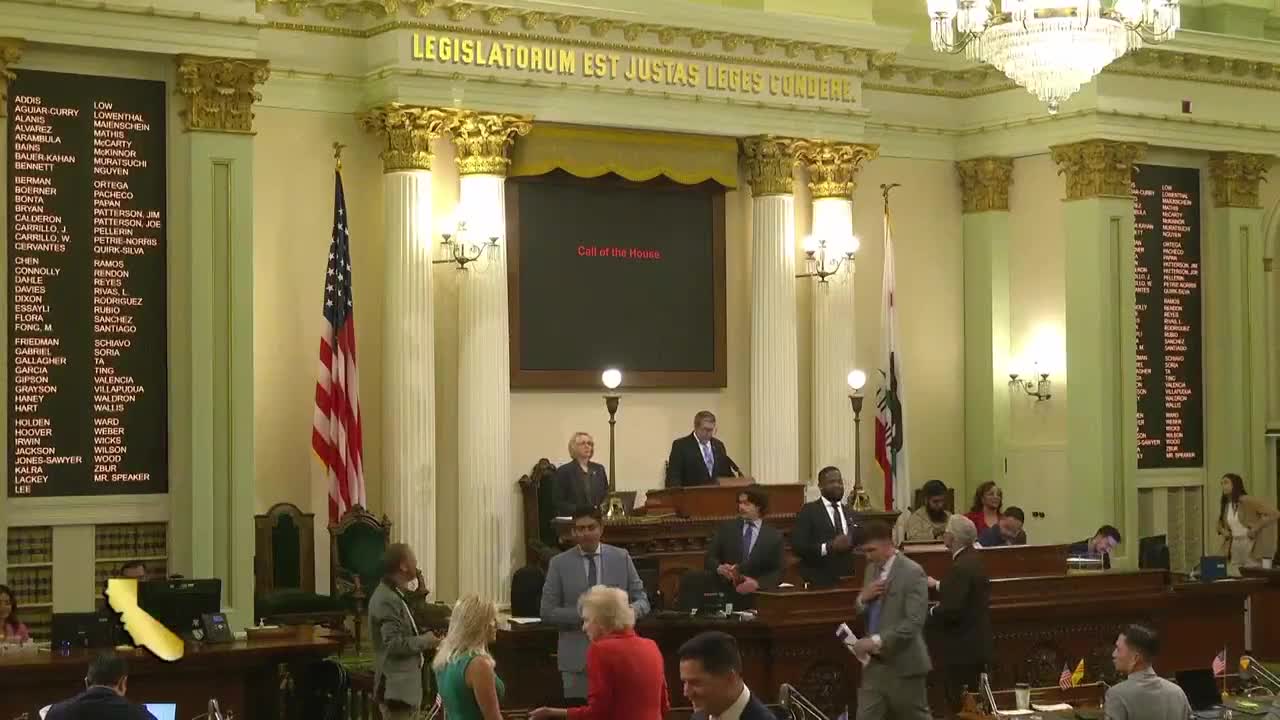 1MIN
Assembly Floor
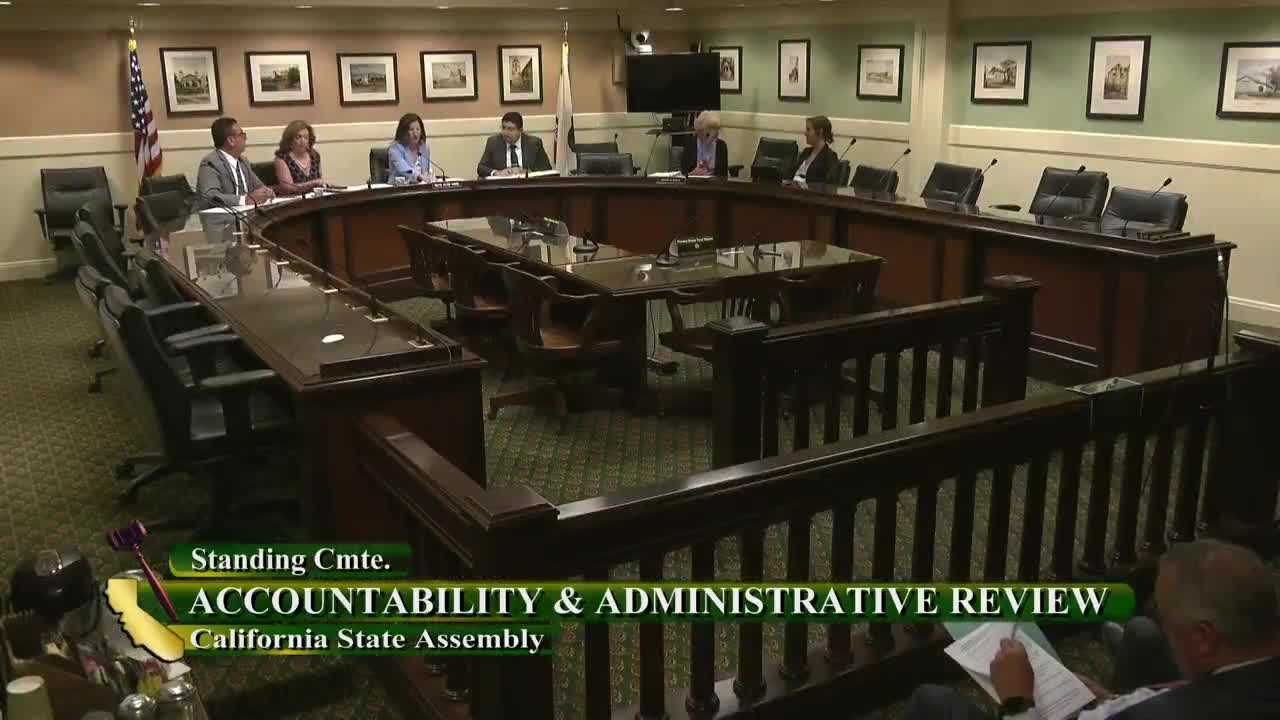 15MIN