SB 894: Sexual exploitation by a member of the clergy.
- Session Year: 2023-2024
- House: Senate
- Latest Version Date: 2024-04-01
Current Status:
Failed
(2024-04-16: April 16 hearing: Held in committee and under submission.)
Introduced
In Committee
First Chamber
In Committee
Second Chamber
Enacted
What does this bill do?
The bill makes it a crime and bars the consent defense in civil lawsuits when a member of the clergy (for example, a priest, minister, or rabbi) uses their position of trust or authority to have sex or sexual contact with an adult congregant. It defines the offense, sets jail terms and fines for single or multiple victims and repeat offenders, and excludes sexual contact with a spouse or equivalent domestic partner.
The summary is provided by generative AI which can make mistakes. For original language, please view the details in the table below.
Existing law provides that a person commits a sexual battery who, among other things, acts with the intent to cause a harmful or offensive contact with an intimate part, as defined, of another that directly or indirectly results in a sexually offensive contact with that person. The law makes a person who commits a sexual battery pursuant to those provisions liable for damages and equitable relief. Existing law establishes the defense of consent in civil actions.
This bill would prohibit the defense that the adult parishioner congregant consented to sexual contact in a civil action involving sexual contact between a member of the clergy and an adult parishioner. congregant.
Existing law prohibits the touching of an intimate part, as defined, of another person if the touching is against the will of the person touched and is for the specific purpose of sexual arousal, sexual gratification, or sexual abuse.
Existing law makes a physician and surgeon, psychotherapist, or alcohol and drug abuse counselor who engages in specified sexual acts or sexual contact with a patient or client guilty of sexual exploitation and makes a violation of those provisions a crime, except as specified. A violation of this prohibition is punishable as a misdemeanor or a felony.
This bill would make a member of the clergy, as defined, who engages in specified sexual acts or contact with an adult parishioner, congregant, as specified, guilty of sexual exploitation by a member of the clergy. The bill would specify that consent is not a defense to a violation of that provision and would make the crime punishable as a misdemeanor or a felony. The bill would also specify that it does not apply to sexual contact between a member of the clergy and their spouse or person in an equivalent domestic relationship. By creating a new crime, this bill would impose a state-mandated local program.
The California Constitution requires the state to reimburse local agencies and school districts for certain costs mandated by the state. Statutory provisions establish procedures for making that reimbursement.
This bill would provide that no reimbursement is required by this act for a specified reason.
Existing law provides that a person commits a sexual battery who, among other things, acts with the intent to cause a harmful or offensive contact with an intimate part, as defined, of another that directly or indirectly results in a sexually offensive contact with that person. The law makes a person who commits a sexual battery pursuant to those provisions liable for damages and equitable relief. Existing law establishes the defense of consent in civil actions.
This bill would prohibit the defense that the adult parishioner consented to sexual contact in a civil action involving sexual contact between a member of the clergy and an adult parishioner.
Existing law prohibits the touching of an intimate part, as defined, of another person if the touching is against the will of the person touched and is for the specific purpose of sexual arousal, sexual gratification, or sexual abuse.
Existing law makes a physician and surgeon, psychotherapist, or alcohol and drug abuse counselor who engages in specified sexual acts or sexual contact with a patient or client guilty of sexual exploitation and makes a violation of those provisions a crime, except as specified. A violation of this prohibition is punishable as a misdemeanor or a felony.
This bill would make a member of the clergy, as defined, who engages in specified sexual acts or contact with an adult parishioner, as specified, guilty of sexual exploitation by a member of the clergy. The bill would specify that consent is not a defense to a violation of that provision and would make the crime punishable as a misdemeanor or a felony. The bill would also specify that it does not apply to sexual contact between a member of the clergy and their spouse or person in an equivalent domestic relationship. By creating a new crime, this bill would impose a state-mandated local program.
The California Constitution requires the state to reimburse local agencies and school districts for certain costs mandated by the state. Statutory provisions establish procedures for making that reimbursement.
This bill would provide that no reimbursement is required by this act for a specified reason.
(a)Consent is not a defense in a civil action under Section 1708.5 if the person who commits the sexual battery is a member of the clergy who, in such capacity, is in a position of trust or authority over the victim and uses their position of trust or authority to exploit the victims emotional dependency on the member of the clergy.
(b)For purposes of this section, member of the clergy means a person ordained or recognized by a religious organization to perform religious duties and who exercises influence, guidance, or counseling within the religious community. priest, minister, rabbi, or similar functionary of a church, temple, or recognized denomination or organization.
SEC. 2.Chapter 3 (commencing with Section 275) is added to Title 9 of Part 1 of the Penal Code, to read:3.Sexual Exploitation by a Member of the Clergy275.(a)A member of the clergy who is in a position of trust or authority over an adult parishioner congregant and who engages in an act of sexual intercourse, sodomy, oral copulation, or sexual contact with that adult parishioner congregant is guilty of sexual exploitation by a member of the clergy.
(b)Consent is not a defense in a criminal action under this section.
(c)Sexual exploitation by a member of the clergy is a public offense:
(1)An act in violation of subdivision (a) shall be punishable by imprisonment in a county jail for a period of not more than six months, a fine not exceeding one thousand dollars ($1,000), or by both that imprisonment and fine.
(2)Multiple acts in violation of subdivision (a) with a single victim, when the offender has no prior conviction for sexual exploitation, shall be punishable by imprisonment in a county jail for a period of not more than six months, a fine not exceeding one thousand dollars ($1,000), or by both that imprisonment and fine.
(3)An act or acts in violation of subdivision (a) with two or more victims shall be punishable by imprisonment pursuant to subdivision (h) of Section 1170 for a period of 16 months, two years, or three years and a fine not exceeding ten thousand dollars ($10,000), or the act or acts shall be punishable by imprisonment in a county jail for a period of not more than one year, a fine not exceeding one thousand dollars ($1,000), or by both that imprisonment and fine.
(4)Two or more acts in violation of subdivision (a) with a single victim, when the offender has at least one prior conviction for sexual exploitation, shall be punishable by imprisonment pursuant to subdivision (h) of Section 1170 for a period of 16 months, two years, or three years and a fine not exceeding ten thousand dollars ($10,000), or the act or acts shall be punishable by imprisonment in a county jail for a period of not more than one year, a fine not exceeding one thousand dollars ($1,000), or by both that imprisonment and fine.
(5)An act or acts in violation of subdivision (a) with two or more victims, when the offender has at least one prior conviction for sexual exploitation, shall be punishable by imprisonment pursuant to subdivision (h) of Section 1170 for a period of 16 months, two years, or three years and a fine not exceeding ten thousand dollars ($10,000).
(d)This section does not apply to sexual contact between a member of the clergy and their spouse or person in an equivalent domestic relationship.
(e)For purposes of this section, the following terms have the following meanings:
(1)Intimate part and touching have the same meanings as defined in Section 243.4.
(2)Member of the clergy means a person ordained or recognized by a religious organization to perform religious duties and who exercises influence, guidance, or counseling within the religious community. priest, minister, rabbi, or similar functionary of a church, temple, or recognized denomination or organization.
(3)Sexual contact means sexual intercourse or the touching of an intimate part of an adult parishioner congregant for the purpose of sexual arousal, gratification, or abuse.
(f)This section does not limit or prevent prosecution under any other law that proscribes a course of conduct which that is proscribed by this section.
(g)In the case of a felony conviction for a violation of this section, the fact that the victim was an employee of the defendants religious organization shall be a factor in aggravation in sentencing.
SEC. 3.No reimbursement is required by this act pursuant to Section 6 of Article XIIIB of the California Constitution because the only costs that may be incurred by a local agency or school district will be incurred because this act creates a new crime or infraction, eliminates a crime or infraction, or changes the penalty for a crime or infraction, within the meaning of Section 17556 of the Government Code, or changes the definition of a crime within the meaning of Section 6 of Article XIIIB of the California Constitution.
(a)Consent is not a defense in a civil action under Section 1708.5 if the person who commits the sexual battery is a member of the clergy who, in such capacity, is in a position of trust or authority over the victim and uses their position of trust or authority to exploit the victims emotional dependency on the member of the clergy.
(b)For purposes of this section, member of the clergy means a person ordained or recognized by a religious organization to perform religious duties and who exercises influence, guidance, or counseling within the religious community.
SEC. 2.Chapter 3 (commencing with Section 275) is added to Title 9 of Part 1 of the Penal Code, to read:3.Sexual Exploitation by a Member of the Clergy275.(a)A member of the clergy who is in a position of trust or authority over an adult parishioner and who engages in an act of sexual intercourse, sodomy, oral copulation, or sexual contact with that adult parishioner is guilty of sexual exploitation by a member of the clergy.
(b)Consent is not a defense in a criminal action under this section.
(c)Sexual exploitation by a member of the clergy is a public offense:
(1)An act in violation of subdivision (a) shall be punishable by imprisonment in a county jail for a period of not more than six months, a fine not exceeding one thousand dollars ($1,000), or by both that imprisonment and fine.
(2)Multiple acts in violation of subdivision (a) with a single victim, when the offender has no prior conviction for sexual exploitation, shall be punishable by imprisonment in a county jail for a period of not more than six months, a fine not exceeding one thousand dollars ($1,000), or by both that imprisonment and fine.
(3)An act or acts in violation of subdivision (a) with two or more victims shall be punishable by imprisonment pursuant to subdivision (h) of Section 1170 for a period of 16 months, two years, or three years and a fine not exceeding ten thousand dollars ($10,000), or the act or acts shall be punishable by imprisonment in a county jail for a period of not more than one year, a fine not exceeding one thousand dollars ($1,000), or by both that imprisonment and fine.
(4)Two or more acts in violation of subdivision (a) with a single victim, when the offender has at least one prior conviction for sexual exploitation, shall be punishable by imprisonment pursuant to subdivision (h) of Section 1170 for a period of 16 months, two years, or three years and a fine not exceeding ten thousand dollars ($10,000), or the act or acts shall be punishable by imprisonment in a county jail for a period of not more than one year, a fine not exceeding one thousand dollars ($1,000), or by both that imprisonment and fine.
(5)An act or acts in violation of subdivision (a) with two or more victims, when the offender has at least one prior conviction for sexual exploitation, shall be punishable by imprisonment pursuant to subdivision (h) of Section 1170 for a period of 16 months, two years, or three years and a fine not exceeding ten thousand dollars ($10,000).
(d)This section does not apply to sexual contact between a member of the clergy and their spouse or person in an equivalent domestic relationship.
(e)For purposes of this section, the following terms have the following meanings:
(1)Intimate part and touching have the same meanings as defined in Section 243.4.
(2)Member of the clergy means a person ordained or recognized by a religious organization to perform religious duties and who exercises influence, guidance, or counseling within the religious community.
(3)Sexual contact means sexual intercourse or the touching of an intimate part of an adult parishioner for the purpose of sexual arousal, gratification, or abuse.
(f)This section does not limit or prevent prosecution under any other law that proscribes a course of conduct which is proscribed by this section.
(g)In the case of a felony conviction for a violation of this section, the fact that the victim was an employee of the defendants religious organization shall be a factor in aggravation in sentencing.
SEC. 3.No reimbursement is required by this act pursuant to Section 6 of Article XIIIB of the California Constitution because the only costs that may be incurred by a local agency or school district will be incurred because this act creates a new crime or infraction, eliminates a crime or infraction, or changes the penalty for a crime or infraction, within the meaning of Section 17556 of the Government Code, or changes the definition of a crime within the meaning of Section 6 of Article XIIIB of the California Constitution.
|
Date
|
Status
|
|---|---|
| Apr 16, 2024 | April 16 hearing: Held in committee and under submission. |
| Apr 16, 2024 | Set for hearing April 23 in JUD. pending receipt. |
| Apr 11, 2024 | Set for hearing April 16. |
| Apr 9, 2024 | April 9 set for first hearing canceled at the request of author. |
| Apr 1, 2024 | From committee with author's amendments. Read second time and amended. Re-referred to Com. on PUB S. |
| Mar 12, 2024 | Set for hearing April 9. |
| Feb 14, 2024 | Referred to Coms. on PUB S. and JUD. |
| Jan 4, 2024 | From printer. May be acted upon on or after February 3. |
| Jan 3, 2024 | Introduced. Read first time. To Com. on RLS. for assignment. To print. |
This list shows positions taken on this bill by organizations on the date displayed, which is linked to the original source.
Positions by individuals are not included.
SENATE COMMITTEE ON PUBLIC SAFETY
Senator Aisha Wahab, Chair
2023 - 2024 Regular
Bill No: SB 894 Hearing Date: April 16, 2024
Author: | Min | ||
Version: | April 1, 2024 | ||
Urgency: | No | Fiscal: | Yes |
Consultant: | SC | ||
Subject: Sexual exploitation by a member of the clergy
HISTORY
Source: Author
Prior Legislation: SB 685 (Watson), Ch. 444, Stats. 1995
SB 743 (Boatwright), Ch. 1072, Stats. 1993
SB 1004 (Boatwright), Ch. 795, Stats. 1989
Support: Baylor Adult Clergy Sexual Abuse, Advocacy and Research Collaborative; Freedom and Fashion; Pearls and Swine; Survivors Network of those Abused by Priests; The Hope of Survivors; 1 private individual
Opposition: ACLU California Action; California Public Defenders Association
PURPOSE
The purpose of this bill is to create a new offense of sexual exploitation by a member of the clergy who engages in sexual acts with an adult congregant, punishable as a misdemeanor or felony as specified, and to prohibit the use of consent as a defense for those criminally charged with the new offense and in civil cases involving sexual battery committed by a member of the clergy on an adult congregant.
Existing law prohibits the act of sexual battery which is touching an intimate part of another person, if the touching is against the will of the person touched, and is for the specific purpose of sexual arousal, sexual gratification, or sexual abuse and punishes the act by imprisonment in the county jail not exceeding 6 months and a fine of up to $1,000. (Pen. Code, § 243.4, subd. (d).)
Existing law specifies that if sexual battery is committed by an employer and the victim was an employee of the defendant, the act shall be punishable by a fine not exceeding $3,000 and imprisonment in a county jail not exceeding six months. (Pen. Code, § 243.4, subd. (d).)
Existing law punishes sexual battery as an alternate felony-misdemeanor punishable by imprisonment in a county jail for not more than one year, and by a fine not exceeding $2,000; or by imprisonment in the state prison for two, three, or four years, and by a fine not exceeding $10,000, under the following circumstances:
- When the victim is unlawfully restrained by the accused or by an accomplice;
- When the victim is a person who is institutionalized for medical treatment and who is seriously disabled or medically incapacitated;
- When the victim is at the time unconscious of the nature of the act because the perpetrator fraudulently represented that the touching served a professional purpose. (Pen. Code, § 243.4, subds. (a)-(c).)
Existing law specifies that in the case of a felony conviction for sexual battery, the fact that the defendant was an employer and the victim was an employee of the defendant shall be a factor in aggravation in sentencing. (Pen. Code, § 243.4, subds. (i).)
Existing law defines “clergy member” for purposes of the mandated reporter statutes to mean a priest, minister, rabbi, religious practitioner, or other similar functionary of a church, temple or recognized denomination or organization. (Pen. Code, §11165.7, subd. (a)(32).)
Existing law states that rape is an act of sexual intercourse committed against the will of the victim. (Pen. Code, § 261.)
Existing law states that any physician and surgeon, psychotherapist, alcohol and drug abuse counselor or any person holding himself or herself out to be a physician and surgeon, psychotherapist, or alcohol and drug abuse counselor, who engages in an act of sexual intercourse, sodomy, oral copulation, or sexual contact with a patient or client is guilty of sexual exploitation and punishes the act as either a misdemeanor, alternate felony misdemeanor, or felony depending on the number of victims and any prior convictions for sexual exploitation. Consent of the patient or client is not a defense. (Bus. & Prof. Code, § 729.)
This bill creates the new crime of sexual exploitation by a member of the clergy which applies when a member of the clergy is in a position of trust or authority over an adult congregant and who engages in an act of sexual intercourse, sodomy, oral copulation, or sexual contact with that adult congregant.
This bill defines “member of the clergy” to mean a priest, minister, rabbi, or similar functionary of a church, temple, or recognized denomination or organization.
This bill specifies that consent is not a defense to the new crime.
This bill states that sexual exploitation by a member of the clergy shall be punishable as follows:
- An act in violation of the new crime is punishable by imprisonment in county jail for a period of not more than 6 months, and/or a fine not exceeding $1,000;
- Multiple acts in violation of the new crime with a single victim, when the offender has no prior conviction for sexual exploitation, shall be punishable by imprisonment in county jail for a period not to exceed 6 months, and/or a fine not exceeding $1,000;
- An act or acts in violation of the new crime with two or more victims shall be punishable by imprisonment for a period of 16 months, two or three years and a fine not exceeding $10,000, or by imprisonment in county jail for a period of not more than one year, and/or a fine not exceeding $1,000;
- Two or more acts in violation of the new crime with a single victim when the offender has one prior conviction for sexual exploitation, shall be punishable by imprisonment for a period of 16 months, two or three years and a fine not exceeding $10,000, or by imprisonment in a county jail for a period of not more than one year and/or a fine not exceeding $1,000; and,
- An act or acts in violation of the new crime with two or more victims, when the offender has at least one prior conviction for sexual exploitation, shall be punishable by imprisonment for a period of 16 months, two years or three years and a fine not exceeding $10,000.
This bill provides that it does not apply to sexual contact between a member of the clergy and their spouse or person in an equivalent domestic relationship.
This bill states that in the case of a felony conviction for a violation of this section, the fact that the victim was an employee of the defendant’s religious organization shall be a factor in aggravation in sentencing.
This bill provides that in a civil action for sexual battery, consent is not a defense if the person who commits sexual battery is a member of the clergy, who in such capacity, is in a position of trust or authority over the victim and uses their position of trust or authority to exploit the victim’s emotional dependency on the member of the clergy.
This bill states that “member of the clergy” for purposes of the above provision means a priest, minister, rabbi, or similar functionary of a church, temple, or recognized denomination or organization.
COMMENTS
- Need for This Bill
According to the author of this bill:
Faith leaders are given an incredible amount of authority, including moral authority, over their congregations in churches, temples, mosques, and other religious institutions. Just like a doctor-patient relationship, members of the clergy are in a unique position of power. While protections currently exist for patients in the care of doctors and therapists, there is no such protection for vulnerable congregants. We cannot stand idly by while this power imbalance allows for the sexual exploitation of adults who are victimized because of their faith or religious reverence.
- Crimes involving Sexual Acts with Adults: Consent
Generally, when it is alleged that an adult has been the victim of sexual battery or other sexual acts including rape, an essential element is that the act was committed without the victim’s consent. (People v. Andrews (2015) 234 Cal. App. 4th 590, 602.) Whether the victim gave consent is question of fact to be determined in light of all of the circumstances. To consent, a person must act freely and voluntarily and know the nature of the act. (CALCRIM No. 938.) A defendant is not guilty of the crime if they actually and reasonably believed that the other person consented. (Id.) The defense has two components, one subjective and the other objective. Not only must the defendant have honestly and in good faith, albeit mistakenly, believed that the victim consented, the defendant’s mistake regarding consent must also be reasonable under the circumstances. (People v. Williams (1992) 4 Cal. 4th 354.)
Aside from certain specified circumstances that negate a person’s consent, for example if the person was unconscious of the nature of the act or incapacitated by an intoxicating substance or if a person is incapable of consent because of a mental disorder or developmental or physical disability, consent is often the key factor in determining whether a person will be convicted of an offense involving sexual acts with another adult.
In some narrow circumstances, due to a patient-doctor or patient-counselor relationship, a defendant may be guilty of sexual exploitation for engaging in sexual acts with a client or patient, or a former client or patient when the relationship was terminated primarily for the purpose of engaging in those acts unless the patient or client was referred to another independent and objective professional recommended by a third-party for treatment. (Bus. & Prof. Code, § 729.)
This bill appears to model its provisions based on Business and Professions Code section 729. Specifically, the bill creates a new type of sexual exploitation offense for a member of the clergy who is in a position of trust or authority over an adult congregant and who engages in an act of sexual intercourse, sodomy, oral copulation, or sexual contact with that adult congregant. This bill prohibits raising consent as a defense. The bill’s provisions do not provide a definition of what it means for a member of the clergy to be in a position or trust over and adult congregant. This could apply very broadly to consensual relationships where there is no underlying exploitation or manipulation and the bill prohibits a person charged with the crime to bring in any evidence to show that there was consent or that they reasonably believed there was consent.
Unlike sexual exploitation by a doctor, surgeon, psychotherapist, or drug counselor, this new crime would apply regardless of whether there is a defined counseling relationship or other medically-necessitated relationship between the clergy member and adult congregant. Additionally, unlike a professional providing treatment to a patient who may easily refer a patient to another professional, a clergy member and the adult congregant are a part of the same community and oftentimes it is not a simple matter to transfer someone to another church or temple.
Other than situations that are deemed unconsensual because one party did not know the nature of the act or if they did not voluntarily and freely give consent which is a question of fact to be determined in light of all of the circumstances, should the law should hold a clergy member’s sexual relationship with an adult congregant as per se exploitative to the point that an otherwise competent adult’s consent is not legally valid?
- This Bill Creates a Status-Specific Offense
This bill highlights the issue of sexual exploitation by clergy members committed on adult congregants. Generally, crimes apply to individuals regardless of their professions or affiliations. A notable exception is Business and Professions Code section 729, however, as discussed above, the relationship between a patient or client and their doctor, surgeon, psychotherapist, or drug counselor is a definable professional relationship whereas a member of the clergy and an adult congregant do not necessarily have this similar type of defined relationship.
Exploitation based on authority can exist in a variety of situations and relationships. For example, a supervisor and their employee, or a professor and their adult student, or a coach and adult athlete. These relationships may have employment or other professional implications, however, when occurring between consenting adults, they are not criminalized. This bill criminalizes what may be adult consensual behavior for clergy members whereas people in similar positions of authority are not criminalized for the same behavior.
- Double-Referral
This bill additionally specifies that consent is not a defense in a civil sexual battery case if the person who commits the sexual battery is a member of the clergy who, in such capacity, is in a position of trust or authority over the victim and uses their position of trust or authority to exploit the victim’s emotional dependency on the member of the clergy. Because this provision of the bill affects civil matters, this bill is double-referred to Judiciary Committee where this provision will be analyzed fully should this bill be approved by this committee.
- Argument in Support
According to the Hope of Survivors:
Every California physician and surgeon, psychotherapist, or alcohol and drug abuse counselor is morally, ethically and legally expected to provide beneficent and benign guidance; as noted in SB-894's preamble, the sexual exploitation of any client is explicitly proscribed by Civil and Penal Codes.
Should members of the clergy be less constrained from the sexual exploitation of those in their care?
Clergy sexual abuse typically occurs when a person in a religious role distorts the authority of (1) their claimed connection to deity, and (2) their community's religious writings; devising a callously calculated and cleverly crafted power tool of oppression. The abuser persists, unimpeded by the potentially life-long anguish and devastation caused to the vulnerable parishioner(s) who they masterfully manipulate, coerce (or even extort) into exploitative sexual interaction and/or sexual contact.
Yet the abuser often mischaracterizes this deliberate the premeditated exploitation as “consensual.”
Further, experience evidences a tragically high rate of repeat clergy sexual abusers in the absence of consequential disincentives.
- Argument in Opposition
According to California Public Defenders Association:
While consensual sexual activity between a clergy person and an adult congregant may be unadvisable, it would be a radical departure from existing law to make it a crime. To do so would be a massive governmental overreach into one of the most private and personal areas in any person’s life and an overreach that is unprecedented in existing law. The idea of incarcerating everyone who has violated a social norm has already led to mass incarceration. Many situations exist in which one adult is in a position of trust or authority over another adult: for example, the attorney/client relationship, the financial advisor/client relationship, and the supervisor/employee relationship. However, the law does not criminalize consensual sexual contact between adults in these relationships.
The only similar California law to the law proposed applies to a physician, surgeon, psychotherapist, or alcohol and drug counselor. (B&P Code section 729) And BP §729 criminalizes sexual contact between a surgeon, physician, psychotherapist, or counselor and a patient only if the physician, psychotherapist, or counselor fails to refer the patient to a new surgeon, physician, psychotherapist or counselor.
The proposed law is also not necessary to prevent nonconsensual sexual contact between a member of the clergy and an adult congregant because existing law already criminalizes non-consensual sexual contact between two people, regardless of their relationship.
SB 894 is Overbroad and is Vague:
Unlike a number of states that have sought to protect parishioners who have sought mental, emotional, or spiritual counseling from their pastors, SB 894 merely uses the phrase “in a position of trust or authority over an adult parishioner” without any definition. This is overbroad and potentially void for vagueness.
At least 7 states, explicitly define the nature of the trust relationship by including pastors in the same category as other counselors. Connecticut, Delaware, Minnesota, New Mexico, North Dakota, South Dakota, Tennessee, and the District of Columbia specifically require that there is an actual counseling relationship between pastors and their parishioners akin to that between therapists and their clients before sexual conduct is illegal. Some of these states require more, such as fraud or deceit, than others for the conduct to be illegal. But all the states have at least one guardrail that is missing in SB 894’s proposed language.
For example, in Delaware’s sexual exploitation law, the following definition of without consent requires that the sexual contact be committed “under the guise of providing” counseling or treatment and the victim’s reasonable belief that the act was for appropriate counseling or treatment “such that resistance by the victim could not reasonably have been manifested” two factors that SB 894 lacks.
-- END –
SENATE COMMITTEE ON PUBLIC SAFETY
Senator Aisha Wahab, Chair
2023 - 2024 Regular
Bill No: SB 894 Hearing Date: April 9, 2024
Author: | Min | ||
Version: | April 1, 2024 | ||
Urgency: | No | Fiscal: | Yes |
Consultant: | SC | ||
Subject: Sexual exploitation by a member of the clergy
HISTORY
Source: Author
Prior Legislation: SB 685 (Watson), Ch. 444, Stats. 1995
SB 743 (Boatwright), Ch. 1072, Stats. 1993
SB 1004 (Boatwright), Ch. 795, Stats. 1989
Support: Baylor Adult Clergy Sexual Abuse, Advocacy and Research Collaborative; Freedom and Fashion; Pearls and Swine; Survivors Network of those Abused by Priests; The Hope of Survivors; 1 private individual
Opposition: ACLU California Action; California Public Defenders Association
PURPOSE
The purpose of this bill is to create a new offense of sexual exploitation by a member of the clergy who engages in sexual acts with an adult congregant and to prohibit the use of consent as a defense for those criminally charged with the new offense and in civil cases involving sexual contact between an adult congregant and a member of the clergy.
Existing law prohibits the act of sexual battery which is touching an intimate part of another person, if the touching is against the will of the person touched, and is for the specific purpose of sexual arousal, sexual gratification, or sexual abuse and punishes the act by imprisonment in the county jail not exceeding 6 months and a fine of up to $1,000. (Pen. Code, § 243.4, subd. (d).)
Existing law specifies that if sexual battery is committed by an employer and the victim was an employee of the defendant, the act shall be punishable by a fine not exceeding $3,000 and imprisonment in a county jail not exceeding six months. (Pen. Code, § 243.4, subd. (d).)
Existing law punishes sexual battery as an alternate felony-misdemeanor punishable by imprisonment in a county jail for not more than one year, and by a fine not exceeding $2,000; or by imprisonment in the state prison for two, three, or four years, and by a fine not exceeding $10,000, under the following circumstances:
- When the victim is unlawfully restrained by the accused or by an accomplice;
- When the victim is a person who is institutionalized for medical treatment and who is seriously disabled or medically incapacitated;
- When the victim is at the time unconscious of the nature of the act because the perpetrator fraudulently represented that the touching served a professional purpose. (Pen. Code, § 243.4, subds. (a)-(c).)
Existing law specifies that in the case of a felony conviction for sexual battery, the fact that the defendant was an employer and the victim was an employee of the defendant shall be a factor in aggravation in sentencing. (Pen. Code, § 243.4, subds. (i).)
Existing law defines “clergy member” for purposes of the mandated reporter statutes to mean a priest, minister, rabbi, religious practitioner, or other similar functionary of a church, temple or recognized denomination or organization. (Pen. Code, §11165.7, subd. (a)(32).)
Existing law states that rape is an act of sexual intercourse committed against the will of the victim. (Pen. Code, § 261.)
Existing law states that any physician and surgeon, psychotherapist, alcohol and drug abuse counselor or any person holding himself or herself out to be a physician and surgeon, psychotherapist, or alcohol and drug abuse counselor, who engages in an act of sexual intercourse, sodomy, oral copulation, or sexual contact with a patient or client is guilty of sexual exploitation and punishes the act as either a misdemeanor, alternate felony misdemeanor, or felony depending on the number of victims and any prior convictions for sexual exploitation. Consent of the patient or client is not a defense. (Bus. & Prof. Code, § 729.)
This bill creates the new crime of sexual exploitation by a member of the clergy which applies when a member of the clergy is in a position of trust or authority over an adult congregant and who engages in an act of sexual intercourse, sodomy, oral copulation, or sexual contact with that adult congregant.
This bill defines “member of the clergy” to mean a priest, minister, rabbi, or similar functionary of a church, temple, or recognized denomination or organization.
This bill specifies that consent is not a defense to the new crime.
This bill states that sexual exploitation by a member of the clergy shall be punishable as follows:
- An act in violation of the new crime is punishable by imprisonment in county jail for a period of not more than 6 months, and/or a fine not exceeding $1,000;
- Multiple acts in violation of the new crime with a single victim, when the offender has no prior conviction for sexual exploitation, shall be punishable by imprisonment in county jail for a period not to exceed 6 months, and/or a fine not exceeding $1,000;
- An act or acts in violation of the new crime with two or more victims shall be punishable by imprisonment for a period of 16 months, two or three years and a fine not exceeding $10,000, or by imprisonment in county jail for a period of not more than one year, and/or a fine not exceeding $1,000;
- Two or more acts in violation of the new crime with a single victim when the offender has one prior conviction for sexual exploitation, shall be punishable by imprisonment for a period of 16 months, two or three years and a fine not exceeding $10,000, or by imprisonment in a county jail for a period of not more than one year and/or a fine not exceeding $1,000; and,
- An act or acts in violation of the new crime with two or more victims, when the offender has at least one prior conviction for sexual exploitation, shall be punishable by imprisonment for a period of 16 months, two years or three years and a fine not exceeding $10,000.
This bill provides that it does not apply to sexual contact between a member of the clergy and their spouse or person in an equivalent domestic relationship.
This bill states that in the case of a felony conviction for a violation of this section, the fact that the victim was an employee of the defendant’s religious organization shall be a factor in aggravation in sentencing.
This bill provides that in a civil action for sexual battery, consent is not a defense if the person who commits sexual battery is a member of the clergy, who in such capacity, is in a position of trust or authority over the victim and uses their position of trust or authority to exploit the victim’s emotional dependency on the member of the clergy.
This bill states that “member of the clergy” for purposes of the above provision means a priest, minister, rabbi, or similar functionary of a church, temple, or recognized denomination or organization.
COMMENTS
- Need for This Bill
According to the author of this bill:
Faith leaders are given an incredible amount of authority, including moral authority, over their congregations in churches, temples, mosques, and other religious institutions. Just like a doctor-patient relationship, members of the clergy are in a unique position of power. While protections currently exist for patients in the care of doctors and therapists, there is no such protection for vulnerable congregants. We cannot stand idly by while this power imbalance allows for the sexual exploitation of adults who are victimized because of their faith or religious reverence.
- Crimes involving Sexual Acts with Adults: Consent
Generally, when it is alleged that an adult has been the victim of sexual battery or other sexual acts, an essential element is that the act was committed without the victim’s consent. (People v. Andrews (2015) 234 Cal. App. 4th 590, 602.) Whether the victim gave consent is question of fact to be determined in light of all of the circumstances. To consent, a person must act freely and voluntarily and know the nature of the act. (CALCRIM No. 938.) A defendant is not guilty of the crime if they actually and reasonably believed that the other person consented. (Id.)
Aside from certain specified circumstances that negate a person’s consent, for example if the person was unconscious or incapacitated by an intoxicating substance, or if a person is incapable of consent because of a mental disorder or developmental or physical disability, consent is often the key factor in determining whether a person will be convicted of an offense involving sexual acts.
Additionally, in some circumstances, due to a patient-doctor or patient-counselor relationship, a defendant may be guilty of sexual exploitation for engaging in sexual acts with a client or patient, or a former client or patient when the relationship was terminated primarily for the purpose of engaging in those acts unless the patient or client was referred to another independent and objective professional recommended by a third-party for treatment. (Bus. & Prof. Code, § 729.)
This bill appears to model its provisions based on Business and Professions Code section 729. Specifically, the bill creates a new type of sexual exploitation offense for a member of the clergy who is in a position of trust or authority over an adult congregant and who engages in an act of sexual intercourse, sodomy, oral copulation, or sexual contact with that adult congregant. This bill also prohibits the use of consent as a defense. The bill’s provisions do not provide a definition of what it means for a member of the clergy to be in a position or trust over and adult congregant. This could apply very broadly to consensual relationships where there is no underlying exploitation or manipulation and the bill would not allow a person charged with the crime to bring in any evidence to show that there was consent or that they reasonably believed there was consent.
Unlike sexual exploitation by a doctor, surgeon, psychotherapist, or drug counselor, this new crime would apply regardless of whether there is a defined counseling relationship or other medically-necessitated relationship between the clergy member and adult congregant. Additionally, unlike a professional providing services to a patient who may easily refer a patient to another professional, a clergy member and the adult congregant are a part of the same community and oftentimes it is not a simple matter to transfer someone to another church or temple.
- This Bill Creates a Status-Specific Offense
This bill highlights the issue of sexual exploitation by clergy members committed on adult congregants. Generally, crimes apply to individuals regardless of their professions or affiliations. A notable exception is Business and Professions Code section 729, however, as discussed above, the relationship between a patient or client and their doctor, surgeon, psychotherapist, or drug counselor is a definable professional relationship whereas a member of the clergy and an adult congregant do not necessarily have this similar type of defined relationship.
Exploitation based on authority can exist in a variety of situations and relationships. For example, a supervisor and their employee, or a professor and their adult student, or a coach and adult athlete. These relationships may have employment or other professional implications, however, when occurring between consenting adults, they are not criminalized. This bill criminalizes what may be adult consensual behavior for clergy members whereas people in similar positions of authority are not criminalized for the same behavior.
- Double-Referral
This bill additionally specifies that consent is not a defense in a civil sexual battery case if the person who commits the sexual battery is a member of the clergy who, in such capacity, is in a position of trust or authority over the victim and uses their position of trust or authority to exploit the victim’s emotional dependency on the member of the clergy. Because this provision of the bill affects civil matters, this bill is double-referred to Judiciary Committee where this provision will be analyzed fully.
- Argument in Support
According to the Hope of Survivors:
Every California physician and surgeon, psychotherapist, or alcohol and drug abuse counselor is morally, ethically and legally expected to provide beneficent and benign guidance; as noted in SB-894's preamble, the sexual exploitation of any client is explicitly proscribed by Civil and Penal Codes.
Should members of the clergy be less constrained from the sexual exploitation of those in their care?
Clergy sexual abuse typically occurs when a person in a religious role distorts the authority of (1) their claimed connection to deity, and (2) their community's religious writings; devising a callously calculated and cleverly crafted power tool of oppression. The abuser persists, unimpeded by the potentially life-long anguish and devastation caused to the vulnerable parishioner(s) who they masterfully manipulate, coerce (or even extort) into exploitative sexual interaction and/or sexual contact.
Yet the abuser often mischaracterizes this deliberate the premeditated exploitation as “consensual.”
Further, experience evidences a tragically high rate of repeat clergy sexual abusers in the absence of consequential disincentives.
- Argument in Opposition
According to California Public Defenders Association:
While consensual sexual activity between a clergy person and an adult congregant may be unadvisable, it would be a radical departure from existing law to make it a crime. To do so would be a massive governmental overreach into one of the most private and personal areas in any person’s life and an overreach that is unprecedented in existing law. The idea of incarcerating everyone who has violated a social norm has already led to mass incarceration. Many situations exist in which one adult is in a position of trust or authority over another adult: for example, the attorney/client relationship, the financial advisor/client relationship, and the supervisor/employee relationship. However, the law does not criminalize consensual sexual contact between adults in these relationships.
The only similar California law to the law proposed applies to a physician, surgeon, psychotherapist, or alcohol and drug counselor. (B&P Code section 729) And BP §729 criminalizes sexual contact between a surgeon, physician, psychotherapist, or counselor and a patient only if the physician, psychotherapist, or counselor fails to refer the patient to a new surgeon, physician, psychotherapist or counselor.
The proposed law is also not necessary to prevent nonconsensual sexual contact between a member of the clergy and an adult congregant because existing law already criminalizes non-consensual sexual contact between two people, regardless of their relationship.
SB 894 is Overbroad and is Vague:
Unlike a number of states that have sought to protect parishioners who have sought mental, emotional, or spiritual counseling from their pastors, SB 894 merely uses the phrase “in a position of trust or authority over an adult parishioner” without any definition. This is overbroad and potentially void for vagueness.
At least 7 states, explicitly define the nature of the trust relationship by including pastors in the same category as other counselors. Connecticut, Delaware, Minnesota, New Mexico, North Dakota, South Dakota, Tennessee, and the District of Columbia specifically require that there is an actual counseling relationship between pastors and their parishioners akin to that between therapists and their clients before sexual conduct is illegal. Some of these states require more, such as fraud or deceit, than others for the conduct to be illegal. But all the states have at least one guardrail that is missing in SB 894’s proposed language.
For example, in Delaware’s sexual exploitation law, the following definition of without consent requires that the sexual contact be committed “under the guise of providing” counseling or treatment and the victim’s reasonable belief that the act was for appropriate counseling or treatment “such that resistance by the victim could not reasonably have been manifested” two factors that SB 894 lacks.
-- END –
Discussed in Hearing
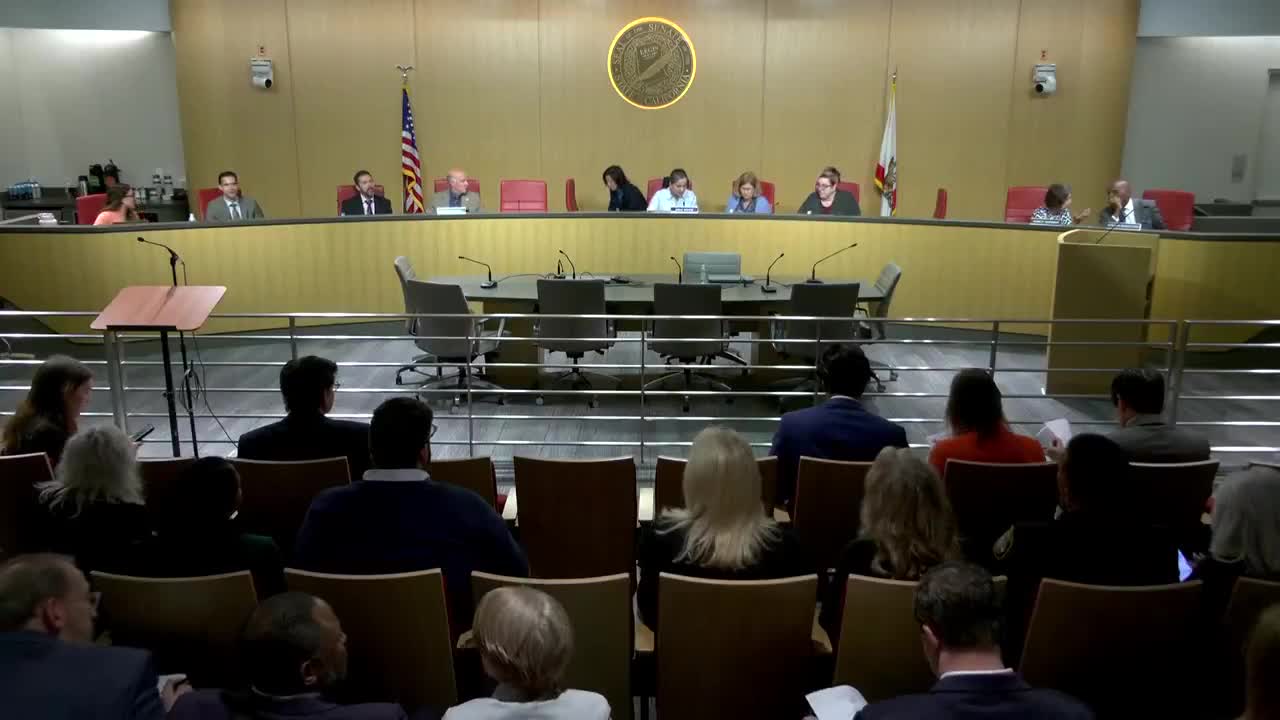 20MIN
Senate Standing Committee on Public Safety
Bill Author
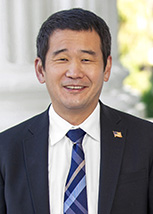
Bill Co-Author(s):