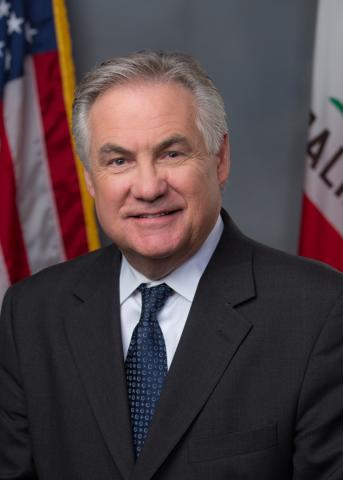
SB 911: Income taxation: exclusion: military survivor benefits.
- Session Year: 2023-2024
- House: Senate
- Latest Version Date: 2024-04-01
Current Status:
Failed
(2024-05-16: May 16 hearing: Held in committee and under submission.)
Introduced
In Committee
First Chamber
In Committee
Second Chamber
Enacted
The Personal Income Tax Law, in modified conformity with federal law, generally defines gross income as income from whatever source derived, except as specifically excluded, and provides various exclusions from gross income for purposes of computing tax liability. Existing law requires any bill authorizing a new tax expenditure to contain, among other things, specific goals, purposes, and objectives that the tax expenditure will achieve, detailed performance indicators, and data collection requirements.
This bill, for taxable years beginning on or after January 1, 2025, and before January 1, 2035, would provide an exclusion from gross income for survivor benefits or payments, not to exceed $20,000 per taxable year, received during the taxable year under the federal Survivor Benefit Plan.
Existing law requires any bill authorizing a new tax expenditure to contain, among other things, specific goals, purposes, and objectives goals that the tax expenditure will achieve, detailed performance indicators, and data collection requirements.
This bill would include additional information required for any bill authorizing a new tax expenditure.
This bill would take effect immediately as a tax levy.
The Personal Income Tax Law, in modified conformity with federal law, generally defines gross income as income from whatever source derived, except as specifically excluded, and provides various exclusions from gross income for purposes of computing tax liability. Existing law requires any bill authorizing a new tax expenditure to contain, among other things, specific goals, purposes, and objectives that the tax expenditure will achieve, detailed performance indicators, and data collection requirements.
This bill, for taxable years beginning on or after January 1, 2025, and before January 1, 2030, 2035, would provide an exclusion from gross income for survivor benefits or payments, not to exceed $20,000 per taxable year, received on or after January 1, 2025, and before January 1, 2030, during the taxable year under the federal Survivor Benefit Plan.
Existing law requires any bill authorizing a new tax expenditure to contain, among other things, specific goals, purposes, and objectives that the tax expenditure will achieve, detailed performance indicators, and data collection requirements.
This bill would include additional information required for any bill authorizing a new tax expenditure.
This bill would take effect immediately as a tax levy.
The Personal Income Tax Law, in modified conformity with federal law, generally defines gross income as income from whatever source derived, except as specifically excluded, and provides various exclusions from gross income for purposes of computing tax liability. Existing law requires any bill authorizing a new tax expenditure to contain, among other things, specific goals, purposes, and objectives that the tax expenditure will achieve, detailed performance indicators, and data collection requirements.
This bill, for taxable years beginning on or after January 1, 2025, and before January 1, 2030, would provide an exclusion from gross income for survivor benefits or payments, not to exceed $20,000 per taxable year, received on or after January 1, 2025, and before January 1, 2030, under the federal Survivor Benefit Plan.
Existing law requires any bill authorizing a new tax expenditure to contain, among other things, specific goals, purposes, and objectives that the tax expenditure will achieve, detailed performance indicators, and data collection requirements.
This bill would include additional information required for any bill authorizing a new tax expenditure.
This bill would take effect immediately as a tax levy.
(a)For taxable years beginning on or after January 1, 2025, and before January 1, 2035, gross income does not include survivor benefits or payments, not to exceed twenty thousand dollars ($20,000) per taxable year, received during the taxable year under a Survivor Benefit Plan established pursuant to Subchapter II (commencing with Section 1447) of Chapter 73 of Part II of Subtitle A of Title 10 of the United States Code, relating to survivor benefit plans.
(b)(1)(A)For the purposes of complying with Section 41, the Legislature finds and declares that the goals, purposes, and objectives goals of the exclusion allowed under this section are both of the following:
(i)To recognize the loss and sacrifice of our military families and give them the support that our community owes them.
(ii)To provide some financial relief to families that have experienced not only the loss of a loved one, but also often the loss of the sole income of the family, and who are now trying to make ends meet on a portion of that original income.
(B)The performance indicators to measure whether the exclusion meets the goals, purposes, and objectives goals stated in subparagraph (A) are as follows:
(i)The number of taxpayers excluding income from survivor benefit plans pursuant to this section.
(ii)The total dollar amount of income excluded pursuant to this section.
(iii)The total number of taxpayers in each tax bracket who excluded income pursuant to this section.
(2)On or before November 1, 2033, the Franchise Tax Board shall submit a report to the Legislature, in compliance with Section 9795 of the Government Code, detailing the following information, to the extent data is available:
(A)The number of taxpayers excluding income from survivor benefit plans pursuant to this section.
(B)The total dollar amount of income excluded pursuant to this section.
(C)The total number of taxpayers in each taxbracket who excluded income pursuant to this section.
(3)The disclosure provisions of paragraph (2) shall be treated as an exception to Section 19542.
(c)This section shall remain in effect only until December 1, 2035, and as of that date is repealed.
SEC. 2.This act provides for a tax levy within the meaning of Article IV of the California Constitution and shall go into immediate effect.
(a)For taxable years beginning on or after January 1, 2025, and before January 1, 2030, 2035, gross income does not include survivor benefits or payments, not to exceed twenty thousand dollars ($20,000) per taxable year, received on or after January 1, 2024, and before January 1, 2029, during the taxable year under a Survivor Benefit Plan established pursuant to Subchapter II (commencing with Section 1447) of Chapter 73 of Part II of Subtitle A of Title 10 of the United States Code, relating to survivor benefit plans.
(b)(1)(A)For the purposes of complying with Section 41 of the Revenue and Taxation Code, 41, the Legislature finds and declares that the goals, purposes, and objectives of the exclusion allowed under this section are both of the following:
(I)(i)To recognize the loss and sacrifice of our military families and give them the support that our community owes them.
(II)(ii)To provide some financial relief to families that have experienced not only the loss of a loved one, but also often the loss of the sole income of the family, and who are now trying to make ends meet on a portion of that original income.
(B)The performance indicators to measure whether the exclusion meets the goals, purposes, and objectives stated in paragraph (1) subparagraph (A) are as follows:
(I)(i)The number of taxpayers excluding income from survivor benefit plans pursuant to this section.
(II)(ii)The total dollar amount of income excluded pursuant to this section.
(III)(iii)The total number of taxpayers in each tax bracket who excluded income pursuant to this section.
(2)On or before December 1, 2030, the Legislative Analyst, in collaboration with November 1, 2033, the Franchise Tax Board, Board shall submit a report to the Legislature, in compliance with Section 9795 of the Government Code, detailing the following information, to the extent data is available:
(A)The number of taxpayers excluding income from survivor benefit plans pursuant to this section.
(B)The total dollar amount of income excluded pursuant to this section.
(C)The total number of taxpayers in each taxbracket who excluded income pursuant to this section.
(3)(A)Taxpayer information received pursuant to this subdivision by the Legislative Analyst is subject to Section 19542 of the Revenue and Taxation Code.(B)(3)The disclosure provisions of paragraph (2) shall be treated as an exception to Section 19542.
(c)This section shall remain in effect only until December 1, 2030, 2035, and as of that date is repealed.
SEC. 2.This act provides for a tax levy within the meaning of Article IV of the California Constitution and shall go into immediate effect.
(a)For taxable years beginning on or after January 1, 2025, and before January 1, 2030, gross income does not include survivor benefits or payments, not to exceed twenty thousand dollars ($20,000) per taxable year, received on or after January 1, 2024, and before January 1, 2029, under a Survivor Benefit Plan established pursuant to Subchapter II (commencing with Section 1447) of Chapter 73 of Part II of Subtitle A of Title 10 of the United States Code, relating to survivor benefit plans.
(b)(1)(A)For the purposes of complying with Section 41 of the Revenue and Taxation Code, the Legislature finds and declares that the goals, purposes, and objectives of the exclusion allowed under this section are both of the following:
(I)To recognize the loss and sacrifice of our military families and give them the support that our community owes them.
(II)To provide some financial relief to families that have experienced not only the loss of a loved one, but also often the loss of the sole income of the family, and who are now trying to make ends meet on a portion of that original income.
(B)The performance indicators to measure whether the exclusion meets the goals, purposes, and objectives stated in paragraph (1) are as follows:
(I)The number of taxpayers excluding income from survivor benefit plans pursuant to this section.
(II)The total dollar amount of income excluded pursuant to this section.
(III)The total number of taxpayers in each tax bracket who excluded income pursuant to this section.
(2)On or before December 1, 2030, the Legislative Analyst, in collaboration with the Franchise Tax Board, shall submit a report to the Legislature, in compliance with Section 9795 of the Government Code, detailing the following information, to the extent data is available:
(A)The number of taxpayers excluding income from survivor benefit plans pursuant to this section.
(B)The total dollar amount of income excluded pursuant to this section.
(C)The total number of taxpayers in each taxbracket who excluded income pursuant to this section.
(3)(A)Taxpayer information received pursuant to this subdivision by the Legislative Analyst is subject to Section 19542 of the Revenue and Taxation Code.
(B)The disclosure provisions of paragraph (2) shall be treated as an exception to Section 19542.
(c)This section shall remain in effect only until December 1, 2030, and as of that date is repealed.
SEC. 2.This act provides for a tax levy within the meaning of Article IV of the California Constitution and shall go into immediate effect.
|
Date
|
Status
|
|---|---|
| May 16, 2024 | May 16 hearing: Held in committee and under submission. |
| May 10, 2024 | Set for hearing May 16. |
| Apr 22, 2024 | April 22 hearing: Placed on APPR suspense file. |
| Apr 12, 2024 | Set for hearing April 22. |
| Apr 9, 2024 | From committee: Do pass and re-refer to Com. on APPR with recommendation: To consent calendar. (Ayes 5. Noes 0. Page 3512.) (April 8). Re-referred to Com. on APPR. |
| Apr 1, 2024 | From committee with author's amendments. Read second time and amended. Re-referred to Com. on M. & V.A. |
| Mar 28, 2024 | Set for hearing April 8. |
| Mar 13, 2024 | From committee: Do pass and re-refer to Com. on M. & V.A. (Ayes 6. Noes 0. Page 3290.) (March 13). Re-referred to Com. on M. & V.A. |
| Mar 7, 2024 | Set for hearing March 13. |
| Mar 5, 2024 | From committee with author's amendments. Read second time and amended. Re-referred to Com. on REV. & TAX. |
| Feb 21, 2024 | Referred to Coms. on REV. & TAX. and M. & V.A. |
| Jan 9, 2024 | From printer. May be acted upon on or after February 8. |
| Jan 8, 2024 | Introduced. Read first time. To Com. on RLS. for assignment. To print. |
|
Date
|
Description
|
Location
|
Votes
|
|
|---|---|---|---|---|
| Apr 22, 2024 | Placed on suspense file | Senate Standing Committee on Appropriations |
Passed |
|
| Apr 8, 2024 | Do pass, but first be re-referred to the Committee on [Appropriations] with the recommendation: To Consent Calendar | Senate Standing Committee on Military and Veterans Affairs |
Passed |
|
| Mar 13, 2024 | Do pass, but first be re-referred to the Committee on [Military and Veterans Affairs] | Senate Standing Committee on Revenue and Taxation |
Passed |
This list shows positions taken on this bill by organizations on the date displayed, which is linked to the original source.
Positions by individuals are not included.
|
Organization
|
Position
|
Date
|
|---|---|---|
| Howard Jarvis Taxpayers Association | * Support | Mar 13, 2024 |
| San Bernardino County | ** Support | |
| San Bernardino County Board of Supervisors | * Support | Mar 13, 2024 |
SENATE COMMITTEE ON APPROPRIATIONS
Senator Anna Caballero, Chair
2023 - 2024 Regular Session
SB 911 (Seyarto) - Income taxation: exclusion: military survivor benefits
Version: April 1, 2024 | Policy Vote: REV. & TAX. 6 - 0, M.&V.A. 5 - 0 |
Urgency: No | Mandate: No |
Hearing Date: April 22, 2024 | Consultant: Robert Ingenito |
Bill Summary:
SB 911 would exclude survivor benefits or payments paid by a United States Department of Defense Survivor Benefit Plan from gross income when calculating state income tax liability.
Fiscal Impact:
The Franchise Tax Board (FTB) indicates that this bill would result in a General Fund revenue loss $4.4 million in 2024-25, $7.5 million in 2025-26, and $7.5 million in 2026-27. FTB’s administrative costs have yet to be identified.
Background:
Tax expenditure programs (TEPs) are special tax provisions that reduce the amount of revenues the “basic” tax system would otherwise generate in order to provide (1) benefits to certain groups of taxpayers, and/or (2) incentives to encourage certain types of behavior and activities, such as charitable giving. Specifically, current law provides for, among other things, various income and corporation tax credits and deductions, as well as exemptions from the sales and use tax. The Department of Finance is required to publish a list of TEPs (currently totaling several hundred), which currently exceed $87 billion annually.
Under current federal and state tax law, gross income includes all income from any source, including compensation for services, business income, gains from property, interest, dividends, rents, and royalties, unless specifically excluded. Exemptions from gross income currently include, among others, amounts received as a gift or inheritance, certain compensation for injuries and sickness, qualified scholarships, educational assistance programs, foster care payments, and interest received on certain state or federal obligations.
The Survivor Benefit Plan is a United States Department of Defense-sponsored and subsidized program that allows military retirees to ensure, after death, a continuous lifetime annuity for their dependents. Under existing federal law, members of the uniformed services may elect to reduce their retirement pay to provide an annuity to their survivors, and the reduction is excluded from gross income. However, payments received by beneficiaries of the survivor annuity accounts are included in their gross income for state and federal tax purposes. As of December 31, 2021, 27,060 survivors in California received a total of $415 million annually.
Proposed Law:
This bill would, among other things, exclude from gross income for state tax purposes survivor benefits or payments received, for taxable years 2025 through 2034. The exclusion would be limited to $20,000 annually. FTB would be required to report specified information to the Legislature by November 1, 2033.
Related Legislation:
- AB 46 (Ramos) contains an exclusion similar to this bill, but does not include the $20,000 cap. The bill was referred to the Suspense File of this Committee in 2023.
- AB 291 (Seyarto, 2021), similar to this bill, would have excluded from gross income survivor benefits and payments received from Survivor Benefit Plans. The bill did not pass out of the Assembly by the constitutional deadline.
- AB 1623 (Ramos, 2022), similar to this bill, would have excluded from gross income federal government retirement pay received from the uniformed services and annuity payments received from a Survivor Benefit Plan. The bill was held under submission on the Suspense File of the Assembly Appropriations Committee.
- AB 1629 (Seyarto, 2022), similar to this bill, would have excluded from gross income survivor benefits and payments received from Survivor Benefit Plans not to exceed twenty thousand per taxable year. The bill did not pass out of the Assembly by the constitutional deadline.
- AB 2380 (Choi, 2020), similar to this bill, would have excluded from gross income survivor benefits and payments received under Survivor Benefit Plans. The bill did not pass out of the Assembly by the constitutional deadline.
Staff Comments:
FTB’s estimated General Fund revenue loss for AB 46 is in the high tens of millions of dollars annually. By comparison, this bill’s annual cap of $20,000 would narrow the revenue loss considerably.
-- END --
SENATE COMMITTEE ON MILITARY AND VETERANS AFFAIRS
Senator Bob Archuleta, Chair
2023 - 2024 Regular
Bill No: SB 911 Hearing Date: 4/8/24
Author: | Seyarto | ||
Version: | 4/1/24 Amended | ||
Urgency: | No | Fiscal: | Yes |
Consultant: | Jenny Callison | ||
Subject: Income taxation: exclusion: military survivor benefits
DESCRIPTION
Summary:
Excludes survivor benefits or payments paid by a United States Department of Defense Survivor Benefit Plan from gross income for state tax purposes.
Existing law:
Provides that gross income includes all income from any source, including compensation for services, business income, gains from property, interest, dividends, rents, and royalties, unless specifically excluded. Additionally, existing federal and state laws exclude certain types of income from gross income, such as amounts received as a gift or inheritance, certain compensation for injuries and sickness, qualified scholarships, educational assistance programs, foster care payments, and interest received on certain state or federal obligations, among others.
This bill:
Excludes survivor benefits from gross income for state tax purposes.
BACKGROUND
The Survivor Benefit Plan is a United States Department of Defense (DoD) sponsored and subsidized program that allows a military retiree to ensure, after death, a continuous lifetime annuity for their dependents. Under existing federal law, members of the uniformed services may elect to reduce their retirement pay to provide an annuity to their survivors, and the reduction is excluded from gross income. However, payments received by beneficiaries of the survivor annuity accounts, are included in gross income of the beneficiaries for state and federal tax purposes. As of December 31, 2021, 27,060 survivors in California received total monthly payments of $34,593,000 or about $415 million annually, according to DoD.
COMMENT
California is one of only two states in the country that fully taxes Survivor Benefit payments. 34 states fully exempt this benefit from income tax, 14 states partially tax this with an exemption of differing amounts, averaging $20,000.
Since 2016, California averaged a net loss of about 1,000 of these recipients of benefits, which is the highest loss rate in the country. California is one of only six states that has consistently lost this population over the past six years and this led to California falling from number one state for survivors to reside, to now number three behind Florida and Texas (both hold these benefits as tax free). This has also led to the loss of approximately $86 million dollars in federal dollars infused into our local communities and economy, as each survivor brings approximately $16,000 a year into the local economy.
According to the author, “With just over 27,000 military survivors receiving Survivors Benefits Plan (SBP) payments within California and a majority of these survivors being 65 years old and up, it is imperative that California provide relief. The national average payment for the 14 states that partially tax this benefit is $20,000 which helps protect the lower income families who lost their primary income source from being hit with more taxes. SB-911 seeks to relieve the children and spouses of our great service members in uniform from the undue burden of taxes from SBP payments. These families and survivors have paid the highest price for our state and nation. It is long overdue that California join the rest of the nation in providing relief to these families.”
According to the Senate Revenue and Taxation Committee:
Section 41 of the Revenue and Taxation Code requires any bill enacting a new tax expenditure to contain, among other things, specific goals, purposes, and objectives that the tax expenditure will achieve and detailed performance indicators, along with data collection and reporting requirements (SB 1335, Leno, 2014). SB 911 states as its goal, purpose and objective to:
- Recognize the loss and sacrifice of our military families and give them the support that our community owes them.
- Provide some financial relief to families that have experienced not only the loss of a loved one, but also often the loss of the sole income of the family, and who are now trying to make ends meet on a portion of that original income.
The measure identifies as performance indicators to measure to determine whether the exclusion meets the goals, purposes, and objectives as:
- The number of taxpayers excluding income from survivor benefit plans pursuant to this section.
- The total dollar amount of income excluded pursuant to this section.
- The total number of taxpayers in each tax bracket who excluded income pursuant to this section.
The bill then directs the Franchise Tax Board, to submit a report to the Legislature detailing the above information by November 1, 2033.
POSITIONS
Sponsor: Author.
Support: San Bernardino County
Oppose: None on File
-- END --
SENATE COMMITTEE ON REVENUE AND TAXATION
Senator Steven Glazer, Chair
2023 - 2024 Regular
Bill No: | SB 911 | Hearing Date: | 03/13/24 |
Author: | Seyarto | Tax Levy: | Yes |
Version: | 3/5/24 Click here to enter text. | Fiscal: | Yes |
Consultant: | Grinnell | ||
Income taxation: exclusion: military survivor benefits
Excludes from gross income for state tax purposes survivor benefits or payments paid by a United States Department of Defense Survivor Benefit Plan.
Background
Tax expenditures. California law allows various income tax credits, deductions, exemptions, and exclusions. The Legislature enacts such tax incentives either to compensate taxpayers for incurring certain expenses, such as child adoption, or to influence certain behavior, such as charitable giving. The Legislature uses tax incentives to encourage taxpayers to do something they would otherwise not do, but for the tax credit. The Department of Finance is required annually to publish a list of tax expenditures, which currently total around $87 billion per year.
Income. Existing federal and state laws provide that gross income includes all income from any source, including compensation for services, business income, gains from property, interest, dividends, rents, and royalties, unless specifically excluded. Existing federal and state laws exclude certain types of income from gross income, such as amounts received as a gift or inheritance, certain compensation for injuries and sickness, qualified scholarships, educational assistance programs, foster care payments, and interest received on certain state or federal obligations, among others.
The Survivor Benefit Plan is a United States Department of Defense (DoD) sponsored and subsidized program that allows a military retiree to ensure, after death, a continuous lifetime annuity for their dependents. Under existing federal law, members of the uniformed services may elect to reduce their retirement pay to provide an annuity to their survivors, and the reduction is excluded from gross income. However, payments received by beneficiaries of the survivor annuity accounts, are included in gross income of the beneficiaries for state and federal tax purposes. As of December 31, 2021, 27,060 survivors in California received total monthly payments of $34,593,000 or about $415 million annually, according to DoD.
The author wants to exclude survivor benefits from income for state tax purposes.
Proposed Law
Senate Bill 911 excludes from gross income for state tax purposes survivor benefits or payments received beginning in the 2025 taxable year, and ending after the 2035 taxable year. The measure limits the exclusion to $20,000 per year. The bill also includes legislative findings and declarations to comply with Section 41 of the Revenue and Taxation Code.
State Revenue Impact
According to the Franchise Tax Board (FTB), SB 911 results in state revenue losses of $4.4 million in 2024-25, $7.5 million in 2025-26, and $7.5 million in 2026-27.
Comments
1. Purpose of the bill. According to the author, “With just over 27,000 military survivors receiving Survivors Benefits Plan (SBP) payments within California and a majority of these survivors being 65 years old and up, it is imperative that California provide relief. The national average payment for the 14 states that partially tax this benefit is $20,000 which helps protect the lower income families who lost their primary income source from being hit with more taxes. SB-911 seeks to relieve the children and spouses of our great service members in uniform from the undue burden of taxes from SBP payments. These families and survivors have paid the highest price for our state and nation. It is long overdue that California join the rest of the nation in providing relief to these families.”
2. Revenue loss. Existing tax law provides various credits, deductions, exclusions, and exemptions for certain taxpayers. By excluding a form of income that is currently included for tax purposes, SB 911 will result in the State General fund receiving less revenue. As a result, the state will have to reduce spending or increase taxes to account for the loss. Additionally, because contributions military personnel make to the Survivor Benefit Plan are excluded from income, SB 911’s exclusion for the recipient of the benefit payment provides a double benefit for the same item of income.
3. Who benefits? California’s progressive income tax system applies higher marginal rates as annual taxable income grows above certain thresholds. As a result, enacting a gross income exclusion benefits higher income earners more than any other group; a taxpayer whose income from other sources puts them in the 12.3% bracket has a higher dollar benefit from SB 911’s exclusion than a taxpayer in the 4% one. However, SB 911 limits its exclusion to $20,000 annually, which will reduce its overall fiscal impact and its relatively larger proportional benefit to higher income taxpayers.
4. Conformity. SB 911 excludes survivor benefit payments from income for state tax purposes that are taxable under federal law unless and until Congress adopts similar treatment. While the bill would provide a financial benefit to military retirees, taxpayers often find different treatment between state and federal taxes for the same item of income confusing and frustrating.
5. Related legislation. Last year, the Senate Committee on Governance and Finance approved AB 46 (Ramos) by a vote of 7 to 0, which included an exclusion similar to SB 911’s. AB 46 also included an exclusion for military retirement pay paid to California residents, but its exclusion did not include SB 911’s $20,000 cap. AB 46 was held on the Senate Appropriations Committee’s suspense file.
6. Section 41. Section 41 of the Revenue and Taxation Code requires any bill enacting a new tax expenditure to contain, among other things, specific goals, purposes, and objectives that the tax expenditure will achieve and detailed performance indicators, along with data collection and reporting requirements (SB 1335, Leno, 2014). SB 911 states as its goal, purpose and objective to:
- Recognize the loss and sacrifice of our military families and give them the support that our community owes them.
- Provide some financial relief to families that have experienced not only the loss of a loved one, but also often the loss of the sole income of the family, and who are now trying to make ends meet on a portion of that original income.
The measure identifies as performance indicators to measure to determine whether the exclusion meets the goals, purposes, and objectives as:
- The number of taxpayers excluding income from survivor benefit plans pursuant to this section.
- The total dollar amount of income excluded pursuant to this section.
- The total number of taxpayers in each tax bracket who excluded income pursuant to this section.
The bill then directs the Franchise Tax Board, to submit a report to the Legislature detailing the above information by November 1, 2033.
7. Double-referred. The Senate Rules Committee ordered a double referral for SB 911: first to the Committee on Revenue and Taxation, and second to the Committee on Military and Veterans Affairs
Support and Opposition
(3/8/24)
Support: San Bernardino County
Opposition: None received.
-- END --
Discussed in Hearing
 1MIN
Senate Standing Committee on Appropriations
 6MIN