SB 986: Ballot label: bond measure fiscal impact.
- Session Year: 2023-2024
- House: Senate
- Latest Version Date: 2024-01-30
Current Status:
Failed
(2024-03-19: March 19 set for first hearing. Failed passage in committee. (Ayes 1. Noes 0. Page 3348.) Reconsideration granted.)
Introduced
In Committee
First Chamber
In Committee
Second Chamber
Enacted
Existing law requires the Legislative Analyst to prepare a fiscal analysis of each statewide measure for the ballot pamphlet, and requires the title and summary of a measure that appears on the ballot to contain a summary of the Legislative Analysts estimate of the net state and local government fiscal impact. Existing law prescribes the form and content of the ballot label for candidates and measures on the ballot, and requires the ballot label for statewide measures to include a condensed version of the title and summary, including the fiscal impact summary. Existing law requires local governments, when submitting a measure for voter approval for the issuance of bonds that will be secured by an ad valorem tax, to provide voters a statement that includes estimates of the total debt service and tax rates required to fund the bonds, as specified.
This bill would require, for state bond measures and for local measures to approve the issuance of bonds that will be secured by an ad valorem tax, the ballot label to include a summary of the measures fiscal impact in a specified form. Because this bill would impose new requirements on local elections officials, the bill would impose a state-mandated local program.
The California Constitution requires the state to reimburse local agencies and school districts for certain costs mandated by the state. Statutory provisions establish procedures for making that reimbursement.
This bill would provide that, if the Commission on State Mandates determines that the bill contains costs mandated by the state, reimbursement for those costs shall be made pursuant to the statutory provisions noted above.
Ballot label means:
(a)For a candidate, the combination of candidate name and candidate designation.
(b)For a statewide measure, a condensed version of the ballot title and summary, including the fiscal impact summary prepared pursuant to Section 9087 of this code and Section 88003 of the Government Code, that is no more than 75 words, followed by a listing of the names of supporters and opponents in the ballot arguments printed in the state voter information guide as described in Section 9051. For a state bond measure, the fiscal impact summary shall appear in the form specified in Section 9055.
(c)For all other measures, the question and statements specified in Section 13119 or the question specified in Section 13120, in addition to the statement specified in Section 9406, as applicable.
(d)For an advisory vote, the description as indicated in Section 9603.
SEC. 2.Section 9055 is added to the Elections Code, to read:9055.For state bond measures that are submitted to the voters for their approval or rejection, the summary of the Legislative Analysts estimate of the net state and local government fiscal impact that appears on the ballot label shall be in substantially the following form: State costs of about $______ to pay off both the principal ($______ ) and interest ($______ ) on the bonds. Payments averaging about $______ per year for __ years.
SEC. 3.Section 9406 is added to the Elections Code, to read:9406.The ballot label for an election in connection with a bond issue specified in Section 9400 shall include, based on the best estimate from official sources used to prepare the materials specified in Section 9401, a summary of the bond measures fiscal impact. The summary shall be in substantially the following form: Costs to (name of jurisdiction proposing to issue bonds) of about $______ to pay off both the principal ($______ ) and interest ($______ ) on the bonds. Payments averaging about $______ per year for __ years.
SEC. 4.If the Commission on State Mandates determines that this act contains costs mandated by the state, reimbursement to local agencies and school districts for those costs shall be made pursuant to Part 7 (commencing with Section 17500) of Division 4 of Title 2 of the Government Code.
|
Date
|
Status
|
|---|---|
| Mar 19, 2024 | March 19 set for first hearing. Failed passage in committee. (Ayes 1. Noes 0. Page 3348.) Reconsideration granted. |
| Mar 8, 2024 | Set for hearing March 19. |
| Feb 14, 2024 | Referred to Com. on E. & C.A. |
| Jan 31, 2024 | From printer. May be acted upon on or after March 1. |
| Jan 30, 2024 | Introduced. Read first time. To Com. on RLS. for assignment. To print. |
|
Date
|
Description
|
Location
|
Votes
|
|
|---|---|---|---|---|
| Mar 19, 2024 | [First] hearing set for [03-19-2024]: Failed passage in Committee. Reconsideration granted | Senate Standing Committee on Elections and Constitutional Amendments |
Passed |
|
| Mar 19, 2024 | Do pass, but first be re-referred to the Committee on [Appropriations] | Senate Standing Committee on Elections and Constitutional Amendments |
Failed |
This list shows positions taken on this bill by organizations on the date displayed, which is linked to the original source.
Positions by individuals are not included.
|
Organization
|
Position
|
Date
|
|---|---|---|
| Abundant Housing LA | ** Against | |
| California Building Industry Association | ** Against | |
| California Special Districts Association | ** Against | |
| Circulate San Diego | ** Against | |
| CivicWell | ** Against | |
| Coalition For Adequate School Housing | * Against | Mar 19, 2024 |
| East Bay Housing Organizations | ** Against | |
| Greenbelt Alliance | ** Against | |
| MidPen Housing | ** Against | |
| San Diego Housing Federation | ** Against | |
| SPUR | * Against | Mar 19, 2024 |
SENATE COMMITTEE ON
ELECTIONS AND CONSTITUTIONAL AMENDMENTS
Senator Catherine Blakespear, Chair
2023 - 2024 Regular
Bill No: SB Hearing Date: 3/19/24
Author: | |||
Version: | 1/30/24 | ||
Urgency: | No | Fiscal: | Yes |
Consultant: | Scott Matsumoto | ||
Subject: Ballot label: bond measure fiscal impact
DIGEST
This bill specifies how the estimate of the fiscal impact of a state or local bond measure appears on the ballot.
ANALYSIS
Existing law:
- Requires the Attorney General to prepare a ballot title and summary and a ballot label for each measure that will be submitted to all voters in California, as specified. Limits the length of the ballot title and summary to no more than 100 words, as specified. Requires the ballot label to be a condensed version of the ballot title and summary and to contain no more than 75 words, as specified.
- Requires the Legislative Analyst to prepare an impartial analysis of the measure describing the measure and including a fiscal analysis of the measure showing the amount of any increase or decrease in revenue or cost to state or local government. Requires an analysis of the measure’s estimated impact on the state be provided, including an estimate of the percentage of the General Fund that would be expended due to the measure, if it is estimated that a measure would result in increased cost to the state, as specified. Requires that an estimate of increased cost to the state or local governments be set out in boldface print in the state voter information guide.
- Requires the Legislative Analyst's analysis be written in clear and concise terms, so as to be easily understood by the average voter, and to avoid the use of technical terms wherever possible. Provides the analysis contain background information, including the effect of the measure on existing law and the effect of enacted legislation, in an impartial manner so that the average voter adequately understands the measure.
- Requires, to the extent practicable, the Legislative Analyst to use a uniform method in each analysis to describe the estimated increase or decrease in revenue or cost of a measure, so that the average voter may draw comparisons among the fiscal impacts of measures. Requires the condensed statement of the fiscal impact summary for the measure prepared by the Attorney General to appear on the ballot to contain the uniform estimate of increase or decrease in revenue or cost of the measure.
- Permits the Legislative Analyst to contract with a professional writer, educational specialist, or another person for assistance in writing an analysis that fulfills the requirements of preparing an impartial analysis of a measure, including the requirement that the analysis be written so that it will be easily understood by the average voter. Permits the Legislative Analyst to request the assistance of a state department, agency, or official in preparing their analysis.
- Requires, before submitting the analysis to the Secretary of State, the Legislative Analyst to submit the analysis to a committee of five persons, appointed by the Legislative Analyst, for the purpose of reviewing the analysis to confirm its clarity and easy comprehension to the average voter. Provides that the committee be drawn from the public at large, and one member shall be a specialist in education, one member shall be bilingual, and one member shall be a professional writer. Requires the committee to make recommendations to the Legislative Analyst, as specified. Requires the committee to make recommendations within five days to the Legislative Analyst as it deems appropriate to guarantee that the analysis can be easily understood by the average voter. Requires the Legislative Analyst to consider the committee’s recommendations and to incorporate into the analysis those recommendations as it deems appropriate. Provides that the Legislative Analyst is solely responsible for determining the content of the analysis, as specified.
- Requires the title and summary of any measure that appears on the ballot be amended to contain a summary of the Legislative Analyst’s estimate of the net state and local government fiscal impact. Provides, for state bond measures that are submitted to the voters for their approval or rejection, the summary of the Legislative Analyst’s estimate include an explanatory table of the information provided in the summary.
- Requires, at each statewide election at which state bond measures will be submitted to the voters for their approval or rejection, the state voter information guide for that election include a discussion, prepared by the Legislative Analyst, of the state’s current bonded indebtedness situation. Requires this discussion include information as to the dollar amount of the state’s current authorized and outstanding bonded indebtedness, the approximate percentage of the state’s General Fund revenues that are required to service this indebtedness, and the expected impact of the issuance of the bonds to be approved at the election on the items specified in this subdivision. Provides the discussion, in cases where a bond measure allocates funds for programs and to the extent practicable, shall include the proportionate share of funds for each major program funded by the measure. Requires this discussion to appear on a separate page in the state voter information guide immediately following the rebuttal to the argument against the last ballot measure included in the state voter information guide.
- Provides that whenever the Attorney General prepares a condensed ballot title and summary, they shall file a copy of the condensed ballot title and summary with the Secretary of State. Requires the Secretary of State to make a copy of the condensed ballot title and summary available for public examination prior to the printing of the ballot label on any ballot, as specified. Requires that the public shall be permitted to examine the condensed ballot title and summary for at least 20 days, as specified. Permits a voter to seek a writ of mandate requiring a condensed ballot title and summary, or portion thereof, to be amended or deleted, as specified.
- Provides for all bond issues proposed by a county, city and county, city, district, or other political subdivision, or by any agency, department, or board thereof, the security for which constitutes a lien on the property for ad valorem taxes within the jurisdiction and the proposal for which is required to be submitted to the voters for approval, a statement shall be mailed to the voters with the sample ballot for the bond election and includes the following:
- The best estimate from official sources of the average annual tax rate that would be required to be levied to fund that bond issue over the entire duration of the bond debt service, based on assessed valuations available at the time of the election or a projection based on experience within the same jurisdiction or other demonstrable factors. The estimate shall also identify the final fiscal year in which the tax is anticipated to be collected.
- The best estimate from official sources of the highest tax rate that would be required to be levied to fund that bond issue, and an estimate of the year in which that rate will apply, based on assessed valuations available at the time of the election or a projection based on experience within the same jurisdiction or other demonstrable factors.
- The best estimate from official sources of the total debt service, including the principal and interest, that would be required to be repaid if all the bonds are issued and sold. The estimate may include information about the assumptions used to determine the estimate.
- Permits the statement contain a declaration of policy of the legislative or governing body of the applicable jurisdiction, proposing to use revenues other than ad valorem taxes to fund the bond issue, and the best estimate from official sources of these revenues and the reduction in the tax rate levied to fund the bond issue resulting from the substitution of revenue.
- Requires the ballots used when voting upon a measure proposed by a local governing body or submitted to the voters as an initiative or referendum measure, including a measure authorizing the issuance of bonds or the incurrence of debt, to have printed on them the words “Shall the measure (stating the nature thereof) be adopted?” To the right or below the statement of the measure to be voted on, the words “Yes” and “No” shall be printed on separate lines, with voting targets, as specified. Provides that if the proposed measure imposes a tax or raises the rate of a tax, the ballot shall include in the statement of the measure to be voted on the amount of money to be raised annually, the rate, and duration of the tax to be levied. Requires the statement of the measure be a true and impartial synopsis of the purpose of the proposed measure, and be in language that is neither argumentative nor likely to create prejudice for or against the measure.
This bill:
- Requires, for state bond measures that are submitted to the voters for their approval or rejection, the summary of the Legislative Analyst’s estimate of the net state and local government fiscal impact that appears on the ballot label be in substantially the following form: State costs of about $_____ to pay off both the principal ($_____) and interest ($_____) on the bonds. Payments averaging about $_____ per year for _____ years.
- Requires the fiscal impact be in substantially the following form for all other bond measures: Costs to (name of jurisdiction proposing to issue bonds) of about $_____ to pay off both the principal ($_____) and interest ($_____) on the bonds. Payments averaging about $_____ per year for _____ years.
BACKGROUND
Role of the Legislative Analyst’s Office (LAO). Under existing law, the Legislative Analyst prepares an impartial analysis of the measure includes a fiscal analysis showing the amount of any increase or decrease in revenue or cost to state or local government. This analysis contains measure’s estimated impact on the state, including an estimate of the percentage of the General Fund that would be expended due to the measure, as specified above. Existing law also requires the Legislative Analyst to use a uniform method in each analysis to describe the estimated increase or decrease in revenue or cost of a measure, so that the average voter may draw comparisons among the fiscal impacts of measures.
Specifically, according to the LAO’s website, the LAO provides four separate pieces of information for ballot measure that appears on the ballot. This includes an analysis of the measure, fiscal summary in bullet points that reflects the estimate of increased/decreased in revenues or costs, a yes/no summary, and a ballot label to be used in county voting materials. Additionally, for any election with one or more bond measures, the LAO prepares an overview of state bond debt. This appears after the materials on the last proposition.
With the ballots itself, the Attorney General prepares the ballot label for each measure. The ballot label has a 75-word limit and includes the fiscal impact of the ballot measure. The Attorney General works with the Legislative Analyst on crafting the wording for the fiscal analysis. The Attorney General prepares the title and summary description portion of the ballot label and the Legislative Analyst prepares the fiscal portion of the ballot label. Finally, it should be noted that while there are numerous requirements for developing an impartial analysis, including the fiscal impact, discretion is provided to the Legislative Analyst on the format and wording of the analysis.
For example, for the March 5, 2024 statewide presidential primary election, the ballot for Proposition 1’s fiscal impact contained the following:
Fiscal Impact: Shift roughly $140 million annually of existing tax revenue for mental health, drug, and alcohol treatment from counties to the state. Increased state bond repayment costs of $310 million annually for 30 years.
This bill would require a specific format for the fiscal impact analysis. An example of this format was seen with Proposition 51 from the November 8, 2016 statewide presidential general election where it was approved by voters. The fiscal impact for Proposition 51 was the following:
Fiscal Impact: State costs of about $17.6 billion to pay off both the principal ($9 billion) and interest ($8.6 billion) on the bonds. Payments of about $500 million per year for 35 years.
What Happens at the Local Level? While not exactly the same process as a statewide measure, bond measures being proposed at the local level rely on best estimates from official sources. The local jurisdiction takes this information, creates the question for the ballot, and includes a fiscal impact/analysis. This information is provided to voters in the voter information guide and on the ballot itself.
Ballot labels also have a 75-word limit. Additionally, for all local ballot measures that impose a tax or raise the rate of a tax, they are required to include in the statement of the measure to be voted on the amount of money to be raised annually, the rate, and duration of the tax to be levied. This includes measures authorizing the issuance of bonds or the incurrence of debt.
COMMENTS
- According to the author: Current law requires both state and local governments to provide fiscal impact information to the voters for bond measures. This information is usually disclosed on the ballot label in the form of an annual payment estimate that combines both principal and interest into a single payment.
This form of disclosure blurs exactly how much taxpayer money is used annually to advance the objectives of the measure and how much is spent on the cost of borrowing. Consequently, there has been a lack of transparency and consistency among previous bond measures disclosing the precise cost of borrowing money. This lack of clarity ultimately hinders voters’ ability to make an informed evaluation of the return on investment for taxpayer money.
SB 986 provides voters with greater consistency, clarity, and transparency regarding the cost of borrowing by requiring an explicit disclosure of interest due on the ballot label for state and local bond measures.
- Is Flexibility Needed? As previously mentioned, state and local jurisdictions have a certain level of autonomy when developing the wording of their impartial analyses for bond measures, including the fiscal impact on the ballot itself. A significant reason for this discretion is to create an analysis that is easily understood by voters. For example, when stating the total interest cost over the life of a proposed bond, there is a potential concern with the time value of money. By stating the total in nominal terms, it could overstate the cost in real, inflation-adjusted terms since most bonds are paid down over the long term (i.e. two-to-three decades). The LAO currently has the flexibility to craft the wording for voters. This becomes relevant if the LAO wants to provide voters with an estimate of the annual cost to service principal and interest on proposed debt and be displayed as a share of the budget.
Additionally, under existing law, the Secretary of State makes a copy of the ballot label available for public examination prior to the printing of the ballot label on any ballot. The public has at least 20 days to examine the ballot label and a voter may seek a writ of mandate requiring a condensed ballot title and summary, or portion thereof, to be amended or deleted.
While there is merit to providing as much fiscal information as possible to voters when deciding whether to approve or reject a bond measure, the committee should consider whether the Legislative Analyst or a local jurisdiction are the appropriate entities to dictate how this information is provided to voters or if the Legislature should mandate a specific format.
- Argument in Opposition. In a letter opposing SB 986, the Coalition for Adequate School Housing writes, in part, the following:
The new ballot label language proposed by SB 986 would be in addition to the fiscal disclosures added by AB 195 (Obernolte) in 2017, which require the ballot label for local bonds to state the rate and duration of the proposed tax, and the amount anticipated to be raised annually. The provisions of AB 195 are extremely confusing to voters, resulting in a decrease of approximately 5 to 15 percentage points when polling potential measures. These outcomes are not a reflection of a change in voters’ personal beliefs regarding the use of bonds. Instead, this shows that voters default to a “NO” position when they do not fully understand what they are being asked to approve. With these new fiscal disclosures, many schools are now unable to move forward with placing bonds on the local ballot, and SB 986 would exacerbate this problem. Under SB 986, approximately two-thirds of the 75-word ballot statement would be dedicated to confusing fiscal information rather than explaining what the measure would do for the school district.
[…]
SB 986 would reduce the state’s ability to determine the best way to explain cost impacts, with a prescribed statement that would reduce the number of words available to describe a proposed measure to voters. This would make it harder to pass state bonds to support critical infrastructure for schools, affordable housing, disaster response, transportation, flood protection, water quality, and more.
RELATED/PRIOR LEGISLATION
SB 798 (Glazer), Chapter 720, Statutes of 2023, required the tax rate statement included in the sample ballot for local bond measures to include a tax rate per $100,000 of assessed valuation on all property to be taxed to fund a bond issue, instead of a tax rate per $100.
AB 195 (Obernolte), Chapter 105, Statutes of 2017, required ballot statements for all local ballot measures that impose a tax or raise the rate of a tax, including measures authorizing the issuance of bonds or the incurrence of debt, to include in the statement of the measure to be voted on the amount of money to be raised annually, the rate, and duration of the tax to be levied.
POSITIONS
Sponsor: Author
Support: None received
Oppose: Abundant Housing LA
California Building Industry Association
California Special Districts Association
Circulate San Diego
CivicWell
Coalition for Adequate School Housing
East Bay Housing Organizations
Greenbelt Alliance
MidPen Housing
San Diego Housing Federation
SPUR
-- END --
Discussed in Hearing
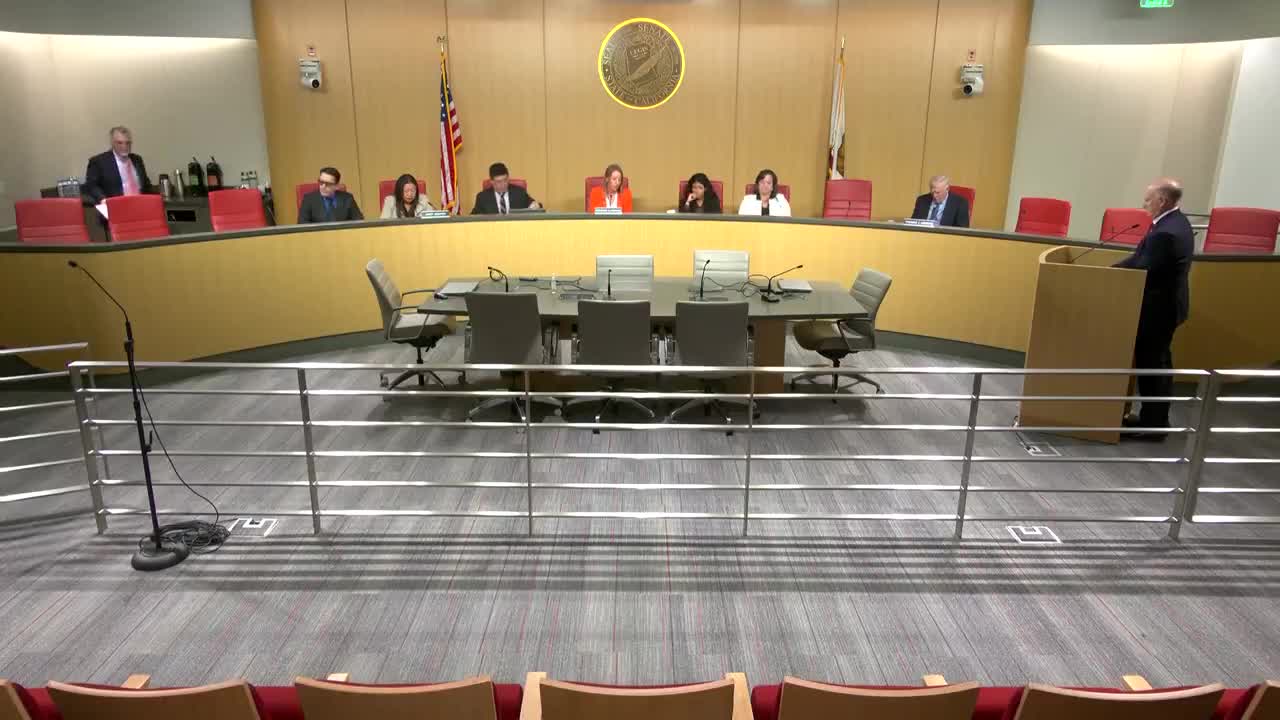 13MIN
Senate Standing Committee on Elections and Constitutional Amendments
Bill Author

Bill Co-Author(s):