AB 479: Criminal procedure: vacatur relief.
- Session Year: 2025-2026
- House: Assembly
- Latest Version Date: 2025-02-10
Current Status:
Failed
(2026-02-02: From committee: Filed with the Chief Clerk pursuant to Joint Rule 56.)
Introduced
In Committee
Awaiting First Chamber Vote
Passed First Chamber
In Committee
Awaiting Second Chamber Vote
Passed Second Chamber
Enacted
What does this bill do?
The bill requires courts to consider and make findings about public health, safety, and welfare before clearing (vacating) nonviolent arrests or convictions for petitioners who hold a professional license when the offense is substantially related to their job. It also requires those petitioners to notify the relevant licensing board and gives the board 45 days to respond. Petitioners must still prove the arrest or conviction was the direct result of being a victim of intimate partner or sexual violence.
The summary is provided by generative AI which can make mistakes. For original language, please view the details in the table below.
Existing law allows a person who was arrested or convicted of a nonviolent offense while they were a victim of intimate partner violence, or sexual violence, to petition the court, under penalty of perjury, for vacatur relief. Existing law requires, in order to receive that relief, that the petitioner establish, by clear and convincing evidence, that the arrest or conviction was the direct result of being a victim of intimate partner violence or sexual violence that demonstrates the petitioner lacked the requisite intent. Existing law authorizes the court to vacate the conviction if it makes specified findings.
This bill would require the court, before it may vacate the conviction, to make findings regarding the impact on the public health, safety, and welfare, if the petitioner holds a license, as defined, and the offense is substantially related to the qualifications, functions, or duties of a licensee. The bill would require a petitioner who holds a license to serve the petition and supporting documentation on the applicable licensing entity and would give the licensing entity 45 days to respond to the petition for relief.
(a)If a person was arrested for or convicted of any nonviolent offense committed while the person was a victim of intimate partner violence or sexual violence, the person may petition the court for vacatur relief of their convictions, arrests, and adjudications under this section. The petitioner shall establish, by clear and convincing evidence, that the arrest or conviction was the direct result of being a victim of intimate partner violence or sexual violence that demonstrates that the person lacked the requisite intent to commit the offense. Upon this showing, showing and a finding that vacating the conviction is in the best interest of justice as described in subdivision (g), the court shall find that the person lacked the requisite intent to commit the offense and shall therefore vacate the conviction as invalid due to legal defect at the time of the arrest or conviction.
(b)The petition for relief shall be submitted under penalty of perjury and shall describe all of the available grounds and evidence that the petitioner was a victim of intimate partner violence or sexual violence and the arrest or conviction of a nonviolent offense was the direct result of being a victim of intimate partner violence or sexual violence.
(c)The petition for relief and supporting documentation shall be served on the state or local prosecutorial agency that obtained the conviction for which vacatur is sought or with jurisdiction over charging decisions with regard to the arrest. If the petitioner holds a license, the petition and supporting documentation shall also be served on the applicable licensing entity. The state or local prosecutorial agency agency, and any applicable licensing entity, shall have 45 days from the date of receipt of service to respond to the petition for relief.
(d)If opposition to the petition is not filed by the applicable state or local prosecutorial agency, or by an applicable licensing entity, the court shall deem the petition unopposed and may grant the petition.
(e)The court may, with the agreement of the petitioner and all of the involved state or local prosecutorial agencies, consolidate into one hearing a petition with multiple convictions from different jurisdictions.
(f)If the petition is opposed or if the court otherwise deems it necessary, the court shall schedule a hearing on the petition. The hearing may consist of the following:
(1)Testimony by the petitioner, which may be required in support of the petition.
(2)Evidence and supporting documentation in support of the petition.
(3)Opposition evidence presented by any of the involved state or local prosecutorial agencies that obtained the conviction. conviction, and any applicable licensing entity.
(g)(1)After considering the totality of the evidence presented, the court may vacate the conviction and expunge the arrests and issue an order if it finds all of the following:
(1)(A)That the petitioner was a victim of intimate partner violence or sexual violence at the time of the alleged commission of the qualifying crime.
(2)(B)The arrest or conviction of the crime was a direct result of being a victim of intimate partner violence or sexual violence.
(3)(C)It is in the best interest of justice.
(2)If the petitioner holds a license and the offense is substantially related to the qualifications, functions, or duties of a licensee, the court shall consider and make findings regarding the impact on the public health, safety, and welfare in its evaluation pursuant to this subdivision.
(h)An order of vacatur shall do all of the following:
(1)Set forth a finding that the petitioner was a victim of intimate partner violence or sexual violence at the time of the alleged commission of the qualifying crime and therefore lacked the requisite intent to commit the offense.
(2)Set aside the arrest, finding of guilt, or the adjudication and dismiss the accusation or information against the petitioner as invalid due to a legal defect at the time of the arrest or conviction.
(3)Notify the Department of Justice that the petitioner was a victim of intimate partner violence or sexual violence when they committed the crime and of the relief that has been ordered.
(i)Notwithstanding this section, a petitioner shall not be relieved of any financial restitution order that directly benefits the victim of a nonviolent offense unless it has already been paid.
(j)A person who was arrested as, or found to be, a person described in Section 602 of the Welfare and Institutions Code because they committed a qualifying nonviolent offense while they were a victim of intimate partner violence or sexual violence may petition the court for relief under this section. If the petitioner establishes that the arrest or adjudication was the direct result of being a victim of intimate partner violence or sexual violence, the petitioner is entitled to a rebuttable presumption that the requirements for relief have been met.
(k)If the court issues an order as described in subdivision (a) or (j), the court shall also order the law enforcement agency having jurisdiction over the offense, the Department of Justice, and any law enforcement agency that arrested the petitioner or participated in the arrest of the petitioner to seal their records of the arrest and the court order to seal and destroy the records within three years from the date of the arrest or within one year after the court order is granted, whichever occurs later and thereafter to destroy their records of the arrest and the court order to seal and destroy those records. The court shall provide the petitioner a copy of any court order concerning the destruction of the arrest records.
(l)A petition pursuant to this section shall be made and heard within a reasonable time after the person has ceased to be a victim of intimate partner violence or sexual violence or within a reasonable time after the petitioner has sought services for being a victim of intimate partner violence or sexual violence, whichever occurs later, subject to reasonable concerns for the safety of the petitioner, family members of the petitioner, or other victims of intimate partner violence or sexual violence who may be jeopardized by the bringing of the application or for other reasons consistent with the purposes of this section.
(m)For the purposes of this section, official documentation of a petitioners status as a victim of intimate partner violence or sexual violence may be introduced as evidence that their participation in the offense was the result of their status as a victim of intimate partner violence or sexual violence. For the purposes of this subdivision, official documentation means any documentation issued by a federal, state, or local agency that tends to show the petitioners status as a victim of intimate partner violence or sexual violence. Official documentation shall not be required for the issuance of an order described in subdivision (a).
(n)A petitioner, or their attorney, may be excused from appearing in person at a hearing for relief pursuant to this section only if the court finds a compelling reason why the petitioner cannot attend the hearing, in which case the petitioner may appear telephonically, via videoconference, or by other electronic means established by the court.
(o)Notwithstanding any other law, a petitioner who has obtained an order pursuant to this section may lawfully deny or refuse to acknowledge an arrest, conviction, or adjudication that is set aside pursuant to the order.
(p)Notwithstanding any other law, the records of the arrest, conviction, or adjudication shall not be distributed to any state licensing board.
(q)The record of a proceeding related to a petition pursuant to this section that is accessible by the public shall not disclose the petitioners full name.
(r)A court that grants relief pursuant to this section may take additional action as appropriate under the circumstances to carry out the purposes of this section.
(s)If the court denies the application because the evidence is insufficient to establish grounds for vacatur, the denial may be without prejudice. The court may state the reasons for its denial in writing or on the record that is memorialized by transcription, audiotape, or videotape, and if those reasons are based on curable deficiencies in the application, allow the applicant a reasonable time period to cure the deficiencies upon which the court based the denial.
(t)For the purposes of this section, the following terms apply:
(1)Nonviolent offense means any offense not listed in subdivision (c) of Section 667.5.
(2)Vacate means that the arrest and any adjudications or convictions suffered by the petitioner are deemed not to have occurred and that all records in the case are sealed and destroyed pursuant to this section. The court shall provide the petitioner with a copy of the orders described in subdivisions (a), (j), and (k), as applicable, and inform the petitioner that they may thereafter state that they were not arrested for the charge, or adjudicated or convicted of the charge, that was vacated.
(3)License has the same meaning as in Section 23.7 of the Business and Professions Code.
|
Date
|
Status
|
|---|---|
| Feb 2, 2026 | From committee: Filed with the Chief Clerk pursuant to Joint Rule 56. |
| Jan 31, 2026 | Died pursuant to Art. IV, Sec. 10(c) of the Constitution. |
| Mar 26, 2025 | In committee: Set, first hearing. Hearing canceled at the request of author. |
| Feb 24, 2025 | Referred to Com. on PUB. S. |
| Feb 11, 2025 | From printer. May be heard in committee March 13. |
| Feb 10, 2025 | Read first time. To print. |
This list shows positions taken on this bill by organizations on the date displayed, which is linked to the original source.
Positions by individuals are not included.
|
Organization
|
Position
|
Date
|
|---|---|---|
| All of Us or None Los Angeles | ** Against | |
| Board of Registered Nursing | ** Support | |
| California District Attorneys Association | ** Support | |
| Californians for Safety and Justice | ** Against | |
| Californians United for a Responsible Budget | ** Against | |
| East Bay Community Law Center | ** Against | |
| Ella Baker Center For Human Rights | ** Against | |
| Initiate Justice | ** Against | |
| Initiate Justice Action | ** Against | |
| Justice2jobs Coalition | ** Against | |
| LA Defensa | ** Against | |
| Legal Services for Prisoners with Children | ** Against | |
| Local 148 La County Public Defenders Union | ** Against | |
| San Francisco Public Defender | ** Against | |
| Sister Warriors Freedom Coalition | ** Against | |
| Smart Justice California, a project of Tides Advocacy | ** Against | |
| Universidad Popular | ** Against | |
| Vera Institute Of Justice | ** Against |
Date of Hearing:
Counsel: Kimberly Horiuchi
ASSEMBLY COMMITTEE ON PUBLIC SAFETY
Nick Schultz, Chair
ABPCA Bill Id:AB 479
Author:(Tangipa) – As Introduced Ver:February 10, 2025
SUMMARY:
Requires a court considering a vacatur petition based on a defendant’s status as a victim of intimate partner or sexual violence to also consider whether the petitioner holds a professional license, as specified, when deciding whether vacatur is in the best interest of justice. Specifically, this bill:
- Requires the court, before it may vacate the conviction, to make findings regarding the impact on the public health, safety, and welfare, if the petitioner holds a license, as defined, and the offense is substantially related to the qualifications, functions, or duties of a licensee.
- Mandates if a petitioner holds a professional license, the petition and supporting documentation shall also be served on the applicable licensing entity and the licensing agency has 45 days to respond.
EXISTING LAW:
- Allows a person arrested for or convicted of any nonviolent offense committed while they were a victim of human trafficking, including, but not limited to, prostitution, the person may petition the court for vacatur relief of their convictions, arrests, and adjudications under this section. (Pen. Code § 236.14, subd. (a).)
- Authorizes a person who was arrested for or convicted of any nonviolent offense, as specified, committed while they were a victim of intimate partner violence or sexual violence, to petition the court for vacatur relief of their convictions and arrests. (Pen. Code, § 236.15, subd. (a).)
- Mandates that, upon showing an arrest or conviction was the direct result of being a victim of intimate partner violence or sexual violence, the court shall find that the person lacked the requisite intent to commit the offense and therefore vacate the conviction as invalid due to legal defect at the time of the arrest or conviction. (Pen. Code, § 236.15, subd. (a).)
- Provides that, after considering the totality of the evidence presented, the court may vacate the conviction and the arrest and issue an order if it finds all of the following:
- That the petitioner was a victim of intimate partner violence or sexual violence at the time of the alleged commission of qualifying crime;
- The arrest or conviction of the crime was a direct result of being a victim of intimate partner violence or sexual violence; and,
- It is in the best interest of justice. (Pen. Code, § 236.15, subd. (g).)
- That the petitioner was a victim of intimate partner violence or sexual violence at the time of the alleged commission of qualifying crime;
- Requires the court, in issuing an order of vacatur, to do the following:
- Set forth a finding that the petitioner was a victim of intimate partner violence or sexual violence at the time of the alleged commission of the qualifying crime and therefore lacked the requisite intent to commit the offense.
- Set aside the arrest, finding of guilt, or the adjudication and dismiss the accusation or information against the petitioner as invalid due to a legal defect at the time of the arrest or conviction.
- Notify the Department of Justice that the petitioner was a victim of intimate partner violence or sexual violence when they committed the crime and of the relief that has been ordered. (Pen. Code, § 236.15, subd. (h)
- Set forth a finding that the petitioner was a victim of intimate partner violence or sexual violence at the time of the alleged commission of the qualifying crime and therefore lacked the requisite intent to commit the offense.
- Provides that, a petitioner who has obtained vacatur relief may lawfully deny or refuse to acknowledge the arrest, conviction, or adjudication that is set aside pursuant to the order. (Pen. Code, §§ 236.14, subd. (o); 236.15, subd. (o).)
- Defines “vacate” to mean that the arrest and any adjudications or convictions suffered by the petitioner which are deemed not to have occurred and that all records in the case are sealed and destroyed. (Pen. Code, §§ 236.14, subd. (t)(2), 236.15, subd. (t)(2).)
- Defines “nonviolent” to mean any offense not listed on the violent felonies list. (Pen. Code, §§ 236.14, subd. (t)(3); 236.15, subd. (t)(1).)
- States that in any criminal proceeding against a person who has been issued a license to engage in a business or profession by a state agency, as specified, the state agency which issued the license may voluntarily appear to furnish pertinent information, make recommendations regarding specific conditions of probation, or provide any other assistance necessary to promote the interests of justice and protect the interests of the public, or may be ordered by the court to do so, if the crime charged is substantially related to the qualifications, functions, or duties of a licensee. (Pen. Code, § 23, subd. (a).)
FISCAL EFFECT:
Unknown
COMMENTS:
- Author's Statement: According to the author, "AB 479 enhances public safety by ensuring licensing boards are notified when individuals with serious convictions petition to clear their records. In a recent case, the Board of Registered Nursing was unable to voice concerns when a licensee with child pornography-related convictions had their charges vacated, potentially allowing them to work with vulnerable populations. This bill allows the courts to make fully informed decisions without substantially amending the process for victims. By providing judges with critical information, AB 479 helps prevent risks to public safety while maintaining a fair process.”
- Vacatur for Intimate Partner and Sexual Violence Generally: Penal Code section 236.14 provides post-conviction relief to human trafficking victims by vacating nonviolent arrests, charges and convictions that were a direct result of human trafficking. Penal Code section 236.15 extends the same form of post-conviction relief to intimate partner violence and/or sexual violence victims by vacating nonviolent arrests, charges, and convictions that were a direct result of the intimate partner or sexual violence. Unlike an expungement, getting a conviction vacated effectively means that the conviction never occurred. “Vacate” means that the arrest and any adjudications or convictions suffered by the petitioner are deemed not to have occurred and that all records in the case are sealed and destroyed. (Pen. Code, §§ 236.14, subd. (t)(2), 236.15, subd. (t)(2).)
The purpose of these laws is to provide relief for individuals who have criminal records as a result of their exploitation, by vacating nonviolent criminal offenses that were committed by human trafficking victims at the behest of their traffickers. Vacatur under sections 236.14 and 236.15 requires showing by clear and convincing evidence, that the arrest or conviction was the direct result of human trafficking, intimate partner violence, and/or sexual violence and that the defendant lacked criminal intent to commit the underlying crime.
- Penal Code section 23: Penal Code section 23 allows a licensing agency, as specified, to voluntarily appear at a court proceeding in order to furnish pertinent information, make recommendations regarding specific conditions of probation, or provide any other assistance necessary to promote the interests of justice and protect the interests of the public, or may be ordered by the court to do so, if the crime charged is substantially related to the qualifications, functions, or duties of a licensee. This appears to be largely limited to probation conditions. (See generally, Gray v. Superior Court (2005) 125 Cal.App.4th 629, 643 [holding that Medical Board was not entitled to provide conditions of bail despite it being related to public safety.].)
This bill states that the court should consider the licensing entity’s position on vacatur if the conviction is substantially related to the license. According to the Board of Registered Nursing, the sponsor of the bill, a licensee was granted vacatur for possession of child pornography upending the Department of Consumer Affairs, Board of Registered Nursing’s (BRN) plans to de-certify the person so they could no longer work as a nurse.[1] However, licensing is not relevant to determining whether a person should be granted vacatur. As noted above, vacatur is appropriate when a person does not have the requisite criminal intent to commit the crime because of the violence they suffered. It is akin to duress. The defense of duress negates an element of the crime charged. (People v. Heath (1989) 207 Cal. App. 3d 892, 900 [“To establish the defense, the defendant must show [they] acted under such immediate threat or menace that [they] reasonably believed [their] life would be endangered if [they] refused.”].)
Furthermore, vacatur requires, by a showing of clear and convincing evidence that a defendant did not have the requisite intent to commit the offense because of their status as a victim of sexual violence and/or intimate partner violence. A “clear and convincing” standard is not an easy standard to demonstrate. It requires evidence sufficient to show something is “highly and substantially more likely to be true than untrue. In other words, the fact finder must be convinced that the contention is highly probable.” (Colorado v. New Mexico (1984) 467 U.S. 310.) It seems really unlikely that the court would grant vacatur for possession of child pornography if there was not substantial reason to believe the defendant did have the intent to commit the crime. Therefore, allowing the licensing agency to argue to the court vacatur should be denied for reasons specific to their license undercuts the vacatur statute.
- Seth Adam Hall litigation: As noted above, and according to moving papers filed by the Department of Justice and provided by the author, this bill is based on a grant of vacatur for a person convicted of possession of child pornography in violation of Penal Code section 311.11. Based on the conviction, on or about July 31, 2023, the BRN moved forward with license revocation of the defendant’s nursing license. However, on or about February 12, 2024, the trial court in defendant’s case granted vacatur on the ground the defendant was the victim of intimate or sexual violence and that he had made considerable efforts to distance himself from the actions for which the police found child pornography.
However, the full record was sealed possibly due to the explicit nature of the abuse suffered by defendant. As a result of vacatur, the BRN withdrew its attempt to revoke the defendant’s license. The court ordered the defendant’s counsel to notify the Department of Justice of its decision to vacate the defendant’s license. On or about November 5, 2024, the District Attorney and the BRN appealed to the Fourth District Court of Appeals. The appeal is still pending and presently in briefing status and on assignment.[2] BRN alleges, inter alia, that it was entitled to notice and an opportunity to be heard pursuant to Penal Code section 23 before the court granted vacatur.
Also, as noted above, vacatur is based on a substantive defect in the conviction itself. It effectively stands for the proposition that the defendant was not capable of criminal intent as a direct result of significant violence. Based on the court records provided by the author, the notice of vacatur states,
“The petitioner…was a victim of intimate partner violence or sexual violence at the time the non-violence offense was committed. The commission of the crime was a direct result of being a victim of intimate partner violence or sexual violence. The victim was engaged in a good faith effort to distance himself from the perpetrator of the harm. It is in the best interest of the petitioner and in the interest of justice.”[3]
Given this case is pending appellate review and the facts of vacatur are under seal, it makes more sense to wait for the court to makes its ruling before changing the law in this case. Additionally, licensing agencies have some burden to follow criminal cases that may impact licensure and provide input. BRN appears to have been aware of the arrest and conviction since it began disciplinary proceedings before vacatur. As noted by BRN, it may provide information to the court pursuant to Penal Code section 23.
Finally, the court appears to have had ample grounds to grant vacatur in this case given the serious nature of the underlying charge. This is exactly the type of relief the vacatur statute was designed to provide – victims who could not form the requisite intent to commit the underlying crime should not suffer a punitive impact as a direct result of the violence they suffered.
- Other Grounds for Discipline: As a general matter, a person may face revocation of their professional license even where there is no conviction. The BRN Unprofessional Conduct, Substantial Relationship Criteria, Disciplinary Guidelines and Criteria for Rehabilitation states licensure may be suspended or revoked for “a crime, professional misconduct, or act shall be considered to be substantially related to the qualifications, functions, or duties of a [registered nurse], if to a substantial degree it evidences the present or potential unfitness of a person holding a license or certificate to perform the functions authorized and/or mandated by the license or certificate, or in a matter consistent with the public harm.” If there are facts sufficient to support license revocation, it may be characterized as “professional misconduct…” and discipline sought even without a conviction. (See Cal. Code Regs., tit. 16, § 1443.) Additionally, the professional rules make clear that a conviction, itself, is not the only factor the Board considers. In some cases, a person with a prior conviction may still be licensed or retain their license. (See Cal. Code Regs., tit. 16, § 1445.)
If the BRN is able to file an accusation and seek discipline without reference to a conviction, it is unclear whether they should be allowed to participate in a court proceeding where licensure is not relevant to whether the defendant had the requisite intent to commit the underlying crime.
- Argument in Support: According to the Board of Registered Nursing: “As the sponsor of AB 479, the Board’s main goal is to ensure that when a trial court is considering a petition for vacatur under Penal Code Section 236.15, it has all the input necessary to make a fully informed decision. The bill would not impede or override the trial courts authority to grant a petition. It would simply require that a petitioner give notice to their licensing board, if they file a petition under Penal Code Section 236.15. This would allow the board an opportunity to appear and be heard on the petition before the trial court issues its decision, if the board believes there is a public protection concern.
“Unfortunately, last year a Board licensee was convicted of possessing a substantial amount of child pornography. As a result, the Board began pursuing disciplinary action against the individual’s license through the administrative court. Separately, the licensee petitioned the trial court to vacate their conviction under the provisions of Penal Code Section 236.15. However, the Board was not aware of the licensee’s petition and was not able to provide the trial court with any input prior to its ruling.
“The trial court ultimately granted the petition to vacate the conviction, which prohibited the Board from using the conviction or any related records as a basis for discipline in the administrative court. Consequently, the licensee can continue practicing unrestricted as a nurse, including with minor patients.
“The Board is not suggesting that an individual who possesses a professional license could never obtain a vacatur order under Penal Code Section 236.15. In many cases, the trial court may conclude that the best interest of justice would be served by vacatur, notwithstanding the licensing-related implications. The bill would simply ensure that the trial court consider whether vacatur would be inconsistent with public protection from a licensing context before making their ruling.”
- Argument in Opposition: According to California Public Defenders Association: “AB 479 would amend Penal Code Section 236.15 (PC 236.15) to make it more difficult for victims of intimate partner violence or sexual violence to obtain vacatur relief for convictions that were the direct result of being a victim. AB 479 would add the additional requirement that vacatur relief would be “in the best interest of justice as described in subdivision (g).”
“AB 479 would potentially reduce expungement relief for victims of human trafficking of their past non-violent criminal records. This relief was enacted to enhance the futures of these Californians through increased access to employment, housing, and other future opportunities. By making this relief more difficult to attain, AB 479 would eliminate that hope without providing any correlative benefit.
“PC 236.15 relief applies only to nonviolent prior convictions, which already rules out a vast number of convictions. Adding another roadblock to relief simply doesn’t make sense.
CPDA members can attest to the misery that past records of conviction inflict upon our clients, and the difficulty in expunging the records of worthy reformed individuals. The existing requirement to obtain relief under PC 236.15 is:
“The petitioner shall establish, by clear and convincing evidence, that the arrest or conviction was the direct result of being a victim of intimate partner violence or sexual violence that demonstrates that the person lacked the requisite intent to commit the offense.”
“This existing requirement of a showing by clear and convincing evidence is already a sufficiently high standard and in no way should be further complicated by the “best interest of justice” requirement proposed by AB 479. Victims of intimate partner violence and sexual violence have so many obstacles to overcome in their journey to become whole they do not need, yet another one placed in their way; which is all that AB 479 would do.”
- Related Legislation:
- AB 633 (Krell), would expand vacatur relief to persons who were convicted of or arrested for any offense committed when they were under the age of 18 and while they were a victim of human trafficking. AB 633 is scheduled to be heard in this committee today.
- AB 938 (Bonta), would authorize vacatur relief for a person arrested or convicted of any offense and authorize relief for a person whose offense was related, rather than directly related, to being a victim of human trafficking, intimate partner violence, or sexual violence. AB 938 is scheduled to be heard in this committee today.
- AB 633 (Krell), would expand vacatur relief to persons who were convicted of or arrested for any offense committed when they were under the age of 18 and while they were a victim of human trafficking. AB 633 is scheduled to be heard in this committee today.
- Prior Legislation:
- AB 124 (Kamlager), Chapter 124, Statutes of 2021 requires courts to consider whether specified trauma to the defendant or other circumstances contributed to the commission of the offense when making sentencing and resentencing determinations and to expand access to vacatur relief and the affirmative defense of coercion currently available to victims of human trafficking to victims of intimate partner violence and sexual violence.
- AB 2169 (Gipson), Chapter 776, Statutes of 2022 clarifies that vacatur relief for offenses committed while the petitioner was a victim of human trafficking, intimate partner violence, or sexual violence demonstrates that the petitioner lacked the requisite intent to commit the offense, and that the conviction is invalid due to legal defect.
- AB 124 (Kamlager), Chapter 124, Statutes of 2021 requires courts to consider whether specified trauma to the defendant or other circumstances contributed to the commission of the offense when making sentencing and resentencing determinations and to expand access to vacatur relief and the affirmative defense of coercion currently available to victims of human trafficking to victims of intimate partner violence and sexual violence.
REGISTERED SUPPORT / OPPOSITION:
Support
Board of Registered Nursing
California District Attorneys Association
Oppose
All of Us or None Los Angeles
Californians for Safety and Justice
Californians United for A Responsible Budget
East Bay Community Law Center
Ella Baker Center for Human Rights
Initiate Justice
Initiate Justice Action
Justice2jobs Coalition
LA Defensa
Legal Services for Prisoners With Children
Local 148 LA County Public Defenders Union
San Francisco Public Defender
Sister Warriors Freedom Coalition
Smart Justice California, a Project of Tides Advocacy
Universidad Popular
Vera Institute of Justice
Analysis Prepared by:
Kimberly Horiuchi / PUB. S. / (916) 319-3744
See People v. Seth Adam Hall, No. E083533, Appeal from an Order of the Superior Court of California, County of Riverside, March 20, 2024, pending before the Fourth District Court of Appeals, located at https://unicourt.com/case/ca-sca1-casebs6bfe570d112b-224166?init_S=c_relc#case-details ↑
https://unicourt.com/case/ca-sca1-casebs6bfe570d112b-224166?init_S=c_relc#dockets ↑
In the matter of Seth Adam Hall, Notice of Ruling in the Matter of the People of the State of California v. Seth Adam Hall (Riverside County Super Court Case No. INF 2202269 ↑
Bill Author
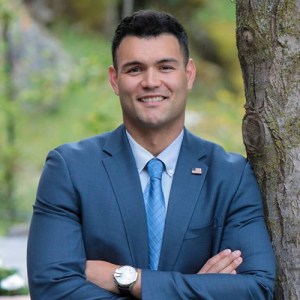
Bill Co-Author(s):