AB 518: Low-impact camping areas.
- Session Year: 2025-2026
- House: Assembly
- Latest Version Date: 2025-10-01
Current Status:
Passed
(2025-10-01: Chaptered by Secretary of State - Chapter 157, Statutes of 2025.)
Introduced
In Committee
Awaiting First Chamber Vote
Passed First Chamber
In Committee
Awaiting Second Chamber Vote
Passed Second Chamber
Enacted
Existing law, the Special Occupancy Parks Act, establishes requirements for the construction, maintenance, occupancy, use, and design of special occupancy parks. Existing law defines special occupancy park to mean a recreational vehicle park, temporary recreational vehicle park, incidental camping area, or tent camp.
This bill would specify that, for purposes of that act, a special occupancy park does not include a low-impact camping area, as specified, that is located in a county that has enacted an ordinance, as specified, authorizing low-impact camping and meeting specified requirements. The bill would impose specified requirements on owners of private property offering low-impact camping area sites and on online hosting platforms. The bill would define a low-impact camping area to mean any area of private property that provides for the transient occupancy rental of a temporary sleeping accommodation, as defined, for recreational purposes that is not a commercial lodging facility. The bill would specify that a low-impact camping area is not a special occupancy park if, among other things, it meets certain requirements, including compliance with applicable local requirements relating to waste disposal and quiet hours, as specified. The bill would require that a county that has authorized low-impact camping to take specified actions, including, among others, to establish a registry of low-impact camping areas, as specified, and to notify the Department of Housing and Community Development of the countys choice to authorize low-impact camping areas. The bill would also require all state and local eviction processes applicable to a special occupancy park to apply to a low-impact camping area.
Existing law, the Special Occupancy Parks Act, establishes requirements for the construction, maintenance, occupancy, use, and design of special occupancy parks. Existing law defines special occupancy park to mean a recreational vehicle park, temporary recreational vehicle park, incidental camping area, or tent camp.
This bill would specify that, for purposes of that act, a special occupancy park does not include a low-impact camping area, as specified, that is located in a county that has enacted an ordinance, as specified, authorizing low-impact camping and meeting specified requirements. The bill would impose specified requirements on owners of private property offering low-impact camping area sites and on online hosting platforms. The bill would define a low-impact camping area to mean any area of private property that provides for the transient occupancy rental of a temporary sleeping accommodation, as defined, for recreational purposes that is not a commercial lodging facility. The bill would specify that a low-impact camping area is not a special occupancy park if, among other things, it meets certain requirements, including compliance with applicable local requirements relating to waste disposal and quiet hours, as specified. The bill would require that a county that has authorized low-impact camping to take specified actions, including, among others, to establish a registry of low-impact camping areas, as specified. specified, and to notify the Department of Housing and Community Development of the countys choice to authorize low-impact camping areas. The bill would also require all state and local eviction processes applicable to a special occupancy park to apply to a low-impact camping area.
Existing law, the Special Occupancy Parks Act, establishes requirements for the construction, maintenance, occupancy, use, and design of special occupancy parks. Existing law defines special occupancy park to mean a recreational vehicle park, temporary recreational vehicle park, incidental camping area, or tent camp.
This bill would specify that, for purposes of that act, a special occupancy park does not include a low-impact camping area, as specified, that is located in a county that has enacted an ordinance, as specified, authorizing low-impact camping and meets meeting specified requirements. The bill would impose specified requirements on owners of private property offering low-impact camping area sites and on online hosting platforms. The bill would define a low-impact camping area to mean any area of private property that provides for the transient occupancy rental of a temporary sleeping accommodation, as defined, for recreational purposes that is not a commercial lodging facility. The bill would specify that a low-impact camping area is not a special occupancy park if, among other things, it meets certain requirements, including compliance with applicable local requirements relating to waste disposal and quiet hours, as specified. The bill would require that a county that has authorized low-impact camping to take specified actions, including, among others, to establish a registry of low-impact camping areas, as specified. The bill would also require a county, as a provision of its ordinance authorizing low-impact camping, to require all online hosting platforms, as defined, that facilitate the booking of low-impact camping areas within that county to provide a means for an operator of a low-impact camping area to include any permit or registration number required by the county on the operators online listing to rent its site.
Existing law, the Special Occupancy Parks Act, establishes requirements for the construction, maintenance, occupancy, use, and design of special occupancy parks. Existing law defines special occupancy park to mean a recreational vehicle park, temporary recreational vehicle park, incidental camping area, or tent camp.
This bill would specify that, for purposes of that act, a special occupancy park does not include a low-impact camping area, as specified, that is located in a county that has enacted an ordinance, as specified, authorizing low-impact camping. camping and meets specified requirements. The bill would define a low-impact camping area to mean any area of private property that provides for the transient occupancy rental of a temporary sleeping accommodation, as defined, for recreational purposes that is not a commercial lodging facility and facility. The bill would specify that a low-impact camping area is not a special occupancy park if, among other things, it meets specified requirements. The bill would require the county in which the low-impact camping area is located to enforce some of those requirements, certain requirements, including compliance with applicable local requirements relating to waste disposal and quiet hours, as specified. The bill would require that a county that has authorized low-impact camping to take specified actions, including, among others, to establish a registry of low-impact camping areas, as specified. The bill would also require a county, as a provision of its ordinance authorizing low-impact camping, to require all online hosting platforms, as defined, that facilitate the booking of low-impact camping areas within that county to provide a means for an operator of a low-impact camping area to include any permit or registration number required by the county on the operators online listing to rent its site.
Existing law, the Special Occupancy Parks Act, establishes requirements for the construction, maintenance, occupancy, use, and design of special occupancy parks. Existing law defines special occupancy park to mean a recreational vehicle park, temporary recreational vehicle park, incidental camping area, or tent camp.
This bill would specify that, for purposes of that act, a special occupancy park does not include a low-impact camping area, as specified, that is located in a county that has enacted an ordinance, as specified, authorizing low-impact camping. The bill would define a low-impact camping area to mean any area of private property that provides for the transient occupancy rental of a temporary sleeping accommodation, as defined, for recreational purposes that is not a commercial lodging facility and meets specified requirements. The bill would require the county in which the low-impact camping area is located to enforce some of those requirements, relating to waste disposal and quiet hours, as specified. The bill would require that a county that has authorized low-impact camping to take specified actions, including, among others, to establish a registry of low-impact camping areas, as specified. The bill would also require a county, as a provision of its ordinance authorizing low-impact camping, to require all online hosting platforms, as defined, that facilitate the booking of low-impact camping areas within that county to provide a means for an operator of a low-impact camping area to include any permit or registration number required by the county on the operators online listing to rent its site.
Existing law, the Special Occupancy Parks Act, establishes requirements for the construction, maintenance, occupancy, use, and design of special occupancy parks. Existing law defines special occupancy park to mean a recreational vehicle park, temporary recreational vehicle park, incidental camping area, or tent camp.
This bill would specify that, for purposes of that act, a special occupancy park does not include a low-impact camping area, as specified, that is located in a county that has enacted an ordinance, as specified, authorizing low-impact camping. The bill would define a low-impact camping area to mean any area of private property that provides for the transient occupancy rental of a temporary sleeping accommodation, as defined, for recreational purposes that is not a commercial lodging facility and meets specified requirements. The bill would require the county in which the low-impact camping area is located to enforce some of those requirements, relating to waste disposal and quiet hours, as specified. The bill would require that a county that has authorized low-impact camping to take specified actions, including, among others, to establish a registry of low-impact camping areas, as specified.
Special occupancy park means a recreational vehicle park, temporary recreational vehicle park, incidental camping area, or tent camp. Special occupancy park does not include a low-impact camping area, as defined in subdivision (a) of Section 18890, if the low-impact camping area meets all of the requirements of subdivision (b) of Section 18890 and is located in a county that has enacted an ordinance, subject to the requirements of existing law, authorizing low-impact camping.
SEC. 2.Part 2.3.5 (commencing with Section 18890) is added to Division 13 of the Health and Safety Code, to read:2.3.5.LOW-IMPACT CAMPING18890.(a)For purposes of this section, the following definitions apply:
(1)Camper means an individual or individuals all camping under one reservation or registration.
(2)Commercial lodging facility has the same meaning as the term hotel is defined in subdivision (a) of Section 1865 of the Civil Code.
(3)Low-impact camping area means any area of private property that provides for the transient occupancy rental of a temporary sleeping accommodation for recreational purposes that is not a commercial lodging facility.
(4)Online hosting platform means a digital marketplace that facilitates the booking of low-impact camping areas.
(5)Recreational vehicle has the same meaning as that term is defined in Section 18010.
(6)Temporary sleeping accommodation includes, but is not limited to, a tent, yurt, or recreational vehicle.
(b)A low-impact camping area is not a special occupancy park, as defined in Section 18862.43, if it is located in a county that has enacted an ordinance, subject to the requirements of existing law, authorizing low-impact camping and meets all of the following requirements:
(1)Provides for the transient occupancy rental of a temporary sleeping accommodation, not exceeding 14 consecutive nights per camper and not exceeding 28 nights per calendar year per camper.
(2)Includes no more than nine temporary sleeping accommodations, of which no more than four may be concurrently occupied by recreational vehicles, as defined in Section 18010.
(3)Does not include a temporary sleeping accommodation that is rented out for permanent human occupancy.
(4)Does not allow for onstreet parking.
(5)Complies with applicable state and local fire safety requirements.
(6)Complies with applicable state and local tax and fee requirements, including, but not limited to, the payment of local transient occupancy taxes.
(7)Complies with applicable local requirements for disposal of human waste, or in the absence of applicable local requirements, maintains sanitation facilities that are fully self-contained or connected to a permitted sewage disposal system serving the property.
(8)Complies with applicable local requirements for disposal of trash, or in the absence of applicable local requirements, requires all solid waste to be removed from the premises after each occupancy and onsite trash receptacles to abide by applicable animal-protection trash best practices or requirements.
(9)Complies with applicable local requirements for quiet hours, or in the absence of applicable local requirements, enforces quiet hours from 10 p.m. to 6 a.m.
(10)Complies with applicable local requirements relating to low-impact campsites, low-incident camping, or incidental camping, including, but not limited to, local zoning, permit, lot size, and setback requirements.
(11)Designates an operator or property manager who is available by phone 24 hours a day, seven days a week.
(12)Includes no more than one temporary sleeping accommodation per acre and is located on a parcel of two acres or more.
(13)Requires all temporary sleeping accommodations to be located no less than 200 feet from any offsite residence and no less than 30 feet from any adjoining property or road.
(14)Is not located on a site that meets both of the following:
(A)A site that is a legal parcel or parcels located in a city if, and only if, the city boundaries include some portion of either an urbanized area or urban cluster, as designated by the United States Census Bureau, or, for unincorporated areas, a legal parcel or parcels wholly within the boundaries of an urbanized area or urban cluster, as designated by the United States Census Bureau.
(B)A site in which at least 75 percent of the perimeter of the site adjoins parcels that are developed with urban uses. For purposes of this paragraph, parcels that are separated only by a street or highway shall be considered to be adjoined.
(15)Has not been used as a special occupancy park for the last five years unless both of the following are true:
(A)The area was a special occupancy park before January 1, 2024.
(B)The area met the requirements of this subdivision on January 1, 2023.
(c)A county that has authorized low-impact camping shall do the following:
(1)Establish a registry of low-impact camping areas which may include, but not be limited to, the number or operators authorized in the county, a site address of such areas, the number of lots and types of temporary sleeping accommodations, the facility owner and operator names, the date a low-impact camping area is established, summaries of all code enforcement investigations associated with low-impact camping areas, amendments to this information, and any other relevant information deemed appropriate by the county.
(2)Establish a complaint program to support code enforcement related to low-impact camping areas.
(3)Require all low-impact camping owners or operators to post, in a conspicuous location, any permit or registration required by the county to operate the low-impact camping area, and contact information for the county for complaints or information related to low-impact camping areas.
(d)A county that has authorized low-impact camping shall have administrative and enforcement authority over this section and shall alert the Department of Housing and Community Development of the countys choice to authorize low-impact camping areas pursuant to this section.
(e)Any owner of private property that offers a low-impact camping area site shall include in any posting on an online hosting platform the name of the authorizing county and any required license, permit, or registration number, if required by the county.
(f)An online hosting platform shall include both of the following in any internet website listing:
(1)The name of the county in which the low-impact camping area site is located.
(2)A dedicated field for an operator to include any license, permit, or registration required by the county to operate the low-impact camping area site.
(g)(1)An online hosting platform shall remove any listing for a low-impact camping area from the platform after notification by the authorizing county if all of the following conditions are met:
(A)The license, permit, or registration number associated with the listing is invalid, expired, or has been revoked or the county has a prohibition on low-impact camping areas that applies to the listing.
(B)Before notifying the online hosting platform, the county has provided written notice by United States mail to the property owner of the low-impact camping site that it is not authorized to operate.
(C)The county provided a notification to the online hosting program that included all of the following:
(i)The listing Uniform Resource Locator (URL) and the property address of the low-impact camping area.
(ii)The name of the low-impact camping area operator, if known.
(iii)The notice of violation sent from the county to the property owner.
(iv)A citation to the local ordinance or code that was violated.
(2)The online hosting platform shall remove the listing within seven days of receiving the notification from the county described in subparagraph (C) of paragraph (1).
(h)This section does not authorize an individual to access private property without the permission of the landowner.
(i)This section does not require a county to authorize low-impact camping. This section establishes minimum requirements for a county that, by ordinance, elects to authorize low-impact camping.
(j)All state and local eviction processes applicable to a special occupancy park, as defined in Section 18862.43, shall apply to a low-impact camping area.
Special occupancy park means a recreational vehicle park, temporary recreational vehicle park, incidental camping area, or tent camp. Special occupancy park does not include a low-impact camping area, as defined in subdivision (a) of Section 18890, if the low-impact camping area meets all of the requirements of subdivision (b) of Section 18890 and is located in a county that has enacted an ordinance, subject to the requirements of existing law, authorizing low-impact camping.
SEC. 2.Part 2.3.5 (commencing with Section 18890) is added to Division 13 of the Health and Safety Code, to read:2.3.5.LOW-IMPACT CAMPING18890.(a)For purposes of this section, the following definitions apply:
(1)Camper means an individual or individuals all camping under one reservation or registration.
(1)(2)Commercial lodging facility has the same meaning as the term hotel is defined in subdivision (a) of Section 1865 of the Civil Code.
(2)(3)Low-impact camping area means any area of private property that provides for the transient occupancy rental of a temporary sleeping accommodation for recreational purposes that is not a commercial lodging facility.
(3)(4)Online hosting platform means a digital marketplace that facilitates the booking of low-impact camping areas.
(4)(5)Recreational vehicle has the same meaning as that term is defined in Section 18010.
(5)(6)Temporary sleeping accommodation includes, but is not limited to, a tent, yurt, or recreational vehicle.
(b)A low-impact camping area is not a special occupancy park, as defined in Section 18862.43, if it is located in a county that has enacted an ordinance, subject to the requirements of existing law, authorizing low-impact camping and meets all of the following requirements:
(1)Provides for the transient occupancy rental of a temporary sleeping accommodation, not exceeding 14 consecutive nights per camper and not exceeding 28 nights per calendar year per camper.
(2)Includes no more than nine temporary sleeping accommodations, of which no more than four may be concurrently occupied by recreational vehicles, as defined in Section 18010.
(3)Does not include a temporary sleeping accommodation that is rented out for permanent human occupancy.
(4)Does not allow for onstreet parking.
(5)Complies with applicable state and local fire safety requirements.
(6)Complies with applicable state and local tax and fee requirements, including, but not limited to, the payment of local transient occupancy taxes.
(7)Complies with applicable local requirements for disposal of human waste, or in the absence of applicable local requirements, maintains sanitation facilities that are fully self-contained or connected to a permitted sewage disposal system serving the property.
(8)Complies with applicable local requirements for disposal of trash, or in the absence of applicable local requirements, requires all solid waste to be removed from the premises after each occupancy and onsite trash receptacles to abide by applicable animal-protection trash best practices or requirements.
(9)Complies with applicable local requirements for quiet hours, or in the absence of applicable local requirements, enforces quiet hours from 10 p.m. to 6 a.m.
(10)Complies with applicable local requirements relating to low-impact campsites, low-incident camping, or incidental camping, including, but not limited to, local zoning, permit, lot size, and setback requirements.
(11)Designates an operator or property manager who is available by phone 24 hours a day, seven days a week.
(12)Includes no more than one temporary sleeping accommodation per acre and is located on a parcel of two acres or more.
(13)Requires all temporary sleeping accommodations to be located no less than 200 feet from any offsite residence and no less than 30 feet from any adjoining property or road.
(14)Is not located on a site that meets both of the following:
(A)A site that is a legal parcel or parcels located in a city if, and only if, the city boundaries include some portion of either an urbanized area or urban cluster, as designated by the United States Census Bureau, or, for unincorporated areas, a legal parcel or parcels wholly within the boundaries of an urbanized area or urban cluster, as designated by the United States Census Bureau.
(B)A site in which at least 75 percent of the perimeter of the site adjoins parcels that are developed with urban uses. For purposes of this paragraph, parcels that are separated only by a street or highway shall be considered to be adjoined.
(15)Has not been used as a special occupancy park for the last five years unless both of the following are true:
(A)The area was a special occupancy park before January 1, 2024.
(B)The area met the requirements of this subdivision on January 1, 2023.
(c)A county that has authorized low-impact camping shall do the following:
(1)Establish a registry of low-impact camping areas which may include, but not be limited to, the number or operators authorized in the county, a site address of such areas, the number of lots and types of temporary sleeping accommodations, the facility owner and operator names, the date a low-impact camping area is established, summaries of all code enforcement investigations associated with low-impact camping areas, amendments to this information, and any other relevant information deemed appropriate by the county.
(2)Establish a complaint program to support code enforcement related to low-impact camping areas.
(3)Require all low-impact camping owners or operators to post, in a conspicuous location, any permit or registration required by the county to operate the low-impact camping area, and contact information for the county for complaints or information related to low-impact camping areas.
(d)A county that has authorized low-impact camping shall have administrative and enforcement authority over this section. section and shall alert the Department of Housing and Community Development of the countys choice to authorize low-impact camping areas pursuant to this section.
(e)Any owner of private property that offers a low-impact camping area site shall include in any posting on an online hosting platform the name of the authorizing county and any required license, permit, or registration number, if required by the county.
(f)An online hosting platform shall include both of the following in any internet website listing:
(1)The name of the county in which the low-impact camping area site is located.
(2)A dedicated field for an operator to include any license, permit, or registration required by the county to operate the low-impact camping area site.
(g)(1)An online hosting platform shall remove any listing for a low-impact camping area from the platform after notification by the authorizing county if all of the following conditions are met:
(A)The license, permit, or registration number associated with the listing is invalid, expired, or has been revoked or the County county has a prohibition on low-impact camping areas that applies to the listing.
(B)Before notifying the online hosting platform, the county has provided written notice by United States mail to the property owner of the low-impact camping site that it is not authorized to operate.
(C)The county provided a notification to the online hosting program that included all of the following:
(i)The listing Uniform Resource Locator (URL) and the property address of the low-impact camping area.
(ii)The name of the low-impact camping area operator, if known.
(iii)The notice of violation sent from the county to the property owner.
(iv)A citation to the local ordinance or code that was violated.
(2)The online hosting platform shall remove the listing within seven days of receiving the notification from the county described in subparagraph (C) of paragraph (1).
(h)This section does not authorize an individual to access private property without the permission of the landowner.
(i)This section does not require a county to authorize low-impact camping. This section establishes minimum requirements for a county that, by ordinance, elects to authorize low-impact camping.
(j)All state and local eviction processes applicable to a special occupancy park, as defined in Section 18862.43, shall apply to a low-impact camping area.
Special occupancy park means a recreational vehicle park, temporary recreational vehicle park, incidental camping area, or tent camp. Special occupancy park does not include a low-impact camping area, as defined in subdivision (a) of Section 18890 18890, if the low-impact camping area meets all of the requirements of subdivision (b) of Section 18890 and is located in a county that has enacted an ordinance, subject to the requirements of existing law, authorizing low-impact camping.
SEC. 2.Part 2.3.5 (commencing with Section 18890) is added to Division 13 of the Health and Safety Code, to read:2.3.5.LOW-IMPACT CAMPING18890.(a)For purposes of this section, the following definitions apply:
(1)Commercial lodging facility has the same meaning as the term hotel is defined in subdivision (a) of Section 1865 of the Civil Code.
(a)(2)Low-impact camping area means any area of private property that provides for the transient occupancy rental of a temporary sleeping accommodation for recreational purposes that is not a commercial lodging facility.
(3)Online hosting platform means a digital marketplace that facilitates the booking of low-impact camping areas.
(4)Recreational vehicle has the same meaning as that term is defined in Section 18010.
(5)Temporary sleeping accommodation includes, but is not limited to, a tent, yurt, or recreational vehicle.
(b)A low-impact camping area is not a special occupancy park, as defined in Section 18862.43, if it is located in a county that has enacted an ordinance, subject to the requirements of existing law, authorizing low-impact camping and meets all of the following requirements:
(1)Provides for the transient occupancy rental of a temporary sleeping accommodation, not exceeding 14 consecutive nights per camper and not exceeding 28 nights per calendar year per camper.
(2)Includes no more than nine temporary sleeping accommodations, of which no more than four may be concurrently occupied by recreational vehicles, as defined in Section 18010.
(3)Does not include a temporary sleeping accommodation that is rented out for permanent human occupancy.
(4)Does not allow for onstreet parking.
(5)Complies with applicable state and local fire safety requirements.
(6)Complies with applicable state and local tax requirements, including, but not limited to, the payment of local transient occupancy taxes.
(7)Complies with applicable local requirements for disposal of human waste, or in the absence of applicable local requirements, maintains sanitation facilities that are fully self-contained or connected to a permitted sewage disposal system serving the property.
(8)Complies with applicable local requirements for disposal of trash, or in the absence of applicable local requirements, requires all solid waste to be removed from the premises after each occupancy and onsite trash receptacles to abide by applicable animal-protection trash best practices or requirements.
(9)Complies with applicable local requirements for quiet hours, or in the absence of applicable local requirements, enforces quiet hours from 10 p.m. to 6 a.m.
(10)Complies with applicable local requirements relating to low-impact campsites, low-incident camping, or incidental camping, including, but not limited to, local zoning, permit, lot size, and setback requirements.
(11)Designates an operator or property manager who is available by phone 24 hours a day, seven days a week.
(12)Includes no more than one temporary sleeping accommodation per acre and is located on a parcel of two acres or more.
(13)Requires all temporary sleeping accommodations to be located no less than 200 feet from any offsite residence and no less than 30 feet from any adjoining property or road.
(14)Is not located on a site that meets both of the following:
(A)A site that is a legal parcel or parcels located in a city if, and only if, the city boundaries include some portion of either an urbanized area or urban cluster, as designated by the United States Census Bureau, or, for unincorporated areas, a legal parcel or parcels wholly within the boundaries of an urbanized area or urban cluster, as designated by the United States Census Bureau.
(B)A site in which at least 75 percent of the perimeter of the site adjoins parcels that are developed with urban uses. For purposes of this paragraph, parcels that are separated only by a street or highway shall be considered to be adjoined.
(15)Has not been used as a special occupancy park for the last five years unless both of the following are true:
(A)The area was a special occupancy park before January 1, 2024.
(B)The area met the requirements of this subdivision on January 1, 2023.
(c)A county that has authorized low-impact camping shall do the following:
(1)Establish a registry of low-impact camping areas which may include, but not be limited to, the number or operators authorized in the county, a site address of such areas, the number of lots and types of temporary sleeping accommodations, the facility owner and operator names, the date a low-impact camping area is established, summaries of all code enforcement investigations associated with low-impact camping areas, amendments to this information, and any other relevant information deemed appropriate by the county.
(2)Establish a complaint program to support code enforcement related to low-impact camping areas.
(3)Require all low-impact camping owners or operators to post, in a conspicuous location, any permit or registration required by the county to operate the low-impact camping area, and contact information for the county for complaints or information related to low-impact camping areas.
(d)A county that has authorized low-impact camping shall have administrative and enforcement authority over this section.
(e)As a provision of its ordinance authorizing low-impact camping, a county shall require all online hosting platforms that facilitate the booking of low-impact camping areas within that county to provide a means for an operator of a low-impact camping area to include any permit or registration number required by the county on the operators online listing to rent its site.(f)For purposes of this section, the following definitions apply:(1)Commercial lodging facility has the same meaning as the term hotel is defined in subdivision (a) of Section 1865 of the Civil Code.(2)Online hosting platform means a digital marketplace that facilitates the booking of low-impact camping areas.(3)Recreational vehicle has the same meaning as that term is defined in Section 18010. (4)Temporary sleeping accommodation includes, but is not limited to, a tent, yurt, or recreational vehicle.(e)Any owner of private property that offers a low-impact camping area site shall include in any posting on an online hosting platform the name of the authorizing county and any required license, permit, or registration number, if required by the county.
(f)An online hosting platform shall include both of the following in any internet website listing:
(1)The name of the county in which the low-impact camping area site is located.
(2)A dedicated field for an operator to include any license, permit, or registration required by the county to operate the low-impact camping area site.
(g)(1)An online hosting platform shall remove any listing for a low-impact camping area from the platform after notification by the authorizing county if all of the following conditions are met:
(A)The license, permit, or registration number associated with the listing is invalid, expired, or has been revoked or the County has a prohibition on low-impact camping areas that applies to the listing.
(B)Before notifying the online hosting platform, the county has provided written notice by United States mail to the property owner of the low-impact camping site that it is not authorized to operate.
(C)The county provided a notification to the online hosting program that included all of the following:
(i)The listing Uniform Resource Locator (URL) and the property address of the low-impact camping area.
(ii)The name of the low-impact camping area operator, if known.
(iii)The notice of violation sent from the county to the property owner.
(iv)A citation to the local ordinance or code that was violated.
(2)The online hosting platform shall remove the listing within seven days of receiving the notification from the county described in subparagraph (C) of paragraph (1).
(g)(h)This section does not authorize an individual to access private property without the permission of the landowner.
(h)(i)This section does not require a county to authorize low-impact camping. This section establishes minimum requirements for a county that, by ordinance, elects to authorize low-impact camping.
Special occupancy park means a recreational vehicle park, temporary recreational vehicle park, incidental camping area, or tent camp. Special occupancy park does not include a low-impact camping area, as defined in subdivision (a) of Section 18890 if the low-impact camping area meets all of the requirements of subdivision (b) of Section 18890 and is located in a county that has enacted an ordinance, subject to the requirements of existing law, authorizing low-impact camping.
SEC. 2.Part 2.3.5 (commencing with Section 18890) is added to Division 13 of the Health and Safety Code, to read:2.3.5.LOW-IMPACT CAMPING18890.(a)Low-impact camping area means any area of private property that provides for the transient occupancy rental of a temporary sleeping accommodation for recreational purposes that is not a commercial lodging facility.
(b)A low-impact camping area is not a special occupancy park, as defined in Section 18862.43, if it is located in a county that has enacted an ordinance, subject to the requirements of existing law, authorizing low-impact camping and meets all of the following requirements:
(1)Provides for the transient occupancy rental of a temporary sleeping accommodation, not exceeding 14 consecutive nights per camper and not exceeding 28 nights per calendar year per camper.
(2)Includes no more than nine temporary sleeping accommodations. accommodations, of which no more than four may be concurrently occupied by recreational vehicles, as defined in Section 18010.
(3)Does not include a temporary sleeping accommodation that is rented out for permanent human occupancy.
(4)Does not allow for onstreet parking.
(5)Complies with applicable state and local fire safety requirements.
(6)Complies with applicable state and local tax requirements, including, but not limited to, the payment of local transient occupancy taxes.
(7)Complies with applicable local requirements for disposal of human waste, or in the absence of applicable local requirements, maintains sanitation facilities that are fully self-contained or connected to a permitted sewage disposal system serving the property.
(8)Complies with applicable local requirements for disposal of trash, or in the absence of applicable local requirements, requires all solid waste to be removed from the premises after each occupancy and onsite trash receptacles to abide by applicable animal-protection trash best practices or requirements.
(9)Complies with applicable local requirements for quiet hours, or in the absence of applicable local requirements, enforces quiet hours from 10 p.m. to 6 a.m.
(10)Complies with applicable local requirements relating to low-impact campsites, low-incident camping, or incidental camping, including, but not limited to, local zoning, permit, lot size, and setback requirements.
(11)Designates an operator or property manager who is available by phone 24 hours a day, seven days a week.
(12)Includes no more than one temporary sleeping accommodation per acre and is located on a parcel of two acres or more.
(13)Requires all temporary sleeping accommodations to be located no less than 200 feet from any offsite residence and no less than 30 feet from any adjoining property or road.
(14)Is not located on a site that meets both of the following:
(A)A site that is a legal parcel or parcels located in a city if, and only if, the city boundaries include some portion of either an urbanized area or urban cluster, as designated by the United States Census Bureau, or, for unincorporated areas, a legal parcel or parcels wholly within the boundaries of an urbanized area or urban cluster, as designated by the United States Census Bureau.
(B)A site in which at least 75 percent of the perimeter of the site adjoins parcels that are developed with urban uses. For purposes of this paragraph, parcels that are separated only by a street or highway shall be considered to be adjoined.
(15)Has not been used as a special occupancy park for the last five years unless both of the following are true:
(A)The area was a special occupancy park before January 1, 2024.
(B)The area met the requirements of this subdivision on January 1, 2023.
(c)A county that has authorized low-impact camping shall do the following:
(1)Establish a registry of low-impact camping areas which may include, but not be limited to, the number or operators authorized in the county, a site address of such areas, the number of lots and types of temporary sleeping accommodations, the facility owner and operator names, the date a low-impact camping area is established, summaries of all code enforcement investigations associated with low-impact camping areas, amendments to this information, and any other relevant information deemed appropriate by the county.
(2)Establish a complaint program to support code enforcement related to low-impact camping areas.
(3)Require all low-impact camping owners or operators to post, in a conspicuous location, any permit or registration required by the county to operate the low-impact camping area, and contact information for the county for complaints or information related to low-impact camping areas.
(d)A county that has authorized low-impact camping shall have administrative and enforcement authority over this section.
(e)As a provision of its ordinance authorizing low-impact camping, a county shall require all online hosting platforms that facilitate the booking of low-impact camping areas within that county to provide a means for an operator of a low-impact camping area to include any permit or registration number required by the county on the operators online listing to rent its site.
(f)For purposes of this section, the following definitions apply:
(1)Commercial lodging facility has the same meaning as the term hotel is defined in subdivision (a) of Section 1865 of the Civil Code.
(2)Online hosting platform means a digital marketplace that facilitates the booking of low-impact camping areas.
(3)Recreational vehicle has the same meaning as that term is defined in Section 18010.
(4)Temporary sleeping accommodation includes, but is not limited to, a tent, yurt, or recreational vehicle.
(g)This section does not authorize an individual to access private property without the permission of the landowner.
(h)This section does not require a county to authorize low-impact camping. This section establishes minimum requirements for a county that, by ordinance, elects to authorize low-impact camping.
Special occupancy park means a recreational vehicle park, temporary recreational vehicle park, incidental camping area, or tent camp. Special occupancy park does not include a low-impact camping area, as defined in subdivision (a) of Section 18890 if the low-impact camping area meets all of the requirements of subdivision (b) of Section 18890 and is located in a county that has enacted an ordinance, subject to the requirements of existing law, authorizing low-impact camping.
SEC. 2.Part 2.3.5 (commencing with Section 18890) is added to Division 13 of the Health and Safety Code, to read:2.3.5.LOW-IMPACT CAMPING18890.(a)Low-impact camping area means any area of private property that provides for the transient occupancy rental of a temporary sleeping accommodation for recreational purposes that is not a commercial lodging facility.
(b)A low-impact camping area is not a special occupancy park, as defined in Section 18862.43, if it is located in a county that has enacted an ordinance, subject to the requirements of existing law, authorizing low-impact camping and meets all of the following requirements:
(1)Provides for the transient occupancy rental of a temporary sleeping accommodation, not exceeding 14 consecutive nights per camper and not exceeding 28 nights per calendar year per camper.
(2)Includes no more than nine temporary sleeping accommodations.
(3)Does not include a temporary sleeping accommodation that is rented out for permanent human occupancy.
(4)Does not allow for onstreet parking.
(5)Complies with applicable state and local fire safety requirements.
(6)Complies with applicable state and local tax requirements, including, but not limited to, the payment of local transient occupancy taxes.
(7)Complies with applicable local requirements for disposal of human waste, or in the absence of applicable local requirements, maintains sanitation facilities that are fully self-contained or connected to a permitted sewage disposal system serving the property.
(8)Complies with applicable local requirements for disposal of trash, or in the absence of applicable local requirements, requires all solid waste to be removed from the premises after each occupancy and onsite trash receptacles to abide by applicable animal-protection trash best practices or requirements.
(9)Complies with applicable local requirements for quiet hours, or in the absence of applicable local requirements, enforces quiet hours from 10 p.m. to 6 a.m.
(10)Complies with applicable local requirements relating to low-impact campsites, low-incident camping, or incidental camping, including, but not limited to, local zoning, permit, lot size, and setback requirements.
(11)Designates an operator or property manager who is available by phone 24 hours a day, seven days a week.
(12)Includes no more than one temporary sleeping accommodation per acre and is located on a parcel of two acres or more.
(13)Requires all temporary sleeping accommodations to be located no less than 200 feet from any offsite residence and no less than 30 feet from any adjoining property or road.
(14)Is not located on a site that meets both of the following:
(A)A site that is a legal parcel or parcels located in a city if, and only if, the city boundaries include some portion of either an urbanized area or urban cluster, as designated by the United States Census Bureau, or, for unincorporated areas, a legal parcel or parcels wholly within the boundaries of an urbanized area or urban cluster, as designated by the United States Census Bureau.
(B)A site in which at least 75 percent of the perimeter of the site adjoins parcels that are developed with urban uses. For purposes of this paragraph, parcels that are separated only by a street or highway shall be considered to be adjoined.
(15)Has not been used as a special occupancy park for the last five years unless both of the following are true:
(A)The area was a special occupancy park before January 1, 2024.
(B)The area met the requirements of this subdivision on January 1, 2023.
(c)A county that has authorized low-impact camping shall do the following:
(1)Establish a registry of low-impact camping areas which may include, but not be limited to, the number or operators authorized in the county, a site address of such areas, the number of lots and types of temporary sleeping accommodations, the facility owner and operator names, the date a low-impact camping area is established, summaries of all code enforcement investigations associated with low-impact camping areas, amendments to this information, and any other relevant information deemed appropriate by the county.
(2)Establish a complaint program to support code enforcement related to low-impact camping areas.
(3)Require all low-impact camping owners or operators to post, in a conspicuous location, any permit or registration required by the county to operate the low-impact camping area, and contact information for the county for complaints or information related to low-impact camping areas.
(d)A county that has authorized low-impact camping shall have administrative and enforcement authority over this section.
(e)As a provision of its ordinance authorizing low-impact camping, a county shall require all online hosting platforms that facilitate the booking of low-impact camping areas within that county to provide a means for an operator of a low-impact camping area to include any permit or registration number required by the county on the operators online listing to rent its site.
(e)(f)For purposes of this section, the following definitions apply:
(1)Commercial lodging facility has the same meaning as the term hotel is defined in subdivision (a) of Section 1865 of the Civil Code.
(2)Online hosting platform means a digital marketplace that facilitates the booking of low-impact camping areas.
(2)(3)Recreational vehicle has the same meaning as that term is defined in Section 18010.
(3)(4)Temporary sleeping accommodation includes, but is not limited to, a tent, yurt, or recreational vehicle.
(f)(g)This section does not authorize an individual to access private property without the permission of the landowner.
(g)(h)This section does not require a county to authorize low-impact camping. This section establishes minimum requirements for a county that, by ordinance, elects to authorize low-impact camping.
Special occupancy park means a recreational vehicle park, temporary recreational vehicle park, incidental camping area, or tent camp. Special occupancy park does not include a low-impact camping area, as defined in subdivision (a) of Section 18890 if the low-impact camping area meets all of the requirements of subdivision (b) of section Section 18890 and is located in a county that has enacted an ordinance, subject to the requirements of existing law, authorizing low-impact camping.
SEC. 2.Part 2.3.5 (commencing with Section 18890) is added to Division 13 of the Health and Safety Code, to read:2.3.5.LOW-IMPACT CAMPING18890.(a)Low-impact camping area means any area of private property that provides for the transient occupancy rental of a temporary sleeping accommodation for recreational purposes that is not a commercial lodging facility.
(b)A low-impact camping area is not a special occupancy park, as defined in Section 18862.43, if it is located in a county that has enacted an ordinance, subject to the requirements of existing law, authorizing low-impact camping and meets all of the following requirements:
(1)Provides for the transient occupancy rental of a temporary sleeping accommodation, not exceeding 14 consecutive nights per camper and not exceeding 28 nights per calendar year per camper.
(2)Includes no more than nine temporary sleeping accommodations.
(3)Does not include a temporary sleeping accommodation that is rented out for permanent human occupancy.
(4)Does not allow for onstreet parking.
(5)Complies with applicable state and local fire safety requirements.
(6)Complies with applicable state and local tax requirements, including, but not limited to, the payment of local transient occupancy taxes.
(7)Complies with applicable local requirements for disposal of human waste, or in the absence of applicable local requirements, maintains sanitation facilities that are fully self-contained or connected to a permitted sewage disposal system serving the property.
(8)Complies with applicable local requirements for disposal of trash, or in the absence of applicable local requirements, requires all solid waste to be removed from the premises after each occupancy and onsite trash receptacles to abide by applicable animal-protection trash best practices or requirements.
(9)Complies with applicable local requirements for quiet hours, or in the absence of applicable local requirements, enforces quiet hours from 10 p.m. to 6 a.m.
(10)Complies with applicable local requirements relating to low-impact campsites, low-incident camping, or incidental camping, including, but not limited to, local zoning, permit, lot size, and setback requirements.
(11)Designates an operator or property manager who is available by phone 24 hours a day, seven days a week.
(12)Includes no more than one temporary sleeping accommodation per acre and is located on a parcel of two acres or more.
(13)Requires all temporary sleeping accommodations to be located no less than 200 feet from any offsite residence and no less than 30 feet from any adjoining property or road.
(14)Is not located on a site that meets both of the following:
(A)A site that is a legal parcel or parcels located in a city if, and only if, the city boundaries include some portion of either an urbanized area or urban cluster, as designated by the United States Census Bureau, or, for unincorporated areas, a legal parcel or parcels wholly within the boundaries of an urbanized area or urban cluster, as designated by the United States Census Bureau.
(B)A site in which at least 75 percent of the perimeter of the site adjoins parcels that are developed with urban uses. For purposes of this paragraph, parcels that are separated only by a street or highway shall be considered to be adjoined.
(15)Has not been used as a special occupancy park for the last five years unless both of the following are true:
(A)The area was a special occupancy park before January 1, 2024.
(B)The area met the requirements of this subdivision on January 1, 2023.
(c)A county that has authorized low-impact camping shall do the following:
(1)Establish a registry of low-impact camping areas which may include, but not be limited to, the number or operators authorized in the county, a site address of such areas, the number of lots and types of temporary sleeping accommodations, the facility owner and operator names, the date a low-impact camping area is established, summaries of all code enforcement investigations associated with low-impact camping areas, amendments to this information, and any other relevant information deemed appropriate by the county.
(2)Establish a complaint program to support code enforcement related to low-impact camping areas.
(3)Require all low-impact camping owners or operators to post, in a conspicuous location, any permit or registration required by the county to operate the low-impact camping area, and contact information for the county for complaints or information related to low-impact camping areas.
(d)A county that has authorized low-impact camping shall have administrative and enforcement authority over this section.
(e)For purposes of this section, the following definitions apply:
(1)Commercial lodging facility has the same meaning as the term hotel is defined in subdivision (a) of Section 1865 of the Civil Code.
(2)Recreational vehicle has the same meaning as that term is defined in Section 18010.
(3)Temporary sleeping accommodation includes, but is not limited to, a tent, yurt, or recreational vehicle.
(f)This section does not authorize an individual to access private property without the permission of the landowner.
(g)This section does not require a county to authorize low-impact camping. This section establishes minimum requirements for a county that, by ordinance, elects to authorize low-impact camping.
Special occupancy park means a recreational vehicle park, temporary recreational vehicle park, incidental camping area, or tent camp. Special occupancy park does not include a low-impact camping area, as defined in subdivision (a) of Section 18890 if the low-impact camping area meets all of the requirements of subdivision (b) of section 18890 and is located in a county that has enacted an ordinance, subject to the requirements of existing law, authorizing low-impact camping.
SEC. 2.Part 2.3.5 (commencing with Section 18890) is added to Division 13 of the Health and Safety Code, to read:2.3.5.LOW-IMPACT CAMPING18890.(a)Low-impact camping area means any area of private property that provides for the transient occupancy rental of a temporary sleeping accommodation for recreational purposes that is not a commercial lodging facility.
(b)A low-impact camping area is not a special occupancy park, as defined in Section 18862.43, if it is located in a county that has enacted an ordinance, subject to the requirements of existing law, authorizing low-impact camping and meets all of the following requirements:
(1)Provides for the transient occupancy rental of a temporary sleeping accommodation, not exceeding 14 consecutive nights per camper and not exceeding 28 nights per calendar year per camper.
(2)Includes no more than nine temporary sleeping accommodations.
(3)Does not include a temporary sleeping accommodation that is rented out for permanent human occupancy.
(4)Does not allow for onstreet parking.
(5)Complies with applicable state and local fire safety requirements.
(6)Complies with applicable state and local tax requirements, including, but not limited to, the payment of local transient occupancy taxes.
(7)Complies with applicable local requirements for disposal of human waste, or in the absence of applicable local requirements, maintains sanitation facilities that are fully self-contained or connected to a permitted sewage disposal system serving the property.
(8)Complies with applicable local requirements for disposal of trash, or in the absence of applicable local requirements, requires all solid waste to be removed from the premises after each occupancy and onsite trash receptacles to abide by applicable animal-protection trash best practices or requirements.
(9)Complies with applicable local requirements for quiet hours, or in the absence of applicable local requirements, enforces quiet hours from 10 p.m. to 6 a.m.
(10)Complies with applicable local requirements relating to low-impact campsites, low-incident camping, or incidental camping, including, but not limited to, local zoning, permit, lot size, and setback requirements.
(11)Designates an operator or property manager who is available by phone 24 hours a day, seven days a week.
(12)Includes no more than one temporary sleeping accommodation per acre and is located on a parcel of two acres or more.
(13)Requires all temporary sleeping accommodations to be located no less than 200 feet from any offsite residence and no less than 30 feet from any adjoining property or road.
(14)Is not located on a site that meets both of the following:
(A)A site that is a legal parcel or parcels located in a city if, and only if, the city boundaries include some portion of either an urbanized area or urban cluster, as designated by the United States Census Bureau, or, for unincorporated areas, a legal parcel or parcels wholly within the boundaries of an urbanized area or urban cluster, as designated by the United States Census Bureau.
(B)A site in which at least 75 percent of the perimeter of the site adjoins parcels that are developed with urban uses. For purposes of this paragraph, parcels that are separated only by a street or highway shall be considered to be adjoined.
(15)Has not been used as a special occupancy park for the last five years unless both of the following are true:
(A)The area was a special occupancy park before January 1, 2024.
(B)The area met the requirements of this subdivision on January 1, 2023.
(c)A county that has authorized low-impact camping shall do the following:
(1)Establish a registry of low-impact camping areas which may include, but not be limited to, the number or operators authorized in the county, a site address of such areas, the number of lots and types of temporary sleeping accommodations, the facility owner and operator names, the date a low-impact camping area is established, summaries of all code enforcement investigations associated with low-impact camping areas, amendments to this information, and any other relevant information deemed appropriate by the county.
(2)Establish a complaint program to support code enforcement related to low-impact camping areas.
(3)Require all low-impact camping owners or operators to post, in a conspicuous location, contact information for the county for complaints or information related to low-impact camping areas.
(d)A county that has authorized low-impact camping shall have administrative and enforcement authority over this section.
(e)For purposes of this section, the following definitions apply:
(1)Commercial lodging facility has the same meaning as the term hotel is defined in subdivision (a) of Section 1865 of the Civil Code.
(2)Recreational vehicle has the same meaning as that term is defined in Section 18010.
(3)Temporary sleeping accommodation includes, but is not limited to, a tent, yurt, or recreational vehicle.
(f)This section does not authorize an individual to access private property without the permission of the landowner.
(g)This section does not require a county to authorize low-impact camping. This section establishes minimum requirements for a county that, by ordinance, elects to authorize low-impact camping.
|
Date
|
Status
|
|---|---|
| Oct 1, 2025 | Chaptered by Secretary of State - Chapter 157, Statutes of 2025. |
| Oct 1, 2025 | Approved by the Governor. |
| Sep 22, 2025 | Enrolled and presented to the Governor at 3 p.m. |
| Sep 10, 2025 | Senate amendments concurred in. To Engrossing and Enrolling. (Ayes 67. Noes 0. Page 3220.). |
| Sep 9, 2025 | In Assembly. Concurrence in Senate amendments pending. |
| Sep 9, 2025 | Read third time. Passed. Ordered to the Assembly. (Ayes 35. Noes 1. Page 2660.). |
| Sep 2, 2025 | Read second time. Ordered to third reading. |
| Aug 29, 2025 | Read second time and amended. Ordered returned to second reading. |
| Aug 29, 2025 | From committee: Amend, and do pass as amended. (Ayes 4. Noes 0.) (August 29). |
| Aug 25, 2025 | In committee: Referred to suspense file. |
| Aug 20, 2025 | Re-referred to Com. on APPR. |
| Jul 17, 2025 | Read second time and amended. Re-referred to Com. on RLS. |
| Jul 16, 2025 | From committee: Amend, and do pass as amended and re-refer to Com. on RLS. (Ayes 9. Noes 0.) (July 15). |
| Jun 23, 2025 | From committee chair, with author's amendments: Amend, and re-refer to committee. Read second time, amended, and re-referred to Com. on HOUSING. |
| May 21, 2025 | Referred to Com. on HOUSING. |
| May 13, 2025 | In Senate. Read first time. To Com. on RLS. for assignment. |
| May 12, 2025 | Read third time. Passed. Ordered to the Senate. (Ayes 63. Noes 0. Page 1508.) |
| May 7, 2025 | Read third time and amended. Ordered to third reading. (Page 1461.) |
| May 7, 2025 | Read third time and amended. Ordered to third reading. |
| Apr 22, 2025 | Read second time. Ordered to third reading. |
| Apr 21, 2025 | Read second time and amended. Ordered returned to second reading. |
| Apr 10, 2025 | From committee: Amend, and do pass as amended. (Ayes 10. Noes 1.) (April 9). |
| Feb 24, 2025 | Referred to Com. on H. & C.D. |
| Feb 11, 2025 | From printer. May be heard in committee March 13. |
| Feb 10, 2025 | Read first time. To print. |
|
Date
|
Description
|
Location
|
Votes
|
|
|---|---|---|---|---|
| Sep 10, 2025 | AB 518 Ward Concurrence in Senate Amendments | Assembly Floor |
Passed |
|
| Sep 9, 2025 | Assembly 3rd Reading AB518 Ward et al. By Limón | Senate Floor |
Passed |
|
| Aug 29, 2025 | Do pass as amended | Senate Standing Committee on Appropriations |
Passed |
|
| Aug 25, 2025 | Placed on suspense file | Senate Standing Committee on Appropriations |
Passed |
|
| Jul 15, 2025 | Do pass as amended, but first amend, and re-refer to the Committee on [Rules] | Senate Standing Committee on Housing |
Passed |
|
| May 12, 2025 | AB 518 Ward Assembly Third Reading | Assembly Floor |
Passed |
|
| Apr 9, 2025 | Do pass as amended. | Assembly Standing Committee on Housing and Community Development |
Passed |
This list shows positions taken on this bill by organizations on the date displayed, which is linked to the original source.
Positions by individuals are not included.
|
Organization
|
Position
|
Date
|
|---|---|---|
| Apple Hill Growers Association | ** Support | |
| Audubon California | ** Support | |
| Bay Area Ridge Trail Council | ** Support | |
| Big Agnes INC. | ** Support | |
| Black Surfers Collective | ** Support | |
| California Association For Local Economic Development | ** Support | |
| California Association of Environmental Health Administrators | ** Against | |
| California Certified Organic Farmers | ** Support | |
| California Farm Bureau Federation | ** Support | |
| California Outdoor Hospitality Association | ** Against | |
| California Outdoor Recreation Partnership | ** Support | |
| California Parks and Recreation Professionals | ** Support | |
| California Trails Foundation | ** Support | |
| City Surf Project | ** Support | |
| Coloma Lotus Whitewater | ** Support | |
| County of Inyo | ** Support | |
| County of Mendocino | ** Support | |
| County of Santa Cruz | ** Against | |
| County of Siskiyou | ** Against | |
| Daniel Anaiah Kirk, District 3 Supervisor, County of Tuolumne | ** Support | |
| El Dorado County Chamber of Commerce | ** Support | |
| El Dorado County Farm Bureau | ** Support | |
| El Dorado County Farm Trails | ** Support | |
| Great Redwood Trail Agency | ** Support | |
| HipCamp | ** Support | |
| Hipcamp, INC. | ** Support | |
| Humboldt County Supervisor Steve Madrone | ** Support | |
| Inyo County Board of Supervisors | ** Support | |
| Inyo County Clerk/recorder | ** Support | |
| John Peschong, District 1 Supervisor, San Luis Obispo County | ** Support | |
| Latino Outdoors | ** Support | |
| Little Kamper, LP | ** Support | |
| Mammoth Lakes Trails and Public Access Foundation | ** Support | |
| Nemo Equipment | ** Support | |
| Outdoor Afro | ** Support | |
| Outdoor Industry Association | ** Support | |
| Outdoor Outreach | ** Support | |
| Pathloom | ** Support | |
| Pathloom, INC. | ** Support | |
| Ramble | ** Support | |
| RCRC | ** Against | |
| REI Co-op | ** Support | |
| Rural Bonny Doon Association | ** Against | |
| Rural County Representatives of California | ** Against | |
| Salewa | ** Support | |
| Salted Roots | ** Support | |
| San Benito County | ** Support | |
| San Diego Mountain Biking Association | ** Support | |
| Santa Barbara County Board of Supervisors | ** Support | |
| Santa Cruz Board of Supervisors | ** Against | |
| Save the Redwoods League | ** Support | |
| Solano County Board of Supervisors | ** Against | |
| Southern Humboldt Business and Visitors Bureau | ** Support | |
| Supervisor Hardy Bullock, Nevada County | ** Support | |
| Tahoe Mountain Sports | ** Support | |
| The San Diego Mountain Biking Association | ** Support | |
| Top Rope Media | ** Support | |
| Trust for Public Land | ** Support | |
| VF Corporation | ** Support | |
| Visit San Benito County | ** Support |
CONCURRENCE IN SENATE AMENDMENTS
CSA1 Bill Id:AB 518
Author:(Ward)
As Amended Ver:August 29, 2025
Majority vote
SUMMARY
Exempts a "low-impact camping area," as defined, from the Special Occupancy Parks Act (SOPA) if it is located in a county that has enacted an ordinance authorizing low-impact camping that meets specified requirements.
Senate Amendments
- Cap the number of temporary sleeping accommodations in a low-impact camping area that may be concurrently occupied by recreational vehicles (RVs) to no more than four.
- Require a county that has authorized low-impact camping to alert the Department of Housing and Community Development (HCD) of the county's choice to authorize low-impact camping areas under this bill.
- Require an online hosting platform to include both of the following in any website listing:
- The name of the county in which the low-impact camping area site is located; and
- A dedicated field for an operator to include any license, permit, or registration required by the county to operate the site.
- Require an online hosting platform to remove any listing for a low-impact camping area from the platform within seven days of receiving a notification by the authorizing county if all of the following conditions are met:
- The license, permit, or registration number associated with the listing is invalid, expired, or has been revoked or the county has a prohibition on low-impact camping areas that applies to the listing;
- Before notifying the online hosting platform, the county has provided written mailed notice to the property owner of the low-impact camping site that it is not authorized to operate; and
- The county provide a notification to the online hosting platform that included the listing URL and property address of the camping area, the name of the operator (if known), the notice of violation sent from the county to the property owner, and a citation to the local ordinance or code that was violated.
- Apply all state and local eviction processes applicable to a special occupancy park to a low-impact camping area.
COMMENTS
Special Occupancy Parks Act: HCD has authority over mobilehome and special occupancy parks. Both mobilehome parks and RV parks must meet minimum health and safety standards and are subject to regular inspections. California has a number of state laws covering recreational vehicle parks, including requirements outlined in SOPA. RV parks are required to comply with legally distinct requirements related to permitting, operator responsibilities, and fees. Some of these requirements include toilet, shower, and lavatory provisions; domestic animal limitations; lighting installations; and lot line registrations. Local governments retain land use authority as part of their police powers.
Local agencies may assume special occupancy park authority in place of HCD. In order to do that, local enforcement agencies or a local building or health department must satisfy certain criteria, including:
- Providing prompt and effective recovery assistance or services during or immediately following a disaster;
- Authorization from a local governing body that has jurisdiction over the local building or health department; and
- Possessing the knowledge and expertise to administer the inspection responsibilities.
HCD can limit local enforcement authority to specific areas or parks, and the local enforcement agency can charge fees or be reimbursed by HCD. HCD must also post a description and send annual electronic notices that explain the process for local agencies to assume enforcement authority. A significant number of local agencies representing districts with special occupancy parks gave back enforcement authority to HCD in recent years, citing lack of capacity and/or other limitations after receiving these notices. By exempting low-impact camping sites from SOPA, this bill removes these sites from HCD jurisdiction in counties that have authorized low-impact camping via ordinance and that meet the standards in the bill, essentially returning these sites to local-only oversight.
Low-Impact Camping Areas: This bill defines low-impact camping areas as any area of private property that provides for the transient occupancy rental of a temporary sleeping accommodation for recreational purposes that meets specified criteria. Low-impact camping areas are small-scale (nine or fewer sites), short-term (no more than 14 consecutive days and 28 days per year per camper), recreational, private campgrounds – typically imagined as open areas on private, rural properties that can support a handful of tents, RVs, yurts, or the like.
These small, private camping areas are regulated as special occupancy parks under existing law and also have to comply with any local land use and planning requirements. For these small-scale operators, the author and sponsors contend that some of the minimum requirements under SOPA may be cost-prohibitive and unnecessary. This bill would establish a minimum framework for counties who wish to formally authorize low-impact camping within their borders and in counties that adopt such an ordinance, the bill would remove these sites from SOPA and instead subject them to various requirements enumerated in the bill. The author and sponsor argue this would provide an opportunity to increase affordable access to the outdoors, help develop rural economies, and diversify and supplement incomes for rural landowners.
According to the Author
"AB 518, the Low Impact Camping Areas Act of 2025, is a transformative step toward expanding outdoor recreation opportunities while fostering rural economic growth and land conservation. By streamlining the permitting process for small, low-impact camping areas (LICAs), this bill will alleviate the strain on overcrowded state and national parks, making outdoor experiences more accessible and affordable for millions of Californians. As demand for outdoor recreation continues to surge, AB 518 ensures that more people can enjoy nature while supporting sustainable land use.
Beyond enhancing recreational access, AB 518 provides much-needed economic relief for farmers, ranchers, and rural landowners facing rising costs of land ownership. By allowing them to generate supplemental income through small-scale, environmentally responsible camping, the bill promotes land retention and conservation, preventing unnecessary development. With clear local oversight and regulations in place, LICAs will strike a balance between expanding public access to nature and preserving California's rural landscapes. AB 518 is an investment in both outdoor equity and the sustainability of the state's natural resources."
Arguments in Support
According to Hipcamp, the bill's sponsor, "Camping areas in California are currently subject to two levels of regulation: local and state. This means that to host even a few campers in California, a landowner needs to obtain both a permit or permission from local government and a costly and time-intensive state permit. Local governments traditionally manage land use in their communities and are best suited to decide if, how, where, and to what standards small-scale camping in their communities should be allowed. But due to antiquated language in the Special Occupancy Parks Act, originally written to manage mobile home park developments, landowners looking to welcome small-scale outdoor recreation on their properties need to get approval from both their local government and via the California Department of Housing and Community Development. This process can take over a year and cost tens of thousands of dollars. It also includes standards that, while appropriate for mobile home and RV parks, are less suited to a small number of campsites on an open landscape, working farm, or other rural property. AB 518 defines a new category of camping known as 'low-impact camping areas' (LICAs). Eligible LICAs are still required to obtain all applicable local permissions, but would no longer be required to also obtain the costly and time-intensive secondary state permit if they live in a county or municipality that opts into AB 518's allowances."
Arguments in Opposition
According to the Solano County Board of Supervisors, "The current version of AB 518 still opens the door to land use conflicts, public safety hazards, and governance challenges that disproportionately affect suburban and rural counties. Under the requirements of the bill, counties would be responsible for establishing a registry of camping sites, creating a complaint and enforcement program, ensuring compliance with sanitation, fire safety, and waste disposal standards, and overseeing potentially dozens or hundreds of unpermitted camping operations spread across large rural and semi-rural areas. These requirements would impose unfunded administrative and enforcement responsibilities on Solano County."
FISCAL COMMENTS
According to the Senate Appropriations Committee:
- HCD estimates it would incur approximately $70,000 in one-time contracting costs to modify its administrative systems, and ongoing costs of approximately $784,000 annually for 4.0 PY in staff time to handle an anticipated increase in requests for technical assistance from local jurisdictions regarding interpretation of the law to determine whether the existing sites and potential new sites are permitted by HCD or are exempt "low-impact camping areas." HCD also anticipates workload for an increase in Mobilehome Assistance Center complaints, and an increase in requests for health and safety inspections. Staff assumes that requests for technical assistance would likely decline over several years. (General Fund)
VOTES:
ASM HOUSING AND COMMUNITY DEVELOPMENT: 10-1-1
YES: Haney, Patterson, Ávila Farías, Caloza, Garcia, Kalra, Lee, Quirk-Silva, Ta, Wicks
NO: Gallagher
ABS, ABST OR NV: Wilson
ASSEMBLY FLOOR: 63-0-16
YES: Aguiar-Curry, Ahrens, Alanis, Alvarez, Arambula, Ávila Farías, Bains, Bauer-Kahan, Bennett, Berman, Boerner, Bonta, Bryan, Calderon, Caloza, Carrillo, Connolly, Davies, Elhawary, Fong, Gabriel, Garcia, Gipson, Jeff Gonzalez, Mark González, Haney, Harabedian, Hart, Hoover, Irwin, Jackson, Kalra, Krell, Lackey, Lee, Lowenthal, McKinnor, Muratsuchi, Nguyen, Ortega, Pacheco, Papan, Patel, Patterson, Petrie-Norris, Quirk-Silva, Ramos, Ransom, Celeste Rodriguez, Michelle Rodriguez, Rogers, Blanca Rubio, Schiavo, Schultz, Sharp-Collins, Solache, Ta, Valencia, Wallis, Ward, Wicks, Zbur, Rivas
ABS, ABST OR NV: Addis, Castillo, Chen, DeMaio, Dixon, Ellis, Flora, Gallagher, Hadwick, Macedo, Pellerin, Sanchez, Soria, Stefani, Tangipa, Wilson
UPDATED
VERSION: August 29, 2025
CONSULTANT: Nicole Restmeyer / H. & C.D. / (916) 319-2085 FN: 0001856
SENATE RULES COMMITTEE Office of Senate Floor Analyses (916) 651-1520 Fax: (916) 327-4478 | AB 518 |
THIRD READING
Bill No: AB 518
Author: Ward (D), et al.
Amended: 8/29/25 in Senate
Vote: 21
SENATE HOUSING COMMITTEE: 9-0, 7/15/25
AYES: Wahab, Arreguín, Caballero, Cortese, Durazo, Gonzalez, Grayson, Ochoa Bogh, Padilla
NO VOTE RECORDED: Seyarto, Cabaldon
SENATE APPROPRIATIONS COMMITTEE: 4-0, 8/29/25
AYES: Caballero, Grayson, Richardson, Wahab
NO VOTE RECORDED: Cabaldon, Dahle, Seyarto
ASSEMBLY FLOOR: 63-0, 5/12/25 - See last page for vote
SUBJECT: Low-impact camping areas
SOURCE: Hipcamp, INC.
DIGEST:
This bill exempts a “low-impact camping area” (LICA) as defined, from the Special Occupancy Parks Act (SOPA) if it is located in a county that has enacted an ordinance authorizing low-impact camping that meets specified requirements; and requires counties that pass an ordinance authorizing low-impact camping to oversee registration and oversight duties.
ANALYSIS:
Existing state law:
- Defines “special occupancy park” as a recreational vehicle park, temporary recreational vehicle (RV) park, incidental camping area, or tent camp.
- Governs the construction, installation, maintenance, use, and occupancy of a mobilehome, manufactured home, mobilehome accessory building or structure, commercial coach, factory-built home, or permanent building in a special occupancy park.
- Gives the California Department of Housing and Community Development (HCD) authority over special occupancy and RV parks.
- Defines “hotel” as any hotel, motel, bed and breakfast inn, or other similar transient lodging establishment, but not any residential hotel.
This bill:
- Defines a “low-impact camping area (LICA)” to mean any area of private property that provides for the transient occupancy rental of a temporary sleeping accommodation, as defined, for recreational purposes that is not a commercial lodging facility and meets specified requirements:
- Provides for the transient occupancy rental of a temporary sleeping accommodation, not exceeding 14 consecutive nights per camper and not exceeding 28 nights per calendar year per camper.
- Includes no more than nine temporary sleeping accommodations, of which no more than four may be concurrently occupied by recreational vehicles.
- Does not include a temporary sleeping accommodation that is rented out for permanent human occupancy.
- Does not allow for on-street parking.
- Complies with applicable state and local fire safety requirements.
- Complies with applicable local requirement for disposal of human waste, or in the absence of applicable requirements, maintains sanitation facilities that are fully self-contained or connected to a permitted sewage disposal system serving the property.
- Complies with applicable local requirements for disposal of trash, or in the absence of applicable local requirements, requires all solid waste to be removed from the premises after each occupancy and onsite trash receptacles to abide by applicable animal-protection trash best practices or requirements.
- Complies with applicable local requirements for quiet hours, or in the absence of the applicable local requirements, enforces quiet hours from 10 p.m. to 6 a.m.
- Complies with applicable local requirements relating to low-impact campsites, low-incident camping, or incidental camping, including, but not limited to, local zoning, permit, lot size, and setback requirements.
- Designates an operator or property manager who is available by phone 24 hours a day, seven days a week.
- Includes no more than one temporary sleeping accommodation per acre and is located on a parcel of two acres or more.
- Requires all temporary sleeping accommodations to be located no less than 200 feet from any offsite residence and no less than 30 feet from any adjoining property or road.
- Defines a “commercial lodging facility” to mean the same as the term “hotel.”
- Defines “temporary sleeping accommodation” as including, but not limited to, a tent, yurt, or RV.
- Exempts a LICA, as defined, from the Special Occupancy Parks Act (SOPA) if it is located in a county that has enacted an ordinance authorizing low-impact camping that meets specified requirements.
- Requires a county that has passed a low-impact camping ordinance to abide by certain standards of oversight and reporting.
Background
Special Occupancy Parks Act (SOPA). HCD has statutory and regulatory authority over mobilehome and special occupancy parks. Both mobilehome parks and RV parks must meet minimum health and safety standards and are subject to regular inspections. California has a number of state laws governing RV parks, including requirements outlined in SOPA. RV parks are required to comply with legally distinct requirements related to permitting, operator responsibilities, and fees. SOPA also regulates toilets, showers, and lavatory provisions; domestic animal limitations; lighting installations; and lot line registrations. Local agencies may assume special occupancy park authority in place of HCD. In order to do that, local enforcement agencies or a local building or health department must satisfy certain criteria, including:
- Providing prompt and effective recovery assistance or services during or immediately following a disaster;
- Authorization from a local governing body that has jurisdiction over the local building or health department; and
- Possessing the knowledge and expertise to administer the inspection responsibilities.
HCD can limit local enforcement authority to specific areas or parks, and the local enforcement agency can charge fees or get reimbursed by HCD. HCD must also post a description and send annual electronic notices that explain the process local agencies assuming enforcement authority.
Comments
1) Author’s Statement. “AB 518, the Low Impact Camping Areas Act of 2025, is a transformative step toward expanding outdoor recreation opportunities while fostering rural economic growth and land conservation. By streamlining the permitting process for small, low-impact camping areas (LICAs), this bill will alleviate the strain on overcrowded state and national parks, making outdoor experiences more accessible and affordable for millions of Californians. As demand for outdoor recreation continues to surge, AB 518 ensures that more people can enjoy nature while supporting sustainable land use. Beyond enhancing recreational access, AB 518 provides much-needed economic relief for farmers, ranchers, and rural landowners facing rising costs of land ownership. By allowing them to generate supplemental income through small-scale, environmentally responsible camping, this bill promotes land retention and conservation, preventing unnecessary development. With clear local oversight and regulations in place, LICAs will strike a balance between expanding public access to nature and preserving California’s rural landscapes. AB 518 is an investment in both outdoor equity and the sustainability of the state’s natural resources.”
2) Low-impact camping areas (LICAs). Low-impact camping aligns closely with the concept of “leave no trace,” and is posited as a way to increase low-cost outdoor recreation, with limited impact on the climate while financially benefitting land owners. Further, LICAs could play a role in addressing access concerns amidst the federal administration’s cuts to national parks — many of which house traditional RV and tent sites. According to a report from the New York Times[1], approximately 4,000 campsites across California’s 18 national forests could close for part, or all, of this summer due to the Trump administration’s funding cuts to national parks. Low-impact camping sites could play a role in defining California’s response to these cuts. However, exempting these sites from SOPA and effectively removing HCD’s enforcement mechanisms, could jeopardize the long-term safety and stability of LICAs if they are to expand.
3) Removing HCD’s enforcement jurisdiction could risk health & safety. Under current law, HCD is responsible for ensuring camping sites comply with state laws and regulations, unless they have delegated such authority to the local jurisdiction in which the site is located. These regulations, spelled out in SOPA, include:
- General park requirements, including: roadways wide enough for evacuation, shower and toilet facilities, and appropriate lighting standards.
- Fire protection standards, including: adequate property access for firefighters, functional water flow, and fire equipment maintenance.
- Violations & complaints remedies, including: 5 days for sites in violation of laws and regulations to remedy issues, and the ability of enforcement agency to post notice on properties when HCD deems an immediate threat to health & safety.
HCD maintains oversight of these regulations because of the powers prescribed by SOPA. However, as noted in the background section, local governments may assume enforcement authority over special occupancy parks, provided they meet the requirements outlined. According to RCRC, writing in opposition, some local agencies representing districts with special occupancy parks that previously assumed enforcement authority returned that authority to HCD in recent years, citing lack of capacity and/or other limitations after receiving these notices. By exempting low-impact camping sites from SOPA, this bill would remove low-impact camping sites from HCD jurisdiction, essentially returning these sites to local oversight.
4) Spillover effects. Proponents of this bill assert its provisions will only apply to counties that “opt-in” to enforcement authority by way of passing their own ordinance permitting LICAs. However, opponents have expressed concerns of spillover effects if an opt-in county’s LICA ordinance impacts neighboring counties that don’t opt in. For instance, the Santa Cruz Board of Supervisors, writing in opposition, explain in their letter that, “Santa Cruz County is particularly vulnerable to wildfires, and the proliferation of temporary camping sites in rural areas—many of which lack adequate road access and emergency response infrastructure—poses a significant public safety risk.”
5) Senate Appropriations Amendments. Author’s amendments taken in the Senate Appropriations Committee make the following changes:
a) Clarifies that a “camper” means an individual or individuals that are listed under one registration or reservation;
b) Requires a county that passes an ordinance authorizing low-impact camping within their jurisdiction to notify HCD;
c) Clarifies that the same local eviction laws that apply to special occupancy parks under SOPA also apply to LICAs.
FISCAL EFFECT: Appropriation: No Fiscal Com.: Yes Local: No
According to the Senate Appropriations Committee:
- HCD estimates it would incur approximately $70,000 in one-time contracting costs to modify its administrative systems, and ongoing costs of approximately $784,000 annually for 4.0 PY in staff time to handle an anticipated increase in requests for technical assistance from local jurisdictions regarding interpretation of the law to determine whether the existing sites and potential new sites are permitted by HCD or are exempt “low-impact camping areas.” HCD also anticipates workload for an increase in Mobilehome Assistance Center complaints, and an increase in requests for health and safety inspections. Staff assumes that requests for technical assistance would likely decline over several years. (General Fund)
SUPPORT: (Verified 8/29/25)
Hipcamp, INC. (Source)
Apple Hill Growers Association
Audubon California
Bay Area Ridge Trail Council
Big Agnes INC.
Black Surfers Collective
California Association for Local Economic Development
California Certified Organic Farmers
California Certified Organic Farmers
California Farm Bureau Federation
California Parks and Recreation Professionals
California Trails Foundation
City Surf Project
Coloma Lotus Whitewater
County of Inyo
Daniel Anaiah Kirk, District 3 Supervisor, County of Tuolumne
El Dorado County Chamber of Commerce
El Dorado County Farm Bureau
El Dorado County Farm Trails
Great Redwood Trail Agency
Humboldt County Supervisor Steve Madrone
Inyo County Board of Supervisors
John Peschong, District 1 Supervisor, San Luis Obispo County
Latino Outdoors
Little Kamper, Lp
Mammoth Lakes Trails and Public Access Foundation
Outdoor Afro
Outdoor Industry Association
Outdoor Outreach
Pathloom, INC.
Ramble
Rei Co-op
Salewa
Salted Roots
San Benito County
San Diego Mountain Biking Association
Santa Barbara County Board of Supervisors
Save the Redwoods League
Southern Humboldt Business and Visitors Bureau
Supervisor Hardy Bullock, Nevada County
Tahoe Mountain Sports
Top Rope Media
Trust for Public Land
Vf Corporation
Visit San Benito County
OPPOSITION: (Verified 8/29/25)
California Association of Environmental Health Administrators
California Outdoor Hospitality Association
County of Siskiyou
County of Solano
Solano County Board of Supervisors
ARGUMENTS IN SUPPORT: Hipcamp wrote the following in support of this bill, “Assembly Bill 518 is critical to expanding access to the outdoors across California, supporting rural tourism economies, and diversifying income for farmers and ranchers. By creating a new framework for camping known as "low-impact camping areas" at the state level, AB 518 cuts through red tape and returns land use decisions regarding small-scale campground permitting to local governments who opt in.”
ARGUMENTS IN OPPOSITION: California Outdoor Hospitality Association wrote the following in opposition to this bill, “…we must respectfully oppose unless AB 518 is amended, which would create a new category framework for privately owned low impact campgrounds with nine or less spaces. AB 518 would allow for the creation of mini RV parks, without any of the guaranteed protections provided by the California Department of Housing and Community Development (HCD), to ensure environmental and safety protections from the impacts of RVs. While the bill’s intent is to provide a local regulatory structure for low-impact camping, which presumably means things like tents and yurts, as written, it actually allows for small RV Parks to also be created.”
ASSEMBLY FLOOR: 63-0, 5/12/25
AYES: Aguiar-Curry, Ahrens, Alanis, Alvarez, Arambula, Ávila Farías, Bains, Bauer-Kahan, Bennett, Berman, Boerner, Bonta, Bryan, Calderon, Caloza, Carrillo, Connolly, Davies, Elhawary, Fong, Gabriel, Garcia, Gipson, Jeff Gonzalez, Mark González, Haney, Harabedian, Hart, Hoover, Irwin, Jackson, Kalra, Krell, Lackey, Lee, Lowenthal, McKinnor, Muratsuchi, Nguyen, Ortega, Pacheco, Papan, Patel, Patterson, Petrie-Norris, Quirk-Silva, Ramos, Ransom, Celeste Rodriguez, Michelle Rodriguez, Rogers, Blanca Rubio, Schiavo, Schultz, Sharp-Collins, Solache, Ta, Valencia, Wallis, Ward, Wicks, Zbur, Rivas
NO VOTE RECORDED: Addis, Castillo, Chen, DeMaio, Dixon, Ellis, Flora, Gallagher, Hadwick, Macedo, Pellerin, Sanchez, Soria, Stefani, Tangipa, Wilson
Prepared by: Ryan Hardmeyer / HOUSING / (916) 651-4124
9/2/25 17:59:52
**** END ****
Austyn Gaffney. Cuts Could Close Campsites and Trails in California, Forest Service Memo Says. (New York Times, March 2025). Government Budget and Staffing Cuts Could Close Facilities in California’s National Forests, Memo Says - The New York Times ↑
SENATE COMMITTEE ON APPROPRIATIONS
Senator Anna Caballero, Chair
2025 - 2026 Regular Session
AB 518 (Ward) - Low-impact camping areas
Version: July 17, 2025 | Policy Vote: HOUSING 9 - 0 |
Urgency: No | Mandate: No |
Hearing Date: August 29, 2025 | Consultant: Mark McKenzie |
Bill Summary:
AB 518 would explicitly exclude a “low-impact camping area,” as defined, from the definition of a special occupancy park (SOP) that is licensed and regulated by the Department of Housing and Community Development (HCD), if it is located in a county that has enacted an ordinance authorizing low-impact camping.
*********** ANALYSIS ADDENDUM – SUSPENSE FILE ***********
The following information is revised to reflect amendments
adopted by the committee on August 29, 2025
Fiscal Impact:
- HCD estimates it would incur approximately $70,000 in one-time contracting costs to modify its administrative systems, and ongoing costs of approximately $784,000 annually for 4.0 PY in staff time to handle an anticipated increase in requests for technical assistance from local jurisdictions regarding interpretation of the law to determine whether the existing sites and potential new sites are permitted by HCD or are exempt “low-impact camping areas.” HCD also anticipates workload for an increase in Mobilehome Assistance Center complaints, and an increase in requests for health and safety inspections. Staff assumes that requests for technical assistance would likely decline over several years. (General Fund)
Author Amendments:
- Define “camper,” for purposes of the bill, as an individual or individuals all camping under a single low-impact camping area registration or registration.
- Clarify that a low-impact camping area must comply with state and local fee requirements, in addition to tax requirements, as specified.
- Require a county that has opted to allow low-impact camping to alert HCD of its choice to authorize low-impact camping areas.
- Require all state and local eviction processes applicable to an SOP to also apply to low-impact camping areas.
-- END --
SENATE COMMITTEE ON APPROPRIATIONS
Senator Anna Caballero, Chair
2025 - 2026 Regular Session
AB 518 (Ward) - Low-impact camping areas
Version: July 17, 2025 | Policy Vote: HOUSING 9 - 0 |
Urgency: No | Mandate: No |
Hearing Date: August 25, 2025 | Consultant: Mark McKenzie |
Bill Summary:
AB 518 would explicitly exclude a “low-impact camping area,” as defined, from the definition of a special occupancy park (SOP) that is licensed and regulated by the Department of Housing and Community Development (HCD), if it is located in a county that has enacted an ordinance authorizing low-impact camping.
Fiscal Impact:
- HCD estimates it would incur approximately $70,000 in one-time contracting costs to modify its administrative systems, and ongoing costs of approximately $784,000 annually for 4.0 PY in staff time to handle an anticipated increase in requests for technical assistance from local jurisdictions regarding interpretation of the law to determine whether the existing sites and potential new sites are permitted by HCD or are exempt “low-impact camping areas.” HCD also anticipates workload for an increase in Mobilehome Assistance Center complaints, and an increase in requests for health and safety inspections. Staff assumes that requests for technical assistance would likely decline over several years. (General Fund)
Background:
Existing law, the Mobilehome Parks Act (MPA) and Special Occupancy Parks Act (SOPA), specify requirements for the construction, maintenance, occupancy, use, and design of mobilehome parks and special occupancy parks (SOPs, such as RV parks). An SOP is any area of land or property that has at least two recreational vehicles, tents, camping cabins, and/or lots that are held out for rent or lease. HCD is responsible for developing regulations and enforcing statutory requirements to ensure the health and safety of residents of these occupancies. Minimum health and safety standards inside SOPs include regulations for construction, maintenance, occupancy, use, and design of SOPs, and are required to guarantee the safety of park occupants and ensure a decent environment for recreation or temporary occupancy. Enforcement actions include necessary inspections, permit issuance, and complaint response activities.
With HCD’s approval, a city or county can assume enforcement responsibilities of the MPA and SOPA, as well as related regulations, within its jurisdiction. Existing law authorizes a local enforcement authority to relinquish the responsibility for parks in its jurisdiction, and also specifies a process for HCD to cancel a local entity’s enforcement responsibilities if it is not effectively conducting its responsibilities, as specified. The processes for assuming, relinquishing, and cancelling local enforcement authority are specified in regulations.
Proposed Law:
AB 518 would explicitly exclude a “low-impact camping area” from the definition of a special occupancy park, thereby exempting this designation of private property for specified transit occupancy rental uses from the requirements of the SOPA. Specifically, this bill would define a “low-impact camping area” as any area of private property that provides for the transient occupancy rental of a temporary sleeping accommodation for recreational purposes that is not a commercial lodging facility. A low-impact camping area is not an SOP if it is located in a county that has enacted an ordinance authorizing low-impact camping and meets all of the following requirements:
- Provides for the transient occupancy rental of a temporary sleeping accommodation, not exceeding 14 consecutive nights per camper and not exceeding 28 nights per calendar year per camper.
- Includes no more than nine temporary sleeping accommodations, of which no more than four may be concurrently occupied by recreational vehicles.
- Does not include a temporary sleeping accommodation that is rented out for permanent human occupancy.
- Does not allow for onstreet parking.
- Complies with applicable state and local fire safety requirements.
- Complies with applicable state and local tax requirements, including, but not limited to, the payment of local transient occupancy taxes.
- Complies with applicable local requirements for disposal of human waste, or in the absence of applicable local requirements, maintains sanitation facilities that are fully self-contained or connected to a permitted sewage disposal system serving the property.
- Complies with applicable local requirements for disposal of trash, or in the absence, requires all solid waste to be removed from the premises after each occupancy and onsite trash receptacles to abide by applicable animal-protection trash best practices or requirements.
- Complies with applicable local requirements for quiet hours, or in the absence, enforces quiet hours from 10 p.m. to 6 a.m.
- Complies with applicable local requirements relating to low-impact campsites, low-incident camping, or incidental camping, including local zoning, permit, lot size, and setback requirements.
- Designates an operator or property manager who is available by phone 24 hours a day, seven days a week.
- Includes no more than one temporary sleeping accommodation per acre and is located on a parcel of two acres or more.
- Requires all temporary sleeping accommodations to be located no less than 200 feet from any offsite residence and at least 30 feet from an adjoining property or road.
- Is not located on a site in a city that meets specified characteristics in an urbanized area or cluster, and in which at least 75% of the perimeter adjoins parcels developed for urban uses, as specified.
- Has not been used as an SOP for the previous five years, unless the area was an SOP before January 1, 2024 and it met the requirements to be designated as a “low-impact camping area” on January 1, 2023.
A county that has authorized low-impact camping would have administrative and enforcement authority over these provisions, as specified, and must do all of the following:
- Establish a registry of low-impact camping areas that includes specified information.
- Establish a complaint program to support related code enforcement.
- Require all low-impact camping owners or operators to conspicuously post any permit or registration required by the county for operation, and county contact information for complaints or low-impact camping area information.
The bill would require a property owner that offers a low-impact camping area to include in any posting on an online hosting platform, and an online hosting platform to include in any website listing, both the name of the county in which the camping site is located and any required license, permit, or registration number required by the authorizing county, as specified. An online hosting platform must remove any listing within 7 days of receiving a notification from an authorizing county if all of the following conditions apply:
- The license, permit, or registration number associated with the listing is invalid, expired, or has been revoked, or the county has a prohibition on low-impact camping areas that applies to the listing.
- The county has provided notice to the property owner of the camping site that it is not authorized to operate, prior to notifying the online hosting platform.
- The county provided the notification to the online hosting platform that included the URL of the listing, the low-impact camping site property address, the name of the operator, the notice of violation sent to the property owner, and a citation to the local ordinance or code that was violated.
The bill would specify that its provisions do not authorize an individual to access private property without the permission of the landowner. The bill would not require a county to authorize low-impact camping, but establishes minimum requirements for a county that, by ordinance, elects to authorize low-impact camping.
Related Legislation:
SB 620 (McGuire), which died on the Assembly Floor without a vote in 2024, was similar to this bill in that it would have excluded a “low-impact camping area,” as defined, from the definition of a special occupancy park that is licensed and regulated by HCD.
SB 1307 (Rubio), Chap. 669/2022, included provisions requiring HCD to post an explanation of the process for a city, county, or city and county to assume the enforcement responsibilities pursuant to the MPA and SOPA, as specified.
SB 325 (O’Connell), Chap 434/2001, established the Special Occupancy Parks Act, separate from the MPA, under the jurisdiction and enforcement of HCD and local enforcement agencies, as specified.
Staff Comments:
This bill would exempt “low-impact camping areas,” as defined, from the requirements of the SOPA, thereby exempting these transient occupancy sites from HCD’s direct regulatory and enforcement authority over the construction, maintenance, occupancy, use, and design of these areas, including provisions ensuring the health and safety of occupants. Staff assumes that oversight and enforcement of these sites would primarily shift to local code enforcement officers and law enforcement, if a county elects to authorize low-impact camping pursuant to the bill.
-- END --
SENATE COMMITTEE ON HOUSING
Senator Aisha Wahab, Chair
2025 - 2026 Regular
Bill No: AB 518 Hearing Date: 7/15/25
Author: | Ward | ||
Version: | 6/23/2025 Amended | ||
Urgency: | No | Fiscal: | No |
Consultant: | Ryan Hardmeyer | ||
SUBJECT: Low-impact camping areas
DIGEST: This bill exempts a “low-impact camping area (LICA)” as defined, from the Special Occupancy Parks Act (SOPA) if it is located in a county that has enacted an ordinance authorizing low-impact camping that meets specified requirements; and requires counties that pass an ordinance authorizing low-impact camping to oversee registration and oversight duties.
ANALYSIS:
Existing law, pursuant to SOPA:
- Defines “special occupancy park” as a recreational vehicle park, temporary recreational vehicle (RV) park, incidental camping area, or tent camp.
- Governs the construction, installation, maintenance, use, and occupancy of a mobilehome, manufactured home, mobilehome accessory building or structure, commercial coach, factory-built home, or permanent building in a special occupancy park.
- Gives the California Department of Housing and Community Development (HCD) authority over special occupancy and RV parks.
Existing law:
- Defines “hotel” as any hotel, motel, bed and breakfast inn, or other similar transient lodging establishment, but not any residential hotel.
This bill:
- Defines a “low-impact camping area (LICA)” to mean any area of private property that provides for the transient occupancy rental of a temporary sleeping accommodation, as defined, for recreational purposes that is not a commercial lodging facility and meets specified requirements:
- Provides for the transient occupancy rental of a temporary sleeping accommodation, not exceeding 14 consecutive nights per camper and not exceeding 28 nights per calendar year per camper.
- Includes no more than nine temporary sleeping accommodations, of which no more than four may be concurrently occupied by recreational vehicles.
- Does not include a temporary sleeping accommodation that is rented out for permanent human occupancy.
- Does not allow for on-street parking.
- Complies with applicable state and local fire safety requirements.
- Complies with applicable local requirement for disposal of human waste, or in the absence of applicable requirements, maintains sanitation facilities that are fully self-contained or connected to a permitted sewage disposal system serving the property.
- Complies with applicable local requirements for disposal of trash, or in the absence of applicable local requirements, requires all solid waste to be removed from the premises after each occupancy and onsite trash receptacles to abide by applicable animal-protection trash best practices or requirements.
- Complies with applicable local requirements for quiet hours, or in the absence of the applicable local requirements, enforces quiet hours from 10 p.m. to 6 a.m.
- Complies with applicable local requirements relating to low-impact campsites, low-incident camping, or incidental camping, including, but not limited to, local zoning, permit, lot size, and setback requirements.
- Designates an operator or property manager who is available by phone 24 hours a day, seven days a week.
- Includes no more than one temporary sleeping accommodation per acre and is located on a parcel of two acres or more.
- Requires all temporary sleeping accommodations to be located no less than 200 feet from any offsite residence and no less than 30 feet from any adjoining property or road.
- Defines a “commercial lodging facility” to mean the same as the term “hotel.”
- Defines “temporary sleeping accommodation” as including, but not limited to, a tent, yurt, or RV.
- Exempts a LICA, as defined, from the Special Occupancy Parks Act (SOPA) if it is located in a county that has enacted an ordinance authorizing low-impact camping that meets specified requirements.
- Requires a county that has passed a low-impact camping ordinance to abide by certain standards of oversight and reporting.
Background
Special Occupancy Parks Act (SOPA). HCD has statutory and regulatory authority over mobilehome and special occupancy parks. Both mobilehome parks and RV parks must meet minimum health and safety standards and are subject to regular inspections. California has a number of state laws governing RV parks, including requirements outlined in SOPA. RV parks are required to comply with legally distinct requirements related to permitting, operator responsibilities, and fees. SOPA also regulates toilets, showers, and lavatory provisions; domestic animal limitations; lighting installations; and lot line registrations. Local agencies may assume special occupancy park authority in place of HCD. In order to do that, local enforcement agencies or a local building or health department must satisfy certain criteria, including:
- Providing prompt and effective recovery assistance or services during or immediately following a disaster;
- Authorization from a local governing body that has jurisdiction over the local building or health department; and
- Possessing the knowledge and expertise to administer the inspection responsibilities.
HCD can limit local enforcement authority to specific areas or parks, and the local enforcement agency can charge fees or get reimbursed by HCD. HCD must also post a description and send annual electronic notices that explain the process local agencies assuming enforcement authority.
Comments
1) Author’s Statement. “AB 518, the Low Impact Camping Areas Act of 2025, is a transformative step toward expanding outdoor recreation opportunities while fostering rural economic growth and land conservation. By streamlining the permitting process for small, low-impact camping areas (LICAs), this bill will alleviate the strain on overcrowded state and national parks, making outdoor experiences more accessible and affordable for millions of Californians. As demand for outdoor recreation continues to surge, AB 518 ensures that more people can enjoy nature while supporting sustainable land use. Beyond enhancing recreational access, AB 518 provides much-needed economic relief for farmers, ranchers, and rural landowners facing rising costs of land ownership. By allowing them to generate supplemental income through small-scale, environmentally responsible camping, the bill promotes land retention and conservation, preventing unnecessary development. With clear local oversight and regulations in place, LICAs will strike a balance between expanding public access to nature and preserving California’s rural landscapes. AB 518 is an investment in both outdoor equity and the sustainability of the state’s natural resources.”
2) Low-impact camping areas (LICAs). Low-impact camping aligns closely with the concept of “leave no trace,” and is posited as a way to increase low-cost outdoor recreation, with limited impact on the climate while financially benefitting land owners. Further, LICAs could play a role in addressing access concerns amidst the federal administration’s cuts to national parks — many of which house traditional RV and tent sites. According to a report from the New York Times[1], approximately 4,000 campsites across California’s 18 national forests could close for part, or all, of this summer due to the Trump administration’s funding cuts to national parks. Low-impact camping sites could play a role in defining California’s response to these cuts. However, exempting these sites from SOPA and effectively removing HCD’s enforcement mechanisms, could jeopardize the long-term safety and stability of LICAs if they are to expand.
3) Removing HCD’s enforcement jurisdiction could risk health & safety. Under current law, HCD is responsible for ensuring camping sites comply with state laws and regulations, unless they have delegated such authority to the local jurisdiction in which the site is located. These regulations, spelled out in SOPA, include:
- General park requirements, including: roadways wide enough for evacuation, shower and toilet facilities, and appropriate lighting standards.
- Fire protection standards, including: adequate property access for firefighters, functional water flow, and fire equipment maintenance.
- Violations & complaints remedies, including: 5 days for sites in violation of laws and regulations to remedy issues, and the ability of enforcement agency to post notice on properties when HCD deems an immediate threat to health & safety.
HCD maintains oversight of these regulations because of the powers prescribed by SOPA. However, as noted in the background section, local governments may assume enforcement authority over special occupancy parks, provided they meet the requirements outlined. According to RCRC, writing in opposition, some local agencies representing districts with special occupancy parks that previously assumed enforcement authority returned that authority to HCD in recent years, citing lack of capacity and/or other limitations after receiving these notices. By exempting low-impact camping sites from SOPA, this bill would remove low-impact camping sites from HCD jurisdiction, essentially returning these sites to local oversight.
4) Spillover effects. Proponents of the bill assert its provisions will only apply to counties that “opt-in” to enforcement authority by way of passing their own ordinance permitting LICAs. However, opponents have expressed concerns of spillover effects if an opt-in county’s LICA ordinance impacts neighboring counties that don’t opt in. For instance, the Santa Cruz Board of Supervisors, writing in opposition, explain in their letter that, “Santa Cruz County is particularly vulnerable to wildfires, and the proliferation of temporary camping sites in rural areas—many of which lack adequate road access and emergency response infrastructure—poses a significant public safety risk.”
5) Delegating authority to locals. Proponents of the bill describe a lengthy, often duplicative approval process for low-impact camping sites. They attribute much of that process’ inefficiency to HCD’s approval process, which follows a locality’s approval process, and ensures modifications are made to a site — prior to operation — if health and safety requirements are not already met. Proponents of the bill seek to delegate that enforcement and approval authority to counties that choose to opt-in with their own LICA ordinance. While opponents argue this could exceed the capacity of local governments, many of whom are under-resourced, proponents assert that this bill’s opt-in provision would ensure these responsibilities will only be assumed by those ready for it.
In order to increase oversight and address enforcement concerns, the committee may wish to consider the following amendments:
- Require a property owner to list the authorizing county on any listing and any locally required license, permit or registration, or simply the name of the county if the county doesn’t require a license to operate a short-term rental.
- Require the online hosting platform to include the authorizing county in the listing, and provide a means for an operator to include any relevant licensing information.
- Require an online hosting platform to remove a listing within 7 days if the county contacts the platform and informs them that the listing has an invalid, revoked, or expired license, or that the county has a prohibition on low-impact camping areas.
6) Opposition. Rural County Representatives of California (RCRC) is opposed to the bill unless amended to require online LICA listings to include the authorizing county and relevant licensing information, as well as a requirement for online hosting platforms to take down any listing within 7 days when informed by the authorizing county that a license is invalid, revoked, or expired. The California Outdoor Hospitality Association is also opposed to the bill on the basis of RVs being permitted as “low-impact camping.” Lastly, the California Association of Environmental Health Administrators is opposed to the bill unless amended to provide for shorter length-of-stays, as well as clearer guidelines on jurisdictional discretion to charge inspection fees.
Related/Prior Legislation
SB 620 (McGuire, 2024) — would have defined low-impact camping, exempted low-impact camping from the Special Occupancy Parks Act, and established minimum health and safety requirements for low-impact camping areas. This bill died in third reading on the Assembly Floor.
FISCAL EFFECT: Appropriation: No Fiscal Com.: No Local: No
POSITIONS: (Communicated to the committee before noon on Wednesday,
July 9.)
SUPPORT:
Apple Hill Growers Association
Audobon California
Audubon California
Bay Area Ridge Trail Council
Big Agnes INC.
Black Surfers Collective
California Association for Local Economic Development (CALED)
California Certified Organic Farmers
California Certified Organic Farmers (CCOF)
California Farm Bureau Federation
California Parks and Recreation Professionals
California Trails Foundation
City Surf Project
Coloma Lotus Whitewater
County of Inyo
Daniel Anaiah Kirk, District 3 Supervisor, County of Tuolumne
El Dorado County Chamber of Commerce
El Dorado County Farm Bureau
El Dorado County Farm Trails
Great Redwood Trail Agency
Hipcamp, INC.
Humboldt County Supervisor Steve Madrone
Inyo County Board of Supervisors
John Peschong, District 1 Supervisor, San Luis Obispo County
Latino Outdoors
Little Kamper, Lp
Mammoth Lakes Trails and Public Access Foundation (MLTPA)
Outdoor Afro
Outdoor Industry Association (OIA)
Outdoor Outreach
Pathloom, INC.
Ramble
Rei Co-op
Salewa
Salted Roots
San Benito County
San Diego Mountain Biking Association
Santa Barbara County Board of Supervisors
Save the Redwoods League
Southern Humboldt Business and Visitors Bureau
Supervisor Hardy Bullock, Nevada County
Tahoe Mountain Sports
Top Rope Media
Trust for Public Land
Vf Corporation
Visit San Benito County
OPPOSITION:
California Association of Environmental Health Administrators (CAEHA)
California Outdoor Hospitality Association
Rural County Representatives of California (RCRC)
-- END --
Austyn Gaffney. Cuts Could Close Campsites and Trails in California, Forest Service Memo Says. (New York Times, March 2025). Government Budget and Staffing Cuts Could Close Facilities in California’s National Forests, Memo Says - The New York Times ↑
ASSEMBLY THIRD READING
ATR Bill Id:AB 518
Author:(Ward)
As Amended Ver:May 7, 2025
Majority vote
SUMMARY
Exempts a ″low-impact camping area,″ as defined, from the Special Occupancy Parks Act (SOPA) if it is located in a county that has enacted an ordinance authorizing low-impact camping that meets specified requirements.
Major Provisions
- Exempts a low-impact camping area from the definition of ″special occupancy park″ within SOPA if it meets specified requirements and is located in a county that has enacted an ordinance, subject to the requirements of existing law, authorizing low-impact camping.
- Defines ″low-impact camping area″ to mean any area of private property that provides for the transient occupancy rental of a temporary sleeping accommodation for recreational purposes that is not a commercial lodging facility.
- Provides that a low-impact camping area is not a special occupancy park if it is located in a county that has enacted an ordinance, subject to the requirements of existing law, authorizing low-impact camping and meets all of the following requirements:
- Provides for the transient occupancy rental of a temporary sleeping accommodation, not exceeding 14 consecutive nights per camper and 28 nights per calendar year per camper;
- Has no more than nine temporary sleeping accommodations;
- Does not include a temporary sleeping accommodation that is rented out for permanent human occupancy;
- Prohibits onstreet parking;
- Complies with applicable state and local fire safety requirements;
- Complies with applicable state and local tax requirements, including, but not limited to, the payment of local transient occupancy taxes;
- Complies with applicable local requirements for disposal of human waste, or in the absence of applicable local requirements, maintains sanitation facilities that are fully self-contained or connected to a permitted sewage disposal system serving the property;
- Complies with applicable local requirements for the disposal of trash, or in the absence of applicable local requirements, requires all solid waste to be removed from the premises after each occupancy and onsite trash receptacles to abide by applicable animal-protection trash best practices or requirements;
- Complies with applicable local requirements for quiet hours, or in the absence of such requirements, enforces quiet hours from 10pm to 6am;
- Complies with applicable local requirements relating to low-impact campsites, low-incident camping, or incidental camping, including, but not limited to, local zoning, permit, lot size, and setback requirements;
- Designates an operator or property manager who is available by phone 24 hours a day, seven days a week;
- Allows no more than one temporary sleeping accommodation per acre and is located on a parcel of two acres or more;
- Requires all temporary sleeping accommodations to be located no less than 200 feet from any offsite residence and no less than 30 feet from any adjoining property or road;
- Is not located on an urban infill site, as defined; and
- Has not been used as a special occupancy park for the last five years unless the area was a special occupancy park before January 1, 2024 and the area met the requirements of this definition on January 1, 2023.
- Requires a county that has authorized low-impact camping to do all of the following:
- Establish a registry of low-impact camping areas which may include, but is not limited to, the number of operators authorized in the county, a site address of such areas, the number of lots and types of temporary sleeping accommodations, the facility owner and operator names, the date a low-impact camping area is established, summaries of all code enforcement investigations associated with low-impact camping areas, amendments to this information, and any other relevant information deemed appropriate by the county;
- Establish a complaint program to support code enforcement related to low-impact camping areas; and
- Require all low-impact camping owners or operators to post, in a conspicuous location, any permit or registration required by the county to operate the camping area and contact information for the county for complaints or information related to low-impact camping areas.
- Requires a county that has authorized low-impact camping to have administrative and enforcement authority over the provisions of this bill.
- Requires a county, as a provisions of its ordinance authorizing low-impact camping, to require all online hosting platforms that facilitate the booking of low-impact camping areas within that county to provide a means for an operator of a low-impact camping area to include any permit or registration number required by the county on the operator′s online listing to rent its site.
- Defines the following terms:
- ″Commercial lodging facility″ to have the same meaning as the term ″hotel,″ as specified;
- ″Online hosting platform″ to mean a digital marketplace that facilitates the booking of low-impact camping areas;
- ″Recreational vehicle″ to mean either a motor home, travel trailer, truck camper, or camping trailer, with or without motive power, designed for human habitation for recreational, emergency, or other occupancy, that meets specified criteria; or a park trailer, as specified; and
- ″Temporary sleeping accommodation″ to include, but not be limited to, a tent, yurt, or recreational vehicle.
- Provides that this bill does not authorize an individual to access private property without the permission of the landowner.
- Provides that this bill does not require a county to authorize low-impact camping, and specifies that this bill establishes minimum requirements for a county that, by ordinance, elects to authorize low-impact camping.
COMMENTS
Special Occupancy Parks Act: The Department of Housing and Community Development (HCD) has authority over mobilehome and special occupancy parks. Both mobilehome parks and RV parks must meet minimum health and safety standards and are subject to regular inspections. California has a number of state laws covering recreational vehicle parks, including requirements outlined in SOPA. RV parks are required to comply with legally distinct requirements related to permitting, operator responsibilities, and fees. Some of these requirements include toilet, shower, and lavatory provisions; domestic animal limitations; lighting installations; and lot line registrations. Local governments retain land use authority as part of their police powers.
Local agencies may assume special occupancy park authority in place of HCD. In order to do that, local enforcement agencies or a local building or health department must satisfy certain criteria, including:
- Providing prompt and effective recovery assistance or services during or immediately following a disaster;
- Authorization from a local governing body that has jurisdiction over the local building or health department; and
- Possessing the knowledge and expertise to administer the inspection responsibilities.
HCD can limit local enforcement authority to specific areas or parks, and the local enforcement agency can charge fees or be reimbursed by HCD. HCD must also post a description and send annual electronic notices that explain the process for local agencies to assume enforcement authority. A significant number of local agencies representing districts with special occupancy parks gave back enforcement authority to HCD in recent years, citing lack of capacity and/or other limitations after receiving these notices. By exempting low-impact camping sites from SOPA, this bill removes these sites from HCD jurisdiction in counties that have authorized low-impact camping via ordinance and that meet the standards in the bill, essentially returning these sites to local-only oversight.
Low-Impact Camping Areas: This bill defines low-impact camping areas as any area of private property that provides for the transient occupancy rental of a temporary sleeping accommodation for recreational purposes that meets specified criteria. Low-impact camping areas are small-scale (nine or fewer sites), short-term (no more than 14 consecutive days and 28 days per year per camper), recreational, private campgrounds – typically imagined as open areas on private, rural properties that can support a handful of tents, RVs, yurts, or the like.
These small, private camping areas are regulated as special occupancy parks under existing law and also have to comply with any local land use and planning requirements. For these small-scale operators, the author and sponsors contend that some of the minimum requirements under SOPA may be cost-prohibitive and unnecessary. This bill would establish a minimum framework for counties who wish to formally authorize low-impact camping within their borders and in counties that adopt such an ordinance, the bill would remove these sites from SOPA and instead subject them to various requirements enumerated in the bill. The author and sponsor argue this would provide an opportunity to increase affordable access to the outdoors, help develop rural economies, and diversify and supplement incomes for rural landowners.
According to the Author
″AB 518, the Low Impact Camping Areas Act of 2025, is a transformative step toward expanding outdoor recreation opportunities while fostering rural economic growth and land conservation. By streamlining the permitting process for small, low-impact camping areas (LICAs), this bill will alleviate the strain on overcrowded state and national parks, making outdoor experiences more accessible and affordable for millions of Californians. As demand for outdoor recreation continues to surge, AB 518 ensures that more people can enjoy nature while supporting sustainable land use.
Beyond enhancing recreational access, AB 518 provides much-needed economic relief for farmers, ranchers, and rural landowners facing rising costs of land ownership. By allowing them to generate supplemental income through small-scale, environmentally responsible camping, the bill promotes land retention and conservation, preventing unnecessary development. With clear local oversight and regulations in place, LICAs will strike a balance between expanding public access to nature and preserving California′s rural landscapes. AB 518 is an investment in both outdoor equity and the sustainability of the state′s natural resources.″
Arguments in Support
According to Hipcamp, the bill′s sponsor, ″Camping areas in California are currently subject to two levels of regulation: local and state. This means that to host even a few campers in California, a landowner needs to obtain both a permit or permission from local government and a costly and time-intensive state permit. Local governments traditionally manage land use in their communities and are best suited to decide if, how, where, and to what standards small-scale camping in their communities should be allowed. But due to antiquated language in the Special Occupancy Parks Act, originally written to manage mobile home park developments, landowners looking to welcome small-scale outdoor recreation on their properties need to get approval from both their local government and via the California Department of Housing and Community Development. This process can take over a year and cost tens of thousands of dollars. It also includes standards that, while appropriate for mobile home and RV parks, are less suited to a small number of campsites on an open landscape, working farm, or other rural property. AB 518 defines a new category of camping known as ′low-impact camping areas′ (LICAs). Eligible LICAs are still required to obtain all applicable local permissions, but would no longer be required to also obtain the costly and time-intensive secondary state permit if they live in a county or municipality that opts into AB 518′s allowances.″
Arguments in Opposition
According to the California Outdoor Hospitality Association (CalOHA), ″AB 518 now gives local jurisdictions the same ability to regulate nine and under low impact campgrounds and while the measure ensures that local governments must have a regulatory framework in place in order to comply with local building codes, safety standards, sewage and water requirements, along with enforcement responsibilities, we believe that it still presents problems that must be addressed. […] CalOHA believes that RVs should be stricken from the bill and that it should only apply to soft-sided structures. The bill allows for a 14-day length of stay but a large capacity blackwater holding tank in an RV would only provide about seven days of use if used conservatively. […] In terms of HCD, what are the issues that are causing these properties from being able to comply with SOPA? CalOHA believes that all parks, regardless of size, should be regulated by HCD through SOPA, even if we don′t always agree with the stringent safety demands placed upon park developers and operators by HCD.″
FISCAL COMMENTS
According to the Assembly Appropriations Committee: Although this bill is keyed nonfiscal by Legislative Counsel, there are potentially significant state administrative costs to the Department of Housing and Community Development (HCD), similar to costs identified by the Assembly Appropriations Committee analysis of last year′s AB 620, which was keyed fiscal.
Specifically, HCD estimates General Fund costs of $854,000 in fiscal year 2026-27, including $70,000 for contracting costs to modify its administrative systems, and $784,000 annually ongoing for four positions to handle additional workload, including (a) an increase in requests for technical assistance from the public, cities, counties, and existing park owners to determine whether the estimated 1,530 existing sites and potential new sites are permitted by HCD or are exempt ″low-impact camping areas,″ (b) an increase in Mobilehome Assistance Center complaints, and (c) an increase in requests for health and safety inspections.
VOTES
ASM HOUSING AND COMMUNITY DEVELOPMENT: 10-1-1
YES: Haney, Patterson, Ávila Farías, Caloza, Garcia, Kalra, Lee, Quirk-Silva, Ta, Wicks
NO: Gallagher
ABS, ABST OR NV: Wilson
UPDATED
VERSION: May 7, 2025
CONSULTANT: Nicole Restmeyer / H. & C.D. / (916) 319-2085 FN: 0000358
ASSEMBLY THIRD READING
ATR Bill Id:AB 518
Author:(Ward)
As Amended Ver:April 21, 2025
Majority vote
SUMMARY
Exempts a ″low-impact camping area, ″ as defined, from the Special Occupancy Parks Act (SOPA) if it is located in a county that has enacted an ordinance authorizing low-impact camping that meets specified requirements.
Major Provisions
- Exempts a low-impact camping area from the definition of ″special occupancy park″ within SOPA if it meets specified requirements and is located in a county that has enacted an ordinance, subject to the requirements of existing law, authorizing low-impact camping.
- Defines ″low-impact camping area″ to mean any area of private property that provides for the transient occupancy rental of a temporary sleeping accommodation for recreational purposes that is not a commercial lodging facility.
- Provides that a low-impact camping area is not a special occupancy park if it is located in a county that has enacted an ordinance, subject to the requirements of existing law, authorizing low-impact camping and meets all of the following requirements:
- Provides for the transient occupancy rental of a temporary sleeping accommodation, not exceeding 14 consecutive nights per camper and 28 nights per calendar year per camper;
- Has no more than nine temporary sleeping accommodations;
- Does not include a temporary sleeping accommodation that is rented out for permanent human occupancy;
- Prohibits onstreet parking;
- Complies with applicable state and local fire safety requirements;
- Complies with applicable state and local tax requirements, including, but not limited to, the payment of local transient occupancy taxes;
- Complies with applicable local requirements for disposal of human waste, or in the absence of applicable local requirements, maintains sanitation facilities that are fully self-contained or connected to a permitted sewage disposal system serving the property;
- Complies with applicable local requirements for the disposal of trash, or in the absence of applicable local requirements, requires all solid waste to be removed from the premises after each occupancy and onsite trash receptacles to abide by applicable animal-protection trash best practices or requirements;
- Complies with applicable local requirements for quiet hours, or in the absence of such requirements, enforces quiet hours from 10pm to 6am;
- Complies with applicable local requirements relating to low-impact campsites, low-incident camping, or incidental camping, including, but not limited to, local zoning, permit, lot size, and setback requirements;
- Designates an operator or property manager who is available by phone 24 hours a day, seven days a week;
- Allows no more than one temporary sleeping accommodation per acre and is located on a parcel of two acres or more;
- Requires all temporary sleeping accommodations to be located no less than 200 feet from any offsite residence and no less than 30 feet from any adjoining property or road;
- Is not located on an urban infill site, as defined; and
- Has not been used as a special occupancy park for the last five years unless the area was a special occupancy park before January 1, 2024 and the area met the requirements of this definition on January 1, 2023.
- Requires a county that has authorized low-impact camping to do all of the following:
- Establish a registry of low-impact camping areas which may include, but is not limited to, the number of operators authorized in the county, a site address of such areas, the number of lots and types of temporary sleeping accommodations, the facility owner and operator names, the date a low-impact camping area is established, summaries of all code enforcement investigations associated with low-impact camping areas, amendments to this information, and any other relevant information deemed appropriate by the county;
- Establish a complaint program to support code enforcement related to low-impact camping areas; and
- Require all low-impact camping owners or operators to post, in a conspicuous location, any permit or registration required by the county to operate the camping area and contact information for the county for complaints or information related to low-impact camping areas.
- Requires a county that has authorized low-impact camping to have administrative and enforcement authority over the provisions of this bill.
- Defines ″commercial lodging facility″ to have the same meaning as the term ″hotel,″ as specified.
- Defines ″recreational vehicle″ to mean either a motor home, travel trailer, truck camper, or camping trailer, with or without motive power, designed for human habitation for recreational, emergency, or other occupancy, that meets specified criteria; or a park trailer, as specified.
- Defines ″temporary sleeping accommodation″ to include, but not be limited to, a tent, yurt, or recreational vehicle.
- Provides that this bill does not authorize an individual to access private property without the permission of the landowner.
- Provides that this bill does not require a county to authorize low-impact camping, and specifies that this bill establishes minimum requirements for a county that, by ordinance, elects to authorize low-impact camping.
COMMENTS
Special Occupancy Parks Act: The Department of Housing and Community Development (HCD) has authority over mobilehome and special occupancy parks. Both mobilehome parks and RV parks must meet minimum health and safety standards and are subject to regular inspections. California has a number of state laws covering recreational vehicle parks, including requirements outlined in SOPA. RV parks are required to comply with legally distinct requirements related to permitting, operator responsibilities, and fees. Some of these requirements include toilet, shower, and lavatory provisions; domestic animal limitations; lighting installations; and lot line registrations. Local governments retain land use authority as part of their police powers.
Local agencies may assume special occupancy park authority in place of HCD. In order to do that, local enforcement agencies or a local building or health department must satisfy certain criteria, including:
- Providing prompt and effective recovery assistance or services during or immediately following a disaster;
- Authorization from a local governing body that has jurisdiction over the local building or health department; and
- Possessing the knowledge and expertise to administer the inspection responsibilities.
HCD can limit local enforcement authority to specific areas or parks, and the local enforcement agency can charge fees or be reimbursed by HCD. HCD must also post a description and send annual electronic notices that explain the process for local agencies to assume enforcement authority. A significant number of local agencies representing districts with special occupancy parks gave back enforcement authority to HCD in recent years, citing lack of capacity and/or other limitations after receiving these notices. By exempting low-impact camping sites from SOPA, this bill removes these sites from HCD jurisdiction in counties that have authorized low-impact camping via ordinance and that meet the standards in the bill, essentially returning these sites to local-only oversight.
Low-Impact Camping Areas: This bill defines low-impact camping areas as any area of private property that provides for the transient occupancy rental of a temporary sleeping accommodation for recreational purposes that meets specified criteria. Low-impact camping areas are small-scale (nine or fewer sites), short-term (no more than 14 consecutive days and 28 days per year per camper), recreational, private campgrounds – typically imagined as open areas on private, rural properties that can support a handful of tents, RVs, yurts, or the like.
These small, private camping areas are regulated as special occupancy parks under existing law and also have to comply with any local land use and planning requirements. For these small-scale operators, the author and sponsors contend that some of the minimum requirements under SOPA may be cost-prohibitive and unnecessary. This bill would establish a minimum framework for counties who wish to formally authorize low-impact camping within their borders and in counties that adopt such an ordinance, the bill would remove these sites from SOPA and instead subject them to various requirements enumerated in the bill. The author and sponsor argue this would provide an opportunity to increase affordable access to the outdoors, help develop rural economies, and diversify and supplement incomes for rural landowners.
According to the Author
″AB 518, the Low Impact Camping Areas Act of 2025, is a transformative step toward expanding outdoor recreation opportunities while fostering rural economic growth and land conservation. By streamlining the permitting process for small, low-impact camping areas (LICAs), this bill will alleviate the strain on overcrowded state and national parks, making outdoor experiences more accessible and affordable for millions of Californians. As demand for outdoor recreation continues to surge, AB 518 ensures that more people can enjoy nature while supporting sustainable land use.
Beyond enhancing recreational access, AB 518 provides much-needed economic relief for farmers, ranchers, and rural landowners facing rising costs of land ownership. By allowing them to generate supplemental income through small-scale, environmentally responsible camping, the bill promotes land retention and conservation, preventing unnecessary development. With clear local oversight and regulations in place, LICAs will strike a balance between expanding public access to nature and preserving California′s rural landscapes. AB 518 is an investment in both outdoor equity and the sustainability of the state′s natural resources.″
Arguments in Support
According to Hipcamp, the bill′s sponsor, ″Camping areas in California are currently subject to two levels of regulation: local and state. This means that to host even a few campers in California, a landowner needs to obtain both a permit or permission from local government and a costly and time-intensive state permit. Local governments traditionally manage land use in their communities and are best suited to decide if, how, where, and to what standards small-scale camping in their communities should be allowed. But due to antiquated language in the Special Occupancy Parks Act, originally written to manage mobile home park developments, landowners looking to welcome small-scale outdoor recreation on their properties need to get approval from both their local government and via the California Department of Housing and Community Development. This process can take over a year and cost tens of thousands of dollars. It also includes standards that, while appropriate for mobile home and RV parks, are less suited to a small number of campsites on an open landscape, working farm, or other rural property. AB 518 defines a new category of camping known as ′low-impact camping areas′ (LICAs). Eligible LICAs are still required to obtain all applicable local permissions, but would no longer be required to also obtain the costly and time-intensive secondary state permit if they live in a county or municipality that opts into AB 518′s allowances.″
Arguments in Opposition
According to the California Outdoor Hospitality Association (CalOHA), ″AB 518 now gives local jurisdictions the same ability to regulate nine and under low impact campgrounds and while the measure ensures that local governments must have a regulatory framework in place in order to comply with local building codes, safety standards, sewage and water requirements, along with enforcement responsibilities, we believe that it still presents problems that must be addressed. […] CalOHA believes that RVs should be stricken from the bill and that it should only apply to soft-sided structures. The bill allows for a 14-day length of stay but a large capacity blackwater holding tank in an RV would only provide about seven days of use if used conservatively. […] In terms of HCD, what are the issues that are causing these properties from being able to comply with SOPA? CalOHA believes that all parks, regardless of size, should be regulated by HCD through SOPA, even if we don′t always agree with the stringent safety demands placed upon park developers and operators by HCD.″
FISCAL COMMENTS
According to the Assembly Appropriations Committee: Although this bill is keyed nonfiscal by Legislative Counsel, there are potentially significant state administrative costs to the Department of Housing and Community Development (HCD), similar to costs identified by the Assembly Appropriations Committee analysis of last year′s AB 620, which was keyed fiscal.
Specifically, HCD estimates General Fund costs of $854,000 in fiscal year 2026-27, including $70,000 for contracting costs to modify its administrative systems, and $784,000 annually ongoing for four positions to handle additional workload, including a) an increase in requests for technical assistance from the public, cities, counties, and existing park owners to determine whether the estimated 1,530 existing sites and potential new sites are permitted by HCD or are exempt ″low-impact camping areas,″ b) an increase in Mobilehome Assistance Center complaints, and c) an increase in requests for health and safety inspections.
VOTES
ASM HOUSING AND COMMUNITY DEVELOPMENT: 10-1-1
YES: Haney, Patterson, Ávila Farías, Caloza, Garcia, Kalra, Lee, Quirk-Silva, Ta, Wicks
NO: Gallagher
ABS, ABST OR NV: Wilson
UPDATED
VERSION: April 21, 2025
CONSULTANT: Nicole Restmeyer / H. & C.D. / (916) 319-2085 FN: 0000246
Date of Hearing: April 9, 2025
ASSEMBLY COMMITTEE ON HOUSING AND COMMUNITY DEVELOPMENT
Matt Haney, Chair
ABPCA Bill Id:AB 518 (
Author:Ward) – As Introduced Ver:February 10, 2025
SUBJECT: Low-impact camping areas
SUMMARY: Exempts a “low-impact camping area,” as defined, from the Special Occupancy Parks Act (SOPA) if it is located in a county that has enacted an ordinance authorizing low-impact camping that meets specified requirements. Specifically, this bill:
- Exempts a low-impact camping area from the definition of “special occupancy park” within SOPA if it meets specified requirements and is located in a county that has enacted an ordinance, subject to the requirements of existing law, authorizing low-impact camping.
- Defines “low-impact camping area” to mean any area of private property that provides for the transient occupancy rental of a temporary sleeping accommodation for recreational purposes that is not a commercial lodging facility.
- Provides that a low-impact camping area is not a special occupancy park if it is located in a county that has enacted an ordinance, subject to the requirements of existing law, authorizing low-impact camping and meets all of the following requirements:
- Provides for the transient occupancy rental of a temporary sleeping accommodation, not exceeding 14 consecutive nights per camper and 28 nights per calendar year per camper;
- Has no more than nine temporary sleeping accommodations;
- Does not include a temporary sleeping accommodation that is rented out for permanent human occupancy;
- Prohibits onstreet parking;
- Complies with applicable state and local fire safety requirements;
- Complies with applicable state and local tax requirements, including, but not limited to, the payment of local transient occupancy taxes;
- Complies with applicable local requirements for disposal of human waste, or in the absence of applicable local requirements, maintains sanitation facilities that are fully self-contained or connected to a permitted sewage disposal system serving the property;
- Complies with applicable local requirements for the disposal of trash, or in the absence of applicable local requirements, requires all solid waste to be removed from the premises after each occupancy and onsite trash receptacles to abide by applicable animal-protection trash best practices or requirements;
- Complies with applicable local requirements for quiet hours, or in the absence of such requirements, enforces quiet hours from 10pm to 6am;
- Complies with applicable local requirements relating to low-impact campsites, low-incident camping, or incidental camping, including, but not limited to, local zoning, permit, lot size, and setback requirements;
- Designates an operator or property manager who is available by phone 24 hours a day, seven days a week;
- Allows no more than one temporary sleeping accommodation per acre and is located on a parcel of two acres or more;
- Requires all temporary sleeping accommodations to be located no less than 200 feet from any offsite residence and no less than 30 feet from any adjoining property or road;
- Is not located on an urban infill site, as defined; and
- Has not been used as a special occupancy park for the last five years unless the area was a special occupancy park before January 1, 2024 and the area met the requirements of this definition on January 1, 2023.
- Requires a county that has authorized low-impact camping to do all of the following:
- Establish a registry of low-impact camping areas which may include, but is not limited to, the number of operators authorized in the county, a site address of such areas, the number of lots and types of temporary sleeping accommodations, the facility owner and operator names, the date a low-impact camping area is established, summaries of all code enforcement investigations associated with low-impact camping areas, amendments to this information, and any other relevant information deemed appropriate by the county;
- Establish a complaint program to support code enforcement related to low-impact camping areas; and
- Require all low-impact camping owners or operators to post, in a conspicuous location, contact information for the county for complaints or information related to low-impact camping areas.
- Requires a county that has authorized low-impact camping to have administrative and enforcement authority over the provisions of this bill.
- Defines “commercial lodging facility” to have the same meaning as the term “hotel,” as specified.
- Defines “recreational vehicle” to mean either a motor home, travel trailer, truck camper, or camping trailer, with or without motive power, designed for human habitation for recreational, emergency, or other occupancy, that meets specified criteria; or a park trailer, as specified.
- Defines “temporary sleeping accommodation” to include, but not be limited to, a tent, yurt, or recreational vehicle.
- Provides that this bill does not authorize an individual to access private property without the permission of the landowner.
- Provides that this bill does not require a county to authorize low-impact camping, and specifies that this bill establishes minimum requirements for a county that, by ordinance, elects to authorize low-impact camping.
EXISTING LAW:
- Defines “special occupancy park” as a recreational vehicle park, temporary recreational vehicle park, incidental camping area, or tent camp. (Health and Safety Code (HSC) Section 18862.43)
- Defines “recreational vehicle (RV) park” as any area or tract of land, or a separate designated section within a mobilehome park where two or more lots are rented, leased, or held out for rent or lease, or were formerly held out for rent or lease and later converted to a subdivision, cooperative, condominium, or other form of resident ownership, to accommodate owners or users of recreational vehicles, camping cabins, or tents. (HSC 18862.39)
- Defines “temporary recreational vehicle park” as any area or tract of land where two or more lots are rented, leased, or held out for rent or lease to owners or users of recreational vehicles and that is established for one operation not to exceed 11 consecutive days, and is then removed. (HSC 18862.47)
- Defines “incidental camping area” as any area or tract of land where camping is incidental to the primary use of the land for agriculture, timber management, or water or power development purposes, and where two or more campsites used for camping are rented or leased or held out for rent or lease. The density of usage shall not exceed 25 camping parties within a radius of 265 feet from any campsite within the incidental camping area. (HSC 18862.19)
- Defines “tent” as any enclosed structure or shelter fabricated entirely or in major part of cloth, canvas, or similar material supported by a frame. (HSC 18862.49)
- Establishes requirements for the construction, maintenance, occupancy, use, and design of special occupancy parks and creates the Special Occupancy Parks Revolving Fund through SOPA. (HSC 18860 et seq.)
- Gives the Department of Housing and Community Development (HCD) authority over special occupancy and RV parks. (HSC 18865)
FISCAL EFFECT: None.
COMMENTS:
Author’s Statement: According to the author, “AB 518, the Low Impact Camping Areas Act of 2025, is a transformative step toward expanding outdoor recreation opportunities while fostering rural economic growth and land conservation. By streamlining the permitting process for small, low-impact camping areas (LICAs), this bill will alleviate the strain on overcrowded state and national parks, making outdoor experiences more accessible and affordable for millions of Californians. As demand for outdoor recreation continues to surge, AB 518 ensures that more people can enjoy nature while supporting sustainable land use.
Beyond enhancing recreational access, AB 518 provides much-needed economic relief for farmers, ranchers, and rural landowners facing rising costs of land ownership. By allowing them to generate supplemental income through small-scale, environmentally responsible camping, the bill promotes land retention and conservation, preventing unnecessary development. With clear local oversight and regulations in place, LICAs will strike a balance between expanding public access to nature and preserving California’s rural landscapes. AB 518 is an investment in both outdoor equity and the sustainability of the state’s natural resources.”
Special Occupancy Parks Act: HCD has authority over mobilehome and special occupancy parks. Both mobilehome parks and RV parks must meet minimum health and safety standards and are subject to regular inspections. California has a number of state laws covering recreational vehicle parks, including requirements outlined in SOPA. RV parks are required to comply with legally distinct requirements related to permitting, operator responsibilities, and fees. Some of these requirements include toilet, shower, and lavatory provisions; domestic animal limitations; lighting installations; and lot line registrations. Local governments retain siting and land use authority as part of their police powers.
Local agencies may assume special occupancy park authority in place of HCD. In order to do that, local enforcement agencies or a local building or health department must satisfy certain criteria, including:
- Providing prompt and effective recovery assistance or services during or immediately following a disaster;
- Authorization from a local governing body that has jurisdiction over the local building or health department; and
- Possessing the knowledge and expertise to administer the inspection responsibilities.
HCD can limit local enforcement authority to specific areas or parks, and the local enforcement agency can charge fees or be reimbursed by HCD. HCD must also post a description and send annual electronic notices that explain the process for local agencies to assume enforcement authority. A significant number of local agencies representing districts with special occupancy parks gave back enforcement authority to HCD in recent years, citing lack of capacity and/or other limitations after receiving these notices. By exempting low-impact camping sites from SOPA, this bill removes these sites from HCD jurisdiction in counties that have authorized low-impact camping via ordinance and that meet the standards in the bill, essentially returning these sites to local-only oversight.
Low-Impact Camping Areas: This bill defines low-impact camping areas as any area of private property that provides for the transient occupancy rental of a temporary sleeping accommodation for recreational purposes that meets specified criteria. Low-impact camping areas are small-scale (nine or fewer sites), short-term (no more than 14 consecutive days and 28 days per year per camper), recreational, private campgrounds – typically imagined as open areas on private, rural properties that can support a handful of tents, RVs, yurts, or the like.
These small, private camping areas are regulated as special occupancy parks under existing law and also have to comply with any local land use and planning requirements. For these small-scale operators, the author and sponsors contend that some of the minimum requirements under SOPA may be cost-prohibitive and unnecessary. This bill would establish a minimum framework for counties who wish to formally authorize low-impact camping within their borders and in counties that adopt such an ordinance, the bill would remove these sites from SOPA and instead subject them to various requirements enumerated in the bill. The author and sponsor argue this would provide an opportunity to increase affordable access to the outdoors, help develop rural economies, and diversify and supplement incomes for rural landowners.
Arguments in Support: According to Hipcamp, the bill’s sponsor, “Camping areas in California are currently subject to two levels of regulation: local and state. This means that to host even a few campers in California, a landowner needs to obtain both a permit or permission from local government and a costly and time-intensive state permit. Local governments traditionally manage land use in their communities and are best suited to decide if, how, where, and to what standards small-scale camping in their communities should be allowed. But due to antiquated language in the Special Occupancy Parks Act, originally written to manage mobile home park developments, landowners looking to welcome small-scale outdoor recreation on their properties need to get approval from both their local government and via the California Department of Housing and Community Development. This process can take over a year and cost tens of thousands of dollars. It also includes standards that, while appropriate for mobile home and RV parks, are less suited to a small number of campsites on an open landscape, working farm, or other rural property. AB 518 defines a new category of camping known as ‘low-impact camping areas’ (LICAs). Eligible LICAs are still required to obtain all applicable local permissions, but would no longer be required to also obtain the costly and time-intensive secondary state permit if they live in a county or municipality that opts into AB 518’s allowances.”
Arguments in Opposition: According to the California Outdoor Hospitality Association (CalOHA), “AB 518 now gives local jurisdictions the same ability to regulate nine and under low impact campgrounds and while the measure ensures that local governments must have a regulatory framework in place in order to comply with local building codes, safety standards, sewage and water requirements, along with enforcement responsibilities, we believe that it still presents problems that must be addressed. […] CalOHA believes that RVs should be stricken from the bill and that it should only apply to soft-sided structures. The bill allows for a 14-day length of stay but a large capacity blackwater holding tank in an RV would only provide about seven days of use if used conservatively. […] In terms of HCD, what are the issues that are causing these properties from being able to comply with SOPA? CalOHA believes that all parks, regardless of size, should be regulated by HCD through SOPA, even if we don’t always agree with the stringent safety demands placed upon park developers and operators by HCD.”
Committee Amendments: In order to provide confidence to camp visitors that they are utilizing a low-impact campsite that is properly authorized and permitted under a local ordinance, and for ease of identification in cases of code enforcement inspections, of the committee may wish to amend Section 2 of the bill as follows to require a site owner or operator to post their local permit or registration information at the site, if the county requires it to operate:
HSC 18890. (c) A county that has authorized low-impact camping shall do the following:
(1) Establish a registry of low-impact camping areas which may include, but not be limited to, the number or operators authorized in the county, a site address of such areas, the number of lots and types of temporary sleeping accommodations, the facility owner and operator names, the date a low-impact camping area is established, summaries of all code enforcement investigations associated with low-impact camping areas, amendments to this information, and any other relevant information deemed appropriate by the county.
(2) Establish a complaint program to support code enforcement related to low-impact camping areas.
(3) Require all low-impact camping owners or operators to post, in a conspicuous location, any permit or registration required by the county to operate the low-impact camping area, and contact information for the county for complaints or information related to low-impact camping areas.
Related Legislation:
SB 620 (McGuire) of 2024 was substantially similar to this bill and also included a new tourism assessment framework. That bill died pending a vote on the Assembly Floor.
SB 1307 (Rubio), Chapter 669, Statutes of 2022: Required HCD to post an explanation of the process for a city, county, or city and county to assume the enforcement responsibilities pursuant to SOPA, and made other changes to permitting and enforcement timelines.
SB 325 (O’Connell), Chapter 434, Statutes of 2001: Established SOPA under the jurisdiction and enforcement of HCD and local enforcement agencies.
REGISTERED SUPPORT / OPPOSITION:
Support
Hipcamp (Sponsor)
Audubon California
Bay Area Ridge Trail Council
Black Surfers Collective
California Association for Local Economic Development (CALED)
California Certified Organic Farmers
California Certified Organic Farmers (CCOF)
California Farm Bureau
California Farm Bureau Federation
California Outdoor Recreation Partnership
California Outdoors Recreation Partnership (CORP)
California Trails Foundation
City Surf Project
Coloma Lotus Whitewater
County of Mendocino
El Dorado County Chamber of Commerce
El Dorado County Farm Bureau
El Dorado County Farm Trails
Great Redwood Trail Agency
Inyo County Clerk/recorder
Latino Outdoors
Little Kamper LP
Nemo Equipment
Outdoor Afro
Outdoor Industry Association (OIA)
Outdoor Outreach
Pathloom
REI
Salted Roots
Save the Redwoods League
Supervisor Hardy Bullock, Nevada County
Tahoe Mountain Sports
The San Diego Mountain Biking Association
Top Rope Media
Trust for Public Land
Opposition
California Outdoor Hospitality Association
County of Santa Cruz
County of Siskiyou
County of Solano
Rural Bonny Doon Association
Analysis Prepared by: Nicole Restmeyer / H. & C.D. / (916) 319-2085
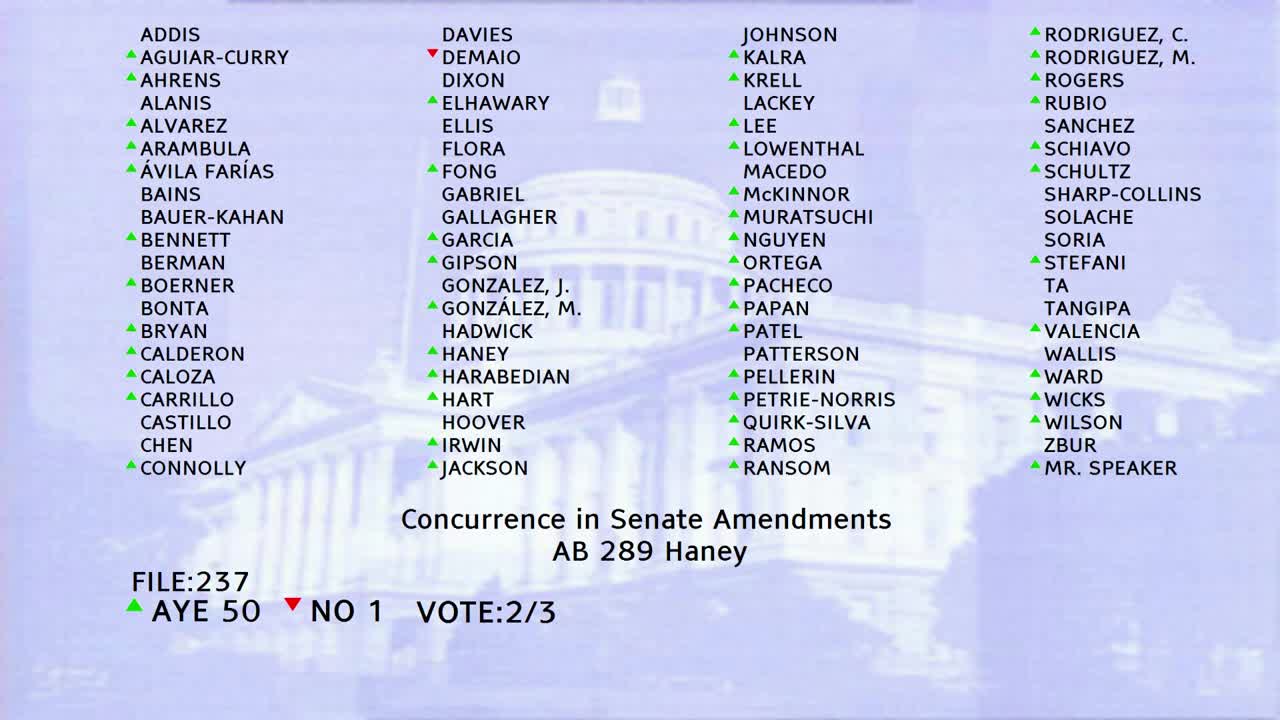

Bill Author