SB 323: Student Aid Commission: California Dream Act application.
- Session Year: 2025-2026
- House: Senate
- Latest Version Date: 2025-07-10
Current Status:
In Progress
(2025-08-29: August 29 hearing postponed by committee.)
Introduced
In Committee
Awaiting First Chamber Vote
Passed First Chamber
In Committee
Awaiting Second Chamber Vote
Passed Second Chamber
Enacted
Existing law exempts a student, other than a nonimmigrant alien, as defined, from paying nonresident tuition at the California State University and the California Community Colleges if the student meets certain requirements. Existing law makes a student who meets these requirements for exemption from nonresident tuition, or who meets equivalent requirements adopted by the Regents of the University of California, eligible to apply for, and participate in, any student financial aid program administered by the state to the full extent permitted by federal law. Existing law requires the Student Aid Commission to establish procedures and forms that enables enable these students to apply for, and participate in, those student financial aid programs.
This bill would require the commission, by the start of the 202627 financial aid cycle, to amend the California Dream Act application, and any of its grant processing systems, to clarify and ensure that the application can be used by any student eligible for state financial aid programs, regardless of their eligibility for federal financial aid. The bill would also require the commission to consult with the segments of postsecondary education in promoting Californias public and private colleges and universities to promote the California Dream Act application in a manner that maximizes the amount of federal aid that students may access while apprising students of the choices available regarding which application they and their families may use. effectively and inform students and their families of their available financial aid application options, as provided.
Existing law exempts a student, other than a nonimmigrant alien, as defined, from paying nonresident tuition at the California State University and the California Community Colleges if the student meets certain requirements. Existing law makes a student who meets these requirements for exemption from nonresident tuition, or who meets equivalent requirements adopted by the Regents of the University of California, eligible to apply for, and participate in, any student financial aid program administered by the state to the full extent permitted by federal law. Existing law requires the Student Aid Commission to establish procedures and forms that enables these students to apply for, and participate in, those student financial aid programs.
This bill would require the commission, by the start of the 202627 financial aid cycle, to amend the California Dream Act application, and any of its grant processing systems, to clarify and ensure that the application can be used by any student eligible for state financial aid programs, regardless of their eligibility for federal financial aid. The bill would also require the commission to consult with the segments of postsecondary education in promoting the California Dream Act application in a manner that maximizes the amount of federal aid that students may access while apprising students of the choices available regarding which application they and their families may use.
Existing law establishes the Student Aid Commission as the primary state agency for the administration of state-authorized student financial aid programs available to students attending all segments of postsecondary education. Existing law establishes the California DREAM Loan Program, which provides a student attending a participating campus of the University of California or California State University with a loan, referred to as a DREAM loan, if the student satisfies specified requirements, including a requirement that the student be exempt from paying nonresident tuition or meet equivalent requirements adopted by the Regents of the University of California.This bill would state the intent of the Legislature to enact subsequent legislation that would require the commission to amend the California Dream Act application and any of its grant processing systems to clarify and ensure that the application can be used by any eligible student for state financial aid programs, as provided, and require the commission to consult with the segments of postsecondary education to promote the California Dream Act application in a manner that maximizes the amount of federal aid that students may access while also apprising students of the choices available specific to the application they or their families may use.Existing law establishes the Student Aid Commission as the primary state agency for the administration of state-authorized student financial aid programs available to students attending all segments of postsecondary education. Existing law establishes the California DREAM Loan Program, which provides a student attending a participating campus of the University of California or California State University with a loan, referred to as a DREAM loan, if the student satisfies specified requirements, including a requirement that the student be exempt from paying nonresident tuition or meet equivalent requirements adopted by the Regents of the University of California.
This bill would state the intent of the Legislature to enact subsequent legislation that would require the commission to amend the California Dream Act application and any of its grant processing systems to clarify and ensure that the application can be used by any eligible student for state financial aid programs, as provided, and require the commission to consult with the segments of postsecondary education to promote the California Dream Act application in a manner that maximizes the amount of federal aid that students may access while also apprising students of the choices available specific to the application they or their families may use.
(a)Notwithstanding any other law, a student who meets the requirements of subdivision (a) of Section 68130.5, or who meets equivalent requirements adopted by the Regents of the University of California, is eligible to apply for, and participate in, any student financial aid program administered by the State of California to the full extent permitted by federal law. The Legislature finds and declares that this section is a state law within the meaning of Section 1621(d) of Title 8 of the United States Code.
(b)Notwithstanding any other law, the commission shall establish procedures and forms that enable students who are exempt from paying nonresident tuition under Section 68130.5, or who meet equivalent requirements adopted by the regents, to apply for, and participate in, all student financial aid programs administered by the State of California to the full extent permitted by federal law.
(c)It is the intent of the Legislature that all forms of state-based aid in California be made equally available to students who are exempt, pursuant to Section 68130.5, from paying nonresident tuition and to all other students who qualify for state-based aid in this state.
(d)By the start of the 202627 financial aid cycle, the commission shall amend the California Dream Act application, and any of its grant processing systems, to clarify and ensure that the application can be used by any student eligible for state financial aid programs, regardless of their eligibility for federal financial aid.
(e)The commission shall consult with the segments of postsecondary education in promoting Californias public and private colleges and universities to promote the California Dream Act application in a manner that maximizes the amount of federal aid that students may access while also apprising students of the choices available regarding which application they and their families may use. effectively, including supporting measures to maximize student attainment of federal financial aid, where appropriate, while also clearly informing students and their families of their available application options.
(f)The commission shall inform students and their families of their available financial aid application options, including, but not limited to, by doing both of the following:
(1)Listing, in a prominent manner, on the commissions internet website and the California Dream Act application, the application eligibility criteria for the California Dream Act application, the types of financial aid that each application will consider, and key distinctions between the applications.
(2)Ensuring that applicants actively acknowledge, before completing the California Dream Act application, that they will not be considered for any federal student financial aid programs.
(a)Notwithstanding any other law, a student who meets the requirements of subdivision (a) of Section 68130.5, or who meets equivalent requirements adopted by the Regents of the University of California, is eligible to apply for, and participate in, any student financial aid program administered by the State of California to the full extent permitted by federal law. The Legislature finds and declares that this section is a state law within the meaning of Section 1621(d) of Title 8 of the United States Code.
(b)Notwithstanding any other law, the Student Aid Commission commission shall establish procedures and forms that enable students who are exempt from paying nonresident tuition under Section 68130.5, or who meet equivalent requirements adopted by the regents, to apply for, and participate in, all student financial aid programs administered by the State of California to the full extent permitted by federal law.
(c)It is the intent of the Legislature that all forms of state-based aid in California be made equally available to students who are exempt, pursuant to Section 68130.5, from paying nonresident tuition and to all other students who qualify for state-based aid in this state.
(d)By the start of the 202627 financial aid cycle, the commission shall amend the California Dream Act application, and any of its grant processing systems, to clarify and ensure that the application can be used by any student eligible for state financial aid programs, regardless of their eligibility for federal financial aid.
(e)The commission shall consult with the segments of postsecondary education in promoting the California Dream Act application in a manner that maximizes the amount of federal aid that students may access while also apprising students of the choices available regarding which application they and their families may use.
SECTION 1.It is the intent of the Legislature to enact subsequent legislation that would do both of the following:(a)Require, no later than the 202627 financial aid cycle, the Student Aid Commission to amend the California Dream Act application and any of its grant processing systems to clarify and ensure that the application can be used by any eligible student for state financial aid programs, regardless of their eligibility for federal financial aid.(b)Require the Student Aid Commission to consult with the segments of postsecondary education to promote the California Dream Act application in a manner that maximizes the amount of federal aid that students may access while also apprising students of the choices available specific to the application they or their families may use.It is the intent of the Legislature to enact subsequent legislation that would do both of the following:
(a)Require, no later than the 202627 financial aid cycle, the Student Aid Commission to amend the California Dream Act application and any of its grant processing systems to clarify and ensure that the application can be used by any eligible student for state financial aid programs, regardless of their eligibility for federal financial aid.
(b)Require the Student Aid Commission to consult with the segments of postsecondary education to promote the California Dream Act application in a manner that maximizes the amount of federal aid that students may access while also apprising students of the choices available specific to the application they or their families may use.
|
Date
|
Status
|
|---|---|
| Aug 29, 2025 | August 29 hearing postponed by committee. |
| Aug 20, 2025 | August 20 set for first hearing. Placed on APPR. suspense file. |
| Jul 10, 2025 | Read second time and amended. Re-referred to Com. on APPR. |
| Jul 9, 2025 | From committee: Do pass as amended and re-refer to Com. on APPR. (Ayes 8. Noes 2.) (July 8). |
| Jun 9, 2025 | Referred to Com. on HIGHER ED. |
| Jun 3, 2025 | In Assembly. Read first time. Held at Desk. |
| Jun 2, 2025 | Read third time. Passed. (Ayes 31. Noes 1. Page 1365.) Ordered to the Assembly. |
| May 23, 2025 | Read second time. Ordered to third reading. |
| May 23, 2025 | From committee: Do pass. (Ayes 5. Noes 0. Page 1196.) (May 23). |
| May 16, 2025 | Set for hearing May 23. |
| May 5, 2025 | May 5 hearing: Placed on APPR. suspense file. |
| Apr 25, 2025 | Set for hearing May 5. |
| Apr 23, 2025 | From committee: Do pass and re-refer to Com. on APPR. (Ayes 6. Noes 0. Page 865.) (April 23). Re-referred to Com. on APPR. |
| Apr 4, 2025 | Set for hearing April 23. |
| Apr 2, 2025 | Re-referred to Com. on ED. |
| Mar 25, 2025 | From committee with author's amendments. Read second time and amended. Re-referred to Com. on RLS. |
| Feb 19, 2025 | Referred to Com. on RLS. |
| Feb 12, 2025 | From printer. May be acted upon on or after March 14. |
| Feb 11, 2025 | Introduced. Read first time. To Com. on RLS. for assignment. To print. |
|
Date
|
Description
|
Location
|
Votes
|
|
|---|---|---|---|---|
| Jul 8, 2025 | Do pass as amended and be re-referred to the Committee on [Appropriations] | Assembly Standing Committee on Higher Education |
Passed |
|
| Jun 2, 2025 | Senate 3rd Reading SB323 Pérez | Senate Floor |
Passed |
|
| May 23, 2025 | Do pass | Senate Standing Committee on Appropriations |
Passed |
|
| May 5, 2025 | Placed on suspense file | Senate Standing Committee on Appropriations |
Passed |
|
| Apr 23, 2025 | Do pass, but first be re-referred to the Committee on [Appropriations] | Senate Standing Committee on Education |
Passed |
This list shows positions taken on this bill by organizations on the date displayed, which is linked to the original source.
Positions by individuals are not included.
|
Organization
|
Position
|
Date
|
|---|---|---|
| 10,000 Degrees | ** Support | |
| African American Male Education Network & Development | ** Support | |
| Alliance for A Better Community | ** Support | |
| Asian Americans Advancing Justice Southern California | ** Support | |
| BLU Educational Foundation | ** Support | |
| Breese Foundation | ** Support | |
| Bresee Foundation | ** Support | |
| C5LA | ** Support | |
| C5LA Foundation | ** Support | |
| California Association For Bilingual Education | ** Support | |
| California Association Of Christian Colleges And Universities | ** Support | |
| California Community Colleges Chancellor's Office | ** Support | |
| California Community Foundation | ** Support | |
| California State Student Association | ** Support | |
| California Student Aid Commission | ** Support | |
| California Undocumented Higher Education Coalition | ** Support | |
| CFT- a Union of Educators & Classified Professionals, Aft, Afl-cio | ** Support | |
| Coalition for Humane Immigrant Rights | ** Support | |
| College Access Plan | ** Support | |
| College for All Coalition | ** Support | |
| Consejo de Federaciones Mexicanas | ** Support | |
| Determined to Succeed | ** Support | |
| Dolores Huerta Foundation | ** Support | |
| EdTrust-West | ** Support | |
| Empowering Pacific Islander Communities | ** Support | |
| Faculty Association Of California Community Colleges | ** Support | |
| faculty association of california's community colleges | ** Support | |
| Fulfillment Fund | ** Support | |
| heart of los angeles | ** Support | |
| Hispanas Organized for Political Equality | ** Support | |
| Immigrants Rising | ** Support | |
| Institutional Solutions | ** Support | |
| John Burton Advocates for Youth | ** Support | |
| Kid City Hope Place | ** Support | |
| Los Angeles Unified School District | ** Support | |
| Los Angeles United Methodist Urban Foundation | ** Support | |
| Los Angeles Urban Foundation | ** Support | |
| Mexican-American Legal Defense and Educational Fund | ** Support | |
| Motivating Our Students Through Experience | ** Support | |
| NextGen California | ** Support | |
| Northern California College Promise Coalition | ** Support | |
| Operation Jump Start | ** Support | |
| Parent Institute for Quality Education | ** Support | |
| Partnership for Los Angeles Schools | ** Support | |
| Public Advocates | ** Support | |
| Puente Learning Center | ** Support | |
| San Bernardino Community College District | ** Support | |
| Southern California College Access Network | ** Support | |
| Southern California College Attainment Network | ** Support | |
| Student Senate for California Community Colleges | ** Support | |
| uAspire | ** Support | |
| Unite-LA | ** Support | |
| United Way of Greater Los Angeles | ** Support | |
| University Of California Student Association | ** Support | |
| USC Mcmorrow Neighborhood Academic Initiative | ** Support | |
| Vision y Compromiso | ** Support | |
| Western Association for College Admission Counseling | ** Support |
Date of Hearing: August 20, 2025
ASSEMBLY COMMITTEE ON APPROPRIATIONS
Buffy Wicks, Chair
SBPCA Bill Id:SB 323
Author:(Pérez) – As Amended Ver:July 10, 2025
Policy Committee: | Higher Education | Vote: | 8 - 2 |
|
| ||
|
|
Urgency: No State Mandated Local Program: No Reimbursable: No
SUMMARY:
This bill requires the California Student Aid Commission (CSAC), by the start of the 2026-27 financial aid cycle, to revise the California Dream Act application (CADAA) to allow the application for use by any student eligible for state financial aid programs regardless of eligibility for federal financial aid.
The bill also requires the CSAC to consult with California’s public and private colleges and universities to promote the CADAA effectively and to inform students and their families of their available financial aid application options and the key distinctions between applications.
FISCAL EFFECT:
- Ongoing General Fund costs of an unknown but potentially significant amount, possibly in the hundreds of thousands to millions of dollars annually, to provide students eligible for federal financial aid with additional state financial aid through state programs due to increased unmet need. The bill provides an additional pathway for all students to access the same state and institutional financial aid opportunities they would otherwise access via the Free Application for Federal Student Aid (FAFSA). For this reason, students who are eligible for the FAFSA but opt for the CADAA instead would represent an increased cost to state and institution financial aid programs up to the amount of unrealized federal financial aid going to support these students.
- One-time General Fund costs of $1.35 million in the first year of implementation, and $900,000 ongoing, for the UC to update financial aid systems to process students filing both a CADAA and FAFSA simultaneously and facilitate profile matching across applications for mixed status students.
- One-time General Fund cost pressures to the CSAC of an unknown amount, possibly in the low hundreds of thousands of dollars, to the extent that implementation of the bill’s requirements calls for additional staff resources.
COMMENTS:
- Purpose. According to the author:
SB 323 would address inequities in higher education by making more students aware that CADAA is an option for them to relieve financial burdens associated with pursuing higher education. SB 323 also addresses inequities by ensuring that FAFSA-eligible students don’t miss out on the state and institutional aid that they are eligible for and entitled to if FAFSA is not an application they feel safe applying to or that they are unable to submit due to continued technical barriers. Lastly, SB 323 does not prohibit any FAFSA-eligible students who decide to apply for CADAA to later submit a FAFSA.
- Background. FAFSA. The FAFSA is the form students need to complete in order to receive any financial aid from the federal government to help pay for college. Many states, including California, and colleges use the FAFSA to determine which students will receive state and institutional financial aid—and how much they each will receive. There are currently three kinds of Cal Grants: A, B and C, of which eligibility is determined by the FAFSA or California Dream Act Application, a student’s verified Cal Grant GPA, the type of California colleges a student listed on their FAFSA, and whether they are a recent high school graduate. Students are considered for a Cal Grant A, B, or C after they either establish eligibility for an entitlement award (if they graduated from high school less than one year ago or transfer from a community college before age 28) or secure one of a limited number of competitive awards (for any students that do not qualify for an entitlement).
Concerns and Impediments to FAFSA. U.S. citizen students from mixed status families (meaning one or more of their contributor parents or spouse is undocumented) may qualify for both federal and state financial aid programs. However, with some of the changes to the new FAFSA application and the federal administration’s actions regarding arrests, detention, and deportations of undocumented individuals, various stakeholders have raised concerns about data collected for the FAFSA and whether it may be used for purposes other than determining financial aid. Given such concerns, mixed-status family households may forgo using the FAFSA application and students will miss out on receiving federal or state financial aid.
Students from mixed status families, LGBTQ+ students, and students with disabilities may also have concerns with disclosing personal information to the United States Department of Education and instead decide to forgo federal student aid opportunities. Additionally, due to scaling back of technical assistance resources for the FAFSA, such as available language translations and call center staff, incarcerated students or students from homes where the primary language spoken is one other than English may face impediments to successfully accessing the FAFSA.
The CADAA. Not all students are eligible to qualify for federal financial aid via the FAFSA. However, existing law authorizes the CSAC to create an alternative application form, the CADAA, for students’ who are not eligible for federal aid, but who may be eligible for state and institutional aid or scholarships, such as undocumented students. According to the CSAC’s website, a student is eligible to complete the CADAA if they are undocumented, have a U-Visa or Temporary Protected Status, meet the California non-resident exemption requirements, or are from a mixed-status family. This bill expands access to the CADAA to any student eligible for state-administered financial aid programs even if they are eligible for federal financial aid.
Analysis Prepared by: Aaron Heredia / APPR. / (916) 319-2081
Date of Hearing: July 8, 2025
ASSEMBLY COMMITTEE ON HIGHER EDUCATION
Mike Fong, Chair
SBPCA Bill Id:SB 323
Author:(Pérez) – As Amended Ver:March 25, 2025
SENATE VOTE: 31-1
SUBJECT: Student Aid Commission: California Dream Act application.
SUMMARY: Requires the California Student Aid Commission (CSAC), commencing with the 2026–27 financial aid cycle, to amend the California Dream Act application (CADAA) and any of CSAC’s grant processing systems to clarify and ensure that the CADAA can be used by any student eligible for state financial aid programs, regardless of their eligibility for federal financial aid. Further, this measure also requires CSAC to consult the segments of postsecondary education in promoting the CADAA in a manner that maximizes the amount of federal aid that students may access while apprising students of the choices available regarding which application they and their families may use.
EXISTING LAW:
Federal law.
The federal Pell Grant provides aid to students who demonstrate financial need. The Pell Grant award can be used for tuition and fees, books, supplies, transportation, and living expenses for the equivalent of up to six years of full-time enrollment. The maximum Pell Grant award is $7,395 for the award year 2024-25 (which covers the span of July 1, 2024, through June 30, 2025) (20 U.S.C. Section 1070).
Presently, it is anticipated that the maximum award will not change for the 2025-26 award year (which covers the span of July 1, 2025, through June 30, 2026).
State law.
- Establishes the CSAC for the purpose of administering specified student financial aid programs (Education Code (EC) Section 69510, et seq.).
- Establishes the Cal Grant program, administered by the CSAC, to provide grants to financially needy students to attend a college or university. The Cal Grant programs include both the entitlement and the competitive Cal Grant awards. The program consists of the Cal Grant A, Cal Grant B, and Cal Grant C programs, and eligibility is based upon financial need, grade point average (GPA), California residency, and other criteria. Maximum award amounts for the California State University (CSU) and the University of California (UC) are established in the annual Budget Act and have traditionally covered all systemwide tuition and fees. Supplemental Cal Grant awards programs are available to students with dependents and former and current foster youth attending CSU, UC, or a California Community College (CCC) to assist with non-tuition costs, such as living expenses (EC Sections 69430–69433 and Sections 69465-69470).
- Establishes, the Cal Grant Reform Act commencing in the 2024-2025 fiscal year, if General Fund moneys over the multiyear forecasts are available to support ongoing augmentations and actions, and if funding is provided in the annual Budget Act. Under the Act, the Cal Grant 2 and Cal Grant 4 programs are created. The Cal Grant 2 is for CCC students, and provides non-tuition support that grows annually with inflation. The Cal Grant 4 program is for students at the UC, CSU, and other institutions. The Act also states legislative intent that UC and CSU use institutional aid to cover non-tuition costs for their students (EC Sections 69424, 69425, and 69428).
- Establishes the Middle Class Scholarship (MCS) Program to offset a portion of tuition costs for students attending the UC and the CSU. Starting in the 2022-23 academic year, MCS awards may be used to cover the total cost of attendance at UC and CSU (EC Section 70020, et seq.).
The maximum annual household income to qualify for an award is $234,000 for dependent students in 2025-26.
- Expands the eligibility of student financial aid programs administered by the State to students who meet the specified requirements of EC Section 68130.5 (which, in part, defines AB 540 students) or who meet the equivalent requirements adopted by the UC, notwithstanding any other law. It further requires CSAC to establish procedures and forms that enable these students to apply for and participate in all student financial aid programs administered by the State to the full extent permitted by federal law (EC Section 69508.5).
- Exempts, as established by AB 540 (Firebaugh), Chapter 814, Statutes of 2001, and later modified, specified students from paying nonresident tuition at the CSU and the CCC if students met all of the following requirements:
- Satisfaction of the requirements of either (i) or (ii):
- A total attendance of, or attainment of credits earned while in California equivalent to, three or more years of full-time attendance or attainment of credits at any of the following:
- California high schools;
- California high schools, established by the State Board
- A total attendance of, or attainment of credits earned while in California equivalent to, three or more years of full-time attendance or attainment of credits at any of the following:
- Satisfaction of the requirements of either (i) or (ii):
of Education;
- California adult schools as specified;
- CCCs; or,
- A combination of the schools in (1) through (4) inclusive.
- Three or more years of full-time high school coursework in California and a total of three or more years of attendance in California elementary schools, California secondary schools, or a combination of California elementary and secondary schools; and,
- Specifies attendance and credit requirements when satisfied at a CCC and California Adult School.
- Satisfaction of any of the following:
- Graduation from a California high school or attainment of the equivalent thereof;
- Attainment of an associate degree from a CCC; and,
- Fulfillment of the minimum transfer requirements established for the UC or CSU for students transferring from a campus of the CCC.
- Registration as an entering student in, or current enrollment in, an accredited institution of higher education in California, not earlier than the fall semester or quarter of the 2001–02 academic year; and,
- In the case of a person without lawful immigration status, the filing of an affidavit with the institution of higher education stating that the student has filed an application to legalize the student’s immigration status or will file an application as soon as the student is eligible to do so (EC Section 68130.5 (a)).
FISCAL EFFECT: According to the Senate Committee on Appropriations:
- The CSAC indicates that because the bill would simply offer an alternative pathway for students to access the same state and institutional aid that they would be able to access via the Free Application for Federal Student Aid (FAFSA), it would not change the state’s fiscal exposure nor increase local assistance for the state’s financial aid programs. However, to the extent that students elect to forgo federal financial aid by completing the CADAA in lieu of the FAFSA despite being eligible, there could be an increase in Middle Class Scholarship award amounts for CADAA applicants as these students would see a reduction in their overall financial aid and have a greater unmet need. The CSAC also indicates that the bill could lead to increased participation in the Dream Act Service Incentive Grant Program and the Dream Loan Program.
- The CSAC indicates that while it has already began phased implementation of this bill, full implementation may require additional General Fund resources. The 2025-26 Governor’s Budget includes $3 million in ongoing General Fund resources for CSAC’s structural funding gaps and could also help address the bill’s remaining costs.
COMMENTS: Purpose of the measure. According to the author, “SB 323 will ensure that California takes proactive steps to address growing concerns of college-eligible students to apply for federal financial aid by providing alternative financial aid options and mitigate for any future disruptions to how federal financial aid is administered.”
The author states that, “SB 323 will require the California Student Aid Commission [CSAC] to make the California Dream Act Application [CADAA] available to all students in California who qualify for financial aid. This will protect students from vulnerable socioeconomic backgrounds and encourage them to seek the financial aid they qualify for without compromising their privacy.”
Lastly, the author contends that, “SB 323 would address inequities in higher education by making more students aware that CADAA is an option for them to relieve financial burdens associated with pursuing higher education. SB 323 also addresses inequities by ensuring that FAFSA-eligible students don’t miss out on the state and institutional aid that they are eligible for and entitled to if FAFSA is not an application they feel safe applying to or that they are unable to submit due to continued technical barriers. Lastly, SB 323 does not prohibit any FAFSA-eligible students who decide to apply for CADAA to later submit a FAFSA.”
Free Application for Federal Student Aid (FAFSA). There are currently three kinds of Cal Grants, A, B and C, of which eligibility is determined by the FAFSA or CADAA, a student’s verified Cal Grant GPA, the type of California colleges a student listed on their FAFSA, and whether they are a recent high school graduate. Students are considered for a Cal Grant A, B, or C after they either establish eligibility for an Entitlement award (if they graduated from high school less than one year ago or transfer from a community college before age 28) or secure one of a limited number of Competitive awards (available for any students that do not qualify for an Entitlement).
Additionally, the FAFSA is used to determine students’ eligibility for all major federal financial aid programs, including the Pell Grant and federal student loans. Further, the FAFSA is used by postsecondary institutions in the State to determine institutional financial aid.
Federal changes. As part of federal COVID-19 related legislation signed into law in late December 2020, the process for applying for and receiving federal aid was simplified. The federal changes, initially were to commence with the 2023-24 academic year. However, the changes were delayed in June 2021, and did not go into effect until the 2024-25 academic year. In part, the changes do the following:
- Simplify the FAFSA form. The FAFSA is the form students need to complete in order to receive any financial aid from the federal government to help pay for college.
Each year, over 13 million students who file the FAFSA get more than $120 billion in grants, work-study, and low-interest loans from the U.S. Department of Education. Additionally, many states, including California, and colleges use the FAFSA to determine which students will receive state and institutional financial aid—and how much they will receive.
Simplifying the FAFSA will not only make the form easier to fill out by eliminating two-thirds of the questions, but it will also affect the determination of financial need for low, middle, and high-income students.
- Change the Expected Family Contribution (EFC) to the Student Aid Index (SAI). While the SAI is similar in nature to the EFC, according to the Institute for College Access and Success, the name change will more accurately reflect the meaning of the calculation when determining student aid eligibility rather than an expectation of what a family can afford to pay for college. Under the new model, a student applicant’s SAI can be as low as -$1,500; however, the lowest EFC under the existing model is $0.
- Change how Pell Grant eligibility will be determined. Using the simplified FAFSA form, the Pell amounts will generally be determined by subtracting the SAI from the maximum Pell Grant award. Students who have a negative or zero SAI will receive the maximum amount available.
Applicants whose family adjusted gross income (AGI) fall below a specified percentage of the federal poverty level, will be guaranteed eligibility (regardless of their SAI). Further, applicants whose family AGI is up to 225% of the federal poverty level could also be eligible for the maximum award, and up to 400% of the federal poverty level for the minimum Pell award.
Continued challenges with the rollout of the new FAFSA application. As noted in the Federal changes section of this analysis, the U.S. Department of Education (USDE) made myriad changes to the federal FAFSA. While the changes seek to simplify the application form by reducing the number of questions students and families need to answer and transfer data directly from their previous tax filings, after over a year delay in implementing or launching the form, the USDE still did not release the new form for the 2024-25 award year until three months later than all prior years (released on December 30, 2023 instead of October 1, 2023).
The USDE, on March 12, 2024, announced that it had made long-awaited technical updates that would enable mixed-status families to submit the FAFSA. However, the USDE also indicated that it had, “uncovered separate issues that still need to be resolved.”
The 2025-26 cycle was also delayed. The USDE announced on August 7, 2024, that the upcoming FAFSA form would not be open to all students until December 1, 2024 – about two months later than the typical release date. There was also a phased rollout, including a testing period in which a limited number of students and institutions had access to the form beginning October 1, 2024, as a way to preventively address potential problems before it officially went live.
The CADAA. Unlike many students in the State who qualify for federal aid programs utilizing the FAFSA application, not all students are eligible to qualify for aid via the FAFSA. Existing law authorizes the CSAC to create an alternative application form, the CADAA, for students’ who are not eligible for federal aid, but may be eligible for State and institutional aid or scholarships.
Mixed-status families (MSF). The vast majority of high school and college students qualify for FAFSA application completion and can access both federal and State financial aid programs, including U.S. citizen students with undocumented contributors such as parents or spouses.
With some of the changes to the new FAFSA application, concerns from various stakeholders across the nation, regarding arrests, detention, and deportations of undocumented individuals have been raised about data collected for the FAFSA and whether it may be used for purposes other than determining financial aid. Mixed-status family households may face a difficult decision regarding whether or not to use the FAFSA application.
They may have to choose between disclosing personal information to USDE about vulnerable contributors, and forgoing federal student aid opportunities, which could affect their ability to finance their student’s college education. Students and families should be well informed about each option and to have choices regarding all potential options for financial aid.
Traditionally, the CADAA has catered to a unique population of California students. This measure seeks to ensure the availability of the CADAA for students choosing to solely apply for State-administered aid programs.
Committee Staff understands that just by making the application available does not necessarily guarantee that award payments will be disbursed. Rather, it would allow applicants to be considered for applicable financial aid programs.
How many? According to CSAC, the following tables below, provide data that is relevant to the number of MSF students’ and their completion of FAFSA and CADAA from the last few award cycles.
Table 1: Year-over-Year - Dependent, First-time | |||
6/10/2023 | 6/10/2024 | 6/10/2025 | |
23-24 | 24-25 | 25-26 | |
CADAA MSF | 2,525 | 1,759 | |
FAFSA MSF | 43,179 | 33,773 | 42,347 |
FAFSA MSF | -2% | ||
Table 2: Year-over-Year - Dependent, First-time | 24-25 | 25-26 |
CADAA MSF Pell | 2,255 | 1,549 |
CADAA MSF No Pell | 206 | 203 |
Table 1 above shows that in 2025-26 CSAC, saw a rebound of MSF dependent first-time students complete a FAFSA compared to the completion rate in 2024-25.
According to CSAC, sponsors of this measure, “SB 323 is still a critical and important measure to proactively ensure that students in California have a safe and stable alternative financial aid application to access State and institutional aid, regardless of their eligibility for federal aid, as the future continues to be uncertain.”
Table 2 above illustrates the number of MSF dependent first-time students who applied for CADAA and meet Pell eligibility. According to CSAC, these are students who would not have had any financial aid, not even State and institutional aid, without CADAA as an alternative option.
Committee Staff understands that, the numbers in Table 2, may include a few duplicates; that is to say, students who applied for CADAA and FAFSA.
Committee comments and amendments. Committee Staff understands that it is the intent of the author to ensure that all students are able to apply for financial aid and ascertain in the application process, what, if any, financial aid they are eligible to receive. Committee Staff also understands that the State’s public and private colleges and universities (segments), want to ensure that, should students apply for the CADAA, and not the FAFSA, students and their guardians are well aware that some students could potentially forego federal funds. The segments have acknowledged that they are committed to assisting all students regardless of their filling out a FAFSA or a CADAA or both.
However, this measure as currently drafted, could be ambiguous to some in that it is not explicitly clear that CSAC should ensure students who opt to complete just a CADAA will not be eligible to potentially receive federal financial aid.
With this in mind, the Committee recommends, and the author has agreed to accept, the following amendments.
69508.5. (e) The commission shall consult with the segments of postsecondary education in promoting California’s public and private colleges and universities to promote the California Dream Act application in a manner that maximizes the amount of federal aid that students may access effectively, including supporting measures to maximize student attainment of federal financial aid where appropriate while also apprising clearly informing students and their families of the choices their available regarding which application options they and their families may use. Including, but not limited to:
(1) Listing in a prominent manner on the commission’s website, and the California Dream Act Application itself, the application eligibility criteria for the California Dream Act Application, the types of financial aid that each application will consider, and key distinctions between applications.
(2) Ensuring that applicants actively acknowledge, prior to completing the California Dream Act Application, that they will not be considered for any federal student financial aid programs.
Arguments in support. According to CSAC, “while CSAC made the CADAA available to mixed-status families, there has not been an adopted, uniform policy defining the use of the application for these students or other FAFSA-eligible students who have concerns and technical issues with applying for aid using the FAFSA. The lack of a defined state policy around use of the CADAA in this regard has created uncertainty and conflicting messages for students seeking to understand their financial aid application choices.”
The CSAC contends that, “SB 323 is necessary to ensure statewide clarity and alignment across education sectors about the availability of CADAA for any California aid eligible student. SB 323 ensures that California proactively provides alternative financial aid options for any California student who is unable or unwilling, now or in the future, to submit a FAFSA by making the CADAA permanently available to any eligible California student.”
Lastly, according to CSAC, “without SB 323, California students from vulnerable socioeconomic backgrounds are forced to choose between receiving nothing in financial aid or undergoing the FAFSA process despite individual data privacy or security concerns. SB 323 also promotes coordination between CSAC and all institutions of higher education by requiring that such entities collaborate to communicate consistent and accurate information to students about not just their options between FAFSA or CADAA, but also the considerations for each option so that students are empowered to make an informed personal decision.”
Related legislation. SB 305 (Reyes), of the 2025-26 Legislative Session, which was held on the Suspense File in the Senate Committee on Appropriations, in part, requires the CCCs to provide students with specified information related to completing and submitting the Free Application for Federal Student Aid (FAFSA) and the CADAA, or to opt out of completing these applications.
REGISTERED SUPPORT / OPPOSITION:
Support
10,000 Degrees
African American Male Education Network & Development
Alliance for a Better Community
Asian Americans Advancing Justice Southern California
BLU Educational Foundation
Bresee Foundation
C5LA
California Association for Bilingual Education
California Association of Christian Colleges and Universities
California Community Colleges Chancellor's Office
California Community Foundation
California State Student Association
California Student Aid Commission (Sponsor)
California Undocumented Higher Education Coalition
CFT- a Union of Educators & Classified Professionals, AFT, AFL-CIO
Coalition for Humane Immigrant Rights
College Access Plan
College for All Coalition
Consejo De Federaciones Mexicanas
Determined to Succeed
Dolores Huerta Foundation
EdTrust-West
Empowering Pacific Islander Communities
Faculty Association of California Community Colleges
Faculty Association of California's Community Colleges
Fulfillment Fund
Heart of Los Angeles
Hispanas Organized for Political Equality
Immigrants Rising
Institutional Solutions
John Burton Advocates for Youth
Kid City Hope Place
Los Angeles Unified School District
Los Angeles United Methodist Urban Foundation
Los Angeles Urban Foundation
Mexican-American Legal Defense and Educational Fund
Motivating Our Students Through Experience
NextGen California
Northern California College Promise Coalition
Operation Jump Start
Parent Institute for Quality Education
Partnership for Los Angeles Schools
Public Advocates
Puente Learning Center
San Bernardino Community College District
Southern California College Access Network
Southern California College Attainment Network
Student Senate for California Community Colleges
uAspire
Unite-LA
United Way of Greater Los Angeles
University of California Student Association
USC McMorrow Neighborhood Academic Initiative
Vision y Compromiso
Western Association for College Admission Counseling
Opposition
None on file.
Analysis Prepared by: Jeanice Warden / HIGHER ED. / (916) 319-3960
SENATE RULES COMMITTEE Office of Senate Floor Analyses (916) 651-1520 Fax: (916) 327-4478 | SB 323 |
THIRD READING
Bill No: SB 323
Author: Pérez (D)
Amended: 3/25/25
Vote: 21
SENATE EDUCATION COMMITTEE: 6-0, 4/23/25
AYES: Pérez, Ochoa Bogh, Cabaldon, Cortese, Gonzalez, Laird
NO VOTE RECORDED: Choi
SENATE APPROPRIATIONS COMMITTEE: 5-0, 5/23/25
AYES: Caballero, Cabaldon, Grayson, Richardson, Wahab
NO VOTE RECORDED: Seyarto, Dahle
SUBJECT: Student Aid Commission: California Dream Act application
SOURCE: California Student Aid Commission
California Undocumented Higher Education Coalition
Southern California College Attainment Network
Student Senate for California Community Colleges
University of California Student Association
DIGEST:
This bill requires the California Student Aid Commission (CSAC), commencing with the 2026–27 financial aid cycle, to amend the California Dream Act application (CADAA) and any of its grant processing systems to clarify and ensure that the CADAA can be used by any student eligible for state financial aid programs, regardless of their eligibility for federal financial aid. It also requires CSAC to consult the segments of postsecondary education in promoting the CADAA in a manner that maximizes the amount of federal aid that students may access while apprising students of the choices available regarding which application they and their families may use.
ANALYSIS:
Existing law:
- Establishes CSAC as the state agency charged with administering state
financial aid programs to qualifying students enrolled in qualifying institutions of higher education throughout the state. It requires CSAC to prescribe the use of standardized student financial aid applications for California. (Education Code (EC) § 69510 et seq. and EC § 69433)
- Expands the eligibility of student financial aid programs administered by the state to students who meet the requirement of EC § 68130.5 AB 540 (Firebaugh, Chapter 814, Statutes of 2001) students or who meet the equivalent requirements adopted by the University of California (UC), notwithstanding any other law. It further requires CSAC to establish procedures and forms that enable these students to apply for and participate in all student financial aid programs administered by the state to the full extent permitted by federal law. (EC § 69508.5)
- Established by AB 540 and later modified it exempts the specified students from paying nonresident tuition at the California State University (CSU) and the California Community Colleges (CCC) if the student meets all of the following requirements:
- Satisfaction of the requirements of either (i.) or (ii.):
i) A total attendance of, or attainment of credits earned while in California equivalent to, three or more years of full-time attendance or attainment of credits at any of the following:
- California high schools.
- California high schools, established by the State Board
of Education.
- California adult schools as specified.
- CCCs.
- A combination of those schools.
- Three or more years of full-time high school coursework in California and a total of three or more years of attendance in California elementary schools, California secondary schools, or a combination of California elementary and secondary schools.
- Specifies attendance and credit requirements when satisfied at a CCC and California Adult School.
- Satisfaction of any of the following:
- Graduation from a California high school or attainment of the equivalent thereof.
- Attainment of an associate degree from a CCC.
- Fulfillment of the minimum transfer requirements established for the UC or CSU for students transferring from a campus of the CCC.
- Registration as an entering student at, or current enrollment at, an accredited institution of higher education in California not earlier than the fall semester or quarter of the 2001–02 academic year.
- In the case of a person without lawful immigration status, the filing of an affidavit with the institution of higher education stating that the student has filed an application to legalize the student’s immigration status or will file an application as soon as the student is eligible to do so. (EC § 68130.5 (a))
This bill:
- Requires CSAC, commencing with the 2026-27 financial aid cycle, to amend the CADAA and its grant processing systems to clarify and ensure that any student who qualifies for state financial aid programs can use the application, regardless of their eligibility for federal financial aid.
- Requires CSAC to consult with segments of postsecondary education promoting the CADAA in a manner that maximizes the amount of federal aid that students may access while also apprising students of the choices available regarding which application they and their families may use.
Comments
- Need for the bill. The 2020 FAFSA Simplification Act modernized, streamlined, and expanded access to the Free Application for Federal Student Aid (FAFSA) application. However, despite these efforts, the 2024-25 application cycle introduced barriers for students from mixed-[immigration] status families, requiring substantial proof to submit their applications. Additionally, CSAC administers the state’s financial aid application for nonresident “AB 540 students,” who are exempt from paying nonresident tuition. In response to the challenges faced by mixed-status families during the 2024-25 financial aid cycle, CSAC took administrative action to make the CADAA available to even FAFSA-eligible students. This bill seeks to codify that action.
According to the author, “SB 323 will ensure that California takes proactive steps to address growing concerns of college-eligible students to apply for federal financial aid by providing alternative financial aid options. SB 323 will require the California Student Aid Commission to make the California Dream Act Application available to all students in California who qualify for financial aid. This will protect students from vulnerable socioeconomic backgrounds and encourage them to seek the financial aid they qualify for without compromising their privacy.”
- FAFSA. The United States Department of Education (USDE) administers the FAFSA. It is the core document used to determine eligibility for all major federal and state financial aid programs, including Cal Grant, Pell Grant, institutional aid at the UC and the CSU, work-study awards, scholarships, and federal student loans. Because financial aid for college considers the cost of attendance and a family’s ability to pay in determining eligibility for financial aid, the FAFSA completion requires personal information such as income and tax information and social security number. The FAFSA Simplification Act came into effect in 2020. According to CSAC, “The new FAFSA for the 2024-25 academic year introduced significant changes to the way students and families apply for and submit a FAFSA, which introduced barriers for many students, but especially for those in mixed-status families who are now required to undergo a substantial burden of proof compared to their peers. A key change to the FAFSA includes a direct data exchange of federal tax information with the Internal Revenue Service (IRS) intended to simplify and shorten the historically lengthy application. For such direct data exchange to occur, federal law requires that individuals (referred to as “contributors”) whose information is required to determine students’ eligibility (the applicant themselves, as well as their parent(s) or spouse) consent to the disclosure of their individual IRS data. The USDE’s Office of Federal Student Aid (FSA) now requires all contributors to create their own StudentAid.gov account for purposes of providing individual consent to such data sharing. The process for non-Social Security Number contributors to create a StudentAid.gov account requires such individuals to manually verify their identity with FSA by providing copies of documentation with their name and/or address. CSAC has seen a 32 percent decrease in FAFSA submissions among California high school seniors from mixed-status families compared to 2023-24.”
- CADAA applicants. Not all students qualify for federal aid programs due to their immigration status and therefore cannot access student aid through the FAFSA. State law authorizes CSAC to create an alternative form for students not eligible for federal aid to apply for state and institutional aid programs or scholarships made available under the terms of the California Dream Act of 2011. The CADAA is used to determine their eligibility.
- Mixed-status families. The vast majority of high school and college students qualify for FAFSA application completion and can access both federal and state financial aid programs, including US citizen students with undocumented contributors such as parents or spouses. With the new FAFSA application changes, concerns regarding arrests, detention, and deportations of undocumented individuals under the Trump administration have been raised about data collected for the FAFSA and whether it may be used for purposes other than determining financial aid. Mixed-status families may face a difficult decision regarding the FAFSA application. They may have to choose between disclosing personal information to USDE about vulnerable contributors, and forgoing federal student aid opportunities, which may potentially affect their ability to finance their student’s college education. It is vital for students and families to be well informed about each option and to have choices regarding those options. The CADAA traditionally caters to a unique population of California students. This bill seeks to ensure the availability of the CADAA for students choosing to solely apply for state-administered aid programs. Making the application available does not necessarily guarantee that award payments will be disbursed. Rather, it would allow applicants to be considered for applicable aid programs.
Related/Prior legislation
SB 305 (Reyes, 2025) requires the CCC, under the Student Success Act, to provide, commencing with the 2026–27 academic year, students with specified information related to completing and submitting the FAFSA and CADAA, and to confirm, commencing with the 2027–28 academic year, that students who have not opted out have completed and submitted the FAFSA or the CADAA, as specified.
SB 837 (Reyes, 2025) requires the CSCA, by July 1, 2027, to develop guidance as specified for LEA’s and public libraries on how to use online technology platforms to assist low-income, foster youth, and undocumented families accessing student financial aid. It also requires CSAC to offer a training program on the developed guidance and implement a multimedia campaign to raise awareness of available online technology platforms relating to the developed guidance.
FISCAL EFFECT: Appropriation: No Fiscal Com.: Yes Local: No
According to the Senate Appropriations Committee analysis, this bill would have the following fiscal impact:
- The CSAC indicates that because the bill would simply offer an alternative pathway for students to access the same state and institutional aid that they would be able to access via the Free Application for Federal Student Aid (FAFSA), it would not change the state’s fiscal exposure nor increase local assistance for the state’s financial aid programs. However, to the extent that students elect to forgo federal financial aid by completing the CADAA in lieu of the FAFSA despite being eligible, there could be an increase in Middle Class Scholarship award amounts for CADAA applicants as these students would see a reduction in their overall financial aid and have a greater unmet need. The CSAC also indicates that the bill could lead to increased participation in the Dream Act Service Incentive Grant Program and the Dream Loan Program.
- The CSAC indicates that while it has already began phased implementation of this bill, full implementation may require additional General Fund resources. The 2025-26 Governor’s Budget includes $3 million in ongoing General Fund resources for CSAC’s structural funding gaps and could also help address the bill’s remaining costs.
SUPPORT: (Verified 5/23/25)
California Student Aid Commission (co-source)
California Undocumented Higher Education Coalition (co-source)
Southern California College Attainment Network (co-source)
Student Senate for California Community Colleges (co-source)
University of California Student Association (co-source)
10,000 Degrees
African American Male Education Network & Development
Alliance for a Better Community
Asian Americans Advancing Justice Southern California
BLU Educational Foundation
Breese Foundation
C5LA Foundation
California Association for Bilingual Education
California Association of Christian Colleges and Universities
California Community Colleges Chancellor’s Office
California Community Foundation
California State Student Association
CFT- A Union of Educators & Classified Professionals, AFT, AFL-CIO
Coalition for Humane Immigrant Rights
College Access Plan
College for All Coalition
Consejo De Federaciones Mexicanas
Determined to Succeed
Dolores Huerta Foundation
EdTrust-West
Empowering Pacific Islander Communities
Faculty Association of California Community Colleges
Fulfillment Fund
Heart of Los Angeles
Hispanas Organized for Political Equality
Immigrants Rising
Institutional Solutions
John Burton Advocates for Youth
Kid City Hope Place
Los Angeles Unified School District
Los Angeles United Methodist Urban Foundation
Los Angeles Urban Foundation
Mexican-American Legal Defense and Educational Fund
Motivating Our Students Through Experience
NextGen California
Northern California College Promise Coalition
Operation Jump Start
Parent Institute for Quality Education
Public Advocates
Puente Learning Center
San Bernardino Community College District
Southern California College Access Network
uAspire
Unite-LA
United Way of Greater Los Angeles
USC McMorrow Neighborhood Academic Initiative
Vision y Compromiso
Western Association for College Admission Counseling
OPPOSITION: (Verified 5/23/25)
Prepared by: Olgalilia Ramirez / ED. / (916) 651-4105
5/25/25 15:53:25
**** END ****
SENATE COMMITTEE ON APPROPRIATIONS
Senator Anna Caballero, Chair
2025 - 2026 Regular Session
SB 323 (Pérez) - Student Aid Commission: California Dream Act application
Version: March 25, 2025 | Policy Vote: ED. 6 - 0 |
Urgency: No | Mandate: No |
Hearing Date: May 5, 2025 | Consultant: Lenin Del Castillo |
Bill Summary:
This bill requires the California Student Aid Commission (CSAC), commencing with the 2026–27 financial aid cycle, to amend the California Dream Act application (CADAA) and any of its grant processing systems to ensure that the CADAA can be used by any student eligible for state financial aid programs, regardless of their eligibility for federal financial aid. It also requires CSAC to consult with the segments of postsecondary education in promoting the CADAA in a manner that maximizes the amount of federal aid that students may access while apprising students of the choices available regarding which application they and their families may use.
Fiscal Impact:
- The CSAC indicates that because the bill would simply offer an alternative pathway for students to access the same state and institutional aid that they would be able to access via the Free Application for Federal Student Aid (FAFSA), it would not change the state’s fiscal exposure nor increase local assistance for the state’s financial aid programs. However, to the extent that students elect to forgo federal financial aid by completing the CADAA in lieu of the FAFSA despite being eligible, there could be an increase in Middle Class Scholarship award amounts for CADAA applicants as these students would see a reduction in their overall financial aid and have a greater unmet need. The CSAC also indicates that the bill could lead to increased participation in the Dream Act Service Incentive Grant Program and the Dream Loan Program.
- The CSAC indicates that while it has already began phased implementation of this bill, full implementation may require additional General Fund resources. The 2025-26 Governor’s Budget includes $3 million in ongoing General Fund resources for CSAC’s structural funding gaps and could also help address the bill’s remaining costs.
Background:
Existing law requires a school district, county office of education, or charter school to ensure that a student in grade 12 who has not opted out, as specified, completes and submits a FAFSA or, if the student is exempt from paying nonresident tuition under existing law, completes and submits a form for purposes of the California Dream Act. It also requires CSAC, on or before July 1, 2022, to adopt regulations that include, but are not limited to, model opt-out forms and acceptable use policies for the purpose of providing guidance with applicable state laws.
Existing law requires the school district, county office of education, or charter school to exempt a pupil or the pupil’s parent or legal guardian from completing a form if the local educational agency (LEA) determines the pupil is unable to complete the form, and prohibits a pupil’s ability to graduate from being affected by a pupil’s failure to fill out a form.
The FAFSA is the core document used to determine eligibility for all major federal and state financial aid programs, including Cal Grant, Pell Grant, institutional aid at the University of California (UC) and the California State University (CSU), work-study awards, scholarships, and federal student loans. Because financial aid for college considers the cost of attendance and a family’s ability to pay in determining eligibility for financial aid, the FAFSA completion requires personal information such as income and tax information and social security number. Although steps have been taken to simplify the application, it can be a cumbersome process for many families and may rely on knowledgeable education staff for assistance in its completion. However, not all students qualify for federal aid programs and, therefore cannot access student aid through the FAFSA. State law authorizes CSAC to create an alternative standardized form for students not eligible for federal aid to apply for state and institutional aid programs or scholarships made available under the terms of the California Dream Act of 2011. The CADAA is used to determine their eligibility.
Proposed Law:
This bill requires the CSAC, commencing with the 2026-27 financial aid cycle, to amend the CADAA and its grant processing systems to clarify and ensure that any student who qualifies for state financial aid programs can use the application, regardless of their eligibility for federal financial aid. The bill also requires CSAC to consult with segments of postsecondary education in promoting the CADAA in a manner that maximizes the amount of federal aid that students may access while also apprising students of the choices available regarding which application they and their families may use.
Related Legislation:
SB 305 (Reyes, 2025) requires the California community colleges to provide students with specified information related to completing and submitting the FAFSA and CADAA. SB 305 is pending in this Committee.
Staff Comments:
Not all students qualify for federal aid programs due to their immigration status and therefore cannot access student aid through the FAFSA. Existing law authorizes the CSAC to create an alternative form for students that are not eligible for federal aid to apply for state and institutional aid programs or scholarships made available under the terms of the California Dream Act of 2011. The CADAA is used for this purpose and determines the eligibility of these students for state and institutional aid. According to the author, “SB 323 will ensure that California takes proactive steps to address growing concerns of college-eligible students to apply for federal financial aid by providing alternative financial aid options. SB 323 will require the California Student Aid Commission to make the California Dream Act Application available to all students in California who qualify for financial aid. This will protect students from vulnerable socioeconomic backgrounds and encourage them to seek the financial aid they qualify for without compromising their privacy.”
-- END --
SENATE COMMITTEE ON EDUCATION
Senator Sasha Renée Pérez, Chair
2025 - 2026 Regular
Bill No: SB 323 Hearing Date: April 23, 2025
Author: | |||
Version: | March 25, 2025 | ||
Urgency: | No | Fiscal: | Yes |
Consultant: | Olgalilia Ramirez | ||
Subject: Student Aid Commission: California Dream Act application
SUMMARY
This bill requires the California Student Aid Commission (CSAC), commencing with the 2026–27 financial aid cycle, to amend the California Dream Act application (CADAA) and any of its grant processing systems to clarify and ensure that the CADAA can be used by any student eligible for state financial aid programs, regardless of their eligibility for federal financial aid. It also requires CSAC to consult the segments of postsecondary education in promoting the CADAA in a manner that maximizes the amount of federal aid that students may access while apprising students of the choices available regarding which application they and their families may use.
BACKGROUND
Existing law:
- Establishes CSAC as the state agency charged with administering state
financial aid programs to qualifying students enrolled in qualifying institutions of higher education throughout the state. It requires CSAC to prescribe the use of standardized student financial aid applications for California. (Education Code (EC) § 69510 et seq. and EC § 69433)
- Expands the eligibility of student financial aid programs administered by the state to students who meet the requirement of EC § 68130.5 (AB 540 student) or who meet the equivalent requirements adopted by the University of California (UC), notwithstanding any other law. It further requires CSAC to establish procedures and forms that enable these students to apply for and participate in all student financial aid programs administered by the state to the full extent permitted by federal law. (EC § 69508.5)
- Established by AB 540 (Firebaugh, Chapter 814, Statutes of 2001) and later modified it exempts the specified students from paying nonresident tuition at the California State University (CSU) and the California Community Colleges (CCC) if the student meets all of the following requirements:
- Satisfaction of the requirements of either (i.) or (ii.):
i) A total attendance of, or attainment of credits earned while in California equivalent to, three or more years of full-time attendance or attainment of credits at any of the following:
- California high schools.
- California high schools, established by the State Board
of Education.
- California adult schools as specified.
- CCCs.
- A combination of those schools.
- Three or more years of full-time high school coursework in California and a total of three or more years of attendance in California elementary schools, California secondary schools, or a combination of California elementary and secondary schools.
- Specifies attendance and credit requirements when satisfied at a CCC and California Adult School.
- Satisfaction of any of the following:
- Graduation from a California high school or attainment of the equivalent thereof.
- Attainment of an associate degree from a CCC.
- Fulfillment of the minimum transfer requirements established for the UC or CSU for students transferring from a campus of the CCC.
- Registration as an entering student at, or current enrollment at, an accredited institution of higher education in California not earlier than the fall semester or quarter of the 2001–02 academic year.
- In the case of a person without lawful immigration status, the filing of an affidavit with the institution of higher education stating that the student has filed an application to legalize the student’s immigration status or will file an application as soon as the student is eligible to do so. (EC § 68130.5 (a))
ANALYSIS
This bill:
- Requires CSAC, commencing with the 2026-27 financial aid cycle, to amend the CADAA and its grant processing systems to clarify and ensure that any student who qualifies for state financial aid programs can use the application, regardless of their eligibility for federal financial aid.
- Requires CSAC to consult with segments of postsecondary education promoting the CADAA in a manner that maximizes the amount of federal aid that students may access while also apprising students of the choices available regarding which application they and their families may use.
STAFF COMMENTS
- Need for the bill. The 2020 FAFSA Simplification Act modernized, streamlined, and expanded access to the Free Application for Federal Student Aid (FAFSA) application. However, despite these efforts, the 2024-25 application cycle introduced barriers for students from mixed-[immigration] status families, requiring substantial proof to submit their applications. Additionally, CSAC administers the state’s financial aid application for nonresident “AB 540 students,” who are exempt from paying nonresident tuition. In response to the challenges faced by mixed-status families during the 2024-25 financial aid cycle, CSAC took administrative action to make the CADAA available to even FAFSA-eligible students. This bill seeks to codify that action.
According to the author, “SB 323 will ensure that California takes proactive steps to address growing concerns of college-eligible students to apply for federal financial aid by providing alternative financial aid options. SB 323 will require the California Student Aid Commission to make the California Dream Act Application available to all students in California who qualify for financial aid. This will protect students from vulnerable socioeconomic backgrounds and encourage them to seek the financial aid they qualify for without compromising their privacy.”
- FAFSA. The United States Department of Education (USDE) administers the FAFSA. It is the core document used to determine eligibility for all major federal and state financial aid programs, including Cal Grant, Pell Grant, institutional aid at the UC and the CSU, work-study awards, scholarships, and federal student loans. Because financial aid for college considers the cost of attendance and a family’s ability to pay in determining eligibility for financial aid, the FAFSA completion requires personal information such as income and tax information and social security number. The FAFSA Simplification Act came into effect in 2020. According to CSAC, “The new FAFSA for the 2024-25 academic year introduced significant changes to the way students and families apply for and submit a FAFSA, which introduced barriers for many students, but especially for those in mixed-status families who are now required to undergo a substantial burden of proof compared to their peers. A key change to the FAFSA includes a direct data exchange of federal tax information with the Internal Revenue Service (IRS) intended to simplify and shorten the historically lengthy application. For such direct data exchange to occur, federal law requires that individuals (referred to as “contributors”) whose information is required to determine students’ eligibility (the applicant themselves, as well as their parent(s) or spouse) consent to the disclosure of their individual IRS data. The U.S. Department of Education’s Office of Federal Student Aid (FSA) now requires all contributors to create their own StudentAid.gov account for purposes of providing individual consent to such data sharing. The process for non-Social Security Number contributors to create a StudentAid.gov account requires such individuals to manually verify their identity with FSA by providing copies of documentation with their name and/or address. CSAC has seen a 32 percent decrease in FAFSA submissions among California high school seniors from mixed-status families compared to 2023-24.”
- CADAA applicants. Not all students qualify for federal aid programs due to their immigration status and therefore cannot access student aid through the FAFSA. State law authorizes CSAC to create an alternative form for students not eligible for federal aid to apply for state and institutional aid programs or scholarships made available under the terms of the California Dream Act of 2011. The CADAA is used to determine their eligibility.
- Mixed-status families. The vast majority of high school and college students qualify for FAFSA application completion and can access both federal and state financial aid programs, including US citizen students with undocumented contributors such as parents or spouses. With the new FAFSA application changes, concerns regarding arrests, detention, and deportations of undocumented individuals under the Trump administration have been raised about data collected for the FAFSA and whether it may be used for purposes other than determining financial aid. Mixed-status families may face a difficult decision regarding the FAFSA application. They may have to choose between disclosing personal information to USDE about vulnerable contributors, and forgoing federal student aid opportunities, which may potentially affect their ability to finance their student’s college education. It is vital for students and families to be well informed about each option and to have choices regarding those options. The CADAA traditionally caters to a unique population of California students. This bill seeks to ensure the availability of the CADAA for students choosing to solely apply for state-administered aid programs. Making the application available does not necessarily guarantee that award payments will be disbursed. Rather, it would allow applicants to be considered for applicable aid programs.
- CSAC and California higher education institutions have issued a joint message. On March 20, 2025, CSAC, UC, CSU, CCC, and the Association of Independent California Colleges and Universities issued a joint message to students and families that read in part, “While submitting a CADAA does not allow students to be considered for federal financial aid, students that submit a CADAA now may still complete a FAFSA later should they choose, with the benefit of earlier confirmation of eligibility for state and college and university aid. We want all students to receive the most possible financial support to access and succeed in the college or university program that best supports their life and career goals. Together, we encourage impacted students and families to access resources designed specifically for students applying for aid with a non-SSN contributor or to join an upcoming Cash for College event where families can receive assistance applying for aid. We also seek to ensure that students and their families have all the information they need to make informed decisions about enrolling into a postsecondary education or training program.”
- Related legislation.
SB 305 (Reyes, 2025) requires the CCC, under the Student Success Act, to provide, commencing with the 2026–27 academic year, students with specified information related to completing and submitting the FAFSA and CADAA, and to confirm, commencing with the 2027–28 academic year, that students who have not opted out have completed and submitted the FAFSA or the CADAA, as specified. SB 305 is scheduled to be heard by this committee on April 23.
SB 837 (Reyes, 2025) requires the CSCA, by July 1, 2027, to develop guidance as specified for LEA’s and public libraries on how to use online technology platforms to assist low-income, foster youth, and undocumented families accessing student financial aid. It also requires CSAC to offer a training program on the developed guidance and implement a multimedia campaign to raise awareness of available online technology platforms relating to the developed guidance. SB 837 is set to be heard by this committee on April 30.
SUPPORT
California Student Aid Commission (co-sponsor)
California Undocumented Higher Education Coalition (co-sponsor)
Southern California College Attainment Network (co-sponsor)
Student Senate for California Community Colleges (co-sponsor)
University of California Student Association (co-sponsor)
African American Male Education Network & Development
Alliance for a Better Community
Asian Americans Advancing Justice Southern California
Breese Foundation
C5LA Foundation
California Community Foundation
CFT- A Union of Educators & Classified Professionals, AFT, AFL-CIO
Coalition for Humane Immigrant Rights
College Access Plan
College for All Coalition
Consejo De Federaciones Mexicanas
Determined to Succeed
Dolores Huerta Foundation
EdTrust-West
Empowering Pacific Islander Communities
Faculty Association of California Community Colleges
Fulfillment Fund
Hispanas Organized for Political Equality
Immigrants Rising
Institutional Solutions
John Burton Advocates for Youth
Kid City Hope Place
Los Angeles Unified School District
Los Angeles United Methodist Urban Foundation
Los Angeles Urban Foundation
Mexican-American Legal Defense and Ed Fund
Motivating Our Students Through Experience
NextGen California
Northern California College Promise Coalition
Operation Jump Start
Parent Institute for Quality Education
Public Advocates
San Bernardino Community College District
uAspire
Unite-LA
United Way of Greater Los Angeles
USC McMorrow Neighborhood Academic Initiative
Vision y Compromiso
Western Association for College Admission Counseling
OPPOSITION
None received
-- END --
Discussed in Hearing
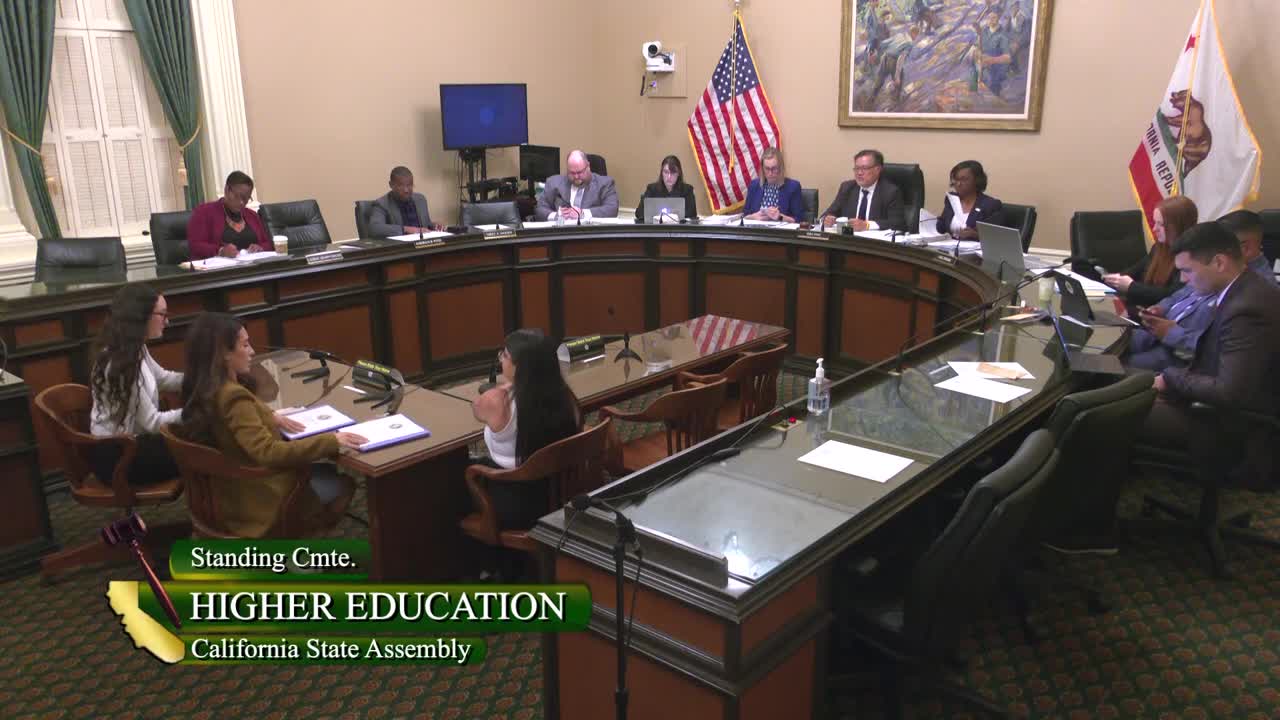 21MIN
Assembly Standing Committee on Higher Education
 4MIN
Senate Floor
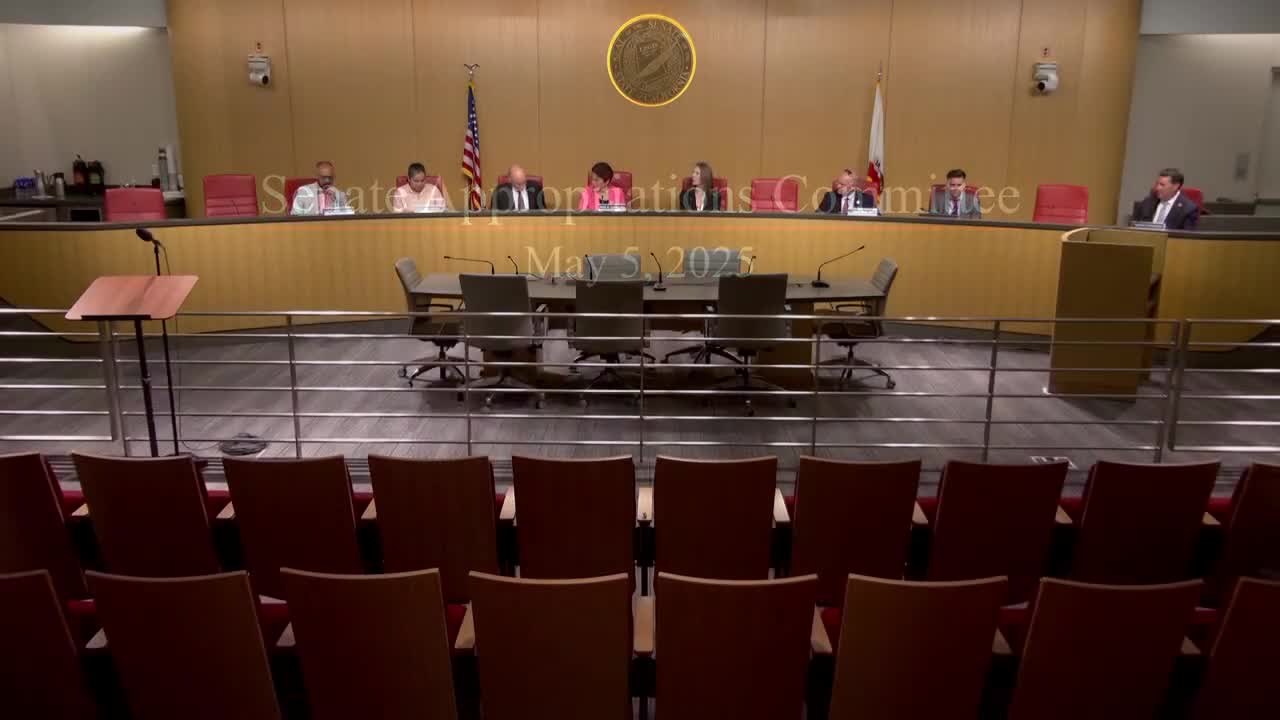 6SEC
Senate Standing Committee on Appropriations
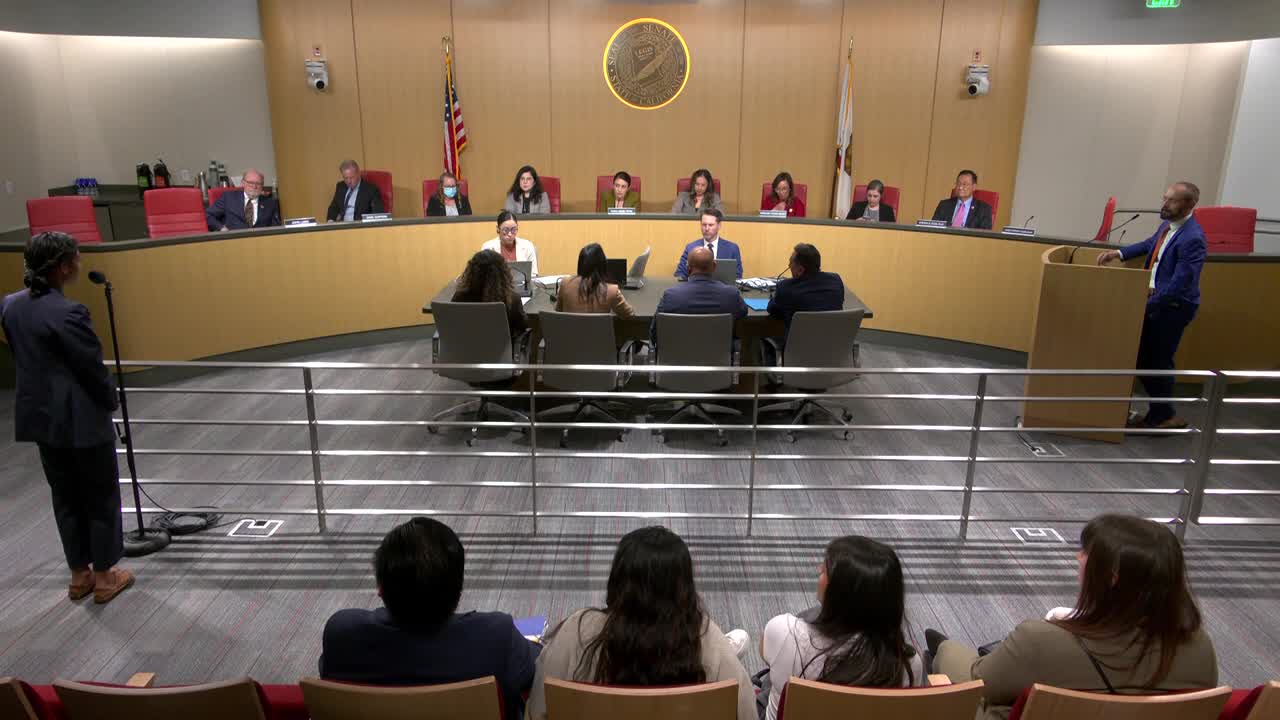 17MIN
Senate Standing Committee on Education
Bill Author