AB 1248: Teachers: permanent status.
- Session Year: 2015-2016
- House: Assembly
- Latest Version Date: 2015-04-13
Existing law requires a certificated probationary employee to become a permanent employee of a school district if his or her probationary period commenced during the 198384 fiscal year or any fiscal year thereafter, the school district has an average daily attendance of 250 pupils or more, the employee completes 2 consecutive school years, and the employee is reelected for the next succeeding school year to a position requiring certification.
This bill would make these provisions inoperative on July 1, 2018, and would repeal them as of January 1, 2019.
This bill would, after July 1, 2018, require a certificated probationary employee to become a permanent employee of a school district if the school district has an average daily attendance of 250 pupils or more, the employee completes 3 consecutive school years, received 3 consecutive evaluation ratings of effective or better, and is reelected for the next succeeding school year to a position requiring certification. The bill would require a certificated employee to lose permanent status if specified conditions occur. The bill would require school districts to offer a professional growth or remediation plan to certain certificated employees.
By requiring school districts to perform additional duties, this bill would impose a state-mandated local program.
The California Constitution requires the state to reimburse local agencies and school districts for certain costs mandated by the state. Statutory provisions establish procedures for making that reimbursement.
This bill would provide that, if the Commission on State Mandates determines that the bill contains costs mandated by the state, reimbursement for those costs shall be made pursuant to these statutory provisions.
This bill would become operative only if AB ____ 1078 of the 201516 Regular Session is also enacted and takes effect on or before January 1, 2016.
Existing law requires a certificated probationary employee to become a permanent employee of a school district if his or her probationary period commenced during the 198384 fiscal year or any fiscal year thereafter, the school district has an average daily attendance of 250 pupils or more, the employee completes 2 consecutive school years, and the employee is reelected for the next succeeding school year to a position requiring certification.
This bill would make these provisions inoperative on July 1, 2018, and would repeal them as of January 1, 2019.
This bill would, after July 1, 2018, require a certificated probationary employee to become a permanent employee of a school district if the school district has an average daily attendance of 250 pupils or more, the employee completes 3 consecutive school years, received 3 consecutive evaluation ratings of effective or better, and is reelected for the next succeeding school year to a position requiring certification. The bill would require a certificated employee to lose permanent status if specified conditions occur. The bill would require school districts to offer a professional growth or remediation plan to certain certificated employees.
By requiring school districts to perform additional duties, this bill would impose a state-mandated local program.
The California Constitution requires the state to reimburse local agencies and school districts for certain costs mandated by the state. Statutory provisions establish procedures for making that reimbursement.
This bill would provide that, if the Commission on State Mandates determines that the bill contains costs mandated by the state, reimbursement for those costs shall be made pursuant to these statutory provisions.
This bill would become operative only if AB ____ of the 201516 Regular Session is also enacted and takes effect on or before January 1, 2016.
(a)(1)Every employee of a school district of any type or class having an average daily attendance of 250 pupils or more who, after having been employed by the school district for three complete consecutive school years in a position or positions requiring certification qualifications, is reelected for the next succeeding school year to a position requiring certification qualifications shall, at the commencement of the succeeding school year, be classified as, and become, a permanent employee of the school district.
(2)This subdivision shall apply only to probationary employees whose probationary period commenced before the 198384 fiscal year.
(b)(1)Every employee of a school district of any type or class having an average daily attendance of 250 pupils or more who, after having been employed by the school district for two complete consecutive school years in a position or positions requiring certification qualifications, is reelected for the next succeeding school year to a position requiring certification qualifications shall, at the commencement of the succeeding school year, be classified as, and become, a permanent employee of the school district.
(2)The governing board of the school district shall notify the employee, on or before March 15 of the employees second complete consecutive school year of employment by the school district in a position or positions requiring certification qualifications, of the decision to reelect or not reelect the employee for the next succeeding school year to the position. If the governing board of the school district does not give notice pursuant to this section on or before March 15, the employee shall be deemed reelected for the next succeeding school year.
(3)This subdivision shall apply only to probationary employees whose probationary period commenced during the 198384 fiscal year or any fiscal year thereafter.
(c)This section shall become inoperative on July 1, 2018, and, as of January 1, 2019, is repealed, unless a later enacted statute, that becomes operative on or before January 1, 2019, deletes or extends the dates on which it becomes inoperative and is repealed.
SEC. 2.Section 44929.21 is added to the Education Code, to read:44929.21.(a)Every employee of a school district having an average daily attendance of 250 pupils or more who, after having been employed by the school district for three complete consecutive school years in a position or positions requiring certification qualifications, and received three consecutive evaluation ratings of effective or better, based upon the evaluation criteria established by the state board pursuant to Section 33039, as amended by Assembly Bill ____ 1078 of the 201516 Regular Session, is reelected for the next succeeding school year to a position requiring certification qualifications shall, at the commencement of the succeeding school year, be classified as, and become, a permanent employee of the school district.
(b)A certificated employee shall lose permanent status if he or she receives two consecutive evaluation ratings of ineffective.
(c)A certificated employee shall lose permanent status if he or she receives four consecutive evaluation ratings of minimally effective or a combination of minimally effective and ineffective.
(d)The school district shall offer a professional growth or remediation plan to a certificated employee who has received an evaluation rating of ineffective or has received two consecutive evaluation ratings of minimally effective.
(e)This section shall become operative on July 1, 2018.
SEC. 3.If the Commission on State Mandates determines that this act contains costs mandated by the state, reimbursement to local agencies and school districts for those costs shall be made pursuant to Part 7 (commencing with Section 17500) of Division 4 of Title 2 of the Government Code.
SEC. 4.This act shall become operative only if Assembly Bill ____ 1078 of the 201516 Regular Session is also enacted and takes effect on or before January 1, 2016.
(a)(1)Every employee of a school district of any type or class having an average daily attendance of 250 pupils or more who, after having been employed by the school district for three complete consecutive school years in a position or positions requiring certification qualifications, is reelected for the next succeeding school year to a position requiring certification qualifications shall, at the commencement of the succeeding school year year, be classified as as, and become become, a permanent employee of the school district.
This
(2)This subdivision shall apply only to probationary employees whose probationary period commenced prior to before the 198384 fiscal year.
(b)(1)Every employee of a school district of any type or class having an average daily attendance of 250 pupils or more who, after having been employed by the school district for two complete consecutive school years in a position or positions requiring certification qualifications, is reelected for the next succeeding school year to a position requiring certification qualifications shall, at the commencement of the succeeding school year year, be classified as as, and become become, a permanent employee of the school district.
The
(2)The governing board of the school district shall notify the employee, on or before March 15 of the employees second complete consecutive school year of employment by the school district in a position or positions requiring certification qualifications, of the decision to reelect or not reelect the employee for the next succeeding school year to the position. In the event that If the governing board of the school district does not give notice pursuant to this section on or before March 15, the employee shall be deemed reelected for the next succeeding school year.
This
(3)This subdivision shall apply only to probationary employees whose probationary period commenced during the 198384 fiscal year or any fiscal year thereafter.
(c)This section shall become inoperative on July 1, 2018, and, as of January 1, 2019, is repealed, unless a later enacted statute, that becomes operative on or before January 1, 2019, deletes or extends the dates on which it becomes inoperative and is repealed.
SEC. 2.Section 44929.21 is added to the Education Code, to read:44929.21.(a)Every employee of a school district having an average daily attendance of 250 pupils or more who, after having been employed by the school district for three complete consecutive school years in a position or positions requiring certification qualifications, and received three consecutive evaluation ratings of effective or better, based upon the evaluation criteria established by the state board pursuant to Section 33039, as amended by Assembly Bill ____ of the 201516 Regular Session, is reelected for the next succeeding school year to a position requiring certification qualifications shall, at the commencement of the succeeding school year, be classified as, and become, a permanent employee of the school district.
(b)A certificated employee shall lose permanent status if he or she receives two consecutive evaluation ratings of ineffective.
(c)A certificated employee shall lose permanent status if he or she receives four consecutive evaluation ratings of minimally effective or a combination of minimally effective and ineffective.
(d)The school district shall offer a professional growth or remediation plan to a certificated employee who has received an evaluation rating of ineffective or has received two consecutive evaluation ratings of minimally effective.
(e)This section shall become operative on July 1, 2018.
SEC. 3.If the Commission on State Mandates determines that this act contains costs mandated by the state, reimbursement to local agencies and school districts for those costs shall be made pursuant to Part 7 (commencing with Section 17500) of Division 4 of Title 2 of the Government Code.
SEC. 4.This act shall become operative only if Assembly Bill ____ of the 201516 Regular Session is also enacted and takes effect on or before January 1, 2016.
|
Date
|
Status
|
|---|---|
| Feb 27, 2015 | Introduced. To print. |
| Mar 1, 2015 | From printer. May be heard in committee March 31. |
| Mar 2, 2015 | Read first time. |
| Apr 9, 2015 | Referred to Com. on ED. |
| Apr 13, 2015 | From committee chair, with author's amendments: Amend, and re-refer to Com. on ED. Read second time and amended. |
| Apr 14, 2015 | Re-referred to Com. on ED. |
| May 4, 2015 | From committee: That the measure be retained in committee, and that the subject matter be referred to the Committee on Rules for assignment to the proper committee for study. (Ayes 4. Noes 3.) (April 29). |
| Jan 31, 2016 | Died pursuant to Article IV, Sec. 10(c) of the Constitution. |
| Feb 1, 2016 | From committee: Filed with the Chief Clerk pursuant to Joint Rule 56. |
|
Date
|
Description
|
Location
|
Votes
|
|
|---|---|---|---|---|
| Apr 29, 2015 | Bill measure be retained in committee, and subject matter be referred to Rules Committee for assignment to the proper committee. | Assembly Standing Committee on Education |
Passed |
This list shows positions taken on this bill by organizations on the date displayed, which is linked to the original source.
Positions by individuals are not included.
|
Organization
|
Position
|
Date
|
|---|---|---|
| Antioch Education Association | * Indeterminate | Apr 29, 2015 |
| Antioch Unified School District | * Indeterminate | Apr 29, 2015 |
| Brentwood Union School District | * Indeterminate | Apr 29, 2015 |
| California Federation Of Teachers | * Against | Apr 29, 2015 |
| California Federation Of Teachers | * Indeterminate | Apr 29, 2015 |
| California Teachers Association | * Against | Apr 29, 2015 |
| Cupertino Education Association | * Indeterminate | Apr 29, 2015 |
| Fontana School District | * Indeterminate | Apr 29, 2015 |
| Hayward Education Association | * Indeterminate | Apr 29, 2015 |
| Hueneme Unified School District | * Indeterminate | Apr 29, 2015 |
| Kings Canyon Unified School District | * Indeterminate | Apr 29, 2015 |
| Livermore Valley Joint Unified School District | * Indeterminate | Apr 29, 2015 |
| Mt. Diablo Education Association | * Indeterminate | Apr 29, 2015 |
| Mt. Diablo Unified School District | * Indeterminate | Apr 29, 2015 |
| N/A | * Indeterminate | Apr 29, 2015 |
| NYU | * Indeterminate | Apr 29, 2015 |
| Orange Unified School District, Santa Ana, Orange County, Ca | * Indeterminate | Apr 29, 2015 |
| Orinda Union School District | * Indeterminate | Apr 29, 2015 |
| Parkmont Elementary School, Fremont, CA | * Indeterminate | Apr 29, 2015 |
| Pittsburg Unified School District | * Indeterminate | Apr 29, 2015 |
| San Ramon Valley Unified School District | * Indeterminate | Apr 29, 2015 |
| Savannah School District, Anaheim, CA | * Indeterminate | Apr 29, 2015 |
| Stockton Teachers Association | * Indeterminate | Apr 29, 2015 |
| Students First | * Support | Apr 29, 2015 |
| Studentsfirst | ** Support | Apr 29, 2015 |
| Unified School District | * Indeterminate | Apr 29, 2015 |
| United Teachers Los Angeles | * Indeterminate | Apr 29, 2015 |
AB 1248
Page 5
Date of Hearing: April 29, 2015
ASSEMBLY COMMITTEE ON EDUCATION
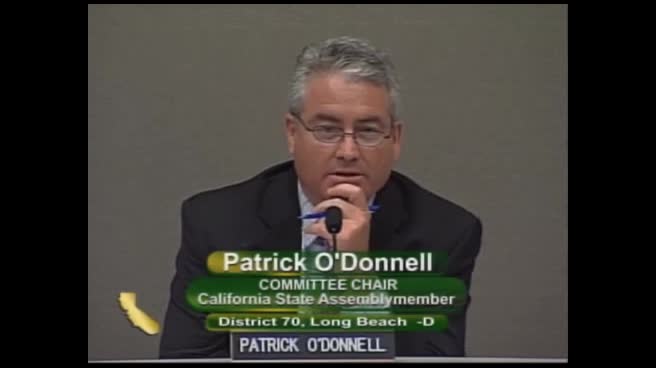
Patrick O'Donnell, Chair
AB 1248
(Chávez) – As Introduced February 27, 2015
SUBJECT: Teachers: permanent status
SUMMARY: Extends the probationary period for employees at districts with more than 250 average daily attendance (ADA) to three years and specifies instances where permanent status can be taken away, as specified. Specifically, this bill:
Requires that employees at school districts with more than 250 ADA to grant permanent employee status to employees who have been employed for three consecutive years and who have received three consecutive evaluation ratings of effective or better, based on the criteria established by Assembly Bill 1078, and who are reelected for the next succeeding school year.
Specifies a certificated employee shall lose permanent status if he or she receives two consecutive evaluation ratings of ineffective.
Specifies a certificated employee shall lose permanent status if he or she receives four consecutive evaluation ratings of minimally effective or a combination of minimally effective and ineffective.
Requires the school district to offer a professional growth or remediation plan to a certificated employee who has received an evaluation rating of ineffective or has received two consecutive evaluation ratings of minimally effective.
Specifies this act shall become operative only if Assembly Bill 1078 of the 2015-16 session is also enacted and takes effect on or before January 1, 2016.
EXISTING LAW:
Requires every employee of a school district of any type or class having an average daily attendance of 250 or more who, after having been employed by the district for two complete consecutive school years in a position or positions requiring certification qualifications, is reelected for the next succeeding school year to a position requiring certification qualifications to, at the commencement of the succeeding school year be classified as and become a permanent employee of the district.
Requires every employee of a school district of any type or class having an average daily attendance of 250 or more who, after having been employed by the district for three complete consecutive school years in a position or positions requiring certification qualifications, is reelected for the next succeeding school year to a position requiring certification qualifications shall, at the commencement of the succeeding school year be classified as and become a permanent employee of the district. Specifies this shall apply only to probationary employees whose probationary period commenced prior to the 1983–84 fiscal year.
Requires the governing board to notify the employee, on or before March 15 of the employee’s second complete consecutive school year of employment by the district in a position or positions requiring certification qualifications, of the decision to reelect or not reelect the employee for the next succeeding school year to the position. In the event that the governing board does not give notice on or before March 15, the employee shall be deemed reelected for the next succeeding school year. This shall apply only to probationary employees whose probationary period commenced during the 1983–84 fiscal year or any fiscal year thereafter. (Education Code 44929.21)
FISCAL EFFECT: Legislative counsel has keyed this bill as a state mandated local program.
COMMENTS: This bill changes the existing two year probationary period to three years and specifies instances where a teacher can lose permanent status based on negative performance evaluations.
According to the author, current law mandates that teachers be granted tenure after two years of teaching, and that they must be notified by March 15th if they are to be dismissed. During a recent school trial, there was extensive evidence presented, that, “Given this statutorily mandated time frame, the Permanent Employment Statute does not provide nearly enough time for an informed decision to be made regarding the decision of tenure. As a result, teachers are being reelected who would not have been, had more time been provided for the process.” A majority of studies indicate that a teacher’s effectiveness tends to be established by the fourth year of teaching, with effective teachers remaining relatively effective and ineffective teachers remaining relatively ineffective (Boyd, et al.). Yet, more than 80% of states currently grant tenure after three years or less, and only 12 states have probationary periods longer than three years. This is not enough time to allow teachers to demonstrate their ability to be effective at helping students learn. Based on the research, tenure should not be granted before a teacher has been in the classroom for four years. For many tenure reform advocates, the ideal probationary period would be five years (National Council on Teacher Quality, 2010).
Vergara v. California: In 2012, nine students, including Beatriz Vergara filed a lawsuit in Los Angeles Superior Court against the State arguing their civil rights were being violated under the equal protection clause of the California Constitution based on the following three teacher laws:
Seniority and Layoffs - Basing layoffs on seniority status also known as Last In, First Out (LIFO).
Permanent Status - Granting permanent status after two years of employment.
Dismissal - The process for dismissing an ineffective teacher.
In
June 2014, the Los Angeles Superior Court issued a tentative ruling
in favor of the students on all three issues. The final judgment
detailing arguments supporting the ruling was issued in August 2014.
The Judge's ruling was stayed pending appeal, but if upheld this
decision would strike down these laws statewide. The ruling was as
follows:
Seniority and Lay-Offs – The Judge ruled that lay-offs based solely on seniority are unconstitutional because the system removes junior teachers who may be more effective, while retaining senior teachers who may be ineffective. The Judge's ruling didn't rely on the fact that districts can stray from seniority under existing law.
Permanent Status - The Judge ruled that both students and teachers are unfairly and unnecessarily disadvantaged by the permanent employment statutes. The Judge ruled that the current two year probationary period is not a long enough period of time to evaluate a new teacher.
Dismissal – The Judge ruled the current dismissal system to be too complex, time consuming and expensive; and, ruled that the current dismissal process for classified employees provides an alternative process that protects due process rights.
In September 2014, Governor Brown and Attorney General Harris filed an appeal of the decision. The California Teachers Association (CTA) and the California Federation of Teachers (CFT), formal interveners in the case, also filed an appeal of the decision. The appeal is awaiting hearing at the appellate court level and a decision is expected in the fall of 2015.
While lengthening the probationary period may address the concerns raised in the Vergara case, this bill also uses evaluation data to take away permanent status from an employee. This will make these teachers at-will employees. Without a consistent state-wide evaluation system, it is unclear how this will be implemented at districts across the state. The committee should consider whether a uniform teacher evaluation system should first be implemented before requiring evaluation outcomes to affect a teacher's permanent status.
What is "permanent employee" status? "Permanent employee" status guarantees due process rights if a certificated employee is dismissed. In the case of dismissal, "permanent employee" status allows employees to request a hearing before a Commission on Professional Competence to decide whether their dismissal was appropriate. Further, a "permanent employee" has the right to request a hearing during a reduction in force. This type of due process is similar to the state civil service due process.
Probationary Period: According to the Legislative Analyst’s Office (LAO), the state has explored alternative probationary periods in the past. Between 1959 and 1983, probationary teachers served three years before administrators had to make the decision whether to grant permanent status. In 1983, the state enacted major changes to state teacher policies, including changes to tenure and dismissals. Specifically, the state shortened the probationary period from three to two years. However, the state also made it easier to dismiss probationary teachers, removing certain due process rights.
In November 2005, a statewide initiative, Proposition 74, would have extended the probationary period from two years to five years. The measure also would have modified the process by which school boards can dismiss a permanent teaching employee who receives two consecutive unsatisfactory performance evaluations. This measure was defeated by 55.2% of the voters.
In a 2005 presentation, the LAO reported the following information about other state policies regarding K-12 teacher probationary periods:
One Year Probationary Period – Three States
Two Year Probationary Period – Nine States including California
Three Year Probationary Period – 33 States
Four Year Probationary Period – Four States
Five year Probationary Period – Two States
Certainly some states have shifted their policies in the past decade, but this demonstrates a significant bell curve with the vast majority of states having a 3 year probationary period for K-12 teachers.
Supporters could argue that a longer probationary period would allow administrators more time to evaluate new teachers before making a permanent hiring decision and would allow new teachers that are struggling more training and feedback to improve and achieve success. In addition, under the current two year probationary period which requires a decision by March in the second year, administrators only truly have one and a half years to decide whether to offer permanent status to probationary teachers. Because some first year teachers need assistance to become successful teachers, the two year probationary period may be too short a time to see significant progress. Anecdotal evidence suggests that many administrators state that the current two year probationary period is long enough to assess the vast majority of beginning teachers, and that only in a few cases, do administrators feel that additional time would be helpful to make their decision about granting permanent status. The committee should consider whether extending the probationary period is necessary for district administrators to observe and train new teachers, or whether the existing two year period is sufficient. The committee should also consider whether extending the probationary period to three years should also contain a provision reinstating the due process rights for probationary employees as they existed prior to 1983, when the State last had a three year probationary period.
Teacher Recruitment: The California Commission on Teacher Credentialing will soon report a staggering 70% decline in the number of students enrolled in teacher preparation programs in the last decade. There is also a sharp increase in hiring this year (from 13,000 in 2014 to 17,000 in 2015) and a large increase in emergency permits this past year. Further the ACT test reports that only 5% of its test-takers report an interest in becoming teachers. And those that are interested have lower grade point averages than their peers. Not only is the teaching profession attracting fewer people, it is becoming even less attractive to the "best and brightest," the very people we should be attracting. The committee should consider whether extending the probationary status for beginning teachers will further hamper the State's efforts to attract teachers to the profession.
Concurrent Enactment: This bill specifies that this act shall become operative only if Assembly Bill 1078 of the 2015-16 session is also enacted and takes effect on or before January 1, 2016.
Arguments in Support: StudentsFirst supports the bill and states, "Under current California law, school districts are forced to make high-stakes decisions about permanent status during a teacher's second year in the district, creating a system that is unfair to both teachers and students. Studies have consistently shown that teachers grow tremendously in their practice in their first three years of teaching. California's law forces school districts to offer permanent status to teachers before the district has had much of an opportunity to see how well that teacher will serve students over the course of his or her career. This leads to potentially giving permanent status to teachers who will not be effective teachers for students in the district."
Arguments in Opposition: California Teachers Association opposes the bill and states, "Administrators generally don't have time or the training to conduct thorough and validated evaluations of performance. Under this proposal, instead of going through a for-cause dismissal hearing, a principal would only need to determine that a teacher was not "effective." It is simply unfair and invites the kind of insidious age discrimination to permit a principal to dismiss a veteran teacher while affording no due process. Under AB 1248, teacher dismissal decisions could be motivated by cost, favoritism, retaliation, or even personality compatibility."
Related Legislation: AB 1184 (Campos), which is pending in the Assembly, would authorize San Jose Unified School District to have an optional 3 year probationary period for selected certificated employees.
REGISTERED SUPPORT / OPPOSITION:
Support
StudentsFirst
Opposition
California Federation of Teachers
California Teachers Association
Analysis Prepared by: Chelsea Kelley / ED. / (916) 319-2087
Discussed in Hearing
 28MIN