AB 1336: Greenhouse gases: Community Climate Improvement Program.
- Session Year: 2015-2016
- House: Assembly
- Latest Version Date: 2016-01-14
The California Global Warming Solutions Act of 2006 designates the State Air Resources Board as the state agency charged with monitoring and regulating sources of emissions of greenhouse gases. The act authorizes the state board to include the use of market-based compliance mechanisms. Existing law requires all moneys, except for fines and penalties, collected by the state board as part of a market-based compliance mechanism to be deposited in the Greenhouse Gas Reduction Fund and to be available upon appropriation.
This bill would establish and require the Strategic Growth Council, in coordination with the state board, to administer the Community Climate Improvement Program to provide grants for the development and implementation of multicounty, multielement climate beneficial regional projects that maximize reduce or sequester greenhouse gas emissions reductions or sequestration. emissions. The bill would require the council, in coordination with the state board, to develop guidelines for the program. The bill would require the council to implement the program with moneys appropriated from the Greenhouse Gas Reduction Fund and would require not less than an unspecified percentage of the program moneys be made available for projects in the San Joaquin Valley. Fund.
The California Global Warming Solutions Act of 2006 designates the State Air Resources Board as the state agency charged with monitoring and regulating sources of emissions of greenhouse gases. The act authorizes the state board to include the use of market-based compliance mechanisms. Existing law requires all moneys, except for fines and penalties, collected by the state board as part of a market-based compliance mechanism to be deposited in the Greenhouse Gas Reduction Fund and to be available upon appropriation.
This bill would establish and require the Strategic Growth Council, in coordination with the state board, to administer the Community Climate Improvement Program to provide grants for the development and implementation of multicounty, multielement climate beneficial projects that maximize greenhouse gas emissions reductions or sequestration. The bill would require the council, in coordination with the state board, to develop guidelines for the program. The bill would require the council to implement the program with moneys appropriated from the Greenhouse Gas Reduction Fund and would require not less than an unspecified percentage of the program moneys be made available for projects in the San Joaquin Valley.
The California Global Warming Solutions Act of 2006 designates the State Air Resources Board as the state agency charged with monitoring and regulating sources of emissions of greenhouse gases. The act authorizes the state board to include the use of market-based compliance mechanisms. Existing law requires all moneys, except for fines and penalties, collected by the state board from the auction or sale of allowances as part of a market-based compliance mechanism to be deposited in the Greenhouse Gas Reduction Fund and to be available upon appropriation. Existing law requires the California Environmental Protection Agency to identify disadvantaged communities and requires the Department of Finance, in consultation with the state board and any other relevant state agency, to develop, as specified, a 3-year investment plan for the moneys deposited in the Greenhouse Gas Reduction Fund. Existing law requires a minimum of 25% of the available moneys in the fund to be allocated to projects that provide benefits to disadvantaged communities.
This bill instead would require a minimum of 40% of the available moneys in the fund to be allocated to projects that provide benefits to disadvantaged communities.
The California Global Warming Solutions Act of 2006 designates the State Air Resources Board as the state agency charged with monitoring and regulating sources of emissions of greenhouse gases. The state board is required to adopt a statewide greenhouse gas emissions limit equivalent to the statewide greenhouse gas emissions level in 1990 to be achieved by 2020. The act requires the state board to adopt methodologies for the quantification of voluntary greenhouse gas emission reductions. The act authorizes the state board to include the use of market-based compliance mechanisms. Existing law requires all moneys, except for fines and penalties, collected by the state board from the auction or sale of allowances as part of a market-based compliance mechanism to be deposited in the Greenhouse Gas Reduction Fund and to be available upon appropriation. Existing law requires the California Environmental Protection Agency to identify disadvantaged communities and requires the Department of Finance, in consultation with the state board and any other relevant state agency, to develop, as specified, a 3-year investment plan for the moneys deposited in the Greenhouse Gas Reduction Fund. Existing law requires a minimum of 25% of the available moneys in the fund to be allocated to projects that provide benefits to disadvantaged communities.
This bill would make a technical, nonsubstantive change to that provision.
This bill instead would require a minimum of 40% of the available moneys in the fund to be allocated to projects that provide benefits to disadvantaged communities.
The California Global Warming Solutions Act of 2006 designates the State Air Resources Board as the state agency charged with monitoring and regulating sources of emissions of greenhouse gases. The state board is required to adopt a statewide greenhouse gas emissions limit equivalent to the statewide greenhouse gas emissions level in 1990 to be achieved by 2020. The act requires the state board to adopt methodologies for the quantification of voluntary greenhouse gas emission reductions.
This bill would make a technical, nonsubstantive change to that provision.
It is the intent of the Legislature, Legislature in enacting this chapter, chapter to establish a comprehensive grant program funded by the Greenhouse Gas Reduction Fund, established pursuant to Section 16428.8 of the Government Code, for the purposes of investing in regional, multibenefit regional projects that maximize reduce or sequester greenhouse gas emissions reductions or sequestration, emissions, especially in disadvantaged communities.
39741.For purposes of this chapter, the following terms mean the following:
(a)Council means the Strategic Growth Council established pursuant to Section 75121 of the Public Resources Code.
(b)Disadvantaged community means a community identified pursuant to Section 39711.
(c)San Joaquin Valley means the region of the state that is under the jurisdiction of the San Joaquin Unified Air Pollution Control District pursuant to Chapter 5.7 (commencing with Section 40600) of Part 3.
39742.(a)The council, in coordination with the state board, shall administer the Community Climate Improvement Program Program, which is hereby established to provide grants for the development and implementation of multicounty, multielement climate beneficial regional projects that maximize reduce or sequester greenhouse gas emissions reductions or sequestration. consistent with the requirements of the California Global Warming Solutions Act of 2006 (Division 25.5 (commencing with Section 38500)) and the Greenhouse Gas Reduction Fund Investment Plan and Communities Revitalization Act (Chapter 4.1 (commencing with Section 39710)).
(b)The council, in coordination with the state board, shall develop guidelines for the implementation of the program consistent with the requirements of the California Global Warming Solutions Act of 2006 (Division 25.5 (commencing with Section 38500)) and the Greenhouse Gas Reduction Fund Investment Plan and Communities Revitalization Act (Chapter 4.1 (commencing with Section 39710)) that do all of the following:
(1)Promote projects based on the potential to provide integrated climate services to that benefit the most disadvantaged communities, especially projects that use proven community outreach. communities.
(2)Maximize the delivery of multiple climate benefits, including, but not limited to, clean cars and trucks, clean advanced clean vehicles, renewable energy generation, energy efficiency and weatherization, organic waste diversion and compost development, water quality, supply, and waterfowl habitat improvements, river habitat and access improvements, and drought-tolerant lawn, park, and urban greening projects. and other measures that reduce or sequester greenhouse gas emissions.
(3)Ensure all ancillary elements of project development and implementation are eligible for funding if they lead to the better implementation and implementation, program delivery. delivery, and reduction of greenhouse gas emissions.
(4)Ensure that project investments projects funded pursuant to the program this chapter use consistent accounting and modeling approaches to estimate and monitor greenhouse gas emissions and emissions reductions over time.
(5)Promote project projects that assist the state in reach reaching its climate goals beyond 2020 consistent with Part 3 (commencing with Section 38550) of Division 25.5.
(6)Promote investments in projects that include cobenefits, including, but not limited to, achieving state and federal air quality goals. standards.
(7)Ensure projects funded pursuant to the program this chapter maximize the moneys appropriated for the program, create job opportunities, and are consistent with other laws.
(c)In evaluating projects to be funded pursuant to the program, this chapter, the council shall give priority to projects that demonstrate one or more of the following characteristics:
(1)Regional implementation.
(2)The ability to leverage additional public and private funding.
(3)The potential for cobenefits or multibenefit attributes.
(4)The potential for the project to be replicated.
(5)The use of existing regional infrastructure and institutions.
(6)Inclusion The inclusion of technical assistance.
39743.(a)The council shall implement this chapter with moneys appropriated by the Legislature for the program from the Greenhouse Gas Reduction Fund.
(b)Not less than ____ percent of the amount appropriated for the program shall be made available to projects in the San Joaquin Valley.
It is the intent of the Legislature, in enacting this chapter, to establish a comprehensive grant program funded by the Greenhouse Gas Reduction Fund, established pursuant to Section 16428.8 of the Government Code, for purposes of investing in regional, multibenefit projects that maximize greenhouse gas emissions reductions or sequestration, especially in disadvantaged communities.
39741.For purposes of this chapter, the following terms mean the following:
(a)Council means the Strategic Growth Council established pursuant to Section 75121 of the Public Resources Code.
(b)Disadvantaged community means a community identified pursuant to Section 39711.
(c)San Joaquin Valley means the region of the state that is under the jurisdiction of the San Joaquin Unified Air Pollution Control District pursuant to Chapter 5.7 (commencing with Section 40600) of Part 3.
39742.(a)The council, in coordination with the state board, shall administer the Community Climate Improvement Program which is hereby established to provide grants for the development and implementation of multicounty, multielement climate beneficial projects that maximize greenhouse gas emissions reductions or sequestration.
(b)The council, in coordination with the state board, shall develop guidelines for the implementation of the program consistent with the requirements of the California Global Warming Solutions Act of 2006 (Division 25.5 (commencing with Section 38500)) and the Greenhouse Gas Reduction Fund Investment Plan and Communities Revitalization Act (Chapter 4.1 (commencing with Section 39710)) that do all of the following:
(1)Promote projects based on the potential to provide integrated climate services to the most disadvantaged communities, especially projects that use proven community outreach.
(2)Maximize the delivery of multiple climate benefits, including, but not limited to, clean cars and trucks, clean energy generation, energy efficiency and weatherization, organic waste diversion and compost development, water quality, supply, and waterfowl habitat improvements, river habitat and access improvements, and drought-tolerant lawn, park, and urban greening projects.
(3)Ensure all ancillary elements of project development and implementation are eligible for funding if they lead to the better implementation and program delivery.
(4)Ensure that project investments funded pursuant to the program use consistent accounting and modeling approaches to estimate and monitor greenhouse gas emissions and emissions reductions over time.
(5)Promote project that assist the state in reach its climate goals beyond 2020 consistent with Part 3 (commencing with Section 38550) of Division 25.5.
(6)Promote investments in projects that include cobenefits, including, but not limited to, achieving state and federal air quality goals.
(7)Ensure projects funded pursuant to the program maximize moneys appropriated for the program, create job opportunities, and are consistent with other laws.
(c)In evaluating projects to be funded pursuant to the program, the council shall give priority to projects that demonstrate one or more of the following characteristics:
(1)Regional implementation.
(2)The ability to leverage additional public and private funding.
(3)The potential for cobenefits or multibenefit attributes.
(4)The potential for the project to be replicated.
(5)The use of existing regional infrastructure and institutions.
(6)Inclusion of technical assistance.
39743.(a)The council shall implement this chapter with moneys appropriated by the Legislature for the program from the Greenhouse Gas Reduction Fund.
(b)Not less than ____ percent of the amount appropriated for the program shall be made available to projects in the San Joaquin Valley.
SECTION 1.Section 39713 of the Health and Safety Code is amended to read:39713.(a)The investment plan developed and submitted to the Legislature, pursuant to Section 39716, shall allocate a minimum of 40 percent of the available moneys in the fund to projects that provide benefits to communities described in Section 39711.
(b)The investment plan shall allocate a minimum of 10 percent of the available moneys in the fund to projects located within communities described in Section 39711.
(c)The allocation pursuant to subdivision (b) may be, but need not be, for projects included, in whole or in part, in the set of projects supported by the allocation described in subdivision (a).
(a)The investment plan developed and submitted to the Legislature, pursuant to Section 39716, shall allocate a minimum of 25 40 percent of the available moneys in the fund to projects that provide benefits to communities described in Section 39711.
(b)The investment plan shall allocate a minimum of 10 percent of the available moneys in the fund to projects located within communities described in Section 39711.
(c)The allocation pursuant to subdivision (b) may be, but need not be, for projects included, in whole or in part, in the set of projects supported by the allocation described in subdivision (a).
SECTION 1.Section 38571 of the Health and Safety Code is amended to read:38571.The state board shall adopt methodologies for the quantification of voluntary greenhouse gas emission reductions. The state board shall adopt regulations to verify and enforce any voluntary greenhouse gas emission reductions that are authorized by the state board to be used to comply with greenhouse gas emission limits established by the state board. The adoption of methodologies is exempt from the rulemaking provisions of the Administrative Procedure Act (Chapter 3.5 (commencing with Section 11340) of Part 1 of Division 3 of Title 2 of the Government Code).
The state board shall adopt methodologies for the quantification of voluntary greenhouse gas emission reductions. The state board shall adopt regulations to verify and enforce any voluntary greenhouse gas emission reductions that are authorized by the state board for use to be used to comply with greenhouse gas emission limits established by the state board. The adoption of methodologies is exempt from the rulemaking provisions of the Administrative Procedure Act (Chapter 3.5 (commencing with Section 11340) of Part 1 of Division 3 of Title 2 of the Government Code).
|
Date
|
Status
|
|---|---|
| Feb 27, 2015 | Introduced. To print. |
| Mar 1, 2015 | From printer. May be heard in committee March 31. |
| Mar 2, 2015 | Read first time. |
| Mar 26, 2015 | From committee chair, with author's amendments: Amend, and re-refer to Com. on NAT. RES. Read second time and amended. |
| Mar 26, 2015 | Referred to Com. on NAT. RES. |
| Apr 6, 2015 | Re-referred to Com. on NAT. RES. |
| Apr 23, 2015 | In committee: Set, first hearing. Hearing canceled at the request of author. |
| Jan 4, 2016 | From committee chair, with author's amendments: Amend, and re-refer to Com. on NAT. RES. Read second time and amended. |
| Jan 4, 2016 | Re-referred to Com. on NAT. RES. |
| Jan 13, 2016 | From committee: Amend, and do pass as amended and re-refer to Com. on APPR. (Ayes 8. Noes 1.) (January 11). |
| Jan 14, 2016 | Read second time and amended. |
| Jan 15, 2016 | Re-referred to Com. on APPR. |
| Jan 21, 2016 | Held under submission. |
| Jan 21, 2016 | In committee: Set, first hearing. Referred to APPR. suspense file. |
| Jan 31, 2016 | Died pursuant to Article IV, Sec. 10(c) of the Constitution. |
| Feb 1, 2016 | From committee: Filed with the Chief Clerk pursuant to Joint Rule 56. |
|
Date
|
Description
|
Location
|
Votes
|
|
|---|---|---|---|---|
| Jan 11, 2016 | Do pass as amended and be re-referred to the Committee on [Appropriations] | Assembly Standing Committee on Natural Resources |
Passed |
This list shows positions taken on this bill by organizations on the date displayed, which is linked to the original source.
Positions by individuals are not included.
|
Organization
|
Position
|
Date
|
|---|---|---|
| California Chamber Of Commerce | ** Against | Jan 11, 2016 |
| Fresno Economic Opportunities Commission | ** Support | Jan 11, 2016 |
Date of Hearing: January 21, 2016
ASSEMBLY COMMITTEE ON APPROPRIATIONS
Jimmy Gomez, Chair
ABPCA Bill Id:AB 1336
Author:(Salas) – As Amended Ver:January 14, 2016
Policy Committee: | Natural Resources | Vote: | 8 - 1 |
|
| ||
|
|
Urgency: No State Mandated Local Program: No Reimbursable: No
SUMMARY:
This bill establishes the Community Climate Improvement Program (Program) and requires the Strategic Growth Council (SGC) to administer the Program in coordination with the California Air Resources Board (ARB). This bill requires SCP to implement the program consistent with the California Global Warming Solutions Act of 2006 (AB 32, Chapter 488, Statutes of 2006) funded by cap-and trade revenues and the investment plan adopted by ARB. Specifically, this bill:
- Requires the Program to provide grants for the development and implementation of regional projects that reduce or sequester greenhouse gas (GHG) emissions.
- Requires SGC, in coordination with ARB, to develop guidelines for the Program as specified.
- Requires SGC to give priority to projects that demonstrate one or more of the following characteristics:
- Regional implementation.
- The ability to leverage additional public and private funding.
- The potential for "cobenefits" or "multibenefit" attributes.
- The potential for the project to be replicated.
- The use of existing regional infrastructure and institutions.
- Inclusion of technical assistance.
- Requires SGC to implement the Program with Greenhouse Gas Reduction Funds (GGRF) appropriated by the Legislature.
FISCAL EFFECT:
- Unknown costs pressures, likely in the tens to hundreds of millions of dollars, to fund the Program (GGRF).
- Unknown increased initial and ongoing administrative costs for SGC to establish and administer the Program (GGRF), likely in the hundreds of thousands of dollars.
- Increased initial and ongoing administrative costs for ARB in the $500,000 to $800,000 range (GGRF).
COMMENTS:
- Purpose. According to the author, this bill establishes a comprehensive grant program with AB 32 cap-and-trade revenues to invest in regional projects that reduce or sequester GHG emissions, especially in disadvantaged communities.
- Background. The 2014-15 Budget Act allocated GGRF revenues for the 2014-15 fiscal year and established a long-term plan for the allocation of GGRF revenues beginning in fiscal year 2015-16. Thirty-five percent of GGRF is continuously appropriated for investments in transit, affordable housing, and sustainable communities. Twenty-five percent is continuously appropriated to continue the construction of the high-speed rail project.
The remaining 40% is subject to annual appropriation by the Legislature for investments in programs that include low-carbon transportation, energy efficiency and renewable energy, and natural resources and waste diversion. An expenditure plan for the 40% was not included in the 2015-16 Budget Act, with the exception of $227 million appropriated by
SB 101 to continue funding for specified existing programs.
Analysis Prepared by: Jennifer Galehouse / APPR. / (916) 319-2081
Date of Hearing: January 11, 2016
ASSEMBLY COMMITTEE ON NATURAL RESOURCES
Das Williams, Chair
ABPCA Bill Id:AB 1336 (
Author:Salas) – As Amended Ver:January 4, 2016
SUBJECT: Greenhouse gases: Community Climate Improvement Program
SUMMARY: Establishes the Community Climate Improvement Program (CCIP), administered by the Strategic Growth Council (SGC), to provide grants for "multicounty, multielement" projects to reduce or sequester greenhouse gas (GHG) emissions using funds appropriated from the Greenhouse Gas Reduction Fund (GGRF).
EXISTING LAW:
- Requires the Air Resources Board (ARB), pursuant to California Global Warming Solutions Act of 2006 [AB 32 (Núñez), Chapter 488, Statutes of 2006], to adopt a statewide GHG emissions limit equivalent to 1990 levels by 2020 and adopt regulations to achieve maximum technologically feasible and cost-effective GHG emission reductions.
- Authorizes ARB to permit the use of market-based compliance mechanisms to comply with GHG reduction regulations, once specified conditions are met.
- Establishes the GGRF as the repository for all moneys, except for fines and penalties, collected by ARB from the auction or sale of allowances pursuant to a market-based compliance mechanism (i.e., the cap-and-trade program adopted by ARB under AB 32).
- Establishes the GGRF Investment Plan and Communities Revitalization Act [AB 1532 (John A. Pérez), Chapter 807, Statutes of 2012] to set procedures for the investment of GHG allowance auction revenues. AB 1532 authorizes a range of GHG reduction investments and establishes several additional policy objectives.
- Requires the GGRF Investment Plan to allocate: 1) a minimum of 25% of the available moneys in the fund to projects that provide benefits to identified disadvantaged communities (DACs); and, 2) a minimum of 10% of the available moneys in the fund to projects located within identified DACs [SB 535 (De Leon), Chapter 830, Statutes of 2012].
THIS BILL:
- States the intent of the Legislature to establish a comprehensive grant program funded by the GGRF for purposes of investing in regional, "multibenefit" projects that maximize GHG emissions reductions or sequestration, especially in DACs.
- Requires SGC, in coordination with ARB, to administer the CCIP to provide grants for "multicounty, multielement" climate beneficial projects that maximize GHG emissions reduction or sequestration.
- Requires SGC, in coordination with ARB, to develop program guidelines that do all of the following:
- Promote projects based on the potential to provide integrated climate services to the most DACs, especially projects that use proven community outreach.
- Maximize the delivery of multiple climate benefits, including, but not limited to, clean cars and trucks, clean energy generation, energy efficiency and weatherization, organic waste diversion and compost development, water quality, supply, and waterfowl habitat improvements, river habitat and access improvements, and drought-tolerant lawn, park, and urban greening projects.
- Ensure all ancillary elements of project development and implementation are eligible for funding if they lead to better implementation and program delivery.
- Ensure that project investments funded pursuant to the program use consistent accounting and modeling approaches to estimate and monitor GHG emissions and emissions reductions over time.
- Promote projects that assist the state in reaching its climate goals beyond 2020.
- Promote investments in projects that include "cobenefits," including, but not limited to, achieving state and federal air quality goals.
- Ensure projects funded pursuant to the program maximize moneys appropriated for the program, create job opportunities, and are consistent with other laws.
- Requires SGC to give priority to projects that demonstrate one or more of the following characteristics:
- Regional implementation.
- The ability to leverage additional public and private funding.
- The potential for "cobenefits" or "multibenefit" attributes.
- The potential for the project to be replicated.
- The use of existing regional infrastructure and institutions.
- Inclusion of technical assistance.
- Requires an unspecified percentage of the amount appropriated for CCIP be made available to projects in the San Joaquin Valley.
FISCAL EFFECT: Unknown
COMMENTS:
- Existing GGRF funding and programs. The 2014-15 Budget Act allocated GGRF revenues for the 2014-15 fiscal year and established a long-term plan for the allocation of GGRF revenues beginning in fiscal year 2015-16. Thirty-five percent of GGRF is continuously appropriated for investments in transit, affordable housing, and sustainable communities. Twenty-five percent is continuously appropriated to continue the construction of the high-speed rail project. The remaining 40% is subject to annual appropriation by the Legislature for investments in programs that include low-carbon transportation, energy efficiency and renewable energy, and natural resources and waste diversion. An expenditure plan for the 40% was not included in the 2015-16 Budget Act, with the exception of $227 million appropriated by SB 101 to continue funding for specified existing programs. The remaining 2015-16 revenues, along with 2016-17 revenues, are available for appropriation this year.
Major GGRF program areas, administering agency, and funding to date:
- Transportation and Sustainable Communities
- High Speed Rail, High Speed Rail Authority, $750 million
- Transit and Intercity Rail Capital Program, State Transportation Agency, $225 million
- Low Carbon Transit Operations Program, CalTrans, $125 million
- Affordable Housing and Sustainable Communities Program, SGC, $530 million
- Low Carbon Transportation, ARB, $325 million
- Clean Energy and Energy Efficiency Funding
- Low-Income Weatherization Program, Community Services and Development, $154 million
- Energy Efficiency in Public Buildings, California Energy Commission, $20 million
- Agricultural Energy and Operational Efficiency, Department of Food and Agriculture, $75 million
- Water-Energy Efficiency, Department of Water Resources, $75 million
- Natural Resources and Waste Diversion Funding
- Wetlands and Watershed Restoration, Department of Fish and Wildlife, $27 million
- Urban Forestry, Forest Health Restoration, and Reforestation, CALFIRE, $42 million
- Waste Diversion, CalRecycle, $31 million
- Transportation and Sustainable Communities
- DACs. SB 535 directed that, in addition to reducing GHG emissions, a quarter of the proceeds from the GGRF must go to projects that provide a benefit to DACs, as identified by the California Environmental Protection Agency (CalEPA). A minimum of 10% of the funds must be for projects located within those communities.
To identify DACs for the purpose of SB 535, CalEPA developed the California Communities Environmental Health Screening Tool (CalEnviroScreen), which assesses all census tracts in California to identify the areas disproportionately burdened by and vulnerable to multiple sources of pollution.
Areas (census tracts) identified as disadvantaged for SB 535's purposes by CalEnviroScreen 2.0 include the majority of the San Joaquin Valley; much of Los Angeles and the Inland Empire; pockets of other communities near ports, freeways, and major industrial facilities, such as refineries and power plants; and large swaths of the Coachella Valley, Imperial Valley, and Mojave Desert.
- Is this bill's emphasis on DACs and set-aside for the San Joaquin Valley appropriate for a statewide program? While the existing GGRF-funded programs can and do fund regional projects, this bill establishes a program whose purpose is to fund regional projects with multiple GHG-reduction elements. It's not clear why the program should fund projects primarily or exclusively in DACs, or why an unspecified percentage should be set aside specifically for the San Joaquin Valley. There are many communities, urban and rural, throughout the state that may develop worthy programs, but do not have the pollution burden to be a DAC according to CalEnviroScreen. The author and the committee may wish to consider broadening the criteria to include non-DAC low-income communities and eliminating the set aside for the San Joaquin Valley.
- Technical and clarifying amendments. The author and the committee may wish to consider adopting technical and clarifying amendments to eliminate unnecessary and vague terms, such as "multielement climate beneficial" and "integrated climate services," as well as project types that aren't clearly related to reducing GHG, such as "water quality, supply, and waterfowl habitat improvements, river habitat and access improvements, and drought-tolerant lawn, park, and urban greening projects."
REGISTERED SUPPORT / OPPOSITION:
Support
Fresno Economic Opportunities Commission
Opposition
California Chamber of Commerce
Analysis Prepared by: Lawrence Lingbloom / NAT. RES. / (916) 319-2092
Discussed in Hearing
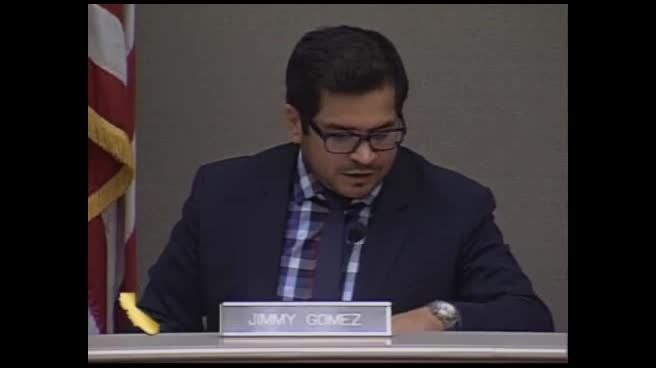 7SEC
Assembly Standing Committee on Appropriations
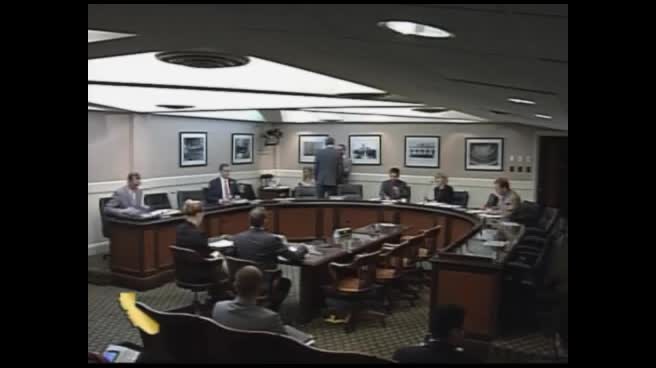 13MIN
Assembly Standing Committee on Natural Resources
Bill Author

Bill Co-Author(s):