AB 1815: California Global Warming Solutions Act of 2006: disadvantaged communities.
- Session Year: 2015-2016
- House: Assembly
- Latest Version Date: 2016-05-02
The California Global Warming Solutions Act of 2006 designates the State Air Resources Board as the state agency charged with monitoring and regulating sources of emissions of greenhouse gases. The act authorizes the state board to include the use of market-based compliance mechanisms. Existing law requires all moneys, except for fines and penalties, collected by the state board as part of a market-based compliance mechanism to be deposited in the Greenhouse Gas Reduction Fund and to be available upon appropriation. Existing law requires the California Environmental Protection Agency to identify disadvantaged communities and requires the Department of Finance, in consultation with the state board and any other relevant state agency, to develop, as specified, a 3-year investment plan for the moneys deposited in the Greenhouse Gas Reduction Fund. Existing law requires the 3-year investment plan to allocate a minimum of 25% of the available moneys in the fund to projects that provide benefits to disadvantaged communities.
This bill would require the agency to establish a comprehensive technical assistance program, upon the appropriation of moneys from the fund, for eligible applicants, as specified, assisting eligible communities, as defined. The bill would require the agency to provide technical assistance to eligible communities based on a specified priority.
This bill also would require the department to include in the 3-year investment plan an allocation to the agency for that technical assistance program.
The California Global Warming Solutions Act of 2006 designates the State Air Resources Board as the state agency charged with monitoring and regulating sources of emissions of greenhouse gases. The act authorizes the state board to include the use of market-based compliance mechanisms. Existing law requires all moneys, except for fines and penalties, collected by the state board as part of a market-based compliance mechanism to be deposited in the Greenhouse Gas Reduction Fund and to be available upon appropriation. Existing law requires the California Environmental Protection Agency to identify disadvantaged communities and requires the Department of Finance, in consultation with the state board and any other relevant state agency, to develop, as specified, a 3-year investment plan for the moneys deposited in the Greenhouse Gas Reduction Fund. Existing law requires the 3-year investment plan to allocate a minimum of 25% of the available moneys in the fund to projects that provide benefits to disadvantaged communities.
This bill would require the agency to establish a comprehensive technical assistance program, upon the appropriation of moneys from the Greenhouse Gas Reduction Fund, fund, for eligible applicants, as specified, assisting eligible communities, as defined. The bill would require the agency to provide technical assistance to eligible communities based on a specified priority.
This bill also would require the department to include in the 3-year investment plan an allocation to the agency for that technical assistance program.
The California Global Warming Solutions Act of 2006 designates the State Air Resources Board as the state agency charged with monitoring and regulating sources of emissions of greenhouse gases. The act authorizes the state board to include the use of market-based compliance mechanisms. Existing law requires all moneys, except for fines and penalties, collected by the state board as part of a market-based compliance mechanism to be deposited in the Greenhouse Gas Reduction Fund and to be available upon appropriation. Existing law requires the California Environmental Protection Agency to identify disadvantaged communities and requires the Department of Finance, in consultation with the state board and any other relevant state agency, to develop, as specified, a 3-year investment plan for the moneys deposited in the Greenhouse Gas Reduction Fund. Existing law requires the 3-year investment plan to allocate a minimum of 25% of the available moneys in the fund to projects that provide benefits to disadvantaged communities.
This bill would require the agency to prepare and post on its Internet Web site a specified report on the projects funded to benefit disadvantaged communities.
This bill would also require the agency to establish a comprehensive technical assistance program, upon the appropriation of moneys from the Greenhouse Gas Reduction Fund, for eligible applicants, as specified, assisting eligible communities, as defined. The bill would require the agency to provide technical assistance to communities based on a specified priority.
This bill also would require the department to include in the 3-year investment plan an allocation to the agency for that technical assistance program.
The California Global Warming Solutions Act of 2006 designates the State Air Resources Board as the state agency charged with monitoring and regulating sources of emissions of greenhouse gases. The act authorizes the state board to include the use of market-based compliance mechanisms. Existing law requires all moneys, except for fines and penalties, collected by the state board as part of a market-based compliance mechanism to be deposited in the Greenhouse Gas Reduction Fund and to be available upon appropriation. Existing law requires the California Environmental Protection Agency to identify disadvantaged communities and requires the Department of Finance, in consultation with the state board and any other relevant state agency, to develop, as specified, a 3-year investment plan for the moneys deposited in the Greenhouse Gas Reduction Fund. Existing law requires the 3-year investment plan to allocate a minimum of 25% of the available moneys in the fund to projects that provide benefits to disadvantaged communities.
This bill would require the state board agency to prepare and post on its Internet Web site a specified report on the projects funded to benefit disadvantaged communities.
This bill would also require the state board agency to establish a comprehensive technical assistance program, upon the appropriation of moneys from the Greenhouse Gas Reduction Fund, for eligible applicants, as specified, assisting eligible communities, as defined.
This bill also would require the department to include in the 3-year investment plan an allocation to the state board agency for that technical assistance program.
The California Global Warming Solutions Act of 2006 designates the State Air Resources Board as the state agency charged with monitoring and regulating sources of emissions of greenhouse gases. The act authorizes the state board to include the use of market-based compliance mechanisms. Existing law requires all moneys, except for fines and penalties, collected by the state board as part of a market-based compliance mechanism to be deposited in the Greenhouse Gas Reduction Fund and to be available upon appropriation. Existing law requires the California Environmental Protection Agency to identify disadvantaged communities and requires the Department of Finance, in consultation with the state board and any other relevant state agency, to develop, as specified, a 3-year investment plan for the moneys deposited in the Greenhouse Gas Reduction Fund. Existing law requires the 3-year investment plan to allocate a minimum of 25% of the available moneys in the fund to projects that provide benefits to disadvantaged communities.
This bill would require the state board to prepare and post on its Internet Web site a specified report on the projects funded to benefit disadvantaged communities.
This bill would require the state board to establish a comprehensive technical assistance program, upon the appropriation of moneys from the Greenhouse Gas Reduction Fund, for eligible applicants, as specified, assisting eligible communities, as defined.
This bill also would require the department to include in the 3-year investment plan an allocation to the state board for that technical assistance program.
(1)Agency means the California Environmental Protection Agency.
(2)Eligible communities means census tracts identified as disadvantaged pursuant to Section 39711 or with median incomes at or below 60 percent of the statewide median income or with median incomes at or below the threshold designated as very low income by the Department of Housing and Community Developments list of state income limits adopted pursuant to Section 50093.
(b)The investment plan developed and submitted to the Legislature pursuant to Section 39716 shall allocate from the available moneys in the fund technical assistance moneys to the agency to implement this section. That allocation of technical assistance moneys shall not be used to satisfy the requirements of subdivisions (a) and (b) of Section 39713.
(c)(1)Upon an appropriation of moneys from the fund, the agency shall establish a comprehensive technical assistance program for eligible applicants assisting eligible communities that the agency determines require technical assistance in accessing programs allocated moneys appropriated from the fund.
(2)Eligible applicants include, but are not limited to, regional agencies and nonprofit organizations coordinating with local governments.
(3)(A)The agency, in consultation with agencies that administer programs using moneys appropriated from the fund, shall develop guidelines to implement this program consistent with this section.
(B)The agency shall provide an opportunity for public comment prior to finalizing the guidelines.
(d)The agency shall prioritize technical assistance for eligible communities based on the following order:
(1)Communities having the greatest need for increased access to programs using moneys appropriated from the fund.
(2)Communities having a lower demonstrated general capacity to apply for grant funding.
(3)Communities that have not previously applied for and received grant funding.
(4)Communities that have previously received grant funding. These communities shall be ranked based on the amount of grant funding per capita received, with those having received the lesser amount per capita provided with higher priority.
(e)The program established pursuant to this section shall provide assistance to eligible applicants with any of the following:
(1)Identifying state agencies with appropriate grant programs.
(2)Developing competitive project proposals to apply for moneys available through state agencies or pursuant to this chapter.
(3)Coordinating existing local programs to reduce greenhouse gas emissions with new programs receiving moneys pursuant to this chapter.
(4)Conducting community outreach to residents of eligible communities that the agency determines require technical assistance on consumer programs receiving state or local moneys pursuant to this chapter or for other programs that reduce greenhouse gas emissions.
(5)Conducting the planning process for future greenhouse gas emissions reductions projects.
(f)Technical assistance provided pursuant to this section shall promote programs that reduce emissions of greenhouse gases and demonstrate a direct, meaningful benefit to eligible communities. Cobenefits of these programs may include, but are not limited to, improved air quality, improved water quality, improved public health, increased access to employment in clean energy, increased access to affordable housing and transit, reduced residential and commercial water use, and increased residential and commercial energy efficiency.
(1)Agency means the California Environmental Protection Agency.
(2)Eligible communities means census tracts identified as disadvantaged pursuant to Section 39711 or with median incomes at or below 60 percent of the statewide median income. income or with median incomes at or below the threshold designated as very low income by the Department of Housing and Community Developments list of state income limits adopted pursuant to Section 50093.
(b)The investment plan developed and submitted to the Legislature pursuant to Section 39716 shall allocate from the available moneys in the fund technical assistance moneys to the agency to implement this section. That allocation of technical assistance moneys shall not be used to satisfy the requirements of subdivisions (a) and (b) of Section 39713.
(c)(1)Upon an appropriation of moneys from the fund, the agency shall establish a comprehensive technical assistance program for eligible applicants assisting eligible communities that the agency determines require technical assistance in accessing programs allocated moneys appropriated from the fund.
(2)Eligible applicants include, but are not limited to, regional agencies and nonprofit organizations coordinating with local governments.
(3)(A)The agency, in consultation with agencies that administer programs using moneys appropriated from the fund, shall develop guidelines to implement this program consistent with this section.
(B)The agency shall provide an opportunity for public comment prior to finalizing the guidelines.
(d)The agency shall prioritize technical assistance for eligible communities based on the following order:
(1)Communities having the greatest need for increased access to programs using moneys appropriated from the fund.
(2)Communities having a lower demonstrated general capacity to apply for grant funding.
(3)Communities that have not previously applied for and received grant funding.
(4)Communities that have previously received grant funding. These communities shall be ranked based on the amount of grant funding per capita received, with those having received the lesser amount per capita provided with higher priority.
(e)The program established pursuant to this section shall provide assistance to eligible applicants with any of the following:
(1)Identifying state agencies with appropriate grant programs.
(2)Developing competitive project proposals to apply for moneys available through state agencies or pursuant to this chapter.
(3)Coordinating existing local programs to reduce greenhouse gas emissions with new programs receiving moneys pursuant to this chapter.
(4)Conducting community outreach to residents of eligible communities that the agency determines require technical assistance on consumer programs receiving state or local moneys pursuant to this chapter or for other programs that reduce greenhouse gas emissions.
(f)Technical assistance provided pursuant to this section shall promote programs that reduce emissions of greenhouse gases and demonstrate a direct, meaningful benefit to eligible communities. Cobenefits of these programs may include, but are not limited to, improved air quality, improved water quality, improved public health, increased access to employment in clean energy, increased access to affordable housing and transit, reduced residential and commercial water use, and increased residential and commercial energy efficiency.
(a)The investment plan developed and submitted to the Legislature, pursuant to Section 39716, shall allocate a minimum of 25 percent of the available moneys in the fund to projects that provide benefits to communities described in Section 39711.
(b)The investment plan shall allocate a minimum of 10 percent of the available moneys in the fund to projects located within communities described in Section 39711.
(c)The allocation pursuant to subdivision (b) may be, but need not be, for projects included, in whole or in part, in the set of projects supported by the allocation described in subdivision (a).
(d)The California Environmental Protection Agency shall prepare and post on its Internet Web site a report on the projects funded pursuant to this section. The report shall include all of the following:
(1)A general description of each project.
(2)The location where each project will be implemented.
(3)The estimated date of completion of each project.
(4)The amount awarded to each project.
(5)The status of any moneys in the fund that are not awarded pursuant to this section and the reasons those moneys have not been awarded.
SEC. 2.SECTION 1.Section 39713.5 is added to the Health and Safety Code, to read:39713.5.(a)For purposes of this section, the following terms have the following meanings:
(1)Agency means the California Environmental Protection Agency.
(2)Eligible communities means census tracts identified as disadvantaged pursuant to Section 39711 or with median incomes at or below 80 60 percent of the statewide median income.
(b)The investment plan developed and submitted to the Legislature pursuant to Section 39716 shall allocate from the available moneys in the fund technical assistance moneys to the agency to implement this section. That allocation of technical assistance moneys shall not be used to satisfy the requirements of subdivisions (a) and (b) of Section 39713.
(c)(1)Upon an appropriation of moneys from the fund, the agency shall establish a comprehensive technical assistance program for eligible applicants assisting eligible communities that the agency determines require technical assistance in accessing programs allocated moneys appropriated from the fund.
(2)Eligible applicants include, but are not limited to, regional agencies and nonprofit organizations coordinating with local governments. A city may be an eligible applicant if it has a population of 600,000 or less, as reported by the United States Census Bureau in the 2010 census.
(3)(A)The agency, in consultation with agencies that administer programs using moneys appropriated from the fund, shall develop guidelines to implement this program consistent with this section.
(B)The agency shall provide an opportunity for public comment prior to finalizing the guidelines.
(d)The agency shall prioritize technical assistance for those communities demonstrating the based on the following order:
(1)Communities having the greatest need for increased capacity to access to programs using moneys appropriated from the fund.
(2)Communities having a lower demonstrated general capacity to apply for grant funding.
(3)Communities that have not previously applied for and received grant funding.
(4)Communities that have previously received grant funding. These communities shall be ranked based on the amount of grant funding per capita received, with those having received the lesser amount per capita provided with higher priority.
(e)The program established pursuant to this section shall provide assistance to eligible applicants with any of the following:
(1)Identifying state agencies with appropriate grant programs.
(2)Developing competitive project proposals to apply for moneys available through state agencies or pursuant to this chapter.
(3)Coordinating existing local programs to reduce greenhouse gas emissions with new programs receiving moneys pursuant to this chapter.
(4)Conducting community outreach to residents of eligible communities that the agency determines require technical assistance on consumer programs receiving state or local moneys pursuant to this chapter or for other programs that reduce greenhouse gas emissions.
(f)Technical assistance provided pursuant to this section shall promote programs that reduce emissions of greenhouse gases and demonstrate a direct, meaningful benefit to eligible communities. Cobenefits of these programs may include, but are not limited to, improved air quality, improved water quality, improved public health, increased access to employment in clean energy, increased access to affordable housing and transit, reduced residential and commercial water use, and increased residential and commercial energy efficiency.
(a)The investment plan developed and submitted to the Legislature, pursuant to Section 39716, shall allocate a minimum of 25 percent of the available moneys in the fund to projects that provide benefits to communities described in Section 39711.
(b)The investment plan shall allocate a minimum of 10 percent of the available moneys in the fund to projects located within communities described in Section 39711.
(c)The allocation pursuant to subdivision (b) may be, but need not be, for projects included, in whole or in part, in the set of projects supported by the allocation described in subdivision (a).
(d)The state board California Environmental Protection Agency shall prepare and post on its Internet Web site a report on the projects funded pursuant to this section. The report shall include all of the following:
(1)A general description of each project.
(2)The location where each project will be implemented.
(3)The estimated date of completion of each project.
(4)The amount awarded to each project.
(5)The status of any moneys in the fund that are not awarded pursuant to this section and the reasons those moneys have not been awarded.
SEC. 2.Section 39713.5 is added to the Health and Safety Code, to read:39713.5.(a)For purposes of this section, eligible the following terms have the following meanings:(1)Agency means the California Environmental Protection Agency.
(2)Eligible communities means census tracts identified as disadvantaged pursuant to Section 39711 or with median incomes at or below 80 percent of the statewide median income.
(b)The investment plan developed and submitted to the Legislature pursuant to Section 39716 shall allocate from the available moneys in the fund technical assistance moneys to the state board agency to implement this section. That allocation of technical assistance moneys shall not be used to satisfy the requirements of subdivisions (a) and (b) of Section 39713.
(c)(1)Upon an appropriation of moneys from the fund, the state board agency shall establish a comprehensive technical assistance program for eligible applicants assisting eligible communities that the state board agency determines require technical assistance in accessing programs allocated moneys appropriated from the fund.
(2)Eligible applicants include, but are not limited to, regional agencies and nonprofit organizations coordinating with local governments. A city may be an eligible applicant if it has a population of 600,000 or less, as reported by the United States Census Bureau in the 2010 census.
(3)(A)The state board, in consultation with the California Environmental Protection Agency and agency, in consultation with agencies that administer programs using moneys appropriated from the fund, shall develop guidelines to implement this program consistent with this section.
(B)The state board agency shall provide an opportunity for public comment prior to finalizing the guidelines.
(d)The state board agency shall prioritize technical assistance for those communities demonstrating the greatest need for increased capacity to access programs using moneys appropriated from the fund.
(e)The program established pursuant to this section shall provide assistance to eligible applicants with any of the following:
(1)Identifying state agencies with appropriate grant programs.
(2)Developing competitive project proposals to apply for moneys available through state agencies or pursuant to this chapter.
(3)Coordinating existing local programs to reduce greenhouse gas emissions with new programs receiving moneys pursuant to this chapter.
(4)Conducting community outreach to residents of eligible communities that the state board agency determines require technical assistance on consumer programs receiving state or local moneys pursuant to this chapter or for other programs that reduce greenhouse gas emissions.
(f)Technical assistance provided pursuant to this section shall promote programs that reduce emissions of greenhouse gases and demonstrate a direct, meaningful benefit to eligible communities. Cobenefits of these programs may include, but are not limited to, improved air quality, improved water quality, improved public health, increased access to employment in clean energy, increased access to affordable housing and transit, reduced residential and commercial water use, and increased residential and commercial energy efficiency.
(a)The investment plan developed and submitted to the Legislature, pursuant to Section 39716, shall allocate a minimum of 25 percent of the available moneys in the fund to projects that provide benefits to communities described in Section 39711.
(b)The investment plan shall allocate a minimum of 10 percent of the available moneys in the fund to projects located within communities described in Section 39711.
(c)The allocation pursuant to subdivision (b) may be, but need not be, for projects included, in whole or in part, in the set of projects supported by the allocation described in subdivision (a).
(d)The state board shall prepare and post on its Internet Web site a report on the projects funded pursuant to this section. The report shall include all of the following:
(1)A general description of each project.
(2)The location where each project will be implemented.
(3)The estimated date of completion of each project.
(4)The amount awarded to each project.
(5)The status of any moneys in the fund that are not awarded pursuant to this section and the reasons those moneys have not been awarded.
SEC. 2.Section 39713.5 is added to the Health and Safety Code, to read:39713.5.(a)For purposes of this section, eligible communities means census tracts identified as disadvantaged pursuant to Section 39711 or with median incomes at or below 80 percent of the statewide median income.
(b)The investment plan developed and submitted to the Legislature pursuant to Section 39716 shall allocate from the available moneys in the fund technical assistance moneys to the state board to implement this section. That allocation of technical assistance moneys shall not be used to satisfy the requirements of subdivisions (a) and (b) of Section 39713.
(c)(1)Upon an appropriation of moneys from the fund, the state board shall establish a comprehensive technical assistance program for eligible applicants assisting eligible communities that the state board determines require technical assistance in accessing programs allocated moneys appropriated from the fund.
(2)Eligible applicants include, but are not limited to, regional agencies and nonprofit organizations coordinating with local governments.
(3)(A)The state board, in consultation with the California Environmental Protection Agency and agencies that administer programs using moneys appropriated from the fund, shall develop guidelines to implement this program consistent with this section.
(B)The state board shall provide an opportunity for public comment prior to finalizing the guidelines.
(d)The state board shall prioritize technical assistance for those communities demonstrating the greatest need for increased capacity to access programs using moneys appropriated from the fund.
(e)The program established pursuant to this section shall provide assistance to eligible applicants with any of the following:
(1)Identifying state agencies with appropriate grant programs.
(2)Developing competitive project proposals to apply for moneys available through state agencies or pursuant to this chapter.
(3)Coordinating existing local programs to reduce greenhouse gas emissions with new programs receiving moneys pursuant to this chapter.
(4)Conducting community outreach to residents of eligible communities that the state board determines require technical assistance on consumer programs receiving state or local moneys pursuant to this chapter or for other programs that reduce greenhouse gas emissions.
(f)Technical assistance provided pursuant to this section shall promote programs that reduce emissions of greenhouse gases and demonstrate a direct, meaningful benefit to eligible communities. Cobenefits of these programs may include, but are not limited to, improved air quality, improved water quality, improved public health, increased access to employment in clean energy, increased access to affordable housing and transit, reduced residential and commercial water use, and increased residential and commercial energy efficiency.
|
Date
|
Status
|
|---|---|
| Feb 8, 2016 | Read first time. To print. |
| Feb 9, 2016 | From printer. May be heard in committee March 10. |
| Feb 25, 2016 | Referred to Com. on NAT. RES. |
| Mar 7, 2016 | From committee chair, with author's amendments: Amend, and re-refer to Com. on NAT. RES. Read second time and amended. |
| Mar 8, 2016 | In committee: Hearing postponed by committee. |
| Mar 8, 2016 | Re-referred to Com. on NAT. RES. |
| Mar 28, 2016 | From committee chair, with author's amendments: Amend, and re-refer to Com. on NAT. RES. Read second time and amended. |
| Mar 29, 2016 | Re-referred to Com. on NAT. RES. |
| Apr 7, 2016 | From committee: Amend, and do pass as amended and re-refer to Com. on APPR. (Ayes 7. Noes 2.) (April 4). |
| Apr 11, 2016 | Read second time and amended. |
| Apr 12, 2016 | Re-referred to Com. on APPR. |
| May 2, 2016 | From committee chair, with author's amendments: Amend, and re-refer to Com. on APPR. Read second time and amended. |
| May 3, 2016 | Re-referred to Com. on APPR. |
| May 11, 2016 | In committee: Set, first hearing. Referred to APPR. suspense file. |
| May 27, 2016 | In committee: Held under submission. |
|
Date
|
Description
|
Location
|
Votes
|
|
|---|---|---|---|---|
| Apr 4, 2016 | Do pass as amended and be re-referred to the Committee on [Appropriations] | Assembly Standing Committee on Natural Resources |
Passed |
This list shows positions taken on this bill by organizations on the date displayed, which is linked to the original source.
Positions by individuals are not included.
|
Organization
|
Position
|
Date
|
|---|---|---|
| Asian Pacific Environmental Network | * Support | Apr 4, 2016 |
| Audubon California | * Support | Apr 4, 2016 |
| California Bicycle Coalition | ** Support | Apr 4, 2016 |
| California Climate and Agriculture Network | ** Support | Apr 4, 2016 |
| California Environmental Justice Alliance | * Support | Apr 4, 2016 |
| Catholic Charities Diocese of Stockton | ** Support | Apr 4, 2016 |
| Coalition For Clean Air | * Support | Apr 4, 2016 |
| Community Water Center | ** Support | Apr 4, 2016 |
| Faith in Community | ** Support | Apr 4, 2016 |
| Leadership Council for Justice and Accountability | * Indeterminate | Apr 4, 2016 |
| Leadership Counsel for Justice and Accountability | * Support | Apr 4, 2016 |
| PolicyLink | ** Support | Apr 4, 2016 |
| Rural Community Assistance Corporation | ** Support | Apr 4, 2016 |
| Sierra Club | * Support | Apr 4, 2016 |
| The Greenlining Institute | * Support | Apr 4, 2016 |
| Trust For Public Land, The | * Support | Apr 4, 2016 |
| Valley Clean Air Now | ** Support | Apr 4, 2016 |
Date of Hearing: May 11, 2016
ASSEMBLY COMMITTEE ON APPROPRIATIONS
Lorena Gonzalez, Chair
ABPCA Bill Id:AB 1815
Author:(Alejo) – As Amended Ver:May 2, 2016
Policy Committee: | Natural Resources | Vote: | 7 - 2 |
Urgency: No State Mandated Local Program: No Reimbursable: No
SUMMARY:
This bill requires the AB 32 investment plan to allocate technical assistance funds to the California Environmental Protection Agency (CalEPA) to assist disadvantaged and low-income communities in developing project funding proposals. Specifically, this bill:
- Requires CalEPA, upon appropriation of Greenhouse Gas Reduction Funds (GGRF), to establish a comprehensive technical assistance program for applicants located in disadvantaged communities or communities with median incomes at or below 60% the statewide median or designated as very low income by the Department of Housing and Community Development (HCD), as specified.
- Specifies that eligible applicants include regional agencies and nonprofit organizations coordinating with local governments.
- Requires CalEPA to prioritize technical assistance for those communities based on specified criteria.
- Requires technical assistance to promote programs that reduce GHG emissions and demonstrate a direct, meaningful benefit to the eligible communities.
FISCAL EFFECT:
- Unknown cost pressures, likely in the $100 million range (GGRF) to establish a comprehensive technical assistance program.
- Increased annual costs of over $5.7 million for 37 positions and $200,000 in contracts if CalEPA designates the California Air Resources Board (ARB) as the implementing agency (GGRF and Cost of Implementation Fund).
- Increased costs of approximately $900,000 for 6 positions and between $8 and $10 million for contracts if CalEPA implements the bill through contracts or partnerships with local administrators (GGRF and Cost of Implementation Fund).
COMMENTS:
- Purpose. According to the author current law allows disadvantaged communities to apply for GHG funds, but does not provide the technical assistance necessary to complete a competitive application. This bill a comprehensive technical assistance program for communities identified as disadvantaged by CalEnviro Screen and well as other low-income households and communities.
- Background. The California Global Warming Solutions Act of 2006 (AB 32) requires ARB to adopt a statewide GHG emissions limit equivalent to 1990 levels by 2020 and adopt regulations, including market-based compliance mechanisms, to achieve maximum technologically feasible and cost-effective GHG emission reductions.
As part of the implementation of AB 32 market-based compliance measures, ARB adopted a cap-and-trade program that caps the allowable statewide emissions and provides for the auctioning of emission credits, the proceeds of which are quarterly deposited into the GGRF available for appropriation by the Legislature.
The 2014-15 Budget Act allocated cap-and-trade revenues for the 2014-15 fiscal year and established a long-term plan for the allocation of cap-and-trade revenues beginning in fiscal year 2015-16.
The Budget continuously appropriates 35% of cap-and-trade funds for investments in transit, affordable housing, and sustainable communities. Twenty-five percent of the revenues are continuously appropriated to continue the construction of high-speed rail. The remaining 40% are to be appropriated annually by the Legislature for investments in programs that include low-carbon transportation, energy efficiency and renewable energy, and natural resources and waste diversion.
An expenditure plan for the 40% was not included in the 2015-16 Budget Act, with the exception of $227 million appropriated to continue funding for specified existing programs. The remaining 2015-16 revenues, along with 2016-17 revenues, totaling $3.1 billion are available for appropriation this year.
- Disadvantaged Communities. SB 535 (De León), Chapter 830, Statutes of 2012, requires no less than 10% of cap-and-trade revenues fund projects located within disadvantaged communities, and that 25% of available revenues fund projects that benefit those communities.
In October 2014, CalEPA released its list of disadvantaged communities for the purpose of SB 535. CalEPA relied on CalEnviroScreen to identify the areas disproportionately burdened by and vulnerable to multiple sources of pollution. CalEnviroScreen is a tool that assess all census tracts in California to identify the areas disproportionally affected and vulnerable to multiple sources of pollution.
Areas (census tracts) identified as disadvantaged for SB 535's purposes by CalEnviroScreen include: the majority of the San Joaquin Valley; much of Los Angeles and the Inland Empire; pockets of other communities near ports, freeways, and major industrial facilities such as refineries and power plants; and large swaths of the Coachella Valley, Imperial Valley and Mojave Desert.
- Previous Legislation. Last year, AB 156 (Perea), required ARB to include technical assistance funds to assist disadvantaged and low-income communities in its AB 32 Greenhouse Gas Reduction Fund (GGRF) Investment Plan. This bill was held on suspense in the Senate Appropriations Committee.
- Related Legislation. AB 2293 (Garcia) creates the Green Assistance Program and California Green Business program in CalEPA to assist nonprofits and business in applying for GGRF funds and to help certify businesses who voluntarily adopt environmentally preferable practices. This bill will be heard today in this Committee.
Analysis Prepared by: Jennifer Galehouse / APPR. / (916) 319-2081
Date of Hearing: April 4, 2016
ASSEMBLY COMMITTEE ON NATURAL RESOURCES
Das Williams, Chair
ABPCA Bill Id:AB 1815 (
Author:Alejo) – As Amended Ver:March 28, 2016
SUBJECT: California Global Warming Solutions Act of 2006: disadvantaged communities
SUMMARY: Requires the Greenhouse Gas Reduction Fund (GGRF) Investment Plan to allocate technical assistance funds to the California Environmental Protection Agency (CalEPA) to assist disadvantaged and low-income communities in developing GHG reduction project funding proposals. Requires CalEPA to report on all projects funded by the GGRF, as specified.
EXISTING LAW:
- Requires the Air Resources Board (ARB), pursuant to California Global Warming Solutions Act of 2006 [AB 32 (Nunez), Chapter 488, Statutes of 2006], to adopt a statewide greenhouse gas (GHG) emissions limit equivalent to 1990 levels by 2020 and adopt regulations to achieve maximum technologically feasible and cost-effective GHG emission reductions. AB 32 authorizes ARB to permit the use of market-based compliance mechanisms to comply with GHG reduction regulations, once specified conditions are met.
- Establishes the GGRF and requires all moneys, except for fines and penalties, collected by ARB from the auction or sale of allowances pursuant to a market-based compliance mechanism (i.e., the cap-and-trade program adopted by ARB under AB 32) to be deposited in the GGRF and available for appropriation by the Legislature.
- Continuously appropriates:
- 10% of the GGRF for the Transit and Intercity Rail Capital Program;
- 5% for the Low Carbon Transit Operations Program;
- 20% for the Affordable Housing and Sustainable Communities Program; and,
- 25% for high speed rail.
- 10% of the GGRF for the Transit and Intercity Rail Capital Program;
- Establishes the GGRF Investment Plan and Communities Revitalization Act to set procedures for the investment of GHG allowance auction revenues. Authorizes a range of GHG reduction investments and establishes several policy objectives, including:
- Maximize economic, environmental, and public health benefits;
- Foster job creation;
- Complement efforts to improve air quality;
- Direct investment toward the most disadvantaged communities and households in the state;
- Provide opportunities for businesses, public agencies, nonprofits, and other community institutions to participate in and benefit from statewide efforts to reduce GHG emissions; and,
- Lessen the impacts and effects of climate change on the state's communities, economy, and environment.
- Maximize economic, environmental, and public health benefits;
- Requires the investment plan to allocate (1) a minimum of 25% of the available moneys in the GGRF to projects that provide benefits to identified disadvantaged communities, and (2) a minimum of 10% of the available moneys in the GGRF to projects located within identified disadvantaged communities.
THIS BILL:
- Requires ARB to allocate funding in the Investment Plan funding for a technical assistance program and requires CalEPA to implement the technical assistance program. Specifies that eligible applicants for technical assistance be located in disadvantaged communities or in communities with median incomes that are below 60% of the statewide median income and include regional agencies and nonprofit organizations coordinating with local governments.
- Requires CalEPA to prioritize technical assistance for those communities based on:
- Communities having the greatest need for increased access to programs using moneys appropriated from the GGRF;
- Communities having a lower demonstrated general capacity to apply for grant funding;
- Communities that have not previously applied for and received grant funding; and,
- Communities that have previously received grant funding, ranked by the amount of grant funding per capita received.
- Specifies that the technical assistance program include the following:
- Identifying state agencies with appropriate grant programs;
- Developing competitive project proposals;
- Coordinate existing local programs to reduce GHG emissions with new programs receiving money from the GGRF; and,
- Conducting community outreach to residents of eligible communities that CalEPA determines require technical assistance on consumer programs.
- Specifies that technical assistance provided pursuant to the bill must promote programs that reduce GHG emissions and demonstrate a direct, meaningful benefit to the eligible communities.
FISCAL EFFECT: Unknown
COMMENTS:
- Existing GGRF funding and programs. The 2014-15 Budget Act allocated GGRF revenues for the 2014-15 fiscal year and established a long-term plan for the allocation of GGRF revenues beginning in fiscal year 2015-16. Thirty-five percent of GGRF is continuously appropriated for investments in transit, affordable housing, and sustainable communities. Twenty-five percent is continuously appropriated to continue the construction of the high-speed rail project. The remaining 40% is subject to annual appropriation by the Legislature for investments in programs that include low-carbon transportation, energy efficiency and renewable energy, and natural resources and waste diversion. An expenditure plan for the 40% was not included in the 2015-16 Budget Act, with the exception of $227 million appropriated to continue funding for specified existing programs. The remaining 2015-16 revenues, along with 2016-17 revenues, are available for appropriation this year.
The 2016 Annual Report of Cap and Trade Auction Proceeds includes an analysis of funds spent within and benefiting disadvantaged communities, excluding high speed rail spending. According to the report, 39% of expenditures were for projects located within disadvantaged communities and 51% of the overall funding benefited disadvantaged communities.
Listed below are the major GGRF program areas, administering agency, and funding to date:
- Transportation and Sustainable Communities
- High Speed Rail, High Speed Rail Authority (Authority), $750 million
- Transit and Intercity Rail Capital Program, Transportation Agency, $225 million
- Low Carbon Transit Operations Program, Department of Transportation (Caltrans), $125 million
- Affordable Housing and Sustainable Communities Program, Strategic Growth Council (SGC), $530 million
- Low Carbon Transportation, ARB, $325 million
- Clean Energy and Energy Efficiency
- Low-Income Weatherization Program, Community Services and Development (CSD), $154 million
- Energy Efficiency in Public Buildings, California Energy Commission (CEC), $20 million
- Agricultural Energy and Operational Efficiency, Department of Food and Agriculture (CDFA), $75 million
- Water-Energy Efficiency, Department of Water Resources (DWR), $75 million
- Natural Resources and Waste Diversion
- Wetlands and Watershed Restoration, Department of Fish and Wildlife (DFW), $27 million
- Urban Forestry, Forest Health Restoration, and Reforestation, Department of Forestry and Fire Protection (CalFIRE), $42 million
- Waste Diversion, Department of Resources Recycling and Recovery (CalRecycle), $31 million
- Transportation and Sustainable Communities
The Governor's 2016-17 Budget proposes just under $3.1 billion in expenditures:
- Continuous Appropriations
- High Speed Rail, Authority, $500 million
- Low Carbon Transit Operations, State Transit Assistance, $100 million
- Transit and Intercity Rail Capital Program, Transportation Agency, $200 million
- Affordable Housing and Sustainable Communities Program, SGC, $400 million
- Fifty Percent Reduction in Petroleum Use
- Transit and Intercity Rail Capital Program, Transportation Agency, $400 million
- Low Carbon Road Program, Caltrans, $100 million
- Low Carbon Transportation and Fuels, ARB, $500 million
- Biofuel Facility Investments, CEC, $25 million
- Local Climate Action
- Transformative Climate Communities, SGC, $100 million
- Short-Lived Climate Pollutants
- Black Carbon Woodsmoke and Refrigerants, ARB, $60 million
- Waste Diversion, CalRecycle, $100 million
- Climate Smart Agriculture – Healthy Soils and Dairy Digesters, CDFA, $55 million
- Safeguarding California/Water Action Plan
- Water and Energy Efficiency, CDFA and DWR, $30 million
- Drought Executive Order, CEC, $60 million
- Wetlands and Watershed Restoration/CalEcoRestore, DFW, $60 million
- Safeguarding California/Carbon Sequestration
- Healthy Forests and Urban Forestry, CalFIRE, $180 million
- Urban Greening, Natural Resources Agency, $20 million
- Energy Efficiency/Renewable Energy
- Energy Efficiency for Public Buildings, Department of General Services, $30 million
- California Lending for Energy and Environmental Needs Center, I Bank, $20 million
- Energy Corps, Conservation Corps, $15 million
- Energy Efficiency Upgrades/Weatherization, Department of Community Services and Development, $75 million
- Renewable Energy and Energy Efficiency Projects, University of California, California State University, $60 million
- Continuous Appropriations
- Author's statement:
Disadvantaged communities cannot compete with more advantaged communities when applying for GHG funds, and thus, may not get the funds they require to improve their communities. Current law allows for disadvantaged communities to apply for GHG funds, but does not provide them with technical assistance to complete a competitive application due to a lack of managerial and financial resources. At this time, there is no administrative avenue, or funds that are available to allow disadvantaged communities to gain technical assistance to solve this problem.
- Disadvantaged communities. In October 2014, CalEPA released its list of disadvantaged communities based on the California Communities Environmental Health Screening Tool (CalEnviroScreen), a tool that assesses all census tracts in California to identify the areas disproportionately burdened by and vulnerable to multiple sources of pollution. Each of the programs administering funds from the GGRF have separate guidelines and grant proposal request documents on their respective websites. Eligibility criteria and application processes vary, as do recommendations about working with the administering agency to develop proposals or applications. For disadvantaged communities and low-income cities lacking experience in this area, assistance such as that proposed by this bill may help them successfully apply for and utilize available funding.
- Is technical assistance an allowable use of GGRF funds? It seems that the expenditure of GGRF for technical assistance will not directly reduce GHG emissions. In some cases, it may facilitate projects that reduce GHG emissions. In other cases, there may be no measureable result. Existing law prohibits the state from approving allocations for a measure or program using moneys appropriated from the GGRF except after determining, based on the available evidence, that the use of those moneys furthers the regulatory purposes of AB 32 and is consistent with law; however, current law does allow ARB and other agencies to use GGRF funds for "administrative purposes."
- Suggested amendment. This bill defines "low-income" as communities with a median income at or below 60% of the statewide median income. Unfortunately, a statewide definition inadvertently excludes a large number of low-income Californians that live in high cost of living areas. In order to ensure that the threshold for low-income households accurately identifies low-income households throughout the state, the committee may wish to amend the bill to specify that the threshold for low-income can also be determined by the Department of Housing and Community Development's list of state income limits, adopted pursuant to Health and Safety Code section 50093.
REGISTERED SUPPORT / OPPOSITION:
Support
California Bicycle Coalition
California Climate and Agriculture Network
Catholic Charities Diocese of Stockton
Community Water Center
Faith in Community
Leadership Counsel for Justice and Accountability
PolicyLink
Rural Community Assistance Corporation
Trust for Public Land
Valley Clean Air Now
Opposition
None on file
Analysis Prepared by: Elizabeth MacMillan / NAT. RES. / (916) 319-2092
Discussed in Hearing
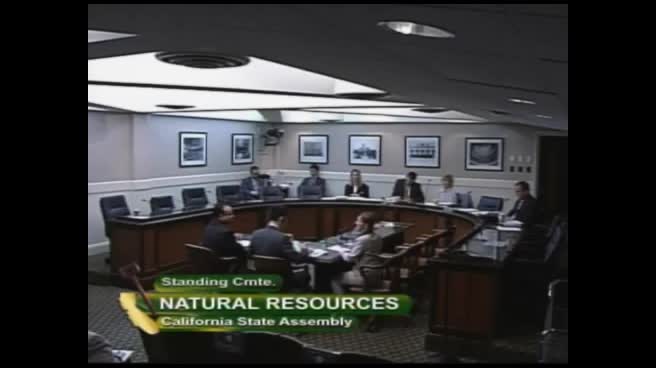 16MIN
Assembly Standing Committee on Natural Resources


Bill Co-Author(s):