AB 1902: Time for commencing civil actions: Aliso Canyon gas leak.
- Session Year: 2015-2016
- House: Assembly
- Latest Version Date: 2016-02-11
Existing law sets forth a two year statute of limitations for commencing a civil action for injury, illness, or wrongful death based upon exposure to a hazardous material or toxic substance other than asbestos, as specified.
This bill would establish a 3 year statute of limitations for commencing a civil action for injury, illness, or wrongful death based on exposure to methane, benzene, mercaptan, or any other hazardous material or toxic substance resulting from the Southern California Gas Company Aliso Canyon SS-25 gas leak, as specified.
(a)In any a civil action for injury or illness based upon exposure to a hazardous material or toxic substance, the time for commencement of the action shall be no later than either two years from the date of injury, or two years after the plaintiff becomes aware of, or reasonably should have become aware of, (1) an injury, (2) the physical cause of the injury, and (3) sufficient facts to put a reasonable person on inquiry notice that the injury was caused or contributed to by the wrongful act of another, whichever occurs later.
(b)In an action for the wrongful death of any a plaintiffs decedent, based upon exposure to a hazardous material or toxic substance, the time for commencement of an action shall be no later than either (1) two years from the date of the death of the plaintiffs decedent, or (2) two years from the first date on which the plaintiff is aware of, or reasonably should have become aware of, the physical cause of the death and sufficient facts to put a reasonable person on inquiry notice that the death was caused or contributed to by the wrongful act of another, whichever occurs later.
(c)For purposes of this section:
(1)A civil action for injury or illness based upon exposure to a hazardous material or toxic substance does not include an action subject to Section 340.2 or 340.5. Sections 340.2, 340.5, or 340.81.
(2)Media reports regarding the hazardous material or toxic substance contamination do not, in and of themselves, constitute sufficient facts to put a reasonable person on inquiry notice that the injury or death was caused or contributed to by the wrongful act of another.
(d)Nothing in this section shall be construed to limit, abrogate, or change the law in effect on the effective date of this section with respect to actions not based upon exposure to a hazardous material or toxic substance.
SEC. 2.Section 340.81 is added to the Code of Civil Procedure, to read:340.81.(a)In a civil action for injury or illness based upon exposure to methane, benzene, mercaptan, or any other hazardous material or toxic substance resulting from the Southern California Gas Company Aliso Canyon SS-25 gas leak, the time for commencement of the action shall be no later than either three years from (1) the date of injury, or (2) the date the plaintiff was put on inquiry notice, or through the exercise of reasonable diligence should have been put on inquiry notice, that an injury was caused or contributed to by such exposure, whichever occurs later.
(b)In an action for the wrongful death of a plaintiffs decedent, based upon exposure to methane, benzene, mercaptan, or any other hazardous material or toxic substance resulting from the Southern California Gas Company Aliso Canyon SS-25 gas leak, the time for commencement of an action shall be no later than either (1) three years from the date of the death of the plaintiffs decedent, or (2) three years from the first date on which the plaintiff was put on inquiry notice, or through exercise of reasonable diligence should have been put on inquiry notice, that the death was caused or contributed to by such exposure, whichever occurs later.
(c)For purposes of this section, media reports regarding the potential exposure to methane, benzene, mercaptan, or any other hazardous material or toxic substance resulting from the Southern California Gas Company Aliso Canyon SS-25 gas leak do not, in and of themselves, constitute sufficient facts to put a reasonable person on inquiry notice that the injury or death was caused or contributed to by that exposure.
(d)This section shall only apply to a plaintiff whose domicile or residence was located within a 12-mile radius of the Southern California Gas Companys Aliso Canyon SS-25 facility at any time between January 1, 2015, and December 31, 2016.
|
Date
|
Status
|
|---|---|
| Feb 11, 2016 | Read first time. To print. |
| Feb 12, 2016 | From printer. May be heard in committee March 13. |
| Feb 25, 2016 | Referred to Com. on JUD. |
| Mar 8, 2016 | In committee: Set, first hearing. Hearing canceled at the request of author. |
| Mar 29, 2016 | In committee: Set, second hearing. Hearing canceled at the request of author. |
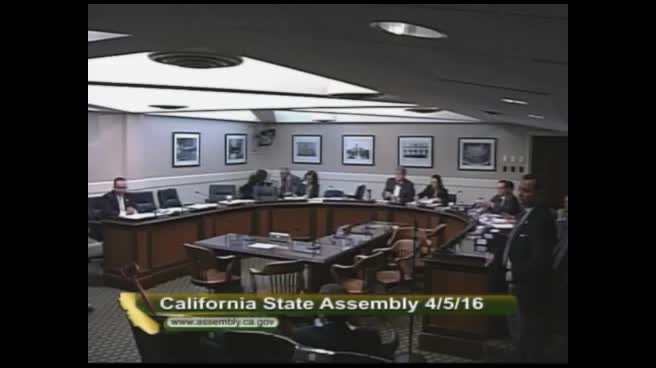
| Apr 5, 2016 | In committee: Set, final hearing. Failed passage. Reconsideration granted. |
|
Date
|
Description
|
Location
|
Votes
|
|
|---|---|---|---|---|
| Apr 5, 2016 | Reconsideration. | Assembly Standing Committee on Judiciary |
Passed |
|
| Apr 5, 2016 | Do pass. | Assembly Standing Committee on Judiciary |
Failed |
This list shows positions taken on this bill by organizations on the date displayed, which is linked to the original source.
Positions by individuals are not included.
|
Organization
|
Position
|
Date
|
|---|---|---|
| Civil Justice Association Of California | ** Against | Apr 5, 2016 |
Date of Hearing: April 5, 2016
ASSEMBLY COMMITTEE ON JUDICIARY
Mark Stone, Chair
ABPCA Bill Id:AB 1902
Author:(Wilk) – As Introduced Ver:February 11, 2016
SUBJECT: TIME FOR COMMENCING CIVIL ACTIONS: ALISO CANYON GAS LEAK
KEY ISSUES:
- sHOULD THERE BE A SPECIAL STATUTE OF LIMITATIONS FOR FILING A CIVIL ACTION BASED UPON EXPOSURE TO SPECIFIED TOXIC HAZARDS AT ONE SPECIFIC SITE IN CALIFORNIA THAT IS ONE YEAR LONGER THAN THE STATUTE OF LIMITATIONS THAT APPLIES TO CIVIL ACTIONS BASED UPON EXPOSURE TO VIRTUALLY ALL OTHER TOXIC HAZARDS everyWHERE else IN the state of CALIFORNIA?
- SHOULD THE ABILITY OF PLAINTIFFS TO SUE FOR THEIR INJURIES OR DEATHS CAUSED BY THE SPECIFIC TOXINS IN THE SPECIFIED AREA BE LIMITED TO THOSE WITH DOMICILE OR RESIDENCE IN THE AFFECTED AREA BETWEEN JANUARY 1, 2015 AND DECEMBER 31, 2016?
- SHOULD THE ABILITY OF PLAINTIFFS TO SUE FOR THEIR INJURIES OR DEATHS CAUSED BY THE SPECIFIC TOXINS IN THE SPECIFIED AREA BE LIMITED TO THOSE WHO LIVE WITHIN A 12 MILE RADIUS OF THE SITE WHEN THERE IS NO SCIENTIFIC DATA SUPPORTING THAT GEOGRAPHIC AREA AS THE ONE WHICH HAS BEEN OR WILL BE AFFECTED BY THE ALISO CANYON GAS LEAK?
- IN ORDER TO ADDRESS THE CONCERN THAT CURRENT LAW DOES NOT GIVE ENOUGH TIME FOR PLAINTIFFS TO FILE CIVIL ACTIONS AFTER THEY ARE INJURED BY TOXIC CHEMICALS, MIGHT IT BE PREFERABLE TO AMEND EXISTING LAW TO PROVIDE ADDITIONAL TIME FOR ALL SIMILARLY SITUATED PLAINTIFFS IN A FAIR AND EQUITABLE MANNER?
SYNOPSIS
This bill, introduced in response to the rupture of the Aliso Canyon natural gas well adjacent to the upscale San Fernando Valley community of Porter Ranch detected in October of 2015 and not sealed until mid-February of 2016, seeks to provide a special statute of limitations to those residents who have been injured by the gas leak, or may develop injuries as a result of the leak in the future. Whereas the statute of limitations on a civil action generally begins to run at the time when the injurious act is committed (“after the cause of action shall have accrued”), for injuries and deaths caused by toxic chemicals, the statute begins to run at either the time of the injury, the date when the plaintiff either becomes aware that his or her injury was caused by a chemical, or the date when the plaintiff reasonably should have become aware of such causation, whichever is later. Although the standard statute of limitations for filing a civil action based upon injuries from toxic chemicals is two years from the injury or date of discovery of the connection between the injury and the exposure to the toxin, this bill seeks to provide a special three-year statute of limitations for only those persons who lived within a 12-mile radius of the gas leak between January 1, 2015 and December 31, 2016. According to the author, this bill is necessary to provide those who were exposed to toxic chemicals as a result of the gas leak at Aliso Canyon adequate opportunity to take action in the future if they develop injuries, or die, as a result of the toxins released at Aliso Canyon. However, the difficulty in identifying injuries and their connection to certain toxins is not unique to the incident in Aliso Canyon or the residents of Porter Ranch. It is typical of the type of injuries caused by exposure – both short and long-term – to toxic chemicals, regardless of how the exposure occurs or what the toxic substance happens to be. Given the difficulty that all persons (including, but not limited to the residents of Porter Ranch) who are exposed to the toxic chemicals (including, but not limited to those released and created by the Aliso Canyon gas leak) face in bringing civil actions based upon their injuries caused by toxic chemicals, and the fundamental unfairness of providing a special statute of limitations to only one group of persons based upon where and when they lived in a specific area, the Committee may conclude that it is unreasonable to extend the statute of limitations for plaintiffs at Porter Ranch without also extending the statute of limitations applicable to all plaintiffs who are injured by toxic chemicals. The Committee is unaware of any support for the bill, which is sponsored by the author. The bill is opposed by the Civil Justice Association of California, which argues that it is bad policy for the Legislature to adopt a special statute of limitations for a single incident such as the gas leak at Aliso Canyon.
SUMMARY: Extends the period of time for a plaintiff to file a civil action for injuries, illness or death caused by exposure to toxic hazards, but only if the plaintiff is exposed to certain toxic hazards in a specific area of the state. Specifically, this bill:
- Provides that in a civil action for injury or illness based upon exposure to methane, benzene, mercaptan, or any other hazardous material or toxic substance resulting from the Southern California Gas Company Aliso Canyon SS-25 gas leak, the time for commencement of the action shall be no later than either three years from the following:
- The date of injury;
- The date the plaintiff was put on inquiry notice, or through the exercise of reasonable diligence should have been put on inquiry notice, that an injury was caused or contributed to by such exposure, whichever occurs later.
- Provides that in an action for the wrongful death of a plaintiff’s decedent, based upon the above, the time for commencement of an action shall be no later than one of the following:
- Three years from the date of the death of the plaintiff’s decedent;
- Three years from the first date on which the plaintiff was put on inquiry notice, or through exercise of reasonable diligence should have been put on inquiry notice, that the death was caused or contributed to by such exposure, whichever occurs later.
- Provides that for purposes of 1) and 2), above, media reports regarding the potential exposure to methane, benzene, mercaptan, or any other hazardous material or toxic substance resulting from the Southern California Gas Company Aliso Canyon SS-25 gas leak do not, in and of themselves, constitute sufficient facts to put a reasonable person on inquiry notice that the injury or death was caused or contributed to by that exposure.
- Limits its provisions to a plaintiff whose domicile or residence was located within a 12-mile radius of the Southern California Gas Company’s Aliso Canyon SS-25 facility at any time between January 1, 2015, and December 31, 2016.
EXISTING LAW:
- Provides, as a general rule, that civil actions can only be commenced within the periods prescribed in this title, after the cause of action shall have accrued, unless where, in special cases, a different limitation is prescribed by statute. (Code of Civil Procedure Section 312. All further statutory references are to the Code of Civil Procedure unless otherwise indicated.)
- Provides, as an exception to 1), above, that in any civil action for injury or illness based upon exposure to a hazardous material or toxic substance, the time for commencement of the action shall be no later than either two years from the date of injury, or two years after the plaintiff becomes aware of, or reasonably should have become aware of, (1) an injury, (2) the physical cause of the injury, and (3) sufficient facts to put a reasonable person on inquiry notice that the injury was caused or contributed to by the wrongful act of another, whichever occurs later. (Section 340.8 (a).)
- Provides that in an action for the wrongful death of any plaintiff’s decedent, based upon exposure to a hazardous material or toxic substance, the time for commencement of an action shall be no later than either (1) two years from the date of the death of the plaintiff’s decedent, or (2) two years from the first date on which the plaintiff is aware of, or reasonably should have become aware of, the physical cause of the death and sufficient facts to put a reasonable person on inquiry notice that the death was caused or contributed to by the wrongful act of another, whichever occurs later. (Section 340.8 (b).)
- Provides that a “civil action for injury or illness based upon exposure to a hazardous material or toxic substance” does not include an action subject to Section 340.2 or 340.5. (Section 340.8 (c).)
- Provides that in any civil action for injury or illness based upon exposure to asbestos, the time for the commencement of the action shall be the later of the following:
- Within one year after the date the plaintiff first suffered disability.
- Within one year after the date the plaintiff either knew, or through the exercise of reasonable diligence should have known, that such disability was caused or contributed to by such exposure. (Section 340.2.)
- Provides that in an action for injury or death against a health care provider based upon such person’s alleged professional negligence, the time for the commencement of action shall be three years after the date of injury or one year after the plaintiff discovers, or through the use of reasonable diligence should have discovered, the injury, whichever occurs first and that the time for commencement of legal action shall not exceed three years unless tolled for specified reasons. (Section 340.5.)
- Specifies that media reports regarding the hazardous material or toxic substance contamination do not, in and of themselves, constitute sufficient facts to put a reasonable person on inquiry notice that the injury or death was caused or contributed to by the wrongful act of another. (Section 340.8 (c).)
- Provides that under the "delayed discovery" rule, the statute of limitations begins to run when the plaintiff suspects or should suspect that his or her injury was caused by wrongdoing, that someone has done something wrong to him or her. (Jolly v. Eli Lilly & Co. (1988) 44 Cal. 3d 1103.)
- Provides that, in cases involving injuries from toxic materials, the statute of limitations begins to run when the plaintiff becomes aware of: (1) an injury, (2) the factual cause of the injury, and (3) sufficient facts to put the plaintiff on inquiry notice that the injury derived from the wrongful act of another. (Clark v. Baxter (2000) 83 Cal. App. 4th 1048.)
FISCAL EFFECT: As currently in print this bill is keyed non-fiscal.
COMMENTS: A rupture of a natural gas well in the Aliso Canyon complex owned by the Southern California Gas Company and adjacent to the upscale San Fernando Valley community of Porter Ranch was detected in October of 2015. It poured toxic fumes into the surrounding neighborhoods for months until it was permanently sealed in mid-February of 2016. According to the Environmental Defense Fund, 96,000 metric tons of methane, a powerful climate pollutant, were estimated to have been released into the atmosphere as a result of the leak, having the same 20-year climate impact as burning nearly a billion gallons of gasoline. (https://www.edf.org/climate/aliso-canyon-leak-sheds-light-national-problem.) In the months following detection of the leak, thousands of residents were relocated to temporary housing. Many reported health issues such as headaches, nausea, nosebleeds and dizziness.
At this point, it is difficult to know what are the long-term effects of the nearly six-month leak on the local environment and population. According to the Los Angeles Times, county supervisor Michael D. Antonovich has stated that before moving back, residents should know whether the methane plumes left any "residue" outside or in their homes and United States Senator Barbara Boxer has said the tests should be conducted by a private organization, the U.S. Environmental Protection Agency or the South Coast Air Quality Management Disrict. (http://www.latimes.com/local/lanow/la-me-porter-canyon-gas-leak-20160215-story.html) Researchers at USC intend to study the long-term health effects of the gas leak on area residents. Ed Avol, professor of clinical medicine in the Department of Preventive Medicine of the Keck School of Medicine of USC, who is an expert on respiratory health and the public health impacts of air pollution, explained the complexity of the chemical soup emitted at Aliso Canyon and the complexity of determining the health effects on residents who were exposed to the chemicals:
Right now, we don’t think the methane exposure is as much an issue as some of the other contaminants and the potentially toxic chemicals that may come from byproduct reactions. . . . Methane makes about 90 percent of natural gas. Methane and other chemicals emitted in natural gas can react in the open-air environment and create other gases and chemicals, such as hydrogen sulfide. . . . Methyl mercaptans and other odor markers can break down to form other chemicals in the atmosphere. It is these mercaptans and their possible byproducts that may be a health concern. . . . [W]e wonder if there are long-term, low-level effects associated with extended exposure that are not being followed or being seriously considered. We do not believe these have been systematically addressed. . . . The issues we usually consider run the whole gamut from respiratory to cardiovascular to potentially neurological. Stress is also a concern. If there is a lot of stress, it triggers generic inflammation mechanisms in your body, which may lead to physical biological responses.
Regarding the number of people directly affected by the leak, Southern California Public Radio (KPCC) reported that nearly 8,000 households were relocated during the gas leak and as of mid-March of this year, are still living in temporary housing. http://www.scpr.org/news/2016/03/18/58662/porter-ranch-judge-gives-displaced-one-more-week-o/
Meanwhile, numerous civil actions have been filed by Porter Ranch residents and property owners against the operator of the well, Southern California Gas Company, because of personal injuries and property damage alleged to have been caused by the gas leak. Given the fact that the long-term effects of the chemical exposure are largely unknown, residents of Porter Ranch may not know for years how and if they have been injured by the gas leak.
Statutes of Limitations for Civil Actions in General and for Toxic Torts in Particular – Importance of Delayed Discovery Doctrine. The collective term “statute of limitations” is commonly applied to a great number of acts that prescribe the periods beyond which actions may not be brought. (3 Witkin, Cal. Procedure (5th ed. 2012) Actions, sec. 433, p. 432.) The general purpose is to prevent the assertion of “stale claims.” (Ibid.) In other words, the statute of limitations “requires diligent prosecution of known claims thereby providing necessary finality and predictability in legal affairs, and ensuring that claims will be resolved while the evidence bearing on the issues is reasonably available and fresh.” (Kaiser Foundation Hospitals v. Workers' Comp. Appeals Bd. (1977) 19 Cal.3d 329, 336.)
Whereas the statute of limitations on a civil action generally begins to run at the time when the injurious act is committed (“after the cause of action shall have accrued” (Section 312)), the statute begins to run, for injuries and deaths caused by environmental hazards, at either the time of the injury, or the date when the plaintiff either becomes aware of, or the date when the plaintiff reasonably should have become aware of an injury that is caused by the toxin, whichever is later. (Section 340.8 (a).)
SB 331 (Romero, Chap. 873, Stats. of 2013) codified the doctrine of delayed discovery set forth in Section 340.8, overturning a court decision, McKelvey v. Boeing North American, Inc. (1999) 74 Cal.App.4th 151, that imputed knowledge of causation of injuries to plaintiffs who claimed to be injured by toxic chemicals because of extensive media coverage of the incident causing the release of chemicals and the toxic nature of the chemicals that were released. This Committee’s analysis included the following explanation for the need to overturn the holding of that case:
As proposed to be amended, the bill also provides that media reports regarding the hazardous material or toxic substance contamination do not, in and of themselves, constitute sufficient facts to put a plaintiff on inquiry notice that the plaintiff's injury or decedent's death was caused or contributed to by the wrongful act of another. This provision seeks to limit the recent case . . . in which the court imputed knowledge to the plaintiffs based on extensive media coverage, thereby placing them on inquiry notice sufficient to begin the statute of limitations running.
Supporters argue that the doctrine of delayed discovery is critical in hazardous substance exposure cases because in most cases injuries, illnesses, or deaths caused by exposure to hazardous substances are not immediately known. In fact, they argue, exposure to hazardous substances usually leads to chronic conditions that are often not known until long after the exposure began. The sponsor contends that the three-part test best protects the public in toxic tort litigation because it directly addresses the common scenario of facts gradually accumulating over time until they reach a sufficient level to put the toxic tort plaintiff on inquiry notice that the injury derived from a wrongful act.
Indeed, SB 331 stated the intent of the Legislature in enacting Section 340.8 was to overturn McKelvey and codify the holding of two other cases (that established the delayed discovery doctrine):
It is the intent of the Legislature to codify the rulings in Jolly v. Eli Lilly & Co. (1988) 44 Cal.3d 1103, Norgart v. Upjohn Co. (1999) 21 Cal.4th 383, and Clark v. Baxter HealthCare Corp. (2000) 83 Cal.App.4th 1048, in subdivisions (a) and (b) of Section 340.8 of the Code of Civil Procedure, as set forth in this measure, and to disapprove the ruling McKelvey v. Boeing North American, Inc. (1999) 74 Cal.App.4th 151, to the extent the ruling in McKelvey is inconsistent with paragraph (2) of subdivision (c) of Section 340.8 of the Code of Civil Procedure, as set forth in this measure.
Thus, under the delayed discovery doctrine, the statute of limitations begins to run when “a person becomes aware of facts which would make a reasonably prudent person suspicious” that the defendant caused his or her injuries, in which case “he or she has a duty to investigate further and is charged with knowledge of matters which would have been revealed by such an investigation.” (Mangini v. Aerojet-General Corp. (1991) 230 Cal. App. 3d 1125, 1150.) “A patient who actually learns of the dangerous side effects” of a toxin to which she has been exposed “ignores her knowledge at her peril, but the law only requires an investigation when a plaintiff has a reason to investigate.” (Nelson v. Indevus Pharmaceuticals, Inc. (2006) 142 Cal.App.4th 1202, 1208.)
Evidence May Not Support a Different Statute of Limitations for Injuries and Deaths Suffered by Porter Ranch Residents Than For Other Individuals Injured or Killed by Toxins. According to the author, this bill is necessary to provide those who were exposed to toxic chemicals as a result of the gas leak at Aliso Canyon adequate opportunity to take action in the future if they develop injuries, or die, in the future.
During public testimony at town hall meetings, residents of the affected communities have shared that their number one concern as a result of the gas leak is the potential harm to their long-term health. Despite claims by state regulators and SoCal Gas executives, many are skeptical of their wide-ranging statements that the leak will not have any long-term health impacts.
This bill would ensure that residents of Porter Ranch and other affected communities are safe and have an appropriate amount of time to take action if any unforeseen problems related to their health arise as a result of the gas leak. This bill is necessary to protect our communities’ health and rights, and ensure the future well-being of our state.
While it is known that the residents of Porter Ranch were exposed to toxic chemicals, it is unknown what will be the effect of such exposure on residents, especially on a long-term basis. As Professor Avol, of the U.S.C. School of Medicine, points out (above), the “long-term, low-level effects associated with extended exposure” to the toxins released at Aliso Canyon have not previously been followed or even seriously considered. Future injuries could “run the whole gamut from respiratory to cardiovascular to potentially neurological” and may be exacerbated by stress. However, such difficulty in identifying injuries and their connection to certain toxins is not unique to the incident in Porter Ranch. It is typical of the type of injuries caused by exposure – both short and long-term – to toxic chemicals, regardless of how exposure occurs and what the toxic substance may happen to be.
At some point in the future, when a resident of Porter Ranch learns the connection between an injury and the gas leak (or reasonably should make such a connection), the statute of limitations will begin to run for that particular plaintiff. Under current law, a plaintiff will have two years after discovering the connection between the leak and his or her injury to bring a cause of action against the defendants. This bill proposes to extend that time period to three years. Given the difficulty of pursuing all civil actions based upon injuries caused by toxic substances, if it is reasonable to extend the statute of limitations for plaintiffs at Porter Ranch, it seems equally reasonable to extend the statute of limitations for all plaintiffs who are injured or killed by toxic chemicals.
Evidence May Not Support the Limits on Time and Place Proposed by this bill. Presumably in an effort to narrow the application of this bill to just one incident and one area (i.e. only those residents of Porter Ranch who were affected by the gas leak at the Aliso Canyon facility), this bill limits the application of its special extended statute of limitations by time (January 1, 2015 to December 31, 2016) and place (within a 12 mile radius of the Southern California Gas Company’s Aliso Canyon facility). Although well-intentioned, both limitations could be unfair in practice, to both Porter Ranch residents, and to those who live elsewhere. First, although the leak was not detected until October of 2015, it is possible that a leak was present at that site long before that date. Therefore, a person who lived at Porter Ranch and was exposed to toxic chemicals by an undetected leak and then moved away prior to January 1, 2015 would not be covered by this bill and would be subject to the standard two-year statute of limitations in Section 340.8. Another person who moved into the same residence in Porter Ranch on January 1, 2015 and was sickened by the same chemicals would be covered by the bill and would be subject to the special three-year statute of limitations proposed by this bill. This is not a matter of idle speculation. According to information provided by the author, Southern California Gas has stated that it repaired wells from 2008 until 2013 because of “casing corrosion, or mechanical damage in 15 wells” and admitted that it detected a leak at the Aliso Canyon facility in 2013.
The same unfair situation could arise in the future for a person who moves to Porter Ranch after December 31, 2016. It is possible that either a new leak, or a previously unknown leak could be discovered in the future. That future resident could be sickened by the same chemicals that were released in the 2015 leak. But under the provisions of this bill, that future resident would not be able to take advantage of the three-year statute of limitations purely because of the fortuity of when he or she happened to move to Porter Ranch.
Likewise, it is also possible that there could be another leak at another natural gas facility outside the 12-mile radius of the Aliso Canyon facility in the future. This is also a real, and not a speculative, concern, given the age of the many gas storage facilities in Southern California. According to background materials provided by the author, Southern California Gas has “52 storage wells in service that are more than 70 years old. Half of the 229 storage wells are more than 57 years old as of July 2014.” And a recent report by the Public Utilities Commission found that “only one of the dozen underground gas storage facilities in California had no leaking gas wells or fixtures, according to tests required by state regulators in the wake of a well blowout in Southern California.” (http://www.latimes.com/local/lanow/la-me-ln-gas-leaks-storage-wells-20160322-story.html) If such leaks do occur elsewhere in the future, unfortunately this bill would not apply to anyone who lives anywhere other than within a 12 mile radius of the Aliso Canyon facility.
Given the difficulty that all persons (including, but not limited to the residents of Porter Ranch) who are exposed to the toxic chemicals (including, but not limited to those released and created by the Aliso Canyon gas leak) face in bringing civil actions based upon injuries caused by toxic chemicals, and the fundamental unfairness of providing a special statute of limitations to only one small group of those persons based upon where and when they lived in a small specified area, the Committee may conclude that it is unreasonable to extend the statute of limitations for plaintiffs at Porter Ranch without extending the statute of limitations for all plaintiffs who are similarly situated to them. Therefore, the Committee recommends that, in lieu of creating a new section in the Code of Civil Procedure with a statute of limitations for certain residents of Porter Ranch, this bill should amend subdivision (a) of Section 340.8 to extend the statute of limitations for all persons who are injured or killed by harmful chemicals to bring civil actions for the injuries or deaths caused by those chemicals, as follows:
340.8 (a) In any civil action for injury or illness based upon exposure to a hazardous material or toxic substance, the time for commencement of the action shall be no later than either two three years from the date of injury, or two three years after the plaintiff becomes aware of, or reasonably should have become aware of, (1) an injury, (2) the physical cause of the injury, and (3) sufficient facts to put a reasonable person on inquiry notice that the injury was caused or contributed to by the wrongful act of another, whichever occurs later.
Arguments in Opposition: The Civil Justice Association of California writes that it would be bad policy for the Legislature to adopt a special statute of limitations for a single incident:
Extending the statute of limitations for injury claims arising from this single incident is not justified by any uncertainty over when or whether the incident occurred. The current two-year statute provides sufficient time to identify injuries related to this incident and promotes the timely filing of any actions arising from those injuries.
Extending the statute of limitations for a single event also sets a dangerous precedent. If the legislature were to adopt a special filing period for this incident, that would become the standard for how the body reacts to future incidents.
Every accident, natural or man-made disaster, product recall or other source of multiple claims for damages would be a candidate for a special extension of the time for filing civil actions.
SIMILAR PENDING LEGISLATION. AB 1903 (Wilk) directs the Public Utilities Commission and the State Department of Public Health to jointly study the long-term health impacts of the Aliso Canyon natural gas leak. Pending in the Assembly Utilities and Commerce Committee.
AB 1904 (Wilk) directs the Office of Environmental Health Hazard Assessment to submit a report to the legislature that assesses the danger to public health and safety and the environment of odorants currently used in natural gas storage facilities and identify potential alternative odorants, effective immediately (as an urgency measure). AB 1904 is pending in the Assembly ES&TM Committee.
AB 1905 (Wilk) directs the Natural Resources Agency to conduct an independent scientific study on natural gas injection and storage practices and facilities immediately (as an urgency measure). AB 1905 is pending in the Assembly Natural Resources Committee.
AB 2748 (Gatto) would create a right of action against Southern California Gas Company for any person owning real property in the Porter Ranch area, as defined, on October 23, 2015, who suffers a diminution in value of that real property resulting from the leakage of natural gas from the Aliso Canyon Gas Storage Facility during 2015 and 2016 and would specify that the cause of action will accrue when the claimant first offers the property for sale or seeks refinancing of the property. The bill would specify a mechanism for measuring the diminution in value. AB 2748 is pending in this Committee.
SB 380 (Pavley) places a moratorium on natural gas injections at the Aliso Canyon gas storage facility and establishes requirements to resume injections, including each well at the facility has been evaluated and those posing risk of failure have been repaired or plugged, to take effect immediately (as an urgency measure). SB 380 is pending in the Assembly Appropriations Committee.
SB 886 (Pavley) requires the Division of Oil, Gas, and Geothermal Resources (DOGGR) to immediately place a moratorium on natural gas injections at the Aliso Canyon gas storage facility and prevent use of wells drilled pre-1954 and requires the PUC to determine the feasibility of eliminating (or minimizing) the use of the Aliso Canyon gas storage facility, to take effect immediately (as an urgency measure). SB 886 is pending in the Senate Natural Resources Committee.
SB 887 (Pavley) requires DOGGR to prescribe standards for natural gas storage wells and inspect all natural gas storage wells annually and prescribes other requirements. SB 887 is pending in the Senate Natural Resources Committee.
REGISTERED SUPPORT / OPPOSITION:
Support
None on file
Opposition
Civil Justice Association of California
Analysis Prepared by: Alison Merrilees / JUD. / (916) 319-2334
Bill Author

Bill Co-Author(s):