AB 1905: Natural gas injection and storage: study.
- Session Year: 2015-2016
- House: Assembly
- Latest Version Date: 2016-04-07
Under existing law, the Division of Oil, Gas, and Geothermal Resources in the Department of Conservation regulates the drilling, operation, maintenance, stimulation, and abandonment of oil and gas wells in the state. Existing law requires the Secretary of the Natural Resources Agency to complete an independent scientific study on well stimulation treatments, as specified.
The bill would require the Secretary of the Natural Resources Agency, on or before July 1, 2017, to cause to be conducted, and completed, an independent scientific study on natural gas injection and storage practices and facilities, as specified.
This bill would declare that it is to take effect immediately as an urgency statute.
On or before July 1, 2017, the Secretary of the Natural Resources Agency shall cause to be conducted, and completed, an independent scientific study on natural gas injection and storage practices and facilities. The scientific study shall evaluate the hazards and risks and potential hazards and risks that natural gas injection and storage pose to natural resources and public, occupational, and environmental health and safety. The scientific study shall do all of the following:
(a)Follow the well-established standard protocols of the scientific profession, including, but not limited to, the use of recognized experts, peer review, and publication.
(b)(1)Identify and evaluate natural gas storage injection well construction standards and operation techniques for both existing natural gas storage injection wells and for newly drilled natural gas storage injection wells.
(2)Determine the average age of injection wells at gas storage facilities in the state and evaluate whether the construction standards used in aging wells are adequate to continue to protect public natural resources and public, occupational, and environmental health and safety.
(c)Identify the proximity of existing natural gas storage facilities in the state to population centers residential development and the risks posed by those facilities to nearby populations. residential development.
(d)(1)Identify the chemicals currently used as odorants at natural gas storage facilities in the state and the public health and environmental risks posed by those odorants.
(2)Evaluate potential alternatives to the odorants currently in use to determine if there are any feasible alternative odorants that pose a lower risk to public and environmental health.
(e)Evaluate the current state regulatory structure for natural gas injection and storage facilities and recommend measures that would better protect public natural resources and public, occupational, and environmental health and safety while still maintaining energy reliability.
(f)Clearly identify where additional information is necessary to inform and improve the analyses.
SEC. 2.This act is an urgency statute necessary for the immediate preservation of the public peace, health, or safety within the meaning of Article IV of the Constitution and shall go into immediate effect. The facts constituting the necessity are:
Due to a currently ongoing leak of primarily methane, a potent greenhouse gas, from the Southern California Gas Company Aliso Canyon SS-25 well that began on October 23, 2015, the unknown effects on the community of and surrounding Porter Ranch must be studied at the earliest possible time, independent from Southern California Gas Company and in order to prevent future harm from similar events, it is necessary that this act take effect immediately.
On or before July 1, 2017, the Secretary of the Natural Resources Agency shall cause to be conducted, and completed, an independent scientific study on natural gas injection and storage practices and facilities. The scientific study shall evaluate the hazards and risks and potential hazards and risks that natural gas injection and storage pose to natural resources and public, occupational, and environmental health and safety. The scientific study shall do all of the following:
(a)Follow the well-established standard protocols of the scientific profession, including, but not limited to, the use of recognized experts, peer review, and publication.
(b)(1)Identify and evaluate well construction standards and operation techniques for both existing injection wells and for newly drilled injection wells.
(2)Determine the average age of injection wells at gas storage facilities in the state and evaluate whether the construction standards used in aging wells are adequate to continue to protect public and environmental health and safety.
(c)Identify the proximity of existing natural gas storage facilities in the state to population centers and the risks posed by those facilities to nearby populations.
(d)(1)Identify the chemicals currently used as odorants at natural gas storage facilities in the state and the public health and environmental risks posed by those odorants.
(2)Evaluate potential alternatives to the odorants currently in use to determine if there are any feasible alternative odorants that pose a lower risk to public and environmental health.
(e)Evaluate the current state regulatory structure for natural gas injection and storage facilities and recommend measures that would better protect public and environmental health and safety while still maintaining energy reliability.
(f)Clearly identify where additional information is necessary to inform and improve the analyses.
SEC. 2.This act is an urgency statute necessary for the immediate preservation of the public peace, health, or safety within the meaning of Article IV of the Constitution and shall go into immediate effect. The facts constituting the necessity are:
Due to a currently ongoing leak of primarily methane, a potent greenhouse gas, from the Southern California Gas Company Aliso Canyon SS-25 well that began on October 23, 2015, the unknown effects on the community of and surrounding Porter Ranch must be studied at the earliest possible time, independent from Southern California Gas Company and in order to prevent future harm from similar events, it is necessary that this act take effect immediately.
|
Date
|
Status
|
|---|---|
| Feb 11, 2016 | Read first time. To print. |
| Feb 12, 2016 | From printer. May be heard in committee March 13. |
| Feb 25, 2016 | Referred to Com. on NAT. RES. |
| Mar 9, 2016 | In committee: Set, first hearing. Hearing canceled at the request of author. |
| Apr 6, 2016 | From committee: Amend, and do pass as amended and re-refer to Com. on APPR. (Ayes 8. Noes 0.) (April 4). |
| Apr 7, 2016 | Read second time and amended. |
| Apr 11, 2016 | Re-referred to Com. on APPR. |
| Apr 20, 2016 | In committee: Set, first hearing. Referred to APPR. suspense file. |
| May 27, 2016 | In committee: Held under submission. |
|
Date
|
Description
|
Location
|
Votes
|
|
|---|---|---|---|---|
| Apr 4, 2016 | Do pass as amended and be re-referred to the Committee on [Appropriations] | Assembly Standing Committee on Natural Resources |
Passed |
This list shows positions taken on this bill by organizations on the date displayed, which is linked to the original source.
Positions by individuals are not included.
|
Organization
|
Position
|
Date
|
|---|---|---|
| Environmental Defense Fund | ** Support | Apr 4, 2016 |
Date of Hearing: April 20, 2016
ASSEMBLY COMMITTEE ON APPROPRIATIONS
Lorena Gonzalez, Chair
ABPCA Bill Id:AB 1905
Author:(Wilk) – As Amended Ver:April 7, 2016
Policy Committee: | Natural Resources | Vote: | 8 - 0 |
|
|
Urgency: Yes State Mandated Local Program: No Reimbursable: No
SUMMARY:
This urgency bill requires the Secretary of the Natural Resources Agency (NRA) to conduct and complete an independent scientific study on natural gas injection and storage practices by July 1, 2017.
FISCAL EFFECT:
Based on the costs of a similar study on fracking conducted by the California Council on Science and Technology, this bill will require approximately $3 million in contracts (GF, Oil, Gas and Geothermal Administrative Fund or other special fund).
COMMENTS:
- Rationale. Although the Governor has directed the Division of Gas and Geothermal Resources (DOGGR) the California Public Utilities Commission (PUC), the Air Resources Board (ARB), and California Energy Commission (CEC) to assess the long-term viability of natural gas storage facilities and prepare a risk management plan, there is additional value in an independent scientific review.
The previous independent science study on well stimulation (fracking) raised important questions and issues. In response, Governor’s office formed an interagency working group to respond to the study’s findings and recommendations. The study required by this bill could also help inform how the state regulates natural gas storage facilities.
- Aliso Canyon Gas Leak. The Aliso Canyon Gas Storage Facility is owned by the SoCalGas and is located in Los Angeles County just north of Porter Ranch. SoCalGas is a gas corporation regulated by the PUC.
On October 23, 2015, SoCalGas detected a methane gas leak at its Aliso Canyon Gas Storage Facility at Well # SS-25. Following an initial evaluation and several attempts to stop the leak, SoCalGas began drilling a relief well in order to plug the leaking well. The initial attempts to plug the leak failed, and the leak lasted 112 days before being permanently capped on February 18, 2016.
A study in the journal Science confirmed that the methane gas leak was not only the largest in California's history, but also the second largest in the nation. According to the lead author of the study, as much as 60 metric tons of methane spewed from the leak each hour.
The leak displaced over 5,000 households, requiring families to move into temporary housing and hotels provided by SoCalGas.
Since October 25, 2016, no natural gas has been injected into the facility. However, on April 13, 2016, residents living near the natural gas storage field complained of a strong odor raising the question on whether another problem exists at the facility.
- Chronology of Events and State Response. Following the detection of the leak, in November and December 2015, DOGGR and the PUC issued orders establishing a moratorium on natural gas injection at Aliso Canyon. The orders included requirements to provide data, retain evidence, and track the costs of the effort to plug the well. Additionally, the Air Resources Board (ARB) began collecting and publishing data on methane emissions caused by the leak.
On January 6, 2016, the Governor issued a Proclamation directing various state entities to oversee SoCalGas' actions to stop the leak, protect public safety, ensure accountability and strengthen oversight of natural gas storage facilities.
On February 11, 2016, SoCalGas announced it had temporarily controlled the flow of natural gas at the leaking well and would continue to work in coordination with DOGGR and other agencies during the process of permanently sealing the well.
On February 18, 2016, DOGGR confirmed the leaking well was permanently sealed and taken out of service.
On March 4, 2016, DOGGR issued an order to SoCal Gas to follow a comprehensive safety review, upgrade equipment and detection devices, and plug and abandon wells as specified. This order prohibits the Supervisor from lifting the injection prohibition until all specified requirements have been met.
On March 28, 2016, the PUC, DOGGR, ARB, and CEC issued an update on the status of state actions taken in response to the gas leak.
- Governor's Emergency Proclamation and Budget Proposals. In addition to the provisions in this bill, the Governor's Proclamation required DOGGR to issue emergency regulations and required all gas storage facilities in the state to undertake specific actions to protect against uncontrolled has leaks. Additionally, the Proclamation: 1) requires ARB to expand its monitoring of emissions in the community; 2) requires the Office of Environmental Health Hazzard Assessment (OEHHA) to review health concerns and determine if additional measures are necessary; and 3) requires the PUC and CEC, in coordination with the ISO, to take all steps necessary to ensure energy reliability during the moratorium.
On April 1, 2016 the Governor revised his proposed January budget to include additional augmentations to the following agencies to implement the directed actions and improve public safety statewide:
- CEC – $1,739,000 and three positions to monitor, model and analyze the interaction of electricity and natural gas systems for reliability (Public Interest Research, Development, and Demonstration Fund);
- DOGGR – $4,172,000 and 20 positions to support increased regulatory activities and $1 million to increase efforts to remediate orphan wells (Oil, Gas and Geothermal Resources Fund);
- ARB – $2,276,000 and four positions to provide air quality monitoring near oil and gas operations (Oil, Gas and Geothermal Resources Fund);
- OEHHA – $350,000 and 2 positions to support ARB's air quality monitoring (Oil, Gas and Geothermal Resources Fund);
- PUC – $1,479,000 and 10 positions for increased workload related to regulating natural gas facilities and $1,694,000 and 11 positions to create the Division of Safety Advocates (Public Utilities Commission Utilities Reimbursement Account).
- Related Legislation. Numerous bills have been introduced to respond to the Aliso Canyon Gas Storage Facility leak. AB 1902 (Wilk) extends the statute of limitations for civil actions resulting from exposure to hazardous materials from the Aliso Canyon gas leak. This bill is pending in the Judiciary Committee.
AB 1903 (Wilk) directs the Office of Environmental Health Hazard Assessment (OEHHA) to study the long-term health impacts of the Aliso Canyon natural gas leak. This bill is pending in this Committee.
AB 1904 (Wilk) requires the OEHHAto evaluate and report to the Legislature on natural gas odorants and potential alternatives by January 1, 2018. This bill is on suspense in this committee.
SB 380 (Pavley) continues the moratorium on injecting natural gas into the Aliso Canyon gas storage facility, requires the Division of Oil, Gas and Geothermal Resources (DOGGR) to complete a gas storage well comprehensive safety review (safety review), and requires the California Public Utilities Commission (PUC) to determine the feasibility of minimizing or eliminating use of the facility. This bill is pending on the Assembly floor.
SB 887 (Pavley) requires DOGGR to prescribe standards for natural gas storage wells and requires annual inspections. This bill is pending in the Senate Environmental Quality Committee.
Analysis Prepared by: Jennifer Galehouse / APPR. / (916) 319-2081
Date of Hearing: April 4, 2016
ASSEMBLY COMMITTEE ON NATURAL RESOURCES
Das Williams, Chair
ABPCA Bill Id:AB 1905 (
Author:Wilk) – As Introduced Ver:February 11, 2016
SUBJECT: Natural gas injection and storage: study (Urgency)
SUMMARY: Requires the Natural Resources Agency (NRA), on or before July 1, 2017, to complete an independent scientific study on natural gas injection and storage practices and facilities.
EXISTING LAW:
- Establishes the Division of Oil, Gas, and Geothermal Resources (DOGGR) as the state’s oil and gas regulator.
- Requires the state’s Oil and Gas Supervisor (Supervisor) to supervise the drilling, operation, maintenance, and abandonment of wells, and the operation, maintenance, and removal or abandonment of tanks and facilities attendant to oil and gas production.
- Allows DOGGR to apply to the United States Environmental Protection Agency (US EPA) to receive “primacy” to operate the Class II Underground Injection Control (UIC) program for oil and gas injection wells at the state level. The US EPA granted primacy and delegated authority to DOGGR to operate the UIC program in 1983.
- Requires the Supervisor to produce a public annual report containing information about the state’s oil and gas production and other related materials.
- Requires NRA, on or before January 1, 2015, to complete an independent scientific study on well stimulation treatments.
THIS BILL:
- Requires NRA, on or before July 1, 2017, to complete an independent scientific study on natural gas injection and storage practices and facilities.
- Requires the independent scientific study to evaluate the hazards and risks and potential hazards and risks that natural gas injection and storage pose to natural resources and public, occupational, and environmental health and safety.
- Requires the independent scientific study to do all of the following:
- Follow standard protocols of the scientific profession;
- Identify and evaluate well construction standards and operation techniques;
- Determine the average age of injection wells at natural gas storage facilities in the state and determine whether the construction standards used in the aging wells are adequate to protect public and environmental health and safety;
- Identify the proximity of existing natural gas storage facilities in the state to population centers and the risks posed by those facilities to nearby populations;
- Identify the chemicals currently used as odorants at natural gas storage facilities in the state and the risk they pose;
- Evaluate potential alternatives to the odorants currently used to determine if there are alternatives;
- Evaluate the current state regulatory structure for natural gas storage facilities and recommend improvements; and,
- Clearly identify where additional information is necessary to inform and improve the analyses.
- Provides that the measure is an urgency statute.
FISCAL EFFECT: Unknown
COMMENTS:
- Aliso Canyon Leak. On October 23 2015, a natural gas storage well, known as “SS-25” owned by Southern California Gas (SoCalGas) and located in the Aliso Canyon storage field in close proximity to the Porter Ranch neighborhood in Los Angeles County began leaking natural gas. The leak continued until it was initially controlled on February 11, 2016, and the well was successfully sealed on February 18, 2016. During the four months the well leaked, there were numerous attempts to control it. All attempts to stop the leak from the top of the well failed. A relief well was finally able to stop the natural gas leak by plugging the leaking well at its base. According to a recent study, the leak at Aliso Canyon was the largest natural gas leak recorded in the United States, doubling the methane emission rate of the entire Los Angeles basin. Methane is a potent greenhouse gas with a global warming potential more than 80 times as powerful as carbon dioxide.
The South Coast Air Quality Management District has received thousands of complaints regarding the odor. Complaints by residents suggest that mercaptans, which are odorants required to be added to natural gas, have been present in Porter Ranch at varying levels since the gas leak started. Some people may experience adverse health effects to the strong odors of mercaptans, such as nausea and headaches. In mid-November, the Los Angeles County Department of Public Health, citing public health concerns associated with the use of odorants in the natural gas, ordered SoCal Gas to provide temporary housing relocation assistance to affected residents. Over 5,000 Porter Ranch households were relocated due to the leak. Now that the leak has been stopped, residents are returning home regulators are investigating the cause of the leak, and a comprehensive safety review of the other 114 wells at the field has begun.
- Natural Gas Storage Facilities. Natural gas providers inject natural gas into large underground reservoirs for storage before later withdrawing the gas for sale during peak load periods. These underground reservoirs often contained oil or gas that has already been extracted. Natural gas providers utilize these facilities to reduce the cost of procurement and to maintain adequate supply of natural gas during peak times. While the California Public Utilities Commission (CPUC) regulates natural gas providers, natural gas transmission lines, and the permitting of natural gas storage facilities, it is DOGGR that regulates the wells that natural gas is injected into and withdrawn from. Gas storage injection wells are the only type of injection wells in DOGGR’s UIC program that are not part of the primacy agreement with US EPA. DOGGR’s UIC program regulates fourteen active gas storage facilities in 12 separate fields across the state to ensure well construction and integrity, appropriateness of the injection site, and zonal isolation of the injections. Each natural gas storage facility may contain dozens of active gas storage wells. Many of these natural gas storage wells are near residential development, similar to the Aliso Canyon Natural Gas Storage Facility. Some natural gas storage facilities have been in operation since the 1940s and approximately half of the active wells are over 40 years old. Many of the older wells were not built to today’s well construction standards and lack the best technology available to operate safely.
- DOGGR’s UIC Problems. In 1974, the Safe Drinking Water Act gave the US EPA the authority and responsibility to control underground injection to protect underground drinking water sources. In 1982, a primacy agreement was signed that allowed DOGGR to implement the US EPA’s UIC program for oil and gas wells in California. DOGGR’s handling of the portion of the UIC program delegated to it by the US EPA has come under criticism in recent years. A 2011 US EPA audit of DOGGR’s UIC program implementation concluded that DOGGR was misclassifying underground sources of drinking water and doing an insufficient job monitoring the UIC program. In June 2014, it was discovered that DOGGR was approving injection wells in nonexempt aquifers. This included injections into aquifers that were not properly exempted, but also included injections into aquifers that were never exempt. California Environmental Protection Agency’s (CalEPA) review found that DOGGR’s district offices were approving projects without review from DOGGR and were making errors identifying the injectable zone of exempt aquifers. This included misidentifying the borders and depth of the aquifer and allowing expansion of productive limits over time beyond boundaries established in the Primacy Application.
Last year SB 83 (Committee on Budget and Fiscal Review), Chapter 24, Statutes of 2015, required the Secretary for Environmental Protection and the Secretary of NRA to appoint an independent review panel (Panel), on or before January 1, 2018. The Panel will evaluate the regulatory performance of DOGGR’s administration of the UIC program and to make recommendations on how to improve the effectiveness of the program. The recommendations the Panel can make include: requests for additional resources; needed statutory or regulatory changes; proposals for program reorganization; and, whether to transfer the UIC program to the State Water Resources Control Board. In October 2015, DOGGR released a plan titled “Renewal Plan For Oil and Gas Regulation” which was intended to address concerns over its handling of the UIC program and its regulation of oil and gas in general. The plan called for the review of all injection projects and the review and updating of all UIC regulations. Many of those regulations had not been changed in decades. Concerns have been raised that DOGGR has not required enough inspections, maintenance, or upgrades for older natural gas storage wells to prevent leaks. DOGGR indicates they were already in the process of updating their gas storage regulations when the leak occurred.
- State Actions. On January 6, 2016, the Governor issued a proclamation of a state of emergency, which directed several state agencies to act in response to the Aliso Canyon gas leak. These actions included all of the following:
- Direction to DOGGR to continue prohibiting all injections into the Aliso Canyon;
- Direction to CPUC and California Energy Commission (CEC) to reduce the pressure of the facility by withdrawing gas;
- Directing California Air Resources Board (ARB) to require real-time monitoring of emissions;
- Direction to the Office of Environmental Health Hazard Assessment to review public health concerns, ensure energy and natural gas reliability;
- Direction to DOGGR to promulgate emergency regulations to require new safety and reliability measures for underground natural gas storage facilities; and,
- Direction to DOGGR, CPUC, ARB, and CEC to assess the long-term viability of natural gas storage facilities.
DOGGR established emergency regulations to improve the regulation of gas storage wells. The regulations include the requirement that within six months after the regulations become effective, the operator of a gas storage facility to submit a Risk Management Plan to DOGGR to assess the integrity and risk associated with their gas storage project.
- Independent Science Study. This bill is very similar to a requirement for an independent science study in SB 4 (Pavley), Chapter 313, Statutes of 2013, which looked at the risks and hazards well stimulation treatments posed to natural resources and public, occupational, and environmental health and safety. The Governor has directed DOGGR, CPUC, ARB, and CEC to assess the long-term viability of natural gas storage facilities and operators are being required by DOGGR to do a risk management plan. However, there is value in an independent scientific review of natural gas storage in the state. The independent science study on well stimulation raised important questions and issues, and the Governor’s office formed a SB 4 interagency working group to respond to the study’s findings and recommendations. The study required by this bill could also help inform how the state regulates natural gas storage facilities.
- Technical Amendments. This bill asks the science study to identify the proximity of natural gas storage facilities to population centers, but does not define the term. There are other technical issues with the bill as well. The author and committee may wish to consider amending the bill to use residential development instead of population centers and correct technical issues.
- Related Legislation.
SB 380 (Pavley) imposes an immediate moratorium on natural gas injection and a restriction on natural gas production at the Aliso Canyon storage facility until certain conditions are met. The bill is awaiting a hearing in the Assembly Appropriations Committee.
SB 887 (Pavley) revises requirements for natural gas storage facilities. This bill will be heard on March 29 in the Senate Natural Resources and Water Committee.
REGISTERED SUPPORT / OPPOSITION:
Support
Environmental Defense Fund
Opposition
None on file
Analysis Prepared by: Michael Jarred / NAT. RES. / (916) 319-2092
Discussed in Hearing
 1MIN
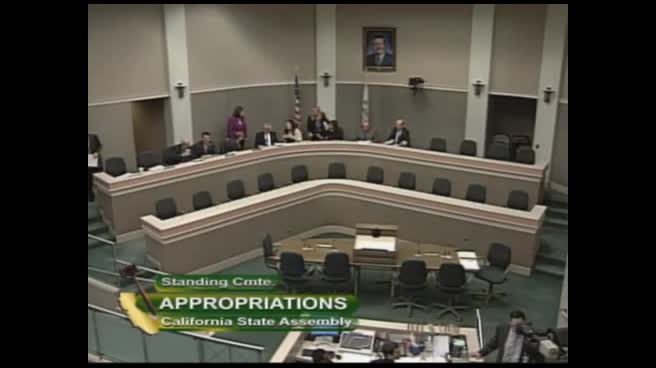
Assembly Standing Committee on Appropriations
 2MIN
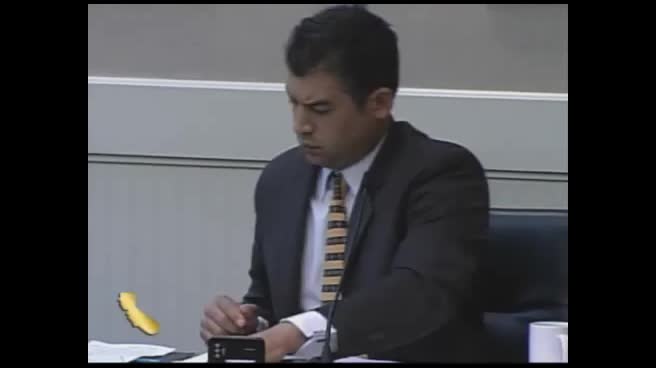
Assembly Standing Committee on Natural Resources
Bill Author

Bill Co-Author(s):