AB 1994: CalED Program.
- Session Year: 2015-2016
- House: Assembly
- Latest Version Date: 2016-04-06
Existing law requires each county to provide cash assistance and other social services to needy families through the California Work Opportunity and Responsibility to Kids (CalWORKs) program using federal, state, and county funds. Under existing law, a recipient of CalWORKs is required to participate in welfare-to-work activities for a specified number of hours each week as a condition of eligibility for aid. Existing law authorizes certain welfare-to-work participants to engage in adult basic education in satisfaction of these work requirements.
Existing law establishes the CalLearn Program, under which a recipient of CalWORKs aid who is under 19 years of age and who does not have a high school diploma or its equivalent is required to participate in the program as a student attending school on a fulltime basis. Existing law provides for a supplement to, or a reduction in, a CalLearn participants aid grant based on his or her performance in school.
This bill would create the CalED Program for the purpose of assisting CalWORKs recipients who are at least 19 years of age to obtain high school diplomas or equivalency certificates. certificates, if they are at least 19 years of age and satisfy specified eligibility criteria. The bill would provide a one-time $500 aid supplement if the a participant in the program successfully completes high school or a general educational development test approved by the State Board of Education and administered by a testing center approved by the State Department of Education. The bill would provide that participation in the program is optional and would authorize recipients of CalWORKs to opt out in writing. The bill would require the department to develop a comprehensive form that explains the benefits of the program and would require the county, at the time it conducts a welfare-to-work appraisal, to provide the form to the recipient. The bill would also require counties to arrange for the provision of education and supportive services that an individual needs to successfully participate in the CalED Program. By imposing these duties on counties, this the bill would impose a state-mandated local program.
The California Constitution requires the state to reimburse local agencies and school districts for certain costs mandated by the state. Statutory provisions establish procedures for making that reimbursement.
This bill would provide that, if the Commission on State Mandates determines that the bill contains costs mandated by the state, reimbursement for those costs shall be made pursuant to these statutory provisions.
Existing law requires each county to provide cash assistance and other social services to needy families through the California Work Opportunity and Responsibility to Kids (CalWORKs) program using federal, state, and county funds. Under existing law, a recipient of CalWORKs is required to participate in welfare-to-work activities for a specified number of hours each week as a condition of eligibility for aid. Existing law authorizes certain welfare-to-work participants to engage in adult basic education in satisfaction of these work requirements.
Existing law establishes the CalLearn Program, under which a recipient of CalWORKs aid who is under 19 years of age and who does not have a high school diploma or its equivalent is required to participate in the program as a student attending school on a fulltime basis. Existing law provides for a supplement to, or a reduction in, a CalLearn participants aid grant based on his or her performance in school.
This bill would create the CalED Program for the purpose of assisting CalWORKs recipients who are at least 19 years of age to obtain high school diplomas or equivalency certificates. The bill would provide a $100 aid supplement if a CalED participant maintains satisfactory progress in school, as defined, and a one-time $500 aid supplement if the participant successfully completes high school or a high school equivalency examination. general educational development test approved by the State Board of Education and administered by a testing center approved by the State Department of Education. The bill would provide that participation in the program is optional and would authorize recipients of CalWORKs to opt out in writing. The bill would require the department to develop a comprehensive form that explains the benefits of the program and would require the county, at the time it conducts a welfare-to-work appraisal, to provide the form to the recipient. The bill would also require counties to arrange for the provision of education and supportive services that an individual needs to successfully participate in the CalED Program. By imposing these duties on counties, this bill would impose a state-mandated local program.
The California Constitution requires the state to reimburse local agencies and school districts for certain costs mandated by the state. Statutory provisions establish procedures for making that reimbursement.
This bill would provide that, if the Commission on State Mandates determines that the bill contains costs mandated by the state, reimbursement for those costs shall be made pursuant to these statutory provisions.
Existing law requires each county to provide cash assistance and other social services to needy families through the California Work Opportunity and Responsibility to Kids (CalWORKs) program using federal, state, and county funds. Under existing law, a recipient of CalWORKs is required to participate in welfare-to-work activities for a specified number of hours each week as a condition of eligibility for aid. Existing law authorizes certain welfare-to-work participants to engage in adult basic education in satisfaction of these work requirements.
Existing law establishes the CalLearn Program, under which a recipient of CalWORKs aid who is under 19 years of age and who does not have a high school diploma or its equivalent is required to participate in the program as a student attending school on a fulltime basis. Existing law provides for a supplement to, or a reduction in, a CalLearn participants aid grant based on his or her performance in school.
This bill would create the CalED Program for the purpose of assisting CalWORKs recipients who are at least 19 years of age to obtain high school diplomas or equivalency certificates. The bill would provide a $100 aid supplement if a CalED participant maintains satisfactory progress in school, as defined, and a $500 aid supplement if the participant successfully completes high school or a high school equivalency examination. The bill would provide that participation in the program is optional and would authorize recipients of CalWORKs to opt out in writing. The bill would require the department to develop a comprehensive form that explains the benefits of the program and would require the county, at the time it conducts a welfare-to-work appraisal, to provide the form to the recipient. The bill would also require counties to arrange for the provision of education and supportive services that an individual needs to successfully participate in the CalED Program. By imposing these duties on counties, this bill would impose a state-mandated local program.
The California Constitution requires the state to reimburse local agencies and school districts for certain costs mandated by the state. Statutory provisions establish procedures for making that reimbursement.
This bill would provide that, if the Commission on State Mandates determines that the bill contains costs mandated by the state, reimbursement for those costs shall be made pursuant to these statutory provisions.
(a)This article shall be known, and may be cited, as the CalED Program.
(b)The Legislature finds and declares that the connection between education and long-term welfare dependency has been well documented by social science research. Average time on aid for parents without a high school diploma or its equivalent is significantly longer than for parents who have completed high school or an equivalent program.
(c)The Legislature finds that CalWORKs recipients have unique education, vocational, training, health, and other social service needs that are not specifically provided for as part of the welfare-to-work activities. Research shows that successful programs that help CalWORKs recipients achieve self-sufficiency increase the earning capacity of those individuals.
11341.A recipient of aid under this chapter is eligible to participate in the CalED Program if all of the following requirements are met:
(a)The person is at least 19 years of age.
(b)The person does not have a high school diploma or its equivalent.
(c)The person is attending school on a full-time basis, as normally defined by the school in which the participant enrolls.
(d)
(c)The person is participating in welfare-to-work activities pursuant to Article 3.2 (commencing with Section 11320).
11342.(a)Participation in the CalED Program is optional. If a person declines to participate, he or she shall opt out in writing.
(b)At the time the county conducts an appraisal pursuant to Section 11325.2, the county shall inform each person who does not have a high school diploma or its equivalent that he or she may participate in the CalED Program or may opt out in writing, and shall give the person the form described in subdivision (c).
(c)The State Department of Social Services shall develop a comprehensive form that explains the benefits of the program, including the bonuses that are available pursuant to Section 11344, in order to empower the person to make an informed decision.
11343.(a)Counties shall arrange for the provision of education and supportive services that a person needs to successfully participate in the CalED Program. The county shall identify the need of each person for, and the method of providing, the following services:
(1)Supportive services, including child care and transportation, as specified in Section 11323.2. Supportive services shall be limited to those that are necessary to enable the person to attend school regularly.
(2)Any other services necessary for the person to successfully participate in the CalED Program, which may include, but not be limited to, mental health services and substance abuse treatment.
(b)CalED participants may participate in programs provided for in Section 52500 of the Education Code in order to obtain the certificate described in Section 51420 of the Education Code.
11344.(a)
11344.(a)A participant in the CalED Program shall do all of the following:
(1)Attend an educational program on a full-time basis, as normally defined by the school in which the participant enrolls.
(2)Maintain adequate progress in the educational program.
(3)Submit grades, if available, to the county welfare department on a basis to be determined by the county welfare department.
(b)A participant who fails to demonstrate that he or she has made adequate progress in school, either by failing to provide a report card or based on the grades on the report card, shall be assigned to another welfare-to-work activity.
(b)
(c)A participant who successfully completes high school or a general educational development test approved by the State Board of Education and administered by a testing center approved by the State Department of Education shall receive a one-time supplement in the amount of five hundred dollars ($500). The five hundred dollar ($500) supplement shall be paid to the participant in the month following submission of the record of completion, if received by the county no later than the 11th calendar day of the month, or in the second month following submission of the record of completion, if received by the county after the 11th calendar day of the month.
(d)For purposes of this section, adequate progress means maintaining a grade point average of at least 1.0 on a scale where A equals 4.0 points and F equals 0 points.
SEC. 2.If the Commission on State Mandates determines that this act contains costs mandated by the state, reimbursement to local agencies and school districts for those costs shall be made pursuant to Part 7 (commencing with Section 17500) of Division 4 of Title 2 of the Government Code.
(a)This article shall be known, and may be cited, as the CalED Program.
(b)The Legislature finds and declares that the connection between education and long-term welfare dependency has been well documented by social science research. Average time on aid for parents without a high school diploma or its equivalent is significantly longer than for parents who have completed high school or an equivalent program.
(c)The Legislature finds that CalWORKs recipients have unique education, vocational, training, health, and other social service needs that are not specifically provided for as part of the welfare-to-work activities. Research shows that successful programs that help CalWORKs recipients achieve self-sufficiency increase the earning capacity of those individuals.
11341.A recipient of aid under this chapter is eligible to participate in the CalED Program if all of the following requirements are met:
(a)The person is at least 19 years of age.
(b)The person does not have a high school diploma or its equivalent.
(c)The person is attending school on a full-time basis, as normally defined by the school in which the participant enrolls.
(d)The person is participating in welfare-to-work activities pursuant to Article 3.2 (commencing with Section 11320).
11342.(a)Participation in the CalED Program is optional. If a person declines to participate, he or she shall opt out in writing.
(b)At the time the county conducts an appraisal pursuant to Section 11325.2, the county shall inform each person who does not have a high school diploma or its equivalent that he or she may participate in the CalED Program or may opt out in writing, and shall give the person the form described in subdivision (c).
(c)The State Department of Social Services shall develop a comprehensive form that explains the benefits of the program, including the bonuses that are available pursuant to Section 11344, in order to empower the person to make an informed decision.
11343.(a)Counties shall arrange for the provision of education and supportive services that a person needs to successfully participate in the CalED Program. The county shall identify the need of each person for, and the method of providing, the following services:
(a)
(1)Supportive services, including child care and transportation, as specified in Section 11323.2. Supportive services shall be limited to those that are necessary to enable the person to attend school regularly.
(b)
(2)Any other services necessary for the person to successfully participate in the CalED Program, which may include, but not be limited to, mental health services and substance abuse treatment.
(b)CalED participants may participate in programs provided for in Section 52500 of the Education Code in order to obtain the certificate described in Section 51420 of the Education Code.
11344.(a)A participant in the CalED Program who maintains satisfactory progress in school shall, not more than four times in a calendar year, receive a one hundred dollar ($100) supplement to the amount of aid paid pursuant to Section 11450. The supplement shall be paid to the assistance unit of which the participant is a member in the month following submission of the report card, if received by the county no later than the 11th calendar day of the month, or in the second month following submission of the report card, if received by the county after the 11th calendar day of the month.
(b)
11344.(a)A participant who fails to demonstrate that he or she has made adequate progress in school, either by failing to provide the a report card or based on the grades on the report card, shall be assigned to another welfare-to-work activity.
(c)
(b)A participant who successfully completes high school or a California high school equivalency examination general educational development test approved by the State Board of Education and administered by a testing center approved by the State Department of Education shall receive a one-time supplement in the amount of five hundred dollar ($500) supplement. An assistance unit shall not receive a one hundred dollar ($100) supplement when a five hundred dollar ($500) supplement for the same report card or progress report is paid. dollars ($500). The five hundred dollar ($500) supplement shall be paid to the participant in the month following submission of the record of completion, if received by the county no later than the 11th calendar day of the month, or in the second month following submission of the record of completion, if received by the county after the 11th calendar day of the month.
(d)(1)For purposes of this section, in schools that provide periodic report cards with letter grades, satisfactory progress means maintaining a grade point average of at least 2.0 on a scale where A equals 4.0 points and F equals 0 points, and adequate progress means maintaining a grade point average of at least 1.0 on the same scale.
(2)For the purposes of this section, in schools or other educational programs that do not provide letter grades indicating student performance, satisfactory progress or inadequate progress shall be determined by the schools regular assessment of periodic progress.
SEC. 2.If the Commission on State Mandates determines that this act contains costs mandated by the state, reimbursement to local agencies and school districts for those costs shall be made pursuant to Part 7 (commencing with Section 17500) of Division 4 of Title 2 of the Government Code.
(a)This article shall be known, and may be cited, as the CalED Program.
(b)The Legislature finds and declares that the connection between education and long-term welfare dependency has been well documented by social science research. Average time on aid for parents without a high school diploma or its equivalent is significantly longer than for parents who have completed high school or an equivalent program.
(c)The Legislature finds that CalWORKs recipients have unique education, vocational, training, health, and other social service needs that are not specifically provided for as part of the welfare-to-work activities. Research shows that successful programs that help CalWORKs recipients achieve self-sufficiency increase the earning capacity of those individuals.
11341.A recipient of aid under this chapter is eligible to participate in the CalED Program if all of the following requirements are met:
(a)The person is at least 19 years of age.
(b)The person does not have a high school diploma or its equivalent.
(c)The person is attending school on a full-time basis, as normally defined by the school in which the participant enrolls.
11342.(a)Participation in the CalED Program is optional. If a person declines to participate, he or she shall opt out in writing.
(b)At the time the county conducts an appraisal pursuant to Section 11325.2, the county shall inform each person who does not have a high school diploma or its equivalent that he or she may participate in the CalED Program or may opt out in writing, and shall give the person the form described in subdivision (c).
(c)The State Department of Social Services shall develop a comprehensive form that explains the benefits of the program, including the bonuses that are available pursuant to Section 11344, in order to empower the person to make an informed decision.
11343.Counties shall arrange for the provision of education and supportive services that a person needs to successfully participate in the CalED Program. The county shall identify the need of each person for, and the method of providing, the following services:
(a)Supportive services, including child care and transportation, as specified in Section 11323.2. Supportive services shall be limited to those that are necessary to enable the person to attend school regularly.
(b)Any other services necessary for the person to successfully participate in the CalED Program, which may include, but not be limited to, mental health services and substance abuse treatment.
11344.(a)A participant in the CalED Program who maintains satisfactory progress in school shall, not more than four times in a calendar year, receive a one hundred dollar ($100) supplement to the amount of aid paid pursuant to Section 11450. The supplement shall be paid to the assistance unit of which the participant is a member in the month following submission of the report card, if received by the county no later than the 11th calendar day of the month, or in the second month following submission of the report card, if received by the county after the 11th calendar day of the month.
(b)A participant who fails to demonstrate that he or she has made adequate progress in school, either by failing to provide the report card or based on the grades on the report card, shall be assigned to another welfare-to-work activity.
(c)A participant who successfully completes high school or a California high school equivalency examination shall receive a five hundred dollar ($500) supplement. An assistance unit shall not receive a one hundred dollar ($100) supplement when a five hundred dollar ($500) supplement for the same report card or progress report is paid. The five hundred dollar ($500) supplement shall be paid to the participant in the month following submission of the record of completion, if received by the county no later than the 11th calendar day of the month, or in the second month following submission of the record of completion, if received by the county after the 11th calendar day of the month.
(d)(1)For purposes of this section, in schools that provide periodic report cards with letter grades, satisfactory progress means maintaining a grade point average of at least 2.0 on a scale where A equals 4.0 points and F equals 0 points, and adequate progress means maintaining a grade point average of at least 1.0 on the same scale.
(2)For the purposes of this section, in schools or other educational programs that do not provide letter grades indicating student performance, satisfactory progress or inadequate progress shall be determined by the schools regular assessment of periodic progress.
SEC. 2.If the Commission on State Mandates determines that this act contains costs mandated by the state, reimbursement to local agencies and school districts for those costs shall be made pursuant to Part 7 (commencing with Section 17500) of Division 4 of Title 2 of the Government Code.
|
Date
|
Status
|
|---|---|
| Feb 16, 2016 | Read first time. To print. |
| Feb 17, 2016 | From printer. May be heard in committee March 18. |
| Feb 25, 2016 | Referred to Com. on HUM. S. |
| Mar 28, 2016 | From committee chair, with author's amendments: Amend, and re-refer to Com. on HUM. S. Read second time and amended. |
| Mar 29, 2016 | Re-referred to Com. on HUM. S. |
| Apr 5, 2016 | From committee: Amend, and do pass as amended and re-refer to Com. on APPR. (Ayes 6. Noes 0.) (March 29). |
| Apr 6, 2016 | Read second time and amended. |
| Apr 7, 2016 | Re-referred to Com. on APPR. |
| May 4, 2016 | In committee: Set, first hearing. Referred to APPR. suspense file. |
| May 27, 2016 | In committee: Held under submission. |
|
Date
|
Description
|
Location
|
Votes
|
|
|---|---|---|---|---|
| Mar 29, 2016 | Do pass as amended and be re-referred to the Committee on [Appropriations] | Assembly Standing Committee on Human Services |
Passed |
This list shows positions taken on this bill by organizations on the date displayed, which is linked to the original source.
Positions by individuals are not included.
|
Organization
|
Position
|
Date
|
|---|---|---|
| California Alternative Payment Program Association | ** Support | Mar 29, 2016 |
| California Church Impact | ** Support | Mar 29, 2016 |
| California Federation Of Teachers | ** Support | Mar 29, 2016 |
| Coalition of California Welfare Rights Organizations - sponsor | ** Support | Mar 29, 2016 |
| County Welfare Directors Association of CA | ** Support | Mar 29, 2016 |
| Courage Campaign | ** Support | Mar 29, 2016 |
| Hunger Action LA | ** Support | Mar 29, 2016 |
| Interfaith Movement for Human Integrity | ** Support | Mar 29, 2016 |
| Sacramento regional coalition to end homelessness | ** Support | Mar 29, 2016 |
| St Mary's Center | ** Support | Mar 29, 2016 |
| St. Anthony Foundation | ** Support | Mar 29, 2016 |
| Time for Change Foundation | ** Support | Mar 29, 2016 |
| United Methodist Women | ** Support | Mar 29, 2016 |
Date of Hearing: May 4, 2016
ASSEMBLY COMMITTEE ON APPROPRIATIONS
Lorena Gonzalez, Chair
ABPCA Bill Id:AB 1994
Author:(Lopez) – As Amended Ver:April 6, 2016
Policy Committee: | Human Services | Vote: | 6 - 0 |
|
|
Urgency: No State Mandated Local Program: Yes Reimbursable: Yes
SUMMARY:
This bill creates the CalED Program to assist California Work Opportunity and Responsibility to Kids (CalWORKs) recipients in obtaining high school diplomas or equivalency certificates. Participants must be at least 19 years old, participating in welfare-to-work activities, and not have a high school diploma or its equivalent. Specifically, this bill:
- Requires the Department of Social Services (DSS) to develop a form explaining the program, and the county to distribute this form, and requires the county to notify potentially eligible CalWORKs participants about the CalED Program.
- Requires counties to provide education services, supportive services, including child care and transportation, and other services, as specified, in order to facilitate successful participation in the CalED Program.
- Awards a CalED participant who successfully completes high school or a California high school equivalency examination a one-time five-hundred-dollar ($500) aid supplement.
FISCAL EFFECT:
- Significant costs of approximately $900,000 ($100,000 GF) in FY 2016-17, and approximately $1.7 million ($200,000, GF) in FY 2017-18 and ongoing. This assumes 5,500 adults will participate in either adult basic education or secondary education in FY 2016-17 and FY 2017-18, and approximately five percent will receive a high school diploma or GED on average each month (based on similar information for the Cal-Learn program).
- Unknown, but likely significant costs to DSS for automation changes necessary to implement the program.
- Unknown, potentially reimbursable mandate costs to counties to provide forms, arrange for the required education and supportive services, and to monitor recipients' progress.
COMMENTS:
- Purpose. According to the author, "Sixty-five percent of CalWORKs recipient do not have a high school diploma or GED. This bill is intended to decrease that number and truly aid our neediest families by supplying them with not only a one-time incentive but another opportunity to be self-sufficient and compete in a competitive job market."
- CalWORKs. The CalWORKs program provides monthly income assistance and employment-related services using federal, state and county funds. A recipient of CalWORKs is required to participate in welfare-to-work activities as a condition of eligibility for aid. Certain participants can engage in adult basic education in satisfaction of these work requirements. This bill allows qualified CalWORKs recipients to participate in the CalED program in pursuit of a high school diploma or GED.
- Cal-Learn. Cal-Learn is a statewide program for pregnant and parenting teens in the CalWORKs program, designed to encourage pregnant and parenting teens to graduate from high school or attain an equivalency diploma. Bonuses include four $100 bonuses per year earned based on report card results, and a one-time $500 bonus for graduating or attaining an equivalent high school diploma. Sanctions are applied if satisfactory grades are not maintained, and/or timely report cards are not submitted. Participation in Cal-Learn is limited to and required for pregnant/parenting teens who are receiving CalWORKs and who are under the age of 19, live in the same household as their child, have not graduated from high school or its equivalent, and are not in foster care. DSS estimates that 7,700 teens participate in Cal-Learn each month.
- Related Legislation.
- AB 2058 (Mayes), 2016, creates the CalWORKs Educational Opportunity and Attainment Program and awards grant increases to CalWORKs recipients upon completion of education milestones, as specified. The bill is pending in this Committee.
- AB 2448 (Burke), 2016, changes CalWORKs requirements regarding permissible welfare-to-work activities to facilitate a recipient’s completion of a high school equivalency program. This bill is in the Senate awaiting referral.
Analysis Prepared by: Jennifer Swenson / APPR. / (916) 319-2081
Date of Hearing: March 29, 2016
ASSEMBLY COMMITTEE ON HUMAN SERVICES
Susan Bonilla, Chair
ABPCA Bill Id:AB 1994 (
Author:Lopez) – As Amended Ver:March 28, 2016
SUBJECT: CalED Program
SUMMARY: This bill creates the CalED Program, which provides support for California Work Opportunity and Responsibility to Kids (CalWORKs) participants working to obtain a high school diploma or equivalency certificate.
Specifically, this bill:
- Makes Legislative findings and declarations regarding the connection between education and self-sufficiency.
- Establishes the CalED Program, and requires participants to be all of the following:
- At least 19 years of age;
- Not in possession of a high school diploma or its equivalent;
- Attending school on a full-time basis, as specified; and
- A participant in the welfare-to-work component of CalWORKs, as specified.
- Establishes that participation in the CalED program is optional and requires a participant to opt out in writing if he or she declines to participate.
- Requires the county to notify potentially eligible CalWORKs participants about the CalED Program, as specified.
- Requires the Department of Social Services (DSS) to develop a form explaining the program, and the county to distribute this form, as specified.
- Requires counties to provide education services, supportive services, including child care and transportation, and other services, as specified, in order to facilitate successful participation in the CalED Program.
- Permits CalED Program participants to participate in specified programs in order to obtain a high school equivalency certificate.
- Reassigns a participant who fails to demonstrate that he or she has made adequate progress in his or her educational program, as specified, to another welfare-to-work activity.
- Awards a CalED participant who successfully completes high school or a California high school equivalency examination a one-time five-hundred-dollar ($500) supplement, as specified.
EXISTING LAW:
- Establishes under federal law the Temporary Assistance for Needy families (TANF) program to provide aid and welfare-to-work services to eligible families and, in California, provides that TANF funds for welfare-to-work services are administered through the CalWORKs program. (42 U.S.C. 601 et seq., WIC 11200 et seq.)
- Requires all individuals over 16 years of age, unless they are otherwise exempt, to participate in welfare-to-work activities as a condition of eligibility for CalWORKs. (WIC 11320.3, 11322.6)
- Establishes a 48-month lifetime limit of CalWORKs benefits for eligible adults, including 24 months during which a recipient must meet federal work requirements in order to retain eligibility. (WIC 11454, 11322.85)
- Establishes the number of weekly hours of welfare-to-work participation necessary to remain eligible for aid, including requirements for an unemployed parent in a two-parent assistance unit, as specified. (WIC 11322.8)
- Establishes the Cal-Learn program to provide services to teen parents and encourage them to obtain a high school diploma or equivalency certificate. (WIC 11331 et seq.)
FISCAL EFFECT: Unknown.
COMMENTS:
CalWORKS: The California Work Opportunity and Responsibility to Kids (CalWORKs) program provides monthly income assistance and employment-related services aimed at moving children out of poverty and helping families meet basic needs. Federal funding for CalWORKs comes from the Temporary Assistance for Needy Families (TANF) block grant. The average 2015-16 monthly cash grant for a family of three on CalWORKs (one parent and two children) is $506.55, and the maximum monthly grant amount for a family of three, if the family has no other income and lives in a high-cost county, is $704. According to recent data from the California Department of Social Services, over 497,000 families rely on CalWORKs, including over one million children. Nearly 60% of cases include children under 6 years old.
Maximum grant amounts in high-cost counties of $704 per month for a family of three with no other income means $23.46 per day, per family, or $7.82 per family member, per day to meet basic needs, including rent, clothing, utility bills, food, and anything else a family needs to ensure children can be cared for at home and safely remain with their families. This grant amount puts the annual household income at $8,448 per year, or 42% of poverty. Federal Poverty Guidelines for 2016 show that 100% of poverty for a family of three is $20,160 per year.
Welfare-to-work: Welfare-to-work activities within the CalWORKs program include public or private sector subsidized or unsubsidized employment; on-the-job training; community service; secondary school, adult basic education and vocational education and training when the education is needed for the recipient to become employed; specific mental health, substance abuse, or domestic violence services if they are necessary to obtain or retain employment; and a number of other activities necessary to assist a recipient in obtaining unsubsidized employment.
Unless they are exempt, single parent adults must participate for at least 30 hours per week in welfare-to-work activities, whereas the minimum participation requirement for two-parent families is 35 hours per week. After receiving aid for up to a maximum of 24 months, adults without an exemption must meet federal work requirements, with more restrictive employment settings and allowable employment activities. If a CalWORKs recipient who is not exempt from participation does not meet his or her welfare-to-work requirements, the recipient is sanctioned for noncompliance, and that recipient’s portion of the family’s grant subtracted from the amount provided to the family to meet basic needs.
Cal-Learn: Cal-Learn is a statewide program for pregnant and parenting teens in the CalWORKs program. It is designed to encourage pregnant and parenting teens to graduate from high school or its equivalent, become independent, and form healthy families. Cal-Learn consists of three coordinated services aimed at helping teens become self-sufficient adults and responsible parents: intensive case management that assists teen parents to obtain education, health and social services; supportive services such as child care, transportation, educational expenses, to enable pregnant/parenting teens to attend school; and bonuses and sanctions to encourage school attendance and good grades. Bonuses include four $100 bonuses per year earned based on report card results, and a one-time $500 bonus for graduating or attaining an equivalent high school diploma. Sanctions are applied if satisfactory grades are not maintained, and/or timely report cards are not submitted. Participation in Cal-Learn is limited to and required for pregnant/parenting teens who are receiving CalWORKs and who are under the age of 19, live in the same household as their child, have not graduated from high school or its equivalent, and are not in foster care. CDSS estimates that 7,700 teens participate in Cal-Learn each month.
Suggested Amendments:
- In order to clarify that the intent of the CalED program is to assist recipients in completing a high school equivalency program, committee staff recommends the following amendments:
On page 3, line 19 of the bill: insert new subdivision (a) detailing that participants must participate in specified programs aimed at acquiring a high school equivalency certificate.
- In order to clarify eligibility requirements for Cal ED participants, committee staff recommends the following amendments:
On page 3 of the bill, strike lines 15 and 16.
After line 17 on page 4 of the bill, insert:
11344. (a) A participant in the CalED Program must do all of the following: (1) attend
his or her educational program on a full-time basis, as normally defined by the school in which the participant enrolls; (2) maintain adequate progress; and (3) submit grades, if available, to the county welfare department on a basis to be determined by the county welfare department.
After line 37 on page 4 of the bill, insert:
(c) For purposes of this section, adequate progress means maintaining a grade point average of at least 1.0 on a scale where A equals 4.0 points and F equals 0 points.
RELATED LEGISLATION:
AB 2058 (Mayes), 2016, creates the CalWORKs Educational Opportunity and Attainment Program and awards grant increases to CalWORKs recipients upon completion of education milestones, as specified. The bill will be heard in Assembly Human Services on April 12, 2016.
AB 2448 (Burke), 2016, changes CalWORKs requirements regarding permissible welfare-to-work activities to facilitate a recipient’s completion of a high school equivalency program. The bill will be heard in Assembly Human Services on March 29, 2016.
REGISTERED SUPPORT / OPPOSITION:
Support
California Alternative Payment Program Association (CAPPA)
California Church IMPACT
California Federation of Teachers (CFT)
Coalition of California Welfare Rights Organizations - sponsor
County Welfare Directors Association of CA (CWDA)
Courage Campaign
Hunger Action LA
Interfaith Movement for Human Integrity
Sacramento Regional Coalition to End Homelessness (SRCEH)
St Mary’s Center
St. Anthony Foundation
Time for Change Foundation
United Methodist Women
18 individuals
Opposition
None on file.
Analysis Prepared by: Kelsy C. Castillo / HUM. S. / (916) 319-2089
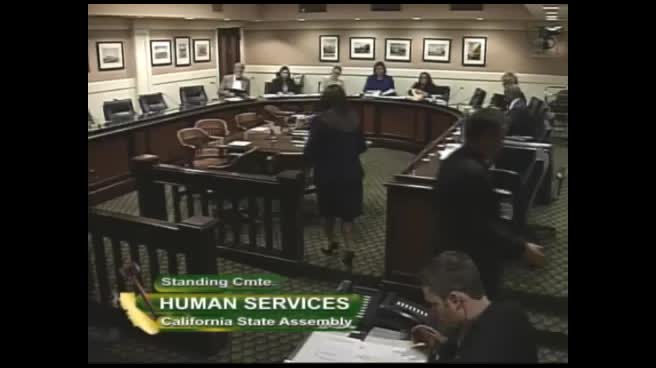
Discussed in Hearing
 3MIN
Assembly Standing Committee on Human Services
Bill Author

Bill Co-Author(s):