AB 2055: Income taxation: credits: California competes.
- Session Year: 2015-2016
- House: Assembly
- Latest Version Date: 2016-04-26
Existing law allows a credit against the taxes imposed under the Corporation Tax Law and the Personal Income Tax Law for each taxable year beginning on or after January 1, 2014, and before January 1, 2025, in an amount as provided in a written agreement between the Governors Office of Business and Economic Development and the taxpayer, agreed upon by the California Competes Tax Credit Committee, and based on specified factors, including the number of jobs the taxpayer will create or retain in the state and the amount of investment in the state by the taxpayer. Existing law limits the aggregate amount of credits allocated to taxpayers to a specified sum per fiscal year through the 201718 fiscal year and reserves 25% of that amount for small businesses, as defined. Existing law authorizes the Director of Finance to increase the aggregate amount of the economic development credits that may be allocated to taxpayers each fiscal year by $25 million per fiscal year through the 201718 fiscal year.
This bill would, beginning in the 201819 fiscal year, reserve 25% of the aggregate amount of credits for taxpayers that make qualified sustainable freight investments, as defined, and would require the Franchise Tax Board to review the books and records of these taxpayers to ensure compliance with the taxpayers written agreement with GO-Biz. The bill would also make findings relating to Californias seaports and harbors and zero-emissions and near-zero-emissions trade corridors and zero-emission and near-zero-emission technology.
This bill would take effect immediately as a tax levy.
Existing law allows a credit against the taxes imposed under the Corporation Tax Law and the Personal Income Tax Law for each taxable year beginning on or after January 1, 2014, and before January 1, 2025, in an amount as provided in a written agreement between the Governors Office of Business and Economic Development and the taxpayer, agreed upon by the California Competes Tax Credit Committee, and based on specified factors, including the number of jobs the taxpayer will create or retain in the state and the amount of investment in the state by the taxpayer. Existing law limits the aggregate amount of credits allocated to taxpayers to a specified sum per fiscal year through 201718 and reserves 25% of that amount for small businesses, as defined. Existing law authorizes the Director of Finance to increase the aggregate amount of the economic development credits that may be allocated to taxpayers each fiscal year by $25 million per fiscal year through the 201718 fiscal year.
This bill would, beginning in the 201819 fiscal year, reserve 25% of the aggregate amount of credits for taxpayers that make qualified sustainable freight investments, as defined, and would require the Franchise Tax Board to review the books and records of these taxpayers to ensure compliance with the taxpayers written agreement with GO-Biz. The bill would also make findings relating to Californias seaports and harbors and zero-emissions and near-zero-emissions technology.
This bill would take effect immediately as a tax levy.
The Legislature finds and declares all of the following:
(a)Our states waterfront has California has trade infrastructure needs that cannot be met by private investment alone, and therefore public financing mechanisms are required to build the new public works needed to support new commercial and industrial development in our seaports and harbors. development. This need is compounded by the additional expenses which accompany investment in the next generation of zero-emissions and near-zero-emissions zero-emission and near-zero-emission equipment and supporting infrastructure at marine terminals in Californias public ports. infrastructure.
(b)The seaports and harbors of California are valuable assets of the state that provide special maritime, navigational, recreational, cultural, and historical benefits to the people of the state and the management and development of these seaports and harbors are matters of statewide significance. The investment in the states seaports and harbors by providing a financing mechanism, through the use of tax credits, is a matter of statewide importance that will further the purposes of the public trust.
(c)This legislation is necessary to further incentivize the earliest possible investment in, and adoption of, zero-emissions and near-zero-emissions zero-emission and near-zero-emission technology at Californias public seaports. seaports and in its trade corridors. Companies should be encouraged to take on the additional costs of purchasing and maintaining zero-emissions zero-emission equipment and supporting infrastructure in partnership with the state to achieve the states emissions reduction goals.
SEC. 2.Section 17059.2 of the Revenue and Taxation Code is amended to read:17059.2.(a)(1)For each taxable year beginning on and after January 1, 2014, and before January 1, 2025, there shall be allowed as a credit against the net tax, as defined in Section 17039, an amount as determined by the committee pursuant to paragraph (2) and approved pursuant to Section 18410.2.
(2)The credit under this section shall be allocated by GO-Biz with respect to the 201314 fiscal year through and including the 201718 fiscal year. The amount of credit allocated to a taxpayer with respect to a fiscal year pursuant to this section shall be as set forth in a written agreement between GO-Biz and the taxpayer and shall be based on the following factors:
(A)The number of jobs the taxpayer will create or retain in this state.
(B)The compensation paid or proposed to be paid by the taxpayer to its employees, including wages and fringe benefits.
(C)The amount of investment in this state by the taxpayer.
(D)The extent of unemployment or poverty in the area according to the United States Census in which the taxpayers project or business is proposed or located.
(E)The incentives available to the taxpayer in this state, including incentives from the state, local government, and other entities.
(F)The incentives available to the taxpayer in other states.
(G)The duration of the proposed project and the duration the taxpayer commits to remain in this state.
(H)The overall economic impact in this state of the taxpayers project or business.
(I)The strategic importance of the taxpayers project or business to the state, region, or locality.
(J)The opportunity for future growth and expansion in this state by the taxpayers business.
(K)The extent to which the anticipated benefit to the state exceeds the projected benefit to the taxpayer from the tax credit.
(3)The written agreement entered into pursuant to paragraph (2) shall include:
(A)Terms and conditions that include the taxable year or years for which the credit allocated shall be allowed, a minimum compensation level, and a minimum job retention period.
(B)Provisions indicating whether the credit is to be allocated in full upon approval or in increments based on mutually agreed upon milestones when satisfactorily met by the taxpayer.
(C)Provisions that allow the committee to recapture the credit, in whole or in part, if the taxpayer fails to fulfill the terms and conditions of the written agreement.
(b)For purposes of this section:
(1)Committee means the California Competes Tax Credit Committee established pursuant to Section 18410.2.
(2)GO-Biz means the Governors Office of Business and Economic Development.
(c)For purposes of this section, GO-Biz shall do the following:
(1)Give priority to a taxpayer whose project or business is located or proposed to be located in an area of high unemployment or poverty.
(2)Negotiate with a taxpayer the terms and conditions of proposed written agreements that provide the credit allowed pursuant to this section to a taxpayer.
(3)Provide the negotiated written agreement to the committee for its approval pursuant to Section 18410.2.
(4)Inform the Franchise Tax Board of the terms and conditions of the written agreement upon approval of the written agreement by the committee.
(5)Inform the Franchise Tax Board of any recapture, in whole or in part, of a previously allocated credit upon approval of the recapture by the committee.
(6)Post on its Internet Web site all of the following:
(A)The name of each taxpayer allocated a credit pursuant to this section.
(B)The estimated amount of the investment by each taxpayer.
(C)The estimated number of jobs created or retained.
(D)The amount of the credit allocated to the taxpayer.
(E)The amount of the credit recaptured from the taxpayer, if applicable.
(d)For purposes of this section, the Franchise Tax Board shall do all of the following:
(1)(A)Except as provided in subparagraph (B), review the books and records of all taxpayers allocated a credit pursuant to this section to ensure compliance with the terms and conditions of the written agreement between the taxpayer and GO-Biz.
(B)In the case of a taxpayer that is a small business, as defined in Section 17053.73, review the books and records of the taxpayer allocated a credit pursuant to this section to ensure compliance with the terms and conditions of the written agreement between the taxpayer and GO-Biz when, in the sole discretion of the Franchise Tax Board, a review of those books and records is appropriate or necessary in the best interests of the state.
(2)Notwithstanding Section 19542:
(A)Notify GO-Biz of a possible breach of the written agreement by a taxpayer and provide detailed information regarding the basis for that determination.
(B)Provide information to GO-Biz with respect to whether a taxpayer is a small business, as defined in Section 17053.73.
(e)In the case where the credit allowed under this section exceeds the net tax, as defined in Section 17039, for a taxable year, the excess credit may be carried over to reduce the net tax in the following taxable year, and succeeding five taxable years, if necessary, until the credit has been exhausted.
(f)Any recapture, in whole or in part, of a credit approved by the committee pursuant to Section 18410.2 shall be treated as a mathematical error appearing on the return. Any amount of tax resulting from that recapture shall be assessed by the Franchise Tax Board in the same manner as provided by Section 19051. The amount of tax resulting from the recapture shall be added to the tax otherwise due by the taxpayer for the taxable year in which the committees recapture determination occurred.
(g)(1)The aggregate amount of credit that may be allocated in any fiscal year pursuant to this section and Section 23689 shall be an amount equal to the sum of subparagraphs (A), (B), and (C), less the amount specified in subparagraphs (D) and (E):
(A)Thirty million dollars ($30,000,000) for the 201314 fiscal year, one hundred fifty million dollars ($150,000,000) for the 201415 fiscal year, and two hundred million dollars ($200,000,000) for each fiscal year from 201516 to 201718, inclusive.
(B)The unallocated credit amount, if any, from the preceding fiscal year.
(C)The amount of any previously allocated credits that have been recaptured.
(D)The amount estimated by the Director of Finance, in consultation with the Franchise Tax Board and the State Board of Equalization, to be necessary to limit the aggregation of the estimated amount of exemptions claimed pursuant to Section 6377.1 and of the amounts estimated to be claimed pursuant to this section and Sections 17053.73, 23626, and 23689 to no more than seven hundred fifty million dollars ($750,000,000) for either the current fiscal year or the next fiscal year.
(i)The Director of Finance shall notify the Chairperson of the Joint Legislative Budget Committee of the estimated annual allocation authorized by this paragraph. Any allocation pursuant to these provisions shall be made no sooner than 30 days after written notification has been provided to the Chairperson of the Joint Legislative Budget Committee and the chairpersons of the committees of each house of the Legislature that consider appropriation, or not sooner than whatever lesser time the Chairperson of the Joint Legislative Budget Committee, or his or her designee, may determine.
(ii)In no event shall the amount estimated in this subparagraph be less than zero dollars ($0).
(E)(i)For the 201516 fiscal year and each fiscal year thereafter, the amount of credit estimated by the Director of Finance to be allowed to all qualified taxpayers for that fiscal year pursuant to subparagraph (A) or subparagraph (B) of paragraph (1) of subdivision (c) of Section 23636.
(ii)If the amount available per fiscal year pursuant to this section and Section 23689 is less than the aggregate amount of credit estimated by the Director of Finance to be allowed to qualified taxpayers pursuant to subparagraph (A) or subparagraph (B) of paragraph (1) of subdivision (c) of Section 23636, the aggregate amount allowed pursuant to Section 23636 shall not be reduced and, in addition to the reduction required by clause (i), the aggregate amount of credit that may be allocated pursuant to this section and Section 23689 for the next fiscal year shall be reduced by the amount of that deficit.
(iii)It is the intent of the Legislature that the reductions specified in this subparagraph of the aggregate amount of credit that may be allocated pursuant to this section and Section 23689 shall continue if the repeal dates of the credits allowed by this section and Section 23689 are removed or extended.
(2)(A)In addition to the other amounts determined pursuant to paragraph (1), the Director of Finance may increase the aggregate amount of credit that may be allocated pursuant to this section and Section 23689 by up to twenty-five million dollars ($25,000,000) per fiscal year through the 201718 fiscal year. The amount of any increase made pursuant to this paragraph, when combined with any increase made pursuant to paragraph (2) of subdivision (g) of Section 23689, shall not exceed twenty-five million dollars ($25,000,000) per fiscal year through the 201718 fiscal year.
(B)It is the intent of the Legislature that the Director of Finance increase the aggregate amount under subparagraph (A) in order to mitigate the reduction of the amount available due to the credit allowed to all qualified taxpayers pursuant to subparagraph (A) or (B) of paragraph (1) of subdivision (c) of Section 23636.
(3)Each fiscal year, 25 percent of the aggregate amount of the credit that may be allocated pursuant to this section and Section 23689 shall be reserved for small business, as defined in Section 17053.73 or 23626.
(4)Each fiscal year, no more than 20 percent of the aggregate amount of the credit that may be allocated pursuant to this section shall be allocated to any one taxpayer.
(5)(A)Each fiscal year, beginning with the 201819 fiscal year, 25 percent of the aggregate amount of the credit that may be allocated pursuant to this section and Section 23689 shall be reserved for taxpayers that make qualified sustainable freight investments.
(B)For purposes of this paragraph, qualified sustainable freight investment means the purchase or installation, or a proposed future purchase or installation, of zero-emissions and near-zero-emissions equipment and supporting infrastructure for use by or at a marine terminal in a California seaport. paragraph:
(i)Qualified sustainable freight investment means the purchase or installation of zero-emission and near-zero-emission equipment and support infrastructure in a trade corridor.
(ii)Trade corridor means a trade corridor that would have been eligible for allocation from the Trade Corridors Improvement Fund pursuant to subparagraph (A) of paragraph (1) of subdivision (c) of Section 8879.23 of the Government Code.
(iii)Zero-emission and near-zero-emission shall have the same definition as in Section 39719.2 of the Health and Safety Code.
(C)For purposes of this paragraph, the Franchise Tax Board shall review the books and records of the taxpayer allocated a credit amount pursuant to this paragraph to ensure compliance with the terms and agreements of the written agreement and notify GO-Biz of a possible breach of the written agreement by a taxpayer and provide detailed information regarding the basis for that determination.
(D)GO-Biz shall use the criteria provided in paragraph (2) of subdivision (a) when allocating a credit pursuant to this paragraph and shall create equivalent criteria for jobs a taxpayer will create or retain under a collective bargaining agreement.
(h)GO-Biz may prescribe rules and regulations as necessary to carry out the purposes of this section. Any rule or regulation prescribed pursuant to this section may be by adoption of an emergency regulation in accordance with Chapter 3.5 (commencing with Section 11340) of Part 1 of Division 3 of Title 2 of the Government Code.
(i)A written agreement between GO-Biz and a taxpayer with respect to the credit authorized by this section shall comply with existing law on the date the agreement is executed.
(j)(1)Upon the effective date of this section, the Department of Finance shall estimate the total dollar amount of credits that will be claimed under this section with respect to each fiscal year from the 201314 fiscal year to the 202425 fiscal year, inclusive.
(2)The Franchise Tax Board shall annually provide to the Joint Legislative Budget Committee, by no later than March 1, a report of the total dollar amount of the credits claimed under this section with respect to the relevant fiscal year. The report shall compare the total dollar amount of credits claimed under this section with respect to that fiscal year with the departments estimate with respect to that same fiscal year. If the total dollar amount of credits claimed for the fiscal year is less than the estimate for that fiscal year, the report shall identify options for increasing annual claims of the credit so as to meet estimated amounts.
(k)This section is repealed on December 1, 2025.
SEC. 3.Section 23689 of the Revenue and Taxation Code is amended to read:23689.(a)(1)For each taxable year beginning on and after January 1, 2014, and before January 1, 2025, there shall be allowed as a credit against the tax, as defined in Section 23036, an amount as determined by the committee pursuant to paragraph (2) and approved pursuant to Section 18410.2.
(2)The credit under this section shall be allocated by GO-Biz with respect to the 201314 fiscal year through and including the 201718 fiscal year. The amount of credit allocated to a taxpayer with respect to a fiscal year pursuant to this section shall be as set forth in a written agreement between GO-Biz and the taxpayer and shall be based on the following factors:
(A)The number of jobs the taxpayer will create or retain in this state.
(B)The compensation paid or proposed to be paid by the taxpayer to its employees, including wages and fringe benefits.
(C)The amount of investment in this state by the taxpayer.
(D)The extent of unemployment or poverty in the area according to the United States Census in which the taxpayers project or business is proposed or located.
(E)The incentives available to the taxpayer in this state, including incentives from the state, local government, and other entities.
(F)The incentives available to the taxpayer in other states.
(G)The duration of the proposed project and the duration the taxpayer commits to remain in this state.
(H)The overall economic impact in this state of the taxpayers project or business.
(I)The strategic importance of the taxpayers project or business to the state, region, or locality.
(J)The opportunity for future growth and expansion in this state by the taxpayers business.
(K)The extent to which the anticipated benefit to the state exceeds the projected benefit to the taxpayer from the tax credit.
(3)The written agreement entered into pursuant to paragraph (2) shall include:
(A)Terms and conditions that include the taxable year or years for which the credit allocated shall be allowed, a minimum compensation level, and a minimum job retention period.
(B)Provisions indicating whether the credit is to be allocated in full upon approval or in increments based on mutually agreed upon milestones when satisfactorily met by the taxpayer.
(C)Provisions that allow the committee to recapture the credit, in whole or in part, if the taxpayer fails to fulfill the terms and conditions of the written agreement.
(b)For purposes of this section:
(1)Committee means the California Competes Tax Credit Committee established pursuant to Section 18410.2.
(2)GO-Biz means the Governors Office of Business and Economic Development.
(c)For purposes of this section, GO-Biz shall do the following:
(1)Give priority to a taxpayer whose project or business is located or proposed to be located in an area of high unemployment or poverty.
(2)Negotiate with a taxpayer the terms and conditions of proposed written agreements that provide the credit allowed pursuant to this section to a taxpayer.
(3)Provide the negotiated written agreement to the committee for its approval pursuant to Section 18410.2.
(4)Inform the Franchise Tax Board of the terms and conditions of the written agreement upon approval of the written agreement by the committee.
(5)Inform the Franchise Tax Board of any recapture, in whole or in part, of a previously allocated credit upon approval of the recapture by the committee.
(6)Post on its Internet Web site all of the following:
(A)The name of each taxpayer allocated a credit pursuant to this section.
(B)The estimated amount of the investment by each taxpayer.
(C)The estimated number of jobs created or retained.
(D)The amount of the credit allocated to the taxpayer.
(E)The amount of the credit recaptured from the taxpayer, if applicable.
(d)For purposes of this section, the Franchise Tax Board shall do all of the following:
(1)(A)Except as provided in subparagraph (B), review the books and records of all taxpayers allocated a credit pursuant to this section to ensure compliance with the terms and conditions of the written agreement between the taxpayer and GO-Biz.
(B)In the case of a taxpayer that is a small business, as defined in Section 23626, review the books and records of the taxpayer allocated a credit pursuant to this section to ensure compliance with the terms and conditions of the written agreement between the taxpayer and GO-Biz when, in the sole discretion of the Franchise Tax Board, a review of those books and records is appropriate or necessary in the best interests of the state.
(2)Notwithstanding Section 19542:
(A)Notify GO-Biz of a possible breach of the written agreement by a taxpayer and provide detailed information regarding the basis for that determination.
(B)Provide information to GO-Biz with respect to whether a taxpayer is a small business, as defined in Section 23626.
(e)In the case where the credit allowed under this section exceeds the tax, as defined in Section 23036, for a taxable year, the excess credit may be carried over to reduce the tax in the following taxable year, and succeeding five taxable years, if necessary, until the credit has been exhausted.
(f)Any recapture, in whole or in part, of a credit approved by the committee pursuant to Section 18410.2 shall be treated as a mathematical error appearing on the return. Any amount of tax resulting from that recapture shall be assessed by the Franchise Tax Board in the same manner as provided by Section 19051. The amount of tax resulting from the recapture shall be added to the tax otherwise due by the taxpayer for the taxable year in which the committees recapture determination occurred.
(g)(1)The aggregate amount of credit that may be allocated in any fiscal year pursuant to this section and Section 17059.2 shall be an amount equal to the sum of subparagraphs (A), (B), and (C), less the amount specified in subparagraphs (D) and (E):
(A)Thirty million dollars ($30,000,000) for the 201314 fiscal year, one hundred fifty million dollars ($150,000,000) for the 201415 fiscal year, and two hundred million dollars ($200,000,000) for each fiscal year from 201516 to 201718, inclusive.
(B)The unallocated credit amount, if any, from the preceding fiscal year.
(C)The amount of any previously allocated credits that have been recaptured.
(D)The amount estimated by the Director of Finance, in consultation with the Franchise Tax Board and the State Board of Equalization, to be necessary to limit the aggregation of the estimated amount of exemptions claimed pursuant to Section 6377.1 and of the amounts estimated to be claimed pursuant to this section and Sections 17053.73, 17059.2, and 23626 to no more than seven hundred fifty million dollars ($750,000,000) for either the current fiscal year or the next fiscal year.
(i)The Director of Finance shall notify the Chairperson of the Joint Legislative Budget Committee of the estimated annual allocation authorized by this paragraph. Any allocation pursuant to these provisions shall be made no sooner than 30 days after written notification has been provided to the Chairperson of the Joint Legislative Budget Committee and the chairpersons of the committees of each house of the Legislature that consider appropriation, or not sooner than whatever lesser time the Chairperson of the Joint Legislative Budget Committee, or his or her designee, may determine.
(ii)In no event shall the amount estimated in this subparagraph be less than zero dollars ($0).
(E)(i)For the 201516 fiscal year and each fiscal year thereafter, the amount of credit estimated by the Director of Finance to be allowed to all qualified taxpayers for that fiscal year pursuant to subparagraph (A) or subparagraph (B) of paragraph (1) of subdivision (c) of Section 23636.
(ii)If the amount available per fiscal year pursuant to this section and Section 17059.2 is less than the aggregate amount of credit estimated by the Director of Finance to be allowed to qualified taxpayers pursuant to subparagraph (A) or subparagraph (B) of paragraph (1) of subdivision (c) of Section 23636, the aggregate amount allowed pursuant to Section 23636 shall not be reduced and, in addition to the reduction required by clause (i), the aggregate amount of credit that may be allocated pursuant to this section and Section 17059.2 for the next fiscal year shall be reduced by the amount of that deficit.
(iii)It is the intent of the Legislature that the reductions specified in this subparagraph of the aggregate amount of credit that may be allocated pursuant to this section and Section 17059.2 shall continue if the repeal dates of the credits allowed by this section and Section 17059.2 are removed or extended.
(2)(A)In addition to the other amounts determined pursuant to paragraph (1), the Director of Finance may increase the aggregate amount of credit that may be allocated pursuant to this section and Section 17059.2 by up to twenty-five million dollars ($25,000,000) per fiscal year through the 201718 fiscal year. The amount of any increase made pursuant to this paragraph, when combined with any increase made pursuant to paragraph (2) of subdivision (g) of Section 17059.2, shall not exceed twenty-five million dollars ($25,000,000) per fiscal year through the 201718 fiscal year.
(B)It is the intent of the Legislature that the Director of Finance increase the aggregate amount under subparagraph (A) in order to mitigate the reduction of the amount available due to the credit allowed to all qualified taxpayers pursuant to subparagraph (A) or (B) of paragraph (1) of subdivision (c) of Section 23636.
(3)Each fiscal year, 25 percent of the aggregate amount of the credit that may be allocated pursuant to this section and Section 17059.2 shall be reserved for small business, as defined in Section 17053.73 or 23626.
(4)Each fiscal year, no more than 20 percent of the aggregate amount of the credit that may be allocated pursuant to this section shall be allocated to any one taxpayer.
(5)(A)Each fiscal year, beginning with the 201819 fiscal year, 25 percent of the aggregate amount of the credit that may be allocated pursuant to this section and Section 23689 shall be reserved for taxpayers that make qualified sustainable freight investments.
(B)For purposes of this paragraph, qualified sustainable freight investment means the purchase or installation, or a proposed future purchase or installation, of zero-emissions and near-zero-emissions equipment and supporting infrastructure for use by or at a marine terminal in a California seaport. paragraph:
(i)Qualified sustainable freight investment means the purchase or installation of zero-emission and near-zero-emission equipment and support infrastructure in a trade corridor.
(ii)Trade corridor means a trade corridor that would have been eligible for allocation from the Trade Corridors Improvement Fund pursuant to subparagraph (A) of paragraph (1) of subdivision (c) of Section 8879.23 of the Government Code.
(iii)Zero-emission and near-zero-emission shall have the same definition as in Section 39719.2 of the Health and Safety Code.
(C)For purposes of this paragraph, the Franchise Tax Board shall review the books and records of the taxpayer allocated a credit amount pursuant to this paragraph to ensure compliance with the terms and agreements of the written agreement and notify GO-Biz of a possible breach of the written agreement by a taxpayer and provide detailed information regarding the basis for that determination.
(D)GO-Biz shall use the criteria provided in paragraph (2) of subdivision (a) when allocating a credit pursuant to this paragraph and shall create equivalent criteria for jobs a taxpayer will create or retain under a collective bargaining agreement.
(h)GO-Biz may prescribe rules and regulations as necessary to carry out the purposes of this section. Any rule or regulation prescribed pursuant to this section may be by adoption of an emergency regulation in accordance with Chapter 3.5 (commencing with Section 11340) of Part 1 of Division 3 of Title 2 of the Government Code.
(i)(1)A written agreement between GO-Biz and a taxpayer with respect to the credit authorized by this section shall not restrict, broaden, or otherwise alter the ability of the taxpayer to assign that credit or any portion thereof in accordance with Section 23663.
(2)A written agreement between GO-Biz and a taxpayer with respect to the credit authorized by this section must comply with existing law on the date the agreement is executed.
(j)(1)Upon the effective date of this section, the Department of Finance shall estimate the total dollar amount of credits that will be claimed under this section with respect to each fiscal year from the 201314 fiscal year to the 202425 fiscal year, inclusive.
(2)The Franchise Tax Board shall annually provide to the Joint Legislative Budget Committee, by no later than March 1, a report of the total dollar amount of the credits claimed under this section with respect to the relevant fiscal year. The report shall compare the total dollar amount of credits claimed under this section with respect to that fiscal year with the departments estimate with respect to that same fiscal year. If the total dollar amount of credits claimed for the fiscal year is less than the estimate for that fiscal year, the report shall identify options for increasing annual claims of the credit so as to meet estimated amounts.
(k)This section is repealed on December 1, 2025.
SEC. 4.This act provides for a tax levy within the meaning of Article IV of the California Constitution and shall go into immediate effect.
The Legislature finds and declares all of the following:
(a)Our states waterfront has infrastructure needs that cannot be met by private investment alone, and therefore public financing mechanisms are required to build the new public works needed to support new commercial and industrial development in our seaports and harbors. This need is compounded by the additional expenses which accompany investment in the next generation of zero-emissions and near-zero-emissions equipment and supporting infrastructure at marine terminals in Californias public ports.
(b)The seaports and harbors of California are valuable assets of the state that provide special maritime, navigational, recreational, cultural, and historical benefits to the people of the state and the management and development of these seaports and harbors are matters of statewide significance. The investment in the states seaports and harbors by providing a financing mechanism, through the use of tax credits, is a matter of statewide importance that will further the purposes of the public trust.
(c)This legislation is necessary to further incentivize the earliest possible investment in, and adoption of, zero-emissions and near-zero-emissions technology at Californias public seaports. Companies should be encouraged to take on the additional costs of purchasing and maintaining zero-emissions equipment and supporting infrastructure in partnership with the state to achieve the states emissions reduction goals.
SEC. 2.Section 17059.2 of the Revenue and Taxation Code is amended to read:17059.2.(a)(1)For each taxable year beginning on and after January 1, 2014, and before January 1, 2025, there shall be allowed as a credit against the net tax, as defined in Section 17039, an amount as determined by the committee pursuant to paragraph (2) and approved pursuant to Section 18410.2.
(2)The credit under this section shall be allocated by GO-Biz with respect to the 201314 fiscal year through and including the 201718 fiscal year. The amount of credit allocated to a taxpayer with respect to a fiscal year pursuant to this section shall be as set forth in a written agreement between GO-Biz and the taxpayer and shall be based on the following factors:
(A)The number of jobs the taxpayer will create or retain in this state.
(B)The compensation paid or proposed to be paid by the taxpayer to its employees, including wages and fringe benefits.
(C)The amount of investment in this state by the taxpayer.
(D)The extent of unemployment or poverty in the area according to the United States Census in which the taxpayers project or business is proposed or located.
(E)The incentives available to the taxpayer in this state, including incentives from the state, local government, and other entities.
(F)The incentives available to the taxpayer in other states.
(G)The duration of the proposed project and the duration the taxpayer commits to remain in this state.
(H)The overall economic impact in this state of the taxpayers project or business.
(I)The strategic importance of the taxpayers project or business to the state, region, or locality.
(J)The opportunity for future growth and expansion in this state by the taxpayers business.
(K)The extent to which the anticipated benefit to the state exceeds the projected benefit to the taxpayer from the tax credit.
(3)The written agreement entered into pursuant to paragraph (2) shall include:
(A)Terms and conditions that include the taxable year or years for which the credit allocated shall be allowed, a minimum compensation level, and a minimum job retention period.
(B)Provisions indicating whether the credit is to be allocated in full upon approval or in increments based on mutually agreed upon milestones when satisfactorily met by the taxpayer.
(C)Provisions that allow the committee to recapture the credit, in whole or in part, if the taxpayer fails to fulfill the terms and conditions of the written agreement.
(b)For purposes of this section:
(1)Committee means the California Competes Tax Credit Committee established pursuant to Section 18410.2.
(2)GO-Biz means the Governors Office of Business and Economic Development.
(c)For purposes of this section, GO-Biz shall do the following:
(1)Give priority to a taxpayer whose project or business is located or proposed to be located in an area of high unemployment or poverty.
(2)Negotiate with a taxpayer the terms and conditions of proposed written agreements that provide the credit allowed pursuant to this section to a taxpayer.
(3)Provide the negotiated written agreement to the committee for its approval pursuant to Section 18410.2.
(4)Inform the Franchise Tax Board of the terms and conditions of the written agreement upon approval of the written agreement by the committee.
(5)Inform the Franchise Tax Board of any recapture, in whole or in part, of a previously allocated credit upon approval of the recapture by the committee.
(6)Post on its Internet Web site all of the following:
(A)The name of each taxpayer allocated a credit pursuant to this section.
(B)The estimated amount of the investment by each taxpayer.
(C)The estimated number of jobs created or retained.
(D)The amount of the credit allocated to the taxpayer.
(E)The amount of the credit recaptured from the taxpayer, if applicable.
(d)For purposes of this section, the Franchise Tax Board shall do all of the following:
(1)(A)Except as provided in subparagraph (B), review the books and records of all taxpayers allocated a credit pursuant to this section to ensure compliance with the terms and conditions of the written agreement between the taxpayer and GO-Biz.
(B)In the case of a taxpayer that is a small business, as defined in Section 17053.73, review the books and records of the taxpayer allocated a credit pursuant to this section to ensure compliance with the terms and conditions of the written agreement between the taxpayer and GO-Biz when, in the sole discretion of the Franchise Tax Board, a review of those books and records is appropriate or necessary in the best interests of the state.
(2)Notwithstanding Section 19542:
(A)Notify GO-Biz of a possible breach of the written agreement by a taxpayer and provide detailed information regarding the basis for that determination.
(B)Provide information to GO-Biz with respect to whether a taxpayer is a small business, as defined in Section 17053.73.
(e)In the case where the credit allowed under this section exceeds the net tax, as defined in Section 17039, for a taxable year, the excess credit may be carried over to reduce the net tax in the following taxable year, and succeeding five taxable years, if necessary, until the credit has been exhausted.
(f)Any recapture, in whole or in part, of a credit approved by the committee pursuant to Section 18410.2 shall be treated as a mathematical error appearing on the return. Any amount of tax resulting from that recapture shall be assessed by the Franchise Tax Board in the same manner as provided by Section 19051. The amount of tax resulting from the recapture shall be added to the tax otherwise due by the taxpayer for the taxable year in which the committees recapture determination occurred.
(g)(1)The aggregate amount of credit that may be allocated in any fiscal year pursuant to this section and Section 23689 shall be an amount equal to the sum of subparagraphs (A), (B), and (C), less the amount specified in subparagraphs (D) and (E):
(A)Thirty million dollars ($30,000,000) for the 201314 fiscal year, one hundred fifty million dollars ($150,000,000) for the 201415 fiscal year, and two hundred million dollars ($200,000,000) for each fiscal year from 201516 to 201718, inclusive.
(B)The unallocated credit amount, if any, from the preceding fiscal year.
(C)The amount of any previously allocated credits that have been recaptured.
(D)The amount estimated by the Director of Finance, in consultation with the Franchise Tax Board and the State Board of Equalization, to be necessary to limit the aggregation of the estimated amount of exemptions claimed pursuant to Section 6377.1 and of the amounts estimated to be claimed pursuant to this section and Sections 17053.73, 23626, and 23689 to no more than seven hundred fifty million dollars ($750,000,000) for either the current fiscal year or the next fiscal year.
(i)The Director of Finance shall notify the Chairperson of the Joint Legislative Budget Committee of the estimated annual allocation authorized by this paragraph. Any allocation pursuant to these provisions shall be made no sooner than 30 days after written notification has been provided to the Chairperson of the Joint Legislative Budget Committee and the chairpersons of the committees of each house of the Legislature that consider appropriation, or not sooner than whatever lesser time the Chairperson of the Joint Legislative Budget Committee, or his or her designee, may determine.
(ii)In no event shall the amount estimated in this subparagraph be less than zero dollars ($0).
(E)(i)For the 201516 fiscal year and each fiscal year thereafter, the amount of credit estimated by the Director of Finance to be allowed to all qualified taxpayers for that fiscal year pursuant to subparagraph (A) or subparagraph (B) of paragraph (1) of subdivision (c) of Section 23636.
(ii)If the amount available per fiscal year pursuant to this section and Section 23689 is less than the aggregate amount of credit estimated by the Director of Finance to be allowed to qualified taxpayers pursuant to subparagraph (A) or subparagraph (B) of paragraph (1) of subdivision (c) of Section 23636, the aggregate amount allowed pursuant to Section 23636 shall not be reduced and, in addition to the reduction required by clause (i), the aggregate amount of credit that may be allocated pursuant to this section and Section 23689 for the next fiscal year shall be reduced by the amount of that deficit.
(iii)It is the intent of the Legislature that the reductions specified in this subparagraph of the aggregate amount of credit that may be allocated pursuant to this section and Section 23689 shall continue if the repeal dates of the credits allowed by this section and Section 23689 are removed or extended.
(2)(A)In addition to the other amounts determined pursuant to paragraph (1), the Director of Finance may increase the aggregate amount of credit that may be allocated pursuant to this section and Section 23689 by up to twenty-five million dollars ($25,000,000) per fiscal year through the 201718 fiscal year. The amount of any increase made pursuant to this paragraph, when combined with any increase made pursuant to paragraph (2) of subdivision (g) of Section 23689, shall not exceed twenty-five million dollars ($25,000,000) per fiscal year through the 201718 fiscal year.
(B)It is the intent of the Legislature that the Director of Finance increase the aggregate amount under subparagraph (A) in order to mitigate the reduction of the amount available due to the credit allowed to all qualified taxpayers pursuant to subparagraph (A) or (B) of paragraph (1) of subdivision (c) of Section 23636.
(3)Each fiscal year, 25 percent of the aggregate amount of the credit that may be allocated pursuant to this section and Section 23689 shall be reserved for small business, small business, as defined in Section 17053.73 or 23626.
(4)Each fiscal year, no more than 20 percent of the aggregate amount of the credit that may be allocated pursuant to this section shall be allocated to any one taxpayer.
(5)(A)Each fiscal year, beginning with the 201819 fiscal year, 25 percent of the aggregate amount of the credit that may be allocated pursuant to this section and Section 23689 shall be reserved for taxpayers that make qualified sustainable freight investments.
(B)For purposes of this paragraph, qualified sustainable freight investment means the purchase or installation, or a proposed future purchase or installation, of zero-emissions and near-zero-emissions equipment and supporting infrastructure for use by or at a marine terminal in a California seaport.
(C)For purposes of this paragraph, the Franchise Tax Board shall review the books and records of the taxpayer allocated a credit amount pursuant to this paragraph to ensure compliance with the terms and agreements of the written agreement and notify GO-Biz of a possible breach of the written agreement by a taxpayer and provide detailed information regarding the basis for that determination.
(h)GO-Biz may prescribe rules and regulations as necessary to carry out the purposes of this section. Any rule or regulation prescribed pursuant to this section may be by adoption of an emergency regulation in accordance with Chapter 3.5 (commencing with Section 11340) of Part 1 of Division 3 of Title 2 of the Government Code.
(i)A written agreement between GO-Biz and a taxpayer with respect to the credit authorized by this section shall comply with existing law on the date the agreement is executed.
(j)(1)Upon the effective date of this section, the Department of Finance shall estimate the total dollar amount of credits that will be claimed under this section with respect to each fiscal year from the 201314 fiscal year to the 202425 fiscal year, inclusive.
(2)The Franchise Tax Board shall annually provide to the Joint Legislative Budget Committee, by no later than March 1, a report of the total dollar amount of the credits claimed under this section with respect to the relevant fiscal year. The report shall compare the total dollar amount of credits claimed under this section with respect to that fiscal year with the departments estimate with respect to that same fiscal year. If the total dollar amount of credits claimed for the fiscal year is less than the estimate for that fiscal year, the report shall identify options for increasing annual claims of the credit so as to meet estimated amounts.
(k)This section is repealed on December 1, 2025.
SEC. 3.Section 23689 of the Revenue and Taxation Code is amended to read:23689.(a)(1)For each taxable year beginning on and after January 1, 2014, and before January 1, 2025, there shall be allowed as a credit against the tax, as defined in Section 23036, an amount as determined by the committee pursuant to paragraph (2) and approved pursuant to Section 18410.2.
(2)The credit under this section shall be allocated by GO-Biz with respect to the 201314 fiscal year through and including the 201718 fiscal year. The amount of credit allocated to a taxpayer with respect to a fiscal year pursuant to this section shall be as set forth in a written agreement between GO-Biz and the taxpayer and shall be based on the following factors:
(A)The number of jobs the taxpayer will create or retain in this state.
(B)The compensation paid or proposed to be paid by the taxpayer to its employees, including wages and fringe benefits.
(C)The amount of investment in this state by the taxpayer.
(D)The extent of unemployment or poverty in the area according to the United States Census in which the taxpayers project or business is proposed or located.
(E)The incentives available to the taxpayer in this state, including incentives from the state, local government, and other entities.
(F)The incentives available to the taxpayer in other states.
(G)The duration of the proposed project and the duration the taxpayer commits to remain in this state.
(H)The overall economic impact in this state of the taxpayers project or business.
(I)The strategic importance of the taxpayers project or business to the state, region, or locality.
(J)The opportunity for future growth and expansion in this state by the taxpayers business.
(K)The extent to which the anticipated benefit to the state exceeds the projected benefit to the taxpayer from the tax credit.
(3)The written agreement entered into pursuant to paragraph (2) shall include:
(A)Terms and conditions that include the taxable year or years for which the credit allocated shall be allowed, a minimum compensation level, and a minimum job retention period.
(B)Provisions indicating whether the credit is to be allocated in full upon approval or in increments based on mutually agreed upon milestones when satisfactorily met by the taxpayer.
(C)Provisions that allow the committee to recapture the credit, in whole or in part, if the taxpayer fails to fulfill the terms and conditions of the written agreement.
(b)For purposes of this section:
(1)Committee means the California Competes Tax Credit Committee established pursuant to Section 18410.2.
(2)GO-Biz means the Governors Office of Business and Economic Development.
(c)For purposes of this section, GO-Biz shall do the following:
(1)Give priority to a taxpayer whose project or business is located or proposed to be located in an area of high unemployment or poverty.
(2)Negotiate with a taxpayer the terms and conditions of proposed written agreements that provide the credit allowed pursuant to this section to a taxpayer.
(3)Provide the negotiated written agreement to the committee for its approval pursuant to Section 18410.2.
(4)Inform the Franchise Tax Board of the terms and conditions of the written agreement upon approval of the written agreement by the committee.
(5)Inform the Franchise Tax Board of any recapture, in whole or in part, of a previously allocated credit upon approval of the recapture by the committee.
(6)Post on its Internet Web site all of the following:
(A)The name of each taxpayer allocated a credit pursuant to this section.
(B)The estimated amount of the investment by each taxpayer.
(C)The estimated number of jobs created or retained.
(D)The amount of the credit allocated to the taxpayer.
(E)The amount of the credit recaptured from the taxpayer, if applicable.
(d)For purposes of this section, the Franchise Tax Board shall do all of the following:
(1)(A)Except as provided in subparagraph (B), review the books and records of all taxpayers allocated a credit pursuant to this section to ensure compliance with the terms and conditions of the written agreement between the taxpayer and GO-Biz.
(B)In the case of a taxpayer that is a small business, as defined in Section 23626, review the books and records of the taxpayer allocated a credit pursuant to this section to ensure compliance with the terms and conditions of the written agreement between the taxpayer and GO-Biz when, in the sole discretion of the Franchise Tax Board, a review of those books and records is appropriate or necessary in the best interests of the state.
(2)Notwithstanding Section 19542:
(A)Notify GO-Biz of a possible breach of the written agreement by a taxpayer and provide detailed information regarding the basis for that determination.
(B)Provide information to GO-Biz with respect to whether a taxpayer is a small business, as defined in Section 23626.
(e)In the case where the credit allowed under this section exceeds the tax, as defined in Section 23036, for a taxable year, the excess credit may be carried over to reduce the tax in the following taxable year, and succeeding five taxable years, if necessary, until the credit has been exhausted.
(f)Any recapture, in whole or in part, of a credit approved by the committee pursuant to Section 18410.2 shall be treated as a mathematical error appearing on the return. Any amount of tax resulting from that recapture shall be assessed by the Franchise Tax Board in the same manner as provided by Section 19051. The amount of tax resulting from the recapture shall be added to the tax otherwise due by the taxpayer for the taxable year in which the committees recapture determination occurred.
(g)(1)The aggregate amount of credit that may be allocated in any fiscal year pursuant to this section and Section 17059.2 shall be an amount equal to the sum of subparagraphs (A), (B), and (C), less the amount specified in subparagraphs (D) and (E):
(A)Thirty million dollars ($30,000,000) for the 201314 fiscal year, one hundred fifty million dollars ($150,000,000) for the 201415 fiscal year, and two hundred million dollars ($200,000,000) for each fiscal year from 201516 to 201718, inclusive.
(B)The unallocated credit amount, if any, from the preceding fiscal year.
(C)The amount of any previously allocated credits that have been recaptured.
(D)The amount estimated by the Director of Finance, in consultation with the Franchise Tax Board and the State Board of Equalization, to be necessary to limit the aggregation of the estimated amount of exemptions claimed pursuant to Section 6377.1 and of the amounts estimated to be claimed pursuant to this section and Sections 17053.73, 17059.2, and 23626 to no more than seven hundred fifty million dollars ($750,000,000) for either the current fiscal year or the next fiscal year.
(i)The Director of Finance shall notify the Chairperson of the Joint Legislative Budget Committee of the estimated annual allocation authorized by this paragraph. Any allocation pursuant to these provisions shall be made no sooner than 30 days after written notification has been provided to the Chairperson of the Joint Legislative Budget Committee and the chairpersons of the committees of each house of the Legislature that consider appropriation, or not sooner than whatever lesser time the Chairperson of the Joint Legislative Budget Committee, or his or her designee, may determine.
(ii)In no event shall the amount estimated in this subparagraph be less than zero dollars ($0).
(E)(i)For the 201516 fiscal year and each fiscal year thereafter, the amount of credit estimated by the Director of Finance to be allowed to all qualified taxpayers for that fiscal year pursuant to subparagraph (A) or subparagraph (B) of paragraph (1) of subdivision (c) of Section 23636.
(ii)If the amount available per fiscal year pursuant to this section and Section 17059.2 is less than the aggregate amount of credit estimated by the Director of Finance to be allowed to qualified taxpayers pursuant to subparagraph (A) or subparagraph (B) of paragraph (1) of subdivision (c) of Section 23636, the aggregate amount allowed pursuant to Section 23636 shall not be reduced and, in addition to the reduction required by clause (i), the aggregate amount of credit that may be allocated pursuant to this section and Section 17059.2 for the next fiscal year shall be reduced by the amount of that deficit.
(iii)It is the intent of the Legislature that the reductions specified in this subparagraph of the aggregate amount of credit that may be allocated pursuant to this section and Section 17059.2 shall continue if the repeal dates of the credits allowed by this section and Section 17059.2 are removed or extended.
(2)(A)In addition to the other amounts determined pursuant to paragraph (1), the Director of Finance may increase the aggregate amount of credit that may be allocated pursuant to this section and Section 17059.2 by up to twenty-five million dollars ($25,000,000) per fiscal year through the 201718 fiscal year. The amount of any increase made pursuant to this paragraph, when combined with any increase made pursuant to paragraph (2) of subdivision (g) of Section 17059.2, shall not exceed twenty-five million dollars ($25,000,000) per fiscal year through the 201718 fiscal year.
(B)It is the intent of the Legislature that the Director of Finance increase the aggregate amount under subparagraph (A) in order to mitigate the reduction of the amount available due to the credit allowed to all qualified taxpayers pursuant to subparagraph (A) or (B) of paragraph (1) of subdivision (c) of Section 23636.
(3)Each fiscal year, 25 percent of the aggregate amount of the credit that may be allocated pursuant to this section and Section 17059.2 shall be reserved for small business, as defined in Section 17053.73 or 23626.
(4)Each fiscal year, no more than 20 percent of the aggregate amount of the credit that may be allocated pursuant to this section shall be allocated to any one taxpayer.
(5)(A)Each fiscal year, beginning with the 201819 fiscal year, 25 percent of the aggregate amount of the credit that may be allocated pursuant to this section and Section 23689 shall be reserved for taxpayers that make qualified sustainable freight investments.
(B)For purposes of this paragraph, qualified sustainable freight investment means the purchase or installation, or a proposed future purchase or installation, of zero-emissions and near-zero-emissions equipment and supporting infrastructure for use by or at a marine terminal in a California seaport.
(C)For purposes of this paragraph, the Franchise Tax Board shall review the books and records of the taxpayer allocated a credit amount pursuant to this paragraph to ensure compliance with the terms and agreements of the written agreement and notify GO-Biz of a possible breach of the written agreement by a taxpayer and provide detailed information regarding the basis for that determination.
(h)GO-Biz may prescribe rules and regulations as necessary to carry out the purposes of this section. Any rule or regulation prescribed pursuant to this section may be by adoption of an emergency regulation in accordance with Chapter 3.5 (commencing with Section 11340) of Part 1 of Division 3 of Title 2 of the Government Code.
(i)(1)A written agreement between GO-Biz and a taxpayer with respect to the credit authorized by this section shall not restrict, broaden, or otherwise alter the ability of the taxpayer to assign that credit or any portion thereof in accordance with Section 23663.
(2)A written agreement between GO-Biz and a taxpayer with respect to the credit authorized by this section must comply with existing law on the date the agreement is executed.
(j)(1)Upon the effective date of this section, the Department of Finance shall estimate the total dollar amount of credits that will be claimed under this section with respect to each fiscal year from the 201314 fiscal year to the 202425 fiscal year, inclusive.
(2)The Franchise Tax Board shall annually provide to the Joint Legislative Budget Committee, by no later than March 1, a report of the total dollar amount of the credits claimed under this section with respect to the relevant fiscal year. The report shall compare the total dollar amount of credits claimed under this section with respect to that fiscal year with the departments estimate with respect to that same fiscal year. If the total dollar amount of credits claimed for the fiscal year is less than the estimate for that fiscal year, the report shall identify options for increasing annual claims of the credit so as to meet estimated amounts.
(k)This section is repealed on December 1, 2025.
SEC. 4.This act provides for a tax levy within the meaning of Article IV of the Constitution and shall go into immediate effect.
|
Date
|
Status
|
|---|---|
| Feb 17, 2016 | Read first time. To print. |
| Feb 18, 2016 | From printer. May be heard in committee March 19. |
| Feb 29, 2016 | Referred to Com. on REV. & TAX. |
| Apr 26, 2016 | From committee chair, with author's amendments: Amend, and re-refer to Com. on REV. & TAX. Read second time and amended. |
| Apr 27, 2016 | Re-referred to Com. on REV. & TAX. |
| May 9, 2016 | In committee: Set, first hearing. Referred to REV. & TAX. suspense file. |
| May 10, 2016 | From committee: Do pass and re-refer to Com. on APPR. (Ayes 9. Noes 0.) (May 9). Re-referred to Com. on APPR. |
| May 18, 2016 | In committee: Set, first hearing. Referred to APPR. suspense file. |
| May 27, 2016 | In committee: Held under submission. |
|
Date
|
Description
|
Location
|
Votes
|
|
|---|---|---|---|---|
| May 9, 2016 | Do pass and be re-referred to the Committee on [Appropriations] | Assembly Standing Committee on Revenue and Taxation |
Passed |
This list shows positions taken on this bill by organizations on the date displayed, which is linked to the original source.
Positions by individuals are not included.
|
Organization
|
Position
|
Date
|
|---|---|---|
| Pacific Merchant and Shipping Association | * Support | May 9, 2016 |
| Pacific Merchant Shipping Association | * Support | May 9, 2016 |
Date of Hearing: May 18, 2016
ASSEMBLY COMMITTEE ON APPROPRIATIONS
Lorena Gonzalez, Chair
ABPCA Bill Id:AB 2055
Author:(Gipson) – As Amended Ver:April 26, 2016
Policy Committee: | Revenue and Taxation | Vote: | 9 - 0 |
Urgency: No State Mandated Local Program: No Reimbursable: No
This bill requires that 25% of the California Competes Tax Credit (CCTC) allocation be reserved for taxpayers that make qualified sustainable freight investments beginning in FY 2018-19.
FISCAL EFFECT:
- No additional revenue loss from the CCTC. This bill reserves a share of program dollars that will go to freight infrastructure and does not increase the total amount of dollars allocated.
- One-time administrative costs to the Governor’s Office of Business and Economic Development (Go-Biz) in excess of $200,000 to develop new regulations, make application changes, modify the existing review processes and checklist, and to conduct outreach to affected taxpayers.
COMMENTS:
- Purpose. According to the author, AB 2055 works within the current framework of the CCTC to help achieve Governor Brown’s plan for long-term, environmental sustainability. The Administration has identified the replacement of 100,000 pieces of conventional freight equipment or vehicles with zero-emission technology as a primary goal of the state.
- Background on the CCTC. In 2014, Governor Brown signed AB 93 (Committee on Budget), Chapter 69, Statutes of 2014, which among other things created the CCTC program. Existing law requires that each fiscal year at least 25% of the aggregate credit amount be reserved for small businesses, i.e., a business with $2 million or less in gross receipts, minus returns and allowances.
While the CCTC program is scheduled to sunset on January 1, 2025, the Administration is only authorized to award this credit to qualified taxpayers until FY 2018-19, up to an annually capped amount. The amount equals $30 million for the FY 2013-14, $150 million for the FY 2014-15, and $200 million for the FY 2015-16, FY 2016-17, and FY 2017-18, plus certain statutorily prescribed adjustments.
- Argument for including freight projects in the CCTC program. California is home to three of the world's largest ports. The real property at these ports is publicly owned. However, the ports are operated as enterprises with private revenue streams. The primary form of infrastructure funding comes from revenue bonds secured against future operations or lease revenues.
The author states that California's maritime industry has made significant improvements of port infrastructure, upgrading all ships, trucks, cranes, trains, tugs and cargo handling equipment to ensure that they are amongst the cleanest in the word. As a result, the air quality has improved markedly around California's ports. However, their environmental efforts have not been replicated by the competitors in other ports across North America.
Many argue that California's ports and their partners are losing cargo because of higher costs, which negatively affects the industry's profits needed to reinvest in newer air quality improvement projects. California can further reduce environmental impacts and address the ports' competitiveness by helping seaports transition from its more conventional equipment to the next generation of zero-emissions and near-zero emissions infrastructure and equipment, and consequently, improve ports' emissions profile.
Analysis Prepared by: Luke Reidenbach / APPR. / (916) 319-2081
Date of Hearing: May 9, 2016
ASSEMBLY COMMITTEE ON REVENUE AND TAXATION
Sebastian Ridley-Thomas, Chair
ABPCA Bill Id:AB 2055 (
Author:Gipson) – As Amended Ver:April 26, 2016
Majority vote. Tax levy. Fiscal committee.
SUBJECT: Income taxation: credits: California competes
SUMMARY: Requires that 25% of the California Competes Tax Credit (CCTC) allocation be reserved for taxpayers that make qualified sustainable freight investments, as defined. Specifically, this bill:
- Requires that each fiscal year (FY), beginning with the 2018-19 FY, 25% of the aggregate amount of the CCTC that may be allocated under the Personal Income Tax (PIT) and the Corporation Tax (CT) laws be reserved for taxpayers that make qualified sustainable freight investments.
- Defines "qualified sustainable freight investment" as the purchase or installation of zero-emission and near-zero-emission equipment and support infrastructure in a trade corridor.
- Defines "trade corridor" as a trade corridor that would have been eligible for allocation from the Trade Corridors Improvement Fund pursuant to Section 8879.23(c)(1)(A) of the Government Code.
- Defines "zero-emission" and "near-zero-emission," consistent with Section 39719.2 of the Health and Safety Code, as vehicles, fuels, and related technologies that reduce greenhouse gas emissions and improve air quality when compared with conventional or fully commercialized alternatives, as defined. "Zero- and near-zero emission" may include, but is not limited to, zero-emission technology, enabling technologies that provide a pathway to emissions reductions, advanced or alternative fuel engines for long-haul trucks, and hybrid or alternative fuel technologies for trucks and off-road equipment.
- Requires the Franchise Tax Board (FTB) to review the books and records of the taxpayer allocated the credit amount for a qualified sustainable freight investment, as specified, and notify Governor's Office of Business and Economic Development (GO-Biz) of a possible breach of the written agreement, as provided.
- Requires Go-Biz to use the existing applicable criteria when allocating this credit and to create equivalent criteria for jobs a taxpayer will create or retain under a collective bargaining agreement.
- Contain legislative findings and declarations regarding California's trade infrastructure needs and incentives for the adoption of zero-emission and near-zero-emission technology at California's public seaports and trade corridors.
- Takes effect immediately as a tax levy.
EXISTING LAW:
- Allows a credit against the taxes imposed under the CT Law and the PIT Law for each taxable year beginning on or after January 1, 2014, and before January 1, 2025, in an amount as provided in a written agreement between GO- Biz and the taxpayer, based on certain specified factors, including the number of jobs the taxpayer will create or retain in the state and the amount of investment in the state by the taxpayer. The credit is generally referred to as the "California Competes Tax Credit."
- Authorizes GO-Biz to allocate the California Competes Tax Credit with respect to the FY 2013-14 and each FY thereafter, through and including FY 2017-18.
- Limits the aggregate amount of the California Competes Tax Credit that may be allocated to taxpayers under both the CT and PIT laws to a certain specified sum per fiscal year.
- Authorizes the Director of Finance to increase the aggregate amount of the economic development credits that may be allocated to taxpayers each fiscal year by $25 million per FY through the 2017-18 FY, as specified.
FISCAL EFFECT: Unknown
COMMENTS:
- The Author's Statement. The author has provided the following statement in support of this bill:
"AB 2055 seeks to ensure [that] California has viable options for reducing greenhouse gas emissions in our effort to support the Governor's plan for long-term, environmental sustainability. Governor Brown issued Executive Order B-32-15 in 2015, which directed the creation of a sustainable freight plan with the express goals of transitioning the freight economy to zero-emissions and near-zero-emissions equipment and infrastructure. The Administration has identified the replacement of 100,000 pieces of conventional freight equipment or vehicles with zero-emissions technology as a primary goal of the state. This bill works within the current framework of California Competes Tax Credit, while seeking to serve as a key tool for California's ports to meet the state's environmental objectives." - Arguments in Support. The proponents state that investments in California's public ports "will improve our state's economy, grow jobs, improve standards of living, increase state and local tax revenues, and result in a cleaner environment." They assert that, within California's established Trade Corridors, the business community of California, including marine terminal operators and ocean carriers, have made multi-billion dollar investments in environmental improvements and have achieved tremendous successes in reducing air quality impacts at our Seaports. The proponents argue that AB 2055 can help create "win-win investments in our trade corridors, create cost savings, improve our competitiveness, and help grow cargo and jobs while also investing in the environment."
- The "California Competes" Tax Credit Program. In 2014, Governor Brown signed legislation that reformed California's economic development policies. [AB 93 (Committee on Budget) Chapter 69, Statutes of 2014.] The new law eliminated enterprise zones and other geographically targeted economic development areas and, instead, created three new tax benefits: (a) a temporary tax credit for wages paid by taxpayers to qualified employees within former enterprise zones, and other areas that suffer from high levels of poverty and unemployment; (b) a temporary sales and use tax exemption on purchases of manufacturing equipment made by qualified taxpayers, capped at $200 million annually per taxpayer; and, (c) the California Competes Tax Credit program. Existing law limits the total annual amount of these three tax incentives – the wage credit, the sales and use tax exemption, and the California Competes Tax Credit – to $750 million. Existing law also requires that each fiscal year at least 25% of the aggregate credit amount be reserved for small businesses, i.e., a business with $2 million or less in gross receipts, minus returns and allowances.
While the CCTC program is scheduled to sunset on January 1, 2025, GO-Biz is only authorized to award this credit to qualified taxpayers until FY 2018-19, up to an annually capped amount. The amount equals $30 million for the FY 2013-14, $150 million for the FY 2014-15, and $200 million for the FY 2015-16, FY 2016-17, and FY 2017-18, plus certain statutorily prescribed adjustments.
Out of the $30 million available for allocation in FY 2013-14, $28.9 million was awarded.
The CCTC was granted to 30 companies (out of 390 companies that applied), including 11 small businesses. According to the information submitted by the companies that received the credit, approximately 6,000 jobs and more than $2 billion in investment across California will be created as a result of the credit award. The companies represent various industries, including manufacturing, biotech, agriculture, food processing, high tech, etc. In FY 2014-15, the aggregate allocation amount was $151.1 million, of which a total of over $142 million (after adjusting for S-corporation tax law)[1] has been awarded to various companies, including Northrop Grumman, Macy's.com, Inc., Alibaba.com, and Honeywell International, Inc. Finally, as of November 10, 2015, the CCTC Committee has approved, for the FY 2015-16, over $43 million in CCTC awards (as adjusted for S-corporation tax law) to companies such as, for example, IBM Corporation, NerdWallet, Inc., and Pacific Steel Group.
- A Different Kind of Credit. The CCTC program was designed to retain businesses in California, as well as to encourage businesses to move to California or expand their current in-state operations. Unlike many other existing tax credits, the CCTC is targeted, capped and allocated. In many respects, it is similar to a grant program. GO-Biz is required to allocate and certify the credit, up to a certain prescribed amount every FY. The credit is non- refundable and may be recaptured if the taxpayer fails to satisfy the terms and conditions of a written agreement with Go-Biz. Taxpayers must commit to create a certain number of jobs, make a specified investment in California, and enter into a Tax Credit Agreement with the GO-Biz. The award and the agreement must be approved by the California Competes Tax Credit Committee. The agreement to award credits takes into consideration the number of jobs created, the compensation paid to employees, amount of investment by the taxpayer in California, the amount of unemployment or poverty in the area according to the U.S. census, the overall economic impact of the project, and the extent to which state benefits exceed state costs, among other criteria. In the event that a taxpayer fails to perform under the written agreement, the credit is recaptured.
The original legislation that created the CCTC program requires GO-Biz to provide information to FTB regarding the terms and conditions of the written agreements and of any recapture, in whole or in part, of a previously allocated credit. In turn, the FTB must provide to the Joint Legislative Budget Committee, no later than March 1, a report of the total dollar amount of the credits claimed with respect to the relevant fiscal year. This exchange of information is needed to facilitate the implementation of the CCTC program as well as to evaluate its effectiveness. - California Global Warming Solutions Act. In 2006, Governor Schwarzenegger signed into law AB 32 (Nunez), Chapter 488, Statutes of 2006, which established an air quality improvement program to help California achieve reductions in greenhouse gas emissions by 2020 that equal the state's emissions levels in 1990. Relative to this goal, in 2015, Governor Brown issued Executive Order B-32-15, which directed the creation of a sustainable freight plan with the express goals of transitioning the freight economy to zero-emissions and near-zero-emissions equipment and infrastructure. Governor Brown directed various state agencies to initiate work on corridor-level freight pilot projects with the State's primary trade corridors that integrate advanced technologies, alternative fuels, freight and fuel infrastructure, and local economic development opportunities. The Administration has identified the replacement of 100,000 pieces of conventional freight equipment or vehicles with zero-emissions technology as a primary goal of the state.
- California's Ports and International Trade: What is the Problem? California is a major trade gateway on the Pacific Rim and is home to three of the world's 50 largest ports. Local economies surrounding the ports depend on California's ability to attract and grow its cargo volumes. According to the author's office, California's major seaports in Long Beach, Los Angeles, Oakland, Port Hueneme, Richmond, and San Diego are either "trust grant" ports, i.e., operating on state-owned property, or special districts set up under the California Harbors and Navigation Code. The real property at these ports is publicly owned; however, the ports are operated as enterprises with private revenue streams. The primary form of infrastructure funding comes from revenue bonds secured against future operations or lease revenues.
The author states that California's maritime industry has made significant improvements of port infrastructure, upgrading all ships, trucks, cranes, trains, tugs and cargo handling equipment to ensure that they are amongst the cleanest in the word. As a result, the air quality has improved markedly around California's ports. However, their environmental efforts have not been replicated by the competitors in other ports across North America. Many argue that California's ports and their partners are losing cargo because of higher costs, which negatively affects the industry's profits needed to reinvest in newer air quality improvement projects. Some believe that California can further reduce environmental impacts and address the ports' competitiveness by helping our seaports to transition from its more conventional equipment to the next generation of zero-emissions and near-zero-emissions infrastructure and equipment, and consequently, improve ports' emissions profile. - What Does This Bill Do? This bill proposes to reserve 25% of the aggregate annual amount of CCTC allocation to taxpayers that make qualified sustainable freight investments, beginning with the FY 2018-19, and requires the FTB to review the books and records of those taxpayers to ensure compliance. This bill would apply prospectively only and would not impact any of the existing amounts available for allocation through FY 2017-18.
- Special Treatment? Taxpayers who would be advantaged by this bill are already able to compete for the CCTC awards. This bill would simply prioritize their applications to ensure adequate CCTC allocations. The author and the industry believe that the proposed set aside is critical in meeting the goal of sustainable freight plan, given the Governor's overall goal for GHG emission reductions. Although existing law already reserves 25% of the CCTC allocation to small businesses, it does so on the basis of the size of the business rather than its main activity. While cognizant of the need for the large-scale sustainable freight investments, Committee staff notes that this bill would favor one industry over another, thereby establishing a precedent for reserving a large amount of CCTC funds to one group of taxpayers the state wishes to subsidize.
- Related Legislation. AB 961 (Gallagher) would have temporarily increased the aggregate amount of the California Competes Tax Credit that may be allocated to taxpayers by $50 million per fiscal year. AB 961 was held on this Committee's Suspense File.
REGISTERED SUPPORT / OPPOSITION:
Support
Pacific Merchant and Shipping Association (Sponsor)
Opposition
None on file
Analysis Prepared by: Oksana Jaffe / REV. & TAX. / (916) 319-2098
One-third of the California Competes Tax Credit may be utilized by an S-Corporation to offset the tax on net income at the S-Corporation level (R&TC §23803(a)(1)). The remaining two-thirds is disregarded and may not be used as a carryover for the S-Corporation (R&TC §23803(a)(2)(A)). However, the full amount of the California Competes Tax Credit is also passed through to the S-Corporation’s shareholders (R&TC §23803(a)(2)(F)). ↑
Discussed in Hearing
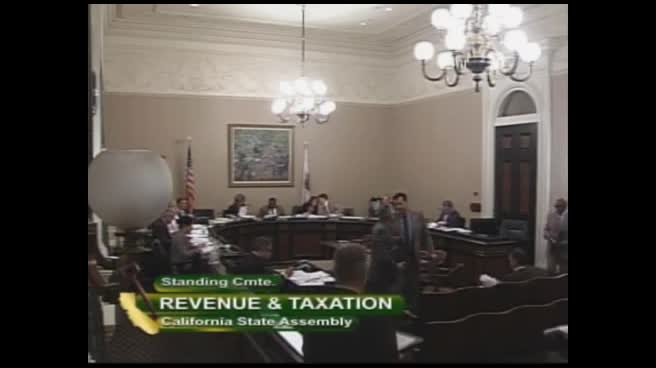 4MIN
Assembly Standing Committee on Revenue and Taxation
Bill Author

Bill Co-Author(s):