AB 2059: Junk dealers and recyclers: nonferrous materials.
- Session Year: 2015-2016
- House: Assembly
- Latest Version Date: 2016-05-03
Existing law requires junk dealers and recyclers, as defined, to maintain written records of all sales and purchases made in the course of their business, and makes a violation of the recordkeeping requirements a misdemeanor. Existing law prohibits a junk dealer or recycler from providing payment for nonferrous material, as defined, unless the payment is made by cash or check, the check is mailed or the cash or check is provided no earlier than 3 days after the date of sale, and the dealer or recycler obtains a photograph or video of the seller and certain other identifying information, as specified, which is to be retained by the dealer or recycler, as part of the written record of purchases, for a specified period of time. Existing law exempts from the payment by cash or check requirement those sellers of junk or recycling materials who conduct 5 or more separate transactions per month with the junk dealer or recycler, as specified.
This bill would would, until January 1, 2020, exempt from the payment by cash or check requirement those sellers of junk or recycling materials who carry a surety bond of at least $100,000, covering the business entity at large, including all locations, which exclusively covers the cost of loss to the verifiable owner of stolen scrap metal purchased by the junk dealer or recycler and the cost to local law enforcement of investigating the theft. The bill would define the recoverable cost of loss to the verifiable owner of the scrap metal to be specified damages. The bill would also require the California Research Bureau to provide a report to the Legislature on or before June 1, 2019, on the impact of these provisions on efforts to reduce and eliminate metal theft.
Existing law requires junk dealers and recyclers, as defined, to maintain written records of all sales and purchases made in the course of their business, and makes a violation of the recordkeeping requirements a misdemeanor. Existing law prohibits a junk dealer or recycler from providing payment for nonferrous material, as defined, unless the payment is made by cash or check, the check is mailed or the cash or check is provided no earlier than 3 days after the date of sale, and the dealer or recycler obtains a photograph or video of the seller and certain other identifying information, as specified, which is to be retained by the dealer or recycler, as part of the written record of purchases, for a specified period of time. Existing law exempts from the payment by cash or check requirement those sellers of junk or recycling materials who conduct 5 or more separate transactions per month with the junk dealer or recycler, as specified.
This bill would exempt from the payment by cash or check requirement those sellers of junk or recycling materials who carry a surety bond of at least $100,000, covering the business entity at large, including all locations, which exclusively covers the costs cost of any loss to the verifiable owner of stolen scrap metal purchased by the junk dealer or recycler and the cost to local law enforcement of investigating the theft. The bill would define the reimbursable value recoverable cost of loss to the verifiable owner of the scrap metal to be its replacement value. specified damages.
Existing law requires junk dealers and recyclers, as defined, to maintain written records of all sales and purchases made in the course of their business, and makes a violation of the recordkeeping requirements a misdemeanor. Existing law prohibits a junk dealer or recycler from providing payment for nonferrous material, as defined, unless the payment is made by cash or check, the check is mailed or the cash or check is provided no earlier than 3 days after the date of sale, and the dealer or recycler obtains a photograph or video of the seller and certain other identifying information, as specified, which is to be retained by the dealer or recycler, as part of the written record of purchases, for a specified period of time. Existing law exempts from the payment by cash or check requirement those sellers of junk or recycling materials who conduct 5 or more separate transactions per month with the junk dealer or recycler, as specified.
This bill would exempt from the payment by cash or check requirement those sellers of junk or recycling materials who carry a surety bond of at least $100,000, covering the business entity at large, including all locations, which exclusively covers the costs of any loss to the verifiable owner of stolen scrap metal purchased by the junk dealer or recycler and the cost to local law enforcement of investigating the theft. The bill would define the reimbursable value of the scrap metal to be its replacement value.
(a)A junk dealer or recycler in this state shall not provide payment for nonferrous material unless, in addition to meeting the written record requirements of Sections 21605 and 21606, all of the following requirements are met:
(1)The payment for the material is made by cash or check. The check may be mailed to the seller at the address provided pursuant to paragraph (3) or the cash or check may be collected by the seller from the junk dealer or recycler on or after the third business day after the date of sale.
(2)At the time of sale, the junk dealer or recycler obtains a clear photograph or video of the seller.
(3)(A)Except as provided in subparagraph (B), the junk dealer or recycler obtains a copy of the valid drivers license of the seller containing a photograph and an address of the seller, a copy of a state or federal government-issued identification card containing a photograph and an address of the seller, a passport from any other country in addition to another item of identification bearing an address of the seller, or a Matricula Consular in addition to another item of identification bearing an address of the seller.
(B)If the seller prefers to have the check for the material mailed to an alternative address, other than a post office box, the junk dealer or recycler shall obtain a copy of a drivers license or identification card described in subparagraph (A), and a gas or electric utility bill addressed to the seller at that alternative address with a payment due date no more than two months prior to the date of sale. For purposes of this paragraph, alternative address means an address that is different from the address appearing on the sellers drivers license or identification card.
(4)The junk dealer or recycler obtains a clear photograph or video of the nonferrous material being purchased.
(5)The junk dealer or recycler shall preserve the information obtained pursuant to this subdivision for a period of two years after the date of sale.
(6)(A)The junk dealer or recycler obtains a thumbprint of the seller, as prescribed by the Department of Justice. The junk dealer or recycler shall keep this thumbprint with the information obtained under this subdivision and shall preserve the thumbprint in either hardcopy or electronic format for a period of two years after the date of sale.
(B)Inspection or seizure of the thumbprint shall only be performed by a peace officer acting within the scope of his or her authority in response to a criminal search warrant signed by a magistrate and served on the junk dealer or recycler by the peace officer. Probable cause for the issuance of that warrant must be based upon a theft specifically involving the transaction for which the thumbprint was given.
(b)Paragraph (1) of subdivision (a) shall not apply if any of the following conditions are met:
(1)During any three-month period commencing on or after the effective date of this section, the junk dealer or recycler completes five or more separate transactions per month, on five or more separate days per month, with the seller and, in order for paragraph (1) of subdivision (a) to continue to be inapplicable, the seller must continue to complete five or more separate transactions per month with the junk dealer or recycler.
(2)The junk dealer or recycler carries a surety bond in the minimum amount of one hundred thousand dollars ($100,000), covering the business entity at large, including all locations, which shall be maintained exclusively to cover the cost of loss to the verifiable owner of stolen scrap metal proved to be purchased by the junk dealer or recycler, as well as to cover the cost to local law enforcement relating to its investigation of the alleged theft of the specific material in question. The recoverable cost of loss to the verifiable owner of the stolen scrap metal shall be the damages as prescribed by Sections 3333, 3336, and 3336.5 of the Civil Code. The reimbursement for the value of stolen scrap metal hereunder shall in no way be treated under law as an admission of culpability by the junk dealer or recycler to any criminal activity involved in the alleged theft of the scrap metal.
(c)This section shall not apply if, on the date of sale, the junk dealer or recycler has on file or receives all of the following information:
(1)The name, physical business address, and business telephone number of the sellers business.
(2)The business license number or tax identification number of the sellers business.
(3)A copy of the valid drivers license of the person delivering the nonferrous material on behalf of the seller to the junk dealer or the recycler.
(d)(1)This section shall not apply to the purchase of nonferrous material having a value of not more than twenty dollars ($20) in a single transaction, when the majority of the transaction is for the redemption of beverage containers under the California Beverage Container Recycling and Litter Reduction Act, as set forth in Division 12.1 (commencing with Section 14500) of the Public Resources Code.
(2)Materials made of copper or copper alloys shall not be purchased under this subdivision.
(e)This section shall not apply to coin dealers or to automobile dismantlers, as defined in Section 220 of the Vehicle Code.
(f)For the purposes of this section, nonferrous material means copper, copper alloys, stainless steel, or aluminum, but does not include beverage containers, as defined in Section 14505 of the Public Resources Code, that are subject to a redemption payment pursuant to Section 14560 of the Public Resources Code.
(g)This section is intended to occupy the entire field of law related to junk dealer or recycler transactions involving nonferrous material. However, a city or county ordinance, or a city and county ordinance, relating to the subject matter of this section is not in conflict with this section if the ordinance is passed by a two-thirds vote and it can be demonstrated by clear and convincing evidence that the ordinance is both necessary and addresses a unique problem within and specific to the jurisdiction of the ordinance that cannot effectively be addressed under this section.
(h)(1)On or before June 1, 2019, the California Research Bureau shall provide a report to the Legislature on the impact of paragraph (2) of subdivision (b) on efforts to reduce and eliminate metal theft.
(2)The report to be submitted pursuant to paragraph (1) shall be submitted in compliance with Section 9795 of the Government Code.
(i)This section shall remain in effect only until January 1, 2020, and as of that date is repealed.
SEC. 2.Section 21608.5 is added to the Business and Professions Code, to read:21608.5.(a)A junk dealer or recycler in this state shall not provide payment for nonferrous material unless, in addition to meeting the written record requirements of Sections 21605 and 21606, all of the following requirements are met:
(1)The payment for the material is made by cash or check. The check may be mailed to the seller at the address provided pursuant to paragraph (3) or the cash or check may be collected by the seller from the junk dealer or recycler on or after the third business day after the date of sale.
(2)At the time of sale, the junk dealer or recycler obtains a clear photograph or video of the seller.
(3)(A)Except as provided in subparagraph (B), the junk dealer or recycler obtains a copy of the valid drivers license of the seller containing a photograph and an address of the seller, a copy of a state or federal government-issued identification card containing a photograph and an address of the seller, a passport from any other country in addition to another item of identification bearing an address of the seller, or a Matricula Consular in addition to another item of identification bearing an address of the seller.
(B)If the seller prefers to have the check for the material mailed to an alternative address, other than a post office box, the junk dealer or recycler shall obtain a copy of a drivers license or identification card described in subparagraph (A), and a gas or electric utility bill addressed to the seller at that alternative address with a payment due date no more than two months prior to the date of sale. For purposes of this paragraph, alternative address means an address that is different from the address appearing on the sellers drivers license or identification card.
(4)The junk dealer or recycler obtains a clear photograph or video of the nonferrous material being purchased.
(5)The junk dealer or recycler shall preserve the information obtained pursuant to this subdivision for a period of two years after the date of sale.
(6)(A)The junk dealer or recycler obtains a thumbprint of the seller, as prescribed by the Department of Justice. The junk dealer or recycler shall keep this thumbprint with the information obtained under this subdivision and shall preserve the thumbprint in either hardcopy or electronic format for a period of two years after the date of sale.
(B)Inspection or seizure of the thumbprint shall only be performed by a peace officer acting within the scope of his or her authority in response to a criminal search warrant signed by a magistrate and served on the junk dealer or recycler by the peace officer. Probable cause for the issuance of that warrant must be based upon a theft specifically involving the transaction for which the thumbprint was given.
(b)Paragraph (1) of subdivision (a) shall not apply if, during any three-month period commencing on or after the effective date of this section, the junk dealer or recycler completes five or more separate transactions per month, on five or more separate days per month, with the seller and, in order for paragraph (1) of subdivision (a) to continue to be inapplicable, the seller must continue to complete five or more separate transactions per month with the junk dealer or recycler.
(c)This section shall not apply if, on the date of sale, the junk dealer or recycler has on file or receives all of the following information:
(1)The name, physical business address, and business telephone number of the sellers business.
(2)The business license number or tax identification number of the sellers business.
(3)A copy of the valid drivers license of the person delivering the nonferrous material on behalf of the seller to the junk dealer or the recycler.
(d)(1)This section shall not apply to the purchase of nonferrous material having a value of not more than twenty dollars ($20) in a single transaction, when the majority of the transaction is for the redemption of beverage containers under the California Beverage Container Recycling and Litter Reduction Act, as set forth in Division 12.1 (commencing with Section 14500) of the Public Resources Code.
(2)Materials made of copper or copper alloys shall not be purchased under this subdivision.
(e)This section shall not apply to coin dealers or to automobile dismantlers, as defined in Section 220 of the Vehicle Code.
(f)For the purposes of this section, nonferrous material means copper, copper alloys, stainless steel, or aluminum, but does not include beverage containers, as defined in Section 14505 of the Public Resources Code, that are subject to a redemption payment pursuant to Section 14560 of the Public Resources Code.
(g)This section is intended to occupy the entire field of law related to junk dealer or recycler transactions involving nonferrous material. However, a city or county ordinance, or a city and county ordinance, relating to the subject matter of this section is not in conflict with this section if the ordinance is passed by a two-thirds vote and it can be demonstrated by clear and convincing evidence that the ordinance is both necessary and addresses a unique problem within and specific to the jurisdiction of the ordinance that cannot effectively be addressed under this section.
(h)This section shall become operative on January 1, 2020.
(a)A junk dealer or recycler in this state shall not provide payment for nonferrous material unless, in addition to meeting the written record requirements of Sections 21605 and 21606, all of the following requirements are met:
(1)The payment for the material is made by cash or check. The check may be mailed to the seller at the address provided pursuant to paragraph (3) or the cash or check may be collected by the seller from the junk dealer or recycler on or after the third business day after the date of sale.
(2)At the time of sale, the junk dealer or recycler obtains a clear photograph or video of the seller.
(3)(A)Except as provided in subparagraph (B), the junk dealer or recycler obtains a copy of the valid drivers license of the seller containing a photograph and an address of the seller, a copy of a state or federal government-issued identification card containing a photograph and an address of the seller, a passport from any other country in addition to another item of identification bearing an address of the seller, or a Matricula Consular in addition to another item of identification bearing an address of the seller.
(B)If the seller prefers to have the check for the material mailed to an alternative address, other than a post office box, the junk dealer or recycler shall obtain a copy of a drivers license or identification card described in subparagraph (A), and a gas or electric utility bill addressed to the seller at that alternative address with a payment due date no more than two months prior to the date of sale. For purposes of this paragraph, alternative address means an address that is different from the address appearing on the sellers drivers license or identification card.
(4)The junk dealer or recycler obtains a clear photograph or video of the nonferrous material being purchased.
(5)The junk dealer or recycler shall preserve the information obtained pursuant to this subdivision for a period of two years after the date of sale.
(6)(A)The junk dealer or recycler obtains a thumbprint of the seller, as prescribed by the Department of Justice. The junk dealer or recycler shall keep this thumbprint with the information obtained under this subdivision and shall preserve the thumbprint in either hardcopy or electronic format for a period of two years after the date of sale.
(B)Inspection or seizure of the thumbprint shall only be performed by a peace officer acting within the scope of his or her authority in response to a criminal search warrant signed by a magistrate and served on the junk dealer or recycler by the peace officer. Probable cause for the issuance of that warrant must be based upon a theft specifically involving the transaction for which the thumbprint was given.
(b)Paragraph (1) of subdivision (a) shall not apply if any of the following conditions are met:
(1)During any three-month period commencing on or after the effective date of this section, the junk dealer or recycler completes five or more separate transactions per month, on five or more separate days per month, with the seller and, in order for paragraph (1) of subdivision (a) to continue to be inapplicable, the seller must continue to complete five or more separate transactions per month with the junk dealer or recycler.
(2)The junk dealer or recycler carries a surety bond in the minimum amount of one hundred thousand dollars ($100,000), covering the business entity at large, including all locations, which shall be maintained exclusively to cover the costs cost of any loss to the verifiable owner of stolen scrap metal proved to be purchased by the junk dealer or recycler, as well as to cover the cost to local law enforcement relating to its investigation of the alleged theft of the specific material in question. The reimbursable value recoverable cost of loss to the verifiable owner of the stolen scrap metal shall be the replacement value of the stolen property. damages as prescribed by Sections 3333, 3336, and 3336.5 of the Civil Code. The reimbursement for the value of stolen scrap metal pursuant to this paragraph hereunder shall in no way be treated under law as an admission of culpability by the junk dealer or recycler to any criminal activity involved in the alleged theft of the scrap metal.
(c)This section shall not apply if, on the date of sale, the junk dealer or recycler has on file or receives all of the following information:
(1)The name, physical business address, and business telephone number of the sellers business.
(2)The business license number or tax identification number of the sellers business.
(3)A copy of the valid drivers license of the person delivering the nonferrous material on behalf of the seller to the junk dealer or the recycler.
(d)(1)This section shall not apply to the purchase of nonferrous material having a value of not more than twenty dollars ($20) in a single transaction, when the majority of the transaction is for the redemption of beverage containers under the California Beverage Container Recycling and Litter Reduction Act, as set forth in Division 12.1 (commencing with Section 14500) of the Public Resources Code.
(2)Materials made of copper or copper alloys shall not be purchased under this subdivision.
(e)This section shall not apply to coin dealers or to automobile dismantlers, as defined in Section 220 of the Vehicle Code.
(f)For the purposes of this section, nonferrous material means copper, copper alloys, stainless steel, or aluminum, but does not include beverage containers, as defined in Section 14505 of the Public Resources Code, that are subject to a redemption payment pursuant to Section 14560 of the Public Resources Code.
(g)This section is intended to occupy the entire field of law related to junk dealer or recycler transactions involving nonferrous material. However, a city or county ordinance, or a city and county ordinance, relating to the subject matter of this section is not in conflict with this section if the ordinance is passed by a two-thirds vote and it can be demonstrated by clear and convincing evidence that the ordinance is both necessary and addresses a unique problem within and specific to the jurisdiction of the ordinance that cannot effectively be addressed under this section.
(a)A junk dealer or recycler in this state shall not provide payment for nonferrous material unless, in addition to meeting the written record requirements of Sections 21605 and 21606, all of the following requirements are met:
(1)The payment for the material is made by cash or check. The check may be mailed to the seller at the address provided pursuant to paragraph (3) or the cash or check may be collected by the seller from the junk dealer or recycler on or after the third business day after the date of sale.
(2)At the time of sale, the junk dealer or recycler obtains a clear photograph or video of the seller.
(3)(A)Except as provided in subparagraph (B), the junk dealer or recycler obtains a copy of the valid drivers license of the seller containing a photograph and an address of the seller, a copy of a state or federal government-issued identification card containing a photograph and an address of the seller, a passport from any other country in addition to another item of identification bearing an address of the seller, or a Matricula Consular in addition to another item of identification bearing an address of the seller.
(B)If the seller prefers to have the check for the material mailed to an alternative address, other than a post office box, the junk dealer or recycler shall obtain a copy of a drivers license or identification card described in subparagraph (A), and a gas or electric utility bill addressed to the seller at that alternative address with a payment due date no more than two months prior to the date of sale. For purposes of this paragraph, alternative address means an address that is different from the address appearing on the sellers drivers license or identification card.
(4)The junk dealer or recycler obtains a clear photograph or video of the nonferrous material being purchased.
(5)The junk dealer or recycler shall preserve the information obtained pursuant to this subdivision for a period of two years after the date of sale.
(6)(A)The junk dealer or recycler obtains a thumbprint of the seller, as prescribed by the Department of Justice. The junk dealer or recycler shall keep this thumbprint with the information obtained under this subdivision and shall preserve the thumbprint in either hardcopy or electronic format for a period of two years after the date of sale.
(B)Inspection or seizure of the thumbprint shall only be performed by a peace officer acting within the scope of his or her authority in response to a criminal search warrant signed by a magistrate and served on the junk dealer or recycler by the peace officer. Probable cause for the issuance of that warrant must be based upon a theft specifically involving the transaction for which the thumbprint was given.
(b)Paragraph (1) of subdivision (a) shall not apply if, during if any of the following conditions are met:
(1)During any three-month period commencing on or after the effective date of this section, the junk dealer or recycler completes five or more separate transactions per month, on five or more separate days per month, with the seller and, in order for paragraph (1) of subdivision (a) to continue to be inapplicable, the seller must continue to complete five or more separate transactions per month with the junk dealer or recycler.
(2)The junk dealer or recycler carries a surety bond in the minimum amount of one hundred thousand dollars ($100,000), covering the business entity at large, including all locations, which shall be maintained exclusively to cover the costs of any loss to the verifiable owner of stolen scrap metal proved to be purchased by the junk dealer or recycler, as well as to cover the cost to local law enforcement relating to its investigation of the alleged theft of the specific material in question. The reimbursable value of the scrap metal shall be the replacement value of the stolen property. The reimbursement for the value of stolen scrap metal pursuant to this paragraph shall in no way be treated under law as an admission of culpability by the junk dealer or recycler to any criminal activity involved in the alleged theft of the scrap metal.
(c)This section shall not apply if, on the date of sale, the junk dealer or recycler has on file or receives all of the following information:
(1)The name, physical business address, and business telephone number of the sellers business.
(2)The business license number or tax identification number of the sellers business.
(3)A copy of the valid drivers license of the person delivering the nonferrous material on behalf of the seller to the junk dealer or the recycler.
(d)(1)This section shall not apply to the purchase of nonferrous material having a value of not more than twenty dollars ($20) in a single transaction, when the majority of the transaction is for the redemption of beverage containers under the California Beverage Container Recycling and Litter Reduction Act, as set forth in Division 12.1 (commencing with Section 14500) of the Public Resources Code.
(2)Materials made of copper or copper alloys shall not be purchased under this subdivision.
(e)This section shall not apply to coin dealers or to automobile dismantlers, as defined in Section 220 of the Vehicle Code.
(f)For the purposes of this section, nonferrous material means copper, copper alloys, stainless steel, or aluminum, but does not include beverage containers, as defined in Section 14505 of the Public Resources Code, that are subject to a redemption payment pursuant to Section 14560 of the Public Resources Code.
(g)This section is intended to occupy the entire field of law related to junk dealer or recycler transactions involving nonferrous material. However, a city or county ordinance, or a city and county ordinance, relating to the subject matter of this section is not in conflict with this section if the ordinance is passed by a two-thirds vote and it can be demonstrated by clear and convincing evidence that the ordinance is both necessary and addresses a unique problem within and specific to the jurisdiction of the ordinance that cannot effectively be addressed under this section.
|
Date
|
Status
|
|---|---|
| Feb 17, 2016 | Read first time. To print. |
| Feb 18, 2016 | From printer. May be heard in committee March 19. |
| Feb 29, 2016 | Referred to Com. on B. & P. |
| Mar 14, 2016 | From committee chair, with author's amendments: Amend, and re-refer to Com. on B. & P. Read second time and amended. |
| Mar 15, 2016 | Re-referred to Com. on B. & P. |
| May 2, 2016 | From committee: Amend, and do pass as amended. (Ayes 12. Noes 2.) (April 26). |
| May 3, 2016 | Read second time and amended. Ordered returned to second reading. |
| May 4, 2016 | Re-referred to Com. on APPR. pursuant to Joint Rule 10.5. |
| May 4, 2016 | Read second time. Ordered to third reading. |
| May 18, 2016 | From committee: Do pass. (Ayes 19. Noes 0.) (May 18). |
| May 19, 2016 | Read second time. Ordered to third reading. |
| Jun 2, 2016 | Ordered to inactive file at the request of Assembly Member Eduardo Garcia. |
|
Date
|
Description
|
Location
|
Votes
|
|
|---|---|---|---|---|
| May 18, 2016 | Do pass. | Assembly Standing Committee on Appropriations |
Passed |
|
| Apr 26, 2016 | Do pass as amended. | Assembly Standing Committee on Business and Professions |
Passed |
This list shows positions taken on this bill by organizations on the date displayed, which is linked to the original source.
Positions by individuals are not included.
|
Organization
|
Position
|
Date
|
|---|---|---|
| Allied Trades | * Against | May 18, 2016 |
| California Central Valley Flood Control Association | * Against | May 18, 2016 |
| California Chapters-Institute Of Scrap Recycling Industries | * Support | May 18, 2016 |
| California Legislative Conference Of Plumbing, Heating & Piping Industry | * Against | May 18, 2016 |
| California Legislative Council | * Against | May 18, 2016 |
| California Municipal Utilities Association | * Against | May 18, 2016 |
| California State Labor Management Cooperation Committee For The International Brotherhood Of Electrical Workers And The National Electrical Contractors Association | * Against | May 18, 2016 |
| United Contractors | * Against | May 18, 2016 |
ASSEMBLY THIRD READING
ATR Bill Id:AB 2059
Author:(Eduardo Garcia)
As Amended Ver:
Majority vote
Committee | Votes | Ayes | Noes |
Business & Professions | 12-2 | Salas, Brough, Bloom, Campos, Dahle, Dodd, Eggman, Gatto, Holden, Jones, Eduardo Garcia, Wood | Baker, Chávez |
Appropriations | 19-0 | Gonzalez, Bigelow, Bloom, Bonilla, Bonta, Calderon, Patterson, Daly, Eggman, Eduardo Garcia, Roger Hernández, Holden, Jones, Obernolte, Quirk, Santiago, Wagner, Weber, Wood |
|
SUMMARY: Exempts junk dealers and recyclers from the three-day payment restrictions if the junk dealer or recycler obtains a surety bond, as specified, requires a study to be conducted on the impact of the bond, and sunsets the provision authorizing the exemption for the bond on January 1, 2020. Specifically, this bill:
- Authorizes a junk dealer or recycler to provide payment to a seller by check or cash before the three-day waiting period expires if the junk dealer or recycler carries a surety bond in the minimum amount of $100,000, covering the business at large, including all locations, which must be maintained exclusively to cover the cost of loss to the verifiable owner of stolen scrap metal proved to be purchased by the junk dealer or recycler.
- States that the recoverable loss to the verifiable owner of the stolen scrap metal must be the damages specified in the Civil Code, and further states that the reimbursement for the value of stolen scrap metal is in no way to be treated under law as an admission of culpability by the junk dealer or recycler to any criminal activity involved in the alleged theft of the scrap metal.
- Requires on or before June 1, 2019, the California Research Bureau (CRB) to provide a report to the Legislature on the impact of the bond on efforts to reduce metal theft.
- Sunsets the provision authorizing the exemption for the bond on January 1, 2020.
FISCAL EFFECT: According to the Assembly Appropriations Committee, costs to the California Research Bureau to conduct a study of the impact of this bill's change are estimated at $25,000 General Fund.
COMMENTS:
Purpose. This bill is sponsored by the West Coast Chapter of the Institute of Scrap Recycling Industries. According to the author, "this measure would bring about a fair and reasonable alternative to current recycling laws without jeopardizing the efforts to stop illegal transfers of nonferrous metals. In fact, this bill promises to make serious inroads in stopping black market recycling."
Background. Current Junk Recycling Requirements. AB 844 (Berryhill), Chapter 731, Statutes of 2008 imposed additional recordkeeping requirements and payment restrictions on junk dealers and recyclers when purchasing nonferrous materials. Junk dealers and recyclers are currently prohibited from buying nonferrous materials unless the buyer obtains a copy of the seller's driver's license, a photograph or video of the material being purchased, and a thumbprint of the seller. Additionally, payment is restricted to a check mailed to the seller or a cash or check payment that can be collected by the seller three days after the date of sale. Junk dealers and recyclers are also required to follow strict guidelines regarding the retention of records, payment for materials, the photography or video of items being purchased, and the collection of identification and thumbprints of sellers, among others. The payment restrictions are exempted for individuals redeeming nonferrous materials with a value less than $20 in a single transaction, when the primary purpose of the transaction is the redemption of beverage containers, or if the junk dealer and seller completed five or more transactions per month.
However, other exemptions exist. Under current law, if a seller does routine business with a junk dealer or recycler (i.e., at least five separate transactions on five or more separate days a month with the same junk dealer or recycler for three separate months), the three-day payment requirement does not apply. Additionally, if a seller has an established relationship with a junk dealer or recycler and has provided the name, physical business address, and business telephone number of the seller's business, business license number or tax identification number and a copy of the driver's license of the person delivering the nonferrous material on behalf of the seller, he or she will be exempt from the check-by-mail-only payment requirement, among other provisions. This bill would exempt a junk dealer or recycler from the three day requirement if the junk dealer or recycler carries a surety bond of at least $100,000, covering the business entity including all of its locations, to cover the cost of loss to the verifiable owner of stolen scrap metal purchased by the junk dealer or recycler and the cost to local law enforcement of investigating the theft.
In addition, this bill sunset the exemption for the bond on January 1, 2020 and requires the CRB to conduct a review on the impact of the bond on efforts to reduce metal theft.
Nonferrous Metal Recycling Industry. According to the Institute of Scrap Recycling Industries (ISRI), Inc., nonferrous (or not iron-based) metals are among the few materials that do not degrade or lose their chemical or physical properties in the recycling process. Because of this, these metals have the capacity to be recycled a nearly infinite number of times. Nonferrous materials include copper, copper alloys, stainless steel, or aluminum (but not beverage containers, as defined in the California Public Resources Code).
In addition, the ISRI notes that in the United States (U.S.), the value of the nonferrous scrap industry approached $40 billion in 2014. In terms of volume, nonferrous scrap materials make up a small percentage of the total quantity of material recycled in the U.S., but by value they account for more than half of the total earnings of the scrap recycling industry. In 2014, the U.S. exported nearly $11 billion worth of nonferrous scrap to more than 85 countries. Those figures represent a decrease from 2012, where the value of the scrap industry was reported to be $50 billion while the United States exported $14 billion to more than 90 countries.
Legislative Trend in California. Since the enactment of AB 844, there have been a number of measures introduced and signed into law with the intent of decreasing metal theft. In the 2013-2014 legislative session, there were seven bills introduced to curb the purported rise in metal theft. Of those seven, two were signed into law, two were vetoed by the Governor, two died in the Assembly Committee on Business, Professions and Consumer Protection, and one was amended to address and unrelated topic. Both SB 485 (Calderon), Chapter 518, Statutes of 2013 and AB 2312 (Nestande), Chapter 608, Statutes of 2014 placed new requirements on junk dealers and recyclers and were either sponsored or supported by the West Coast Chapter of the Institute of Scrap Recycling Industries, the sponsor of this bill. SB 485 required a junk dealer or recycler to submit additional information regarding its junk dealer business and increased the fees that junk dealers or recyclers must pay for each fixed location in an effort to reduce the number of non-compliant dealers, and hopefully deter fraudulent transactions and decrease the sale of stolen metal property. AB 2312 required a junk dealer or recycler to request to receive metal theft alert notifications from an Internet-based theft alert system.
This bill does not eliminate the current payment restrictions, but provides an additional exemption to the payment restrictions for those junk dealers or recyclers who obtain a surety bond (minimum of $100,000) to cover the cost of loss to the verifiable owner of stolen scrap metal. In addition, this bill specifies that if a junk dealer or recycler must reimburse a verifiable owner of the loss, it shall not be treated as an admission of culpability by the junk dealer or recycler for criminal activity.
Metal Theft. National Insurance Crime Bureau. In 2013, The National Insurance Crime Bureau (NICB) released a report regarding metal theft, which stated, "thieves have been willing to go to almost any length to obtain the metal. They have stripped sheets of metal from building rooftops, stolen memorial decorations from cemeteries, ripped apart air conditioners for the copper coils within, and stripped homes and buildings of wiring and piping… The thieves can endanger the safety of themselves and those in the surrounding community, and weaken the infrastructure vital to our everyday lives. Unoccupied buildings have exploded due to gas lines being stolen, stretches of highway have been left dark after thieves stole wiring from utility poles, and tornado warning sirens have been rendered inoperable due to wiring being stolen… Regardless of the motive, the damage caused by such thefts is often several times the value of the metal stolen, leaving the victims with hefty repair costs which are then often passed on to insurance companies." (Metal Theft Claims and Questionable Claim Referrals from January 1 2010 to December 31, 2012, April 19, 2013, NICB).
However, the NICB released an updated report which finds that insured metal theft claims in 2014 were down 8% from 2012 levels. "In 2012, a total of 13,731 metal theft claims were processed. The number dropped to 13,632 in 2013 and decreased again in 2014 to 12,630—a decline of 8% from 2012. During this three-year period, 39,993 insurance claims for the theft of copper, bronze, brass or aluminum were handled—38,985 of them (98%) involving copper. When the number of metal theft claims per month and monthly average copper prices are compared, the number of claims filed is found to have a statistically-significant correlation with the price of copper." (Metal Theft Claims and Questionable Claim Referrals from January 1, 2012 through December 31, 2014, July 15, 2015, NICB).
Legislative Trends Nationally. Metal theft is not unique to California and has been recognized as a problem by numerous states. As a result of legislative action in the United States, the Council of State Governments (CSG) conducted a study in 2014, Scrap Metal Theft: Is Legislation Working for States?, which aimed to review the effectiveness of metal theft legislation across the nation. As noted in that study, the rise of metal theft triggered some form of legislation in all 50 states. Many of the legislative remedies included similar frameworks to California laws such as identification requirements for sellers, payment restrictions, and strict record retention requirements for junk dealers and recyclers. However, when the CSG began its statewide analysis, comprehensive data was not available from the states because 1) the sources of data were insufficient to determine the accurate rate of metal theft; 2) no state tracks the number of metal thefts; and, 3) at the local level, the quality and accuracy of the accessible data is unknown and could not be used to explain state trends. The CSG report states, "although a number of states have focused on metal theft, such as creating task forces designed to study metal theft trends, and possible legislative solutions, no state collects comprehensive data on metal theft."
Analysis Prepared by: Elissa Silva / B. & P. / (916) 319-3301 FN: 0003019
Date of Hearing: May 18, 2016
ASSEMBLY COMMITTEE ON APPROPRIATIONS
Lorena Gonzalez, Chair
ABPCA Bill Id:AB 2059
Author:(Eduardo Garcia) – As Amended Ver:May 3, 2016
Policy Committee: | Business and Professions | Vote: | 12 - 2 |
Urgency: No State Mandated Local Program: No Reimbursable: No
SUMMARY:
This bill, until January 1, 2020, allows an exemption from current law's three-day payment restrictions if the junk dealer or recycler obtains a surety bond, as specified.
FISCAL EFFECT:
Costs to the California Research Bureau to conduct a study of the impact of this bill's change are estimated at $25,000 GF.
COMMENTS:
- Purpose. According to the author, this bill would reduce diversion of scrap metal to the black market. The West Coast Chapter of the Institute of Scrap Recycling Industries, the sponsor of this bill, states diversion both hurts businesses and reduces accountability of scrap metal sales. They note potential sellers who wish to receive immediate cash payments may sell to illegitimate, black market buyers who are unregulated and pay them immediately. They indicate this undermines the intent of current law to reduce metal theft.
- Background. Metal theft has been recognized as a problem nationwide. It causes economic harm to individuals, businesses and governments and results in insurance claims, which raise premium costs. To stem its rise, AB 844 (Berryhill), Chapter 731, Statutes of 2008, imposed additional recordkeeping requirements and payment restrictions on junk dealers and recyclers when purchasing nonferrous materials like copper and aluminum. Among other provisions, it restricted payment to a check mailed to the seller, or a cash or check payment that can be collected by the seller three days after the date of sale (the so-called three-day payment rule).
This bill would exempt a junk dealer or recycler from the three-day rule if the junk dealer or recycler carries a surety bond of at least $100,000, covering the business entity including all of its locations, to cover the cost of loss to the verifiable owner of stolen scrap metal purchased by the junk dealer or recycler and the cost to local law enforcement for investigating the theft.
- Support and Opposition. The sponsor, West Coast Chapter of the Institute of Scrap Recycling Industries, and the California Association of Mutual Water Companies support this bill.
This bill has been amended and current opposition is unclear. The California Farm Bureau is no longer opposed. Several groups wrote in opposition to the previous version of the bill which did not include a sunset and report. The California State Sherriff's Association questions how the bond would be accessed for reimbursement. Groups representing contractors believe the elimination of the three-day payment requirement runs contradictory to the effort to reduce crimes related to metal theft.
- Staff Comments. In order to be useful to assess the impact of this bill, the required study could include specific requirements related to the outcomes to be studied, data requirements, and potentially requirements for relevant entities to comply with requests for data in order to complete a study, if applicable.
Analysis Prepared by: Lisa Murawski / APPR. / (916) 319-2081
Date of Hearing: April 26, 2016
ASSEMBLY COMMITTEE ON BUSINESS AND PROFESSIONS
Rudy Salas, Chair
ABPCA Bill Id:AB 2059
Author:(Eduardo Garcia) – As Amended Ver:March 14, 2016
SUBJECT: Junk dealers and recyclers: nonferrous materials.
SUMMARY: Exempts junk dealers and recyclers from the three-day payment restrictions if the junk dealer or recycler obtains a surety bond, as specified.
EXISTING LAW:
- Defines "junk" to mean any and all secondhand and used machinery and all ferrous and nonferrous scrap metals and alloys, including any and all secondhand and used furniture, pallets, or other personal property, other than livestock, or parts or portions thereof. (BPC Section 21600)
- Defines a "junk dealer" to mean any person engaged in the business of buying, selling and dealing in junk, any person purchasing, gathering, collecting, soliciting or traveling about from place to place procuring junk, and any person operating, carrying on, conducting or maintaining a junk yard or place where junk is gathered together and stored or kept for shipment, sale or transfer. (Business and Professions Code (BPC) Section 21601)
- Requires every junk dealer and every recycler to keep a written record of all sales and purchases made in the course of his or her business; a “recycler” means any processor, recycling center, or noncertified recycler, as specified. (BPC Section 21605)
- Requires every junk dealer and every recycler to maintain a written record of all transactions which must include the place and date of each sale or purchase of junk; identification, as specified; vehicle license number and state of issuance, as specified; name and address of each person to whom junk is sold or disposed of, a description of the item or items of junk purchased or sold; a statement indicating either that the seller of the junk is the owner of it, or the name of the person he or she obtained the junk from, as specified. (BPC Section 21606(a))
- Prohibits a junk dealer or recycler from providing payment for nonferrous material unless, in addition to meeting the written record requirements, all of the following conditions are met:
- The payment for the material is made by cash or check, where the check may be mailed to the seller at the address provided or the cash or check may be collected by the seller from the junk dealer or recycler on or after the third business day;
- At the time of sale, the junk dealer or recycler obtains a clear photograph or video of the seller;
- The junk dealer or recycler obtains the required identification;
- The junk dealer or recycler obtains a clear photograph or video of the nonferrous material being purchased;
- The junk dealer or recycler must preserve the written record for a period of two-years; and,
- The junk dealer or recycler obtains a thumbprint of the purchaser, as specified. (BPC Section 21608.5(a)(1-6))
- The payment for the material is made by cash or check, where the check may be mailed to the seller at the address provided or the cash or check may be collected by the seller from the junk dealer or recycler on or after the third business day;
- Requires a junk dealer or a recycler to request to receive theft alert notifications regarding the theft of commodity metals, including, but not limited to, ferrous metal, copper, brass aluminum, nickel, stainless steel, and alloys in the junk dealer's or recycler's geographic region from the theft alert system maintained by the Institute of Scrap Recycling Industries, Inc., or its successor. (BPC Section 21608.7)
THIS BILL:
- Authorizes a junk dealer or recycler to provide payment to a seller by check or cash before the three-day waiting period expires if the junk dealer or recycler carries a surety bond in the minimum amount of $100,000, covering the business at large, including all locations, which must be maintained exclusively to cover the cost of loss to the verifiable owner of stolen scrap metal proved to be purchased by the junk dealer or recycler.
- States that the recoverable loss to the verifiable owner of the stolen scrap metal must be the damages specified in the Civil Code, and further states that the reimbursement for the value of stolen scrap metal is in no way to be treated under law as an admission of culpability by the junk dealer or recycler to any criminal activity involved in the alleged theft of the scrap metal.
FISCAL EFFECT: None. This bill is keyed non-fiscal by the Legislative Counsel.
COMMENTS:
Purpose. This bill is sponsored by the West Coast Chapter of the Institute of Scrap Recycling Industries. According to the author, "this measure would bring about a fair and reasonable alternative to current recycling laws without jeopardizing the efforts to stop illegal transfers of nonferrous metals. In fact, this bill promises to make serious inroads in stopping black market recycling.”
Background. Current Junk Recycling Requirements. AB 844 (Berryhill), Chapter 731, Statutes of 2008 imposed additional recordkeeping requirements and payment restrictions on junk dealers and recyclers when purchasing nonferrous materials. Junk dealers and recyclers are currently prohibited from buying nonferrous materials unless the buyer obtains a copy of the seller's driver's license, a photograph or video of the material being purchased, and a thumbprint of the seller. Additionally, payment is restricted to a check mailed to the seller or a cash or check payment that can be collected by the seller three days after the date of sale. Junk dealers and recyclers are also required to follow strict guidelines regarding the retention of records, payment for materials, the photography or video of items being purchased, and the collection of identification and thumbprints of sellers, among others. The payment restrictions are exempted for individuals redeeming nonferrous materials with a value less than $20 in a single transaction, when the primary purpose of the transaction is the redemption of beverage containers, or if the junk dealer and seller completed five or more transactions per month.
However, other exemptions exist. Under current law, if a seller does routine business with a junk dealer or recycler (i.e., at least five separate transactions on five or more separate days a month with the same junk dealer or recycler for three separate months), the three-day payment requirement does not apply. Additionally, if a seller has an established relationship with a junk dealer or recycler and has provided the name, physical business address, and business telephone number of the seller's business, business license number or tax identification number and a copy of the driver's license of the person delivering the nonferrous material on behalf of the seller, he or she will be exempt from the check-by-mail-only payment requirement, among other provisions.
This bill would exempt a junk dealer or recycler from the three day requirement if the junk dealer or recycler carries a surety bond of at least $100,000, covering the business entity including all of its locations, to cover the cost of loss to the verifiable owner of stolen scrap metal purchased by the junk dealer or recycler and the cost to local law enforcement of investigating the theft.
Nonferrous Metal Recycling Industry. According to the Institute of Scrap Recycling Industries (ISRI), Inc., nonferrous (or not iron-based) metals are among the few materials that do not degrade or lose their chemical or physical properties in the recycling process. Because of this, these metals have the capacity to be recycled a nearly infinite number of times. Nonferrous materials include copper, copper alloys, stainless steel, or aluminum (but not beverage containers, as defined in the California Public Resources Code).
In addition, the ISRI notes that in the United States, the value of the nonferrous scrap industry approached $40 billion in 2014. In terms of volume, nonferrous scrap materials make up a small percentage of the total quantity of material recycled in the United States, but by value they account for more than half of the total earnings of the scrap recycling industry. In 2014, the U.S. exported nearly $11 billion worth of nonferrous scrap to more than 85 countries. Those figures represent a decrease from 2012, where the value of the scrap industry was reported to be $50 billion while the United States exported $14 billion to more than 90 countries.
Legislative Trend in California. Since the enactment of AB 844, there have been a number of measures introduced and signed into law with the intent of decreasing metal theft. In the 2013-2014 legislative session alone, there were seven bills introduced to curb the purported rise in metal theft. Of those seven, two were signed into law, two were vetoed by the Governor, two died in the Assembly Committee on Business, Professions and Consumer Protection, and one was amended to address and unrelated topic. Both SB 485 (Calderon), Chapter 518, Statutes of 2013 and AB 2312 (Nestande and Olsen), Chapter 608, Statutes of 2014 placed new requirements on junk dealers and recyclers and were either sponsored or supported by the West Coast Chapter of the Institute of Scrap Recycling Industries, the sponsor of this bill . SB 485 required a junk dealer or recycler to submit additional information regarding its junk dealer business and increased the fees that junk dealers or recyclers must pay for each fixed location in an effort to reduce the number of non-compliant dealers, and hopefully deter fraudulent transactions and decrease the sale of stolen metal property. AB 2312 required a junk dealer or recycler to request to receive metal theft alert notifications from an Internet-based theft alert system.
This bill does not eliminate the current payment restrictions, but provides an additional exemption to the payment restrictions for those junk dealers or recyclers who obtain a surety bond (minimum of $100,000) to cover the cost of loss to the verifiable owner of stolen scrap metal. In addition, this bill specifies that if a junk dealer or recycler must reimburse a verifiable owner of the loss, it shall not be treated as an admission of culpability by the junk dealer or recycler for criminal activity.
Metal Theft. National Insurance Crime Bureau. In 2013, The National Insurance Crime Bureau (NICB) released a report regarding metal theft, which stated, "thieves have been willing to go to almost any length to obtain the metal. They have stripped sheets of metal from building rooftops, stolen memorial decorations from cemeteries, ripped apart air conditioners for the copper coils within, and stripped homes and buildings of wiring and piping… The thieves can endanger the safety of themselves and those in the surrounding community, and weaken the infrastructure vital to our everyday lives. Unoccupied buildings have exploded due to gas lines being stolen, stretches of highway have been left dark after thieves stole wiring from utility poles, and tornado warning sirens have been rendered inoperable due to wiring being stolen… Regardless of the motive, the damage caused by such thefts is often several times the value of the metal stolen, leaving the victims with hefty repair costs which are then often passed on to insurance companies." (Metal Theft Claims and Questionable Claim Referrals from January 1 2010 to December 31, 2012, April 19, 2013, NICB).
However, the NICB released an updated report which finds that insured metal theft claims in 2014 were down 8% from 2012 levels. "In 2012, a total of 13,731 metal theft claims were processed. The number dropped to 13,632 in 2013 and decreased again in 2014 to 12,630—a decline of eight percent from 2012. During this three-year period, 39,993 insurance claims for the theft of copper, bronze, brass or aluminum were handled—38,985 of them (98%) involving copper. When the number of metal theft claims per month and monthly average copper prices are compared, the number of claims filed is found to have a statistically-significant correlation with the price of copper." (Metal Theft Claims and Questionable Claim Referrals from January 1, 2012 through December 31, 2014, July 15, 2015, NICB).
Legislative Trends Nationally. Metal theft is not unique to California and has been recognized as a problem by numerous states. As a result of legislative action in the United States, the Council of State Governments (CSG) conducted a study in 2014, Scrap Metal Theft: Is Legislation Working for States?, which aimed to review the effectiveness of metal theft legislation across the nation. As noted in that study, the rise of metal theft triggered some form of legislation in all 50 states. Many of the legislative remedies included similar frameworks to California laws such as identification requirements for sellers, payment restrictions, and strict record retention requirements for junk dealers and recyclers. However, when the CSG began its statewide analysis, comprehensive data was not available from the states because 1) the sources of data were insufficient to determine the accurate rate of metal theft; 2) no state tracks the number of metal thefts; and, 3) at the local level, the quality and accuracy of the accessible data is unknown and could not be used to explain state trends. The CSG report states, "although a number of states have focused on metal theft, such as creating task forces designed to study metal theft trends, and possible legislative solutions, no state collects comprehensive data on metal theft."
Prior Related Legislation. AB 841 (Torres) of 2013 would have required junk dealers and recyclers to provide payment to sellers of nonferrous material by mailed check only, as specified. NOTE: This bill was vetoed by the Governor due to prior legislation, namely SB 485, already addressing the issue; the Governor stated that the existing laws needed to be enforced rather than introducing more legislation.
AB 1095 (Nestande) of 2013 would have required a junk dealer or recycler to pay a seller of nonferrous materials only by mailed check or by a check collected by the seller in person at least 30 days from the date of sale, requires a junk dealer or recycler to hold the purchased material for 30 days unless specified conditions are met, and deletes existing provisions exempting a seller who completes at least five or more separate transactions per month from specified payment requirements. NOTE: This bill died in the Assembly Committee on Business, Professions and Consumer Protection.
AB 909 (Gray) of 2013 would have required the Board of State and Community Corrections to establish the Metal Theft Task Force Program to provide, evaluate and monitor grants disbursed to enhance the capacity of local law enforcement and prosecutors to deter, investigate, and prosecute metal theft and related metal theft crimes. NOTE: This bill was vetoed by the Governor due to prior legislation, namely SB 485, already addressing the issue; the Governor stated that the existing laws provide a funding source for greater enforcement within the existing infrastructure.
AB 2312 (Nestande and Olsen), Chapter 608, Statutes of 2013 required a junk dealer or recycler to request to receive metal theft alert notifications from an Internet-based theft alert system and requires a junk dealer or recycler to provide a statement that they have requested to receive theft alert notifications when seeking a weighmasters license.
AB 801 (Brown) of 2013 would have required junk dealers and recyclers to obtain specified information before providing payment for nonferrous materials marked with an indicia of ownership, as defined, and would require that this information be retained as part of the written record of purchases. NOTE: This bill died in the Assembly Committee on Business, Professions and Consumer Protection.
SB 485 (Calderon), Chapter 518, Statutes of 2013 required a junk dealer or recycler to submit additional information regarding its junk dealer business to Department of Food and Agriculture (DFA) when applying for a weighmaster's license or a renewal license; required the DFA to complete an investigation of the information on the application or renewal within a specified period of time and revoke the license if the information submitted in the application or renewal is materially inaccurate; increased the fees that junk dealers or recyclers pay for each fixed location, and sunsets those provisions on January 1, 2019.
SB 757 (Berryhill) of 2013 would make conforming changes to authorize a junk dealer or recycler buying newspaper or California Redemption Value (CRV) containers to accept as valid seller identification a passport from any country or a Matricula Consular issued by Mexico. It also specifies that the term “secondhand dealer” does not include a junk dealer. NOTE: This bill was substantially amended to address an unrelated issue.
AB 316 (Carter), Chapter 317, Statutes of 2011 provided that every person who steals, takes, or carries away copper materials which are of a value exceeding $950 is guilty of grand theft, punishable as specified.
SB 447 (Maldonado), Chapter 732, Statutes of 2008 required scrap metal dealers and recyclers to report what materials are being scraped at their facilities and by whom on a daily basis.
AB 844 (Berryhill), Chapter 731, Statutes of 2008 required recyclers to hold payment for three days, check photo identification and take a thumbprint of anyone selling scrap metals. AB 844 also required any person convicted of metal theft to pay restitution for the materials stolen and for any collateral damage caused during the theft.
SB 691 (Calderon), Chapter 730, Statutes of 2008 required junk dealers and recyclers to take thumbprints of individuals selling copper, copper alloys, aluminum and stainless steel, and required sellers to show government identification and proof of their current address.
ARGUMENTS IN SUPPORT:
The West Coast Chapter of the Institute of Scrap Recycling Industries, writes in support, "ISRI is in strong support of [this bill] which would amend Section 21608.5 of the [BPC] by giving scrap metal recyclers (i.e., buyers of scrap) and option of paying cash to scrap metal collectors (i.e., their customers – sellers) in lieu of the current three-day waiting period if the scrap metal recycler posts a $100,000 surety bond to cover the loss by the victim of stolen metal purchased by the recycler. It would also cover the cost for law enforcement to investigate the metal theft in question."
The California Association of Mutual Water Companies writes in support, "[This bill] would require law-abiding metal recycling centers to post a $100,000 bond in order to make cash payments to scrap metal collectors. Currently, law-abiding recycling centers are required to withhold payments for three days while rogue illegal operations are paying cash with impunity from the law. As scrap metal collectors sell to rogue operations who accept stolen metal, the ability of law enforcement to track sales is also being lost, and law-abiding recycling centers are losing out."
ARGUMENTS IN OPPOSITION:
The California State Sheriffs' Association writes in opposition, "We are concerned because [this bill] creates an exemption from this statute for a recycler that carries a surety bond designed to cover the cost of loss to the verifiable owner of stolen scrap metal proved to be purchased by the junk dealer or recycler, as well as to cover the cost to local law enforcement relating to its investigation of the alleged theft of the specific material in question. It is unclear how this bond would be accessed by a person experiencing a loss or a law enforcement agency that has investigatory costs in connection with a criminal act. We appreciate [the author's] intent, but we feel current law strikes the appropriate balance between deterrence and limited business interference."
The California Farm Bureau Federation (Farm Bureau) "[writes] to express concerns with [this bill]. [The] Farm Bureau represents more than 53,000 members as it strives to protect and improve the ability of farmers and ranchers engaged in production agriculture to provide a reliable supply of food and fiber through responsible stewardship of California’s resources. Metal theft continues to be a problem for farmers and ranchers in California. [This bill] threatens to weaken the laws put in place to prevent the sale of stolen metal and it is for this reason that Farm Bureau opposes [this bill] unless it is amended to address concerns. In recent years the California Legislature has considered numerous proposals to address the widespread issue of metal theft. Many proposals have been adopted, including the requirement that junk dealers and recyclers hold payment for metal to limit opportunities for thieves stealing metal to obtain immediate cash payments, often to feed drug habits. [This bill] would eliminate the requirement that payments be delayed if a recycler held a bond to pay for investigation and losses associated with metal theft."
The California Chapters of the National Electrical Contractors Association, the California Legislative Council of the Plumbing, Heating and Piping Industry, the Western Line Constructors, and the Wall and Ceiling Alliance write in opposition, "The Legislature has passed a number of laws over the past few years in an attempt to slow the rapidly increasing problem of metal theft. Among those is a requirement to hold payments by cash or check to on or after the third business day after the sale. This was put in place to deter unscrupulous sellers who are looking for instant cash and to allow more time for junk dealers and recyclers to assess the seller before providing payment. We feel that the elimination of this requirement runs contradictory to the effort to reduce crimes related to metal theft. For these reasons, we oppose [this bill]."
The California Central Valley Flood Control Association writes in opposition, "The purpose of the 3-day wait period is to enable a victim of metal theft to discover the theft and report the incident to local law enforcement, which in turn can contact local junk dealers or recyclers to warn about the potential sale of stolen metal. The provision of this modest wait period was a key component of legislative efforts to respond to increased incidents of metal theft throughout California."
POLICY ISSUES FOR CONSIDERATION:
This bill will modify the current payment restrictions to permit junk dealers or recyclers who obtain a surety bond to be exempt from the current three-day payment restrictions. In an effort to understand the impact of this bill, the author should amend the bill to include a three-year sunset provision. The three-year sunset will ensure the Legislature will be able to review the impacts of this bill and any potential impacts on its efforts to reduce and eliminate metal theft in this state. In addition, the author should require the California Research Bureau to complete a report reviewing the impact of this measure.
AMENDMENTS:
In order to address the policy issue raised above, the author should amend the bill as follows:
On page 4, after "metal." Insert This paragraph shall remain in effect until January 1, 2020.
On or before June 1, 2019, the California Research Bureau shall provide a report to the Legislature on the impact of the bond provision.
REGISTERED SUPPORT:
West Coast Chapter of the Institute of Scrap Recycling Industries (sponsor)
California Association of Mutual Water Companies
REGISTERED OPPOSITION:
California Central Valley Flood Control Association
California Chapters of the National Electrical Contractors Association
California Farm Bureau Federation
California Legislative Council of the Plumbing, Heating and Piping Industry
California State Sheriffs' Association
Wall and Ceiling Alliance
Western Line Constructors
Analysis Prepared by: Elissa Silva / B. & P. / (916) 319-3301
Discussed in Hearing
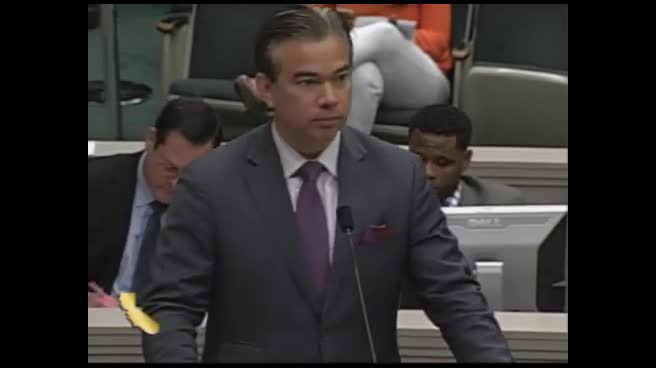 9MIN
Assembly Standing Committee on Appropriations
Bill Author

Bill Co-Author(s):