AB 2066: Service stations: petroleum supply and pricing.
- Session Year: 2015-2016
- House: Assembly
- Latest Version Date: 2016-04-18
Existing law requires every service station in this state to display at a conspicuous place on, at, or near the dispensing apparatus, or at or near the point of sale, at least one clearly visible sign showing a list of applicable state and federal fuel taxes per gallon of motor vehicle fuel sold from the dispensing apparatus. A violation of this provision is an infraction.
Existing law establishes the State Energy Resources Conservation and Development Commission in the Natural Resources Agency, and specifies the powers and duties of the commission with respect to energy resources in the state. Under existing law, various provisions regulate petroleum supply and pricing.
The California Global Warming Solutions Act of 2006 designates the State Air Resources Board as the state agency charged with monitoring and regulating sources of emissions of greenhouse gases. The act authorizes the state board to include the use of market-based compliance mechanisms.
This bill would require every service station to also display the average per-gallon cost of gasoline and diesel fuel, as annually calculated by the commission, commission in consultation with the Legislative Analysts Office, across the industry of refiners producing transportation fuels as a result of their compliance with a market-based compliance mechanism. Because a violation of this requirement would be a crime, this bill would impose a state-mandated local program.
The California Constitution requires the state to reimburse local agencies and school districts for certain costs mandated by the state. Statutory provisions establish procedures for making that reimbursement.
This bill would provide that no reimbursement is required by this act for a specified reason.
Existing law requires every service station in this state to display at a conspicuous place on, at, or near the dispensing apparatus, or at or near the point of sale, at least one clearly visible sign showing a list of applicable state and federal fuel taxes per gallon of motor vehicle fuel sold from the dispensing apparatus. A violation of this provision is an infraction.
Existing law establishes the State Energy Resources Conservation and Development Commission in the Natural Resources Agency, and specifies the powers and duties of the commission with respect to energy resources in the state. Under existing law, various provisions regulate petroleum supply and pricing.
The California Global Warming Solutions Act of 2006 designates the State Air Resources Board as the state agency charged with monitoring and regulating sources of emissions of greenhouse gases. The act authorizes the state board to include the use of market-based compliance mechanisms.
This bill would require every service station to also display the average per-gallon cost of gasolline gasoline and diesel fuel, as annually calculated by the commission, across the industry of refiners producing transportation fuels as a result of their compliance with a market-based compliance mechanism. Because a violation of this requirement would be a crime, this bill would impose a state-mandated local program.
The California Constitution requires the state to reimburse local agencies and school districts for certain costs mandated by the state. Statutory provisions establish procedures for making that reimbursement.
This bill would provide that no reimbursement is required by this act for a specified reason.
Existing law requires every service station in this state to display at a conspicuous place on, at, or near the dispensing apparatus, or at or near the point of sale, at least one clearly visible sign showing a list of applicable state and federal fuel taxes per gallon of motor vehicle fuel sold from the dispensing apparatus. A violation of this provision is an infraction.
Existing law establishes the State Energy Resources Conservation and Development Commission in the Natural Resources Agency, and specifies the powers and duties of the commission with respect to energy resources in the state. Under existing law, various provisions regulate petroleum supply and pricing.
The California Global Warming Solutions Act of 2006 designates the State Air Resources Board as the state agency charged with monitoring and regulating sources of emissions of greenhouse gases. The act authorizes the state board to include the use of market-based compliance mechanisms.
This bill would require every service station to also display the average per-gallon cost of gasolline and diesel fuel, as calculated by the commission, across the industry of refiners producing transportation fuels as a result of their compliance with a market-based compliance mechanism. Because a violation of this requirement would be a crime, this bill would impose a state-mandated local program.
The California Constitution requires the state to reimburse local agencies and school districts for certain costs mandated by the state. Statutory provisions establish procedures for making that reimbursement.
This bill would provide that no reimbursement is required by this act for a specified reason.
(a)(1)Every service station in this state shall provide during operating hours, and make available at no cost to customers who purchase motor vehicle fuel, water, compressed air, and a gauge for measuring air pressure to the public for use in servicing any passenger vehicle, as defined in Section 465 of the Vehicle Code, or any commercial vehicle, as defined in Section 260 of the Vehicle Code, with an unladen weight of 6,000 pounds or less.
(2)Every service station in this state shall display, at a conspicuous place on, at, or near the dispensing apparatus at least one clearly visible sign that shall read as follows: CALIFORNIA LAW REQUIRES THIS STATION TO PROVIDE FREE AIR AND WATER FOR AUTOMOTIVE PURPOSES TO ITS CUSTOMERS WHO PURCHASE MOTOR VEHICLE FUEL. IF YOU HAVE A COMPLAINT NOTIFY THE STATION ATTENDANT AND/OR CALL THIS TOLL-FREE TELEPHONE NUMBER: 1 (800) ___ ____. This sign shall meet the requirements of Sections 13473 and 13474 with regard to letter size and contrast. As used in this paragraph, automotive purposes does not include the washing of vehicles.
(b)(1)Every service station in this state located within 660 feet of an accessible right-of-way of an interstate or primary highway, as defined in Sections 5215 and 5220, shall provide during business hours public restrooms for use by its customers. Service stations shall not charge customers separately for the use of restroom facilities.
(2)The public restroom shall not be temporary or portable but shall be permanent and shall include separate facilities for men and women, each with toilets and sinks suitable for use by disabled persons in accordance with Section 19955.5 of the Health and Safety Code and Title 24 of the California Code of Regulations. However, a service station not located along an interstate highway and in a rural area, as defined by Section 101 of Title 23 of the United States Code, and where the annualized average daily traffic count is 2,500 vehicles or less, is only required to provide a single restroom to be used by both men and women unless the local legislative body or, upon designation by the local legislative body, the local building official determines and finds, based upon traffic studies and local or seasonal tourist patterns, that a single restroom would be inadequate to serve the public. In that event, the single restroom exemption shall not apply. The single restroom shall contain a toilet, urinal, and sink suitable for use by disabled persons as required by the federal Americans With Disabilities Act of 1990 (42 U.S.C. Sec. 12101 et seq.) and Title 24 of the California Code of Regulations. The single restroom shall be equipped with a locking mechanism to be operated by the user of the restroom and the restroom shall be maintained in a clean and sanitary manner.
(3)This subdivision does not apply to service stations that are operational prior to January 1, 1990, and that would be obligated to construct permanent restroom facilities to comply with this subdivision.
(4)For purposes of this subdivision, customer means a person who purchases any product available for sale on the premises of the service station, including items not related to the repairing or servicing of a motor vehicle.
(c)(1)Every service station in this state shall display at a conspicuous place on, at, or near the dispensing apparatus, or at or near the point of sale, at least one clearly visible sign showing a list of applicable state and federal fuel taxes per gallon of motor vehicle fuel sold from the dispensing apparatus. The sign may display the federal excise tax rate as up to $.184.
(2)The sign described in paragraph (1) also shall display the average per-gallon cost of gasoline and diesel fuel, as annually calculated by the State Energy Resources Conservation and Development Commission, Commission in consultation with the Legislative Analysts Office, across the industry of refiners producing transportation fuels as a result of their compliance with a market-based compliance mechanism adopted by the State Air Resources Board pursuant to Section 38570 of the Health and Safety Code.
(d)(1)The Division of Measurement Standards of the Department of Food and Agriculture shall, no later than January 1, 2001, establish a toll-free customer complaint telephone number. The toll-free telephone number thereby established shall be printed on the sign required pursuant to paragraph (2) of subdivision (a).
(2)Notwithstanding any other law, employees of the Division of Measurement Standards, upon inspection, or upon notice of a complaint forwarded pursuant to this section, are empowered to investigate a complaint against a service station for lack of free air and water and issue a citation to the station, and to collect a fine of two hundred fifty dollars ($250) per valid complaint, unless the citation is challenged in court. A citation shall not be issued if the air and water equipment is in good working order upon initial inspection, or if they are repaired to the satisfaction of the inspecting entity within 10 working days of the initial inspection. In addition, no citation based on nonfunctional air and water equipment shall be issued if the service station can establish that the equipment has been the target of repeated vandalism, substantiated by three or more police reports within six months detailing the vandalism.
SEC. 2.No reimbursement is required by this act pursuant to Section 6 of Article XIIIB of the California Constitution because the only costs that may be incurred by a local agency or school district will be incurred because this act creates a new crime or infraction, eliminates a crime or infraction, or changes the penalty for a crime or infraction, within the meaning of Section 17556 of the Government Code, or changes the definition of a crime within the meaning of Section 6 of Article XIIIB of the California Constitution.
(a)(1)Every service station in this state shall provide during operating hours, and make available at no cost to customers who purchase motor vehicle fuel, water, compressed air, and a gauge for measuring air pressure to the public for use in servicing any passenger vehicle, as defined in Section 465 of the Vehicle Code, or any commercial vehicle, as defined in Section 260 of the Vehicle Code, with an unladen weight of 6,000 pounds or less.
(2)Every service station in this state shall display, at a conspicuous place on, at, or near the dispensing apparatus at least one clearly visible sign that shall read as follows: CALIFORNIA LAW REQUIRES THIS STATION TO PROVIDE FREE AIR AND WATER FOR AUTOMOTIVE PURPOSES TO ITS CUSTOMERS WHO PURCHASE MOTOR VEHICLE FUEL. IF YOU HAVE A COMPLAINT NOTIFY THE STATION ATTENDANT AND/OR CALL THIS TOLL-FREE TELEPHONE NUMBER: 1 (800) ___ ____. This sign shall meet the requirements of Sections 13473 and 13474 with regard to letter size and contrast. As used in this paragraph, automotive purposes does not include the washing of vehicles.
(b)(1)Every service station in this state located within 660 feet of an accessible right-of-way of an interstate or primary highway, as defined in Sections 5215 and 5220, shall provide during business hours public restrooms for use by its customers. Service stations shall not charge customers separately for the use of restroom facilities.
(2)The public restroom shall not be temporary or portable but shall be permanent and shall include separate facilities for men and women, each with toilets and sinks suitable for use by disabled persons in accordance with Section 19955.5 of the Health and Safety Code and Title 24 of the California Code of Regulations. However, a service station not located along an interstate highway and in a rural area, as defined by Section 101 of Title 23 of the United States Code, and where the annualized average daily traffic count is 2,500 vehicles or less, is only required to provide a single restroom to be used by both men and women unless the local legislative body or, upon designation by the local legislative body, the local building official determines and finds, based upon traffic studies and local or seasonal tourist patterns, that a single restroom would be inadequate to serve the public. In that event, the single restroom exemption shall not apply. The single restroom shall contain a toilet, urinal, and sink suitable for use by disabled persons as required by the federal Americans With Disabilities Act of 1990 (42 U.S.C. Sec. 12101 et seq.) and Title 24 of the California Code of Regulations. The single restroom shall be equipped with a locking mechanism to be operated by the user of the restroom and the restroom shall be maintained in a clean and sanitary manner.
(3)This subdivision does not apply to service stations that are operational prior to January 1, 1990, and that would be obligated to construct permanent restroom facilities to comply with this subdivision.
(4)For purposes of this subdivision, customer means a person who purchases any product available for sale on the premises of the service station, including items not related to the repairing or servicing of a motor vehicle.
(c)(1)Every service station in this state shall display at a conspicuous place on, at, or near the dispensing apparatus, or at or near the point of sale, at least one clearly visible sign showing a list of applicable state and federal fuel taxes per gallon of motor vehicle fuel sold from the dispensing apparatus. The sign may display the federal excise tax rate as up to $.184.
(2)The sign described in paragraph (1) also shall display the average per-gallon cost of gasoline and diesel fuel, as annually calculated by the State Energy Resources Conservation and Development Commission, across the industry of refiners producing transportation fuels as a result of their compliance with a market-based compliance mechanism adopted by the State Air Resources Board pursuant to Section 38570 of the Health and Safety Code.
(d)(1)The Division of Measurement Standards of the Department of Food and Agriculture shall, no later than January 1, 2001, establish a toll-free customer complaint telephone number. The toll-free telephone number thereby established shall be printed on the sign required pursuant to paragraph (2) of subdivision (a).
(2)Notwithstanding any other law, employees of the Division of Measurement Standards, upon inspection, or upon notice of a complaint forwarded pursuant to this section, are empowered to investigate a complaint against a service station for lack of free air and water and issue a citation to the station, and to collect a fine of two hundred fifty dollars ($250) per valid complaint, unless the citation is challenged in court. A citation shall not be issued if the air and water equipment is in good working order upon initial inspection, or if they are repaired to the satisfaction of the inspecting entity within 10 working days of the initial inspection. In addition, no citation based on nonfunctional air and water equipment shall be issued if the service station can establish that the equipment has been the target of repeated vandalism, substantiated by three or more police reports within six months detailing the vandalism.
SEC. 2.No reimbursement is required by this act pursuant to Section 6 of Article XIIIB of the California Constitution because the only costs that may be incurred by a local agency or school district will be incurred because this act creates a new crime or infraction, eliminates a crime or infraction, or changes the penalty for a crime or infraction, within the meaning of Section 17556 of the Government Code, or changes the definition of a crime within the meaning of Section 6 of Article XIIIB of the California Constitution.
(a)(1)On and after January 1, 2000, every Every service station in this state shall provide, provide during operating hours, and make available at no cost to customers who purchase motor vehicle fuel, water, compressed air, and a gauge for measuring air pressure, pressure to the public for use in servicing any passenger vehicle, as defined in Section 465 of the Vehicle Code, or any commercial vehicle, as defined in Section 260 of the Vehicle Code, with an unladen weight of 6,000 pounds or less.
(2)Every service station in this state shall display, at a conspicuous place on, at, or near the dispensing apparatus, apparatus at least one clearly visible sign which that shall read as follows: CALIFORNIA LAW REQUIRES THIS STATION TO PROVIDE FREE AIR AND WATER FOR AUTOMOTIVE PURPOSES TO ITS CUSTOMERS WHO PURCHASE MOTOR VEHICLE FUEL. IF YOU HAVE A COMPLAINT NOTIFY THE STATION ATTENDANT AND/OR CALL THIS TOLL-FREE TELEPHONE NUMBER: 1 (800) ___ ____. This sign shall meet the requirements of Sections 13473 and 13474 with regard to letter size and contrast. As used in this paragraph, automotive purposes does not include the washing of vehicles.
(b)(1)On and after January 1, 1990, every Every service station in this state located within 660 feet of an accessible right-of-way of an interstate or primary highway, as defined in Sections 5215 and 5220, shall provide, provide during business hours public restrooms for use by its customers. Service stations shall not charge customers separately for the use of restroom facilities.
(2)The public restroom shall not be temporary or portable but shall be permanent and shall include separate facilities for men and women, each with toilets and sinks suitable for use by disabled persons in accordance with Section 19955.5 of the Health and Safety Code and Title 24 of the California Code of Regulations. However, a service station not located along an interstate highway and in a rural area, as defined by Section 101 of Title 23 of the United States Code, and where the annualized average daily traffic count is 2,500 vehicles or less, is only required to provide a single restroom to be used by both men and women unless the local legislative body or, upon designation by the local legislative body, the local building official determines and finds, based upon traffic studies and local or seasonal tourist patterns, that a single restroom would be inadequate to serve the public. In that event, the single restroom exemption shall not apply. The single restroom shall contain a toilet, urinal, and sink suitable for use by disabled persons as required by the federal Americans With Disabilities Act of 1990 (42 U.S.C. Sec. 12101 et seq.) and Title 24 of the California Code of Regulations. The single restroom shall be equipped with a locking mechanism to be operated by the user of the restroom and the restroom shall be maintained in a clean and sanitary manner.
(3)This subdivision does not apply to service stations that are operational prior to January 1, 1990, and that would be obligated to construct permanent restroom facilities to comply with this subdivision.
(4)For the purposes of this subdivision, customer means a person who purchases any product available for sale on the premises of the service station, including items not related to the repairing or servicing of a motor vehicle.
(c)(1)Every service station in this state shall display, display at a conspicuous place on, at, or near the dispensing apparatus apparatus, or at or near the point of sale, at least one clearly visible sign showing a list of applicable state and federal fuel taxes per gallon of motor vehicle fuel sold from the dispensing apparatus. The sign may display the federal excise tax rate as up to $.184.
(2)The sign described in paragraph (1) also shall display the average per-gallon cost of gasoline and diesel fuel, as calculated by the State Energy Resources Conservation and Development Commission, across the industry of refiners producing transportation fuels as a result of their compliance with a market-based compliance mechanism adopted by the State Air Resources Board pursuant to Section 38570 of the Health and Safety Code.
(d)(1)The Division of Measurement Standards of the Department of Food and Agriculture shall, no later than January 1, 2001, establish a toll-free customer complaint telephone number. The toll-free telephone number thereby established shall be printed on the sign required pursuant to paragraph (2) of subdivision (a).
(2)Notwithstanding any other provision of law, employees of the Division of Measurement Standards, upon inspection, or upon notice of a complaint forwarded pursuant to this section, are empowered to investigate a complaint against a service station for lack of free air and water and issue a citation to the station, and to collect a fine of two hundred fifty dollars ($250) per valid complaint, unless the citation is challenged in court. No A citation shall not be issued if the air and water equipment is in good working order upon initial inspection, or if they are repaired to the satisfaction of the inspecting entity within 10 working days of the initial inspection. In addition, no citation based on nonfunctional air and water equipment shall be issued if the service station can establish that the equipment has been the target of repeated vandalism, substantiated by three or more police reports within six months detailing the vandalism.
SEC. 2.No reimbursement is required by this act pursuant to Section 6 of Article XIIIB of the California Constitution because the only costs that may be incurred by a local agency or school district will be incurred because this act creates a new crime or infraction, eliminates a crime or infraction, or changes the penalty for a crime or infraction, within the meaning of Section 17556 of the Government Code, or changes the definition of a crime within the meaning of Section 6 of Article XIIIB of the California Constitution.
|
Date
|
Status
|
|---|---|
| Feb 17, 2016 | Read first time. To print. |
| Feb 18, 2016 | From printer. May be heard in committee March 19. |
| Feb 29, 2016 | Referred to Com. on B. & P. |
| Mar 14, 2016 | From committee chair, with author's amendments: Amend, and re-refer to Com. on B. & P. Read second time and amended. |
| Mar 15, 2016 | Re-referred to Com. on B. & P. |
| Apr 14, 2016 | From committee: Amend, and do pass as amended and re-refer to Com. on APPR. (Ayes 13. Noes 1.) (April 12). |
| Apr 18, 2016 | Read second time and amended. |
| Apr 19, 2016 | Re-referred to Com. on APPR. |
| May 11, 2016 | In committee: Set, first hearing. Referred to APPR. suspense file. |
| May 27, 2016 | In committee: Held under submission. |
|
Date
|
Description
|
Location
|
Votes
|
|
|---|---|---|---|---|
| Apr 12, 2016 | Do pass as amended and be re-referred to the Committee on [Appropriations] | Assembly Standing Committee on Business and Professions |
Passed |
This list shows positions taken on this bill by organizations on the date displayed, which is linked to the original source.
Positions by individuals are not included.
|
Organization
|
Position
|
Date
|
|---|---|---|
| California Independent Oil Marketers Association | * Support | Apr 12, 2016 |
Date of Hearing: May 11, 2016
ASSEMBLY COMMITTEE ON APPROPRIATIONS
Lorena Gonzalez, Chair
ABPCA Bill Id:AB 2066
Author:(Lackey) – As Amended Ver:April 18, 2016
Policy Committee: | Business and Professions | Vote: | 13 - 1 |
|
|
Urgency: No State Mandated Local Program: Yes Reimbursable: No
SUMMARY:
This bill requires every motor fuel service station to display the average per-gallon cost of gasoline and diesel fuel resulting from complying with AB 32 cap-and-trade requirements. Specifically, this bill:
- Requires the California Energy Commission (CEC), in consultation with the Legislative Analyst's Office (LAO), to annually calculate the average-cost-per gallon across the industry of refiners producing transportation fuels attributed to compliance with the market-based mechanism adopted by the California Air Resources Board (ARB) pursuant to the Global Warming Solutions Act of 2006.
- Includes this provision as part of an existing requirement to display a list of applicable state and federal fuel taxes conspicuously at or near the dispensing apparatus.
FISCAL EFFECT:
- Increased annual costs of approximately $460,000 for the CEC to perform the average-cost-per-gallon calculation (special fund.)
- Absorbable costs for the LAO to assist CEC in the annual calculation.
- Absorbable costs for the Department of Food and Agriculture to oversee the additional labeling requirements at motor fuel service stations.
- No additional costs to ARB
COMMENTS:
- Purpose. According to the author, Californians have the right to know when they are paying higher fuel prices to support government programs and the disclosure is most appropriately made where fuel is purchased. This bill requires CEC to calculate an estimate of the cost per gallon added to fuel prices for complying with the AB 32 Cap and Trade program. Fuel stations would add this estimate to current signs displaying federal and state fuel taxes.
- Background. In 2006, AB 32 (Nunez), Chapter 488, Statutes of 2006, established the Global Warming Solutions Act of 2006, which set the 2020 GHG emissions reduction goal into law. The goal of AB 32 was to return California to 1990 levels of GHG by 2020. Among other things, AB 32 authorized the ARB to utilize a market-based compliance mechanism to meet the goal.
The market-based compliance mechanism developed and adopted was the Cap-and-Trade program. According to the ARB, the Cap-and-Trade program is a key element in California’s climate plan. The program is designed to provide covered entities the flexibility to seek out and implement the lowest-cost options to reduce emissions. It sets a statewide limit on sources responsible for 85% of California’s GHG emissions and establishes a price signal needed to drive long-term investment in cleaner fuels and more efficient use of energy.
In practice, the program utilizes market forces to drive carbon producers to compete with each other to purchase a finite number of permits to release carbon into the atmosphere (or California Carbon Allowances, CCAs)—including carbon released as a result of refining and burning motor fuel. As the program decreases the supply of free and tradable CCAs, the covered entities either pay more for CCAs or look to other energy sources.
The Cap-and Trade program covers about 450 entities. The program went into effect for electric utilities and large industrial facilities in 2013 and expanded to cover distributors of transportation, natural gas, and other fuels in 2015.
- Fuel Service Station Disclosures. Existing law requires several disclosures to the fuel consumer. For example, service stations must display a list of applicable state and federal fuel taxes per gallon of motor vehicle fuel sold from the dispensing apparatus, the actual total price per gallon with taxes, distinctions based on cash or credit payment, and the name, brand, trademark, or trade name of the product, or grade or brand name designation. This bill adds to the existing disclosures.
- Prior Related Legislation. AB 2656 (Jones) of 2014 would have required each motor fuel transaction in this state to contain specified information regarding the estimated cost of compliance with any market-based compliance mechanism adopted by the ARB. This bill was held on this Committee’s Suspense file.
Analysis Prepared by: Jennifer Galehouse / APPR. / (916) 319-2081
Date of Hearing: April 12, 2016
ASSEMBLY COMMITTEE ON BUSINESS AND PROFESSIONS
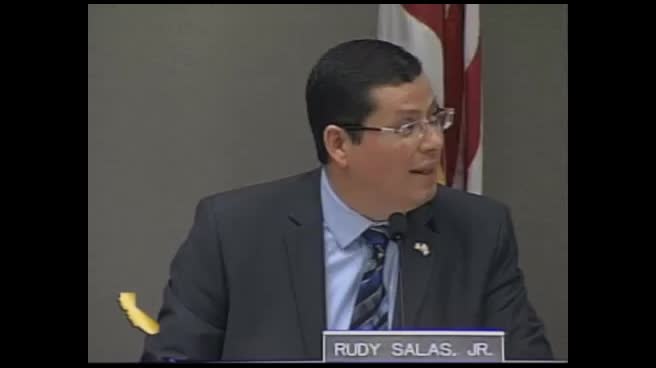
Rudy Salas, Chair
ABPCA Bill Id:AB 2066
Author:(Lackey) – As Amended Ver:March 14, 2016
SUBJECT: Service stations: petroleum supply and pricing.
SUMMARY: Requires every motor fuel service station to display the average per-gallon cost of gasoline and diesel fuel, as annually calculated by the California Energy Commission (CEC), across the industry of refiners producing transportation fuels as a result of their compliance with a market-based compliance mechanism adopted by the California Air Resources Board (CARB) pursuant to the California Global Warming Solutions Act of 2006.
EXISTING LAW:
- Defines “service station” as any establishment which offers for sale or sells gasoline or other motor vehicle fuel to the public. (Business and Professions Code (BPC) § 13650)
- Requires every service station in this state to display, at a conspicuous place on, at, or near the dispensing apparatus or at or near the point of sale, at least one clearly visible sign showing a list of applicable state and federal fuel taxes per gallon of motor vehicle fuel sold from the dispensing apparatus. (BPC § 13651)
- Prohibits a person from selling at retail to the general public, any motor vehicle fuel from any place of business in this state unless there is displayed on the dispensing apparatus in a conspicuous place at least one sign or price indicator showing the total price per gallon, liter, or other unit of measurement adopted pursuant to BPC § 12107, 13404, or 13404.5 of all motor vehicle fuel sold. The total price per gallon, liter, or other unit of measurement shall include applicable fuel taxes and all sales taxes. (BPC § 13470)
- Requires that petroleum price signs include "the total price per gallon or liter including all taxes" (BPC § 13532(a)).
- Defines “market-based compliance mechanism” as either of the following: (1) a system of market-based declining annual aggregate emissions limitations for sources or categories of sources that emit greenhouse gases (GHGs) or (2) GHG emissions exchanges, banking, credits, and other transactions, governed by rules and protocols established by the CARB, that result in the same greenhouse gas emission reduction, over the same time period, as direct compliance with a greenhouse gas emission limit or emission reduction measure adopted by the CARB, as specified. (HSC § 35805)
- Authorizes the CARB to adopt market-based compliance mechanisms to ensure compliance with its regulations, as specified. (HSC § 38570)
- Requires the CEC to gather, analyze, and interpret the information relating to the supply and price of petroleum products, with particular emphasis on motor vehicle fuels. (Public Resources Code (PRC) § 25356)
THIS BILL:
- Requires the CEC to calculate the average per-gallon cost of gasoline and diesel fuel across the industry of refiners producing transportation fuels as a result of their compliance with a market-based compliance mechanism adopted by the CARB pursuant to HSC § 38570.
- Requires every service station to display the average per-gallon cost of gasoline and diesel fuel, as calculated by the CEC.
FISCAL EFFECT: Unknown. This bill is keyed fiscal by the Legislative Counsel.
COMMENTS:
Purpose. This bill is sponsored by the author. According to the author, this bill “would require the [CEC] to calculate an estimate of the cost per gallon added to fuel prices for complying with the Cap and Trade program, and fuel stations would add this estimate to current signs that display federal and state fuel taxes. Californians have a right to know when they are paying several billion dollars in higher prices to support government programs, and this disclosure is most appropriately made directly where they purchase their fuel.”
Background. In 2006, the Legislature passed and Governor Schwarzenegger signed AB 32 (Nunez), Chapter 488, Statutes of 2006, the Global Warming Solutions Act of 2006, which set the 2020 GHG emissions reduction goal into law. The goal of AB 32 was to return California to 1990 levels of GHG by 2020. Among other things, AB 32 authorized the CARB to utilize a market-based compliance mechanism to meet the goal.
The market-based compliance mechanism developed and adopted was the Cap-and-Trade program. According to the CARB, the Cap-and-Trade program is a key element in California’s climate plan. The program is designed to provide covered entities the flexibility to seek out and implement the lowest-cost options to reduce emissions. It sets a statewide limit on sources responsible for 85% of California’s GHG emissions and establishes a price signal needed to drive long-term investment in cleaner fuels and more efficient use of energy.
In practice, the program utilizes market forces to drive carbon producers to compete with each other to purchase a finite number of permits to release carbon into the atmosphere (or California Carbon Allowances, CCAs)—including carbon released as a result of refining and burning motor fuel. As the program decreases the supply of free and tradable CCAs, the covered entities either pay more for CCAs or look to other energy sources.
The CARB reports that the program covers about 450 entities. The program went into effect for electric utilities and large industrial facilities in 2013 and expanded to cover distributors of transportation, natural gas, and other fuels in 2015.
Fuel Service Station Disclosures. Existing law requires several disclosures to the fuel consumer. For example, service stations must display a list of applicable state and federal fuel taxes per gallon of motor vehicle fuel sold from the dispensing apparatus, the actual total price per gallon with taxes, distinctions based on cash or credit payment, and the name, brand, trademark, or trade name of the product, or grade or brand name designation.
The primary purpose for the disclosures is consumer protection. Most of the disclosure requirements fall under the BPC’s weights and measures laws, which apply to businesses that sell goods to consumers, such as those utilizing point-of-sale systems (electronic price and check-out systems). The laws ensure that goods are measured accurately, ensuring that consumers get what they pay for and deterring false advertising. For example, by separating out the costs of taxes and service fees, consumers are made aware of the price as charged by the retailer or seller and therefore able to make an informed decision as to whether the goods are overpriced.
Cap and Trade Costs to Consumers. As noted above, the Cap-and-Trade program began covering distributors of motor and other fuels in 2015. The Cap-and-Trade program applies to all entities in the fuel distribution line, from extraction to distribution, that meet specified GHG emission thresholds or opt-in (Title 17 California Code of Regulations §§ 95811-95814). Because some covered entities may absorb more or less compliance costs than others, the amount that gets passed through to consumers at a fuel service station is unclear. This bill will require the CEC to calculate the costs that covered entities pass through.
Currently, the CEC does not calculate the costs passed through to consumers. As a part of its mandate under PRC § 25356, the CEC collects and analyzes gasoline supply and pricing trends. However, because the CEC does not track credit transactions between covered entities in the distribution chain, it does not calculate the costs to entities. In prior presentations on retail gasoline prices, the CEC has relied on estimates from the Oil Price Information Service (OPIS), a private petroleum pricing and news information company.
OPIS is able to utilize proprietary CCA trade data to estimate a daily price for the impact of Cap-and-Trade regulations on gasoline and diesel fuel delivered at wholesale fuel racks. However, because the trade data is proprietary, it is unclear whether the estimates are independently verifiable.
Prior Related Legislation. AB 2656 (Jones) of 2014 would have required each motor fuel transaction in this state to contain specified information regarding the estimated cost of compliance with any market-based compliance mechanism adopted by the CARB. NOTE: This bill was held in the Assembly Appropriations Committee.
AB 32 (Nunez), Chapter 488, Statutes of 2006, enacts the Global Warming Solutions Act of 2006, which creates a statewide greenhouse gas emission limit that would reduce emissions by 25% by 2020.
POLICY ISSUES FOR CONSIDERATION:
Posting of Estimates. This bill will require fuel service stations to post an estimate of the potential CAR cost passed through to consumers. As opposed to taxes, which are calculated as a flat per-gallon fee or a percentage, an estimate is a rough calculation that involves some amount of approximation. OPIS’s CAR assessments are estimates because they involve normalizing several available values into one that would evenly apply at the wholesale rack. According to OPIS, there is no single industry standard for passing fees along. While information and transparency are helpful for consumers, an estimate might provide an incomplete picture.
IMPLEMENTATION ISSUE:
As noted above, the CEC does not perform its own calculations of the costs of the Cap-and-Trade program. Currently the CEC relies on OPIS estimates. As written, the bill would require the CEC to perform the estimates. However, because the CEC does not track independent transactions between distributors, it does not perform the estimates. Therefore, the author may wish to amend the bill to direct the Legislative Analyst’s Office or other entities to create the estimates.
AMENDMENTS:
The author should make the following amendment:
- Page 4, in line 6, after “Commission,” insert:
in consultation with the Legislative Analyst’s Office,
REGISTERED SUPPORT:
Howard Jarvis Taxpayers Association
REGISTERED OPPOSITION:
None on file.
Analysis Prepared by: Vincent Chee / B. & P. / (916) 319-3301
Discussed in Hearing
 5MIN