AB 2146: Forestry and fire protection: greenhouse gas emissions.
- Session Year: 2015-2016
- House: Assembly
- Latest Version Date: 2016-04-11
Existing law requires the Department of Forestry and Fire Prevention to implement various fire prevention programs intended to protect forest resources and prevent uncontrollable wildfires. The California Global Warming Solutions Act of 2006 requires that all moneys, except for fines and penalties, collected by the State Air Resources Board from the auction or sale of allowances as part of a market-based compliance mechanism to be deposited in the Greenhouse Gas Reduction Fund and to be available, upon appropriation by the Legislature, for greenhouse gas emissions reduction activities.
This bill would continuously appropriate $200,000,000 from the annual proceeds of the fund to the department for activities that reduce greenhouse gas emissions in the state caused by uncontrolled forest fires. The bill would provide that an amount not to exceed $200,000,000 from the fund shall be made available to the department, upon appropriation, for specified activities that reduce greenhouse gas emissions in the state caused by uncontrolled forest fires. The bill would authorize the department to use these funds to provide (1) payments to local governmental entities that carry out fire prevention activities and activities; (2) incentives for actions by private parties to reduce the risk or intensity of wildfires or improve the resiliency of lands prone to wildfires. wildfires; and (3) funding for the creation and implementation of partnerships between the department and the federal government to reduce the risk or intensity of wildfires or improve the resiliency of federal lands prone to wildfires. The bill would require the department to develop an accounting system to demonstrate that each project awarded funding will provide a long-term reduction of greenhouse gas emissions and to prioritize and fund projects based on the extent to which a project will maximize certain cobenefits, as prescribed.
Existing law requires the Department of Forestry and Fire Prevention to implement various fire prevention programs intended to protect forest resources and prevent uncontrollable wildfires. The California Global Warming Solutions Act of 2006 requires that all moneys, except for fines and penalties, collected by the State Air Resources Board from the auction or sale of allowances as part of a market-based compliance mechanism to be deposited in the Greenhouse Gas Reduction Fund and to be available, upon appropriation by the Legislature, for greenhouse gas emissions reduction activities.
This bill would provide that continuously appropriate $200,000,000 from the annual proceeds of the fund shall be made available annually, upon appropriation in the annual Budget Act, to the department for activities that reduce greenhouse gas emissions in the state caused by uncontrolled forest fires. The bill would authorize the department to use these funds to provide payments to local governmental entities that carry out fire prevention activities and incentives for actions by private parties to reduce the risk or intensity of wildfires or improve the resiliency of lands prone to wildfires.
Existing law requires the Department of Forestry and Fire Prevention to implement various fire prevention programs intended to protect forest resources and prevent uncontrollable wildfires. The California Global Warming Solutions Act of 2006 requires that all moneys, except for fines and penalties, collected by the State Air Resources Board from the auction or sale of allowances as part of a market-based compliance mechanism to be deposited in the Greenhouse Gas Reduction Fund and to be available, upon appropriation by the Legislature, for greenhouse gas emissions reduction activities.
This bill would provide that $200,000,000 from the fund shall be made available annually, upon appropriation in the annual Budget Act, to the department for activities that reduce greenhouse gas emissions in the state caused by uncontrolled forest fires.
The Legislature finds and declares all of the following:
(a)California continues to experience catastrophic wildfires of a magnitude previously unknown. Unlike traditional regenerative forest fires, modern forest fires are extremely destructive with devastating economic and environmental consequences, including loss of life and property destruction, job losses, erosion, downstream drinking water quality degradation, proliferation of nonnative and invasive species, nonnative species choking out reemerging native vegetation, soil sterilization, ecosystem destruction, and tremendous amounts of greenhouse gas emissions.
(b)While the state focuses its climate change efforts on reducing greenhouse gas emissions from industrial sources, it is turning a blind eye to the equally significant greenhouse gas and short-lived climate pollutant emissions resulting from forest fires.
(c)The 2015 calendar year brought disastrous fires of high intensity, including the Rough Fire, which burned over 150,000 acres over a two-months period, injuring 12 people; the 2015 Valley Fire, which caused four civilian casualties, four injured firefighters, over 1,000 destroyed homes, 27 destroyed multifamily structures, and over 600 other structures destroyed, prompting the declaration of a major disaster from the President of the United States; and the Butte Fire that continued for over a month, resulting in two deaths and destroying 475 homes and over 350 other structures.
(d)The 2013 Rim Fire burned over 250,000 acres over 69 days and caused hundreds of millions of dollars in economic and environmental damage; destroyed significant habitat for a number of Californias rarest species; and demanded more than $125 million in firefighting resources. It is estimated that the Rim Fire released over 11 million metric tons of greenhouse gases, which is equivalent to the annual emissions of 2.3 million cars. Experts have attributed the fires exponential growth to a centurys worth of fuel left behind due to historical fire suppression policies and practices.
(e)The 2007 Angora Fire resulted in roughly 143,000 tons of greenhouse gas emissions, or approximately 46.2 tons per acre. Studies indicate that those emissions could have been lowered to 12 tons per acre if the tree density were reduced from approximately 273 trees per acre to the natural 60 trees per acre level.
SEC. 2.Section 39719 of the Health and Safety Code is amended to read:39719.(a)The Legislature shall appropriate the annual proceeds of the fund for the purpose of reducing greenhouse gas emissions in this state in accordance with the requirements of Section 39712.
(b)To carry out a portion of the requirements of subdivision (a), annual proceeds are continuously appropriated for the following:
(1)Beginning in the 201516 fiscal year, and notwithstanding Section 13340 of the Government Code, 35 percent of annual proceeds are continuously appropriated, without regard to fiscal years, for transit, affordable housing, and sustainable communities programs as follows:
(A)Ten percent of the annual proceeds of the fund is hereby continuously appropriated to the Transportation Agency for the Transit and Intercity Rail Capital Program created by Part 2 (commencing with Section 75220) of Division 44 of the Public Resources Code.
(B)Five percent of the annual proceeds of the fund is hereby continuously appropriated to the Low Carbon Transit Operations Program created by Part 3 (commencing with Section 75230) of Division 44 of the Public Resources Code. Funds shall be allocated by the Controller, according to requirements of the program, and pursuant to the distribution formula in subdivision (b) or (c) of Section 99312 of, and Sections 99313 and 99314 of, the Public Utilities Code.
(C)Twenty percent of the annual proceeds of the fund is hereby continuously appropriated to the Strategic Growth Council for the Affordable Housing and Sustainable Communities Program created by Part 1 (commencing with Section 75200) of Division 44 of the Public Resources Code. Of the amount appropriated in this subparagraph, no less than 10 percent of the annual proceeds, shall be expended for affordable housing, consistent with the provisions of that program.
(2)Beginning in the 201516 fiscal year, notwithstanding Section 13340 of the Government Code, 25 percent of the annual proceeds of the fund is hereby continuously appropriated to the High-Speed Rail Authority for the following components of the initial operating segment and Phase I Blended System as described in the 2012 business plan adopted pursuant to Section 185033 of the Public Utilities Code:
(A)Acquisition and construction costs of the project.
(B)Environmental review and design costs of the project.
(C)Other capital costs of the project.
(D)Repayment of any loans made to the authority to fund the project.
(c)Beginning in the 201617 fiscal year, and notwithstanding Section 13340 of the Government Code, two hundred million dollars ($200,000,000) of the annual proceeds of the fund is hereby continuously appropriated to the Department of Forestry and Fire Protection for activities as described in Section 4599 of the Public Resources Code.
(d)In determining the amount of annual proceeds of the fund for purposes of the calculation in subdivision (b), the funds subject to Section 39719.1 shall not be included.
SEC. 3.SEC. 2.Section 4599 is added to the Public Resources Code, to read:4599.(a)The department shall use moneys appropriated pursuant to subdivision (c) of Section 39719 of the Health and Safety Code (f) to fund activities that reduce greenhouse gas emissions in the state caused by uncontrolled forest fires, including, but not limited to, vegetation management, forest overgrowth reduction, and measures to ensure that future fires are more consistent with the historic regenerative fire regime.
(b)The department shall develop an accounting system to demonstrate that each project awarded funding pursuant to this section will provide a long-term reduction of greenhouse gas emissions.
(c)Any person or entity that receives funding pursuant to this section for the treatment or thinning of forest land shall use uneven aged forest management practices for all future timber operations.
(b)
(d)The department may, and is encouraged to, use funds appropriated pursuant to subdivision (c) of Section 39719 of the Health and Safety Code (f) to provide both all of the following:
(A)Payments to local governmental entities that carry out fire prevention activities.
(B)Incentives for actions by private parties to reduce the risk or intensity of wildfires or improve the resiliency of lands prone to wildfires.
(C)Funding for the creation and implementation of partnerships between the department and the federal government to reduce the risk or intensity of wildfires or improve the resilience of lands prone to wildfires on federal forest lands.
(e)The department shall prioritize and fund projects based on the extent to which a project will maximize the following cobenefits:
(1)Restoring watershed health and function.
(2)Supporting biodiversity and wildlife adaptation to climate change.
(3)Revitalizing and sustaining rural economies.
(4)Finding beneficial uses for material removed from the forest.
(5)Improving public safety as part of holistic forest management.
(f)An amount not to exceed two hundred million dollars ($200,000,000) from the Greenhouse Gas Reduction Fund, created pursuant to Section 16428.8 of the Government Code, shall be available, upon appropriation by the Legislature, to implement this section, consistent with the requirements of Section 39712 of the Health and Safety Code.
The Legislature finds and declares all of the following:
(a)California continues to experience catastrophic wildfires of a magnitude previously unknown. Unlike traditional regenerative forest fires, modern forest fires are extremely destructive with devastating economic and environmental consequences, including loss of life and property destruction, job losses, erosion, downstream drinking water quality degradation, proliferation of nonnative and invasive species, nonnative species choking out reemerging native vegetation, soil sterilization, ecosystem destruction, and tremendous amounts of greenhouse gas emissions.
(b)While the state focuses its climate change efforts on reducing greenhouse gas emissions from industrial sources, it is turning a blind eye to the equally significant greenhouse gas and short-lived climate pollutant emissions resulting from forest fires.
(c)The 2015 calendar year brought disastrous fires of high intensity, including the Rough Fire, which burned over 150,000 acres over a two-months period, injuring 12 people; the 2015 Valley Fire, which caused four civilian casualties, four injured firefighters, over 1,000 destroyed homes, 27 destroyed multifamily structures, and over 600 other structures destroyed, prompting the declaration of a major disaster from the President of the United States; and the Butte Fire that continued for over a month, resulting in two deaths and destroying 475 homes and over 350 other structures.
(d)The 2013 Rim Fire burned over 250,000 acres over 69 days and caused hundreds of millions of dollars in economic and environmental damage; destroyed significant habitat for a number of Californias rarest species; and demanded more than $125 million in firefighting resources. It is estimated that the Rim Fire released over 11 million metric tons of greenhouse gases, which is equivalent to the annual emissions of 2.3 million cars. Experts have attributed the fires exponential growth to a centurys worth of fuel left behind due to historical fire suppression policies and practices.
(e)The 2007 Angora Fire resulted in roughly 143,000 tons of greenhouse gas emissions, or approximately 46.2 tons per acre. Studies indicate that those emissions could have been lowered to 12 tons per acre if the tree density were reduced from approximately 273 trees per acre to the natural 60 trees per acre level.
SEC. 2.Section 39719 of the Health and Safety Code is amended to read:39719.(a)The Legislature shall appropriate the annual proceeds of the fund for the purpose of reducing greenhouse gas emissions in this state in accordance with the requirements of Section 39712.
(b)To carry out a portion of the requirements of subdivision (a), annual proceeds are continuously appropriated for the following:
(1)Beginning in the 201516 fiscal year, and notwithstanding Section 13340 of the Government Code, 35 percent of annual proceeds are continuously appropriated, without regard to fiscal years, for transit, affordable housing, and sustainable communities programs as following: follows:
(A)Ten percent of the annual proceeds of the fund is hereby continuously appropriated to the Transportation Agency for the Transit and Intercity Rail Capital Program created by Part 2 (commencing with Section 75220) of Division 44 of the Public Resources Code.
(B)Five percent of the annual proceeds of the fund is hereby continuously appropriated to the Low Carbon Transit Operations Program created by Part 3 (commencing with Section 75230) of Division 44 of the Public Resources Code. Funds shall be allocated by the Controller, according to requirements of the program, and pursuant to the distribution formula in subdivision (b) or (c) of Section 99312 of, and Sections 99313 and 99314 of, the Public Utilities Code.
(C)Twenty percent of the annual proceeds of the fund is hereby continuously appropriated to the Strategic Growth Council for the Affordable Housing and Sustainable Communities Program created by Part 1 (commencing with Section 75200) of Division 44 of the Public Resources Code. Of the amount appropriated in this subparagraph, no less than 10 percent of the annual proceeds, shall be expended for affordable housing, consistent with the provisions of that program.
(2)Beginning in the 201516 fiscal year, notwithstanding Section 13340 of the Government Code, 25 percent of the annual proceeds of the fund is hereby continuously appropriated to the High-Speed Rail Authority for the following components of the initial operating segment and Phase I Blended System as described in the 2012 business plan adopted pursuant to Section 185033 of the Public Utilities Code:
(A)Acquisition and construction costs of the project.
(B)Environmental review and design costs of the project.
(C)Other capital costs of the project.
(D)Repayment of any loans made to the authority to fund the project.
(c)Beginning in the 201617 fiscal year, and notwithstanding Section 13340 of the Government Code, two hundred million dollars ($200,000,000) of the annual proceeds of the fund is hereby continuously appropriated to the Department of Forestry and Fire Protection for activities as described in Section 4599 of the Public Resources Code.
(c)
(d)In determining the amount of annual proceeds of the fund for purposes of the calculation in subdivision (b), the funds subject to Section 39719.1 shall not be included.
SEC. 2.SEC. 3.Section 4599 is added to the Public Resources Code, to read:4599.(a)The sum of two hundred million dollars ($200,000,000) from the Greenhouse Gas Reduction Fund, created pursuant to Section 16428.8 of the Government Code, shall be made available annually to the department, upon appropriation in the annual Budget Act, for department shall use moneys appropriated pursuant to subdivision (c) of Section 39719 of the Health and Safety Code to fund activities that reduce greenhouse gas emissions in the state caused by uncontrolled forest fires, including, but not limited to, vegetation management, forest overgrowth reduction, and measures to ensure that future fires are more consistent with the historic regenerative fire regime.
(b)The department may, and is encouraged to, use funds appropriated pursuant to subdivision (c) of Section 39719 of the Health and Safety Code to provide both of the following:
(A)Payments to local governmental entities that carry out fire prevention activities.
(B)Incentives for actions by private parties to reduce the risk or intensity of wildfires or improve the resiliency of lands prone to wildfires.
The Legislature finds and declares all of the following:
(a)California continues to experience catastrophic wildfires of a magnitude previously unknown. Unlike traditional regenerative forest fires, modern forest fires are extremely destructive with devastating economic and environmental consequences, including loss of life and property destruction, job losses, erosion, downstream drinking water quality degradation, proliferation of nonnative and invasive species, nonnative species choking out reemerging native vegetation, soil sterilization, ecosystem destruction, and tremendous amounts of greenhouse gas emissions.
(b)While the state focuses its climate change efforts on reducing greenhouse gas emissions from industrial sources, it is turning a blind eye to the equally significant greenhouse gas and short-lived climate pollutant emissions resulting from forest fires.
(c)The 2015 calendar year brought disastrous fires of high intensity, including the Rough Fire, which burned over 150,000 acres over a two-months period, injuring 12 people; the 2015 Valley Fire, which caused four civilian casualties, four injured firefighters, over 1,000 destroyed homes, 27 destroyed multifamily structures, and over 600 other structures destroyed, prompting the declaration of a major disaster from the President of the United States; and the Butte Fire that continued for over a month, resulting in two deaths and destroying 475 homes and over 350 other structures.
(d)The 2013 Rim Fire burned over 250,000 acres over 69 days and caused hundreds of millions of dollars in economic and environmental damage; destroyed significant habitat for a number of Californias rarest species; and demanded more than $125 million in firefighting resources. It is estimated that the Rim Fire released over 11 million metric tons of greenhouse gases, which is equivalent to the annual emissions of 2.3 million cars. Experts have attributed the fires exponential growth to a centurys worth of fuel left behind due to historical fire suppression policies and practices.
(e)The 2007 Angora Fire resulted in roughly 143,000 tons of greenhouse gas emissions, or approximately 46.2 tons per acre. Studies indicate that those emissions could have been lowered to 12 tons per acre if the tree density were reduced from approximately 273 trees per acre to the natural 60 trees per acre level.
SEC. 2.Section 4599 is added to the Public Resources Code, to read:4599.The sum of two hundred million dollars ($200,000,000) from the Greenhouse Gas Reduction Fund, created pursuant to Section 16428.8 of the Government Code, shall be made available annually to the department, upon appropriation in the annual Budget Act, for activities that reduce greenhouse gas emissions in the state caused by uncontrolled forest fires, including, but not limited to, vegetation management, forest overgrowth reduction, and measures to ensure that future fires are more consistent with the historic regenerative fire regime.
|
Date
|
Status
|
|---|---|
| Feb 17, 2016 | Read first time. To print. |
| Feb 18, 2016 | From printer. May be heard in committee March 19. |
| Feb 29, 2016 | Referred to Com. on NAT. RES. |
| Mar 28, 2016 | From committee chair, with author's amendments: Amend, and re-refer to Com. on NAT. RES. Read second time and amended. |
| Mar 29, 2016 | Re-referred to Com. on NAT. RES. |
| Apr 7, 2016 | From committee: Amend, and do pass as amended and re-refer to Com. on APPR. (Ayes 9. Noes 0.) (April 4). |
| Apr 11, 2016 | Read second time and amended. |
| Apr 12, 2016 | Re-referred to Com. on APPR. |
| May 11, 2016 | In committee: Set, first hearing. Referred to APPR. suspense file. |
| May 27, 2016 | In committee: Held under submission. |
|
Date
|
Description
|
Location
|
Votes
|
|
|---|---|---|---|---|
| Apr 4, 2016 | Do pass as amended and be re-referred to the Committee on [Appropriations] | Assembly Standing Committee on Natural Resources |
Passed |
This list shows positions taken on this bill by organizations on the date displayed, which is linked to the original source.
Positions by individuals are not included.
|
Organization
|
Position
|
Date
|
|---|---|---|
| California Chamber Of Commerce | ** Against | Apr 4, 2016 |
| CalTax | ** Against | Apr 4, 2016 |
| Madera County Supervisor Rick Farinelli | ** Support | Apr 4, 2016 |
| Madera County Supervisor Tom Wheeler | ** Support | Apr 4, 2016 |
| Rural County Representatives of California | ** Support | Apr 4, 2016 |
| Sierra Club | * Indeterminate | Apr 4, 2016 |
Date of Hearing: May 11, 2016
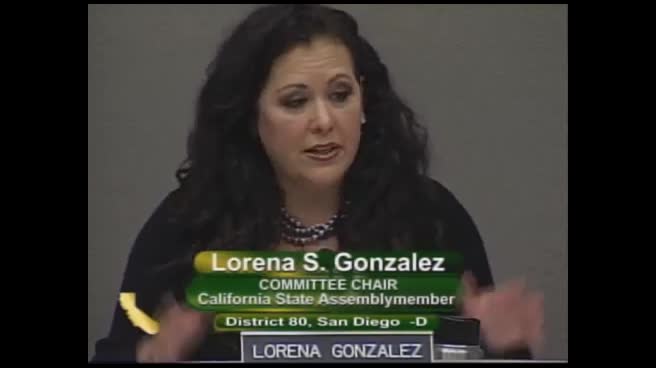
ASSEMBLY COMMITTEE ON APPROPRIATIONS
Lorena Gonzalez, Chair
ABPCA Bill Id:AB 2146
Author:(Patterson) – As Amended Ver:April 11, 2016
Policy Committee: | Natural Resources | Vote: | 9 - 0 |
|
| ||
|
|
Urgency: No State Mandated Local Program: No Reimbursable: No
SUMMARY:
This bill allocates up to $200 million of AB 32 cap-and-trade revenues (Greenhouse Gas Reduction Fund) to CalFire, upon appropriation, for activities to reduce greenhouse gas emissions (GHG) caused by uncontrolled forest fires. Additionally, this bill:
- Requires CalFire to develop an accounting system to demonstrate the long-term GHG reductions of each project.
- Requires funding recipients to use uneven aged forest management practices for all future timber operations.
- Allows and encourages CAL FIRE to provide:
- Payments to local governmental entities for fire prevention activities.
- Incentives for private actions to reduce the risk or intensity of wildfires or improve the resiliency of lands prone to wildfires.
- Funding for state and federal partnerships.
- Requires CalFire to prioritize and fund projects based on specified co-benefits and in accordance with AB 32 investment plans.
FISCAL EFFECT:
- Cost pressures to appropriate up to $200 million to CalFire to fund forest activities to reduce GHG (Greenhouse Gas Reduction Funds).
- To administer a $200 million program, CalFire estimates initial administrative costs of $250,000 in contracts and approximately $11.2 million to hire 49 positions. Calfire estimates ongoing annual costs of $9.1 million (Greenhouse Gas Reduction Fund).
- Increased ongoing annual costs to ARB of approximately $670,000 to revise guidelines, develop quantification methods, evaluate projects and coordinate with CalFire (Greenhouse Gas Reduction Fund).
This fiscal estimate assumes any funding appropriated by the Legislature is in addition to the Greenhouse Gas Reduction Funds requested in the Governor's Budget. CalFire is requesting the continuation of an additional 12 positions as part of the $140 million request to fund the Healthy Forests program.
COMMENTS:
- Purpose. California’s forests are not only susceptible to the effect of climate change but are also contributing to GHG emissions. According to ARB’s Short-Lived Climate Pollutant Strategy, wildfires are now the single largest source of black carbon emissions in California, representing 66% of black carbon emissions in 2013. Black carbon or soot is a major contributor to climate change. Dead, decaying, and dying trees have been shown to emit GHGs reducing the carbon storage capacity of the wood.
This bill will provide funding for vegetation management, forest overgrowth reduction, and measures to ensure that future fires are more consistent with the historic regenerative fire regime.
- Background. The California Global Warming Solutions Act of 2006 (AB 32) requires ARB to adopt a statewide GHG emissions limit equivalent to 1990 levels by 2020 and adopt regulations, including market-based compliance mechanisms, to achieve maximum technologically feasible and cost-effective GHG emission reductions.
As part of the implementation of AB 32 market-based compliance measures, ARB adopted a cap-and-trade program that caps the allowable statewide emissions and provides for the auctioning of emission credits, the proceeds of which are quarterly deposited into the GGRF available for appropriation by the Legislature.
The 2014-15 Budget Act allocated cap-and-trade revenues for the 2014-15 fiscal year and established a long-term plan for the allocation of cap-and-trade revenues beginning in fiscal year 2015-16.
The Budget continuously appropriates 35% of cap-and-trade funds for investments in transit, affordable housing, and sustainable communities. Twenty-five percent of the revenues are continuously appropriated to continue the construction of high-speed rail. The remaining 40% are to be appropriated annually by the Legislature for investments in programs that include low-carbon transportation, energy efficiency and renewable energy, and natural resources and waste diversion.
An expenditure plan for the 40% was not included in the 2015-16 Budget Act, with the exception of $227 million appropriated to continue funding for specified existing programs. The remaining 2015-16 revenues, along with 2016-17 revenues totaling $3.1 billion, are available for appropriation this year.
- Healthy Forests. The Governor’s 2016-17 budget includes a proposal to spend $30 million for urban and community forestry, $10 million for the Forest Legacy Program, and $140 million from the GGRF for a comprehensive forest health program to further secure forest carbon and reduce greenhouse gas emissions. These forest health programs will focus on landscape-scale projects in high risk fire areas.
Analysis Prepared by: Jennifer Galehouse / APPR. / (916) 319-2081
Date of Hearing: April 4, 2016
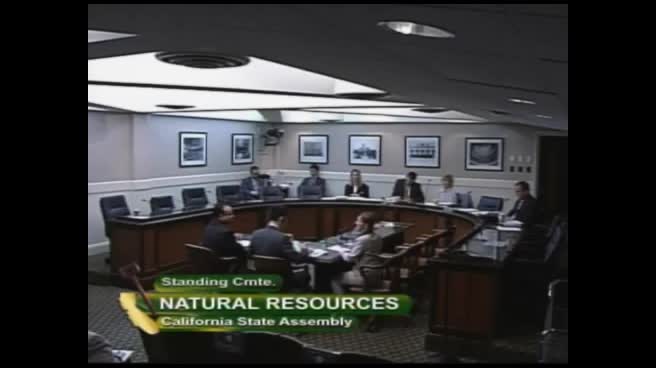
ASSEMBLY COMMITTEE ON NATURAL RESOURCES
Das Williams, Chair
ABPCA Bill Id:AB 2146 (
Author:Patterson) – As Amended Ver:March 28, 2016
SUBJECT: Forestry and fire protection: greenhouse gas emissions
SUMMARY: Requires $200 million annually to be continuously appropriated from Greenhouse Gas Reduction Fund (GGRF) to the Department of Forestry and Fire Protection (CAL FIRE) for activities that reduce greenhouse gas (GHG) emissions. Specifies activities eligible for funding including vegetation management, forest overgrowth reduction, and measures to ensure that future fires are more consistent with the historic regenerative fire regime.
EXISTING LAW:
- Requires the Air Resources Board (ARB), pursuant to California Global Warming Solutions Act of 2006 [AB 32 (Nunez), Chapter 488, Statutes of 2006], to adopt a statewide greenhouse gas (GHG) emissions limit equivalent to 1990 levels by 2020 and adopt regulations to achieve maximum technologically feasible and cost-effective GHG emission reductions. AB 32 authorizes ARB to permit the use of market-based compliance mechanisms to comply with GHG reduction regulations, once specified conditions are met.
- Establishes the GGRF and requires all moneys, except for fines and penalties, collected by ARB from the auction or sale of allowances pursuant to a market-based compliance mechanism (i.e., the cap-and-trade program adopted by ARB under AB 32) to be deposited in the GGRF and available for appropriation by the Legislature.
- Continuously appropriates:
- 10% of the GGRF for the Transit and Intercity Rail Capital Program;
- 5% for the Low Carbon Transit Operations Program;
- 20% for the Affordable Housing and Sustainable Communities Program; and,
- 25% for high speed rail.
- 10% of the GGRF for the Transit and Intercity Rail Capital Program;
- Establishes the GGRF Investment Plan and Communities Revitalization Act to set procedures for the investment of GHG allowance auction revenues. Authorizes a range of GHG reduction investments and establishes several policy objectives, including:
- Maximize economic, environmental, and public health benefits;
- Foster job creation;
- Complement efforts to improve air quality;
- Direct investment toward the most disadvantaged communities and households in the state;
- Provide opportunities for businesses, public agencies, nonprofits, and other community institutions to participate in and benefit from statewide efforts to reduce GHG emissions; and,
- Lessen the impacts and effects of climate change on the state's communities, economy, and environment.
- Maximize economic, environmental, and public health benefits;
- Requires the investment plan to allocate (1) a minimum of 25% of the available moneys in the GGRF to projects that provide benefits to identified disadvantaged communities, and (2) a minimum of 10% of the available moneys in the GGRF to projects located within identified disadvantaged communities.
- Requires a state responsibility area (SRA) fire prevention fee (fee) on every habitable structure in the SRA. Requires fee to be deposited in the SRA Fire Prevention Fund, which is available to the Board of Forestry and Fire Protection (Board) and CAL FIRE to expend for fire prevention activities that benefit the owners of structures within the SRA. Limits fire prevention activities to the following:
- Local assistance grants established by the Board;
- Grants to Fire Safe Councils, the California Conservation Corps, or certified local conservation corps for fire prevention projects and activities in the SRA;
- Grants to a qualified nonprofit organization with a demonstrated ability to satisfactorily plan, implement, and complete a fire prevention project applicable to the SRA;
- Inspections by CAL FIRE for compliance with defensible space requirements around structures in the SRA;
- Public education to reduce fire risk in the SRA;
- Fire severity and fire hazard mapping by CAL FIRE in the SRA; and,
g) Other fire prevention projects in the SRA that are authorized by the Board.
- Declares the intent of the Legislature that the Board, CAL FIRE, and ARB should strive to go beyond the status quo sequestration rate and ensure that their policies and regulations reflect the unique role forests play in combating climate change.
- Allows CAL FIRE to enter into agreements and make grants and take other actions to develop Program Timberland Environmental Impact Reports (PTEIR) for carbon sequestration and fuel reduction programs to encourage forest resource improvements and otherwise facilitate good timberland management through a program of financial and technical assistance.
- Authorizes funds in Timber Regulation and Forest Restoration Fund to be spent for fuel treatment grants and grants to local agencies responsible for fire protection, qualified nonprofits, recognized tribes, local and state governments, and resources conservation districts, undertaken on a SRA or on wildlands not in a SRA that pose a threat to the SRA. Grants are required to reduce the costs of wildland fire suppression, reduce GHG emissions, promote adaptation of forested landscapes to changing climate, improve forest health, and protect homes and communities.
THIS BILL:
- Requires, starting in the 2016-17 fiscal year, $200 million to be continuously appropriated from GGRF to CAL FIRE for activities that reduce GHG emissions.
- Requires CAL FIRE to fund activities that include, but are not limited to, vegetation management, forest overgrowth reduction, and measures to ensure that future fires are more consistent with the historic regenerative fire regime.
- Allows and encourages CAL FIRE to provide both the following:
- Payments to local governmental entities that carry out fire prevention activities; and,
- Incentives for actions by private parties to reduce the risk or intensity of wildfires or improve the resiliency of lands prone to wildfires.
FISCAL EFFECT: Continuously appropriates $200 million from GGRF.
COMMENTS:
- Existing GGRF funding and programs. The 2014-15 Budget Act allocated GGRF revenues for the 2014-15 fiscal year and established a long-term plan for the allocation of GGRF revenues beginning in fiscal year 2015-16. Thirty-five percent of GGRF is continuously appropriated for investments in transit, affordable housing, and sustainable communities. Twenty-five percent is continuously appropriated to continue the construction of the high-speed rail project. The remaining 40% is subject to annual appropriation by the Legislature for investments in programs that include low-carbon transportation, energy efficiency and renewable energy, and natural resources and waste diversion. An expenditure plan for the 40% was not included in the 2015-16 Budget Act, with the exception of $227 million appropriated to continue funding for specified existing programs. The remaining 2015-16 revenues, along with 2016-17 revenues, are available for appropriation this year.
The 2016 Annual Report of Cap and Trade Auction Proceeds includes an analysis of funds spent within and benefiting disadvantaged communities, excluding high speed rail spending. According to the report, 39% of expenditures were for projects located within disadvantaged communities and 51% of the overall funding benefited disadvantaged communities.
Listed below are the major GGRF program areas, administering agency, and funding to date:
- Transportation and Sustainable Communities
- High Speed Rail, High Speed Rail Authority (Authority), $750 million
- Transit and Intercity Rail Capital Program, Transportation Agency, $225 million
- Low Carbon Transit Operations Program, Department of Transportation (Caltrans), $125 million
- Affordable Housing and Sustainable Communities Program, Strategic Growth Council (SGC), $530 million
- Low Carbon Transportation, ARB, $325 million
- Clean Energy and Energy Efficiency
- Low-Income Weatherization Program, Community Services and Development (CSD), $154 million
- Energy Efficiency in Public Buildings, California Energy Commission (CEC), $20 million
- Agricultural Energy and Operational Efficiency, Department of Food and Agriculture (CDFA), $75 million
- Water-Energy Efficiency, Department of Water Resources (DWR), $75 million
- Natural Resources and Waste Diversion
- Wetlands and Watershed Restoration, Department of Fish and Wildlife (DFW), $27 million
- Urban Forestry, Forest Health Restoration, and Reforestation, Department of Forestry and Fire Protection (CAL FIRE), $42 million
- Waste Diversion, Department of Resources Recycling and Recovery (CalRecycle), $31 million
- Transportation and Sustainable Communities
The Governor's 2016-17 Budget proposes just under $3.1 billion in expenditures:
- Continuous Appropriations
- High Speed Rail, Authority, $500 million
- Low Carbon Transit Operations, State Transit Assistance, $100 million
- Transit and Intercity Rail Capital Program, Transportation Agency, $200 million
- Affordable Housing and Sustainable Communities Program, SGC, $400 million
- Fifty Percent Reduction in Petroleum Use
- Transit and Intercity Rail Capital Program, Transportation Agency, $400 million
- Low Carbon Road Program, Caltrans, $100 million
- Low Carbon Transportation and Fuels, ARB, $500 million
- Biofuel Facility Investments, CEC, $25 million
- Local Climate Action
- Transformative Climate Communities, SGC, $100 million
- Short-Lived Climate Pollutants
- Black Carbon Woodsmoke and Refrigerants, ARB, $60 million
- Waste Diversion, CalRecycle, $100 million
- Climate Smart Agriculture – Healthy Soils and Dairy Digesters, CDFA, $55 million
- Safeguarding California/Water Action Plan
- Water and Energy Efficiency, CDFA and DWR, $30 million
- Drought Executive Order, CEC, $60 million
- Wetlands and Watershed Restoration/CalEcoRestore, DFW, $60 million
- Safeguarding California/Carbon Sequestration
- Healthy Forests and Urban Forestry, CAL FIRE, $180 million
- Urban Greening, Natural Resources Agency, $20 million
- Energy Efficiency/Renewable Energy
- Energy Efficiency for Public Buildings, Department of General Services, $30 million
- California Lending for Energy and Environmental Needs Center, I Bank, $20 million
- Energy Corps, Conservation Corps, $15 million
- Energy Efficiency Upgrades/Weatherization, Department of Community Services and Development, $75 million
- Renewable Energy and Energy Efficiency Projects, University of California, California State University, $60 million
- Continuous Appropriations
- Background. California is facing a tree mortality crisis. On October 30, 2015, Governor Brown issued a proclamation of a state of emergency and sent a letter to the Secretary of the United States Department of Agriculture urging federal support and partnership to address the tree mortality crisis. Experts predict that an estimated 29 million trees are dead and many more are likely to die by the end of the year due to wildfires, drought, disease, and climate change. Approximately one-third (or 33 million acres) of California’s land is classified as forests. Federal agencies, including the Forest Service, the Bureau of Land Management, and National Park Service, own and manage 57% (or 19 million acres) of those forests. Forests provide many important functions for the state.
California’s forests face many threats, including, wildfires, drought, disease, climate change, and forest conversion. In 2015, there were 8,397 fires in California that burned 846,895 acres. The major fires of 2015 included the Rough (151, 623 acres), Valley (76,067 acres), and Butte (70,868 acres) fires. These three fires destroyed thousands of homes and caused the deaths of ten people. The Valley and Butte fire destruction alone caused an estimated $1 billion in insurance claims. The cost of the state effort to fight these fires is over a half a billion dollars of general fund expenditures, which is in addition to over $1 billion of budgeted General Fund spending for CAL FIRE.
A century of fire suppression has increased the density of California’s forests and reduced the size of trees. In 2013, a team of University of California, Berkeley researchers were surveying and conducting research in the Stanislaus National Forest when the Rim Fire broke out, and they were required to evacuate. Prior to their evacuation, they discovered as many as 400 trees per acre on the land. In 1911, the land had between 60 and 90 trees per acre. Researchers also found between 30 and 40 tons of woody debris per acre on the forest floor, compared with six to eight tons 102 years ago. In addition to the dramatic increase in tree density, the researchers found more undergrowth species, and while there were still old-growth trees, the average size of the trees was smaller than in 1911. California has also lost many of its old growth trees to logging. Larger trees are a more secure way to store carbon because they are more resilient to disturbances such as drought and fire. Climate change looms as a threat to California’s forests because it will increase the likelihood of conditions that lead to tree mortality. The study titled, “Flammable Planet: Wildfires and the Social Cost of Carbon,” claims that by 2085 California could experience a 36% to 74% increase in area burned by wildfires under a high GHG emissions path.
California’s forests are not only susceptible to the effect of climate change but are also contributing to emissions. According to ARB’s Short-Lived Climate Pollutant Strategy, wildfires are now the single largest source of black carbon emissions in California, representing 66% of black carbon emissions in 2013. Black carbon or soot is a major contributor to climate change. Dead, decaying, and dying trees have been shown to emit GHGs reducing the carbon storage capacity of the wood. Recent studies have put into question whether California forests are net carbon sinks or emitters, which will impact California’s GHG reduction goals.
- Forest Carbon Plan (Plan) and Budget Change Proposal (BCP). In August of 2014, the Forest Climate Action Team (FCAT) was assembled with the primary purpose of developing a Plan by the end of 2016 to address both GHG emissions from forests and the impacts of climate change on California’s forests. On March 6, 2016 FCAT released a draft Plan and held two public workshops on the Plan. The FCAT’s vision statement is “The Forest Carbon Plan will provide forest carbon targets and an array of strategies to promote healthy wildland and urban forests that protect and enhance forest carbon and the broader range of forest environmental services for all forests in California.”
The Governor’s 2016-17 budget includes a BCP to spend $30 million for urban and community forestry, $10 million for the Forest Legacy Program, and $140 million from the GGRF for a comprehensive forest health program to further secure forest carbon and reduce greenhouse gas emissions. These forest health programs will focus on landscape-scale projects in high risk fire areas. The BCP includes trailer bill language authorizing CAL FIRE to provide grants and enter in to contract or other cooperative agreements. It also indicates that all statutory and program requirements will be followed.
- AB 2146. Both the BCP and this bill call for projects that remove trees and surface fuels. Once this material is removed, it stops sequestering carbon and is often incinerated either in open piles or in a biomass facility. This initial treatment increases GHG emissions. However, treated forests protect the remaining trees from wildfires, drought, and disease. There is much academic debate about when a fuel treatment will break even and start reducing GHG emissions. Benefits may be variable depending on whether the forest is subject to a fire, drought, or infestation. In addition, timber operations may remove all of the trees that were offsetting the initial treatment. While the BCP trailer bill language and this bill would require CAL FIRE to demonstrate its project reduces GHG emissions, there are no requirements on how to develop the accounting methodology. The author and committee may wish to amend the bill to require CAL FIRE to develop an accounting system for projects to demonstrate each project provides long-term carbon gains. The author and committee may wish to also amend the bill to require any funding recipient to utilize only uneven aged management to preserve some of the larger trees on the landscape.
CAL FIRE has only funded three fuel treatment projects with GGRF. These projects cost less than $2 million combined. There does not seem to be enough of a track record to support a continuous appropriation for these projects. Continuous appropriations diminish the Legislature’s ability to oversee and adjust a program during each budget cycle. The author and committee may wish to amend the bill to remove the continuous appropriation.
In California, a majority of forested land is owned by the federal government. Federal lands are usually untreated and have not seen natural fire for a significant period. Wildfires that start on federal land can spread to nonfederal lands and put private property and lives in danger. California has attempted to partner with the federal government to spend state dollars to leverage federal resources to treat federal forestland in key areas. The author and committee may wish to amend the bill to allow partnerships with the federal government.
Besides either emitting or sequestering carbon forests provide many important co-benefits. Forests provide high quality habitat for thousands of plant and animal species, including many endangered species. Coastal forests play a vital role maintaining California’s salmon population. Forests provide clean air benefits. They also play an important function in California watersheds by improving water quality and controlling runoff. California forests provide a variety of outdoor recreation and educational opportunities. Many people in rural communities are employed in the forest products industry or tourism industry supported by forests. The author and committee may wish to may wish to prioritize projects that maximize these co-benefits.
REGISTERED SUPPORT / OPPOSITION:
Support
Madera County Supervisor Rick Farinelli
Madera County Supervisor Tom Wheeler
Rural County Representatives of California
Opposition
California Chamber of Commerce
CalTax
Analysis Prepared by: Michael Jarred / NAT. RES. / (916) 319-2092
Discussed in Hearing
 2MIN
Assembly Standing Committee on Appropriations
 8MIN
Assembly Standing Committee on Natural Resources
Bill Author

Bill Co-Author(s):





