AB 2675: Sales and use tax exclusion: income taxes credits: electric vehicle infrastructure.
- Session Year: 2015-2016
- House: Assembly
- Latest Version Date: 2016-05-02
(1)Existing sales and use tax laws impose taxes on retailers, measured by the gross receipts from the sale of tangible personal property sold at retail in this state, or on the storage, use, or other consumption in this state of tangible personal property purchased from a retailer for storage, use, or other consumption in this state, measured by sales price. The Sales and Use Tax Law defines the terms gross receipts and sales price.
This bill, on and after January 1, 2017, and before January 1, 2020, would exclude from the terms gross receipts and sales price 10 percent 10% of the gross receipts or sales price of electric vehicle infrastructure, as defined, that is sold, stored, used, or consumed in this state prior to January 1, 2020. purchased for use at a qualified dwelling, as defined. The bill would limit this exclusion to that amount of gross receipts or sales price that does not exceed $400,000.
The Bradley-Burns Uniform Local Sales and Use Tax Law authorizes counties and cities and counties to impose local sales and use taxes in conformity with the Sales and Use Tax Law, and existing law authorizes districts, as specified, to impose transactions and use taxes generally in accordance with the Transactions and Use Tax Law, which generally conforms to the Sales and Use Tax Law. Exemptions from state sales and use taxes are incorporated into these laws.
This bill would specify that this exclusion does not apply to local sales and use taxes or transactions and use taxes.
(2)The Personal Income Tax Law and the Corporation Tax Law allow various credits against the taxes imposed by those laws.
This bill would allow a credit against those taxes for each taxable year beginning on or after January 1, 2017, and before January 1, 2020, in an amount equal to 10% of the costs paid or incurred by the taxpayer for the purchase of electric vehicle infrastructure, as defined, during the taxable year for use at a qualified dwelling, as defined, not to exceed $2,500, as specified.
(3)This bill would take effect immediately as a tax levy.
(1)Existing sales and use tax laws impose taxes on retailers, measured by the gross receipts from the sale of tangible personal property sold at retail in this state, or on the storage, use, or other consumption in this state of tangible personal property purchased from a retailer for storage, use, or other consumption in this state, measured by sales price. The Sales and Use Tax Law defines the terms gross receipts and sales price.
This bill, on and after January 1, 2017, and before January 1, 2020, would exclude from the terms gross receipts and sales price 10 percent of the gross receipts or sales price of electric vehicle infrastructure, as defined, that is sold, stored, used, or consumed in this state prior to January 1, 2020. The bill would limit this exclusion to that amount of gross receipts or sales price that does not exceed $400,000.
The Bradley-Burns Uniform Local Sales and Use Tax Law authorizes counties and cities to impose local sales and use taxes in conformity with the Sales and Use Tax Law, and existing law authorizes districts, as specified, to impose transactions and use taxes generally in accordance with the Transactions and Use Tax Law, which generally conforms to the Sales and Use Tax Law. Exemptions from state sales and use taxes are incorporated into these laws.
This bill would specify that this exclusion does not apply to local sales and use taxes or transactions and use taxes.
(2)The Personal Income Tax Law and the Corporation Tax Law allow various credits against the taxes imposed by those laws.
This bill would allow a credit against those taxes for each taxable year beginning on or after January 1, 2017, and before January 1, 2020, in an amount equal to 10% of the costs paid or incurred by the taxpayer for the purchase of electric vehicle infrastructure, as defined, during the taxable year, not to exceed $2,500, as specified.
(3)This bill would take effect immediately as a tax levy.
(a)On and after January 1, 2017, and before January 1, 2020, and except as provided in paragraph (3) of subdivision (b), for the purposes of this part, gross receipts and sales price shall not include 10 percent of the qualified gross receipts or qualified sales price of electric vehicle infrastructure sold, stored, used, or consumed purchased for use at a qualified dwelling in this state.
(b)As used in this section, the following definitions shall apply:
(1)Battery charging station means any level of electric vehicle supply equipment station that is designed and built in compliance with Article 625 of the 2013 California Electrical Code and delivers electricity from a source outside an electric vehicle into a plug-in electric vehicle.
(1)
(2)Electric vehicle infrastructure means structures, machinery, and equipment necessary and integral to support an electric vehicle, including a battery charging stations, station, battery exchange stations, station, and rapid charging stations. station.
(2)
(3)Rapid charging station means an industrial grade electrical outlet that allows for faster charging of electric vehicle batteries through higher power levels, which meets or exceeds levels that meet or exceed any existing standards, codes, or regulations in effect at the time of purchase.
(3)
(4)Qualified gross receipts and qualified sales price mean that amount of gross receipts or sales price that does not exceed four hundred thousand dollars ($400,000).
(5)Qualified dwelling means a multiunit dwelling, also known as a multifamily residence or multifamily dwelling unit, a mobilehome or manufactured home located at a mobilehome park, duplex, townhome, apartment, and condominium.
(c)Notwithstanding any provision of the Bradley-Burns Uniform Local Sales and Use Tax Law (Part 1.5 (commencing with Section 7200)) or the Transactions and Use Tax Law (Part 1.6 (commencing with Section 7251)), the exclusion established by this section shall not apply with respect to any tax levied by a county, city, or district pursuant to, or in accordance with, either of those laws.
SEC. 2.Section 17053.61 is added to the Revenue and Taxation Code, to read:17053.61.(a)For each taxable year beginning on or after January 1, 2017, and before January 1, 2020, there shall be allowed a credit against the net tax, as defined in Section 17039, for the taxable year in an amount equal to 10 percent of the amount paid or incurred by the taxpayer for the acquisition of electric vehicle infrastructure during the taxable year, year for use at a qualified dwelling, not to exceed two thousand five hundred dollars ($2,500).
(b)For the purposes of this section, the term electric vehicle infrastructure has the same meaning as specified in Section 6012.10.
(b)As used in this section, the following definitions shall apply:
(1)Battery charging station means any level of electric vehicle supply equipment station that is designed and built in compliance with Article 625 of the 2013 California Electrical Code, and delivers electricity from a source outside an electric vehicle into a plug-in electric vehicle.
(2)Electric vehicle infrastructure means structures, machinery, and equipment necessary and integral to support an electric vehicle, including a battery charging station, battery exchange station, and rapid charging station.
(3)Qualified dwelling means a multiunit dwelling, also known as a multifamily residence or multifamily dwelling unit, a mobilehome or manufactured home located at a mobilehome park, duplex, townhome, apartment, and condominium.
(4)Rapid charging station means an industrial grade electrical outlet that allows for faster charging of electric vehicle batteries through higher power levels that meet or exceed any existing standards, codes, or regulations in effect at the time of purchase.
(c)In the case where the credit allowed by this section exceeds the net tax, the excess may be carried over to reduce the net tax in the following year, and the succeeding three years, if necessary, until the credit is exhausted.
(d)The Franchise Tax Board may prescribe rules, guidelines, or procedures necessary or appropriate to carry out the purposes of this section. Chapter 3.5 (commencing with Section 11340) of Part 1 of Division 3 of Title 2 of the Government Code shall not apply to any rule, guideline, or procedure prescribed by the Franchise Tax Board pursuant to this section.
(e)Section 41 does not apply to the credit allowed by this section.
(f)This section shall remain in effect only until is repealed on December 1, 2020, and as of that date is repealed. 2020.
SEC. 3.Section 23661 is added to the Revenue and Taxation Code, to read:23661.(a)For each taxable year beginning on or after January 1, 2017, and before January 1, 2020, there shall be allowed a credit against the tax, as defined in Section 23036, for the taxable year in an amount equal to 10 percent of the amount paid or incurred by the taxpayer for the acquisition of electric vehicle infrastructure during the taxable year, year for use at a qualified dwelling, not to exceed two thousand five hundred dollars ($2,500).
(b)For the purposes of this section, the term electric vehicle infrastructure has the same meaning as specified in Section 6012.10.
(b)As used in this section, the following definitions shall apply:
(1)Battery charging station means any level of electric vehicle supply equipment station that is designed and built in compliance with Article 625 of the 2013 California Electrical Code, and delivers electricity from a source outside an electric vehicle into a plug-in electric vehicle.
(2)Electric vehicle infrastructure means structures, machinery, and equipment necessary and integral to support an electric vehicle, including a battery charging station, battery exchange station, and rapid charging station.
(3)Qualified dwelling means a multiunit dwelling, also known as a multifamily residence or multifamily dwelling unit, a mobilehome or manufactured home located at a mobilehome park, duplex, townhome, apartment, and condominium.
(4)Rapid charging station means an industrial grade electrical outlet that allows for faster charging of electric vehicle batteries through higher power levels that meet or exceed any existing standards, codes, or regulations in effect at the time of purchase.
(c)In the case where the credit allowed by this section exceeds the tax, the excess may be carried over to reduce the tax in the following year, and the succeeding three years, if necessary, until the credit is exhausted.
(d)The Franchise Tax Board may prescribe rules, guidelines, or procedures necessary or appropriate to carry out the purposes of this section. Chapter 3.5 (commencing with Section 11340) of Part 1 of Division 3 of Title 2 of the Government Code shall not apply to any rule, guideline, or procedure prescribed by the Franchise Tax Board pursuant to this section.
(e)Section 41 does not apply to the credit allowed by this section.
(f)This section shall remain in effect only until is repealed on December 1, 2020, and as of that date is repealed. 2020.
SEC. 4.This act provides for a tax levy within the meaning of Article IV of the Constitution and shall go into immediate effect.
(a)On and after January 1, 2017, and before January 1, 2020, and except as provided in paragraph (3) of subdivision (b), for the purposes of this part, gross receipts and sales price shall not include 10 percent of the qualified gross receipts or qualified sales price of electric vehicle infrastructure sold, stored, used, or consumed in this state.
(b)As used in this section, the following definitions shall apply:
(1)Electric vehicle infrastructure means structures, machinery, and equipment necessary and integral to support an electric vehicle, including battery charging stations, battery exchange stations, and rapid charging stations.
(2)Rapid charging station means an industrial grade electrical outlet that allows for faster charging of electric vehicle batteries through higher power levels, which meets or exceeds any existing standards, codes, or regulations in effect at the time of purchase.
(3)Qualified gross receipts and qualified sales price mean that amount of gross receipts or sales price that does not exceed four hundred thousand dollars ($400,000).
(c) Notwithstanding any provision of the Bradley-Burns Uniform Local Sales and Use Tax Law (Part 1.5 (commencing with Section 7200)) or the Transactions and Use Tax Law (Part 1.6 (commencing with Section 7251)), the exclusion established by this section shall not apply with respect to any tax levied by a county, city, or district pursuant to, or in accordance with, either of those laws.
SEC. 2.Section 17053.61 is added to the Revenue and Taxation Code, to read:17053.61.(a)For each taxable year beginning on or after January 1, 2017, and before January 1, 2020, there shall be allowed a credit against the net tax, as defined in Section 17039, for the taxable year in an amount equal to 10 percent of the amount paid or incurred by the taxpayer for the acquisition of electric vehicle infrastructure during the taxable year, not to exceed two thousand five hundred dollars ($2,500).
(b)For the purposes of this section, the term electric vehicle infrastructure has the same meaning as specified in Section 6012.10.
(c)In the case where the credit allowed by this section exceeds the net tax, the excess may be carried over to reduce the net tax in the following year, and the succeeding three years, if necessary, until the credit is exhausted.
(d)The Franchise Tax Board may prescribe rules, guidelines, or procedures necessary or appropriate to carry out the purposes of this section. Chapter 3.5 (commencing with Section 11340) of Part 1 of Division 3 of Title 2 of the Government Code shall not apply to any rule, guideline, or procedure prescribed by the Franchise Tax Board pursuant to this section.
(e)Section 41 does not apply to the credit allowed by this section.
(f)This section shall remain in effect only until December 1, 2020, and as of that date is repealed.
SEC. 3.Section 23661 is added to the Revenue and Taxation Code, to read:23661.(a)For each taxable year beginning on or after January 1, 2017, and before January 1, 2020, there shall be allowed a credit against the tax, as defined in Section 23036, for the taxable year in an amount equal to 10 percent of the amount paid or incurred by the taxpayer for the acquisition of electric vehicle infrastructure during the taxable year, not to exceed two thousand five hundred dollars ($2,500).
(b)For the purposes of this section, the term electric vehicle infrastructure has the same meaning as specified in Section 6012.10.
(c)In the case where the credit allowed by this section exceeds the tax, the excess may be carried over to reduce the tax in the following year, and the succeeding three years, if necessary, until the credit is exhausted.
(d)The Franchise Tax Board may prescribe rules, guidelines, or procedures necessary or appropriate to carry out the purposes of this section. Chapter 3.5 (commencing with Section 11340) of Part 1 of Division 3 of Title 2 of the Government Code shall not apply to any rule, guideline, or procedure prescribed by the Franchise Tax Board pursuant to this section.
(e)Section 41 does not apply to the credit allowed by this section.
(f)This section shall remain in effect only until December 1, 2020, and as of that date is repealed.
SEC. 4.This act provides for a tax levy within the meaning of Article IV of the Constitution and shall go into immediate effect.
|
Date
|
Status
|
|---|---|
| Feb 19, 2016 | Introduced. To print. |
| Feb 21, 2016 | From printer. May be heard in committee March 22. |
| Feb 22, 2016 | Read first time. |
| Mar 10, 2016 | Referred to Com. on REV. & TAX. |
| May 2, 2016 | From committee chair, with author's amendments: Amend, and re-refer to Com. on REV. & TAX. Read second time and amended. |
| May 3, 2016 | Re-referred to Com. on REV. & TAX. |
| May 9, 2016 | In committee: Set, first hearing. Referred to REV. & TAX. suspense file. |
| May 10, 2016 | From committee: Do pass and re-refer to Com. on APPR. (Ayes 9. Noes 0.) (May 9). Re-referred to Com. on APPR. |
| May 18, 2016 | In committee: Set, first hearing. Referred to APPR. suspense file. |
| May 27, 2016 | In committee: Held under submission. |
|
Date
|
Description
|
Location
|
Votes
|
|
|---|---|---|---|---|
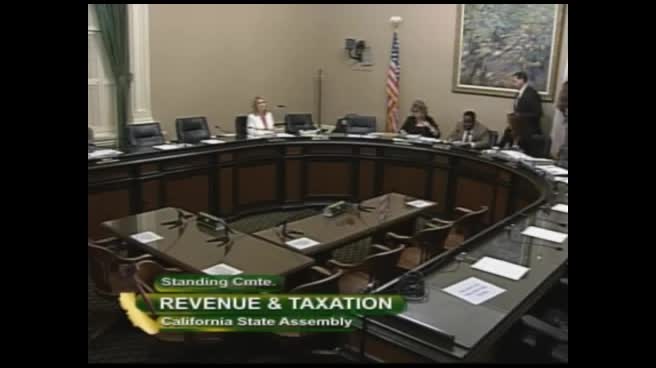
| May 9, 2016 | Do pass and be re-referred to the Committee on [Appropriations] | Assembly Standing Committee on Revenue and Taxation |
Passed |
This list shows positions taken on this bill by organizations on the date displayed, which is linked to the original source.
Positions by individuals are not included.
|
Organization
|
Position
|
Date
|
|---|---|---|
| California State Association Of Counties | * Support | May 9, 2016 |
| California Tax Reform Association | * Against | May 9, 2016 |
| California Tax Reform Association | * Against Unless Amend | May 9, 2016 |
| ChargePoint | * Support | May 9, 2016 |
| Climate Resolve | ** Support | May 9, 2016 |
| Electric Vehicle Charging Association | ** Support | May 9, 2016 |
| Envision Solar Fund | * Support | May 9, 2016 |
| Evatran Plugless Power | * Support | May 9, 2016 |
Date of Hearing: May 18, 2016
ASSEMBLY COMMITTEE ON APPROPRIATIONS
Lorena Gonzalez, Chair
ABPCA Bill Id:AB 2675
Author:(Chiu) – As Amended Ver:May 2, 2016
Policy Committee: | Revenue and Taxation | Vote: | 9 - 0 |
Urgency: No State Mandated Local Program: No Reimbursable: No
SUMMARY:
This bill provides a partial Sales and Use Tax (SUT) exclusion and a tax credit under the Personal Income Tax (PIT) Law and the Corporation Tax (CT) Law for the purchase of electrical vehicle infrastructure for a qualified dwelling. Specifically, this bill:
- Excludes 10% of the first $400,000 of gross receipts of purchased electric vehicle infrastructure from the state portion of the sales and use tax. This partial exclusion is operative between January 1, 2017, and January 1, 2020.
- Creates a PIT and CT credit equal to 10% of the amount paid by a taxpayer for electric vehicle infrastructure, not to exceed $2,500. This credit is operative for taxable years beginning on or after January 1, 2017, and before January 1, 2020.
- Defines a “qualified dwelling” as a multifamily residence or multifamily unit, mobile home, or manufactured home located at a mobile home park, duplex, townhome, apartment, and condominium.
FISCAL EFFECT:
- Significant administrative costs to the Board of Equalization (BOE) and the Franchise Tax Board (FTB) to implement these programs.
- Annual GF revenue loss of approximately $1.7 million, $2.6 million, $2.8 million in FY 2016-17, FY 2017-18, FY 2018-19, respectively.
COMMENTS:
- Purpose. According to the author, AB 2675 will help promote zero-emission vehicles and help invest in EV infrastructure. Supporters argue that this bill would encourage building owners to make the decision to install fully functioning electric vehicle charging facilities.
- Existing state programs. The Alternative and Renewable Fuel and Vehicle Technology Program (ARFVTP) provides grants, loans, loan guarantees, revolving loans, or appropriate measures to reduce California’s dependence on petroleum. ARFVTP provides a loan and rebate program for small businesses that meet the criteria to install electric vehicle charging stations. Funded by the California Energy Commission, this program may provide up to 100% coverage to lenders on certain loan defaults. Borrowers may be eligible to receive a rebate of 10 to 15% of the enrolled loan amount if they had one or fewer late payments and the loan is paid off or it reaches 49 months.
- How would the PIT and CT credit work? This bill allows a tax credit of 10 percent of the amount paid or incurred for electric vehicle infrastructure during the taxable year for use a qualified dwelling, not to exceed $2,500. Any unused credits could be carried over for four years or until exhausted. In its analysis of the bill, the Franchise Tax Board identifies a number of administrative concerns with this portion of AB 2675, including:
- As currently drafted, the maximum credit available for a jointly file return, which reflects the tax return of two taxpayers, would be $5,000, not $2,500.
- The bill does not specify how long the electric vehicle infrastructure must be placed in service in order for the taxpayer to receive the credit. Therefore, a taxpayer could claim a 10 percent credit for amounts paid or incurred for the same infrastructure for multiple years.
- Definitions remain broad and could cause confusion. For example, the costs of upkeep, maintenance and improvements to existing infrastructure could possibly qualify for costs incurred for electrical vehicle infrastructure.
- How would the partial SUT exclusion work? This bill excludes 10% of the price of EV infrastructure from the state portion of SUT, up to the first $400,000. In practice, this exclusion is administratively difficult to implement.
For example, if a taxpayer purchased $500,000 in electric vehicle infrastructure, this exclusion would result in only $460,000 of TPP being subject to the state portion of the SUT (6%). However, Bradley-Burns (1.25%) and any relevant local sales and use taxes would still be collected on the full $500,000. Assuming no local tax, the taxpayer in this example would owe $27,600 in state SUT and $6,250 in Bradley-Burns, compared to $36,250 without the exclusion, resulting in savings of $2,400.
Analysis Prepared by: Luke Reidenbach / APPR. / (916) 319-2081
Date of Hearing: May 9, 2016
ASSEMBLY COMMITTEE ON REVENUE AND TAXATION
Sebastian Ridley-Thomas, Chair
ABPCA Bill Id:AB 2675 (
Author:Chiu) – As Amended Ver:May 2, 2016
Majority vote. Tax levy. Fiscal committee.
SUBJECT: Sales and use tax exclusion: income taxes credits: electric vehicle infrastructure
SUMMARY: Provides a partial Sales and Use Tax (SUT) Law exclusion and tax credit under the Personal Income Tax (PIT) Law and the Corporation Tax (CT) Law for electric vehicle (EV) infrastructure at a "qualified dwelling." Specifically, this bill:
- Provides, between January 1, 2017 and January 1, 2020, a partial exclusion under the SUT Law for 10% of the gross receipts or sales price of EV infrastructure purchased for use at a "qualified dwelling" in California. For purposes of the SUT exclusion, this bill:
- Limits the exclusion to the first $400,000 of gross receipts or sales price; and,
- Specifies that the exclusion does not apply to local SUT imposed pursuant to the Bradley-Burns Uniform Local SUT Law (Bradley-Burns) or the Transactions and Use Tax (TUT) Law.
- Allows a credit under the PIT Law and the CT Law, for taxable years beginning on or after January 1, 2017 and before January 1, 2020, in an amount equal to 10% of the amount paid by a taxpayer for EV infrastructure during the taxable year for use at a "qualified dwelling," not to exceed $2,500. For purposes of the PIT and CT credit, this bill:
- Allows the credit to be carried over for four years, or until the credit is exhausted;
- Authorizes the Franchise Tax Board (FTB) to prescribe rules, guidelines, or procedures necessary or appropriate to carry out the purposes of the credit;
- Provides that Revenue and Taxation Code (R&TC) Section 41 does not apply to the credit; and,
- Repeals the credit on December 1, 2020.
- Defines "EV infrastructure" as structures, machinery, and equipment necessary to support an EV, including a battery charging station, battery exchange station, and rapid charging station.
- Defines a "battery charging station" as any level of EV supply equipment station built in compliance with the 2013 California Electrical Code that delivers electricity from a source outside to inside an EV.
- Defines a "rapid charging station" as an industrial grade electrical outlet that allows for faster charging of EV batteries through higher power levels and meets or exceeds existing regulations at the time of purchase.
- Defines a "qualified dwelling" as a multiunit dwelling, which includes a multifamily residence or multifamily dwelling unit, mobilehome or manufactured home located at a mobilehome park, duplex, townhome, apartment, and condominium.
- Takes immediate effect as a tax levy.
EXISTING FEDERAL LAW provides, through December 31, 2016, a tax credit for alternative fuel vehicle refueling property that includes charging stations for electric vehicles. The credit is calculated as 30% of the cost of qualified property placed in service during the taxable year, may not exceed $30,000 for business or investment use property and $1,000 for consumer property, and is subject to recapture if the property no longer qualifies for the credit within three years of being placed in service.
EXISTING STATE LAW:
- Establishes the Alternative and Renewable Fuel and Vehicle Technology Program (ARFVTP) which requires the California Energy Commission (CEC) to fund projects that develop and deploy technologies sand alternative and renewable fuels in the marketplace to help meet the state's climate change goals including, but not limited to, expanding alternative fueling infrastructure such as EV charging systems. (Health & Safety Code Section 44272)
- Imposes a SUT on the sale of, or the storage, use, or other consumption of, tangible personal property (TPP), unless specifically exempted.
- Provides that the SUT must be computed based on the sales price or gross receipts of the TPP, unless specifically excluded.
- Specifies that a portion of the SUT funds city and county governments, and authorizes cities and counties to impose additional TUTs.
- Allows various tax credits under the PIT Law and CT Law. These credits are generally designed to encourage socially beneficial behavior or to provide relief to taxpayers who incur specified expenses.
- Applies performance measurement standards to any new tax credit under either the PIT Law or the CT Law if enacted by a bill introduced on or after January 1, 2015. Specifically, existing law requires all of the following:
- Specific goals, purposes, and objectives that the tax credit will achieve;
- Detailed performance indicators for the Legislature to use when measuring whether the tax credit meets the goals, purposes, and objectives stated in the bill; and,
- Data collection requirements to enable the Legislature to determine whether the tax credit is meeting, failing to meet, or exceeding those specific goals, purposes, and objectives. The requirements shall include the specific data and baseline measurements to be collected and remitted in each year the credit is in effect, for the Legislature to measure the change in performance indicators, and the specific taxpayers, state agencies, or other entities required to collect and remit data. (R&TC Section 41)
FISCAL EFFECT: Pending. Regarding the SUT provisions, the State Board of Equalization (BOE) fiscal estimate is currently pending.
Regarding the PIT Law and CT Law provisions, the FTB estimated that a previous version of this bill applying to all EV infrastructure installations, not just those limited to multiunit dwellings, would have resulted in General Fund (GF) revenue losses of $1.1 million in fiscal year (FY) 2016-17, $2.3 million in FY 2017-18, and $2.6 million in FY 2018-19. The scope of this bill has been slightly narrowed, so the revenue impact should be slightly reduced but still substantial.
COMMENTS:
- Author's Statement: The author has provided the following statement in support of this bill:
California is at the forefront of improving our air quality, battling climate change and reducing greenhouse gas emissions. Many California regions also suffer from the worst air quality in the country resulting in significant health cost to individuals and system of health care.
To achieve the desired air quality and greenhouse gas emission reductions that policy makers are striving to reach will require policies that promote zero-emission vehicles (ZEVs). In 2012, Governor Brown issued an Executive Order directing relevant state agencies to establish benchmarks to help the State's zero-emission vehicle infrastructure support 1.5 million [ZEVs] by 2025. Without the investment in EV infrastructure California may never reach this goal.
Investing in EV charging infrastructure will address the most common infrastructure concerns raised by customers of reliability, range anxiety, and length of commute disparity between gas and [ZEVs].
- Arguments in Support: Proponents of this bill state that despite working with state agencies to "establish the nation's first set of 'EV-ready' building standards for commercial and residential building…there is still a need to encourage building owners to make the decision to actually install fully functioning EV charging facilities." This bill would "encourage such installations by the business community in the same way such incentives have proven so successful in encouraging the installation of rooftop solar and energy efficiency measures."
- Arguments in Opposition: Opponents of this bill state that "[t]here is a robust discussion occurring within the state about electric charging infrastructure, which might be financed by utility ratepayers or other sources of financing" but "should the state determine that a tax exemption is an effective means of finance for some purchases (certainly not utility purchases), then the general fund should be reimbursed by the cap-and-trade fund for those losses."
- Committee Staff Comments:
- What is a "Tax Expenditure"? Existing law provides various credits, deductions, exclusions, and exemptions for particular taxpayer groups. In the late 1960s, United States Treasury officials began arguing that these features of the tax law should be referred to as "expenditures," since they are generally enacted to accomplish some governmental purpose and there is a determinable cost associated with each of them (in the form of forgone revenues). This bill would enact a new tax expenditure program in the form of a partial SUT exclusion and new PIT and CT credit for EV infrastructure.
- Tax Expenditure vs. Direct Expenditure: As the Department of Finance notes in its annual Tax Expenditure Report, there are several key differences between tax expenditures and direct expenditures. First, tax expenditures are reviewed less frequently than direct expenditures once they are put in place. This can offer taxpayers greater certainty, but it can also result in tax expenditures remaining part of the tax code without demonstrating any public benefit. Second, there is generally no control over the amount of revenue losses associated with any given tax expenditure. Finally, it should also be noted that, once enacted, it takes a two-thirds vote to rescind an existing tax expenditure absent a sunset date. With regard to EV infrastructure, growing acceptance of ZEVs in the marketplace and technological efficiencies may naturally stimulate installation without need for a long-term tax incentive. This bill includes a three-year sunset date for the SUT exclusion and the PIT Law and CT Law credit.
- SUT Exclusion:
- Overview of the SUT Law: California's SUT Law imposes a sales tax on retailers for the privilege of selling TPP, absent a specific exclusion or exemption. The tax is based upon a retailer's gross receipts from TPP sales in California. The SUT Law also imposes a mirror "use tax" on the storage, use, or other consumption of TPP purchased out-of-state and brought into California, which is imposed on the purchaser.
The current statewide SUT rate is 7.5% with 3.9375% reserved for the GF, 0.25% reserved for the State's Education Protection Account established by Proposition 30 (2010), 2.0625% shifted to other local revenue funds, and 1.25% imposed specifically for county operations and transportation pursuant to the Bradley-Burns Uniform Local SUT. The TUT Law authorizes local jurisdictions to impose additional taxes up to 2% within the county above the 7.5% statewide rate. Since Proposition 30's SUT provisions are scheduled to expire at the end of this year, the state portion of the SUT for implementation of this bill would be 6%.
The SUT represents the state's second largest source of GF revenues. Nevertheless, California's economy has seen dramatic growth in the service and information sectors, resulting in a significant erosion of the SUT base and a corresponding increase in California's reliance on PIT revenues. In FY 2014-15, SUT revenues were estimated to comprise 23% of the state's GF revenues, down from nearly 60% in FY 1950-51. Furthermore, the Commission on the 21st Century Economy noted that spending on taxable goods represented 34.6% of personal income in 2008, down from 55.4% in 1980. As a result, tax experts and economists from across the political spectrum argue that California should expand its SUT base.
It could be argued that, while well-intentioned, additional SUT exclusions and exemptions further erode an already shrinking SUT base. This, in turn, increases fiscal pressures to maintain or even increase California's relatively high SUT rate. High rates arguably promote non-compliance and encourage out-of-state purchases, placing California retailers at a competitive disadvantage. High rates also risk impacting consumer decision-making, which runs counter to widely accepted principles of sound tax policy.
- A Complicated Calculation: This bill excludes 10% of the price of EV infrastructure from the SUT, up to the first $400,000 and except for the portion collected pursuant to Bradley-Burns or the TUT Law. For example, if a taxpayer purchased $500,000 in EV infrastructure, the 10% exclusion ($40,000) would result in only $460,000 of TPP being subject to the SUT in the state's jurisdiction (6%). However, Bradley-Burns (1.25%) and any relevant local TUT would still be collected on the full $500,000. Assuming no local TUT, the taxpayer in this example would owe $27,600 in state SUT and $6,250 in Bradley-Burns, compared to $36,250 without the exclusion, resulting in savings of $2,400. According to the BOE, partial exemptions complicate tax administration for both the BOE and retailers collecting and remitting SUT. Return preparation and processing is more complicated and errors are more likely to occur, resulting in either increased claims for refund paid by the state or penalties and interest imposed on retailers. It is also unclear how the exclusion would be explained and marketed to taxpayers this bill seeks to incentivize, even creating the potential for retailers to slightly increase prices in light of the forthcoming discount. The Committee may wish to consider potential unintended consequences of implementing a partial SUT exclusion on the EV infrastructure market.
- PIT and CT Credit:
- What Do You Mean? In addition to the SUT exclusion, this bill allows taxpayers purchasing EV infrastructure to also benefit from a PIT or CT credit equal to 10% of the amount paid during the taxable year not to exceed $2,500. Although there is an existing federal tax credit for EV charging stations, the proposed state credit does not conform to the federal credit in scope or value. As such, the FTB's analysis of this bill highlights the following implementation questions:
- This bill states that the credit would be calculated as a percentage of the amount paid or incurred by the taxpayer for EV infrastructure, but does not specify whether the infrastructure must be used at a qualified dwelling in California, how long the infrastructure must be placed in service to qualify for the credit, and whether it must be purchased or could also be leased. This bill also does not specify whether the taxpayer qualifying for the credit must be the owner of the property or could be any other individual or business entity, including entities in the EV infrastructure business, paying or incurring costs to provide a property with infrastructure. Further defining the terms "battery exchange stations" and other "structures" or "equipment" necessary to support an EV may also help resolve any ambiguity.
- The FTB believes it lacks the expertise to determine what constitutes EV infrastructure. Credits involving areas for which the FTB lacks expertise are generally certified by another state agency that possesses the relevant expertise. The Committee may wish to consider tasking the CEC or another agency to work with the FTB in implementing the proposed tax credit.
- R&TC Section 41: SB 1335 (Leno), Chapter 845, Statutes of 2014 added R&TC Section 41, which recognized that the Legislature should apply the same level of review used for government spending programs to tax preference programs, including tax credits. Thus, Section 41 requires any bill that is introduced on or after January 1, 2015 and allows a new PIT or CT credit to contain specific goals, purposes, and objectives that the tax credit will achieve. In addition, Section 41 requires detailed performance indicators for the Legislature to use when measuring whether the tax credit meets the goals, purposes, and objectives so-identified. This bill provides that R&TC Section 41 does not apply to the proposed tax credit. The Committee may wish to consider the appropriateness of this exemption.
- Range Anxiety: The author's office states that the CEC's 2016-2017 Investment Plan Update for the ARFVTP indicated that a convenient, reliable network of public EV charging stations is critical to support expansion of EV ownership and that EV chargers for multi-unit dwellings still face ongoing market barriers. According to the CEC, ARFVTP invests up to $100 million in public funds each year to promote the development of a clean and secure transportation future, and has awarded over $38.7 million for the installation of more than 7,600 commercial, workplace, residential (single-family and multi-unit dwellings), and corridor EV charging stations since 2009. Additionally, California's three investor-owned utilities have recently proposed EV infrastructure programs to encourage greater EV adoption in their territories, totaling $1.1 billion and up to 62,000 charging stations including installations at multiunit dwellings. Given the implementation considerations highlighted by both the BOE and FTB, the Committee may wish to consider whether improving the flow of funds through ARFVTP or enabling new market competition may be a more efficient way to further incentivize installation of EV infrastructure.
- Technical Amendment: Committee staff suggests adoption of technical amendments recasting the allowable PT Law and CT Law credit to be calculated as the lesser of the following:
- 10% of the amount paid or incurred by the taxpayer; or,
- Two thousand five hundred dollars ($2,500).
- Related Legislation: AB 2673 (Harper) creates a SUT exemption and PIT Law and CT Law credit for hydrogen station refueling equipment. AB 2673 is scheduled to be heard by this Committee today.
SB 578 (Block) would have allowed a PIT Law and CT Law credit for electric vehicle charging stations. SB 578 was held on the Senate Committee on Appropriations' Suspense File.
REGISTERED SUPPORT / OPPOSITION:
Support
ChargePoint
Climate Resolve
Electric Vehicle Charging Association
Opposition
California Tax Reform Association
Analysis Prepared by: Irene Ho / REV. & TAX. / (916) 319-2098
Discussed in Hearing
 3MIN
Assembly Standing Committee on Revenue and Taxation
Bill Author

Bill Co-Author(s):