AB 2702: Greenhouse gases: study.
- Session Year: 2015-2016
- House: Assembly
- Latest Version Date: 2016-03-18
The Global Warming Solutions Act of 2006 designates the State Air Resources Board as the state agency charged with monitoring and regulating sources of emissions of greenhouse gases. The state board is required to adopt a statewide greenhouse gas emissions limit equivalent to the statewide greenhouse gas emissions level in 1990 to be achieved by 2020 and to adopt rules and regulations in an open public process to achieve the maximum, technologically feasible, and cost-effective greenhouse gas emissions reductions. Existing law establishes the Integrated Climate Adaptation and Resiliency Program, which is administered by the Office of Planning and Research, to coordinate regional and local efforts with state climate adaptation strategies to adapt to the impacts of climate change, as specified. Existing law requires the California Environmental Protection Agency to update the states climate adaptation strategy to identify vulnerabilities to climate change.
This bill would state the intent of the Legislature to enact legislation that would continue the work with local governments, state agencies, and others to meet the goals set forth in Governor Browns Under 2 MOU, which brings together subnational governments willing to commit to either reducing the emissions of greenhouse gases 80% to 95% below 1990 levels by 2050 or achieving a per capita annual emissions target of less than 2 metric tons of carbon dioxide equivalent by 2050.
This bill would require the state board to conduct a study that outlines best practices and policies for meeting state goals to reduce greenhouse gas emissions. The bill also would authorize the state board to collaborate with air pollution control and air quality management districts.
The Global Warming Solutions Act of 2006 designates the State Air Resources Board as the state agency charged with monitoring and regulating sources of emissions of greenhouse gases. The state board is required to adopt a statewide greenhouse gas emissions limit equivalent to the statewide greenhouse gas emissions level in 1990 to be achieved by 2020 and to adopt rules and regulations in an open public process to achieve the maximum, technologically feasible, and cost-effective greenhouse gas emissions reductions. Existing law establishes the Integrated Climate Adaptation and Resiliency Program, which is administered by the Office of Planning and Research, to coordinate regional and local efforts with state climate adaptation strategies to adapt to the impacts of climate change, as specified. Existing law requires the California Environmental Protection Agency to update the states climate adaptation strategy to identify vulnerabilities to climate change.
This bill would state the intent of the Legislature to enact legislation that would continue the work with local governments, state agencies, and others to meet the goals set forth in Governor Browns Under 2 MOU, which brings together subnational governments willing to commit to either reducing the emissions of greenhouse gases 80% to 95% below 1990 levels by 2050 or achieving a per capita annual emissions target of less than 2 metric tons of carbon dioxide equivalent by 2050.
(a)The Legislature finds and declares all of the following:
(1)
(a)California has been a leader on climate change for more than a decade through the enactment of landmark legislation legislation, such as the California Global Warming Solutions Act of 2006 (Division 25.5 (commencing with Section 38500) of the Health and Safety Code) and the Clean Energy and Pollution Reduction Act of 2015 (Chapter 547 of the Statutes of 2015) 2015), and through policies and practices that allow for Californians to be innovators and early adapters for new technologies technologies, like those related to renewable energy and clean fuels.
(2)
(b)In May of 2015, Governor Brown, Edmund G. Brown Jr., along with leaders from 11 other states and provinces from seven countries, entered into the Under 2 MOU committing the signatories to either reducing the emissions of greenhouse gases 80 to 95 percent below 1990 levels by 2050 or achieving a per capita annual emissions target of less than 2 metric tons of carbon dioxide equivalent by 2050.
(3)
(c)As of January of 2016, a total of 127 jurisdictions representing 27 countries and 6 continents have signed or endorsed the Under 2 MOU.
(4)
(d)In December of 2015, 195 counties from around the globe adopted the Paris Agreement to the United Nations Framework Convention on Climate Change (FCCC/CP/2015/L.9/Rev.1) at the United Nations Climate Conference (COP21) in Paris, France, signaling a commitment to limit the effects of climate change and further reducing the emissions of greenhouse gases.
(5)
(e)Californias leadership and vision on climate change helped open the door to the historic Paris Agreement.
(6)
(f)The achievements made in COP21, the Under 2 MOU, and recent legislative efforts in California are by no means the end in the states effort to combat climate change. In California, we know the serious damage climate change can cause to everything from our supply of food and clean water to the health of the forests and from neighborhood public safety to our national security. We need to continue to work together to create and implement innovative policies that move us forward in our efforts to address the impacts of climate change.
(b)It is the intent of the Legislature to enact legislation that would continue the work with local governments, state agencies, and others to meet the goals set forth in Governor Browns Under 2 MOU, which brings together subnational governments willing to commit to either reducing the emissions of greenhouse gases 80 to 95 percent below 1990 levels by 2050 or achieving a per capita annual emissions target of less than 2 metric tons of carbon dioxide equivalent by 2050.
SEC. 2.Section 39733 is added to the Health and Safety Code, to read:39733.No later than July 1, 2018, the state board shall conduct a study that outlines best practices and policies for meeting state goals to reduce greenhouse gas emissions. In conducting the study, the state board may collaborate with districts.
(a)The Legislature finds and declares all of the following:
(1)California has been a leader on climate change for more than a decade through the enactment of landmark legislation such as the California Global Warming Solutions Act of 2006 (Division 25.5 (commencing with Section 38500) of the Health and Safety Code) and the Clean Energy and Pollution Reduction Act of 2015 (Chapter 547 of the Statutes of 2015) and through policies and practices that allow for Californians to be innovators and early adapters for new technologies like those related to renewable energy and clean fuels.
(2)In May of 2015, Governor Brown, along with leaders from 11 other states and provinces from seven countries, entered into the Under 2 MOU committing the signatories to either reducing the emissions of greenhouse gases 80 to 95 percent below 1990 levels by 2050 or achieving a per capita annual emissions target of less than 2 metric tons of carbon dioxide equivalent by 2050.
(3)As of January of 2016, a total of 127 jurisdictions representing 27 countries and 6 continents have signed or endorsed the Under 2 MOU.
(4)In December of 2015, 195 counties from around the globe adopted the Paris Agreement to the United Nations Framework Convention on Climate Change (FCCC/CP/2015/L.9/Rev.1) at the United Nations Climate Conference (COP21) in Paris, France, signaling a commitment to limit the effects of climate change and further reducing the emissions of greenhouse gases.
(5)Californias leadership and vision on climate change helped open the door to the historic Paris Agreement.
(6)The achievements made in COP21, the Under 2 MOU, and recent legislative efforts in California are by no means the end in the states effort to combat climate change. In California, we know the serious damage climate change can cause to everything from our supply of food and clean water to the health of the forests and from neighborhood public safety to our national security. We need to continue to work together to create and implement innovative policies that move us forward in our efforts to address the impacts of climate change.
(b)It is the intent of the Legislature to enact legislation that would continue the work with local governments, state agencies, and others to meet the goals set forth in Governor Browns Under 2 MOU, which brings together subnational governments willing to commit to either reducing the emissions of greenhouse gases 80 to 95 percent below 1990 levels by 2050 or achieving a per capita annual emissions target of less than 2 metric tons of carbon dioxide equivalent by 2050.
|
Date
|
Status
|
|---|---|
| Feb 19, 2016 | Introduced. To print. |
| Feb 21, 2016 | From printer. May be heard in committee March 22. |
| Feb 22, 2016 | Read first time. |
| Mar 17, 2016 | Referred to Com. on NAT. RES. |
| Mar 18, 2016 | From committee chair, with author's amendments: Amend, and re-refer to Com. on NAT. RES. Read second time and amended. |
| Mar 28, 2016 | Re-referred to Com. on NAT. RES. |
| Apr 19, 2016 | From committee: Do pass and re-refer to Com. on APPR. (Ayes 6. Noes 2.) (April 18). Re-referred to Com. on APPR. |
| May 11, 2016 | In committee: Set, first hearing. Referred to APPR. suspense file. |
| May 27, 2016 | In committee: Held under submission. |
|
Date
|
Description
|
Location
|
Votes
|
|
|---|---|---|---|---|
| Apr 18, 2016 | Do pass and be re-referred to the Committee on [Appropriations] | Assembly Standing Committee on Natural Resources |
Passed |
This list shows positions taken on this bill by organizations on the date displayed, which is linked to the original source.
Positions by individuals are not included.
|
Organization
|
Position
|
Date
|
|---|---|---|
| Environment California | ** Support | Apr 18, 2016 |
Date of Hearing: May 11, 2016
ASSEMBLY COMMITTEE ON APPROPRIATIONS
Lorena Gonzalez, Chair
ABPCA Bill Id:AB 2702
Author:(Atkins) – As Amended Ver:March 18, 2016
Policy Committee: | Natural Resources | Vote: | 6 - 2 |
|
| ||
|
|
Urgency: No State Mandated Local Program: No Reimbursable: No
SUMMARY:
This bill requires the California Air Resources Board (ARB) to conduct a study outlining best policies and practices for meeting state greenhouse gas reduction (GGR) goals by July 1, 2018. This bill allows ARB to collaborate with local air pollution control and air quality management districts in conducting the study.
FISCAL EFFECT:
Increased annual costs of approximately $150,000 (Cost of Implementation Account) over a two-year period.
ARB is currently developing the AB 32 Scoping Plan Update, expected to be released in 2017. Some of the requirements of this bill may be included in this effort. To the extent the author intends for a study developed pursuant to the bill to offer best practices for local governments to assist them with reducing GHG emissions, ARB would require additional resources.
COMMENTS:
- Purpose. The Global Climate Leadership Memorandum of Understanding (Under 2 MOU) is a non-binding agreement initiated by Governor Brown and 11 other subnational signatories in May 2015. The Under 2 MOU commits the signatories to pursue either reducing the emissions of GHGs to 80% to 95% below 1990 levels by 2050, or achieving a per capita annual emissions target of less than 2 metric tons of carbon dioxide equivalent by 2050 to achieve the goal of limiting global warming to less than two degrees Celsius. The Under 2 MOU has since been signed by over 100 additional subnational jurisdictions.
According to the author, this bill will create a clearinghouse of best practices to assist local governments and other entities in implementing the Under 2 MOU by identifying those programs, policies, and actions that provide effective GHG emission reduction strategies.
- Background. The California Global Warming Solutions Act of 2006 (AB 32) requires ARB to adopt a statewide GHG emissions limit equivalent to 1990 levels by 2020 and adopt regulations, including market-based compliance mechanisms, to achieve maximum technologically feasible and cost-effective GHG emission reductions.
As part of the implementation of AB 32 market-based compliance measures, ARB adopted a cap-and-trade program that caps the allowable statewide emissions and provides for the auctioning of emission credits, the proceeds of which are quarterly deposited into the Greenhouse Gas Reduction Fund (GGRF) available for appropriation by the Legislature.
The 2014-15 Budget Act allocated cap-and-trade revenues for the 2014-15 fiscal year and established a long-term plan for the allocation of cap-and-trade revenues beginning in fiscal year 2015-16.
The Budget continuously appropriates 35% of cap-and-trade funds for investments in transit, affordable housing, and sustainable communities. Twenty-five percent of the revenues are continuously appropriated to continue the construction of high-speed rail. The remaining 40% are to be appropriated annually by the Legislature for investments in programs that include low-carbon transportation, energy efficiency and renewable energy, and natural resources and waste diversion.
An expenditure plan for the 40% was not included in the 2015-16 Budget Act, with the exception of $227 million appropriated to continue funding for specified existing programs. The remaining 2015-16 revenues, along with 2016-17 revenues totaling $3.1 billion, are available for appropriation this year.
Analysis Prepared by: Jennifer Galehouse / APPR. / (916) 319-2081
Date of Hearing: April 18, 2016
ASSEMBLY COMMITTEE ON NATURAL RESOURCES
Das Williams, Chair
ABPCA Bill Id:AB 2702 (
Author:Atkins) – As Amended Ver:March 18, 2016
SUBJECT: Greenhouse gases: study
SUMMARY: Requires the Air Resources Board (ARB) to conduct a study that outlines best practices and policies for meeting state goals to reduce greenhouse gas (GHG) emissions.
EXISTING LAW requires ARB, pursuant to California Global Warming Solutions Act of 2006 (AB 32), to:
- Adopt a statewide GHG emissions limit equivalent to 1990 levels by 2020 and adopt regulations to achieve maximum technologically feasible and cost-effective GHG emission reductions.
- Prepare and approve a scoping plan, on or before January 1, 2009, and once every five years thereafter, for achieving the maximum technologically feasible and cost-effective reductions in GHG emissions from sources of emissions by 2020.
THIS BILL:
- Requires ARB, no later than July 1, 2018, to conduct a study that outlines best practices and policies for meeting state goals to reduce GHG emissions.
- Makes related findings regarding California's leadership on climate change, including the "Under 2 MOU" committing California and other signatories to either reducing the emissions of GHGs 80 to 95% below 1990 levels by 2050 or achieving a per capita annual emissions target of less than 2 metric tons of carbon dioxide equivalent by 2050.
FISCAL EFFECT: Unknown
COMMENTS:
- Background. As part of AB 32's direction that ARB adopt a statewide GHG emissions limit equivalent to 1990 levels by 2020 and adopt regulations to achieve maximum technologically feasible and cost-effective GHG emission reductions, AB 32 requires ARB to prepare and approve a scoping plan at five-year intervals.
The first AB 32 scoping plan, adopted by ARB in 2008, described the specific measures ARB and others must take to reduce statewide GHG emissions to 1990 levels by 2020. Pursuant to AB 32, the reduction measures identified in the scoping plan had to be proposed, reviewed, and adopted as individual regulations by January 1, 2011, to become operative beginning on January 1, 2012.
In May 2014, ARB adopted a scoping plan update. The scoping plan update discusses the objective of achieving an 80% reduction by 2050 and the need for a midterm target, but does not propose or adopt a specific target. According to ARB, the update defines ARB’s climate change priorities for the next five years and sets the groundwork to reach California's long-term climate goals.
The Global Climate Leadership Memorandum of Understanding (Under 2 MOU) is a non-binding agreement initiated by Governor Brown and 11 other subnational signatories in May 2015, which has since been signed by over 100 additional subnational jurisdictions. The Under 2 MOU commits the signatories to pursue either reducing the emissions of GHGs 80 to 95% below 1990 levels by 2050 or achieving a per capita annual emissions target of less than 2 metric tons of carbon dioxide equivalent by 2050, with the goal of limiting global warming to less than two degrees Celsius.
- Author's statement:
There are a number of programs, policies, and other actions being implemented at the state and local levels to help reduce GHG emissions. However, the most effective programs and policies in the short-term, mid-term, and long-term have not been assessed and/or inventoried.
AB 2702 will create a clearinghouse of best practices which will ultimately assist local governments and other entities in implementing the Under 2 MOU by identifying those programs, policies, and actions that provide effective GHG emission reduction strategies.
California is a leader in the fight to address climate change and the Under 2 MOU represents an opportunity to engage local governments within the state and around the world in the effort to limit the temperature rise of the planet to less than 2 degrees.
REGISTERED SUPPORT / OPPOSITION:
Support
Environment California
Opposition
None on file
Analysis Prepared by: Lawrence Lingbloom / NAT. RES. / (916) 319-2092
Discussed in Hearing
 3MIN
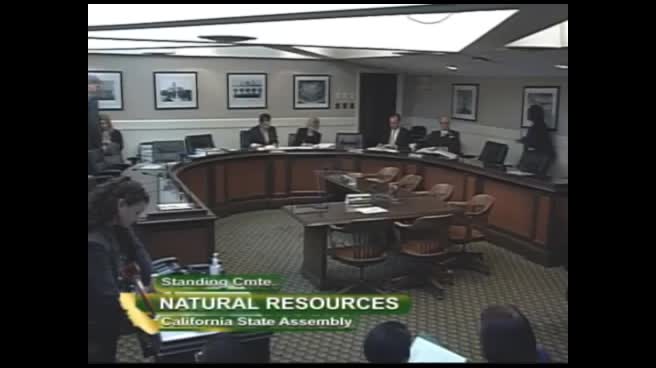
Assembly Standing Committee on Natural Resources
Bill Author

Bill Co-Author(s):