AB 2795: Telephony: unlisted numbers.
- Session Year: 2015-2016
- House: Assembly
- Latest Version Date: 2016-03-17
Under existing law, the Public Utilities Commission has regulatory authority over public utilities, including telephone corporations. Existing law prohibits a telephone corporation selling or licensing lists of residential subscribers from including the telephone number of any subscriber assigned an unpublished or unlisted access number, as defined, without his or her written waiver of this protection. Existing law prohibits a provider of mobile telephony services, as defined, or any affiliate or agent of the provider, providing the name and dialing number of a subscriber for inclusion in a directory or directory database, from including the dialing number of any subscriber without first obtaining the express consent of that subscriber. Existing law prohibits a subscriber from being charged for making the choice to not have his or her name and mobile telephony dialing number listed in a publicly available directory assistance database.
This bill would prohibit a subscriber from being charged for making a choice to not have the above information listed in a directory. The bill would additionally prohibit a subscriber from being charged for making the choice to not have his or her name and residential telephone number listed in a directory or a publicly available directory assistance database.
Existing law requires the Public Utilities Commission to consider and adopt a code of conduct, associated rules, and enforcement procedures to govern the conduct of electrical corporations relative to the consideration, formation, and implementation of a community choice aggregation program. Existing law requires the commission to ensure that the code of conduct, associated rules, and enforcement procedures are implemented by no later than January 1, 2013.
This bill would make a nonsubstantive change to that provision.
(a)Notwithstanding Section 2891, a telephone corporation selling or licensing lists of residential subscribers shall not include the telephone number of any a subscriber assigned an unlisted or unpublished access number. A subscriber may waive all or part of the protection provided by this subdivision through written notice to the telephone corporation.
(b)Notwithstanding Section 2891, a provider of mobile telephony services, or any direct or indirect affiliate or agent of a provider, providing the name and dialing number of a subscriber for inclusion in any directory of any form, or selling the contents of any directory database, or any portion or segment thereof, of a directory database, shall not include the dialing number of any a subscriber without first obtaining the express consent of that subscriber. The express consent shall meet all of the following requirements:
(1)It shall be one of the following:
(A)A separate document that is signed and dated by the subscriber, and that is not attached to any other document.
(B)An affirmative response made on a separate field on an Internet Web site where there is no default. The provider of mobile telephony services shall send a confirmation notice to the subscribers electronic mail address, or to a subscribers postal mail address if the subscriber does not have an electronic mail account.
(2)It shall be unambiguous, legible, and conspicuously disclose that, by opting in, the subscriber is consenting to have the subscribers dialing number sold or licensed as part of a list of subscribers and the subscribers dialing number may be included in a publicly available directory.
(3)If, under the subscribers calling plan, the subscriber may be billed for receiving unsolicited calls or text messaging from a telemarketer, the providers form shall include an unambiguous and legible disclosure statement that, by consenting to have the subscribers dialing number sold or licensed as part of a list of subscribers or included in a publicly available directory, the subscriber may incur additional charges for receiving unsolicited calls or text messages.
(c)Nothing in this section prohibits This section does not prohibit a subscriber of mobile telephony services from voluntarily entering into an agreement for the placement of his or her name and mobile telephony dialing number in any advertising program if the agreement satisfies the express consent requirements of this section.
(d)A subscriber who provides express prior consent pursuant to subdivision (b) may revoke that consent at any time. A provider of mobile telephony services shall comply with the subscribers request to opt out within a reasonable period of time, not to exceed 60 days.
(e)A subscriber shall not be charged for making the choice to not have their his or her name and mobile telephony dialing number be or his or her name and residential telephone number listed in a directory or publicly available directory assistance database.
(f)This section does not apply to the provision of telephone numbers to the following parties for the purposes indicated:
(1)To a collection agency, to the extent disclosures made by the agency are supervised by the commission, exclusively for the collection of unpaid debts.
(2)(A)To any a law enforcement agency, fire protection agency, public health agency, public environmental health agency, city or county emergency services planning agency, or private for-profit agency operating under contract with, and at the direction of, one or more of these agencies, for the exclusive purpose of responding to a 911 call or communicating an imminent threat to life or property.
(B)Any information or records provided to a private for-profit agency pursuant to this subdivision shall be held in confidence by that agency and by any an individual employed by or associated with that agency. This information or these records shall not be open to examination for any purpose not directly connected with the administration of the services specified in subdivision (e) of Section 2872 or this paragraph.
(3)To a lawful process issued under state or federal law.
(4)To a telephone corporation providing service between service areas for the provision to the subscriber of telephone service between service areas, or to third parties for the limited purpose of providing billing services.
(5)To a telephone corporation to effectuate a customers request to transfer the customers assigned telephone number from the customers existing provider of telecommunications services to a new provider of telecommunications services.
(6)To the commission pursuant to its jurisdiction and control over telephone and telegraph corporations.
(g)Every deliberate violation of this section is grounds for a civil suit by the aggrieved subscriber against the organization or corporation and its employees responsible for the violation.
(h)For purposes of this section, unpublished or unlisted access number means a telephone, telex, teletex, facsimile, computer modem, or any other code number that is assigned to a subscriber by a telephone or telegraph corporation for the receipt of communications initiated by other telephone or telegraph customers and that the subscriber has requested that the telephone or telegraph corporation keep in confidence.
(i)No telephone corporation, nor any official or employee thereof, shall A telephone corporation, or an official or employee of a telephone corporation, shall not be subject to criminal or civil liability for the release of customer information as authorized by this section.
SECTION 1.Section 707 of the Public Utilities Code is amended to read:707.(a)Not later than March 1, 2012, the commission shall institute a rulemaking proceeding for the purpose of considering and adopting a code of conduct, associated rules, and enforcement procedures, to govern the conduct of the electrical corporations relative to the consideration, formation, and implementation of community choice aggregation programs authorized in Section 366.2. The code of conduct, associated rules, and enforcement procedures, shall do all of the following:
(1)Ensure that an electrical corporation does not market against a community choice aggregation program, except through an independent marketing division that is funded exclusively by the electrical corporations shareholders and that is functionally and physically separate from the electrical corporations ratepayer-funded divisions.
(2)Limit the electrical corporations independent marketing divisions use of support services from the electrical corporations ratepayer-funded divisions, and ensure that the electrical corporations independent marketing division is allocated costs of any permissible support services from the electrical corporations ratepayer-funded divisions on a fully allocated embedded cost basis, providing detailed public reports of such use.
(3)Ensure that the electrical corporations independent marketing division does not have access to competitively sensitive information.
(4)(A)Incorporate rules that the commission finds to be necessary or convenient in order to facilitate the development of community choice aggregation programs, to foster fair competition, and to protect against cross-subsidization paid by ratepayers.
(B)It is the intent of the Legislature that the rules include, in whole or in part, the rules approved by the commission in Decision 97-12-088 and Decision 08-06-016.
(C)This paragraph does not limit the authority of the commission to adopt rules that it determines are necessary or convenient in addition to those adopted in Decision 97-12-088 and Decision 08-06-016 or to modify any rule adopted in those decisions.
(5)Provide for any other matter that the commission determines to be necessary or advisable to protect a ratepayers right to be free from forced speech or to implement that portion of the federal Public Utility Regulatory Policies Act of 1978 that establishes the federal standard that no electric utility may recover from any person other than the shareholders or other owners of the utility, any direct or indirect expenditure by the electric utility for promotional or political advertising (16 U.S.C. Sec. 2623(b)(5)).
(b)No later than January 1, 2013, the commission shall ensure that the code of conduct, associated rules, and enforcement procedures are implemented.
(c)This section does not limit the authority of the commission to require that any marketing against a community choice aggregation plan shall be conducted by an affiliate of the electrical corporation, or to require that marketing against a community choice aggregator not be conducted by a marketing division of the electrical corporation, subject to affiliate transaction rules to be developed by the commission.
(a)Not later than March 1, 2012, the commission shall institute a rulemaking proceeding for the purpose of considering and adopting a code of conduct, associated rules, and enforcement procedures, to govern the conduct of the electrical corporations relative to the consideration, formation, and implementation of community choice aggregation programs authorized in Section 366.2. The code of conduct, associated rules, and enforcement procedures, shall do all of the following:
(1)Ensure that an electrical corporation does not market against a community choice aggregation program, except through an independent marketing division that is funded exclusively by the electrical corporations shareholders and that is functionally and physically separate from the electrical corporations ratepayer-funded divisions.
(2)Limit the electrical corporations independent marketing divisions use of support services from the electrical corporations ratepayer-funded divisions, and ensure that the electrical corporations independent marketing division is allocated costs of any permissible support services from the electrical corporations ratepayer-funded divisions on a fully allocated embedded cost basis, providing detailed public reports of such use.
(3)Ensure that the electrical corporations independent marketing division does not have access to competitively sensitive information.
(4)(A)Incorporate rules that the commission finds to be necessary or convenient in order to facilitate the development of community choice aggregation programs, to foster fair competition, and to protect against cross-subsidization paid by ratepayers.
(B)It is the intent of the Legislature that the rules include, in whole or in part, the rules approved by the commission in Decision 97-12-088 and Decision 08-06-016.
(C)This paragraph does not limit the authority of the commission to adopt rules that it determines are necessary or convenient in addition to those adopted in Decision 97-12-088 and Decision 08-06-016 or to modify any rule adopted in those decisions.
(5)Provide for any other matter that the commission determines to be necessary or advisable to protect a ratepayers right to be free from forced speech or to implement that portion of the federal Public Utility Regulatory Policies Act of 1978 that establishes the federal standard that no electric utility may recover from any person other than the shareholders or other owners of the utility, any direct or indirect expenditure by the electric utility for promotional or political advertising (16 U.S.C. Sec. 2623(b)(5)).
(b)The No later than January 1, 2013, the commission shall ensure that the code of conduct, associated rules, and enforcement procedures are implemented by no later than January 1, 2013. implemented.
(c)This section does not limit the authority of the commission to require that any marketing against a community choice aggregation plan shall be conducted by an affiliate of the electrical corporation, or to require that marketing against a community choice aggregator not be conducted by a marketing division of the electrical corporation, subject to affiliate transaction rules to be developed by the commission.
|
Date
|
Status
|
|---|---|
| Feb 19, 2016 | Introduced. To print. |
| Feb 21, 2016 | From printer. May be heard in committee March 22. |
| Feb 22, 2016 | Read first time. |
| Mar 17, 2016 | From committee chair, with author's amendments: Amend, and re-refer to Com. on U. & C. Read second time and amended. |
| Mar 17, 2016 | Referred to Com. on U. & C. |
| Mar 28, 2016 | Re-referred to Com. on U. & C. |
| Apr 27, 2016 | In committee: Set, first hearing. Testimony taken. Further hearing to be set. |
| May 4, 2016 | In committee: Set, second hearing. Failed passage. |
| Jun 6, 2016 | From committee: Without further action pursuant to Joint Rule 62(a). |
|
Date
|
Description
|
Location
|
Votes
|
|
|---|---|---|---|---|
| May 4, 2016 | Do pass. | Assembly Standing Committee on Utilities and Commerce |
Failed |
This list shows positions taken on this bill by organizations on the date displayed, which is linked to the original source.
Positions by individuals are not included.
|
Organization
|
Position
|
Date
|
|---|---|---|
| At&T | * Against | Apr 27, 2016 |
| California Cable & Telecommunications Association | * Against | Apr 27, 2016 |
| California Cable and Telecommunications Association | * Against | Apr 27, 2016 |
| Consolidated Communications | ** Against | Apr 27, 2016 |
| Consumer Federation Of California | * Support | Apr 27, 2016 |
| Frontier Communications | ** Against | Apr 27, 2016 |
| The Utility Reform Network | ** Support | Apr 27, 2016 |
Date of Hearing: May 4, 2016
ASSEMBLY COMMITTEE ON UTILITIES AND COMMERCE
Mike Gatto, Chair
ABPCA Bill Id:AB 2795 (
Author:Lopez) – As Amended Ver:March 17, 2016
SUBJECT: Telephony: unlisted numbers
SUMMARY: Prohibits a telephone corporation from charging subscribers for not having their residential telephone number listed in a directory or publicly available directory assistance database.
EXISTING LAW:
- Prohibits a telephone corporation selling or licensing lists of residential subscribers, from including the telephone number of any subscriber assigned an unlisted or unpublished access number. Specifies that a subscriber may waive all or part of the protection through written notice to the telephone corporation. (Public Utilities Code Section 2891.1)
- Prohibits a provider of mobile telephony services, or any direct or indirect affiliate or agent of a provider, from providing the name and dialing number of a subscriber for inclusion in any directory of any form, or selling the contents of any directory database, or any portion or segment, from including the dialing number of any subscriber without first obtaining the express consent of that subscriber. (Public Utilities Code Section 2891.1)
- Specifies that a subscriber may not be charged for making the choice to not have their name and mobile telephony dialing number listed in a publicly available directory assistance database. (Public Utilities Code Section 2891.1)
FISCAL EFFECT: Unknown. This bill is keyed non-fiscal by the Legislative Counsel.
COMMENTS:
- Author's Statement: "Generally, consumers have a difficult time fighting against large corporations that have unjust practices. This fee to keep a person's private information as 'unlisted' may be cost-prohibitive to low-income families and the elderly, who may live on fixed incomes. Many times, these monthly fees are added to a person's phone bill without their knowledge; often, this disadvantaged population rely and count every single cent to make ends meet. Furthermore, publications of 'unlisted numbers' is particularly dangerous for victims of domestic violence that have been enrolled in 'Safe at Home,' a program designed to protect victims and survivors of domestic violence, stalking, sexual assault or victims of elder abuse. This disclosure can lead to potentially dangerous consequences for these persons that pay a service to ensure their privacy and safety."
- Background: In 2006, the California Public Utilities Commission (CPUC) deregulated landline telephone services in order to promote a competitive environment. By deregulating, the CPUC chose not to constrain the price that telephone companies may charge for telephone services. The CPUC could still exercise its general regulatory authority to stop a rate increase, but there has been little indication that they would do so. The CPUC does not regulate wireless services, nor other Internet based voice service, such as Voice over Internet Protocol (VoIP) services. Smaller telephone companies continue to be regulated by the CPUC.
- Unlisted and Unpublished Numbers: Most telephone companies provide subscribers with the option to unlist or unpublish their telephone numbers. Unlisted service is an option in which a subscriber may have their telephone number not listed in any directory, such as white pages. Unpublished service is an option in which subscribers may have their telephone numbers not listed in any directory or directory assistance, such as 4-1-1.
Before the CPUC deregulated local telephone services, AT&T charged $0.28 per month to have their telephone numbers unlisted/unpublished. After deregulation, AT&T charged $1.50 per month for unlisted services and $1.75 per month for unpublished services. According to AT&T, there is no charge for a new customer to initiate the service; however, it does charge existing customers $6.65 to initiate unlisted services in addition to the monthly recurring charge. There is no charge for limiting the information published in a directory, such as providing a customer's initials only aside from their full name, nor is there a charge for blocking a number from appearing on a Caller ID. However, according to The Utility Reform Network (TURN), AT&T currently imposes a $2.25 monthly charge for unlisted services and $4.95 monthly charge for unpublished services. Comcast charges a total fee of $3.50 per month to have a subscribers number unpublished, according to a recent settlement with the Attorney General over the publication of approximately 74,000 unlisted numbers.
Smaller companies that are still regulated by the CPUC are prohibited from charging subscribers a fee for unlisted numbers. Current law also prohibits providers of mobile telephony services, from including the dialing number of any subscriber in any directory without first obtaining the express consent of that subscriber. This bill extends the existing prohibition for mobile telephone services, to landline services. VoIP service providers are not affected by this bill.
This bill prohibits a telephone corporation from charging a subscriber for not having his or her residential telephone number listed in a directory or publicly available directory assistance database.
- Price vs. Cost: It is unclear if the price of unlisting a number reflects the cost of doing so. The telephone industry argues that there are identifiable costs associated with unlisting a number and to keep it unlisted monthly. In addition, opponents argue that historically it has been government policy to promote the goal of universal service, access, and communication to promote economic development and communications between one another. However, as the number of landline subscribers continues to decrease, and the number of wireless and VoIP subscribers increase, and because current law already prohibits mobile telephone services from listing numbers without a subscriber's consent, the number of publicly listed numbers will naturally decrease as well.
- Privacy and Safety: Although California law encourages customers to list their telephone numbers by requiring free directory listings and the distribution of free white pages directories, the California Constitution expressly guarantees an individual's right to privacy. If a subscriber chooses to have his or her telephone number unlisted, they have a right to do so, without being impeded by the cost of doing so. Unlisted services not only provide services for those seeking privacy, but also provide protections for individuals more susceptible to public safety dangers, such as law enforcement officials, prison guards, and crime victims.
According to the author, publications of "unlisted numbers" can lead to potentially dangerous consequences for these persons, such as domestic violence victims, that pay a service to ensure their privacy and safety. California's Safe at Home Program provides individuals, including victims of domestic violence and elder abuse, services to protect certain information from behind disclosed to other parties, including child information, mail forwarding, name change, voter registration, driving record suppression and internet disclosure prohibitions. It is unclear if such individuals are currently required to pay the fee to have their telephone numbers unlisted/unpublished. The author argues that the cost of being unlisted detrimentally affects such victims who may be elderly and low income, and live on fixed incomes.
- Arguments in Support: According to The Utility Reform Network (TURN), the sponsor of the bill, "Since the [CPUC] voted to deregulate phone service in 2007, the monthly fee for the 'service' of not printing a subscriber's private contact information in public phone books has continued to increase. Customers pay each month to keep their personal information out of public databases not only to preserve their privacy, but to protect their safety … This publication of 'unlisted numbers' is particularly dangerous for victims of domestic violence that have been enrolled in 'Safe at Home,' a program designed to protect victims and survivors of domestic violence, stalking, sexual assault or victims of elder abuse. This disclosure can lead to potentially dangerous consequences for these persons that pay a service to ensure their privacy and safety. Furthermore, this service detrimentally effects the elderly and low-income which live on fixed incomes. Often times, these vulnerable populations are charged these fees unknowingly; where every cent is important to their daily lives. Telephone companies should not be allowed to profit by limiting or invading the right of privacy of vulnerable citizens of California."
- Arguments in Opposition: According to AT&T, Frontier Communications, Consolidated Communications, and the California Cable & Telecommunications Association, "Government policy has long promoted the public distribution of telephone numbers through telephone directories… Historically, public policy and practice have promoted the telephone number and telephone network as means of communications and economic development. For decades, consumer have used directories to access numbers for government agencies, social services, businesses, friends and neighbors … AB 2795 is wrongly characterized as a privacy issue. Telephone numbers are not inherently private … Instead, AB 2795 is a misguided attempt at selective price regulation in a competitive industry."
- Prior Legislation:
SB 437 (Pavley) 2009: Prohibits all telephone corporations, including cellphone companies, from charging customers for having a unlisted telephone number. Failed Passage in the Senate Energy, Utilities and Communications Committee.
SB 1423 (Kuehl) 2008: Prohibits all telephone company customers from charging for an unlisted telephone number. Died on the Senate Floor.
REGISTERED SUPPORT / OPPOSITION:
Support
The Utility Reform Network (Sponsor)
Consumer Federation of California
Opposition
AT&T
California Cable & Telecommunications Association
Consolidated Communications
Frontier Communications
Analysis Prepared by: Edmond Cheung / U. & C. / (916) 319-2083
Date of Hearing: April 27, 2016
ASSEMBLY COMMITTEE ON UTILITIES AND COMMERCE
Mike Gatto, Chair
ABPCA Bill Id:AB 2795 (
Author:Lopez) – As Amended Ver:March 17, 2016
SUBJECT: Telephony: unlisted numbers
SUMMARY: Prohibits a telephone corporation from charging subscribers for not having their residential telephone number listed in a directory or publicly available directory assistance database.
EXISTING LAW:
- Prohibits a telephone corporation selling or licensing lists of residential subscribers, from including the telephone number of any subscriber assigned an unlisted or unpublished access number. Specifies that a subscriber may waive all or part of the protection through written notice to the telephone corporation. (Public Utilities Code Section 2891.1)
- Prohibits a provider of mobile telephony services, or any direct or indirect affiliate or agent of a provider, from providing the name and dialing number of a subscriber for inclusion in any directory of any form, or selling the contents of any directory database, or any portion or segment, from including the dialing number of any subscriber without first obtaining the express consent of that subscriber. (Public Utilities Code Section 2891.1)
- Specifies that a subscriber may not be charged for making the choice to not have their name and mobile telephony dialing number listed in a publicly available directory assistance database. (Public Utilities Code Section 2891.1)
FISCAL EFFECT: Unknown. This bill is keyed non-fiscal by the Legislative Counsel.
COMMENTS:
- Author's Statement: "Generally, consumers have a difficult time fighting against large corporations that have unjust practices. This fee to keep a person's private information as 'unlisted' may be cost-prohibitive to low-income families and the elderly, who may live on fixed incomes. Many times, these monthly fees are added to a person's phone bill without their knowledge; often, this disadvantaged population rely and count every single cent to make ends meet. Furthermore, publications of 'unlisted numbers' is particularly dangerous for victims of domestic violence that have been enrolled in 'Safe at Home,' a program designed to protect victims and survivors of domestic violence, stalking, sexual assault or victims of elder abuse. This disclosure can lead to potentially dangerous consequences for these persons that pay a service to ensure their privacy and safety."
- Background: In 2006, the California Public Utilities Commission (CPUC) deregulated landline telephone services in order to promote a competitive environment. By deregulating, the CPUC chose not to constrain the price that telephone companies may charge for telephone services. The CPUC could still exercise its general regulatory authority to stop a rate increase, but there has been little indication that they would do so. The CPUC does not regulate wireless services, nor other Internet based voice service, such as Voice over Internet Protocol (VoIP) services. Smaller telephone companies continue to be regulated by the CPUC.
- Unlisted and Unpublished Numbers: Most telephone companies provide subscribers with the option to unlist or unpublish their telephone numbers. Unlisted service is an option in which a subscriber may have their telephone number not listed in any directory, such as white pages. Unpublished service is an option in which subscribers may have their telephone numbers not listed in any directory or directory assistance, such as 4-1-1.
Before the CPUC deregulated local telephone services, AT&T charged $0.28 per month to have their telephone numbers unlisted/unpublished. After deregulation, AT&T charged $1.50 per month for unlisted services and $1.75 per month for unpublished services. According to AT&T, there is no charge for a new customer to initiate the service; however, it does charge existing customers $6.65 to initiate unlisted services in addition to the monthly recurring charge. There is no charge for limiting the information published in a directory, such as providing a customer's initials only aside from their full name, nor is there a charge for blocking a number from appearing on a Caller ID. However, according to the Utility Reform Network (TURN), AT&T currently imposes a $2.25 monthly charge for unlisted services and $4.95 monthly charge for unpublished services. Comcast charges a total fee of $3.50 per month to have a subscribers number unpublished, according to a recent settlement with the Attorney General over the publication of approximately 74,000 unlisted numbers.
Smaller companies that are still regulated by the CPUC are prohibited from charging subscribers a fee for unlisted numbers. Current law also prohibits providers of mobile telephony services, from including the dialing number of any subscriber in any directory without first obtaining the express consent of that subscriber. This bill extends the existing prohibition for mobile telephone services, to landline services. VoIP service providers are not affected by this bill.
This bill prohibits a telephone corporation from charging a subscriber for not having his or her residential telephone number listed in a directory or publicly available directory assistance database.
- Price vs. Cost: It is unclear if the price of unlisting a number reflects the cost of doing so. The telephone industry argues that there are identifiable costs associated with unlisting a number and to keep it unlisted monthly. In addition, opponents argue that historically it has been government policy to promote the goal of universal service, access, and communication to promote economic development and communications between one another. However, as the number of landline subscribers continues to decrease, and the number of wireless and VoIP subscribers increase, and because current law already prohibits mobile telephone services from listing numbers without a subscriber's consent, the number of publicly listed numbers will naturally decrease as well.
- Privacy and Safety: Although California law encourages customers to list their telephone numbers by requiring free directory listings and the distribution of free white pages directories, the California Constitution expressly guarantees an individual's right to privacy. If a subscriber chooses to have his or her telephone number unlisted, they have a right to do so, without being impeded by the cost of doing so. Unlisted services not only provide services for those seeking privacy, but also provide protections for individuals more susceptible to public safety dangers, such as law enforcement officials, prison guards, and crime victims.
According to the author, publications of "unlisted numbers" can lead to potentially dangerous consequences for these persons, such as domestic violence victims, that pay a service to ensure their privacy and safety. California's Safe at Home Program provides individuals, including victims of domestic violence and elder abuse, services to protect certain information from behind disclosed to other parties, including child information, mail forwarding, name change, voter registration, driving record suppression and internet disclosure prohibitions. It is unclear if such individuals are currently required to pay the fee to have their telephone numbers unlisted/unpublished. The author argues that the cost of being unlisted detrimentally affects such victims who may be elderly and low income, and live on fixed incomes.
- Arguments in Support: According to The Utility Reform Network (TURN), the sponsor of the bill, "Since the [CPUC] voted to deregulate phone service in 2007, the monthly fee for the 'service' of not printing a subscriber's private contact information in public phone books has continued to increase. Customers pay each month to keep their personal information out of public databases not only to preserve their privacy, but to protect their safety … This publication of 'unlisted numbers' is particularly dangerous for victims of domestic violence that have been enrolled in 'Safe at Home,' a program designed to protect victims and survivors of domestic violence, stalking, sexual assault or victims of elder abuse. This disclosure can lead to potentially dangerous consequences for these persons that pay a service to ensure their privacy and safety. Furthermore, this service detrimentally effects the elderly and low-income which live on fixed incomes. Often times, these vulnerable populations are charged these fees unknowingly; where every cent is important to their daily lives. Telephone companies should not be allowed to profit by limiting or invading the right of privacy of vulnerable citizens of California."
- Arguments in Opposition: According to AT&T, Frontier Communications, Consolidated Communications, and the California Cable & Telecommunications Association, "Government policy has long promoted the public distribution of telephone numbers through telephone directories… Historically, public policy and practice have promoted the telephone number and telephone network as means of communications and economic development. For decades, consumer have used directories to access numbers for government agencies, social services, businesses, friends and neighbors … AB 2795 is wrongly characterized as a privacy issue. Telephone numbers are not inherently private … Instead, AB 2795 is a misguided attempt at selective price regulation in a competitive industry."
- Prior Legislation:
SB 437 (Pavley) 2009: Prohibits all telephone corporations, including cellphone companies, from charging customers for having a unlisted telephone number. Failed Passage in the Senate Energy, Utilities and Communications Committee.
SB 1423 (Kuehl) 2008: Prohibits all telephone company customers from charging for an unlisted telephone number. Died on the Senate Floor.
REGISTERED SUPPORT / OPPOSITION:
Support
The Utility Reform Network (Sponsor)
Consumer Federation of California
Opposition
AT&T
California Cable & Telecommunications Association
Consolidated Communications
Frontier Communications
Analysis Prepared by: Edmond Cheung / U. & C. / (916) 319-2083
Discussed in Hearing
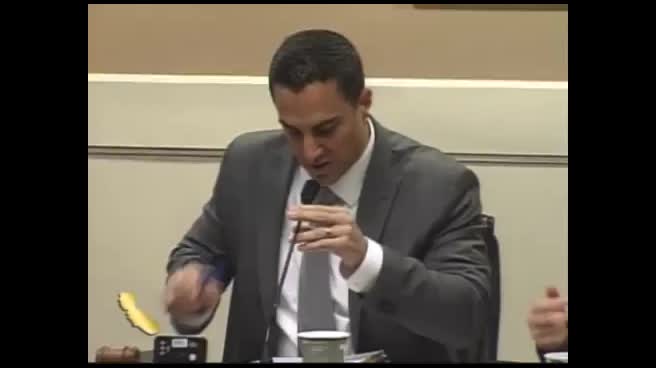 45MIN
Assembly Standing Committee on Utilities and Commerce
Bill Author

Bill Co-Author(s):