AB 64: State employees: reinstatement after military service.
- Session Year: 2015-2016
- House: Assembly
- Latest Version Date: 2014-12-15
The State Civil Service Act requires the reinstatement of a permanent, probationary, or exempt employee who returns from active duty military service to his or her former position, as specified. Under existing law, reinstatement to an employees former exempt position reestablishes the employees tenure and civil service reinstatement rights, if any, as they existed immediately prior to his or her military leave.
This bill would additionally require that a reinstated civil service employee who returns from active military service and who is paid hourly to be given the same shift and number of hours worked per week as he or she worked immediately prior to going on military leave.
Except as provided in Section 19781, a A permanent, probationary, or exempt employee who begins active duty within 90 calendar days from the effective date of his or her long-term military leave or within 10 calendar days from the effective date of his or her short-term or emergency military leave and who returns to state service within six months after termination of military service under his or her long-term military leave or within 10 days after termination of military service under his or her short-term or emergency military leave shall be reinstated to his or her former position. Reinstatement under this section of an employee who is paid hourly requires that the employee be given the same shift and number of hours worked per week as the employee had immediately prior to going on military leave. Reinstatement to an employees former exempt position under this section or Section 19783 shall reestablish the employees tenure and civil service reinstatement rights, if any, as they existed immediately prior to his or her military leave pursuant to this section or resignation pursuant to Section 19783. For the purpose of this section any period of rehabilitation afforded by the United States or the state following active duty shall be considered as military service and termination of the state military emergency by the Governor shall be considered termination of military service.
|
Date
|
Status
|
|---|---|
| Dec 15, 2014 | Introduced. To print. |
| Dec 16, 2014 | From printer. May be heard in committee January 15. |
| Jan 5, 2015 | Read first time. |
| Jan 22, 2015 | Referred to Com. on P.E., R., & S.S. |
| Apr 8, 2015 | From committee: Do pass and re-refer to Com. on APPR. with recommendation: To Consent Calendar. (Ayes 6. Noes 0.) (April 8). Re-referred to Com. on APPR. |
| Apr 29, 2015 | In committee: Set, first hearing. Referred to APPR. suspense file. |
| May 28, 2015 | In committee: Held under submission. |
| Jan 31, 2016 | Died pursuant to Article IV, Sec. 10(c) of the Constitution. |
| Feb 1, 2016 | From committee: Filed with the Chief Clerk pursuant to Joint Rule 56. |
|
Date
|
Description
|
Location
|
Votes
|
|
|---|---|---|---|---|
| Apr 8, 2015 | Do pass and be re-referred to the Committee on [Appropriations] with recommendation: To Consent Calendar | Assembly Standing Committee on Public Employees, Retirement, and Social Security |
Passed |
This list shows positions taken on this bill by organizations on the date displayed, which is linked to the original source.
Positions by individuals are not included.
|
Organization
|
Position
|
Date
|
|---|---|---|
| California Correctional Supervisors Organization, Inc. | ** Support | Apr 29, 2015 |
AB 64
Page 2
Date of Hearing: April 29, 2015
ASSEMBLY COMMITTEE ON APPROPRIATIONS
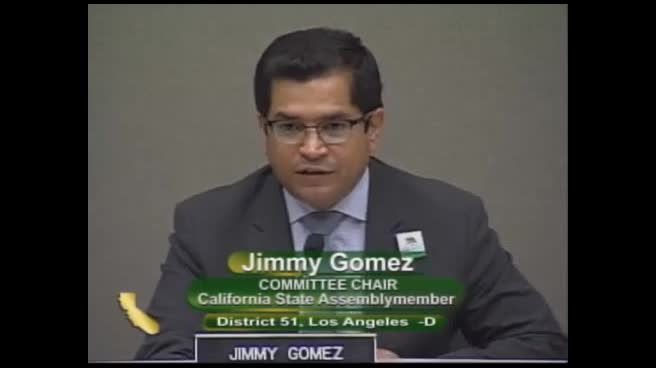
Jimmy Gomez, Chair
AB 64
(Chávez) – As Introduced December 15, 2014
Policy Committee: |
Public Employees, Retirement/Soc Sec |
Vote: |
6 - 0 |
Urgency: No State Mandated Local Program: No Reimbursable: No
SUMMARY:
This bill requires that state civil service employees who work on an hourly basis and are reinstated upon returning from activity military duty be given the same shift and number of work hours as they enjoyed prior to going on military leave.
FISCAL EFFECT:
Unknown, but very likely significant General and Special Fund costs to state agencies, in excess of $150,000, to accommodate disruptions to hourly staffing flexibility and scheduling needs.
COMMENTS:
1) Purpose. The State Civil Service Act provides reinstatement benefits to permanent, probationary, and exempt employees returning home from active duty military service. According to the author, hourly civil service employees are not granted the same rights under the Act, and therefore have no guarantee of receiving the same work shift or hours upon returning from active duty service. The author contends California is home to the highest percentage of veterans in the country, and should strive to ensure women and men returning home from deployment have their jobs returned to them.
2) Permanent Intermittent Employees. While this bill certainly has a laudable policy goal, its mandate may not be compatible with the very nature of the state's hourly civil service employees, known as "permanent intermittent" employees. Current statute defines intermittent positions as those in which the employee works "periodically or for a fluctuating portion of the full-time work schedule" (GOV 18552). Many of these employees are used to fill seasonal roles or roles with irregular time schedules, and it may be essential that scheduling for these roles remain flexible. Intermittent employees may have their schedules change, with respect to both hours and shift times, on a weekly basis. Requiring that such employees be given a particular shift and hours upon return from active duty service may not be consistent with the requirements of their positions, the needs of their agency, or even the season in which they work.
California currently has approximately 21,000 permanent intermittent employees statewide, though it is unknown what percentage of these are members of the military. According to census data, approximately 1-2% of California's total workforce is in the military reserves. If that were also true of its permanent intermittent workforce, approximately 200-400 employees could be affected by this bill.
Analysis Prepared by: Joel Tashjian / APPR. / (916) 319-2081
Discussed in Hearing
 2MIN
Assembly Standing Committee on Appropriations
Bill Author

Bill Co-Author(s):