AB 836: Tour guides: regulation.
- Session Year: 2015-2016
- House: Assembly
- Latest Version Date: 2015-04-15
Existing law provides for the licensure and regulation of various professionals, including, but not limited to, advertisers, attorneys, interior designers, barbers, and cosmetologists.
This bill would provide for the licensure and regulation of tour guides by the California Travel and Tourism Commission, as specified, with certain exceptions. The bill would require applicants for certification, among other things, to be 21 18 years of age or older, meet specified educational criteria, pay fees required by the commission, and provide fingerprints for submission to the Department of Justice for a criminal background check. The act would require the department to review specified information and provide fitness determinations and other specified information to the commission. The bill would also authorize local governments to establish local tour guide certification programs and require the commission to certify applicants licensed through those programs.
This bill would allow the commission to take disciplinary action against certificate holders or applicants, as specified. The bill would prohibit unlicensed persons from leading tour groups into state parks or other state facilities for compensation as part of a multisite tour.
Existing law provides for the licensure and regulation of various professionals, including, but not limited to, advertisers, attorneys, interior designers, barbers, and cosmetologists.
This bill would provide for the licensure and regulation of tour guides by the California Tour Guide Council and provide for the creation of the council as a nonprofit organization, California Travel and Tourism Commission, as specified. specified, with certain exceptions. The bill would require applicants for certification, among other things, to be 21 years of age or older, meet specified educational criteria, pay fees required by the council, commission, and provide fingerprints for submission to the Department of Justice for a criminal background check. The act would require the department to review specified information and provide fitness determinations and other specified information to the council. commission. The bill would also authorize local governments to establish local tour guide certification programs and require the commission to certify applicants licensed through those programs.
This bill would allow the organization commission to take disciplinary action against certificate holders or applicants, as specified. The bill would make it an unfair business practice for an uncertified person to state, advertise, or represent that he or she is a certified tour guide, among other things, or for a tour guide business to provide tour guiding in California that is not performed by a tour guide professional to a group of nine or more consumers. prohibit unlicensed persons from leading tour groups into state parks or other state facilities for compensation as part of a multisite tour.
This bill would prohibit a city, county, or city and county from enacting certain ordinances regulating the practice of tour guiding by a certificate holder, as specified.
The bill would repeal these provisions on January 1, 2018.
Existing law provides for the licensure and regulation of various professionals, including, but not limited to, advertisers, attorneys, interior designers, barbers, and cosmetologists.
This bill would provide for the licensure and regulation of tour guides by the California Tour Guide Council and provide for the creation of the council as a nonprofit organization, as specified. The bill would require applicants for certification, among other things, to be 21 years of age or older, meet specified educational criteria, pay fees required by the council, and provide fingerprints for submission to the Department of Justice for a criminal background check. The act would require the department to review specified information and provide fitness determinations and other specified information to the council.
This bill would allow the organization to take disciplinary action against certificate holders or applicants, as specified. The bill would make it an unfair business practice for an uncertified person to state, advertise, or represent that he or she is a certified tour guide, among other things, or for a tour guide business to provide tour guiding in California that is not performed by a tour guide professional to a group of nine or more consumers.
This bill would prohibit a city, county, or city and county from enacting certain ordinances regulating the practice of tour guiding by a certificate holder, as specified.
The bill would repeal these provisions on January 1, 2018.
This chapter shall be known and may be cited as the California Tour Guide Act.
9401.For purposes of this chapter, the following terms have the following meanings:
(a)Approved school or approved tour guide school means a facility that is approved by the commission and meets minimum standards for training and curriculum in California tour guiding and related subjects and meets any of the following requirements:
(1)Approval by the Bureau for Private Postsecondary Education.
(2)Approval by the Department of Consumer Affairs.
(3)Accreditation by the Accrediting Commission for Senior Colleges and Universities or the Accrediting Commission for Community and Junior Colleges of the Western Association of Schools and Colleges and that is any of the following:
(A)A public institution.
(B)An institution incorporated and lawfully operating as a nonprofit public benefit corporation pursuant to Part 2 (commencing with Section 5110) of Division 2 of Title 1 of the Corporations Code, and that is not managed by any entity for profit.
(C)A for-profit institution.
(4)A college or university of the state higher education system, as defined in Section 100850 of the Education Code.
(5)A school requiring equal or greater training than the requirements established by this chapter and recognized by the corresponding agency in another state or accredited by an agency recognized by the United States Department of Education.
(b)Certificate means a valid certificate issued by the commission pursuant to this chapter.
(c)Commission means the California Travel and Tourism Commission established pursuant to Section 13995.40 of the Government Code.
(d)Compensation means anything of value, including, but not limited to, a payment, loan, advance, donation, contribution, deposit, or gift of money.
(e)Tour guide business means a business or establishment that provides tour guides in California for compensation.
(f)Tour guide professional or tour guide means a person who is certified by the commission pursuant to this chapter and who practices tour guiding for compensation.
9402.The commission shall establish a tour guide certification program pursuant to this chapter, and shall provide for the promotion of certified tour guides to persons or organizations seeking to hire tour guides in California. The commission may collect fees not to exceed the reasonable cost of the commissions certification of tour guides and approval of tour guide schools pursuant to this chapter.
9404.The commission shall issue a certificate to an individual applicant who satisfies the requirements of this chapter or holds a current and valid registration, certification, or license to work as a tour guide from any city, county, or city and county in California. The commission may issue a certificate to an individual applicant who holds a current and valid registration, certification, or license from another state, and who demonstrates knowledge of tour group safety and California geography, history, and culture, as defined by the commission. If an applicant has received education at a school that is not an approved school, the commission shall have the discretion to give credit for comparable academic work completed by an applicant in a program outside of California.
9406.In order to obtain certification as a tour guide professional, an applicant shall submit a written application and provide the commission with satisfactory evidence that he or she or meets all of the following requirements:
(a)The applicant is 21 18 years of age or older.
(b)The applicant has successfully completed a curriculum in California tour guiding and related subjects, as defined by the commission. The curriculum shall include information on tour guide safety and California geography, history, and culture. Successful completion of a program from an approved school shall be deemed to satisfy this requirement.
(c)The applicant has passed a California tour guide competency assessment examination that meets generally recognized principles and standards and that is approved by the commission. The successful completion of this examination may have been accomplished before the date the commission is authorized by this chapter to begin issuing certificates.
(d)All fees required by the commission have been paid.
9408.A certificate issued pursuant to this chapter shall expire after two years unless renewed in a manner prescribed by the commission. The commission may provide for the late renewal of a certificate.
9410.(a)The commission shall have the responsibility to determine whether the school from which an applicant has obtained the education required by this chapter meets the requirements of this chapter. If the commission has any reason to question whether or not the applicant received the education that is required by this chapter from the school or schools that the applicant is claiming, the commission shall investigate the facts to determine whether the applicant received the required education prior to issuing a certificate.
(b)For purposes of this section and any other provision of this chapter that authorizes the commission to receive factual information as a condition of taking action, the commission may conduct oral interviews of the applicant and others or conduct any investigation the commission deems necessary to establish that the information received is accurate and satisfies the criteria established by this chapter.
9412.(a)Before issuing a certificate to an applicant, or designating a custodian of records, the commission shall require the applicant or the custodian of records candidate to submit fingerprint images as directed by the commission and in a form consistent with the requirements of this section.
(b)The commission shall submit the fingerprint images and related information to the Department of Justice for the purpose of obtaining information as to the existence and nature of a record of state and federal level convictions and of state and federal level arrests for which the Department of Justice establishes that the applicant or candidate was released on bail or on his or her own recognizance pending trial.
(c)Requests for federal level criminal offender record information received by the Department of Justice pursuant to this section shall be forwarded to the Federal Bureau of Investigation by the Department of Justice. The Department of Justice shall review the information returned from the Federal Bureau of Investigation, and shall compile and disseminate a fitness determination regarding the applicant or candidate to the commission. The Department of Justice shall provide information to the commission pursuant to subdivision (p) of Section 11105 of the Penal Code.
(d)The Department of Justice and the commission shall charge a fee not to exceed the reasonable cost of processing the request for state and federal level criminal offender record information.
9413.The commission may require its employees, volunteers, and members to undergo the background investigation process described in Section 9412.
9415.It is a violation of this chapter and grounds for discipline or denial of an application for a certificate for a certificate holder or applicant to commit any of the following acts:
(a)Unprofessional conduct.
(b)Procuring a certificate by fraud, misrepresentation, or mistake.
(c)Impersonating an applicant or acting as a proxy for an applicant in any examination referred to in this chapter for the issuance of a certificate.
(d)Impersonating a certificate holder, or permitting or allowing a noncertified person to use a certificate.
(e)Violating or attempting to violate, directly or indirectly, or assisting in or abetting the violation of, or conspiring to violate, any provision of this chapter or any rule or bylaw adopted by the commission.
(f)Committing any fraudulent, dishonest, or corrupt act that is substantially related to the qualifications or duties of a certificate holder.
(g)Committing any act punishable as a sexually related crime.
(h)Committing any act that results in denial of licensure, revocation, suspension, restriction, citation, or any other disciplinary action against an applicant or certificate holder by another a state or territory of the United States, by any other government agency, or by another California health care professional licensing board. States. A certified copy of the decision, order, judgment, or citation shall be conclusive evidence of these actions.
(i)Being convicted of any felony or misdemeanor that is substantially related to the qualifications, functions, or duties of a certificate holder. A record of the conviction shall be conclusive evidence of the crime.
9416.(a)The commission may discipline a certificate holder by any, or a combination, of the following methods:
(1)Placing the certificate holder on probation.
(2)Suspending the certificate and the rights conferred by this chapter on a certificate holder for a period not to exceed one year.
(3)Revoking the certificate.
(4)Suspending or staying the disciplinary order, or portions of it, with or without conditions.
(5)Taking other action as the commission deems proper, as authorized by this chapter or the commissions bylaws.
(b)The commission may issue an initial certificate on probation, with specific terms and conditions, to any applicant.
9417.(a)An applicant for a certificate shall not be denied a certificate, and a certificate holder shall not be disciplined pursuant to this chapter, except according to procedures that satisfy the requirements of this section. Denial or discipline that is not in accord with this section shall be void and without effect.
(b)Any denial or discipline shall be decided upon and imposed in good faith and in a fair and reasonable manner. Any procedure that conforms to the requirements of subdivision (c) is fair and reasonable, but a court may also find other procedures to be fair and reasonable when the full circumstances of the denial or discipline are considered.
(c)A procedure is fair and reasonable if all of the following apply:
(1)The provisions of the procedure are set forth in the articles or bylaws of the commission or copies of those provisions are annually sent to all of the members of the commission.
(2)The procedure provides 15 business days prior notice of the denial or discipline and the reasons for the denial or discipline.
(3)The procedure provides an opportunity for the applicant or certificate holder to be heard, orally or in writing, not less than five days before the effective date of the denial or discipline, by a person or body authorized to decide whether the proposed denial or discipline should go into effect.
(d)(1)Any notice required under this section may be given by any method reasonably calculated to provide actual notice. Any notice given by mail shall be given by first-class or certified mail sent to the last address of the applicant or certificate holder shown on the commissions records.
(2)It is the responsibility of the certificate holder or applicant to notify the commission of his or her home address, as well as the address of any business establishment where he or she regularly works as a tour guide professional, whether as an employee or as an independent contractor.
(e)A certificate holder or applicant who is denied or disciplined shall be liable for any charges, dues, assessments, and fees incurred by, services or benefits actually rendered to, and obligations arising from contract or otherwise of, the certificate holder or applicant before the denial or discipline.
(f)Any action challenging a denial or discipline, including any claim alleging defective notice, shall be commenced within one year after the effective date of the denial or discipline. If the action is successful, the court may order any relief, including reinstatement, that it finds equitable under the circumstances.
(g)This section governs only the procedures for denial or discipline decision and not the substantive grounds for the denial or discipline. Denial or discipline based upon substantive grounds that violates contractual or other rights of the applicant or certificate holder, or is otherwise unlawful, is not made valid by compliance with this section.
9419.(a)Upon the request of any law enforcement agency or any other representative of a local government agency with responsibility for regulating or administering a local ordinance relating to California tour guide businesses, the commission shall provide information concerning a certificate holder, including, but not limited to, any of the following:
(1)The current status of a certificate.
(2)Any history of disciplinary actions taken against the certificate holder.
(3)The home and work addresses of the certificate holder.
(4)Any other information in the commissions possession that is necessary to verify facts relevant to administering the local ordinance.
(b)The commission shall accept information provided by any law enforcement agency or any other representative of a local government agency with responsibility for regulating or administering a local ordinance relating to California tour guide businesses. The commission shall have the responsibility to review any information received and take any actions authorized by this chapter that are warranted by that information.
9421.(a)The commission shall maintain an accurate list of certified tour guides and shall provide the list to tour guide businesses and other persons or organizations seeking to hire tour guides in California.
(b)A person who is not certified pursuant to this chapter shall not lead a tour group in a state park or other state facility for compensation as part of a multisite tour.
9423.This chapter does not interfere with a persons exercise of his or her right to freedom of speech provided by the First Amendment to the Constitution of the United States.
9425.This chapter only applies to tour guides who offer themselves for hire to take travelers on multisite tours in California. This chapter does not apply to tour guides who work for a museum, amusement park, or other organization that invites tourists to visit its facility.
9427.(a)Except as otherwise provided in this section, a certificate holder has the right, consistent with this chapter and the qualifications established by his or her certification, to perform tour guides in any city, county, or city and county in the state and shall not be required to obtain any other license, permit, or other authorization to engage in that practice.
(b)A city, county, or city and county may establish a tour guide certification program that applies only to the jurisdiction of that city, county, or city and county, and may seek the commissions recognition of its program in order for its certified tour guides to obtain statewide certification, as provided by the commission.
(c)This section does not preclude a city, county, or city and county from requiring a tour guide business or establishment to file copies or provide other evidence of a certificate held by a person providing tour guide services at the business.
(d)A city, county, or city and county may charge a tour guide business or establishment a business licensing fee sufficient to cover the costs of the business licensing activities established by a local ordinance pursuant to this section.
(e)This section does not prohibit a city, county, or city and county from adopting land use and zoning requirements applicable to tour guide businesses or establishments unless those requirements differ from requirements uniformly applied to other professional or personal services businesses.
(f)This section does not preclude a city, county, or city and county from doing any of the following:
(1)Requiring an applicant for a business license to operate a tour guide business or establishment to fill out an application that requests relevant information.
(2)Making reasonable investigations into that information.
(3)Denying or restricting a business license if the applicant provides materially false information.
(g)An owner or operator of a tour guide business or establishment subject to subdivision (f) shall be responsible for the conduct of all of the employees or independent contractors working on the premises of the business.
(h)This section does not preclude a city, county, or city and county from authorizing the suspension, revocation, or other restriction of a license or permit issued to a tour guide establishment or business if violations of this chapter or a local ordinance occur on the premises of that establishment or business.
9429.This chapter does not restrict or limit in any way the authority of a city, county, or city and county to adopt a local ordinance governing any person who is not certified pursuant to this chapter.
9431.This chapter does not affect the rights of any person licensed by the state to practice or perform any functions or services pursuant to that license.
It is the intent of the Legislature that this act create a voluntary certification for the tour guide profession that will enable consumers to easily identify credible, certified tour guides, assure that those certified tour guides have completed sufficient training and education at approved schools, phase in increased education and training standards consistent with other states, assure that the profession of tour guides and practice of tour guiding cannot be used as a subterfuge for disorderly conduct, and provide for a self-funded nonprofit oversight body to approve certification and education requirements for tour guide professionals.
SEC. 2.SECTION 1.Chapter 18 (commencing with Section 9400) is added to Division 3 of the Business and Professions Code, to read:18.California Tour Guide Act9400.This chapter shall be known and may be cited as the California Tour Guide Act.
9401.For purposes of this chapter, the following terms have the following meanings:
(a)Approved school or approved tour guide school means a facility that is approved by the council commission and meets minimum standards for training and curriculum in California tour guiding and related subjects and meets any of the following requirements:
(1)Approval by the Bureau for Private Postsecondary Education.
(2)Approval by the Department of Consumer Affairs.
(3)Accreditation by the Accrediting Commission for Senior Colleges and Universities or the Accrediting Commission for Community and Junior Colleges of the Western Association of Schools and Colleges and that is any of the following:
(A)A public institution.
(B)An institution incorporated and lawfully operating as a nonprofit public benefit corporation pursuant to Part 2 (commencing with Section 5110) of Division 2 of Title 1 of the Corporations Code, and that is not managed by any entity for profit.
(C)A for-profit institution.
(4)A college or university of the state higher education system, as defined in Section 100850 of the Education Code.
(5)A school requiring equal or greater training than the requirements established by this chapter and is recognized by the corresponding agency in another state or accredited by an agency recognized by the United States Department of Education.
(b)Certificate means a valid certificate issued by the council commission pursuant to this chapter.
(c)Commission means the California Travel and Tourism Commission established pursuant to Section 13995.40 of the Government Code.
(c)
(d)Compensation means anything of value, including, but not limited to, a payment, loan, advance, donation, contribution, deposit, or gift of money.
(d)Council means the California Tour Guide Council created pursuant to this chapter, which shall be a nonprofit organization exempt from taxation under Section 501(c)(3) of Title 26 of the United States Code, and may commence activities pursuant to this chapter once the council has submitted a request to the Internal Revenue Service seeking this exemption.
(e)Tour guide business means a business or establishment that provides tour guides in California for compensation.
(f)Tour guide professional or tour guide means a person who is certified by the council commission pursuant to this chapter and who practices tour guiding for compensation.
9402.(a)The California Tour Guide Council shall be created and shall have the responsibilities and duties set forth in this chapter. The council may take any reasonable actions necessary to carry out the duties and responsibilities set forth in this chapter, including, but not limited to, hiring staff and entering into contracts.
(b)The council shall be governed by a board of directors comprised of the following members:
(1)Two members collectively selected by each professional society, association, or other entity that chooses to participate in the council and meets all of the following criteria:
(A)Is comprised of tour guide professionals.
(B)Has sustained a membership of at least 200 dues-paying individuals in California for the last three years.
(C)Has bylaws that requires members to comply with a code of ethics.
(2)One member collectively selected by each statewide association of private postsecondary schools that chooses to participate in the council and has member schools that have together had at least 500 graduates in each of the previous three years from tour guide programs that meet the approval standards set forth in subdivision (a) of Section 9401.
(3)One member selected by the League of California Cities, unless the league chooses not to exercise this right of selection.
(4)One member selected by the California State Association of Counties, unless the association chooses not to exercise this right of selection.
(5)One member selected by the Director of Consumer Affairs, unless the department chooses not to exercise this right of selection.
(6)One member appointed by the Office of the Chancellor of the California Community Colleges, unless that entity chooses not to exercise this right of selection. The person appointed, if any, shall not be part of any tour guide certificate or degree program.
(7)The councils bylaws shall establish a process for appointing other professional directors as determined by the board.
(c)Board member terms shall be for four years.
(d)(1)The initial board of directors shall establish the council, initiate the request for taxexempt status from the Internal Revenue Service, and solicit input from the tour guide community concerning the operations of the council.
(2)The initial board of directors, in its discretion, may immediately undertake to issue the certificates authorized by this chapter after adopting the necessary bylaws or other rules, or may establish by adoption of bylaws the permanent governing structure prior to issuing certificates.
(e)The board of directors shall establish fees not to exceed the reasonable cost of providing services and carrying out the boards ongoing duties and responsibilities pursuant to this chapter, and annually establish the initial and renewal fees for certificates.
(f)The meetings of the council shall be subject to the rules of the Bagley-Keene Open Meeting Act (Article 9 (commencing with Section 11120) of Chapter 1 of Part 1 of Division 3 of Title 2 of the Government Code).
9402.The commission shall establish a tour guide certification program pursuant to this chapter, and shall provide for the promotion of certified tour guides to persons or organizations seeking to hire tour guides in California. The commission may collect fees not to exceed the reasonable cost of the commissions certification of tour guides and approval of tour guide schools pursuant to this chapter.
9404.The council commission shall issue a certificate to an individual applicant who satisfies the requirements of this chapter or holds a current and valid registration, certification, or license to work as a tour guide from any other state whose licensure requirements meet or exceed those defined within this chapter. city, county, or city and county in California. The commission may issue a certificate to an individual applicant who holds a current and valid registration, certification, or license from another state, and who demonstrates knowledge of tour group safety and California geography, history, and culture, as defined by the commission. If an applicant has received education at a school that is not an approved school, the council commission shall have the discretion to give credit for comparable academic work completed by an applicant in a program outside of California.
9406.In order to obtain certification as a tour guide professional, an applicant shall submit a written application and provide the council commission with satisfactory evidence that he or she or meets all of the following requirements:
(a)The applicant is 21 years of age or older.
(b)The applicant has successfully completed the curricula a curriculum in California tour guiding and related subjects totaling a minimum of 24 hours that includes all of the following: subjects, as defined by the commission. The curriculum shall include information on tour guide safety and California geography, history, and culture.
(1)A minimum of 8 hours as an intern actively engaging in the field in California through a tour guide business approved by the council.
(2)A minimum of 16 hours from approved schools.
(c)The applicant has passed a California tour guide competency assessment examination that meets generally recognized principles and standards and that is approved by the board. commission. The successful completion of this examination may have been accomplished before the date the council commission is authorized by this chapter to begin issuing certificates.
(d)All fees required by the council commission have been paid.
9408.A certificate issued pursuant to this chapter shall expire after two years unless renewed in a manner prescribed by the council. commission. The council commission may provide for the late renewal of a certificate.
9410.(a)The council commission shall have the responsibility to determine whether the school from which an applicant has obtained the education required by this chapter meets the requirements of this chapter. If the council commission has any reason to question whether or not the applicant received the education that is required by this chapter from the school or schools that the applicant is claiming, the council commission shall investigate the facts to determine whether the applicant received the required education prior to issuing a certificate.
(b)For purposes of this section and any other provision of this chapter that authorizes the council commission to receive factual information as a condition of taking action, the council commission may conduct oral interviews of the applicant and others or conduct any investigation the council commission deems necessary to establish that the information received is accurate and satisfies the criteria established by this chapter.
9412.(a)Before issuing a certificate to an applicant, or designating a custodian of records, the council commission shall require the applicant or the custodian of records candidate to submit fingerprint images as directed by the council commission and in a form consistent with the requirements of this section.
(b)The council commission shall submit the fingerprint images and related information to the Department of Justice for the purpose of obtaining information as to the existence and nature of a record of state and federal level convictions and of state and federal level arrests for which the Department of Justice establishes that the applicant or candidate was released on bail or on his or her own recognizance pending trial.
(c)Requests for federal level criminal offender record information received by the Department of Justice pursuant to this section shall be forwarded to the Federal Bureau of Investigation by the Department of Justice. The Department of Justice shall review the information returned from the Federal Bureau of Investigation, and shall compile and disseminate a fitness determination regarding the applicant or candidate to the council. commission. The Department of Justice shall provide information to the council commission pursuant to subdivision (p) of Section 11105 of the Penal Code.
(d)The Department of Justice and the council commission shall charge a fee not to exceed the reasonable cost of processing the request for state and federal level criminal offender record information.
(e)The council shall request subsequent arrest notification service from the Department of Justice, as provided under Section 11105.2 of the Penal Code, for all applicants for certification or custodian of records candidates for whom fingerprint images and related information are submitted to conduct a search for state and federal level criminal offender record information.
9413.The council commission may require all its employees, volunteers, and board members to undergo the background investigation process described in Section 9412.
9415.It is a violation of this chapter and grounds for discipline or denial of an application for a certificate for a certificate holder or applicant to commit any of the following acts:
(a)Unprofessional conduct.
(b)Procuring a certificate by fraud, misrepresentation, or mistake.
(c)Impersonating an applicant or acting as a proxy for an applicant in any examination referred to in this chapter for the issuance of a certificate.
(d)Impersonating a certificate holder, or permitting or allowing a noncertified person to use a certificate.
(e)Violating or attempting to violate, directly or indirectly, or assisting in or abetting the violation of, or conspiring to violate, any provision of this chapter or any rule or bylaw adopted by the council. commission.
(f)Committing any fraudulent, dishonest, or corrupt act that is substantially related to the qualifications or duties of a certificate holder.
(g)Committing any act punishable as a sexually related crime.
(h)Committing any act that results in denial of licensure, revocation, suspension, restriction, citation, or any other disciplinary action against an applicant or certificate holder by another state or territory of the United States, by any other government agency, or by another California health care professional licensing board. A certified copy of the decision, order, judgment, or citation shall be conclusive evidence of these actions.
(i)Being convicted of any felony or misdemeanor that is substantially related to the qualifications, functions, or duties of a certificate holder. A record of the conviction shall be conclusive evidence of the crime.
9416.(a)The council commission may discipline a certificate holder by any, or a combination, of the following methods:
(1)Placing the certificate holder on probation.
(2)Suspending the certificate and the rights conferred by this chapter on a certificate holder for a period not to exceed one year.
(3)Revoking the certificate.
(4)Suspending or staying the disciplinary order, or portions of it, with or without conditions.
(5)Taking other action as the council commission deems proper, as authorized by this chapter or the councils commissions bylaws.
(b)The council commission may issue an initial certificate on probation, with specific terms and conditions, to any applicant.
(c)(1)Notwithstanding any other law, if the council receives notice that a certificate holder has been arrested and charges have been filed by the appropriate prosecuting agency against the certificate holder alleging a violation of subdivision (b) of Section 647 of the Penal Code or any other offense described in subdivision (g) of Section 9415, the council shall take all of the following actions:
(A)Immediately suspend, on an interim basis, the certificate of that certificate holder.
(B)Within 10 business days, notify the certificate holder at the address last filed with the council that the certificate has been suspended and the reason for the suspension.
(C)Within 10 business days, notify any business that the councils records list as employing the certificate holder that the certificate has been suspended.
(2)Upon notice to the council that the charges described in paragraph (1) have resulted in a conviction, the suspended certificate shall become subject to permanent revocation. The council shall provide notice to the certificate holder within 10 business days that it has evidence of a valid record of conviction and that the certificate will be revoked unless the certificate holder provides evidence within 15 days from the mailing date of the notice that the conviction is either invalid or that the information is otherwise erroneous.
(3)Upon notice that the charges described in paragraph (1) have resulted in an acquittal or have otherwise been dismissed prior to conviction, the council shall immediately reinstate the certificate and notify the certificate holder and any business that received notice pursuant to subparagraph (C) of paragraph (1) of the reinstatement within 10 business days.
9417.(a)An applicant for a certificate shall not be denied a certificate, and a certificate holder shall not be disciplined pursuant to this chapter, except according to procedures that satisfy the requirements of this section. Denial or discipline that is not in accord with this section or subdivision (c) of Section 9416 shall be void and without effect.
(b)Any denial or discipline shall be decided upon and imposed in good faith and in a fair and reasonable manner. Any procedure that conforms to the requirements of subdivision (c) is fair and reasonable, but a court may also find other procedures to be fair and reasonable when the full circumstances of the denial or discipline are considered.
(c)A procedure is fair and reasonable if the procedures specified in subdivision (c) of Section 9416 are followed or if all of the following apply:
(1)The provisions of the procedure are set forth in the articles or bylaws of the council commission or copies of those provisions are annually sent to all of the members of the council. commission.
(2)The procedure provides 15 business days prior notice of the denial or discipline and the reasons for the denial or discipline.
(3)The procedure provides an opportunity for the applicant or certificate holder to be heard, orally or in writing, not less than five days before the effective date of the denial or discipline, by a person or body authorized to decide whether the proposed denial or discipline should go into effect.
(d)(1)Any notice required under this section may be given by any method reasonably calculated to provide actual notice. Any notice given by mail shall be given by first-class or certified mail sent to the last address of the applicant or certificate holder shown on the councils commissions records.
(2)It is the responsibility of the certificate holder or applicant to notify the council commission of his or her home address, as well as the address of any business establishment where he or she regularly works as a tour guide professional, whether as an employee or as an independent contractor.
(e)A certificate holder or applicant who is denied or disciplined shall be liable for any charges, dues, assessments, and fees incurred by, services or benefits actually rendered to, and obligations arising from contract or otherwise of, the certificate holder or applicant before the denial or discipline.
(f)Any action challenging a denial or discipline, including any claim alleging defective notice, shall be commenced within one year after the effective date of the denial or discipline. If the action is successful, the court may order any relief, including reinstatement, that it finds equitable under the circumstances.
(g)This section governs only the procedures for denial or discipline decision and not the substantive grounds for the denial or discipline. Denial or discipline based upon substantive grounds that violates contractual or other rights of the applicant or certificate holder, or is otherwise unlawful, is not made valid by compliance with this section.
9419.(a)Upon the request of any law enforcement agency or any other representative of a local government agency with responsibility for regulating or administering a local ordinance relating to California tour guide businesses, the council commission shall provide information concerning a certificate holder, including, but not limited to, any of the following:
(1)The current status of a certificate.
(2)Any history of disciplinary actions taken against the certificate holder.
(3)The home and work addresses of the certificate holder.
(4)Any other information in the councils commissions possession that is necessary to verify facts relevant to administering the local ordinance.
(b)The council commission shall accept information provided by any law enforcement agency or any other representative of a local government agency with responsibility for regulating or administering a local ordinance relating to California tour guide businesses. The council commission shall have the responsibility to review any information received and take any actions authorized by this chapter that are warranted by that information.
9421.It is an unfair business practice for a person to hold himself or herself out or to use the title of certified tour guide or tour guide professional, or any other term, such as licensed, registered, or CTG that implies or suggests that the person is certified as a tour guide professional, unless that person currently holds an active and valid certificate issued by the council pursuant to this chapter.
9423.It is an unfair business practice for a tour guide business to provide tour guiding in California that is not performed by a tour guide professional to a group of nine or more consumers.
9425.The superior court of a county where a person acts as a tour guide professional in violation of this chapter may, upon a petition by any person, issue an injunction or other appropriate order restraining the conduct. A proceeding under this section shall be governed by Chapter 3 (commencing with Section 525) of Title 7 of Part 2 of the Code of Civil Procedure.
9421.(a)The commission shall maintain an accurate list of certified tour guides and shall provide the list to tour guide businesses and other persons or organizations seeking to hire tour guides in California.
(b)A person who is not certified pursuant to this chapter shall not lead a tour group in a state park or other state facility for compensation as part of a multisite tour.
9423.This chapter does not interfere with a persons exercise of his or her right to freedom of speech provided by the First Amendment to the Constitution of the United States.
9425.This chapter only applies to tour guides who offer themselves for hire to take travelers on multisite tours in California. This chapter does not apply to tour guides who work for a museum, amusement park, or other organization that invites tourists to visit its facility.
9427.(a)Except as otherwise provided in this section, a certificate holder has the right, consistent with this chapter and the qualifications established by his or her certification, to perform tour guides in any city, county, or city and county in the state and shall not be required to obtain any other license, permit, or other authorization to engage in that practice.
(b)Notwithstanding any other law, a city, county, or city and county shall not enact or enforce an ordinance that requires a certificate holder to obtain any other license, permit, or other authorization to perform tour guides consistent with the qualifications established by the certificate holders certification.
(b)A city, county, or city and county may establish a tour guide certification program that applies only to the jurisdiction of that city, county, or city and county, and may seek the commissions recognition of its program in order for its certified tour guides to obtain statewide certification, as provided by the commission.
(c)This section does not preclude a city, county, or city and county from requiring a tour guide business or establishment to file copies or provide other evidence of a certificate held by a person providing tour guide services at the business.
(d)A city, county, or city and county may charge a tour guide business or establishment a business licensing fee sufficient to cover the costs of the business licensing activities established by a local ordinance pursuant to this section.
(e)This section does not prohibit a city, county, or city and county from adopting land use and zoning requirements applicable to tour guide businesses or establishments unless those requirements differ from requirements uniformly applied to other professional or personal services businesses.
(f)This section does not preclude a city, county, or city and county from doing any of the following:
(1)Requiring an applicant for a business license to operate a tour guide business or establishment to fill out an application that requests relevant information.
(2)Making reasonable investigations into that information.
(3)Denying or restricting a business license if the applicant provides materially false information.
(g)An owner or operator of a tour guide business or establishment subject to subdivision (f) shall be responsible for the conduct of all of the employees or independent contractors working on the premises of the business.
(h)This section does not preclude a city, county, or city and county from authorizing the suspension, revocation, or other restriction of a license or permit issued to a tour guide establishment or business if violations of this chapter or a local ordinance occur on the premises of that establishment or business.
9429.This chapter does not restrict or limit in any way the authority of a city, county, or city and county to adopt a local ordinance governing any person who is not certified pursuant to this chapter.
9431.This chapter does not affect the rights of any person licensed by the state to practice or perform any functions or services pursuant to that license.
9433.The Legislature finds and declares that due to important health, safety, and welfare concerns that affect the entire state, establishing a uniform standard of certification for tour guides upon which consumers may rely to identify individuals who have achieved specified levels of education, training, and skill is a matter of statewide concern and not a municipal affair, as that term is used in Section 5 of Article XI of the California Constitution. Therefore, this chapter shall apply to all cities, counties, and cities and counties, including charter cities and charter counties.
9440.This chapter shall remain in effect only until January 1, 2018, and as of that date is repealed.
It is the intent of the Legislature that this act create a voluntary certification for the tour guide profession that will enable consumers to easily identify credible, certified tour guides, assure that those certified tour guides have completed sufficient training and education at approved schools, phase in increased education and training standards consistent with other states, assure that the profession of tour guides and practice of tour guiding cannot be used as a subterfuge for disorderly conduct, and provide for a self-funded nonprofit oversight body to approve certification and education requirements for tour guide professionals.
SEC. 2.Chapter 18 (commencing with Section 9400) is added to Division 3 of the Business and Professions Code, to read:18.California Tour Guide Act9400.This chapter shall be known and may be cited as the California Tour Guide Act.
9401.For purposes of this chapter, the following terms have the following meanings:
(a)Approved school or approved tour guide school means a facility that is approved by the council and meets minimum standards for training and curriculum in California tour guiding and related subjects and meets any of the following requirements:
(1)Approval by the Bureau for Private Postsecondary Education.
(2)Approval by the Department of Consumer Affairs.
(3)Accreditation by the Accrediting Commission for Senior Colleges and Universities or the Accrediting Commission for Community and Junior Colleges of the Western Association of Schools and Colleges and that is any of the following:
(A)A public institution.
(B)An institution incorporated and lawfully operating as a nonprofit public benefit corporation pursuant to Part 2 (commencing with Section 5110) of Division 2 of Title 1 of the Corporations Code, and that is not managed by any entity for profit.
(C)A for-profit institution.
(4)A college or university of the state higher education system, as defined in Section 100850 of the Education Code.
(5)A school requiring equal or greater training than the requirements established by this chapter and is recognized by the corresponding agency in another state or accredited by an agency recognized by the United States Department of Education.
(b)Certificate means a valid certificate issued by the council pursuant to this chapter.
(c)Compensation means anything of value, including, but not limited to, a payment, loan, advance, donation, contribution, deposit, or gift of money.
(d)Council means the California Tour Guide Council created pursuant to this chapter, which shall be a nonprofit organization exempt from taxation under Section 501(c)(3) of Title 26 of the United States Code, and may commence activities pursuant to this chapter once the council has submitted a request to the Internal Revenue Service seeking this exemption.
(e)Tour guide business means a business or establishment that provides tour guides in California for compensation.
(f)Tour guide professional or tour guide means a person who is certified by the council pursuant to this chapter and who practices tour guiding for compensation.
9402.(a)The California Tour Guide Council shall be created and shall have the responsibilities and duties set forth in this chapter. The council may take any reasonable actions necessary to carry out the duties and responsibilities set forth in this chapter, including, but not limited to, hiring staff and entering into contracts.
(b)The council shall be governed by a board of directors comprised of the following members:
(1)Two members collectively selected by each professional society, association, or other entity that chooses to participate in the council and meets all of the following criteria:
(A)Is comprised of tour guide professionals.
(B)Has sustained a membership of at least 200 dues-paying individuals in California for the last three years.
(C)Has bylaws that requires members to comply with a code of ethics.
(2)One member collectively selected by each statewide association of private postsecondary schools that chooses to participate in the council and has member schools that have together had at least 500 graduates in each of the previous three years from tour guide programs that meet the approval standards set forth in subdivision (a) of Section 9401.
(3)One member selected by the League of California Cities, unless the league chooses not to exercise this right of selection.
(4)One member selected by the California State Association of Counties, unless the association chooses not to exercise this right of selection.
(5)One member selected by the Director of Consumer Affairs, unless the department chooses not to exercise this right of selection.
(6)One member appointed by the Office of the Chancellor of the California Community Colleges, unless that entity chooses not to exercise this right of selection. The person appointed, if any, shall not be part of any tour guide certificate or degree program.
(7)The councils bylaws shall establish a process for appointing other professional directors as determined by the board.
(c)Board member terms shall be for four years.
(d)(1)The initial board of directors shall establish the council, initiate the request for taxexempt status from the Internal Revenue Service, and solicit input from the tour guide community concerning the operations of the council.
(2)The initial board of directors, in its discretion, may immediately undertake to issue the certificates authorized by this chapter after adopting the necessary bylaws or other rules, or may establish by adoption of bylaws the permanent governing structure prior to issuing certificates.
(e)The board of directors shall establish fees not to exceed the reasonable cost of providing services and carrying out the boards ongoing duties and responsibilities pursuant to this chapter, and annually establish the initial and renewal fees for certificates.
(f)The meetings of the council shall be subject to the rules of the Bagley-Keene Open Meeting Act (Article 9 (commencing with Section 11120) of Chapter 1 of Part 1 of Division 3 of Title 2 of the Government Code).
9404.The council shall issue a certificate to an individual applicant who satisfies the requirements of this chapter or holds a current and valid registration, certification, or license from any other state whose licensure requirements meet or exceed those defined within this chapter. If an applicant has received education at a school that is not an approved school, the council shall have the discretion to give credit for comparable academic work completed by an applicant in a program outside of California.
9406.In order to obtain certification as a tour guide professional, an applicant shall submit a written application and provide the council with satisfactory evidence that he or she or meets all of the following requirements:
(a)The applicant is 21 years of age or older.
(b)The applicant has successfully completed the curricula in California tour guiding and related subjects totaling a minimum of 24 hours that includes all of the following:
(1)A minimum of 8 hours as an intern actively engaging in the field in California through a tour guide business approved by the council.
(2)A minimum of 16 hours from approved schools.
(c)The applicant has passed a California tour guide competency assessment examination that meets generally recognized principles and standards and that is approved by the board. The successful completion of this examination may have been accomplished before the date the council is authorized by this chapter to begin issuing certificates.
(d)All fees required by the council have been paid.
9408.A certificate issued pursuant to this chapter shall expire after two years unless renewed in a manner prescribed by the council. The council may provide for the late renewal of a certificate.
9410.(a)The council shall have the responsibility to determine whether the school from which an applicant has obtained the education required by this chapter meets the requirements of this chapter. If the council has any reason to question whether or not the applicant received the education that is required by this chapter from the school or schools that the applicant is claiming, the council shall investigate the facts to determine whether the applicant received the required education prior to issuing a certificate.
(b)For purposes of this section and any other provision of this chapter that authorizes the council to receive factual information as a condition of taking action, the council may conduct oral interviews of the applicant and others or conduct any investigation the council deems necessary to establish that the information received is accurate and satisfies the criteria established by this chapter.
9412.(a)Before issuing a certificate to an applicant, or designating a custodian of records, the council shall require the applicant or the custodian of records candidate to submit fingerprint images as directed by the council and in a form consistent with the requirements of this section.
(b)The council shall submit the fingerprint images and related information to the Department of Justice for the purpose of obtaining information as to the existence and nature of a record of state and federal level convictions and of state and federal level arrests for which the Department of Justice establishes that the applicant or candidate was released on bail or on his or her own recognizance pending trial.
(c)Requests for federal level criminal offender record information received by the Department of Justice pursuant to this section shall be forwarded to the Federal Bureau of Investigation by the Department of Justice. The Department of Justice shall review the information returned from the Federal Bureau of Investigation, and shall compile and disseminate a fitness determination regarding the applicant or candidate to the council. The Department of Justice shall provide information to the council pursuant to subdivision (p) of Section 11105 of the Penal Code.
(d)The Department of Justice and the council shall charge a fee not to exceed the reasonable cost of processing the request for state and federal level criminal offender record information.
(e)The council shall request subsequent arrest notification service from the Department of Justice, as provided under Section 11105.2 of the Penal Code, for all applicants for certification or custodian of records candidates for whom fingerprint images and related information are submitted to conduct a search for state and federal level criminal offender record information.
9413.The council may require all employees, volunteers, and board members to undergo the background investigation process described in Section 9412.
9415.It is a violation of this chapter and grounds for discipline or denial of an application for a certificate for a certificate holder or applicant to commit any of the following acts:
(a)Unprofessional conduct.
(b)Procuring a certificate by fraud, misrepresentation, or mistake.
(c)Impersonating an applicant or acting as a proxy for an applicant in any examination referred to in this chapter for the issuance of a certificate.
(d)Impersonating a certificate holder, or permitting or allowing a noncertified person to use a certificate.
(e)Violating or attempting to violate, directly or indirectly, or assisting in or abetting the violation of, or conspiring to violate, any provision of this chapter or any rule or bylaw adopted by the council.
(f)Committing any fraudulent, dishonest, or corrupt act that is substantially related to the qualifications or duties of a certificate holder.
(g)Committing any act punishable as a sexually related crime.
(h)Committing any act that results in denial of licensure, revocation, suspension, restriction, citation, or any other disciplinary action against an applicant or certificate holder by another state or territory of the United States, by any other government agency, or by another California health care professional licensing board. A certified copy of the decision, order, judgment, or citation shall be conclusive evidence of these actions.
(i)Being convicted of any felony or misdemeanor that is substantially related to the qualifications, functions, or duties of a certificate holder. A record of the conviction shall be conclusive evidence of the crime.
9416.(a)The council may discipline a certificate holder by any, or a combination, of the following methods:
(1)Placing the certificate holder on probation.
(2)Suspending the certificate and the rights conferred by this chapter on a certificate holder for a period not to exceed one year.
(3)Revoking the certificate.
(4)Suspending or staying the disciplinary order, or portions of it, with or without conditions.
(5)Taking other action as the council deems proper, as authorized by this chapter or the councils bylaws.
(b)The council may issue an initial certificate on probation, with specific terms and conditions, to any applicant.
(c)(1)Notwithstanding any other law, if the council receives notice that a certificate holder has been arrested and charges have been filed by the appropriate prosecuting agency against the certificate holder alleging a violation of subdivision (b) of Section 647 of the Penal Code or any other offense described in subdivision (g) of Section 9415, the council shall take all of the following actions:
(A)Immediately suspend, on an interim basis, the certificate of that certificate holder.
(B)Within 10 business days, notify the certificate holder at the address last filed with the council that the certificate has been suspended and the reason for the suspension.
(C)Within 10 business days, notify any business that the councils records list as employing the certificate holder that the certificate has been suspended.
(2)Upon notice to the council that the charges described in paragraph (1) have resulted in a conviction, the suspended certificate shall become subject to permanent revocation. The council shall provide notice to the certificate holder within 10 business days that it has evidence of a valid record of conviction and that the certificate will be revoked unless the certificate holder provides evidence within 15 days from the mailing date of the notice that the conviction is either invalid or that the information is otherwise erroneous.
(3)Upon notice that the charges described in paragraph (1) have resulted in an acquittal or have otherwise been dismissed prior to conviction, the council shall immediately reinstate the certificate and notify the certificate holder and any business that received notice pursuant to subparagraph (C) of paragraph (1) of the reinstatement within 10 business days.
9417.(a)An applicant for a certificate shall not be denied a certificate, and a certificate holder shall not be disciplined pursuant to this chapter, except according to procedures that satisfy the requirements of this section. Denial or discipline that is not in accord with this section or subdivision (c) of Section 9416 shall be void and without effect.
(b)Any denial or discipline shall be decided upon and imposed in good faith and in a fair and reasonable manner. Any procedure that conforms to the requirements of subdivision (c) is fair and reasonable, but a court may also find other procedures to be fair and reasonable when the full circumstances of the denial or discipline are considered.
(c)A procedure is fair and reasonable if the procedures specified in subdivision (c) of Section 9416 are followed or if all of the following apply:
(1)The provisions of the procedure are set forth in the articles or bylaws of the council or copies of those provisions are annually sent to all of the members of the council.
(2)The procedure provides 15 business days prior notice of the denial or discipline and the reasons for the denial or discipline.
(3)The procedure provides an opportunity for the applicant or certificate holder to be heard, orally or in writing, not less than five days before the effective date of the denial or discipline, by a person or body authorized to decide whether the proposed denial or discipline should go into effect.
(d)(1)Any notice required under this section may be given by any method reasonably calculated to provide actual notice. Any notice given by mail shall be given by first-class or certified mail sent to the last address of the applicant or certificate holder shown on the councils records.
(2)It is the responsibility of the certificate holder or applicant to notify the council of his or her home address, as well as the address of any business establishment where he or she regularly works as a tour guide professional, whether as an employee or as an independent contractor.
(e)A certificate holder or applicant who is denied or disciplined shall be liable for any charges, dues, assessments, and fees incurred by, services or benefits actually rendered to, and obligations arising from contract or otherwise of, the certificate holder or applicant before the denial or discipline.
(f)Any action challenging a denial or discipline, including any claim alleging defective notice, shall be commenced within one year after the effective date of the denial or discipline. If the action is successful, the court may order any relief, including reinstatement, that it finds equitable under the circumstances.
(g)This section governs only the procedures for denial or discipline decision and not the substantive grounds for the denial or discipline. Denial or discipline based upon substantive grounds that violates contractual or other rights of the applicant or certificate holder, or is otherwise unlawful, is not made valid by compliance with this section.
9419.(a)Upon the request of any law enforcement agency or any other representative of a local government agency with responsibility for regulating or administering a local ordinance relating to California tour guide businesses, the council shall provide information concerning a certificate holder, including, but not limited to, any of the following:
(1)The current status of a certificate.
(2)Any history of disciplinary actions taken against the certificate holder.
(3)The home and work addresses of the certificate holder.
(4)Any other information in the councils possession that is necessary to verify facts relevant to administering the local ordinance.
(b)The council shall accept information provided by any law enforcement agency or any other representative of a local government agency with responsibility for regulating or administering a local ordinance relating to California tour guide businesses. The council shall have the responsibility to review any information received and take any actions authorized by this chapter that are warranted by that information.
9421.It is an unfair business practice for a person to hold himself or herself out or to use the title of certified tour guide or tour guide professional, or any other term, such as licensed, registered, or CTG that implies or suggests that the person is certified as a tour guide professional, unless that person currently holds an active and valid certificate issued by the council pursuant to this chapter.
9423.It is an unfair business practice for a tour guide business to provide tour guiding in California that is not performed by a tour guide professional to a group of nine or more consumers.
9425.The superior court of a county where a person acts as a tour guide professional in violation of this chapter may, upon a petition by any person, issue an injunction or other appropriate order restraining the conduct. A proceeding under this section shall be governed by Chapter 3 (commencing with Section 525) of Title 7 of Part 2 of the Code of Civil Procedure.
9427.(a)Except as otherwise provided in this section, a certificate holder has the right, consistent with this chapter and the qualifications established by his or her certification, to perform tour guides in any city, county, or city and county in the state and shall not be required to obtain any other license, permit, or other authorization to engage in that practice.
(b)Notwithstanding any other law, a city, county, or city and county shall not enact or enforce an ordinance that requires a certificate holder to obtain any other license, permit, or other authorization to perform tour guides consistent with the qualifications established by the certificate holders certification.
(c)This section does not preclude a city, county, or city and county from requiring a tour guide business or establishment to file copies or provide other evidence of a certificate held by a person providing tour guide services at the business.
(d)A city, county, or city and county may charge a tour guide business or establishment a business licensing fee sufficient to cover the costs of the business licensing activities established by a local ordinance pursuant to this section.
(e)This section does not prohibit a city, county, or city and county from adopting land use and zoning requirements applicable to tour guide businesses or establishments unless those requirements differ from requirements uniformly applied to other professional or personal services businesses.
(f)This section does not preclude a city, county, or city and county from doing any of the following:
(1)Requiring an applicant for a business license to operate a tour guide business or establishment to fill out an application that requests relevant information.
(2)Making reasonable investigations into that information.
(3)Denying or restricting a business license if the applicant provides materially false information.
(g)An owner or operator of a tour guide business or establishment subject to subdivision (f) shall be responsible for the conduct of all of the employees or independent contractors working on the premises of the business.
(h)This section does not preclude a city, county, or city and county from authorizing the suspension, revocation, or other restriction of a license or permit issued to a tour guide establishment or business if violations of this chapter or a local ordinance occur on the premises of that establishment or business.
9429.This chapter does not restrict or limit in any way the authority of a city, county, or city and county to adopt a local ordinance governing any person who is not certified pursuant to this chapter.
9431.This chapter does not affect the rights of any person licensed by the state to practice or perform any functions or services pursuant to that license.
9433.The Legislature finds and declares that due to important health, safety, and welfare concerns that affect the entire state, establishing a uniform standard of certification for tour guides upon which consumers may rely to identify individuals who have achieved specified levels of education, training, and skill is a matter of statewide concern and not a municipal affair, as that term is used in Section 5 of Article XI of the California Constitution. Therefore, this chapter shall apply to all cities, counties, and cities and counties, including charter cities and charter counties.
9440.This chapter shall remain in effect only until January 1, 2018, and as of that date is repealed.
|
Date
|
Status
|
|---|---|
| Feb 26, 2015 | Read first time. To print. |
| Feb 27, 2015 | From printer. May be heard in committee March 29. |
| Mar 12, 2015 | Referred to Coms. on B. & P. and A.,E.,S.,T., & I.M. |
| Apr 6, 2015 | From committee chair, with author's amendments: Amend, and re-refer to Com. on B. & P. Read second time and amended. |
| Apr 7, 2015 | Re-referred to Com. on B. & P. |
| Apr 14, 2015 | From committee: Amend, and do pass as amended and re-refer to Com. on A.,E.,S.,T., & I.M. (Ayes 12. Noes 1.) (April 14). |
| Apr 15, 2015 | Read second time and amended. |
| Apr 16, 2015 | Re-referred to Com. on A.,E.,S.,T., & I.M. |
| Apr 28, 2015 | From committee: Do pass and re-refer to Com. on APPR. (Ayes 5. Noes 2.) (April 28). Re-referred to Com. on APPR. |
| May 6, 2015 | In committee: Hearing postponed by committee. |
| May 20, 2015 | In committee: Set, first hearing. Referred to suspense file. |
| May 20, 2015 | In committee: Set, first hearing. Referred to APPR. suspense file. |
| May 28, 2015 | In committee: Held under submission. |
| Jan 31, 2016 | Died pursuant to Article IV, Sec. 10(c) of the Constitution. |
| Feb 1, 2016 | From committee: Filed with the Chief Clerk pursuant to Joint Rule 56. |
|
Date
|
Description
|
Location
|
Votes
|
|
|---|---|---|---|---|
| Apr 28, 2015 | Do pass and be re-referred to the Committee on [Appropriations] | Assembly Standing Committee on Arts, Entertainment, Sports, Tourism, and Internet Media |
Passed |
|
| Apr 14, 2015 | Do pass as amended and be re-referred to the Committee on [Arts, Entertainment, Sports, Tourism, and Internet Media] | Assembly Standing Committee on Business and Professions |
Passed |
This list shows positions taken on this bill by organizations on the date displayed, which is linked to the original source.
Positions by individuals are not included.
|
Organization
|
Position
|
Date
|
|---|---|---|
| Tour Guide Coalition of California | ** Support | Aug 17, 2015 |
AB 836
Page 2
Date of Hearing: May 20, 2015
ASSEMBLY COMMITTEE ON APPROPRIATIONS
Jimmy Gomez, Chair
AB 836
(Rendon) – As Amended April 15, 2015
Policy Committee: |
Business and Professions |
Vote: |
12 - 1 |
|
Arts, Entertainment, Sports, Tourism, and Internet Media |
|
5 - 2 |
|
|
|
|
Urgency: No State Mandated Local Program: No Reimbursable: No
SUMMARY:
This bill would establish the California Tour Guide Act and provide for the certification and regulation of tour guides by the California Travel and Tourism Commission (Commission). Requires tour guides providing tours to multiple sites in California to have adequate training and knowledge, and pass a criminal background check. Requires the Commission to provide a list of certified tour guides to individuals seeking to hire a tour guide in California upon request.
FISCAL EFFECT:
One-time cost of $250,000 (GF) for the Commission to establish and implement a tour guide certification program.
On-going costs of $550,000 (GF), including six positions, to run the program. This may be partially or fully offset in future years by fees charged to cover the costs of the program.
Costs to the Department of Justice (DOJ) of up to $150,000 (Fingerprint Fees Account) to process the anticipated fingerprint submissions for background checks. The Bureau of Labor Statistics indicates there are 3,060 tour guides employed in California.
COMMENTS:
Purpose. According to the author, "Every year, California attracts millions of tourists from all around the world. Many come on or take organized tours with tour guides. In order for these tour passengers to get the most out of their visit and return to the Golden State, it is necessary to ensure that their tour guides have knowledge of California’s history, culture and sights, as well as knowledge of safe tour guiding practices."
Background. According to the California Travel Association, the travel industry generated $106.4 billion in revenue from visitors and contributes to $6.6 billion in state and local taxes in 2012. The revenue stream is predicted to grow to over $135.6 million by 2016. In 2013, California hosted nearly 16 million international visitors and it is forecasted to grow at over 5% per year through 2016. To support this volume of visitors, the travel and tourism industry maintains over 950,000 jobs.
The tour guide market is unregulated in California, and thus, any individual, regardless of training or knowledge about California's history, culture, and special interests, can be hired as a tour guide. Tour guides can work independently or with a tour guide company, and operate in various venues throughout California including local attractions, historical buildings, and museums.
The California Travel and Tourism Commission, known as Visit California, is non-profit mutual benefit corporation formed in 1998 to market California as a desirable tourist destination. Visit California works in close coordination with California’s Division of Tourism which oversees the assessment program that helps to fund these initiatives. The budget for California's tourism marketing is funded by investors in five industry segments (Accommodations, Attractions, Passenger Car Rental, Restaurants & Retail, and Travel Services). The primary mission of the Commission is to promote travel to and within California.
The Governor’s Office of Business and Economic Development (GO-Biz) Director serves as chairperson of the organization. The 37-member Visit California Commission comprises individuals from all 12 regions of California with representation from all five industry segments. The Commission meets three times a year and directs and approves the marketing plan, expenditures and the overall strategic course for California tourism.
Analysis Prepared by: Jennifer Swenson / APPR. / (916) 319-2081
AB 836
Page 9
Date of Hearing: April 28, 2015
ASSEMBLY COMMITTEE ON ARTS, ENTERTAINMENT, SPORTS, TOURISM, AND INTERNET MEDIA
Ian Charles Calderon, Chair
AB 836
(Rendon) – As Amended April 15, 2015
SUBJECT: Tour guides: regulation.
SUMMARY: Creates a voluntary certification program for tour guides under the California Travel and Tourism Commission (Commission) and requires tour guides providing tours to multiple sites in California to have adequate training and knowledge and pass a criminal background check. Requires the Commission to provide a list of certified tour guides to individuals seeking to hire a tour guide in California upon request. Specifically, this bill:
Defines "approved school" or "approved tour guide school" to mean a facility that is approved by the Commission and meets minimum standards for training and curriculum in California tour guiding and related subjects and meets any of the following requirements:
Approved by the Bureau for Private Postsecondary Education;
Approval by the Department of Consumer Affairs; and,
Accreditation by the Accrediting Commission for Senior Colleges and Universities or the Accrediting Commission for Community and Junior Colleges of the Western Association of Schools and Colleges and that is any of the following:
A public institution;
An institution incorporated and lawfully operating as a nonprofit public benefit corporation, as specified, and is not managed by any entity for profit;
A college or university of the state higher education system as specified; and,
A school requiring equal or greater training than required and recognized by the United States Department of Education.
Defines a "certificate" to mean a valid certificate issued by the Commission.
Defines "Commission" to mean the California Travel and Tourism Commission.
Defines "Compensation" to mean anything of value, including, but not limited to, a payment, loan, advance, donation, contribution, deposit, or gift money.
Defines "tour guide business" to mean a business that provides tour guides in California for compensation.
Defines "tour guide professional" or "tour guide" to mean a person who is certified by the Commission pursuant to this chapter and who practices tour guiding for compensation.
Requires the Commission to establish a tour guide certification program and provide for the promotion of certified tour guides to persons or organizations seeking to hire tour guides in California.
Authorizes the Commission to collect fees to cover the cost of the program and to approve tour guide schools.
Gives the Commission authority to issue certifications to individuals who hold a current and valid registration, certification, or license to work as a tour guide from any California city, county, or city and county.
Authorizes the Commission to certify individuals from other states who hold a current and valid registration, certification, or license and who demonstrate knowledge of tour group safety and California geography, history, and culture, as specified, and provides discretion to the Commission to give credit towards the academic requirements for individuals attending non-approved schools.
Requires an applicant for certification as a tour guide to submit an application to the Commission and provide evidence that he or she meets the following:
Be eighteen (18) years of age or older;
Must successfully complete the curricula in California tour guiding and related subjects including tour group safety and California geography, history, and culture.
Provides that successful completion of a program from an approved school shall be deemed to satisfy this requirement;
Pass a California tour guide competency examination that is approved by the Commission; and,
Pay fees required by the Commission.
States that a tour guide certificate expires in two years unless renewed.
Requires the Commission to determine whether the school from which an applicant received his or her training meets the academic requirements for certification, as specified.
Allows the Commission to conduct any investigation the commission deems necessary to establish that the information received by an applicant is accurate.
Requires an applicant to submit fingerprints for a criminal background check conducted by the Department of Justice and the Federal Bureau of Investigation, as specified, and authorizes the DOJ and the Commission to charge a fee not to exceed the reasonable cost of processing the request.
Permits the Commission to require its own employees, volunteers, and members to undergo a background investigation process similar to an applicant.
States the grounds for discipline, certificate revocation, or denial of an application are as follows:
Unprofessional conduct;
Procuring a certificate by fraud, misrepresentation, or mistake;
Impersonating an applicant or acting as a proxy for an applicant in any examination;
Impersonating a certificate holder, or permitting a noncertified person to use a certificate;
Violating or attempting to violate any provision of this act or any rule or bylaw adopted by the Commission;
Committing any fraudulent, dishonest, or corrupt act that is substantially related to the qualifications or duties of a certificate holder;
Committing any act punishable as a sexually related crime;
Committing any act that results in denial of licensure, revocation, suspension, restriction, citation, or any other disciplinary action against an applicant or certificate holder by a state or territory of the United States. A certified copy of the decision, order, judgment, or citation shall be conclusive evidence of these actions; and,
Being convicted of a felony or misdemeanor that is substantially related to the qualifications or duties of a certificate holder.
Authorizes the Commission to discipline a certificate holder by probation, suspension, revocation, or suspending or staying the disciplinary order with or without conditions, or taking any other action as the Commission deems proper.
Voids a certificate denial or discipline not conducted as required by the Act.
Requires any denial or discipline to be decided and imposed in good faith and in a fair and reasonable manner. Establishes the method for which a disciplinary action must be undertaken including providing reasonable notice and the opportunity to be heard.
Requires the Commission to provide background information relating to a certificate holder to law enforcement or to a local agency responsible for regulating or administering a local ordinance relating to tour guiding as specified.
Requires the Commission to maintain an accurate list of certified tour guides and provide the list to tour guide businesses and other organizations seeking to hire tour guides.
Prevents a non-certified person from taking a tour group into state parks and other state facilities for compensation as part of a multisite tour.
Expresses that this Act will not interfere with a person's exercise of the right to freedom of speech.
Specifies that the Act applies only to tour guides for hire that show travelers more than one sight in California and excludes tour guides that work for a museum, amusement park, or other organization that invites tourists to visit its facility.
Provides that a certificate holder can perform tour guides in any city or county and is not required to obtain any other certification, license, permit, or authorization to engage in that practice.
Allows a city or a county to establish its own program within its jurisdiction and seek approval from the Commission for its tour guides to obtain state certification.
States that a city, county, or city and county may require a tour guide business or establishment to file copies or provide other evidence of a certificate held by a person providing tour guide services at the business.
States that a city, county, or city and county may charge a tour guide business or establishment a business licensing fee as specified.
Provides that a city or a county may adopt rules relating to business practices, land use, and zoning relating to the practice of tour guiding.
EXISTING LAW:
Establishes a nonprofit mutual benefit corporation known at the California Travel and Tourism Commission. (Government Code (GC) Section 13995 et seq.)
Requires the Commission to consist of thirty-seven members – twelve professional members appointed by the Governor, twenty-four elected members representing various aspects of the industry, and the Director of the Governor's Office of Business and Economic Development as the chairperson. (GC Section 13995.40)
Defines the purpose of the Commission is to market and promote travel and tourism to and within California in order to expand and strengthen the travel and tourism industry in the state by utilizing generic promotional methods and techniques which will mutually benefit travel and tourism businesses of all sizes and categories. (GC Section 13395.1)
Declares the marketing of California tourism affects the public interest and gives the Director and the Commission the authority to exercise the police powers of this state for the purpose of protecting the health, peace, safety, and general welfare of the people of California. (GC Section 13395.50-51)
FISCAL EFFECT: Unknown
COMMENTS:
Author and supporters’ statements of need for legislation: greater training and oversight of tour guides will increase safety along with increased enjoyment of the California tourist experience.
According to the author, "Every year, California attracts millions of tourists from all around the world. Many come on or take organized tours with tour guides. In order for these tour passengers to get the most out of their visit and return to the Golden State, it is necessary to ensure that their tour guides have knowledge of California’s history, culture and sights, as well as knowledge of safe tour guiding practices." The bill's sponsor, Tour Guide Coalition of California, add in support, "Currently the tour guide market is completely unregulated in the State of California. Preserving the quality of the state's tourism industry is important for economic, cultural, and health and safety reasons. The direct travel industry is responsible for $106.4 billion in spending from visitors, contributes $6.6 billion in state and local taxes, and supports 917,000 with earnings of $32.3 billion. Nearly 16 million international tourists visit the United State as part of tour groups and whose experience is deeply influenced by their tour guide's attitude, commentary and professionalism. Despite the high volume of tourism, the state of California does not regulate tour guides. As a result, individuals without proper training or adequate knowledge about California's history, culture and special interests can be hired as guides for tours."
Background: Tourism industry marketing through Visit California and California Travel and Tourism Commission.
The California Tourism Marketing Act grew out of efforts to reverse a multi-year decline in California’s tourism industry. During the 1970s, Governor Brown closed the Office of Tourism and withdrew funding from many tourism promotion efforts. During Governor Deukmejian’s tenure, the Office of Tourism was reactivated. In February 1993, Governor Wilson created the Governor’s Task Force on Tourism Funding (Executive Order W-41-93) for the purpose of “investigating various tourism funding methods and making policy recommendations regarding a new, “non-tax” method of providing stable financing for statewide tourism promotion.” The Task Force, which was composed of representatives from various California businesses, developed the concept that was ultimately enacted by SB 256 (Johnston) Chapter 871, Statutes of 1995, as the California Tourism and Marketing Act.
The Act authorized the establishment of a non-profit, public benefit corporation, Visit California, to oversee the promotion of California as a premier travel destination. The statute became operative upon industry wide approval in 1997 and the assessment program was initiated in 1998. In 2001, the program was renewed by industry referendum with an 84% margin, while in 2007 it was renewed by a 91% margin. The first full year of assessment funding occurred during the 1998-99 fiscal year and between 1998 and 2002, the marketing budget was fully funded by the Commission and the state at approximately $14 million annually.
Visit California is comprised of 37 Commission members, representing each industry segment (Accommodations, Restaurants and Retail, Attractions and Recreation, Transportation and Travel Services, and Passenger Car Rental). The Commission meets three times a year and directs and approves the marketing plan, expenditures and the overall strategic course for California tourism. The assessment program is administered by the Office of Tourism, Tourism Assessment Program which is housed in GO-Biz.
According to the California Travel Association, the travel industry generated $106.4 billion in revenue from visitors and contributes to $6.6 billion in state and local taxes in 2012. The revenue stream is predicted to grow to over $135.6 million by 2016. In 2013, California hosted nearly 16 million international visitors and it is forecasted to grow at over 5% per year through 2016. To support this volume of visitors, the travel and tourism industry maintains over 950,000 jobs.
Tour guides are regulated elsewhere, and in some local jurisdictions in California.
According to information provided by the author, several regions in the United States have tour guide certification programs. For example, the San Diego Professional Tour Guide Association was created to enhance the visitor's overall experience while in San Diego. Consistent with this mission, it has a voluntary certification program that consists of a written examination, an oral presentation, and two ride-a-long training tours. The association provides standard rates for various set tours which are serviced by its certified tour guides. In New York City, a voluntary program exists that requires a written test and a criminal declaration. The State of Hawaii issues a certification to tour guides that have completed an approved eight-hour tour guide course. In New Orleans, certified tour guides must provide a criminal background check with no felony convictions within five years, pass a drug test, be eighteen years or older, and successfully complete the written tour guide examination. Only certified tour guides may provide tours in New Orleans or risk a misdemeanor charge. In the District of Columbia, a licensed tour guide is required to pay the required fees, pass a criminal background check, be eighteen years or older, and be fluent in English. The District of Columbia regulations restrict the practice of tour guiding to only licensed persons. While consistency lacks among the programs, the overarching principle is to provide for tour guides that demonstrate baseline knowledge of the regional history and culture that acts to enhance the experience of its visitors
Recent anecdotal stories of untrained tour guides posing as travel experts run the gamut from bad service in California to theft and physical assaults abroad.
When one searches the internet, there are many stories of tourists being taken advantage of. In a compilation of Tour Guide Horror Stories, offered by the author, traveler's bad experiences in California are detailed, including; a San Francisco tour guide who steered the tour daily to a Chinese buffet before taking them to see sites such as "UC Harvard", a Sacramento resident who states that his family visiting from China had a tour guide who "made me feel like I was being conned" by adding extra charges and hidden fees, and "when some tourist refused to pay the hidden charges or extra charges they raised their tone and argued with the tourists" and badgered them into paying; yet another visitor from China had a frightening experience with a tour bus driver who, "was speeding all the time, he drove 80 on the freeway and said 55 speed limit was only for trucks." And although the law for commercial drivers is that they may not consume alcohol for 24 hours before driving, "the bus driver was drunk when he drove." She reports that he brought 3 big liter bottles of beer to the hotel the night before departure. The next morning the bus driver missed the departure time, and when he finally arrived all the passengers waiting for him could smell alcohol on him as he walked by. The trip that day was from San Francisco to Yosemite, where, "because the bus driver was late he had to drive very fast to catch the other buses in the tour group. The road was a crooked tiny road and it was really scary." In addition to the driver issues, the tour guide did not explain their destinations at all, just where the restrooms were at stops. The guide brought his wife along and to the tourist, "it seems like he is having a vacation and not us."
The online traveler's aid service iPatrol Travel Advice warns of "Fake Tour Guides" saying, "When visiting most popular areas you might come across touts claiming to be tour guides. If you happen to sign up with one of them, they would take you to places you don’t want to go, bring you over to various uncles’ rug shops, souvenir, jewelry shops and alike where you will be pressured into buying things. Your so called ‘guide’ has an agreement with the shop owner and receives a commission from anything you buy. In worst case scenarios touts may take your money for their ‘services’ and abandon you. According to iPatrol, "A 'Tout' is any person who solicits a customer in an importune, typically aggressive or bold manner. An example would be a person who is always to be found in heavily touristed areas, who presents himself as a guide (particularly towards those who do not speak the local language) but operates on behalf of local bars, restaurants, or hotels, being paid to direct tourists towards certain establishments."
The issue of tourist safety has spawned a number of online websites, including, Tourist Killed: Global monitoring of tourist deaths, attack, robbery, rip-offs, arrests. This site details the worst of stories from around the world of fake tour guides preying on unsuspecting tourists, such as the following:
This story from Mexico, A woman visiting León, Guanajuato from Sinaloa was assaulted by 'pirate' guides, who she hired in the bus station to take her on a tour of the city and state capital, Correo Guanajuato reports. The guides' took her through the capital, then forcefully threw her from their truck in a tunnel and took off with all her money, travel papers and other effects. 'They took everything, they left me with nothing,' she told police afterwards. The attack comes just one week after another tourist was mugged by a man pretending to be a tour guide."
This story from China, "Shanghaidaily.com reports that a tour guide who was accused of threatening to kill a sightseer while brandishing a pointed object in an effort to force tourists to buy more from a shop was detained yesterday on suspicion of beating others, Beijing’s tourism administration said. An initial investigation showed the 29-year-old man surnamed Meng doesn’t have a tour guide certificate, and the travel agency called Mingdutengda that he claimed to work for wasn’t registered, Beijing News reported today."
This from Thailand, "According to bangkokpost.com, two tour guides were arrested on Sunday for allegedly stealing valuables from a tourist in Patpong, Bangkok police. Pol Lt Col Siam Insuwanno, deputy superintendent of Thung Mahamek police station, said the two suspects were named as Sommai Tubtim, 42, and Ritthicha Kongsomboon, 53. The victim, whose name was withheld, told investigators that he was attacked by a group of three men after he left a night entertainment venue in Patpong. The three men stole his valuables, including an iPhone 5 smartphone, and fled."
Policy and Implementation issues raised in Business and Professions Committee remain largely unaddressed.
This bill comes to the Committee on a double referral after having been heard in the Business and Professions Committee April 14, 2015. In that venue, a number of policy and implementation concerns were raised by the analysis, which this committee shares, and thus they are detailed below. The author responds that the bill is a work in progress, and is working with all stakeholders to make sure that all concerns are vetted and all ideas for improvement explored.
POLICY ISSUES FOR CONSIDERATION
This bill will not prevent persons from operating as tour guides or holding themselves out as tour guides or operating tour guide businesses except as discussed above in regards to state parks and structures. Further, this bill does not offer title protection for certified tour guides so there are no limitations on a person calling himself or herself a certified tour guide.
Additionally, there is no review process or oversight by the State as required by every board and bureau under the Department of Consumer Affairs. Unlike the boards and bureaus which have a sunset date that triggers their review, the Commission does not have a sunset date leaving the process for obtaining and regulating the tour guide certification program unchecked.
Another consideration is the weight that is afforded to a license or certification endorsed by the State and what effect the creation of more licenses or certifications has on the diminution of the value of current licensees or certificate holders.
The author should consider whether the placement in the Business and Professions Code (BPC) is the proper section to place this proposed legislation. Considering that the California Tourism Marketing Act which created the California Travel and Tourism Commission is codified in the Government Code, the author may want to work with Legislative Counsel to assure that the language is correctly placed. Further, its placement within the BPC might be reconsidered since section 9400 sits amidst five repealed chapters.
IMPLEMENTATION ISSUES
Upon discussion with the Commission, two major concerns were raised. The first concern involves start-up costs related to the formation and administration of the tour guide examination. While the Commission seems well poised to assist in the formation of the examination, its concerns over cost and administration remain an issue. The Commission is established primarily as a marketing agency and has never been charged with examination administration. Additionally, as a marketing agency, the Commission has never had a regulatory function. While the subject matter is within the expertise of the Commission, this would be a departure from the Commission's core mission and would likely require restructuring of the organization from its current form.
Considering this new regulatory scheme and the need for the development of a new examination and administration program, the author may consider a delayed implementation so that the infrastructure can be established prior to program initiation.
REGISTERED SUPPORT / OPPOSITION:
Support
Tour Guide Coalition of California
Numerous individuals
Opposition
There is no opposition on file.
Analysis Prepared by: Dana Mitchell / A.,E.,S.,T., & I.M. / (916) 319-3450
AB 836
Page 7
Date of Hearing: April 14, 2015
ASSEMBLY COMMITTEE ON BUSINESS AND PROFESSIONS
Susan Bonilla, Chair
AB 836
(Rendon and Low) – As Amended April 6, 2015
NOTE: Double Referral: This bill is double referred, and if passed by this Committee, it will be referred to the Assembly Committee on Arts, Entertainment, Sports, Tourism, and Internet Media.
SUBJECT: Tour guides: regulation.
SUMMARY: Creates a voluntary certification program for tour guides under the California Travel and Tourism Commission (Commission) and requires tour guides providing tours to multiple sites in California to have adequate training and knowledge and pass a criminal background check. Requires the Commission to provide a list of certified tour guides to individuals seeking to hire a tour guide in California upon request.
EXISTING LAW
Establishes a nonprofit mutual benefit corporation known at the California Travel and Tourism Commission. (Government Code (GC) Section 13995 et seq.)
Requires the Commission to consist of thirty-seven members – twelve professional members appointed by the Governor, twenty-four elected members representing various aspects of the industry, and the Director of the Governor's Office of Business and Economic Development as the chairperson. (GC Section 13995.40)
Defines the purpose of the Commission is to market and promote travel and tourism to and within California in order to expand and strengthen the travel and tourism industry in the state by utilizing generic promotional methods and techniques which will mutually benefit travel and tourism businesses of all sizes and categories. (GC Section 13395.1)
Declares the marketing of California tourism affects the public interest and gives the Director and the Commission the authority to exercise the police powers of this state for the purpose of protecting the health, peace, safety, and general welfare of the people of California. (GC Section 13395.50-51).
THIS BILL
Defines "approved school" or "approved tour guide school" to mean a facility that is approved by the Commission and meets minimum standards for training and curriculum in California tour guiding and related subjects and meets any of the following requirements:
Approved by the Bureau for Private Postsecondary Education;
Approval by the Department of Consumer Affairs; and,
Accreditation by the Accrediting Commission for Senior Colleges and Universities or the Accrediting Commission for Community and Junior Colleges of the Western Association of Schools and Colleges and that is any of the following:
A public institution;
An institution incorporated and lawfully operating as a nonprofit public benefit corporation, as specified, and is not managed by any entity for profit;
A college or university of the state higher education system as specified; and,
A school requiring equal or greater training than required and recognized by the United States Department of Education.
Defines a "certificate" to mean a valid certificate issued by the Commission.
Defines "Commission" to mean the California Travel and Tourism Commission.
Defines "Compensation" to mean anything of value, including, but not limited to, a payment, loan, advance, donation, contribution, deposit, or gift money.
Defines "tour guide business" to mean a business or establishment that provides compensation for tour guides in California.
Defines "tour guide professional" or "tour guide" to mean a person who is certified by the Commission and practices tour guiding for compensation.
Requires the Commission to establish a tour guide certification program and provide for the promotion of certified tour guides to persons or organizations seeking to hire tour guides in California.
Authorizes the Commission to collect fees to cover the cost of the program and to approve tour guide schools.
Gives the Commission authority to issue certifications to individuals who hold a current and valid registration, certification, or license to work as a tour guide from any California city, county, or city and county.
Authorizes the Commission to certify individuals from other states who hold a current and valid registration, certification, or license and who demonstrate knowledge of tour group safety and California geography, history, and culture, as specified, and provides discretion to the Commission to give credit towards the academic requirements for individuals attending non-approved schools.
Requires an applicant for certification as a tour guide to submit an application to the Commission and provide evidence that he or she meets the following:
Be twenty-one (21) years of age or older;
Must successfully complete the curricula in California tour guiding and related subjects including tour group safety and California geography, history, and culture;
Pass a California tour guide competency examination that is approved by the Commission; and,
Pay fees required by the Commission.
States that a tour guide certificate expires in two years unless renewed.
Requires the Commission to determine whether the school from which an applicant received his or her training meets the academic requirements for certification, as specified.
Allows the Commission to conduct oral interviews of the applicant in making a determination that the information received by an applicant is accurate.
Requires an applicant to submit fingerprints for a criminal background check conducted by the Department of Justice and the Federal Bureau of Investigation, as specified, and authorizes the DOJ and the Commission to charge a fee not to exceed the reasonable cost of processing the request.
Permits the Commission to require its own employees, volunteers, and members to undergo a background investigation process similar to an applicant.
States the grounds for discipline, certificate revocation, or denial of an application are as follows:
Unprofessional conduct;
Procuring a certificate by fraud, misrepresentation, or mistake;
Impersonating an applicant or acting as a proxy for an applicant in any examination;
Impersonating a certificate holder, or permitting a noncertified person to use a certificate;
Violating or attempting to violate any provision of this act or any rule or bylaw adopted by the Commission;
Committing any fraudulent, dishonest, or corrupt act that is substantially related to the qualifications or duties of a certificate holder;
Committing any act punishable as a sexually related crime;
Committing any act resulting in sanctioning of any other license by any other state, or by any other government agency, or of a license issued by a California health care professional board; and,
Being convicted of a felony or misdemeanor that is substantially related to the qualifications or duties of a certificate holder.
Authorizes the Commission to discipline a certificate holder by probation, suspension, revocation, or suspending or staying the disciplinary order with or without conditions, or taking any other action as the Commission deems proper.
Voids a certificate denial or discipline not conducted as required by the Act.
Requires any denial or discipline to be decided and imposed in good faith and in a fair and reasonable manner. Establishes the method for which a disciplinary action must be undertaking including providing reasonable notice and the opportunity to be heard.
Requires the Commission to provide background information relating to a certificate holder to law enforcement or to a local agency responsible for regulating or administering a local ordinance relating to tour guiding as specified.
Requires the Commission to maintain an accurate list of certified tour guides and provide the list to tour guide businesses and other organizations seeking to hire tour guides.
Prevents a non-certified person from taking a tour group into state parks and other state facilities for compensation as part of a multisite tour.
Expresses that this Act will not interfere with a person's exercise of the right to freedom of speech.
Specifies that the Act applies only to tour guides for hire that show travelers more than one sight in California and excludes tour guides that work for a museum, amusement park, or other organization that invites tourists to visit its facility.
Provides that a certificate holder can perform tour guides in any city or county and is not required to obtain any other certification, license, permit, or authorization to engage in that practice.
Allows a city or a county to establish its own program within its jurisdiction and seek approval from the Commission for its tour guides to obtain state certification.
States that a city, county, or city and county may require a tour guide business or establishment to file copies or provide other evidence of a certificate held by a person providing tour guide services at the business.
States that a city, county, or city and county may charge a tour guide business or establishment a business licensing fee as specified.
Provides that a city or a county may adopt rules relating to business practices, land use, and zoning relating to the practice of tour guiding.
FISCAL EFFECT: Unknown. This bill is keyed fiscal by the Legislative Counsel.
COMMENTS
Purpose. This bill is sponsored by Tour Guide Coalition of California. According to the author, "Every year, California attracts millions of tourists from all around the world. Many come on or take organized tours with tour guides. In order for these tour passengers to get the most out of their visit and return to the Golden State, it is necessary to ensure that their tour guides have knowledge of California’s history, culture and sights, as well as knowledge of safe tour guiding practices."
Background. Anecdotal stories of bus boys serving as impromptu tour guides to unsuspecting tourists and potential safety concerns for wary visitors run the risk of creating a negative experience for travelers to California. Considering that travel and tourism plays a valuable role in California's economy, the formation of a tour guide certification program would attempted to curtail this potential of harm to tourists and the damage to the reputation of reputable tour guides. According to the California Travel Association, the travel industry generated $106.4 billion in revenue from visitors and contributes to $6.6 billion in state and local taxes in 2012. The revenue stream is predicted to grow to over $135.6 million by 2016. In 2013, California hosted nearly 16 million international visitors and it is forecasted to grow at over 5% per year through 2016. To support this volume of visitors, the travel and tourism industry maintains over 950,000 jobs.
Tour Guide Regulations. Presently, the State of California does not have a tour guide certification program. Therefore, any individual regardless of training or adequate and accurate knowledge about California's history, culture, and special interests can be hired as a tour guide. Tour guides operate in various venues throughout California including local attractions, wine tours, historical buildings, and museums. Tour guides can be work independently or with a tour guide company. Regardless of the location or manner of employment, there are currently no standards relating to tour safety or management of groups of people. No system exists to shield tourists from unqualified persons or criminal elements operating as tour guides.
The Commission. The California Travel and Tourism Commission is a California non-profit mutual benefit corporation established in accordance with the California Tourism Marketing Act. It was designed to work with the Office of Tourism to be the official state representative of California tourism. The primary mission of the Commission is to promote travel to and within California.
The Commission consists of thirty-seven members chosen from industry representatives with the Director of the Governor's Office of Business and Economic Development serving as the Chairperson. The Commission meets at least three times a year and is authorized to establish various committees to assist in marketing and to advise the regional needs of travel and tourism throughout California.
Other Cities, Counties, and States. Several regions in the United States have tour guide certification programs without consistency in qualifications or requirements. For example, the San Diego Professional Tour Guide Association was created to enhance the visitor's overall experience while in San Diego. Consistent with this mission, it has a voluntary certification program that consists of a written examination, an oral presentation, and two ride-a-long training tours. The association provides standard rates for various set tours which are serviced by its certified tour guides. In New York City, a voluntary program exists that requires a written test and a criminal declaration. The State of Hawaii issues a certification to tour guides that have completed an approved eight-hour tour guide course. In New Orleans, certified tour guides must provide a criminal background check with no felony convictions within five years, pass a drug test, be eighteen years or older, and successfully complete the written tour guide examination. Only certified tour guides may provide tours in New Orleans or risk a misdemeanor charge. In the District of Columbia, a licensed tour guide is required pay the required fees, pass a criminal background check, be eighteen years or older, and be fluent in English. The District of Columbia regulations restrict the practice of tour guiding to only licensed persons. While consistency lacks among the programs, the overarching principle is to provide for tour guides that demonstrate baseline knowledge of the regional history and culture that acts to enhance the experience of its visitors
Legal Battles Relating to Tour Guide Laws. A series of lawsuits have been filed in the last few years challenging tour guide regulations as infringing on the freedom of speech. Currently, a local ordinance in Savannah, Georgia is waiting to be heard in the Federal district court on similar grounds. Previous litigation resulted in the New Orleans' law being upheld by the Fifth Circuit Court of Appeals. The DC Court of Appeals found otherwise and held that the District of Columbia's tour guide laws requiring the passage of a tour guide examination interfered with a person's freedom of speech. Despite the split in the circuit courts, the United States Supreme Court denied review.
Tour Guide Schools in California. Presently, there are approximately four tour guide schools in California. The types of schools range from online programs, to an intense one-week to two-week courses, to an associated degree in travel and tourism. There is presently no standardization in tour guide school curricula.
State Parks. This bill requires that a tour guide for hire leading a group on a tour of multiple sites in California to be certified before being allowed to take his or her group into state parks and state facilities. There are dozens of state parks and state buildings, such as the Capitol and the State Archives. It is unclear how often tour guides for hire access the parks and buildings.
POLICY ISSUES FOR CONSIDERATION
This bill will not prevent persons from operating as tour guides or holding themselves out as tour guides or operating tour guide businesses except as discussed above in regards to state parks and structures. Further, this bill does not offer title protection for certified tour guides so there are no limitations on a person calling himself or herself a certified tour guide.
Additionally, there is no review process or oversight by the State as required by every board and bureau under the Department of Consumer Affairs. Unlike the boards and bureaus which have a sunset date that triggers their review, the Commission does not have a sunset date leaving the process for obtaining and regulating the tour guide certification program unchecked.
Another consideration is the weight that is afforded to a license or certification endorsed by the State and what effect the creation of more licenses or certifications has on the diminution of the value of current licensees or certificate holders.
The author should consider whether the placement in the Business and Professions Code (BPC) is the proper section to place this proposed legislation. Considering that the California Tourism Marketing Act which created the California Travel and Tourism Commission is codified in the Government Code, the author may want to work with Legislative Counsel to assure that the language is correctly placed. Further, its placement within the BPC might be reconsidered since section 9400 sits amidst five repealed chapters.
IMPLEMENTATION ISSUES
Upon discussion with the Commission, two major concerns were raised. The first concern involves start-up costs related to the formation and administration of the tour guide examination. While the Commission seems well poised to assist in the formation of the examination, its concerns over cost and administration remain an issue. The Commission is established primarily as a marketing agency and has never been charged with examination administration. Additionally, as a marketing agency, the Commission has never had a regulatory function. While the subject matter is within the expertise of the Commission, this would be a departure from the Commission's core mission and would likely require restructuring of the organization from its current form.
Considering this new regulatory scheme and the need for the development of a new examination and administration program, the author may consider a delayed implementation so that the infrastructure can be established prior to program initiation.
SUGGESTED COMMITTEE AMENDMENTS
On page 3, line 39, strike "or establishment"
On page 6, line 1, strike "21" and insert "18"
On page 6, line 7, insert "Successful completion of a program from an approved school satisfies this requirement."
On page 8, line 17, strike "another" and insert "a"
On page 8, line 17-19, strike "by any other government agency, or by another California health care professional licensing board."
REGISTERED SUPPORT / OPPOSITION:
Support
Tour Guide Coalition of California (sponsor)
Opposition
None on file.
Analysis Prepared by: Christian Jagusch / B. & P. / (916) 319-3301
Discussed in Hearing
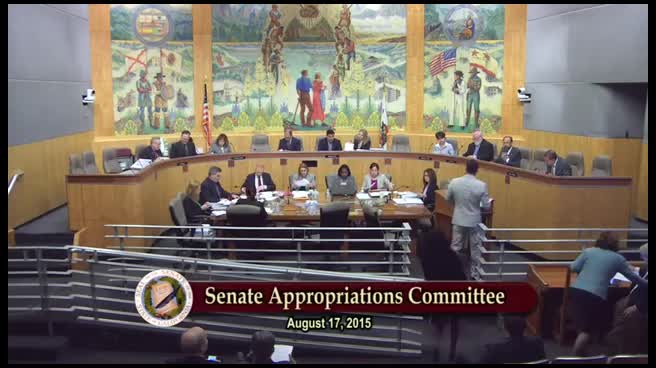 52SEC
Senate Standing Committee on Appropriations


Bill Co-Author(s):