AB 890: Anesthesiologist assistants.
- Session Year: 2015-2016
- House: Assembly
- Latest Version Date: 2015-05-05
Existing law provides for the licensure and regulation of specified healing arts licensees, including, among others, physicians and surgeons, physician assistants, nurses, and nurse anesthetists.
This bill would enact the Anesthesiologist Assistant Practice Act, which would make it unlawful for any person to hold himself or herself out as an anesthesiologist assistant unless he or she meets specified requirements. The bill would make it an unfair business practice to violate these provisions. The bill would require an anesthesiologist assistant to work under the direction and supervision of an anesthesiologist, and would require the anesthesiologist to be physically present on the premises and immediately available if needed to the anesthesiologist assistant when medical services are being rendered and to oversee the activities of, and accept responsibility for, the medical services being rendered by the anesthesiologist assistant. The bill would authorize an anesthesiologist assistant under the supervision of an anesthesiologist to deliver medical services, including, but not limited to, assist the supervising anesthesiologist in developing and implementing an anesthesia care plan for a patient.
Existing law provides for the licensure and regulation of specified healing arts licensees, including, among others, physicians and surgeons, physician assistants, nurses, and nurse anesthetists.
This bill would enact the Anesthesiologist Assistant Practice Act, which would make it unlawful for any person to hold himself or herself out as an anesthesiologist assistant unless he or she meets specified requirements. The bill would make it an unfair business practice to violate these provisions. The bill would require an anesthesiologist assistant to work under the direction and supervision of an anesthesiologist, and would require the anesthesiologist to be physically present on the premises and immediately available if needed to the anesthesiologist assistant when medical services are being rendered and to oversee the activities of, and accept responsibility for, the medical services being rendered by the anesthesiologist assistant. The bill would authorize an anesthesiologist assistant under the supervision of an anesthesiologist to assist the supervising anesthesiologist in deliver medical services, including, but not limited to, developing and implementing an anesthesia care plan for a patient.
Existing law provides for the licensure and regulation of specified healing arts licensees, including, among others, physicians and surgeons, physician assistants, nurses, and nurse anesthetists.
This bill would enact the Anesthesiologist Assistant Practice Act, which would make it unlawful for any person to hold himself or herself out as an anesthesiologist assistant unless he or she meets specified requirements. The bill would make it an unfair business practice to violate these provisions. The bill would require an anesthesiologist assistant to work under the direction and supervision of an anesthesiologist, and would require the anesthesiologist to be physically present on the premises and available to the anesthesiologist assistant when medical services are being rendered and to oversee the activities of, and accept responsibility for, the medical services being rendered by the anesthesiologist assistant. The bill would authorize an anesthesiologist assistant to assist the supervising anesthesiologist in developing and implementing an anesthesia care plan for a patient.
Existing law states that it is the intent of the Legislature to promote and protect the interests of the people as consumers, and that the government advances the interests of consumers by, among other things, protecting consumers from the sale of goods and services through the use of deceptive methods, acts, or practices that are inimical to the general welfare of consumers.
This bill would make a nonsubstantive change to this provision.
Existing law states that it is the intent of the Legislature to promote and protect the interests of the people as consumers, and that the government advances the interests of consumers by, among other things, protecting consumers from the sale of goods and services through the use of deceptive methods, acts, or practices that are inimical to the general welfare of consumers.
This bill would make a nonsubstantive change to this provision.
This chapter shall be known and may be cited as the Anesthesiologist Assistant Practice Act.
3551.For purposes of this section, the following definitions shall apply:
(a)Anesthesiologist means a physician and surgeon who has successfully completed a training program in anesthesiology accredited by the Accreditation Council for Graduate Medical Education or the American Osteopathic Association or equivalent organizations and is licensed under Chapter 5 (commencing with Section 2000).
(b)Anesthesiologist assistant means a person who meets the requirements of Section 3552.
3552.(a)A person shall not hold himself or herself out to be an anesthesiologist assistant unless he or she meets the following requirements:
(1)Has graduated from an anesthesiologist assistant program recognized by the Commission on Accreditation of Allied Health Education Programs or by its successor agency.
(2)Holds an active certification by the National Commission on Certification for Anesthesiologist Assistants.
(b)It is an unfair business practice within the meaning of Chapter 5 (commencing with Section 17200) of Part 2 of Division 7 for any person to use the title anesthesiologist assistant or any other term, including, but not limited to, certified, licensed, registered, or AA, that implies or suggests that the person is certified as an anesthesiologist assistant, if the person does not meet the requirements of subdivision (a).
3553.An anesthesiologist assistant shall work under the direction and supervision of an anesthesiologist. The supervising anesthesiologist shall do both of the following:
(a)Be physically present on the premises and immediately available if needed to the anesthesiologist assistant when medical services are being rendered.
(b)Oversee the activities of, and accept responsibility for, the medical services being rendered by the anesthesiologist assistant.
3554.Notwithstanding any other law, an anesthesiologist assistant under the supervision of an anesthesiologist may deliver medical services, including, but not limited to, assist the supervising anesthesiologist in developing and implementing an anesthesia care plan for a patient.
This chapter shall be known and may be cited as the Anesthesiologist Assistant Practice Act.
3551.For purposes of this section, the following definitions shall apply:
(a)Anesthesiologist means a physician and surgeon who has completed a residency in anesthesiology approved by the American Board of Anesthesiology or the American Osteopathic Board of Anesthesiology successfully completed a training program in anesthesiology accredited by the Accreditation Council for Graduate Medical Education or the American Osteopathic Association or equivalent organizations and is licensed under Chapter 5 (commencing with Section 2000).
(b)Anesthesiologist assistant means a person who meets the requirements of Section 3552.
3552.(a)A person shall not hold himself or herself out to be an anesthesiologist assistant unless he or she meets the following requirements:
(1)Has graduated from an anesthesiologist assistant program recognized by the American Medical Associations Committee on Allied Health Education and Accreditation Commission on Accreditation of Allied Health Education Programs or by its successor agency.
(2)Has passed the certifying examination and holds Holds an active certification by the National Commission on Certification of for Anesthesiologist Assistants.
(b)It is an unfair business practice within the meaning of Chapter 5 (commencing with Section 17200) of Part 2 of Division 7 for any person to use the title anesthesiologist assistant or any other term, including, but not limited to, certified, licensed, registered, or AA, that implies or suggests that the person is certified as an anesthesiologist assistant, if the person does not meet the requirements of subdivision (a).
3553.An anesthesiologist assistant shall work under the direction and supervision of an anesthesiologist. The supervising anesthesiologist shall do both of the following:
(a)Be physically present on the premises and immediately available if needed to the anesthesiologist assistant when medical services are being rendered.
(b)Oversee the activities of, and accept responsibility for, the medical services being rendered by the anesthesiologist assistant.
3554.Notwithstanding any other law, an anesthesiologist assistant under the supervision of an anesthesiologist may assist the supervising anesthesiologist in deliver medical services, including, but not limited to, developing and implementing an anesthesia care plan for a patient.
This chapter shall be known and may be cited as the Anesthesiologist Assistant Practice Act.
3551.For purposes of this section, the following definitions shall apply:
(a)Anesthesiologist means a physician and surgeon who has completed a residency in anesthesiology approved by the American Board of Anesthesiology or the American Osteopathic Board of Anesthesiology and is licensed under Chapter 5 (commencing with Section 2000).
(b)Anesthesiologist assistant means a person who meets the requirements of Section 3552.
3552.(a)A person shall not hold himself or herself out to be an anesthesiologist assistant unless he or she meets the following requirements:
(1)Has graduated from an anesthesiologist assistant program recognized by the American Medical Associations Committee on Allied Health Education and Accreditation or by its successor agency.
(2)Has passed the certifying examination and holds an active certification by the National Commission on Certification of Anesthesiologist Assistants.
(b)It is an unfair business practice within the meaning of Chapter 5 (commencing with Section 17200) of Part 2 of Division 7 for any person to use the title anesthesiologist assistant or any other term, including, but not limited to, certified, licensed, registered, or AA, that implies or suggests that the person is certified as an anesthesiologist assistant, if the person does not meet the requirements of subdivision (a).
3553.An anesthesiologist assistant shall work under the direction and supervision of an anesthesiologist. The supervising anesthesiologist shall do both of the following:
(a)Be physically present on the premises and available to the anesthesiologist assistant when medical services are being rendered.
(b)Oversee the activities of, and accept responsibility for, the medical services being rendered by the anesthesiologist assistant.
3554.Notwithstanding any other law, an anesthesiologist assistant may assist the supervising anesthesiologist in developing and implementing an anesthesia care plan for a patient.
SECTION 1.Section 301 of the Business and Professions Code is amended to read:301.It is the intent of the Legislature and the purpose of this chapter to promote and protect the interests of the people as consumers. The Legislature finds that vigorous representation and protection of consumer interests are essential to the fair and efficient functioning of a free enterprise market economy. The Legislature declares that government advances the interests of consumers by facilitating the proper functioning of the free enterprise market economy through (a)educating and informing the consumer to ensure rational consumer choice in the marketplace; (b)protecting the consumer from the sale of goods and services through the use of deceptive methods, acts, or practices that are inimical to the general welfare of consumers; (c)fostering competition; and (d)promoting effective representation of consumers interests in all branches and levels of government.
It is the intent of the Legislature and the purpose of this chapter to promote and protect the interests of the people as consumers. The Legislature finds that vigorous representation and protection of consumer interests are essential to the fair and efficient functioning of a free enterprise market economy. The Legislature declares that government advances the interests of consumers by facilitating the proper functioning of the free enterprise market economy through (a)educating and informing the consumer to insure ensure rational consumer choice in the marketplace; (b)protecting the consumer from the sale of goods and services through the use of deceptive methods, acts, or practices which that are inimical to the general welfare of consumers; (c)fostering competition; and (d)promoting effective representation of consumers interests in all branches and levels of government.
|
Date
|
Status
|
|---|---|
| Feb 26, 2015 | Read first time. To print. |
| Feb 27, 2015 | From printer. May be heard in committee March 29. |
| Mar 26, 2015 | From committee chair, with author's amendments: Amend, and re-refer to Com. on B. & P. Read second time and amended. |
| Mar 26, 2015 | Referred to Com. on B. & P. |
| Apr 6, 2015 | Re-referred to Com. on B. & P. |
| Apr 20, 2015 | From committee chair, with author's amendments: Amend, and re-refer to Com. on B. & P. Read second time and amended. |
| Apr 21, 2015 | Re-referred to Com. on B. & P. |
| May 4, 2015 | From committee: Amend, and do pass as amended and re-refer to Com. on APPR. (Ayes 9. Noes 2.) (April 28). |
| May 5, 2015 | Read second time and amended. |
| May 6, 2015 | Re-referred to Com. on APPR. |
| May 13, 2015 | In committee: Set, first hearing. Referred to APPR. suspense file. |
| May 28, 2015 | In committee: Held under submission. |
| Jan 31, 2016 | Died pursuant to Article IV, Sec. 10(c) of the Constitution. |
| Feb 1, 2016 | From committee: Filed with the Chief Clerk pursuant to Joint Rule 56. |
|
Date
|
Description
|
Location
|
Votes
|
|
|---|---|---|---|---|
| Apr 28, 2015 | Do pass as amended and be re-referred to the Committee on [Appropriations] | Assembly Standing Committee on Business and Professions |
Passed |
This list shows positions taken on this bill by organizations on the date displayed, which is linked to the original source.
Positions by individuals are not included.
|
Organization
|
Position
|
Date
|
|---|---|---|
| American Nurses Association of California | * Indeterminate | Apr 28, 2015 |
| California Association of Nurse Anesthetics | * Indeterminate | Apr 28, 2015 |
| California Association Of Nurse Anesthetists (Cana) | * Indeterminate | Apr 28, 2015 |
| United Nurses Association Of California/Union Of Health Care Professionals | * Indeterminate | Apr 28, 2015 |
AB 890
Page 3
Date of Hearing: May 13, 2015
ASSEMBLY COMMITTEE ON APPROPRIATIONS
Jimmy Gomez, Chair
AB 890
(Ridley-Thomas) – As Amended May 5, 2015
Policy Committee: |
Business and Professions |
Vote: |
9 - 2 |
|
|
|
|
|
|
|
|
Urgency: No State Mandated Local Program: No Reimbursable: No
SUMMARY:
This bill establishes title protection for anesthesiologist assistants with no licensure or oversight agency. Specifically, this bill:
Defines anesthesiologist assistant (AA) as someone who has graduated from an anesthesiologist assistant program recognized by a specified commission or by its successor agency, and holds a specified active national certification.
States it is an unfair business practice if a person who does not meet the specified requirements uses the title.
Requires an AA to work under the direction and supervision of an anesthesiologist, and allows the AA to assist the supervising anesthesiologist in developing and implementing an anesthesia care plan for a patient.
FISCAL EFFECT:
Since there is no direct regulatory defined in this bill, this bill creates unknown cost pressure to the Medical Board of California (MBC), likely in the hundreds of thousands to low millions of dollars for regulation and oversight of a new profession, similar in scope to advanced practice nurses. Although the MBC is not provided direct regulatory authority in the bill, in absence of state licensure for this professional category it appears reasonable to assume by default that regulatory responsibility lies with MBC, as they oversee the physicians who would supervise AAs.
COMMENTS:
Purpose. This bill is sponsored by the California Society of Anesthesiologists. The author believes AAs will promote efficiency by extending the reach of physician anesthesiologists, while protecting patient safety by operating under the physician-led, patient-centered model of care.
Anesthesiologists are responsible for determining the appropriate type of anesthesia for procedures, providing pain control and managing a patient’s breathing during procedures. After surgery, anesthesiologists provide pain management to assist the patient in their recovery.
Anesthesiologist assistants (AA). According to the American Society of Anesthesiologists (ASA), in other states, AAs work under the direct supervision of an anesthesiologists to implement anesthesia care plans. Specifically, an AA can perform the following under physician anesthesiologist supervision:
Obtain a patient history;
Pretest and calibrate anesthesia delivery systems, and interpret information from the systems in consultation with the physician anesthesiologist;
Establish basic and advanced airway interventions;
Administer specified drugs;
Administer blood products and fluids;
Perform epidural anesthetic procedures;
Provide assistance to a cardiopulmonary resuscitation team;
Participate in research and teaching activities authorized by the physician anesthesiologist; and,
Supervise student anesthesiologist assistants
Unlike medical assistants, AAs are health care professionals that require significant training and are responsible for wide-ranging and direct patient care duties. There are no AAs working in California, except in California Veteran Administration hospitals. It is estimated that there are approximately 1,000 AAs nationwide.
Nurse anesthetists (NAs) are advanced practice registered nurses with training in anesthesia, and are regulated by the Board of Registered Nursing. There are approximately 36,000 NAs nationwide and 1,600 in California. As of 2009, NAs are allowed to practice independently of physician supervision, but not all healthcare facilities approve independent practice.
NAs and AAs. The ASA notes both anesthesiologist assistants and nurse anesthetists have identical patient care responsibility and technical capabilities. The Centers for Medicare and Medicaid Services (CMS) treats the professions the same for purposes of billing, coverage and qualifications. California has no regulatory structure for AAs, while NAs can practice either under physician supervision or without supervision in the state. This is the major distinction, and appears to be the only meaningful distinction, between the two professional categories.
Support. This bill is sponsored by the California Society of Anesthesiologists and supported by anesthesiologist and other physician groups. They believe AAs need specific statutory practice recognition and title protection in order to establish hospital privileges working under the direct supervision of a physician anesthesiologist, and believe establishing AAs would lower healthcare costs and increase access for anesthesia care.
Opposition. This bill is opposed by California Association of Nurse Anesthetists and other groups representing nurses and nurse midwives. They contend there is no shortage of anesthesia providers in California, and this bill does not increase access in any case. They also note it does not require an AA to be licensed in the state of California and does not set up any agency oversight of AA functions. The California Labor Federation also opposes this bill, stating the AA classification would drive up the cost of health care, rather than reducing it.
The MBC Analysis of this bill states "If an AA were to provide substandard patient care, there is no license to take disciplinary action against and there is no way to stop the AA from practicing. Although the bill does charge the supervising anesthesiologist with accepting responsibility for the medical services being rendered by an AA, there is not a clear pathway for regulatory oversight other than the normal regulatory oversight provided by the board for physicians." At their May 7, 2015, meeting, MBC staff suggested the MBC take a "neutral" position, if the bill is amended to include a framework to stop an AA that is providing substandard care from practicing.
Staff Comments. This bill asserts it is a practice act, but it is a title act. A practice act would more clearly define scope of practice and would define a regulatory entity to regulate the practice in order to protect patients. This bill proposes to define a health care professional with a scope of practice similar to an advanced practice nurse, in a high-risk area of health care, with no oversight body.
Analysis Prepared by: Lisa Murawski / APPR. / (916) 319-2081
AB 890
Page 6
Date of Hearing: April 28, 2015
ASSEMBLY COMMITTEE ON BUSINESS AND PROFESSIONS
Susan Bonilla, Chair
AB 890
(Ridley-Thomas) – As Amended April 20, 2015
SUBJECT: Anesthesiologist assistants.
SUMMARY: Enacts the Anesthesiologist Assistant Practice Act, which would make it unlawful for any person to hold themselves out to be an anesthesiologist assistant (AA) unless they meet specified requirements, and requires an AA to work under the supervision of an anesthesiologist.
EXISTING LAW:
Establishes the Medical Malpractice Act and provides for the licensure of physicians and surgeons, including anesthesiologist physicians, under the Medical Board of California within the Department of Consumer Affairs (DCA). (Business and Professions Code (BPC) § 2000 et seq.)
Provides for the licensure and regulation of Nurse Anesthetists (NAs) under the Board of Registered Nursing (BRN) within the DCA. ( BPC § 2825)
Defines “nurse anesthetist” as a person who is a registered nurse, licensed by the BRN and who has met standards for certification from the BRN. (BPC § 2826)
Specifies that the utilization of a NA to provide anesthesia services in an acute care facility shall be approved by the acute care facility and at the discretion of the physician, dentist or podiatrist. (BPC § 2827)
Indicates that a NA must abide by the bylaws of the facility, may be required to provide evidence of liability insurance, and shall be responsible for his or her own professional conduct. (BPC § 2828)
THIS BILL:
Defines “Anesthesiologist” as a physician and surgeon who has successfully completed a training program in anesthesiology accredited by the Accreditation Council for Graduate Medical Education (ACGME) or the American Osteopathic Association or equivalent organizations.
Defines “Anesthesiologist assistant” as a person who meets the following:
Has graduated from an anesthesiologist assistant program recognized by the Commission on Accreditation of Allied Health Education Programs or by its successor agency; and,
Holds an active certification by the National Commission on Certification for Anesthesiologist Assistants.
Specifies that is an unfair business practice for any person to use the title “anesthesiologist assistant” or any other term, including, but not limited to, “certified,” “licensed,” “registered,” or “AA,” that implies or suggest that the person is certified as an AA, if the person does not meet the aforementioned requirements to be called an AA.
Indicates that an anesthesiologist assistant shall work under the supervision of an anesthesiologist, and requires the supervising anesthesiologist to:
Be physically present on the premises and immediately available if needed to the AA when medical services are being rendered; and,
Oversee the activities of, and accept responsibility for, the medical services being rendered by the AA.
Specifies that an anesthesiologist assistant under the supervision of an anesthesiologist may deliver medical services including, but not limited to, developing and implementing an anesthesia care plan for a patient.
FISCAL EFFECT: Unknown. This bill is keyed fiscal by the Legislative Counsel.
COMMENTS:
Purpose. This bill is sponsored by the California Society of Anesthesiologists. According to the author, “Using properly educated and certified anesthesiologist assistants [will] add a new asset to the anesthesia care team without depleting an already existing shortage of nurses. AAs will promote efficiency by extending the reach of physician anesthesiologists, while protecting patient safety by operating under the physician-led, patient-centered model of care. Overall, adding AAs as a care provider in California will help expand capacity and improve access for patients at a time when a growing population and aging baby boomers are putting increased demands on the healthcare system.”
Background. Physician anesthesiologists play a vital role in ensuring patients are able to safely undergo surgery. They are responsible for determining the appropriate type of anesthesia for procedures, providing pain control and managing a patient’s breathing. After surgery, physician anesthesiologists provide pain management to assist the patient in their recovery. Physician anesthesiologists lead the Anesthesia Care Team and are often assisted by NAs or AAs. AAs must be supervised by an anesthesiologist, and NAs may be supervised by any physician.
AAs Compared to NAs. NAs are regulated by the BRN. There are approximately 36,000 NAs nationwide and 1600 in California. They are required to have a bachelors in nursing degree, graduate from an accredited Master’s or Doctoral level program of nurse anesthesia, be licensed as a registered nurse and possess a minimum of 1 year of nursing experience in an acute care setting. As of 2009, NAs are allowed to practice independently of physician supervision, but not all healthcare facilities approve independent practice.
In 45 of the 55 California counties where NAs work, they administer anesthesia independently. Seven California counties do not have anesthesiologist physicians and rely solely on NAs for anesthesia services including: 1) Colusa, 2) Del Norte, 3) Glenn, 4) Lassen, 5) Plumas, 6) Tehama and 7) Trinity. NAs are certified by a national certification body and must pass a recertification exam every 10 years. They must obtain 40 hours of continuing medical education every two years.
There are no AAs working in California as the state has not authorized AAs to practice except in California Veteran Administration hospitals. It is estimated that there are approximately 1,000 AAs nationwide. AAs are required to have a bachelor’s degree with premedical curriculum. AAs are certified by a national certification body and must pass a recertification exam every six years and obtain 40 hours of continuing medical education every two years.
The Centers for Medicare & Medicaid Services (CMS) share the position that AAs and NAs have identical clinical capabilities and responsibilities though education and training do differ. The American Society of Anesthesiologists conducted a study: ASA Statement Comparing Anesthesiologist Assistant and Nurse Anesthetist Education and Practice and found: “More NA education programs provide instruction in the technical aspects of regional anesthesia. A higher percentage of AA programs provide instruction in the placement of invasive monitors. There is no evidence to suggest that the innate abilities of either student type impact their suitability for these anesthesia practices.”
The ASA concluded that differences do exist between AAs and NAs in regard to the prerequisites, curriculum, instruction in regional anesthesia and invasive monitoring and requirements for supervision in practice. “However, these differences are not based on superiority of education or ability, but are rather a product of differences in historical development and the philosophies and motivations of those that practice within each profession.”
Shortage of Physician Anesthesiologists – Surplus of NAs in Some Regions. Healthcare facilities around the nation are facing a critical shortage of anesthesiologists. According to a nationwide survey conducted by the American Society of Anesthesiologists, 47 percent of hospitals reported a shutdown or reduction in operating room hours due to the shortage of anesthesia providers.
Data from a RAND survey showed that the U.S. has a current shortage of about 3,800 physician anesthesiologists and 1,280 NAs, representing 9.6 percent and 3.8 percent of the total anesthesiologist and NA workforce, respectively. Additionally, a shortage of physician anesthesiologists and a significant surplus of NAs are projected by 2020 if current trends continue. The study projected a shortage of about 4,500 anesthesiologists and a surplus approximately 8,000 NAs within 10 years. If the growth in demand is assumed to be 3%, accounting for the aging population, the shortage of physician anesthesiologists may reach as high as 12,500 by 2020, while the supply of nurse NAs would be at equilibrium. Shortages of anesthesiologists were spread evenly across all regions in the country. Shortages of NAs were more pronounced in the Northeast, while some states in the West showed surpluses. (data retrieved from: http://www.physiciansweekly.com/efforts-needed-to-meet-anesthesiologist-demand/#sthash.cmNrYMc3.dpuf)
Other States. To date, 33 states require physician anesthesiologist supervision of AAs, and AAs work as registered healthcare professionals in 15 states and the District of Columbia. In the past four years, several states have attempted to recognize or license AAs. Bills presented to the New York, Oregon, Texas, Indiana, New Mexico and Utah legislatures have failed. However, in 2014 and 2015, bills were finally passed in Indiana and Mexico, respectively, which permitted AAs to be recognized as licensed health care practitioners.
According to the ASA, in other states, AAs work under the direct supervision of physician anesthesiologists to implement anesthesia care plans. Specifically, an AA can perform the following under physician anesthesiologist supervision:
Obtain a patient history;
Pretest and calibrate anesthesia delivery systems, and interpret information from the systems in consultation with the physician anesthesiologist;
Establish basic and advanced airway interventions;
Administer specified drugs;
Administer blood products and fluids;
Perform epidural anesthetic procedures;
Provide assistance to a cardiopulmonary resuscitation team;
Participate in research and teaching activities authorized by the physician anesthesiologist; and,
Supervise student anesthesiologist assistants.
ARGUMENTS IN SUPPORT:
The California Society of Anesthesiologists (sponsor) the Anesthesia Consultants of Fresno and the Case Western Reserve University Anesthesia Program all similarly write in their separate support letters, “AAs need specific statutory practice recognition and title protection in order to establish hospital privileges working under the direct supervision of a physician anesthesiologist…We strongly believe AB 890 provides a unique opportunity for California to increase healthcare access and options to patients in a time of expanding coverage, increase healthcare access and options to patients in a time of expanding coverage, increase the anesthesia workforce and promote patient safety in a patient-centered physician-led care team model.”
The American Academy of Anesthesiologist Assistants writes in their support letter, “Given the increasing number of surgical procedures in California, concurrent with numbers across the US (more than 40 million procedures a year), and considering the rapidly increasing demand for anesthetic services, ACCs would be an important addition to the California Anesthesia Care Team.”
The American Society of Anesthesiologists also supports the bill. In their letter the note, “It is the position of ASA that both anesthesiologist assistants and nurse anesthetists have identical patient care responsibility and technical capabilities – a view in harmony with their equivalent treatment under the Medicare Program. The Proven safety of Anesthesia Care Team approach to anesthesia with either anesthesiologist assistants or nurse anesthetists as the non-physician anesthetists confirms the wisdom of this view.”
ARGUMENTS IN OPPOSITION:
The California Association of Nurse Anesthetists and the California Nurses Association write in their joint letter of opposition, “Medical direction and supervision by anesthesiologists has been proven to be the most expensive method of providing anesthesia services. In areas of California where nurse anesthetists practice autonomously, facilities realize greatly reduced cost of services with no compromise in quality, safety or outcomes…It is well documented by independent research that the added expense of medically directed anesthesiology services produces no added benefit for patient outcomes, healthcare facilities or communities, and that efficacy of anesthesia delivery and outcomes are equivalent when anesthesia administered by CRNAs and anesthesiologists.”
The California Association for Nurse Practitioners indicates their opposition when they write, “California already has the framework in place to educate, license and regulate two types of anesthesia providers – certified registered nurse anesthetists and anesthesiologists. Both CRNAs and anesthesiologists are well-established, proven anesthesia providers, and both have the training to practice autonomously and exercise independent judgment. AAs, on the other hand, do not have the education and training to perform anesthesia as autonomous providers. Therefore, AAs fail to increase access to anesthesia care.”
The California Nurse Midwives Association also opposes the bill and writes, “AB 890 does not require an AA to be licensed in the state of California and does not set up any agency oversight of AA functions. AB 890 does not authorize an AA to administer medications or anesthetic agents and fails to authorize essential anesthesia functions, such as intubation. It also does not require the seven steps of medical directions of AAs as mandated by the Centers for Medicare & Medicaid Services.”
The California Labor Federation writes, “Generally, the purpose of creating a less skilled health care provider classification would be to lower health care costs and increase access to care. However, the AA classification would drive up the cost of health care, rather than reducing it.”
The American Nurses Association California also opposes the bill and writes, “There is no shortage of anesthesia providers in California. We believe the AA would be an assistant to the Anesthesiologist that would allow the Anesthesiologist to supervise multiple rooms, providing anesthesia with an assistant that is not as qualified as the Nurse Anesthetist or the Anesthesiologist.”
AMENDMENTS:
In order to make it clear that an AA is at all times working under the direction and supervision of an anesthesiology physician, the following amendments should be made:
On page 3, line 9, insert: direction and before the word “supervision”
On
page 3, line 12, strike the following: if needed
On
page 3, line 17, strike the following: deliver medical
services including but not limited to
On page 3, line 17, insert: assist the supervising anesthesiologist in before the word “developing”
REGISTERED SUPPORT:
California Society of Anesthesiologists (sponsor)
American Academy of Anesthesiologist Assistants
American Society of Anesthesiologists
Anesthesia Consultants of Fresno
California Medical Association
Case Western Reserve University, Anesthesia Program
34 individuals
REGISTERED OPPOSITION:
American Nurses Association California
California Association of Nurse Anesthetists
California Association for Nurse Practitioners
California Labor Federation
California Nurses Association
California Nurse Midwives Association
Over 200 nurse anesthetists
Analysis Prepared by: Le Ondra Clark Harvey, Ph.D. / B. & P. / (916) 319-3301
Discussed in Hearing
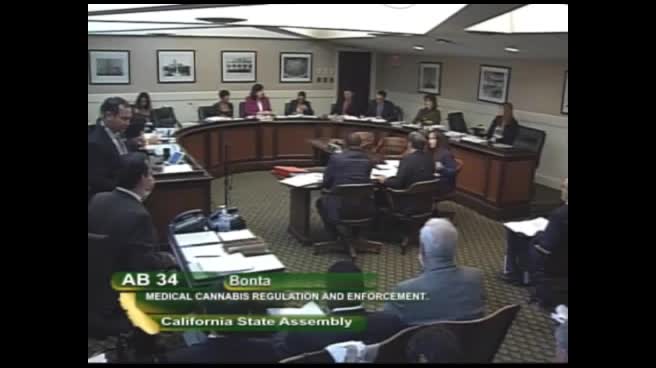 41MIN
Assembly Standing Committee on Business and Professions
Bill Author

Bill Co-Author(s):