SB 1148: Personal income taxes: deductions: qualified tuition.
- Session Year: 2015-2016
- House: Senate
- Latest Version Date: 2016-05-11
The Personal Income Tax Law, Law does not conform to a provision of federal income tax law that for taxable years beginning before January 1, 2015, allows a deduction from gross income for the taxable year in an amount equal to qualifying tuition and related expenses paid by the taxpayer during the taxable year, not to exceed $4,000, for enrollment or attendance by the taxpayer, the taxpayers spouse, or the taxpayers dependent at any accredited postsecondary institution. That law provides for a phaseout at certain modified adjusted gross income levels.
This bill, for taxable years beginning on or after January 1, 2016, and before January 1, 2021, would conform to that federal law with modifications, including modifications to the amount of the deduction and the phaseout. termination date.
This bill would take effect immediately as a tax levy.
The Personal Income Tax Law, in modified conformity with federal income tax laws, allows various deductions from gross income in computing adjusted gross income under that law, including deductions for payments to individual retirement accounts, alimony payments, and interest on educational loans. does not conform to a provision of federal income tax law that for taxable years beginning before January 1, 2015, allows a deduction from gross income for the taxable year in an amount equal to qualifying tuition and related expenses paid by the taxpayer during the taxable year, not to exceed $4,000, for enrollment or attendance by the taxpayer, the taxpayers spouse, or the taxpayers dependent at any accredited postsecondary institution. That law provides for a phaseout at certain modified adjusted gross income levels.
This bill, for taxable years beginning on or after January 1, 2016, would allow a deduction in computing adjusted gross income for those amounts paid or incurred by a qualified taxpayer, as defined, during the taxable year for qualified education expenses, as provided. and before January 1, 2021, would conform to that federal law with modifications, including modifications to the amount of the deduction and the phaseout.
This bill would take effect immediately as a tax levy.
The Personal Income Tax Law, in modified conformity with federal income tax laws, allows various deductions from gross income in computing adjusted gross income under that law, including deductions for payments to individual retirement accounts, alimony payments, and interest on educational loans.
This bill, for taxable years beginning on or after January 1, 2016, would allow a deduction in computing adjusted gross income for those amounts paid or incurred by a qualified taxpayer, as defined, during the taxable year for qualified education expenses, as provided.
This bill would take effect immediately as a tax levy.
(a)For taxable years beginning on or after January 1, 2016, and before January 1, 2021, Section 222 of the Internal Revenue Code, relating to qualified tuition and related expenses, is modified as follows:
(1)The term Secretary shall be replaced by the term Franchise Tax Board.
(2)The applicable dollar limit shall be determined as follows:
(A)In the case of a taxpayer whose adjusted gross income for the taxable year does not exceed one hundred twenty-five thousand dollars ($125,000) or two hundred fifty thousand dollars ($250,000) in the case of a joint return, ten thousand dollars ($10,000) per individual.
(B)In the case of any other taxpayer, zero.
(C)For taxable years beginning on or after January 1, 2017, the amounts specified in subparagraph (A) shall be recomputed annually in the same manner as the recomputation of income tax brackets under subdivision (h) of Section 17041.
(3)
(2)Section 222(e) of the Internal Revenue Code, relating to termination, shall not apply.
(b)This section shall remain in effect only until December 1, 2021, and as of that date is repealed.
SEC. 3.This act provides for a tax levy within the meaning of Article IV of the California Constitution and shall go into immediate effect.
Section 222 of the Internal Revenue Code, relating to qualified tuition and related expenses, shall not apply.
SEC. 2.Section 17204.7 is added to the Revenue and Taxation Code, to read:17204.7.(a)For taxable years beginning on or after January 1, 2016, and before January 1, 2021, Section 222 of the Internal Revenue Code, relating to qualified tuition and related expenses, is modified as follows:
(1)The term Secretary shall be replaced by the term Franchise Tax Board.
(2)The applicable dollar limit shall be determined as follows:
(A)In the case of a taxpayer whose adjusted gross income for the taxable year does not exceed one hundred twenty-five thousand dollars ($125,000) or two hundred fifty thousand dollars ($250,000) in the case of a joint return, ten thousand dollars ($10,000) per individual.
(B)In the case of any other taxpayer, zero.
(C)For taxable years beginning on or after January 1, 2017, the amounts specified in subparagraph (A) shall be recomputed annually in the same manner as the recomputation of income tax brackets under subdivision (h) of Section 17041.
(3)Section 222(e) of the Internal Revenue Code, relating to termination, shall not apply.
(b)This section shall remain in effect only until December 1, 2021, and as of that date is repealed.
SEC. 3.This act provides for a tax levy within the meaning of Article IV of the California Constitution and shall go into immediate effect.
SECTION 1.Section 17072 of the Revenue and Taxation Code is amended to read:17072.(a)Section 62 of the Internal Revenue Code, relating to adjusted gross income defined, shall apply, except as otherwise provided.
(b)Section 62(a)(2)(D) of the Internal Revenue Code, relating to certain expenses of elementary and secondary school teachers, shall not apply.
(c)Section 62(a)(21) of the Internal Revenue Code, relating to attorneys fees relating to awards to whistleblowers, shall not apply.
(d)Section 62(a) of the Internal Revenue Code is modified to provide that the deduction under Section 17206.2 shall be allowed in determining adjusted gross income.
SEC. 2.Section 17206.2 is added to the Revenue and Taxation Code, to read:17206.2.(a)For taxable years beginning on or after January 1, 2016, there shall be allowed as a deduction the amount paid or incurred by a qualified taxpayer during the taxable year for qualified education expenses at a public four-year university or community college.
(b)For the purposes of this section, both of the following apply:
(1)Qualified education expenses means both of the following:
(A)Costs of attendance that include, but are not limited to, payments for books, supplies, equipment, tuition, and fees, and similar payments.
(B)Payments of principal of a qualified education loan, as defined in Section 221 of the Internal Revenue Code, relating to interest on education loans.
(2)Qualified taxpayer means an individual who pays or incurs qualified education expenses during the taxable year for any natural person including, but not limited to, the taxpayer, the taxpayers spouse, or any dependent of the taxpayer and who has a federal adjusted gross income of two hundred fifty thousand dollars ($250,000) or less during the taxable year in which those expenses are paid or incurred.
(c)For each taxable year beginning on or after January 1, 2017, the Franchise Tax Board shall recompute the federal adjusted gross income limitation described in paragraph (2) of subdivision (b). That computation shall be made in the same manner as described in subdivision (h) of Section 17041.
SEC. 3.This act provides for a tax levy within the meaning of Article IV of the Constitution and shall go into immediate effect.
(a)Section 62 of the Internal Revenue Code, relating to adjusted gross income defined, shall apply, except as otherwise provided.
(b)Section 62(a)(2)(D) of the Internal Revenue Code, relating to certain expenses of elementary and secondary school teachers, shall not apply.
(c)Section 62(a)(21) of the Internal Revenue Code, relating to attorneys fees relating to awards to whistleblowers, shall not apply.
(d)Section 62(a) of the Internal Revenue Code is modified to provide that the deduction under Section 17206.2 shall be allowed in determining adjusted gross income.
SEC. 2.Section 17206.2 is added to the Revenue and Taxation Code, to read:17206.2.(a)For taxable years beginning on or after January 1, 2016, there shall be allowed as a deduction the amount paid or incurred by a qualified taxpayer during the taxable year for qualified education expenses at a public four-year university or community college.
(b)For the purposes of this section, both of the following apply:
(1)Qualified education expenses means both of the following:
(A)Costs of attendance that include, but are not limited to, payments for books, supplies, equipment, tuition, and fees, and similar payments.
(B)Payments of principal of a qualified education loan, as defined in Section 221 of the Internal Revenue Code, relating to interest on education loans.
(2)Qualified taxpayer means an individual who pays or incurs qualified education expenses during the taxable year for any natural person including, but not limited to, the taxpayer, the taxpayers spouse, or any dependent of the taxpayer and who has a federal adjusted gross income of two hundred fifty thousand dollars ($250,000) or less during the taxable year in which those expenses are paid or incurred.
(c)For each taxable year beginning on or after January 1, 2017, the Franchise Tax Board shall recompute the federal adjusted gross income limitation described in paragraph (2) of subdivision (b). That computation shall be made in the same manner as described in subdivision (h) of Section 17041.
SEC. 3.This act provides for a tax levy within the meaning of Article IV of the Constitution and shall go into immediate effect.
|
Date
|
Status
|
|---|---|
| Feb 18, 2016 | Introduced. Read first time. To Com. on RLS. for assignment. To print. |
| Feb 19, 2016 | From printer. May be acted upon on or after March 20. |
| Mar 3, 2016 | Referred to Com. on GOV. & F. |
| Apr 5, 2016 | Set for hearing April 27. |
| Apr 19, 2016 | April 27 set for first hearing canceled at the request of author. |
| Apr 25, 2016 | From committee with author's amendments. Read second time and amended. Re-referred to Com. on GOV. & F. |
| Apr 27, 2016 | Set for hearing May 4. |
| May 10, 2016 | From committee: Do pass as amended and re-refer to Com. on APPR. (Ayes 5. Noes 0. Page 3765.) (May 4). |
| May 10, 2016 | From committee: Do pass as amended and re-refer to Com. on APPR. (Ayes 5. Noes 0.) (May 4). |
| May 11, 2016 | Read second time and amended. Re-referred to Com. on APPR. |
| May 13, 2016 | Set for hearing May 23. |
| May 23, 2016 | May 23 hearing: Placed on APPR. suspense file. (Ayes 7. Noes 0.) |
| May 24, 2016 | Set for hearing May 27. |
| May 27, 2016 | May 27 hearing: Held in committee and under submission. |
|
Date
|
Description
|
Location
|
Votes
|
|
|---|---|---|---|---|
| May 23, 2016 | Placed on suspense file | Senate Standing Committee on Appropriations |
Passed |
|
| May 4, 2016 | Do pass as amended, but first amend, and re-refer to the Committee on [Appropriations] | Senate Standing Committee on Governance and Finance |
Passed |
This list shows positions taken on this bill by organizations on the date displayed, which is linked to the original source.
Positions by individuals are not included.
|
Organization
|
Position
|
Date
|
|---|---|---|
| California Tax Reform Association | * Indeterminate | May 4, 2016 |
SENATE COMMITTEE ON
Senator Ricardo Lara, Chair
2015 - 2016 Regular Session
SB 1148 (Stone) - Personal income taxes: deductions: qualified tuition
Version: | Policy Vote: |
Urgency: | Mandate: |
Hearing Date: | Consultant: |
This bill meets the criteria for referral to the Suspense File.
Bill Summary:
SB 1148 would allow a deduction for qualified tuition and related expenses to be taken by a taxpayer as an above-the-line deduction when calculating adjusted gross income (AGI).
Fiscal Impact:
The Franchise Tax Board (FTB) estimates that the bill would result in a General Fund revenue loss of $120 million in 2016-17, $80 million in 2017-18, and $85 million in 2018-19. FTB’s implementation costs have yet to be determined, but could total in the hundreds of thousands of dollars annually (General Fund).
Background:
Federal law allows for the deduction of certain expenses when calculating adjusted gross income (AGI). Examples include moving expenses, qualified tuition and related expenses, and interest on education loans. All taxpayers with this type of expense receive the benefit of these deductions, and they are referred to as “above-the-line” deductions.
Specifically, an above-the-line deduction is one that allows a taxpayer to subtract amounts from gross income when calculating AGI. If the deduction is taken above the line, it is used to determine the taxpayer’s AGI. As noted above, an above-the-line deduction can be taken by any taxpayer regardless of whether the taxpayer itemizes. Moreover, an above-the-line deduction reduces AGI, and having a smaller AGI can lower many subsequent calculations, thereby further reducing tax liability. Consequently, above-the-line deductions are more advantageous than those taken below the line.
Through taxable year 2016, federal law allows a taxpayer to deduct qualified tuition and related expenses for higher education paid by the taxpayer during the taxable year. The term “qualified tuition and related expenses” includes tuition and fees required for the enrollment or attendance at an eligible institution of higher education of the taxpayer, the taxpayer’s spouse, or any dependent of the taxpayer for whom the taxpayer may claim a personal exemption. The expenses must be in connection with enrollment at an institution of higher education during the taxable year. The deduction is not allowed to an individual if that individual is claimed as a dependent on another taxpayer's return.
The maximum deduction is $4,000 for an individual whose AGI for the taxable year does not exceed $65,000 ($130,000 for joint returns), or $2,000 for other individuals whose AGI does not exceed $80,000 ($160,000 for joint returns). No deduction is allowed for an individual whose AGI exceeds the limitations, for a married individual who does not file a joint return, or for an individual claimed as a dependent by another taxpayer for the taxable year. In addition, the deduction is phased out for individual taxpayers with modified AGI of $65,000 to $80,000 ($130,000 to $160,000 for joint returns). The amount of qualified tuition and related expenses is reduced by certain scholarships, educational assistance allowances, Hope or Lifetime Learning credits claimed, and other amounts paid for the benefit of the student. Qualified higher education expenses are defined as the student's cost of attendance, which generally includes tuition, fees, room and board, and related expenses.
California law allows various income tax credits, deductions, and sales and use tax exemptions to provide incentives to compensate taxpayers that incur certain expenses, such as child adoption, or to influence behavior, including business practices and decisions, such as research and development credits. The Legislature typically enacts such tax incentives to encourage taxpayers to do something that but for the tax credit, they would not do. The Department of Finance is required to annually publish a list of tax expenditures. Currently, tax expenditures exceed $57 billion dollars annually. State law lacks a comparable deduction to the federal education deduction. Consequently, taxpayers who deduct such expenses on their federal tax returns must report the amount deducted for federal purposes as a California adjustment.
Proposed Law:
The bill would, for taxable years 2016 through 2020, provide for modified conformity to the federal deduction, when determining AGI, for the amount paid or incurred by a taxpayer for qualified tuition and related expenses. Specifically, the bill would conform to the federal deduction, but not conform to the federal date of the deduction.
Staff Comments:
FTB estimates that about 1 million Californians would qualify for the bill’s deduction. Federal data indicate that the average deduction amount currently claimed is $1,800; thus, FTB estimates total deductions from the bill would be $1.8 billion. FTB assumed an average tax rate of 4 percent, and made a small adjustment to its revenue estimate to account for nonresidents.
-- END --
SENATE COMMITTEE ON GOVERNANCE AND FINANCE
Senator Robert M. Hertzberg, Chair
2015 - 2016 Regular
Bill No: | SB 1148 | Hearing Date: | 5/4/16 |
Author: | Stone | Tax Levy: | Yes |
Version: | 4/25/16 | Fiscal: | Yes |
Consultant: | Bouaziz | ||
Personal income taxes: deductions: qualified tuition
Allows an “above-the-line” deduction for qualified tuition and related expenses for higher education.
Background
Federal law allows for the deduction of certain expenses when calculating adjusted gross income (AGI), such as moving expenses, qualified tuition and related expenses, and interest on education loans. Thus, all taxpayers with this type of expense receive the benefit of the deduction. These are known as “above-the-line” deductions.
Through the 2016 tax year, federal law allows a taxpayer to deduct qualified tuition and related expenses for higher education paid by the taxpayer during the taxable year. The term “qualified tuition and related expenses” includes tuition and fees required for the enrollment or attendance at an eligible institution of higher education of the taxpayer, the taxpayer’s spouse, or any dependent of the taxpayer for whom the taxpayer may claim a personal exemption. The expenses must be in connection with enrollment at an institution of higher education during the taxable year. The deduction is not allowed to an individual if that individual is claimed as a dependent on another taxpayer's return for that taxable year.
The maximum deduction is $4,000 for an individual whose AGI for the taxable year does not exceed $65,000 ($130,000 in the case of a joint return), or $2,000 for other individuals whose AGI does not exceed $80,000 ($160,000 in the case of a joint return). No deduction is allowed for an individual whose AGI exceeds the limitations, for a married individual who does not file a joint return, or for an individual claimed as a dependent by another taxpayer for the taxable year. In addition, the deduction is phased out for individual taxpayers with modified AGI of $65,000-$80,000 ($130,000 - $160,000 for joint returns). The amount of qualified tuition and related expenses is reduced by certain scholarships, educational assistance allowances, Hope or Lifetime Learning credits claimed, and other amounts paid for the benefit of the student. Qualified higher education expenses are defined as the student's cost of attendance, which generally includes tuition, fees, room and board, and related expenses.
California law allows various income tax credits, deductions, and sales and use tax exemptions to provide incentives to compensate taxpayers that incur certain expenses, such as child adoption, or to influence behavior, including business practices and decisions, such as research and development credits. The Legislature typically enacts such tax incentives to encourage taxpayers to do something that but for the tax credit, they would not do. The Department of Finance is required to annually publish a list of tax expenditures. Currently, tax expenditures exceed $57 billion dollars. State law lacks a comparable deduction to the federal education deduction.
Proposed Law
Senate Bill 1148 conforms to the federal deduction for qualified tuition and related expenses for higher education with some state law changes. Specifically, SB 1148:
- Allows a $10,000 deduction versus the federal $4,000 deduction.
- Sets the maximum AGI at $125,000 for an individual filing single, and $250,000 for individuals filing a joint return.
- Requires the Franchise Tax Board to adjust AGI and deduction limits annually for inflation beginning January 1, 2017.
SB 1148 remains in effect until December 1, 2021.
State Revenue Impact
Pending.
Comments
1. Purpose of the bill. According to the author, “Education costs in California and across the nation have skyrocketed in recent years. According to the PPIC, in-state tuition at both the UC and CSU has more than tripled over the past 20 years. They note that “From 2004 to 2013, the average tuition at UC and CSU more than doubled from around $4,000 to more than $9,000.” These increases are a source of concern for Californians who fear that they may be priced out of postsecondary education or forced to borrow more money to complete their degrees” As more students worry about rising costs and the impact student loans will have once they leave college, pressure on both students and their families to secure financing for their education is escalating. Even more worrying is that these increased costs disproportionately affect middle and low-income families. SB 1148 will allow individuals making below $125,000 or joint filers making below $250,000 to claim a deduction of up to $10,000 per child for payments made towards tuition and qualified education expenses as defined by statute.”
2. Tax expenditures. Existing law provides various credits, deductions, exclusions, and exemptions for particular taxpayer groups. In the late 1960s, U.S. Treasury officials began arguing that these features of the tax law should be referred to as "expenditures," since they are generally enacted to accomplish some governmental purpose and there is a determinable cost associated with each (in the form of foregone revenues). This bill would increase an existing tax expenditure. The tradeoff for increasing the tax expenditure, resulting in revenue losses, is higher taxes or reductions to other services or programs.
3. How is tax expenditure different from a direct expenditure? As the Department of Finance notes in its annual Tax Expenditure Report, there are several key differences between tax expenditures and direct expenditures. First, tax expenditures are reviewed less frequently than direct expenditures once they are put in place. This can offer taxpayers greater certainty, but it can also result in tax expenditures remaining a part of the tax code without demonstrating any public benefit. Second, there is generally no control over the amount of revenue losses associated with any given tax expenditure. Finally, once enacted, it takes a two-thirds vote to rescind an existing tax expenditure absent a sunset date.
4. Is conformity needed? Income tax credits, deductions, and sales and use tax exemptions provide incentives and can influence the behavior of taxpayers. In this case, there is already a federal deduction available, which allows California to reap the benefits of the federal incentive without having the foregone revenue associated with providing a separate state deduction. Although tax conformity eases compliance burdens, conformity can also significantly impact state revenues. Moreover, SB 1148 provides a significantly larger deduction to taxpayers with almost double the maximum income level, adjusted annually for inflation, allowed in federal law.
5. Above and below the line deductions. An above-the-line deduction is a deduction that allows a taxpayer to subtract amounts from gross income when calculating their AGI. If the deduction is taken above the line, it is used to determine the taxpayer’s AGI. An above-the-line deduction can be taken by any taxpayer regardless of whether the taxpayer itemizes. Moreover, an above-the-line deduction reduces AGI, and having a smaller AGI can lower many subsequent calculations which will further reduce taxes. As a result, above-the-line deductions are more advantageous than those taken below the line. Once AGI is determined, a taxpayer can either itemize deductions or take the standard deduction, whichever is greater. Once itemized deductions exceed the standard deduction, other smaller below-the-line deductions, such as miscellaneous expenses, can be applied to increase tax savings. However, in order to take advantage of a miscellaneous below-the-line deduction, total expenses must exceed 2% of AGI and all deductions in total must exceed the standard deduction. Currently, less than one-half of California individuals itemize their deductions.
6. Potential for reverse nonconformity. California law does not automatically conform to changes to federal tax law, except under specified circumstances. Instead, the Legislature must affirmatively conform to federal changes. Generally, when the federal government changes its tax laws, California catches up by enacting its own legislation the following year to reduce differences between the two codes, thereby easing the tax preparation burden on taxpayers, tax preparers, and the Franchise Tax Board. Currently, under federal tax law there is a deduction for qualified tuition and related expenses for higher education and SB 1148 conforms with some changes to the federal deduction. However, the federal deduction is set to sunset at the end of this year. If the federal deduction is not extended, taxpayers would be entitled to a deduction for state tax purposes, but not for federal tax purposes after January 1, 2017.
Support and Opposition
(4/28/16)
Support: California Academy of Family Physicians.
Opposition: California Tax Reform Association.
-- END --
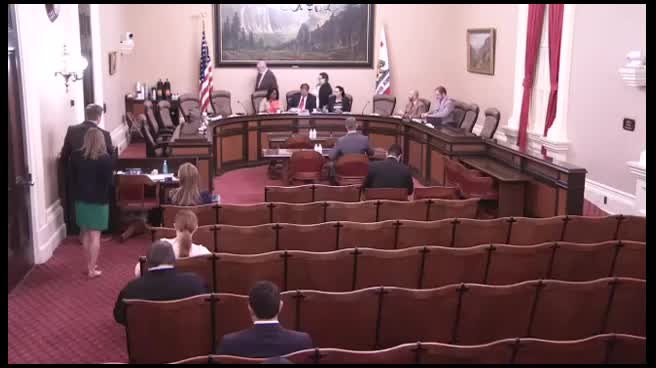
Discussed in Hearing
 15MIN
Senate Standing Committee on Governance and Finance
Bill Author

Bill Co-Author(s):