SB 1149: Personal income taxes: credit: principal residence.
- Session Year: 2015-2016
- House: Senate
- Latest Version Date: 2016-06-15
The Personal Income Tax Law allows various credits against the taxes imposed by that law.
This bill would, for a qualified principal residence, as defined, that is purchased after January 1, 2017, and before January 1, 2020, allow a credit against those taxes in an amount equal to the lesser of 5% of the purchase price or $10,000 to qualified first-time homebuyers, as defined. This bill would require the credit to be applied in equal amounts over 3 successive taxable years and would limit the total amount of the credit that may be allowed to $100,000,000.
This bill would take effect immediately as a tax levy.
The Personal Income Tax Law, in modified conformity with federal income tax laws, allows various exclusions from gross income, and allows various deductions in computing the income that is subject to the taxes imposed by that law, including miscellaneous itemized deductions that are allowed only to the extent that the aggregate amount of those deductions exceeds 2% of adjusted gross income. Law allows various credits against the taxes imposed by that law.
This bill, on and after January 1, 2017, would allow a deduction in an amount equal to the amount of rent, not to exceed $18,000, paid during the taxable year by a qualified taxpayer, as defined, provided that the qualified taxpayer deposits the qualified amount, as defined, into a home ownership savings account, as defined. The bill would exclude from gross income any income accrued during the taxable year to a home ownership savings account. The bill would provide that a qualified taxpayer may withdraw amounts from a home ownership savings account to pay for the downpayment of a principal residence, as defined, and would provide that any amount withdrawn from that account that is not used for that purpose would be included as income for that taxpayer. The bill would define various terms for its purposes.
This bill would, for a qualified principal residence, as defined, that is purchased after January 1, 2017, and before January 1, 2020, allow a credit against those taxes in an amount equal to the lesser of 5% of the purchase price or $10,000 to qualified first-time homebuyers, as defined. This bill would require the credit to be applied in equal amounts over 3 successive taxable years and would limit the total amount of the credit that may be allowed to $100,000,000.
This bill would take effect immediately as a tax levy.
The Personal Income Tax Law, in modified conformity with federal income tax laws, allows various exclusions from gross income, and allows various deductions in computing the income that is subject to the taxes imposed by that law, including miscellaneous itemized deductions that are allowed only to the extent that the aggregate amount of those deductions exceeds 2% of adjusted gross income.
This bill, on and after January 1, 2017, would allow a deduction, not to exceed specified amounts, of the amount contributed in any taxable year to an individual home ownership savings account, and deduction in an amount equal to the amount of rent, not to exceed $18,000, paid during the taxable year by a qualified taxpayer, as defined, provided that the qualified taxpayer deposits the qualified amount, as defined, into a home ownership savings account, as defined. The bill would exclude from gross income any income earned on the moneys contributed to an individual accrued during the taxable year to a home ownership savings account. The bill would provide that a qualified taxpayer may withdraw amounts from an individual a home ownership savings account to pay for qualified individual home ownership savings expenses, the downpayment of a principal residence, as defined, and would provide that any amount withdrawn from that account that is not used for these expenses that purpose would be included as income for that taxpayer. The bill would define various terms for its purposes.
This bill would take effect immediately as a tax levy.
The Personal Income Tax Law, in modified conformity with federal income tax laws, allows various exclusions from gross income, and allows various deductions in computing the income that is subject to the taxes imposed by that law, including miscellaneous itemized deductions that are allowed only to the extent that the aggregate amount of those deductions exceeds 2% of adjusted gross income.
This bill, on and after January 1, 2017, would allow a deduction, not to exceed specified amounts, of the amount contributed in any taxable year to an individual home ownership savings account, and would exclude from gross income any income earned on the moneys contributed to an individual home ownership savings account. The bill would provide that a qualified taxpayer may withdraw amounts from an individual home ownership savings account to pay for qualified individual home ownership savings expenses, as defined, and would provide that any amount withdrawn from that account that is not used for these expenses would be included as income for that taxpayer. The bill would define various terms for its purposes.
This bill would take effect immediately as a tax levy.
(a)(1)In the case of any qualified first-time homebuyer who purchases a qualified principal residence on and after January 1, 2017, and before January 1, 2020, there shall be allowed as a credit against the net tax, as defined in Section 17039, an amount equal to the lesser of 5 percent of the purchase price of the qualified principal residence or ten thousand dollars ($10,000).
(2)The amount of any credit allowed under paragraph (1) shall be applied in equal amounts over the three successive taxable years beginning with the taxable year in which the purchase of the qualified principal residence is made.
(3)The credit under this section shall be allowed for the purchase of only one qualified principal residence with respect to any qualified first-time homebuyer.
(b)For purposes of this section:
(1)Qualified first-time homebuyer means any individual, or the individuals spouse, who had no present ownership interest in a principal residence during the preceding three-year period ending on the date of the purchase of the qualified principal residence. A qualified first-time homebuyers adjusted gross income during that period shall not exceed the following amounts:
(A)One hundred thousand dollars ($100,000) for a qualified taxpayer filing a joint return, head of household, or a surviving spouse, as defined in Section 17046.
(B)Fifty thousand dollars ($50,000) for a qualified taxpayer filing a return other than as described in subparagraph (A).
(2)Qualified principal residence means a single-family residence, whether detached or attached, that has never been occupied, that is purchased to be the principal residence of the taxpayer for a minimum of two years and is eligible for the homeowners exemption under Section 218.
(c)(1)No credit shall be allowed under this section unless the qualified first-time homebuyer submits with his or her tax return a certification by the seller of the qualified principal residence that the residence has never been previously occupied. The seller shall provide the certification to the qualified first-time homebuyer and to the Franchise Tax Board within one week of the sale of the qualified principal residence.
(2)
(c)(1)If the qualified first-time homebuyer does not occupy the qualified principal residence as his or her principal residence for at least two years immediately following the purchase the credit shall be canceled, and the qualified first-time homebuyer shall be liable for any credit allowed under this section on previous tax returns.
(3)
(2)A credit shall not be allowed under this section unless the qualified first-time homebuyer submits a certification that he or she is a first-time homebuyer.
(d)(1)In the case of two married qualified first-time homebuyers filing separately, the credit allowed under subdivision (a) shall be equally apportioned between the two qualified first-time homebuyers.
(2)If two or more qualified first-time homebuyers who are not married purchase a qualified principal residence, the amount of the credit allowed under subdivision (a) shall be allocated among them in the same manner as each qualified first-time homebuyers percentage of ownership, except that the total amount of the credits allowed to all of these qualified first-time homebuyers shall not exceed ten thousand dollars ($10,000).
(e)The total amount of credit that may be allowed pursuant to this section shall not exceed one hundred million dollars ($100,000,000).
(f)The qualified first-time homebuyer shall claim the credit on a timely filed original return.
(g)(1)Upon receipt of the certification from the qualified first-time homebuyer, as described in paragraph (1) (2) of subdivision (c), the Franchise Tax Board shall allocate the credit to the qualified first-time homebuyer on a first-come-first-served basis.
(2)If the certifications of two or more qualified first-time homebuyers are received on the same day and the remaining amount of credit to be allocated is insufficient to be allocated fully to each, the credit shall be allocated to those qualified first-time homebuyers on a pro rata basis.
(3)The date a certification is received shall be determined by the Franchise Tax Board. The determinations of the Franchise Tax Board with respect to the date a certification is received, and whether a return has been timely filed for purposes of this subdivision, may not be reviewed in any administrative or judicial proceeding.
(4)Any disallowance of a credit claimed due to a determination under this section, including the application of the limitation specified in paragraph (2), shall be treated as a mathematical error appearing on the return. Any amount of tax resulting from that disallowance may be assessed by the Franchise Tax Board in the same manner as provided by Section 19051.
(h)A credit shall not be allowed under this section if the qualified first-time homebuyer, or his or her spouse, is related to the seller within the meaning of Section 267 of the Internal Revenue Code, related to losses, expenses, and interest with respect to transactions between related taxpayers.
(i)A credit shall not be allowed under this section if the qualified first-time homebuyer qualifies as a dependent, as defined in Section 17056, of any other taxpayer during the taxable year of the purchase.
(j)The Franchise Tax Board may prescribe rules, guidelines, or procedures necessary or appropriate to carry out the purposes of this section, including any guidelines regarding the allocation of the credit allowed under this section. Chapter 3.5 (commencing with Section 11340) of Part 1 of Division 3 of Title 2 of the Government Code does not apply to any rule, guideline, or procedure prescribed by the Franchise Tax Board pursuant to this section.
(k)Section 41 does not apply to the credit allowed by this section.
(l)This section shall remain in effect only until December 1, 2023, and as of that date is repealed.
SEC. 2.This act provides for a tax levy within the meaning of Article IV of the California Constitution and shall go into immediate effect.
(a)(1)In the case of any qualified first-time homebuyer who purchases a qualified principal residence on and after January 1, 2017, and before January 1, 2020, there shall be allowed as a credit against the net tax, as defined in Section 17039, an amount equal to the lesser of 5 percent of the purchase price of the qualified principal residence or ten thousand dollars ($10,000).
(2)The amount of any credit allowed under paragraph (1) shall be applied in equal amounts over the three successive taxable years beginning with the taxable year in which the purchase of the qualified principal residence is made.
(3)The credit under this section shall be allowed for the purchase of only one qualified principal residence with respect to any qualified first-time homebuyer.
(b)For purposes of this section:
(1)Qualified first-time homebuyer means any individual, or the individuals spouse, who had no present ownership interest in a principal residence during the preceding three-year period ending on the date of the purchase of the qualified principal residence. A qualified first-time homebuyers adjusted gross income during that period shall not exceed the following amounts:
(A)One hundred thousand dollars ($100,000) for a qualified taxpayer filing a joint return, head of household, or a surviving spouse, as defined in Section 17046.
(B)Fifty thousand dollars ($50,000) for a qualified taxpayer filing a return other than as described in subparagraph (A).
(2)Qualified principal residence means a single-family residence, whether detached or attached, that has never been occupied, that is purchased to be the principal residence of the taxpayer for a minimum of two years and is eligible for the homeowners exemption under Section 218.
(c)(1)No credit shall be allowed under this section unless the qualified first-time homebuyer submits with his or her tax return a certification by the seller of the qualified principal residence that the residence has never been previously occupied. The seller shall provide the certification to the qualified first-time homebuyer and to the Franchise Tax Board within one week of the sale of the qualified principal residence.
(2)If the qualified first-time homebuyer does not occupy the qualified principal residence as his or her principal residence for at least two years immediately following the purchase the credit shall be canceled, and the qualified first-time homebuyer shall be liable for any credit allowed under this section on previous tax returns.
(3)A credit shall not be allowed under this section unless the qualified first-time homebuyer submits a certification that he or she is a first-time homebuyer.
(d)(1)In the case of two married qualified first-time homebuyers filing separately, the credit allowed under subdivision (a) shall be equally apportioned between the two qualified first-time homebuyers.
(2)If two or more qualified first-time homebuyers who are not married purchase a qualified principal residence, the amount of the credit allowed under subdivision (a) shall be allocated among them in the same manner as each qualified first-time homebuyers percentage of ownership, except that the total amount of the credits allowed to all of these qualified first-time homebuyers shall not exceed ten thousand dollars ($10,000).
(e)The total amount of credit that may be allowed pursuant to this section shall not exceed one hundred million dollars ($100,000,000).
(f)The qualified first-time homebuyer shall claim the credit on a timely filed original return.
(g)(1)Upon receipt of the certification from the qualified first-time homebuyer, as described in paragraph (1) of subdivision (c), the Franchise Tax Board shall allocate the credit to the qualified first-time homebuyer on a first-come-first-served basis.
(2)If the certifications of two or more qualified first-time homebuyers are received on the same day and the remaining amount of credit to be allocated is insufficient to be allocated fully to each, the credit shall be allocated to those qualified first-time homebuyers on a pro rata basis.
(3)The date a certification is received shall be determined by the Franchise Tax Board. The determinations of the Franchise Tax Board with respect to the date a certification is received, and whether a return has been timely filed for purposes of this subdivision, may not be reviewed in any administrative or judicial proceeding.
(4)Any disallowance of a credit claimed due to a determination under this section, including the application of the limitation specified in paragraph (2), shall be treated as a mathematical error appearing on the return. Any amount of tax resulting from that disallowance may be assessed by the Franchise Tax Board in the same manner as provided by Section 19051.
(h)A credit shall not be allowed under this section if the qualified first-time homebuyer, or his or her spouse, is related to the seller within the meaning of Section 267 of the Internal Revenue Code, related to losses, expenses, and interest with respect to transactions between related taxpayers.
(i)A credit shall not be allowed under this section if the qualified first-time homebuyer qualifies as a dependent, as defined in Section 17056, of any other taxpayer during the taxable year of the purchase.
(j)The Franchise Tax Board may prescribe rules, guidelines, or procedures necessary or appropriate to carry out the purposes of this section, including any guidelines regarding the allocation of the credit allowed under this section. Chapter 3.5 (commencing with Section 11340) of Part 1 of Division 3 of Title 2 of the Government Code does not apply to any rule, guideline, or procedure prescribed by the Franchise Tax Board pursuant to this section.
(k)Section 41 does not apply to the credit allowed by this section.
(l)This section shall remain in effect only until December 1, 2023, and as of that date is repealed.
SEC. 2.This act provides for a tax levy within the meaning of Article IV of the California Constitution and shall go into immediate effect.
SECTION 1.Section 17141.7 is added to the Revenue and Taxation Code, to read:17141.7.For each taxable year beginning on or after January 1, 2017, gross income does not include, under the same conditions as provided in Section 408 of the Internal Revenue Code relating to individual retirement accounts, any income accruing during the taxable year to a home ownership savings account, as defined in Section 17205.
SEC. 2.Section 17205 is added to the Revenue and Taxation Code, to read:17205.(a)For each taxable year beginning on or after January 1, 2017, there shall be allowed as a deduction an amount equal to the amount of rent, not to exceed eighteen thousand dollars ($18,000), paid during the taxable year by a qualified taxpayer provided that the qualified taxpayer deposits the qualified amount into a home ownership savings account.
(b)Any amount withdrawn from a home ownership savings account shall be included in the income of the payee or distributee for the taxable year in which the payment or distribution is made, unless the payment or distribution is used to pay for the downpayment of a principal residence by a qualified taxpayer who established the account.
(c)For purposes of this section:
(1)Home ownership savings account means a trust that meets all of the following requirements:
(A)Is designated as a home ownership savings account by the trustee.
(B)Is established for the exclusive benefit of any qualified taxpayer establishing the account where the written governing instrument creating the account provides for the following:
(i)All contributions of the qualified amount to the account are required to be in cash.
(ii)The account is established to pay, pursuant to the requirements and limitations of this section, for the downpayment of a principal residence by a qualified taxpayer establishing the account.
(iii)The account shall be closed and any remaining balance distributed to the qualified taxpayer after the qualified taxpayer withdraws money from the home ownership savings account for the down payment of a principal residence.
(C)Is, except as otherwise required or authorized by this section, subject to the same requirements and limitations as an individual retirement account established under Section 408 of the Internal Revenue Code and any regulations adopted thereunder. If a qualified taxpayer uses the money in the home ownership savings account for the downpayment of a principal residence, no additional tax shall be imposed in accordance with Section 72(t) of the Internal Revenue Code, relating to 10-percent additional tax on early distributions from qualified retirement plans, and Section 219 of the Internal Revenue Code, relating to individual retirement savings, shall not apply. Any age limitations that apply to an individual retirement account established under Section 408 of the Internal Revenue Code, relating to individual retirement plans, shall not apply to a home ownership savings account.
(D)Is the only home ownership savings account ever established by the qualified taxpayer.
(2)Principal residence has the same meaning as within Section 121 of the Internal Revenue Code relating to exclusion of gain from sale of principal residence.
(3)Qualified amount means the marginal tax rate applicable to the qualified taxpayer multiplied by the amount of rent, not to exceed eighteen thousand dollars ($18,000), paid during the taxable year by the qualified taxpayer.
(4)(A)Qualified taxpayer means a taxpayer who qualifies under clause (i) or (ii) and who had no present ownership interest in a principal residence during the preceding three-year period ending on the date of the purchase of the principal residence. A qualified taxpayers adjusted gross income per taxable year shall not exceed the following amounts:
(i)One hundred thousand dollars ($100,000) for a qualified taxpayer filing a joint return, head of household, or a surviving spouse, as defined in Section 17046.
(ii)Fifty thousand dollars ($50,000) for a qualified taxpayer filing a return other than as described in clause (i).
(B)For each taxable year beginning on or after January 1, 2018, the Franchise Tax Board shall recompute the adjusted gross income amounts described in paragraph (A) in the same manner as prescribed in subdivision (h) of Section 17041.
(5)Trustee shall have the same meaning as it does under Section 408 of the Internal Revenue Code, relating to individual retirement accounts, and any regulations adopted thereunder.
SEC. 3.This act provides for a tax levy within the meaning of Article IV of the Constitution and shall go into immediate effect.
For each taxable year beginning on or after January 1, 2017, gross income does not include, under the same conditions as provided in Section 408 of the Internal Revenue Code relating to individual retirement accounts, any income accruing during the taxable year to an individual a home ownership savings account, as defined in Section 17205.
SEC. 2.Section 17205 is added to the Revenue and Taxation Code, to read:17205.(a)For each taxable year beginning on or after January 1, 2017, there shall be allowed as a deduction an amount equal to the amount contributed by a qualified taxpayer during the taxable year to an individual home ownership savings account, not to exceed the amounts specified in subdivision (b).
(b)The deduction allowed under subdivision (a) shall not exceed the following amounts:
(1)Thirty thousand dollars ($30,000) for a qualified taxpayer who is married filing a joint return, head of household, and surviving spouses, as defined in Section 17046.
(2)Fifteen thousand dollars ($15,000) in the case of a qualified taxpayer filing a return other than as described in paragraph (1).
17205.(a)For each taxable year beginning on or after January 1, 2017, there shall be allowed as a deduction an amount equal to the amount of rent, not to exceed eighteen thousand dollars ($18,000), paid during the taxable year by a qualified taxpayer provided that the qualified taxpayer deposits the qualified amount into a home ownership savings account.
(c)
(b)Any amount withdrawn from an individual a home ownership savings account shall be included in the income of the payee or distributee for the taxable year in which the payment or distribution is made, unless the payment or distribution is used to pay for the individual home ownership savings expenses of downpayment of a principal residence by a qualified taxpayer who established the account.
(d)
(c)For purposes of this section:
(1)Individual home Home ownership savings account means a trust that meets all of the following requirements:
(A)Is designated as an individual a home ownership savings account by the trustee.
(B)Is established for the exclusive benefit of any qualified taxpayer establishing the account where the written governing instrument creating the account provides for the following:
(i)All contributions of the qualified amount to the account are required to be in cash.
(ii)The account is established to pay, pursuant to the requirements and limitations of this section, for the qualified individual home ownership savings expenses of the downpayment of a principal residence by a qualified taxpayer establishing the account.
(iii)The account shall be closed and any remaining balance distributed to the qualified taxpayer after the qualified taxpayer withdraws money from the home ownership savings account for the down payment of a principal residence.
(C)Is, except as otherwise required or authorized by this section, subject to the same requirements and limitations as an individual retirement account established under Section 408 of the Internal Revenue Code, Code and any regulations adopted thereunder. If a qualified taxpayer uses the money in the home ownership savings account for the downpayment of a principal residence, no additional tax shall be imposed in accordance with Section 72(t) of the Internal Revenue Code, relating to 10-percent additional tax on early distributions from qualified retirement plans, and Section 219 of the Internal Revenue Code, relating to individual retirement savings, shall not apply. Any age limitations that apply to an individual retirement account established under Section 408 of the Internal Revenue Code, relating to individual retirement plans, shall not apply to a home ownership savings account.
(D)Is the only individual home ownership savings account ever established by the qualified taxpayer.
(2)Qualified individual home ownership development expenses means expenses, including a downpayment or mortgage payment, paid or incurred in connection with the purchase of a qualified taxpayers principal residence in California for use by that taxpayer who established the individual home ownership savings account.
(2)Principal residence has the same meaning as within Section 121 of the Internal Revenue Code relating to exclusion of gain from sale of principal residence.
(3)Qualified amount means the marginal tax rate applicable to the qualified taxpayer multiplied by the amount of rent, not to exceed eighteen thousand dollars ($18,000), paid during the taxable year by the qualified taxpayer.
(3)
(4)(A)Qualified taxpayer means any individual, or individuals spouse, a taxpayer who qualifies under clause (i) or (ii) and who had no present ownership interest in a principal residence during the preceding three-year period ending on the date of the purchase of the principal residence subject to the contribution allowed by this section. residence. A qualified taxpayers adjusted gross income per taxable year shall not exceed the following amounts:
(1)
(i)One hundred thousand dollars ($100,000) for a qualified taxpayer who is married filing a joint return, head of household, or a surviving spouse, as defined in Section 17046.
(2)
(ii)Fifty thousand dollars ($50,000) for a qualified taxpayer filing a return other than as described in paragraph (1). clause (i).
(B)For each taxable year beginning on or after January 1, 2017, 2018, the Franchise Tax Board shall recompute the adjusted gross income amounts described in paragraph (A) in the same manner as prescribed in subdivision (h) of Section 17041.
(4)
(5)Trustee shall have the same meaning as it does under Section 408 of the Internal Revenue Code Code, relating to individual retirement accounts, and any regulations adopted thereunder.
SEC. 3.This act provides for a tax levy within the meaning of Article IV of the Constitution and shall go into immediate effect.
For each taxable year beginning on or after January 1, 2017, gross income does not include, under the same conditions as provided in Section 408 of the Internal Revenue Code relating to individual retirement accounts, any income accruing during the taxable year to an individual home ownership savings account, as defined in Section 17205.
SEC. 2.Section 17205 is added to the Revenue and Taxation Code, to read:17205.(a)For each taxable year beginning on or after January 1, 2017, there shall be allowed as a deduction an amount equal to the amount contributed by a qualified taxpayer during the taxable year to an individual home ownership savings account, not to exceed the amounts specified in subdivision (b).
(b)The deduction allowed under subdivision (a) shall not exceed the following amounts:
(1)Thirty thousand dollars ($30,000) for a qualified taxpayer who is married filing a joint return, head of household, and surviving spouses, as defined in Section 17046.
(2)Fifteen thousand dollars ($15,000) in the case of a qualified taxpayer filing a return other than as described in paragraph (1).
(c)Any amount withdrawn from an individual home ownership savings account shall be included in the income of the payee or distributee for the taxable year in which the payment or distribution is made, unless the payment or distribution is used to pay for the individual home ownership savings expenses of a qualified taxpayer who established the account.
(d)For purposes of this section:
(1)Individual home ownership savings account means a trust that meets all of the following requirements:
(A)Is designated as an individual home ownership savings account by the trustee.
(B)Is established for the exclusive benefit of any qualified taxpayer establishing the account where the written governing instrument creating the account provides for the following:
(i)All contributions to the account are required to be in cash.
(ii)The account is established to pay, pursuant to the requirements and limitations of this section, for the qualified individual home ownership savings expenses of a qualified taxpayer establishing the account.
(C)Is, except as otherwise required or authorized by this section, subject to the same requirements and limitations as an individual retirement account established under Section 408 of the Internal Revenue Code, and any regulations adopted thereunder.
(D)Is the only individual home ownership savings account established by the qualified taxpayer.
(2)Qualified individual home ownership development expenses means expenses, including a downpayment or mortgage payment, paid or incurred in connection with the purchase of a qualified taxpayers principal residence in California for use by that taxpayer who established the individual home ownership savings account.
(3)(A)Qualified taxpayer means any individual, or individuals spouse, who had no present ownership interest in a principal residence during the preceding three-year period ending on the date of the purchase of the principal residence subject to the contribution allowed by this section. A qualified taxpayers gross income per taxable year shall not exceed the following amounts:
(1)One hundred thousand dollars ($100,000) for a qualified taxpayer who is married filing a joint return, head of household, or a surviving spouse, as defined in Section 17046.
(2)Fifty thousand dollars ($50,000) for a qualified taxpayer filing a return other than as described in paragraph (1).
(B)For each taxable year beginning on or after January 1, 2017, the Franchise Tax Board shall recompute the gross income amounts described in paragraph (A) in the same manner as prescribed in subdivision (h) of Section 17041.
(4)Trustee shall have the same meaning as it does under Section 408 of the Internal Revenue Code relating to individual retirement accounts, and any regulations adopted thereunder.
SEC. 3.This act provides for a tax levy within the meaning of Article IV of the Constitution and shall go into immediate effect.
|
Date
|
Status
|
|---|---|
| May 27, 2016 | Set for hearing June 8. |
| Aug 11, 2016 | August 11 hearing: Held in committee and under submission. |
| Aug 9, 2016 | Set for hearing August 11. |
| Aug 2, 2016 | August 1 hearing: Placed on APPR. suspense file. (Ayes 7. Noes 0.) |
| Jul 7, 2016 | Set for hearing August 1. |
| Jun 15, 2016 | Read second time and amended. Re-referred to Com. on APPR. |
| Jun 14, 2016 | From committee: Do pass as amended and re-refer to Com. on APPR. (Ayes 5. Noes 1.) (June 8). |
| Jun 14, 2016 | From committee: Do pass as amended and re-refer to Com. on APPR. (Ayes 5. Noes 1. Page 4207.) (June 8). |
| Jun 1, 2016 | From committee with author's amendments. Read second time and amended. Re-referred to Com. on GOV. & F. |
| Feb 18, 2016 | Introduced. Read first time. To Com. on RLS. for assignment. To print. |
| May 2, 2016 | May 4 set for second hearing canceled at the request of author. |
| May 2, 2016 | From committee with author's amendments. Read second time and amended. Re-referred to Com. on GOV. & F. |
| Apr 27, 2016 | Set for hearing May 4. |
| Apr 26, 2016 | April 27 set for first hearing canceled at the request of author. |
| Apr 5, 2016 | Set for hearing April 27. |
| Mar 3, 2016 | Referred to Com. on GOV. & F. |
| Feb 19, 2016 | From printer. May be acted upon on or after March 20. |
|
Date
|
Description
|
Location
|
Votes
|
|
|---|---|---|---|---|
| Aug 1, 2016 | Placed on suspense file | Senate Standing Committee on Appropriations |
Passed |
|
| Jun 8, 2016 | Do pass as amended, but first amend, and re-refer to the Committee on [Appropriations] | Senate Standing Committee on Governance and Finance |
Passed |
This list shows positions taken on this bill by organizations on the date displayed, which is linked to the original source.
Positions by individuals are not included.
SENATE COMMITTEE ON APPROPRIATIONS
Senator Ricardo Lara, Chair
2015 - 2016 Regular Session
SB 1149 (Stone) - Personal income taxes: credit: principal residence
Version: June 15, 2016 | Policy Vote: GOV. & F. 5 - 1 |
Urgency: No | Mandate: No |
Hearing Date: August 1, 2016 | Consultant: Robert Ingenito |
This bill meets the criteria for referral to the Suspense File.
Bill Summary:
SB 1149 would enact a first-time homebuyer tax credit.
Fiscal Impact:
The Franchise Tax Board (FTB) estimates that the bill would result in a General Fund revenue loss of $7.6 million in 2016-17, $13 million in 2017-18, and $13 million in 2018-19. FTB’s implementation costs have yet to be determined.
Background:
California law allows various income tax credits, deductions, and sales and use tax exemptions to provide incentives to compensate taxpayers that incur certain expenses, such as child adoption, or to influence behavior, including business practices and decisions, such as research and development credits. The Legislature typically enacts such tax incentives to encourage taxpayers to do something that would not occur on the natural. The Department of Finance (DOF) annually publishes a list of tax expenditures; according its most recent report, DOF estimates tax expenditures result in $57 billion in foregone revenue in 2015-16.
Several years ago, the Legislature authorized tax credits for taxpayers purchasing homes. Taxpayers purchasing a home between March 1, 2009, and March 1, 2010 that had never been previously occupied could claim a tax credit equal to the lesser $10,000 or 5 percent of the purchase price (SBx2 15, Ashburn, 2010). SBx2 15 authorized $100 million in tax credits, which FTB allocated on a first-come, first-served basis. The following year, the Legislature extended the SBx2 15 credit, with some modifications, and also allowed a credit for first-time homebuyers (AB 183, Caballero, 2016). AB 183 authorized $100 million each for new homes and first-time homebuyers, as defined, which FTB again allocated on a first-come, first-served basis. FTB fully allocated both credits by August, 2011, and both expired on December 1, 2014. Taxpayers could claim the credit under specified requirements, including the following:
- Taxpayers could only claim the credit in equal amounts over the three taxable years commencing with the taxable year in which he or she purchased the home.
- Taxpayers could only claim the credit for one residence.
- The credit applied to single-family residences, attached or unattached, for which the taxpayer was eligible for the homeowner’s exemption from property tax.
- To qualify as a first-time homebuyer, the taxpayer or their spouse must not have had an ownership interest in a residence for the three-year period before the purchase, and submits an certification to FTB stating that he or she is a first-time homebuyer.
- The taxpayer must occupy the residence for at least two years after purchase, or else the credit was cancelled and recaptured,.
Proposed Law:
This bill would enact a tax credit for first-time homebuyers of homes that have never previously been occupied, similar to SBx2 15 and AB 183. First-time homebuyers, as defined, purchasing a qualifying residence between January 1, 2017, and January 1, 2020 can claim a credit against the persona income tax equal to 5 percent of the purchase price or $10,000, whichever is less. Taxpayers must apply the credit in equal amounts over the three taxable years commencing with the taxable year in which he or she purchased the home, and are allowed a credit only for the purchase of one home.
The bill only allows taxpayers to claim the credit for purchases of attached or detached single-family residences to be their principal place of residence, that have never been previously occupied, and for which he or she is eligible for the homeowners’ exemption from property tax. Sellers must provide buyers with a certification that the home has never previously been occupied within one week of sale, which the taxpayer must submit as part of their tax return to FTB to qualify for the credit. Taxpayers must occupy the residence for two years after the date of purchase; if not, the credit is cancelled, and the taxpayer is liable for any credit on previous returns.
The bill would authorize $100 million in credits, and direct FTB to allocate credits on a first-come, first-served basis upon receiving the certification. Taxpayers may only claim credits on timely filed original returns, and cannot claim one if the seller is related to them, using the Internal Revenue Code’s definition, or if they are listed as a dependent on another taxpayer’s return.
The measure also provides that Section 41 of the Revenue and Taxation Code does not apply to its credit, and sunsets on December 1, 2023.
Staff Comments:
Based on previous new and first-time homebuyer tax credit data, it is assumed the $100 million of available credit would be fully allocated when returns are filed for tax year 2017, the first year available. Taxpayers would be allowed to claim an estimated $33.3 million dollars in credit in 2017, 2018 and 2019. Based on tax return data for the qualified income ranges, the estimated average tax liability is under $1,300. Therefore, it is assumed that 40 percent of the credit would be used each year, resulting in a $13 million annual revenue loss.
-- END --
SENATE COMMITTEE ON GOVERNANCE AND FINANCE
Senator Robert M. Hertzberg, Chair
2015 - 2016 Regular
Bill No: | SB 1149 | Hearing Date: | 6/8/16 |
Author: | Stone | Tax Levy: | Yes |
Version: | 6/1/16 | Fiscal: | Yes |
Consultant: | Grinnell | ||
Personal income taxes: credit: principal residence
Enacts a first-time homebuyer tax credit.
Background
California law allows various income tax credits, deductions, and sales and use tax exemptions to provide incentives to compensate taxpayers that incur certain expenses, such as child adoption, or to influence behavior, including business practices and decisions, such as research and development credits. The Legislature typically enacts such tax incentives to encourage taxpayers to do something that but for the tax credit, they would not do. The Department of Finance must annually publish a list of tax expenditures; according its most recent report, the Department estimates tax expenditures result in $57 billion in foregone revenue in 2015-16.
Several years ago, the Legislature authorized tax credits for taxpayers purchasing homes. Taxpayers purchasing a home between March 1, 2009, and March 1, 2010 that had never been previously occupied could claim a tax credit equal to the lesser of 5% of the purchase price or $10,000 (SBx2 15, Ashburn, 2010). SBx2 15 authorized $100 million in tax credits, which the Franchise Tax Board (FTB) allocated on a first-come, first-served basis. The following year, the Legislature extended the SBx2 15 credit, with some modifications, and also allowed a credit for first-time homebuyers (AB 183, Caballero, 2016). AB 183 authorized $100 million each for new homes and first-time homebuyers, as defined, which FTB again allocated on a first-come, first-served basis. FTB fully allocated both credits by August, 2011, and both expired on December 1, 2014. Taxpayers could claim the credit under the following requirements, among others:
- Taxpayers could only claim the credit in equal amounts over the three taxable years commencing with the taxable year in which he or she purchased the home,
- Taxpayers could only claim the credit for one residence,
- The credit applied to single-family residences, attached or unattached, for which the taxpayer was eligible for the homeowner’s exemption from property tax,
- To qualify as a first-time homebuyer, the taxpayer or their spouse must not have had an ownership interest in a residence for the three-year period before the purchase, and submits an certification to FTB stating that he or she is a first-time homebuyer,
- The taxpayer must occupy the residence for at least two years after purchase, or else the credit was cancelled and recaptured,
Seeking to assist first-time homebuyers purchase homes in the state, the author wants to authorize credits similar to those authorized by SBx2 15 and AB 183.
Proposed Law
Senate Bill 1149 enacts a tax credit for first-time homebuyers of homes that have never previously been occupied, similar to SBx2 15 and AB 183. First-time homebuyers purchasing a qualifying residence between January 1, 2017, and January 1, 2020 can claim a credit against the Personal Income Tax equal to 5% of the purchase price or $10,000, whichever is less. Taxpayers must apply the credit in equal amounts over the three taxable years commencing with the taxable year in which he or she purchased the home, and are allowed a credit only for the purchase of one home.
The bill only allows taxpayers to claim the credit for purchases of attached or detached single-family residences to be their principal place of residence, that have never been previously occupied, and for which he or she is eligible for the homeowners’ exemption from property tax. Sellers must provide buyers with a certification that the home has never previously been occupied within one week of sale, which the taxpayer must submit as part of their tax return to FTB to qualify for the credit. Taxpayers must occupy the residence for two years after the date of purchase; if not, the credit is cancelled, and the taxpayer is liable for any credit on previous returns.
The measure defines “first-time homebuyer” as:
- An individual, or their spouse, who has not had an ownership interest in a residence for the three-year period before the purchase, and submits an certification stating that he or she is a first-time homebuyer, and
- A taxpayer with adjusted gross income that does not exceed $50,000 (single)/$100,000 (joint) over the same three-year period, unlike the previous credits which taxpayers could claim regardless of their income.
SB 1149 authorizes $100 million in credits, and directs FTB to allocate credits on a first-come, first-served basis upon receiving the certification. Taxpayers may only claim credits on timely filed original returns, and cannot claim one if the seller is related to them, using the Internal Revenue Code’s definition, or if they are listed as a dependent on another taxpayer’s return. The measure also contains several provisions to assist FTB’s implementation of the credit, such as:
- Apportions the credit equally for married taxpayers filing separately,
- Allocates the credit in the same manner as the percentage of ownership when two unmarried taxpayers purchase a qualified residence,
- Provides that FTB’s determination of the date a certification is received, or whether a return is timely filed, cannot be reviewed in any administrative or judicial proceeding, must be treated as a mathematical error, and allows FTB to assess any disallowance as a deficiency assessment,
- Allows FTB to prescribe rules, guidelines, and procedures to implement the credit, which are exempt from the Administrative Procedures Act.
The measure also provides that Section 41 of the Revenue and Taxation Code does not apply to its credit, and sunsets on December 1, 2023.
State Revenue Impact
Pending.
Comments
1. Purpose of the bill. According to the author, “the housing crisis in California is in full bloom and low-to-middle income individuals across the state are being affected by the lack of affordable housing. More than 90% of California families earning less than $35,000 per year spend more than 30% of their income just on housing. As a result more and more people find themselves renting a home, instead of chasing the American Dream. SB 1149 does not try to reinvent the wheel and is adapted from and inspired by the homeownership tax credit from 6 years ago. A qualified first-time home buyer will upon the close of escrow qualify for a credit of up to $10,000 or 5% of the purchase price, whichever is the lesser. The bill also retains income restrictions, $50,000 for an individual filer and $100,000 for a married couple filing jointly. In order to minimize costs this bill has a three year sunset. This bill may not solve all of our problems with making housing affordable for more families, but it is definitely a step in the right direction. SB 1149 is a help to lower income and middle class families in helping them achieve the dream of home ownership.”
2. Will it work? Tax benefits intended to subsidize specific purchases do two things: First, they may reward behavior that would have occurred without the subsidy, so-called “deadweight loss.” Some first-time homebuyers will purchase a residence without any additional incentive, so the bill will give these taxpayers a windfall benefit equal to taxes not paid, providing no marginal benefit. Second, the bill may alter decisions at the margin; the credit may spur individuals to purchase a residence, thereby increasing community ownership benefits statewide. A successful tax incentive creates more economic activity at the margin than its deadweight loss, but no tax benefit has yet conclusively demonstrated that its benefits outweigh its costs. Another possible outcome for the measure’s tax subsidy is to increase home prices because taxpayers would have more disposable income a result of the credit, which the Legislative Analyst’s Office found could be a result of the state’s mortgage interest deduction. The Committee may wish to consider whether the bill’s benefits will outweigh its deadweight loss.
3. Benefits of Homeownership. Just as investors want the companies they hold equity in to do well, homeowners have a financial interest in the success of their communities. If neighborhood schools are good, property taxes and crime rates are low, then the value of the homeowner's principal asset, her home, will rise. Homeowners become watchful citizens of local government, not merely to improve their quality of life, but also to counteract the risk that their home will lose value. Meanwhile, this vigilance promotes governance that provides services more efficiently. SB 1149 provides a significant tax benefit in the form of an income tax credit to assist income-eligible individuals purchase homes, potentially enhancing these benefits across the state.
4. New tax expenditure. Enacting a new tax exemption results in foregone revenue, which requires cuts in spending or higher taxes, all else equal. Tax credits do not pay for themselves: the state’s last effort of “dynamic revenue analysis” indicates that while dynamic effects are definitely present and visible, their effects are generally relatively modest.[1] The Committee may wish to consider whether the benefits resulting from this incentive are worth the tradeoff of cuts in spending or taxes on other activities.
5. Current subsidies. SB 1149 would add an additional tax benefit to subsidize home purchasing and ownership above and beyond those found in existing law. In the United States, federal and state governments offer substantial tax subsidies for owning or selling a home, such as:
- Mortgage Loan Interest: Taxpayers may deduct interest payments on up to $500,000 single/$1 million joint of indebtedness used to purchase a first and second home. Taxpayers may also deduct interest payments on up to $100,000 in home improvement loans.
- Capital Gains Exclusion: Taxpayers may exclude up to $250,000 single/$500,000 joint in income resulting from the sale of their principal residence.
- Deductibility of Property Taxes: Taxpayers may deduct property taxes and some other real estate taxes from federal income, although California’s low property tax rates limit the benefit for Californians compared to residents of other states.
- Excluded Imputed Rent. Unlike returns from other investments, the return on homeownership—called “imputed rent”—is excluded from taxable income. In contrast, landlords must count as income the rent they receive, and renters may not deduct the rent they pay.
- Property tax. The California Constitution limits taxes to 1% of assessed value, which is generally the purchase price plus annual inflation, capped at 2%, and precludes assessors from revaluing property unless it’s newly constructed or changes ownership. The Constitution also allows a homeowners’ exemption that subtracts $7,000 per year in taxable value.
6. Section 41 shall not apply. In 2014, Governor Brown signed SB 1335 (Leno, 2014), which added Revenue and Taxation Code §41 to require any bill introduced on or after January 1, 2015, that allows a new income tax credit to contain specific goals, purposes, and objectives that the tax credit will achieve. SB 1335 recognized that the Legislature should review tax expenditure programs in a manner as similar as possible as its review of spending programs undertaken during the state budget process. The measure required detailed performance indicators for the Legislature to use when measuring whether the tax credit meets the goals, purposes, and objectives. However, SB 1149 provides that SB 1335’s requirements do not apply to this credit. The Committee may wish to consider the appropriateness of this exemption.
7. Amendments. To further the author’s intent, the measure should be amended to remove the requirement that the home has never been previously occupied, and delete the respective reporting requirement.
Support and Opposition
(6/3/16)
Support: None received.
Opposition: None received.
-- END --
“Whatever Happened to Dynamic Revenue Analysis in California?” John David Vasche, prepared for the Federation of Tax Administrators, September, 2006. ↑
SENATE COMMITTEE ON GOVERNANCE AND FINANCE
Senator Robert M. Hertzberg, Chair
2015 - 2016 Regular
Bill No: | SB 1149 | Hearing Date: | 4/27/16 |
Author: | Stone | Tax Levy: | Yes |
Version: | 2/18/16 | Fiscal: | Yes |
Consultant: | Grinnell | ||
Personal income taxes: deduction: individual home ownership savings accounts
Creates “individual homeownership savings accounts,” and allows two tax benefits for taxpayers who create them.
Background
The Internal Revenue Code creates several forms of tax-preferred individual accounts, such as Health Savings Accounts, Qualified Tuition Programs, and Individual Retirement Accounts (IRAs). While California law does not automatically conform to changes to federal tax law, it does automatically conform to changes made to Subchapter D – Deferred Compensation, etc., which includes retirement accounts such as traditional and Roth IRAs. For everything else, the Legislature must affirmatively conform to federal changes. Conformity legislation is introduced either as stand-alone legislation to conform to specific federal changes, like the Regulated Investment Company Modernization Act (AB 1423, Perea, 2011), or as one omnibus bill that provides that state law conforms to federal law as of a specified date, currently January 1, 2015 (AB 154, Ting, 2015).
California conforms to two types of IRAs: traditional, and Roth. Other than rollovers, taxpayers can generally deduct contributions to traditional IRAs in the year they make them, but must include distributions in taxable income in the year received in most cases. Federal law limits the amounts a taxpayer can contribute to a traditional IRA to $5,500 per year; however, limits for other plans, such as a 401(k), are considerably higher. Taxpayers cannot deduct contributions to Roth IRAs; however, taxpayers need not include distributions in taxable income in most cases. Taxpayers younger than age 59 ½ , or as a result of death or disability, who receive traditional IRA distributions for nonqualified purposes must include the income for tax purposes, and pay an additional federal (10%), and state (2.5%) penalty. However, federal law contains several exceptions to the penalty, including a one-time distribution of $10,000 for first-time homebuyers for the qualified acquisition cost of a residence.
California law allows various income tax credits, deductions, and sales and use tax exemptions to provide incentives to compensate taxpayers that incur certain expenses, such as child adoption, or to influence behavior, including business practices and decisions, such as research and development credits. The Legislature typically enacts such tax incentives to encourage taxpayers to do something that but for the tax credit, they would not do. The Department of Finance must annually publish a list of tax expenditures; according its most recent report, the Department estimates tax expenditures result in $57 billion in foregone revenue in 2015-16.
California allows taxpayers to deduct expenses incurred for certain activities or purchases up to a certain amount in one of two ways. First, taxpayers can claim deductions from total gross income, known as “above-the-line” deductions, for specified expenses, such as student loan interest, IRA contributions, or alimony paid, among others, to calculate adjusted gross income. After that, state law gives taxpayers a choice to either claim the standard deduction, or itemized deductions for other expenses, such as business expenses, higher education expenses, mortgage interest, and other miscellaneous deductions that exceed 2% of adjusted gross income, among others, to determine taxable income. Taxpayers will usually itemize when these itemized deductions exceed the standard deduction ($4,044 single/$8,088 joint in 2015).
Seeking to assist individuals who want to save money to purchase a home, the author wants to create new tax-preferred accounts to help first-time homebuyers purchase residences.
Proposed Law
Senate Bill 1149 creates “individual homeownership savings accounts,” and allows taxpayers two tax benefits similar to traditional IRAs commencing in the 2017 taxable year. The bill defines individual homeownership savings accounts as a trust that is:
- Designated by the trustee as such an account,
- Established for the exclusive benefit of any qualified taxpayer establishing the account where the written governing instrument creating the account provides that all contributions must be made in cash, and that the account is established to pay for the qualified home ownership expenses of a qualified taxpayer,
- Is subject to the same requirements and limitations set by Section 408 of the Internal Revenue Code, or any regulations, for individual retirement accounts, and
- Is the only individual homeownership savings account established by the qualified taxpayer.
SB 1149 excludes from gross income any income accruing during the taxable year to the account, as defined, under the same conditions as Section 408 of the Internal Revenue Code imposes on traditional IRAs. The measure also allows an itemized miscellaneous deduction equal to the amount a taxpayer contributes to the account, limited to $30,000 per taxable year (joint, head of household, surviving spouses)/$15,000 (all others), so long as the deduction exceeds 2% of the taxpayer’s adjusted gross income. To be eligible, a taxpayer or their spouse must not hold a present ownership interest in a principal residence during the preceding three-year period ending on the date of the purchase of the residence, and have annual income of less than $100,000 (joint, head of household, surviving spouses)/$50,000 (all others). The Franchise Tax Board (FTB) must adjust these amounts annually for inflation as measured by the California Consumer Price Index.
The bill also provides that withdrawals must be included in income in the taxable year in which the payment or distribution is made, unless it is made to pay for the taxpayer’s individual home ownership savings expenses, which the measure defines as expenses, including a down payment or mortgage payment paid or incurred in connection with the purchase of the qualified taxpayer’s principal residence in California for use by the taxpayer creating the account.
State Revenue Impact
According to FTB, SB 1149 results in revenue losses of $80 million in 2017-18, and $160 million in 2018-19, increasing by $80 million per year indefinitely.
Comments
1. Purpose of the bill. According to the author, “the housing crisis in California is in full bloom, and low-to-middle income individuals across the state are being affected by the lack of affordable housing. More than 90% of California families earning less than $35,000 per year spend more than 30% of their income just on housing. As a result more and more people find themselves renting a home, instead of chasing the American Dream. SB 1149 was devised as a way to help people accumulate savings towards a down payment on a house – which is crucial as home ownership is a key way for a family to develop and transfer wealth between generations. Currently, the only option for renters available to them from a tax perspective is the renters’ tax credit – $60 for individuals and $120 for the head of a household or married filing jointly. SB 1149 establishes individual home ownership savings accounts. This bill will allow for qualified deductions of up to $30,000 for those filing jointly and $15,000 for those filing individually. By allowing people a special account to put away pre-tax money towards a home, SB 1149 will enable middle and low income individuals an opportunity to build savings towards a home.”
2. Will it work? Tax benefits intended to subsidize specific purchases do two things: First, they may reward behavior that would have occurred without the subsidy, so-called “deadweight loss.” Some taxpayers will save funds to purchase a house without any additional incentive, so the bill will give these taxpayers a windfall benefit equal to taxes not paid, providing no marginal benefit. Second, the bill may alter decisions at the margin; the exclusion and deduction may spur individuals to create and contribute to an account, and subsequently purchase a residence, thereby increasing benefits from community ownership statewide. A successful tax incentive creates more economic activity at the margin than its deadweight loss, but no tax benefit has yet conclusively demonstrated that its benefits outweigh its costs. Another possible outcome for the measure’s tax subsidy is to increase house prices because taxpayers would have less income subject to tax as a result of the measure’s tax benefits, which the Legislative Analyst’s Office found could be a result of the state’s mortgage interest deduction. The Committee may wish to consider whether the bill’s benefits will outweigh its deadweight loss.
3. Double benefit. Both traditional and Roth IRAs offer tax advantages; however, taxpayers can choose to enjoy one tax benefit, but not two, either by allowing deductions for contributions (traditional) or an exclusion from income for withdrawals (Roth). However, SB 1149 provides both a deduction and exclusion, so long as withdrawn funds are used to help the taxpayer buy a home, providing a double benefit. The measure’s exclusion from tax on both the front and back ends would set a precedent in state tax law only for home ownership savings. The Committee may wish to consider whether both benefits are necessary for the measure to accomplish its goal.
4. New tax expenditure. Enacting a new tax exemption results in foregone revenue, which requires cuts in spending or higher taxes, all else equal. Tax credits do not pay for themselves: the state’s last effort of “dynamic revenue analysis” indicates that while dynamic effects are definitely present and visible, their effects are generally relatively modest.[1]
The Committee may wish to consider whether the benefits resulting from this incentive are worth the tradeoff of cuts in spending or taxes on other activities.
5. Reverse nonconformity. Generally, when the federal government changes its tax laws, California catches up by enacting its own legislation the following year to reduce differences between the two codes, thereby easing the tax preparation burden on taxpayers, tax preparers, and the Franchise Tax Board. SB 1149 would enact an income exclusion and deduction for contributions to individual homeownership savings accounts which wouldn’t have similar treatment, which would increase the difference between state and federal, and potentially confuse affected taxpayers. The Committee may wish to consider whether the measure’s savings incentives are worth the lack of conformity it creates.
6. Current subsidies. SB 1149 would add an additional tax benefit to subsidize home ownership above and beyond those found in existing law. In the United States, federal and state governments offer substantial tax subsidies for owning or selling a home, such as:
- Mortgage Loan Interest: Taxpayers may deduct interest payments on up to $500,000 single/$1 million joint of indebtedness used to purchase a first and second home. Taxpayers may also deduct interest payments on up to $100,000 in home improvement loans.
- Capital Gains Exclusion: Taxpayers may exclude up to $250,000 single/$500,000 joint in income resulting from the sale of their principal residence.
- Deductibility of Property Taxes: Taxpayers may deduct property taxes and some other real estate taxes from federal income, although California’s low property tax rates limit the benefit for Californians compared to residents of other states.
- Excluded Imputed Rent. Unlike returns from other investments, the return on homeownership—called “imputed rent”—is excluded from taxable income. In contrast, landlords must count as income the rent they receive, and renters may not deduct the rent they pay.
- Property tax. The California Constitution limits taxes to 1% of assessed value, which is generally the purchase price plus annual inflation, capped at 2%, and precludes assessors from revaluing property unless it’s newly constructed or changes ownership. The Constitution also allows a homeowners’ exemption that subtracts $7,000 per year in taxable value.
7. Suggested amendments. FTB and Committee Staff recommend amendments to:
- Use “qualified individual home ownership development expenses” and “individual homeownership savings expenses” consistently, utilizing the definition for the former.
- Specifying the individual paragraphs of Internal Revenue Code 408 which should apply to homeownership savings accounts,
- Refine the definition of “qualified taxpayer” to preclude each spouse from opening an account and take advantage of the tax benefits.
- Add “claw back” provisions if the taxpayers sells or ceases to occupy the property,
- Delete the term “a qualified taxpayer who is married filing a joint return,” and instead use “qualified taxpayers filing a joint return”
- Add “within the meaning of Section 121 of the Internal Revenue Code” after the term “principal residence.”
- Delay the inflation adjustment until the taxable year following the first taxable year after the measure is effective.
Support and Opposition
(4/21/16)
Support: California Association of Realtors, California Building Industry Association.
Opposition: Unknown.
-- END --
“Whatever Happened to Dynamic Revenue Analysis in California?” John David Vasche, prepared for the Federation of Tax Administrators, September, 2006. ↑
Discussed in Hearing
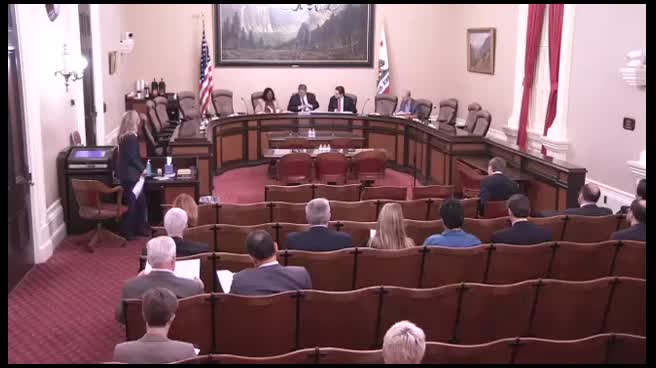 13MIN
Senate Standing Committee on Governance and Finance
Bill Author

Bill Co-Author(s):