SB 1153: Greenhouse gases: scoping plan: biomethane.
- Session Year: 2015-2016
- House: Senate
- Latest Version Date: 2016-04-25
The California Global Warming Solutions Act of 2006 designates the State Air Resources Board as the state agency charged with monitoring and regulating sources of emissions of greenhouse gases. The act requires the state board to prepare and approve a scoping plan for achieving the maximum technologically feasible and cost-effective reductions in greenhouse gas emissions and to update the scoping plan at least once every 5 years.
This bill would require the state board, as a part of the update to the scoping plan and in consultation with other state entities, to provide a comprehensive overview of state efforts to encourage the development of instate in-state biomethane and renewable natural gas.
The California Global Warming Solutions Act of 2006 designates the State Air Resources Board as the state agency charged with monitoring and regulating sources of emissions of greenhouse gases. The act requires the state board to prepare and approve a scoping plan for achieving the maximum technologically feasible and cost-effective reductions in greenhouse gas emissions and to update the scoping plan at least once every 5 years.
This bill would require the state board, as a part of the update to the scoping plan, plan and in consultation with other state entities, to provide a comprehensive overview of state efforts to encourage the development of instate biomethane and renewable natural gas.
The California Global Warming Solutions Act of 2006 designates the State Air Resources Board as the state agency charged with monitoring and regulating sources of emissions of greenhouse gases. The act requires the state board to prepare and approve a scoping plan for achieving the maximum technologically feasible and cost-effective reductions in greenhouse gas emissions and to update the scoping plan at least once every 5 years.
This bill would require the state board, as a part of the update to the scoping plan, to provide a comprehensive overview of state efforts to encourage the development of instate biomethane and renewable natural gas.
Under existing law, the Public Utilities Commission has regulatory authority over public utilities, including gas corporations. Existing law authorizes the commission to fix the rates and charges for every public utility and requires that those rates and charges be just and reasonable. The California Renewables Portfolio Standard Program requires the commission to adopt policies and programs that promote the in-state production and distribution of biomethane.
This bill would additionally require the commission to consider and adopt policies to increase the production and availability of in-state pipeline biomethane significantly. The bill would require the commission to adopt a biomethane feed-in tariff program and to open a proceeding to consider making recoverable as part of the rate base gas corporation capital investments that facilitate pipeline biomethane development and injection at in-state projects.
Under existing law, a violation of the Public Utilities Act or any order, decision, rule, direction, demand, or requirement of the commission is a crime.
Because the provisions of this bill would be a part of the act and a violation of an order or decision of the commission implementing its requirements would be a crime, this bill would impose a state-mandated local program by creating a new crime.
The California Constitution requires the state to reimburse local agencies and school districts for certain costs mandated by the state. Statutory provisions establish procedures for making that reimbursement.
This bill would provide that no reimbursement is required by this act for a specified reason.
The Legislature finds and declares all of the following:
(a)California has enacted numerous policies to reduce the emissions of greenhouse gases and increase the use of renewable energy resources and renewable fuels.
(b)California has numerous programs to incentivize and encourage the development of biogas, biomethane, and renewable natural gas projects.
(c)Despite a regulatory environment encouraging renewable energy production and greenhouse gases emissions reductions, the development of biomethane and other renewable natural gas projects continues to lag in the state.
(d)Obstacles to increased biomethane and renewable natural gas projects should be identified and addressed.
(e)Investments in dairy waste digesters, landfill diversion programs, and anaerobic digesting at wastewater treatment facilities provide significant reductions in the emissions of greenhouse gases, including methane, for the state.
(f)A coordinated effort by state agencies should be undertaken to address remaining obstacles and identify additional incentive programs, if needed, to encourage the increased development of instate in-state biomethane and renewable natural gas projects.
SEC. 2.Section 38561.5 is added to the Health and Safety Code, to read:38561.5.As a part of the update of the scoping plan required pursuant to subdivision (h) of Section 38561, the state board, in consultation with the Public Utilities Commission, the Department of Food and Agriculture, the State Energy Resources Conservation and Development Commission, the Department of Resources Recycling and Recovery, and any other relevant state entity, shall provide a comprehensive overview of state efforts to encourage the development of instate in-state biomethane and renewable natural gas. The overview shall include, but not be limited to, all of the following:
(a)The role of biomethane and renewable natural gas in the states efforts to reduce the emissions of greenhouse gases.
(b)The estimated amount of biomethane and renewable natural gas that can cost-effectively feasibly be developed from the states organic waste streams, including the waste, agricultural, dairy, and forestry sectors.
(c)Estimated The estimated cost-effectiveness of the production of biomethane and renewable natural gas from the various waste streams.
(d)Analysis An analysis of current market conditions for biomethane and renewable natural gas in California.
(e)Overview An overview of current programs to encourage development of biomethane and renewable natural gas.
(f)Identification of obstacles to increased development of instate in-state biomethane and renewable natural gas.
(g)Identification of solutions for legislative consideration to address obstacles identified in subdivision (f) and encourage increased instate in-state biomethane and renewable natural gas development, including, but not limited to, incentive programs and grants, preferential loan programs to enhance project financing, and market stabilization programs, such as contracts for differences, tax credits, and biomethane purchase programs.
The Legislature finds and declares all of the following:
(a)California has enacted numerous policies to reduce the emissions of greenhouse gases and increase the use of renewable energy resources and renewable fuels.
(b)California has numerous programs to incentivize and encourage the development of biogas, biomethane, and renewable natural gas projects.
(c)Despite a regulatory environment encouraging renewable energy production and greenhouse gases emissions reductions, the development of biomethane and other renewable natural gas projects continues to lag in the state.
(d)Obstacles to increased biomethane and renewable natural gas projects should be identified and addressed.
(e)Investments in dairy waste digesters, landfill diversion programs, and anaerobic digesting at wastewater treatment facilities provide significant reductions in the emissions of greenhouse gases, including methane, for the state.
(f)A coordinated effort by state agencies should be undertaken to address remaining obstacles and identify additional incentive programs, if needed, to encourage the increased development of instate biomethane and renewable natural gas projects.
SEC. 2.Section 38561.5 is added to the Health and Safety Code, to read:38561.5.As a part of the update of the scoping plan required pursuant to subdivision (h) of Section 38561, the state board board, in consultation with the Public Utilities Commission, the Department of Food and Agriculture, the State Energy Resources Conservation and Development Commission, the Department of Resources Recycling and Recovery, and any other relevant state entity, shall provide a comprehensive overview of state efforts to encourage the development of instate biomethane and renewable natural gas. The overview shall include, but not be limited to, all of the following:
(a)The role of biomethane and renewable natural gas in the states efforts to reduce the emissions of greenhouse gases.
(b)The estimated amount of renewable natural gas that can cost-effectively be developed from the states organic waste streams, including the waste, agricultural, dairy, and forestry sectors.
(c)Estimated cost-effectiveness of the various waste streams.
(d)Analysis of current market conditions for renewable natural gas in California.
(e)Overview of current programs to encourage development of biomethane and renewable natural gas.
(f)Identification of obstacles to increased development of instate biomethane and renewable natural gas.
(g)Identification of solutions for legislative consideration to address obstacles identified in subdivision (f) and encourage increased instate biomethane and renewable natural gas development, including, but not limited to, incentive programs and grants, preferential loan programs to enhance project financing, and market stabilization programs, such as contracts for differences, tax credits, and biomethane purchase programs.
The Legislature finds and declares all of the following:
(a)California has enacted numerous policies to reduce the emissions of greenhouse gases and increase the use of renewable energy resources and renewable fuels.
(b)California has numerous programs to incentivize and encourage the development of biogas, biomethane, and renewable natural gas projects.
(c)Despite a regulatory environment encouraging renewable energy production and greenhouse gases emissions reductions, the development of biomethane and other renewable natural gas projects continues to lag in the state.
(d)Obstacles to increased biomethane and renewable natural gas projects should be identified and addressed.
(e)Investments in dairy waste digesters, landfill diversion programs, and anaerobic digesting at wastewater treatment facilities provide significant reductions in the emissions of greenhouse gases, including methane, for the state.
(f)A coordinated effort by state agencies should be undertaken to address remaining obstacles and identify additional incentive programs, if needed, to encourage the increased development of instate biomethane and renewable natural gas projects.
SEC. 2.Section 38561.5 is added to the Health and Safety Code, to read:38561.5.As a part of the update of the scoping plan required pursuant to subdivision (h) of Section 38561, the state board shall provide a comprehensive overview of state efforts to encourage the development of instate biomethane and renewable natural gas. The overview shall include, but not be limited to, all of the following:
(a)The role of biomethane and renewable natural gas in the states efforts to reduce the emissions of greenhouse gases.
(b)The estimated amount of renewable natural gas that can cost-effectively be developed from the states organic waste streams, including the waste, agricultural, dairy, and forestry sectors.
(c)Estimated cost-effectiveness of the various waste streams.
(d)Analysis of current market conditions for renewable natural gas in California.
(e)Overview of current programs to encourage development of biomethane and renewable natural gas.
(f)Identification of obstacles to increased development of instate biomethane and renewable natural gas.
(g)Identification of solutions for legislative consideration to address obstacles identified in subdivision (f) and encourage increased instate biomethane and renewable natural gas development, including, but not limited to, incentive programs and grants, preferential loan programs to enhance project financing, and market stabilization programs, such as contracts for differences, tax credits, and biomethane purchase programs.
SECTION 1.This act shall be known and may be cited as the California Renewable Natural Gas Act.
SEC. 2.Section 784.5 is added to the Public Utilities Code, to read:784.5.In order to meet the states climate change, low-carbon fuel, and renewable energy goals, the commission shall consider and adopt policies to increase the production and availability of in-state pipeline biomethane significantly, and shall do both of the following:
(a)Adopt a biomethane feed-in tariff program requiring the states gas corporations to procure, through long-term contracts, a specified amount of biomethane that is produced by in-state projects. In determining this amount, the commission shall consider, among other issues, all of the following:
(1)The availability of cost-effective in-state biomethane production opportunities.
(2)The economic impacts on ratepayers.
(3)Existing market conditions, including demand in the distributed, renewable energy, and low-carbon transportation fuel sectors.
(b)Open a proceeding to consider making recoverable as part of the rate base gas corporation capital investments that facilitate pipeline biomethane development and injection at in-state projects. The proceeding shall identify and consider all of the following:
(1)Obstacles to pipeline biomethane injection projects.
(2)Costs and benefits to gas corporation ratepayers.
(3)Benefits of meeting the states renewable energy, greenhouse gas reduction, and petroleum use reduction goals.
SEC. 3.No reimbursement is required by this act pursuant to Section 6 of Article XIIIB of the California Constitution because the only costs that may be incurred by a local agency or school district will be incurred because this act creates a new crime or infraction, eliminates a crime or infraction, or changes the penalty for a crime or infraction, within the meaning of Section 17556 of the Government Code, or changes the definition of a crime within the meaning of Section 6 of Article XIIIB of the California Constitution.
This act shall be known and may be cited as the California Renewable Natural Gas Act.
SEC. 2.Section 784.5 is added to the Public Utilities Code, to read:784.5.In order to meet the states climate change, low-carbon fuel, and renewable energy goals, the commission shall consider and adopt policies to increase the production and availability of in-state pipeline biomethane significantly, and shall do both of the following:
(a)Adopt a biomethane feed-in tariff program requiring the states gas corporations to procure, through long-term contracts, a specified amount of biomethane that is produced by in-state projects. In determining this amount, the commission shall consider, among other issues, all of the following:
(1)The availability of cost-effective in-state biomethane production opportunities.
(2)The economic impacts on ratepayers.
(3)Existing market conditions, including demand in the distributed, renewable energy, and low-carbon transportation fuel sectors.
(b)Open a proceeding to consider making recoverable as part of the rate base gas corporation capital investments that facilitate pipeline biomethane development and injection at in-state projects. The proceeding shall identify and consider all of the following:
(1)Obstacles to pipeline biomethane injection projects.
(2)Costs and benefits to gas corporation ratepayers.
(3)Benefits of meeting the states renewable energy, greenhouse gas reduction, and petroleum use reduction goals.
SEC. 3.No reimbursement is required by this act pursuant to Section 6 of Article XIIIB of the California Constitution because the only costs that may be incurred by a local agency or school district will be incurred because this act creates a new crime or infraction, eliminates a crime or infraction, or changes the penalty for a crime or infraction, within the meaning of Section 17556 of the Government Code, or changes the definition of a crime within the meaning of Section 6 of Article XIIIB of the California Constitution.
|
Date
|
Status
|
|---|---|
| Apr 7, 2016 | Read second time and amended. Re-referred to Com. on E.Q. |
| May 27, 2016 | May 27 hearing: Held in committee and under submission. |
| May 20, 2016 | Set for hearing May 27. |
| May 9, 2016 | May 9 hearing: Placed on APPR. suspense file. |
| Apr 29, 2016 | Set for hearing May 9. |
| Apr 25, 2016 | Read second time and amended. Re-referred to Com. on APPR. |
| Apr 21, 2016 | From committee: Do pass as amended and re-refer to Com. on APPR. (Ayes 7. Noes 0.) (April 20). |
| Apr 21, 2016 | From committee: Do pass as amended and re-refer to Com. on APPR. (Ayes 7. Noes 0. Page 3643.) (April 20). |
| Apr 12, 2016 | Set for hearing April 20. |
| Feb 18, 2016 | Introduced. Read first time. To Com. on RLS. for assignment. To print. |
| Apr 6, 2016 | From committee: Do pass as amended and re-refer to Com. on E.Q. (Ayes 9. Noes 0.) (April 5). |
| Apr 6, 2016 | From committee: Do pass as amended and re-refer to Com. on E.Q. (Ayes 9. Noes 0. Page 3393.) (April 5). |
| Mar 29, 2016 | From committee with author's amendments. Read second time and amended. Re-referred to Com. on E., U., & C. |
| Mar 17, 2016 | Set for hearing April 5. |
| Mar 14, 2016 | March 29 set for first hearing canceled at the request of author. |
| Mar 9, 2016 | Set for hearing March 29. |
| Mar 3, 2016 | Referred to Coms. on E., U., & C. and E.Q. |
| Feb 19, 2016 | From printer. May be acted upon on or after March 20. |
|
Date
|
Description
|
Location
|
Votes
|
|
|---|---|---|---|---|
| May 9, 2016 | Placed on suspense file | Senate Standing Committee on Appropriations |
Passed |
|
| Apr 20, 2016 | Do pass as amended, but first amend, and re-refer to the Committee on [Appropriations] | Senate Standing Committee on Environmental Quality |
Passed |
|
| Apr 5, 2016 | Do pass as amended, but first amend, and re-refer to the Committee on [Environmental Quality] | Senate Standing Committee on Energy, Utilities and Communications |
Passed |
This list shows positions taken on this bill by organizations on the date displayed, which is linked to the original source.
Positions by individuals are not included.
|
Organization
|
Position
|
Date
|
|---|---|---|
| Ag Energy Consumers Association | * Support | Apr 5, 2016 |
| Agricultural Council Of California | ** Support | Apr 5, 2016 |
| Agricultural Energy Consumers Association | * Support | Apr 5, 2016 |
| Association Of California Egg Farmers | ** Support | Apr 5, 2016 |
| California Grain & Feed Association | ** Support | Apr 5, 2016 |
| California Poultry Federation | ** Support | Apr 5, 2016 |
| Dairy Farmers Of America | ** Support | Apr 5, 2016 |
| Dairy Institute Of California | ** Support | Apr 5, 2016 |
| Integrated | ** Support | Apr 5, 2016 |
| Los Angeles County Solid Waste Management Committee | ** Support | Apr 5, 2016 |
| Management Task Force | ** Support | Apr 5, 2016 |
| Milk Producers Council | ** Support | Apr 5, 2016 |
| Sierra Club | * Neutral | Apr 5, 2016 |
| Waste | ** Support | Apr 5, 2016 |
| Western United Dairymen | ** Support | Apr 5, 2016 |
SENATE COMMITTEE ON APPROPRIATIONS
Senator Ricardo Lara, Chair
2015 - 2016 Regular Session
SB 1153 (Cannella) - Greenhouse gases: scoping plan: biomethane
Version: April 25, 2016 | Policy Vote: E., U., & C. 9 - 0, E.Q. 7 - 0 |
Urgency: No | Mandate: No |
Hearing Date: May 9, 2016 | Consultant: Narisha Bonakdar |
This bill meets the criteria for referral to the Suspense File.
Bill Summary:
SB 1153 requires the Air Resources Board (ARB), in consultation with specified state entities, to provide a comprehensive overview of state efforts to encourage the development of in-state biomethane and renewable natural gas as part of the update to the Scoping Plan, and specifies the required components of the assessment.
Fiscal Impact:
- Approximately $912,000 (Cost of Implementation Fee (COI)) to the ARB for staffing costs for 6 limited-term positions and one fulltime position to perform tasks required conduct the comprehensive overview.
Ongoing costs of $144,000 (COI) annually to the ARB for one full-time position.
Approximately $300,000 (COI) for modeling efforts to forecast biomethane and renewable gas future volumes from the variety of waste streams and feedstocks.
Minor costs to California Public Utilities Commission (CPUC), the Department of Food and Agriculture (CDFA), the State Energy Resources Conservation and Development Commission (CEC), the Department of Resources Recycling and Recovery (CalRecycle), and any other relevant state entities for consolation. (special fund)
Background:
Existing law, the California Global Warming Solutions Act of 2006 (also known as AB 32):
- Requires the ARB to determine the 1990 statewide greenhouse gas (GHG) emissions level and approve a statewide GHG emissions limit that is equivalent to that level, to be achieved by 2020, and to adopt GHG emissions reductions measures by regulation, and sets certain requirements in adopting the regulations. ARB may include the use of market-based mechanisms to comply with these regulations. (Health and Safety Code §38500 et seq.)
- Requires ARB to prepare and approve a scoping plan by January 1, 2009, for achieving the maximum technologically feasible and cost-effective reductions in GHG emissions from sources or categories of sources of GHGs by 2020. ARB must evaluate the total potential costs and total potential economic and noneconomic benefits of the plan for reducing GHGs to the state’s economy and public health, using the best economic models, emissions estimation techniques, and other scientific methods. The Plan must be updated at least once every five years. (HSC §38561)
Proposed Law:
This bill requires ARB, in consultation with the CPUC, CDFA, CEC, CalRecycle, and any other relevant state entities, to provide a comprehensive overview of state efforts to encourage the development of in-state biomethane and renewable natural gas as part of the update to the Scoping Plan. The bill requires the overview to include at least the following:
- The role of biomethane and renewable natural gas as part of the state’s efforts to reduce GHG emissions.
- The estimated amount of renewable natural gas that can cost-effectively be developed from the state’s organic waste streams.
- The estimated cost-effectiveness of the different waste streams.
- An analysis of current market conditions for renewable natural gas in California.
- An overview of current programs to encourage development of biomethane and renewable natural gas.
- The identification of obstacles to increased development of in-state biomethane and renewable natural gas.
- The identification of solutions for legislative consideration to address in-state biomethane and renewable natural gas development, including, but not limited to, incentive programs and grants, preferential loan programs to enhance project financing, and market stabilization programs, such as contracts for differences, tax credits, and biomethane purchase programs.
Related Legislation:
SB 1043 (Allen, 2016) requires ARB to consider and adopt policies to significantly increase the sustainable production and use of “renewable gas.” The bill is pending consideration by this committee.
AB 2206 (Williams, 2016) requests that the California Council on Science and Technology study the heating value and siloxane specifications for biomethane to be injected into common carrier gas pipelines. The bill is currently on the Assembly Suspense File.
AB 2773 (Quirk, 2016) requires CPUC to modify its technical standards for biomethane injected into a common carrier pipeline. The bill is currently on the Assembly Suspense File.
AB 2313 (Williams, 2016) requires the CPUC to modify its monetary incentive program for biomethane projects. The bill is pending consideration by this committee.
AB 577 (Bonilla, 2015) would have required the CEC to develop and implement a grant program for projects related to biomethane production. The bill was held on suspense by the Senate Appropriations Committee.
AB 1900 (Gatto, Chapter 602, Statutes of 2012) directed the CPUC to identify landfill gas constituents, develop testing protocols for landfill gas injected into common carrier pipelines, adopt standards for biomethane to ensure pipeline safety and integrity, and adopt rules to ensure open access to the gas pipeline system.
AB 2196 (Chesbro, Chapter 605, Statutes of 2012) ensures that biogas qualifies for RPS credit, provided its production, delivery and use meet certain conditions.
SB 1122 (Rubio, Chapter 612, Statutes of 2012) required IOUs to collectively procure at least 250 MW of generation eligible for the RPS from bioenergy generation project, including biogas projects.
Staff Comments:
Staff notes that many policies, programs and directives to encourage use of biogas and biomethane currently exist. Presumably, these efforts can be leveraged, potentially reducing costs outlined by ARB. ARB suggests that the repeated mandates necessitate a closer, more detailed look at bio-methane. Necessary tasks include, among others:
- An overview of the role of biomethane and renewable natural gas in reducing GHGs,
current programs to encourage development of biomethane and renewable gas in California, and barriers to utilization of existing incentive programs.
- Evaluation of the amount of biomethane and renewable gas that can be developed from the State’s waste streams.
- An evaluation of the current market conditions and cost-effectiveness of the production of the biomethane and renewable gas from waste streams.
- This is one of many bills before the committee that will potentially impact Greenhouse Gas Reduction Fund (GGRF) monies. The Committee may wish to consider a holistic approach to GGRF expenditures, and consider these bills together, rather taking a piecemeal approach.
-- END --
SENATE COMMITTEE ON ENVIRONMENTAL QUALITY
Senator Wieckowski, Chair
2015 - 2016 Regular
Bill No: SB 1153
Author: | Cannella | ||
Version: | 4/7/2016 | Hearing Date: | 4/20/2016 |
Urgency: | No | Fiscal: | Yes |
Consultant: | Rebecca Newhouse | ||
SUBJECT: Greenhouse gases: scoping plan: biomethane
ANALYSIS:
Existing law, under the California Global Warming Solutions Act of 2006 (also known as AB 32):
- Requires the California Air Resources Board (ARB) to determine the 1990 statewide greenhouse gas (GHG) emissions level and approve a statewide GHG emissions limit that is equivalent to that level, to be achieved by 2020, and to adopt GHG emissions reductions measures by regulation, and sets certain requirements in adopting the regulations. ARB may include the use of market-based mechanisms to comply with these regulations. (Health and Safety Code §38500 et seq.)
- Requires ARB to prepare and approve a scoping plan by January 1, 2009, for achieving the maximum technologically feasible and cost-effective reductions in GHG emissions from sources or categories of sources of GHGs by 2020. ARB must evaluate the total potential costs and total potential economic and noneconomic benefits of the plan for reducing GHGs to the state’s economy and public health, using the best economic models, emissions estimation techniques, and other scientific methods. The Plan must be updated at least once every five years. (HSC §38561)
This bill requires ARB, in consultation with specified state entities, to provide a comprehensive overview of state efforts to encourage the development of in-state biomethane and renewable natural gas as part of the update to the Scoping Plan, and requires the overview to include, but not be limited to, all of the following:
- The role of biomethane and renewable natural gas as part of the state’s efforts to reduce emissions of GHGs.
- The estimated amount of renewable natural gas that can cost-effectively be developed from the state’s organic waste streams.
- Estimated cost-effectiveness of the different waste streams.
- Analysis of current market conditions for renewable natural gas in California.
- Overview of current programs to encourage development of biomethane and renewable natural gas.
- Identification of obstacles to increased development of in-state biomethane and renewable natural gas.
- Identification of solutions for legislative consideration to address in-state biomethane and renewable natural gas development, including, but not limited to, incentive programs and grants, preferential loan programs to enhance project financing, and market stabilization programs, such as contracts for differences, tax credits, and biomethane purchase programs.
Background
- Short-lived climate pollutants. Greenhouse gases or climate pollutants, such as CO2, work to warm the earth by trapping solar radiation in the earth’s atmosphere. Depending on the molecule, these pollutants can vary greatly in their ability to trap heat and the length of time they remain in the atmosphere. CO2 remains in the atmosphere for centuries, which makes it the most critical greenhouse gas to reduce in order to limit long-term climate change. However, climate pollutants including methane, tropospheric ozone, hydrofluorocarbons (HFCs), and soot (black carbon), are relatively short-lived (anywhere from a few days to a few decades), but when measured in terms of how they heat the atmosphere (global warming potential, or GWP), can be tens, hundreds, or even thousands of times greater than that of CO2. These climate forcers are termed short-lived climate pollutants (SLCPs).
Because SLCPs remain in the atmosphere for a relatively short period of time, but have a much higher global warming potential than CO2, efforts aimed at reducing their emissions in the near term would result in more immediate climate, air quality, and public health benefits, than a strategy focused solely on CO2. According to ARB’s SLCP draft strategy, “while the climate impacts of CO2 reductions take decades or more to materialize, cutting emissions of SLCPs can immediately slow global warming and reduce the impacts of climate change.” Recent research estimates that SCLPs are responsible for about 40% of global warming to date and that actions to significantly reduce SLCP emissions could cut the amount of warming that would occur over the next few decades by half.
According to ARB’s 2015 updated Scoping Plan, methane is one of the three short-lived climate pollutants with the greatest implications for California.
Methane (CH4) is the principal component of natural gas and is also produced biologically under anaerobic conditions in ruminants, landfills, and waste handling. Atmospheric methane concentrations have been increasing as a result of human activities related to agriculture, fossil fuel extraction and distribution, and waste generation and processing. A 2014 Stanford University study found that methane emissions may be 50% higher than official estimates from the United States Environmental Protection Agency (US EPA). Methane is 84 times more powerful as a global warming pollutant than CO2 on a 20-year time scale.
- Biogas, methane, and biomethane. Through a series of steps involving the bacterial breakdown of organics, carbon-based material can be converted to methane in oxygen-deprived conditions. This process occurs naturally, and is often uncontrolled in landfills and dairies, contributing to significant GHG emissions. However, capturing and utilizing the gas is facilitated through the use of anaerobic digesters, which operate with various temperatures, pH and bacteria types. The digestion process dramatically speeds up the natural decomposition process for organic wastes to produce primarily methane, significant quantities of carbon dioxide, and trace amounts of other gasses including hydrogen, carbon monoxide, nitrogen, oxygen, and hydrogen sulfide, which, all together, is termed “biogas.” The biogas can be processed further to produce high purity, or “pipeline” quality methane, and is termed biomethane to differentiate it from fossil fuel natural gas. In addition to production at landfills and dairies, biomethane is generated from digestion processes at wastewater treatment plants. Biomethane is also termed renewable natural gas, or RNG.
- Fuel supply, markets, and barriers to use. Because of the potential climate, waste reduction, and energy benefits of biomethane, a number of bills and programs have worked to increase the supply, expand the biomethane market, and overcome barriers for its use. Various incentive programs, funded through cap-and-trade auction revenue, and one funded by vehicle registration surcharges, provide grants and loans for the production of renewable and alternative fuels, including biomethane.
The state has also implemented several programs to create markets for low-carbon fuels, in furtherance of meeting GHG emission reduction goals. The Low-Carbon Fuel Standard (LCFS), established pursuant to authority under AB 32, requires a 10% reduction in the carbon intensity for transportation fuels used in the state by 2020. The state also has procurement requirements for “very-low carbon fuels,” established through AB 692 (Quirk, Chapter 588, Statutes of 2015). Biomethane is also considered a renewable resource under the Renewable Portfolio Standard, which was recently amended by SB 350 (de León and Leno, Chapter 547, Statutes of 2015) to require 50% of total retail electricity sales to be from renewable energy resources by 2030. Additionally, the cap-and-trade regulation allows covered entities to purchase up to 8% of their compliance obligation as offsets. To date, ARB has adopted offset protocols for four project types including dairy digesters to capture fugitive methane emissions.
Overcoming barriers. Due to concern over toxic constituents in landfill biogas, California adopted strict requirements in 1988 regarding the allowable levels of vinyl chloride and the required testing protocols for the legal sale, supply or transport of landfill gas to a gas corporation in the state. In an effort to encourage the production and use of biomethane in California, including methane produced from landfill biogas, the Legislature passed AB 1900 (Gatto, Chapter 602, Statutes of 2012), which required the California Public Utilities Commission (CPUC) to adopt health and safety standards for biomethane pipeline injection based on recommendations from the Office of Environmental Health Hazard Assessment and ARB. AB 1900 also requires CPUC to “adopt policies and programs that promote the in-state production and distribution of biomethane.” On January 16, 2014, CPUC adopted health and safety standards for pipeline injected biomethane.
In 2015, CPUC found that gas producers should bear all costs relating to the processing and pipeline injection of biomethane. As part of that decision, the CPUC adopted a $40 million ratepayer-funded program to offset a portion of the costs to gas producers of connecting to utility pipelines. Program funding will pay up to 50% of a biomethane project’s interconnection cost, up to $1.5 million per project.
AB 1900 also required the California Energy Resources Conservation and Development Commission (CEC) to hold public hearings to identify impediments that limit procurement of biomethane in California and offer solutions as part of the Integrated Energy Policy Report (IEPR).
According to the CEC’s 2013 IEPR, “One of the key challenges of developing biogas has been the cost. Upgrading biogas to pipeline quality can be expensive, and access to pipelines for distribution of biomethane can pose a challenge. For locations that do not have feasible natural gas pipeline access, the biogas must be used for onsite generation or for transportation biofuels. Pipeline interconnection costs have been identified by utility and project developers as major challenges contributing to the cost of producing biomethane in California. The pipeline interconnection costs can exceed $3 million, but the cost depends on specifications unique to each project. Lengthy interconnection processes for biomethane facilities further increase costs for project developers. In addition, the feasibility of locating a biomethane facility near a natural gas pipeline depends on the availability of feedstock within a reasonable distance.”
In 2006, 2011 and 2012, the CEC released editions of its bioenergy action plan, which it describes as strategies, goals, objectives, and actions that California state agencies will take to increase bioenergy development in California. The 2012 Bioenergy Action Plan made the following recommendations relative to biogas:
- Increase research and development of diverse bioenergy technologies and applications, as well as their costs, benefits, and impacts.
- Continue to develop and make accessible information about the availability of organic wastes and opportunities for bioenergy development.
- Streamline and consolidate permitting of bioenergy facilities and reconcile conflicting regulatory requirements to the extent possible.
- Assess and monetize the economic, energy, safety, environmental, and other benefits of biomass.
- Facilitate access to transmission, pipelines, and other distribution networks.
Comments
- Purpose of Bill. According to the author, “SB 1153 is designed to help the state meet its climate change, low-carbon fuel, and renewable energy goals by directing the California Air Resources Board to update its GHG scoping plan with information regarding the production and availability of in-state pipeline biomethane. According to CARB, California must immediately reduce emissions of Short-Lived Climate Pollutants, including methane. Methane from biological processes, such as farms, food processing and urban waste, can also be a significant source of clean energy if captured and upgraded to renewable natural gas. RNG can be utilized to supplement conventional natural gas in existing pipelines and can be utilized as a low- or negative carbon transportation fuel in heavy duty freight trucks. To date, capturing and converting methane from landfills, wastewater treatment plants, dairies and other sources has proved elusive in California in large part due to obstacles and cost barriers related to pipeline interconnection and injection and lack of long-term contracts for RNG.”
- Cost-effectiveness. SB 1153 requires that the overview specified in the bill estimate the amount of renewable natural gas that can “cost-effectively be developed from the state’s organic waste streams.” The bill also requires ARB to estimate cost-effectiveness of the various waste streams.
Suggested amendment. It may instead be more informative, and less redundant, to amend the bill to require ARB to estimate the amount of renewable natural gas and biomethane that can feasibly be developed from the state’s organic waste streams, in addition to requiring ARB perform an evaluation of the cost-effectiveness of producing biomethane from the various waste streams.
- Another evaluation. As noted in the background, current law requires CEC to hold public hearings to identify impediments that limit procurement of biomethane in California and offer solutions in the IEPR. The CPUC is also required to adopt policies and programs that promote the in-state production and distribution of biomethane.
SB 1153 would require ARB to perform an additional overview of biomethane in the AB 32 Scoping Plan, which is required to be updated every five years under AB 32.
- Clarifying amendment. SB 1153 requires ARB to estimate cost-effectiveness of the various waste streams. A clarifying amendment is needed to require ARB estimate the cost-effectiveness for the production of biomethane and renewable natural gas from the various waste streams.
- Some overlap and potential timing issues with SB 1043 (Allen). SB 1043 (Allen), also being considered by the Committee at today’s hearing, requires ARB to consider, and adopt as appropriate, policies to significantly increase the sustainable production and use of renewable gas (also known as renewable natural gas, or biomethane). If the bill is passed by the Legislature and signed by the Governor, SB 1043’s provisions will go into effect January 1, 2017.
As noted in this analysis, SB 1153 requires ARB, as a part of the update to the AB 32 Scoping Plan, to provide a comprehensive overview of state efforts to encourage the development of instate biomethane and renewable natural gas and evaluate policy options to overcoming barriers and challenges for its use. The Scoping Plan is currently being updated by ARB to incorporate the Governor’s 2030 midterm target for GHG emissions in Executive Order (EO) B-30-15. However, it is not clear that the provisions of SB 1153, if approved, will be incorporated into the Scoping Plan before ARB finishes the update pursuant to the Governor’s EO. In that case, the study outlined in SB 1153 may not be included in the Scoping Plan until the next update five years from now.
Should the Committee deem both bills necessary, the authors should work to address potential issues associated with the timing of the evaluation in the Scoping Plan in this bill and the activities required under SB 1043 (Allen).
Related/Prior Legislation
SB 1043 (Allen) requires ARB to consider and adopt policies to significantly increase the sustainable production and use of “renewable gas.” The bill is pending consideration by this committee.
SB 687 (Allen, 2015) would have established the renewable gas standard (RGS), requiring all sellers of natural gas to provide to retail end-use customers in California increasing amounts of “renewable gas,” so that, by January 1, 2030, at least 10% of the natural gas supplied is “renewable gas.” The bill passed this committee on a vote of 7 to 3 and was held on suspense by the Senate Committee on Appropriations.
AB 2206 (Williams) requests that the California Council on Science and Technology study the heating value and siloxane specifications for biomethane to be injected into common carrier gas pipelines. The bill is pending consideration by the Assembly Natural Resources Committee on April 18, 2016.
AB 2773 (Quirk) requires CPUC to modify its technical standards for biomethane injected into a common carrier pipeline. The bill is pending consideration by the Assembly Committee on Utilities and Commerce on April 13, 2016.
AB 577 (Bonilla, 2015) would have required the CEC to develop and implement a grant program for projects related to biomethane production. The bill was held on suspense by the Senate Committee on Appropriations.
AB 2313 (Williams) requires the CPUC to modify its monetary incentive program for biomethane projects. The bill is pending consideration by the Assembly Committee on Natural Resources.
AB 1900 (Gatto, Chapter 602, Statutes of 2012) directed the CPUC to identify landfill gas constituents, develop testing protocols for landfill gas injected into common carrier pipelines, adopt standards for biomethane to ensure pipeline safety and integrity, and adopt rules to ensure open access to the gas pipeline system.
AB 2196 (Chesbro, Chapter 605, Statutes of 2012) ensures that biogas qualifies for RPS credit, provided its production, delivery and use meet certain conditions.
SB 1122 (Rubio, Chapter 612, Statutes of 2012) required IOUs to collectively procure at least 250 MW of generation eligible for the RPS from bioenergy generation project, including biogas projects.
DOUBLE REFERRAL:
This measure was heard in the Senate Energy, Utilities and Communications Committee on April 5, 2016, and passed out of committee with a vote of 9-0.
SOURCE:
Author
SUPPORT:
Agricultural Energy Consumers Association (Source)
Agricultural Council of California
Association of California Egg Farmers
California Dairies Inc.
California Grain & Feed Association
California Poultry Federation
Dairy Farmers of America
Dairy Institute of California
Milk Producers Council
Western United Dairymen
OPPOSITION:
None received
ARGUMENTS IN SUPPORT:
Supporters state that development
of biomethane projects in California has lagged. They state that SB 1153 is
designed to provide a comprehensive overview of biomethane projects,
opportunities, obstacles, and incentives to inform coordinated legislative efforts in
the future to encourage biomethane efforts and ensure those efforts are consistent with overall state energy, climate, and environmental goals and policies.
-- END --
SENATE COMMITTEE ON ENERGY, UTILITIES AND COMMUNICATIONS
Senator Ben Hueso, Chair
2015 - 2016 Regular
Bill No: SB 1153 Hearing Date: 4/5/2016
Author: | Cannella | ||
Version: | 3/29/2016 As Amended | ||
Urgency: | No | Fiscal: | Yes |
Consultant: | Jay Dickenson | ||
SUBJECT: Greenhouse gases: scoping plan: biomethane
DIGEST: This bill requires the Air Resources Board to provide a comprehensive overview of state efforts to encourage the development of instate biomethane and renewable natural gas.
ANALYSIS:
Existing law:
- Directs the California Air Resource Board (ARB) to monitor and regulate sources of emissions of greenhouse gases (GHG) that cause global warming in order to reduce GHG emissions to 1990 levels by 2020. (Health & Safety Code §38510 et seq.)
- Requires retail sellers of electricity – investor-owned utilities (IOU), community choice aggregators (CCAs), and energy service providers (ESPs) – and publicly-owned utilities (POU) to increase purchases of renewable energy, such that at least 50 percent of retail sales are procured from renewable energy resources by December 31, 2030. This is known as the Renewable Portfolio Standard (RPS). (Public Utilities Code §399.11 et seq.)
- Declares electricity produced by certain renewable energy resources, including natural gas produced from biomass, digester gas or landfill gas, as potentially eligible for credit under the RPS. (Public Utilities Code §399.12, Public Resources Code §25741)
- Defines “biogas” as gas that is produced from the anaerobic decomposition of organic material and “biomethane” as biogas that meets the standards adopted by California Public Utilities Commission (CPUC) for injection into a common carrier pipeline. (Health and Safety Code §25420)
- Requires the CPUC to adopt standards that specify the concentrations of constituents of concern that are found in biomethane, and to adopt monitoring, testing, reporting, and recordkeeping protocols, to ensure the protection of human health and the integrity and safety of pipelines and pipeline facilities. (Health & Safety Code §25421 et seq.)
- Requires the CPUC to adopt pipeline access rules that ensure that each gas corporation provides nondiscriminatory open access to its gas pipeline system to any party for the purposes of physically interconnecting with the gas pipeline system and effectuating the delivery of gas. (Public Utilities Code §784.)
- Requires CPUC to adopt policies and programs that promote the in-state production and distribution of biomethane. (Public Utilities Code §399.24 )
- Requires the California Energy Commission (CEC) to hold public hearings to identify in its Integrated Energy Policy Report (IEPR) impediments that limit procurement of biomethane in California, including, but not limited to, impediments to interconnection, and to offer solutions. (Public Resources Code §25326.)
This bill:
- Requires ARB, as part of the “AB 32” scoping plan, to provide a comprehensive overview of state efforts to encourage the development of instate biomethane and renewable natural gas.
- Prescribes specific information and analysis to be included in the overview.
Background
Biogas, biomethane and natural gas by other names. Bioenergy is renewable energy produced from biomass wastes including forest and other wood waste, agriculture and food processing wastes, organic urban waste, waste and emissions from water treatment facilities, landfill gas and other organic waste sources. Biomass waste can be used to generate renewable electricity, liquid fuels and biogas.
Statute defines “biogas” as a gas produced from the anaerobic decomposition of organic material. The result is a gaseous mixture of carbon dioxide and methane. Depending on where it is produced, biogas can be categorized as landfill gas or digester gas. Landfill gas is produced by decomposition of organic waste in a municipal solid waste landfill. Digester gas is typically produced from livestock manure, sewage treatment or food waste. Biogas can be used directly to produce electricity or can be converted to biomethane by removing carbon dioxide and other impurities.
Statute defines “biomethane” as biogas meets the standards, adopted by the CPUC in keeping with statute, for injection into a common carrier pipeline. Biomethane can replace fossil sources of natural gas in homes and factories and compressed or liquefied as natural gas used in vehicles. Biomethane can also be used to produce renewable hydrogen in fuel cells.[1]
This bill references “biomethane” and “renewable natural gas.” However, this bill defines neither term specifically for purposes of this bill.
Biogas, is odorless, colorless and green. Combustion of biogas produces carbon dioxide (CO2), just like the combustion of natural gas. However, the combustion of biogas destroys methane, a gas which is a much more potent GHG than is CO2. And, for CO2 accounting purposes, biogas is considered carbon neutral because the carbon in biogas was so recently present in the atmosphere. In addition, biogas can be used to displace the use of fossil fuels, such as conventional natural gas, thereby further decreasing its carbon intensity.
Many policies, programs and directives to encourage use of biogas and biomethane. The legislature has repeatedly mandated actions to promote the use of biogas. The Global Warming Solutions Act (aka “AB 32”) requires a reduction in California GHG emissions to 1990 levels by the year 2020. Statute provides ARB broad authority to achieve statewide GHG reductions. In keeping with that authority, statute requires ARB to adopt a “scoping plan” of measures that will, collectively, reduce California GHG emissions, as required by law. Among the measures included in ARB’s scoping plan is the Low Carbon Fuel Standard, which calls for a reduction in the carbon intensity of California's transportation fuels by 2020. The administration reports that biofuels, such as compressed biomethane, will play an important role in reducing the lifecycle GHG impact from the transportation sector. The proposed Governor’s 2016-17 Budget includes additional programs to provide financial incentives for biogas and biomethane.
Relatedly, statute requires each of California’s electric utilities to procure at least 50 percent of its electricity from renewable resources. Statute declares a facility that uses natural gas produced from biomass, digester gas or landfill gas as a renewable energy resource, the electricity produced by which is eligible for credit under the RPS.
Statute directs the CEC to hold public hearings to identify in its IEPR impediments that limit procurement of biomethane in California, including, but not limited to, impediments to interconnection, and to offer solutions. Accordingly, in 2006, 2011 and 2012, the CEC released editions of its bioenergy action plan, which it describes as strategies, goals, objectives, and actions that California state agencies will take to increase bioenergy development in California. The 2012 Bioenergy Action Plan made the following recommendations relative to biogas:
- Increase research and development of diverse bioenergy technologies and applications, as well as their costs, benefits, and impacts.
- Continue to develop and make accessible information about the availability of organic wastes and opportunities for bioenergy development.
- Streamline and consolidate permitting of bioenergy facilities and reconcile conflicting regulatory requirements to the extent possible.
- Assess and monetize the economic, energy, safety, environmental, and other benefits of biomass.
- Facilitate access to transmission, pipelines, and other distribution networks.
In addition, the CEC reports the awarding of more than $49 million on 13 biomethane feasibility, demonstration and production projects throughout the state.
Similarly, statute directs the CPUC to adopt policies and programs that promote the in-state production and distribution of biomethane. In response to statutory mandate, the CPUC, in 2014, adopted health and safety standards that limit the amounts of certain constituents determined to be harmful to either human health or pipeline integrity in pipeline injected biomethane. The standards are to address the reluctance of energy utilities to inject biomethane into natural gas pipelines. In addition, the CPUC, in 2015, found that gas producers should bear all costs relating to the processing and pipeline injection of biomethane. As part of that decision, the CPUC adopted a $40 million ratepayer-funded program to offset a portion of the costs to gas producers of connecting to utility pipelines. Program funding will pay up to 50 percent of a biomethane project’s interconnection cost, up to $1.5 million per project.
May as well know what we are doing. The author contends this bill seeks to address two primary obstacles to greater “renewable” natural gas development in California – high costs of interconnection and lack of long-term contracts – though it is unclear how the bill addresses with of those obstacles. Nonetheless, given the state’s many biogas-related efforts, as well as the to-date limited development of instate biogas, it seems appropriate to ask the administration to catalogue and assess the state’s biogas-related policies and programs. It seems appropriate, too, to task ARB with the undertaking, given the board’s lead role in implementing the state’s GHG emission reduction program. The ARB, however, is not alone in implementing the state’s biogas-related policies and programs, as demonstrated above. Presumably, ARB will consult with other state agencies in conducting the comprehensive overview required by this bill. The author and committee may nonetheless want to amend the bill, as shown below, to ensure ARB consults with other state agencies responsible for implementing biogas-related policies and programs:
38561.5 As part of the update to the scoping plan required pursuant to subdivision (h) of Section 38561, the state board, in consultation with the California Public Utilities Commission, the State Energy Resources Conservation and Development Commission, the Department of Recycling and Resources Recovery, and any other relevant state agency, shall provide a comprehensive overview of state efforts to encourage the development of instate biomethane and renewable natural gas.
Double-referred. Should this bill be approved by this committee, it has been referred to the Senate Committee on Environmental Quality.
Prior/Related Legislation
AB 577 (Bonilla, 2015) would have required the CEC to develop and implement a grant program for projects related to biomethane production. The bill was held on suspense by the Senate Committee on Appropriations.
AB 2206 (Williams) requests that the California Council on Science and Technology undertake and complete a study analyzing the regional and gas corporation specific issues relating to minimum heating value and maximum siloxane specifications for biomethane before it can be injected into common carrier gas pipelines. The bill is pending consideration by the Assembly Committee on Utilities and Commerce.
AB 2313 (Williams) requires the CPUC to modify its monetary incentive program for biomethane projects. The bill is pending consideration by the Assembly Committee on Natural Resources.
AB 2773 (Quirk) requires the CPUC to modify its technical standards applicable to biomethane to be injected into a common carrier pipeline. The bill is pending consideration by the Assembly Committee on Utilities and Commerce.
SB 687 (Allen, 2015) would have established the renewable gas standard (RGS), requiring all sellers of natural gas to provide to retail end-use customers in California increasing amounts of “renewable gas,” so that, by January 1, 2030, at least ten percent of the natural gas supplied is “renewable gas.” The bill passed this committee on a vote of 7 to 3 and was held on suspense by the Senate Committee on Appropriations.
SB 1043 (Allen) requires ARB to consider and adopt policies to significantly increase the sustainable production and use of “renewable gas.” The bill is pending consideration by this committee.
AB 1900 (Gatto, Chapter 602, Statutes of 2012) directed the CPUC to identify landfill gas constituents, develop testing protocols for landfill gas injected into common carrier pipelines, adopt standards for biomethane to ensure pipeline safety and integrity, and adopt rules to ensure open access to the gas pipeline system.
AB 2196 (Chesbro, Chapter 605, Statutes of 2012) ensured that biogas qualifies for RPS credit, provided its production, delivery and use meet certain conditions.
SB 1122 (Rubio, Chapter 612, Statutes of 2012) required IOUs to collectively procure at least 250 MW of generation eligible for the RPS from bioenergy generation project, including biogas projects.
FISCAL EFFECT: Appropriation: No Fiscal Com.: Yes Local: Yes
SUPPORT:
Agricultural Energy Consumers Association (Source)
Agricultural Council of California
Association of California Egg Farmers
California Dairies Inc.
California Grain & Feed Association
California Poultry Federation
Dairy Farmers of America
Dairy Institute of California
Los Angeles County Solid Waste Management Committee/Integrated Waste
Management Task Force
Milk Producers Council
Western United Dairymen
OPPOSITION:
None received
ARGUMENTS IN SUPPORT: According to the author:
According to ARB, California must immediately reduce emissions of Short-Lived Climate Pollutants (SLCPs), including methane (CH4). Methane from biological processes, such as farms, food processing and urban waste, can also be a significant source of clean energy if captured and upgraded to renewable natural gas (RNG). RNG can be utilized to supplement conventional natural gas in existing pipelines and can be utilized as a low- or negative carbon transportation fuel in heavy duty freight trucks. To date, capturing and converting methane from landfills, wastewater treatment plants, dairies and other sources has proved elusive in California in large part due to obstacles and cost barriers related to pipeline interconnection and injection and lack of long-term contracts for RNG.
SB 1153 seeks to address these obstacles to the development of RNG projects in California by directing ARB to develop, in the update to its GHG scoping plan, an analysis of steps necessary to encourage development of biomethane and RNG from instate projects, such as landfills, wastewater treatment plants and dairy operations. SB 1153 seeks to address two primary obstacles to greater RNG development in California – high costs of interconnection and lack of long-term contracts.
-- END --
2012 Bioenergy Action Plan ↑
Discussed in Hearing
 8MIN
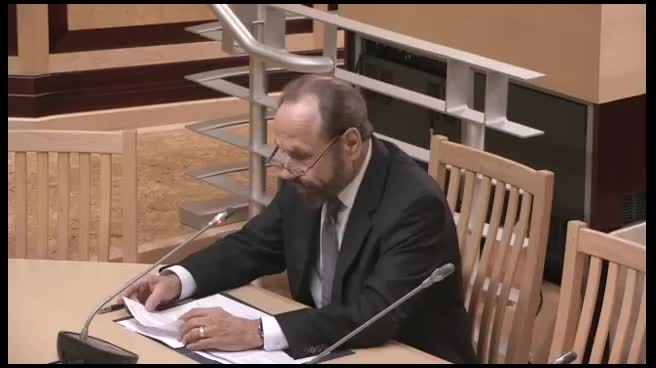
Senate Standing Committee on Energy, Utilities and Communications
Bill Author

Bill Co-Author(s):