SB 1299: California Renewables Portfolio Standard Program: renewable energy credits.
- Session Year: 2015-2016
- House: Senate
- Latest Version Date: 2016-03-28
The California Renewables Portfolio Standard Program requires the Public Utilities Commission to establish a rewewables renewables portfolio standard requiring all retail sellers, as defined, to procure a minimum quantity of electricity products from eligible renewable energy resources, as defined, at specified percentages of the total kilowatthours sold to their retail end-customers end-use customers during specified compliance periods. The program additionally requires each local publicly owned electric utility, as defined, to procure a minimum quantity of electricity products from eligible renewable energy resources to achieve the targets established by the program. The program, consistent with the goals of procuring the least-cost and best-fit eligible renewable energy resources that meet project viability principles, requires that all retail sellers procure a balanced portfolio of electricity products from eligible renewable energy resources, as specified, referred to as the portfolio content requirements. The program requires the commission to authorize the use of renewable energy credits to satisfy the renewables portfolio standard procurement requirements, subject to specified conditions. conditions and limitations for unbundled renewable energy credits. One condition placed on renewable energy credits is that they not be created for electricity generated under any electricity purchase contract executed after January 1, 2005, pursuant to the federal Public Utility Regulatory Policies Act of 1978, also known as PURPA.
This bill would make nonsubstantial revisions to the requirement that the commission authorize the use of renewable energy credits to satisfy the renewables portfolio standard procurement requirements. require that renewable energy credits be created for electricity generated under an electricity purchase contract executed after January 1, 2017, pursuant to PURPA, with those credits being owned by the owner of the eligible renewable energy resource unless otherwise agreed to by the owner. The bill would prohibit the commission from requiring, as a condition of entering into an electricity purchase contract pursuant to PURPA, that the generator sell its renewable energy credits to the electrical corporation pursuant to the contract. The bill would provide that when electricity products and the renewable energy credits associated with those electricity products are sold to the same electrical corporation pursuant to 2 or more separate purchase contracts with identical start and end dates, the credits and electricity products would be treated as bundled.
Under existing law, a violation of the Public Utilities Act or any order, decision, rule, direction, demand, or requirement of the commission is a crime.
Because the provisions of this bill would be a part of the act and because a violation of an order or decision of the commission implementing its requirements would be a crime, the bill would impose a state-mandated local program by creating a new crime.
The California Constitution requires the state to reimburse local agencies and school districts for certain costs mandated by the state. Statutory provisions establish procedures for making that reimbursement.
This bill would provide that no reimbursement is required by this act for a specified reason.
The California Renewables Portfolio Standard Program requires the Public Utilities Commission to establish a rewewables portfolio standard requiring all retail sellers, as defined, to procure a minimum quantity of electricity products from eligible renewable energy resources, as defined, at specified percentages of the total kilowatthours sold to their retail end-customers during specified compliance periods. The program additionally requires each local publicly owned electric utility, as defined, to procure a minimum quantity of electricity products from eligible renewable energy resources to achieve the targets established by the program. The program requires the commission to authorize the use of renewable energy credits to satisfy the renewables portfolio standard procurement requirements, subject to specified conditions.
This bill would make nonsubstantial revisions to the requirement that the commission authorize the use of renewable energy credits to satisfy the renewables portfolio standard procurement requirements.
(a)(1)The commission shall direct each electrical corporation to annually prepare a renewable energy procurement plan that includes the matter in paragraph (5), to satisfy its obligations under the renewables portfolio standard. To the extent feasible, this procurement plan shall be proposed, reviewed, and adopted by the commission as part of, and pursuant to, a general procurement plan process. The commission shall require each electrical corporation to review and update its renewable energy procurement plan as it determines to be necessary. The commission shall require all other retail sellers to prepare and submit renewable energy procurement plans that address the requirements identified in paragraph (5).
(2)Every electrical corporation that owns electrical transmission facilities shall annually prepare, as part of the Federal Energy Regulatory Commission Order 890 process, and submit to the commission, a report identifying any electrical transmission facility, upgrade, or enhancement that is reasonably necessary to achieve the renewables portfolio standard procurement requirements of this article. Each report shall look forward at least five years and, to ensure that adequate investments are made in a timely manner, shall include a preliminary schedule when an application for a certificate of public convenience and necessity will be made, pursuant to Chapter 5 (commencing with Section 1001), for any electrical transmission facility identified as being reasonably necessary to achieve the renewable energy resources procurement requirements of this article. Each electrical corporation that owns electrical transmission facilities shall ensure that project-specific interconnection studies are completed in a timely manner.
(3)The commission shall direct each retail seller to prepare and submit an annual compliance report that includes all of the following:
(A)The current status and progress made during the prior year toward procurement of eligible renewable energy resources as a percentage of retail sales, including, if applicable, the status of any necessary siting and permitting approvals from federal, state, and local agencies for those eligible renewable energy resources procured by the retail seller, and the current status of compliance with the portfolio content requirements of subdivision (c) of Section 399.16, including procurement of eligible renewable energy resources located outside the state and within the WECC and unbundled renewable energy credits.
(B)If the retail seller is an electrical corporation, the current status and progress made during the prior year toward construction of, and upgrades to, transmission and distribution facilities and other electrical system components it owns to interconnect eligible renewable energy resources and to supply the electricity generated by those resources to load, including the status of planning, siting, and permitting transmission facilities by federal, state, and local agencies.
(C)Recommendations to remove impediments to making progress toward achieving the renewable energy resources procurement requirements established pursuant to this article.
(4)The commission shall adopt, by rulemaking, all of the following:
(A)A process that provides criteria for the rank ordering and selection of least-cost and best-fit eligible renewable energy resources to comply with the California Renewables Portfolio Standard Program obligations on a total cost and best-fit basis. This process shall take into account all of the following:
(i)Estimates of indirect costs associated with needed transmission investments.
(ii)The cost impact of procuring the eligible renewable energy resources on the electrical corporations electricity portfolio.
(iii)The viability of the project to construct and reliably operate the eligible renewable energy resource, including the developers experience, the feasibility of the technology used to generate electricity, and the risk that the facility will not be built, or that construction will be delayed, with the result that electricity will not be supplied as required by the contract.
(iv)Workforce recruitment, training, and retention efforts, including the employment growth associated with the construction and operation of eligible renewable energy resources and goals for recruitment and training of women, minorities, and disabled veterans.
(v)(I)Estimates of electrical corporation expenses resulting from integrating and operating eligible renewable energy resources, including, but not limited to, any additional wholesale energy and capacity costs associated with integrating each eligible renewable resource.
(II)No later than December 31, 2015, the commission shall approve a methodology for determining the integration costs described in subclause (I).
(vi)Consideration of any statewide greenhouse gas emissions limit established pursuant to the California Global Warming Solutions Act of 2006 (Division 25.5 (commencing with Section 38500) of the Health and Safety Code).
(vii)Consideration of capacity and system reliability of the eligible renewable energy resource to ensure grid reliability.
(B)Rules permitting retail sellers to accumulate, beginning January 1, 2011, excess procurement in one compliance period to be applied to any subsequent compliance period. The rules shall apply equally to all retail sellers. In determining the quantity of excess procurement for the applicable compliance period, the commission shall retain the rules adopted by the commission and in effect as of January 1, 2015, for the compliance period specified in subparagraphs (A) to (C), inclusive, of paragraph (1) of subdivision (b) of Section 399.15. For any subsequent compliance period, the rules shall allow the following:
(i)For electricity products meeting the portfolio content requirements of paragraph (1) of subdivision (b) of Section 399.16, contracts of any duration may count as excess procurement.
(ii)Electricity products meeting the portfolio content requirements of paragraph (2) or (3) of subdivision (b) of Section 399.16 shall not be counted as excess procurement. Contracts of any duration for electricity products meeting the portfolio content requirements of paragraph (2) or (3) of subdivision (b) of Section 399.16 that are credited towards a compliance period shall not be deducted from a retail sellers procurement for purposes of calculating excess procurement.
(iii)If a retail seller notifies the commission that it will comply with the provisions of subdivision (b) for the compliance period beginning January 1, 2017, the provisions of clauses (i) and (ii) shall take effect for that retail seller for that compliance period.
(C)Standard terms and conditions to be used by all electrical corporations in contracting for eligible renewable energy resources, including performance requirements for renewable generators. A Except as provided in paragraph (5) of subdivision (a) of Section 399.21, a contract for the purchase of electricity generated by an eligible renewable energy resource, at a minimum, shall include the renewable energy credits associated with all electricity generation specified under the contract. The standard terms and conditions shall include the requirement that, no later than six months after the commissions approval of an electricity purchase agreement entered into pursuant to this article, the following information about the agreement shall be disclosed by the commission: party names, resource type, project location, and project capacity.
(D)An appropriate minimum margin of procurement above the minimum procurement level necessary to comply with the renewables portfolio standard to mitigate the risk that renewable projects planned or under contract are delayed or canceled. This paragraph does not preclude an electrical corporation from voluntarily proposing a margin of procurement above the appropriate minimum margin established by the commission.
(5)Consistent with the goal of increasing Californias reliance on eligible renewable energy resources, the renewable energy procurement plan shall include all of the following:
(A)An assessment of annual or multiyear portfolio supplies and demand to determine the optimal mix of eligible renewable energy resources with deliverability characteristics that may include peaking, dispatchable, baseload, firm, and as-available capacity.
(B)Potential compliance delays related to the conditions described in paragraph (5) of subdivision (b) of Section 399.15.
(C)A bid solicitation setting forth the need for eligible renewable energy resources of each deliverability characteristic, required online dates, and locational preferences, if any.
(D)A status update on the development schedule of all eligible renewable energy resources currently under contract.
(E)Consideration of mechanisms for price adjustments associated with the costs of key components for eligible renewable energy resource projects with online dates more than 24 months after the date of contract execution.
(F)An assessment of the risk that an eligible renewable energy resource will not be built, or that construction will be delayed, with the result that electricity will not be delivered as required by the contract.
(6)In soliciting and procuring eligible renewable energy resources, each electrical corporation shall offer contracts of no less than 10 years duration, unless the commission approves of a contract of shorter duration.
(7)In soliciting and procuring eligible renewable energy resources for California-based projects, each electrical corporation shall give preference to renewable energy projects that provide environmental and economic benefits to communities afflicted with poverty or high unemployment, or that suffer from high emission levels of toxic air contaminants, criteria air pollutants, and greenhouse gases.
(8)In soliciting and procuring eligible renewable energy resources, each retail seller shall consider the best-fit attributes of resource types that ensure a balanced resource mix to maintain the reliability of the electrical grid.
(b)A retail seller may enter into a combination of long- and short-term contracts for electricity and associated renewable energy credits. Beginning January 1, 2021, at least 65 percent of the procurement a retail seller counts toward the renewables portfolio standard requirement of each compliance period shall be from its contracts of 10 years or more in duration or in its ownership or ownership agreements for eligible renewable energy resources.
(c)The commission shall review and accept, modify, or reject each electrical corporations renewable energy resource procurement plan prior to the commencement of renewable energy procurement pursuant to this article by an electrical corporation. The commission shall assess adherence to the approved renewable energy resource procurement plans in determining compliance with the obligations of this article.
(d)Unless previously preapproved by the commission, an electrical corporation shall submit a contract for the generation of an eligible renewable energy resource to the commission for review and approval consistent with an approved renewable energy resource procurement plan. If the commission determines that the bid prices are elevated due to a lack of effective competition among the bidders, the commission shall direct the electrical corporation to renegotiate the contracts or conduct a new solicitation.
(e)If an electrical corporation fails to comply with a commission order adopting a renewable energy resource procurement plan, the commission shall exercise its authority to require compliance.
(f)(1)The commission may authorize a procurement entity to enter into contracts on behalf of customers of a retail seller for electricity products from eligible renewable energy resources to satisfy the retail sellers renewables portfolio standard procurement requirements. The commission shall not require any person or corporation to act as a procurement entity or require any party to purchase eligible renewable energy resources from a procurement entity.
(2)Subject to review and approval by the commission, the procurement entity shall be permitted to recover reasonable administrative and procurement costs through the retail rates of end-use customers that are served by the procurement entity and are directly benefiting from the procurement of eligible renewable energy resources.
(g)Procurement and administrative costs associated with contracts entered into by an electrical corporation for eligible renewable energy resources pursuant to this article and approved by the commission are reasonable and prudent and shall be recoverable in rates.
(h)Construction, alteration, demolition, installation, and repair work on an eligible renewable energy resource that receives production incentives pursuant to Section 25742 of the Public Resources Code, including work performed to qualify, receive, or maintain production incentives, are public works for the purposes of Chapter 1 (commencing with Section 1720) of Part 7 of Division 2 of the Labor Code.
SECTION 1.SEC. 2.Section 399.21 of the Public Utilities Code is amended to read:399.21.(a)The commission, by rule, shall authorize the use of renewable energy credits to satisfy the renewables portfolio standard procurement requirements established pursuant to this article, subject to the following conditions:
(1)The commission and the Energy Commission shall ensure that the tracking system established pursuant to subdivision (c) of Section 399.25, is operational, is capable of independently verifying that electricity earning the credit is generated by an eligible renewable energy resource, and can ensure that renewable energy credits shall not be double counted by any seller of electricity within the service territory of the WECC.
(2)Each renewable energy credit shall be counted only once for compliance with the renewables portfolio standard of this state or any other state, or for verifying retail product claims in this state or any other state.
(3)All revenues received by an electrical corporation for the sale of a renewable energy credit shall be credited to the benefit of ratepayers.
(4)Renewable energy credits shall not be created for electricity generated pursuant to any electricity purchase contract with a retail seller or a local publicly owned electric utility executed before January 1, 2005, unless the contract contains explicit terms and conditions specifying the ownership or disposition of those credits. Procurement under those contracts shall be tracked through the accounting system described in subdivision (b) of Section 399.25 and included in the quantity of eligible renewable energy resources of the purchasing retail seller pursuant to Section 399.15.
(5)Renewable energy credits shall not be created for electricity generated under any electricity purchase contract executed after January 1, 2005, pursuant to the federal Public Utility Regulatory Policies Act of 1978 (16 U.S.C. Sec. 2601 et seq.). Procurement under the electricity purchase contracts shall be tracked through the accounting system implemented by the Energy Commission pursuant to subdivision (b) of Section 399.25 and count toward the renewables portfolio standard procurement requirements of the purchasing retail seller.
(5)Renewable energy credits shall be created for electricity generated by an eligible renewable energy resource pursuant to an electricity purchase contract executed on or after January 1, 2017, pursuant to the federal Public Utility Regulatory Policies Act of 1978 (16 U.S.C. Sec. 2601 et seq.), also known as PURPA. The renewable energy credit shall be owned by the owner of the eligible renewable energy resource unless otherwise agreed to by the owner. The commission shall not require, as a condition of entering into an electricity purchase contract pursuant to PURPA, that the generator sell its renewable energy credits to the electrical corporation pursuant to the contract. Electricity products and the renewable energy credits associated with those electricity products that are sold to the same electrical corporation pursuant to two or more separate purchase contracts that contain identical start and end dates shall be classified as meeting the portfolio content category of paragraph (1) of subdivision (b) of Section 399.16.
(6)Nothing in the amendments to this article made by the Clean Energy and Pollution Reduction Act of 2015 (Chapter 547 of the Statutes of 2015) is intended to change commission Decision 11-12-052 (December 15, 2011), Decision Implementing Portfolio Content Categories For The Renewables Portfolio Standard Program, regarding the classification of renewable energy credits from generation on the customer side of the meter.(7)A renewable energy credit shall not be eligible for compliance with a renewables portfolio standard procurement requirement unless it is retired in the tracking system established pursuant to subdivision (c) of Section 399.25 by the retail seller or local publicly owned electric utility within 36 months from the initial date of generation of the associated electricity.(b)The commission shall allow an electrical corporation to recover the reasonable costs of purchasing, selling, and administering renewable energy credit contracts in rates.
SEC. 3.No reimbursement is required by this act pursuant to Section 6 of Article XIIIB of the California Constitution because the only costs that may be incurred by a local agency or school district will be incurred because this act creates a new crime or infraction, eliminates a crime or infraction, or changes the penalty for a crime or infraction, within the meaning of Section 17556 of the Government Code, or changes the definition of a crime within the meaning of Section 6 of Article XIIIB of the California Constitution.
(a)The commission, by rule, shall authorize the use of renewable energy credits to satisfy the renewables portfolio standard procurement requirements established pursuant to this article, subject to the following conditions:
(1)The commission and the Energy Commission shall ensure that the tracking system established pursuant to subdivision (c) of Section 399.25, is operational, is capable of independently verifying that electricity earning the credit is generated by an eligible renewable energy resource, and can ensure that renewable energy credits shall not be double counted by any seller of electricity within the service territory of the WECC.
(2)Each renewable energy credit shall be counted only once for compliance with the renewables portfolio standard of this state or any other state, or for verifying retail product claims in this state or any other state.
(3)All revenues received by an electrical corporation for the sale of a renewable energy credit shall be credited to the benefit of ratepayers.
(4)Renewable energy credits shall not be created for electricity generated pursuant to any electricity purchase contract with a retail seller or a local publicly owned electric utility executed before January 1, 2005, unless the contract contains explicit terms and conditions specifying the ownership or disposition of those credits. Procurement under those contracts shall be tracked through the accounting system described in subdivision (b) of Section 399.25 and included in the quantity of eligible renewable energy resources of the purchasing retail seller pursuant to Section 399.15.
(5)Renewable energy credits shall not be created for electricity generated under any electricity purchase contract executed after January 1, 2005, pursuant to the federal Public Utility Regulatory Policies Act of 1978 (16 U.S.C. Sec. 2601 et seq.). Procurement under the electricity purchase contracts shall be tracked through the accounting system implemented by the Energy Commission pursuant to subdivision (b) of Section 399.25 and count toward the renewables portfolio standard procurement requirements of the purchasing retail seller.
(6)Nothing in the amendments to this article made by the Clean Energy and Pollution Reduction Act of 2015 (Senate Bill 350 of the 201516 Regular Session) (Chapter 547 of the Statutes of 2015) is intended to change commission Decision 11-12-052 (December 15, 2011), Decision Implementing Portfolio Content Categories For The Renewables Portfolio Standard Program, regarding the classification of renewable energy credits from generation on the customer side of the meter.
(7)A renewable energy credit shall not be eligible for compliance with a renewables portfolio standard procurement requirement unless it is retired in the tracking system established pursuant to subdivision (c) of Section 399.25 by the retail seller or local publicly owned electric utility within 36 months from the initial date of generation of the associated electricity.
(b)The commission shall allow an electrical corporation to recover the reasonable costs of purchasing, selling, and administering renewable energy credit contracts in rates.
|
Date
|
Status
|
|---|---|
| Feb 19, 2016 | Introduced. To Com. on RLS. for assignment. To print. |
| Feb 22, 2016 | From printer. May be acted upon on or after March 23. |
| Feb 22, 2016 | Read first time. |
| Mar 3, 2016 | Referred to Com. on E., U., & C. |
| Mar 9, 2016 | Set for hearing March 29. |
| Mar 14, 2016 | March 29 hearing postponed by committee. |
| Mar 17, 2016 | Set for hearing April 5. |
| Mar 28, 2016 | From committee with author's amendments. Read second time and amended. Re-referred to Com. on E., U., & C. |
| Mar 29, 2016 | April 5 hearing postponed by committee. |
| Mar 30, 2016 | Set for hearing April 19. |
| Apr 19, 2016 | From committee: Do pass and re-refer to Com. on APPR. (Ayes 8. Noes 3. Page 3594.) (April 19). Re-referred to Com. on APPR. |
| Apr 19, 2016 | From committee: Do pass and re-refer to Com. on APPR. (Ayes 8. Noes 3.) (April 19). Re-referred to Com. on APPR. |
| May 6, 2016 | Set for hearing May 16. |
| May 16, 2016 | May 16 hearing: Placed on APPR. suspense file. (Ayes 7. Noes 0.) |
| May 20, 2016 | Set for hearing May 27. |
| May 27, 2016 | May 27 hearing: Held in committee and under submission. |
|
Date
|
Description
|
Location
|
Votes
|
|
|---|---|---|---|---|
| May 16, 2016 | Placed on suspense file | Senate Standing Committee on Appropriations |
Passed |
|
| Apr 19, 2016 | Do pass, but first be re-referred to the Committee on [Appropriations] | Senate Standing Committee on Energy, Utilities and Communications |
Passed |
This list shows positions taken on this bill by organizations on the date displayed, which is linked to the original source.
Positions by individuals are not included.
|
Organization
|
Position
|
Date
|
|---|---|---|
| Alton Energy | ** Support | Apr 19, 2016 |
| Bakersfield Electric Motor Repair, Inc. | ** Support | Apr 19, 2016 |
| Blade Service Rotor Technic USA, LLC | ** Support | Apr 19, 2016 |
| Brookfield Renewable Energy Group | ** Support | Apr 19, 2016 |
| California Wind Energy Association | * Support | Apr 19, 2016 |
| CalWind Resources, Inc. | ** Support | Apr 19, 2016 |
| Kern County | ** Support | Apr 19, 2016 |
| Klxfcber Lubrication NA LP | ** Support | Apr 19, 2016 |
| Large-Scale Solar Association | ** Support | Apr 19, 2016 |
| Midpoint Bearing | ** Support | Apr 19, 2016 |
| NuWind | ** Support | Apr 19, 2016 |
| Ogin Energy | ** Support | Apr 19, 2016 |
| Pacificorp | ** Against | Apr 19, 2016 |
| Ramos | ** Support | Apr 19, 2016 |
| RST Cranes, Inc. | ** Support | Apr 19, 2016 |
| RW Lane Electrical Contractors | ** Support | Apr 19, 2016 |
| San Diego Gas & Electric | ** Against | Apr 19, 2016 |
| San Gorgonio Farms | * Support | Apr 19, 2016 |
| Southern California Edison | ** Against | Apr 19, 2016 |
| Strong, Inc. | ** Support | Apr 19, 2016 |
| Wind Stream Properties | ** Support | Apr 19, 2016 |
SENATE COMMITTEE ON
Senator Ricardo Lara, Chair
2015 - 2016 Regular Session
SB 1299 (Hertzberg) - California Renewables Portfolio Standard Program: renewable energy credits
Version: | Policy Vote: |
Urgency: | Mandate: |
Hearing Date: | Consultant: |
This bill meets the criteria for referral to the Suspense File.
Bill Summary:
SB 1299 creates a renewable energy credit (REC) associated with the electricity generated by certain renewable energy resources, known as “qualifying facilities (QFs) and grants ownerships of the REC to the owner of the QF.
Fiscal Impact:
The California Public Utilities Commission (CPUC) anticipates annual implementation costs equal to $470,394 (Public Utilities Commission Utilities Reimbursement Account). (See staff comments).
Background:
Federal law requires purchase of renewable energy. According to the Federal Energy Regulatory Commission (FERC), PURPA was implemented to encourage, among other things, a reduction in the use of oil. PURPA achieves this goal through numerous measures, including energy efficiency and projects that generate energy onsite using combined heat and power or certain renewable resources. Facilities implementing such projects are known as “qualifying facilities” (QFs) for purposes of PURPA. Under PURPA, an IOU must purchase the energy produced by a QF at the IOU's avoided cost, that is, the incremental cost of electric energy or capacity the IOU would have otherwise purchased.
Under the California’ implementation of PURPA, many QFs using renewable resources signed contract several decades in duration. These contracts began to expire in the earlier part of this century.
Renewable attributes of renewable energy stays with the renewable energy. Subsequent to implementation of PURPA, California began its increasingly ambitious program to require the procurement of renewable energy. As the IOUs sought to comply with early RPS requirements, the question arose of how to treat electricity generated by QFs. After a contentious process, numerous parties representing IOUs, ratepayers, and QFs accepted a settlement agreement, memorialized in CPUC Decision 10-12-035. Consistent with the decision, the CPUC developed a standard offer, available to QFs of 20 megawatts or less, that satisfies PURPA’s “must-take” provision. Relative to RECs, the standard offer includes the following language, explicitly stating that a party that purchases energy from a QF retains right to the renewable attributes of that energy:
Green Attributes. Seller hereby provides and conveys all Green Attributes associated with the Related Products as part of the Product being delivered during the Term. Seller represents and warrants that Seller holds the rights to all Green Attributes associated with the Related Products, and Seller agrees to convey and hereby conveys all such Green Attributes to Buyer as included in the delivery of the Product from the Project.
The settlement agreement does not explicitly state the rationale for this treatment of the “green attributes” associated with the energy generated by QFs. However, several parties have stated that the treatment makes sense: PURPA requires IOUs to purchase the energy produced by QFs because the energy is generated from renewable resources; therefore, the “greenness” of the energy, represented by a REC, is inherent to that energy.
According to the California Wind Energy Association (CalWEA), the association, at the time of the settlement agreement, found the standard offer’s treatment of “green attributes” unfair. CalWEA, however, reports it did not voice its objection at the time the settlement agreement was considered and adopted by the CPUC. This is because, according to CalWEA, its members assumed there would be abundant opportunities for QFs to contract with retail sellers of electricity seeking to comply with the RPS. Unfortunately for the QFs, this has not been the case.
Many contracts with QFs expiring; few RPS procurement offers. CalWEA and others representing QFs with expiring PURPA contracts report a dearth of RPS contracts available today. This is because many entities subject to the RPS procurement requirements, such as IOUs, have signed long-term contracts for renewable energy. Despite the recent, considerable increase in the RPS, the IOUs and others, generally, do not need to sign new contracts to procure renewable energy today.
This puts QFs in a difficult position. The QF PURPA contracts are expiring – CalWEA reports contracts representing 443 megawatts of QF wind expiring by 2023. Without new contracts, these QFs may lack the ability to remain in operation until covered entities again begin to procure renewable energy in earnest. The QFs may enter into new PURPA contracts with the IOUs – remember, PURPA requires to the IOUs to purchase the electricity produced by QFs. However, the price paid by the IOUs to QFs under these contracts is very low. Absent some stopgap measure, the operators of QFs say the facilities will no longer operate.
This bill does two things. First, it requires the creation of RECs for electricity generated by an RPS renewable energy resource pursuant to a PURPA contract on or after January 1, 2017. Second, it gives ownership of any such RECs to the owner of the renewable energy resource. As mentioned above, CalWEA concludes such treatment of the ownership right to RECs is fair. PURPA requires IOUs to purchase QF energy at a price equal to the avoided cost of purchasing energy from conventional resources; in other words, the price of fossil-fuel-fired electricity generation. Or, as proponents put it, green-power value at a brown-power price.
Fair or not, such treatment is, in some ways, consistent with treatment of ownership rights of RECs generated by non-PURPA renewable energy resources: statute requires the standard terms and conditions for the purchase of electricity generated by a renewable energy resource eligible for RPS credit to include the RECs associated with all electricity generation specified under the contract. This does not mean, however, as some have contended, that law grants the owner or an RPS-eligible renewable energy facility ownership of the RECs associated with electricity generated by that facility. Rather, statute requires the standard terms and conditions of a contract for such electricity to address the ownership of the REC. In other words, statute governing the RPS treats ownership of RECS as negotiable. So too does this bill, in regards to RECs generated by a QF: if the purchaser of electricity generated by a QF wants the REC, the purchaser would need to negotiate that with the QF. Of course, law obligates no one to purchase the electricity generated by QFs.
Proposed Law:
This bill:
- Requires the creation of RECs for electricity generated by an RPS renewable energy resource pursuant to a PURPA contract on or after January 1, 2017.
- Gives ownership of any such RECs to the owner of the renewable energy resource.
Staff Comments:
According to the CPUC, the changes would need to be implemented in two separate proceedings due to the bill affecting both RPS program rules and the QF standard contract.
RPS
A decision will be needed to implement the changes to the RPS PCC rules. Additionally, staff work will be necessary to consult with parties to make changes to the RPS compliance spreadsheet. Staff work will also be necessary to approve any of the Renewable Energy Credits (REC)-only contracts that may occur as a result of SB 1299. The additional Administrative Law Judge (ALJ) and staff work could be absorbed be staff at its current levels. Thus, no new positions or funds are needed to address the proposed RPS rules modification resulting in a fiscal impact of zero.
Qualifying Facilities
A decision will be needed to implement changes to the standard QF contract. The QF contract was adopted by the CPUC as the result of a long (18 months) and highly contentious settlement process that required the balancing of numerous interests and risks. As a result, it is anticipated that any changes to the contract that affect the product being purchased will require a reassessment. The reassessment could require reconsideration of numerous terms and conditions of the contract as well as the avoided cost calculation (short-run avoided cost). The work involved would require significant Energy Division staff time to analyze and respond to party comments, organize and convene staff workshops, and draft recommendations. Currently, there are no Energy Division staff assigned to work on QFs, thus the implementation of SB 1299 will require additional staff, specifically one Public Utilities Regulatory Analyst (PURA) III and one PURA V, not only to work on the reassessment, but also so that one PURA can be involved in the settlement and the other play an advisory role in case of settlement breakdown (as happened in the past).
Additionally, an ALJ will be needed to run the proceeding and write the decision, as well as an ALJ to administer an alternative dispute resolution process for modifying the QF standard contract.
-- END --
SENATE COMMITTEE ON ENERGY, UTILITIES AND COMMUNICATIONS
Senator Ben Hueso, Chair
2015 - 2016 Regular
Bill No: Hearing Date: 4/19/2016
Author: | |||
Version: | As Amended | ||
Urgency: | Fiscal: | ||
Consultant: | |||
SUBJECT:
DIGEST: This bill creates a renewable energy credit (REC) associated with the electricity generated by certain renewable energy resources, known as “qualifying facilities (QFs) and grants ownerships of the REC to the owner of the QF.
ANALYSIS:
Existing law:
- Subject to regulation by the California Public Utilities Commission (CPUC), requires each electric utility to purchase the output and capacity of certain electricity producers, known as “qualifying facilities,” which include renewable sources of energy, at a price equal to the avoided cost of purchasing energy from conventional resources. (Public Utility Regulatory Policies Act of 1978 (PURPA), 16 United States Code §796, et seq.)
- Requires retail sellers of electricity – investor-owned utilities (IOU), community choice aggregators (CCAs), and energy service providers (ESPs) – and publicly owned utilities (POU) to increase purchases of renewable energy, such that at least 50 percent of retail sales are procured from renewable energy resources by December 31, 2030. This is known as the Renewable Portfolio Standard (RPS). (Public Utilities Code §399.11 et seq.)
- Requires the CPUC to adopt standard terms and conditions to be used by all IOUs in contracting for eligible renewable energy resources, which shall include the REC associated with all electricity generation specified under the contract. (Public Utilities Code §399.13(a)(4)(C))
- Prohibits the creation of RECs for electricity generated under a PURPA contract executed after January 1, 2005, and requires electricity purchased under such a contract to count toward the RPS requirements of the purchasing retail seller. (Public Utilities Code §399.21(a)(5))
This bill requires creation of a REC for electricity generated by a renewable energy resource under a PURPA contract and gives ownership of the REC to the owner of the renewable energy resource.
Background
Federal law requires purchase of renewable energy. According to the Federal Energy Regulatory Commission (FERC), PURPA was implemented to encourage, among other things, a reduction in the use of oil. PURPA achieves this goal through numerous measures, including energy efficiency and projects that generate energy onsite using combined heat and power or certain renewable resources. Facilities implementing such projects are known as “qualifying facilities” (QFs) for purposes of PURPA. Under PURPA, an IOU must purchase the energy produced by a QF at the IOU's avoided cost, that is, the incremental cost of electric energy or capacity the IOU would have otherwise purchased.
Under the California’ implementation of PURPA, many QFs using renewable resources signed contract several decades in duration. These contracts began to expire in the earlier part of this century.
Renewable attributes of renewable energy stays with the renewable energy. Subsequent to implementation of PURPA, California began its increasingly ambitious program to require the procurement of renewable energy. As the IOUs sought to comply with early RPS requirements, the question arose of how to treat electricity generated by QFs. After a contentious process, numerous parties representing IOUs, ratepayers, and QFs accepted a settlement agreement, memorialized in CPUC Decision 10-12-035. Consistent with the decision, the CPUC developed a standard offer, available to QFs of 20 megawatts or less, that satisfies PURPA’s “must-take” provision. Relative to RECs, the standard offer includes the following language, explicitly stating that a party that purchases energy from a QF retains right to the renewable attributes of that energy:
Green Attributes. Seller hereby provides and conveys all Green Attributes associated with the Related Products as part of the Product being delivered during the Term. Seller represents and warrants that Seller holds the rights to all Green Attributes associated with the Related Products, and Seller agrees to convey and hereby conveys all such Green Attributes to Buyer as included in the delivery of the Product from the Project.
The settlement agreement does not explicitly state the rationale for this treatment of the “green attributes” associated with the energy generated by QFs. However, several parties have stated that the treatment makes sense: PURPA requires IOUs to purchase the energy produced by QFs because the energy is generated from renewable resources; therefore, the “greenness” of the energy, represented by a REC, is inherent to that energy.
According to the California Wind Energy Association (CalWEA), the association, at the time of the settlement agreement, found the standard offer’s treatment of “green attributes” unfair. CalWEA, however, reports it did not voice its objection at the time the settlement agreement was considered and adopted by the CPUC. This is because, according to CalWEA, its members assumed there would be abundant opportunities for QFs to contract with retail sellers of electricity seeking to comply with the RPS. Unfortunately for the QFs, this has not been the case.
Many contracts with QFs expiring; few RPS procurement offers. CalWEA and others representing QFs with expiring PURPA contracts report a dearth of RPS contracts available today. This is because many entities subject to the RPS procurement requirements, such as IOUs, have signed long-term contracts for renewable energy. Despite the recent, considerable increase in the RPS, the IOUs and others, generally, do not need to sign new contracts to procure renewable energy today.
This puts QFs in a difficult position. The QF PURPA contracts are expiring – CalWEA reports contracts representing 443 megawatts of QF wind expiring by 2023. Without new contracts, these QFs may lack the ability to remain in operation until covered entities again begin to procure renewable energy in earnest. The QFs may enter into new PURPA contracts with the IOUs – remember, PURPA requires to the IOUs to purchase the electricity produced by QFs. However, the price paid by the IOUs to QFs under these contracts is very low. Absent some stopgap measure, the operators of QFs say the facilities will no longer operate.
RECs to the rescue? This bill does two things. First, it requires the creation of RECs for electricity generated by an RPS renewable energy resource pursuant to a PURPA contract on or after January 1, 2017. Second, it gives ownership of any such RECs to the owner of the renewable energy resource. As mentioned above, CalWEA concludes such treatment of the ownership right to RECs is fair. PURPA requires IOUs to purchase QF energy at a price equal to the avoided cost of purchasing energy from conventional resources; in other words, the price of fossil-fuel-fired electricity generation. Or, as proponents put it, green-power value at a brown-power price.
Fair or not, such treatment is, in some ways, consistent with treatment of ownership rights of RECs generated by non-PURPA renewable energy resources: statute requires the standard terms and conditions for the purchase of electricity generated by a renewable energy resource eligible for RPS credit to include the RECs associated with all electricity generation specified under the contract. This does not mean, however, as some have contended, that law grants the owner or an RPS-eligible renewable energy facility ownership of the RECs associated with electricity generated by that facility. Rather, statute requires the standard terms and conditions of a contract for such electricity to address the ownership of the REC. In other words, statute governing the RPS treats ownership of RECS as negotiable. So too does this bill, in regards to RECs generated by a QF: if the purchaser of electricity generated by a QF wants the REC, the purchaser would need to negotiate that with the QF. Of course, law obligates no one to purchase the electricity generated by QFs.
Questions of fairness aside, proponents’ purpose is a practical one. The author contends it is in the public interest to maintain QFs in operation for the next several years so that they will be available to meet a portion of the coming demand resulting from the state’s expanded RPS requirements. Granting the owners of QFs ownership of the RECs associated with the electricity they produce provides them something of potential value. The hope is that QF owners could use this value as a financial bridge allowing their survival to a time when there is greater demand for RPS-eligible electricity. QF owners could monetize this value by negotiating with the IOUs with which they contract to receive a price in exchange for conveyance of the REC with the electricity they generate. Or, QF owners could unbundle the RECs from the underlying electricity and sell them to other entities seeking to comply with the RPS.
It is unclear, however, how much value RECs will garner owners of QFs. The IOUs have over complied with the current requirements of the RPS and, therefore, might not have much need for RECs bundled with electricity generated by the QFs. The dollar value of orphaned “bucket 3” RECs is also questionable. Thus far, the market demand for “bucket 3” RECs has been sluggish.
The author describes the QF RECs as a bridge. But they might be a bridge to nowhere.
FISCAL EFFECT: Appropriation: Fiscal Com.: Local:
SUPPORT:
California Wind Energy Association (Source)
Alton Energy
Bakersfield Electric Motor Repair, Inc.
Blade Service Rotor Technic USA, LLC
Brookfield Renewable Energy Group
CalWind Resources, Inc.
Kern County
Klüber Lubrication NA LP
Large-scale Solar Association
Midpoint Bearing
NuWind
Ogin Energy
RST Cranes, Inc.
RW Lane Electrical Contractors
Ramos/Strong, Inc.
San Gorgonio Farms, Inc.
Wind Stream Properties
Wintec Energy, LTD.
OPPOSITION:
Pacific Gas and Electric Company
PacifiCorp
San Diego Gas & Electric
Southern California Edison
ARGUMENTS IN SUPPORT: The author contends it important to keep renewable QFs operational and in good repair until there is more demand for new RPS contracts. The author characterizes the changes made by this bill as a way to provide a sufficient and fair price to QFs to ensure they continue to generate renewable energy and other benefits until they are again needed to help meet RPS goals.
ARGUMENTS IN OPPOSITION: Opponents, mainly IOUs, object to this bill, noting that it negates a term in a negotiated settlement agreed to by several parties, including the owners of the QFs. The IOUs also contend this bill will result in their purchasing the same power they would have otherwise bought for the same price, but without receiving the green attributes of that power they would have otherwise received, all to the detriment of their ratepayers.
-- END --
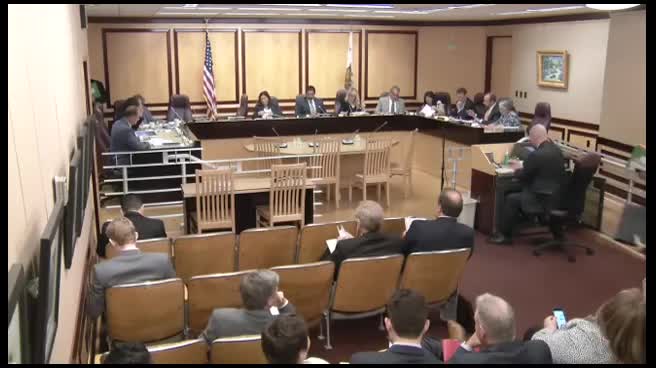
Discussed in Hearing
 12MIN
Senate Standing Committee on Energy, Utilities and Communications
Bill Author


