SB 1415: California Environmental Quality Act: local water projects: scoping meetings.
- Session Year: 2015-2016
- House: Senate
- Latest Version Date: 2016-04-18
The California Environmental Quality Act (CEQA) requires a lead agency, as defined, to prepare, or cause to be prepared, and certify the completion of, of an environmental impact report on a project that it proposes to carry out or approve that may have a significant effect on the environment or to adopt a negative declaration if it finds that the project will not have that effect. CEQA The act also requires a lead agency to prepare a mitigated negative declaration for a project that may have a significant effect on the environment if revisions in the project would avoid or mitigate that effect and there is no substantial evidence that the project, as revised, would have a significant effect on the environment. CEQA exempts certain projects from its requirements. The act requires the lead agency to call at least one scoping meeting for transportation-related projects and projects of statewide, regional, or areawide significance.
The California Emergency Services Act authorizes the Governor, during a state of emergency, to issue a proclamation of a state of emergency and to suspend any regulatory statute where the Governor determines and declares that strict compliance with the statute would prevent, hinder, or delay the mitigation of the effects of the emergency.
This bill would exempt from the requirements of CEQA drought-oriented projects, as specified, proposed by one or more public agencies, or a combination of public agencies and private organizations, that have the purpose of mitigating drought conditions for which a state of emergency has been declared by the Governor pursuant to the California Emergency Services Act.
This bill would require a lead agency to call at least one scoping meeting to receive public comments for local projects for stormwater or dry weather runoff capture and reuse, water recycling, or wastewater treatment to improve water quality. Because a local lead agency would be required to conduct at least one scoping meeting, this bill would impose a state-mandated local program.
The California Constitution requires the state to reimburse local agencies and school districts for certain costs mandated by the state. Statutory provisions establish procedures for making that reimbursement.
This bill would provide that no reimbursement is required by this act for a specified reason.
The California Environmental Quality Act (CEQA) requires a lead agency, as defined, to prepare, or cause to be prepared, and certify the completion of, an environmental impact report on a project that it proposes to carry out or approve that may have a significant effect on the environment or to adopt a negative declaration if it finds that the project will not have that effect. CEQA also requires a lead agency to prepare a mitigated negative declaration for a project that may have a significant effect on the environment if revisions in the project would avoid or mitigate that effect and there is no substantial evidence that the project, as revised, would have a significant effect on the environment. CEQA exempts certain projects from its requirements.
The California Emergency Services Act authorizes the Governor, during a state of emergency, to issue a proclamation of a state of emergency and to suspend any regulatory statute where the Governor determines and declares that strict compliance with the statute would prevent, hinder, or delay the mitigation of the effects of the emergency.
This bill would exempt from the requirements of CEQA drought-oriented projects, as specified, proposed by one or more public agencies, or a combination of public agencies and private organizations, that have the purpose of mitigating drought conditions for which a state of emergency has been declared by the Governor pursuant to the California Emergency Services Act.
(a)Notwithstanding Section 21080.4 or 21153, a lead agency shall call at least one scoping meeting to receive public comments for any of the following:
(1)Local stormwater or dry weather runoff capture and reuse projects.
(2)Local water recycling projects.
(3)Local wastewater treatment projects to improve water quality.
(b)The lead agency shall provide notice of the scoping meeting by publication in no fewer times than required by Section 6061 of the Government Code in a newspaper of general circulation in the area affected by the proposed project. If more than one area will be affected by the proposed project, the notice shall be published in the newspaper of largest circulation from among the newspapers of general circulation in those areas.
(c)A scoping meeting that is held in an area affected by the proposed project pursuant to the federal National Environmental Policy Act of 1969 (42 U.S.C. Sec. 4321 et seq.) and the regulations adopted pursuant to that act shall be deemed to satisfy the requirement of this section if the lead agency provides the notice required pursuant to subdivision (b).
SEC. 2.No reimbursement is required by this act pursuant to Section 6 of Article XIIIB of the California Constitution because a local agency or school district has the authority to levy service charges, fees, or assessments sufficient to pay for the program or level of service mandated by this act, within the meaning of Section 17556 of the Government Code.
SECTION 1.Section 21080.06 is added to the Public Resources Code, to read:21080.06.(a)This division shall not apply to a project that meets both of the following:
(1)The project is proposed by one or more public agencies, or a combination of public agencies and private organizations, for the purpose of mitigating drought conditions for which a state of emergency has been declared by the Governor pursuant to Chapter 7 (commencing with Section 8550) of Division 1 of Title 2 of the Government Code.
(2)The project is a drought-oriented project, primarily intended to provide, or preserve and maintain, any of the following:
(A)The storage capacity of water, to any degree or quality.
(B)The new, increased, or preserved production of water, to any degree or quality.
(C)The treatment of water, to any degree or quality.
(b)A project that is exempt under this section, and that has commenced, in any form or to any degree, including, but not limited to, any planning or engineering before actual construction, operation, or implementation, shall remain exempt regardless of whether the state of emergency has ended.
(c)For purposes of this section, the term drought-oriented project shall be liberally construed, without numerically defined thresholds, but with the intent of allowing for the most timely and beneficial use of water resources, including the capture and management of stormwater and the safe and sanitary reclamation, delivery, and reuse of consumed potable water. The Legislature recognizes that different quality of water is appropriate for different end uses of the reclaimed water, and finds that it is critical to ensure, as immediately as possible, the availability of reclaimed water to decrease the demand on potable water.
(d)The application of this section to a project shall not be combined with a non-drought-oriented project in an attempt to make the totality of the combined project exempt from this division. The separation of elements of a larger project, for purposes of timely advancing a project pursuant to this section, shall not be deemed to be in violation of the Public Contract Code.
(a)This division shall not apply to a project that meets both of the following:
(1)The project is proposed by one or more public agencies, or a combination of public agencies and private organizations, for the purpose of mitigating drought conditions for which a state of emergency has been declared by the Governor pursuant to Chapter 7 (commencing with Section 8550) of Division 1 of Title 2 of the Government Code.
(2)The project is a drought-oriented project, primarily intended to provide, or preserve and maintain, any of the following:
(A)The storage capacity of water, to any degree or quality.
(B)The new, increased, or preserved production of water, to any degree or quality.
(C)The treatment of water, to any degree or quality.
(b)A project that is exempt under this section, and that has commenced, in any form or to any degree, including, but not limited to, any planning or engineering before actual construction, operation, or implementation, shall remain exempt regardless of whether the state of emergency has ended.
(c)For purposes of this section, the term drought-oriented project shall be liberally construed, without numerically defined thresholds, but with the intent of allowing for the most timely and beneficial use of water resources, including the capture and management of stormwater and the safe and sanitary reclamation, delivery, and reuse of consumed potable water. The Legislature recognizes that different quality of water is appropriate for different end uses of the reclaimed water, and finds that it is critical to ensure, as immediately as possible, the availability of reclaimed water to decrease the demand on potable water.
(d)The application of this section to a project shall not be combined with a non-drought-oriented project in an attempt to make the totality of the combined project exempt from this division. The separation of elements of a larger project, for purposes of timely advancing a project pursuant to this section, shall not be deemed to be in violation of the Public Contract Code.
|
Date
|
Status
|
|---|---|
| Feb 19, 2016 | Introduced. To Com. on RLS. for assignment. To print. |
| Feb 22, 2016 | From printer. May be acted upon on or after March 23. |
| Feb 22, 2016 | Read first time. |
| Mar 10, 2016 | Referred to Com. on E.Q. |
| Mar 15, 2016 | Set for hearing April 6. |
| Apr 6, 2016 | April 6 set for first hearing. Testimony taken. Further hearing to be set. |
| Apr 8, 2016 | Set for hearing April 20. |
| Apr 18, 2016 | From committee with author's amendments. Read second time and amended. Re-referred to Com. on E.Q. |
| Apr 21, 2016 | From committee: Do pass. Ordered to consent calendar. (Ayes 7. Noes 0. Page 3644.) (April 20). |
| Apr 21, 2016 | From committee: Do pass. Ordered to consent calendar. (Ayes 7. Noes 0.) (April 20). |
| Apr 21, 2016 | Re-referred to Com. on APPR. |
| Apr 29, 2016 | Set for hearing May 9. |
| May 5, 2016 | May 9 set for first hearing canceled at the request of author. |
|
Date
|
Description
|
Location
|
Votes
|
|
|---|---|---|---|---|
| Apr 20, 2016 | Do pass and be ordered to the Consent Calendar | Senate Standing Committee on Environmental Quality |
Passed |
This list shows positions taken on this bill by organizations on the date displayed, which is linked to the original source.
Positions by individuals are not included.
|
Organization
|
Position
|
Date
|
|---|---|---|
| Association Of California Water Agencies | ** Support | Apr 6, 2016 |
| California Chamber Of Commerce | ** Support | Apr 6, 2016 |
| California League Of Conservation Voters | * Against | Apr 6, 2016 |
| Civil Justice Association Of California | ** Support | Apr 6, 2016 |
| Mission Viejo, City Of | * Support | Apr 6, 2016 |
| Planning And Conservation League | ** Against | Apr 6, 2016 |
| Sierra Club California | ** Against | Apr 6, 2016 |
SENATE COMMITTEE ON ENVIRONMENTAL QUALITY
Senator Wieckowski, Chair
2015 - 2016 Regular
Bill No: SB 1415
Author: | Bates | ||
Version: | 4/18/2016 | Hearing Date: | 4/20/2016 |
Urgency: | No | Fiscal: | Yes |
Consultant: | Joanne Roy | ||
SUBJECT: California Environmental Quality Act: local water projects
ANALYSIS:
Existing law, under the California Environmental Quality Act (CEQA), requires lead agencies with the principal responsibility for carrying out or approving a proposed discretionary project to prepare a negative declaration, mitigated negative declaration, or environmental impact report (EIR) for this action, unless the project is exempt from CEQA (CEQA includes various statutory exemptions, as well as categorical exemptions in the CEQA Guidelines). (Public Resources Code (PRC) §21000 et seq.)
This bill requires an early consultation and scoping process for specified local water projects and requires the lead agency to provide notice of at least one scoping meeting to receive public comments.
Background
- CEQA: Environmental review process.
CEQA provides a process for evaluating the environmental effects of a project, and includes statutory exemptions as well as categorical exemptions in the CEQA guidelines. If a project is not exempt from CEQA, an initial study is prepared to determine whether a project may have a significant effect on the environment. If the initial study shows that there would not be a significant effect on the environment, the lead agency must prepare a negative declaration. If the initial study shows that the project may have a significant effect on the environment, then the lead agency must prepare an EIR.
Generally, an EIR must accurately describe the proposed project, identify and analyze each significant environmental impact expected to result from the proposed project, identify mitigation measures to reduce those impacts to the extent feasible, and evaluate a range of reasonable alternatives to the proposed project. Prior to approving any project that has received an environmental review, an agency must make certain findings. If mitigation measures are required or incorporated into a project, the agency must adopt a reporting or monitoring program to ensure compliance with those measures.
If a mitigation measure would cause one or more significant effects in addition to those that would be caused by the proposed project, the effects of the mitigation measure must be discussed but in less detail than the significant effects of the proposed project. - What is analyzed in an environmental review?
Pursuant to CEQA, an environmental review analyzing the significant direct and indirect environmental impacts of a proposed project may include water quality, surface and subsurface hydrology, land use and agricultural resources, transportation and circulation, air quality and greenhouse gas emissions, terrestrial and aquatic biological resources, aesthetics, geology and soils, recreation, public services and utilities such as water supply and wastewater disposal, cultural resources, and tribal cultural resources.
The analysis must also evaluate the cumulative impacts of any past, present, and reasonably foreseeable projects/activities within study areas that are applicable to the resources being evaluated. A study area for a proposed project must not be limited to the footprint of the project because many environmental impacts of a development extend beyond the identified project boundary. Also, CEQA stipulates that the environmental impacts must be measured against existing physical conditions within the project area, not future, allowable conditions.
Comments
- Purpose of Bill.
The author states:
Unfortunately, developers, business leaders, and government agencies can have difficulty getting projects launched due to the burdensome length of time that the CEQA approval process can take. This approval process can also be subject to frivolous lawsuits late in the game from opponents who decide to weigh in at the end, just before the approval of a project, as an attempt to delay or altogether kill a project. It is important that the state protects the environment for current and future generations; however, it is also important that we allow projects to move forward, assuming they still allow adequate time for public comments on the front end. SB 1415, as amended, seeks to speed up the CEQA process, allowing proponents and opponents to express their comments publicly in a scoping meeting scheduled by the lead agency on the project at the beginning of the project. The bill is now limited to three specific types of projects: local storm water runoff capture, local water recycling projects, and local wastewater treatment projects. Though not as expansive as originally intended, I believe SB 1415 is a step in the right direction to aid our locals early in the process with consultation occurring at the front end as opposed to causing further delays at the later end of a project’s approval.
- Load up in front, save time on the back end.
According to CEQA Guidelines, early consultation “solves many potential problems that would arise in more serious forms later in the review process.” The guidelines also provide that scoping “has been helpful to agencies in identifying the range of actions, alternatives, mitigation measures, and significant effects to be analyzed in depth in an EIR and in eliminating from detailed study issues found not to be important. The guidelines further note that scoping “has been found to be an effective way to bring together and resolve the concerns of affected federal, state, and local agencies, the proponent of the action, and other interested persons including those who might not be in accord with the action on environmental grounds.”
Because of the author’s intent to expedite the environmental review process for local water projects to alleviate the current drought state of emergency conditions as well as to preserve the ability to make informed decisions and provide transparency and public participation, this bill provides for early consultation on such projects.
SOURCE:
Author
SUPPORT:
None received
OPPOSITION:
None received
-- END --
SENATE COMMITTEE ON ENVIRONMENTAL QUALITY
Senator Wieckowski, Chair
2015 - 2016 Regular
Bill No: SB 1415
Author: | Bates | ||
Version: | 2/19/2016 | Hearing Date: | 4/6/2016 |
Urgency: | No | Fiscal: | No |
Consultant: | Joanne Roy | ||
SUBJECT: California Environmental Quality Act: water projects: exemption
ANALYSIS:
Existing law:
- Under the California Environmental Quality Act (CEQA), requires lead agencies with the principal responsibility for carrying out or approving a proposed discretionary project to prepare a negative declaration, mitigated negative declaration, or environmental impact report (EIR) for this action, unless the project is exempt from CEQA (CEQA includes various statutory exemptions, as well as categorical exemptions in the CEQA Guidelines). (Public Resources Code (PRC) §21000 et seq.)
- Exempts from CEQA during the drought state of emergency proclaimed by the Governor on January 17, 2014, for a public agency to mitigate drought conditions by building or expanding a recycled water pipeline and related groundwater replenishment infrastructure if it is within an existing right-of-way, does not impact wetlands or sensitive habitat, and where the construction impacts are fully mitigated. This authority remains operative until the state of emergency has expired or until January 1, 2017, whichever occurs first. (PRC §21080.08).
- Exempts from CEQA the development and approval of building standards by state agencies for recycled water systems until July 1, 2017. (PRC §21080.45).
- Exempts from CEQA a local government’s adoption of an ordinance to limit or prohibit the drilling of new or deeper groundwater wells, or to limit or prohibit increased extractions from existing groundwater wells, through stricter conditions on the issuance of well permits or changes in the intensity of land use that would increase demand on groundwater. Sunsets July 1, 2017, or so long as the state of emergency declared January 17, 2014, remains in effect. (PRC §21080.46).
This bill:
- Exempts from CEQA a project that meets the following criteria:
- The project is proposed by one or more public agencies, or a combination of public agencies and private organizations, for the purpose of mitigating drought conditions for which the Governor has declared a state of emergency; and,
- The project is drought-oriented and primarily intended to provide, or preserve and maintain water to any degree or quality:
- Storage capacity;
- New, increased, or preserved production; or,
- Treatment.
- The project is proposed by one or more public agencies, or a combination of public agencies and private organizations, for the purpose of mitigating drought conditions for which the Governor has declared a state of emergency; and,
- Provides that an exempt project that has commenced in any form or to any degree will remain exempt regardless of whether the state of emergency has ended.
- Provides that the term, “drought-oriented project” is to be broadly interpreted.
- Provides that an exempted project cannot be combined with a non-drought-oriented project for purposes of making both projects exempt.
- Prohibits the separation of elements of a larger project, for purposes of timely advancing of a project, from being deemed in violation of the Public Contract Code.
Background
- CEQA: Environmental review process.
CEQA provides a process for evaluating the environmental effects of a project, and includes statutory exemptions as well as categorical exemptions in the CEQA guidelines. If a project is not exempt from CEQA, an initial study is prepared to determine whether a project may have a significant effect on the environment. If the initial study shows that there would not be a significant effect on the environment, the lead agency must prepare a negative declaration. If the initial study shows that the project may have a significant effect on the environment, then the lead agency must prepare an EIR.
Generally, an EIR must accurately describe the proposed project, identify and analyze each significant environmental impact expected to result from the proposed project, identify mitigation measures to reduce those impacts to the extent feasible, and evaluate a range of reasonable alternatives to the proposed project. Prior to approving any project that has received an environmental review, an agency must make certain findings. If mitigation measures are required or incorporated into a project, the agency must adopt a reporting or monitoring program to ensure compliance with those measures.
If a mitigation measure would cause one or more significant effects in addition to those that would be caused by the proposed project, the effects of the mitigation measure must be discussed but in less detail than the significant effects of the proposed project. - What is analyzed in an environmental review?
Pursuant to CEQA, an environmental review analyzing the significant direct and indirect environmental impacts of a proposed project, may include water quality, surface and subsurface hydrology, land use and agricultural resources, transportation and circulation, air quality and greenhouse gas emissions, terrestrial and aquatic biological resources, aesthetics, geology and soils, recreation, public services and utilities such as water supply and wastewater disposal, cultural resources, and tribal cultural resources.
The analysis must also evaluate the cumulative impacts of any past, present, and reasonably foreseeable projects/activities within study areas that are applicable to the resources being evaluated. A study area for a proposed project must not be limited to the footprint of the project because many environmental impacts of a development extend beyond the identified project boundary. Also, CEQA stipulates that the environmental impacts must be measured against existing physical conditions within the project area, not future, allowable conditions.
Comments
- Purpose of Bill.
The author states:
SB 1415 will avoid long delays for water storage projects due to the CEQA process and allow locals to act more quickly in dealing with water shortages during emergency drought conditions throughout California. This committee has passed CEQA legislation in the past seeking to exempt or streamline the eminent domain process. Specifically in 2013, the governor signed SB 743 to streamline the CEQA and eminent domain process to speed the development of a downtown arena for the Sacramento Kings. If streamlining CEQA is good enough for the Kings, why not for local water districts in located in other geographic regions? Similarly, the governor signed AB 83 X3 in 2009, providing a special exemption from CEQA for the construction of a new National Football League (NFL) sports complex within the city of Industry. Again, I support injecting capital and jobs into the Southern California economy, but why are we supporting just one or two localities in California and not helping address issues of local control throughout the state? I believe SB 1415 is a step in the right direction to aid our locals in times of an emergency drought in order to provide more water storage at times we need it most.
- What is lost with a CEQA exemption?
It is not unusual for certain interests to assert that a particular exemption will expedite construction of a particular type of project and reduce costs. This, however, frequently overlooks the benefits of adequate environmental review where lead and responsible agencies are legally accountable for their actions to:
- Inform decisionmakers and the public about project impacts;
- Identify ways to avoid or significantly reduce environmental damage;
- Prevent environmental damage by requiring feasible alternatives or mitigation measures;
- Disclose to the public reasons why an agency approved a project if significant environmental effects are involved;
- Involve public agencies in the process; and,
- Increase public participation in the environmental review and the planning processes.
If a project is exempt from CEQA, certain issues should be addressed. For example:
- How can decisionmakers and the public be aware of impacts, mitigation measures, and alternatives of a project because of the exemption?
- Is it appropriate for the public to live with the consequences when a project is exempt and impacts may not be mitigated and alternatives may not be considered regarding certain matters, such as air quality, water quality, and noise impacts?
- Because adverse project impacts do not disappear when they are not identified and mitigated, does an exemption result in a direct transfer of responsibility for mitigating impacts from the applicant to the public (i.e., taxpayers) if impacts are ultimately addressed after completion of the project?
- If taxpayers, rather than the project applicant, are ultimately responsible for mitigating certain impacts of such a project after project completion, what assessments or taxes will be increased to fund mitigation or pay for alternatives at a later date?
It is also not unusual for certain interests to blame CEQA lawsuits. However, the total number of CEQA cases filed averages about 200 cases per year statewide and make up approximately 0.02% of 1,100,000 civil cases filed annually in California. The California Attorney General’s office conducted a case study of CEQA challenges in the City and County of San Francisco from July 2011 through December 2011 and found that 18 lawsuits were filed out of 5,203 projects considered under CEQA. CEQA litigation is low considering the thousands of projects subject to CEQA each year, as well as for the volume of civil litigation in general statewide.
In addition, those citing CEQA and CEQA litigation as a problem do not indicate the result of that litigation. Were significant impacts that were not evaluated in the initial document ultimately addressed? What would have been the result if those impacts had not been mitigated (e.g., flooding, exposure of people to hazards, inadequate public services, congestion)?
- Sprawling exemption.
SB 1415 specifies that the term, “drought-oriented project” is to be broadly interpreted, which would provide an exemption from CEQA for a vast array of projects, including very large and controversial ones such as new dams. This bill states that the exemption applies to a project primarily intended to provide, or preserve and maintain: storage capacity to any degree or quality, production of water to any degree or quality, or treatment of water to any degree or quality. Ensuring an adequate water supply is critical, particularly in times of drought, but to bypass the environmental review process for any project that may even be tangentially “drought-oriented” and be hastily acted upon without the transparency, public participation, and informed decisionmaking provided by CEQA is highly questionable in terms of short- and long-term consequences for public health, the environment, and land use planning. - Need for the bill?
On January 17, 2014, Governor Brown signed a proclamation declaring a drought State of Emergency in California. The Governor’s Proclamation suspended CEQA to the extent that CEQA otherwise would have applied to specified actions necessary to mitigate the effects of the drought. On April 25, 2014, the Governor issued an Executive Order to redouble state drought actions. The Executive Order continued to suspend environmental review required by CEQA to allow actions called for in the proclamation to respond to the drought to take place as quickly as possible. On December 22, 2014, the Governor issued Executive Order B-28-14, which extended the waiver of CEQA contained in the January 17, 2014 and April 25, 2014 Proclamations through May 31, 2016. Last year, the Legislature passed, and the Governor signed, SB 88 (Committee on Budget and Fiscal Review, Chapter 27, Statutes of 2015), which included tailored CEQA exemptions for the purpose of addressing the drought.
Considering the several CEQA-related actions mentioned above by the Governor as well as the Legislature to address this drought, the committee may wish to consider the need for this bill.
SOURCE:
Author
SUPPORT:
Association of California Water Agencies
California Chamber of Commerce
Civil Justice Association of California
OPPOSITION:
California League of Conservation Voters
Planning and Conservation League
Sierra Club California
-- END --
Discussed in Hearing
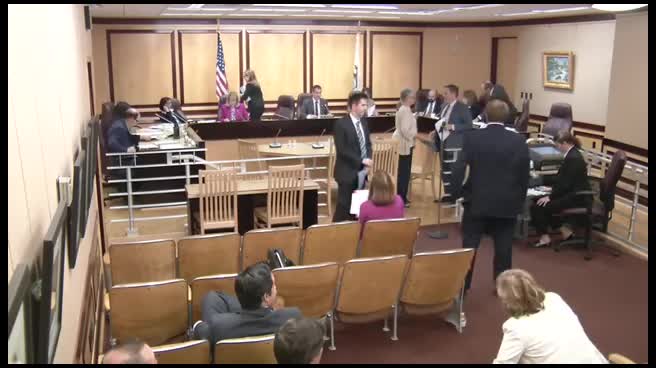 17MIN
Senate Standing Committee on Environmental Quality
Bill Author

Bill Co-Author(s):