SB 495: Income taxes: withholding: real property sales.
- Session Year: 2015-2016
- House: Senate
- Latest Version Date: 2015-04-22
Existing law requires the transferee of a California real property interest, in specified circumstances, to withhold, for income tax purposes, 31/3% of the sales price of the property when the property is acquired from either an individual, or a partnership or corporation without a permanent place of business, as specified. Existing law also allows, by election of the transferor, alternative withholding amounts that are not less than the amount of gain required to be recognized under income tax laws multiplied by the corporation tax rate, bank and financial corporate tax rate, the highest personal income tax rate, or the current S corporation tax rate plus the highest personal income tax rate, as applicable.
This bill would, in the case of any disposition of a California real property interest in taxable years beginning on or after January 1, 2016, provide that withholding would not be required if a transferor makes a written election, in a form prescribed by the Franchise Tax Board, to remit any tax due with the filing of any required tax return.
This bill would eliminate these withholding provisions for the disposition of a California real property interest that occurs on or after January 1, 2016, and would instead require the transferee of a California real property interest to withhold 313% of the purchase price of the property if the property was either acquired from a person, who is not a resident or who after the transfer of the real property will no longer be a resident of this state, or from a corporation, if after the transfer that corporation has no permanent place of business in this state.
Existing law requires the transferee of a California real property interest, in specified circumstances, to withhold, for income tax purposes, 31/3% of the sales price of the property when the property is acquired from either an individual, or a partnership or corporation without a permanent place of business, as specified. Existing law also allows, by election of the transferor, alternative withholding amounts that are not less than the amount of gain required to be recognized under income tax laws multiplied by the corporation tax rate, bank and financial corporate tax rate, the highest personal income tax rate, or the current S corporation tax rate plus the highest personal income tax rate, as applicable.
This bill would, in the case of any disposition of a California real property interest in taxable years beginning on or after January 1, 2016, provide that withholding would not be required if a transferor makes a written election, in a form prescribed by the Franchise Tax Board, to remit any tax due with the filing of any required tax return.
(a)The Franchise Tax Board may, by regulation, require any person, in whatever capacity acting, including lessees or mortgagors of real or personal property, fiduciaries, employers, and any officer or department of the state, or any political subdivision or agency of the state, or any city organized under a freeholders charter, or any political body not a subdivision or agency of the state, having the control, receipt, custody, disposal, or payment of items of income specified in subdivision (b), to withhold an amount, determined by the Franchise Tax Board to reasonably represent the amount of tax due when the items of income are included with other income of the taxpayer, and to transmit the amount withheld to the Franchise Tax Board at the time as it may designate.
(b)The items of income referred to in subdivision (a) are interest, dividends, rents, prizes and winnings, premiums, annuities, emoluments, compensation for services, including bonuses, partnership income or gains, and other fixed or determinable annual or periodical gains, profits, and income.
(c)The Franchise Tax Board may authorize the tax under subdivision (a) to be deducted and withheld from the interest upon any securities the owners of which are not known to the withholding agent.
(d)Any person that fails to withhold from any payments any amounts required to be withheld by this section or fails to remit the taxes withheld is liable for the amount specified in Section 18668.
(e)(1)This subdivision paragraph applies to any disposition of a California real property interest that occurs before January 1, 2016, by:
(A)Any person, other than either of the following:
(i)Except as otherwise provided in this subdivision, paragraph, a corporation, including an entity classified for tax purposes as a corporation under Part 11 (commencing with Section 23001).
(ii)Except as otherwise provided in this subdivision, paragraph, a partnership, as determined in accordance with Subchapter K of Chapter 1 of Subtitle A of the Internal Revenue Code, including an entity classified as a partnership for tax purposes under Part 10 (commencing with Section 17001).
(B)A corporation or partnership, if that corporation or partnership immediately after the transfer of the title to the California real property has no permanent place of business in California. For purposes of this subdivision, a corporation or partnership has no permanent place of business in California if all of the following apply:
(i)It is not organized and existing under the laws of California.
(ii)It does not qualify with the office of the Secretary of State to transact business in California.
(iii)It does not maintain and staff a permanent office in California.
(2)(A)Except as provided in subparagraph (B), in the case of any disposition of a California real property interest by a transferor described in paragraph (1), the transferee, including for this purpose any intermediary or accommodator in a deferred exchange, is required to withhold an amount equal to 31/3 percent of the sales price of the California real property conveyed.
(B)If the transferor makes an election under this subparagraph, the transferee, including any intermediary or accommodator in a deferred exchange, is required to withhold an amount equal to an amount certified by the transferor in writing under penalty of perjury. The amount certified shall not be less than the gain required to be recognized under Part 10 (commencing with Section 17001) and Part 11 (commencing with Section 23001) on the disposition of the California real property multiplied by the rate specified in either Section 23151 or Section 23186, as applicable, for transferors that are corporations, or the highest rate specified in Section 17041 for transferors other than corporations. For purposes of applying the previous sentence, the following shall apply:
(i)The highest rate specified in Section 17041 is determined without regard to any other tax rate specified under Part 10 (commencing with Section 17001) irrespective of whether the applicable statute provides that tax shall be treated as if imposed under Section 17041.
(ii)For corporations that are S corporations subject to the modified tax rate specified in Section 23802, the rate shall be the sum of the rate specified in subdivision (b) of Section 23802 and the highest rate specified in Section 17041, as described in clause (i).
(C)(i)The written certification required by subparagraph (B) shall be in a form, as prescribed by the Franchise Tax Board. The form shall provide as follows:
Title and escrow persons and exchange accommodators are not authorized to provide legal or accounting advice for purposes of determining withholding amounts. Transferors are strongly encouraged to consult with a competent tax professional for this purpose.
(ii)The Franchise Tax Board shall make this form available electronically on its Internet Web site in a format that allows a transferor to complete and print the form. The Franchise Tax Board shall also
provide electronic means to enable the transferor to estimate the amount of gain required to be recognized by the transferor in the transaction. Any form or worksheet, electronic or otherwise, developed for this purpose shall provide as follows:
Title and escrow persons and exchange accommodators are not authorized to provide legal or accounting advice for purposes of determining withholding amounts. Transferors are strongly encouraged to consult with a competent tax professional for this
purpose.
(3)(A)On or after January 1, 2016, in the case of any disposition of a California real property interest by a person (but not a partnership as determined in accordance with Subchapter K of Chapter 1 of Subtitle A of the Internal Revenue Code, or a corporation), when the return required to be filed with the Secretary of the Treasury under Section 6045(e) of the Internal Revenue Code indicates, or the authorization for the disbursement of the transactions funds instructs, that the funds be disbursed either to a transferor with a last known street address outside the boundaries of this state at the time of the transfer of the title to the California real property or to the financial intermediary of the transferor, the transferee shall be required to withhold an amount equal to 313 percent of the sales price of the California real property conveyed.
(B)In the case of any disposition of a California real property interest by a corporation, the transferee shall be required to withhold an amount equal to 313 percent of the sales price of the California real property conveyed, if the corporation immediately after the transfer of the title to the California real property has no permanent place of business in California. For purposes of this subdivision, a corporation has no permanent place of business in California if all of the following apply:
(i)It is not organized and existing under the laws of California.
(ii)It does not qualify with the office of the Secretary of State to transact business in California.
(iii)It does not maintain and staff a permanent office in California.
(3)
(4)Notwithstanding any other provision of this subdivision, all of the following shall apply:
(A)No transferee is required to withhold any amount under this subdivision unless the sales price of the California real property conveyed exceeds one hundred thousand dollars ($100,000).
(B)No transferee, other than an intermediary or an accommodator in a deferred exchange, is required to withhold any amount under this subdivision unless written notification of the withholding requirements of this subdivision has been provided by the real estate escrow person.
(C)(i)No transferee, trustee under a deed of trust, or mortgagee under a mortgage with a power of sale is required to withhold under this subdivision when the transferee has acquired California real property at a sale pursuant to a power of sale under a mortgage or deed of trust or a sale pursuant to a decree of foreclosure or has acquired the property by a deed in lieu of foreclosure.
(ii)No transferee is required to withhold under this subdivision when the transferor is a bank acting as trustee other than a trustee of a deed of trust.
(D)No transferee, including for this purpose any intermediary or accommodator in a deferred exchange, is required to withhold any amount under this subdivision if the transferee, in good faith and based on all the information of which he or she has knowledge, relies on a written certificate executed by the transferor, certifying, under penalty of perjury, one of the following:
(i)(I)The California real property being conveyed is the sellers or decedents principal residence, within the meaning of Section 121 of the Internal Revenue Code.
(II)The last use of the property being conveyed was use by the transferor as the transferors principal residence within the meaning of Section 121 of the Internal Revenue Code.
(ii)(I)The California real property being conveyed is being exchanged, or will be exchanged, for property of like kind, within the meaning of Section 1031 of the Internal Revenue Code, but only to the extent of the amount of the gain not required to be recognized for California income or franchise tax purposes under Section 1031 of the Internal Revenue Code.
(II)Subclause (I) may not apply if an exchange does not qualify for nonrecognition treatment for California income or franchise tax purposes under Section 1031 of the Internal Revenue Code, in whole or in part, due to the failure of the transaction to comply with the provisions of Section 1031(a)(3) of the Internal Revenue Code, relating to the requirement that property be identified and that the exchange be completed not more than 180 days after the transfer of the exchanged property.
(III)In any case where clause (ii) applies, the transferee, including for this purpose any intermediary or accommodator in a deferred exchange, is required to notify the Franchise Tax Board in writing within 10 days of the expiration of the statutory periods specified in Section 1031(a)(3) of the Internal Revenue Code and thereafter remit the applicable withholding amounts determined under this subdivision in accordance with paragraph (4).
(iii)The California real property has been compulsorily or involuntarily converted, within the meaning of Section 1033 of the Internal Revenue Code, and the transferor intends to acquire property similar or related in service or use so as to be eligible for nonrecognition of gain for California income tax purposes under Section 1033 of the Internal Revenue Code.
(iv)The transaction will result in either a net loss or a net gain not required to be recognized for California income or franchise tax purposes.
(v)The transferor is a corporation with a permanent place of business in California.
(E)(i)In the case of any transaction otherwise subject to this subdivision that qualifies as an installment sale, within the meaning of Section 453(b) of the Internal Revenue Code, for California income tax purposes, the provisions of this subdivision shall be separately applied to each principal payment to be made under the terms of the installment sale agreement between the parties.
(ii)For purposes of clause (i), subparagraph (A) of paragraph (3) (4) does not apply to each individual payment to be received under the terms of the installment sale agreement.
(4)
(5)(A)Amounts withheld and payments made in accordance with this subdivision shall be reported and remitted to the Franchise Tax Board in the form and manner and at the time specified by the Franchise Tax Board. Notwithstanding the foregoing, funds withheld on individual transactions by real estate escrow persons may, at the option of the real estate escrow person, be remitted by the 20th day of the month following the close of escrow for the individual transaction, or may be remitted on a monthly basis in combination with other transactions closed during that month.
(B)The transferor shall submit a copy of the written certificate and supporting documentation for the reduced withholding specified in subparagraph (B) of paragraph (2) or subparagraph (D) of paragraph (3), (4), executed by the transferor, to the Franchise Tax Board upon request.
(5)
(6)For purposes of this subdivision, California real property interest means an interest in real property located in California and defined in Section 897(c)(1)(A)(i) of the Internal Revenue Code.
(6)
(7)For purposes of this subdivision, real estate escrow person means any of the following persons involved in the real estate transaction:
(A)The person, including any attorney, escrow company, or title company, responsible for closing the transaction.
(B)If no person described in subparagraph (A) is responsible for closing the transaction, then any other person who receives and disburses the consideration or value for the interest or property conveyed.
(7)
(8)(A)Unless the real estate escrow person provides assistance, it shall be unlawful for any real estate escrow person to charge any customer for complying with the requirements of this subdivision.
(B)For purposes of this paragraph, assistance includes, but is not limited to, helping the parties clarify with the Franchise Tax Board the issue of whether withholding is required under this subdivision or, upon request of the parties, withholding an amount under this subdivision and remitting that amount to the Franchise Tax Board.
(C)For purposes of this paragraph, assistance does not include providing the written notification of the withholding requirements of this subdivision.
(D)In a case where the real estate escrow person provides assistance in complying with the withholding requirements of this subdivision, it shall be unlawful for the real estate escrow person to charge any customer a fee that exceeds forty-five dollars ($45).
(8)
(9)For purposes of this subdivision, sales price means the sum of all of the following:
(A)The cash paid, or to be paid, but excluding for this purpose any stated or unstated interest or original issue discount, as determined under Sections 1271 through to 1275, inclusive, of the Internal Revenue Code.
(B)The fair market value of other property transferred, or to be transferred.
(C)The outstanding amount of any liability assumed by the transferee or to which the California real property interest is subject immediately before and after the transfer.
(9)
(10)The Franchise Tax Board may prescribe, by forms, instructions, published notices, or regulations, any requirements necessary for the efficient administration of this subdivision relating to the treatment of de minimis amounts otherwise required under this section.
(10)(A)Notwithstanding any other law, in the case of any disposition of a California real property interest in taxable years beginning on or after January 1, 2016, if not otherwise exempt, withholding is not required under this section if a transferor makes an election under this paragraph to remit any tax due with the filing of any tax return required by this part.
(B)The election shall be made in a written form, as prescribed by the Franchise Tax Board. The Franchise Tax Board may prescribe, by forms, instructions, published notices, or regulations, any requirements necessary for the efficient administration of this paragraph, including the timing of making the election.
(f)Withholding is not required under this section with respect to wages, salaries, fees, or other compensation paid by a corporation for services performed in California for that corporation to a nonresident corporate director for director services, including attendance at a board of directors meeting.
(g)In the case of any payment described in subdivision (f), the person making the payment shall do each of the following:
(1)File a return with the Franchise Tax Board at the time and in the form and manner specified by the Franchise Tax Board.
(2)Provide the payee with a statement at the time and in the form and manner specified by the Franchise Tax Board.
(h)(1)The amendments to this section made by Chapter 488 of the Statutes of 2002 apply to dispositions of California real property interests that occur on or after January 1, 2003.
(2)In the case of any payments received on or after January 1, 2003, pursuant to an installment sale agreement relating to a disposition occurring before January 1, 2003, the amendments to this section made by Chapter 488 of the Statutes of 2002 do not apply to those payments.
(i)(1)The amendments made to this section by the act adding this subdivision shall apply to dispositions of California real property interests that occur on or after January 1, 2009.
(2)In the case of any payments received on or after January 1, 2009, pursuant to an installment sale agreement relating to a disposition occurring before January 1, 2009, the amendments made to this section by the act adding this subdivision do not apply to those payments.
(a)The Franchise Tax Board may, by regulation, require any person, in whatever capacity acting, including lessees or mortgagors of real or personal property, fiduciaries, employers, and any officer or department of the state, or any political subdivision or agency of the state, or any city organized under a freeholders charter, or any political body not a subdivision or agency of the state, having the control, receipt, custody, disposal, or payment of items of income specified in subdivision (b), to withhold an amount, determined by the Franchise Tax Board to reasonably represent the amount of tax due when the items of income are included with other income of the taxpayer, and to transmit the amount withheld to the Franchise Tax Board at the time as it may designate.
(b)The items of income referred to in subdivision (a) are interest, dividends, rents, prizes and winnings, premiums, annuities, emoluments, compensation for services, including bonuses, partnership income or gains, and other fixed or determinable annual or periodical gains, profits, and income.
(c)The Franchise Tax Board may authorize the tax under subdivision (a) to be deducted and withheld from the interest upon any securities the owners of which are not known to the withholding agent.
(d)Any person that fails to withhold from any payments any amounts required to be withheld by this section or fails to remit the taxes withheld is liable for the amount specified in Section 18668.
(e)(1)This subdivision applies to any disposition of a California real property interest by:
(A)Any person, other than either of the following:
(i)Except as otherwise provided in this subdivision, a corporation, including an entity classified for tax purposes as a corporation under Part 11 (commencing with Section 23001).
(ii)Except as otherwise provided in this subdivision, a partnership, as determined in accordance with Subchapter K of Chapter 1 of Subtitle A of the Internal Revenue Code, including an entity classified as a partnership for tax purposes under Part 10 (commencing with Section 17001).
(B)A corporation or partnership, if that corporation or partnership immediately after the transfer of the title to the California real property has no permanent place of business in California. For purposes of this subdivision, a corporation or partnership has no permanent place of business in California if all of the following apply:
(i)It is not organized and existing under the laws of California.
(ii)It does not qualify with the office of the Secretary of State to transact business in California.
(iii)It does not maintain and staff a permanent office in California.
(2)(A)Except as provided in subparagraph (B), in the case of any disposition of a California real property interest by a transferor described in paragraph (1), the transferee, including for this purpose any intermediary or accommodator in a deferred exchange, is required to withhold an amount equal to 31/3 percent of the sales price of the California real property conveyed.
(B)If the transferor makes an election under this subparagraph, the transferee, including any intermediary or accommodator in a deferred exchange, is required to withhold an amount equal to an amount certified by the transferor in writing under penalty of perjury. The amount certified shall not be less than the gain required to be recognized under Part 10 (commencing with Section 17001) and Part 11 (commencing with Section 23001) on the disposition of the California real property multiplied by the rate specified in either Section 23151 or Section 23186, as applicable, for transferors that are corporations, or the highest rate specified in Section 17041 for transferors other than corporations. For purposes of applying the previous sentence, the following shall apply:
(i)The highest rate specified in Section 17041 is determined without regard to any other tax rate specified under Part 10 (commencing with Section 17001) irrespective of whether the applicable statute provides that tax shall be treated as if imposed under Section 17041.
(ii)For corporations that are S corporations subject to the modified tax rate specified in Section 23802, the rate shall be the sum of the rate specified in subdivision (b) of Section 23802 and the highest rate specified in Section 17041, as described in clause (i).
(C)(i)The written certification required by subparagraph (B) shall be in a form, as prescribed by the Franchise Tax Board. The form shall provide as follows:
Title and escrow persons and exchange accommodators are
not authorized to provide legal or accounting advice for purposes of determining withholding amounts. Transferors are strongly encouraged to consult with a competent tax professional for this purpose.
(ii)The Franchise Tax Board shall make this form available electronically on its Web site in a format that allows a transferor to complete and print the form. The Franchise Tax Board shall also provide electronic means to enable the transferor to estimate the amount of gain required to be recognized by the transferor in the transaction. Any form or worksheet, electronic or otherwise, developed for this purpose shall provide as follows:
Title and escrow persons and exchange accommodators are not authorized to provide legal or accounting advice for purposes of determining withholding amounts. Transferors are strongly encouraged to consult with a competent tax professional for this
purpose.
(3)Notwithstanding any other provision of this subdivision, all of the following shall apply:
(A)No transferee is required to withhold any amount under this subdivision unless the sales price of the California real property conveyed exceeds one hundred thousand dollars ($100,000).
(B)No transferee, other than an intermediary or an accommodator in a deferred exchange, is required to withhold any amount under this subdivision unless written notification of the withholding requirements of this subdivision has been provided by the real estate escrow person.
(C)(i)No transferee, trustee under a deed of trust, or mortgagee under a mortgage with a power of sale is required to withhold under this subdivision when the transferee has acquired California real property at a sale pursuant to a power of sale under a mortgage or deed of trust or a sale pursuant to a decree of foreclosure or has acquired the property by a deed in lieu of foreclosure.
(ii)No transferee is required to withhold under this subdivision when the transferor is a bank acting as trustee other than a trustee of a deed of trust.
(D)No transferee, including for this purpose any intermediary or accommodator in a deferred exchange, is required to withhold any amount under this subdivision if the transferee, in good faith and based on all the information of which he or she has knowledge, relies on a written certificate executed by the transferor, certifying, under penalty of perjury, one of the following:
(i)(I)The California real property being conveyed is the sellers or decedents principal residence, within the meaning of Section 121 of the Internal Revenue Code.
(II)The last use of the property being conveyed was use by the transferor as the transferors principal residence within the meaning of Section 121 of the Internal Revenue Code.
(ii)(I)The California real property being conveyed is being exchanged, or will be exchanged, for property of like kind, within the meaning of Section 1031 of the Internal Revenue Code, but only to the extent of the amount of the gain not required to be recognized for California income or franchise tax purposes under Section 1031 of the Internal Revenue Code.
(II)Subclause (I) may not apply if an exchange does not qualify for nonrecognition treatment for California income or franchise tax purposes under Section 1031 of the Internal Revenue Code, in whole or in part, due to the failure of the transaction to comply with the provisions of Section 1031(a)(3) of the Internal Revenue Code, relating to the requirement that property be identified and that the exchange be completed not more than 180 days after the transfer of the exchanged property.
(III)In any case where clause (ii) applies, the transferee, including for this purpose any intermediary or accommodator in a deferred exchange, is required to notify the Franchise Tax Board in writing within 10 days of the expiration of the statutory periods specified in Section 1031(a)(3) of the Internal Revenue Code and thereafter remit the applicable withholding amounts determined under this subdivision in accordance with paragraph (4).
(iii)The California real property has been compulsorily or involuntarily converted, within the meaning of Section 1033 of the Internal Revenue Code, and the transferor intends to acquire property similar or related in service or use so as to be eligible for nonrecognition of gain for California income tax purposes under Section 1033 of the Internal Revenue Code.
(iv)The transaction will result in either a net loss or a net gain not required to be recognized for California income or franchise tax purposes.
(v)The transferor is a corporation with a permanent place of business in California.
(E)(i)In the case of any transaction otherwise subject to this subdivision that qualifies as an installment sale, within the meaning of Section 453(b) of the Internal Revenue Code, for California income tax purposes, the provisions of this subdivision shall be separately applied to each principal payment to be made under the terms of the installment sale agreement between the parties.
(ii)For purposes of clause (i), subparagraph (A) of paragraph (3) does not apply to each individual payment to be received under the terms of the installment sale agreement.
(4)(A)Amounts withheld and payments made in accordance with this subdivision shall be reported and remitted to the Franchise Tax Board in the form and manner and at the time specified by the Franchise Tax Board. Notwithstanding the foregoing, funds withheld on individual transactions by real estate escrow persons may, at the option of the real estate escrow person, be remitted by the 20th day of the month following the close of escrow for the individual transaction, or may be remitted on a monthly basis in combination with other transactions closed during that month.
(B)The transferor shall submit a copy of the written certificate and supporting documentation for the reduced withholding specified in subparagraph (B) of paragraph (2) or subparagraph (D) of paragraph (3), executed by the transferor, to the Franchise Tax Board upon request.
(5)For purposes of this subdivision, California real property interest means an interest in real property located in California and defined in Section 897(c)(1)(A)(i) of the Internal Revenue Code.
(6)For purposes of this subdivision, real estate escrow person means any of the following persons involved in the real estate transaction:
(A)The person, including any attorney, escrow company, or title company, responsible for closing the transaction.
(B)If no person described in subparagraph (A) is responsible for closing the transaction, then any other person who receives and disburses the consideration or value for the interest or property conveyed.
(7)(A)Unless the real estate escrow person provides assistance, it shall be unlawful for any real estate escrow person to charge any customer for complying with the requirements of this subdivision.
(B)For purposes of this paragraph, assistance includes, but is not limited to, helping the parties clarify with the Franchise Tax Board the issue of whether withholding is required under this subdivision or, upon request of the parties, withholding an amount under this subdivision and remitting that amount to the Franchise Tax Board.
(C)For purposes of this paragraph, assistance does not include providing the written notification of the withholding requirements of this subdivision.
(D)In a case where the real estate escrow person provides assistance in complying with the withholding requirements of this subdivision, it shall be unlawful for the real estate escrow person to charge any customer a fee that exceeds forty-five dollars ($45).
(8)For purposes of this subdivision, sales price means the sum of all of the following:
(A)The cash paid, or to be paid, but excluding for this purpose any stated or unstated interest or original issue discount, as determined under Sections 1271 through 1275, inclusive, of the Internal Revenue Code.
(B)The fair market value of other property transferred, or to be transferred.
(C)The outstanding amount of any liability assumed by the transferee or to which the California real property interest is subject immediately before and after the transfer.
(9)The Franchise Tax Board may prescribe, by forms, instructions, published notices, or regulations, any requirements necessary for the efficient administration of this subdivision relating to the treatment of de minimis amounts otherwise required under this section.
(10)(A)Notwithstanding any other law, in the case of any disposition of a California real property interest in taxable years beginning on or after January 1, 2016, if not otherwise exempt, withholding is not required under this section if a transferor makes an election under this paragraph to remit any tax due with the filing of any tax return required by this part.
(B)The election shall be made in a written form, as prescribed by the Franchise Tax Board. The Franchise Tax Board may prescribe, by forms, instructions, published notices, or regulations, any requirements necessary for the efficient administration of this paragraph, including the timing of making the election.
(f)Withholding is not required under this section with respect to wages, salaries, fees, or other compensation paid by a corporation for services performed in California for that corporation to a nonresident corporate director for director services, including attendance at a board of directors meeting.
(g)In the case of any payment described in subdivision (f), the person making the payment shall do each of the following:
(1)File a return with the Franchise Tax Board at the time and in the form and manner specified by the Franchise Tax Board.
(2)Provide the payee with a statement at the time and in the form and manner specified by the Franchise Tax Board.
(h)(1)The amendments to this section made by Chapter 488 of the Statutes of 2002 apply to dispositions of California real property interests that occur on or after January 1, 2003.
(2)In the case of any payments received on or after January 1, 2003, pursuant to an installment sale agreement relating to a disposition occurring before January 1, 2003, the amendments to this section made by Chapter 488 of the Statutes of 2002 do not apply to those payments.
(i)(1)The amendments made to this section by the act adding this subdivision shall apply to dispositions of California real property interests that occur on or after January 1, 2009.
(2)In the case of any payments received on or after January 1, 2009, pursuant to an installment sale agreement relating to a disposition occurring before January 1, 2009, the amendments made to this section by the act adding this subdivision do not apply to those payments.
|
Date
|
Status
|
|---|---|
| Feb 26, 2015 | Introduced. Read first time. To Com. on RLS. for assignment. To print. |
| Feb 27, 2015 | From printer. May be acted upon on or after March 29. |
| Mar 12, 2015 | Referred to Com. on GOV. & F. |
| Mar 27, 2015 | Set for hearing April 15. |
| Apr 21, 2015 | From committee: Do pass as amended and re-refer to Com. on APPR. (Ayes 7. Noes 0. Page 618.) (April 15). |
| Apr 21, 2015 | From committee: Do pass as amended and re-refer to Com. on APPR. (Ayes 7. Noes 0.) (April 15). |
| Apr 22, 2015 | Read second time and amended. Re-referred to Com. on APPR. |
| Apr 24, 2015 | Set for hearing May 4. |
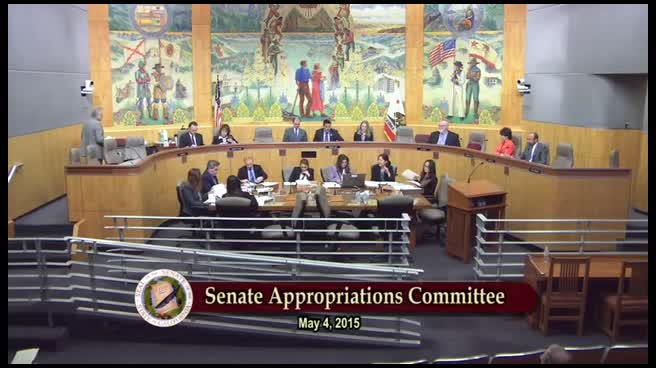
| May 4, 2015 | May 4 hearing: Placed on APPR. suspense file. |
| May 23, 2015 | Set for hearing May 28. |
| May 28, 2015 | May 28 hearing: Held in committee and under submission. |
| Feb 1, 2016 | Returned to Secretary of Senate pursuant to Joint Rule 56. |
|
Date
|
Description
|
Location
|
Votes
|
|
|---|---|---|---|---|
| May 4, 2015 | Placed on suspense file | Senate Standing Committee on Appropriations |
Passed |
|
| Apr 15, 2015 | Do pass as amended, but first amend, and re-refer to the Committee on [Appropriations] | Senate Standing Committee on Governance and Finance |
Passed |
This list shows positions taken on this bill by organizations on the date displayed, which is linked to the original source.
Positions by individuals are not included.
SB 495 (Stone) Page 2 of 2
SENATE COMMITTEE ON APPROPRIATIONS
Senator Ricardo Lara, Chair
2015 - 2016 Regular Session
SB 495 (Stone) - Income taxes: withholding: real property sales
|
|
Version: April 22, 2015 |
Policy Vote: GOV. & F. 7 - 0 |
Urgency: No |
Mandate: No |
Hearing Date: May 4, 2015 |
Consultant: Robert Ingenito |
This bill meets the criteria for referral to the Suspense File.
Bill Summary:
SB 495 would end the withholding requirement on sales of real estate by California residents and entities if the taxpayer elects to pay the tax when filing a return.
Fiscal Impact:
The Franchise Tax Board (FTB) indicates that the bill would result in a revenue loss of $490 million in 2015-16, $47 million in 2016-17, and $37 million in 2017-18; however, this revenue effect is mostly shifting the timing of payments, as withholdings not made in one year will show up in the subsequent year’s tax payments. FTB anticipates the bill would have a negligible impact on its administration costs.
Background:
Current state law requires the buyer to withhold on transfers of real estate, except in specified instances. In the past, state law only required nonresident taxpayers who sold California real estate to withhold (unless an exemption applied or FTB authorized a waiver or reduction in the withholding amount). However, the withholding requirement was extended to state residents beginning in 2001-02; the associated revenue acceleration was used to address that fiscal year’s budget shortfall.
Withholding is due on the 20th day of the month following the month escrow closes. Currently, buyers must withhold 3 1/3 percent of the total sales price; however, if the seller makes an election, the buyer instead withholds an amount certified under penalty that is not less than the expected gain required under the appropriate rate imposed by California’s Personal Income Tax or Corporation Tax.
Proposed Law:
This bill would provide that withholding is not required for sales of property by California residents and entities beginning in 2016, so long as the seller makes an election to pay any tax due when filing their annual return.
Staff Comments:
The real estate withholding requirement originally applied solely to individuals and corporations without any other presence in California to improve compliance, as these entities often failed to ultimately pay the tax due after the sale. Additionally, collecting outstanding taxes from out-of-state entities is more difficult and costly for tax enforcement agencies. As noted above, when the Legislature extended the withholding requirement to California residents, it did so for both compliance reasons and to accelerate cash flow due to a budget crisis. While the real estate withholding requirement is burdensome, some sellers of real estate end up not having the funds to pay the tax a year following the sale. The withholding requirement ensures that the tax is paid by compelling payment when the transaction has just occurred and cash is readily available.
FTB’s revenue estimate assumes that roughly 20 percent of real estate transactions are conducted by nonresidents. The large first-year revenue impact reflects the timing change from taxes being paid by residents via withholding to those monies being remitted the subsequent April when final returns are due.
-- END --
SB 495 (Stone) 2/26/15 Page 3 of 3
SENATE COMMITTEE ON GOVERNANCE AND FINANCE
Senator Robert M. Hertzberg, Chair
2015 - 2016 Regular
Bill No: |
SB 495 |
Hearing Date: |
4/15/15 |
Author: |
Stone |
Tax Levy: |
No |
Version: |
2/26/15 |
Fiscal: |
Yes |
Consultant: |
Grinnell |
||
INCOME TAXES: WITHHOLDING: REAL PROPERTY SALES
Ends withholding requirement on sales of real estate if the taxpayer elects to pay the tax when filing a return.
Background and Existing Law
State law requires employers who pay employees California-sourced income to withhold expected taxes. State law also requires withholding for other items of income, like gifts, prizes, dividends, interest, and capital gains, among others. Withholding agents deposit funds with the Employment Development Department for wage and salary amounts withheld from employees, or the Franchise Tax Board (FTB) for other items of income. Taxpayers reconcile withheld amounts with the actual amount of tax due each year when filing a return. The general penalty for failing to withhold is the greater of $500, or 10% of the amount withheld, but may be abated upon showing reasonable cause.
California requires the buyer to withhold on transfers of real estate except when the real estate was the seller’s principal place of residence, part of a like-kind exchange, or an involuntary conversion because these transactions generally don’t result in taxable income, in addition to other exemptions listed below. In the past, state law only required nonresident taxpayers who sold California real estate to withhold, unless an exemption applied, or FTB authorized a waiver or reduction in the withholding amount. However, the Legislature applied this requirement to residents during the 2001-02 Budget Crisis (AB 2065, Oropeza, 2002). Unlike most other items, federal law does not require withholding on real estate sales for federal tax purposes. Withholding is due on the 20th day of the month following the month escrow closes.
Additional exemptions include, among others:
Sales of properties with prices under $100,000,
Sales in which the real estate escrow person doesn’t provide written notification of the withholding requirement,
Sales pursuant to a mortgage deed of trust foreclosure, deed in-lieu of foreclosure, or a trustee sale need not comply with the requirement,
Sales by corporations, or entities like partnerships electing to be considered corporations for tax purposes, that are taxable in California, or
Sales that result in a loss or no taxable gain for California purposes.
Currently, buyers must withhold 3 1/3% of the total sales price; however, if the seller makes an election, the buyer instead withholds an amount certified under penalty that is not less than the expected gain required under the appropriate rate imposed by California’s Personal Income Tax or Corporation Tax (AB 2962, Benoit, 2006). FTB must provide electronic means to help the seller calculate this amount.
Because of the burden placed on sellers of real estate, who do not currently have the option to pay any applicable tax when filing their return, the author wants to repeal the withholding requirement commencing with the 2016 taxable year.
Proposed Law
Senate Bill 495 provides that withholding is not required for sales of property in taxable years, beginning in the 2016 taxable year, so long as the seller makes an election to pay any tax due when filing their annual return. FTB must prescribe a written form for the election, and adopt any requirements necessary to efficiently administer the bill.
State Revenue Impact
According to FTB, SB 495 results in revenue losses of $500 million in 2015-16, $50 million in 2016-17, and $39 million in 2017-18; however, this revenue effect is mostly shifting the timing of payments, as withholdings not made in one year will show up in tax payments the next. FTB identified a small, unspecified adjustment due to taxpayer compliance and subsequent collections actions.
Comments
1. Purpose of the bill. According to the author, “SB 495, which would allow a property seller the option to pay the Capital Gains Tax on the sale of the property to the FTB once escrow closes or when that person files their State Income Taxes. This bill does not eliminate or change the tax in any way. The bill only gives the seller another option to pay the amount owed. The seller would have to file a form with the FTB electing to pay the tax with the filing of their State Income Taxes.”
2. Burdens. The real estate withholding requirement originally applied solely to individuals and corporations without any other presence in California to improve compliance, as these entities often failed to ultimately pay the tax due after the sale. Additionally, collecting outstanding taxes from out-of-state entities is more difficult and costly for tax enforcement agencies. When the Legislature extended the withholding requirement to California residents, it did so for both compliance reasons and to accelerate cash flow due to a budget crisis. While the real estate withholding requirement is burdensome, some sellers of real estate end up not having the funds to pay the tax a year following the sale. The withholding requirement ensures that the tax is paid by compelling payment when the cash is on the barrel. The Committee may wish to consider whether alleviating the burden is worth the potential loss of compliance.
3. Here and there. The Legislature extended the real estate withholding requirement to California residents in 2002, but it applied to nonresidents and corporations without other California presence that sold real estate long before that. Despite the distinction, SB 495 eliminates the requirement for both sets of real estate sellers, which would create a significant precedent because nonresidents are almost always required to withhhold. The Committee could instead amend SB 495 to eliminate the requirement on the California residents and entities, but continue to apply it to nonresidents.
4. Even Flow. The real estate withholding requirements were one of many cash flow acceleration measures the Legislature enacted in the last decade amid State Budget crises, often creating new burdens or compliance problems for taxpayers. To the extent that the state’s fiscal condition has improved sufficiently to eliminate the real estate withholding requirement, the Legislature could review other measures enacted during that time, such as accelerated estimated tax payments, and the Large Corporate Understatement Penalty, among others.
Support and Opposition
(4/9/15)
Support: California Association of Realtors.
Opposition: Unknown.
-- END --
Discussed in Hearing
 1MIN
Senate Standing Committee on Appropriations
Bill Author

Bill Co-Author(s):