SB 578: Income and corporation taxes: credit: electric vehicle charging stations.
- Session Year: 2015-2016
- House: Senate
- Latest Version Date: 2015-04-13
The Personal Income Tax Law and the Bank and Corporation Tax Law allow various credits against the taxes imposed by those laws.
This bill, for taxable years beginning on or after January 1, 2016, would allow a credit in an amount equal to 30% of the cost of purchasing Level 2 or direct current fast charger electric vehicle charging stations to be used in the trade or business of the taxpayer, not to exceed $30,000 per taxable year.
This bill would take effect immediately as a tax levy.
Existing law establishes the Clean Energy Upgrade Program, administered by the California Alternative Energy and Advanced Transportation Financing Authority to reduce overall costs by helping finance an applicants loan program for the installation of distributed generation renewable energy sources, electric vehicle charging infrastructure, or energy or water efficiency improvements that are permanently fixed to real property by providing a reserve or other financial assistance at a level to be determined by the State Energy Resources Conservation and Development Commission and the authority.
This bill would state the intent of the Legislature to enact legislation that expands electric vehicle charging stations in the state.
(a)For each taxable year beginning on or after January 1, 2016, a credit against the net tax, as defined in Section 17039, shall be allowed to a taxpayer in an amount equal to 30 percent of the costs of purchasing any Level 2 or direct current fast charger electric vehicle charging station, that is of a character subject to an allowance for depreciation, placed in service in California on or after January 1, 2016, not to exceed $30,000 per taxable year.
(b)The Franchise Tax Board shall prescribe regulations as necessary to carry out the provisions of this section.
(c)Section 41 does not apply to the credit allowed by this section.
SEC. 2.Section 23683 is added to the Revenue and Taxation Code, to read:23683.(a)For each taxable year beginning on or after January 1, 2016, a credit against the tax, as defined in Section 23036, shall be allowed to a taxpayer in an amount equal to 30 percent of the costs of purchasing any Level 2 or direct current fast charger electric vehicle charging station, that is of a character subject to an allowance for depreciation, placed in service in California on or after January 1, 2016, not to exceed $30,000 per taxable year.
(b)The Franchise Tax Board shall prescribe regulations as necessary to carry out the provisions of this section.
(c)Section 41 does not apply to the credit allowed by this section.
SEC. 3.This act provides for a tax levy within the meaning of Article IV of the Constitution and shall go into immediate effect.
SECTION 1.It is the intent of the Legislature to enact legislation that expands electric vehicle charging stations in the state.
It is the intent of the Legislature to enact legislation that expands electric vehicle charging stations in the state.
|
Date
|
Status
|
|---|---|
| Feb 26, 2015 | Introduced. Read first time. To Com. on RLS. for assignment. To print. |
| Feb 27, 2015 | From printer. May be acted upon on or after March 29. |
| Mar 12, 2015 | Referred to Com. on RLS. |
| Apr 13, 2015 | From committee with author's amendments. Read second time and amended. Re-referred to Com. on RLS. |
| Apr 16, 2015 | Re-referred to Com. on GOV. & F. |
| Apr 24, 2015 | Set for hearing May 6. |
| May 6, 2015 | From committee: Do pass and re-refer to Com. on APPR. (Ayes 6. Noes 1. Page 920.) (May 6). Re-referred to Com. on APPR. |
| May 6, 2015 | From committee: Do pass and re-refer to Com. on APPR. (Ayes 6. Noes 1.) (May 6). Re-referred to Com. on APPR. |
| May 8, 2015 | Set for hearing May 18. |
| May 18, 2015 | May 18 hearing: Placed on APPR. suspense file. |
| May 23, 2015 | Set for hearing May 28. |
| May 28, 2015 | May 28 hearing: Held in committee and under submission. |
| Feb 1, 2016 | Returned to Secretary of Senate pursuant to Joint Rule 56. |
|
Date
|
Description
|
Location
|
Votes
|
|
|---|---|---|---|---|
| May 18, 2015 | Placed on suspense file | Senate Standing Committee on Appropriations |
Passed |
|
| May 6, 2015 | Do pass, but first be re-referred to the Committee on [Appropriations] | Senate Standing Committee on Governance and Finance |
Passed |
This list shows positions taken on this bill by organizations on the date displayed, which is linked to the original source.
Positions by individuals are not included.
|
Organization
|
Position
|
Date
|
|---|---|---|
| California Electric Transportation Coalition | * Support | May 6, 2015 |
| California Grocers Association | * Support | May 6, 2015 |
| Pacific Gas & Electric Company | * Support | May 6, 2015 |
| Self-Help Counties Coaltion | * Support | May 6, 2015 |
SB 578 (Block) Page 2 of 2
SENATE COMMITTEE ON APPROPRIATIONS
Senator Ricardo Lara, Chair
2015 - 2016 Regular Session
SB 578 (Block) - Income and corporation taxes: credit: electric vehicle charging stations
|
|
Version: April 13, 2015 |
Policy Vote: GOV. & F. 6 - 1 |
Urgency: No |
Mandate: No |
Hearing Date: May 18, 2015 |
Consultant: Robert Ingenito |
This bill meets the criteria for referral to the Suspense File.
Bill Summary:
SB 578 would enact a tax credit for firms that purchase electric vehicle charging stations.
Fiscal Impact:
The Franchise Tax Board (FTB) estimates that this bill would result in a General Fund revenue loss of $1.3 million in 2015-16, $3.3 million in 2016-17, and $3.5 million in 2017-18. FTB administrative costs have yet to be ascertained, but would likely exceed $50,000 annually (General Fund).
Background:
California law allows various income tax credits, deductions, and sales and use tax exemptions to provide incentives to (1) compensate taxpayers that incur certain expenses, such as child adoption, or (2) influence behavior, including business practices and decisions. These incentives are typically enacted to encourage specific taxpayer activity. The Department of Finance is required to annually publish a list of tax expenditures, currently totaling roughly $55 billion per year.
California currently leads the nation with respect to both (1) the number of electric vehicles, and (2) the number of charging stations necessary to power them. Both numbers have grown sharply, and is likely spurred by California’s mandate to require automakers to manufacture zero emission vehicles (ZEVs). Specifically, California reportedly has nearly 6,600 public Level 2 electric vehicle charging stations, and about 650 DC fast-charging stations as of March, 2015, about four times as many as any other state.
Current federal law provides a credit for alternative fuel vehicle refueling property that includes charging stations for electric vehicles. This incentive originally expired at the end of 2013, but was retroactively extended for one additional year. The federal credit allows a 30 percent credit against income tax for qualified alternative fuel vehicle refueling property brought into service during the taxable year, generally capped at $30,000. For consumers who purchase qualified residential fueling equipment, the cap is $1,000. There is no counterpart in current state law.
Proposed Law: This bill would
enact a tax credit equal to 30 percent of the cost for taxpayers purchasing any Level 2 or direct current fast charging electric vehicle station. The charging station must be placed in service on or after January 1, 2016, and must be depreciable, thereby limiting the credit to business taxpayers. The credit cannot exceed $30,000 per year. FTB would be required to prescribe regulations necessary to implement the credit.
Staff Comments:
FTB’s revenue estimate for this bill anticipates that approximately 140,000 qualified charging stations will be installed in the State by 2020. To reach this goal, approximately 23,000 charging stations would need to be installed each year for the next six years. Media reports suggest that several large-scale projects planned by various firms could exceed the $30,000 maximum credit generation by a single taxpayer. Using data from public release bulletins, FTB assumes that approximately 25 percent of charging stations put into service each year would generate a credit, resulting in an estimated 5,750 charging stations. Public charging stations cost approximately $2,500 and would generate an estimated $4.3 million in credits. FTB assumes that 80 percent of the credits would be used in the year they are generated, while the other 20 percent would be carried over and used in subsequent tax years.
-- END --
SB 578 (Block) 4/13/15 Page 4 of 4
SENATE COMMITTEE ON GOVERNANCE AND FINANCE
Senator Robert M. Hertzberg, Chair
2015 - 2016 Regular
Bill No: |
SB 578 |
Hearing Date: |
5/6/15 |
Author: |
Block |
Tax Levy: |
Yes |
Version: |
4/13/15 |
Fiscal: |
Yes |
Consultant: |
Grinnell |
||
INCOME AND CORPORATION TAXES: CREDIT: ELECTRIC VEHICLE CHARGING STATIONS
Enacts a tax credit for firms to purchase electric vehicle charging stations.
Background and Existing Law
California law allows various income tax credits, deductions, sales and use tax exemptions to provide incentives to compensate taxpayers that incur certain expenses, such as child adoption, or to influence behavior, including business practices and decisions, such as research and development credits. The Legislature typically enacts such tax incentives to encourage taxpayers to do something that but for the tax credit, they would not do. The Department of Finance is required to annually publish a list of tax expenditures, currently totaling around $51 billion per year.
As an alternative to gasoline-based vehicles, California has the most electric vehicles, and the charging stations necessary to fuel them, than any other state in the nation. Both have grown significantly in recent years, which news reports attribute to California’s mandate to require automakers to manufacture zero emission vehicles (ZEVs). According to PlugShare, California has 6,597 public Level 2 electric vehicle charging stations, and 652 DC fast-charging stations as of March, 2015, about four times as many as any other state. Among the more advanced DC charging stations, there are three competing standards for quick charging electric cars: the Japanese-designed CHAdeMO system favored by Nissan, Mitsubishi and Kia; Tesla’s proprietary Supercharger standard currently only used by Tesla’s own plug-in cars; and the Combined Charging System (CCS), a standard supported by a total of seven different U.S. and European automakers which was designed to be the new de facto standard for all North American and European electric cars.
Proposed Law
Senate Bill 578 enacts tax credits under the Personal Income Tax and Corporation Tax Law equal to 30% of the cost for taxpayers purchasing any Level 2 or direct current fast charging electric vehicle station. The charging station must be placed in service on or after January 1, 2016, and must be depreciable, thereby limiting the credit to business taxpayers. The credit cannot exceed $30,000 per year.
State Revenue Impact
Pending.
Comments
1. Purpose of the bill. According to the author, “SB 578 provides businesses a non-refundable tax credit of 30% of the cost of purchasing electric vehicle charging stations, up to $30,000. The credit applies to level 2 and direct current fast chargers. In 2014, California set a goal of placing at least 1 million zero emission and near zero emission vehicles on the road by January 1, 2023. While many incentives exist for the purchase of electric vehicles (EVs), the state does not provide the same incentives to ensure the infrastructure needed to charge those vehicles. A May 2013 study by the Center for Sustainable Energy California found that 77% of the electric vehicle owners surveyed expressed dissatisfaction with the public charging infrastructure. The study additionally found that only 37% of respondents had access to workplace charging. The ability to charge at work can potentially double the portion of an EV drivers’ commute that is fueled only by electricity and help reduce “range anxiety” among existing and potential EV owners. SB 578 encourages businesses to help meet the increasing demand for electric vehicle charging stations by providing employers with tax credits; this helps employers, employees, our green economy and the state’s environment. Ensuring access to publically accessible charging stations will help motivate Californians to purchase electric vehicles, thus helping to meet the state’s goal of 1 million zero emission vehicles while reducing greenhouse gas emissions.”
2. Sure, but will it work? Tax benefits directed at specific industries do two things: First, they reward behavior that would have occurred without the subsidy, so-called “deadweight loss.” Some firms will install electric vehicle charging stations without a tax credit. In these instances, the state receives no marginal benefit, and transfers wealth from purposes it would otherwise spend money on for government purposes to the firm. Second, the bill may lead to more charging stations in California that wouldn’t have without the credit, giving owners of electric vehicles more access to recharging stations, and potentially pushing more consumers to buy electric vehicles instead of those that burn fossil fuels. A successful tax credit would lead to more electric vehicle charging stations at the margin than its deadweight loss, but no tax credit has yet conclusively demonstrated that its benefits outweigh its costs. News reports indicate significant growth in electric vehicle chargers in the last year, which begs question of whether a government subsidy in the form of a tax credit is necessary when the market is already working well. Additionally, electric vehicle charging firms already market charging stations to businesses as a way of drawing more customers, further indicating that a functioning market exists. The Committee may wish to consider the effectiveness of a tax credit on a market that appears to be growing.
3. Options. SB 578 currently enacts a tax credit for any firm installing either a Level 2 or newer DC fast chargers. However, if the Committee wanted to more specifically tailor the credit, or pursue more efficient alternatives, it could amend SB 578 to:
Limit the credit only to small business under a specified threshold of annual gross receipts.
Provide the credit only for more costly, but quicker charging, DC stations.
Limit the credit to original returns, or
Change the bill into a rebate program or a sales tax exemption, thereby providing a direct discount at the time of purchase, which is usually a more direct and efficient incentive than tax credits, which can only be monetized by firms with net income in the current taxable year.
4. More to know? Last year, the Legislature enacted SB 1335 (Leno), which required introduced legislative bills enacting tax credits to contain:
Specific goals, purposes, and objectives that the tax credit will achieve.
Detailed performance indicators for the Legislature to use when measuring whether the tax credit met its specific goals, purposes, and objectives.
Data collection requirements to enable the Legislature to determine whether the tax credit is meeting, failing to meet, or exceeding its goals, purposes, and objectives. The requirements shall include specific data and baseline data to be collected and remitted in each year the credit is effective, and the specific taxpayers, state agencies, or other entities required to collect and remit data.
SB 578 enacts its tax credit without specifying these items, compelling no reporting of information to determine whether the measure is effective. The Committee may wish to consider whether SB 578 should include provisions called for by SB 1335.
5. Checklist. Eagle Lodge West is annual gathering of professional tax attorneys, FTB and Board of Equalization attorneys and legislative tax staff intended to foster dialogue and discussion on difficult tax issues. Last year, a part of the conference drafted a checklist called “general considerations for drafting credit statutes," which attempts to focus on more technical aspects of tax credits important for implementation and to prevent the need for subsequent clean-up bills. While SB 578 includes many items on the checklist, the measure doesn’t speak to:
Carryover period,
Documentation requirements,
FTB regulations necessary to implement the credit,
A mechanism to reclaim, or “claw back,” the credit in case the business who claims it subsequently sells the charger or moves it out of state,
Rules for pass-through entities like Limited Liability Companies or “S” Corporations,
Denial of business expense deduction for the same costs that generate the credit,
Ability to reduce regular tax below tentative minimum tax.
6.
Sunset?
California tax law contains many specific provisions for specified
groups or individuals, and the Legislature can generally enact them
by majority vote of both houses; however, should a future Legislature
wish to limit or repeal any of these laws, Section Three of Article
XIIIA of the California Constitution generally requires a 2/3 vote.
One way to compel an assessment in the future of SB 578’s effects
is to insert a sunset provision, which repeals the law at a specified
future date. Those seeking to extend the law will have to convince a
future Legislature to extend the provision using information gathered
during the bill’s effective period. The Committee may wish to
consider inserting a sunset provision into SB 578.
Support and Opposition
Support: Building Owners and Managers Association; California Apartment Association; California Building Industry Association; California Business Properties Association; California Chamber of Commerce; California Grocers Association; California Retailers Association; Commercial Real Estate Development Association, NAIOP of California; International Council of Shopping Center.
Opposition: Unknown.
-- END --
Discussed in Hearing
 25MIN
Senate Standing Committee on Governance and Finance
Bill Author
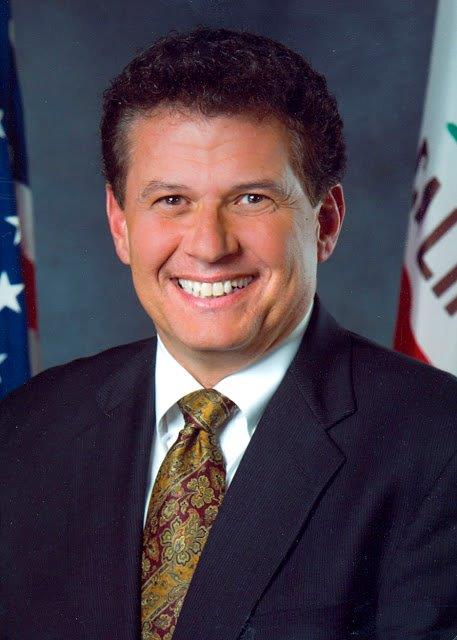
Bill Co-Author(s):