SB 624: Accessible state technology.
- Session Year: 2015-2016
- House: Senate
- Latest Version Date: 2015-02-27
(1)Existing law establishes the Department of Technology, within the Government Operations Agency, headed by the Director of Technology, who is also known as the State Chief Information Officer. The department is responsible for the approval and oversight of information technology projects by, among other things, consulting with agencies during initial project planning to ensure that project proposals are based on well-defined programmatic needs and consider feasible alternatives to address the identified needs and benefits consistent with statewide strategies, policies, and procedures.
This bill would establish, in the Government Operations Agency within the Department of Technology, the Office of Accessible Technology to monitor and facilitate compliance of state electronic and information technology with the requirements of certain state and federal laws relating to the accessibility of technology. This bill would require the office to be headed by a Chief of the Office of Accessible Technology who is required to, among other things, audit compliance of state electronic and information technology with the requirements of state and federal laws relating to the accessibility of technology, train chief information officers in other state agencies and entities, and manage complaints from state employees and members of the public relating to the accessibility of technology. This bill would also require the chief to post the results of all audits on the offices Internet Web site. This bill would make these provisions operative only upon the Legislature making an appropriation to implement them.
(2)Existing law requires each state agency and each state entity, as those terms are defined, to have a chief information officer with specified duties relating to information technology.
This bill would specifically include ensuring compliance with state and federal laws relating to the accessibility of technology among the duties of those chief information officers.
The Department of Technology shall improve the governance and implementation of information technology by standardizing reporting relationships, roles, and responsibilities for setting information technology priorities.
(a)(1)Each state agency shall have a chief information officer who is appointed by the head of the state agency, or by the heads designee, subject to the approval of the Department of Technology.
(2)A chief information officer appointed under this subdivision shall do all of the following:
(A)Oversee the information technology portfolio and information technology services within his or her state agency through the operational oversight of information technology budgets of departments, boards, bureaus, and offices within the state agency.
(B)Develop the enterprise architecture for his or her state agency, subject to the review and approval of the Department of Technology, to rationalize, standardize, and consolidate information technology applications, assets, infrastructure, data, and procedures for all departments, boards, bureaus, and offices within the state agency.
(C)Ensure that all departments, boards, bureaus, and offices within the state agency are in compliance with the state information technology policy. policy, and statutes, including, but not limited to, subdivision (d) of Section 11135.
(b)(1)Each state entity shall have a chief information officer who is appointed by the head of the state entity.
(2)A chief information officer appointed under this subdivision shall do all of the following:
(A)Supervise all information technology and telecommunications activities within his or her state entity, including, but not limited to, information technology, information security, and telecommunications personnel, contractors, systems, assets, projects, purchases, and contracts.
(B)Ensure the entity conforms with state information technology and telecommunications policy and, enterprise architecture architecture, and statutes, including, but not limited to, subdivision (d) of Section 11135.
(c)Each state agency shall have an information security officer appointed by the head of the state agency, or the heads designee, subject to the approval by the Department of Technology. The state agencys information security officer appointed under this subdivision shall report to the state agencys chief information officer.
(d)Each state entity shall have an information security officer who is appointed by the head of the state entity. An information security officer shall report to the chief information officer of his or her state entity. The Department of Technology shall develop specific qualification criteria for an information security officer. If a state entity cannot fund a position for an information security officer, the entitys chief information officer shall perform the duties assigned to the information security officer. The chief information officer shall coordinate with the Department of Technology for any necessary support.
(e)(1)For purposes of this section, state agency means the Transportation Agency, Department of Corrections and Rehabilitation, Department of Veterans Affairs, Business, Consumer Services, and Housing Agency, Natural Resources Agency, California Health and Human Services Agency, California Environmental Protection Agency, Labor and Workforce Development Agency, and Department of Food and Agriculture.
(2)For purposes of this section, state entity means an entity within the executive branch that is under the direct authority of the Governor, including, but not limited to, all departments, boards, bureaus, commissions, councils, and offices that are not defined as a state agency pursuant to paragraph (1).
(f)A state entity that is not defined under subdivision (e) may voluntarily comply with any of the requirements of Sections 11546.2 and 11546.3 and may request assistance from the Department of Technology to do so.
SEC. 2.Chapter 5.8 (commencing with Section 11549.20) is added to Part 1 of Division 3 of Title 2 of the Government Code, to read:5.8.Office of Accessible Technology11549.20.(a)There is in the Government Operations Agency, within the Department of Technology, the Office of Accessible Technology. The purpose of the Office of Accessible Technology is to monitor and facilitate compliance of state electronic and information technology with the requirements of subdivision (d) of Section 11135.
(b)The office shall be under the direction of a chief, who shall be appointed by, and serve at the pleasure of, the Governor, subject to Senate confirmation. The chief shall report to the Director of Technology and shall lead the office in carrying out its mission. The chief shall possess knowledge and expertise in evaluating compliance with the accessibility requirements of Section 508 of the federal Rehabilitation Act of 1973, as amended (29 U.S.C. Sec. 794d), and regulations implementing that act as set forth in Part 1194 of Title 36 of the Federal Code of Regulations.
(c)For purposes of this chapter, the following terms shall have the following meanings:
(1)Chief means the Chief of the Office of Accessible Technology.
(2)Office means the Office of Accessible Technology.
11549.22.The chief shall do all of the following:
(a)Develop and update statewide policies, standards, and procedures for ensuring compliance with the requirements of subdivision (d) of Section 11135.
(b)Provide training to chief information officers appointed pursuant to Section 11546.1.
(c)Audit compliance of state electronic and information technology with the requirements of subdivision (d) of Section 11135 and cooperate with chief information officers, as necessary, to develop corrective action plans for achieving compliance.
(d)Manage complaints from state employees and members of the public related to the requirements of subdivision (d) of Section 11135.
11549.24.The chief shall post the results of all audits conducted pursuant to this chapter on the offices Internet Web site.
11549.26.The office shall consult with the Director of Technology, the Director of Rehabilitation, the Director of General Services, the Chancellor of the California State University, and any other relevant agencies concerning policies, standards, and procedures related to accessible technology.
11549.28.This chapter shall become operative only upon the Legislature making an appropriation to implement the provisions of this chapter, and thereafter shall remain operative.
|
Date
|
Status
|
|---|---|
| May 1, 2015 | Set for hearing May 12. |
| Feb 1, 2016 | Returned to Secretary of Senate pursuant to Joint Rule 56. |
| May 28, 2015 | May 28 hearing: Held in committee and under submission. |
| May 27, 2015 | Set for hearing May 28. |
| May 26, 2015 | May 26 hearing: Placed on APPR. suspense file. |
| May 22, 2015 | Joint Rule 62(a) suspended. |
| May 19, 2015 | Set for hearing May 26. |
| May 12, 2015 | From committee: Do pass and re-refer to Com. on APPR. (Ayes 9. Noes 0.) (May 12). Re-referred to Com. on APPR. |
| May 12, 2015 | From committee: Do pass and re-refer to Com. on APPR. (Ayes 9. Noes 0. Page 973.) (May 12). Re-referred to Com. on APPR. |
| Feb 27, 2015 | Introduced. To Com. on RLS. for assignment. To print. |
| Apr 30, 2015 | Joint Rule 61(a)(2) suspended. (Ayes 34. Noes 0.) |
| Apr 30, 2015 | Joint Rule 61(a)(2) suspended. (Ayes 34. Noes 0. Page 844.) |
| Apr 28, 2015 | April 28 hearing postponed by committee. |
| Apr 2, 2015 | Set for hearing April 28. |
| Mar 12, 2015 | Referred to Com. on G.O. |
| Mar 2, 2015 | Read first time. |
| Mar 2, 2015 | From printer. May be acted upon on or after April 1. |
|
Date
|
Description
|
Location
|
Votes
|
|
|---|---|---|---|---|
| May 26, 2015 | Placed on suspense file | Senate Standing Committee on Appropriations |
Passed |
|
| May 12, 2015 | Do pass, but first be re-referred to the Committee on [Appropriations] | Senate Standing Committee on Governmental Organization |
Passed |
This list shows positions taken on this bill by organizations on the date displayed, which is linked to the original source.
Positions by individuals are not included.
|
Organization
|
Position
|
Date
|
|---|---|---|
| Accessible Technology Services | * Indeterminate | May 26, 2015 |
| California Council Of The Blind | ** Support | May 12, 2015 |
| Californians for Disability Rights | * Indeterminate | May 26, 2015 |
| Disability Rights California | ** Support | May 12, 2015 |
| Friends Committee On Legislation Of California | * Indeterminate | May 26, 2015 |
| Friends of Committee on Legislation of California | ** Support | May 12, 2015 |
| Section508guru.com | * Indeterminate | May 26, 2015 |
SB 624 (Anderson) Page 2 of 2
SENATE COMMITTEE ON APPROPRIATIONS
Senator Ricardo Lara, Chair
2015 - 2016 Regular Session
SB 624 (Anderson) - Accessible state technology
|
|
Version: February 27, 2015 |
Policy Vote: G.O. 9 - 0 |
Urgency: No |
Mandate: No |
Hearing Date: May 26, 2015 |
Consultant: Brendan McCarthy |
This bill meets the criteria for referral to the Suspense File.
Bill Summary:
SB 624 would establish an Office of Accessible Technology within the Department of Technology. The bill would require the new Office to provide training to other state entities and to review other state entities’ compliance with requirements to make information available over the internet accessible to individuals with disabilities.
Fiscal Impact:
Likely annual costs in the hundreds of thousands per year for staff in the Office of Accessible Technology to train other state staff and review compliance (General Fund).
Background:
Under current law, the Department of Technology is the lead state agency for significant information technology projects, providing services to other state entities relating to new and ongoing technology projects, such as managing project procurement.
Under the federal Rehabilitation Act of 1973, Section 508 (added in 1998), federal government entities are required to ensure that information technology is accessible for persons with disabilities. (For example, a web page that uses pictures or graphics should include captions to allow electronic readers to provide information to individuals with vision impairment to access information provided in the picture or graphic.)
Current state law requires state entities to comply with the requirements of Section 508 and related federal regulations with respect to information technology systems controlled by, or funded by, state entities.
Proposed Law:
SB 624 would establish an Office of Accessible Technology within the Department of Technology. The bill would require the new Office to provide training to other state entities and to review other state entities’ compliance with requirements to make information available over the internet accessible to individuals with disabilities.
Specific provisions of the bill would:
Establish the Office of Accessible Technology within the Department of Technology with the purpose of monitoring compliance of state information technology with current law requirements on accessibility;
Require the Office to develop statewide policies;
Require the Office to provide training to chief information officers of other state entities;
Require the Office to audit compliance of state information technology with the requirements of current law relating to accessibility;
Require the Office to manage complaints from state employees and members of the public;
Make the bill operative only upon an appropriation from the Legislature.
Staff Comments:
The Office of Technology Services within the Department of Technology is in the late stages of developing a new web publishing platform for use by state entities. According to the Department, this new system will meet federal Section 508 accessibility requirements.
-- END --
SB 624 (Anderson) Page 5 of 5
SENATE COMMITTEE ON GOVERNMENTAL ORGANIZATION
Senator Isadore Hall, III
Chair
2015 - 2016 Regular
Bill No: SB 624 Hearing Date: 5/12/2015
Author: |
Anderson |
||
Version: |
2/27/2015 |
||
Urgency: |
No |
Fiscal: |
Yes |
Consultant: |
Felipe Lopez |
||
SUBJECT: Accessible state technology.
DIGEST: This bill establishes the Office of Accessible Technology (OAT) to monitor and facilitate compliance of state electronic and information technology with the requirements of certain state and federal laws relating to the accessibility of technology.
ANALYSIS:
Existing law:
Establishes the Department of Technology (CalTech), within the Government Operations Agency, headed by the Director of Technology, who is known as the State Chief Information Officer.
Specifies that Caltech is responsible for the approval and oversight of information technology projects by, among other things, consulting with agencies during initial project planning to ensure that project proposals are based on well-defined programmatic needs and consider feasible alternatives to address the identified needs and benefits consistent with statewide strategies, policies, and procedures.
Requires each state agency and each state entity to have a chief information officer with specified duties relating to information technology.
Defines a “state agency” to mean the Transportation Agency, Department of Corrections and Rehabilitation, Department of Veteran Affairs, Business, Consumer Services, and Housing Agency, Natural Resources Agency, California Health and Human Services Agency, California Environmental Protection Agency, Labor and Workforce Development Agency, and Department of Food and Agriculture.
Defines a “state entity” to mean an entity within the executive branch that is under the direct authority of the Governor, including, but not limited to, all departments, boards, bureaus, commissions, councils, and offices that are not including in the definition of a state agency.
This bill:
Establishes the Office of Accessible Technology (OAT) to monitor and facilitate compliance of state electronic and information technology with the requirements of certain state and federal laws relating to the accessibility of technology.
Specifies that the OAT shall be under the direction of a chief, who shall be appointed by, and serve at the pleasure of the Governor, subject to Senate confirmation. The chief shall report to the Director of CalTech and shall lead the office in carrying out its mission. The chief shall possess knowledge and expertise in evaluating compliance with the accessibility requirements of the federal Rehabilitation Act of 1973.
Specifies that the Chief shall do all of the following:
Develop and update statewide policies, standards, and procedures for ensuring that everyone has the ability to utilize electronic or information technology.
Provide training to appointed chief information officers.
Audit compliance of state electronic and information technology to ensure access to electronic or information technology and cooperate with chief information officers, as necessary, to develop corrective action plans for achieving compliance.
Manage complaints from state employees and members of the public.
Requires the chief to post the results of all audits conducted on the OAT Internet Web site.
Requires the OAT to consult with the Director of Technology, the Director of Rehabilitation, the Director of General Services, the Chancellor of the California State University, and any other relevant agencies concerning policies, standards, and procedures related to accessible technology.
Specifies that this bill shall become operative only upon the Legislature making an appropriation to implement the provisions of this bill, and thereafter shall remain operative.
Background
Purpose of the bill: According to the author, despite existing laws and policies, state agencies are failing to provide an acceptable level of accessibility for their technology products. The author argues that an automated review of 360 state agency home pages linked from the state’s main portal revealed that 84 percent appear to have at least two Section 508 compliance issues that would restrict access for users with disabilities. Many sites, for example, provide files in inaccessible formats, forms that cannot be completed with assistive technologies, or links using only graphics.
The author concludes that by ensuring the state meets its accessibility obligations, this bill will improve access to government services for person with disabilities, enhance opportunities for state employees, and improve government transparency.
American with Disabilities Act of 1990 (ADA): The ADA was enacted by the United States Congress in 1990. The ADA is a wide ranging civil rights law that prohibits discrimination based on disability. It affords similar protections against discrimination to American with disabilities as the Civil Rights Act of 1964, which made discrimination based on race, religion, sex, national origin, and other characteristics illegal. In addition, the ADA required employers to provide reasonable accommodations to employees with disabilities, and imposes accessibility requirements on public accommodations. The ADA disabilities include both mental and physical medical conditions.
Rehabilitation Act of 1973: The Rehabilitation Act of 1973 prohibits discrimination on the basis of disability in programs conducted by federal agencies, in programs receiving federal financial assistance, in federal employment, and in the employment practices of federal contractors.
In 1998, Section 508 was added to establish requirements for electronic and information technology developed, maintained, procured, or used by the Federal government. Section 508 requires Federal electronic and information technology to be accessible to people with disabilities, including employees and members of the public.
Department of Technology (CalTech): The Department of Technology is the result of three Governor’s Reorganization Plans (GRPs)—in 2005, 2009, and 2012—and related legislation that ultimately consolidated statewide IT functions into a single entity. The most recent GRP established CalTech within the newly created Government Operations Agency with a department-level head—the Director of Technology—who reports directly to the Governor on issues relating to IT. It has lead responsibility for approval and oversight of state IT projects, providing data center and telecommunications services, managing IT procurement, and establishing and enforcing IT plans and policies.
On April 29, 2015, the Office of Technology Services (OTech), an office within CalTech, will be conducting an advance look at the new California Web Publishing platform. According to OTech, the enterprise-level content management system will be offered as a service within the state data center and will include 24/7 support, maintenance and operation, templates and themes, role based access controls, and will meet federal Section 508 accessibility requirements.
Prior/Related Legislation
SB 199 (Hall, 2015) expands the scope of services available under the In Home Supportive Services program to include assistance in reading and completing financial and other documents for a recipient who is blind, when that assistance is necessary for the recipient to remain in his or her home, and limits the service to two hours per month. (Pending in Senate Appropriations Committee)
SB 105 (Burton, Chapter 1102, Statutes of 2002) established within the State Department of Rehabilitation, a Division of Services for the Blind and Visually Impaired and the Deaf and hard of Hearing with the purpose of enlarging economic opportunities and enhancing the self-sufficiency of persons who are blind, visually impaired, deaf, and hard of hearing, and assisting them to gain competitive employment.
FISCAL EFFECT: Appropriation: No Fiscal Com.: Yes Local: No
SUPPORT:
California Council of the Blind
Disability Rights California
Friends of Committee on Legislation of California
OPPOSITION:
None received
ARGUMENTS IN SUPPORT: According to the California Council of the Blind, SB 624 is a positive step toward ensuring that all state websites finally meet state and federal accessibility requirements. Similarly, the Friends of Committee on Legislation of California argue that the information age means that there is a plethora of information that is easily accessible on line. Unfortunately, even though assistive technology is available, many Californians with disabilities are unable to access information on state government websites. The new OTA shall monitor compliance will develop policies to ensure that state government is making access available in accordance with federal and state law.
SB 624 (Anderson) Page 5 of 5
SENATE COMMITTEE ON GOVERNMENTAL ORGANIZATION
Senator Isadore Hall, III
Chair
2015 - 2016 Regular
Bill No: SB 624 Hearing Date: 4/28/2015
Author: |
Anderson |
||
Version: |
2/27/2015 |
||
Urgency: |
No |
Fiscal: |
Yes |
Consultant: |
Felipe Lopez |
||
SUBJECT: Accessible state technology
DIGEST: This bill establishes the Office of Accessible Technology (OAT) to monitor and facilitate compliance of state electronic and information technology with the requirements of certain state and federal laws relating to the accessibility of technology.
ANALYSIS:
Existing law:
Establishes the Department of Technology (CalTech), within the Government Operations Agency, headed by the Director of Technology, who is known as the State Chief Information Officer.
Specifies that Caltech is responsible for the approval and oversight of information technology projects by, among other things, consulting with agencies during initial project planning to ensure that project proposals are based on well-defined programmatic needs and consider feasible alternatives to address the identified needs and benefits consistent with statewide strategies, policies, and procedures.
Requires each state agency and each state entity to have a chief information officer with specified duties relating to information technology.
Defines a “state agency” to mean the Transportation Agency, Department of Corrections and Rehabilitation, Department of Veteran Affairs, Business, Consumer Services, and Housing Agency, Natural Resources Agency, California Health and Human Services Agency, California Environmental Protection Agency, Labor and Workforce Development Agency, and Department of Food and Agriculture.
Defines a “state entity” to mean an entity within the executive branch that is under the direct authority of the Governor, including, but not limited to, all departments, boards, bureaus, commissions, councils, and offices that are not including in the definition of a state agency.
This bill:
Establishes the Office of Accessible Technology (OAT) to monitor and facilitate compliance of state electronic and information technology with the requirements of certain state and federal laws relating to the accessibility of technology.
Specifies that the OAT shall be under the direction of a chief, who shall be appointed by, and serve at the pleasure of the Governor, subject to Senate confirmation. The chief shall report to the Director of CalTech and shall lead the office in carrying out its mission. The chief shall possess knowledge and expertise in evaluating compliance with the accessibility requirements of the federal Rehabilitation Act of 1973.
Specifies that the Chief shall do all of the following:
Develop and update statewide policies, standards, and procedures for ensuring that everyone has the ability to utilize electronic or information technology.
Provide training to appointed chief information officers.
Audit compliance of state electronic and information technology to ensure access to electronic or information technology and cooperate with chief information officers, as necessary, to develop corrective action plans for achieving compliance.
Manage complaints from state employees and members of the public.
Requires the chief to post the results of all audits conducted on the OAT Internet Web site.
Requires the OAT to consult with the Director of Technology, the Director of Rehabilitation, the Director of General Services, the Chancellor of the California State University, and any other relevant agencies concerning policies, standards, and procedures related to accessible technology.
Specifies that this bill shall become operative only upon the Legislature making an appropriation to implement the provisions of this bill, and thereafter shall remain operative.
Background
Purpose of the bill: According to the author, despite existing laws and policies, state agencies are failing to provide an acceptable level of accessibility for their technology products. The author argues that an automated review of 360 state agency home pages linked from the state’s main portal revealed that 84 percent appear to have at least two Section 508 compliance issues that would restrict access for users with disabilities. Many sites, for example, provide files in inaccessible formats, forms that cannot be completed with assistive technologies, or links using only graphics.
The author concludes that by ensuring the state meets its accessibility obligations, this bill will improve access to government services for person with disabilities, enhance opportunities for state employees, and improve government transparency.
American with Disabilities Act of 1990 (ADA): The ADA was enacted by the United States Congress in 1990. The ADA is a wide ranging civil rights law that prohibits discrimination based on disability. It affords similar protections against discrimination to American with disabilities as the Civil Rights Act of 1964, which made discrimination based on race, religion, sex, national origin, and other characteristics illegal. In addition, the ADA required employers to provide reasonable accommodations to employees with disabilities, and imposes accessibility requirements on public accommodations. The ADA disabilities include both mental and physical medical conditions.
Rehabilitation Act of 1973: The Rehabilitation Act of 1973 prohibits discrimination on the basis of disability in programs conducted by federal agencies, in programs receiving federal financial assistance, in federal employment, and in the employment practices of federal contractors.
In 1998, Section 508 was added to establish requirements for electronic and information technology developed, maintained, procured, or used by the Federal government. Section 508 requires Federal electronic and information technology to be accessible to people with disabilities, including employees and members of the public.
Department of Technology (CalTech): The Department of Technology is the result of three Governor’s Reorganization Plans (GRPs)—in 2005, 2009, and 2012—and related legislation that ultimately consolidated statewide IT functions into a single entity. The most recent GRP established CalTech within the newly created Government Operations Agency with a department-level head—the Director of Technology—who reports directly to the Governor on issues relating to IT. It has lead responsibility for approval and oversight of state IT projects, providing data center and telecommunications services, managing IT procurement, and establishing and enforcing IT plans and policies.
On April 29, 2015, the Office of Technology Services (OTech), an office within CalTech, will be conducting an advance look at the new California Web Publishing platform. According to OTech, the enterprise-level content management system will be offered as a service within the state data center and will include 24/7 support, maintenance and operation, templates and themes, role based access controls, and will meet federal Section 508 accessibility requirements.
Prior/Related Legislation
SB 199 (Hall), 2015-2016 Legislative Session. The bill expands the scope of services available under the In Home Supportive Services program to include assistance in reading and completing financial and other documents for a recipient who is blind, when that assistance is necessary for the recipient to remain in his or her home, and limits the service to two hours per month. (Pending in Senate Appropriations Committee)
SB 105 (Burton), Chapter 1102, Statutes of 2002. The bill established within the State Department of Rehabilitation, a Division of Services for the Blind and Visually Impaired and the Deaf and hard of Hearing with the purpose of enlarging economic opportunities and enhancing the self-sufficiency of persons who are blind, visually impaired, deaf, and hard of hearing, and assisting them to gain competitive employment.
FISCAL EFFECT: Appropriation: No Fiscal Com.: Yes Local: No
SUPPORT:
California Council of the Blind
Disability Rights California
Friends of Committee on Legislation of California
OPPOSITION:
None received
ARGUMENTS IN SUPPORT: According to the California Council of the Blind, SB 624 is a positive step toward ensuring that all state websites finally meet state and federal accessibility requirements. Similarly, the Friends of Committee on Legislation of California argue that the information age means that there is a plethora of information that is easily accessible on line. Unfortunately, even though assistive technology is available, many Californians with disabilities are unable to access information on state government websites. The new OTA shall monitor compliance will develop policies to ensure that state government is making access available in accordance with federal and state law.
Discussed in Hearing
 8MIN
Senate Standing Committee on Appropriations
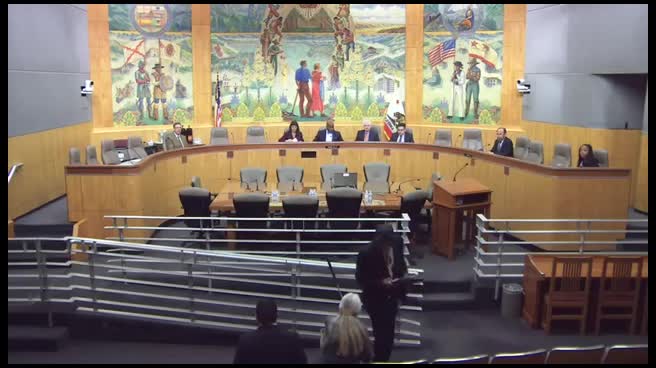 13MIN
Senate Standing Committee on Governmental Organization
Bill Author

Bill Co-Author(s):