SB 723: Energy efficiency: United States Armed Forces bases and facilities.
- Session Year: 2015-2016
- House: Senate
- Latest Version Date: 2015-04-27
Under existing law, the Public Utilities Commission has regulatory authority over public utilities, including electrical corporations and gas corporations, as defined. The Public Utilities Act requires the Public Utilities Commission to review and adopt a procurement plan for each electrical corporation in accordance with specified elements, incentive mechanisms, and objectives. The act requires that an electrical corporations proposed procurement plan include certain elements, including a showing that the electrical corporation will first meet its unmet needs through all available energy efficiency and demand reduction resources that are cost effective, reliable, and feasible. Existing law requires the Public Utilities Commission, in consultation with the State Energy Resources Conservation and Development Commission, to identify all potentially achievable cost-effective electricity efficiency savings, and to establish efficiency targets for electrical corporations to achieve pursuant to their procurement plan.
The act requires the Public Utilities Commission, in consultation with the State Energy Resources Conservation and Development Commission, to identify all potentially achievable cost-effective natural gas efficiency savings and to establish efficiency targets for gas corporations to achieve, and requires that a gas corporation first meet its unmet resource needs through all available gas efficiency and demand reduction resources that are cost effective, reliable, and feasible.
This bill would require the Public Utilities Commission to encourage electrical corporations and gas corporations to expedite implementation of energy efficiency measures and enable the achievement of additional energy goals Commission, in consultation with the State Energy Resources Conservation and Development Commission and the United States Armed Forces, to authorize a pilot program designed to evaluate the effects of using an alternative baseline energy efficiency methodology at United States Armed Forces bases and facilities. The bill would require electrical and gas corporations, using existing military contracting procedures, to the extent feasible, or new partnership with the federal government, to accomplish the goals of the pilot program.
This bill would require the Public Utilities Commission to approve financial incentives for energy efficiency upgrades measures implemented at Armed Forces bases and facilities pursuant to the pilot program through existing energy efficiency programs administered by electrical corporations and gas corporations. Because a violation of an order or a direction of the commission is a crime, this bill would impose a state-mandated local program.
This bill would repeal the above requirements pilot program on January 1, 2020.
The California Constitution requires the state to reimburse local agencies and school districts for certain costs mandated by the state. Statutory provisions establish procedures for making that reimbursement.
This bill would provide that no reimbursement is required by this act for a specified reason.
Under existing law, the Public Utilities Commission has regulatory authority over public utilities, including electrical corporations and gas corporations, as defined. The Public Utilities Act requires the Public Utilities Commission to review and adopt a procurement plan for each electrical corporation in accordance with specified elements, incentive mechanisms, and objectives. The act requires that an electrical corporations proposed procurement plan include certain elements, including a showing that the electrical corporation will first meet its unmet needs through all available energy efficiency and demand reduction resources that are cost effective, reliable, and feasible. Existing law requires the Public Utilities Commission, in consultation with the State Energy Resources Conservation and Development Commission, to identify all potentially achievable cost-effective electricity efficiency savings, and to establish efficiency targets for electrical corporations to achieve pursuant to their procurement plan.
The act requires the Public Utilities Commission, in consultation with the State Energy Resources Conservation and Development Commission, to identify all potentially achievable cost-effective natural gas efficiency savings and to establish efficiency targets for gas corporations to achieve, and requires that a gas corporation first meet its unmet resource needs through all available gas efficiency and demand reduction resources that are cost effective, reliable, and feasible.
This bill would require the Public Utilities Commission to encourage electrical corporations and gas corporations to expedite implementation of energy efficiency measures and enable the achievement of additional energy goals at United States Department of Defense military bases and facilities and United States Coast Guard Armed Forces bases and facilities.
This bill would require the Public Utilities Commission to approve financial incentives for energy efficiency upgrades at military Armed Forces bases and facilities and United States Coast Guard facilities through existing energy efficiency programs administered by electrical corporations and gas corporations. Because a violation of an order or a direction of the commission is a crime, this bill would impose a state-mandated local program.
This bill would repeal the above requirements on January 1, 2020.
The California Constitution requires the state to reimburse local agencies and school districts for certain costs mandated by the state. Statutory provisions establish procedures for making that reimbursement.
This bill would provide that no reimbursement is required by this act for a specified reason.
Under existing law, the Public Utilities Commission has regulatory authority over public utilities, including electrical corporations and gas corporations, as defined. The Public Utilities Act requires the Public Utilities Commission to review and adopt a procurement plan for each electrical corporation in accordance with specified elements, incentive mechanisms, and objectives. The act requires that an electrical corporations proposed procurement plan include certain elements, including a showing that the electrical corporation will first meet its unmet needs through all available energy efficiency and demand reduction resources that are cost effective, reliable, and feasible. Existing law requires the Public Utilities Commission, in consultation with the State Energy Resources Conservation and Development Commission, to identify all potentially achievable cost-effective electricity efficiency savings, and to establish efficiency targets for electrical corporations to achieve pursuant to their procurement plan.
The act requires the Public Utilities Commission, in consultation with the State Energy Resources Conservation and Development Commission, to identify all potentially achievable cost-effective natural gas efficiency savings and to establish efficiency targets for gas corporations to achieve, and requires that a gas corporation first meet its unmet resource needs through all available gas efficiency and demand reduction resources that are cost effective, reliable, and feasible.
This bill would require the Public Utilities Commission to encourage electrical corporations and gas corporations to expedite implementation of energy efficiency measures and enable the achievement of additional energy goals at United States Department of Defense military bases and facilities and United States Coast Guard facilities.
This bill would require the Public Utilities Commission to approve financial incentives for energy efficiency upgrades at military bases and facilities and United States Coast Guard facilities through existing energy efficiency programs administered by electrical corporations and gas corporations. Because a violation of an order or a direction of the commission is a crime, this bill would impose a state-mandated local program.
This bill would repeal the above requirements on January 1, 2020.
The California Constitution requires the state to reimburse local agencies and school districts for certain costs mandated by the state. Statutory provisions establish procedures for making that reimbursement.
This bill would provide that no reimbursement is required by this act for a specified reason.
The Legislature finds and declares all of the following:
(a)The United States Armed Forces, as the nations largest energy users, are required to comply with laws enacted by Congress, executive orders, and goals established by military leaders, including requirements for 3 percent annual reductions in facility energy intensity, which is measured by energy used per gross square foot.
(b)The United States Armed Forces are reducing energy demand through conservation and efficiency. The United States Armed Forces are improving the efficiency of their existing buildings through retrofitting, including the use of advanced lighting, heating, ventilation, and air-conditioning technologies.
(c)The United States Armed Forces facilities have leveraged the energy efficiency programs of electrical corporations and gas corporations and have used turnkey contracts to facilitate energy efficiency upgrades while bundling energy and water efficiency, demand response, and distributed generation.
(d)Additional energy efficiency incentives to assist the United States Armed Forces to perform energy efficiency projects will help in meeting the states greenhouse gas reduction goals.
(e)The United States Armed Forces bases and facilities are very similar to small cities in terms of size, variety, and mix of land uses and energy use.
(f)Because of their unique command structure, United States Armed Forces bases and facilities are able to achieve much greater control of their energy reporting and use, and have already submetered most of their buildings. Therefore, those bases and facilities are the perfect testing ground for pilot energy programs.
SEC. 2.Section 454.57 is added to the Public Utilities Code, to read:454.57.(a)For the purposes of this section, Armed Forces bases and facilities are those establishments under the jurisdiction of the United States Armed Forces that are classified in Code 928110 of the North American Industry System and paragraph (4) of subsection (a) of Section 101 of Title 10 of the United States Code.
(b)(1)Through an existing or new proceeding, the commission, in consultation with the Energy Commission and the United States Armed Forces, shall authorize a pilot program designed to evaluate the effects of using an alternative baseline energy efficiency methodology at Armed Forces bases and facilities.
(2)Electrical and gas corporations shall, using existing military contracting procedures, to the extent feasible, or new partnerships with the federal government, accomplish the purposes of the pilot program.
(b)Armed
(c)For purposes of the pilot program, Armed Forces bases and facilities shall be eligible to calculate their energy efficiency savings by comparing the facilities existing energy usage, as a whole, with the facilities projected energy usage that would be achieved from the implementation of the energy efficiency measures.
(c)Through an existing or new proceeding, the commission, in consultation with the Energy Commission and the United States Armed Forces, shall encourage electrical corporations and gas corporations, using existing military contracting procedures or new partnerships with the federal government, to expedite the implementation of energy efficiency measures and shall enable the achievement of additional energy goals, for example, microgrids, demand response, self-generation, and energy storage, at Armed Forces bases and facilities.
(d)The commission shall approve financial incentives for energy efficiency upgrades measures implemented pursuant to the pilot program at Armed Forces bases and facilities through existing energy efficiency programs administered by electrical corporations and gas corporations.
(e)To the extent that the commission finds that funds in addition to funds collected from ratepayers are needed to achieve energy efficiency saving goals in Armed Forces bases and facilities, the commission, in consultation with the Energy Commission and the United States Armed Forces, shall identify other potential sources of funding to supplement funds collected from ratepayers to achieve those savings goals.
(e)This section does not require the commission to allow projects not located on Armed Forces bases and facilities to be eligible to calculate their energy efficiency savings in a substantially similar manner as projects located on Armed Forces bases and facilities.
(f) This section shall remain in effect only until January 1, 2020, and as of that date is repealed, unless a later enacted statute, that is enacted before January 1, 2020, deletes or extends that date.
SEC. 3.No reimbursement is required by this act pursuant to Section 6 of Article XIIIB of the California Constitution because the only costs that may be incurred by a local agency or school district will be incurred because this act creates a new crime or infraction, eliminates a crime or infraction, or changes the penalty for a crime or infraction, within the meaning of Section 17556 of the Government Code, or changes the definition of a crime within the meaning of Section 6 of Article XIIIB of the California Constitution.
The Legislature finds and declares all of the following:
(a)The United States Department of Defense and the United States Coast Guard, Armed Forces, as the nations largest energy users, are required to comply with laws enacted by Congress, executive orders, and goals established by military leaders, including requirements for 3 percent annual reductions in facility energy intensity, which is measured by energy used per gross square foot.
(b)The United States Department of Defense and the United States Coast Guard Armed Forces are reducing energy demand through conservation and efficiency. The United States Department of Defense and the United States Coast Guard Armed Forces are improving the efficiency of their existing buildings through retrofitting, including the use of advanced lighting, heating, ventilation, and air-conditioning technologies.
(c)The United States Department of Defense and United States Coast Guard Armed Forces facilities have leveraged the energy efficiency programs of electrical corporations and gas corporations and have used turnkey contracts to facilitate energy efficiency upgrades while bundling energy and water efficiency, demand response, and distributed generation.
(d)Additional energy efficiency incentives to assist the United States Department of Defense and the United States Coast Guard Armed Forces to perform energy efficiency projects will help in meeting the states greenhouse gas reduction goals.
SEC. 2.Section 454.57 is added to the Public Utilities Code, to read:454.57.(a)For the purposes of this section, the following terms have the following meanings: Armed Forces bases and facilities are those establishments under the jurisdiction of the United States Armed Forces that are classified in Code 928110 of the North American Industry System and paragraph (4) of subsection (a) of Section 101 of Title 10 of the United States Code.
(1)Military bases and facilities are those establishments under the jurisdiction of the United States Department of Defense that are classified in Code 928110 of the North American Industry Classification System.
(2)United States Coast Guard facilities are those facilities under the jurisdiction of the United States Coast Guard that are classified in Code 926120 of the North American Industry Classification System.
(b)Military Armed Forces bases and facilities and United States Coast Guard facilities shall be eligible to calculate their energy efficiency savings by comparing the facilities existing energy usage, as a whole, with the facilities projected energy usage that would be achieved from the implementation of the energy efficiency measures.
(c)Through an existing or new proceeding, the commission, in consultation with the Energy Commission, the United States Department of Defense, Commission and the United States Coast Guard, Armed Forces, shall encourage electrical corporations and gas corporations, using existing military contracting procedures or new partnerships with the federal government, to expedite the implementation of energy efficiency measures and shall enable the achievement of additional energy goals, for example, microgrids, demand response, self-generation, and energy storage, at military Armed Forces bases and facilities and United States Coast Guard facilities.
(d)The commission shall approve financial incentives for energy efficiency upgrades at military Armed Forces bases and facilities and United States Coast Guard facilities through existing energy efficiency programs administered by electrical corporations and gas corporations.
(e)To the extent that the commission finds that funds in addition to funds collected from ratepayers are needed to achieve energy efficiency saving goals in military bases and facilities and United States Coast Guard facilities, Armed Forces bases and facilities, the commission, in consultation with the Energy Commission, the United States Department of Defense, and the United States Coast Guard, Commission and the United States Armed Forces, shall identify other potential sources of funding to supplement funds collected from ratepayers to achieve those savings goals.
(f) This section shall remain in effect only until January 1, 2020, and as of that date is repealed, unless a later enacted statute, that is enacted before January 1, 2020, deletes or extends that date.
SEC. 3.No reimbursement is required by this act pursuant to Section 6 of Article XIIIB of the California Constitution because the only costs that may be incurred by a local agency or school district will be incurred because this act creates a new crime or infraction, eliminates a crime or infraction, or changes the penalty for a crime or infraction, within the meaning of Section 17556 of the Government Code, or changes the definition of a crime within the meaning of Section 6 of Article XIIIB of the California Constitution.
The Legislature finds and declares all of the following:
(a)The United States Department of Defense and the United States Coast Guard, as the nations largest energy users, are required to comply with laws enacted by Congress, executive orders, and goals established by military leaders, including requirements for 3 percent annual reductions in facility energy intensity, which is measured by energy used per gross square foot.
(b)The United States Department of Defense and the United States Coast Guard are reducing energy demand through conservation and efficiency. The United States Department of Defense and the United States Coast Guard are improving the efficiency of their existing buildings through retrofitting, including the use of advanced lighting, heating, ventilation, and air-conditioning technologies.
(c)The United States Department of Defense and United States Coast Guard facilities have leveraged the energy efficiency programs of electrical corporations and gas corporations and have used turnkey contracts to facilitate energy efficiency upgrades while bundling energy and water efficiency, demand response, and distributed generation.
(d)Additional energy efficiency incentives to assist the United States Department of Defense and the United States Coast Guard to perform energy efficiency projects will help in meeting the states greenhouse gas reduction goals.
SEC. 2.Section 454.57 is added to the Public Utilities Code, to read:454.57.(a)For the purposes of this section, the following terms have the following meanings:
(1)Military bases and facilities are those establishments under the jurisdiction of the United States Department of Defense that are classified in Code 928110 of the North American Industry Classification System.
(2)United States Coast Guard facilities are those facilities under the jurisdiction of the United States Coast Guard that are classified in Code 926120 of the North American Industry Classification System.
(b)Military bases and facilities and United States Coast Guard facilities shall be eligible to calculate their energy efficiency savings by comparing the facilities existing energy usage, as a whole, with the facilities projected energy usage that would be achieved from the implementation of the energy efficiency measures.
(c)Through an existing or new proceeding, the commission, in consultation with the Energy Commission, the United States Department of Defense, and the United States Coast Guard, shall encourage electrical corporations and gas corporations, using existing military contracting procedures or new partnerships with the federal government, to expedite the implementation of energy efficiency measures and shall enable the achievement of additional energy goals, for example, microgrids, demand response, self-generation, and energy storage, at military bases and facilities and United States Coast Guard facilities.
(d)The commission shall approve financial incentives for energy efficiency upgrades at military bases and facilities and United States Coast Guard facilities through existing energy efficiency programs administered by electrical corporations and gas corporations.
(e)To the extent that the commission finds that funds in addition to funds collected from ratepayers are needed to achieve energy efficiency saving goals in military bases and facilities and United States Coast Guard facilities, the commission, in consultation with the Energy Commission, the United States Department of Defense, and the United States Coast Guard, shall identify other potential sources of funding to supplement funds collected from ratepayers to achieve those savings goals.
(f) This section shall remain in effect only until January 1, 2020, and as of that date is repealed, unless a later enacted statute, that is enacted before January 1, 2020, deletes or extends that date.
SEC. 3.No reimbursement is required by this act pursuant to Section 6 of Article XIIIB of the California Constitution because the only costs that may be incurred by a local agency or school district will be incurred because this act creates a new crime or infraction, eliminates a crime or infraction, or changes the penalty for a crime or infraction, within the meaning of Section 17556 of the Government Code, or changes the definition of a crime within the meaning of Section 6 of Article XIIIB of the California Constitution.
|
Date
|
Status
|
|---|---|
| Feb 27, 2015 | Introduced. To Com. on RLS. for assignment. To print. |
| Mar 2, 2015 | From printer. May be acted upon on or after April 1. |
| Mar 2, 2015 | Read first time. |
| Mar 19, 2015 | Referred to Com. on E., U., & C. |
| Mar 24, 2015 | Set for hearing April 7. |
| Apr 6, 2015 | April 7 hearing postponed by committee. |
| Apr 7, 2015 | Set for hearing April 21. |
| Apr 13, 2015 | From committee with author's amendments. Read second time and amended. Re-referred to Com. on E., U., & C. |
| Apr 23, 2015 | From committee: Do pass as amended and re-refer to Com. on APPR. (Ayes 11. Noes 0. Page 724.) (April 21). |
| Apr 27, 2015 | Read second time and amended. Re-referred to Com. on APPR. |
| Apr 29, 2015 | Set for hearing May 4. |
| May 4, 2015 | May 4 hearing: Placed on APPR. suspense file. |
| May 23, 2015 | Set for hearing May 28. |
| May 28, 2015 | May 28 hearing: Held in committee and under submission. |
| Feb 1, 2016 | Returned to Secretary of Senate pursuant to Joint Rule 56. |
|
Date
|
Description
|
Location
|
Votes
|
|
|---|---|---|---|---|
| May 4, 2015 | Placed on suspense file | Senate Standing Committee on Appropriations |
Passed |
|
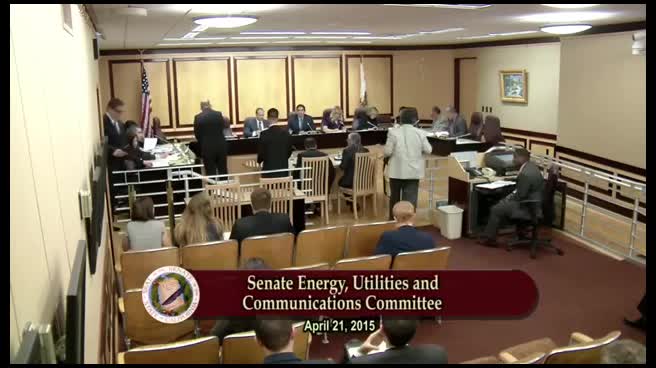
| Apr 21, 2015 | Do pass as amended, but first amend, and re-refer to the Committee on [Appropriations] | Senate Standing Committee on Energy, Utilities and Communications |
Passed |
This list shows positions taken on this bill by organizations on the date displayed, which is linked to the original source.
Positions by individuals are not included.
|
Organization
|
Position
|
Date
|
|---|---|---|
| California Center For Sustainable Energy | * Indeterminate | Apr 20, 2015 |
| Natural Resources Defense Council | * Indeterminate | Apr 20, 2015 |
| Office of Ratepayer Advocates, unless amended | ** Against | Apr 20, 2015 |
| Sierra Club California | ** Support | Apr 20, 2015 |
| Southern California Edison | * Indeterminate | Apr 20, 2015 |
| US Air Force | ** Support | Apr 20, 2015 |
| US Army | ** Support | Apr 20, 2015 |
| US Marine Corps | ** Support | Apr 20, 2015 |
| US Navy | ** Support | Apr 20, 2015 |
SB 723 (Pavley) Page 2 of 2
SENATE COMMITTEE ON APPROPRIATIONS
Senator Ricardo Lara, Chair
2015 - 2016 Regular Session
SB 723 (Pavley) - Energy efficiency: United States Armed Forces bases and facilities
|
|
Version: April 27, 2015 |
Policy Vote: E., U., & C. 11 - 0 |
Urgency: No |
Mandate: Yes |
Hearing Date: May 4, 2015 |
Consultant: Marie Liu |
This bill meets the criteria for referral to the Suspense File.
Bill Summary:
SB 723 would require the California Public Utilities Commission (CPUC), to authorize a pilot program that would allow an alternative energy savings calculation to be used to evaluate energy efficiency projects located on Armed Forces bases and facilities until January 1, 2020.
Fiscal Impact:
Ongoing costs of up to $130,000, but potentially minor, from the Public Utilities Reimbursement Account (special) for the CPUC to design, provide oversight, and evaluate the required pilot project.
Ongoing costs of up to $140,000 from the Energy Resources Programs Account (General Fund) to the California Energy Commission (CEC) to consult with the CPUC on evaluating the effects of the pilot program.
Unknown, but likely minor, impacts to various special funds and the General Fund to the state as an electricity and natural gas ratepayer for changes to the energy efficiency program budget.
Background:
PUC §§454.55 and 454.56 requires the CPUC to identify all potentially achievable cost-effective electricity and natural gas efficiency savings and to establish energy efficiency procurement targets and ratepayer-funded programs for electrical and gas corporations.
Under existing CPUC-approved investor-owned utility (IOU) energy efficiency projects, the project’s energy savings is calculated as the amount of savings generated above the baseline, which is the amount of energy a building would use if it met the current building code requirements. As building code requirements are generally not applied retroactively, the actual savings are likely greater than this calculation because the actual energy use is greater than the baseline.
Proposed Law:
This bill would create a pilot program for energy efficiency projects located on Armed Forces bases and facilities that would allow the energy savings to be calculated using the facilities’ existing energy usage (as opposed to the energy usage that the facility should have if it met current building standards). The CPUC would be required to approve financial incentives based on this alternative energy savings calculation. The CPUC would be required to consult with the California Energy Commission and the United States Armed Forces in authorizing the pilot program.
The pilot program would sunset on January 1, 2020.
Related Legislation:
AB 2229 (Bradford, 2014) would have required the CPUC to approve financial incentives for energy efficiency upgrades at military bases and facilities in a manner substantially similar to this bill. The April 21st version of AB 2229 required the CPUC to authorize a separate energy efficiency program for military projects. AB 2229 was held by the Senate Energy, Utilities, and Communication Committee.
Staff Comments:
Based on calculations made in connection with AB 2229 last year, the CPUC estimates that a pilot program for the military could involve up to $36 million in project funding for energy efficiency projects on military bases and facilities, depending on the design of the pilot program. The CPUC estimates that it could design, evaluate and provide oversight to the pilot program required by this bill within existing resources since it would not be a large program. However, staff notes that the CPUC estimated annual costs of approximately $130,000 to implement the military-specific energy efficiency program that would have been required under the April 21st version of AB 2229. The only appreciable difference between the April 21st version of AB 2229 and this bill seem to be that AB 2229 included Coast Guard facilities.
The CEC estimates that it would need up to one position at an annual cost of $140,000 to consult with the CPUC to design and evaluate the pilot program.
Staff notes that there are unknown potential impacts to the state as a ratepayer. As mentioned above, the CPUC is required to identify all energy efficiency savings and targets to reach those savings. Under the energy savings calculation methodology that would be allowed by this bill, more military projects will become cost effective. On the one hand, these projects will allow IOUs to meet their existing energy efficiency savings targets with less money resulting in savings to ratepayers; on the other hand, the CPUC could also raise those targets as additional cost effective projects are now identified. Higher targets would require additional ratepayer funds to achieve. Ultimately staff believes that this bill’s impact to the state as a ratepayer, as either a cost or a savings, is speculative but likely to be small given the size of the pilot program.
-- END --
SB 723 (Pavley) Page 5 of 5
SENATE COMMITTEE ON ENERGY, UTILITIES AND COMMUNICATIONS
Senator Ben Hueso, Chair
2015 - 2016 Regular
Bill No: SB 723 Hearing Date: 4/21/2015
Author: |
Pavley |
||
Version: |
4/13/2015 As Amended |
||
Urgency: |
No |
Fiscal: |
Yes |
Consultant: |
Jay Dickenson |
||
SUBJECT: Energy efficiency: United States Armed Forces bases and facilities
DIGEST: This bill seeks to increase the availability of funds for energy efficiency upgrades at military facilities. Most significantly, this bill authorizes military facilities to calculate the savings from energy efficiency measures on military facilities differently than savings for other energy efficiency projects are calculated.
ANALYSIS:
Existing law requires the California Public Utilities Commission (CPUC) to identify all potentially achievable cost-effective electricity and natural gas efficiency savings and to establish energy efficiency procurement targets and ratepayer-funded programs for electrical and gas corporations. (Public Utilities Code §§ 454.55 and 454.56.)
This bill:
Requires the CPUC to approve financial incentives for energy efficiency upgrades at military facilities through existing energy efficiency programs administered by the investor-owned utilities (IOUs). The bill also requires the CPUC to encourage the IOUs to expedite implementation of energy efficiency measures at military facilities and to enable achievement of additional energy goals by the military, including demand response, self-generation, and energy storage. The bill directs the CPUC to identify other potential sources of funding to achieve energy efficiency goals in military facilities, should it determine there are insufficient ratepayer funds available to achieve the military’s energy efficiency goals.
Authorizes military facilities to calculate their energy savings by comparing the facilities’ existing energy usage, as a whole, with the facilities’ projected energy usage that would be achieved from the implementation of the energy efficiency measures.
Background
Energy Efficiency Sits Atop California Energy Policy. The “loading order” guides the state’s energy policies and decisions according to the following order of priority: (1) decreasing electricity demand by increasing energy efficiency; (2) responding to energy demand by reducing energy usage during peak hours; (3) meeting new energy generation needs with renewable resources; and (4) meeting new energy generation needs with clean fossil-fueled generation. This policy has been adopted by the energy agencies – the California Energy Commission (CEC) and CPUC – and its principles guide all energy programs.
California’s IOUs administer energy efficiency programs with ratepayer funds approved by the CPUC. Currently funded at about $1 billion per year, the programs include a portfolio of financial incentives, loans, and rebates for installing energy efficient appliances, lighting, windows, HVAC systems, whole-house retrofits, and specialized programs aimed at a variety of sectors.
Military Receives Ratepayer Support for Energy Efficiency. According to the CPUC, existing IOU programs already target military facilities for efficiency improvements. In the 2010–2012 program cycle, military facilities in California received over $3 million dollars in energy efficiency incentives resulting in almost 4,000 kW in peak savings and almost 350,000 therm in natural gas savings. The table below breaks out, by IOU, the level of incentives, number of projects, amount of anticipated savings, and number of military participants.
US Military Customer Energy Efficiency Participation by IOU (2010 - 2012) |
|
|||||
|
# of Customers |
# of Projects |
Incentives $ |
kW Savings |
kWh Savings |
Therm Savings |
SDG&E |
8 |
285 |
$ 2,400,925 |
1,716 |
14,329,133 |
293,567 |
SCE |
8 |
27 |
$ 434,316 |
1,183 |
5,383,919 |
N/A |
SCG |
1 |
1 |
$ 12,420 |
N/A |
N/A |
14,966 |
PG&E |
15 |
88 |
$ 383,282 |
957 |
3,413,104 |
38,567 |
Total: |
32 |
401 |
$3,230,942 |
3,856 |
23,126,156 |
347,100 |
Note: For the 2013 – 2014 (and the SB 723 DA) staff is waiting for the results of a data request to confirm expenditures which are expected to be similar annually to the 2010 – 2012 program cycle.
A Different Measure. This bill has four provisions, all related to energy efficiency projects on military bases.
First, it allows military facilities to calculate their energy efficiency savings by comparing the facilities’ existing energy usage, as a whole, with the facilities’ projected energy usage that would be achieved from the implementation of the energy efficiency measures.
Second, it directs the CPUC to encourage electrical and gas IOUs to expedite the implementation of energy efficiency measures on military facilities and to enable the achievement of additional energy goals, for example, microgrids, demand response, self-generation, and energy storage, at Armed Forces bases and facilities.
Third, it directs the CPUC to approve financial incentives for energy efficiency upgrades at military facilities through existing energy efficiency programs administered by electrical and gas IOUs.
Finally, it directs the CPUC, working with the CEC and United States Armed Forces, to identify other potential sources of funding to supplement funds collected from ratepayers to achieve energy savings goals.
Of these four provisions, the first is, by far, the most significant. The third provision is, essentially, existing CPUC practice, consistent with existing law. The second and fourth provisions are not inconsequential and may be helpful to efforts by the military to increase energy efficiency at its facilities. But the first provision is the heart of the bill.
The bill requires a calculation of the savings from IOU-funded energy efficiency projects at military bases that differs from the methodology by which other IOU-funded energy efficiency projects calculate such savings. As explained by the CPUC, the current method for calculating energy savings for a given energy efficiency measure compares energy use in absence of the energy efficiency measure and energy use with the energy efficiency measure. In contrast, this bill requires, for military facilities only, comparison of current energy use with projected usage that would follow implementation of the efficiency measure. In other words, the bill requires use of a special energy efficiency baseline for military facilities.
Use of a different baseline at military facilities has consequences. Existing law requires the IOUs to capture all cost-effective energy efficiency. Use of the more-generous measurement required by this bill would likely result in more energy efficiency projects at military facilities being “cost effective.”
There is a good argument for changing the methodology for calculating the energy savings from efficiency measures. In fact, the CPUC is considering such a change as part of its current energy efficiency proceeding. However, there is nothing to that argument that is specific to military facilities. If it makes sense to measure the energy efficiency savings of measures based upon current use, then it makes sense generally.
That said, the military can be an effective partner in pursuit of California’s energy and environmental goals. As the author notes, the US military is undertaking ambitious, mission-driven energy efficiency and alternative energy efforts.
The author also notes that the CPUC has authorized the IOUs to undertake pilot projects that will use a baseline measurement similar to that required by this bill. Those pilot projects – still under development – are very limited in scope and designed to evaluate the effects of using an alternative baseline energy efficiency methodology. The author and the committee may wish to require the CPUC to authorize a similar IOU-funded pilot project for military facilities.
Prior/Related Legislation
AB 2229 (Bradford, 2014) was identical in effect to this bill. AB 2229 was held by this committee.
FISCAL EFFECT: Appropriation: No Fiscal Com.: Yes Local: Yes
SUPPORT:
Sierra Club California
US Air Force
US Army
US Marine Corps
US Navy
OPPOSITION:
Office of Ratepayer Advocates, unless amended
ARGUMENTS IN SUPPORT: The author and supporters contend this bill will allow achievement of additional energy efficiency and related projects at California military facilities, thereby helping California reach its energy and environmental goals.
ARGUMENTS IN OPPOSITION: Opponents protest the use of a measure of energy efficiency savings for projects at military facilities that differs from the measure used for similar IOU-funded projects. ORA fears the use of the military-specific measure may reduce funding for non-military projects that, when consistently measured, are more cost effective.
-- END --
Discussed in Hearing
 8MIN